Behold the Art-o-Mat: Vintage Cigarette Vending Machines Get Repurposed & Dispense Works of Art
It’s a well known fact that anyone who’s quitting smoking will need to find something to occupy their hands.
Many experts suggest holding a pencil or another vaguely-cigarette-shaped object.
Others prescribe busy work—cracking nuts and peeling oranges.
Hardcore cases are advised to keep those paws busy with a hobby such as painting or woodworking.
But from where we sit, the most spiritually rewarding, symbolic activity for someone in this tender situation would be creating a tiny artwork prototype to sell in an Art-o-Mat®, one of over 100 vintage cigarette vending machines specifically repurposed to dispense art.
Located primarily in the US, the machines are the brainchild of artist Clark Whittington, who loaded the first one with black & white, block-mounted photos for a 1997 solo show in a Winston-Salem cafe.
These days, there are a hundred or so Art-o-Mats, stocked with the work of artists both professional and amateur, who have successfully navigated the submission process.
A variety of mediums is represented—painting, sculpture, fine art prints, jewelry, assemblages, cut paper, and tiny bound books.
Worthington encourages would-be participants to avoid the ease of mass production in favor of unique items that bear evidence of the human hand:
The vending process is only the beginning of your Art-o-Mat® art. Once purchased and two steps away from the machine, your work is solely a reflection of you and your art. Many pieces have been carried around the globe. So, think of approaches that do not convey “a Sunday afternoon at the copy shop” and consider ways that your art will be appreciated for years to come.
The guidelines are understandably strict with regard to dimensions. Wouldn’t want to kill the blind box thrill by jamming a vintage vending machine’s inner workings.
Edibles, magnets, balloons, glitter, confetti, and anything processed alongside peanuts are verboten materials.
A certain popular decoupage medium is another no-no, as it adheres to the mandated protective wrap.
And just as cigarettes carry sternly worded warnings from the Surgeon General, artists are advised to include a label if their submission could be considered unsuitable for underage collectors.
If you need a hand to walk you through the process, have a look at crafter Shannon Greene’s video, above.
Greene became enthralled with the Art-o-Mat experience on a heavily documented trip to Las Vegas, when she put $5 in the Cosmopolitan Hotel’s machine, and received a box of string and painted canvas scrap bookmarks created by Kelsey Huckaby.
(Witness artist Huckaby treating herself to one of her own creations from an Austin, Texas Art-o-Mat on her birthday, below, to see a machine in action. Particularly recommended for those who came of age after these once-standard fixtures were banned from the lobbies of bars and diners.)
Other repurposed machines in the Art-o-Mat stable include the zippy red number in Ocala, Florida’s Appleton Museum of Art, a cool blue customer residing in Stanford University’s Lantana House, and a 6‑knob model that periodically pops up in various arts-friendly New York City venues.
As the jolly and self-deprecating crafter Greene observes, at $5 a “yank,” no one is getting rich off this project, though the artists get 50% of the proceeds.
It’s also worth noting that these original artworks cost less than a pack of cigarettes in all but six states.
We agree with Greene that the experience more than justifies the price. Whatever art one winds up with is but added value.
Greene does not regret the considerable labor that went into the 100 tiny journals covered in retired billboard vinyl she was required to crank out after her prototypes were greenlit.
To determine whether or not you’re prepared to do the time, have a peek at Katharine Miele’s labor-intensive process, below. Even though the artist’s contact information is included along with every Art-o-Mat surprise, there’s no guarantee that she’ll hear back from anyone who wound up with one of the geometric chair linocuts she spent a week making.
Other Art-o-Mat artists, like Susan Rossiter, have figured out how to play by the rules while also realizing a bit of return beyond the Pippi Longstocking-like satisfaction of creating a nifty experience for random strangers. The machines are stocked with originals of her tiny multi-media chicken portraits, and she sells prints on her website.
Or perhaps, you, like mononymous physicist Colleen, find a meditative pleasure in the act of creation. To date, she’s painted 1150 cigarette-pack-sized blocks for inclusion in the machines.
Still game? Get started with an Art-o-Mat prototype kit for $19.99 here.
(As Greene joyfully points out, it comes with such goodies as a little journal, a pencil, and an official Art-o-Mat eraser.)
Take inspiration — or dream about what $5 might get you — in the collector’s show and tell, above.
Feeling flush and far from the nearest Art-o-Mat location? Support the project by dropping a Benjamin on an Art-o-Carton containing 10 tiny artworks, custom selected in response to a short, personality-based questionnaire.
Related Content:
A Vending Machine Now Distributes Free Short Stories at Francis Ford Coppola’s Café Zoetrope
Haruki Murakami Novels Sold in Polish Vending Machines
Ayun Halliday is an author, illustrator, theater maker and Chief Primatologist of the East Village Inky zine. Follow her @AyunHalliday.
Read More...Nick Offerman Explains the Psychological Benefits of Woodworking–and How It Can Help You Achieve Zen in Other Parts of Your Life
The world may know him as an actor and comedian, but Nick Offerman also loves woodworking. And he doesn’t just love it in the evenings-and-weekends, something-to-do-with-my-hands-while-I-listen-to-podcasts way: he’s actually devoted a serious chunk of his life, personal and professional, to making things out of trees. As neatly as it may dovetail with the musky, traditionally (and sometimes buffoonishly) masculine characters he plays, the woodworking aspect of Offerman’s life exists independently of his other craft — not to say, of course, that you’ll find the web site of the Offerman Woodshop completely devoid of humor.
Though pride in physical work well done is its own reward, Offerman believes that his woodworking also made it possible for him to succeed as an entertainer. “People often ask me, how can I get my kid involved in show business?” he says in the Big Think clip above. “And I always say, I would advise that you take up woodworking, because it’s addictive,” a “craft that is so satisfying, that doesn’t require the input of any corporate entities.” This in contrast to the Hollywood auditions where he always found himself performing for “a room full of bankers” and leaving bewildered, thinking, “ ‘I have no idea how I did,’ which gives you a lot of stress and a lot of agita.”
This stress and agita sent him straight to his woodshop, where he would “just start sanding a walnut table.” Before long, “I would see the tangible result of this work that I had done. The thing is, there’s no way to describe the sensation. There’s magic in it, whether you’re working with glass or metals or food or knitting or wood.” He credits that powerful and empowering sensation, which he describes, in a perhaps uncharacteristically Californian manner, as having “an incredible meditative or Zen quality,” with giving him “a mellow demeanor to the point that I no longer cared as much about the TV shows.” And by caring less, he found that he could handle all of the performances show business demanded of him that much better.
You can get a tour of Offerman’s Los Angeles woodshop in the second video from the top, a clip from This Old House. Beginning with his impressive wood stock, it continues on to his even more formidable set of indestructible-looking vintage tools. “The less electricity you can use,” he tells the host, “the more pleasurable your woodworking will be.” He shares more woodworking advice in the video just above, answering questions from the would-be woodworkers of Twitter: Is an apron really necessary? Yes. Does oak require a pre-stain conditioner? Don’t stain oak at all. When one fellow requesting help identifying a joint type addresses Offerman as “Master Crafter Wood,” Offerman corrects him: “I’m a student of the form, but I appreciate your optimism.” That sums up what woodworking offers: a condition of eternal studenthood, and if not optimism then at least a helpful equanimity. “Zen” may be the right word after all.
Related Content:
Just 45 Straight Minutes of Nick Offerman Quietly Drinking Single Malt Scotch by the Fire
Based in Seoul, Colin Marshall writes and broadcasts on cities and culture. His projects include the book The Stateless City: a Walk through 21st-Century Los Angeles and the video series The City in Cinema. Follow him on Twitter at @colinmarshall or on Facebook.
Read More...The Iconic Urinal & Work of Art, “Fountain,” Wasn’t Created by Marcel Duchamp But by the Pioneering Dada Artist Elsa von Freytag-Loringhoven
In the introduction to her book Broad Strokes, writer and art history scholar Bridget Quinn describes her discovery of Lee Krasner, accomplished abstract expressionist painter who just happened to have been married to Jackson Pollock. That biographical detail warranted Krasner a footnote, but little more, in the art books Quinn studied in college. Learning of Krasner sent Quinn on a quest to find other women left behind by art history. “My fixation with these artists went beyond feminism,” she writes, “if it had anything to do with it at all. I identified with these painters and sculptors the way my friends identified with Joy Division or The Clash or Hüsker Dü.”
Much has changed since 1987, when Quinn’s fandom began, but Krasner is still one of the few female artists to have ever had a retrospective show at New York’s Museum of Modern Art. And one artist every student of art history should know, Baroness Elsa von Freytag-Loringhoven, remains almost completely obscure. What’s so important about von Freytag-Loringhoven? She was a pioneering Dada artist and poet—well-known in the 1910s and 20s. “Her work was championed by Ernest Hemingway and Ezra Pound,” writes John Higgs at the Independent (she appears in Pound’s Canto XCV). She “is now recognized as the first American Dada artist, but it might be equally true to say she was the first New York punk, 60 years too early.”
Von Freytag-Loringhoven also deserves the credit, it seems, for one of the most groundbreaking art objects to ever appear in a gallery: Fountain, the urinal signed “R. Mutt” that Marcel Duchamp claimed as his own and which has made him a legend in the history of art. The story, I imagine, might seem depressingly familiar to every woman who has ever had a male boss publish her work with his name on it. Even more frustratingly, the “glaring truth has been known for some time in the art world,” according to the blog of art magazine See All This. Yet, “each time it has to be acknowledged, it is met with indifference and silence.”
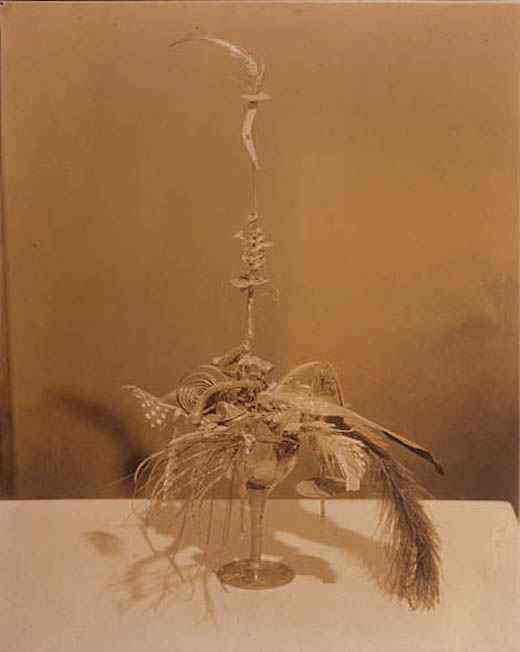
The truth first emerged in a letter from Duchamp to his sister—discovered in 1982 and dated April 11th, 1917, a few days before the exhibit in which Fountain first appeared—in which he “wrote that a female friend using a male alias had sent it in for the New York exhibition.” The name, “Richard Mutt,” was a pseudonym chosen by Freytag-Loringhoven, who was living in Philadelphia at the time and whom Duchamp knew well, once pronouncing that “she is not a Futurist. She is the future.” (See her Portrait of Marcel Duchamp, above, in a 1920 photograph by Charles Sheeler.)
Why did she never claim Fountain as her own? “She never had the chance,” notes See All This. The urinal was rejected by the exhibition organizers (Duchamp resigned from their board in protest), and it was probably, subsequently thrown away; nothing remained but a photograph by Alfred Stieglitz. Von Freytag-Loringhoven died ten years later in 1927.
It was only in 1935 that surrealist André Breton brought attention back to Fountain, attributing it to Duchamp, who accepted authorship and began to commission replicas. The 1917 piece “was destined to become one of the most iconic works of modern art. In 2004, some five hundred artists and art experts heralded Fountain as the most influential piece of modern art, even leaving Picasso’s Les Demoiselles d’Avignon behind.”
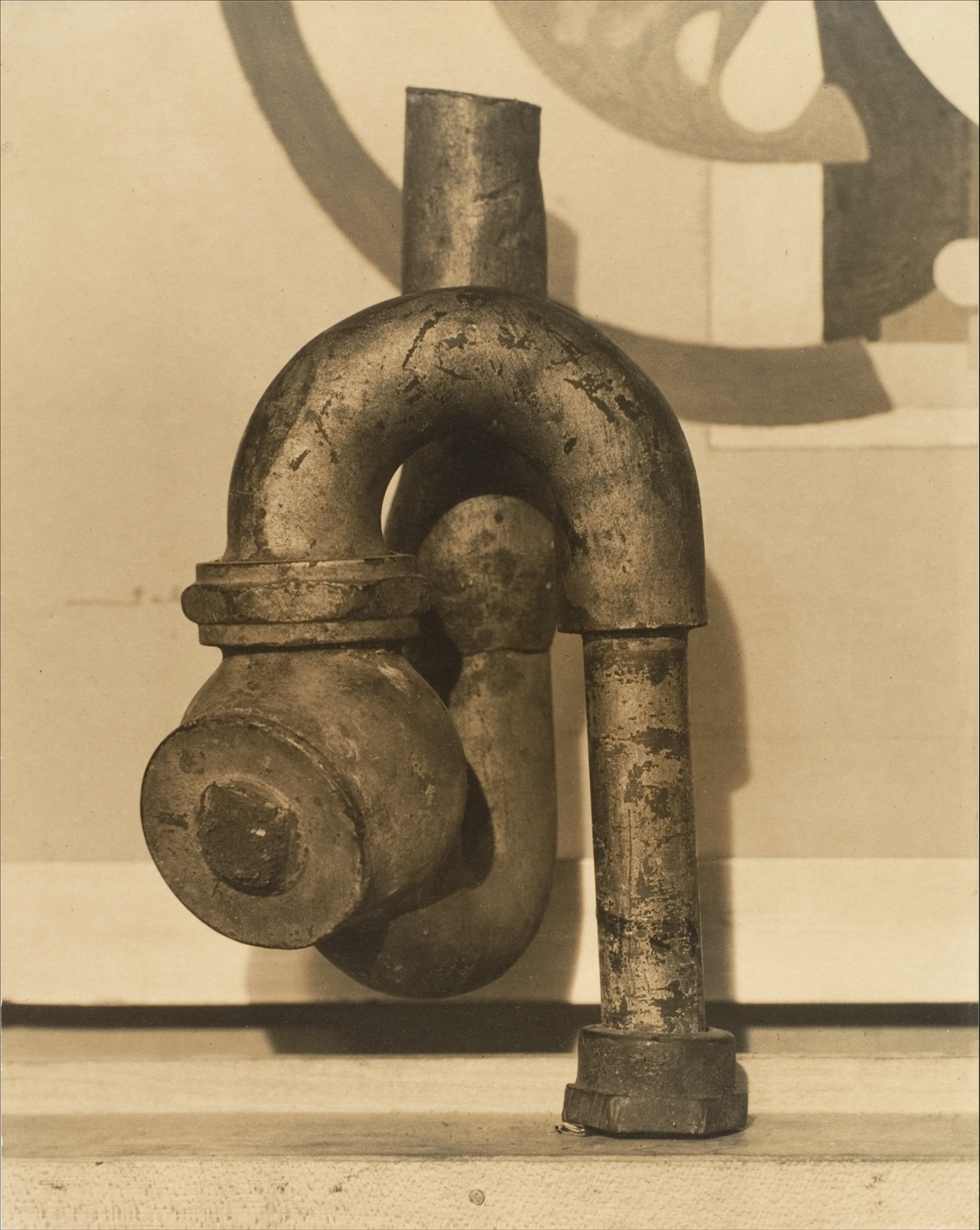
Duchamp’s letter is not the only reason historians have for thinking of Fountain as von Freytag-Loringhoven’s work. “Baroness Elsa had been finding objects in the street and declaring them to be works of art since before Duchamp hit upon the idea of ‘readymades,’” writes Higgs. One such work, a “cast-iron plumber’s trap attached to a wooden box, which she called God” (above), was also misattributed, “assumed to be the work of an artist called Morton Livingston Schaumberg, although it is now accepted that his role in the sculpture was limited to fixing the plumber’s trap to its wooden base.”
“Fountain is base, crude, confrontational and funny,” writes Higgs, “Those are not typical aspects of Duchamp’s work, but they summarize the Baroness and her art perfectly.” Duchamp later claimed to have bought the urinal himself, but later research has shown this to be unlikely. Higgs’ book Stranger Than We Can Imagine explores the issues in more depth, as does an article in Dutch published in the See All This summer issue. What would it mean for the art establishment to acknowledge von Freytag-Loringhoven’s authorship? “To attribute Fountain to a woman and not a man,” the magazine writes, “has obvious, far-reaching consequences: the history of modern art has to be rewritten. Modern art did not start with a patriarch, but with a matriarch.”
Learn more about Elsa von Freytag-Loringhoven at The Art Story.
via See All This
Related Content:
Hear Marcel Duchamp Read “The Creative Act,” A Short Lecture on What Makes Great Art, Great
Josh Jones is a writer and musician based in Durham, NC. Follow him at @jdmagness
Read More...All the Roman Roads of Italy, Visualized as a Modern Subway Map
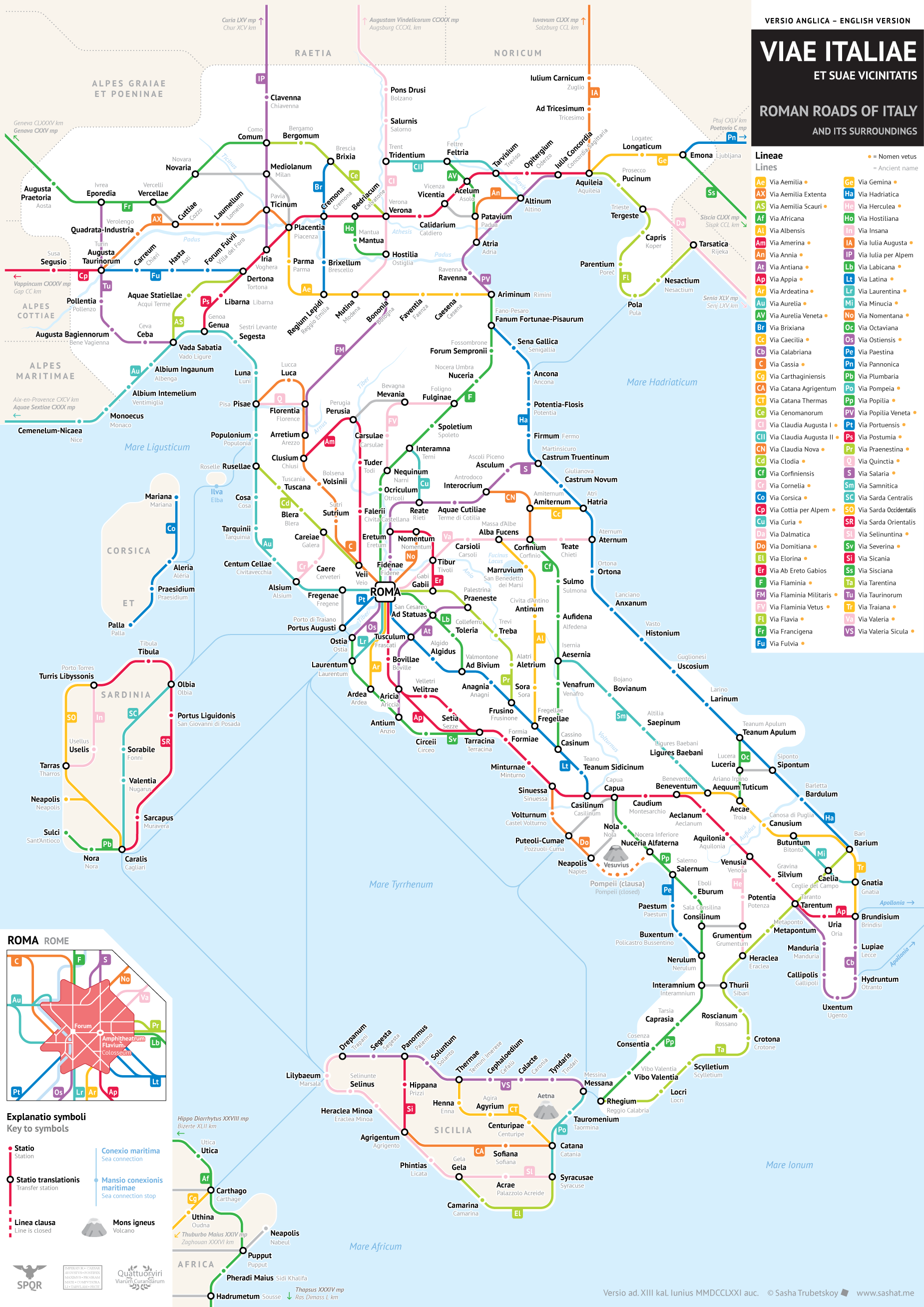
At its peak around the year 117 AD, the mighty Roman Empire owned five million square kilometers of land. It ruled more than 55 million people, between a sixth and a quarter of the population of the entire world. The empire, as classicist and historian Christopher Kelly describes it, “stretched from Hadrian’s Wall in drizzle-soaked northern England to the sun-baked banks of the Euphrates in Syria; from the great Rhine-Danube river system, which snaked across the fertile, flat lands of Europe from the Low Countries to the Black Sea, to the rich plains of the North African coast and the luxuriant gash of the Nile Valley in Egypt.” All that power, of course, originally emanated from Italy.
The builders of the Roman Empire couldn’t have pulled it off without serious infrastructural acumen, including the skill to make concrete that lasts longer than even the modern variety as well as the forcefulness and sheer manpower to lay more than 400,000 kilometers of road.
Not long ago, mapmaker Sasha Trubetskoy took it upon himself to render Rome’s imperial road system in the style of a modern subway map; popular demand put him to work on an aesthetically similar map of Britain’s Roman roads not long after. Now he has turned his skills back toward the land where the Roman Empire all started: above, you can see his “subway map” of the Roman roads of Italy.
“It was fortunate enough that Italy’s Roman roads are quite well-studied and documented, especially when it comes to their actual ancient names,” Trubetskoy writes of this latest project. “This meant that I had to do less artistic interpretation in order to make this look like a sensible, modern chart. That said, there are still some cases where I had to creatively reconstruct certain roads, and I make it clear in the legend which roads those were.” As for the color-coded sidelining of Sicily and Sardinia, “this is a map of Italia (Italy) as the Romans saw it, which did not include those islands. On the other hand, it did include parts of what are today Slovenia and Croatia.”
You can buy a high-resolution version of Trubetskoy’s Viae Italiae et Suae Vicinitatis, or Roman Roads of Italy and Its Surroundings, for $9.00 USD at his site. Printed at poster quality, it could make a suitable gift indeed for any of the cartography enthusiasts, historically minded transit fans, Roman Empire history buffs, or Italian patriots in your life. And in a way, it shows history coming full circle, since much of our sense of how subway maps should look comes from a revolutionary 1972 map of the New York subway system. We’ve featured it before here on Open Culture, alongside an interview with its designer, a certain Massimo Vignelli. And where do you suppose he hailed from?
Related Content:
Ancient Rome’s System of Roads Visualized in the Style of Modern Subway Maps
The Roman Roads of Britain Visualized as a Subway Map
Rome Reborn: Take a Virtual Tour of Ancient Rome, Circa 320 C.E.
The Rise & Fall of the Romans: Every Year Shown in a Timelapse Map Animation (753 BC ‑1479 AD)
Designer Massimo Vignelli Revisits and Defends His Iconic 1972 New York City Subway Map
A Wonderful Archive of Historic Transit Maps: Expressive Art Meets Precise Graphic Design
Based in Seoul, Colin Marshall writes and broadcasts on cities and culture. His projects include the book The Stateless City: a Walk through 21st-Century Los Angeles and the video series The City in Cinema. Follow him on Twitter at @colinmarshall or on Facebook.
Read More...The Thin White Duke: A Close Study of David Bowie’s Darkest Character
Good thing social media wasn’t around in 1976 when David Bowie went through one of his darkest transformations–his career might not have survived it. A few months ago Kanye West started palling around with Trumpism, MAGA hats, and folks like Candace Owens, and Twitter went ballistic and West kind of retreated. But for a moment in 1976, as Polyphonic’s video essay reminds us, David Bowie toyed with actual fascism, saying in one interview:
“You’ve got to have an extreme right-wing front come up and sweep everything off its feet and tidy everything up,” he said in a contentious, weird, and most-probably coke-addled interview in the NME. (You can read the full interview here at The Quietus, which will provide some needed context.)
The interview came on the heels of Young Americans, both his tribute to the Philly soul sound and a critique of the “relentless plastic soul” of American culture. At the same time, Bowie was indulging in his interest in the occult and the teachings of Aleister Crowley, a thread that winds its way through many of his songs, from the Space Oddity album onward. In a Playboy interview he compared Hitler to rock stars long before side four of Pink Floyd’s The Wall. And in one ill advised moment, he seemed to be giving the Nazi salute when he arrived at London’s Victoria Station. (Though Bowie later called this period of his life “ghastly,” he always insisted it was just the camera catching him mid-wave.)
(For an in depth look at Bowie’s fascist fascination–with a side look at Eric Clapton’s much worse Enoch Powell-supporting speech–check out this article.)
But for the chameleon rock star who seemed convinced rock music at the time was moribund, this might have all been at the service of a new Bowie character, the Thin White Duke, the man who dressed in black and white and struck a gaunt figure. The man who once sung about “rock and roll suicide” and who broke up the band at the height of their fame, was now diving into himself, running for the shadows, as he existed on a diet of milk, peppers, and cocaine. This could have been what Jung called the “shadow self.”
The whole period would have been sad and pathetic if Bowie had delivered up a crap album. But he didn’t. Station to Station–an allusion to the Kabbalah Tree of Life–is a stone cold classic, and is the preamble to the Berlin trilogy. Polyphonic’s video essay spends most of its time dissecting the lyrics to the epic opening track, teasing out its occult references along with a psychological portrait of Bowie’s mind at the time.
“Station to Station” had no equal in Bowie’s catalog for its breadth and obscurity…that is until Blackstar, the similarly long, multi-part opening track to Bowie’s final album. He even wears the same blue and silver striped leotard in the video for “Lazarus” that he wore in 1976; Bowie had returned to what Station to Station started, before departing for destinations beyond.
Related Content:
When David Bowie Became Nikola Tesla: Watch His Electric Performance in The Prestige (2006)
Ted Mills is a freelance writer on the arts who currently hosts the artist interview-based FunkZone Podcast and is the producer of KCRW’s Curious Coast. You can also follow him on Twitter at @tedmills, read his other arts writing at tedmills.com and/or watch his films here.
Read More...When Jean-Paul Sartre Had a Bad Mescaline Trip and Then Hallucinated That He Was Being Followed by Crabs
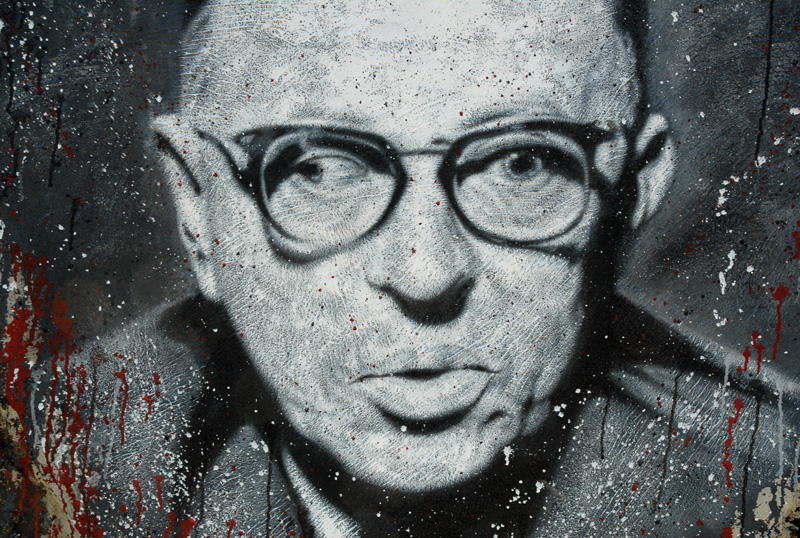
Image by Thierry Ehrmann via Flickr Commons
Sometimes when confronted with strange new ideas, people will exclaim, “you must be on drugs!”—a charge often levied at philosophers by those who would rather dismiss their ideas as hallucinations than take them seriously. But, then, to be fair, sometimes philosophers are on drugs. Take Jean-Paul Sartre. “Before Hunter S. Thompson was driving around in convertibles stocked full of acid, cocaine, mescaline and tequila,” notes Critical Theory, Sartre almost approached the gonzo journalist’s habitual intake.
According to Annie Cohen-Solal, who wrote a biography of Sartre, his daily drug consumption was thus: two packs of cigarettes, several tobacco pipes, over a quart of alcohol (wine, beer, vodka, whisky etc.), two hundred milligrams of amphetamines, fifteen grams of aspirin, a boat load of barbiturates, some coffee, tea, and a few “heavy” meals (whatever those might have been).
These details should not unduly influence our reading of Sartre’s work. Like Thompson, no matter how physically debilitating the booze and drugs might have been for him, they didn’t seem to cramp his productivity or intellectual vigor. But his one and only experience with mescaline almost sent him careening over the edge, and certainly contributed to an important motif in his work afterward.
While working on a book about the imagination, Sartre sought to have an hallucinatory experience. He got the chance in 1935 when an old friend, Dr. Daniel Lagache, invited him into an experiment at Sainte-Anne’s hospital in Paris, where he was injected with mescaline and observed under controlled conditions. “Sartre does not appear to have had a bad trip in the classic sense of suffering a major and prolonged panic attack,” Gary Cox writes in his Sartre biography. “But it was not a good trip and he did not enjoy it.”
The most ill effects came afterward: “His visual faculties remained distorted for weeks.” Sartre saw houses with “leering faces, all eyes and jaws.” Clock faces took on the features of owls. He confided in his partner Simone de Beauvoir that “he feared that one day he would no longer know” whether or not these were hallucinations. They were, however, not the worst aftereffects. As Sartre told political science professor John Gerassi in a 1971 interview, crabs began to follow him around. He described the experience as “a nervous breakdown.” The crabs followed him “all the time,” he said, “I mean they followed me in the streets, into class.”
I got used to them. I would wake up in the morning and say, “Good morning, my little ones, how did you sleep?” I would talk to them all the time, or I would say, “OK guys, we’re going into class now, so we have to be still and quiet,” and they would be there, around my desk, absolutely still, until the bell rang.
This went on for a year before Sartre went to see his friend Jacques Lacan for psychoanalysis. “We concluded, “ he says, “that it was a fear of becoming alone.” While he had previously confessed a fear of sea creatures, especially crabs, that went back to his childhood, after the mescaline trip, crabs featured prominently in his work, as Peter Royle shows at Philosophy Now.
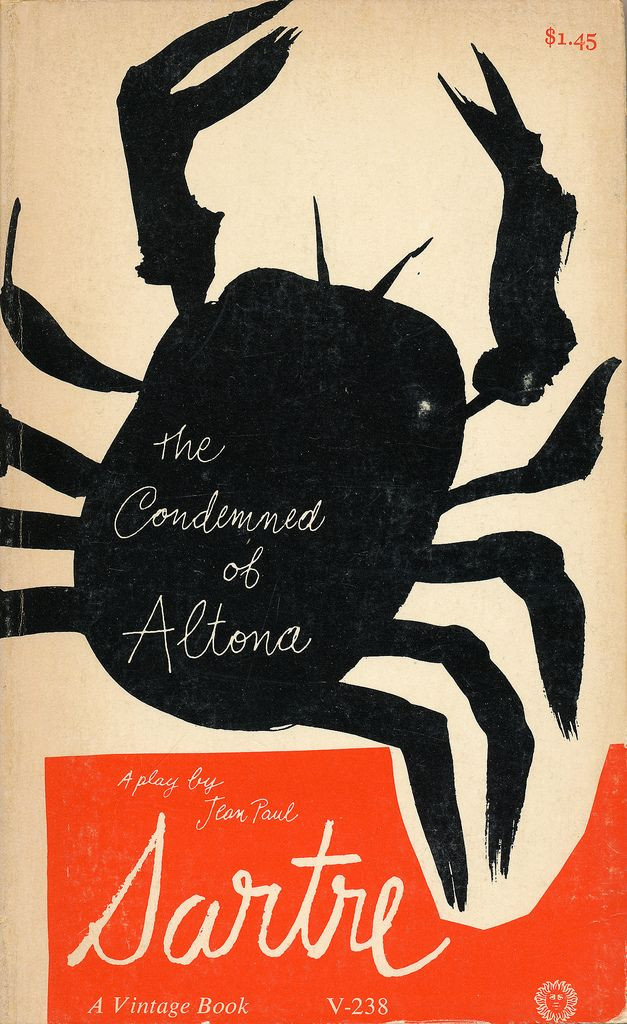
We find several references to crabs in his short story collection The Wall and in his famous essay “Existentialism is a Humanism.” Samir Chopra quotes crab passages in Sartre’s first novel Nausea. (“At first I avoided them by writing about them,” he told Gerassi, “in effect, by defining life as nausea.”) “In one of his short stories, ‘Erostratus,’” notes Royle, “Sartre creates a character, Paul Hilbert, who looks down on human beings from a height and sees them as crabs.” The most striking use of the “crab motif” comes from his 1959 play The Condemned of Altona, in which the protagonist Frantz imagines that by the Thirtieth Century, humans have become crabs sitting in judgment of the people of the Twentieth.
Crab images, Royle argues, “point to important philosophical ideas,” including “the possibility of ignominy inherent in the concept of freedom itself” and the “reprehensible ‘crabs’ who decline to assume their freedom” and thus scuttle around mindlessly in groups. Crustaceans continued to haunt the philosopher. While the effects of the mescaline eventually dissipated, “when he was feeling down,” writes Cox, Sartre would get the “recurrent feeling, the delusion, that he was being pursued by a giant lobster, always just out of sight… perpetually about to arrive.”
One of the “great, darkly comic features of Sartre folklore,” the huge, invisible lobster invites much speculation about Sartre’s mental health. But perhaps it was only the monstrous embodiment of his own feelings of mauvaise foi, given vivid form by a lingering psychotropic hangover and a daily diet of uppers and downers—a reminder of the “anxiety, anguish, dread, apprehension, fear of pain, fear of death… [and] fundamental absurdity of existence.” As Royle writes, Sartre, always fond of puns, “could only have been intrigued” by the French word for lobster, homard, which sounds like “homme-ard,” a coinage that might suggest something like “a bad man.”
Related Content:
The Drawings of Jean-Paul Sartre
Josh Jones is a writer and musician based in Durham, NC. Follow him at @jdmagness
Read More...A Big Digital Archive of Independent & Alternative Publications: Browse/Download Radical Periodicals Printed from 1951 to 2016
The consolidation of big media in print, TV, and internet has had some seriously deleterious effects on politics and culture, not least of which has been the major dependence on social media as a means of mass communication. While these platforms give space to voices we may not otherwise hear, they also flatten and monetize communication, spread abuse and disinformation, force the use of one-size-fits-all tools, and create the illusion of an open, democratic forum that obscures the gross inequities of real life.
Today’s media landscape stands in stark contrast to that of the mid-to-late twentieth century, when independent and alternative presses flourished, disseminating art, poetry, and radical politics, and offering custom platforms for marginalized communities and dissenters. While the future of independent media seems, today, unclear at best, a look back at the indie presses of decades past may show a way forward.
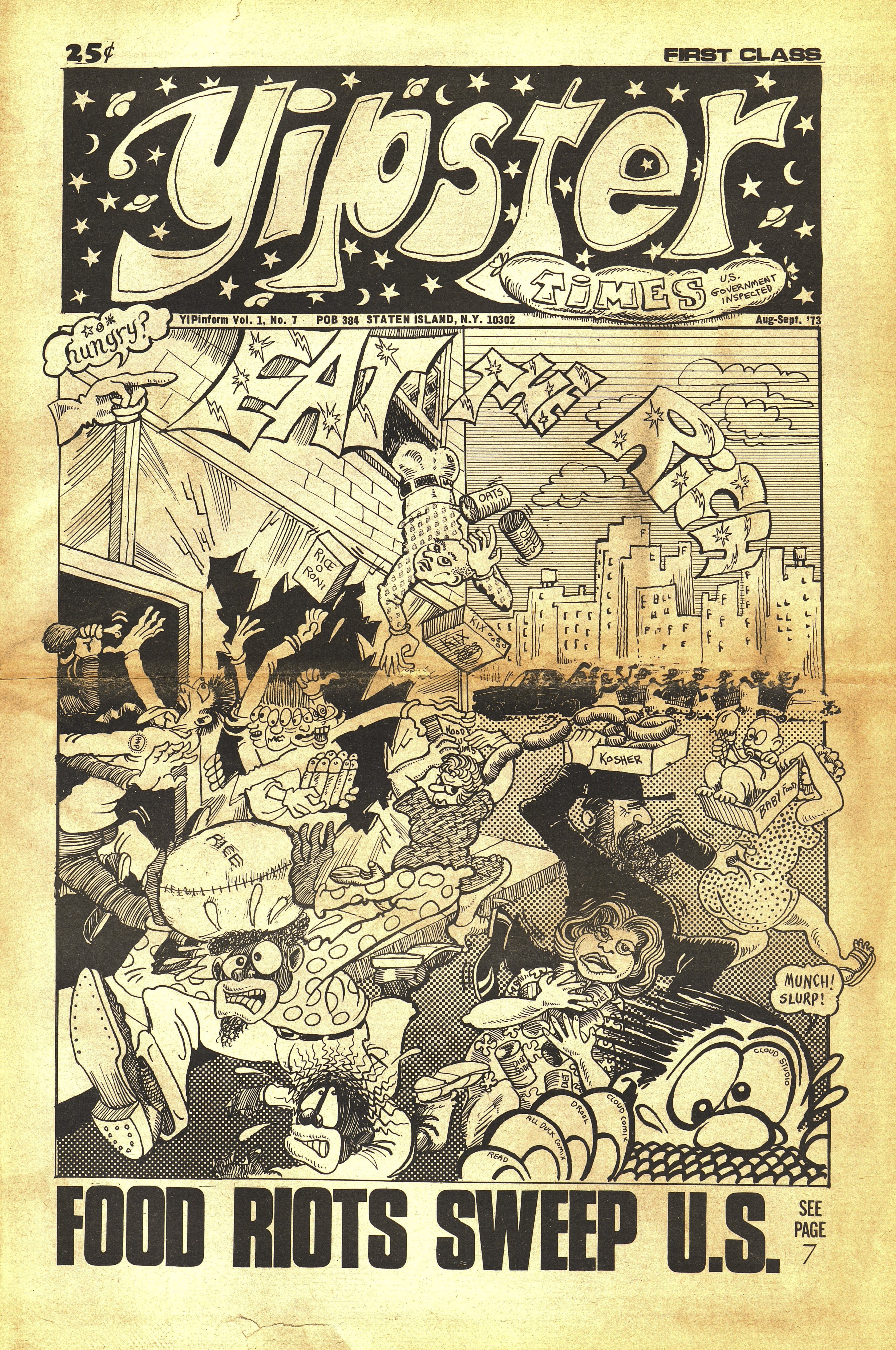
Paradoxically, the same technology that threatens to impose a global monoculture also enables us to archive and share thousands of unique artifacts from more heterodox ages of communication. One stellar example of such an archive, Independent Voices—“an open access collection of an alternative press”—stores several hundred digitized copies of periodicals “produced by feminists, dissident GIs, campus radicals, Native Americans, anti-war activists, Black Power advocates, Hispanics, LGBT activists, the extreme right-wing press and alternative literary magazines during the latter half of the 20th century.”
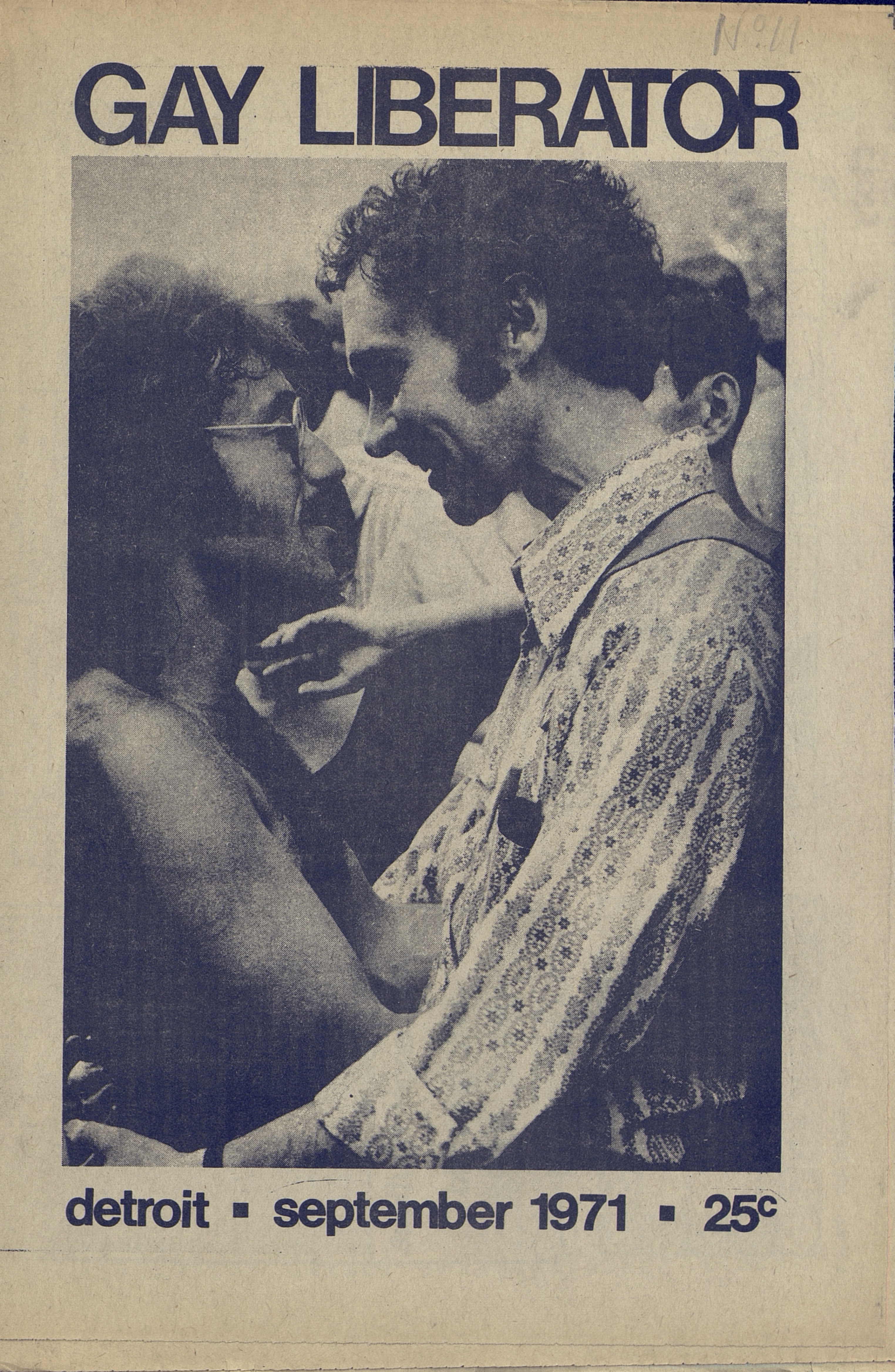
These publications come from the special collections of several dozen libraries and individuals and span the years 1951 to 2016. While examples from recent years show that alternative print publications haven’t disappeared, the richest, most historically resonant examples tend to come from the 60s and 70s, when the various strains of the counterculture formed collective movements and aesthetics, often powered by easy-to-use mimeograph machines.
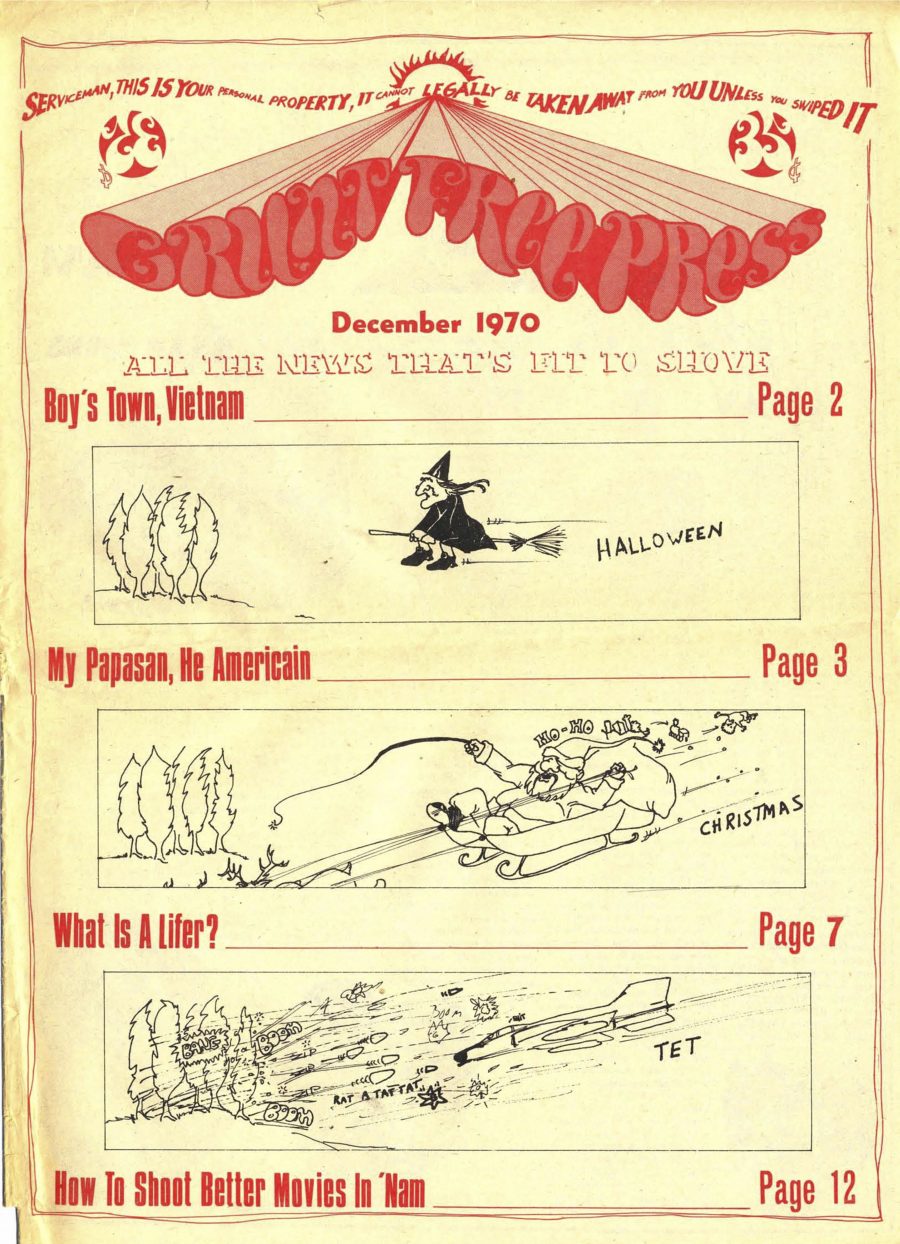
As Georgia State University historian John McMillian says, the “hundreds of radical underground newspapers” that proliferated during the Vietnam war “educated and politicized young people, helped to shore up activist communities, and were the movement’s primary means of internal communication.” These publications, notes The New Yorker’s Louis Menand, represent “one of the most spontaneous and aggressive growths in publishing history.”
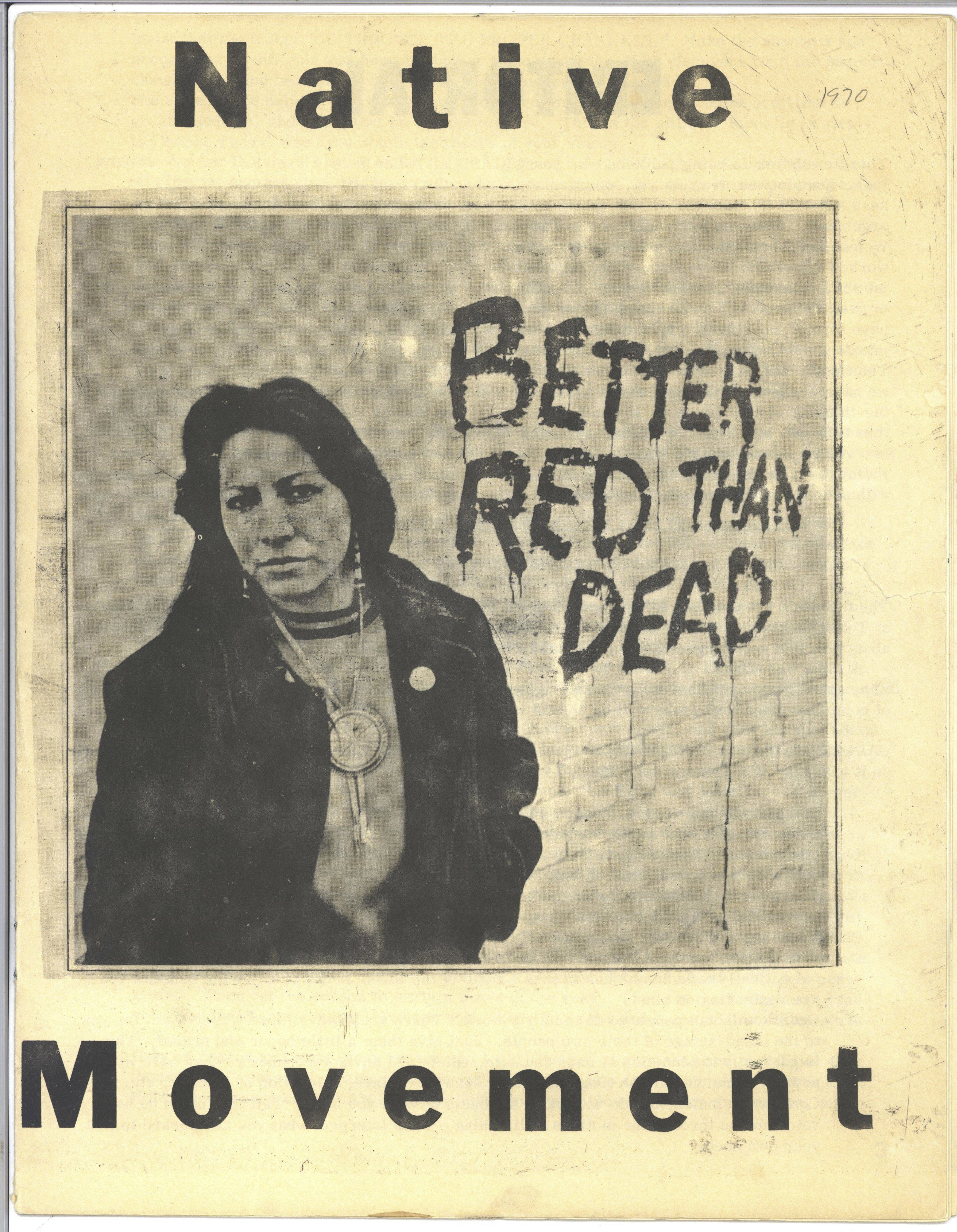
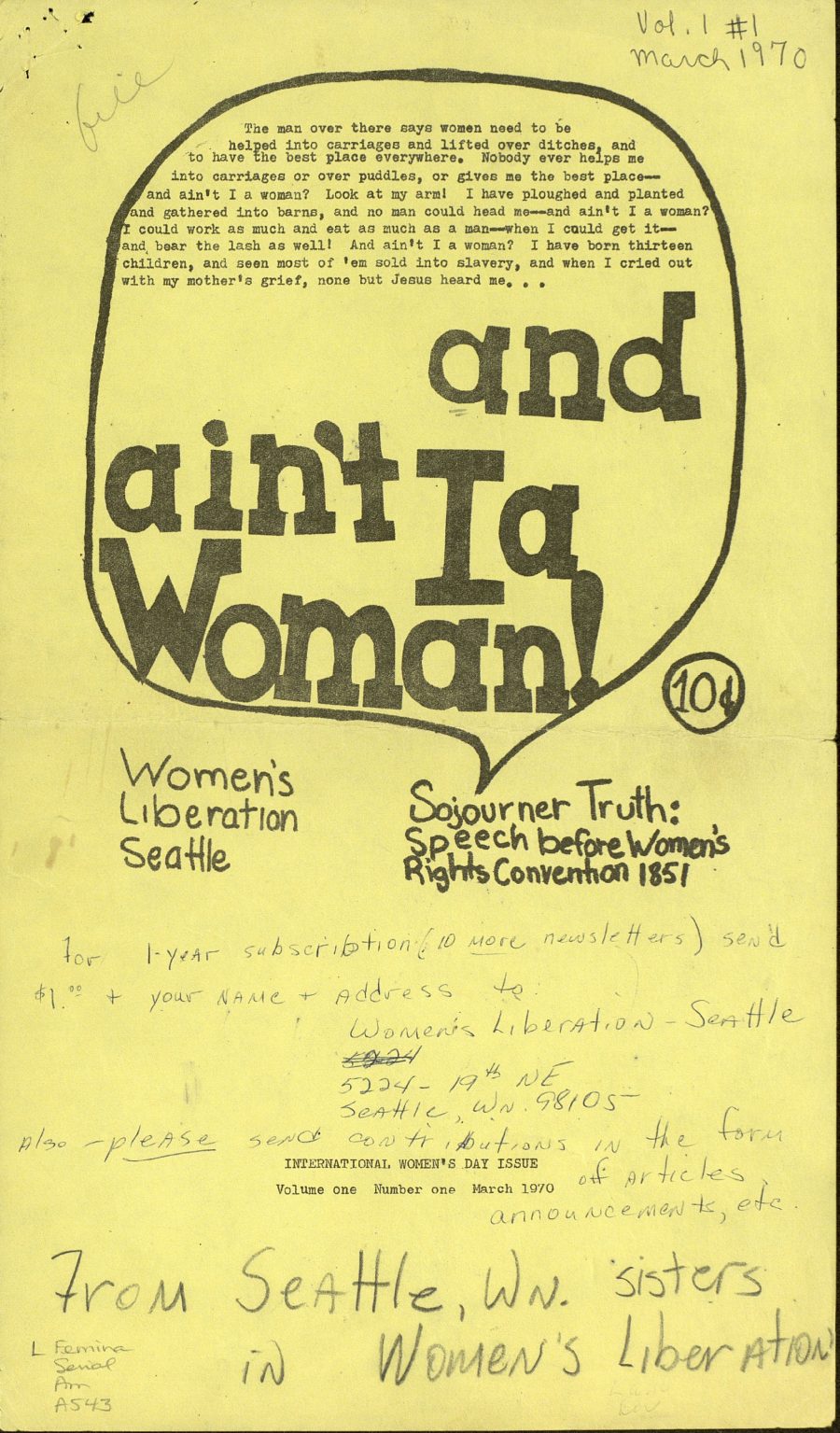
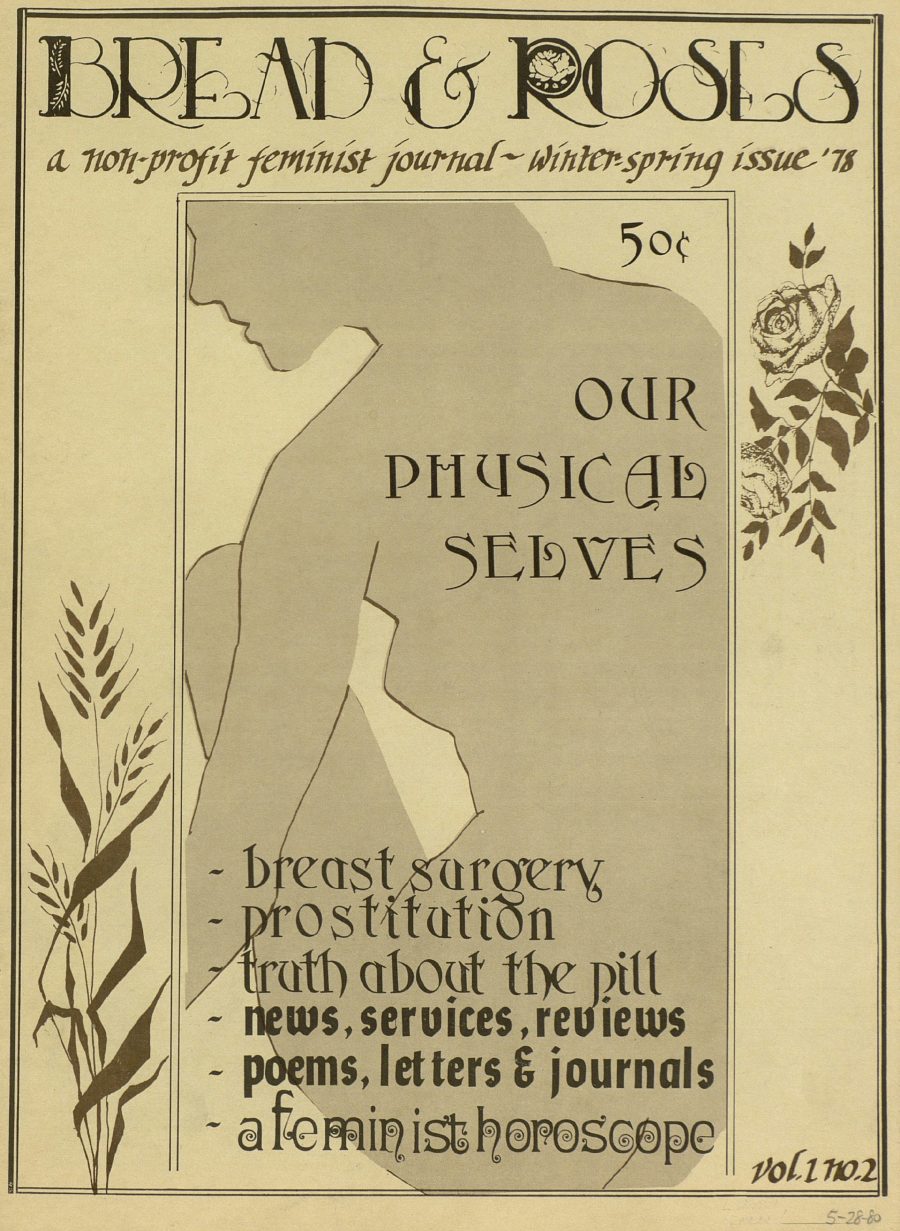
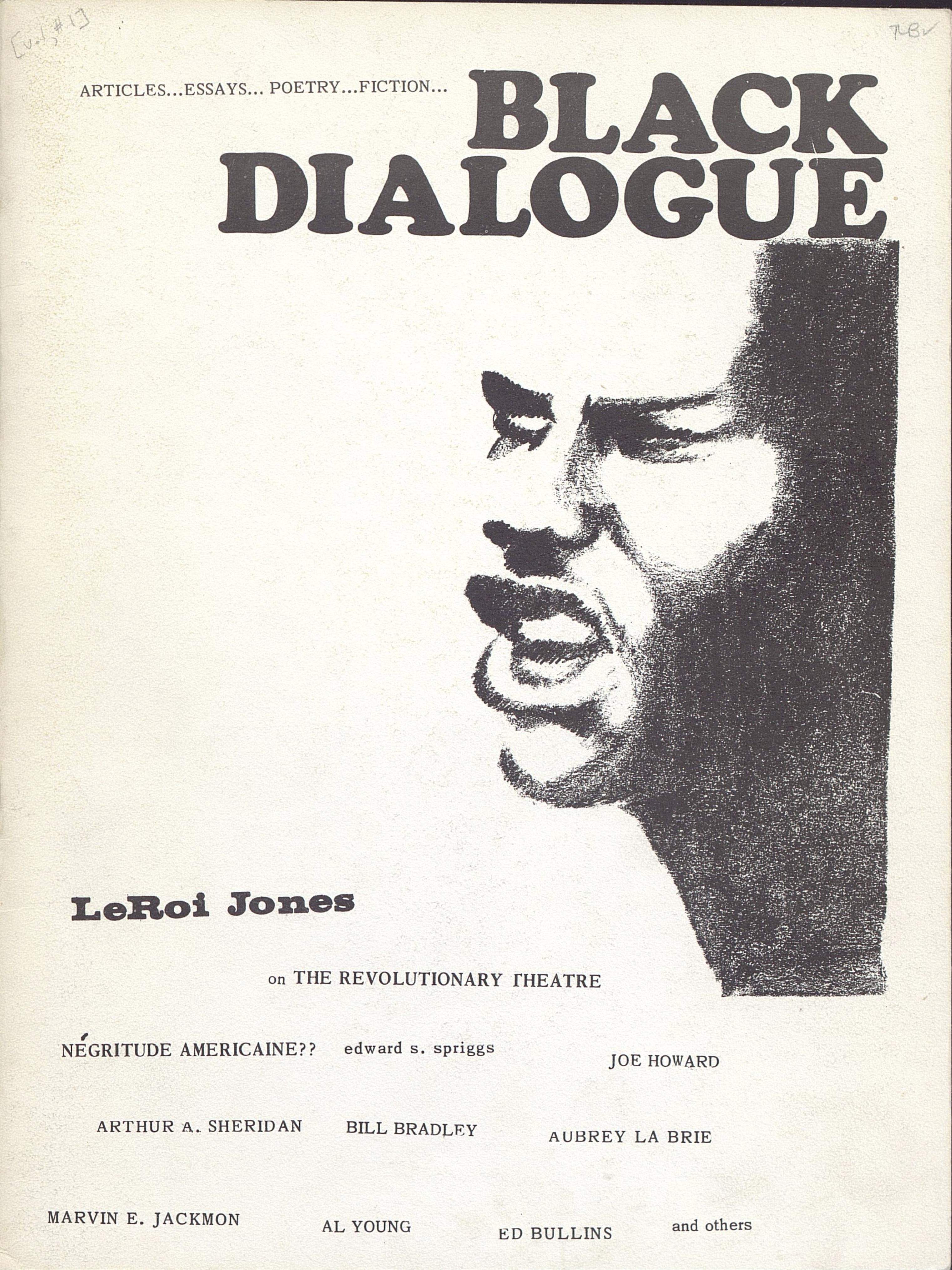
With publications from the era like And Ain’t I a Woman, Bread & Roses, Black Dialogue, Gay Liberator, Grunt Free Press, Native Movement, and The Yipster Times, Independent Voices showcases the height of countercultural activist publishing. These are only a smattering of titles on offer. Each issue is archived in a high-resolution, downloadable PDF, perfect for brushing up on your general knowledge of second-wave feminism or 60s Black Power; sourcing scholarship on the development of radical, alternative press over the past sixty years; or finding material to inspire the future of indie media, whatever form it happens to take. Enter the Independent Voices archive here.
Related Content:
Josh Jones is a writer and musician based in Durham, NC. Follow him at @jdmagness
Read More...
An Animated Introduction to Anna Freud: The Psychoanalyst (and Daughter of Sigmund) Who Theorized Denial, Projection & Other Defense Mechanisms for Our Egos
Being in denial, engaging in projection, rationalizing or intellectualizing events, regressing into childhood, displacing your anger, retreating into fantasy: who among us hasn’t been subject to accusations of doing these things at one time or another? And even if you haven’t, all of those terms surely sound familiar. They owe their place in the culture in large part to the psychoanalyst Anna Freud, who catalogued these and other “defense mechanisms” in her 1934 book The Ego and Mechanisms of Defense. In her analysis, we engage in these sometimes unpleasant and even embarrassing behaviors to protect our ego — another now-common term that, in Freudian usage, refers to our preferred image of ourselves.
As the daughter of Sigmund Freud, the “father of psychoanalysis,” Anna Freud’s name carried a considerable weight in the psychoanalytical world. We’ve previously featured an animated introduction to the work of Freud père from Alain de Botton’s The School of Life here on Open Culture, and today we have one from the same source on that of Freud fille.
Together they reveal that, though both Sigmund and Anna Freud worked in the same field, and indeed each did more than their part to develop that field, each of their bodies of work on the human mind stands on its own. And though many terms coined by Sigmund Freud — “Oedipus complex,” the “subconscious,” and even “id, ego, and superego” — remain in our lexicon, the names Anna Freud gave the defense mechanisms may well see even more everyday use.
You can hear all those mechanisms explained in the video above or read about them in the accompanying article at The Book of Life. “Anna Freud started from a position of deep generosity towards defense mechanisms,” it says. “We turn to them because we feel immensely threatened. They are our instinctive ways of warding off danger and limiting psychological pain.” Ultimately, her work teaches “a lesson in modesty. For she reveals the extreme probability that defense mechanisms are playing a marked and powerful role in one’s own life – though without it being obvious to oneself that this is so.” In other words, you can’t, for the most part, help it. That explanation may not get you off the hook the next time someone tells you to stop projecting, intellectualizing, or displacing, but bear in mind that when it comes to defending the ego, no one else can help it either.
Related Content:
Sigmund Freud, Father of Psychoanalysis, Introduced in a Monty Python-Style Animation
Sigmund Freud’s Home Movies: A Rare Glimpse of His Private Life
Watch Lucian Freud’s Very Last Day of Painting (2011)
Based in Seoul, Colin Marshall writes and broadcasts on cities and culture. His projects include the book The Stateless City: a Walk through 21st-Century Los Angeles and the video series The City in Cinema. Follow him on Twitter at @colinmarshall or on Facebook.
Read More...Cheap Trick’s Bassist Tom Petersson Helps Kids With Autism Learn Language With Rock ‘n’ Roll: Discover “Rock Your Speech”
You can’t fault people for turning away from current events these days, but there are many pockets of light, even if they rarely make headlines or get curated by gloom and doom algorithms. Some optimism has come to us by way of musicians like David Byrne, whose good-news aggregator “Reasons to Be Cheerful” showcases positive developments around the world. Indie rock drummer Thor Harris has encouraged fans with tips on how to stay healthy in trying times, and he has announced a run for governor of Texas. And last fall, Cheap Trick’s bassist Tom Petersson started a project called Rock Your Speech, which “leverages the power of music to build language skills in children who are working to overcome speech delay associated with autism.”
As Petersson and his wife Alison explain above, they were inspired by their experience with their son, Liam, who, “until the age of five,” reports David Chiu at Huffington Post, “had difficulty communicating,” They discovered that music could help when Liam began singing along to one of her favorite Elton John songs. Petersson wanted “to help other parents,” he told HuffPo, “and to let people know they’re not alone.” An L.A. benefit concert harnessed the collective power of celebrities and indie artists to jumpstart the project, with bands like the Dandy Warhols and Red Kross and actors Ed Asner and Billy Bob Thornton participating.
Rock Your Speech is not the only such initiative, but it is probably the most high-profile, and could bring attention to similar efforts like Auditory-Motor Mapping Training, developed by Dr. Gottfried Schlaug of the Music and Neuroimaging Laboratory. At the Autism Speaks blog, Schlaug writes, “as many as three in ten children with autism are nonverbal. Yet many children with autism have superior auditory skills and a particular attraction to music.” Like Rock Your Speech, his approach uses “forms of music-making that encourage vocalization as a pathway to developing language.” Musician and psychologist Adam Reece has also written about his research showing the positive role music therapy can play in language acquisition for kids on the spectrum.
Petersson’s project puts a rock star face on music therapy and comes “from the point of view of the parent,” he says. Rock Your Speech not only raises autism awareness but also offers original music and videos designed to stimulate and inspire kids. Hear “Blue” from the Rock Your Speech, Volume 1 album above, one of several songs Petersson wrote that “employs actual rock music,” Chiu writes, “not necessarily the gentle, kiddie-type of sounds that are generally prevalent in children’s music.” Videos on the Rock Your Speech site for “Blue” and other songs “not only show the words but also demonstrate to kids how those words are formed and mouthed.”
The project’s Vimeo channel shows the Petersson family involved in Liam’s speech development through music, including his older sister Lilah coaching her brother with a song called “Wash Your Hands.” (See Lilah’s video above for her song “All the Same,” written for Liam.) Liam, now ten, has come a long way. “He’s in school,” says Petersson, “He loves music… He’s definitely on the autism spectrum, but he speaks, he’s social. He’s the sweetest little guy.” His musical family has a lot to do with that, but Rock Your Speech offers even non-musician parents a wealth of catchy tools to help kids struggling with speech to connect with language through rock ‘n’ roll. For many families, that could be very good news indeed.
Related Content:
New Research Shows How Music Lessons During Childhood Benefit the Brain for a Lifetime
Josh Jones is a writer and musician based in Durham, NC. Follow him at @jdmagness
Read More...Meet “Founding Mother” Mary Katharine Goddard, First Female Postmaster in the U.S. and Printer of the Declaration of Independence
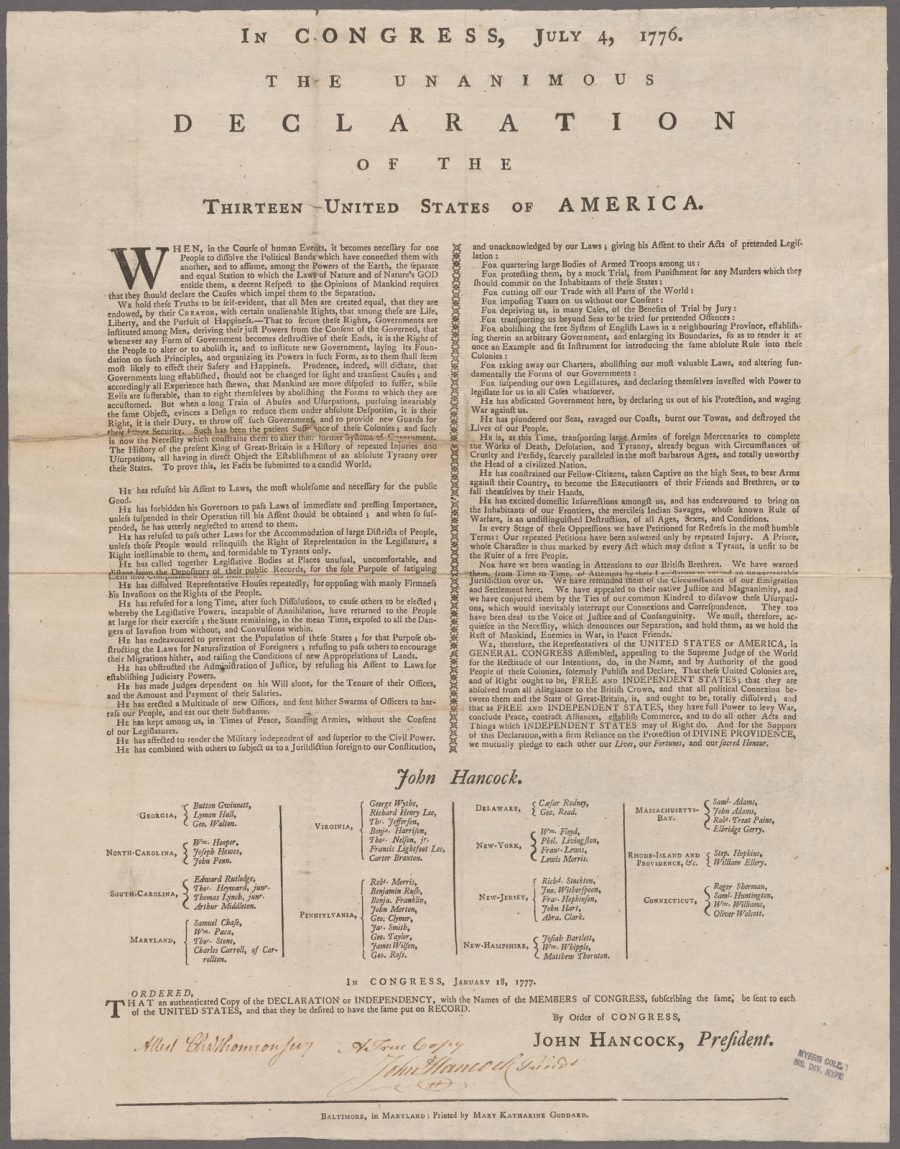
Once again, it’s time for Americans to celebrate their country’s “birthday,” a rather miraculous event, we might say, since the only people present at the birth were founding fathers. See their names on the printed Declaration of Independence above, from the outsized John Hancock, to famous favorites Benjamin Franklin, Thomas Jefferson, and second cousins John and Sam Adams, to a bunch of other guys no one remembers. But wait, zoom in (to the scanned copy here), who’s that at the bottom? No, the very, very bottom, in tiny type…. “Baltimore, in Maryland: Printed by Mary Katharine Goddard.” Who?
“If you’ve never noticed it or heard of her, you aren’t alone,” writes Petula Dvorak at The Washington Post, but Mary Goddard could be called “a Founding Mother, of sorts,” as a publisher of the Maryland Journal, proprietor of a printing press, bookstore owner, and postmaster general of Baltimore.
Goddard was fearless her entire career as one of America’s first female publishers, printing scoops from Revolutionary War battles from Concord to Bunker Hill and continuing to publish after her offices were twice raided and her life was repeatedly threatened by haters.
In “her boldest move,” she put her full name at the bottom of copies of the Declaration that her press printed and distributed to all of the colonies. This was the first copy Americans would see with all of the signers’ name. Goddard had received the commission from Congress and more honors besides. In 1775, she was appointed Baltimore’s first postmaster, serving “under the leadership of Postmaster General Benjamin Franklin,” notes the National Postal Museum. She “may have been the first woman postmaster in colonial America.”
The printing and postal trades were a family business: her father Giles served as postmaster of New London, Connecticut, and her younger brother William established the colonial postal system. Just as she has been sidelined by history, she was sidelined in her lifetime. She “lost her job as publisher,” writes Dvorak, “after her brother married and returned to Baltimore in 1784, taking over the Maryland Journal and ousting his sister.”
And after serving as Baltimore postmaster for 14 years, she was pushed out of the job by Postmaster General Samuel Osgood, who “didn’t think a woman could handle all the travel associated with the job.” (Over 200 merchants and residents of Baltimore petitioned Osgood, to no avail.) The story of Goddard’s life and career is both inspiring and frustrating—but here’s to hoping she makes it into the history books where she belongs. See her printed copy of the Declaration in high-resolution detail at the New York Public Library’s Digital Collections.
Related Content:
An Archive of 8,000 Benjamin Franklin Papers Now Digitized & Put Online
Thomas Jefferson’s Handwritten Vanilla Ice Cream Recipe
Josh Jones is a writer and musician based in Durham, NC. Follow him at @jdmagness
Read More...Support Us
We're hoping to rely on loyal readers, rather than erratic ads. Please click the Donate button and support Open Culture. You can use Paypal, Venmo, Patreon, even Crypto! We thank you!

About Us

Open Culture scours the web for the best educational media. We find the free courses and audio books you need, the language lessons & educational videos you want, and plenty of enlightenment in between.
Advertise With Us

FREE UPDATES!
GET OUR DAILY EMAIL
Get the best cultural and educational resources on the web curated for you in a daily email. We never spam. Unsubscribe at any time.
FOLLOW ON SOCIAL MEDIA

Open Culture editor Dan Colman scours the web for the best educational media. He finds the free courses and audio books you need, the language lessons & movies you want, and plenty of enlightenment in between.
Advertise With Us

