815 Free Art Books from World Class Museums: The Met, the Guggenheim, the Getty & LACMA
Whatever else Banksy’s 2010 documentary Exit Through the Gift Shop suggests about the strange relationship between the worlds of gallery and street art, its title alone hints at a serious problem with the art establishment: museums are expensive! Unless you are in Washington, DC, where most of the museums are free, you must not only pony up an entrance fee (or “suggested donation”), but you must also, well, exit through the gift shop, where you’ll inevitably be tempted to purchase some tchotchkes, swag, knick-knacks, or—more likely for art lovers—some beautiful, overpriced book with glossy, full-page reproductions of the works you rushed past with impatient family or stood on tiptoes to glimpse over the heads of tourist crowds.
It’s true, you may sometime have the good fortune of getting to the Metropolitan Museum of Art, the Getty, the Guggenheim, or the LACMA on an off day, with all the time in the world to mill around and take it in. But if you’re anything like me, you’ll still find yourself hovering around the shelves and book tables, trying to convince yourself not to shell out upwards of $100 or more for some gorgeous coffee table volume. (And that’s assuming you even get to New York or L.A. to visit these museums at all.) Museum gift shop art books—whether they highlight the collections, other museums, historic schools and movements, or the techniques and development of individual artists—are tantalizing objects, as are the catalogs that accompany exhibitions.
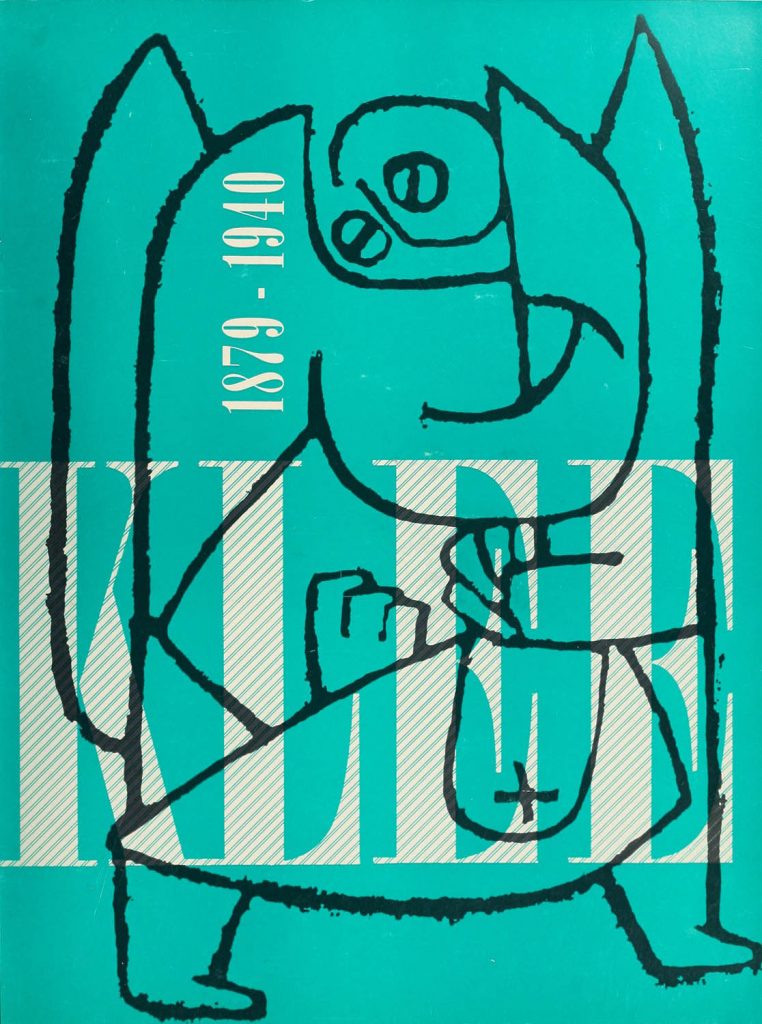
Online libraries created by major museums have mitigated many of these issues of cost and distance. While they won’t substitute for the feel and smell of new books, nor proudly adorn your coffee table, hundreds of the volumes you might covet at the gift shop have been digitized and can be read and downloaded for free. For example, if you head over to the Guggenheim’s website, you can browse online catalogs from historic exhibits, like that for the Paul Klee 1879–1940 exhibit from 1967 (top). Then rummage through 108 free art books delving into all kinds of modern art.
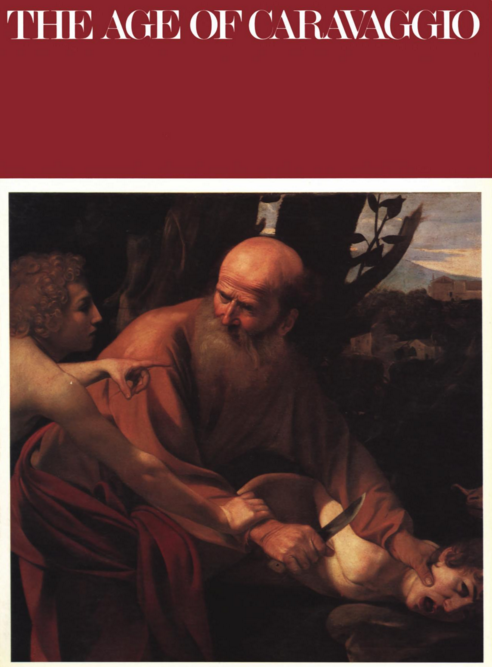
The Metropolitan Museum of Art has 456 more books to read—and to download—in their online library. You can, for example, own a copy of The Age of Caravaggio as a PDF on your hard drive, or you can read it online, along with titles covering every imaginable school, period, artist, and region—“five decades of Met publications on art history, available to read, download, and/or search for free.”
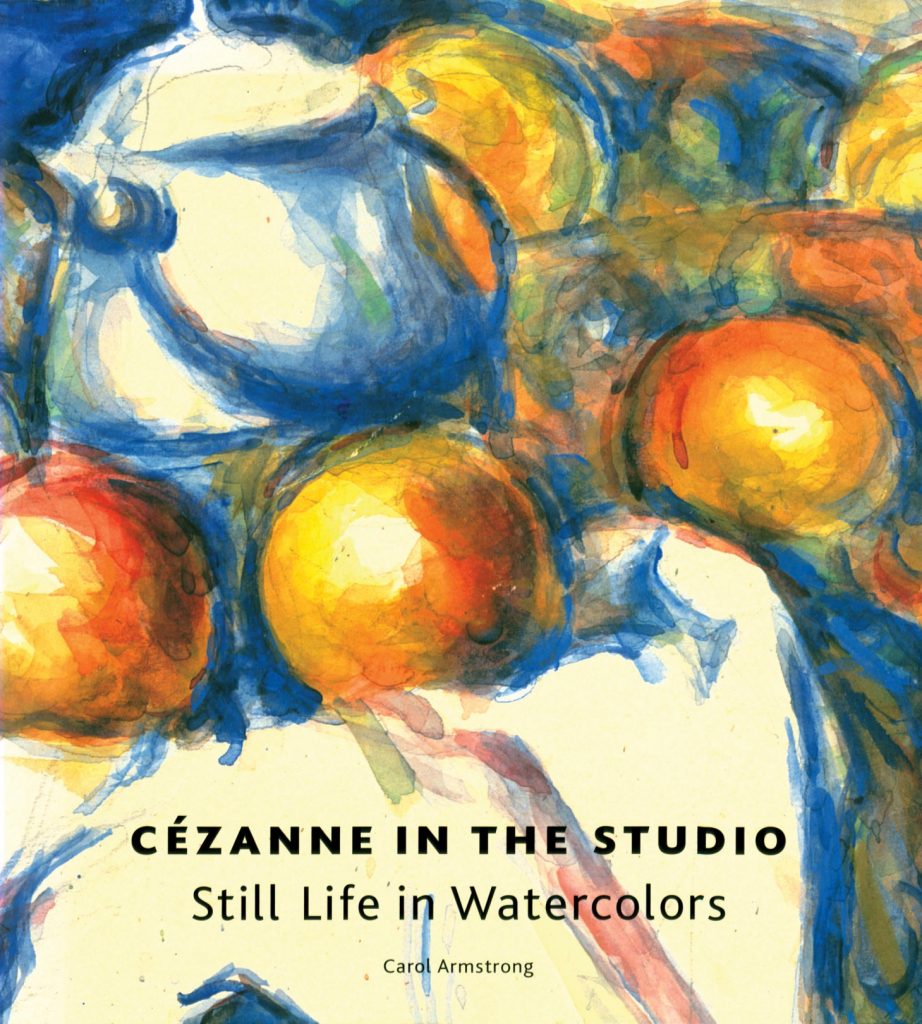
On the other side of the country, we have the impressive Getty museum, well over 200 of whose publications you can access immediately without leaving your screen at the Getty Publications Virtual Library. There you’ll find “free digital backlist titles from the Getty Publications archive,” like Cézanne in the Studio, which you can read online or download as a PDF.
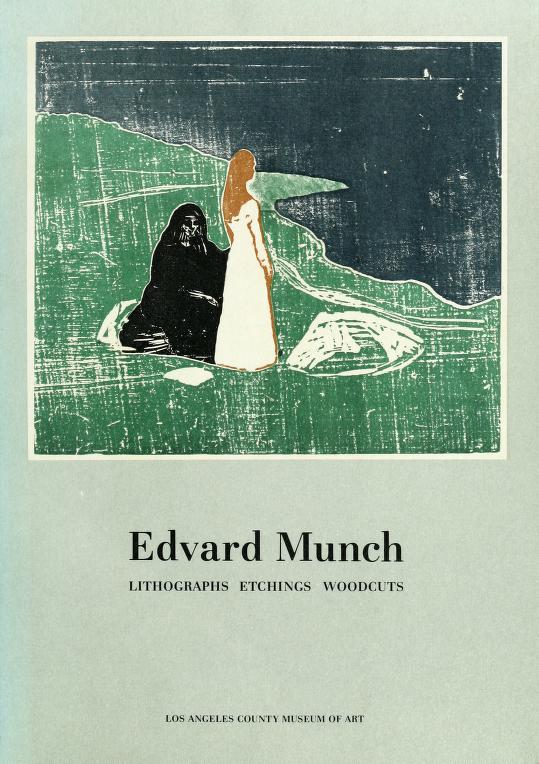
And if you happen to be in Los Angeles with time on your hands, I know you won’t deny yourself a trip to the fantastic L.A. County Museum of Modern Art. But whether or not you’re able to see its dizzyingly diverse collection for yourself, or visit its gift shops, there’s little stopping you from browsing its online Reading Room, where you’ll find several online titles free to read and download, like this excellent presentation of Edvard Munch’s lithographs, etchings, and woodcuts. Whether you’re a student, a scholar, or simply a devoted lover of art, your life will be greatly enhanced by the hundreds of books in these free online collections.
Related Content:
Download 448 Free Art Books from The Metropolitan Museum of Art
The Guggenheim Puts 109 Free Modern Art Books Online
Download Over 250 Free Art Books From the Getty Museum
Google Puts Over 57,000 Works of Art on the Web
Free Course: An Introduction to the Art of the Italian Renaissance
Josh Jones is a writer and musician based in Durham, NC. Follow him at @jdmagness
Read More...An Introduction to the World of Haruki Murakami Through Documentaries, Stories, Animation, Music Playlists & More
Some of you may wonder what inspires such devotion among the fans of Haruki Murakami, the world’s most internationally popular novelist. The rest of you — well, you’ll probably already know that today is the man’s birthday. Whichever group you fall into, you might like to use the day as an excuse to either deepen your Murakami fandom, or to finally have a look across his singular literary landscape, made up of books like A Wild Sheep Chase, Norwegian Wood, The Wind-Up Bird Chronicle, and 1Q84, with its prose at once styleless and ultra-distinctive, its scope of reference Japanese and global, and the material of its stories thoroughly strange as well as mundane.
Haruki Murakami: In Search of this Elusive Writer, the BBC documentary at the top of the post, provides a fine introduction to Murakami, his work, and the fans who love it. For a shorter and more impressionistic glance into the author’s biography (in which the young Murakami famously transformed from a jazz bar owner to a novelist by watching a home run at a baseball game), see psychologist, writer, and filmmaker Ilana Simons’ video “About Haruki Murakami” just above. But soon, you’ll want to have the experience without which nobody can really grasp the Murakami appeal: reading his work. The New Yorker offers six of his stories in their archive, readable even by non-subscribers (as long as they haven’t hit their six-article-per-month paywall yet).
If you haven’t read any Murakami before, those stories may well start to give you a sense of why his fans (a group that includes no small number of other artists, like Patti Smith) go so deep into his work. What do I mean by going deep? Not just reading his books over and over again — though they, or rather we, do indeed do that — but gathering together in a particular Tokyo jazz cafe (we’ve even got a Murakami-themed book cafe here in Seoul, where I live), putting together playlists of not just the jazz but all the other music referenced in his books, writing in to his advice column by the thousands, and even documenting the locations in Tokyo important in both his fiction and his real life.

Somehow, Murakami’s highly personal work has won not just the sometimes obsessive love of its readers, but worldwide commercial success as well: the publication of each new novel comes as a nearly holiday-like event, brands like J. Press have commissioned stories from him, and over in Poland they stock his books in vending machines. It gets even those who don’t connect with his writing deeply curious: how does he do it? The modest Murakami, while not especially given to public appearances (though he did once give an English-language reading at the 92nd Street Y), has in recent years shown more willingness to discuss his process. What does it take to be like Murakami? He considers three qualities essential to the work of the novelist (or to running, which he took up not long after turning novelist): talent, focus, and endurance.
As far as the writing itself, he puts it simply: “I sit at my desk and focus totally on what I’m writing. I don’t see anything else, I don’t think about anything else.” Many of his enthusiasts would say the same about their experience of reading his books. If all this has piqued your interest, don’t hesitate to plunge down the well of Murakami’s reality, where, on the vintage jazz-soundtracked streets, at the train stations, and down the secret passageways of Tokyo by night, you’ll meet talking cats, precocious teenagers, and mysterious women (and their ears), discover parallel worlds — and ultimately become quite good at Murakami bingo.
Related Content:
Read 6 Stories By Haruki Murakami Free Online
Haruki Murakami Publishes His Answers to 3,700 Questions from Fans in a New Japanese eBook
Haruki Murakami’s Passion for Jazz: Discover the Novelist’s Jazz Playlist, Jazz Essay & Jazz Bar
Read Online Haruki Murakami’s New Essay on How a Baseball Game Launched His Writing Career
A Photographic Tour of Haruki Murakami’s Tokyo, Where Dream, Memory, and Reality Meet
Haruki Murakami Lists the Three Essential Qualities For All Serious Novelists (And Runners)
Haruki Murakami Translates The Great Gatsby, the Novel That Influenced Him Most
Haruki Murakami Novels Sold in Polish Vending Machines
Based in Seoul, Colin Marshall writes and broadcasts on cities and culture. He’s at work on a book about Los Angeles, A Los Angeles Primer, the video series The City in Cinema, the crowdfunded journalism project Where Is the City of the Future?, and the Los Angeles Review of Books’ Korea Blog. Follow him on Twitter at @colinmarshall or on Facebook.
Read More...All of Bach is Putting Bach’s Complete Works Online: 253 Done, 827 to Come
Memorably synthesized by Wendy Carlos (and memorably beloved by A Clockwork Orange’s Alex DeLarge), J.S. Bach’s Brandenburg Concertos epitomize the playful verve of so much Baroque music. The Concertos “display the lighter side of Bach’s imperishable genius,” writes NPR; “few musical works are as loved—and as often performed” as the six sprightly instrumental pieces. And of those six works, the fourth, Concerto in G major, is perhaps the most beloved, and most recognizable, of all. Thus it makes a fitting early entry in the expanding archive that is (or will be) All of Bach, a site intending to feature live performances of all 1080 of Johann Sebastian Bach’s works, performed by the Netherlands Bach Society. We’ve drawn your attention to the admirable effort before, and we happily do so again to celebrate their 150th offering, a performance of Was Gott tut, das ist wohlgetan (see a short, celebratory video announcement below).
The last time we checked in with All of Bach back in April, the site had uploaded only 53 performances. Since that time, they’ve added other popular favorites like The Well-Tempered Clavier (a “maelstrom in a minor key”—also beautifully adapted to the Moog by Wendy Carlos), and the glorious Magnificat, Bach’s first large choral work after his 1723 appointment in Leipzig (hear “Deposuit” below).
The Concerto in G major, which you can see and hear performed at the top of the post, shows us the composer “continually misleading us” as to “which instruments are the real soloists.” Two recorders initially take the lead, then a violin, then the recorders again until “they are soon trumped by the violin, which steals the show in a whirlwind of dizzying notes…. The roles are always ambiguous,” and our attention always riveted on the virtuoso interplay. “Bach deliberately obscures the usually clear contrast between soloists and ensemble,” All of Bach observes, and “his play on the characteristic elements of the concerto form draws to a close in a suitably subversive and boundary-blurring way.”
The site also features extras such as interviews with musicians. (See Harpsichordist Frederick Haas discuss The Well-Tempered Clavier here, or watch violinist Shunske Sato and recorder player Heiko ter Shegget talk about the Concerto in G major’s complexity here.) You’ll also find plenty of historical and musicological context for each piece. New performances are uploaded to the site every Friday. To keep up with All of Bach, follow them on Facebook or Twitter, or sign up for email updates on their site. Or just visit their web site.
Related Content:
Download the Complete Organ Works of J.S. Bach for Free
JS Bach’s The Well-Tempered Clavier Artistically Animated with Pulsing Neon Lights
Josh Jones is a writer and musician based in Durham, NC. Follow him at @jdmagness
Read More...David Bowie Gives Graduation Speech At Berklee College of Music: “Music Has Been My Doorway of Perception” (1999)
I have little to add to the tidal wave of remembrances and tributes in the wake of David Bowie’s death. Seems nearly everyone has a story about how his music, his persistence, his generosity, his genius, his unabashed weirdness changed their lives. What he taught me as a young teenager was that the phrase “just be yourself” can just as well mean “be whoever you can dream up,” and damn the predetermined roles and meaningless stigma. Harder than it sounds, but Bowie pulled it off like no one before or since.
Bowie was, writes Sara Benincasa, the “patron saint of… weirdos of all stripes, and that most dangerous creature of all: the artist.” He did not shy away from pretense; he embraced it as his special métier. In 1999, Bowie delivered the commencement address at Boston’s Berklee College of Music, where he received an honorary doctorate along with Wayne Shorter. In his speech, he says, he learned early on that “authenticity and the natural form of expression wasn’t going to be my forte.”
In fact, what I found that I was good at doing, and what I really enjoyed the most, was the game of “what if?” What if you combined Brecht-Weill musical drama with rhythm and blues? What happens if you transplant the French chanson with the Philly sound? Will Schoenberg lie comfortably with Little Richard? Can you put haggis and snails on the same plate? Well, no, but some of the ideas did work out very well.
Thus began his experiments with identity that first took shape in the fantastic creature, Ziggy Stardust, his “crusade,” as he calls it, “to change the kind of information that rock music contained.” Speaking of Ziggy, Bowie tells a story about playing “grotty… workingman’s clubs” in “full, battle finery of Tokyo-spaceboy and a pair of shoes high enough that it induced nose bleeds.”
Informed by the promoter at one such bar that the only bathroom was a filthy sink at the end of the hall, Bowie balked. “Listen son,” said the promoter, “If its good enough for Shirley Bassey, it’s good enough for you.” From this experience, he says, he learned that “mixing elements of bad taste with good would often produce the most interesting results.”
The speech is packed with witty anecdotes like this and self-deprecating asides. Most of the stories, as you can hear in the video excerpt at the top of the post, are about Bowie’s “greatest mentor,” John Lennon. Lennon, says Bowie, “defined for me, at any rate, how one could twist and turn the fabric of pop and imbue it with elements from other artforms, often producing something extremely beautiful, very powerful and imbued with strangeness.” Indulging his love for high and low culture, Bowie undercuts his elevated talk of art-pop by describing his and Lennon’s conversations as “Beavis and Butthead on ‘Crossfire.’”
Bowie ends his speech with a heartfelt, and dare I say, authentic summary of his life in music. His only piece of advice, writes Boston.com: he urges the Berklee graduates to “pursue their musical passion as if it were a sickness.”
Music has given me over 40 years of extraordinary experiences. I can’t say that life’s pains or more tragic episodes have been diminished because of it. But it’s allowed me so many moments of companionship when I’ve been lonely and a sublime means of communication when I wanted to touch people. It’s been both my doorway of perception and the house that I live in.
I only hope that it embraces you with the same lusty life force that it graciously offered me. Thank you very much and remember, if it itches, play it.
Read the full transcript of the speech here, or below the jump:
Read More...William S. Burroughs Reads & Sings His Experimental Prose in a Big, Free 7‑Hour Playlist
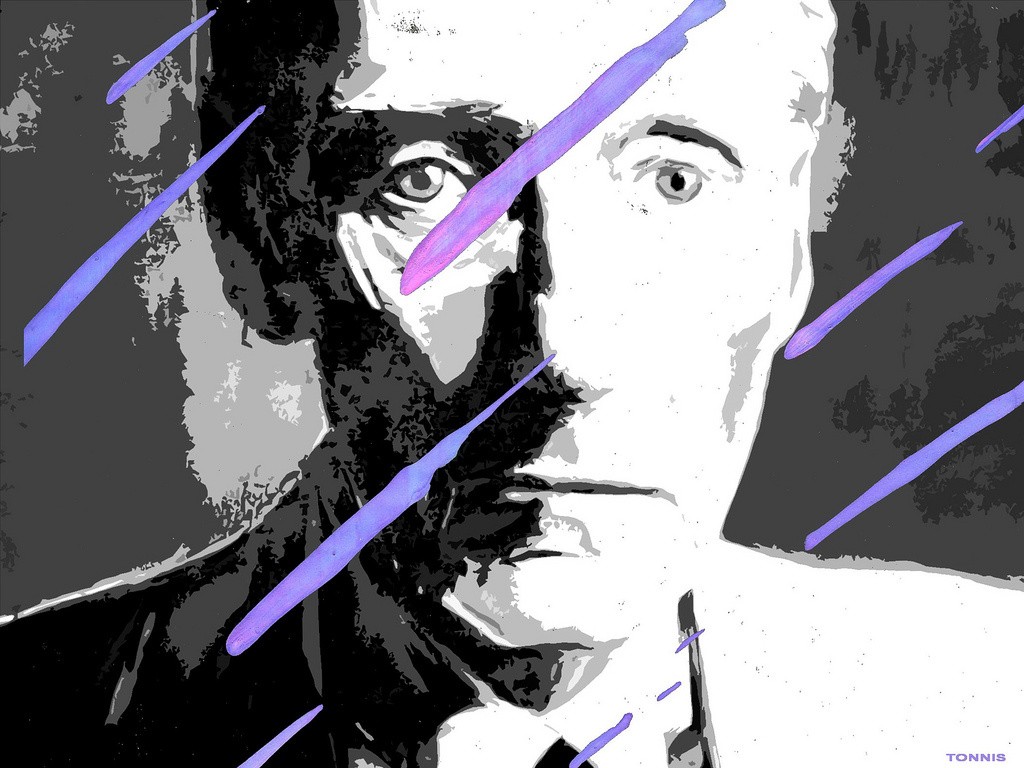
Image by Christiaan Tonnis, via Wikimedia Commons
I don’t have any data, but I think it’s close enough to fact to say that exponentially more people have heard of William S. Burroughs—have even come to revere Burroughs—than have read Burroughs. The phenomenon is unavoidable with a figure as hugely influential throughout the last half of 20th century counterculture. His close association with the Beats; his influence on the 60s through Frank Zappa, The Beatles, and more; his popularity among punks and 70s art rockers and experimentalists; his close affinity with 90s “alternative” bands, Queer writers, and postmodernists; his importance to the druggy rave subcultures of the 90s and oughties…. In almost any creative counterculture you wish to name from the 50s to today, you will find enshrined the name of Burroughs. He was “indeed a man of the 20th Century,” writes Chal Ravens at The Quietus, “he was alive for most of it, after all—and his life and works form the very fabric of the counterculture, seeping into literature, painting, film, theatre and most of all music like a drop of acid on a sugar cube.”
In Burroughs’ case, the life and work are inseparable. His “quixotic and shocking life story should not be dismissed when assessing his legacy,” writes Bearded magazine. That strange life, which did not include writing until he turned 40, “defined him to such a degree that it was many decades before his literary achievements were taken seriously” by the establishment. Nonetheless, in the 50s, “Burroughs opened the doors for sex, drugs, alternative lifestyles and radical politics to be palatable concerns in mainstream culture.” While such themes became palatable through the artists Burroughs influenced, his own writing continues to shock and surprise. Burroughs may have moved in and through so many of the cultures named above, but he was not of them.
He appeared even to the Beats as a mentor, an “outlaw guru,” and he wrote like a man possessed. Burroughs, The New Yorker remarks, wrote in the “voice of an outlaw reveling in wickedness,” a voice that “bragged of occult power….. He always wrote in tones of spooky authority—a comic effect, given that most of his characters are, in addition to being gaudily depraved, more or less conspicuously insane.” Burroughs in fact described his impulse to write as a kind of insanity or possession. The most outrageous story about him—that he shot his wife Joan Vollmer in Mexico in a supposed William Tell-like stunt—is true. In the introduction to 1985’s Queer, Burroughs confessed:
I am forced to the appalling conclusion that I would never have become a writer but for Joan’s death, and to a realization of the extent to which this event has motivated and formulated my writing. I live with the constant threat of possession, and a constant need to escape from possession, from control. So the death of Joan brought me in contact with the invader, the Ugly Spirit, and maneuvered me into a life long struggle, in which I have had no choice except to write my way out.
Personal obsessions with death, addiction, legal and social control, the occult, and his troubled sexuality drove all of Burroughs’ work—and drove the themes of 20th Century cultural revolt against conformity and conservatism. But though he may have been “a man of the 20th Century,” Burroughs’ most immediate predecessors come largely from the 19th: in decadent poets like Arthur Rimbaud, troubled adventurers like Joseph Conrad, fearless satirists like Ambrose Bierce, and genuine outlaws like Jack Black (who wrote in the 20s of his criminal exploits in the 1880s and 90s). It is in part, perhaps, his transmission of these voices to postwar artists and writers and beyond that granted him such authority. Burroughs’ writing always carried with it the voices of the dead.
Burroughs was obsessed with voices—recorded, cut-up, rearranged; he believed in their power to disrupt, influence, and corrupt. Fittingly, he left us acres of tape of his own ominous monotone: reading his work, offering commentary on technique, spinning bizarre, half-serious conspiracy theories, and distorting literature beyond all recognition through his cut-up technique. Though we all know Burroughs’ name, we can now—no matter our level of familiarity with his writing—become equally familiar with his voice in the playlist above, featuring seven hours of Burroughs recordings from five spoken word albums available on Spotify: The Best of William Burroughs, Spare Ass Annie and Other Tales, Dead City Radio, Break Through in Grey Room, and Call Me Burroughs. (If you don’t already have it, download Spotify here to listen to the playlist.)
Though “we should not underestimate the direct influence of his writing” on counter- and pop culture, Bearded magazine points out (see this list for example), we should also not discount the spooky influence of Burroughs’ haunting recorded voice.
Related Content:
William S. Burroughs Reads Naked Lunch, His Controversial 1959 Novel
William S. Burroughs Teaches a Free Course on Creative Reading and Writing (1979)
How David Bowie, Kurt Cobain & Thom Yorke Write Songs With William Burroughs’ Cut-Up Technique
Josh Jones is a writer and musician based in Durham, NC. Follow him at @jdmagness
Read More...Björk Takes Us Inside Her Creative Process and Explains How She Writes a Song
Some songs are so straightforward there’s no need to debate their meanings with friends and Reddit users. Others remain opaque, despite fans’ best attempts to crack lyrical codes.
“Stonemilker,” the first track on Björk’s self-described “complete heartbreak album” Vulnicura, seems to fall into the former category:
Show me emotional respect, oh respect, oh respect
And I have emotional needs, oh needs, oh ooh
I wish to synchronize our feelings, our feelings, oh ooh
“Probably the most obvious lyrics I’ve ever written” she remarks in her above appearance on Hrishikesh Hirway’s Song Exploder, a podcast wherein musicians deconstruct a song’s meaning, origin, and recording process.
Björk was walking on a beach when the simple lyrics of “Stonemilker” popped into her head. She quickly realized that she should steer clear of the impulse to make them more clever, and chose the primal over the poetic.
As to its inspiration, she diplomatically refrains from naming her ex-husband, filmmaker Matthew Barney, on the podcast, saying only that “Stonemilker”’s narrator has achieved emotional clarity, unlike “the person” to whom she is singing, someone who prefers for things to stay foggy and complex.
She strove for arrangements that would support that feeling of clarity, waiting for the right microphone, hammering out every beat with producer Alejandro “Arca” Ghersi, and releasing a second, strings only version.
“I decided to become a violin nerd,” she told Pitchfork:
I had like twenty technological threads of things I could have done, but the album couldn’t be futuristic. It had to be singer/songwriter. Old-school. It had to be blunt. I was sort of going into the Bergman movies with Liv Ullmann when it gets really self-pitying and psychological, where you’re kind of performing surgery on yourself, like, What went wrong?
The accompanying 360-degree virtual reality music video, above, can now be viewed online as well as with Oculus Rift. Every instrument was miked and if you can’t get clear on an Icelandic beach, well then…
As for those plaintive, crystalline vocals, Björk intentionally held off, waiting for the sort of day when impulsiveness reigns. (I know she’s a classically trained musician, but isn’t that pretty much every day when you’re Björk?)
Having some insights into what the artist was aiming for can guide listeners toward deeper appreciation. Björk obligingly offers Song Exploder listeners a vast buffet. Surely something will resonate:
A tower of equilibrium…
Smooth cream-like perfection…
A net…
A cradle…
Compare those simple goals to Flavorwire’s Moze Halperin’s analysis of what he calls “Vulnicura’s most tragic track — and perhaps the saddest Björk has ever written”:
“Stonemilker” has the grandiose sound of having been sung in a cathedral, but like one tiny person confronted by the largeness of ideas of God or the architectural complexity of one such structure, Björk’s voice sounds distant, echoing, fighting not to get sucked in by the threat of a vast abyss. When, in the coming songs, she actually confronts the abyss, her voice becomes stronger. The crushing sadness of this song is that it’s the beginning of the end, and in listening to it, we feel at once closest to the love that was recently lost, while also being aware of the turmoil ahead.
The song’s near-nonchalant melancholy — its false impression that it can afford nonchalance because the lovers’ disconnect is just a bump in the road — makes it more unbearably sad than the rest of the album. In this song, she carries all of her previous work on her back like arrows in a quiver, pulling references out one by one and shooting them at listeners to remind them of the manifold ways she once documented the complexities of her love. For now, she’s about to document the complexities of its disappearance.
Basically, if you wind up feeling like you’re “lying at home in the moss looking at the sky,” Björk’s mission has been accomplished.
Want more? You can unpack other artists’ definitive meanings and song midwifery by subscribing to Song Exploder.
Related Content:
Hear the Album Björk Recorded as an 11-Year-Old: Features Cover Art Provided By Her Mom (1977)
Watch Björk’s 6 Favorite TED Talks, From the Mushroom Death Suit to the Virtual Choir
Ayun Halliday is an author, illustrator, and Chief Primatologist of the East Village Inky zine. Follow her @AyunHalliday
Read More...103 Essential Films By Female Filmmakers: Clueless, Lost In Translation, Ishtar and More
A great film, as we all know, is a great film, no matter the age, nationality, or sex of its director. But as human beings, we also all know how much fun we get out of categorizing and listmaking, especially when it comes to works of art and those who make them. And so today we give you Cinema Fanatic’s A Year with Women: 103 Essential Films by Female Filmmakers, proof that, though the world of film may have produced fewer female filmmakers than male filmmakers so far, their films, taken individually, hardly command less of our interest.
“In an attempt to create a better, more inclusive list of great films by women,” writes the site’s author Marya E. Gates. “I polled over 500 critics, filmmakers, bloggers, historians, professors and casual film viewers, asking them to tell me what films directed (or co-directed) by women are essential viewing. Some people only responded with as little as five votes, others submitted hundreds of films. In the end, I received over 7,000 votes for 1,100+ different films. After tallying up this data, with ties factored in, I then had a list of 103 essential films directed by women.”
Gates presents her list in reverse order of votes earned, each with a still frame, a scrolling experience certainly worth enjoying in its entirety. But if you’d like to take a glance first at what ended up on the top ten, here you have it:
- Clueless, 1995 (dir. Amy Heckerling) – 147 votes
- Lost in Translation, 2003 (dir. Sofia Coppola) – 144 votes
- The Piano, 1993 (dir. Jane Campion) – 120 votes
- Selma, 2014 (dir. Ava DuVernay) – 118 votes
- American Psycho, 2000 (dir. Mary Harron) – 110 votes
- Cléo from 5 to 7, 1962 (dir. Agnès Varda) – 93 votes
- The Hurt Locker, 2009 (dir. Kathryn Bigelow) – 92 votes
- Fish Tank, 2009 (dir. Andrea Arnold) – 84 votes
- The Virgin Suicides, 1999 (dir. Sofia Coppola) – 84 votes
- Winter’s Bone, 2010 (dir. Debra Granik) – 75 votes
In the interview at the top of the post, Amy Heckerling, director of Clueless, the champion of the list, talks about her career in Hollywood as the director of not just that epochal Beverly Hills teen comedy but of the likes of Fast Times at Ridgemont High and, more recently, Vamps. In the clip below that, Sofia Coppola and star Bill Murray talk about their time making the close runner-up Lost in Translation.
All these films could, of course, easily appear on any critic’s top-ten list, with or without a deliberate focus on woman directors — and most of them, in fact, won very little of their considerable fame simply by being woman-directed. Chantal Akerman’s Jeanne Dielman, 23 Quai du Commerce, 1080 Bruxelles would certainly appear on mine, though the 103 Essential Films by Female Filmmakers poll places it just below, at number 11. And surely the vigorous piece of Hollywood cyberpunk Strange Days, which comes in last among the works of Kathryn Bigelow scattered across the list, merits a higher ranking.
Kelly Reichardt’s Meek’s Cutoff and Wendy and Lucy make the list, but what of her Old Joy, surely the most absorbing cinematic tale ever told of two semi-estranged buddies hiking in the woods, let alone told by a woman? And hasn’t the world come around on Elaine May’s Ishtar, which places a mere #102 but whose status as a masterwork Richard Brody clarifies in The New Yorker video above? Then again, we don’t make these lists to agree, or even to convince; we make them to argue the movies, a pursuit — to every cinema-loving man, woman, and child — almost as fun as watching them.
Related Content:
No Women Need Apply: A Disheartening 1938 Rejection Letter from Disney Animation
Watch The Hitch-Hiker by Ida Lupino (the Only Female Director of a 1950s Noir Film)
The First Feminist Film, Germaine Dulac’s The Smiling Madame Beudet (1922)
Based in Seoul, Colin Marshall writes and broadcasts on cities and culture. He’s at work on a book about Los Angeles, A Los Angeles Primer, the video series The City in Cinema, the crowdfunded journalism project Where Is the City of the Future?, and the Los Angeles Review of Books’ Korea Blog. Follow him on Twitter at @colinmarshall or on Facebook.
Read More...Splendid Hand-Scroll Illustrations of The Tale of the Genjii, The First Novel Ever Written (Circa 1120)
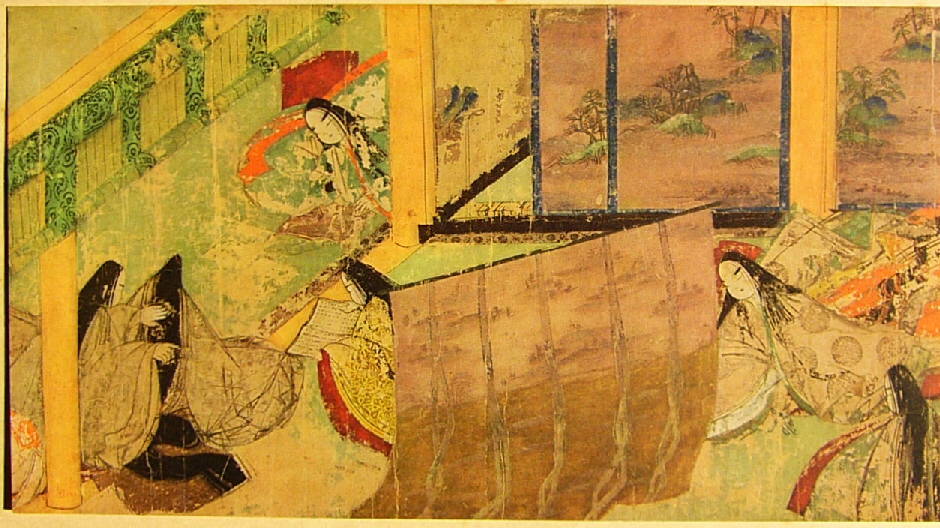
Ah, The Tale of Genji — a veritable Mount Everest for students of the Japanese language, and a fixture on so many reading lists drawn up by fans of world literature in translation as well. This formidable story of an emperor’s son turned commoner, written mostly or entirely by Heian-period noblewoman Murasaki Shikibu (also known as Lady Murasaki) in the early 11th century, makes a credible claim to the status of the very first novel (or, as more timid boosters might claim for it, the first psychological novel, or the first “classic” novel).
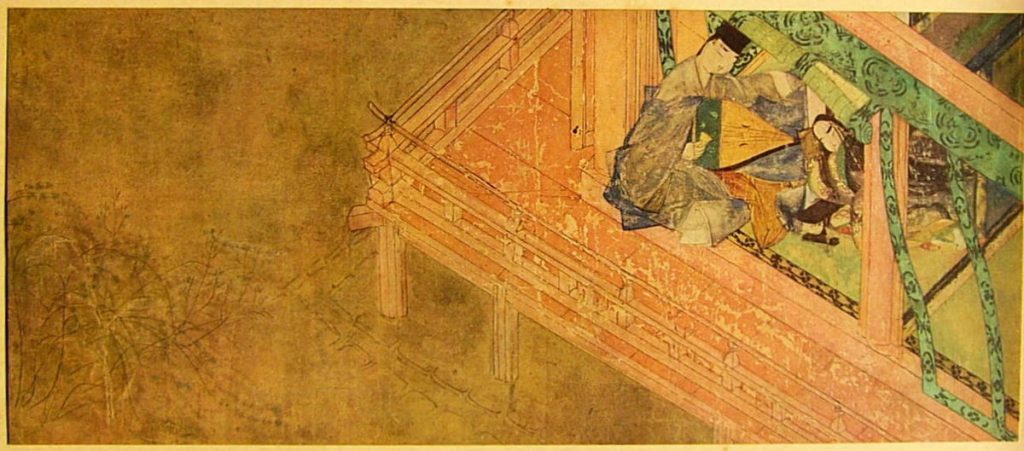
It has thus had plenty of time to get adapted into other forms: translations into modern Japanese and other currently understandable languages, annotated versions by later generations of writers, live-action movies, and animation and comic books — anime and manga.
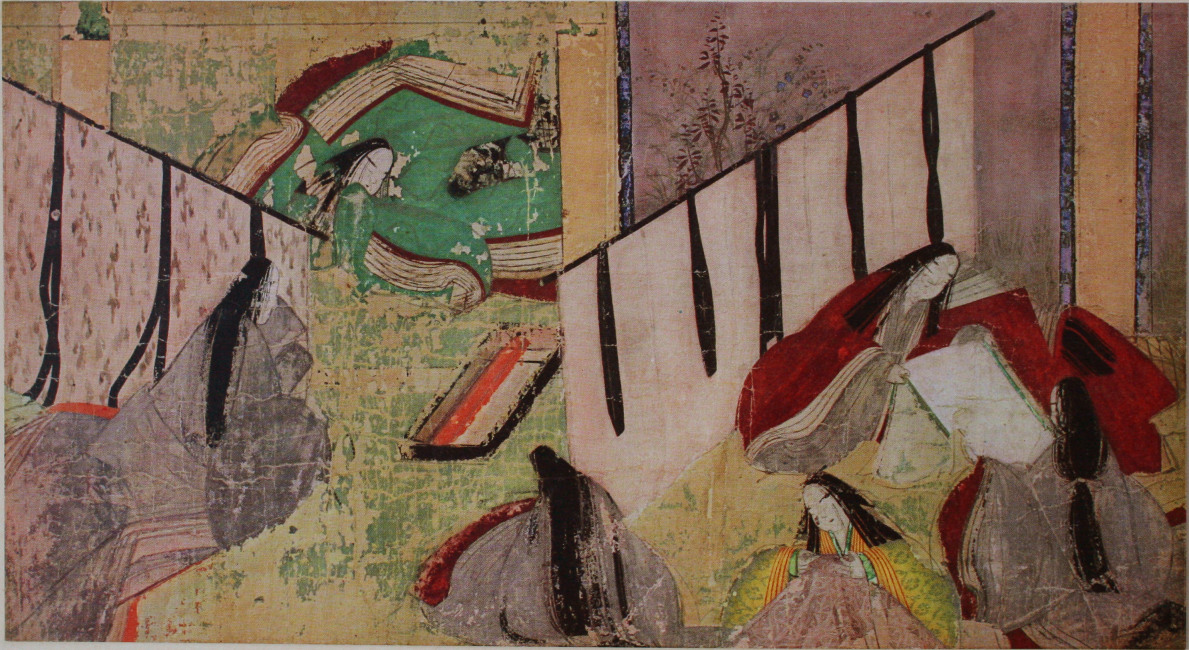
Many of those Genjis appeared in the past hundred years. Much closer to Murasaki’s own time is the Genji Monogatari Emaki, commonly called the Tale of Genji Scroll, created about a century after the Genji itself, sometime around 1120 to 1140. Here you see pieces of the scroll’s surviving sections, thought to constitute only a small portion of the original work meant to depict and explain some of the events of the novel. Art historians haven’t pinned down the identity of the artist, but they do know that the style of these images, created with the female-dominated tsukuri‑e (or “manufactured painting” process), which involves layering a drawing over pigment itself painted over a first drawing, strongly suggests a woman artist.
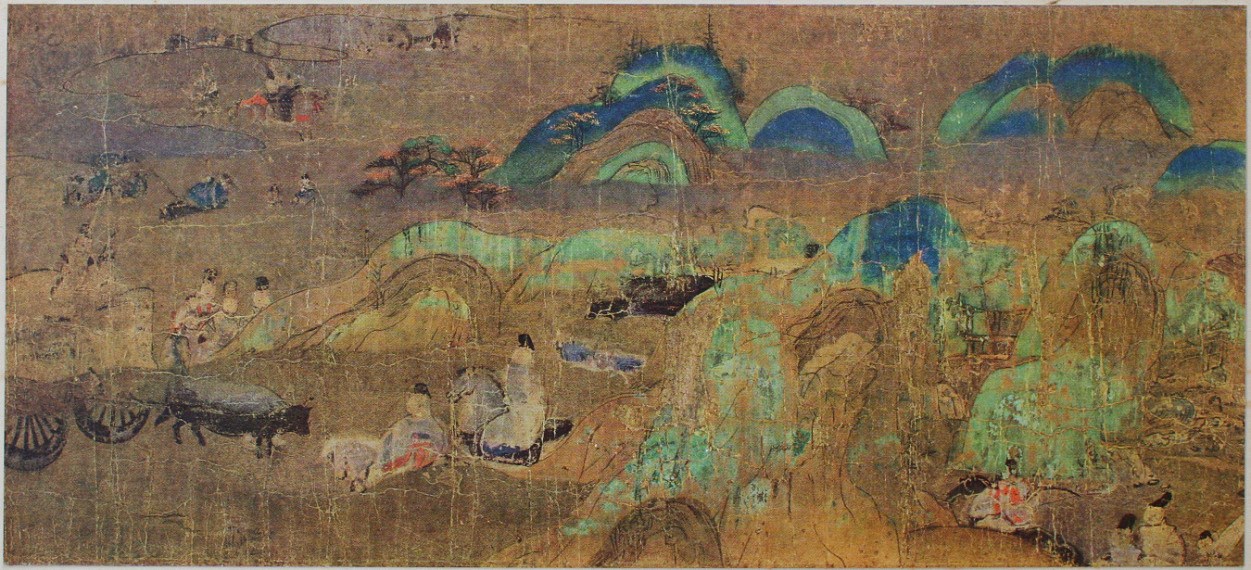
The Genji Monogatari Emaki fits into the longer Japanese tradition of picture scrolls, which first combined images and text in a groundbreaking way in the ninth or tenth century and, one could argue, continue to influence Japanese art today.
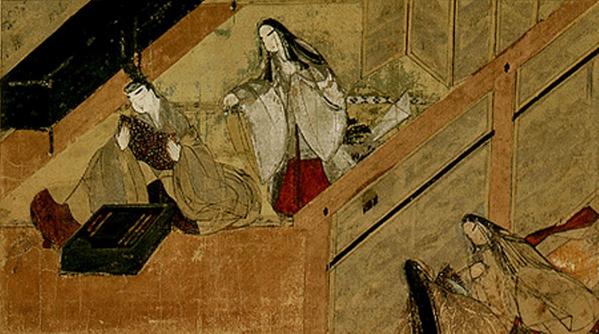
That goes especially for popular Japanese art: in Japan, where you can see thousands of comic book-readers of all ages on the trains each and every day, people take the union of words and images more seriously than they do in the West — or at least Western comic art enthusiasts see it that way. So if these evocative images from the Genji Scroll make you want to pick up the novel, but you still don’t know if you can handle it straight, start with one of the manga adaptations, which, as you can see, have more historical legitimacy than we might have assumed.
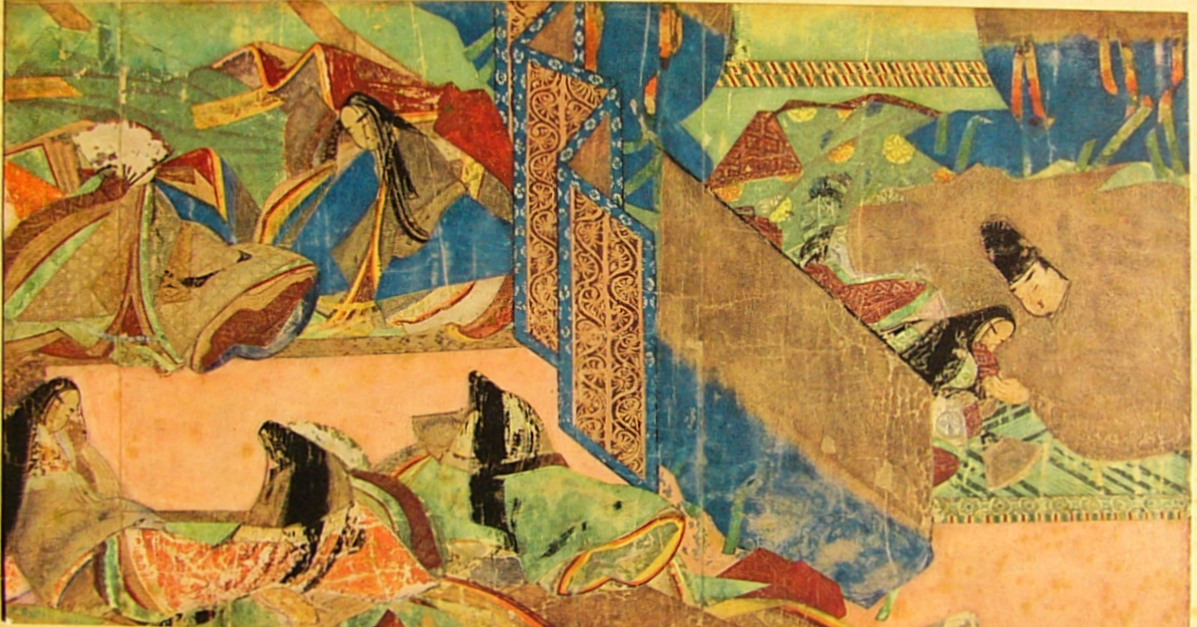
It’s worth noting that Oxford has a site where you can download a complete English translation of The Tale of the Genji. A new translation by Dennis Washburn also came out in the last six months.
Related Content:
The Poetry of the Cherry Blossoms Comes to Life in a One Minute Time Lapse Video
Hand-Colored Photographs of 19th Century Japan
Hand-Colored 1860s Photographs Reveal the Last Days of Samurai Japan
The (F)Art of War: Bawdy Japanese Art Scroll Depicts Wrenching Changes in 19th Century Japan
Based in Seoul, Colin Marshall writes and broadcasts on cities and culture. He’s at work on a book about Los Angeles, A Los Angeles Primer, the video series The City in Cinema, the crowdfunded journalism project Where Is the City of the Future?, and the Los Angeles Review of Books’ Korea Blog. Follow him on Twitter at @colinmarshall or on Facebook.
Read More...The Feminist Theory of Simone de Beauvoir Explained with 8‑Bit Video Games (and More)
Simone de Beauvoir, existentialist philosopher, feminist theorist, author of The Second Sex, whose birthday we celebrate today.
Metroid, an action-adventure video game designed for the Nintendo in 1986.
At first glance, they’re not an obvious pairing. But in 8‑Bit Philosophy, a web series that explains philosophical concepts by way of vintage video games, things kind of hang together.
Gamers remember Metroid for being the first video game to feature a strong female protagonist, a character who blew apart existing female stereotypes, kicked some alien butt, and created new possibilities for women in the video gaming space. And that lets Metroid set the stage for talking about the intellectual contributions of Simone de Beauvoir, who, back in the late 1940s, gave us new ways of thinking about gender and gender-based hierarchies in our societies.
Clocking in at just 3:45, the clip offers but a brief introduction to de Beauvoir’s theoretical work. For a longer introduction, you could download this recent episode of In Our Time, hosted by Melvyn Bragg and featuring the commentary of Christina Howells (Oxford), Margaret Atack (University of Leeds) and Ursula Tidd (University of Manchester). You can also listen to a 2015 episode of Philosophy Talk, co-hosted by Stanford professors John Perry and Ken Taylor.
Or, better yet, go to the source itself, and listen to de Beauvoir talk in two lengthy interviews, both featured on Open Culture in years past. They’re pretty remarkable historical documents.
- Simone de Beauvoir Tells Studs Terkel How She Became an Intellectual and Feminist (1960)
- Simone de Beauvoir Explains “Why I’m a Feminist” in a Rare TV Interview (1975)
If you would like to support the mission of Open Culture, consider making a donation to our site. It’s hard to rely 100% on ads, and your contributions will help us continue providing the best free cultural and educational materials to learners everywhere. You can contribute through PayPal, Patreon, and Venmo (@openculture). Thanks!
Related Content:
Simone de Beauvoir & Jean-Paul Sartre Shooting a Gun in Their First Photo Together (1929)
Photos of Jean-Paul Sartre & Simone de Beauvoir Hanging with Che Guevara in Cuba (1960)
Edward Said Recalls His Depressing Meeting With Sartre, de Beauvoir & Foucault (1979)
Free Online Philosophy Courses
Read More...The First Photo-Illustrated Book, Anna Atkins’ Austerely Beautiful Photographs of British Algae (1843)
Some of our favorite, and most popular, posts at Open Culture focus on book illustration. From fine art to graphic design, from the sublime to the ridiculous to the purely technical, the art used to visualize beloved works of literature and scientific texts captivates us. Perhaps that’s in part because we encounter illustration so rarely these days, what with the triumph of photography and, now, the proliferation of digital images, which are so easy to create and reproduce that too few give sufficient consideration to aesthetic essentials. Graphic novels and comics aside, the carefully hand-illustrated book or periodical has become something of a novelty.
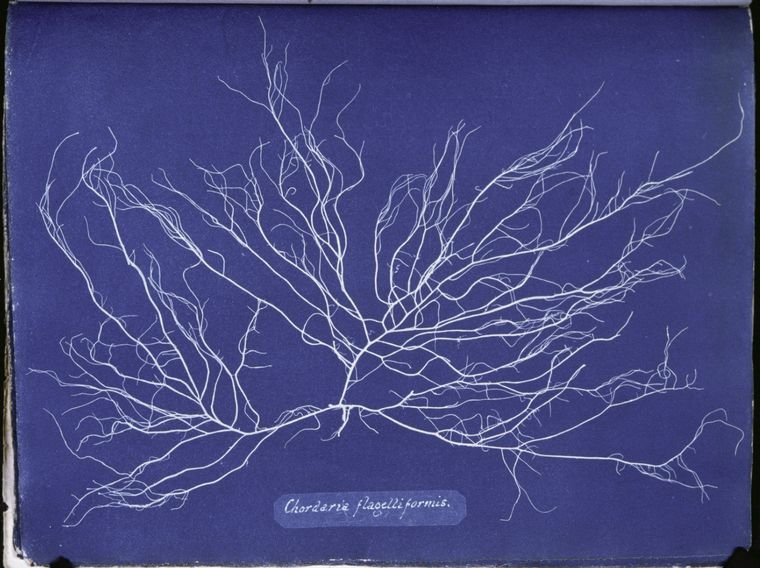
But when we reach back to the mid-19th century, it was photography that was novel and graphic art the norm. So what was the subject of the first book to use photographic illustration? Monuments? Landscapes? Celebrities? No: algae.
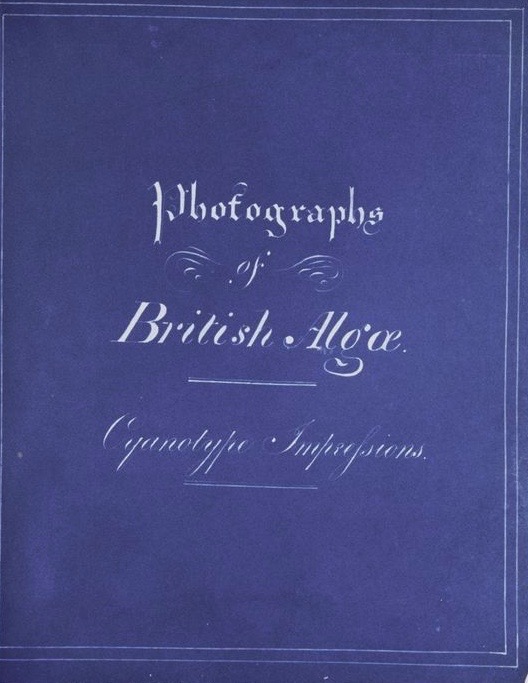
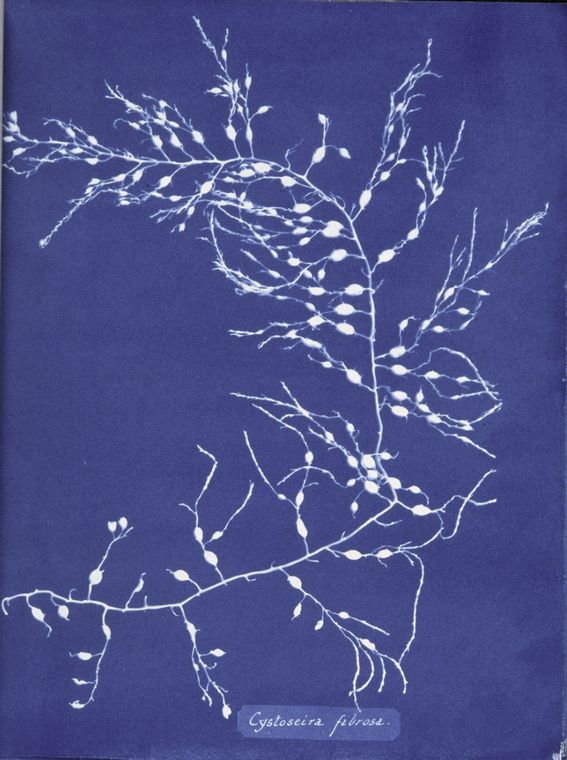
English botanist Anna Atkins—who is not only credited as the first person to make a book illustrated with photographs, but as the first woman to make a photograph—created her handmade Photographs of British Algae: Cyanotype Impressions in 1843. And though the subject may be less than thrilling, the images themselves are austerely beautiful.
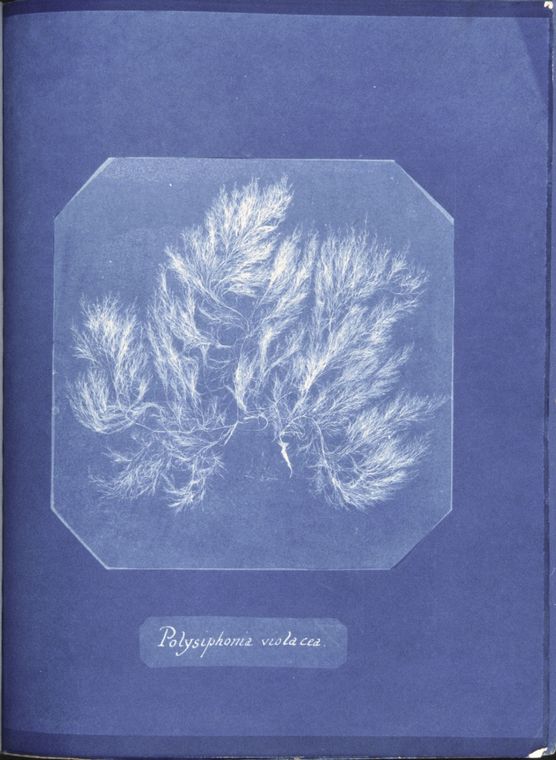
The subtitle of the book refers to the process Atkins used to make the images, a technique developed by Sir John Herschel. “Early photographers,” writes Phil Edwards at Vox, “couldn’t easily develop their pictures.” The techniques available proved expensive, dangerous, and unstable. “Herschel came up with a solution,” Edwards tells us, “using an iron pigment called ‘Prussian Blue,’ he laid objects of photographic negatives onto chemically treated paper, exposed them to sunlight for around 15 minutes, and then washed the paper. The remaining image revealed pale blue objects on a dark blue background.” The process, Jonathan Gibbs informs us at The Independent, “had previously been used to reproduce architectural drawings and designs,” and is, in fact, the origin of the word “blueprint.”
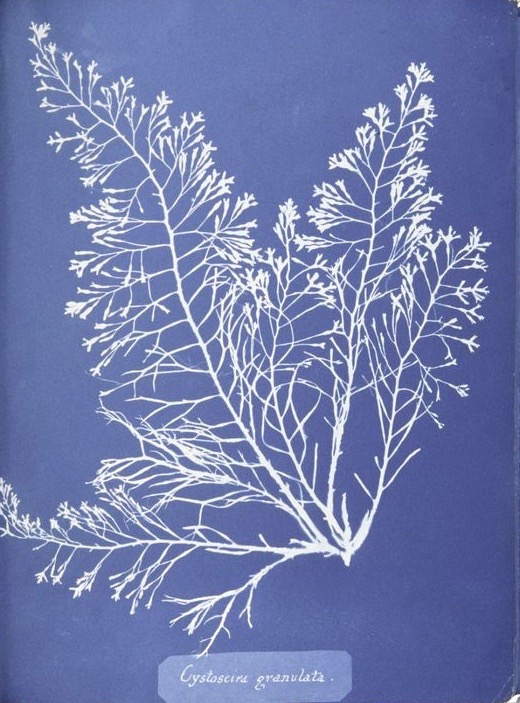
Though “a capable artist,” Edwards writes, Atkins realized that Herschel’s cyanotypes “were a better way to capture the intricacies of plant life and avoid the tedium—and error—involved with drawing.” British Algae, the BBC tells us, was Atkins’ “most valuable work” as a naturalist. As the daughter of a scientist and Royal Society Fellow, Atkins had frequent contact with the most well-respected scientists of the day, including Hershel and photographic pioneer William Henry Fox Talbot. Her “first contribution to science was her engravings of shells, used to illustrate her father’s translation of Lamarck’s Genera of Shells” in 1823. Afterward, she became interested in botany, and algae in particular, and in the emerging technology of photography as a means of preserving her observations.
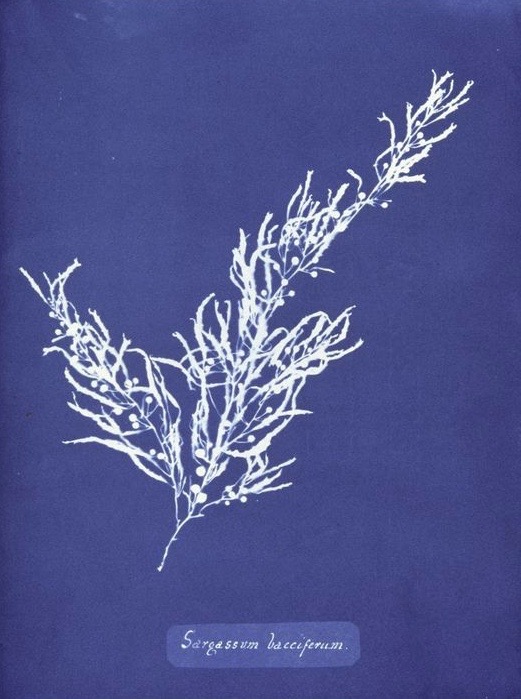
Photographs of British Algae was circulated privately, and Atkins “stopped producing it shortly after her father died, though she continued to make other cyanotype volumes, such as Cyanotypes of British and Foreign Flowering Plants and Ferns in 1854. The first commercially published book to use the cyanotype technique was Fox Talbot’s The Pencil of Nature in 1844. Yet, though Atkins may not have been well-known outside her small circle, nor her publication “regarded as a seminal work in botany,” she has received posthumous acclaim, including perhaps the ultimate mark of fame, a Google Doodle, in March of 2015 on her 216th birthday. You can view and download in high resolution all of Atkins’ pioneering photographic book at the New York Public Library’s extensive online archive — the same archive we featured here yesterday.
Related Content:
See the First Known Photograph Ever Taken (1826)
Josh Jones is a writer and musician based in Durham, NC. Follow him at @jdmagness
Read More...Support Us
We're hoping to rely on loyal readers, rather than erratic ads. Please click the Donate button and support Open Culture. You can use Paypal, Venmo, Patreon, even Crypto! We thank you!

About Us

Open Culture scours the web for the best educational media. We find the free courses and audio books you need, the language lessons & educational videos you want, and plenty of enlightenment in between.
Advertise With Us

FREE UPDATES!
GET OUR DAILY EMAIL
Get the best cultural and educational resources on the web curated for you in a daily email. We never spam. Unsubscribe at any time.
FOLLOW ON SOCIAL MEDIA

Open Culture editor Dan Colman scours the web for the best educational media. He finds the free courses and audio books you need, the language lessons & movies you want, and plenty of enlightenment in between.
Advertise With Us


