Pioneering Electronic Composer Karlheinz Stockhausen Presents “Four Criteria of Electronic Music” & Other Lectures in English (1972)
?si=jXFbzCCx1Za0_486
Where did modern electronic music come from? Whatever the genre markers—EDM, house, glitch, dubstep, ambient—any discussion of the history will inevitably pay homage to a few founding names: Brian Eno, Kraftwerk, Afrika Bambaataa, synthesizer inventor Robert Moog, Daft Punk’s personal hero Giorgio Moroder, superstar DJs Larry Levan and Frankie Knuckles… the list could go on. In most mainstream discussions, it will often leave out the name Karlheinz Stockhausen. And yet, though he decidedly did not make dance music, no history of electronica writ large is complete without him, something filmmaker Iara Lee recognized when she featured him prominently in her 1999 electronica documentary Modulations.
In an introduction to Lee’s transcribed interview with Stockhausen, James Wesley Johnson describes the experimental German electronic composer and theorist as “his own best spokesman,” for the way he “describes the theoretical underpinnings of his work with a simple clarity which belies its complexity.”
Trying to describe Stockhausen’s work proves difficult, since “he’s always experimenting.” Anyone who thinks they “ ‘know’ what to expect from him,” Johnson remarks, is “destined to be surprised by further mutations.”
Stockhausen, who died in 2007, began his career as a student in the 1950s, studying under influential French composer Olivier Messiaen while developing his own concept of musical spatialization. Throughout the fifties and sixties, he pioneered live performance and recorded compositions with tape recorders, microphones, ring modulators, Hammond Organ, and other analog electronic devices, along with traditional instruments, voice, and musique concrete techniques.
Stockhausen combined—writes Ed Chang at the Stockhausen blog Sounds in Space—the results of his experimentation with the “harmonically-liberating methods of the 2nd Viennese School (basically Arnold Schönberg, Alban Berg and Anton Webern, who explored the chromatic scale through the use of unique ordered tone rows and intervals).” This fusion gave rise to the lecture at the top of the post, delivered at the Oxford Union in England on May 6th, 1972, in which Stockhausen lays out his “Four Criteria of Electronic Music.” They are as follows:
- Unified Time Structuring
- Splitting of the Sound
- Multi-Layered Spatial Composition
- Equality of Sound and Noise
Chang provides a detailed, technical summary of each point. Much more entertaining, however, is watching the eccentric and enthusiastic Stockhausen elaborate his theory. “One might ask,” he says at the opening of his lecture, “why are [the four criteria] interesting, as there is electronic music, and everybody can make up his mind about what to think about this music?” His answer is classic Stockhausen—cryptic, elliptical, intriguingly vague yet self-assured:
New means change the method; new methods change the experience, and new experiences change man. Whenever we hear the sounds we are changed: we are no longer the same after hearing certain sounds, and this is the more the case when we hear organized sounds, sounds organized by another human being: music.
Thus he launches into his fascinating—if not always fully comprehensible—theory of music as “organized sound,” with animated gestures and several examples from his own composition from the late 50s, Kontakte. “Four Criteria of Electronic Music” is the fifth in a long series of lectures Stockhausen delivered in London that year. If you have any interest in music theory, avant-garde composition, or in how electronic music—and hence how our world—came to sound the way it does, you should not miss these. You can watch them all on Youtube (or below) or at Ubuweb. If you cannot sit in front of the screen and watch Stockhausen’s strangely compelling delivery, you can also download a PDF of a published version of “Four Criteria of Electronic Music” at Monoskop.
Related Content:
The Fascinating Story of How Delia Derbyshire Created the Original Doctor Who Theme
Hear Seven Hours of Women Making Electronic Music (1938- 2014)
Josh Jones is a writer and musician based in Durham, NC. Follow him at @jdmagness
Read More...Artist Turns Famous Paintings, from Raphael to Monet to Lichtenstein, Into Innovative Soundscapes
I’ve long wondered what it would feel like to have synesthesia, the neurological phenomenon — this straight from Wikipedia — “in which stimulation of one sensory or cognitive pathway leads to automatic, involuntary experiences in a second sensory or cognitive pathway.” A synesthete, in other words, might “see” certain colors when they read certain words, or “hear” certain sounds when they see certain colors. Non-synesthetes such as myself have trouble accurately imagining such an experience, but we can get one step closer with the work of Greek artist-musician-physicist Yiannis Kranidiotis, who, in his “Ichographs” series, turns the colors of famous paintings into sound.
“Examining the relationship between color and sound frequencies,” writes Hyperallergic’s Claire Voon, “Kranidiotis has recently composed a soundscape for Raphael’s ‘Madonna del Prato’ (1505), or ‘Madonna of the Meadow.’ His resulting video work, ‘Ichographs MdelP,’ visualizes the breaking up of the painting into 10,000 cubic particles that correspond to various sounds, honing in on specific parts of the canvas to explore the different tones of different colors.” You can view that video at the top of the post, and see even more at Kranidiotis’ Vimeo channel.
Voon quotes Kranidiotis as explaining the basic idea behind the project: “Each color of a painting can be an audio frequency. Each particle, like a pixel in our computer screen, carries a color and at the same time an audio frequency (sinusoidal wave).” He chose a Renaissance painting “to generate a high contrast between the classical aesthetics and the digital transformations that occur,” as well as to make use of its “blue and red colors that help to create a complex and interesting audio result.”
The artist has more to say at The Creators Project, explaining that “there are areas of sound and color (light) that humans can perceive with their eyes and ears (hearing and visible range) and areas where we need special equipment (like infrasound—ultrasound and infrared—ultraviolet ranges). As a physicist, I was always fascinated by these common properties and I was investigating ways to highlight and juxtapose them.”
You can enjoy more Ichographic experiences in the other two videos embedded here, the first an overview of the process as applied to a variety of paintings from a variety of eras, and then a piece focused on transforming into sound the colors of Claude Monet’s 1894 “Rouen Cathedral, West Facade.” While Kranidiotis’ process doesn’t draw from these works of visual art anything you’d call music, per se, the sonic textures do make for an intriguingly incongruous ambient accompaniment to these well-known canvases. If the Louvre offered his “compositions” loaded onto those little audio-tour devices, maybe I’d actually use one.
via Hyperallergic/The Creators Project
Related Content:
Free Course: An Introduction to the Art of the Italian Renaissance
Bach’s Brandenburg Concerto #4, Visualized by the Great Music Animation Machine
Based in Seoul, Colin Marshall writes and broadcasts on cities and culture. He’s at work on a book about Los Angeles, A Los Angeles Primer, the video series The City in Cinema, the crowdfunded journalism project Where Is the City of the Future?, and the Los Angeles Review of Books’ Korea Blog. Follow him on Twitter at @colinmarshall or on Facebook.
Read More...Dave: The Best Tribute to David Bowie That You’re Going to See
Belgian DJs Soulwax (aka 2ManyDJs) have been blending rock and dance since 1995. You may have heard some of their mashups or remixes over the years. But in 2012 they created Radio Soulwax, a combination app and live experience, and went big with a series of 24 hour-long mixes, all with accompanying music videos. The most relevant to our current interests, and very much worthy of an hour of your time, is their re-mixtape of David Bowie’s career, called Dave.
In the above video, model Hannelore Knuts plays a very faithful looking 1976-era Bowie, navigating a mysterious hotel in which every room contains some recreation of a classic (or rare!) Bowie record cover, and is laced throughout with symbolism and nods to the artist’s life and career. It’s a conceit that builds throughout this phantasmagoric tale into a spectacular, heartbreaking, and roundly satisfying payoff, all the while bolstered by Radio Soulwax’s clever blends of Bowie’s back catalog, including rare cuts and covers. (I especially love the mix of “Heroes” of “Absolute Beginners,” one of his most famous songs alongside his most underrated one, which now seem to be flipsides of the same story).
A labor of love according to director Wim Reygaert, the film contains other doppelgangers that interact with Bowie: William S. Burroughs, Iggy Pop, Freddie Mercury, Lulu, Tony Visconti, John Lennon, and rock photographer Andy Kent all make an appearance, along with numerous Bowie incarnations. Of all the tributes to the Thin White Duke out there in the last week, this is one of the few that will fully assuage the soul. Check it out.
Related Content:
David Bowie & Brian Eno’s Collaboration on “Warszawa” Reimagined in Comic Animation
David Bowie Recalls the Strange Experience of Inventing the Character Ziggy Stardust (1977)
David Bowie Releases 36 Music Videos of His Classic Songs from the 1970s and 1980s
Ted Mills is a freelance writer on the arts who currently hosts the FunkZone Podcast. You can also follow him on Twitter at @tedmills, read his other arts writing at tedmills.com and/or watch his films here.
Read More...The Negro Travelers’ Green Book, the Pre-Civil Rights Guide to Traveling Safely in the U.S. (1936–66)

Popular entertainment has romanticized the idea of the road trip as a wholly spontaneous adventure, but for mid-century African American motorists, planning was essential. The lodgings, restaurants, and tourist attractions where they could be assured of a warm welcome were often few and far between in the era of segregation.
The Negro Travelers’ Green Book, first printed in 1936, was an invaluable resource for travelers of color, particularly when their route took them outside of urban areas. In the pre-Internet age, publisher Victor Green, a Harlem-dwelling mailman, relied on readers to supply feedback and new locations for subsequent editions:
There are thousands of first class business places that we don’t know about and can’t list, which would be glad to serve the traveler, but it is hard to secure listings of these places since we can’t secure enough agents to send us the information. Each year before we go to press the new information is included in the new edition. When you are traveling please mention the Green Book, in order that they might know how you found their place of business, as they can see that you are strangers. If they haven’t heard about this guide, ask them to get in touch with us so that we might list their place. If this guide has proved useful to you on your trips, let us know. If not, tell us also as we appreciate your criticisms and ideas in the improvement of this guide from which you benefit. There will be a day sometime in the near future when this guide will not have to be published. That is when we as a race will have equal opportunities and privileges in the United States. It will be a great day for us to suspend this publication for then we can go wherever we please, and without embarrassment. But until that time comes we shall continue to publish this information for your convenience each year.
- from the introduction to the 1949 edition
The New York Public Library’s Schomburg Center for Research in Black Culture has digitized 21 volumes of its Green Book collection for your browsing pleasure. It’s a trip back in time.
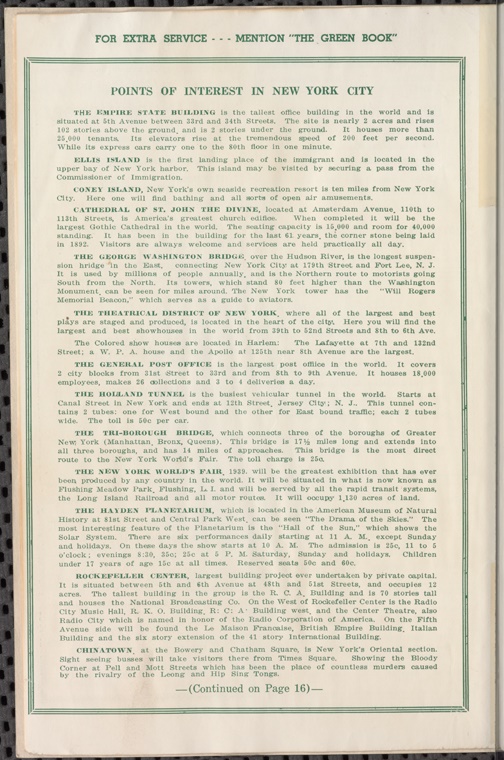
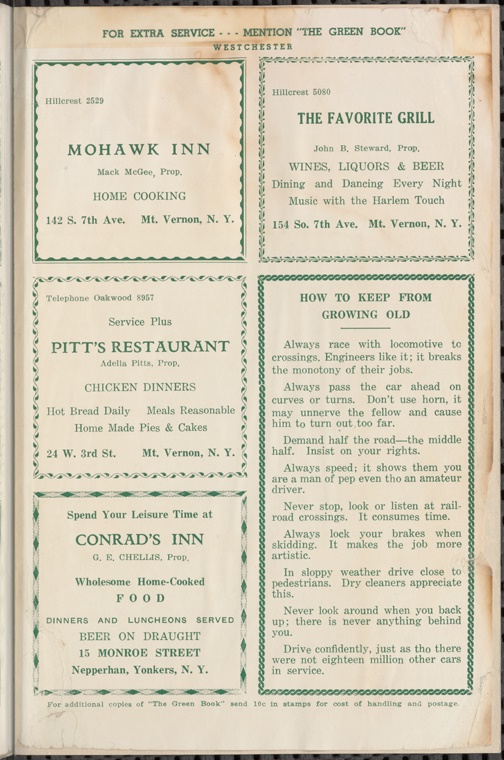
1936’s premier edition is geared toward visitors spending time in and around New York City. In appearance, it resembles a church bulletin or community theater program, with business card ads for beauty salons specializing in marcel waving and restaurants serving Southern home cooking. Publisher Green extols the wonders of Coney Island, Chinatown, and the Theatrical District, even as he notes that “the colored show houses are in Harlem.” He also seeks to give readers a laugh with “How to Keep From Growing Old,” a driver-specific list that could be read aloud from the passenger seat for the merriment of everyone in the car. (“In sloppy weather, drive close to pedestrians. Dry cleaners appreciate this.”)
The Green Book soon swelled to include national listings, as tourists and business travelers heeded Green’s call to beef up the info.
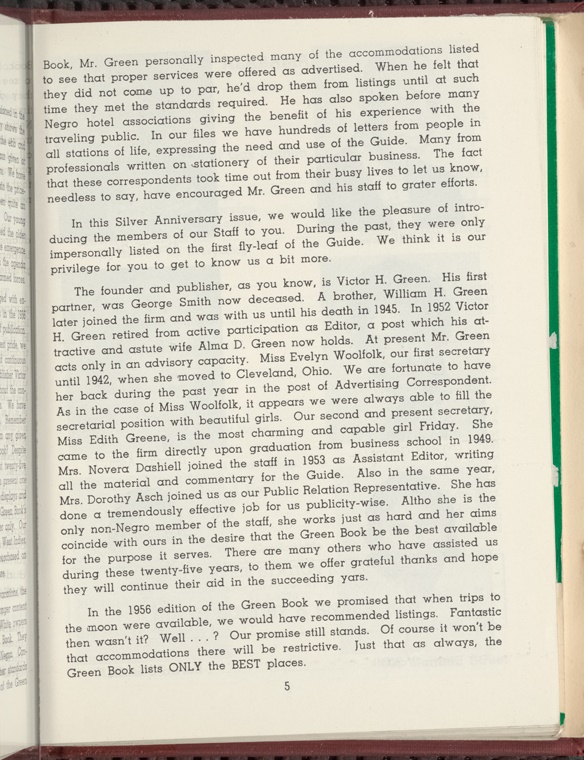
1961’s 25th anniversary edition includes a history of the enterprise, a fair amount of typos, newsy updates on the staff, and a renewed promise to list the best places on the moon, should lunar travel become an option.

Armchair travelers can take the NYPL’s digitized collection out for a spin by entering coordinates into a mapping feature for 1947 or 1956.
Starting in my Indiana hometown with sights set on Manhattan took me to the Cottage Restaurant in Columbus, Ohio, the Jones Restaurant in Grafton, West Virginia, and the beautifully named Trott Inn in Philadelphia, before I finally lay my virtual head at the America Hotel. (These days, it would be the Millennium Broadway.)

Enjoy your trip. In the words of Victor Green, “let’s all get together and make motoring better.”
Related Content:
Robert Penn Warren Archive Brings Early Civil Rights to Life
Vintage 1930s Japanese Posters Artistically Market the Wonders of Travel
Ayun Halliday is an author, illustrator, and Chief Primatologist of the East Village Inky zine. She documented her misadventures on the road in No Touch Monkey! And Other Travel Lessons Learned Too Late Follow her @AyunHalliday
Read More...Attention K‑Mart Shoppers: Hear 90 Hours of Background Music & Ads from the Retail Giant’s 1980s and 90s Heyday
Back in high school, I worked part-time at the Gap, a job that, for all its discomforts — the late-night restocking, the Sisyphean folding and re-folding, those headsets — really only left a bitter memory because of the music. Each month, the store received a new disc of background shopping soundtrack, but only an hour-long soundtrack, to be played on loop over over and over again, and so to be heard by me six or seven times per shift. Needless to say, the start of a new month, and, with this, the arrival of a new mix of bland pop hits, felt like a salvation.
This sort of programmatic musical engineering already had plenty of precedent by that point, as thoroughly documented by Mark Davis, who spent the late 1980s and early 1990s working at K‑Mart’s customer service desk and — perhaps foreseeing both the future ease of sharing audiovisual materials over the internet and the waves of nostalgia for the recent past that ease would enable — pocketed all the shoppping-soundtrack cassette tapes that passed through his hands, building the impressive collection you can see in the video above.
“Until around 1992, the cassettes were rotated monthly,” writes Davis. “Then, they were replaced weekly. Finally sometime around 1993, satellite programming was introduced which eliminated the need for these tapes altogether. The older tapes contain canned elevator music with instrumental renditions of songs. Then, the songs became completely mainstream around 1991. All of them have advertisements every few songs. The monthly tapes are very, very, worn and rippled. That’s because they ran for 14 hours a day, 7 days a week on auto-reverse.”
The highly deliberate, near-frictionless mildness; the interspersed spoken-word advertisements and their hypnotically repetitive emphasis on low, low prices; the wobble and hiss of the battered recording media; all of it adds up to a listening experience historically and aesthetically like no other. (If you enjoy this sort of thing and haven’t yet heard of the movement called “vaporwave,” hie thee to Google, look it up, and prepare for astonishment.) You can hear over 90 hours of it at Attention K‑Mart Shoppers, Davis’ digitized repository of his cassettes at the Internet Archive.
If you have any memories of shopping at K‑Mart twenty to thirty years ago, these tapes may bring on a rush of Proustian recollection. But not all of them scored the average shopping day. One, for example, came just for play on March 1st, 1992, K‑Mart’s 30th anniversary. “This was a special day at the store where employees spent all night setting up for special promotions and extra excitement. It was a real fun day, the store was packed wall to wall, and I recall that the stores were asked to play the music at a much higher volume,” a program which included “oldies and all sorts of fun facts from 1962.” Finally, a way to feel nostalgia for one era’s nostalgia of another era. How’s that for a 21st-century experience?
Related Content:
Why We Love Repetition in Music: Explained in a New TED-Ed Animation
Woody Allen Lives the “Delicious Life” in Early-80s Japanese Commercials
Based in Seoul, Colin Marshall writes and broadcasts on cities and culture. He’s at work on a book about Los Angeles, A Los Angeles Primer, the video series The City in Cinema, the crowdfunded journalism project Where Is the City of the Future?, and the Los Angeles Review of Books’ Korea Blog. Follow him on Twitter at @colinmarshall or on Facebook.
Read More...The Late, Great Alan Rickman Reads Shakespeare, Proust & Thomas Hardy
Just this week we lost Alan Rickman, one of the most beloved British actors of his generation. And like all the best beloved British actors of any generation, he could, of course, do Shakespeare the way the rest of us can tie our shoes — and not just the lines from the plays, but the sonnets. In the clip above, you can hear Rickman give a reading of the satirical Sonnet 130, which sends up the worshipful excesses of contemporary courtly sonnets with lines like “My mistress’ eyes are nothing like the sun” and “I have seen roses damask’d, red and white, but no such roses see I in her cheeks.”
To properly deliver this material requires a certain sense of irony, and we could rely on Rickman to bring his own formidable yet subtle ironic capacity to the screen.
We always enjoyed seeing him pop up in a movie — no matter how impressive or mediocre the movie in question — because, I would argue, of the distinctive sense of intelligence with which he imbued all his characters, from the ghost boyfriend in Truly, Madly, Deeply to the Sheriff of Nottingham in Robin Hood: Prince of Thieves to Harry Potter’s Severus Snape to the bad guy in Die Hard. And naturally, he doesn’t leave it at home when assuming the role of the narrator of Thomas Hardy’s Return of the Native, a sample of which you can hear above.
One must strike an even more complicated balance of emotions to do justice to the prose of Marcel Proust, a task to which the actor proves himself equal in his recitation just above. “I think that life would suddenly seem wonderful to us if we were threatened to die,” he says, using his inimitable voice for words that now sound more meaningful than ever:
Just think of how many projects, travels, love affairs, studies, it – our life – hides from us, made invisible by our laziness which, certain of a future, delays them incessantly.
But let all this threaten to become impossible for ever, how beautiful it would become again! Ah! If only the cataclysm doesn’t happen this time, we won’t miss visiting the new galleries of the Louvre, throwing ourselves at the feet of Miss X, making a trip to India.
The cataclysm doesn’t happen, we don’t do any of it, because we find ourselves back in the heart of normal life, where negligence deadens desire. And yet we shouldn’t have needed the cataclysm to love life today. It would have been enough to think that we are humans, and that death may come this evening.
Mr. Rickman, you, too, will be missed…
Note: Do you want to hear Alan Rickman read Hardy’s Return of the Native in its entirety for free? Just head over to Audible.com and register for a 30-day free trial and you can download that, and another book of your choice, at no cost. Find more details here.
Related Content:
Alan Rickman Does Epic Violence to a Cup of Tea in Super Slow Motion
1,000 Free Audio Books: Download Great Books for Free
Shakespeare’s Satirical Sonnet 130, As Read By Stephen Fry
Listening to Proust’s Remembrance of Things Past, (Maybe) the Longest Audio Book Ever Made
Free eBooks: Read All of Proust’s Remembrance of Things Past
Based in Seoul, Colin Marshall writes and broadcasts on cities and culture. He’s at work on a book about Los Angeles, A Los Angeles Primer, the video series The City in Cinema, the crowdfunded journalism project Where Is the City of the Future?, and the Los Angeles Review of Books’ Korea Blog. Follow him on Twitter at @colinmarshall or on Facebook.
Read More...Artist Julie Green Paints the Last Suppers of 600+ Death Row Inmates on Ceramic Plates
What would you choose for your last meal?
The comfort food of your childhood?
Or some lavish dish you never had a chance to taste?
What might your choice reveal about your race, regional origins, or economic circumstances?
Artist Julie Green developed a fascination with death row inmates’ final meals while teaching in Oklahoma, where the per capita execution rate exceeds Texas’ and condemned prisoners’ special menu requests are a matter of public record:
Fried fish fillets with red cocktail sauce from Long John Silver’s
Large pepperoni pizza with sausage and extra mushrooms and a large grape soda.

The latter order, from April 29, 2014, was denied on the grounds that it would have exceeded the $15-per-customer max. The prisoner who’d made the request skipped his last meal in protest.
Green recreates these, and hundreds of other death row prisoners’ last suppers in cobalt blue mineral paint on carefully selected second-hand plates. The influence of Dutch Delftware and Spanish still life painting are evident in her depiction of burgers, Kentucky Fried Chicken, and pie.
Many of the requests betray a childlike poignancy:
A single honey bun (North Carolina, January 30, 1998)
Shrimp and ice cream (New Mexico, November 6, 2001)
A peanut butter and jelly sandwich (Florida, February 26, 2014)
One man got permission for his mother to prepare his last meal in the prison kitchen. Another was surprised with a birthday cake after prison staff learned he had never had one before.
Some refrain from exercising their right to a special request, a choice Green documents in text. She resorts to similar tactics when a prisoner requests that his final meal be kept confidential.

Each meal Green paints is accompanied by a menu, the date, and the state in which it was served, but the prisoners and their crimes go unnamed. She has committed to producing fifty plates a year until capital punishment is abolished.
Green narrates a Last Supper slideshow above, or you can browse all the plates in the project, organized by state here.
Related Content:
What Prisoners Ate at Alcatraz in 1946: A Vintage Prison Menu
The Odd Collection of Books in the Guantanamo Prison Library
Modern Art Was Used As a Torture Technique in Prison Cells During the Spanish Civil War
Ayun Halliday is an author, illustrator, and Chief Primatologist of the East Village Inky zine. Follow her @AyunHalliday
Read More...David Bowie Sells Ice Cream, Sake, Coke & Water: Watch His TV Commercials from the 1960s Through 2013
As the mourning period for David Bowie continues this week, for which I am very much taking part (my favorite Bowie is the Berlin trilogy Bowie in case you’re interested), the Internet continues through its own stages of grief. First brief news stories and anecdotes from fellow artists, then long think-pieces (some very good), then to best-of lists, and now to interesting ephemera.
For an artist who saw both sides of commercial success, Bowie’s television commercial appearances number less than a dozen over his life. Part of that comes from his mastery and control over his image–he knew when to go out, and when to stay in, to get things done, you might say–and part may come from his early history behind the scenes where the commercial sausage gets made.
In 1963, Bowie left school to go work at Nevin D. Hirst Advertising on London’s Bond Street, where he worked as a storyboard artist for about a year, a job he took to please his father. Although he was dismissive of that time doing his 9‑to‑5, it was later clear to friends, band mates, and biographers that he had picked up a lot from advertising–how to package himself, how to manipulate feeling, the power of image and words.
Jump forward to 1967 and a long haired Davy Jones makes one of his earliest appearances in this ice cream ad for Luv “The Pop Ice Cream,” directed by another up-and-comer, Ridley Scott, who had recently made his first short film, “A Boy and a Bicycle.” It’s groovy, but, as Luv’s not around any more, apparently didn’t move enough units.
And then Davy Jones turns into Major Tom and the ‘70s belonged to him. He finally agrees in 1980 to do a commercial, but only in Japan. In this minimal ad for Crystal Jun Rock Sake, Bowie looks beautiful, handsome, and sleek, right at the height of his sophisticated Lodger-era glamour. He plays a piano, gazes at a post-modern Mt. Fuji, and utters one word: “Crystal.” Bowie wrote the music, an outtake from the Lodger sessions, and it was released as a single in Japan, and a b‑side in the West. Bowie commented that “the money is a useful thing” for doing ads like this, out of sight from the West.
The next time Bowie appears is in 1983, calling out for Americans to demand their MTV in a series of rotoscoped and colorized ads near the dawn of the network. (This is a badly edited compilation of Bowie’s spots).
If Bowie had yet to “sell out” it was only four years later, during the Glass Spider Tour, that he did, with this re-worded, re-recorded version of “Modern Love,” duetting with Tina Turner. At the time it felt like the end of a career that had turned Bowie into an overly coiffed parody of himself. In retrospect, if you can look past the soda, it’s a cute commercial, with the star looking a bit like “Blinded by Science”-era Thomas Dolby.
Then more silence and, by the time Bowie reappears in 2001, it is literally as the man who falls to earth in an ad for XM satellite radio. (Bowie made yet another appearance in an XM ad in 2005.)
In 2004, he appears again, shilling Vittel water. Here Bowie’s in full career retrospective mode, making peace with his chameleon self and appreciating it all. Set to the Reality track “Never Get Old” (our dear wish that was not to be), it features Bowie tribute performer David Brighton trying on every outfit from the Starman’s crowded wardrobe in a house filled with incarnations.
That leaves us with his final television ad appearance in 2013, seen at the top of this post, still looking fit, and performing a baroque version of The Next Day track “I’d Rather Be High” for a Venetian ball-set ad for Louis Vuitton. Fitting to go out surrounded by beauty and glamor, but check those lyrics:
I stumble to the graveyard and I
Lay down by my parents, whisper
Just remember duckies
Everybody gets got
Related Content:
How David Bowie, Kurt Cobain & Thom Yorke Write Songs With William Burroughs’ Cut-Up Technique
David Bowie Paper Dolls Recreate Some of the Style Icon’s Most Famous Looks
The Making of Queen and David Bowie’s 1981 Hit “Under Pressure”: Demos, Studio Sessions & More
Ted Mills is a freelance writer on the arts who currently hosts the artist interview-based FunkZone Podcast. You can also follow him on Twitter at @tedmills, read his other arts writing at tedmills.com and/or watch his films here.
Read More...Are You One of the 2% Who Can Solve “Einstein’s Riddle”?
It’s sometimes called “Einstein’s Riddle” because, according to legend, Einstein invented it as a child. Others say that the puzzle was actually designed by Lewis Carroll, best known as the author of Alice’s Adventures in Wonderland. (Carroll was also a logician.) Where did this brain teaser originate? We’re not really sure. Perhaps it was a 1962 issue of Life International magazine.
In any event, “Einstein’s Riddle” is a good test of your mental agility. They say that only 2% of the population can solve the problem. The TED-Ed video above will walk you through one version of the riddle. If you don’t want any assistance, you can find other versions online.
If you would like to support the mission of Open Culture, consider making a donation to our site. It’s hard to rely 100% on ads, and your contributions will help us continue providing the best free cultural and educational materials to learners everywhere. You can contribute through PayPal, Patreon, and Venmo (@openculture). Thanks!
Related Content:
Albert Einstein Imposes on His First Wife a Cruel List of Marital Demands
Listen as Albert Einstein Reads ‘The Common Language of Science’ (1941)
Albert Einstein Expresses His Admiration for Mahatma Gandhi, in Letter and Audio
Happiness is Losing Yourself in Creativity (or “Finding Flow”)
Read More...Download 650 Soviet Book Covers, Many Sporting Wonderful Avant-Garde Designs (1917–1942)
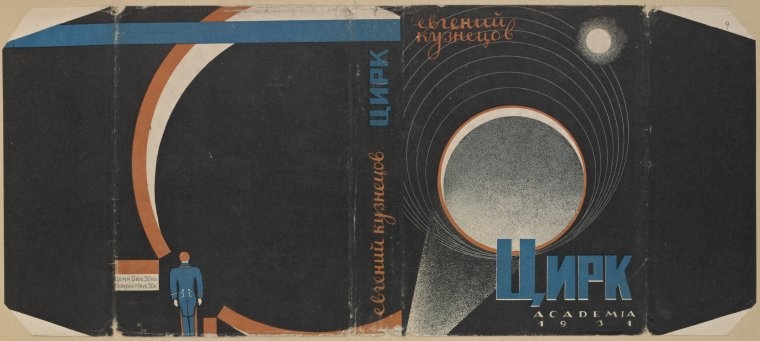
Americans like to pride ourselves on the numerous ways our pop culture penetrated the Soviet Union and seduced its youngsters, sending them to bed with dreams of Mickey Mouse, Billie Holiday, Elvis, and Star Wars. Whether it’s jazz in the early decades after the revolution, or rock and roll in the 50s and after, Soviet youth so craved the ways of the West, it seems, that they famously bootlegged American music on used X‑rays, with results of widely varying degrees of quality. That’s all well and good, but we rarely ask what Soviet cultural exports we were missing while we trumpeted our superiority. (I mean, besides Ayn Rand or the comedy of Yakov Smirnoff.)
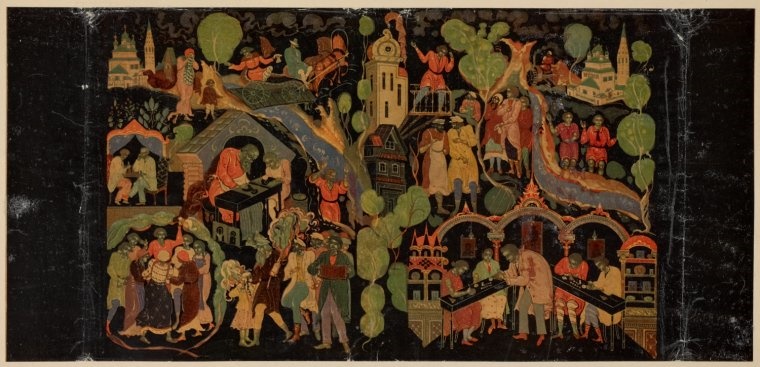
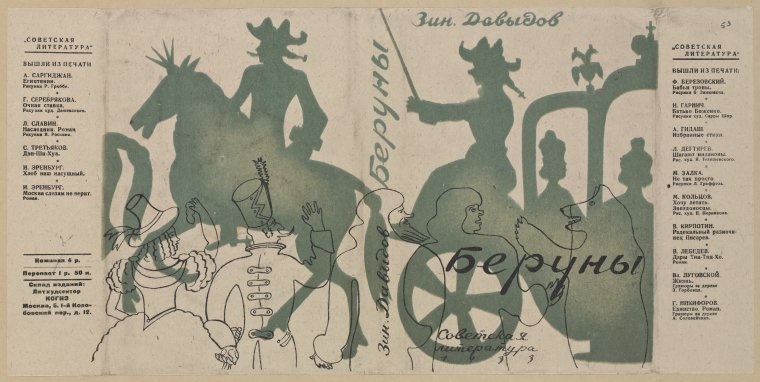
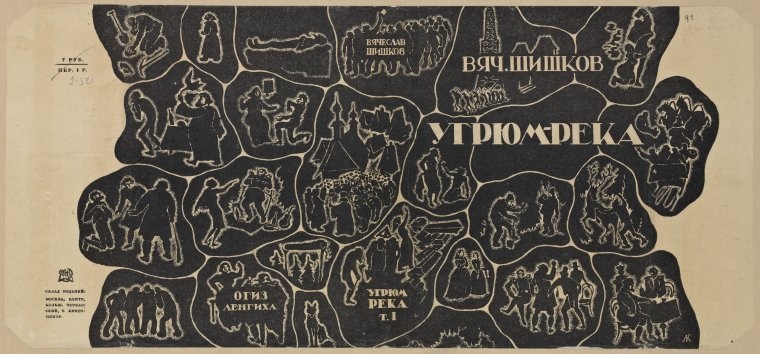
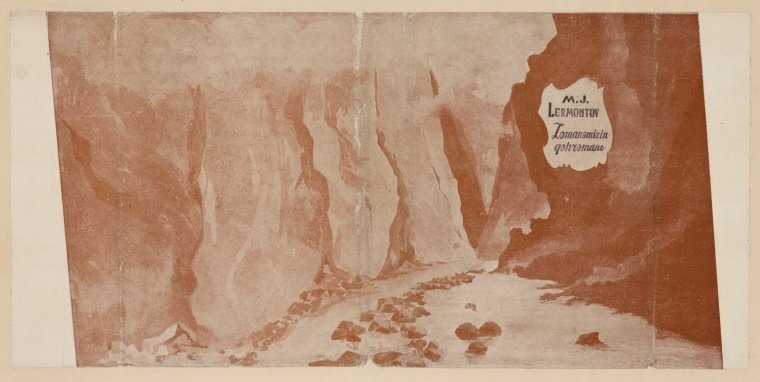
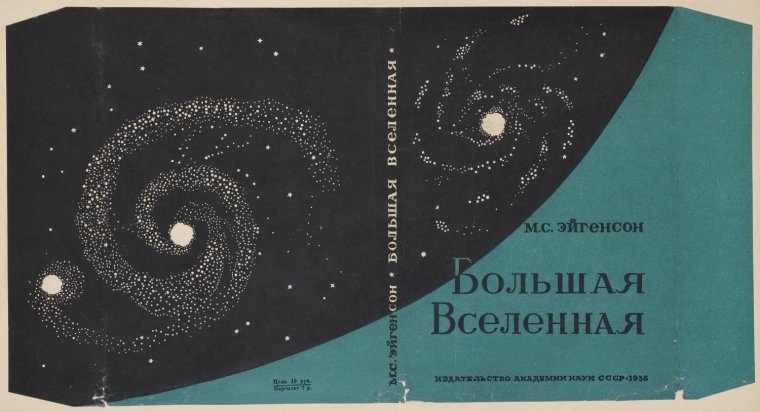
A few of those exports have become high watermarks of creative innovation and aesthetic beauty, such as the filmmaking of Dziga Vertov and Andrei Tarkovsky. At least one Soviet export, the Theremin, radicalized music with its haunting electronic whine. Much less well-known, however, are the fascinating developments in animation and illustration (such as these outer space utopias). Now—thanks to the New York Public Library’s hugely expansive, free digital image archive—we can view and download 650 examples of Soviet book cover design between the years 1917 and 1942 (most date from the 30s). Many of these covers are as unremarkably vanilla as some of their American counterparts, but no small number offer unique looks into avant-garde Soviet design trends.
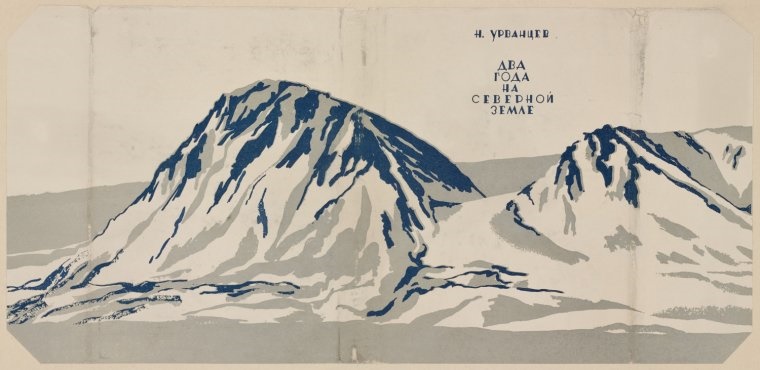
Additionally, the archive gives us a broad overview of the kinds of books that were published in the Soviet Union during these pre-Cold War years. It’s unlikely many of these titles saw translation into English and unlikely many of them ever will. In some cases, the author and title of the book represented have been lost to history (as with the colorful cover second from the top). Each of the images here links to a page on the NYPL’s online database, where you can see publication info and download high-resolution scans. Browse, and download, hundreds more pre-War Soviet book cover designs at the NYPL’s “Scrapbook of Russian Bookjackets, 1917–1942,” or see a few more choice selections at The Paris Review, who drew our attention to this wonderful online collection.
via The Paris Review
Related Content:
Soviets Bootlegged Western Pop Music on Discarded X‑Rays: Hear Original Audio Samples
Soviet-Era Illustrations Of J. R. R. Tolkien’s The Hobbit (1976)
Josh Jones is a writer and musician based in Durham, NC. Follow him at @jdmagness
Read More...Support Us
We're hoping to rely on loyal readers, rather than erratic ads. Please click the Donate button and support Open Culture. You can use Paypal, Venmo, Patreon, even Crypto! We thank you!

About Us

Open Culture scours the web for the best educational media. We find the free courses and audio books you need, the language lessons & educational videos you want, and plenty of enlightenment in between.
Advertise With Us

FREE UPDATES!
GET OUR DAILY EMAIL
Get the best cultural and educational resources on the web curated for you in a daily email. We never spam. Unsubscribe at any time.
FOLLOW ON SOCIAL MEDIA

Open Culture editor Dan Colman scours the web for the best educational media. He finds the free courses and audio books you need, the language lessons & movies you want, and plenty of enlightenment in between.
Advertise With Us


