Postage Stamps from Bhutan That Double as Playable Vinyl Records
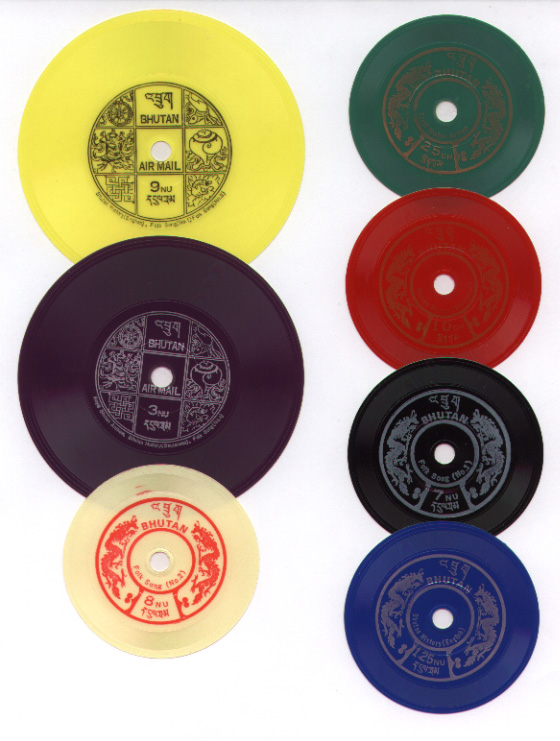
The tiny, Himalayan kingdom of Bhutan has a unique national aspiration that sets it apart from its neighbors, China and India. (And certainly the United States too.) Rather than increasing its gross national product, Bhutan has instead made it a goal to increase the Gross National Happiness of its citizens. There’s wealth in health, not just money, the Bhutanese have argued. And since the 197os, the country has taken a holistic approach to development, trying to increase the spiritual, physical, and environmental health of its people. And guess what? The strategy is paying off. A 2006 global survey conducted by Business Week found that Bhutan is the happiest country in Asia and the eighth-happiest country in the world.
It’s perhaps only a nation devoted to happiness that could throw its support behind this — postage stamps that double as playable vinyl records. Created by an American entrepreneur Burt Todd in the early 70s, at the request of the Bhutanese royal family, the “talking stamps” shown above could be stuck on a letter and then later played on a turntable. According to Todd’s 2006 obituary in The New York Times, one stamp “played the Bhutanese national anthem,” and another delivered “a very concise history of Bhutan.” Thanks to WFMU, our favorite independent free form radio station, you can hear clips of talking stamps above and below. Don’t you feel happier already?
Follow Open Culture on Facebook and Twitter and share intelligent media with your friends. Or better yet, sign up for our daily email and get a daily dose of Open Culture in your inbox. And if you want to make sure that our posts definitely appear in your Facebook newsfeed, just follow these simple steps.
Related Content:
How to Clean Your Vinyl Records with Wood Glue
How Vinyl Records Are Made: A Primer from 1956
Read More...Watch Dismaland — The Official Unofficial Film, A Cinematic Journey Through Banksy’s Apocalyptic Theme Park
After a frustrating day spent dealing with a tenacious ghost in my two-year-old laptop, I’d much rather visit the dreary bemusement park, Dismaland, than that soulless, slick-surfaced “genius” bar. It just feels more real, somehow.
Sadly for those of us in gloomy, defeatist moods, Dismaland, the artist Banksy’s high concept, multiple acre installation, was never intended to be a permanent fixture. It went the way of Cinderella’s coach earlier this fall, but not before photographer Jamie Brightmore managed to squeeze in amongst the great throngs of British curiosity seekers, camera in hand.
The weather was dreary for his three visits, and a security guard denuded him of his tripod, but he still managed to capture the dystopian scene on behalf of armchair travelers everywhere. A catalogue of horrors awaits you above in Dismaland: The Official Unofficial Film. He also paid close attention to the sound design of the apocalyptic getaway, understanding the audio component to such grim exhibits as Relentless Paparazzi and the horrifying merry-wheel, Corporate Scandal.
The artist, a true Dismateer, shares more about his time at the least happy place on earth here.
Related Content:
Banksy Creates a Tiny Replica of The Great Sphinx Of Giza In Queens
Patti Smith Presents Top Webby Award to Banksy; He Accepts with Self-Mocking Video
Ayun Halliday is an author, illustrator, and Chief Primatologist of the East Village Inky zine. Her play, Fawnbook, opens in New York City later this fall. Follow her @AyunHalliday
Read More...A Young Hunter S. Thompson Appears on the Classic TV Game Show, To Tell the Truth (1967)
Once upon a time, avant-garde composers, surrealist painters, and Gonzo journalists made guest appearances on the most mainstream American game shows. It doesn’t happen much anymore.
We’ve shown you John Cage perform on I’ve Got a Secret in 1960; Salvador Dalí do his Dalí schtick on What’s My Line in 1952; and a young Frank Zappa turn a bicycle into a musical instrument on The Steve Allen Show in ’63. Now we can add to the list a young Hunter S. Thompson making an appearance on To Tell the Truth, one of the longest-running TV game shows in American history. The episode (above) aired on February 20, 1967, the year after Thompson published his first major book of journalism, Hell’s Angels: The Strange and Terrible Saga of the Outlaw Motorcycle Gangs. (See him get confronted by the Angels here.)
If you’re not familiar with the show, To Tell the Truth works like this:
The show features a panel of four celebrities whose object is the correct identification of a described contestant who has an unusual occupation or experience. This central character is accompanied by two impostors who pretend to be the central character; together, the three persons are said to belong to a “team of challengers.” The celebrity panelists question the three contestants; the impostors are allowed to lie but the central character is sworn “to tell the truth”. After questioning, the panel attempts to identify which of the three challengers is telling the truth and is thus the central character.
Given the whole premise of the show, Thompson, only 30 years old, was still an unrecognizable face on America’s cultural scene. But, with the publication of Fear and Loathing in Las Vegas just around the corner, all of that was about to change.
If you would like to support the mission of Open Culture, consider making a donation to our site. It’s hard to rely 100% on ads, and your contributions will help us continue providing the best free cultural and educational materials to learners everywhere. You can contribute through PayPal, Patreon, and Venmo (@openculture). Thanks!
Related Content:
Hunter S. Thompson Gets Confronted by The Hell’s Angels
Read 18 Lost Stories From Hunter S. Thompson’s Forgotten Stint As a Foreign Correspondent
Hunter S. Thompson, Existentialist Life Coach, Gives Tips for Finding Meaning in Life
Read 10 Free Articles by Hunter S. Thompson That Span His Gonzo Journalist Career (1965–2005)
Hunter S. Thompson Interviews Keith Richards
Read More...Maurice Sendak Illustrates Tolstoy in 1963 (with a Little Help from His Editor)
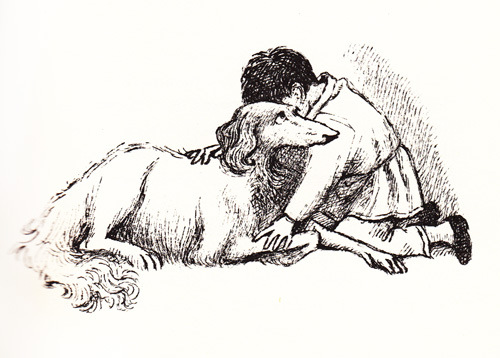
Even those of us who know nothing else of Maurice Sendak’s work know Where the Wild Things Are, almost always because we read and found ourselves captivated by it in our own childhoods — if, of course, our childhoods happened in 1963 or later. Though that year saw the publication of that best-known of Sendak’s many works as an illustrator and writer — and indeed, quite possibly the best-known children’s book of the twentieth century, illustrated or written by anyone — the world got something else intriguing from Sendak at the same time: an illustrated edition of Leo Tolstoy’s 1852 autobiographical novel Nikolenka’s Childhood.
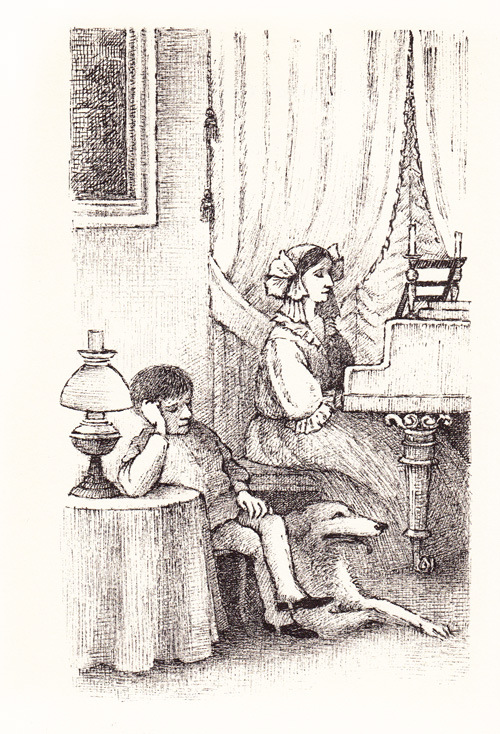
At Brainpickings, Maria Popova writes of the struggle Sendak, then a young and insecure artist at the beginning of his career, endured to complete this lesser-known project: “His youthful insecurity, however, presents a beautiful parallel to the coming-of-age themes Tolstoy explores. The illustrations, presented here from a surviving copy of the 1963 gem, are as tender and soulful as young Sendak’s spirit.” Here we’ve selected a few of the images that Popova gathered from this out-of-print book; to see more, do have a look at her original post.
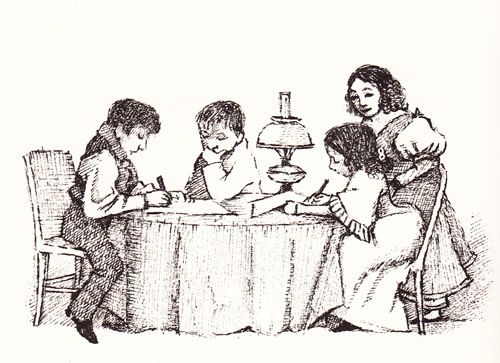
Later in life Sendak explained his anxiety about accompanying the words of the man who wrote War and Peace: “You can’t illustrate Tolstoy. You’re competing with the greatest illustrator in the world. Pictures bring him down and just limp along.” At Letters of Note, you can read the words of encouragement written to the young Sendak by his editor Ursula Nordstrom, who acknowledged that, “sure, Tolstoy and Melville have a lot of furniture in their books and they also know a lot of facts, but that isn’t the only sort of genius, you know that. Yes, Tolstoy is wonderful (his publisher asked me for a quote) but you can express as much emotion and ‘cohesion and purpose’ in some of your drawings as there is in War and Peace. I mean that.”
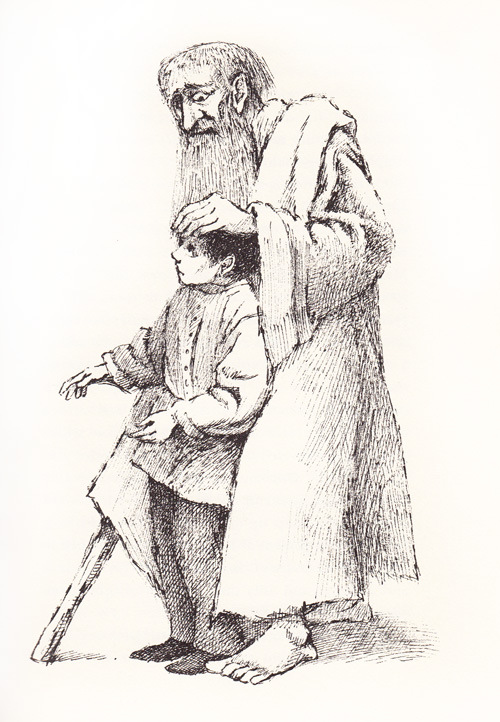
Again, find more of Sendak’s illustrations of Tolstoy’s Nikolenka’s Childhood at BrainPickings. Used copies can be found on AbeBooks.
Related Content:
Maurice Sendak Sent Beautifully Illustrated Letters to Fans — So Beautiful a Kid Ate One
Maurice Sendak’s Bawdy Illustrations For Herman Melville’s Pierre: or, The Ambiguities
The Only Drawing from Maurice Sendak’s Short-Lived Attempt to Illustrate The Hobbit
An Animated Christmas Fable by Maurice Sendak (1977)
Colin Marshall writes elsewhere on cities, language, Asia, and men’s style. He’s at work on a book about Los Angeles, A Los Angeles Primer, the video series The City in Cinema, and the crowdfunded journalism project Where Is the City of the Future? Follow him on Twitter at @colinmarshall or on Facebook.
Read More...When Frank Zappa & Miles Davis Played a Drug Dealer and a Pimp on Miami Vice
For all the neon-Ferrari-and-raw-silk garishness the show now seems to embody, Miami Vice (1984–1990) paid uncommon attention to cultural detail. Music, for instance, didn’t get thrown onto its soundtrack, but carefully selected to reflect both the mid-80s zeitgeist and the aesthetic of a particular episode. Any time you tuned in, you could hear the likes of Devo, Phil Collins, The Tubes, Depeche Mode, or the Alan Parsons project behind the action. Sometimes you could also see musicians onscreen, involved in the action, albeit musicians of a somewhat different kind: the innovative experimental composer and rocker Frank Zappa, for instance, once appeared as “weasel dust” dealer Mario Fuente.
That happened on “Payback,” the nineteenth episode of Miami Vice’s second season which aired on March 14, 1986, a clip of which you can watch at the top of the post. (Naturally, the scene takes place on a boat staffed with armed thugs and bikini girls.) If, after the cliffhanger it ends on, you simply must see the whole thing, you may be able to watch the full episode on Hulu. The same goes for November 8, 1985’s “Junk Love,” another episode from the same season with no less distinguished a musician guest star than Miles Davis.
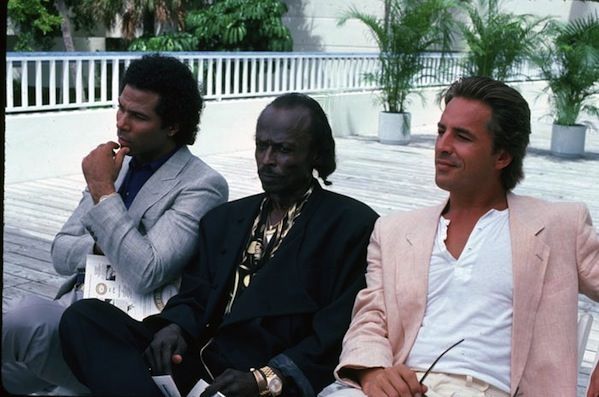
“The idea is that Crockett and Tubbs arrest the owner of a whorehouse,” writes Dangerous Minds’ Martin Schneider, “a dude named ‘Ivory Jones’ — played by Miles.” And while “most of Davis’ dialogue is semi-incomprehensible… you haven’t lived until you’ve seen the genius behind Bitches Brew croak, ‘Watch that big cabin cruiser, he has a thing about them.’ ” We’ve embedded part of “Junk Love” just below, which, since “Ivory is a scumbag but collaborating with the local constabulary,” offers “plenty of scenes of him hanging out with Crockett and Tubbs.” Add to this Leonard Cohen’s 1986 role as malevolent French secret service agent Francois Zolan, and you realize that Miami Vice has turned out to cater straight to culturally omnivorous 21st century viewers: those who can appreciate Songs of Love and Hate as well as a neon Ferrari, Freak Out! as much as raw silk, and Devo as much as Davis.
Related Content:
Watch Frank Zappa Play Michael Nesmith on The Monkees (1967)
Frank Zappa Debates Censorship on CNN’s Crossfire (1986)
Colin Marshall writes elsewhere on cities, language, Asia, and men’s style. He’s at work on a book about Los Angeles, A Los Angeles Primer, the video series The City in Cinema, and the crowdfunded journalism project Where Is the City of the Future? Follow him on Twitter at @colinmarshall or on Facebook.
Read More...An Animated Introduction to Jane Austen
From Alain de Botton’ School of Life comes the latest in a series of animated introductions to influential literary figures. Previous installments gave us a look at the life and work of Marcel Proust and Virginia Woolf. This one takes us inside the literary world of Jane Austen. And, as always, de Botton puts an accent on how reading literature can change your life. “Jane Austen’s novels are so readable and so interesting…” notes The School of Life Youtube channel,” because she wasn’t an ordinary kind of novelist: she wanted her work to help us to be better and wiser people. Her novels [available on this list] had a philosophy of personal development at their heart.” The video above expands on that idea. Enjoy.
Related Content:
An Animated Introduction to Virginia Woolf
Jane Austen Used Pins to Edit Her Abandoned Manuscript, The Watsons
Download 55 Free Online Literature Courses: From Dante and Milton to Kerouac and Tolkien
Download the Major Works of Jane Austen as Free eBooks & Audio Books
Read More...Music That Helps You Sleep: Minimalist Composer Max Richter, Pop Phenom Ed Sheeran & Your Favorites
I admit it now, I was once an avid listener of the soothing new age music of Enya. At the time, in my musical circles, this was not cool, and at the time I cared about such things. So Enya was my guilty secret. I didn’t need to work that hard to hide my affection. I only listened to Enya at night, as I lay in bed alone and drifted off. I used my Enya cassette tapes (yes tapes), you see, to put myself to sleep.
I’ve had other sleep favorites. Beethoven, Mozart, Bach… interpretations of Beethoven, Mozart, and Bach by synthesizer wizard Wendy Carlos…. It may seem disparaging to say that a certain composer’s music lulls one to sleep, but I think it’s just the opposite. So does composer and musician Max Richter, who has created an eight-hour piece called “Sleep” that is “meant to be slept through,” says Richter. (There’s also a one hour version that’s more readily available for purchase.) Its gentle waves of strings, voice, piano, and synths are like a musical Lethe one floats on into oblivion.
Richter has performed the piece with other musicians, just recently overnight on a September 27th BBC Radio 3 broadcast, “the longest live broadcast,” writes The New Yorker, “of a single piece of music in the station’s history.” The small audience in attendance mostly stayed awake. One member reportedly hallucinated. The composition consists of thirty-one themed movements (Hear “Dream 3 (in the midst of my life)” above). Lovers of modern minimalist composers like Philip Glass and William Basinski will notice similar uses of drone notes and repetition in “Sleep.” You may even hear a touch of Enya….
Richter’s is the perfect music to accompany me into dreamland; even those movements that include a vocalist use the voice as a wordless, ethereal instrument, as so many ambient musicians do. I’ve come across more than a few favorite ambient and minimalist composers late at night, when Spotify begins recommending sleep playlists. “Sleep,” it turns out, “is one of Spotify’s most popular categories,” according to Billboard. However, the “world’s favorite choice when choosing music to unwind” may surprise you: red-headed English singer/songwriter Ed Sheeran.
I’m not personally a fan of his music, but even if I were, I can’t imagine listening to it as I settle down to sleep. Nonetheless, millions of people stream Sheeran’s songs on repeat at bedtime, along with other pop artists like Ellie Goulding, John Legend, Sam Smith, and Rihanna. To each their own, I guess. Hear a playlist of the most-streamed “sleep” music on Spotify above. (If you don’t have Spotify’s free software, download it here.) If none of these tunes do it for you, consider giving iTunes’ 27th most popular podcast, Sleep With Me, a chance. Or, let us know in the comments below what music, if any, helps calm your nerves and soothe your tired brain as you climb into bed after a long day.
Related Content:
Stream 58 Hours of Free Classical Music Selected to Help You Study, Work, or Simply Relax
Music That Helps You Write: A Free Spotify Playlist of Your Selections
Free Audio: Go the F–k to Sleep Narrated by Samuel L. Jackson
Josh Jones is a writer and musician based in Durham, NC. Follow him at @jdmagness
Read More...The History of the Blues in 50 Riffs: From Blind Lemon Jefferson (1928) to Joe Bonamassa (2009)
If you’ve ever had any doubt, for some reason or other, that rock and roll descended directly from the blues, the video above, a history of the blues in 50 riffs, should convince you. And while you might think a blues history that ends in rock n roll would start with Robert Johnson, this guitarist reaches back to the country blues of Blind Lemon Jefferson’s “Black Snake Moan” from 1928 then moves through legendarily tuneful players like Skip James and Reverend Gary Davis before we get to the infamous Mr. Johnson.
Big Bill Broonzy is, as he should be, represented. Other country blues greats like soft-spoken farmer Mississippi John Hurt and hardened felon Lead Belly, “King of the 12 String Guitar,” are not. Say what you will about that. The recordings these artists made with Okeh Records and Alan Lomax, despite their commercial failure in the 30s, midwifed the blues revival of the fifties and sixties. Hear Lead Belly’s version of folk ballad “Gallows Pole” above, a song Led Zeppelin made famous. Lead Belly’s acoustic blues inspired everyone from John Fogerty to Skiffle King Lonnie Donegan, Pete Seeger to Jimmy Page, as did the rootsy country blues of Lightnin’ Hopkins, who is included in the 50 riffs. As are John Lee Hooker, Muddy Waters, Howlin’ Wolf, and BB King’s electric styles—all of them picked up by blues rock revivalists, including, of course, Jimi Hendrix.
Hendrix’s “Red House” riff makes the cut here, as we move slowly into rock and roll. But before we get to Hendrix, we must first check in with two other Kings, Freddie and Albert—especially Albert. Hendrix “was star struck,” says Rolling Stone, “when his hero [Albert King] opened for him at the Fillmore in 1967.” For his part, King said, “I taught [Hendrix] a lesson about the blues. I could have easily played his songs, but he couldn’t play mine.” See King play “Born Under a Bad Sign” in 1981, above, and hear why Hendrix worshipped him.
Mississippi blues moved to Memphis, Chicago, New York and to Texas, where by the 70s and 80s, ZZ Top and Stevie Ray Vaughan added their own southwest roadhouse swagger. (No Johnny Winter, alas.) Many people will be pleased to see Irish rocker Rory Gallagher in the mix, and amused that The Blues Brothers get a mention. Many more usual suspects appear, and a few unusual picks. I’m very glad to hear a brief R.L. Burnside riff. The White Stripes, Tedeschi Trucks Band, and Joe Bonamassa round things out into the 2010’s. Everyone will miss their favorite blues player. (As usual, the powerhouse gospel blues guitarist Sister Rosetta Tharpe gets overlooked.) I would love to see included in any history of blues such obscure but brilliant guitarists as Evan Johns (above), whose rockabilly blues guitar freakouts sound like nothing else. Or John Dee Holeman, below, whose effortless, understated rhythm playing goes unmatched in my book.
Like so many of the bluesmen who came before them, these gentlemen seem to represent a dying breed. And yet the blues lives on and evolves in artists like Gary Clark Jr., The Black Keys, and Alabama Shakes. And of course there’s the prodigy Bonamassa, whom you absolutely have to see below at age 12, jamming with experimental country speed demon Danny Gatton’s band (he gets going around 1:05).
If you’re missing your favorites, give them a shout out below. Who do you think has to be included in any history of the blues—told in riffs or otherwise—and why?
Related Content:
The Thrill is Gone: See B.B. King Play in Two Electric Live Performances
Watch Rock Pioneer Sister Rosetta Tharpe Wow Audiences With Her Gospel Guitar
Zeppelin Took My Blues Away: An Illustrated History of Zeppelin’s “Copyright Indiscretions”
Josh Jones is a writer and musician based in Durham, NC. Follow him at @jdmagness
Read More...
Browse Paintings, Photos, Papers & More in the Archive of Alfred Stieglitz and Georgia O’Keeffe, America’s Original Art Power Couple

Does any couple loom larger in the world of twentieth-century American art than Alfred Stieglitz and Georgia O’Keeffe? Not if you believe the Alfred Stieglitz/Georgia O’Keeffe Archive at Yale University’s Beinecke Rare Book and Manuscript Library. If you go there, you’ll find “thousands of letters and hundreds of photographs in addition to a collection of literary manuscripts, scrapbooks, ephemera, fine art, and realia, primarily dating between 1880 and 1980, which document the lives and careers of the photographer/publisher/gallery owner Alfred Stieglitz and the painter Georgia O’Keeffe.” But you can even view some of its material here on the internet, including photos by and of “Stieglitz and his circle of artists and writers” and “a variety of paintings and drawings, letters and ephemera, and medals and awards.”
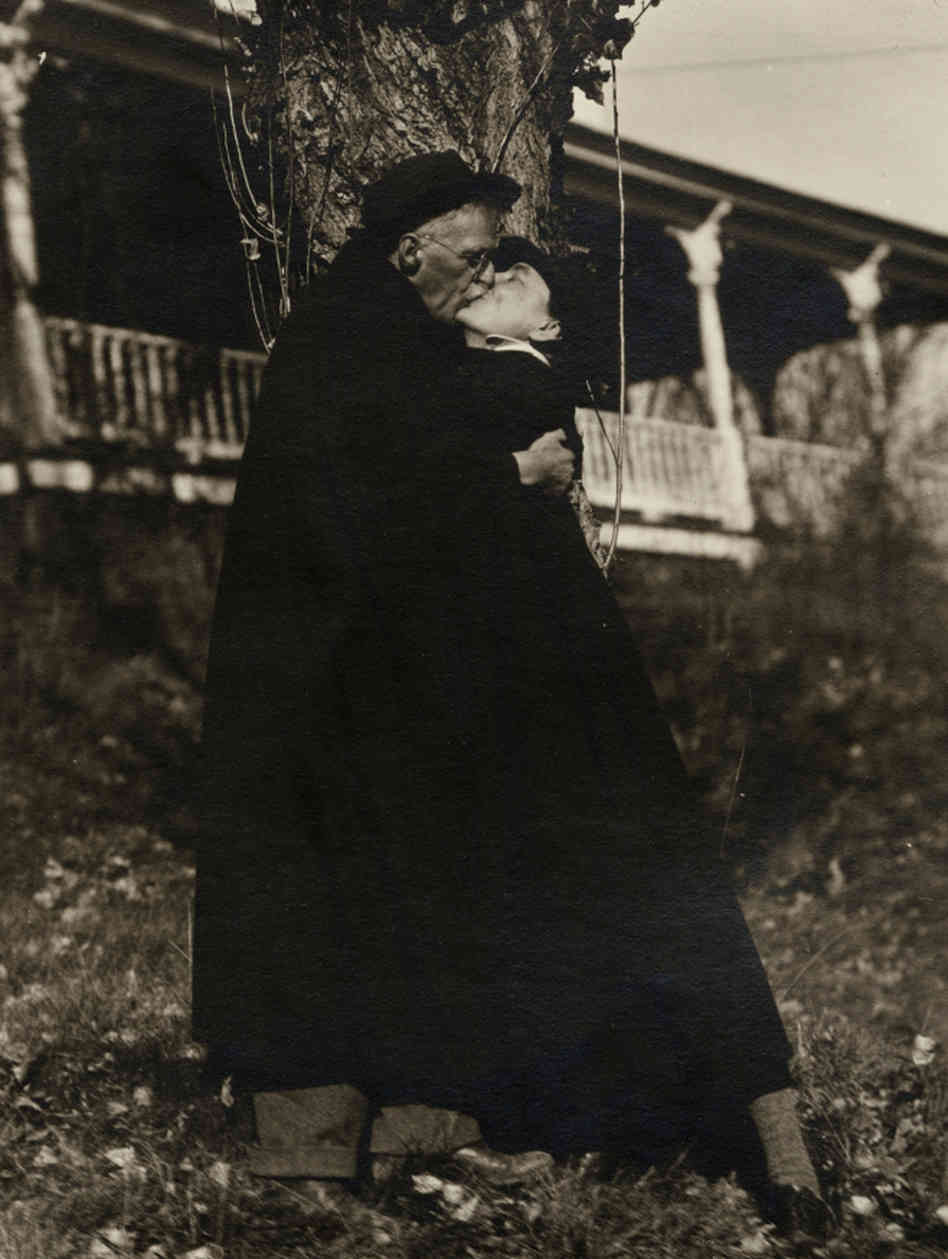
The online archive does, of course, contain some paintings from O’Keeffe, such as House I Live in 1937 at the top of the post or, more in line with her famously floral focus, Pink Roses just below. But you’ll also find behind-the-work personal artifacts like the 1929 image of Stieglitz and O’Keeffe together at Lake George, New York just above. You can browse through all the material available with this list, or you can filter it down to the items pertaining specifically to O’Keeffe or those pertaining specifically to Stieglitz, though in life the two had an “instant mental and physical attraction” that kept them on some level inseparable during the course of their forty-year relationship.
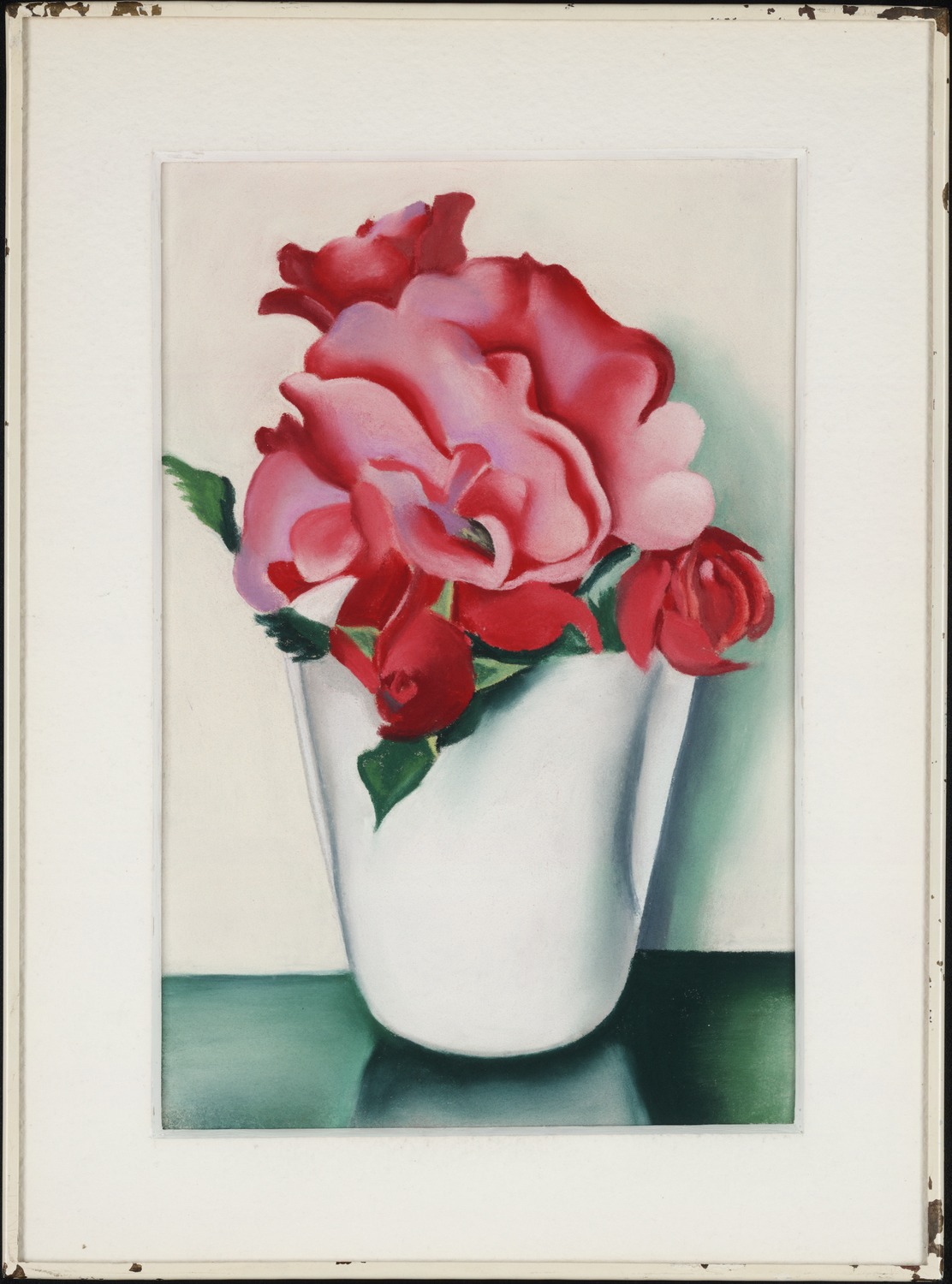
They even enjoyed a kind of artistic togetherness during the long-distance stretches of that relationship, when O’Keeffe “discovered her love for the landscape of the American Southwest and spent increasing amounts of time living and working there.”
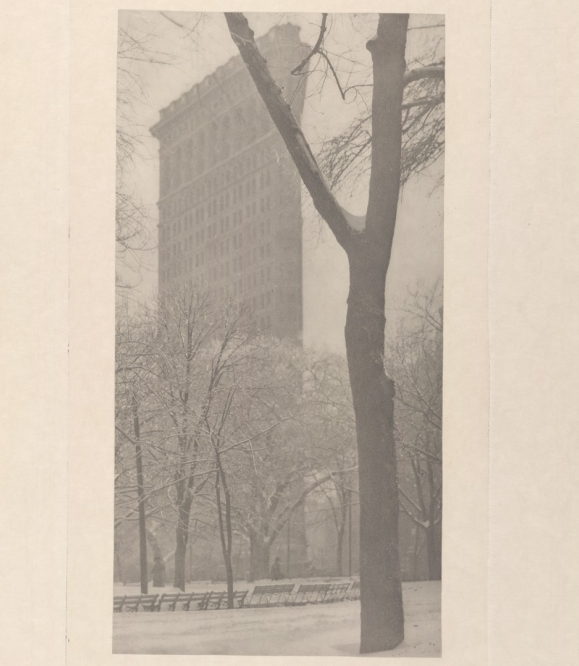
And while many of us already know about her favorite subjects and the ways in which she realized them on canvas, fewer of us know about the efforts Stieglitz took to make photography into not just a legitimate but respected art form. To get a sense of what that took, start with Stieglitz’s autochromes (below), some of the earliest ventures made by an American artist into the realm of color photography. Both Stieglitz and O’Keeffe, each in there own medium, made us see things differently. How many art-world power couples can say the same?

Related Content:
The Real Georgia O’Keeffe: The Artist Reveals Herself in Vintage Documentary Clips
Alfred Stieglitz: The Eloquent Eye, a Revealing Look at “The Father of Modern Photography”
Whitney Museum Puts Online 21,000 Works of American Art, By 3,000 Artists
Colin Marshall writes elsewhere on cities, language, Asia, and men’s style. He’s at work on a book about Los Angeles, A Los Angeles Primer, the video series The City in Cinema, and the crowdfunded journalism project Where Is the City of the Future? Follow him on Twitter at @colinmarshall or on Facebook.
Read More...Amazing Miniature Sculptures of New York City Landmarks: CBGB, Katz’s Deli, Vesuvio Bakery & More
If you’re near Pasadena, California, stop by the Flower Pepper Gallery and see Facade, the new exhibition featuring the work of visual artist Randy Hage. For decades now, Hage has been fascinated by the beauty of aging structures in New York City. This led him, beginning in the late 1990s, to start photographing aging storefronts in the city, “with their hand painted signs, layers of architecture, wonderful patinas and intriguing history.” Later, he decided to preserve their memory in miniaturized, hyper-realistic sculptures (like the ones now on display in Pasadena through November 18th). In the video above, see just how perfectly Hage manages to recreate New York storefronts in miniature. Here’s another famous-but-now-defunct facade you might recognize:
To take a closer look at his work, visit Hage’s Instagram page where you will see mini sculptures of fading New York institutions like Katz’s Deli, CBGB, McSorley’s Old Ale House, Vesuvio Bakery, and more.
via SuperSonic Art/BoingBoing
Follow Open Culture on Facebook and Twitter and share intelligent media with your friends. Or better yet, sign up for our daily email and get a daily dose of Open Culture in your inbox. And if you want to make sure that our posts definitely appear in your Facebook newsfeed, just follow these simple steps.
Read More...Support Us
We're hoping to rely on loyal readers, rather than erratic ads. Please click the Donate button and support Open Culture. You can use Paypal, Venmo, Patreon, even Crypto! We thank you!

About Us

Open Culture scours the web for the best educational media. We find the free courses and audio books you need, the language lessons & educational videos you want, and plenty of enlightenment in between.
Advertise With Us

FREE UPDATES!
GET OUR DAILY EMAIL
Get the best cultural and educational resources on the web curated for you in a daily email. We never spam. Unsubscribe at any time.
FOLLOW ON SOCIAL MEDIA

Open Culture editor Dan Colman scours the web for the best educational media. He finds the free courses and audio books you need, the language lessons & movies you want, and plenty of enlightenment in between.
Advertise With Us


