Teaching on YouTube
Today, we have a guest feature by Alexandra Juhasz, Professor of Media Studies at Pitzer College, in Claremont, CA. This piece consolidates lengthier blog entries about a course she ran on YouTube, called “Learning from YouTube,” in Fall 2007. The whole goal was to better understand this new media/cultural phenomenon, and how it can be used in the classroom. How did she set up this class? And what did she learn? Find out below. Take it away Alexandra (and feel free to check out our YouTube playlist as well as our piece, 60 Smart Video Collections on YouTube) .…
I decided to teach a course about YouTube to better understand this recent and massive media/cultural phenomenon, given that I had been studiously ignoring it (even as I recognized its significance) because every time I went there, I was seriously underwhelmed by what I saw: interchangeable, bite-sized, formulaic videos referring either to popular culture or personal pain/pleasure. I called them video slogans: pithy, precise, rousing calls to action or consumption, or action as consumption. I was certain, however, that there must be video, in this vast sea, that would satisfy even my lofty standards, and figured my students (given their greater facility with a life-on-line) probably knew better than I how to navigate the site.
Learning From YouTube was my first truly “student led” course: we would determine the important themes and relevant methods together. I had decided that I wanted the course to primarily consider how web 2.0 (in this case, specifically YouTube) is radically altering the conditions of learning (what, where, when, how we have access to information). Given that college students are rarely asked to consider the meta-questions of how they learn, on top of what they are learning, I thought it would be pedagogically useful for the form of the course to mirror YouTube’s structures for learning, like its amateur-led pedagogy. Yes, on YouTube there is a great deal of user control, but this is within a limited and also highly limiting set of tools. So, I did set forth the rule that all the learning for the course had to be on and about YouTube. While this constraint was clearly artificial, and perhaps misleading about how YouTube is used in connection with a host of other media platforms which complement its functionality, it did allow us to become critically aware of the constraints of its architecture for our atypical goals of higher education. Thus, all assignments had to be produced as YouTube comments or videos, all research had to be conducted within its pages, and all classes were taped and put on to YouTube. This gimmick, plus a press release, made the course sexy enough to catch the eye of the media, mainstream and otherwise, allowing for an exhausting, but self-reflexive lesson in the role and value of media attention within social networking. Beyond this, students quickly realized how well trained they actually are to do academic work with the word—their expertise—and how poor is their media-production literacy (there were no media production skills required for the course as there are not on YouTube). (more…)
Read More...10 Signs of Intelligent Life at YouTube (Smart Video Collections)
 It’s been a constant lament that YouTube offers its users scant little intellectual content. And that content is itself hard to find. Just visit YouTube’s so-called Education Section, and you’ll be hard-pressed to find anything actually educational. But the good news is that we’re seeing some recent signs of intelligent life at YouTube. The video service hosts an increasing number of intellectually redeemable video collections. And so we figured why not do some heavy lifting and bring a few your way. If YouTube won’t make them easy to find, then we will. (By the way, I first posted this right between Christmas and New Years, when everyone was tuned out. So it seemed worth posting again.)
1.) UC Berkeley: We have mentioned this collection before, but we might as well mention it again. UC Berkeley launched in October a YouTube channel that contains over 300 hours of academic programming. And, most notably, you’ll find here a series of university courses that can be watched in their entirety (for free). It’s a deep collection worth starting with.
2.) @GoogleTalks: Many big names end up speaking at Google. That includes political figures and cultural figures such as Paul Krugman, Steven Pinker, Joseph Stieglitz, Jonathan Lethem and more. Since Google owns YouTube, it’s good to see that they’re making an effort to record these talks and raise the intellectual bar on GooTube just a bit. Have a look.
3.) The Nobel Prize: TheNobelPrize channel presents current and past Nobel Laureates — courtesy of Nobelprize.org, the official web site of the Nobel Foundation. The collection features official Nobel Prize Lectures and also more casual presentations. It looks like talks by the 2007 winners are being added slowly.
4.) TED Talks: Every year, a thousand “thought-leaders, movers and shakers” get together at a four-day conference called TED (which is short for Technology, Entertainment and Design). In recent years, the list of speakers has ranged from Sergey Brin and Larry Page to Bill Gates, to Herbie Hancock and Peter Gabriel, to Frank Gehry, to Al Gore and Bill Clinton. In this collection, you’ll find various talks presented at the conference. They usually run about 20 minutes.
5.) FORA.tv: In case you don’t know about it, FORA.tv is a web service that hosts videos featuring important thinkers grappling with contemporary cultural, social and political questions. It’s like YouTube, but always intelligent. You can find extended videos on FORA’s site, and a decent sampling of their content on YouTube.
6.) Philosophers and Theorists: The European Graduate School (or EGS) hosts a video collection on YouTube that includes talks by some very important theorists/philosophers of the past generation — for example, Jacques Derrida and Jean Baudrillard. There are also some filmmakers mixed in — take for example, Peter Greenaway and John Waters.
7.) Pulitzer Center on Crisis Reporting: This channel promotes coverage of international affairs, “focusing on topics that have been under-reported, mis-reported — or not reported at all.” Most of these videos were featured on the public television program “Foreign Exchange with Fareed Zakaria.”
8.) BBC Worldwide: The leading British broadcaster is now live on YouTube, and there’s some good content in the mix, although it won’t leap off of the homepage. The trick is to look at their playlist where you will find more educational pieces of video: documentaries, science, drama, travel, and more. The notable downside is that the videos typically fall within YouTube’s customary 10 minute video limit. (Many others cited here run longer.) Too bad more couldn’t have been done with this opportunity.
Other smart media properties that have opted for the soundbite strategy here include National Geographic and PBS.
9.) UChannel: Formerly called the University Channel, this video service presents talks on international/political affairs from academic institutions all over the world. It’s spearheaded by Princeton University, and you can find an even more extensive video collection on their web site.
10.) Other University Channels on YouTube: UC Berkeley launched the biggest channel on YouTube, but there are some others out there. Unfortunately, finding them is something of a crapshoot. We’ve managed, however, to pull together a good list of ten. See 10 University Collections on YouTube
Bonus: We cobbled together our own playlist of smart YouTube videos that will grow over time. Have a look.
In putting together this list, one thing became clear: YouTube has enough quality content to keep you busy, and there’s clearly more that I don’t know about (again, because they don’t make it easy to find). If you want to add other good YouTube collections to our list, please list them in the comments and I can add them selectively to the list.
Want more smart media? Check out our big list of free university courses available via podcast.
Read More...
10 Signs of Intelligent Life at YouTube (Smart Video Collections)
(UPDATED: See 70 Signs of Intelligent Life at YouTube)
It’s been a constant lament that YouTube offers its users scant little intellectual content. And that content is itself hard to find. Just visit YouTube’s so-called Education Section, and you’ll be hard-pressed to find anything actually educational. But the good news is that we’re seeing some recent signs of intelligent life at YouTube. The video service hosts an increasing number of intellectually redeemable video collections. And so we figured why not do some heavy lifting and bring a few your way. If YouTube won’t make them easy to find, then we will. (Also see 10 Ways to Make Your iPod a Better Learning Gadget.)
1.) UC Berkeley: We have mentioned this collection before, but we might as well mention it again. UC Berkeley launched in October a YouTube channel that contains over 300 hours of academic programming. And, most notably, you’ll find here a series of university courses that can be watched in their entirety (for free). It’s a deep collection worth starting with.
2.) @GoogleTalks: Many big names end up speaking at Google. That includes political figures and cultural figures such as Paul Krugman, Steven Pinker, Joseph Stieglitz, Jonathan Lethem and more. Since Google owns YouTube, it’s good to see that they’re making an effort to record these talks and raise the intellectual bar on GooTube just a bit. Have a look.
3.) The Nobel Prize: TheNobelPrize channel presents current and past Nobel Laureates — courtesy of Nobelprize.org, the official web site of the Nobel Foundation. The collection features official Nobel Prize Lectures and also more casual presentations. It looks like talks by the 2007 winners are being added slowly.
4.) TED Talks: Every year, a thousand “thought-leaders, movers and shakers” get together at a four-day conference called TED (which is short for Technology, Entertainment and Design). In recent years, the list of speakers has ranged from Sergey Brin and Larry Page to Bill Gates, to Herbie Hancock and Peter Gabriel, to Frank Gehry, to Al Gore and Bill Clinton. In this collection, you’ll find various talks presented at the conference. They usually run about 20 minutes.
5.) FORA.tv: In case you don’t know about it, FORA.tv is a web service that hosts videos featuring important thinkers grappling with contemporary cultural, social and political questions. It’s like YouTube, but always intelligent. You can find extended videos on FORA’s site, and a decent sampling of their content on YouTube.
6.) Philosophers and Theorists: The European Graduate School (or EGS) hosts a video collection on YouTube that includes talks by some very important theorists/philosophers of the past generation — for example, Jacques Derrida and Jean Baudrillard. There are also some filmmakers mixed in — take for example, Peter Greenaway and John Waters.
7.) Pulitzer Center on Crisis Reporting: This channel promotes coverage of international affairs, “focusing on topics that have been under-reported, mis-reported — or not reported at all.” Most of these videos were featured on the public television program “Foreign Exchange with Fareed Zakaria.”
8.) BBC Worldwide: The leading British broadcaster is now live on YouTube, and there’s some good content in the mix, although it won’t leap off of the homepage. The trick is to look at their playlist where you will find more educational pieces of video: documentaries, science, drama, travel, and more. The notable downside is that the videos typically fall within YouTube’s customary 10 minute video limit. (Many others cited here run longer.) Too bad more couldn’t have been done with this opportunity.
Other smart media properties that have opted for the soundbite strategy here include National Geographic and PBS.
9.) UChannel: Formerly called the University Channel, this video service presents talks on international/political affairs from academic institutions all over the world. It’s spearheaded by Princeton University, and you can find an even more extensive video collection on their web site.
10.) Other University Channels on YouTube: UC Berkeley launched the biggest channel on YouTube, but there are some others out there. Unfortunately, finding them is something of a crapshoot. We’ve managed, however, to pull together a good list of ten. See 10 University Collections on YouTube
Bonus: We cobbled together our own playlist of smart YouTube videos that will grow over time. Have a look.
In putting together this list, one thing became clear: YouTube has enough quality content to keep you busy, and there’s clearly more that I don’t know about (again, because they don’t make it easy to find). If you want to add other good YouTube collections to our list, please list them in the comments and I can add them selectively to the list.
Want more smart media? Check out our big list of free university courses available via podcast.

Yale Launches Open Courses
Click here for 250 Free Online Courses From Great Universities
Yesterday, Yale announced that it is providing “free and open access to seven introductory courses taught by distinguished teachers and scholars at Yale University.” I’ve listed the course lineup below, with links to each course. You can access the homepage for the project here.
With this launch, Yale becomes the latest prestigious American university to give global users access to online educational content. But its approach is rather different. The high profile initiatives led by MIT and UC Berkeley both deliver high volumes of content, and they’re designed to be scalable. (MIT gives users access to mass quantities of course materials created by its faculty, while Berkeley distributes through iTunes and YouTube over 50 courses that the university records at a reasonable cost.) In contrast, Yale’s project is more boutique and high-touch.
Each course features a syllabus, reading assignments, class notes, and polished lectures, which, when taken together, contribute to a more rounded learning experience. The lectures can be downloaded in one of five formats (text, audio, flash video, low bandwidth quicktime video, and high bandwidth quicktime video). And quite notably, Yale has designed the courses to be downloaded fairly easily, which means that you can put the lectures onto an mp3 player if you’re a little tech savvy. This does raise the question, however: why aren’t the lectures also posted on Yale’s iTunes site? This would surely facilitate the downloading of lectures for many users, and it would offer an easy way to drive substantial traffic to the courses.
As some have already noted (see the comments on this page), Yale isn’t offering online courses in the truest sense, meaning you won’t get access to a live instructor here. Nor will you be able to interact with other students. It’s a one-way, solitary educational experience. But there’s a reason for that. Not long ago, Yale experimented with a more comprehensive form of online learning when it created, along with Stanford and Oxford, an e‑learning consortium called “The Alliance for Lifelong Learning” (a/k/a AllLearn). For many reasons, the venture (where I spent five years) wasn’t ultimatley viable. And so Yale has opted for another model that has its own virtues — it’s less capital intensive; it’s free (AllLearn charged for its courses); and it will get educational materials into far more people’s hands, which is perhaps what matters most.
As a quick note, let me add that this project was funded by the Hewlett Foundation, and Yale expects to add up to 30 additional courses over the next several years.
To visit Yale’s open courses, visit the following links:
- Astronomy 160: Frontiers and Controversies in Astrophysics
- English 310: Modern Poetry
- Philosophy 176: Death
- Physics 200: Fundamentals of Physics
- Political Science 114: Introduction to Political Philosophy
- Psychology 110: Introduction to Psychology
- Religious Studies 145: Introduction to the Old Testament

Science for The Rest of Us: Podcasts At a Glance
Today, Elizabeth Green Musselman has penned a guest blog post that you’re bound to enjoy. Elizabeth is a professor and historian who works on the history of science, and she has recently launched a thoughtful podcast on the history of science, medicine, and technology. It’s called “The Missing Link” (iTunes — Feed — Web Site). Below, she highlights for us a range of podcasts that will appeal to everyday science enthusiasts. (If you’re interested in doing some guest blogging, drop us a line.) Thanks Elizabeth and take it away:
These can seem like dark days for those people who love science but who neither specialize in the field nor can quite stomach the gee-whiz factor that plagues so much popular science writing and broadcasting. Now that Stephen Jay Gould is cavorting somewhere in the Beyond with Charles Darwin, and ever since the New York Academy of Sciences put the ax to its inspired magazine The Sciences, where is a levelheaded lover of the sciences to turn?
The podcast world has begun to develop a niche market for just such listeners, that is, listeners who like their science relatively non-technical but still high-minded – listeners who think of science as a part of human culture, rather than an arcane temple. Not surprisingly, some of the best content comes from radio programs that have been re-released as podcasts. These include WNYC’s RadioLab, an hour-long show whose serious investigations on a theme (such as sleep or mortality) take on an intriguingly funhouse quality through the program’s inventive use of sound and the humorous interaction between co-hosts Jad Abumrad and Robert Krulwich. NPR has also released Krulwich’s solo reports in podcast form as Hmmm… Krulwich on Science.
Another longstanding NPR favorite, The Engines of Our Ingenuity, began broadcasting brief, thoughtful reflections on technology and culture in 1988. Written and hosted by John Lienhard, a retired professor of mechanical engineering and history at the University of Houston, the show now airs five days a week on 30 NPR affiliates in the U.S. The brief programs are also available in podcast form.
On the other side of the pond, the BBC 4’s long-running, popular show, In Our Time, frequently considers scientific topics and can also be heard in podcast form. Most recently, the program explored antimatter. On each hour-long program the host, Melvyn Bragg, keeps a panel of three scholars moving at a pace that skirts neatly between brisk and contemplative.
Finally, several podcasts produced by individuals have begun to appear, each of which considers science in context. Exploring Environmental History features Jan Oosthoek’s smart interviews with his fellow environmental historians and scientists, often focusing on how historical study can point us toward stronger environmental policy solutions. The most recent episode considers Arctic climate conditions both today and in the Little Ice Age. My own monthly podcast, The Missing Link, considers those fascinating moments in the history of science, medicine, and technology, when our intellectual and technical prowess rubs up against our very human dreams and failings. The most recent episode visits Berlin, Germany, where the gruesomeness of a pathology museum’s collection masks a centuries-long history of both inequitable medical care and brilliant microbiological research. The program also discusses the Berlin Phonogram Archive, one of the first attempts to record the world’s music for posterity, designed originally to demonstrate the evolutionary scale of primitive to civilized humanity.
Read More...David Foster Wallace: Deciderization 2007 Online
Reading David Foster Wallace (author of Infinite Jest and A Supposedly Fun Thing I’ll Never Do Again) is always a pleasure. And perhaps even more pleasurable is reading him for free.
Tomorrow, The Best American Essays 2007 hits the streets. Wallace edited the collection and kicked it off with a fiery essay of his own. Houghton Mifflin was good enough (or, rather, marketing-savvy enough) to post the essay, The Deciderization 2007‑A Special Report, online for free. And some unknown character did us all a favor by creating a PDF version that’s considerably more legible and printer friendly. Read away.
For good measure, we’re also throwing your way some more digital David Foster Wallace. Here we have him reading his essay “Consider the Lobster” (the text of which you can also read here), plus the author appearing on The Charlie Rose Show here and here. (In both cases, his appearances come later in the show.) Ciao.
Read More...
Hannibal on iTunes: From the Classical World to Archaeology Today
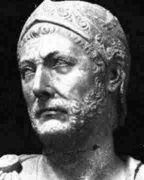
The course, originally presented in Stanford’s Continuing Studies Program, will be rolled out in installments over the next several weeks. Separately you can listen to a standalone lecture that Hunt gave on Hannibal shortly before the start of the course. (Listen on iTunes here.) For more courses like these, check out our podcast collection of free university courses.

Course Description for Hannibal
“Hannibal is a name that evoked fear among the ancient Romans for decades. His courage, cunning and intrepid march across the dangerous Alps in 218 bce with his army and war elephants make for some of the most exciting passages found in ancient historical texts written by Polybius, Livy, and Appian. And they continue to inspire historians and archaeologists today. The mystery of his exact route is still a topic of debate, one that has consumed Patrick Hunt (Director of Stanford’s Alpine Archaeology Project) for more than a decade.
This course examines Hannibal’s childhood and his young soldierly exploits in Spain. Then it follows him over the Pyrenees and into Gaul, the Alps, Italy, and beyond, examining his victories over the Romans, his brilliance as a military strategist, and his legacy after the Punic Wars. Along the way, students will learn about archaeologists’ efforts to retrace Hannibal’s journey through the Alps and the cutting-edge methods that they are using. Hunt has been on foot over every major Alpine pass and has now determined the most probable sites where archaeological evidence can be found to help solve the mystery.”
Read More...Remembering Lenny Bruce and When Taboo-Breaking Comedy Collided with the Law
Lenny Bruce (born Leonard Alfred Schneider) introduced a strongly satirical, taboo-breaking form of comedy during the 1950s and 1960s, which paved the way for some of America’s great comedians — Richard Pryor, George Carlin, Chris Rock, even John Stewart. And for ushering in this new era of comedy, Bruce paid a heavy personal price. In 1961, San Francisco authorities arrested Bruce on obscenity charges. Then, in 1964, Bruce found himself in the crosshairs of Manhattan’s District Attorney, Frank Horgan. A six month trial followed, which raised important First Amendment issues, and which also brought Woody Allen, Bob Dylan, Allen Ginsberg, Norman Mailer, and William Styron to Bruce’s defense. (Dylan would later write a song about the affair.) But, regardless, the trial ended badly for Bruce, and, two years later, the impoverished comedian would die of a heroin overdose.
For Bruce’s legacy, things have gotten a little better. In 2003, Governor George Pataki granted New York’s first posthumous pardon to the satirist, calling it “a declaration of New York’s commitment to upholding the First Amendment.” Meanwhile, legal scholars have written books that paint Bruce and his First Amendment battles in a rather sympathetic light. Below you can find a video clip of Lenny Bruce appearing on the very popular Steve Allen Show. It gives you a pretty good look at the brand of comedy that Bruce presented to the wider nation. (You can access Part II of the video here.) Beyond this, you may also want to check out the actual FBI file that was kept on Bruce. It’s been published thanks to the Freedom of Information Act. And if you’re up for more video footage, here is a clearly deflated Bruce using his trial as fodder for comedy.
Michael Moore’s “Sicko” — Fox Likes It More Than Google?
For some, it came as no surprise that “Sicko,” Michael Moore’s latest film and critical look at America’s healthcare system, got strong reviews at The Cannes Film Festival. What else would you expect from Europe’s lefty intelligentsia? Then there was this little curveball. The right-leaning Fox News also called the film “brilliant and uplifting.” How likely is that? The odds are next to zero. But it happened, and it says something rather extraordinary about the film. (You can watch the trailer for the movie on your iPod here.)
In the meantime, Google has gotten itself into a bit of a PR debacle with the release of Sicko. Last week, a Google employee took the position on a Google healthcare blog that “Moore’s film portrays the industry as money and marketing driven, and fails to show healthcare’s interest in patient well-being and care.” And then she invited the healthcare industry to use Adwords, the company’s money-raking ad platform, to showcase for the public all the good that they do for us. When Google got the inevitable blowback, the corporate PR folks kicked things into gear. Soon enough, we were told that the Google employee had been speaking out of turn and they released an addendum on their main corporate blog, which says something and yet nothing at the same time. Where does Google really stand on the issue? Who knows. They’re playing things predictably safe, and that’s to be expected when your company stands to generate billions of ad revenue from a multi-trillion dollar industry. Meanwhile where does Fox stand on all of this (and I am talking about the company, rather than the individual film reviewer cited above)? Probably nowhere good.
Below, you can find Michael Moore talking with Bill Maher (HBO) about the healthcare problem that cuts across the political divide. Give it a good look, but better yet, go see the movie.
10 Free University Courses on iTunes
We haven’t talked about the universe of university podcasts in some time. So let’s get back to it.Below, we have highlighted ten full-fledged courses from top flight universities. All of these courses can be downloaded to your iPod for free. That’s a price that you can’t beat. (You can see our complete collection of free online courses here.)
1. European History from the Renaissance to the Present (UC Berkeley)
“This course is an introduction to European history from around 1500 to the present. The central questions that it addresses are how and why Europe–a small, relatively poor, and politically fragmented place–became the motor of globalization and a world civilization in its own right.”
–Thomas Laqueur, Professor of History
2. Geography of World Cultures (Stanford University)
Even in a globalized world, people continue to be joined together and divided asunder by the languages they speak, the religions they follow, and the ethnic identities to which they belong. This map-intensive course examines every world region, seeking to understand how places vary from each other with regard to the cultural attributes of their inhabitants. (Note: This course is being rolled out in weekly installments.)
–Martin Lewis, Lecturer in History, Interim Director, Program in International Relations
3. Old English in Context (Oxford University)
A four lecture mini-course on how English became English during the medieval period.
–Dr Stuart Lee, OUCS
4. Physics for Future Presidents (UC Berkeley)
This course gives you the physics you need to know to be a president, Supreme Court justice, diplomat, businessman, lawyer, football coach, or other world leader.
–Richard Muller, Professor of Physics.
NOTE: Tthe same course happens also to appear on Google Video. Simply go to Google Video and perform a search with the following keywords: physics 10 berkeley.
5. Quantum Mechanics (UC Davis)
If Physics for Future Presidents is too basic for you, you can get into some more heavy duty science right here.
–John Terning, Associate Professor of Physics
6. The Historical Jesus (Stanford University)
Who was the historical Jesus of Nazareth? What did he actually say? In short, what are the differences — and similarities — between the Jesus who lived and died in history and the Christ who lives on in believers’ faith?
–Thomas Sheehan, Professor of Religious Studies and Professor Emeritus of Philosophy
7. Understanding Computers and the Internet (Harvard University)
This course demystifies computers and the Internet (along with their jargon) so that students understand not only what they can do with each, but also how each works and why.
–David Malan, Instructor
8. Entrepreneurship and Business Planning (Carnegie Mellon)
This class parallels a course being offered at Carnegie Mellon. It covers the ins-and-outs of starting a new venture, looking at how to develop ideas for new companies, write business plans, create teams. It also looks at typical b‑school topics: marketing, competitive strategy, sales, pricing, funding and finance.
–Mark Juliano, Adjunct Professor
9. The Literature of Crisis (Stanford University)
In looking at great works by Plato, Sophocles, Shakespeare, Vergil, and Voltaire, this course explores crises that change the course of individuals and larger cultures.
–Marsh McCall, Professor of Classics
–Martin Evans, Professor in English
10. Existentialism in Literature & Film (UC Berkeley)
Read More...The course looks at efforts “to reinterpret the Judeo/Christian God, and to determine in what sense God is still a living God.” Along the way it looks at “Dostoyevsky’s and Kierkegaard’s attempts to preserve a non-theological version of the God of Christianity, as well as Nietzsche’s attempt to save us from belief in any version of God offered by our tradition.” Films also get discussed here.
–Hubert Dreyfus, Professor of Philosophy
Support Us
We're hoping to rely on loyal readers, rather than erratic ads. Please click the Donate button and support Open Culture. You can use Paypal, Venmo, Patreon, even Crypto! We thank you!

About Us

Open Culture scours the web for the best educational media. We find the free courses and audio books you need, the language lessons & educational videos you want, and plenty of enlightenment in between.
Advertise With Us

FREE UPDATES!
GET OUR DAILY EMAIL
Get the best cultural and educational resources on the web curated for you in a daily email. We never spam. Unsubscribe at any time.
FOLLOW ON SOCIAL MEDIA

Open Culture editor Dan Colman scours the web for the best educational media. He finds the free courses and audio books you need, the language lessons & movies you want, and plenty of enlightenment in between.
Advertise With Us

