Alan Rickman Recites “If Death Is Not the End,” a Moving Poem by Robyn Hitchcock
Oddball singer-songwriter Robyn Hitchcock is a man who knows how to mark milestones. Back in 2003, he staged a concert at London’s Queen Elizabeth Hall in honor of his own 50th birthday, and in so doing, created a time release milestone of sorts for his friend, actor Alan Rickman.
Marking a half-century with passive aggressive-gag gifts and cards may suffice for the rabble, but a lyricist as gifted as Hitchcock deserves better. No one can deny Rickman of failing to deliver, when he regaled the crowd in Queen Elizabeth Hall with a recitation of Hitchcock’s own poem, “If Death Is Not the End,” above.
It’s an inimitable performance that becomes all the more poignant when one listens to it again, following Rickman’s recent death at the age of 69:
Life is what happened to the dead.
Forever we do not exist
Except for now.
Birthday Boy Hitchcock captured Rickman’s appeal in a tribute posted to his Facebook page:
His morose erotic drawl and gloriously disdainful demeanor sheltered a passionate artist and made for a charismatic performer whom I was proud to have as a friend. I just can’t believe I’ll never see him again.
As the poem says, he was made of life.
If Death Is Not the End
If death is not the end, I’d like to know what is.
For all eternity we don’t exist,
except for now.
In my gumshoe mac, I shuffled to the clifftop,
Stood well back,
and struck a match to light my life;
And as it flared it fell in darkness
Lighting nothing but itself.
I saw my life fall and thought:
Well, kiss my physics!
Time is over, or it’s not,
But this I know:
Life passes through us like the blade
Of bamboo growing through the prisoner pegged down in the glade
It pierces your blood, your screaming head -
Life is what happened to the dead.
Forever we do not exist
Except for now.
Life passes through us like a beam
Of charcoal green — a golden gleam,
The opposite of how it seems:
It’s not you that goes through life
- life is the knife that cuts your dream
Around the seam
And leaves you turned on in the stream, laughing with your mouth
open,
Until the stream is gone,
Leaving you cracked mud,
Not even there to be absent,
From the heartbeat of a dying fish.
In bed, upstairs, I feel your pulse run with the clock
And reach your hand
And lock us with our fingers
As if we were bumping above the Pole.
Yet I know by dawn
Your hand will be dry bone
I’ll have slept through your goodbye, no matter how long I wake.
Life winds on,
Through Cheri and Karl who can no longer smell chocolate,
Or see with wonder wind inflate the sail,
Or answer mail
Life flies on
Through Katy who was Catherine but is bound for Kate
Who looks over her shoulder at the demon Azmodeus,
And sees the Daily Mail
(I clutch my purse. I had it just now.)
Life slices through
The frozen butter in the Alpine wreck.
(I found your photo upside down
I never kissed a girl so long,
So long, so lovely or so wrong)
Life is what kills you in the end
And I can cry
But you won’t be there to be sorry
You were made of life
For ever we did not exist
We woke and for a second kissed.
Related Content:
The Late, Great Alan Rickman Reads Shakespeare, Proust & Thomas Hardy
Ayun Halliday is an author, illustrator, and Chief Primatologist of the East Village Inky zine. Her play, Fawnbook, opens in New York City later this fall. Follow her @AyunHalliday
Read More...85 Compelling Films Starring and/or Directed By Women of Color: A List Created by Director Ava DuVernay & Friends on Twitter

Image by Marie Maye, via Wikimedia Commons
If you follow film news—or really, just news—you’re well aware of the controversy surrounding the current crop of Academy Award nominees. While awards extravaganzas seem like little more than popularity contests, it is curious that neither the acclaimed lead actors nor the directors received nominations for two of the most popular films of the year—Creed and Straight Outta Compton. (See SNL’s satirical take on this.) There’s been no shortage of critical praise for the talent in those films and others, casting doubt on claims that actors, writers, directors, etc. of color simply weren’t up to snuff. The truth is likely more banal: most of the Academy voters are older white men. (“Older and more dude-heavy than just about any place in America,” says The Atlantic, “and whiter than all but seven states.”) No need to allege outright conspiracy when implicit bias operates to exclude people all the time without malicious intent.
Nor do corporate buzzwords like “diversity” carry much weight when it comes to creating a more inclusive industry. “It’s a medicinal word,” says Selma director Ava DuVernay, “that has no emotional resonance… Diversity’s like, ‘Ugh, I have to do diversity.’ ” No one wants to attend a “diversity training” or read a hiring manual about how to “do diversity”; recognizing talent shouldn’t be a forced, procedural matter, but a matter of course. The Academy has vowed to make changes by retiring many inactive members to non-voting emeritus status and—in an Orwellian turn of phrase—“doubling the number of diverse members” by 2020, whatever that means. The aforementioned DuVernay has been sowing seeds of discontent with the status quo for quite some time now, online and in the industry itself with her distribution company AFFRM+Array Releasing, which attempts to counterbalance the racial and gender disparities in the film world.
In a tweet last year, written off the cuff during a writing break, she put out a call to followers to “name three films you like with black, brown, native or Asian women leads” or directors. Indiewire comments that “it seems like common sense that these films exist,” yet “the question proved to be a serious challenge for Twitter.” Eventually, DuVernay and the Twitter denizens came up with a list of 85 titles starring and/or directed by women of color, and you can see them all listed below. If you find yourself watching movie after movie about the same kinds of experiences, maybe consider making your own viewing habits more “diverse” by checking out some of these excellent, and in most cases little-seen movies, including two well-reviewed films from DuVernay herself, 2010’s I Will Follow and 2012’s Middle of Nowhere.
“35 Shots of Rum” by Claire Denis (2008)
“A Different Image” by Alile Sharon Larkin (1982)
“A Girl Walks Home Alone at Night” by Ana Lily Amirpour (2014)
“Advantageous” by Jennifer Phang (2015)
“Ala Modalaindi” by Nandini Bv Reddy (2011)
“All About You” by Christine Swanson (2001)
“Alma’s Rainbow” by Ayoka Chenzira (1994)
“Appropriate Behavior” by Desiree Akhavan (2014)
“B For Boy” by Chika Anadu (2013)
“Bande de Filles/Girlhood” by Céline Sciamma (2014)
“Belle” by Amma Asante (2013)
“Bend it Like Beckham” by Gurinder Chadha (2002)
“Bessie” by Dee Rees (2015)
“Beyond the Lights” by Gina Prince-Bythewood (2014)
“Bhaji on the Beach” by Gurinder Chadha (1993)
“Caramel” by Nadine Labaki (2007)
“Circumstance” by Maryam Keshavarz (2011)
“Civil Brand” by Neema Barnette (2002)
“Compensation” by Zeinabu irene Davis (199)
“Daughters of the Dust” by Julie Dash (1991)
“Double Happiness ” by Mina Shum (1994)
“Down in the Delta” by Maya Angelou (1998)
“Drylongso” by Cauleen Smith (1988)
“Earth” by Deepa Mehta (1998)
“Elza” by Mariette Monpierre (2011)
“Endless Dreams” by Susan Youssef (2009
“Eve’s Bayou” by Kasi Lemmons (1997)
“Fire” by Deepa Mehta (1996)
“Frida” by Julie Taymor (2002)
“Girl in Progress” by Patricia Riggen (2012)
“Girlfight” by Karyn Kusama (2000)
“Habibi Rasak Kharban” by Susan Youssef (2011)
“Hiss Dokhtarha Faryad Nemizanand (Hush! Girls Don’t Scream)” by Pouran Derahkandeh (2013)
“Honeytrap” by Rebecca Johnson (2014)
“I Like It Like That” by Darnell Martin (1994)
“I Will Follow” by Ava DuVernay (2010
“In Between Days” by So-yong Kim (2006)
“Introducing Dorothy Dandridge” by Martha Coolidge (1999)
“It’s a Wonderful Afterlife” by Gurinder Chadha (2010)
“Jumpin Jack Flash” by Penny Marshall (1986)
“Just Another Girl on the IRT” by Leslie Harris (1992)
“Just Wright” by Sanaa Hamri (2010)
“Kama Sutra” by Mira Nair (1996)
“Losing Ground” by Kathleen Collins (1982)
“Love & Basketball” by Gina Prince-Bythewood (2000)
“Luck by Chance” by Zoya Akhtar (2009)
“Mi Vida Loca” by Allison Anders (1993)
“Middle of Nowhere” by Ava DuVernay (2012)
“Mississippi Damned” by Tina Mabry (2009)
“Mississippi Masala” by Mira Nair (1991)
“Mixing Nia” by Alison Swan (1998)
“Monsoon Wedding” by Mira Nair (2001)
“Mosquita y Mari” by Aurora Guerrero (2012)
“Na-moo-eobs-neun san (Treeless Mountain)” by So-yong Kim (2008)
“Night Catches Us” by Tanya Hamilton (2010)
“Pariah” by Dee Rees (2011)
“Picture Bride” by Kayo Hatta (1994)
“Rain” by Maria Govan (2008)
“Real Women Have Curves” by Patricia Cardoso (2002)
“Saving Face” by Alice Wu (2004)
“Second Coming” by Debbie Tucker Green (2014)
“Something Necessary” by Judy Kibinge (2013)
“Something New” by Sanaa Hamri (2006)
“Still the Water” by Naomi Kawase (2014)
“Stranger Inside” by Cheryl Dunye (2001)
“Sugar Cane Alley/Black Shack Alley” by Euzhan Palcy (1983)
“The Kite” by Randa Chahal Sabag (2003)
“The Rich Man’s Wife” by Amy Holden Jones (1996)
“The Secret Life of Bees” by Gina Prince-Bythewood (2008)
“The Silence of the Palace” by Moufida Tlatli (1994)
“The Watermelon Woman” by Cheryl Dunye (1996)
“The Women of Brewster Place” by Donna Deitch (1989)
“Their Eyes Were Watching God” by Darnell Martin (2005)
“Things We Lost in the Fire” by Susanne Bier (2007)
“Wadjda” by Haifaa Al-Mansour (2012)
“Water” by Deepa Mehta (2005)
“Whale Rider” by Niki Caro (2002)
“What’s Cooking?” by Gurinder Chadha (2000)
“Where Do We Go Now?” by Nadine Labaki (2011)
“Whitney” by Angela Bassett (2015)
“Woman Thou Art Loosed: On The 7th Day” by Neema Barnette (2012)
“Xiu Xiu: The Sent-Down Girl” by Joan Chen (1998)
“Yelling to the Sky” by Victoria Mahoney (2011)
“Young and Wild” by Marialy Rivas (2012)
via Indiewire
Related Content:
Spike Lee’s List of 95 Essential Movies – Now with Women Filmmakers
The 10 Greatest Films of All Time According to 358 Filmmakers
725 Free Movies Online: Great Classics, Indies, Noir, Westerns, etc.
Josh Jones is a writer and musician based in Durham, NC. Follow him at @jdmagness
Read More...Kate Bush’s First Ever Television Appearance, Performing “Kite” & “Wuthering Heights” on German TV (1978)
There are few things in life that I can enjoy uncritically—totally surrender to—and yet also appreciate as intellectually complex, finely-wrought works of art. The music of Kate Bush is one of those things. Her preternatural voice, sublimely ridiculous costumes, dance, and gesture, and haunting, literary lyricism immediately captivate the ear and eye—and work their magic on the mind not long after. It’s an unusual—I’d say extremely rare—set of qualities that set her apart from every pop star in the era of her prime and in our own. At the risk of drawing a perhaps too-easy comparison, but I think an apt one: as a solo artist she rivals maybe only David Bowie in her ability to own the spotlight and remain in total control of her sound and image. (Both of them, in fact, trained with the same dance teacher, Lindsay Kemp.)
But while Bowie made it look easy, and found ways to stay nearly-ever-present in every decade since the 70s, for Bush that control was hard won, and meant withdrawals from the public, including a 12-year break that, writes The Guardian, reminded some of “the mythological resonance of Bob Dylan’s Basement Tapes hiatus.” She has toured only twice: once at the very beginning of her career in 1979 and again, 35 years later, in 2014. Critics and die-hard fans have long speculated about the reasons for Bush’s withdrawal from performance and her general public reticence, but statements from the artist herself have made it clear that part of her struggle with stardom had to do with feeling exploited in the way so many women are by the music industry.
By the end of her lavish, 28-night 1979 extravaganza, she recalled, “I felt a terrific need to retreat as a person, because I felt that my sexuality, which in a way I hadn’t really had a chance to explore myself, was being given to the world in a way which I found impersonal.” “Bush,” The Guardian writes, “did everything she could to prevent herself being exposed in that way again.”
The move was both a loss and a gain for her fans. While her live shows might have become legendary in the way Bowie’s did over the years, her retreat into a private sphere all her own allowed her to continue writing and recording consistently brilliant, challenging music that never became compromised by industry hackwork, as she herself never became someone else’s product.
Her ability to assert herself so early in her career is also a testament to her creative confidence. Bush was only 19 years old when she released her first album, The Kick Inside, an age at which many emerging pop stars allow themselves to be commandeered by overbearing management. But she has remained relevant by remaining her—odd, enigmatic, totally original—self. “Artists shouldn’t be made famous,” she once remarked, “it is a forced importance.”
Before launching that first tour, and deciding it wasn’t for her, Bush made her first television appearance on a German program in 1978—see it at the top of the post. Rather than opening with “Wuthering Heights,” the song that did make her famous, she instead starts with the B‑side, “Kite.” But then we hear that familiar, tinkling piano intro, and she delivers the big single, wearing the flowing red gown she donned in the oft-parodied American video for the song (above). The weird and wonderful dance moves are a little subdued, but like all of her performances—in very rare stage appearances, numerous videos, and ten amazing albums—it’s glorious.
In her first American TV appearance, on Saturday Night Live later that same year, Bush sang “The Man With the Child in His Eyes” in the gold lamé bodysuit she wore in the song’s official video (above). Just one of the many fashion choices that, along with those uninhibited dance moves—“those weird, spastic, fantastic interpretive dance moves,” writes Matthew Zuras in an appreciation—later gave us unforgettable classics like the “Babooshka” video (below). We have this unique, uncompromising body of work both because a more adventurous music industry decided to invest in developing Bush’s talent in the early 70s, and because she refused, after all, to accede to that industry’s usual demands.
Related Content:
300 Kate Bush Impersonators Pay Tribute to Kate Bush’s Iconic “Wuthering Heights” Video
2009 Kate Bush Documentary Dubs Her “Queen of British Pop”
Josh Jones is a writer and musician based in Durham, NC. Follow him at @jdmagness
Read More...Ursula Le Guin Gives Insightful Writing Advice in Her Free Online Workshop
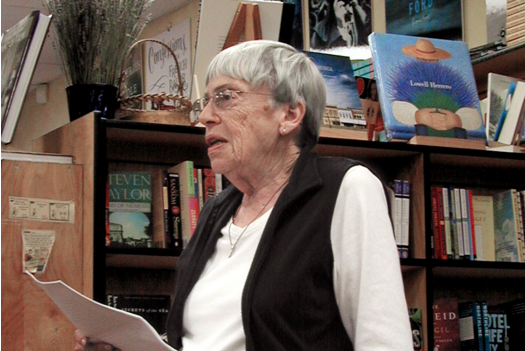
Image by Gorthian, via Wikimedia Commons
Though it’s sometimes regarded as a pretentious-sounding term for genre writers who don’t want to associate with genre, I’ve always liked the phrase “speculative fiction.” J.G. Ballard, Philip K. Dick, Shirley Jackson, Margaret Atwood, Neil Gaiman… A touch of surrealist humor, a highly philosophical bent, and a somewhat tragic sensibility can be found among them all, and also in the work of Ursula K. Le Guin, who does not shy away from the genre labels of science fiction and fantasy, but who approaches these categories in the way of, say, Virginia Woolf in her Orlando: as feminist thought experiments and fables about human ecological failings and inter-cultural potential.
That’s not to say that Le Guin’s writing is driven by political agendas, but that she has a very clear, uncompromising vision, which she has realized over the course of over five decades in novels, short stories, and children’s fiction. LeGuin’s writing takes us away from the familiar to worlds we recognize as alternatives to our own.
Like those in ancient epics, her characters undertake journeys to realms unknown, where they learn as much or more about themselves as about the alien inhabitants. And though we experience in her stories the thrill of discovery and danger common to fantasy and sci-fi, we also enter a world of ideas about who we are as human beings, and how we might be different. For Le Guin, fiction is a vessel that can carry us out of ourselves and return us home changed.
Le Guin stated last year that she no longer has the “vigor and stamina” for writing novels, and having given up teaching as well, said she missed “being in touch with serious prentice writers.” Thus, she decided to start an online writing workshop at the site Book View Café, describing it as “a kind of open consultation or informal ongoing workshop in Fictional Navigation.” In keeping with the metaphor of sea voyaging, she called her workshop “Navigating the Ocean of Story” and declared that she would not take reader questions about publishing or finding an agent: “We won’t be talking about how to sell a ship, but how to sail one.” Reader questions poured in, and Le Guin did her best to answer as many as she could, posting advice every other Monday for all of the summer and much of the fall of 2015.
The first question she received was a doozy—“How do you make something good?”—and her lengthy answer sets the tone for all of her counsel to follow. She is witty and honest, and surprisingly helpful, even when confronted with such a vague, seemingly unanswerable query. The dozens of questions she selected in the following weeks tend to deal with much more manageable issues of style and technique, and in each instance, Le Guin offers the querent a clear set of coordinates to help them navigate the waters of their own fictional journeys. Below are just a few choice excerpts from the many hundreds of words Le Guin generously donated to her reading community.
- The problem of exposition:
In answers to two readers’ questions about providing sufficient backstory, Le Guin refers to an old New Yorker feature called “The Department of Fuller Explanation, where they put truly and grand examples of unnecessary explaining.” Most of us, Le Guin writes, “tend to live in the Department of Fuller Explanation” when writing; “We are telling ourselves backstory and other information, which the reader won’t actually need to know when reading it.”
To avoid the “Expository Lump or the Infodump,” as she calls it, Le Guin advises the writer to “decide—or find out when revising—whether the information is actually necessary. If not, don’t bother. If so, figure out how to work it in as a functional, forward-moving element of the story… giving information indirectly, by hint and suggestion.”
- The problem of description:
When it comes to describing characters’ appearances, Le Guin suggests getting specific:
It’s not just facial features—a way of moving, a voice quality, can ’embody’ a character. Specific features or mannerisms (even absurdly specific ones!) can help fix a minor character in the reader’s mind when they turn up again…. To work on this skill, you might try describing people you see on the bus or in the coffee shop: just do a sentence about them in your head, trying to catch their looks in a few words.
- The problem of setting:
Le Guin answers a reader who confesses to trouble with “world building” by pointing out the central importance of setting:
Event requires location. Where we are affects who we are, what we say and and do, how and why we say and do it. It matters, doesn’t it, whether we’re in Miami or Mumbai — even more whether we’re on Earth or in Made-Up Place? So, I don’t know if it would work to try and build up a world– “all those details” – and tack it onto what you’ve written. If inventing a world isn’t your thing, OK. Stick close to this world, or use readymade, conventional sf and fantasy props and scenery. They’re there for all of us to use.
- The problem of dialogue:
Le Guin offers some very practical advice on how to make speech sound convincing and genuine:
All I can recommend is to read/speak your dialogue aloud. Not whispering, not muttering, OUT LOUD. (Virginia Woolf used to try out her dialogue in the bathtub, which greatly entertained the cook downstairs.) This will help show you what’s fakey, hokey, bookish — it just won’t read right out loud. Fix it till it does. Speaking it may help you to vary the speech mannerisms to suit the character. And probably will cause you to cut a lot. Good! Many contemporary novels are so dialogue-heavy they seem all quotation marks — disembodied voices yaddering on in a void.
- Getting started:
Many readers wrote to ask Le Guin about their difficulty in getting a story started at all. She replied with the caveat that “no answer to this question is going to fit every writer.” While some writers work from “a rough sketch, notes as to where the story is headed and how it might get there, with more extended notes about the world it takes place in,” for others, “a complete outline is absolutely necessary before starting to write.” Whatever the method:
A story is, after all, and before everything else, dynamic: it starts Here, because it’s going There. Its life principle is the same as a river: to keep moving. Fast or slow, straight or erratic, headlong or meandering, but going, till it gets There. The ideas it expresses, the research it embodies, the timeless inspirations it may offer, are all subordinate to and part of that onward movement. The end itself may not be very important; it is the journey that counts. I don’t know much about “flow” states, but I know that the onward flow of a story is what carries a writer from the start to the end of it, along with the whole boatload of characters and ideas and knowledge and meaning — and carries the reader in the same boat.
There are dozens more questions from readers, and dozens more insightful, funny, and very helpful answers from Le Guin. Whether you are a writer of science fiction, fantasy, speculative fiction, or none of the above, much of her advice will apply to any kind of fiction writing you do—or will give you unique insights into the techniques and trials of the fiction writer. Read all of the questions and Le Guin’s answers in her “Navigating the Ocean of Story” posts at Book View Café.
Related Content:
Toni Morrison Dispenses Writing Wisdom in 1993 Paris Review Interview
Hear Inventive Stories from Ursula LeGuin & J.G. Ballard Turned Into CBC Radio Dramas
Josh Jones is a writer and musician based in Durham, NC. Follow him at @jdmagness
Read More...David Bowie Sells Ice Cream, Sake, Coke & Water: Watch His TV Commercials from the 1960s Through 2013
As the mourning period for David Bowie continues this week, for which I am very much taking part (my favorite Bowie is the Berlin trilogy Bowie in case you’re interested), the Internet continues through its own stages of grief. First brief news stories and anecdotes from fellow artists, then long think-pieces (some very good), then to best-of lists, and now to interesting ephemera.
For an artist who saw both sides of commercial success, Bowie’s television commercial appearances number less than a dozen over his life. Part of that comes from his mastery and control over his image–he knew when to go out, and when to stay in, to get things done, you might say–and part may come from his early history behind the scenes where the commercial sausage gets made.
In 1963, Bowie left school to go work at Nevin D. Hirst Advertising on London’s Bond Street, where he worked as a storyboard artist for about a year, a job he took to please his father. Although he was dismissive of that time doing his 9‑to‑5, it was later clear to friends, band mates, and biographers that he had picked up a lot from advertising–how to package himself, how to manipulate feeling, the power of image and words.
Jump forward to 1967 and a long haired Davy Jones makes one of his earliest appearances in this ice cream ad for Luv “The Pop Ice Cream,” directed by another up-and-comer, Ridley Scott, who had recently made his first short film, “A Boy and a Bicycle.” It’s groovy, but, as Luv’s not around any more, apparently didn’t move enough units.
And then Davy Jones turns into Major Tom and the ‘70s belonged to him. He finally agrees in 1980 to do a commercial, but only in Japan. In this minimal ad for Crystal Jun Rock Sake, Bowie looks beautiful, handsome, and sleek, right at the height of his sophisticated Lodger-era glamour. He plays a piano, gazes at a post-modern Mt. Fuji, and utters one word: “Crystal.” Bowie wrote the music, an outtake from the Lodger sessions, and it was released as a single in Japan, and a b‑side in the West. Bowie commented that “the money is a useful thing” for doing ads like this, out of sight from the West.
The next time Bowie appears is in 1983, calling out for Americans to demand their MTV in a series of rotoscoped and colorized ads near the dawn of the network. (This is a badly edited compilation of Bowie’s spots).
If Bowie had yet to “sell out” it was only four years later, during the Glass Spider Tour, that he did, with this re-worded, re-recorded version of “Modern Love,” duetting with Tina Turner. At the time it felt like the end of a career that had turned Bowie into an overly coiffed parody of himself. In retrospect, if you can look past the soda, it’s a cute commercial, with the star looking a bit like “Blinded by Science”-era Thomas Dolby.
Then more silence and, by the time Bowie reappears in 2001, it is literally as the man who falls to earth in an ad for XM satellite radio. (Bowie made yet another appearance in an XM ad in 2005.)
In 2004, he appears again, shilling Vittel water. Here Bowie’s in full career retrospective mode, making peace with his chameleon self and appreciating it all. Set to the Reality track “Never Get Old” (our dear wish that was not to be), it features Bowie tribute performer David Brighton trying on every outfit from the Starman’s crowded wardrobe in a house filled with incarnations.
That leaves us with his final television ad appearance in 2013, seen at the top of this post, still looking fit, and performing a baroque version of The Next Day track “I’d Rather Be High” for a Venetian ball-set ad for Louis Vuitton. Fitting to go out surrounded by beauty and glamor, but check those lyrics:
I stumble to the graveyard and I
Lay down by my parents, whisper
Just remember duckies
Everybody gets got
Related Content:
How David Bowie, Kurt Cobain & Thom Yorke Write Songs With William Burroughs’ Cut-Up Technique
David Bowie Paper Dolls Recreate Some of the Style Icon’s Most Famous Looks
The Making of Queen and David Bowie’s 1981 Hit “Under Pressure”: Demos, Studio Sessions & More
Ted Mills is a freelance writer on the arts who currently hosts the artist interview-based FunkZone Podcast. You can also follow him on Twitter at @tedmills, read his other arts writing at tedmills.com and/or watch his films here.
Read More...The Feminist Theory of Simone de Beauvoir Explained with 8‑Bit Video Games (and More)
Simone de Beauvoir, existentialist philosopher, feminist theorist, author of The Second Sex, whose birthday we celebrate today.
Metroid, an action-adventure video game designed for the Nintendo in 1986.
At first glance, they’re not an obvious pairing. But in 8‑Bit Philosophy, a web series that explains philosophical concepts by way of vintage video games, things kind of hang together.
Gamers remember Metroid for being the first video game to feature a strong female protagonist, a character who blew apart existing female stereotypes, kicked some alien butt, and created new possibilities for women in the video gaming space. And that lets Metroid set the stage for talking about the intellectual contributions of Simone de Beauvoir, who, back in the late 1940s, gave us new ways of thinking about gender and gender-based hierarchies in our societies.
Clocking in at just 3:45, the clip offers but a brief introduction to de Beauvoir’s theoretical work. For a longer introduction, you could download this recent episode of In Our Time, hosted by Melvyn Bragg and featuring the commentary of Christina Howells (Oxford), Margaret Atack (University of Leeds) and Ursula Tidd (University of Manchester). You can also listen to a 2015 episode of Philosophy Talk, co-hosted by Stanford professors John Perry and Ken Taylor.
Or, better yet, go to the source itself, and listen to de Beauvoir talk in two lengthy interviews, both featured on Open Culture in years past. They’re pretty remarkable historical documents.
- Simone de Beauvoir Tells Studs Terkel How She Became an Intellectual and Feminist (1960)
- Simone de Beauvoir Explains “Why I’m a Feminist” in a Rare TV Interview (1975)
If you would like to support the mission of Open Culture, consider making a donation to our site. It’s hard to rely 100% on ads, and your contributions will help us continue providing the best free cultural and educational materials to learners everywhere. You can contribute through PayPal, Patreon, and Venmo (@openculture). Thanks!
Related Content:
Simone de Beauvoir & Jean-Paul Sartre Shooting a Gun in Their First Photo Together (1929)
Photos of Jean-Paul Sartre & Simone de Beauvoir Hanging with Che Guevara in Cuba (1960)
Edward Said Recalls His Depressing Meeting With Sartre, de Beauvoir & Foucault (1979)
Free Online Philosophy Courses
Read More...CBS Evening News with Walter Cronkite Introduces America to Underground Films and the Velvet Underground (1965)
“Not everyone ‘digs’ underground movies, but those who do can ‘dig’ ’em here.” Now imagine those words spoken in the archetypal so-square-it’s-cool consummate midcentury newscaster voice — or actually watch them enunciated in just that manner out on the steps of New York’s The Bridge, “one of several small theaters around the country where ‘underground’ films are shown.” The report, which aired on CBS Evening News with Walter Cronkite on December 31st, 1965, introduced to mainstream Americans such avant-garde filmmakers as Jonas Mekas, Stan Brakhage, and Andy Warhol — as well as a certain band called the Velvet Underground.
This six-minute segment spends some time with Piero Heliczer, filmmaker, poet, and “once the Jackie Coogan of Italy.” As Dangerous Minds’ Martin Schneider writes, “When CBS came a‑callin’ to do its story, Heliczer was shooting a 12-minute short called Dirt, featuring the Velvet Underground, and that was the scene Heliczer happened to be shooting that day. (For some reason none of the fellows in the band are wearing a shirt.)” Schneider also quotes Velvet Underground founding member Sterling Morrison, who credits playing in Heliczer’s “happenings” with showing him the possibilities of experimental music: “The path ahead became suddenly clear — I could work on music that was different from ordinary rock & roll since Piero had given us a context to perform.”
I can only imagine how the viewers of fifty years and one week ago must have reacted to hearing these cutting-edge filmmakers discussing “the narrative aspect and the poetic aspect” of cinema, let alone seeing clips of their works themselves, right down to a representative twenty seconds of Andy Warhol’s Sleep. It even includes a clip from Brakhage’s Two: Creeley/McClure which must have made more than a few of them wonder if their set had suddenly gone on the blink. But even the most staid of CBS’s audience must have come away with a novel idea or two worth thinking about, such as Brakhage’s stated aim of making movies “for viewing in a living room, rather than in a theater.” That, perhaps, they could dig.
If you would like to support the mission of Open Culture, consider making a donation to our site. It’s hard to rely 100% on ads, and your contributions will help us continue providing the best free cultural and educational materials to learners everywhere. You can contribute through PayPal, Patreon, and Venmo (@openculture). Thanks!
Related Content:
Three “Anti-Films” by Andy Warhol: Sleep, Eat & Kiss
Warhol’s Screen Tests: Lou Reed, Dennis Hopper, Nico, and More
Based in Seoul, Colin Marshall writes and broadcasts on cities and culture. He’s at work on a book about Los Angeles, A Los Angeles Primer, the video series The City in Cinema, the crowdfunded journalism project Where Is the City of the Future?, and the Los Angeles Review of Books’ Korea Blog. Follow him on Twitter at @colinmarshall or on Facebook.
Read More...B.B. King Plays Live at Sing Sing Prison in One of His Greatest Performances (1972)
“I was told that some of you dudes don’t know anything about blues,” he said from the stage before beginning what he would go on to call the one of the greatest shows of his career: “So I wanna say this to you: I came to swap some with you. I imagine that quite a few of you dudes have the blues already.” After a little more friendly banter and an acknowledgment that it is Thanksgiving Day, B.B. King launches into “Downhearted” (or “How Blue Can You Get”) in front of his admiring audience of inmates at Sing Sing Correctional Facility in Ossining, New York.
It is three years after Johnny Cash performed at San Quentin (four years after his Folsom concert) and one year after Nixon declared the “war on drugs” and began the period of mass incarceration that has reached epidemic proportions today.
The concert at Sing Sing included not only King but also performances from comedian Jimmy Walker (J.J. from Good Times, who introduces King at the top), ensemble vocal group Voices of East Harlem, and Joan Baez and her sister Mimi Fariña, who you can see below sing “I Shall Be Released” and “Viva mi patria Bolivia.” In-between the stars performances, inmates put on a play and recited original poetry.
Baez, as you’ll see, was very well received, but the star of the night was King. The entire show was captured on film by documentary director David Hoffman, who had been teaching film at the prison and who organized the show. In the clips above, Hoffman shows us several close-ups of the inmates’ faces in beautifully humanizing portraits reminiscent of the photographs of Gordon Parks. You can see Hoffman below briefly describe the circumstances of the concert before another clip of the “Downhearted” performance and more.
See a few more clips from the concert on Youtube here, and buy a copy of the complete DVD here (Richard and Mimi Fariña’s website has a complete listing of performances). The Sing Sing concert had an impact on the performers as well as the inmates. Baez wrote an original song for the film’s credits (below) and her sister Mimi was inspired afterward to found Bread & Roses, which organizes concerts for people in hospitals, homeless shelters, prisons, and other institutions (“anywhere they serve Jell‑O,” joked comedian Don Novello).
This was not the first time King had performed at a prison. The year previous, in 1971, he put on a concert at Chicago’s Cook County Jail. The resulting record made Rolling Stone’s 500 best albums list, though it didn’t merit the most favorable review from the magazine. Nonetheless, Allmusic pronounced it a “live album with some real sparks to it,” and “possibly the best live version of ‘The Thrill is Gone’ of all its many incarnations.” Hear it below and decide for yourself, and hear the full Cook County live album here.
Of that earlier prison concert, King’s keyboardist Ron Levy remarked, “If anybody had the blues, it was those people incarcerated. And B.B. really felt compassion for those guys…. People don’t realize B.B. King was much more than just a musician and entertainer. He’s a human being, a humanitarian. He cared. He’s one of the really good guys. There aren’t many like him in history. He’s not just the king of the blues. He’s one of the kings of humanity.”
Related Content:
The Thrill is Gone: See B.B. King Play in Two Electric Live Performances
B.B. King Explains in an Animated Video Whether You Need to Endure Hardship to Play the Blues
B.B. King Changes Broken Guitar String Mid-Song at Farm Aid, 1985 and Doesn’t Miss a Beat
Josh Jones is a writer and musician based in Durham, NC. Follow him at @jdmagness
Read More...Stream 22 Hours of Funky, Rocking & Swinging Christmas Albums: From James Brown and Johnny Cash to Christopher Lee & The Ventures
When you think Christmas, you probably think recently deceased Stone Temple Pilots singer Scott Weiland, no? No, you probably don’t, but he made a Christmas record all the same in 2011 (see his “Winter Wonderland” video above). You might say critics didn’t love it, but that’s not really the point. Artists often record Christmas records as novelty items for shoppers on a tear to snatch up and shove in the basket with other last-minute detritus. It seems like common wisdom that if you get your Christmas album on a Starbucks or Target product display, you’ll probably have a pretty happy new year.
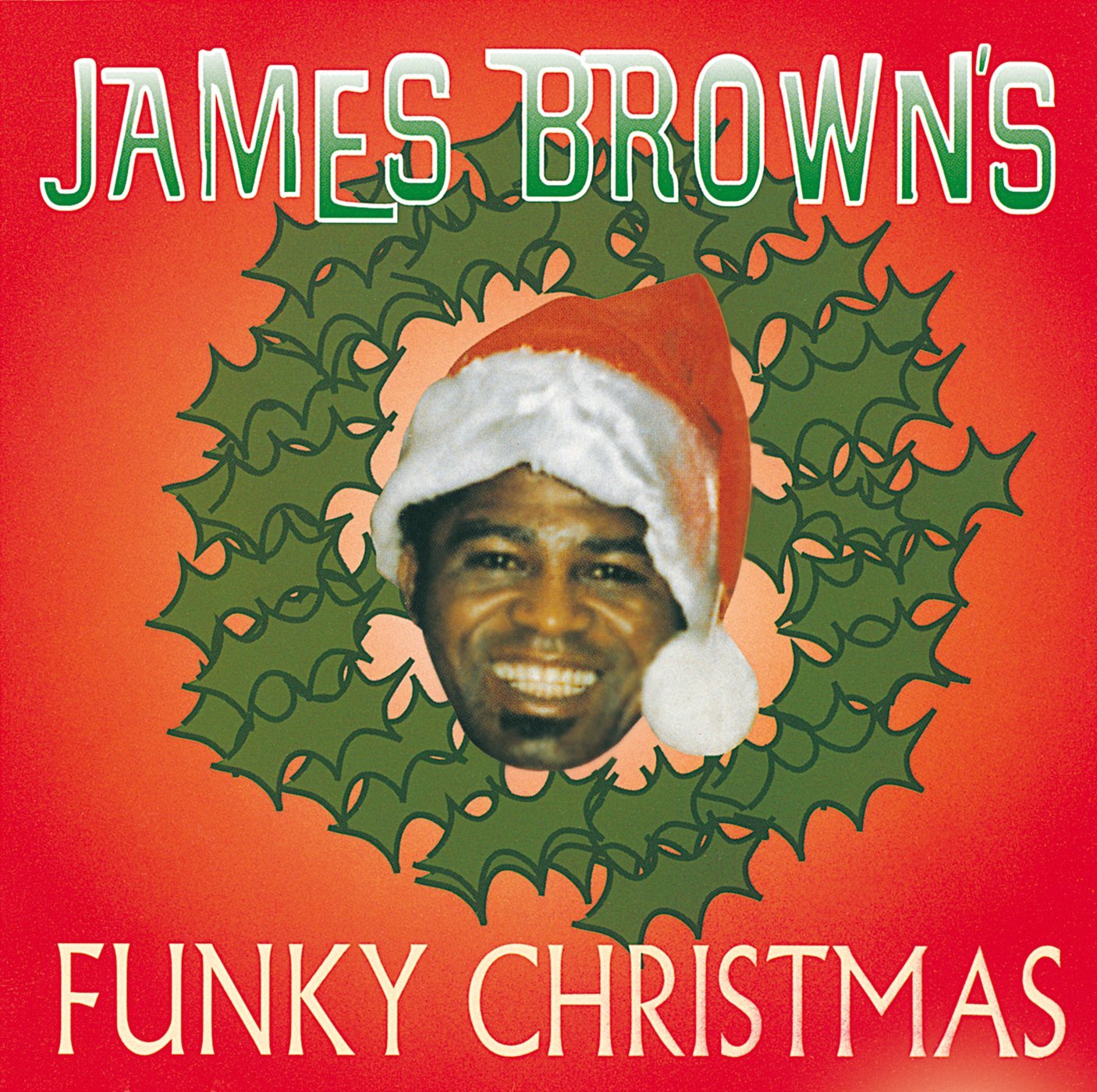
But then there are the rare exceptions, Christmas albums made with care, by artists who surely wanted to make money, but who also made something uniquely great of well-worn holiday classics, or penned new ones of their own. There is, of course, the mostly instrumental jazz greatness of Vince Guaraldi’s Charlie Brown Christmas soundtrack. But have you heard instrumental surf-rock legends The Ventures Christmas album? It’s outstanding. You’re intimately familiar with The Jackson 5’s brilliant soul renditions of songs like “Santa Claus is Coming to Town,” but you haven’t yet begun to yuletide, I say, until you’ve put on James Brown’s Funky Christmas, featuring such original tunes as “Go Power at Christmas Time” and the heartfelt plea on behalf of impoverished kids, “Santa Claus Go Straight to the Ghetto.”
We’ve got these albums and many more greats—from Bob Dylan, Johnny Cash, The Beach Boys, Willie Nelson, Ella Fitzgerald, Elvis Presley etc.—compiled in the Spotify playlist above, where they rub shoulders with unexpected gems from indie band Low, punk rockers Bad Religion, and horror legend Christopher Lee, whose Heavy Metal Christmas and Heavy Metal Christmas Too should be required listening at every holiday party. Hosting one of your own? Pull up our playlist of Christmas music worth hearing, hit play, and enjoy many quality hours of jazz, funk, country, soul, and rock and roll cheer and tidings. These suggestions come to us via Rolling Stone, Complex, and our readers on Twitter. If you need to download Spotify’s software, get it here. You can find a complete list of the albums below, with links to purchase them, should you need a last minute gift.
James Brown’s Funky Christmas
Johnny Cash — The Classic Christmas Album
The Beach Boys’ Christmas Album
Louis Armstrong and Friends — What a Wonderful Christmas
A Christmas Gift for You from Phil Spector
Bob Dylan, Christmas in the Heart
We Wish You a Metal Xmas … And a Headbanging New Year
The Ventures’ Christmas Album
Jacob Miller, Natty Christmas
A Very Special Christmas Volume 1
A Jolly Christmas from Frank Sinatra
Ella Wishes You a Swinging Christmas
Bing Crosby, White Christmas
The Jackson 5 Christmas Album
Sufjan Stevens, Songs for Christmas
Emmylou Harris, Light of the Stable
James Brown, Soulful Christmas
Carpenters’ Christmas Collection
Bad Religion, Christmas Songs
Christopher Lee, Heavy Metal Christmas and Heavy Metal Christmas Too
Squirrel Nut Zippers, Christmas Caravan
Related Content:
John Waters Makes Handmade Christmas Cards, Says the “Whole Purpose of Life is Christmas”
Josh Jones is a writer and musician based in Durham, NC. Follow him at @jdmagness
Read More...Steve Martin Writes a Hymn for Hymn-Deprived Atheists
To understand the two sides of Steve Martin’s performing talents, check out his one and only hit single, 1978’s King Tut. On the A‑side was the novelty funk hit about the Egyptian boy king. On the B‑side, two deep cuts that showed off Martin’s formidable Americana/banjo chops: the traditional “Sally Goodin” (circa 1860, but existing on recordings since 1922), and “Hoedown at Alice’s” an original written for his then stand-up manager Bill McEuen’s wife.
It’s not what you’d expect from the “Wild and Crazy Guy,” but Martin’s banjo had always been a part of his act. He taught himself at 15 years old, playing along very slowly to Earl Scruggs records. He told an interviewer:
The reason I played it on stage is because my act was so crazy I thought it’s probably good to show the audience I can do something that looks hard, because this act looks like I’m just making it up. I really wasn’t. I worked very hard on it.
Which is a long way of saying: When Martin recorded an album of banjo favorites in 2009, The Crow, won a Grammy without relying on a single joke, then enlisted the help of the North Carolinian Steep Canyon Rangers to go on a tour, it should not have really been a surprise.
When he teamed up next with The Steep Canyon Rangers and recorded Rare Bird Alert in 2011, Martin started to combine comedy and music once again, and with this above novelty song, he gets to indulge in the beautiful harmony singing that bluegrass groups like The Stanley Brothers, The Louvin Brothers, and the Osbourne Brothers made so popular in the mid-century. (There wasn’t just banjo pickin’ on those LPs, you know.) The above appearance on Letterman is a great rendition of a concert favorite, “Atheists Don’t Have No Songs.”
So in this month of arguments over the Starbucks holiday cup, let Mr. Martin and group add a palliative to any hurt atheist feelings. You guys rock.
P.S. Martin got a chance to play with his hero on the same late-night program.
Related Content
Steve Martin Teaches His First Online Course on Comedy
Steve Martin on the Legendary Bluegrass Musician Earl Scruggs
Steve Martin Releases Bluegrass Album/Animated Video
A Bluegrass Version of Metallica’s Heavy Metal Hit, “Enter Sandman”
Ted Mills is a freelance writer on the arts who currently hosts the artist interview-based FunkZone Podcast. King Tut was the second 45 he ever bought as a kid. You can also follow him on Twitter at @tedmills, read his other arts writing at tedmills.com and/or watch his films here.
Read More...Support Us
We're hoping to rely on loyal readers, rather than erratic ads. Please click the Donate button and support Open Culture. You can use Paypal, Venmo, Patreon, even Crypto! We thank you!

About Us

Open Culture scours the web for the best educational media. We find the free courses and audio books you need, the language lessons & educational videos you want, and plenty of enlightenment in between.
Advertise With Us

FREE UPDATES!
GET OUR DAILY EMAIL
Get the best cultural and educational resources on the web curated for you in a daily email. We never spam. Unsubscribe at any time.
FOLLOW ON SOCIAL MEDIA

Open Culture editor Dan Colman scours the web for the best educational media. He finds the free courses and audio books you need, the language lessons & movies you want, and plenty of enlightenment in between.
Advertise With Us


