New Rosa Parks Archive is Now Online: Features 7,500 Manuscripts & 2,500 Photographs, Courtesy of the Library of Congress

It’s telling that the Library of Congress, in digitizing its vast Rosa Parks Collection in close to its entirety, had to resort to a “representative sample” of children’s greeting cards. The lady had no shortage of admirers at the elementary school level.
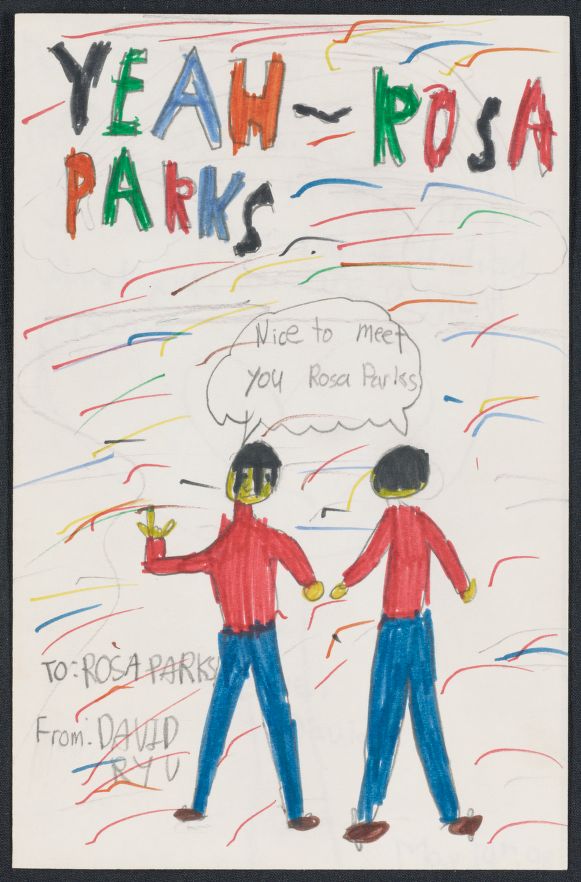
It’s not surprising that Parks’ refusal to yield her bus seat to a white passenger in Montgomery, Alabama in 1955 resonates with children. The story has the simplicity of a fable, and Parks’ pluck is irresistible. It’s as if she took a slingshot and aimed it right between the eyes of the segregated South.
It’s easy to convey how important her spontaneous act of resistance was to the Civil Rights Movement. However, those few minutes on Bus 2857 cannot be all there is to a woman whose life spanned nine decades (1913–2005). They are just the historical equivalent of a role that an actor cannot escape—great, but ultimately limiting.
The online archive helps to flesh out this iconic figure beyond the confines of a child’s crayoned portrait.
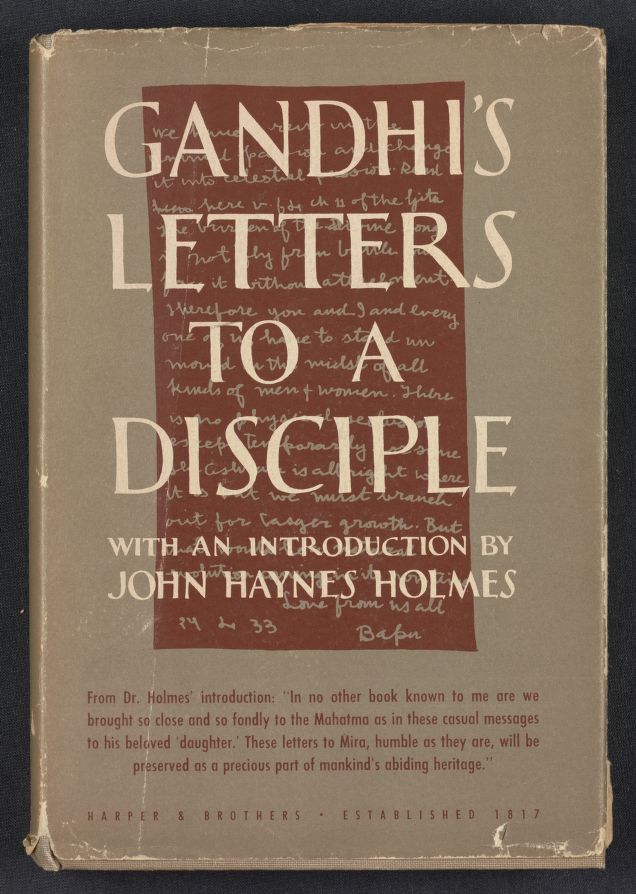
Among the treasures are:
Scanned book covers from her personal library…
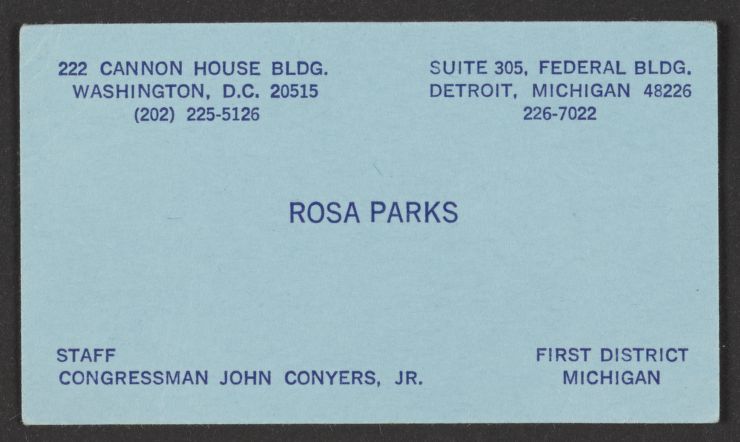
A business card from her stint as a staffer for Congressman John Conyers of Michigan… (Parks moved to Detroit shortly after the Montgomery Bus Boycott, after both she and her husband were dismissed from their jobs.)
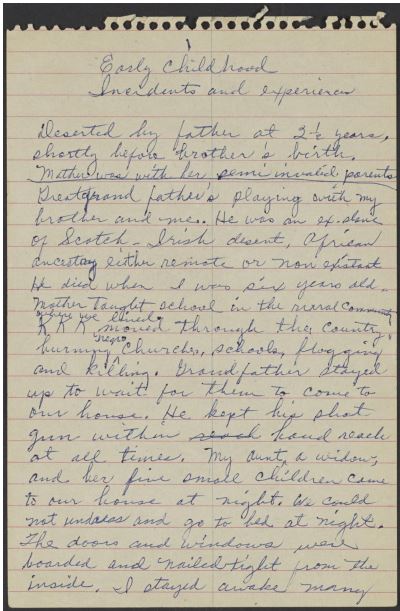
Handwritten reminiscences about her rural Alabama childhood…
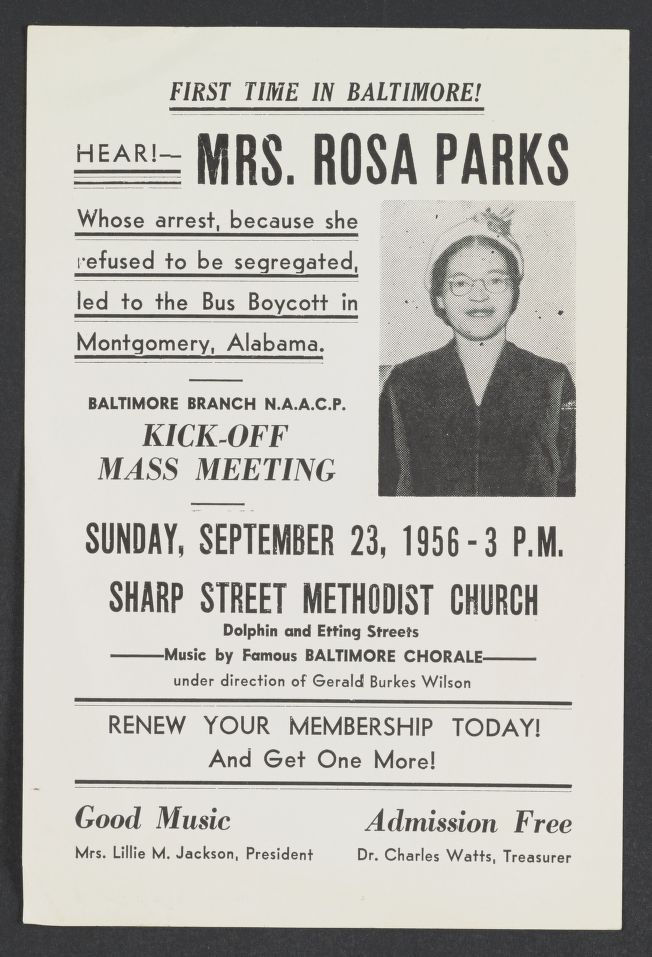
Documentation of speaking engagements and other public appearances…
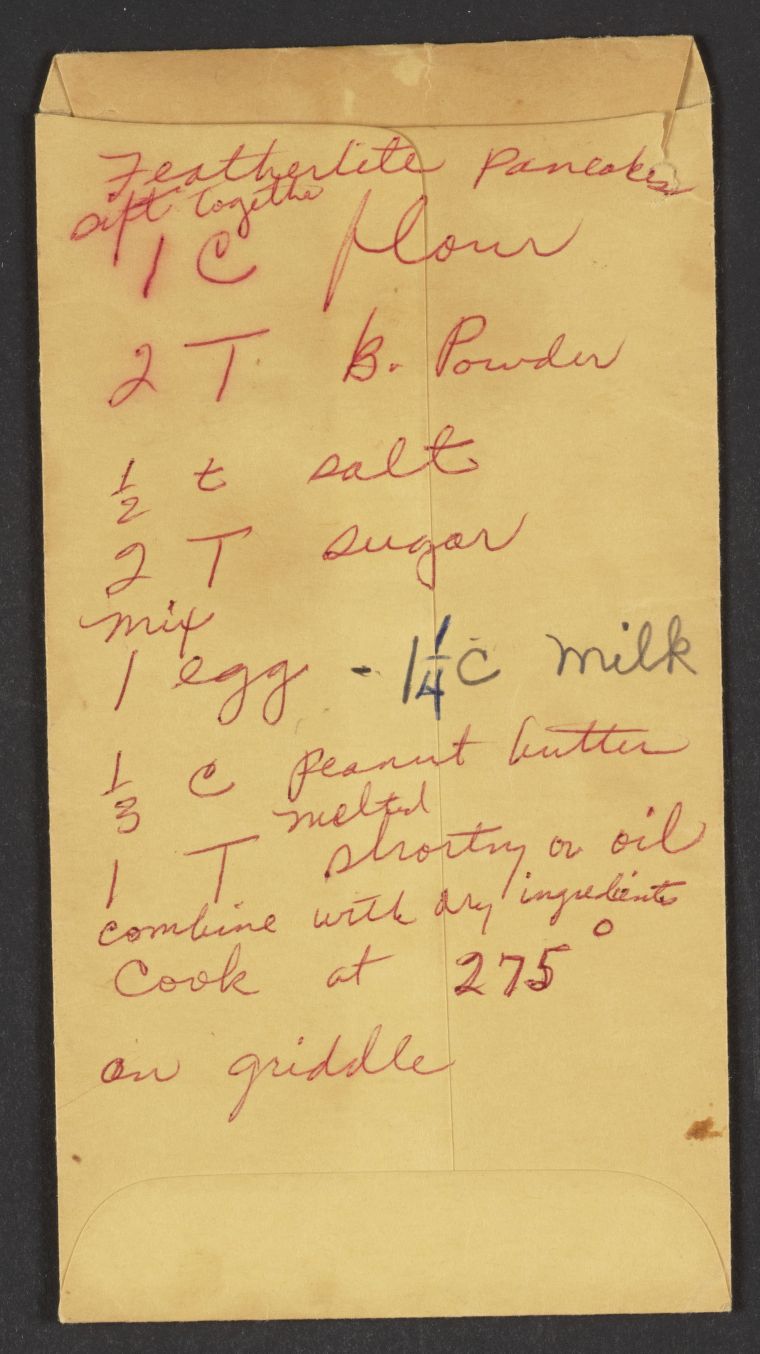
A handwritten pancake recipe…
Correspondence from a bevy of highly recognizable names
And of course, many, many reflections having to do with the most publicly memorable day in an extremely long life.
Most of the collection can be viewed online and the Library has a teaching aid with suggestions on using these primary sources in the classroom. The video below contains some highlights of the collection, as well as technical information on how its contents have been preserved for future generations.
Related Content:
Ayun Halliday is an author, illustrator, and Chief Primatologist of the East Village Inky zine. Follow her @AyunHalliday
Read More...Brian Greene Breaks Down Einstein’s Theory of Gravitational Waves for Stephen Colbert
Earlier this month, we gave you this news bulletin: “scientists announced that they had recorded the sound of two black holes colliding a billion light years away, providing the first real proof that gravitational waves actually exist–something Albert Einstein predicted 100 years ago in his famous paper on general relativity.” This news actually gets much more interesting if you wrap your minds around the whole concept of Gravitational Waves, which is exactly what physicist Brian Greene–featured on this site many times before–set out to do when he appeared on The Late Show with Stephen Colbert last week. Watch his visual-rich explanation above, and you’ll start getting a hang of the concepts. Below, for extra credit, you can watch another popularizer of science, Neil deGrasse Tyson, taking his own stab at explaining this phenomenon.
Related Content:
Free Online Physics Courses, part of our larger collection, 1150 Free Online Courses from Top Universities
Gravity Visualized by High School Teacher in an Amazingly Elegant & Simple Way
Read More...13 Van Gogh’s Paintings Painstakingly Brought to Life with 3D Animation & Visual Mapping
Earlier this month, we told you how you can download hundreds of Van Gogh paintings in high resolution, courtesy of the Van Gogh Museum in Amsterdam. Now, the question is, what will you do with those images? You’re a little tech savvy? Maybe make yourself a nice screensaver. You’ve got some more serious tech chops? Even better. You can put those Van Gogh images in motion. Last year, Mac Cauley animated Van Gogh’s 1888 painting, “The Night Cafe,” using Oculus virtual reality Software. It’s a sight to behold. And above, we have 3D animations of thirteen Van Gogh paintings, all created by Luca Agnani, an Italian artist who specializes in visual mapping and design projections.
Agnani’s animations are painstaking and precise. Explaining the precision of his method, he told the The Creators Project, “To calculate the exact shadows, I tried to understand the position of the sun relative to Arles at different times of the day.” And he added: “If the video [above] was projected over [Van Gogh’s] paintings, my interpretations would superimpose perfectly, like a mapping of a framework.” To create similar animations you will want to get comfortable using software packages like Premiere and 3D Studio Max.
The Van Gogh paintings appearing in the video are as follows:
1. Fishing Boats on the Beach at Saintes-Maries
2. Langlois Bridge at Arles, The
3. Farmhouse in Provence
4. White House at Night, The
5. Still Life
6. Evening The Watch (after Millet)
7. View of Saintes-Maries
8. Bedroom
9. Factories at Asnieres Seen
10. White House at Night, The
11. Restaurant
12. First Steps (after Millet)
13. Self-Portrait
h/t Kim L.
If you would like to support the mission of Open Culture, consider making a donation to our site. It’s hard to rely 100% on ads, and your contributions will help us continue providing the best free cultural and educational materials to learners everywhere. You can contribute through PayPal, Patreon, and Venmo (@openculture). Thanks!
Related Content
Watch as Van Gogh’s Famous Self-Portrait Morphs Into a Photograph
Van Gogh’s 1888 Painting, “The Night Cafe,” Animated with Oculus Virtual Reality Software
The Unexpected Math Behind Van Gogh’s “Starry Night”
Read More...How the Moog Synthesizer Changed the Sound of Music
In my little corner of the world, we’re eagerly anticipating the arrival of Moogfest this May, just moved down the mountains from Asheville—where it has convened since 2004—to the scrappy town of Durham, NC. Like SXSW for electronic music, the four-day event features dozens of performances, workshops, talks, films, and art installations. Why North Carolina? Because that’s where New York City-born engineer Robert Moog (rhymes with “vogue”)—inventor of one of the first, and certainly the most famous, analog synthesizer—moved in 1978 and set up shop for his handmade line of modular synths, “Minimoog”s, and other unique creations. “One doesn’t hear much talk of synthesizers here in western North Carolina,” Moog said at the time, “From this vantage point, it’s easy to get a good perspective on the electronic musical instrument scene.”
The perspective characterizes Moog’s influence on modern music since the late-sixties—as a non-musician outsider whose musical technology stands miles above the competition, its unmistakable sound sought after by nearly everyone in popular music since it debuted on a number of commercial recordings in 1967. A curious development indeed, since Moog never intended the synthesizer to be used as a standalone instrument but as a specialized piece of studio equipment. However, in the mid-sixties, a forward-looking jazz musician named Paul Beaver happened to get his hands on a modular Moog synthesizer, and began to use it on odd, psychedelic albums like Mort Garson’s The Zodiac Cosmic Sounds and famed Wrecking Crew drummer Hal Blaine’s Psychedelic Percussion (hear “Love-In (December)” above).
Shortly after these releases, Mike Bloomfield’s psych-rock outfit The Electric Flag made heavy use of the Moog in their soundtrack for Roger Corman’s sixtiesploitation film The Trip (hear “Fine Jung Thing” above), and the analog synthesizer was on its way to becoming a staple of popular music. In late ’67, The Doors called Beaver into the studio during the recording of Strange Days, and he used the Moog throughout the album to alter Jim Morrison’s voice and provide other effects (hear “Strange Days” at the top). Contrary to popular misconceptions, Brian Wilson did not use a Moog synthesizer for the recording of “Good Vibrations” the year prior, but an “electro-theremin” built and played by Paul Tanner. He did, however, have Bob Moog build a replica of that instrument to play the song live. (The Moog theremin is still in production today.)
Then, in 1968 Wendy Carlos used a Moog Synthesizer to reinterpret several Bach compositions, and Switched-On Bach became a novelty hit that led to many more classical Moog recordings from Carlos, as well as to her original contributions to Stanley Kubrick’s A Clockwork Orange and The Shining. (Unfortunately, few of Carlos’ recordings are available online, but you can hear The Shining’s main theme above.) Switched-On Bach took the Moog synthesizer mainstream—it was the first classical album to go platinum. (Glenn Gould called it “one of the most startling achievements of the recording industry in this generation and certainly one of the great feats in the history of keyboard performance.”) And after the release of Carlos’ futuristic classical albums, and an evolution of Moog’s instruments into more musician-friendly forms, analog synths began to appear everywhere.
Artists like Carlos explored the synthesizer’s use as not only a generator of weird, spaced-out sounds and effects, but as an instrument in its own right, capable of all of the nuance required to play the finest classical music. The modular synthesizer, however, was still an awkwardly bulky instrument, suited for the studio, not the road. That changed in 1971 when the “Minimoog Model D” was born. You can see a short history of that revolutionary instrument above. The Minimoog and its siblings drove prog rock, disco, jazz fusion, the ambient work of Brian Eno, Teutonic electro-pop of Kraftwerk, and soothing Gallic new age soundscapes of Jean-Michel Jarre. Bob Marley incorporated the Minimoog into his roots reggae, and Gary Numan charted the path of the New Wave future with the portable synthesizer.
And as anyone who’s heard Daft Punk’s now-ubiquitous Random Access Memories knows, the forefather of their sound was Italian superproducer Giorgio Moroder, who brought us nearly all of Donna Summer’s disco hits, including the futuristic “I Feel Love,” above, in 1977. Although nothing really sounded like this at the time—nor for many years afterward—we can hear in this pioneering track that it’s only a short hop from Moroder’s pulsing, flanging, synth arpeggios to most of the modern dance music we hear today.
Though we certainly credit all of the composers, producers, and musicians who embraced analog synthesizers and pushed their development forward, all of their musical innovation would have meant little without the inventiveness of the man who, from his mountaintop retreat in Asheville, North Carolina, personally oversaw the technology of a musical revolution. For more on the genius of Bob Moog, watch Hans Fjellestad’s documentary Moog, or listen to the Sound Opinions podcast above, featuring onetime official Moog Foundation historian Brian Kehew.
Related Content:
Thomas Dolby Explains How a Synthesizer Works on a Jim Henson Kids Show (1989)
Watch Herbie Hancock Rock Out on an Early Synthesizer on Sesame Street (1983)
The Mastermind of Devo, Mark Mothersbaugh, Shows Off His Synthesizer Collection
Josh Jones is a writer and musician based in Durham, NC. Follow him at @jdmagness
Coffee Entrepreneur Renato Bialetti Gets Buried in the Espresso Maker He Made Famous
Love your coffee? Renato Bialetti invented and was buried in the Moka coffee maker https://t.co/M0n9LJ5KSh pic.twitter.com/sle3s8zHdj
— TreeHugger.com (@TreeHugger) February 22, 2016
At OC HQ you will find two Bialetti espresso makers on the stove–one small, the other large–and together they power us through the day. Invented by Alfonso Bialetti in 1933, the octagonal, Art Deco-designed coffee maker eventually became a staple in Italian homes (90% of them), thanks to his son Renato, who died last week at the age of 93. A savvy marketer to the end, Bialetti went to the grave with his product, buried, as he was, in an espresso maker that doubled as an urn. All in all, I can’t think of much better ways to spend eternity.
If you would like to support the mission of Open Culture, consider making a donation to our site. It’s hard to rely 100% on ads, and your contributions will help us continue providing the best free cultural and educational materials to learners everywhere. You can contribute through PayPal, Patreon, and Venmo (@openculture). Thanks!
Related Content:
Paul Giamatti Plays Honoré de Balzac, Hopped Up on 50 Coffees Per Day
The Coffee Pot That Fueled Honoré de Balzac’s Coffee Addiction
Philosophers Drinking Coffee: The Excessive Habits of Kant, Voltaire & Kierkegaard
Read More...Legendary Classical Guitarist Andrés Segovia Plays Timeless Pieces by J.S. Bach
“Electric guitars are an abomination,” the great Spanish classical guitarist Andrés Segovia reportedly said, “Whoever heard of an electric violin, electric cello or, for that matter, an electric singer?” We’ve now heard all those things, more or less, and civilization has not yet collapsed around our ears. Segovia, it’s said (by his most accomplished student, no less) was a bit of a snob. Or put another way, he was a purist. And while that quality may have made him a difficult person at times, and a very exacting teacher, it also gave him such devotion to his instrument, and the classical music he interpreted with it, that we will always think of the name Segovia when we think of classical guitar.
Segovia’s “mere name,” writes Joseph Stevenson, “was enough to sell out houses worldwide.” A prodigy whose technique was “superior to that which was being taught at the time,” Segovia made his debut at the age of 15. Just a few years later, he played Madrid, the Paris Conservatory, and Barcelona, then, in 1919 made a “wildly successful” tour of South America. When he returned, the composer Albert Roussel wrote a piece specifically for him, which he performed in Paris, “the first of many works,” Stevenson writes, “written for him by distinguished composers…. There were classical guitarists before him, and distinguished ones even when he appeared, but it was not an instrument that was regarded as a serious vehicle for classical music. Segovia personally changed that.”
Being a pioneering instrumentalist in the classical world, Segovia was obliged to transcribe the music of his favorite composers for the guitar, including works by Haydn, Mozart, Chopin, Handel, and, as we feature here today, J.S. Bach. At the top of the post, see him play the Prelude to Bach’s Suite in G Major, written for the cello. Below it, he plays Bach’s Gavotte, also written for cello. Just above, hear the Suite in E Minor, written for the lute, and below, the Partita in E Major, penned for the violin.
Segovia’s contribution to classical music is inestimable, and though he may have looked down on popular musicians with electric guitars, many have adored him. Ringo Starr is a big fan (Segovia inspired him to pick up classical guitar). Punk frontman Ian Drury namechecked the classical master in a song. And Segovia has more in common with pop musicians than he would have ever liked to admit—taking up guitar against both his parents’ strong objections and becoming a self-taught superstar at an early age. He may be firmly ensconced in the classical world musically, but as far as his fame and reputation goes, Segovia was a rock star.
You can listen to Segovia’s complete Bach recordings over at Spotify.
Related Content:
All of Bach is Putting Bach’s Complete Works Online: 100 Done, 980 to Come
Download the Complete Organ Works of J.S. Bach for Free
The Story of the Guitar: The Complete Three-Part Documentary
Josh Jones is a writer and musician based in Durham, NC. Follow him at @jdmagness
Read More...Mister Rogers Turns Kids On to Jazz with Help of a Young Wynton Marsalis and Other Jazz Legends (1986)
Fred Rogers gets unfairly pegged as a square, and I can see why: the dorky sweaters, aw-shucks Jimmy Stewart demeanor, soft-spoken ethics lessons …. I mean, Mr. Rogers’ Neighborhood was no Yo Gabba Gabba, right?
Wrong. It was better. True, the man himself may not have been a style icon. And he didn’t have a hip, flashy stage show (though he does have his own amusement park ride). He knew what worked for him and didn’t try to be anything he wasn’t. But he had a very adventurous sensibility. For one thing, he gave horror auteur George Romero his first job. And when it came to music, Mr. Rogers was determined to bring his young viewers the very best, whether that meant taking breakdancing lessons from a 12-year-old or showcasing the experimental weirdness of early electronic musicians Bruce Haack and Esther Nelson.
But Rogers’ true love was jazz—his show was full of it thanks to longtime musical director Johnny Costa and an ensemble that included guitarist Joe Negri. In the episode above from 1986, Rogers meets up with jazz trumpet great Wynton Marsalis at Negri’s neighborhood music shop. They chat—in Rogers’ inimitably soothing way—about the importance of practice and the role emotions play in making music. Then they’re joined by Costa, Negri, and the rest of Rogers’ house band to play “It’s You I Like.”
The clip will surely be a treat for fans of Marsalis, then in his 20s, and only a year away from co-founding the now world-famous jazz program at Lincoln Center. And it’s of course a treat for fans of Mr. Rogers, who already know how cool he really was.
Related Content:
Mr. Rogers Goes to Congress and Saves PBS: Heartwarming Video from 1969
Mr. Rogers Takes Breakdancing Lessons from a 12-Year-Old (1985)
Josh Jones is a writer and musician based in Durham, NC. Follow him at @jdmagness.
Read More...The 120 Minutes Archive Compiles Clips & Playlists from 956 Episodes of MTV’s Alternative Music Show (1986–2013)
In the first couple years after MTV’s 1981 debut, the fledgling cable network more or less reproduced the 70’s album-oriented rock radio format with video accompaniment, to the exclusion of a number of emerging popular artists (a fact David Bowie bemoaned in ’83). In the mid-80s, the network diversified: Michael Jackson’s “Billie Jean” broke the color barrier in 1984, and in the following years, the network moved toward edgier music with shows like Headbanger’s Ball in ’85 (originally Heavy Metal Mania) and, a few years later, Yo! MTV Raps.
In 1986, another show appeared that solidified MTV’s status—for a few years at least—as a genuine source for new, “alternative” music, before that term became an empty marketing word. Tucked away in a midnight to 2 A.M. slot, 120 Minutes initially “guided viewers through the late ‘80s college rock landscape, which was largely inspired by trends happening in the UK at the time.”
So writes Tyler at Tylerc.com, who hosts the hugely impressive 120 Minutes Archive, a recreation of the 27-year run of the two-hour music video, news, and interview show that broke many an “alternative” artist in the U.S. and gave many more a platform to promote their music, causes, and personalities. Enter the archive here.
I well remember staying up late, the volume turned down as low as possible so as not to wake the family, and catching videos for the Pixies’ “Here Comes Your Man” (above) and R.E.M.’s “It’s the End of the World (As We Know It),” among so many other bands art-pop, new wave, post-punk, industrial, etc. The show was like a video analogue to Trouser Press—and browsing the online database of that “’bible’ of alternative rock” will give you a good sense of 120 Minutes’ breadth. Though it featured a very healthy mix of hardcore, electronic, and new wave music from both sides of the pond, the show often seemed to be dominated by British bands like the Cure (whose Robert Smith once guest hosted), Depeche Mode, the Psychedelic Furs, and (second from top) Big Audio Dynamite, Mick Jones’ post-Clash project, which Lou Reed discusses briefly in the clip at the top from his 1986 stint as a guest host. (See several more clips of his hosting here.)
In the 90s, 120 Minutes became a showcase for much more homegrown product as the “blender of post-punk, goth, industrial, and jangle-rock gave way… to a coalesced grunge movement” after the seismic debut of Nirvana’s “Smells Like Teen Spirit” in 1991, with the likes of Mudhoney, Soundgarden, the Dandy Warhols, and the Smashing Pumpkins taking over for much of the British new wave. Those who came of age in the 90s will remember the show’s host Matt Pinfield’s obsessive, rock critic’s approach to “the rise and fall of alternative rock.” Soon, the show became a heavily eclectic mix: Brit pop arrived (along with the baggy Madchester of the Happy Mondays, Stone Roses, etc.), and “post-grunge bands, left of center singer-songwriters, west coast ska-inspired bands, and alternative hip hop acts” joined the playlist.
The mid-nineties seem like golden years in retrospect. Flush with cash, record companies threw money at anything vaguely Nirvana-shaped, which enabled a number of excellent bands and artists to break out of their local scenes and into larger studios and stages like the traveling circus of Lollapalooza. (The situation also produced a drag of derivative, dumbed-down awfulness.) Scroll through the playlists Tyler C has compiled for 1994, for example, a year I fondly, mostly, remember, to get a sense of the range of artists and genres the show embraced by this time—from the hammering industrial-metal of Ministry (above) to the hazy, ethereal psych-folk of Mazzy Star (below). Post-Nirvana “alternative rock” went so mainstream that the network eventually ran a companion show every weeknight called Alternative Nation, so named despite the fact that “alternative” came to mean precisely the opposite of the outsider status it had once described.
The boom times couldn’t last. As the millennium waned, so did the heyday of alt-rock music videos. Reality TV and bubblegum pop took over. “In the era of TRL,” writes Tyler C, “the future of 120 Minutes on MTV was uncertain.” As MTV relegated music videos—once its raison d’etre—to the margins, 120 Minutes became MTV’s “de facto rock show,” then moved to MTV 2, then off the air altogether in 2003 after a 17-year run. Then, as indie rock ascended to popularity, the show was revived for a 2003–2011 run as Subterranean and again as 120 Minutes until 2013.
Though Tyler C’s exhaustive archive contains few actual clips from the show, it does document 120 Minutes’ entire history, from its underground late 80s inception, through the mainstream 90s, and into the subdued 2000’s, with playlists from each episode and, writes Buzzfeed, “histories of what bands played, descriptions of tours the show appeared on, and anecdotes where possible.” You can watch full episodes of the show’s last couple years with Matt Pinfield on MTV Hive (Many, like this one, broadcast from New York’s Cake Shop).
The archive, Tyler told Buzzfeed, resonates with Gen X’ers because “it’s all about nostalgia”—and I can certainly testify to that effect—and appeals to younger people “because that era of music in the ’90s was so important. It was the age of EVERYTHING alternative.” For those of us who lived through the decade, and who aged out of MTV’s demographic around the time that Tyler aged in, it’s also an opportunity to catch up with later seasons of the show we probably missed. They may be as essential someday—in their own way—as the ones we so wistfully recall.
Related Content:
The First Live Performance of Nirvana’s “Smells Like Teen Spirit” (1991)
Jim Jarmusch’s Anti-MTV Music Videos for Talking Heads, Neil Young, Tom Waits & Big Audio Dynamite
The First 10 Videos Played on MTV: Rewind the Videotape to August 1, 1981
Josh Jones is a writer and musician based in Durham, NC. Follow him at @jdmagness
Read More...How Stanley Kubrick Became Stanley Kubrick: A Short Documentary Narrated by the Filmmaker
Stanley Kubrick, the director of such beloved films as Dr. Strangelove, 2001: A Space Odyssey, and The Shining, a man whose name remains, more than fifteen years after his death, almost a byword for the cinematic auteur, got into filmmaking because of a misunderstanding. While working as a photojournalist in his early twenties, he befriended an even younger fellow named Alex Singer, who would go on to become a well-known director of film and television himself, but back then he held a lowly position in the office of The March of Time newsreels. Singer happened to mention that each newsreel cost the company something like $40,000 to produce, which got Kubrick researching the price of film and camera rentals, then thinking: couldn’t I make a documentary of my own for less?
Indeed; he and Singer put together $1,500 and collaborated on the boxing short-subject Day of the Fight, which played in theaters in 1951. But it didn’t turn a profit, since no distribution company offered the $40,000 he expected — nor had they ever offered The March of Time, whose newsreel business went under before long, enough to cover their own exorbitant costs. So Kubrick didn’t make money on his first film, but he did make a career, going on to do two more documentaries, then the low-budget features Fear and Desire, Killer’s Kiss, and The Killing. Then came the critically acclaimed Paths of Glory starring Kirk Douglas, which eventually brought about an offer to Kubrick from the iconic actor to take the directorial reins on Spartacus. Next came Lolita, Dr. Strangelove, 2001, and the rest is cinema history.
Of course, Kubrick didn’t know the full extent of the cinema history he would make back in 1966, on the set of 2001, when he sat down with physicist-writer Jeremy Bernstein, doing research for a New Yorker profile. The filmmaker brought out one of his tape recorders (devices he adopted early and used to write scripts) and recorded 77 minutes of his and Bernstein’s conversations, almost a half hour of which Jim Casey uses as the narration of the short documentary Stanley Kubrick: The Lost Tapes. Only recently rediscovered, these recordings feature Kubrick’s first-hand stories of growing up indifferent to all things academic and literary, honing his “general problem-solving method” as a photographer, getting into movies as a result of the aforementioned misconception, and building the career that film fans and scholars scrutinize to this day. It does make you wonder: what glorious work have we missed the chance to create because we ran the numbers a little too rigorously?
Related Content:
Discover the Life & Work of Stanley Kubrick in a Sweeping Three-Hour Video Essay
1966 Film Explores the Making of Kubrick’s 2001: A Space Odyssey (and Our High-Tech Future)
Inside Dr. Strangelove: Documentary Reveals How a Cold War Story Became a Kubrick Classic
Vladimir Nabokov’s Script for Stanley Kubrick’s Lolita: See Pages from His Original Draft
Fear and Desire: Stanley Kubrick’s First and Least-Seen Feature Film (1953)
Killer’s Kiss: Where Stanley Kubrick’s Filmmaking Career Really Begins
Lost Kubrick: A Short Documentary on Stanley Kubrick’s Unfinished Films
Stanley Kubrick’s Daughter Shares Photos of Herself Growing Up on Her Father’s Film Sets
Stanley Kubrick’s Jazz Photography and The Film He Almost Made About Jazz Under Nazi Rule
Stanley Kubrick’s Rare 1965 Interview with the New Yorker
Based in Seoul, Colin Marshall writes and broadcasts on cities and culture. He’s at work on a book about Los Angeles, A Los Angeles Primer, the video series The City in Cinema, the crowdfunded journalism project Where Is the City of the Future?, and the Los Angeles Review of Books’ Korea Blog. Follow him on Twitter at @colinmarshall or on Facebook.
Read More...Dave Grohl Shows How He Plays the Guitar As If It Were a Drum Kit
For decades now, debate has raged on whether Neil Young is a “guitar god or guitar slob.” His playing is sloppy and untutored, but so completely heartfelt, so totally engrossing, that it’s never mattered to his fans, myself included. I come firmly down on the “guitar god” side of the question, and not only because he’s inspired me when I’ve felt less than accomplished as a musician, but because I generally prefer musicianship that’s kinda messy, improvisational, and idiosyncratic versus classically-trained virtuosity—at least in rock and roll, where making a mess is kind of the point. Young himself couldn’t care less what people think about his rudimentary lead guitar playing. “When you’re able to express yourself and feel good,” he said in a 1992 interview, “then you know why you’re playing. The technical aspect is absolute hogwash as far as I’m concerned.”
The difference between Neil Young and many an unschooled amateur musician is often pretty clear: He’s a great songwriter with such a feel for rhythm, tone, and dynamics that intuitive musicality, one might say, is at the heart of his musicianship. I would say similar things about a player like Dave Grohl, who—as a drummer and a guitarist—has always possessed a confident, intuitive sense of what music is and does. And he’s done it, as he says in the interview above, with barely a lesson to speak of. He’s pretty much entirely self taught on both instruments, and—like Neil Young, Jimi Hendrix, and a whole passel of other famous players—hasn’t memorized much theory or learned hundreds of chords. When he moved from primarily playing drums to guitar, as he demonstrates above, Grohl learned to think of the guitar strings as corresponding to the parts of a drum kit.
He shows how the riff for “Everlong,” for example, came to him by thinking about strum patterns as drum patterns, and it makes perfect sense. He also talks about how his guitar technique corresponds not only to drum technique, but also to whatever means of expression he needs at a particular moment in a song—whatever sounds good, as he puts it. Part of his ethos comes from a punk rock, DIY attitude of wanting to “just figure it out,” and not read the instructions. It’s a musical stance that can work perfectly well in punk, hardcore, or the Foo Fighters’ melodic alt-rock. Or in the shambling folk-rock of Neil Young. Not so much in, say, jazz or most genres of heavy metal or prog rock, forms of music that seem to have arisen expressly around virtuoso playing. If that’s what you’re into, you may need a few lessons. But whatever kind of music you play, as Grohl discusses above, the perfect is still the enemy of the good.
Grohl says he tries “to appreciate an imperfect performance, or an off-the-cuff idea, or a lyric that might seem unfinished or in such a simple form it doesn’t seem sophisticated enough….” To let one’s inner editor step in and try to guide the process is to give up the unforced spontaneity that makes music exciting. “When,” he asks, “did perfection become so important in music?” He doesn’t speculate, but I would say it might correlate to the rise of the digital machines in music production, which allow producers to edit every single note, fix every off-key vocal, move every drum hit into a perfect grid, smooth out every rough, messy performance—or do away with the “imperfect” human element altogether. Such production kills the spirit of recorded rock and roll—and even, I’d argue, makes for dull, uninspired electronic music. And such perfection in playing live music is, Grohl says, “unattainable.”
I’d personally say that the ascendency of slick production over interesting performance has been in large part responsible for the declining popularity of mainstream rock and roll, as its edges are too often planed away and it’s rendered safe and boring. Grohl has his own theory, which he discusses above, relating to a backlash against the post-Nirvana commercialism of the 90s and a nascent elitism among rock bands. His idea is as much a defense of the Foo Fighters’ “populism” as an explanation for why rock songs are rarely hit songs anymore. If you prefer his early work, you can hear him discuss his role in Nirvana, below, and talk about his relationship with Kurt Cobain in this excerpt from the longer interview with Sam Jones of OffCamera.
Related Content:
Hear Dave Grohl’s First Foo Fighters Demo Recordings, As Kurt Cobain Did in 1992
Listen to The John Bonham Story, a Radio Show Hosted by Dave Grohl
Josh Jones is a writer and musician based in Durham, NC. Follow him at @jdmagness
Read More...Support Us
We're hoping to rely on loyal readers, rather than erratic ads. Please click the Donate button and support Open Culture. You can use Paypal, Venmo, Patreon, even Crypto! We thank you!

About Us

Open Culture scours the web for the best educational media. We find the free courses and audio books you need, the language lessons & educational videos you want, and plenty of enlightenment in between.
Advertise With Us

FREE UPDATES!
GET OUR DAILY EMAIL
Get the best cultural and educational resources on the web curated for you in a daily email. We never spam. Unsubscribe at any time.
FOLLOW ON SOCIAL MEDIA

Open Culture editor Dan Colman scours the web for the best educational media. He finds the free courses and audio books you need, the language lessons & movies you want, and plenty of enlightenment in between.
Advertise With Us

