Pink Floyd Performs on US Television for the First Time: American Bandstand, 1967
You may have noticed we’ve been in the midst of a mini-sixties revival for the past decade or so—what with the retro soul of Alabama Shakes or the late Amy Winehouse, the garage rock of Ty Segall, and the California psych of Australia’s Tame Impala. That’s to name but just a few students of sixties’ sounds; many hundreds more populate events like the Psych Fests of Austin and Liverpool. And before these bands, late eighties/early nineties brought us a British re-invasion of sixties garage rock and pop like the Jesus and Mary Chain, the Chameleons, the Stone Roses, Oasis, and many other jangly, fuzzy, dreamy bands.
All of that is to say it’s nearly impossible to hear anything sixties rock with fresh ears. Not only has the incessant nostalgia dimmed our senses, but we’ve seen the ideas of the sixties evolve into myriad subcultures variously indebted to the decade, but no longer even in need of direct reference. What would it mean, however, to hear the far-out sounds of a band like Pink Floyd for the first time, a band who may at times sound dated now, but much of whose more obscure catalog remains shocking. And it’s easy to forget that when Pink Floyd—or “The Pink Floyd” as they tended to be called—got their start with original singer and songwriter Syd Barrett, they made a much different sound than those we’re familiar with from The Wall or Dark Side of the Moon.
If you haven’t heard the sound of the band circa 1967, when they recorded their first album Piper at the Gates of Dawn, then you may nod along with Dick Clark’s ambivalent introduction of them to U.S. audiences in the ’67 American Bandstand appearance above—their first visit to the States and first time of TV. They do indeed make “very interesting sounds”: specifically, “Apples and Oranges,” the third single and the final song Barrett wrote for the band before he suffered a psychotic break onstage and was replaced by David Gilmour. There isn’t much in the way of performance. (But stick around for the interviews around 3:25.) As pretty much everyone did at the time, Barrett, Roger Waters, Nick Mason, and Richard Wright mime to a prerecorded track. And Barrett looks particularly out of it. He was close by this point to the crippling mental health crisis that would eventually end his career.
But Syd Barrett did not disappear from music right away. The unreleased “Scream Thy Last Scream,” slated to be the next single released after Piper at the Gates of Dawn, gave much indication of the musical direction he took in two 1970 solo albums, The Madcap Laughs and Barrett. Like later Barrett, early Pink Floyd is not music for everyone. Instead of the familiar stomping funk of “The Wall” or the soaring blues of “Comfortably Numb,” the songs meander, twist, turn, and wobble, often indicating the state of Barrett’s troubled soul, but just as often showcasing his brilliant compositional mind. Barrett is gone, as is keyboardist Richard Wright, and Pink Floyd is no more. But their legacy is secure. And we still have mad geniuses like Austin psych legend Roky Erickson to kick around, as well as all the many thousands of musicians he and Barrett inspired.
Related Content:
Pink Floyd Plays With Their Brand New Singer & Guitarist David Gilmour on French TV (1968)
Pink Floyd’s David Gilmour Sings Shakespeare’s Sonnet 18
Josh Jones is a writer and musician based in Durham, NC. Follow him at @jdmagness
Read More...Scientists Create a New Rembrandt Painting, Using a 3D Printer & Data Analysis of Rembrandt’s Body of Work
All of us who saw Jurassic Park as kids, no matter how much skepticism we’d precociously developed, surely spent at least a moment wondering if science could actually bring dinosaurs back to life by pulling the DNA out of their blood trapped in amber-preserved mosquitoes. It turns out that it can’t — at least not yet! — but even so, we had to admit that Steven Spielberg and his CGI-savvy collaborators (not to mention their huge budget) achieved, on screen, the next best thing. Even so, people have long disagreed about whether to call the visual resurrection of dinosaurs in the service of a blockbuster adventure movie a work of art.
But what if we used the even more powerful data analysis and computer graphics technology now at our disposal specifically for the purpose of generating a masterpiece, or at least a piece by a master — by Rembrandt, say? A project called The Next Rembrandt has aimed to do just that with its attempt “to distill the artistic DNA of Rembrandt” using everything from building and analyzing “an extensive analysis of his paintings [ … ] pixel by pixel,” to performing a demographic study determining his conclusive portrait subject (“a Caucasian male with facial hair, between the ages of thirty and forty, wearing black clothes with a white collar and a hat, facing to the right”), to creating a height map to mimic his physical brush strokes.
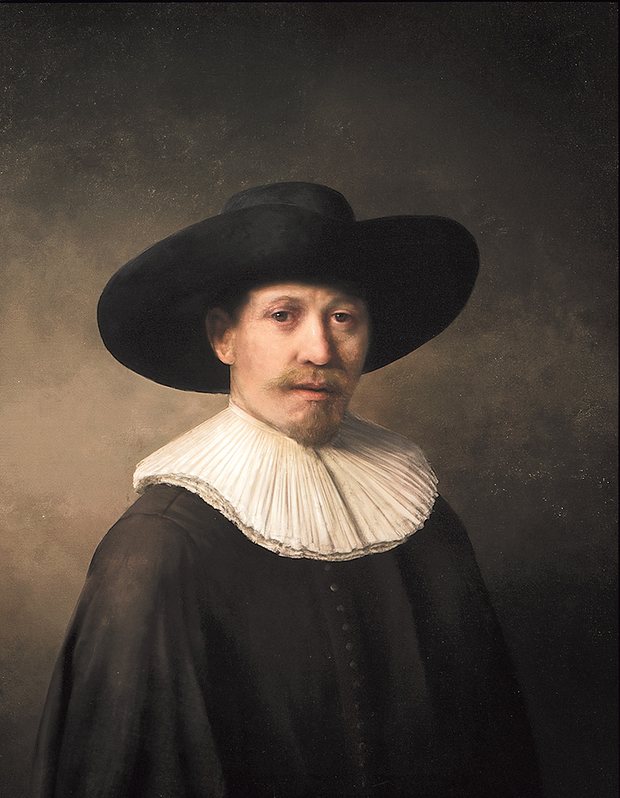
“You could say that we use technology and data like Rembrandt used his paints and his brushes to create something new.” Those bold words come from Ron Augustus, Microsoft’s director of small- and medium-sized business markets, in the promotional video at the top of the post. His employer acts as one of two partners involved in The Next Rembrandt, the other being the Dutch bank ING — hence, presumably, the choice of painter to resurrect. Their combined resources have produced a wholly theoretical, but in a physical sense very real, new “Rembrandt” portrait, meticulously 3D-printed at 148 megapixels in thirteen layers of paint-based UV ink.
Despite its impressive plausibility, nobody expects the fruit of the Next Rembrandt project’s considerable labors, unveiled yesterday in Amsterdam, to hang in the Rijksmuseum next to The Night Watch. But it can, properly considered, teach us all a great deal about what, in the words of ING executive creative director Bas Korsten, “made Rembrandt Rembrandt.” And like any cutting-edge stunt, it also gives us a glimpse into what technology will sooner or later make possible for us all. How long could we possibly have to wait before we can 3D-print, on canvas with oil paint, portraits of ourselves as Rembrandt almost certainly would have painted us — or our very own Night Watch, indistinguishable from the original? Truly, we stand on the cusp of a golden age of forgery.
Related Content:
300+ Etchings by Rembrandt Now Free Online, Thanks to the Morgan Library & Museum
16th-Century Amsterdam Stunningly Visualized with 3D Animation
Flashmob Recreates Rembrandt’s “The Night Watch” in a Dutch Shopping Mall
Based in Seoul, Colin Marshall writes and broadcasts on cities, language, and style. He’s at work on a book about Los Angeles, A Los Angeles Primer, the video series The City in Cinema, the crowdfunded journalism project Where Is the City of the Future?, and the Los Angeles Review of Books’ Korea Blog. Follow him on Twitter at @colinmarshall or on Facebook.
Read More...Patti Smith on Virginia Woolf’s Cane, Charles Dickens’ Pen & Other Cherished Literary Talismans
Oh to be eulogized by Patti Smith, Godmother of Punk, poet, best-selling author.
Her memoir, Just Kids, was born of a sacred deathbed vow to her first boyfriend, photographer Robert Mapplethorpe.
Its follow up, M Train, started out as an exercise in writing about “nothing at all,” only to wind up as an elegy to her late husband, guitarist Fred “Sonic” Smith. (Their daughter suggested that her dad “was probably annoyed that Robert got so much attention in the other book.”)
She and husband Smith celebrated their first anniversary by collecting stones from the French Guiana penal colony, Saint-Laurent-du-Maroni, in an effort to feel closer to Jean Genet, one of her most revered authors.
She believes in the transmutation of objects, unabashedly lobbying to liberate the walking stick that accompanied Virginia Woolf to her death from the NYPL’s collection in order to commune with it further. She may turn into a gibbering fangirl in face to face meetings with the authors she admires, but interacting with relics of those who have gone before has a centering effect.
Needless to say, her fame grants her access to items the rest of us are lucky to view though the walls of a vitrine.
She has paged through Sylvia Plath’s childhood notebooks and gripped Charles Dickens’ surprisingly modest pen. She has ““perpetuated remembrance” by coming into close contact with Bobby Fischer’s chess table, Frida Kahlo’s leg braces, and a hotel room favored by Maria Callas. Her recollection of these events is both reverential and impish, the stuff of a dozen anecdotes.
“I would faint to use (sculptor Constantin) Brâncuși’s toothbrush,“ she quips. “I wouldn’t use it though.”
Where tangible souvenirs prove elusive, Smith takes photographs.
Interviewer Holdengräber is uniquely equipped to share in Smith’s literary passions, egging her on with quotes recited from memory, including this beauty by Rainer Maria Rilke:
Now loss, however cruel, is powerless against possession, which it completes, or even, affirms: loss is, in fact, nothing else than a second acquisition–but now completely interiorized–and just as intense.
(The sentiment is so lovely, who can blame him for invoking it in previous conversation with NYPL guests, artist Edmund de Waal and pianist Van Cliburn.)
The topic can get heavy, but Smith is a consummate entertainer whose clownish brinkmanship leads her to cite Jimi Hendrix: “Hooray, I wake from yesterday.”
The complete transcript of the conversation is available for download here, as is an audio podcast.
Note: You can download Just Kids or M Train as free audio books if you join Audible.com’s 30-day free trial.
Related Content:
Patti Smith’s List of Favorite Books: From Rimbaud to Susan Sontag
Patti Smith and David Lynch Talk About the Source of Their Ideas & Creative Inspiration
Ayun Halliday is an author, illustrator, and Chief Primatologist of the East Village Inky zine. Follow her @AyunHalliday
Read More...Christopher Lee Reads Five Horror Classics: Dracula, Frankenstein, The Phantom of the Opera & More
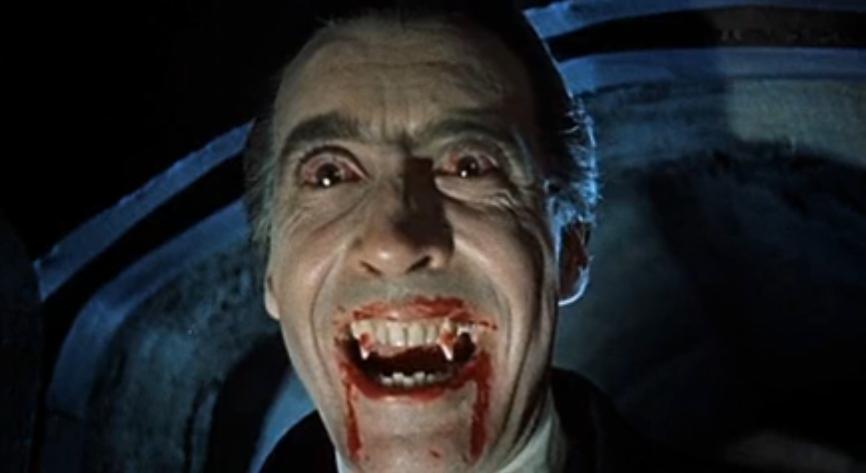
Image via Wikimedia Commons
The great horror actors of the genre’s golden age—the time of Dracula, Frankenstein, The Mummy, and yet more Dracula—succeeded on the strength of their highly unconventional looks. Boris Karloff, Bela Lugosi, and Christopher Lee were not faces you would pass on the street without a second look. But they succeeded equally because all three, including Karloff, made use of some very well trained voices—voices honed for the theatrical.
They have elevated even the campiest material through the use of their voices, and further elevated many already great stories by reading them aloud. Bela Lugosi contributed his Hungarian-accented baritone to a reading of Poe’s “The Telltale Heart,” sounding in every line like he might break into “I vant to suck your blood.” Karloff, the more versatile voice actor, narrated Aesop’s Fables, Rudyard Kipling’s Just So Stories, and too many other books to list.
Christopher Lee has also read Poe, a lot of Poe. And—rather typecast or landing the best voiceover gig of all—he recorded five classic horror novels: Dracula, Frankenstein, Phantom of the Opera, Dr. Jekyll and Mr. Hyde, and The Hunchback of Notre Dame. (Though we might argue about whether Victor Hugo’s novel belongs in this category).
Lee read Dracula once before, in an adaptation made for a graphic novel in 1966. Here, he reads Bram Stoker’s novel unabridged, unlike some of the other books. You can purchase these in a compilation CD. Or you can hear them on Spotify for free, either in your browser or using their software. (Hear Phantom of the Opera here and The Hunchback of Notre Dame here). However you hear his readings, like all of Lee’s voicework—even his heavy metal Christmas album—these narrations practically vibrate with ominous tension and suspense.
Looking for free, professionally-read audio books from Audible.com? Here’s a great, no-strings-attached deal. If you start a 30 day free trial with Audible.com, you can download two free audio books of your choice. Get more details on the offer here.
Related Content:
Christopher Lee Reads Edgar Allan Poe’s “The Raven,” and From “The Fall of the House of Usher”
Horror Legend Christopher Lee Reads Bram Stoker’s Dracula
Horror Legend Christopher Lee Presents a Heavy Metal Version of The Little Drummer Boy
Hear Edgar Allan Poe’s “The Tell Tale Heart” Read by the Great Bela Lugosi (1946)
Josh Jones is a writer and musician based in Durham, NC. Follow him at @jdmagness
Read More...Carol Kaye, 81-Year-Old Pioneer of Rock, Gives Kiss’ Gene Simmons a Bass Lesson
If you asked me to name the best representative of rock and roll as a boy’s club, KISS would be high on my list. Despite their commitment to a gender-bending glam style, Frontmen Gene Simmons and Paul Stanley’s chest hair rugs, wagging tongues, and studded codpieces are exaggerated examples of seventies virility—a rock era known for progressive music, but not progressive gender politics.
If you asked me to name a musician who had challenged and defied gender stereotypes in rock and roll, Carol Kaye— bassist and member of L.A.’s top flight session musicians the Wrecking Crew—would be high on my list. Kaye and her crew helped create the sound of Phil Spector records, the Beach Boys, the Mamas and the Papas, and so many other classic sixties artists.
Kaye never particularly saw herself as a pioneer or pathbreaker, but her smooth, unpretentious professionalism carried her through a career most musicians, male and female, would envy, even if she never stood in the spotlight herself. Her attitude, approach, and playing are pretty much the opposite of the bombastic, mercenary Simmons, who has on more than one occasion weathered charges of sexism in his pursuit of bigger, louder, dumber music and more tawdry reality TV.
In the short clip above, the two legends meet, and Kaye sits Simmons down and shows him how it’s done.
She has taught hundreds of students to imitate, though never duplicate, her chops, and earned the clout to take Simmons to school (though she seems surprised to be doing so); Kaye largely helped invent the sound of rock bass and elevated the instrument from a supporting player to an indispensable lead one as well.
The clip comes from an unfinished documentary that features over an hour of interview footage in which Kaye discusses her start in music and longtime success, and demonstrates more of her phenomenal, understated playing.
Related Content:
Meet Carol Kaye, the Unsung Bassist Behind Your Favorite 60s Hits
7 Female Bass Players Who Helped Shape Modern Music: Kim Gordon, Tina Weymouth, Kim Deal & More
Paul McCartney Offers a Short Tutorial on How to Play the Bass Guitar
Josh Jones is a writer and musician based in Durham, NC. Follow him at @jdmagness
Read More...Virginia Woolf Offers Gentle Advice on “How One Should Read a Book”
I am privileged to have grown up in a house filled with books. I don’t remember learning to read; I simply recall books—those that felt beneath me, those that seemed forever beyond comprehension. No one taught me how to read—by which I mean no one told me what to attend to in books, what to ignore; what to love, what to scorn. The shelves in my home, school, and local library were a wilderness, and I was left to carve my own paths through their thickets.
That all changed when I got to college, then graduate school, where I found various critical movements, literary theories, and philosophical schools, and was compelled to choose between their methods, politics, and prohibitions. Reading became a strenuous activity, a heavy intellectual exercise in which I felt those critics and theorists always looking over my shoulder. Those who have done intensive study in the humanities may sympathize: Afterward, I had to relearn how to read without an agenda.
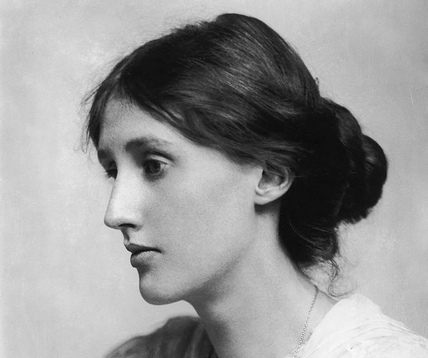
Such is the kind of unfettered reading Virginia Woolf recommends in an essay titled “How Should One Read a Book?”, published in a series called The Common Reader—a title, in fact, of two collections, the first published in 1925, the second in 1932. Woolf wrote these essays for lay readers, not scholars, and many were previously published in venues like The Nation, Vogue, and The Yale Review. In them, Woolf’s informal investigations of writers like Jonathan Swift, Daniel Defoe, Christina Rossetti, and Thomas Hardy—writes a 1925 New York Times review—do not “put the author in the attitude of a defender or an expositor of certain trends in literature.”
“How Should One Read a Book?” appears at the end of the second series of The Common Reader. The essay “cautions,” writes Maria Popova, “against bringing baggage and pre-conceived notions to your reading” and abjures a formal, critical approach:
After all, what laws can be laid down about books? The battle of Waterloo was certainly fought on a certain day; but is Hamlet a better play than Lear? Nobody can say. Each must decide that question for himself. To admit authorities, however heavily furred and gowned, into our libraries and let them tell us how to read, what to read, what value to place upon what we read, is to destroy the spirit of freedom which is the breath of those sanctuaries. Everywhere else we may be bound by laws and conventions — there we have none.
Though herself a more than able scholar and critic, Woolf does not recommend that her readers become so. “The only advice,” she writes, “that one person can give another about reading is to take no advice, to follow your instincts, to use your own reason, to come to your own conclusions.” That said, however, she feels “at liberty to put forward a few ideas and suggestions” that we are free to take or leave. She offers her guidelines to aid enjoyment, not stifle it, and to help us sort and sift the “multitudinous chaos” we encounter when confronted with genres, periods, and styles of every type.
“Where,” Woolf asks, “are we to begin?” Below, in brief, find a few of her “ideas and suggestions,” offered with all of the careful caveats above:
- “Since books have classes—fiction, biography, poetry—we should separate them and take from each what it is right that each should give us.”
Most commonly we come to books with blurred and divided minds, asking of fiction that it shall be true, of poetry that it shall be false, of biography that it shall be flattering, of history that it shall enforce our own prejudices. If we could banish all such preconceptions when we read, that would be an admirable beginning. Do not dictate to your author; try to become him. Be his fellow-worker and accomplice. If you hang back, and reserve and criticise at first, you are preventing yourself from getting the fullest possible value from what you read.
- “Perhaps the quickest way to understand the elements of what a novelist is doing is not to read, but to write; to make your own experiment with the dangers and difficulties of words.”
Recall, then, some event that has left a distinct impression on you — how at the corner of the street, perhaps, you passed two people talking. A tree shook; an electric light danced; the tone of the talk was comic, but also tragic; a whole vision, an entire conception, seemed contained in that moment…. When you attempt to reconstruct it in words, you will find that it breaks into a thousand conflicting impressions…. Then turn from your blurred and littered pages to the opening pages of some great novelist — Defoe, Jane Austen, Hardy. Now you will be better able to appreciate their mastery.
- “We can read [biographies and memoirs] with another aim, not to throw light on literature, not to become familiar with famous people, but to refresh and exercise our own creative powers.”
The greater part of any library is nothing but the record of… fleeting moments in the lives of men, women, and donkeys. Every literature, as it grows old, has its rubbish-heap, its record of vanished moments and forgotten lives told in faltering and feeble accents that have perished. But if you give yourself up to the delight of rubbish-reading you will be surprised, indeed you will be overcome, by the relics of human life that have been cast out to moulder. It may be one letter — but what a vision it gives! It may be a few sentences — but what vistas they suggest!
Read the entirety of Woolf’s essay here to learn her nuanced view of reading. She concludes her essay with another gentle swipe at literary criticism and recommends humility in the company of literature:
If to read a book as it should be read calls for the rarest qualities of imagination, insight, and judgment, you may perhaps conclude that literature is a very complex art and that it is unlikely that we shall be able, even after a lifetime of reading, to make any valuable contribution to its criticism. We must remain readers.
Clearly Woolf did not think of reading as a passive activity, but rather one in which we engage our own imaginations and literary abilities, such as they are. But if we are not to criticize, not draw firm conclusions, morals, life lessons, or philosophies from the books we read, of what use is reading to us?
Woolf answers the question with some questions of her own: “Are there not some pursuits that we practice because they are good in themselves, and some pleasures that are final? And is not this among them?”
Related Content:
Take Vladimir Nabokov’s Quiz to See If You’re a Good Reader–The Same One He Gave to His Students
An Animated Introduction to Virginia Woolf
Josh Jones is a writer and musician based in Durham, NC. Follow him at @jdmagness
Read More...An Inside Look at How the Fantastic “Wintergatan Marble Machine” Makes Music with 2000 Marbles & 3000 Handmade Parts
Swedish musician Martin Molin’s Marble Machine, above, looks like the kind of top heavy, enchanted contraption one might find in a Miyazaki movie, galloping through the countryside on its skinny legs.
Those slender stems are but one of the design flaws that bother its creator, who notes that he hadn’t really taken into account the destructive power of 2000 flowing marbles (or more accurately, 11mm steel ball bearings).
It’s natural for someone so close to the project to fixate on its imperfections, but I think it’s safe to say that the rest of us will be bedazzled by all the giant musical Rube Goldberg device gets right. Hannes Knutsson’s “making of” videos below detail some of Molin’s labors, from recreating the sound of a snare drum with coasters, a contact mic and a box of basmati rice, to cutting wooden gears from a customizable template that anyone can download off the Internet.
If it looks like a time consuming endeavor, it was. Molin wound up devoting 14 months to what he had conceived of as a short term project, eventually designing and fabricating 3,000 internal parts.
The finished product is a feat of digital, musical, and physical skill. As Molin told Wired,
I grew up making music on Midi, and everyone makes music on a grid nowadays, on computers. Even before digital they made fantastic, programmable music instruments. In bell towers and church towers that play a melody they always have a programming wheel exactly like the one that is on the marble machine.
The “making of” videos highlight the difference between the recorded audio signal and the sound in the room where the machine is being operated. There’s something immensely satisfying about the insect-like click of all those marbles working in concert as they activate the various instruments and notes.
The machine also appears to give its inventor a rather brisk cardio workout.
You can read more about the construction of the Marble Machine on Molin’s Wintergatan website. Its tune is available for download here.
Related Content:
New Order’s “Blue Monday” Played with Obsolete 1930s Instruments
Two Guitar Effects That Revolutionized Rock: The Invention of the Wah-Wah & Fuzz Pedals
Read More...Hear the Unique, Original Compositions of George Martin, Beloved Beatles Producer (RIP)
Quincy Jones, Phil Spector, Brian Wilson… these are people who changed the sound of modern music by taking big risks in the studio. But even if these three had not made the albums they’re best known for, they would still be known for their popular work as musicians and producers. That may not have been the case with perhaps one of the most innovative producers of them all: George Martin, who died this past Tuesday. Had Martin not steered the Beatles through their radical transformation from pop sensations to psychedelic bards, we may not have heard his name outside of the small worlds of classical and film music and British comedy records.
Was he the “fifth Beatle” or more of a paternal figure, as Paul McCartney wrote yesterday? Is it hyperbole to call him, as Mick Ronson did in tribute, “the greatest British record producer ever”? Maybe not. In any case, just as Martin changed the Beatles—prompting them to recruit Ringo and bring complex orchestrations into their arrangements—the Beatles changed Martin, from a rather conservative, cautious producer and composer to an adventurous creative force.
That’s not to say that Martin didn’t have an eccentric streak before he signed the band that would secure his name in rock and roll history. He spent a good bit of his early career producing novelty albums. “Time Beat” and “Waltz in Orbit”—his compositions at the top of the post, created with Maddalena Fagandini of the famed BBC Radiophonic Workshop—show an eccentric, playful side of the buttoned-up producer. It was perhaps a side Martin preferred to keep hidden; he released the single under a pseudonym, “Ray Cathode.”
Just a few months later, Martin auditioned the Beatles and brought them into Abbey Road Studios to record their first album. While the band’s early sixties records are forever beloved for their songwriting and performances, the production itself didn’t stray far from the conventional. The early albums, writes Mike Brown at The Telegraph, “evinced a youthful freshness and exuberance that hinted at promise, but showed no great originality. Certainly there was nothing that anticipated the flowering of genius to come.” Likewise, Martin’s own releases at the time, such as the big band orchestrations of Beatles songs from 1964 (further up) and a lounge-jazz, bossanova-tinged instrumental version of Help! from the following year, show none of the wizardry to come in Sgt. Pepper’s or Abbey Road.
After the Beatles’ psychedelic break, so to speak, in 1966/67, Martin himself moved in an entirely new direction as a composer, as you can hear in his very Beatlesesque “Theme One,” which served, writes Dangerous Minds, as the “ceremonial first song” every morning for BBC Radio 1 when it launched in ’67 until the mid-70s. The thrillingly Baroque piece of chamber pop could easily have been an extended outro on Sgt. Pepper’s; it shows Martin fully embracing the Beatles’ sound. Hear both the robust original and a tinnier, more Beatles‑y version above.
As skilled as he was at creating instantly recognizable experimental pop melodies, Martin never left his classical roots far behind. In the video of “A Day in the Life,” above—shot on location during recording sessions—Martin conducts the orchestra, Brown observes, “in white shirt and bow tie, hair neatly trimmed, stoutly refusing to embrace the affectations of drooping mustache and Nehru jacket that afflicted other record producers.” The famed producer, “forever maintained the calm, unruffled demeanour and the stiff-backed sartorial rectitude of the officer class.”
Martin’s musical discipline reigned in and gave shape to the Beatles’ wildest ideas, and gave their most tender and dramatic songs an immensity and lushness that still leaves us in awe. He combined conventional and avant-garde sensibilities seamlessly. (As McCartney once remarked, Martin was “quite experimental for who he was, a grown-up.”) Just above hear an example of that synthesis, the sweeping, powerful “Pepperland Suite,” composed in 1968 for the Yellow Submarine film. It represents some of the best original work from an incredible producer who also became, we must remember as we say our goodbyes, an astoundingly original composer.
Related Content:
George Martin, Legendary Beatles Producer, Shows How to Mix the Perfect Song Dry Martini
Here Comes The Sun: The Lost Guitar Solo by George Harrison, Discovered by George Martin
Josh Jones is a writer and musician based in Durham, NC. Follow him at @jdmagness
Read More...American History: An Off-Kilter 1992 Student Film from South Park Creator Trey Parker
Here’s a little exercise:
Spend five minutes recording yourself recapping everything you know about Japanese history.
(International Studies majors and Japanese citizens, please sit this one out.)
Most of us will wind up with a pastiche that’s heavy on pop culture and relatively recent events. The average Japanese schoolchild should have no difficulty identifying the glaring holes and factual errors in our narratives.
If this idea amuses you, you’ll likely enjoy American History, above, South Park creator Trey Parker’s early animated short, a 1993 Student Academy Award silver medalist.
Parker’s Japanese-born University of Colorado classmate, Junichi Nishimura, provided the narration, beginning with Christopher Columbus in 1492 and ending with the “Japan bashing” 41st president, George H.W. Bush. Highlights along the way include the Salem Witch Trials, the Boston Tea Party, the assassinations of Presidents Lincoln and Kennedy, Leave It to Beaver, and that time Bush barfed at a state dinner hosted by Japanese Prime Minister Kiichi Miyazawa.
He also remembers the Alamo, proving one Reddit wag’s hypothesis: If there’s one thing people remember about the Alamo, it is to remember the Alamo…
And then….
Parker and another classmate, Chris Graves, his soon-to-be DP on Cannibal: The Musical, animated the results using the most rudimentary of paper cut outs. It’s easy to spot the fledgling South Park style, as well as Python animator Terry Gilliam’s influence. This may be American history, but the anonymous top hatted hordes bear an awfully close resemblance to South Park’s resident Canadians, Terrance and Phillip.
If the phonetic spellings of non-native speaker Nishimura’s pronunciation makes you uncomfortable, it’s worth noting that he not only worked as an animator on South Park, but also represented his country by playing “President” Hirohito on the extremely funny (and NSFW) “Chinpokomon” episode.
American History will be added to the Animation section of our collection,
Related Content:
The Zen Wisdom of Alan Watts Animated by the Creators of South Park, Trey Parker and Matt Stone
John Green’s Crash Course in U.S. History: From Colonialism to Obama in 47 Videos
Ayun Halliday is an author, illustrator, and Chief Primatologist of the East Village Inky zine. Read her most recent drama-in-real comic on Narratively. Follow her @AyunHalliday
Read More...Walter Benjamin’s 13 Oracular Writing Tips

Image by Walter Benjamin Archiv, via Wikimedia Commons
The probability of Walter Benjamin’s name coming up in your average MFA workshop, or fiction writers’ group of any kind, likely approaches zero. But head over to a name-your-critical-political-literary-theory class and I’d be surprised not to hear it dropped at least once, if not half a dozen times. Benjamin, after all, mentored or befriended the first generation Frankfurt School, Hannah Arendt, Bertolt Brecht, Leo Strauss, and nearly every other twentieth-century German intellectual who escaped the Nazis. Tragically, Benjamin himself did not fare so well. It has long been believed that he killed himself rather than face Nazi capture. Another theory speculates that Stalin had him murdered.
Since his death, the legend of Benjamin as a kind of heterodox Marxist prophet—an image he fostered with his embrace of Jewish mysticism—has grown and grown. And yet, despite his rarified academic pedigree, I maintain that writers of all kinds, from the most pedantic to the most visceral, can learn much from him.
Benjamin did not strictly confine himself to the arcane textual analysis and literary-theological hermeneutics for which he’s best known; he spent most of his career working as a freelance critic and journalist, writing almost casual travelogues, personal reminiscences of Weimar Berlin, and approachable essays on a variety of subjects. For a few years, he even wrote and presented popular radio broadcasts for young adults—acting as a kind of “German Ira Glass for teens.”
And, like so many writers before and since, Benjamin once issued a list of “writer’s tips”—or, as he called it, “The Writer’s Technique in Thirteen Theses,” part of his 1928 treatise One-Way Street, one of only two books published in his lifetime. In Benjamin’s hands, that well-worn, well meaning, but often less than helpful genre becomes a series of oracular pronouncements that can seem, at first read, comical, superstitious, or puzzlingly idiosyncratic. But read them over a few times. Then read them again. Like all of his writing, Benjamin’s suggestions, some of which read like commandments, others like Nietzschean aphorisms, reveal their meanings slowly, illuminating the postures, attitudes, and physical and spiritual disciplines of writing in surprisingly humane and astute ways.
The Writer’s Technique in Thirteen Theses:
- Anyone intending to embark on a major work should be lenient with himself and, having completed a stint, deny himself nothing that will not prejudice the next.
- Talk about what you have written, by all means, but do not read from it while the work is in progress. Every gratification procured in this way will slacken your tempo. If this regime is followed, the growing desire to communicate will become in the end a motor for completion.
- In your working conditions avoid everyday mediocrity. Semi-relaxation, to a background of insipid sounds, is degrading. On the other hand, accompaniment by an etude or a cacophony of voices can become as significant for work as the perceptible silence of the night. If the latter sharpens the inner ear, the former acts as a touchstone for a diction ample enough to bury even the most wayward sounds.
- Avoid haphazard writing materials. A pedantic adherence to certain papers, pens, inks is beneficial. No luxury, but an abundance of these utensils is indispensable.
- Let no thought pass incognito, and keep your notebook as strictly as the authorities keep their register of aliens.
- Keep your pen aloof from inspiration, which it will then attract with magnetic power. The more circumspectly you delay writing down an idea, the more maturely developed it will be on surrendering itself. Speech conquers thought, but writing commands it.
- Never stop writing because you have run out of ideas. Literary honour requires that one break off only at an appointed moment (a mealtime, a meeting) or at the end of the work.
- Fill the lacunae of inspiration by tidily copying out what is already written. Intuition will awaken in the process.
- Nulla dies sine linea [‘No day without a line’] — but there may well be weeks.
- Consider no work perfect over which you have not once sat from evening to broad daylight.
- Do not write the conclusion of a work in your familiar study. You would not find the necessary courage there.
- Stages of composition: idea — style — writing. The value of the fair copy is that in producing it you confine attention to calligraphy. The idea kills inspiration, style fetters the idea, writing pays off style.
- The work is the death mask of its conception.
via Clarion 18/BrainPickings
Related Content:
Walter Benjamin’s Radio Plays for Kids (1929–1932)
Umberto Eco Dies at 84; Leaves Behind Advice to Aspiring Writers
David Ogilvy’s 1982 Memo “How to Write” Offers 10 Pieces of Timeless Advice
Josh Jones is a writer and musician based in Durham, NC. Follow him at @jdmagness
Read More...Support Us
We're hoping to rely on loyal readers, rather than erratic ads. Please click the Donate button and support Open Culture. You can use Paypal, Venmo, Patreon, even Crypto! We thank you!

About Us

Open Culture scours the web for the best educational media. We find the free courses and audio books you need, the language lessons & educational videos you want, and plenty of enlightenment in between.
Advertise With Us

FREE UPDATES!
GET OUR DAILY EMAIL
Get the best cultural and educational resources on the web curated for you in a daily email. We never spam. Unsubscribe at any time.
FOLLOW ON SOCIAL MEDIA

Open Culture editor Dan Colman scours the web for the best educational media. He finds the free courses and audio books you need, the language lessons & movies you want, and plenty of enlightenment in between.
Advertise With Us


