Metafilter sets the stage for the cute, newly minted video above:
At 1:00pm on May 17th, 2017, Neil deGrasse Tyson tweeted that he occasionally longed for someone to read Good Night Moon to him as he falls asleep. Six minutes later, LeVar Burton tweeted “I got you… Let’s do this!” And do it they did.
Some background: LeVar Burton hosted the children’s TV show Reading Rainbow for two decades, reading to children and encouraging them to read. His new podcast, LeVar Burton Reads, is like Reading Rainbow for adults. Neil deGrasse Tyson is a famous dancer yt /astrophysicist.
If you would like to sign up for Open Culture’s free email newsletter, please find it here. It’s a great way to see our new posts, all bundled in one email, each day.
If you would like to support the mission of Open Culture, consider making a donation to our site. It’s hard to rely 100% on ads, and your contributions will help us continue providing the best free cultural and educational materials to learners everywhere. You can contribute through PayPal, Patreon, and Venmo (@openculture). Thanks!
What makes this panel the greatest? Woodring declined to elaborate, though his readers eagerly shared theories—and some befuddlement—in the comments section:
Sluggo has reached the perfect state of no-effort, the satori-like denial of the “small mind” and all of the suffering that comes with it.
… it’s the comic equivalent of a koan—something designed to tie our rational mind in knots so that we can glimpse enlightenment.
Sluggo smiles because he knows a secret. He says no because he rejects consensus reality. He floats along because he doesn’t fight life—he sees the maintenance of the harmony and is one with that harmony. He knows all paths lead away from home. Instead he goes within and knows freedom.
“I am content. I need nothing, I will do nothing, I am fine as I am.”
Another fan, Glyph Jockey’s Lex 10, took it one step further, removing the speech bubble before taking Sluggo on an animated trip through the cosmos, narrated by philosopher Alan Watts:
In the state of being in accordance with the Tao, there is a certain feeling of weightlessness, parallel to the weightlessness that people feel when they get into outer space or when they go deep into the ocean.
Gabby Pahinui’s “Pu’uanahulu” and Ramayana imagery bestow added hypnotic appeal.
Revisit this strange little animated gem the next time your head’s about to explode from stress. Don’t question or get too hung up on meanings, just go with the flow, like Sluggo and Watts.
Could other Nancy panels serve as vehicles for Taoist enlightenment? Mayhaps:
Bushmiller’s strong point was never the content of his comic strip’s jokey plots—a friend once described him as ‘a moron on an acid trip.’ In fact, the gags were even simpler than was necessary for a ‘children’s’ strip. That’s because they were just a vehicle for the controlled and brilliant manipulation of repetition and variety that gave the strip its unique visual rhythm and composition. Bushmiller choreographed his familiar formal elements inside the tightest frame of any major strip, and that helped make it the most beautiful, as a whole, of any in the papers.” — Tom Smucker, The Village Voice, 1982
Recently, Bushmiller’s Nancy has been enjoying a renaissance. The strip that many casual readers of the funny pages dismissed as boring or dumb is revered by many celebrated cartoonists, including Bill Griffith, Daniel Clowes, and Art Spiegelman.
This month sees the publication of Paul Karasik and Mark Newgarden’s How to Read Nancy, a book length analysis of one single strip, which also functions as a how-to and history of the comic medium. This hotly anticipated volume has in turn given rise to a lively online How To Read Nancy Reading Group, a hotbed of fan art, altered panels, and Nancy strips from around the world.
We hear the mantra of “self-care” in ever-widening circles, a concept both derided and celebrated as a “millennial obsession,” with the acknowledgment—at least in this NPR think piece— that self-care was central to the philosophies of antiquity, from Aristotle to the Stoics.
In philosophy, self-care exists as a set of ethics. The reasons for this may often be couched in high-minded discussions of civics, sexual politics, and existential self-actualization. These days, doctors and researchers are making urgent appeals for our mental and physical health, and the science of stress is an unsurprisingly rich field of investigation at the moment.
It’s hard to overstate the negative effects of stress on the body over time. Increased stress hormones have been linked in study after study to overeating and obesity, lowered immune response, drug use and addiction, memory impairment, heart disease, and many other debilitating and life-threatening conditions. “The long-term activation of the stress-response system,” writes the Mayo Clinic, “and the subsequent overexposure to cortisol and other stress hormones—can disrupt almost all your body’s processes.” (The video below makes this harrowing point with some helpful, animated comic relief.)
When we experience chronic stress, it raises our blood pressure and affects our cardiovascular system, increasing the chances of heart attack or stroke. The even worse news—reports the TED-Ed video at the top of the post—is that chronic stress weakens our ability to make sound decisions about our well-being, by changing the size, structure, and function of our brain.
We’re familiar with the symptoms of chronic stress: “sleeping restlessly,” becoming “irritable or moody,” “forgetting little things,” and “feeling overwhelmed and isolated.” Continuous stress, from our work lives, home lives, social and political lives, can cause shrinking in parts of the brain responsible for memory, spatial recognition… and stress regulation.
Research shows that high levels of cortisol and other stress hormones can cause shrinking of the prefrontal cortex, the part of the brain responsible for reasoning and decision-making. Stress can inhibit neuroplasticity—the ability of the brain to adapt to new circumstances—and neurogenesis: the ability to produce new brain cells.
Conversely, stress increases the size of the amygdala, which activates fight-or-flight responses, which in turn increase the strain on our heart and blood vessels.
All of these effects can set the stage in later life for major depression, forms of cognitive decline and dementia, and Alzheimer’s disease.
Most unsettlingly, as the video notes, these effects can be passed down to the next generation, furthering the cycle of chronic stress in our children and theirs. Persistent stress “filters down” to DNA, making it genetically inheritable.
Given the incredible amount of stress most people seem to be under, this science can seem like a diagnosis of doom. We all know that chronic stressors assail us all day long, without asking whether we want them in our lives or not. An increasing amount of our daily stress, I’d hypothesize, may indeed come from the growing realization of how little control we have over many stressful situations.
But the TED explainer ends with good news, and it’s been there all along—we can find it in the ancient Greeks, in Buddhist practices, and many other traditions, both active and contemplative. We can control our responses to stress, and thus reverse and modulate the effects of cortisol on our system. The best, proven, ways to do so are through exercise and meditation (and, I’d add, good nutrition).
These activities will not eradicate the conditions of inequality, injustice, or instability that stress us all out—a great many of us more than others. But practicing “self-care” inasmuch as we are able with stress-relieving disciplines and practices will better equip us to respond to the state of the world and the state of our lives by interrupting the biological mechanisms that, over time, make things much worse. Find some helpful resources below.
Just days ago, Jason Aldean was performing on stage in Las Vegas when bullets started reigning down, killing 58 concertgoers and wounding hundreds. Tonight, he opened Saturday Night Live with a poignant tribute–both to the victims of the massacre and rocker Tom Petty, who passed away earlier this week.
Above, watch Aldean sing Petty’s defiant 1989 anthem, “I Won’t Back Down.” Remember the lives lost to senseless violence. Pray that we’ll eventually care enough, as a nation, to do something about it. Think about music’s ability to restore the soul. And thank SNL for rising to yet another important occasion.
If you would like to sign up for Open Culture’s free email newsletter, please find it here. It’s a great way to see our new posts, all bundled in one email, each day.
If you would like to support the mission of Open Culture, consider making a donation to our site. It’s hard to rely 100% on ads, and your contributions will help us continue providing the best free cultural and educational materials to learners everywhere. You can contribute through PayPal, Patreon, and Venmo (@openculture). Thanks!
Would Benedict Cumberbatch have such ardent fans if he couldn’t read poetry so well? Almost certainly he would, although his way with verse still seems not like a bonus but an integral component of his dramatic persona. Though not easily explained, that relationship does come across if you hear any of the actor’s readings of poetry. In the video above, Cumberbatch performs “Ode to a Nightingale,” the longest and best-known of John Keats’ 1819 odes that casts into verse the poet’s discovery of “negative capability,” or as he defined it in a letter two years earlier, “when a man is capable of being in uncertainties, mysteries, doubts, without any irritable reaching after fact and reason.”
Yet one senses that the Cumberbatch fans who put up these videos, such as the one accompanying “Ode to a Nightingale” with imagery reminiscent of a Tiger Beat pictorial, care less about his negative capability than certain other qualities. His voice, for instance: the uploader of the video combining five poems just above describes as “the velvety dulcet tones of a jaguar hiding in a cello.”
That compilation includes “Ode to a Nightingale” as well as Shakespeare’s “The Seven Ages of Man” (“All the world’s a stage”), Lewis Carroll’s “Jabberwocky,” a piece of Dante’s Divine Comedy, and Samuel Taylor Coleridge’s “Kubla Khan.” With Coleridge’s dream of Asia and Dante’s Italian vision of the afterlife, this poetic mix does get more exotic than it might seem (at least by the standards of the eras from which it draws).
But Cumberbatch, who in 2015 received the honor of Commander of the Most Excellent Order of the British Empire from the Queen and even read at the reburial ceremony of King Richard III, clearly matches best with the canon of his native England. As a versatile performer, and thus one who presumably understands all about the need for negative capability, Cumberbatch and his cello-hidden jaguar delivery (a poetic description, in its own way) has done justice in the past to Kafka, Kurt Vonnegut, and Moby-Dick. Still, one wonders what poem Cumberbatch could perform in order to achieve an unsurpassable state of peak Englishness. How long could it take for him to get around, for instance, to “If—”?
Based in Seoul, Colin Marshall writes and broadcasts on cities and culture. His projects include the book The Stateless City: a Walk through 21st-Century Los Angeles and the video series The City in Cinema. Follow him on Twitter at @colinmarshall or on Facebook.
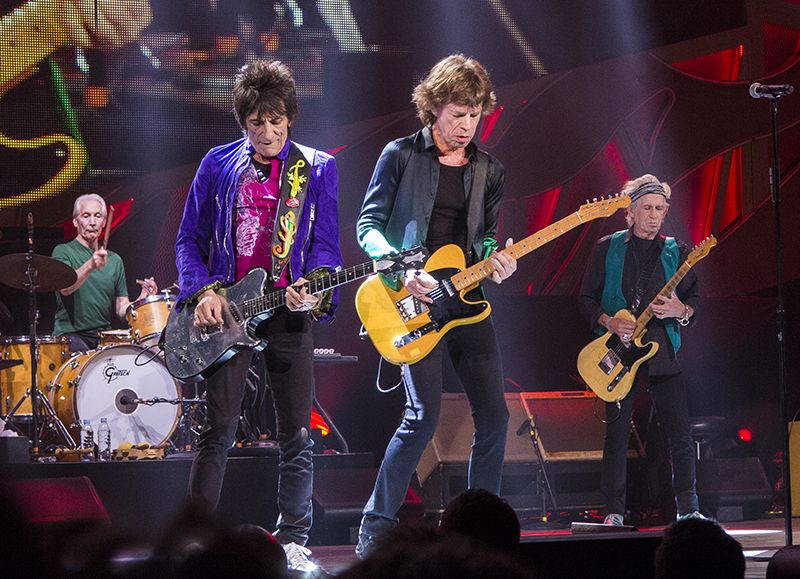
Briefly noted: Give this wide-ranging interview with Tom Petty some time. Recorded in 2014, Petty talks with interviewer Jian Ghomeshi about his songwriting craft. The writing of songs, the rehearsal and recording process, the work in the studio, it all gets covered here. As he talks, one thing comes across: Whatever talents he had, Petty put in the hard work. He and the Heartbreakers mastered their instruments, kept getting better, and didn’t take short cuts, to the point where they could do magical things together in the recording studio.
Watch Part 1 above, and Part 2 below, where, at one point he says, “I’m doing the best I can. You can’t say I didn’t try really hard because I’m really trying hard to be good.” The value of trying–trying consistently–can never be understated.
Note: Some of the same themes get echoed in Tom Petty’s final interview, which he gave to the LA Times last week. You can stream it here.
If you would like to sign up for Open Culture’s free email newsletter, please find it here. It’s a great way to see our new posts, all bundled in one email, each day.
If you would like to support the mission of Open Culture, consider making a donation to our site. It’s hard to rely 100% on ads, and your contributions will help us continue providing the best free cultural and educational materials to learners everywhere. You can contribute through PayPal, Patreon, and Venmo (@openculture). Thanks!
Common wisdom, and indelible memories of The Birds, warn that feeding seagulls, pigeons and other creatures who travel in flocks is a can of worms best left unopened.
This complimentary buffet proved such a hit, she hung up more.
Two years later, Barboni is serving a colony of over 200 hummingbirds from four 80-ounce feeders. Their metabolism requires them to consume 8 to 10 times their body weight on a daily basis.
Barboni’s service to her tiny jewel-toned friends extends well beyond the feeders. She’s diverted campus tree trimmers from interfering with them during nesting season, and given public talks on the habitat-destroying effects of climate change. She’s collaborating with another professor and UCLA’s Chief Sustainability Officer Nurit Katz to establish a special garden on campus for hummingbirds and their fellow pollinators.
The intimacy of this relationship is something she’s dreamed of since her birdwatching childhood in Switzerland where the only hummingbirds available for her viewing were the ones in books. Her dream came true when a fellowship took her from Princeton to Los Angeles, where hummingbirds live year-round.
Some longtime favorites now perch on their benefactor’s hand while feeding, or even permit themselves to be held and stroked. A few like to hang out inside the office, where the warm glow of Barboni’s computer monitor is a comforting presence on inclement days.
She’s bestowed names on at least 50: Squeak, Stardust, Tiny, Shy…
Above, Roland departs from his regularly scheduled programming and explores another facet of medieval life. Walking. That’s right, walking. It turns out that, as Boing Boing summarizes it, “before structured shoes became prevalent in the 16th century … people walked with a different gait, pushing onto the balls of our feet instead of rocking forward on our heels.” And that’s your lesson on medieval body mechanics for today…
If you would like to sign up for Open Culture’s free email newsletter, please find it here. It’s a great way to see our new posts, all bundled in one email, each day.
If you would like to support the mission of Open Culture, consider making a donation to our site. It’s hard to rely 100% on ads, and your contributions will help us continue providing the best free cultural and educational materials to learners everywhere. You can contribute through PayPal, Patreon, and Venmo (@openculture). Thanks!
The music and the culture of hip-hop are inseparable from the Bronx, Queens, Harlem, and Brooklyn, NY. And now that the form is a global culture that exists in online spaces as much as it does where people meet and shake hands, its documentary history may be more valuable than ever. Hip-Hop began, unquestionably, as a regional phenomenon, and its formal qualities always bear the traces of its matrix, a confluence of African-American, Caribbean, and Latin American socio-cultural experiences and creative streams, meeting with new consumer audio technology and a drive toward countercultural experiments that took hold all over New York amidst the urban decay of the 70s.
Photo by Joe Conzo, Jr.
We know the story in broad strokes. Now we can immerse ourselves in the daily life, so to speak, of early hip hop, thanks to a partial digitization of Cornell University’s vast hip hop collection. The physical collection, housed in Ithaca New York, contains “hundreds of party and event flyers ca. 1977–1985; thousands of early vinyl recordings, cassettes and CDs; film and video; record label press packets and publicity; black books, photography, magazines, books, clothing, and more.”
Photo by Joe Conzo, Jr.
While this impressive trove of physical artifacts is open to the public, most of us won’t ever make the journey. But whether we’re fans, scholars, or curious onlookers, we can benefit from its curatorial largesse through online archives like that ofJoe Conzo, Jr., who “captured images of the South Bronx between 1977 and 1984, including early hip hop jams, street scenes, and Latin music performers and events.”
Photo by Joe Conzo, Jr.
While still in high school, Conzo became the official photographer for the early influential rap group the Cold Crush Brothers. The position gave him unique access to the “localized, grassroots culture about to explode into global awareness.” Cornell’s site remarks that “without Joe’s images, the world would have little idea of what the earliest era of hip hop looked like, when fabled DJ, MC, and b‑boy/girl battles took place in parks, school gymnasiums and neighborhood discos.”
Another of Cornell’s collections, the Buddy Esquire Party and Event Flyer Archive, preserves over 500 such artifacts, the “largest known institutional collection of these scarce flyers, which have become increasingly valued for the details they provide about early hip hop culture.” Local, grassroots scenes like this one seem increasingly rare in a globalized, always-online 21st century. Archives like Cornell’s not only tell the story of such a culture, but in so doing they document a critical period in New York City, much like punk or jazz archives tell important histories of London, New York, D.C., Paris, New Orleans, etc.
The third digital collection hosted by Cornell, the Adler Hip Hop Archive, comes from journalist and Def Jam Recordings publicist Bill Adler. The materials here naturally skew toward the industry side of the culture, documenting its leap from the New York streets to “global awareness” and a spread to cities nationwide, through magazine photo spreads, ads, promotional pics, press clippings, and much more.
Some of these collections are easier to navigate than others—you’ll have to wade through many non-hip-hop photos in the huge Joe Conzo, Jr. archive, though most of them, like his Puerto Rican portraits and landscapes for example, are of interest in their own right. Conzo’s photo journalism of the Bronx in the late 70s and 80s has all the intimacy and candor of a family album or collection of yearbook pictures—charmingly awkward, exuberant, and a stark contrast to the high-profile glamour of commercial hip-hop eras to follow.
The core of Cornell’s collection came from author, curator, and former record executive Johan Kugelberg, who donated his collection in 1999 after publishing Born in the Bronx: A Visual History of the Early Days of Hip Hop with Joe Conzo, Jr. It has since expanded to 13 different collections from the archives of some of the culture’s earliest pioneers and documentarians. Hopefully many more of these will soon be digitized. But we might want to heed Jason Kottke’s warning in entering the three that have: “don’t click on any of those links if you’ve got pressing things to do.” You could easily get lost in this incredibly detailed treasury of hip-hop—and New York City—history.
Think of movie stars, and you’ll almost certainly think of Marilyn Monroe; think of jazz singers, and you’ll almost certainly think of Ella Fitzgerald. Their skills as performers, their inherent iconic qualities, the time of the mid-twentieth century in which they rose to fame, and other factors besides, have ensured that these two women still define the images of their respective crafts. But before their ascension to cultural immortality, the Angeleno Monroe and the New Yorker Fitzgerald’s paths crossed down here on Earth in 1955, and, when they did, the movie star played an integral role in breaking the jazz singer into the big time.
If you wanted to play to an influential crowd in Hollywood back in the 1950s, you had to play the Mocambo, the Sunset Strip nightclub frequented by the likes of Clark Gable, Humphrey Bogart, Lana Turner, Bob Hope, Sophia Loren, and Howard Hughes. But at the time, a singer of the reputedly scandalous new music known as jazz didn’t just waltz onto the stage of such a respectable venue, especially given the racial attitudes of the time. But as luck would have it, Fitzgerald found an advocate in Monroe, who, “tired of being cast as a helpless sex symbol, took a break from Los Angeles and headed to New York to find herself,” writes the Independent’s Ciar Byrne.
There Monroe “immersed herself in jazz,” recognizing in Fitzgerald “the creative genius she herself longed to possess.” Together with Fitzgerald’s manager, jazz impresario and Verve Records founder Norman Granz, Monroe pressured the glamorous Hollywood club to book Ella. “I owe Marilyn Monroe a real debt,” Fitzgerald said later, in 1972. “She personally called the owner of the Mocambo, and told him she wanted me booked immediately, and if he would do it, she would take a front table every night.” He agreed, and true to her word, “Marilyn was there, front table, every night. The press went overboard. After that, I never had to play a small jazz club again.”
Though Monroe’s efforts didn’t make Fitzgerald the first black performer to take the Mocambo’s stage — Herb Jeffries, Eartha Kitt, and Joyce Bryant had played there in 1952 and 1953 — she did use it as a platform to ascend to unusually great career heights, comparable to the way Frank Sinatra launched his solo career there. The story has remained compelling enough for several retellings, including Bonnie Greer’s musical Marilyn and Ella and, more recently, through the hilarious unreliability of an episode of Drunk History. As real history would have it, Fitzgerald would go on to enjoy a much longer and more varied career than the tragic Monroe, but she did her own part to repay the favor by adding nuance to Monroe’s superficial public image: “She was an unusual woman — a little ahead of her times. And she didn’t know it.”
Based in Seoul, Colin Marshall writes and broadcasts on cities and culture. His projects include the book The Stateless City: a Walk through 21st-Century Los Angeles and the video series The City in Cinema. Follow him on Twitter at @colinmarshall or on Facebook.

Rock photography is an art form in itself, as demonstrated by books and exhibitions of some of its masters like Mick Rock, Jenny Lens, Pennie Smith, and so many others. But two years ago, the Smithsonian turned to the crowd, to the fan, to the amateur photographer, with a call to submit photos from over six decades of rock and roll that weren’t hanging on gallery walls, but sitting in a shoebox somewhere. From fans with instamatic cameras to amateurs covering concerts for their school paper, the Smithsonian wanted another angle on our cultural obsession.
Websites Mashable and Dangerous Minds present a selection of photos from the book, such as a shot of Sly Stone at the height of his powers (and belt buckle size), a pic of the Talking Heads on stage in Berkeley, 1977; a dark and mysterious glimpse of Bonnie Raitt, circa 1974; and a shot of Cream playing the Chicago Coliseum taken from the side of the stage, with Ginger Baker’s head a complete blur. Also find Joni Mitchell at Kleinhans Music Hall. And The Ramones in Tempe, Arizona, circa 1978.
Bonnie Raitt at the Harvard Square Theatre, by Barry Schneier/Smithsonian Books
It’s a reminder of how unpretentious these live shows could be, happening in a world with the simplest of lighting rigs and decades from the big screen projections even up-and-coming bands now indulge in. For the most part, this was an intimate contract between the artist and the audience, all crammed into small clubs with smoke, sweat, heat, and, most importantly, electricity in the air.
The new book also features tales from the people who took the photos, along with some more professional photos to “flesh out this overview of rock and roll,” according to the introduction by organizer Bill Bentley. He adds: “The results, spanning six decades, aim for neither encyclopedic authority nor comprehensive finality, but rather an index of supreme influence.”
The Ramones in Tempe, Arizona, by Dorian Boese/Smithsonian Books
That supreme influence continues to be felt, for sure. Although the submission window is now closed, the Smithsonian’s website allows you to look through the hundreds of submissions to the project.
Ted Mills is a freelance writer on the arts who currently hosts the FunkZone Podcast. You can also follow him on Twitter at @tedmills, read his other arts writing at tedmills.com and/or watch his films here.
We're hoping to rely on loyal readers, rather than erratic ads. Please click the Donate button and support Open Culture. You can use Paypal, Venmo, Patreon, even Crypto! We thank you!
Open Culture scours the web for the best educational media. We find the free courses and audio books you need, the language lessons & educational videos you want, and plenty of enlightenment in between.