A quick note: This week, the BBC posted the second of Stephen Hawking’s Reith Lectures focusing on Black Holes. And, once again, they’ve animated the presentation with some fun chalkboard illustrations. You can watch Part 1, “Do Black Holes Have No Hair?” here. And now Part 2, “Black Holes Ain’t as Black as They Are Painted,” above. Hawking is getting a little playful with his grammar, isn’t he? Enjoy.
If you would like to support the mission of Open Culture, consider making a donation to our site. It’s hard to rely 100% on ads, and your contributions will help us continue providing the best free cultural and educational materials to learners everywhere. You can contribute through PayPal, Patreon, and Venmo (@openculture). Thanks!
Every generation, it seems, has its preferred bestselling genre fiction. We’ve had fantasy and, at least in very recent history, vampire romance keeping us reading. The fifties and sixties had their westerns and sci-fi. And in the forties, it won’t surprise you to hear, detective fiction was all the rage. So much so that—like many an irritable contrarian critic today—esteemed literary tastemaker Edmund Wilson penned a cranky New Yorker piece in 1944 declaiming its popularity, writing “at the age of twelve… I was outgrowing that form of literature”; the form, that is, perfected by Edgar Allan Poe, Arthur Conan Doyle, and Wilkie Collins, and imitated by a host of pulp writers in Wilson’s day. Detective stories, in fact, were in vogue for the first few decades of the 20th century—since the appearance of Sherlock Holmes and a derivative 1907 character called “the Thinking Machine,” responsible, it seems, for Wilson’s loss of interest.
Thus, when Wilson learned that “of all people,”Paul Grimstad writes, T.S. Eliot “was a devoted fan of the genre,” he must have been particularly dismayed, as he considered Eliot “an unimpeachable authority in matters of literary judgment.” Eliot’s tastes were much more ecumenical than most critics supposed, his “attitude toward popular art forms… more capacious and ambivalent than he’s often given credit for.” The rhythms of ragtime pervade his early poetry, and “in his later years he wanted nothing more than to have a hit on Broadway.” (He succeeded, sixteen years after his death.) Eliot peppered his conversation and poetry with quotations from Arthur Conan Doyle and wrote several glowing reviews of detective novels by writers like Dorothy Sayers and Agatha Christie during the genre’s “Golden Age,” publishing them anonymously in his literary journal The Criterion in 1927.
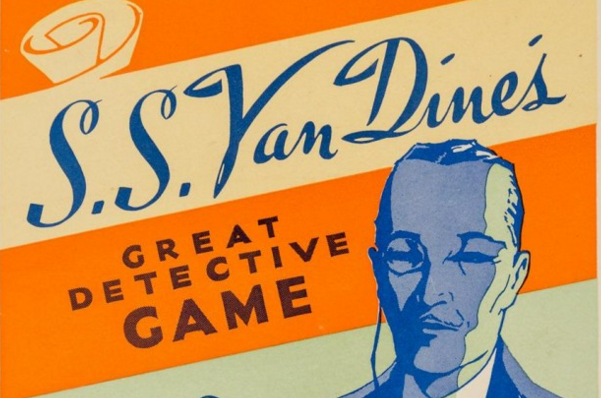
One novel that impressed him above all others is titled The Benson Murder Case by an American writer named S.S. Van Dine, pen name of an art critic and editor named Willard Huntington Wright. Referring to an eminent art historian—whose tastes guided those of the wealthy industrial class—Eliot wrote that Van Dine used “methods similar to those which Bernard Berenson applies to paintings.” He had good reason to ascribe to Van Dine a curatorial sensibility. After a nervous breakdown, the writer “spent two years in bed reading more than two thousand detective stories, during with time he methodically distilled the genre’s formulas and began writing novels.” The year after Eliot’s appreciative review, Van Dine published his own set of criteria for detective fiction in a 1928 issue of The American Magazine. You can read his “Twenty Rules for Writing Detective Stories” below. They include such proscriptions as “There must be no love interest” and “The detective himself, or one of the official investigators, should never turn out to be the culprit.”
Rules, of course, are made to be broken (just ask G.K. Chesterton), provided one is clever and experienced enough to circumvent or disregard them. But the novice detective or mystery writer could certainly do worse than take the advice below from one of T.S. Eliot’s favorite detective writers. We’d also urge you to see Raymond Chandler’s 10 Commandments for Writing Detective Fiction.
THE DETECTIVE story is a kind of intellectual game. It is more — it is a sporting event. And for the writing of detective stories there are very definite laws — unwritten, perhaps, but none the less binding; and every respectable and self-respecting concocter of literary mysteries lives up to them. Herewith, then, is a sort Credo, based partly on the practice of all the great writers of detective stories, and partly on the promptings of the honest author’s inner conscience. To wit:
1. The reader must have equal opportunity with the detective for solving the mystery. All clues must be plainly stated and described.
2. No willful tricks or deceptions may be placed on the reader other than those played legitimately by the criminal on the detective himself.
3. There must be no love interest. The business in hand is to bring a criminal to the bar of justice, not to bring a lovelorn couple to the hymeneal altar.
4. The detective himself, or one of the official investigators, should never turn out to be the culprit. This is bald trickery, on a par with offering some one a bright penny for a five-dollar gold piece. It’s false pretenses.
5. The culprit must be determined by logical deductions — not by accident or coincidence or unmotivated confession. To solve a criminal problem in this latter fashion is like sending the reader on a deliberate wild-goose chase, and then telling him, after he has failed, that you had the object of his search up your sleeve all the time. Such an author is no better than a practical joker.
6. The detective novel must have a detective in it; and a detective is not a detective unless he detects. His function is to gather clues that will eventually lead to the person who did the dirty work in the first chapter; and if the detective does not reach his conclusions through an analysis of those clues, he has no more solved his problem than the schoolboy who gets his answer out of the back of the arithmetic.
7. There simply must be a corpse in a detective novel, and the deader the corpse the better. No lesser crime than murder will suffice. Three hundred pages is far too much pother for a crime other than murder. After all, the reader’s trouble and expenditure of energy must be rewarded.
8. The problem of the crime must he solved by strictly naturalistic means. Such methods for learning the truth as slate-writing, ouija-boards, mind-reading, spiritualistic se’ances, crystal-gazing, and the like, are taboo. A reader has a chance when matching his wits with a rationalistic detective, but if he must compete with the world of spirits and go chasing about the fourth dimension of metaphysics, he is defeated ab initio.
9. There must be but one detective — that is, but one protagonist of deduction — one deus ex machina. To bring the minds of three or four, or sometimes a gang of detectives to bear on a problem, is not only to disperse the interest and break the direct thread of logic, but to take an unfair advantage of the reader. If there is more than one detective the reader doesn’t know who his codeductor is. It’s like making the reader run a race with a relay team.
10. The culprit must turn out to be a person who has played a more or less prominent part in the story — that is, a person with whom the reader is familiar and in whom he takes an interest.
11. A servant must not be chosen by the author as the culprit. This is begging a noble question. It is a too easy solution. The culprit must be a decidedly worth-while person — one that wouldn’t ordinarily come under suspicion.
12. There must be but one culprit, no matter how many murders are committed. The culprit may, of course, have a minor helper or co-plotter; but the entire onus must rest on one pair of shoulders: the entire indignation of the reader must be permitted to concentrate on a single black nature.
13. Secret societies, camorras, mafias, et al., have no place in a detective story. A fascinating and truly beautiful murder is irremediably spoiled by any such wholesale culpability. To be sure, the murderer in a detective novel should be given a sporting chance; but it is going too far to grant him a secret society to fall back on. No high-class, self-respecting murderer would want such odds.
14. The method of murder, and the means of detecting it, must be be rational and scientific. That is to say, pseudo-science and purely imaginative and speculative devices are not to be tolerated in the roman policier. Once an author soars into the realm of fantasy, in the Jules Verne manner, he is outside the bounds of detective fiction, cavorting in the uncharted reaches of adventure.
15. The truth of the problem must at all times be apparent — provided the reader is shrewd enough to see it. By this I mean that if the reader, after learning the explanation for the crime, should reread the book, he would see that the solution had, in a sense, been staring him in the face-that all the clues really pointed to the culprit — and that, if he had been as clever as the detective, he could have solved the mystery himself without going on to the final chapter. That the clever reader does often thus solve the problem goes without saying.
16. A detective novel should contain no long descriptive passages, no literary dallying with side-issues, no subtly worked-out character analyses, no “atmospheric” preoccupations. such matters have no vital place in a record of crime and deduction. They hold up the action and introduce issues irrelevant to the main purpose, which is to state a problem, analyze it, and bring it to a successful conclusion. To be sure, there must be a sufficient descriptiveness and character delineation to give the novel verisimilitude.
17. A professional criminal must never be shouldered with the guilt of a crime in a detective story. Crimes by housebreakers and bandits are the province of the police departments — not of authors and brilliant amateur detectives. A really fascinating crime is one committed by a pillar of a church, or a spinster noted for her charities.
18. A crime in a detective story must never turn out to be an accident or a suicide. To end an odyssey of sleuthing with such an anti-climax is to hoodwink the trusting and kind-hearted reader.
19. The motives for all crimes in detective stories should be personal. International plottings and war politics belong in a different category of fiction — in secret-service tales, for instance. But a murder story must be kept gemütlich, so to speak. It must reflect the reader’s everyday experiences, and give him a certain outlet for his own repressed desires and emotions.
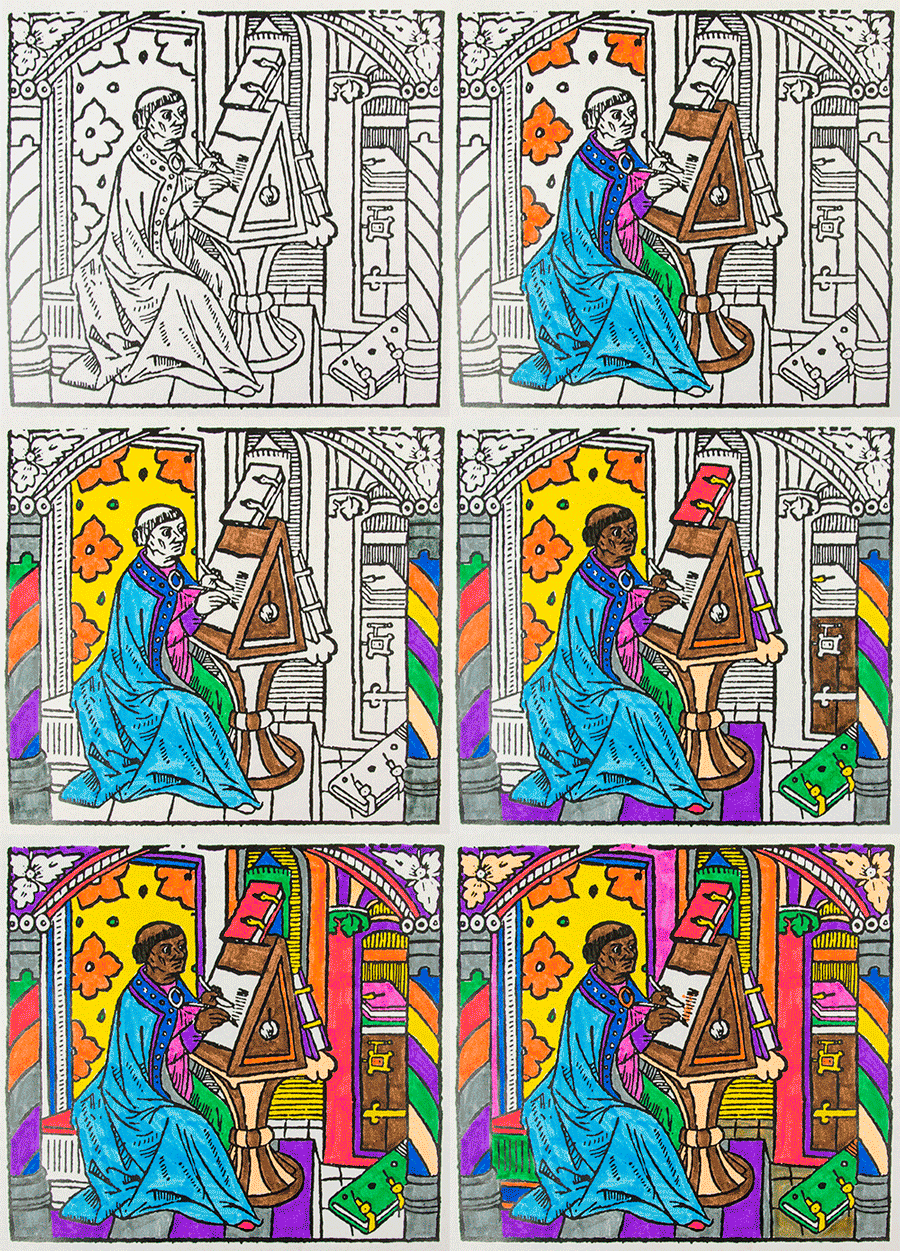
In early February 2016, museums and libraries worldwide took part in #ColorOurCollections–a campaign where they made available free coloring books, letting you color artwork from their collections and then share it on Twitter and other social media platforms, using the hashtag #ColorOurCollections. Below you can find a collection of free coloring books, which you can download and continue to enjoy. If you see any that we’re missing, please let us know in the comments, and we’ll do our best to update the page.
I don’t know about you, but when I’ve thought of chess grandmasters, I’ve often thought of Russians, northern Europeans, the occasional American, the guy on the Chessmaster box — purely by stereotype, in other words. I’ve never thought of anyone from, say, Jamaica, the country of birth of Maurice Ashley, not just a chess grandmaster but a chess commentator, writer, app and puzzle designer, speaker and Fellow at the Media Lab at MIT. Since we’ve only just entered February, known in the United States as Black History Month, why not highlight the Brooklyn-raised (and Brooklyn-park trained) Ashley’s status as, in the words of his official web site, “the first African-American International Grandmaster in the annals of the game”?
Given the impressiveness of his achievements, we might also ask what we can learn from him, whether or not we play chess ourselves. You can learn a bit more about Ashley, the work he does, and the work his students have gone on to do, in The World Is a Chess Board, the five-minute Mashable documentary at the top of the post. Even in that short runtime, he has much to say about how the game (which, he clarifies, “we consider an art form”) not only reflects life, and reflects the personalities of its players, but teaches those players — especially the young ones who may come from less-than-ideal beginnings — all about focus, determination, choice, and consequence. Perhaps the most important lesson? “You’ve got to be ready to lose.”
Ashley expounds upon the value of chess as a tool to hone the mind in “Working Backward to Solve Problems,” a clip from his TED Ed lesson just above. He begins by waving off the misperception, common among non-chess-players, that grandmasters “see ahead” ten, twenty, or thirty moves into the game, then goes on to explain that the sharpest players do it not by looking forward, but by looking backward. He provides a few examples of how using this sort of “retrograde analysis,” combined with pattern recognition, applies to problems in a range of situations from proofreading to biology to law enforcement to card tricks. If you ever have a chance to enter into a bet with this man, don’t.
That’s my advice, anyway. As far as Ashley’s advice goes, if we endorse any particular takeaway from what he says here, we endorse the first step of his chess-learning strategy for absolute beginners, which works equally well as the first step of a learning strategy for absolute beginners in anything: “The best advice I could give a young person today is, go online and watch some videos.” Stick with us, and we’ll keep you in all the videos you need.
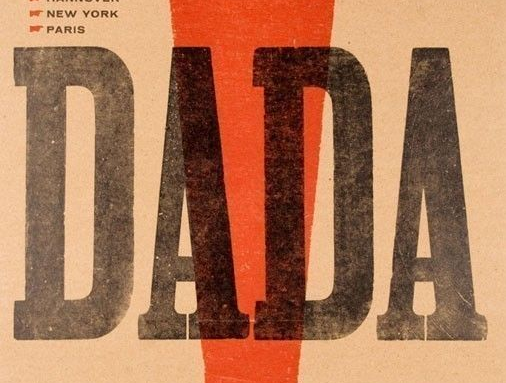
When we think of Dada, we think of an art movement—or anti-art movement—that embraced chance operations, futurism, and experimentation and rejected all of the previous doctrines of the formal art world as moribund and fraudulent. As Dada artist and theorist Tristan Tzara wrote in his 1918 manifesto, the aims of the establishment art world had been “to make money and cajole the nice nice bourgeois.” This new breed would have none of it. In their attack on bourgeois artistic and political values, artists like Tzara, Marcel Duchamp, Man Ray, Hans Richter, Kurt Schwitters and others willfully trespassed formal boundaries, using any means or medium they happened to find of interest in the moment. We have Dada painting, sculpture, typography, and film; Dada poetry, theater, dance, and even Dadaist politics, so well represented by Tzara’s manifesto.
One medium we don’t often associate with Dada, however, is music. And yet, those same artists who waged war on the establishment with readymade urinals and rambling manifestos also did so with musical compositions that were as influential as the painting, film, and poetry.
Dada, and its immediate successor, surrealism, “exerted a pervasive influence on 20th-century music,” writes Matthew Greenbaum at New Music Box, but “the presence of Dada and surrealism is generally unrecognized or forgotten” in discussions of “mid-century avant-garde composers” in New York, like Stefan Wolpe, Morton Feldman, and John Cage. And yet, the repetitive, machine-like qualities we associate with mid-century minimalism come more or less directly from the Dadaists, as does the high concept experimentation.
Dada artists, adds Greenbaum, “paid close attention to advanced and developing technology, and the repetitive beauty of machines was a ubiquitous image.” Works like Marcel Duchamp’s conceptual musical “assemblages cunningly obscure the boundaries of text, music, representation, and notation a half-century before John Cage’s experiments in indeterminacy.” Greenbaum’s essay makes a strong case for this lineage, but the most direct way to trace the steps from Duchamp, et al., to Cage is to listen to the Dada artists’ experiments with music firsthand, and you can hear a selection of them here, excerpted from the 1985 compilation Dada For Now and brought to us courtesy of Ubuweb, who host the full album. Many of these compositions are experiments with language, theatrical performance, and text (the album is shelved in the “Spoken Word” category), though none of the composers would have drawn any lines between word and music.
At the top of the post, hear Antonio Russolo’s 1921 composition “Corale and Serenata,” which sounds like a rather traditional march, but for the ominous roaring that shadows the orchestration and occasionally breaks in to disrupt it entirely, sounding like the rush of tires on a highway or workings of a huge, industrial machine. Next is Hugo Ball’s 1916 composition “Karawane,” in which a trio of vocalists—Trio Exvoco—grows louder and more guttural as they chant in unison, their only accompaniment what sounds like a trolley bell. Further down, in Tristan Tzara and others’ “L’amiral cherche une maison a louer,” also from 1916, that same trio performs some sort of exuberant comedy, with accompanying whiz-bang sound effects that one would hear in radio plays of the succeeding decades. And just above, in Kurt Schwitters’ 1919 “Simultangedicht kaa gee dee,” Trio Exvoco begins a chant that soon devolves into staccato vocalizations and gibberish.
A few of these pieces, like the Russolo at the top, are original recordings. The rest are reconstructions. All of them are strange, as is to be expected, but it’s impossible to hear just how strange—and how tasteless and absurd, perhaps—they would have sounded to audiences one hundred years ago. As Greenbaum argues, what was once revolutionary in Dada became normative as it was integrated into the American art establishment in the later 20th century. But to hear it with fresh ears is to recapture how Dadaist art sounded as radical as it looked.
Blank on Blank returned this week with the latest episode in “The Experimenters,” a miniseries highlighting the icons of STEM. This new animation brings to life a 1983 interview featuring one trailblazer, Gloria Steinem, talking with another, Sally Ride, a physicist who became the first American woman in space, and endured a lot of gender stereotyping along the way. Other episodes in “The Experimenters” series have focused on Buckminster Fuller, Richard Feynman, and Jane Goodall.
Note: Gloria Steinem recently published a new memoir called My Life on the Road. You can download it as a free audiobook if you head over to Audible.com and register for a 30-day free trial. The trial lets you download two audiobooks for free. Then, when the trial is over, you can continue your subscription, or cancel it, and still keep the audio books. The choice is yours. Get more info here.
If you would like to support the mission of Open Culture, consider making a donation to our site. It’s hard to rely 100% on ads, and your contributions will help us continue providing the best free cultural and educational materials to learners everywhere. You can contribute through PayPal, Patreon, and Venmo (@openculture). Thanks!
Stanley Kubrick, the director of such beloved films as Dr. Strangelove, 2001: A Space Odyssey, and The Shining, a man whose name remains, more than fifteen years after his death, almost a byword for the cinematic auteur, got into filmmaking because of a misunderstanding. While working as a photojournalist in his early twenties, he befriended an even younger fellow named Alex Singer, who would go on to become a well-known director of film and television himself, but back then he held a lowly position in the office of The March of Timenewsreels. Singer happened to mention that each newsreel cost the company something like $40,000 to produce, which got Kubrick researching the price of film and camera rentals, then thinking: couldn’t I make a documentary of my own for less?
Indeed; he and Singer put together $1,500 and collaborated on the boxing short-subject Day of the Fight, which played in theaters in 1951. But it didn’t turn a profit, since no distribution company offered the $40,000 he expected — nor had they ever offered The March of Time, whose newsreel business went under before long, enough to cover their own exorbitant costs. So Kubrick didn’t make money on his first film, but he did make a career, going on to do two more documentaries, then the low-budget features Fear and Desire, Killer’s Kiss, and TheKilling. Then came the critically acclaimed Paths of Glory starring Kirk Douglas, which eventually brought about an offer to Kubrick from the iconic actor to take the directorial reins on Spartacus. Next came Lolita, Dr. Strangelove, 2001, and the rest is cinema history.
Of course, Kubrick didn’t know the full extent of the cinema history he would make back in 1966, on the set of 2001, when he sat down with physicist-writer Jeremy Bernstein, doing research for a New Yorker profile. The filmmaker brought out one of his tape recorders (devices he adopted early and used to write scripts) and recorded 77 minutes of his and Bernstein’s conversations, almost a half hour of which Jim Casey uses as the narration of the short documentary Stanley Kubrick: The Lost Tapes. Only recently rediscovered, these recordings feature Kubrick’s first-hand stories of growing up indifferent to all things academic and literary, honing his “general problem-solving method” as a photographer, getting into movies as a result of the aforementioned misconception, and building the career that film fans and scholars scrutinize to this day. It does make you wonder: what glorious work have we missed the chance to create because we ran the numbers a little too rigorously?
Here’s a variation on the parlor game question, “what famous person would you most like to have dinner with, and why?” What two famous people would you like to stick in a room together for ten minutes, and why? I imagine a fair number of readers might think of Hunter S. Thompson and Keith Richards, and the why is pretty obvious. Both impress us, writes Flavorwire, for “having remained alive” for oh so many years “after all those drugs” and crazed exploits. If Thompson was gonzo, Thompson plus Richards equals “double gonzo.”
Well, your wish is granted, in the almost ten-minute video above, in which Thompson and Richards have a mumble-off, discussing such subjects as J. Edgar Hoover’s reincarnation (he would return as “a fart,” Keith says), the Hell’s Angels, The Beatles, drugs, blood transfusions, and that Altamont incident.
In the first minute of tape, we have a rambling solo introduction from Thompson, and he assures us that he and Keith “have a sense of history you don’t.” Having put the viewer in their place (or the cameraman—more on that anon), Thompson promptly segues to the interview, which took place at the Ritz Carleton in Aspen.
Unfortunately, no one has thought to add subtitles to this bizarre exchange, which has circulated on Youtube for some time now. That was where the man who shot the interview, Wayne Ewing, first saw the grainy video of footage he shot for a 1993 ABC series called “In Concert.” The project was fraught from the beginning. The original plan was to have the two meet in New York, then have MTV shoot the interview and Ewing shoot the whole scene with a third camera “while Keith and Hunter emptied the mini-bar and chatted.” Instead, Thompson “came down with a virulent flu,” and the producers had to later lure Richards to Colorado.
So remembers Ewing in a 2009 introduction to notes he took down the day after the March 15th shoot. The journal reveals Thompson’s agitated state of mind in the week leading up to the shoot, as he lashed out at his staff, at Ewing, and at “college sophomores on ski vacations demanding autographs… holding out soiled napkins with pens for a record of their momentary brush with fame.” He’s clearly nervous about Richards’ arrival, obsessing over the state of the local shooting range, and when Ewing suggested “goofy ideas for the video with Keith,” Thompson growled, “it’s not your movie! It’s Keith’s!” Ewing’s notes are both amusing and a little distressing, given the position of Thompson’s beleaguered assistants.
Both of these figures represent the epitome of our tendency to romanticize writer/musician-addicts, but the effects on those around them don’t generally make for great stories (just ask their kids). And in Thompson’s case especially here, we can see the toll his drinking had taken on him at this stage in his life. But Richards is surprisingly lucid, as he continues to oftentimes be, remembering specific dates and details, and the whole interview is an interesting exercise in following the free-associative logic of two addled, but still brilliant and always entertaining personalities. No need to say more. Watch the tape.
For decades now, debate has raged on whether Neil Young is a “guitar god or guitar slob.” His playing is sloppy and untutored, but so completely heartfelt, so totally engrossing, that it’s never mattered to his fans, myself included. I come firmly down on the “guitar god” side of the question, and not only because he’s inspired me when I’ve felt less than accomplished as a musician, but because I generally prefer musicianship that’s kinda messy, improvisational, and idiosyncratic versus classically-trained virtuosity—at least in rock and roll, where making a mess is kind of the point. Young himself couldn’t care less what people think about his rudimentary lead guitar playing. “When you’re able to express yourself and feel good,” he said in a 1992 interview, “then you know why you’re playing. The technical aspect is absolute hogwash as far as I’m concerned.”
The difference between Neil Young and many an unschooled amateur musician is often pretty clear: He’s a great songwriter with such a feel for rhythm, tone, and dynamics that intuitive musicality, one might say, is at the heart of his musicianship. I would say similar things about a player like Dave Grohl, who—as a drummer and a guitarist—has always possessed a confident, intuitive sense of what music is and does. And he’s done it, as he says in the interview above, with barely a lesson to speak of. He’s pretty much entirely self taught on both instruments, and—like Neil Young, Jimi Hendrix, and a whole passel of other famous players—hasn’t memorized much theory or learned hundreds of chords. When he moved from primarily playing drums to guitar, as he demonstrates above, Grohl learned to think of the guitar strings as corresponding to the parts of a drum kit.
He shows how the riff for “Everlong,” for example, came to him by thinking about strum patterns as drum patterns, and it makes perfect sense. He also talks about how his guitar technique corresponds not only to drum technique, but also to whatever means of expression he needs at a particular moment in a song—whatever sounds good, as he puts it. Part of his ethos comes from a punk rock, DIY attitude of wanting to “just figure it out,” and not read the instructions. It’s a musical stance that can work perfectly well in punk, hardcore, or the Foo Fighters’ melodic alt-rock. Or in the shambling folk-rock of Neil Young. Not so much in, say, jazz or most genres of heavy metal or prog rock, forms of music that seem to have arisen expressly around virtuoso playing. If that’s what you’re into, you may need a few lessons. But whatever kind of music you play, as Grohl discusses above, the perfect is still the enemy of the good.
Grohl says he tries “to appreciate an imperfect performance, or an off-the-cuff idea, or a lyric that might seem unfinished or in such a simple form it doesn’t seem sophisticated enough….” To let one’s inner editor step in and try to guide the process is to give up the unforced spontaneity that makes music exciting. “When,” he asks, “did perfection become so important in music?” He doesn’t speculate, but I would say it might correlate to the rise of the digital machines in music production, which allow producers to edit every single note, fix every off-key vocal, move every drum hit into a perfect grid, smooth out every rough, messy performance—or do away with the “imperfect” human element altogether. Such production kills the spirit of recorded rock and roll—and even, I’d argue, makes for dull, uninspired electronic music. And such perfection in playing live music is, Grohl says, “unattainable.”
I’d personally say that the ascendency of slick production over interesting performance has been in large part responsible for the declining popularity of mainstream rock and roll, as its edges are too often planed away and it’s rendered safe and boring. Grohl has his own theory, which he discusses above, relating to a backlash against the post-Nirvana commercialism of the 90s and a nascent elitism among rock bands. His idea is as much a defense of the Foo Fighters’ “populism” as an explanation for why rock songs are rarely hit songs anymore. If you prefer his early work, you can hear him discuss his role in Nirvana, below, and talk about his relationship with Kurt Cobain in this excerpt from the longer interview with Sam Jones of OffCamera.
Jacques Derrida could enjoy a good movie like anyone else. In a 2002 interview with TIME, he declared “I have watched The Godfather 10 times. I must watch it whenever it’s on.” Who couldn’t?
Coppola films were one thing. Apparently sitcoms quite another. In another 2002 interview, a journalist asked the French philosopher whether, in so many words, deconstruction shared anything in common with Seinfeld and the ironic/parodic way it looks at the world. This was taking things too far. “Deconstruction, as I understand it,” said Derrida, “doesn’t produce any sitcom. If sitcom is this, and people who watch this think deconstruction is this, the only advice I have to give them is just stop watching sitcom, do your homework, and read.” The cringeworthy scene originally appeared in the documentary, Derrida, directed by Kirby Dick and Amy Ziering Hoffman.
If you want a guide through James Joyce’s Finnegans Wake—the modernist author’s “wordiest aria,” writes Kirkus Reviews, “and surely the strangest ever sung in any language”—you’d be hard pressed find a better one than novelist Anthony Burgess. Not only did Burgess turn his study of Joyce to very good account in creating his own polyglot language in A Clockwork Orange, but he has “tastefully selected the more readable portions” of Joyce’s final novel in an abridged version, A Shorter Finnegans Wake. No doubt “pedants will object,” writes Kirkus, but if anyone can edit Joyce, it’s Burgess, who has written a thorough introduction to Joyce’s language, a guide to Joyce “for the Ordinary Reader,” and the most comprehensive summary of Joyce’s last novel that I’ve ever encountered—proving that it can be done. Finnegans Wake makes sense!… sort of…
But not, however, as any straightforward story; after all, writes Burgess, “What Joyce is doing… is to make his hero re-live the whole of history in a night’s sleep.” And what Burgess does is show us the complex scaffolding and symbolism of that dream. What he does not do is explain away the music of Joyce’s novel—for it is, after all, not only one long dream, but one long song, the “strangest ever sung.” We can hear Joyce himself sing from the novel’s Anna Livia Plurabelle section in the video at the top (accompanied by subtitles and a very cool animation, I must say). His lilting tenor enthralls, but his is not the only way to sing Finnegans Wake. Indeed, the novel, though very odd and very difficult, is Joyce’s invitation to the world.
And the world has responded (“Here Comes Everybody!”). Last year, Waywords and Meansigns, a Joyce project co-founded by Derek Pyle, brought together artists and musicians from around the globe to sing, read, and set to music the words of Finnegans Wake. Open Culture’s Ted Mills wrote a post describing the “staggering 30+ hours” of Joyce interpretation, and concluded, “Those who read this and feel they’ve missed out on the creativity of tackling Finnegans Wake, don’t worry.” The project was then soliciting contributors for a forthcoming second edition, and now it has arrived. You can hear it in full above, an answer to the question “How many ways are there to read James Joyce’s great and bizarre novel?”
Seventeen different musicians from all around the world, each assigned to render a chapter aurally. The only requirements: the chapter’s words must be audible, unabridged, and more or less in their original order.
We begin with pages 3–29, “The Fall,” read in a rapid deadpan over avant-garde free jazz by Mr. Smolin & Double Naught Spy Car. Next, we have “The Humphriad I: His Agnomen and Reputation,” read by producer David Kahne against a backdrop of minimalist synths, tinkling keyboards, and waves of burbling electronic noise. Perhaps one of my favorite musicians—whose songwriting has always struck me as particularly Joycean—Mike Watt of the Minutemen and fIREHOSE promises to deliver his musical contribution for “Shem the Penman” very soon. In its place is a message from Pyle, who urges you to sign up for the Waywords and Meansigns mailing list for updates. After his message is a brief excerpt from conversation he had with Watt on the bass player’s podcast.
Finnegans Wake, says Watt, “shares with Ulysses the idea of wanting to try and talk about everything.” Joyce, Watt goes on, wanted to “transcend” in his writing the circumstances of his troubled family life, failing eyesight, and financial difficulties; and he was also just “having some fun.” That’s also a good description of the various renderings of Joyce represented in this compilation as these artists try to transcend ordinary ways of reading great literature, and clearly have lots fun in the doing. See the Waywords and Meansigns website for production credits and a complete tracklisting indicating the specific pages, chapters, and sections of each reading.
We're hoping to rely on loyal readers, rather than erratic ads. Please click the Donate button and support Open Culture. You can use Paypal, Venmo, Patreon, even Crypto! We thank you!
Open Culture scours the web for the best educational media. We find the free courses and audio books you need, the language lessons & educational videos you want, and plenty of enlightenment in between.