If you’ve ever lived in a metropolis like London or New York, you know the sometimes-disorienting feeling of experiencing several decades—or centuries—at once in the dizzying accretions of architecture, street, and park designs. Or, at least, if you’ve toured one of those cities with a longtime resident, you’ve heard them loudly complain about how everything has changed. Whether you study urban life as a historian or a city dweller, you know well that change is constant in the story of big cities.
The animations here illustrate the point on a grand scale, with a satellite’s‑eye view of New York, above, from 1609 when the city was first built on Lenape land to its current configuration of five boroughs, dense thickets of high-rises, a massive, complex transportation system, and 8,600,000 residents. It ends with a quote from E.B. White that sums up the geography and vibrancy of Manhattan: “The city is like poetry: it compresses all life, all races, and breeds, into a small island and adds music and the accompaniment of internal engines.”
The New York video “animates the development of this city’s street grid and infrastructure systems,” writes its creator Myles Zhang at Here Grows New York City, “using geo-referenced road network data, historic maps, and geological surveys” to give us “cartographic snapshots” of every 20–30 years. Another project, the London Evolution Animation, uses similar techniques. But, of course, it reaches much further back in time, to over 2000 years ago when the Romans built the first road system across England and the port of Londinium.
Created in 2014, the visualization shows how the city evolved, “from its creation as a Roman city in 43AD to the crowded, chaotic megacity we see today.” As designers Flora Roumpani and Polly Hudson describe at The Guardian, the project drew from several sources, including the Museum of London Archaeology and the University of Cambridge’s engineering department. From these two institutions came “datasets from the Roman and Medieval periods as well as the 17th and early 18th centuries,” and “road network datasets from the late 18th century to today.”
Other archives offered information on the city’s historical buildings and monuments. Captions and a timeline provide a handy guide through its long history, as we watch more and more roads and buildings appear (and disappear after the Great Fire). These videos are useful references for students of urbanism, and they might give some perspective to the New Yorker or Londoner in your life who can’t stop talking about how much the city’s changed. Just imagine what these megacities could look like in another few hundred years.
Hundreds of gothic cathedrals dotted all over Europe have faced decimation and destruction, whether through sackings, revolutions, natural decay, or bombing raids. But since World War II, at least, the most extraordinary examples that remain have seen restoration and constant upkeep, and none of them is as well-known and as culturally and architecturally significant as Paris’s Notre Dame. One cannot imagine the city without it, which made the scenes of Parisians watching the cathedral burn yesterday as poignant as the scenes of the fire itself.
The flames claimed the rib-vaulted roof and the “spine-tingling, soul-lifting spire,” writes The Washington Post, who quote cathedral spokeman Andre Finot’s assessment of the damage as “colossal.” The exterior stone towers, famed stained-glass windows, and iconic arches and flying buttresses withstood the disaster, but the wooden interior, “a marvel,” writes the Post, “that has inspired awe and wonder for the millions who have visited over the centuries—has been gutted.” Nothing of the frame, says Finot, “will remain.”
The sad irony is that the fire reportedly resulted from an accident during the medieval church’s renovation, one of many such projects that have preserved this almost 900-year-old architecture. The French government has vowed to rebuild. Will it matter to posterity that a significant portion of the Cathedral dates from hundreds of years after its original construction? Will Notre Dame lose its ancient aura, and what does this mean for Parisians and the world?
It’s too soon to answer questions like these and too soon to ask them. Now is a time to reckon with cultural and historical loss, and to appreciate the importance of what was saved. At the top of the post, you can watch a virtual time-lapse recreation of the construction of Notre Dame, begun in 1160 and mostly completed one hundred years later, though building continued into the 14th century—a jaw-dropping time scale in an era when towering new buildings go up in a matter of weeks.
After taking more than the human lifespan to complete, until yesterday the cathedral stood the test of time, as the brief France in Focus tour of its eight centuries of art and architectural history above explains. “The most visited monument in the French Capital” may be a relic of a very different, pre-modern, pre-revolutionary, France. But its imposing central setting in the city, and in modern works from Victor Hugo’s Hunchback of Notre Dame to Walt Disney’s Hunchback of Notre Dame—not to mention the tourists, religious pilgrims, scholars, and art students who pour into Paris to see it—mark Notre Dame as a very contemporary landmark. Learn more about how it became so above.
Comic-book stories of a boy reporter and his dog (later accompanied by a foulmouthed sea captain) featuring rocketships and submarines, booby-traps and buried treasure, gangsters and abominable snowmen, smugglers and super-weapons, all told with bright colors, clear lines, and practically no girls in sight: no wonder The Adventures of Tintin at first looks tailor-made for rambunctious youngsters. But now, eighty years after Tintin’s debut in the children’s supplement of a Belgian Catholic newspaper, his ever-growing fan base surely includes more grown-ups than it does kids, and grown-ups prepared to regard his adventures as serious works of modern art at that.
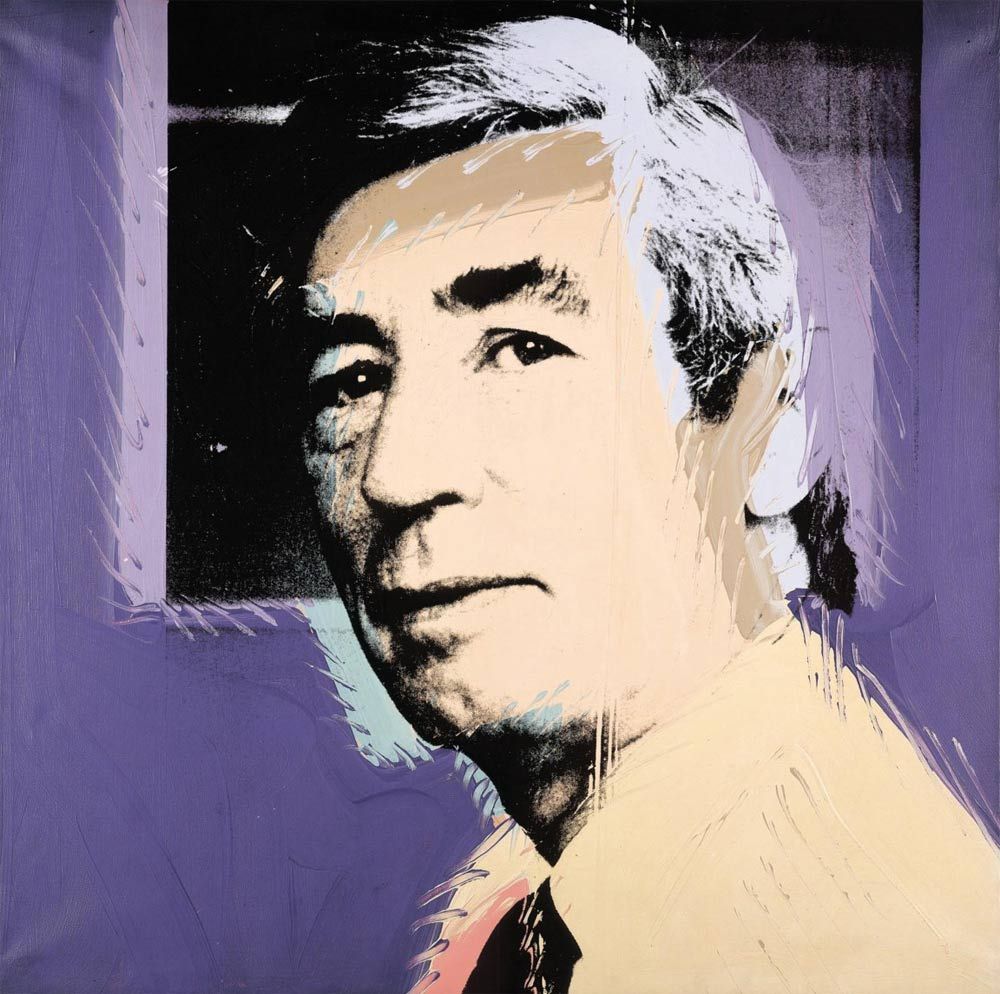
The field of Tintin enthusiasts (in their most dedicated form, “Tintinologists”) includes some of the best-known modern artists in history. Roy Lichtenstein, he of the zoomed-in comic-book aesthetic, once made Tintin his subject, and Tintin’s creator Hergé, who cultivated a love for modern art from the 1960s onward, hung a suite of Lichtenstein prints in his office. As Andy Warhol once put it, “Hergé has influenced my work in the same way as Walt Disney. For me, Hergé was more than a comic strip artist.” And for Hergé, Warhol seems to have been more than a fashionable American painter: in 1979, Hergé commissioned Warhol to paint his portrait, and Warhol came up with a series of four images in a style reminiscent of the one he’d used to paint Jackie Onassis and Marilyn Monroe.
Hergé and Warhol had first met in 1972, when Hergé paid a visit to Warhol’s “Factory” in New York — the kind of setting in which one imagines the straight-laced, sixtysomething Belgian setting foot only with difficulty. But the two had more in common as artists than it may seem: both got their start in commercial illustration, and both soon found their careers defined by particular works that exploded into cultural phenomena. (Warhol may also have felt an affinity with Tintin in their shared recognizability by hairstyle alone.) The Independent’s John Lichfield writes that Hergé, who had by that point learned to paint a few modern abstract pieces of his own, “asked Warhol, modestly, whether the father of Tintin should also consider himself a ‘Pop Artist.’ Warhol, although a great fan of Hergé, simply stared back at him and did not reply.”
Warhol may not have known what to say forty years ago, but in that time Hergé has unquestionably ascended into the institutional pantheon of Western art: Lichfield’s article is a review of a 2006 Hergé retrospective at the Pompidou Centre, and the years since have seen the opening of the Musée Hergé south of Brussels as well as increasingly elaborate exhibitions on Tintin and his creator all around the world. (I myself attended such an exhibition in Seoul, where I live, just last month.) The French artist Jean-Pierre Raynaud expresses a now-common kind of sentiment when he credits Hergé with “a precision of the kind I love in Mondrian” and “the artistic economy that you find in Matisse.” Warhol, who probably wouldn’t have phrased his appreciation in quite that way, makes a more tonally characteristic response in the clip above when Hergé tells him about Tintin’s latter-day switch from his signature plus fours to jeans: “Oh, great!”
Based in Seoul, Colin Marshall writes and broadcasts on cities, language, and culture. His projects include the book The Stateless City: a Walk through 21st-Century Los Angeles and the video series The City in Cinema. Follow him on Twitter at @colinmarshall or on Facebook.
Who are your favorite filmmakers? Responses to that question including the names Stanley Kubrick and Andrei Tarkovsky have been heard so often, for so long, that they’ve passed into the realm of cinephile cliché. How, then, to rediscover what about their films makes Kubrick and Tarkovsky synonymous with the very concept of the brilliant auteur? In “Kubrick/Tarkovsky” above, cinematic video essayist Vugar Efendi sheds light on the essence of these two “cinematic giants” by putting their work side by side: Eyes Wide Shut next to Ivan’s Childhood, A Clockwork Orange next to Stalker, Paths of Glory next to Andrei Rublev. (You may remember a similar comparison, previously featured here on Open Culture, between Kubrick and Wes Anderson.)
Fortunately, “Kubrick/Tarkovsky” sheds only four and a half minutes of light, prolonged exposure to so many masterworks at once potentially being too much for many cinephiles to bear. For directors with such strong visions of their own, it might also come as a surprise to see such strong resonances between their images, such as Jack’s walk into the Overlook Hotel’s suddenly populated (and returned to the Jazz Age) ballroom from The Shining alongside Domenico’s candle-bearing walk across the empty pool with a candle from Nostalghia and 2001: A Space Odyssey’s journey through the “star gate” alongside Solaris’ drive through Tokyo-as-humanity’s-urban-future.
Kubrick appreciated Solaris enough for it to make a list of 93 films he really liked, but Tarkovsky didn’t feel the same way about 2001. “A detailed ‘examination’ of the technological processes of the future transforms the emotional foundation of a film, as a work of art, into a lifeless schema with only pretensions to truth,” he said in an interview before he made Solaris, describing what he would get right that Kubrick had got wrong. From just the brief clips of those pictures included in “Kubrick/Tarkovsky,” even viewers who have never seen either director’s films can tell how differently they realized their visions of humanity’s space-voyaging future. Throughout the rest of the essay as well, each emphasis on a visual similarity comes with an emphasis on deeper difference; as one of the video’s commenters astutely puts it, “Tarkovsky is dreams, Kubrick is nightmares.”
Based in Seoul, Colin Marshall writes and broadcasts on cities, language, and culture. His projects include the book The Stateless City: a Walk through 21st-Century Los Angeles and the video series The City in Cinema. Follow him on Twitter at @colinmarshall or on Facebook.
When I look at maps from centuries ago, I wonder how they could have been of any use. Not only were they filled with mythological monsters and mythological places, but the perspectives mostly served an aesthetic design rather than a practical one. Of course, accuracy was hard to come by without the many mapping tools we take for granted—some of them just in their infancy during the Renaissance, and many more that would have seemed like outlandish magic to nearly everyone in 15th century Europe.
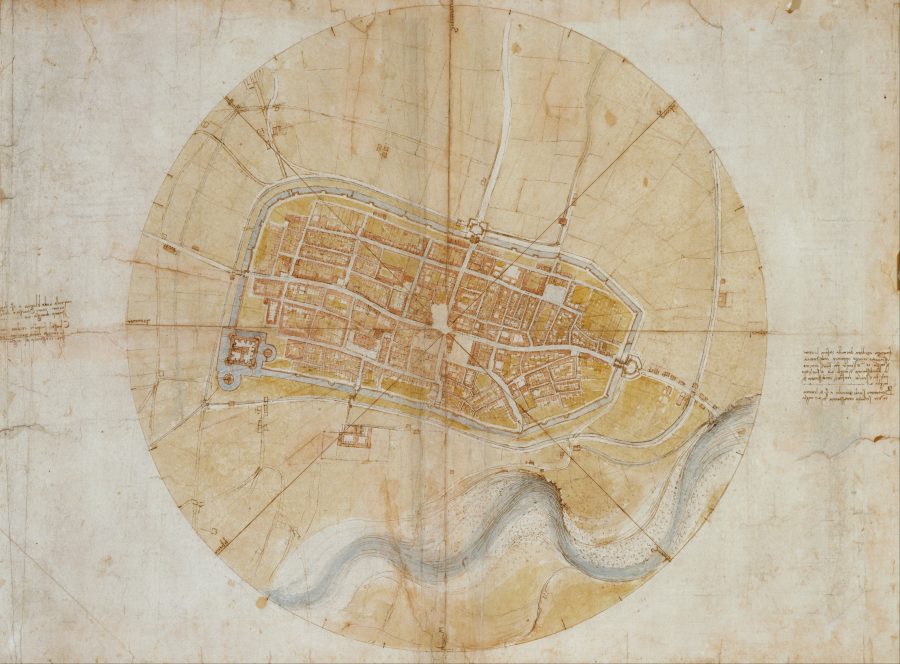
Everyone, it sometimes seems, but Leonardo da Vinci, who anticipated and sometimes steered the direction of futuristic public works technology. None of his flying machines worked, and he could hardly have seen images taken from outer space. But he clearly saw the problem with contemporary maps. The necessity of fixing them led to a 1502 aerial image of Imola, Italy, drawn almost as accurately as if he had been peering at the city through a Google satellite camera.
“Leonardo,” says the narrator of the Vox video above, “needed to show Imola as an ichnographic map,” a term coined by ancient Roman engineer Vitruvius to describe ground plan-style cartography. No streets or buildings are obscured, as they are in the maps drawn from the oblique perspective of a hilltop or mountain. Leonardo undertook the project while employed as Cesare Borgia’s military engineer. “He was charged with helping Borgia become more aware of the town’s layout.” For this visual aid turned cartographic marvel, he drew from the same source that inspired the elegant Vitruvian Man.
While the visionary Roman builder could imagine a god’s eye view, it took someone with Leonardo’s extraordinary perspicacity and skill to actually draw one, in a startlingly accurate way. Did he do it with grit and moxie? Did he astral project thousands of miles above the city? Was he in contact with ancient aliens? No, he used geometry, and a compass, the same means and instruments that allowed ancient scientists like Eratosthenes to calculate the circumference of the earth, to within 200 miles, over 2000 years ago.
Leonardo probably also used an instrument called a bussola, a device that measures degrees inside a circle—like the one that surrounds his city map. Painstakingly recording the angles of each turn and intersection in the town and measuring their distance from each other would have given him the data he needed to recreate the city as seen from above, using the bussola to maintain proper scale. Other methods would have been involved, all of them commonly available to surveyors, builders, city planners, and cartographers at the time. Leonardo trusted the math, even though he could never verify it, but like the best mapmakers, he also wanted to make something beautiful.
It may be difficult for historians to determine which inaccuracies are due to miscalculation and which to deliberate distortion for some artistic purpose. But license or mistakes aside, Leonardo’s map remains an astonishing feat, marking a seismic shift from the geography of “myth and perception” to one of “information, drawn plainly.” There’s no telling if the archetypal Renaissance man would have liked where this path led, but if he lived in the 21st century, he’d already have his mind trained on ideas that anticipate technology hundreds of years in our future.
According to Le Monde, the fire that ravaged Notre Dame is now mercifully under control. Two thirds of the roof–and that beautiful spire–have been badly damaged. The same likely goes for some precious stained glass. But the two towers still stand tall. And the structure of the cathedral has been “saved and preserved overall,” reports the commander of Paris’ firefighting brigade.
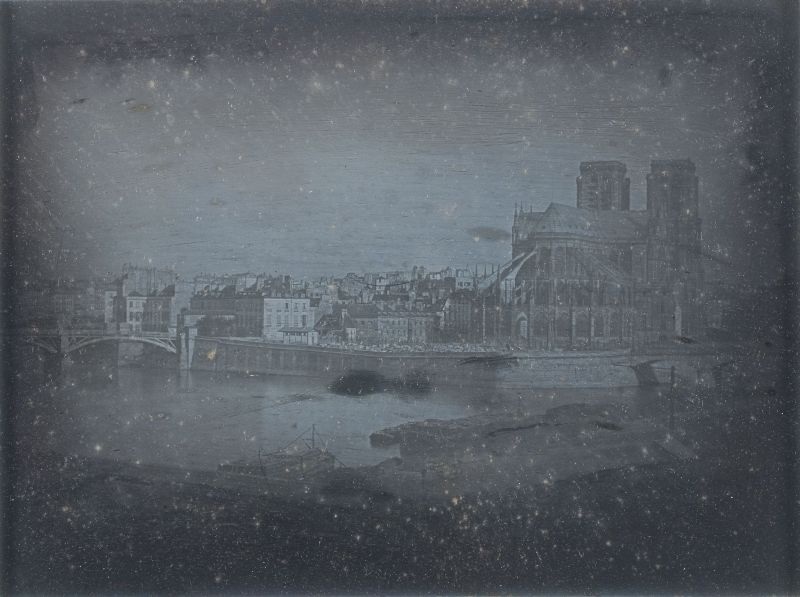
The photo above, taken by Louis Daguerre in 1838, helps pay visual tribute to Emmanuel Macron’s words tonight, “This history is ours… I say to you very solemnly, this cathedral, we will rebuild it.” Godspeed.
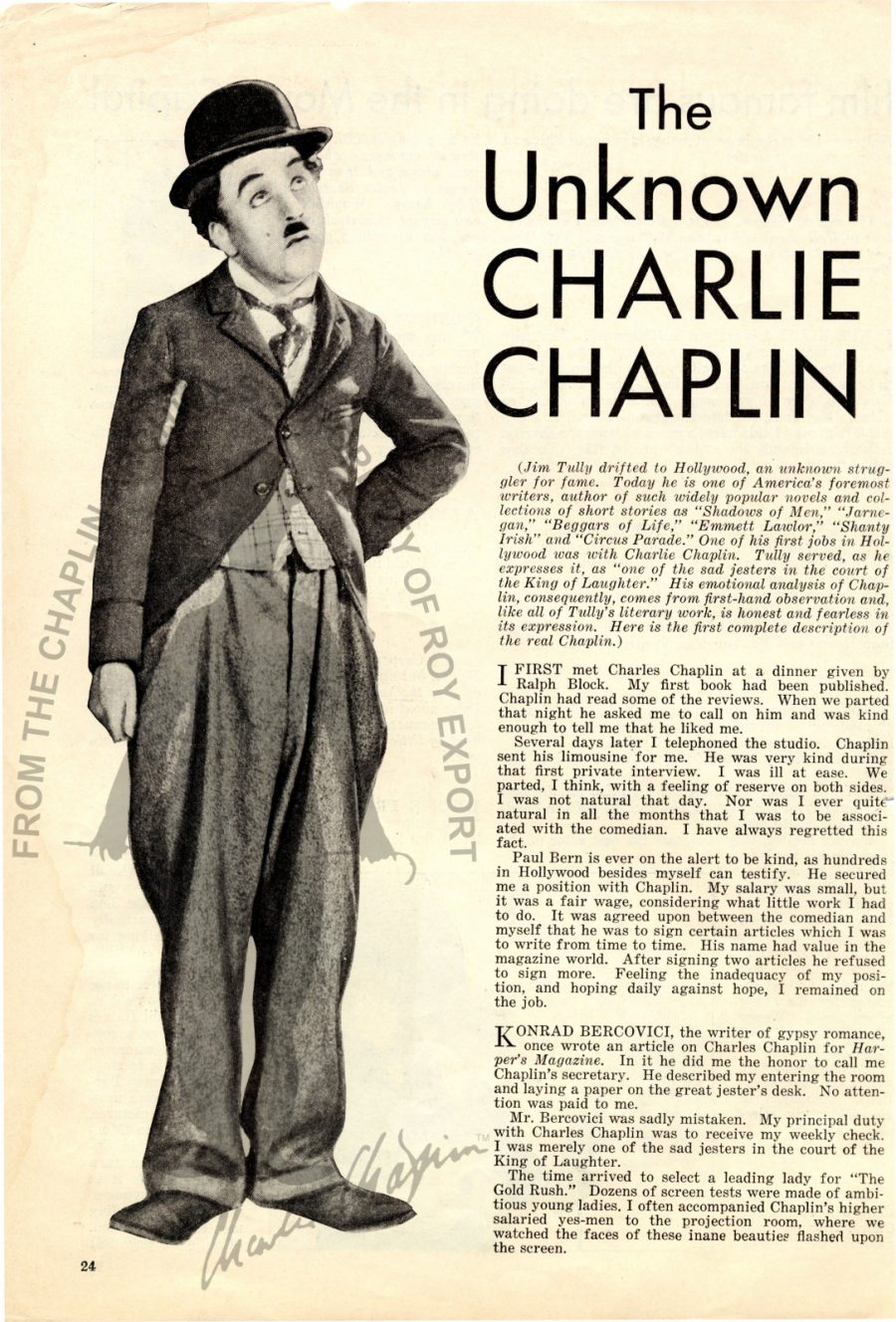
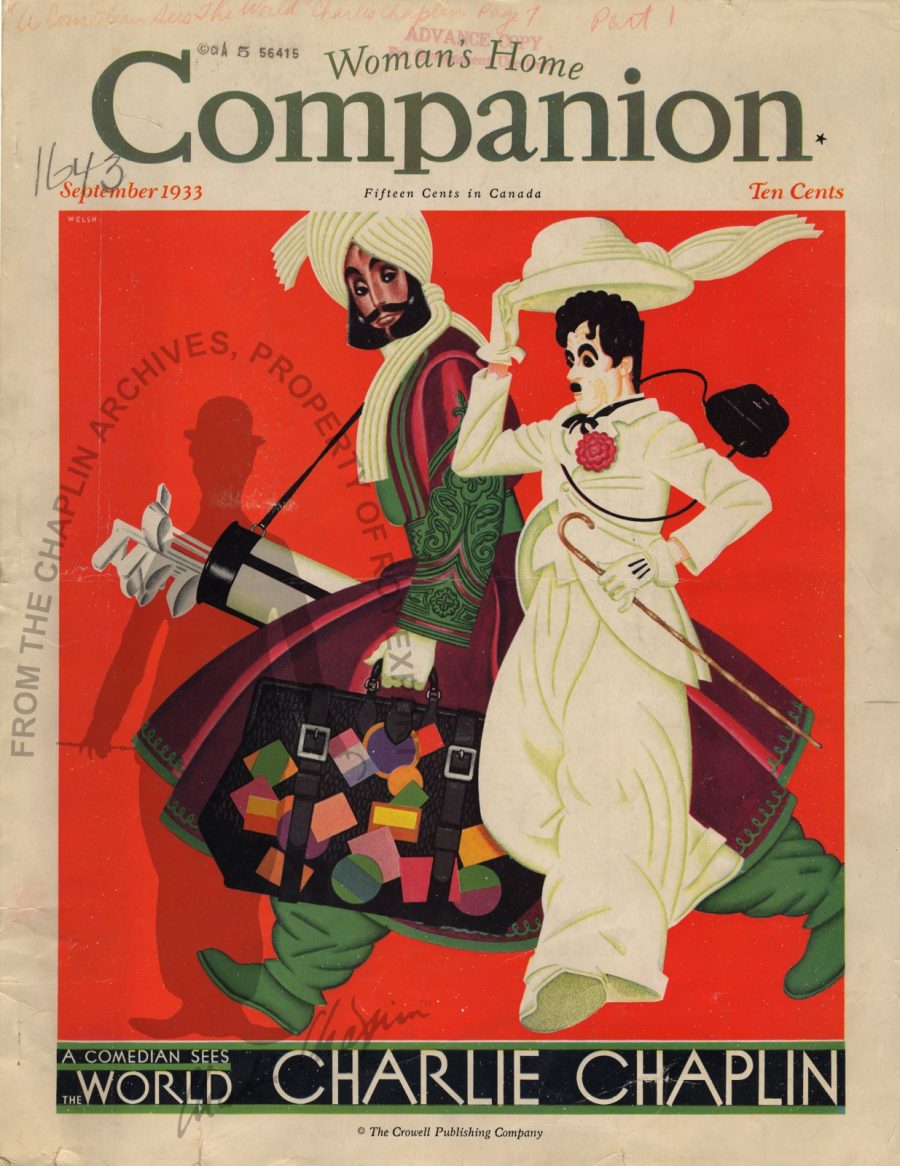
This online archive includes everything from “the first handwritten notes of a story line to the shooting of the film itself, stage by stage documentary evidence of the development of a film, or a project that never even became a film,” as well as materials not directly related to the movies: “poems, lyrics, drawings, programmes, contracts, letters, magazines, travel souvenirs, comic books, cartoon strips, praise and criticism.”
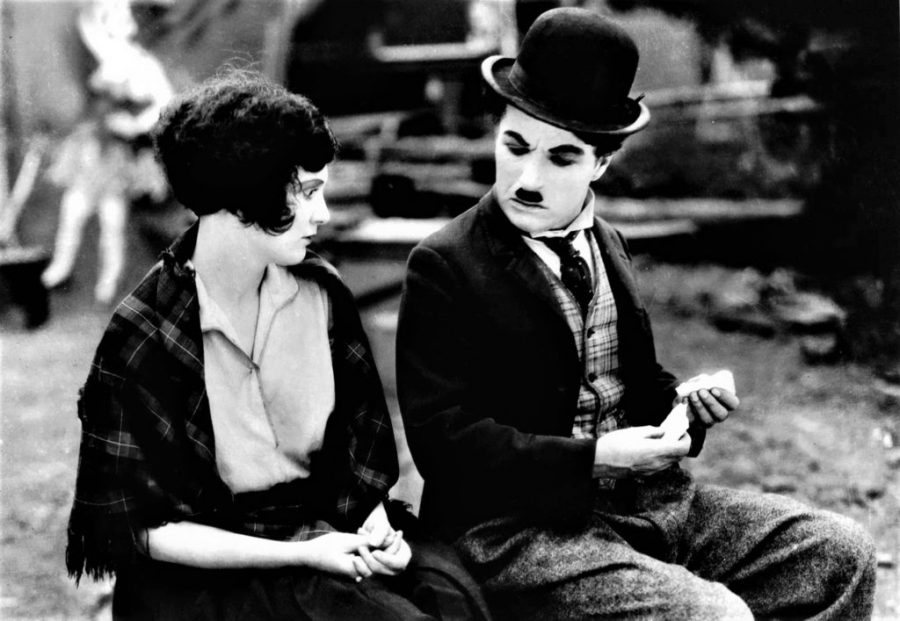
The vast majority of these items have never before been made publicly available, and all of them enrich our picture of the maker of classic comedies like Modern Times, City Lights, and The Great Dictator as well as the highly eventful periods of history through which he lived.‘
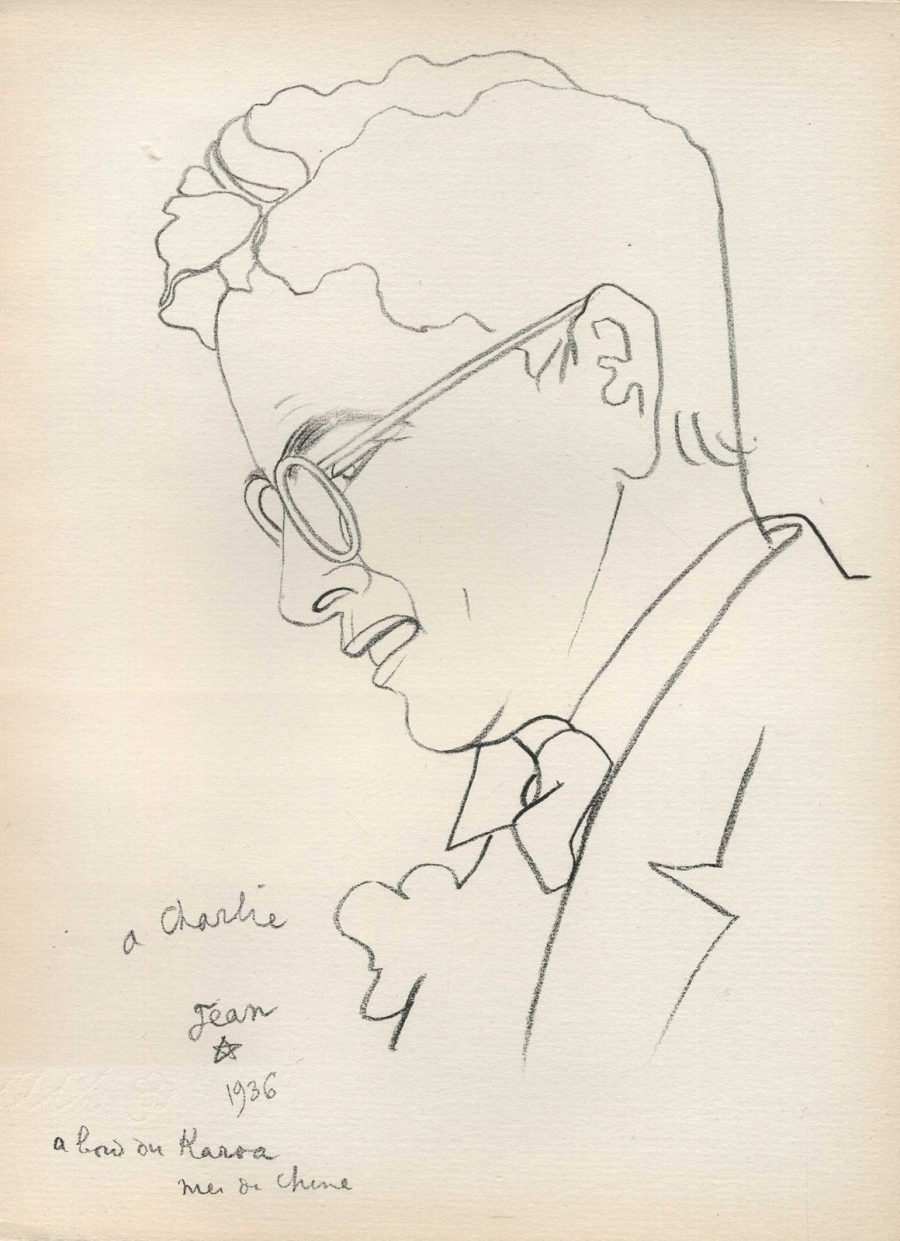
You can explore the Charlie Chaplin Archive by plunging straight into its collection of more than 4,000 images and nearly 25,000 documents, or you can enter through its curated topic sections: one on Chaplin’s early career offers a glimpse into the humble launch of a cultural phenomenon that would go on to transcend cultures and eras; another on music shows Chaplin, who grew up in a musical family with musical ambitions of his own, conducting orchestras; and a section on travel presents clippings and photos related to his journeys to places like Bali and Japan, from which he returned on the same boat as Jean Cocteau. “Cocteau could not speak a word of English,” Chaplin wrote in his autobiography of the voyage home. “Neither could I speak French, but his secretary spoke a little English, though not too well, and he acted as interpreter for us.”
“That night we sat up into the small hours, discussing our theories of life and art,” Chaplin continues, quoting Cocteau’s secretary thus: “Mr Cocteau… he say… you are a poet… of zer sunshine… and he is a poet of zer night.” These words, in turn, appear quoted (alongside the sketch of Chaplin by Cocteau above) on the Charlie Chaplin Archive’s “Chaplin and Jean Cocteau” page, one of its continuously updated stories. Others collect material related to Chaplin’s luxury-item purchases, Chaplin as director, and Chaplin’s final speech delivered as the title character of The Great Dictator, which a recent announcement about the archive calls “one of the most licensed elements of Chaplin’s work in the 21st century” — a time whose surreality Cocteau might well recognize, and whose absurdity Chaplin certainly would.
Based in Seoul, Colin Marshall writes and broadcasts on cities, language, and culture. His projects include the book The Stateless City: a Walk through 21st-Century Los Angeles and the video series The City in Cinema. Follow him on Twitter at @colinmarshall or on Facebook.
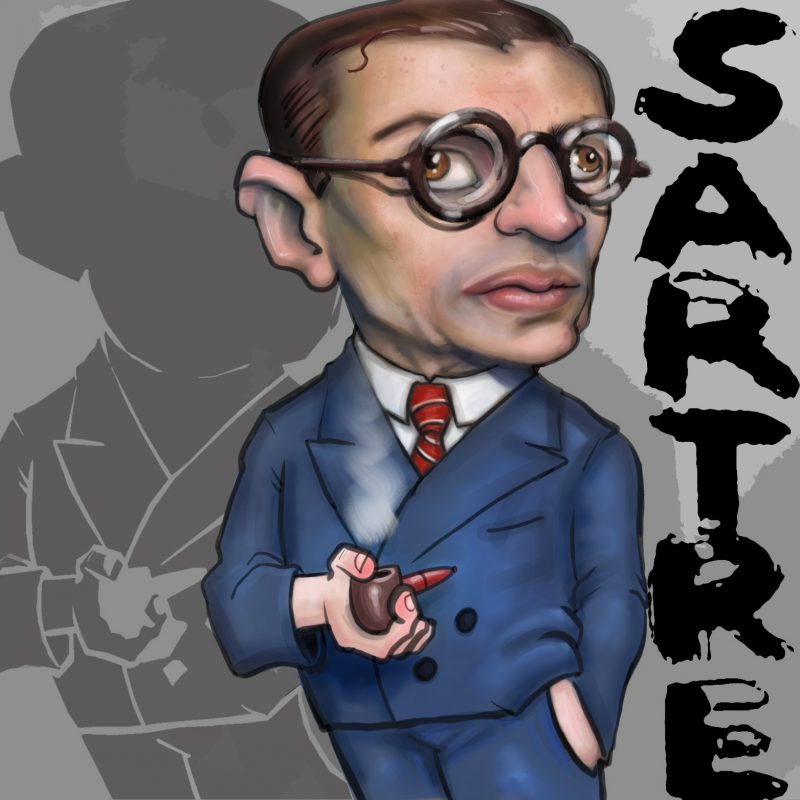
Jean-Paul Sartre produced plays and novels like The Respectful Prostitute (1946), which explored racism in the American South. These works were criticized as too polemical to count as good literature. What might in the present day culminate only in a Twitter fight led Sartre to publish a whole book defending his practices, called What Is Literature?(1946).
In the clip below, Mark Linsenmayer from the Partially Examined Life Philosophy Podcast explains Sartre’s view, outlining both how strange it is and why you might want to take it seriously anyway. In short, Sartre sees the act of writing fiction as an ethical appeal to his reader’s freedom. The reader is challenged to hear the truths the work expresses, to understand and take action on them. More directly, the reader is challenged to read the work, which involves a demand on the reader’s attention and imagination to “flesh out” the situations the book describes. The reader takes an active role in completing the work, and this role can be abandoned freely at any time. If a writer creates an escapist fantasy, the reader is invited to escape. If the writer produces a piece of lying propaganda, then the reader is being invited to collaborate in that fundamentally corrupt work.
So if writing is always an ethical, political act, then Sartre shouldn’t be blamed for producing overtly political work. In fact, writers who deny that their work is political are dodging their own responsibility for playing haphazardly with this potentially dangerous tool. Their work will produce political effects whether they like it or not.
The Partially Examined Life episode 212 (Sartre on Literature) is a two-part treatment of the first two chapters of this text, weighing Sartre’s words to try to understand them and determine whether they ultimately make sense. Listen to the full episode below or go subscribe to The Partially Examined Life Philosophy Podcast at partiallyexaminedlife.com.
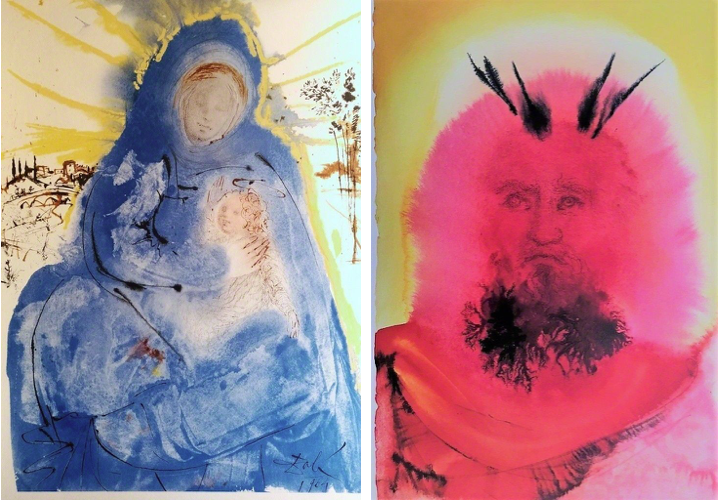
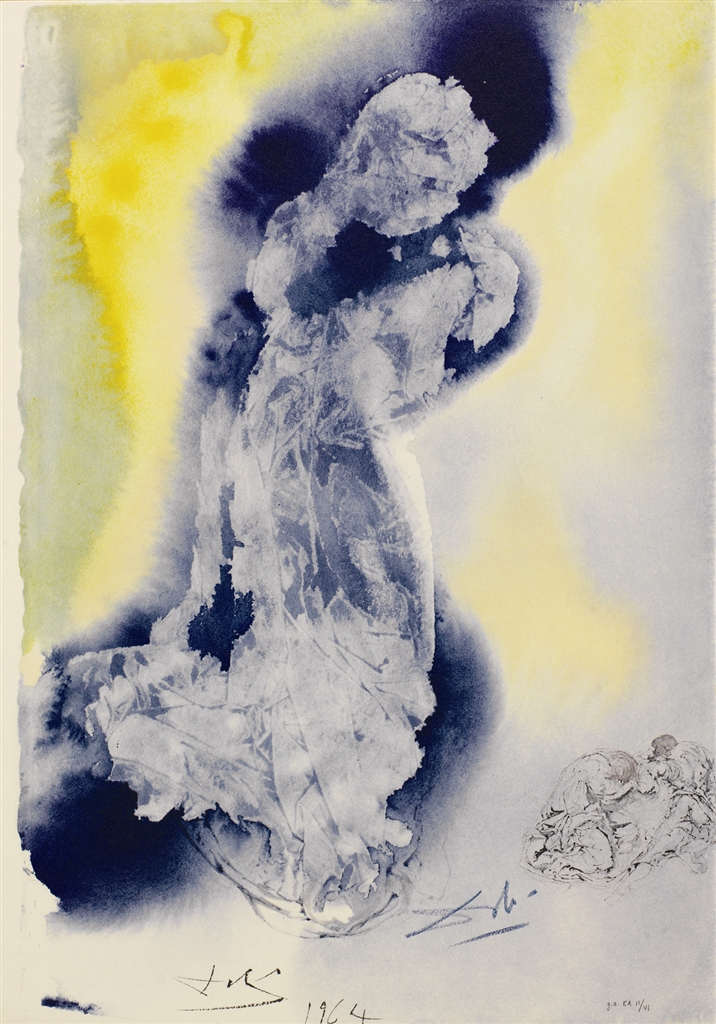
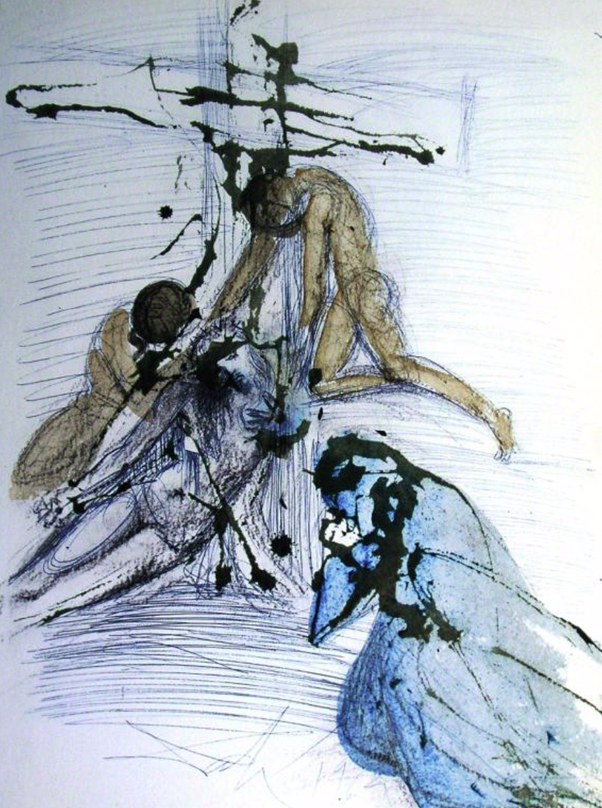
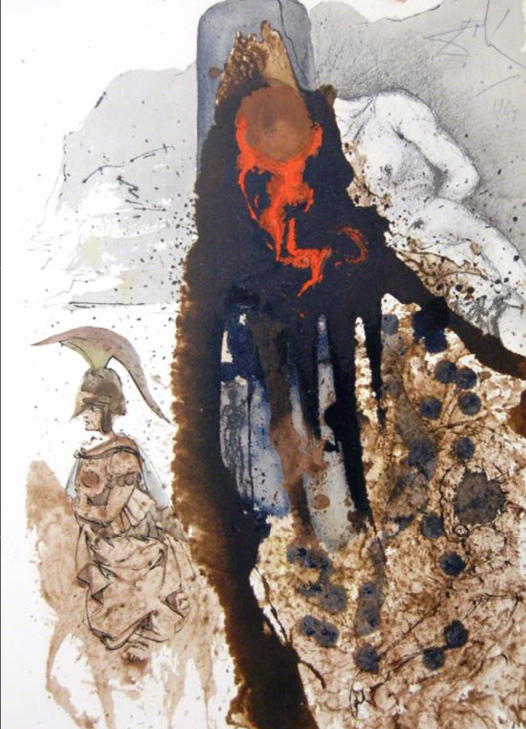
Some might have taken offense when Salvador Dalí began illustrating the Bible in 1963. The notorious Surrealist “went to jail for his artworks as a young man,” writes Jackson Arn writes at Artsy, but he “lived long enough to lend his legendary panache to Hollywood movies and Alka-Seltzer commercials.” Along the way, he gained a reputation for having a rather vicious character. George Orwell, reviewing Dalí’s autobiography, described him as “disgusting” for his fanatical harassment and abuse of other people. But, Orwell went on, “Dalí is a draughtsman of very exceptional gifts. He is also, to judge by the minuteness and the sureness of his drawings, a very hard worker…. He has fifty times more talent than most of the people who would denounce his morals and jeer at his paintings.”
Dalí hardly needed the defense of his morals or his paintings, nor might he have wanted it. That was the wrong sort of attention. But maybe he himself was surprised by a later career turn as an illustrator of respectable “Great Books”—including not only Judeo-Christian scripture, but also Don Quixote, Macbeth, The Divine Comedy, Alice in Wonderland, and much more.
The artist who seemed to have nothing but contempt for traditional canons approached these projects with the skill and professionalism Orwell couldn’t help but admire, as well as subtleties and understated tonal shifts we might not have associated with his work.
These are not his first religious subjects; he had always referenced big scenes and broad themes in Catholicism. But the illustrations represent a deeper engagement with the primary text—105 paintings in all, each based on select passages from the Latin Vulgate Bible. Published by Rizzoli in 1969, Biblia Sacra (The Sacred Bible) was commissioned by Dalí’s friend, Dr. Guiseppe Albareto, a devout Catholic whose intention “for this massive undertaking,” writes the Lockport St. Gallery, “was to bring the artist back to his religious roots.” Whatever effect that might have had, Dalí approaches the project with the same diligence evident in his other illustrations—he takes artistic risks while making a sincere effort to stay close to the spirit of the text. If he did this work for the money, he earned it.
Dalí’s illustrations “aren’t some kind of subversive prank,” writes Arn. “The luminous watercolors he produced for the Bible are, in the main, earnest renderings of their sacred subjects.” Perhaps the book illustrations have attracted so little attention from art historians because they lack the sensationalism and outrage Dalí aggressively cultivated in his public persona. Maybe these paintings, as German gallerist Holger Kempkens puts it, show “something of a spiritual side of Dalí.” Or maybe they just add to a bigger picture that shows what he could do with narratives not of his own making, but which he clearly respected and found challenging and stimulating. These qualities apply to many parts of the Bible as well as to great literary epics, including those based on the Bible, like John Milton’s Paradise Lost, which Dalí illustrated in a series of surprisingly spare, elegant etchings.
Some two decades before The Jetsons brought their animated vision of the future to the small screen, the cinemagazine Pathetone Weekly ran a featurette in which the “most famous” fashion designers in the U.S. predicted what the well-dressed woman would find herself wearing in the year 2000.
Cantilevered heels, multifunctional garments to go from office to evening wear in mere seconds, tech integrations, dresses made of aluminum and transparent net…
As one commenter on YouTube astutely observed, “Madonna wore most of these before we even reached 2000.”
As is to be expected, these futuristic fashions exhibited the flattering bias cut that we in 2019 associate with the period in which they were envisioned.
Gisele Bündchen, the top supermodel of 2000, could certainly hold her own against her glamorous 1939 counterparts, but the same cannot be said of the trucker hats, low slung jeans, velour track suits and denim everything that truly defined the look of the millennium.
The biggest loser of the year AD 2000, as envisioned by those famous designers of 1939, is the American male, whose drapey harem pants, Prince Valiant ‘do, and ill advised facial hair make George Jetson look like like Clark Gable.
The poor guy does deserve some cool points for wearing a phone, though. (It’s like they had a crystal ball!)
And his radio may well prefigure the iPod, which made its debut in 2001.
Because pockets were presumed to be going the way of the dodo (and skirts for women), a utility belt holds his keys, change, and “candy for cuties.”
This last item is surely an unnecessary burden, given the narrative emphasis on the female clothing designs’ man-catching prowess.
(Imagine the 21st-century feminine disappointment when their electric headlights revealed what they’d reeled in.)
Perhaps the most useful innovation to come from this exercise is the “electric belt to adapt the body to climactic changes.”
Don’t tell 1939, but I think we’re gonna need a bigger belt.
As to the identities of the famous designers and the delightfully chatty (“Ooh, swish!”narrator), they seem to have been lost to the ages. Readers, if you have any intel, please advise.
What triggered the worst impulses of the Internet last week?
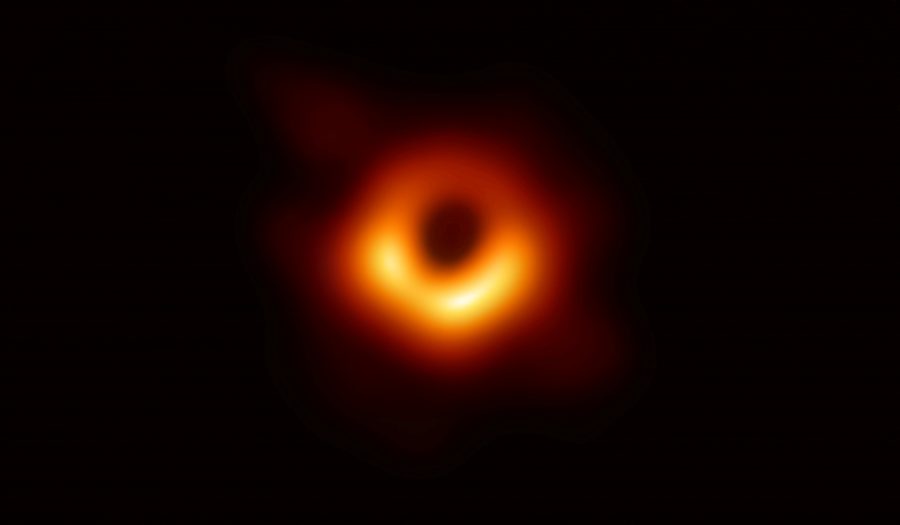
The world’s first photo of a black hole, which proved the presence of troll life here on earth, and confirms that female scientists, through no fault of their own, have a much longer way to go, baby.
If you want a taste, sort the comments on the two year old TED Talk, above, so they’re ordered “newest first.”
Katie Bouman, soon-to-be assistant professor of computing and mathematical sciences at the California Institute of Technology, was a PhD candidate at MIT two years ago, when she taped the talk, but she could’ve passed for a nervous high schooler competing in the National Science Bowl finals, in clothes borrowed from Aunt Judy, who works at the bank.
The focus of her studies were the ways in which emerging computational methods could help expand the boundaries of interdisciplinary imaging.
Prior to last week, I’m not sure how well I could have parsed the focus of her work had she not taken the time to help less STEM-inclined viewers such as myself wrap our heads around her highly technical, then-wholly-theoretical subject.
What I know about black holes could still fit in a thimble, and in truth, my excitement about one being photographed for the first time pales in comparison to my excitement about Game of Thrones returning to the airwaves.
I’ve always been very one-sided about science and when I was younger I concentrated almost all my effort on it. I didn’t have time to learn and I didn’t have much patience with what’s called the humanities, even though in the university there were humanities that you had to take. I tried my best to avoid somehow learning anything and working at it. It was only afterwards, when I got older, that I got more relaxed, that I’ve spread out a little bit. I’ve learned to draw and I read a little bit, but I’m really still a very one-sided person and I don’t know a great deal. I have a limited intelligence and I use it in a particular direction.
I’m pretty sure my lack of passion for science is not tied to my gender. Some of my best friends are guys who feel the same. (Some of them don’t like team sports either.)
But I couldn’t help but experience a wee thrill that this young woman, a science nerd who admittedly could’ve used a few theater nerd tips regarding relaxation and public speaking, realized her dream—an honest to goodness photo of a black hole just like the one she talked about in her TED Talk, “How to take a picture of a black hole.”
Bouman and the 200+ colleagues she acknowledges and thanks at every opportunity, achieved their goal, not with an earth-sized camera but rather a network of linked telescopes, much as she had described two years earlier, when she invoked disco balls, Mick Jagger, oranges, selfies, and a jigsaw puzzle in an effort to help people like me understand.
Look at that sucker (or, more accurately, its shadow!) That thing’s 500 million trillion kilometers from Earth!
I’ll bet a lot of elementary science teachers, be they male, female, or non-binary, are going to make science fun by having their students draw pictures of the picture of the black hole.
If we could go back (or forward) in time, I can almost guarantee that mine would be among the best because while I didn’t “get” science (or gym), I was a total art star with the crayons.
Then, crafty as Lord Petyr Baelish when presentation time rolled around, I would partner with a girl like Katie Bouman, who could explain the science with winning vigor. She genuinely seems to embrace the idea that it “takes a village,” and that one’s fellow villagers should be credited whenever possible.
(How did I draw the black hole, you ask? Honestly, it’s not that much harder than drawing a doughnut. Now back to Katie!)
Alas, her professional warmth failed to register with legions of Internet trolls who began sliming her shortly after a colleague at MIT shared a beaming snapshot of her, taken, presumably, with a regular old phone as the black hole made its debut. That pic cemented her accidental status as the face of this project.
Note to the trolls—it wasn’t a dang selfie.
“I’m so glad that everyone is as excited as we are and people are finding our story inspirational,’’ Bouman toldThe New York Times. “However, the spotlight should be on the team and no individual person. Focusing on one person like this helps no one, including me.”
Although Bouman was a junior team member, she and other grad students made major contributions. She directed the verification of images, the selection of imaging parameters, and authored an imaging algorithm that researchers used in the creation of three scripted code pipelines from which the instantly-famous picture was cobbled together.
One of the insights Katie brought to our imaging group is that there are natural images. Just think about the photos you take with your camera phone—they have certain properties.… If you know what one pixel is, you have a good guess as to what the pixel is next to it.
Part of the reason that some posters found Bouman immediately suspicious had to do with her gender. Famously, a number of prominent men like disgraced former CERN physicist Alessandro Strumia have argued that women aren’t being discriminated against in science — they simply don’t like it, or don’t have the aptitude for it. That argument fortifies a notion that women don’t belong in science, or can’t really be doing the work. So women like Bouman must be fakes, this warped line of thinking goes…
Even I, whose 7th grade science teacher tempered a bad grade on my report card by saying my interest in theater would likely serve me much better than anything I might eek from her class, know that just as many girls and women excel at science, technology, engineering, and math as excel in the arts. (Sometimes they excel at both!)
(And power to every little boy with his sights set on nursing, teaching, or ballet!)
(How many black holes have the haters photographed recently?)
Griggs continues:
Saying that she was part of a larger team doesn’t diminish her work, or minimize her involvement in what is already a history-making project. Highlighting the achievements of a brilliant, enthusiastic scientist does not diminish the contributions of the other 214 people who worked on the project, either. But what it is doing is showing a different model for a scientist than the one most of us grew up with. That might mean a lot to some kids — maybe kids who look like her — making them excited about studying the wonders of the Universe.
We're hoping to rely on loyal readers, rather than erratic ads. Please click the Donate button and support Open Culture. You can use Paypal, Venmo, Patreon, even Crypto! We thank you!
Open Culture scours the web for the best educational media. We find the free courses and audio books you need, the language lessons & educational videos you want, and plenty of enlightenment in between.