The iPad eBook Reader: Some First Reactions

Yes­ter­day morn­ing, I head­ed to the Palo Alto Apple Store, spent an hour wait­ing in line, then final­ly gained entrance to the store. And who entered along­side me? Steve Jobs! An aus­pi­cious begin­ning. I left with a 32 gig iPad, took it home, and start­ed play­ing par­tic­u­lar­ly with the eBook read­er. Here are my very ear­ly impres­sions:

15 months ago, I bought a Kin­dle and returned it. I just could­n’t read with it at night (a non-starter for me), and fig­ured that Apple would even­tu­al­ly get it right. Well, they large­ly have. The iPad ini­tial­ly feels a lit­tle heavy. But, it’s actu­al­ly no heav­ier than your aver­age hard­back book. Plus it’s fair­ly easy to hold. Score one for the iPad.

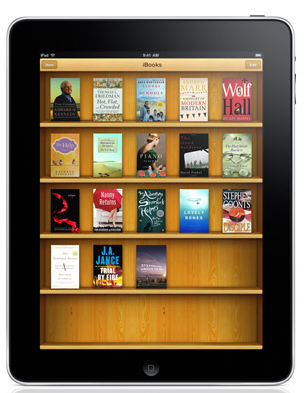
Then, when you fire up the eBook read­er, you instant­ly like what you see. The fonts are crisp, and the images are in col­or, which means that you can read chil­dren’s books, comics and oth­er graph­ic inten­sive texts. Plus, you can change the size and kind of the font. You can adjust the bright­ness of the screen. And, in some cas­es, you can even alter the back­ground col­or of the screen. (Most of this you can’t do with the Kin­dle.) All of this con­tributes to a read­er-friend­ly screen that’s easy on the eyes. And, yes, I can read with this device at night. (Read­ers make oth­er good obser­va­tions in the com­ments below.)

How about buy­ing books for the iPad? Well, it’s pret­ty easy. Both Apple and Ama­zon sell books for the device, with prices gen­er­al­ly rang­ing between $9.99 and $12.99. Rather notably, they also offer access to a siz­able col­lec­tion of free books in the pub­lic domain. (You can get more free­bies here, too.) Over­all, Ama­zon has a much larg­er inven­to­ry, and their books tend to be cheap­er. But oth­er­wise these are pret­ty sim­i­lar ser­vices. And, because Apple now has a far supe­ri­or device, you have to won­der whether this is the begin­ning of a big shift in the book mar­ket. In five years, Ama­zon might not be quite the behe­moth it is today — some­thing that’s prob­a­bly let­ting Steve Jobs sleep eas­i­er than Jeff Bezos at night.

A final point worth men­tion­ing here: Nei­ther com­pa­ny will let you have true own­er­ship over the books you buy. Both ven­dors lock down their books, dic­tate the oper­at­ing envi­ron­ments in which you can read them, and con­trol the user inter­faces that shape the read­ing expe­ri­ence. (PC World has more on that here.) You don’t have much ulti­mate con­trol over the under­ly­ing file. So the upshot is that you had bet­ter like the iPad (or Kin­dle) read­ing expe­ri­ence before decid­ing to amass a large and cost­ly library.

Now for a few ran­dom obser­va­tions:

1) The  video gen­er­al­ly looks great (unless, of course, it’s pro­duced in Flash). I was real­ly impressed with the qual­i­ty of YouTube videos, and Net­flix movies (free app here) stream over the iPad rather bril­liant­ly.

2) On the down­side, I found typ­ing on the iPad to be rather dif­fi­cult — even more so than typ­ing on an iPhone. The device is large enough that it’s hard to stretch your fin­gers to reach var­i­ous keys. Maybe I will get a hang of it. But, for now, it’s unwieldy.

3) The New York Times and Wall Street Jour­nal have devel­oped new apps for the iPad, and they deliv­er a pleas­ant read­ing expe­ri­ence, to be sure. But I don’t see this sud­den­ly mak­ing con­sumers any more (or less) will­ing to pay. The con­cept of the iPad sav­ing the news­pa­per indus­try seems fair­ly over­played, I’m sor­ry to say.

4) Is this a must-have device? Or just nice-to-have? Right now, I’m inclined toward the lat­ter (and so is Slate). Aside from the eBook read­er, your home com­put­er or smart phone can accom­plish most of what the iPad can. How­ev­er, the iPad will rapid­ly dif­fer­en­ti­ate itself. It will become a nice low-cost, portable com­put­er — one that lets you store data in the cloud, and pro­vides access to a large vol­ume of cheap or free soft­ware (at least more than your aver­age con­sumer nor­mal­ly gets). Give it a year. Wait for the flood of apps to come. Wait for inno­v­a­tive soft­ware devel­op­ers to extract the poten­tial of this machine, and wait for Apple to make the iPad lighter, cheap­er, and even faster. Right now, it’s not a game chang­er. But it will be down the line.

Are you a new iPad own­er? Have any thoughts in gen­er­al? Or par­tic­u­lar­ly about the eBook read­er? Add them to the com­ments below, or send them our way. We look for­ward to hear­ing what you have to say …

by | Permalink | Make a Comment ( 39 ) |

Woody Allen on Moby Dick, Cole Porter & Artistic Theft

NOTE: For some rea­son, it looks like you need to click play twice to get this video start­ed.

“April is the Cruellest Month…”


T.S. Eliot reads from The Waste­land, one of the great poems of the last cen­tu­ry. It begins famous­ly:

APRIL is the cru­ellest month, breed­ing
Lilacs out of the dead land, mix­ing
Mem­o­ry and desire, stir­ring
Dull roots with spring rain.
Win­ter kept us warm, cov­er­ing
Earth in for­get­ful snow, feed­ing
A lit­tle life with dried tubers.
Sum­mer sur­prised us, com­ing over the Starn­berg­ersee
With a show­er of rain; we stopped in the colon­nade,
And went on in sun­light, into the Hof­garten,
And drank cof­fee, and talked for an hour.
Bin gar keine Russin, stamm’ aus Litauen, echt deutsch.
And when we were chil­dren, stay­ing at the arch­duke’s,
My cous­in’s, he took me out on a sled,
And I was fright­ened. He said, Marie,
Marie, hold on tight. And down we went.
In the moun­tains, there you feel free.
I read, much of the night, and go south in the win­ter.

Get the full text here.

Google Creating Grants to Study Digital Books

The details are still hazy. But we know this: Google will be launch­ing a “col­lab­o­ra­tive research pro­gram to explore the dig­i­tal human­i­ties” using Google Books. Schol­ars will get up to $50,000 per year, and they’ll come from eight poten­tial dis­ci­plines (archae­ol­o­gy, his­to­ry, anthro­pol­o­gy, lin­guis­tics, lit­er­a­ture, clas­sics, phi­los­o­phy & soci­ol­o­gy). And what’s the point of their research? Essen­tial­ly to make Google’s online dig­i­tal library more effec­tive  and friend­ly for researchers. Just last year, a promi­nent aca­d­e­m­ic called Google Books a “Dis­as­ter for Schol­ars” in a high pro­file forum. The new grants should begin to address these con­cerns in some mean­ing­ful ways. For more infor­ma­tion, head over to The Chron­i­cle of High­er Edu­ca­tion, which has the full sto­ry.

by | Permalink | Make a Comment ( 2 ) |

Kurt Vonnegut Reads from Slaughterhouse-Five

Kurt Von­negut’s Slaugh­ter­house-Five was pub­lished back in 1969, and the anti-war sci fi nov­el quick­ly became a clas­sic. (The book now appears, for exam­ple, on Time Mag­a­zine’s list of All Time 100 Nov­els.) Whether you’ve read the nov­el or not, you’ll want to check this out. Harper­Collins has post­ed online a record­ing of Von­negut him­self read­ing a lengthy pas­sage from the work. And he does it with the “casu­al irony that com­ple­ments the nov­el­’s won­der­ful­ly eccen­tric tone.” You can stream Von­negut’s read­ing in the fol­low­ing for­mats:  .au for­mat (4.5 Mb), .gsm for­mat (900 Kb), .ra for­mat ( Mb). (Sor­ry a straight­for­ward mp3 is not avail­able.) Also, if you want some more Von­negut, feel free to down­load his 1962 sci fi short sto­ry, 2BR02B, which is oth­er­wise list­ed in our col­lec­tion of Free Audio Books.

Note: Audible.com offers a ver­sion of Slaugh­ter­house-Five nar­rat­ed by actor/writer Ethan Hawke. You can down­load it (or any anoth­er oth­er book) for free if you start a free 14 day tri­al. It has no strings attached. Get some more basic details here.

by | Permalink | Make a Comment ( 2 ) |

Early Hollywood Censored

In the ear­ly days of cin­e­ma, cen­sor­ship was com­mon­place in Amer­i­ca, and even slight­ly sug­ges­tive film clips wound up on the cut­ting room floor. Now, at long last, some clips are final­ly reach­ing the sil­ver screen. In 2007, a film­mak­er found cut scenes in an old the­ater some­where in Penn­syl­va­nia, and, with them, pro­duced a short film. Above, you can revis­it the lega­cy of cen­sor­ship in ear­ly Amer­i­can film. And, what’s more, you can watch lots of great vin­tage films with our col­lec­tion of Free Online Movies.

via Maria Popo­va, aka @brainpicker, the writer behind Brainpickings.org

Free Stanford Course Explains Particle Physics & the Large Hadron Collider

There’s big news com­ing out of Europe today. After 16 years and $10 bil­lion, the Large Hadron Col­lid­er (LHC) is final­ly begin­ning to col­lide sub­atom­ic par­ti­cles. If you’re won­der­ing what this all means, let me turn your atten­tion to a year­long course that we’re offer­ing in Stan­ford’s Con­tin­u­ing Stud­ies pro­gram (my day job). New Rev­o­lu­tions in Par­ti­cle Physics is taught by Leonard Susskind, one of the world lead­ing physi­cists, and it takes a deep look at new the­o­ries in par­ti­cle physics that emerged dur­ing the 1970s, and how they’re now being test­ed by the LHC. The first course overviews the basic con­cepts, and you can watch it on YouTube or iTunes. (The first lec­ture appears above.) The sec­ond course will be soon made avail­able online. The third course is just get­ting under­way in the class­room (you can enroll here if you live near Stan­ford), and we’ll even­tu­al­ly post that course online as well. You can find more physics cours­es in the Physics sec­tion of our large col­lec­tion of Free Online Cours­es.

UPDATE: As Maria, aka @brainpicker notes in the com­ments, CERN (which runs the LHC) hosts an archive of lec­tures, movies and col­li­sion videos, includ­ing some of this morning’s suc­cess­ful tests. More here.

by | Permalink | Make a Comment ( 2 ) |

Tony Judt on our Uncertain Future

As we men­tioned two weeks ago, Tony Judt, a promi­nent his­to­ri­an and pub­lic intel­lec­tu­al, has been grap­pling with ALS (oth­er­wise known as Lou Gehrig’s dis­ease) since 2008. With the dis­ease now tak­ing its toll, Judt has gone more pub­lic and start­ed pub­lish­ing with more urgency. On Mon­day, he was inter­viewed by Ter­ry Gross on NPR’s Fresh Air (lis­ten below, here or on iTunes). Of the many items dis­cussed, one par­tic­u­lar­ly struck me. When Gross asked whether his­to­ry still mat­tered deeply to him, the his­to­ri­an answered: yes, but:

I think now, I’m more wor­ried about the future. The past is always going to be a mess. It’s going to be a mess because it was mess and because peo­ple are going to abuse it, get it wrong and so on. But I’m rea­son­ably con­fi­dent that with each gen­er­a­tion of his­to­ri­ans, we keep fight­ing hard to get it right again. But we could get the future very seri­ous­ly wrong, and there it’s much hard­er to get it right… I’m encoun­ter­ing the first gen­er­a­tion of young peo­ple in col­leges and schools who real­ly do not believe in the future, who don’t think not just that things will get evi­dent­ly and per­ma­nent­ly bet­ter but who feel that some­thing has gone very bad­ly wrong that they can’t quite put their fin­ger on, but that is going to spoil the world that they’re grow­ing up into.

Whether it’s cli­mate change or polit­i­cal cyn­i­cism or over­re­ac­tion or lack of reac­tion, to exter­nal chal­lenges, whether it’s ter­ror­ism or pover­ty, the sense that it’s all got out of con­trol, that they, the politi­cians and so on, media peo­ple, are nei­ther doing any­thing nor telling us the truth. That sense seems to have per­vad­ed the younger gen­er­a­tion in ways that were not true in my expe­ri­ence.

Maybe the last time that might have been true was in the 1920s, where you had the com­bi­na­tion of shock and anger from World War I, the begin­nings of eco­nom­ic depres­sion and the ter­ri­fy­ing real­iza­tion that there might very well be a World War II. I don’t think we’re on the edge of World War III or IV. But I do think that we are on the edge of a ter­ri­fy­ing world. That’s why I wrote the book [Ill Fares the Land].

The first chap­ter of Ill Fares the Land is now avail­able (for free) on The New York Times web­site, and it will give you a quick feel for the issues that Judt thinks we need to con­front. The com­plete Fresh Air inter­view ranges much more broad­ly, going into Judt’s per­son­al expe­ri­ence with ALS, and I’d encour­age you to give it your time. (Stream below.) Also please vis­it Move For ALS to con­tribute to a new cam­paign affil­i­at­ed with Tony Judt to fund ALS research.

by | Permalink | Make a Comment ( 5 ) |

A Virtual Tour of the Sistine Chapel

The Sis­tine Chapel in the Vat­i­can. It’s one of the tri­umphs of Renais­sance paint­ing. The chapel’s walls were fres­coed by Raphael, Berni­ni, and San­dro Bot­ti­cel­li. And then, between 1508 and 1512, Michelan­ge­lo paint­ed the chapel ceil­ing, cov­er­ing some 12,000 square feet, dec­o­rat­ing it with 300 fig­ures from nine Book of Gen­e­sis scenes. Thanks in part to Vil­lano­va Uni­ver­si­ty, you can now take a vir­tu­al, panoram­ic tour of the Chapel. Using but­tons in the low­er left screen, you can move around the room and zoom in on the paint­ings, includ­ing those on the ceil­ing. It’s been a while since I vis­it­ed the Vat­i­can. But, from what I remem­ber, this vir­tu­al tour gives you a clos­er look than the aver­age vis­i­tor gets.

Thanks Ted for this excel­lent tip! To all oth­ers, please feel free to sug­gest good mate­r­i­al for the site. Just click here. We always wel­come and appre­ci­ate your tips.

by | Permalink | Make a Comment ( 5 ) |

Aldous Huxley Warns Against Dictatorship in America

Warn­ings of dic­ta­tor­ship are noth­ing new in Amer­i­ca. We have them now, and we’ve had them before, and we’ve even had them come from the intel­li­gentsia at times. Above, Aldous Hux­ley, author of Brave New World (get free text here), talks with Mike Wal­lace in 1958 — smack in the mid­dle of the Cold War — about the major threats to Amer­i­can free­dom. Who were the vil­lains? Not elect­ed rep­re­sen­ta­tives who passed laws with a major­i­ty in Con­gress. No, it was a dif­fer­ent set of char­ac­ters: over­pop­u­la­tion, bureau­cra­cy, pro­pa­gan­da, drugs, adver­tis­ing, and, yes, tele­vi­sion. Part 1 of the inter­view appears above, and you can con­tin­ue with Part 2, and Part 3. For more inter­views from The Mike Wal­lace Inter­view (1957–1960), please revis­it our ear­li­er piece. You’ll find some more thought pro­vok­ing inter­views there (and lots of cig­a­rette ped­dling).

If you would like to sign up for Open Culture’s free email newslet­ter, please find it here. It’s a great way to see our new posts, all bun­dled in one email, each day.

If you would like to sup­port the mis­sion of Open Cul­ture, con­sid­er mak­ing a dona­tion to our site. It’s hard to rely 100% on ads, and your con­tri­bu­tions will help us con­tin­ue pro­vid­ing the best free cul­tur­al and edu­ca­tion­al mate­ri­als to learn­ers every­where. You can con­tribute through Pay­Pal, Patre­on, and Ven­mo (@openculture). Thanks!

by | Permalink | Make a Comment ( 2 ) |

Papiroflexia

Orig­i­nal­ly from Paraguay, Joaquin Bald­win moved to LA and start­ed study­ing at The UCLA Ani­ma­tion Work­shop, where he direct­ed this short ani­mat­ed film, Papiroflex­ia (Span­ish for “Origa­mi”). The film end­ed up being a final­ist at the Cannes Film Fes­ti­val in 2008. Then, in 2009, Bald­win went on win the com­pe­ti­tion with a new ani­mat­ed film, Sebas­tian’s Voodoo, even though he was com­pet­ing with films by Pixar and Dis­ney. You can watch four shorts (includ­ing Sebas­tian’s Voodoo) at Bald­win’s site, PixelNitrate.com. And for lots of oth­er film good­ness, be sure to check out our col­lec­tion of Free Movies Online.


  • Great Lectures

  • Sign up for Newsletter

  • About Us

    Open Culture scours the web for the best educational media. We find the free courses and audio books you need, the language lessons & educational videos you want, and plenty of enlightenment in between.


    Advertise With Us

  • Archives

  • Search

  • Quantcast