The above video is a breathless example of American cable television, and how we love a good story and seriously want something to be more fantastic than boring ol’ scientific fact. It also ties into our culture’s perpetual love and nostalgia for the space program of the 1960s.
The anecdote takes place in 1969 during the Apollo 10 mission, when the astronauts on board were in lunar orbit and flying around the dark side of the moon. Having temporarily lost radio contact with earth, they begin to hear “weird music.” Eugene Cernan and John Young can be heard on the recordings asking “You hear that? That whistling sound?” Another astronaut agrees: “That sure is weird music.” The sound lasted for about 60 minutes.
These recordings were only declassified in 2008 by NASA, which only adds to their mystery, along with the fact that the astronauts never spoke on the matter afterwards because they thought nobody would believe them, according to this BBC article.
So what could it have been? A Star Wars cantina on the moon? Martian ham radio operators? The monolith from 2001?
Well, cut through the internet interference and it seems to be radio interference. This thread on Metafilter has some great non-clickbait‑y discussion, including this:
The other likely explanation is that radio noise from the universe resonated with various components in Apollo, and ultimately induced enough current on the radio antenna to generate a signal. On the dark side of the moon, earth-based signals fine tuned for human listeners are absent. Background noise and its impact on Apollo’s communication systems would be prominent on the audio signal.
But maybe this comment offers a better explanation:
Space whales.
Meanwhile, you can cut through all that by listening to the full archive of Apollo 10 recordings that NASA posted on archive.org on 2012. You can find the “music” on track 7, 10–030702_5-OF‑6, starting at 44 minutes in, in all its static‑y glory.
And for those who dig the music of sine waves, you could just listen to this:
Ted Mills is a freelance writer on the arts who currently hosts the FunkZone Podcast. You can also follow him on Twitter at @tedmills, read his other arts writing at tedmills.com and/or watch his films here.
Earlier this month, we told you how you can download hundreds of Van Gogh paintings in high resolution, courtesy of the Van Gogh Museum in Amsterdam. Now, the question is, what will you do with those images? You’re a little tech savvy? Maybe make yourself a nice screensaver. You’ve got some more serious tech chops? Even better. You can put those Van Gogh images in motion. Last year, Mac Cauley animated Van Gogh’s 1888 painting, “The Night Cafe,” using Oculus virtual reality Software. It’s a sight to behold. And above, we have 3D animations of thirteen Van Gogh paintings, all created by Luca Agnani, an Italian artist who specializes in visual mapping and design projections.
Agnani’s animations are painstaking and precise. Explaining the precision of his method, he told the The Creators Project, “To calculate the exact shadows, I tried to understand the position of the sun relative to Arles at different times of the day.” And he added: “If the video [above] was projected over [Van Gogh’s] paintings, my interpretations would superimpose perfectly, like a mapping of a framework.” To create similar animations you will want to get comfortable using software packages like Premiere and 3D Studio Max.
The Van Gogh paintings appearing in the video are as follows:
1. Fishing Boats on the Beach at Saintes-Maries
2. Langlois Bridge at Arles, The
3. Farmhouse in Provence
4. White House at Night, The
5. Still Life
6. Evening The Watch (after Millet)
7. View of Saintes-Maries
8. Bedroom
9. Factories at Asnieres Seen
10. White House at Night, The
11. Restaurant
12. First Steps (after Millet)
13. Self-Portrait
h/t Kim L.
If you would like to support the mission of Open Culture, consider making a donation to our site. It’s hard to rely 100% on ads, and your contributions will help us continue providing the best free cultural and educational materials to learners everywhere. You can contribute through PayPal, Patreon, and Venmo (@openculture). Thanks!
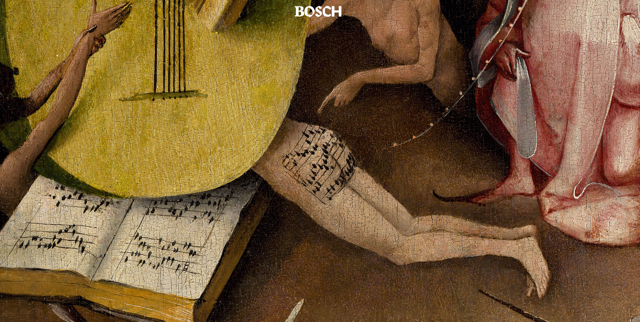
“Not a bum note in sight!” goes the headline, in all the Daily Mail’s trademark subtlety. Mark Prigg’s straight-to-the-point article tells us of “a musical score discreetly written on the butt of a figure in Garden Of Earthly Delights, the famous painting by Hieronymus Bosch,” which, thanks to the labor of love of Oklahoma Christian University student Amelia Hamrick, “has become an online hit.” The title of her rendition: “The 600-Year-Old Butt Song from Hell.”
Going a bit upmarket to Sean Michaels in the Guardian, we find the details that, “posting on her Tumblr, a self-described ‘huge nerd’ called Amelia explained that she and a friend had been examining a copy of Bosch’s famous triptych, which was painted around the year 1500. “[We] discovered, much to our amusement,” she wrote, “[a] 600-years-old butt song from Hell.” You can read about it on her viral post, which describes her project of transcribing Bosch’s posterior-written score “into modern notation, assuming the second line of the staff is C, as is common for chants of this era.”
You can actually hear a rendition of this heroically recovered composition by clicking on the video above. Some fine soul — presumably a fellow named Jim Spalink — took Hamrick’s notation and turned it into music. When you’re done, you can then give the Buttock song a close visual investigation by diving into the virtual tour of The Garden of Earthly Delights, featured here earlier this month. Look for the 13th stop on the guided tour, and you can see the musical notation in incredibly fine detail–finer detail than you could have ever hoped or imagined.
Wes Anderson’s perfectionist films often look like dollhouses enlarged to fit in human actors, but Barcelona-based illustrator Mar Cerdà has one-upped the director and created her own miniature dioramas replicating sets from several of his films.
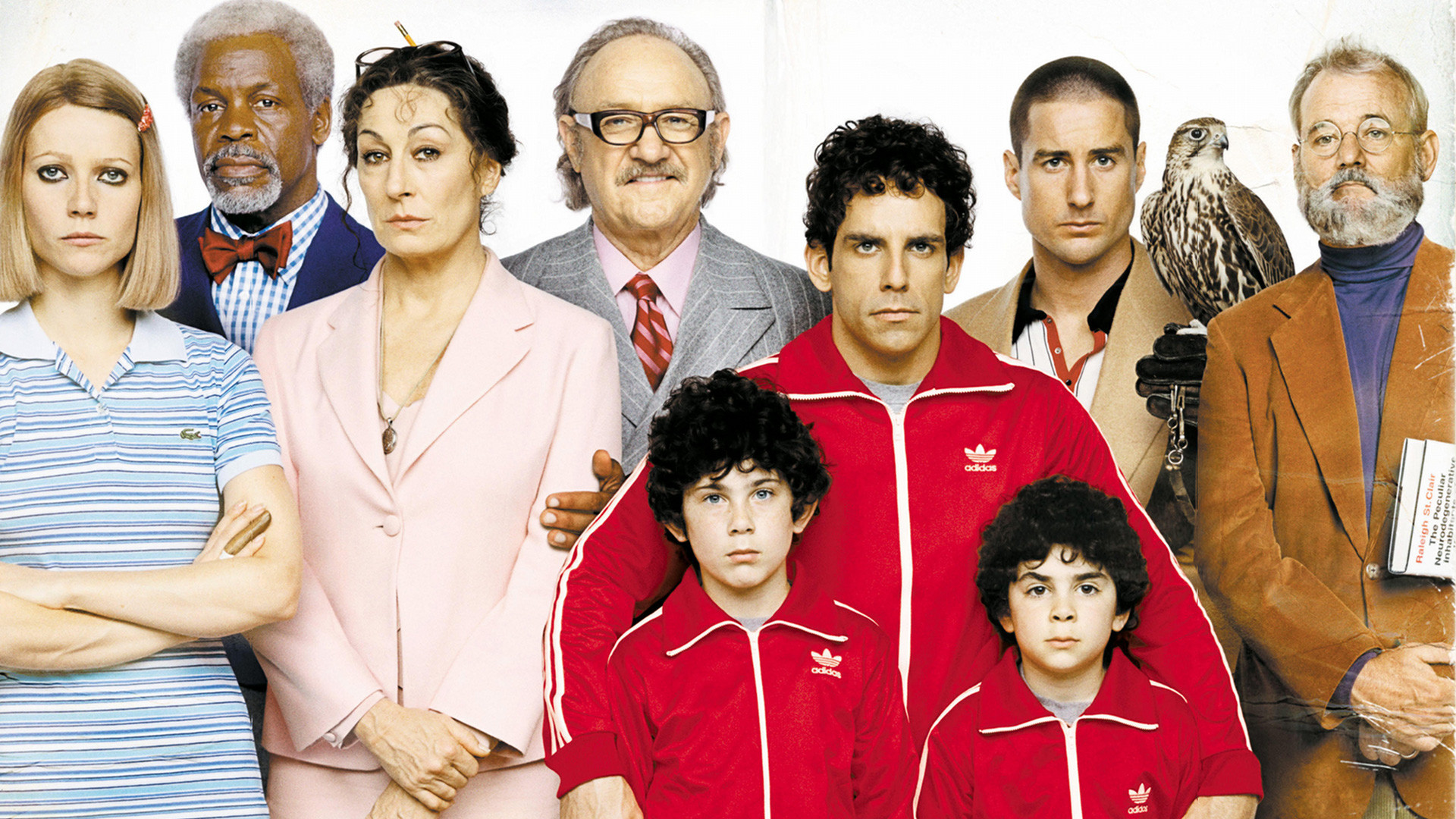
This is meticulous work done in watercolor, then precisely cut and combined into scenes both two- and three-dimensional. For anyone who has tried to cut something very small and fiddly with an x‑acto knife, you’ll appreciate her skill. (The artist in me is complete jelly, as they say.) So far she has recreated the concierge desk from The Grand Budapest Hotel, the berth from The Darjeeling Limited, and the bathroom from The Royal Tenenbaums, complete with Margot and her mom Etheline. (If you look deeper, you will also find this mini Margot box.)
Her love of Anderson is no surprise if you look at the other work in her portfolio. Her book Familiari is a series of figures that can be flipped to make “80,000 different families,” all of which give off the Tenenbaum group shot vibe. And her lovingly detailed recreation of an entry in a Menorca-located house shares a love of cute and colorful with the director’s art direction.
Ted Mills is a freelance writer on the arts who currently hosts the FunkZone Podcast. You can also follow him on Twitter at @tedmills, read his other arts writing at tedmills.com and/or watch his films here.
You may have heard the recent hubbub over an antique Martin guitar from the 1870s that ended up smashed to bits on the set of Quentin Tarantino’s ultraviolent Western The Hateful Eight. Maybe you saw people gnash their teeth online and said, “so what? It’s just a guitar!” Fair enough, and a Stradivarius is just a violin. I exaggerate a little, but many guitar lovers who watched the clip of Kurt Russell destroying the priceless artifact (unwittingly, it seems) felt the impact for days afterward. As Colin Marshall wrote in a post featuring that footage, “You can still go out and buy a serviceable guitar from the end of the 19th century without completely wiping out your savings, but you’d be hard pressed to find a Martin made a few decades earlier—such as the one smashed in The Hateful Eight—at any price at all; less than ten may exist anywhere.”
You can see one of those relics above; the oldest known Martin in existence, in fact, made decades earlier than the wrecked guitar from Tarantino’s set—made, in fact, in 1834, just one year after cabinet maker C.F. Martin moved to New York City from his native Germany, where he had run into trouble with the Violin Maker’s Guild who claimed exclusive rights over instrument manufacturing. Martin immediately began producing guitars, like the small-bodied Stauffer-style instrument above, before moving his factory to its current location of Nazareth, Pennsylvania, where the Martin Museum is located. In the video, folk guitarist Stevie Coyle has the pleasure of picking out The Beatles’ “While My Guitar Gently Weeps” and an original tune called “Saltflat Rhapsody” on the aged instrument, which sounds just a little bit like a Medieval lute.
Just above, see Chris Martin IV, great-great-great-grandson of the famed guitar maker and current CEO of the company give a tour of the museum, pointing out what guitar historians believe is the earliest guitar with X‑bracing, the innovative inner architecture C.F. Martin supposedly invented when coming up with his own designs and moving away from those of his mentor, Johann Stauffer. After the pain of watching a beautiful vintage Martin smashed to bits in Tarantino’s film, it’s a great consolation—for guitar nerds at least—to see how well the Martin Museum has preserved so much of the company’s history and kept such early models in playable condition.
“St. Petersburg, capital of Russia. October the 25th, 1917. The time: twenty-one minutes to ten in the evening. At anchor in the river Neva, the cruiser Aurora waits to take her place in history. In precisely one minute’s time, the crew, led by Bolsheviks, will fire a shot to signal the attack on the winter palace.” So begins Ten Days That Shook the World — not John Reed’s 1919 book of reportage on the October Revolution, nor Sergei Eisenstein’s 1928 film based on it, but a 1967 documentary by Granada Television. And who speaks those words? You won’t have to hear anything more than “St. Petersburg” to recognize the voice of the one and only Orson Welles.
Welles could tell the story of anything, of course, and he does the expected good job recounting that of the fall of Nicolas II, the Kerensky regime, the Bolshevik takeover, and the Russia that rose thereafter, working from a script by the Soviet filmmaker Grigori Alexsandrov, who co-directed Eisenstein’s film. As we listen to Welles speak, we see imagery drawn from a variety of sources: photographs and newspaper clippings, interview footage, contemporary newsreels, and even scenes from historical feature films about the Russian Revolution, especially Eisenstein and Alexandrov’s picture.
I like to think that Welles appreciated this method of documentary construction, which combines an overall adherence to fact with occasional visual departures from it — though the production tightly integrates the “fictional” footage with the “factual” footage, and the former has in many cases shaped our collective mental image of the Russian Revolution more than the latter has. He would step deep into this arena himself less than a decade later with F for Fake, his final, sui generis piece of filmmaking ostensibly about art forgery but really, in both its form and substance, about the line between the true and the false.
Watching Ten Days That Shook the World here almost a half-century into 1967’s future — itself a half-century into 1917’s future — makes it impossible not to think about the continuum of history, and the shifting ways in which we’ve told and retold the stories of those who came before us all along it. “Who dare say where the road they began to travel in 1917 will finally lead them,” asks Orson Welles of the Russians at the documentary’s end, “and us?” The question holds up today just as it did fifty years ago — or indeed a hundred.
Did Philip K. Dick foresee the future, or did he help invent it? While many of his visions belong more to the realm of the paranormal than the science-fictional, it’s certainly the case that the world we inhabit increasingly resembles a pastiche of Dick’s hyperreal, postmodern techno-dystopias.
Dick wrote about how the shiny, pop-art surfaces of modernity conceal worlds within worlds, none of them more—or less—real than any other, and it’s easy to imagine why his characters come unhinged when confronted with one virtual trapdoor after another, their sense of self and object permanence disintegrating. But for Dick, this experience was not simply a fictional device, but a part of his lived psychological reality: from his drug use, to his many failed marriages, to his paranoid anti-authoritarianism, to his life-altering mystical encounter….
And now, thanks to the very Dickian phenomenon of first-person computer games, you too can experience the hallucinatory life of a down-and-out sci-fi scribe in 1960s Berkeley whose mind gets invaded by an alien intelligence. The new game, Californium—developed by Darjeeling and Nova Productions—puts you inside the world of writer Elvin Green, whose life, writes Motherboard, “is an amalgam of real elements from Dick’s life… and numerous events and themes that run through his work.”
For legal reasons, the developers could not use Dick’s name nor the titles of his novels, but “nevertheless,” the game “is shaping up to be one of the most fitting tributes to the 20th century’s infamous techno-prophet.” At the top of the post, watch a trailer for the game, and just above, Youtuber Many a True Nerd walks through a comprehensive tour of the game’s architecture, with some lively commentary. If you’re convinced you’d like to spend some time in this colorfully addled alternate dimension, head on over to the game’s website to download it for yourself.
FYI: Bestselling author John Grisham is giving away his new novel called The Tumor: A Non-Legal Thriller. Available as a free ebook on Amazon, Grisham has called The Tumor “the most important book I’ve ever written.” And, as the subtitle suggests, this new book isn’t another one of those legal thrillers Grisham is known for. No, this novel focuses on medicine and how a “new medical technology could revolutionize the future of medicine by curing with sound.”
Here’s how the book is briefly summarized on Amazon:
The Tumor follows the present day experience of the fictional patient Paul, an otherwise healthy 35-year-old father who is diagnosed with a malignant brain tumor. Grisham takes readers through a detailed account of Paul’s treatment and his family’s experience that doesn’t end as we would hope. Grisham then explores an alternate future, where Paul is diagnosed with the same brain tumor at the same age, but in the year 2025, when a treatment called focused ultrasound is able to extend his life expectancy.
Focused ultrasound has the potential to treat not just brain tumors, but many other disorders, including Parkinson’s, Alzheimer’s, hypertension, and prostate, breast and pancreatic cancer…
Readers will get a taste of the narrative they expect from Grisham, but this short book will also educate and inspire people to be hopeful about the future of medical innovation.
You can also see Grisham talking about the material in his novel at this TEDx talk.
If you would like to support the mission of Open Culture, consider making a donation to our site. It’s hard to rely 100% on ads, and your contributions will help us continue providing the best free cultural and educational materials to learners everywhere. You can contribute through PayPal, Patreon, and Venmo (@openculture). Thanks!
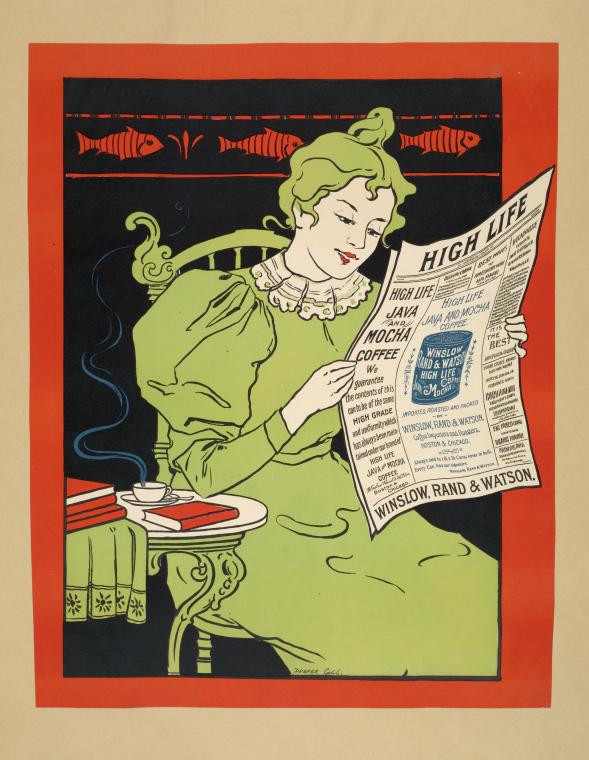
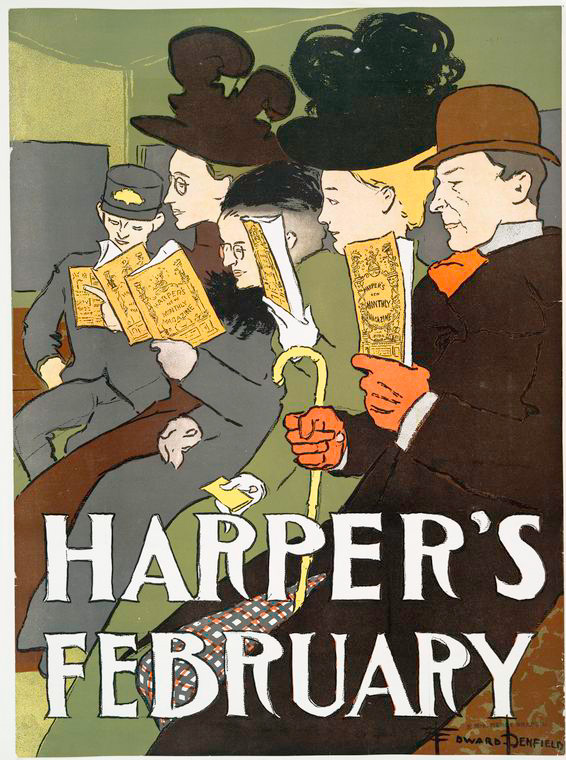
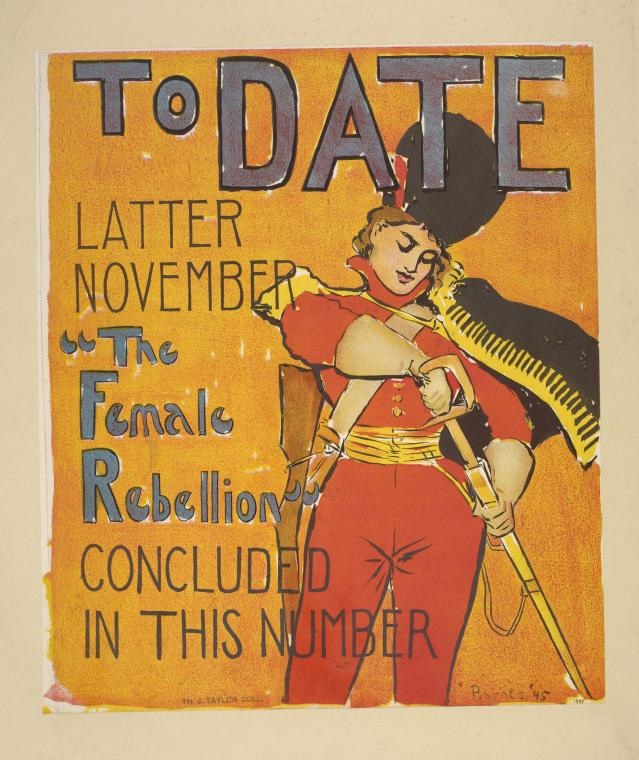
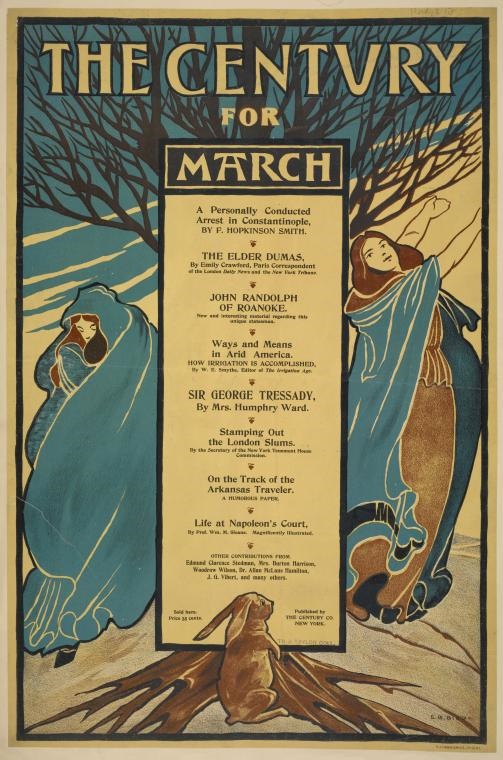
A scroll through any collection of contemporary graphic design portfolios makes for a dizzying tour of the seemingly unlimited range of colors, textures, fonts, etc. available to the modern commercial artist. From the most colorful pop art to the subtlest fine art, it seems that any and every vision can be realized on the page or screen thanks to digital technology. Turn the dial back over a hundred years, and the posters, magazine covers, and advertisements can seem primitive by initial comparison, somewhat washed out and anemic, and certainly nothing like the candy-colored visual feast that meets our eyes on laptop and smartphone screens these days.
But look closer at the design of a century past, and you’ll find, I think, just as much variety, skill, and imagination—if not nearly so much color and slickness—as is on display today. And though software enables designers to create images and surfaces of which their predecessors could only dream, those hand-illustrated graphics of the past hold a strikingly simple allure that still commands our attention—drawing from art nouveau, impressionism, pre-Raphaelite, and other fine art forms and incorporating modernist lines and contrasts.
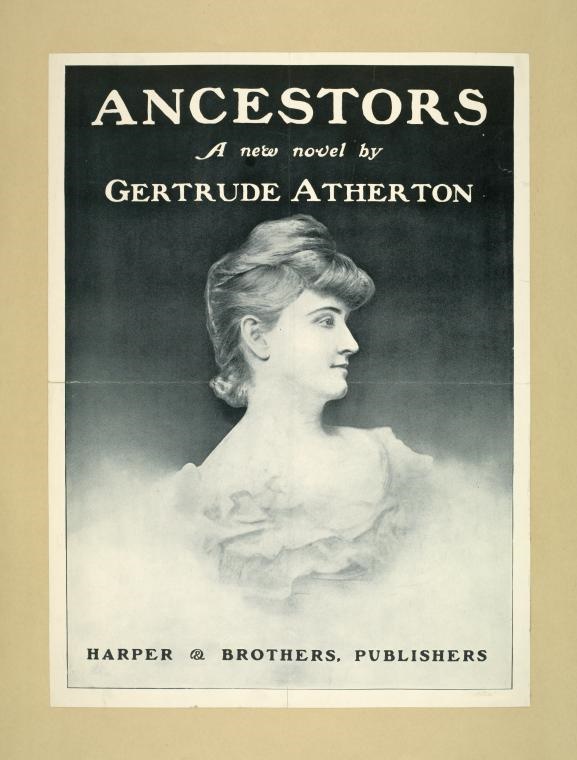
“The advent of the art poster in America,” writes NYPL, “is traceable to the publication of Edward Penfield’s poster advertising the March 1893 issue of Harper’s. [See a collection of his Harper’s posters here.] Unlike earlier advertising posters, Penfield’s work presented an implied graphic narrative to which text was secondary. In this way, and subsequently, in the hands of major artists such as Penfield, Will Bradley and Ethel Reed, the poster moved from the realm of commercial art to an elevated, artistic position.” These posters quickly became collector’s items, and “became more desirable than the publication they were advertising.”
As such, the turn-of-the-century art poster pushed the publishing industry toward graphically illustrated-magazine covers and book jackets. The increasingly stylish, beautifully-executed posters on display in the NYPL archive show us not only the development of modern commercial design as advertising, but also its development as an art form. Though we may have needed Andy Warhol and his contemporaries to remind us that commercial art can just as well be fine art, a look through this stunning gallery of posters shows us that popular graphics and fine art often traded places long before the pop art revolution.
There are a number of well known perks to being a rock star. One of the more obscure ones is sustained access to zero gravity, the condition of relative near weightlessness achievable in a state of free fall.
Access should not be equated with ease, however, as singer Damien Kulash and his sister, director and choreographer Trish Sie, explain above. The band’s website goes into further detail about the science of the shoot inside an industrial Russian military aircraft flying parabolic maneuvers:
The longest period of weightlessness that it is possible to achieve in these circumstances is about 27 seconds, and after each period of weightlessness, it takes about five minutes for the plane to recover and prepare for the next round. Because we wanted the video to be a single, uninterrupted routine, we shot continuously over the course of 8 consecutive weightless periods, which took about 45 minutes, total. We paused our actions, and the music, during the non-weightless periods, and then cut out these sections and smoothed over each transition with a morph.
The Russian flight crew collaborated with the non-Russian-speaking film crew and band on a mutually comprehensible countdown system that ensured everyone was ready to rumble each time the plane hit zero gravity.
Simulated overhead bins, bus seats, and dummy windows lit from with LEDs provided the illusion of a commercial flight.
The copious offscreen air sickness was not faked (58 regurgitations by Tim Nordwind’s reckoning.)
The finished product, right above, is the crowning achievement for a band long celebrated for tasking itself with one-take video challenges involving treadmills, Ikea furniture, and trained animals. (That’s director Sie in front of the camera with tango partner Moti Buchboot for “Skyscrapers.”)
In my little corner of the world, we’re eagerly anticipating the arrival of Moogfest this May, just moved down the mountains from Asheville—where it has convened since 2004—to the scrappy town of Durham, NC. Like SXSW for electronic music, the four-day event features dozens of performances, workshops, talks, films, and art installations. Why North Carolina? Because that’s where New York City-born engineer Robert Moog (rhymes with “vogue”)—inventor of one of the first, and certainly the most famous, analog synthesizer—moved in 1978 and set up shop for his handmade line of modular synths, “Minimoog”s, and other unique creations. “One doesn’t hear much talk of synthesizers here in western North Carolina,” Moog said at the time, “From this vantage point, it’s easy to get a good perspective on the electronic musical instrument scene.”
The perspective characterizes Moog’s influence on modern music since the late-sixties—as a non-musician outsider whose musical technology stands miles above the competition, its unmistakable sound sought after by nearly everyone in popular music since it debuted on a number of commercial recordings in 1967. A curious development indeed, since Moog never intended the synthesizer to be used as a standalone instrument but as a specialized piece of studio equipment. However, in the mid-sixties, a forward-looking jazz musician named Paul Beaver happened to get his hands on a modular Moog synthesizer, and began to use it on odd, psychedelic albums like Mort Garson’s The Zodiac Cosmic Sounds and famed Wrecking Crew drummer Hal Blaine’s Psychedelic Percussion (hear “Love-In (December)” above).
Shortly after these releases, Mike Bloomfield’s psych-rock outfit The Electric Flag made heavy use of the Moog in their soundtrack for Roger Corman’s sixtiesploitation film The Trip (hear “Fine Jung Thing” above), and the analog synthesizer was on its way to becoming a staple of popular music. In late ’67, The Doors called Beaver into the studio during the recording of Strange Days, and he used the Moog throughout the album to alter Jim Morrison’s voice and provide other effects (hear “Strange Days” at the top). Contrary to popular misconceptions, Brian Wilson did not use a Moog synthesizer for the recording of “Good Vibrations” the year prior, but an “electro-theremin” built and played by Paul Tanner. He did, however, have Bob Moog build a replica of that instrument to play the song live. (The Moog theremin is still in production today.)
Then, in 1968 Wendy Carlos used a Moog Synthesizer to reinterpret several Bach compositions, and Switched-On Bach became a novelty hit that led to many more classical Moog recordings from Carlos, as well as to her original contributions to Stanley Kubrick’s A Clockwork Orange and The Shining. (Unfortunately, few of Carlos’ recordings are available online, but you can hear The Shining’s main theme above.) Switched-On Bach took the Moog synthesizer mainstream—it was the first classical album to go platinum. (Glenn Gould called it “one of the most startling achievements of the recording industry in this generation and certainly one of the great feats in the history of keyboard performance.”) And after the release of Carlos’ futuristic classical albums, and an evolution of Moog’s instruments into more musician-friendly forms, analog synths began to appear everywhere.
Artists like Carlos explored the synthesizer’s use as not only a generator of weird, spaced-out sounds and effects, but as an instrument in its own right, capable of all of the nuance required to play the finest classical music. The modular synthesizer, however, was still an awkwardly bulky instrument, suited for the studio, not the road. That changed in 1971 when the “Minimoog Model D” was born. You can see a short history of that revolutionary instrument above. The Minimoog and its siblings drove prog rock, disco, jazz fusion, the ambient work of Brian Eno, Teutonic electro-pop of Kraftwerk, and soothing Gallic new age soundscapes of Jean-Michel Jarre. Bob Marley incorporated the Minimoog into his roots reggae, and Gary Numan charted the path of the New Wave future with the portable synthesizer.
And as anyone who’s heard Daft Punk’s now-ubiquitous Random Access Memories knows, the forefather of their sound was Italian superproducer Giorgio Moroder, who brought us nearly all of Donna Summer’s disco hits, including the futuristic “I Feel Love,” above, in 1977. Although nothing really sounded like this at the time—nor for many years afterward—we can hear in this pioneering track that it’s only a short hop from Moroder’s pulsing, flanging, synth arpeggios to most of the modern dance music we hear today.
Though we certainly credit all of the composers, producers, and musicians who embraced analog synthesizers and pushed their development forward, all of their musical innovation would have meant little without the inventiveness of the man who, from his mountaintop retreat in Asheville, North Carolina, personally oversaw the technology of a musical revolution. For more on the genius of Bob Moog, watch Hans Fjellestad’s documentary Moog, or listen to the Sound Opinions podcast above, featuring onetime official Moog Foundation historian Brian Kehew.
We're hoping to rely on loyal readers, rather than erratic ads. Please click the Donate button and support Open Culture. You can use Paypal, Venmo, Patreon, even Crypto! We thank you!
Open Culture scours the web for the best educational media. We find the free courses and audio books you need, the language lessons & educational videos you want, and plenty of enlightenment in between.