One of the sad facts of human psychology is that knowledge can be used for evil just as easily as it can be used for good. If the human race had never figured out how to use fire, for example, we wouldn’t have to worry about those pesky arsonists.
If some people are willing to use the fruits of knowledge to hurt people, should we stop acquiring knowledge? It sounds absurd, but that’s a question that is often asked, though it’s invariably couched in different language.
When Richard Dawkins, the evolutionary biologist and outspoken atheist, made an appearance on The Daily Show last week to promote his new memoir, host Jon Stewart asked: “Do you believe that the end of our civilization will be through religious strife or scientific advancement?” The answer, Dawkins said, is probably both. “Science provides, in the form of technology, weapons which hitherto have been available only to reasonably responsible governments,” said Dawkins, and those weapons “are likely to become available to nutcases who believe that their god requires them to wreak havoc and destruction.”
The conversation then moves beyond religious fanaticism. “Science is the most powerful way to do whatever it is you want to do,” said Dawkins, “and if you want to do good, it’s the most powerful way of doing good. If you want to do evil, it’s the most powerful way to do something evil.”
Dawkins’s last statement echoes the words of Albert Einstein, who warned that the scientific method is only a means to an end, and that the welfare of humanity depends ultimately on shared goals. You can hear Einstein make his point by visiting our post, “Listen as Albert Einstein Reads ‘The Common Language of Science’ (1941)”.
Every American has appreciated at least a little bit of the oeuvre of late-19th- and early-20th-century humorist Samuel Clemens, better known as Mark Twain. Some only manage to get through the chapters of The Adventures of Huckleberry Finn their English classes test them on, but even those give them the inkling that they hold before them the work of a writer worth reading. Others go as far as to become enthusiasts of all things Twain, but perhaps stop just short of reading his “Advice to Little Girls,” a brief piece that offers the following points of counsel to the young ladies of 1865:
Good little girls ought not to make mouths at their teachers for every trifling offense. This retaliation should only be resorted to under peculiarly aggravated circumstances.
If you have nothing but a rag-doll stuffed with sawdust, while one of your more fortunate little playmates has a costly China one, you should treat her with a show of kindness nevertheless. And you ought not to attempt to make a forcible swap with her unless your conscience would justify you in it, and you know you are able to do it.
You ought never to take your little brother’s “chewing-gum” away from him by main force; it is better to rope him in with the promise of the first two dollars and a half you find floating down the river on a grindstone. In the artless simplicity natural to this time of life, he will regard it as a perfectly fair transaction. In all ages of the world this eminently plausible fiction has lured the obtuse infant to financial ruin and disaster.
If at any time you find it necessary to correct your brother, do not correct him with mud—never, on any account, throw mud at him, because it will spoil his clothes. It is better to scald him a little, for then you obtain desirable results. You secure his immediate attention to the lessons you are inculcating, and at the same time your hot water will have a tendency to move impurities from his person, and possibly the skin, in spots.
If your mother tells you to do a thing, it is wrong to reply that you won’t. It is better and more becoming to intimate that you will do as she bids you, and then afterward act quietly in the matter according to the dictates of your best judgment.
You should ever bear in mind that it is to your kind parents that you are indebted for your food, and for the privilege of staying home from school when you let on that you are sick. Therefore you ought to respect their little prejudices, and humor their little whims, and put up with their little foibles until they get to crowding you too much.
Good little girls always show marked deference for the aged. You ought never to “sass” old people unless they “sass” you first.
“American children’s literature in those days was mostly didactic,” writes children’s-book author and illustrator Vladimir Radunsky in a post at the New York Review of Books. It was often addressed to some imaginary reader, an ideal girl or boy, who, “upon reading the story, would immediately adopt its heroes as role models. Twain did not squat down to be heard and understood by children, but asked them to stand on their tiptoes — to absorb the kind of language and humor suitable for adults.” And Twain also understood that, humor, at the height of the craft, limits itself to no one audience in particular. Just as anyone, even today, can enjoy Huckleberry Finn — anyone, that is, without a teacher looking over their shoulder — “Advice to Little Girls” plays, like everything Twain wrote, to both girls and boys, to both the little and the big, at once irresistibly entertaining and viciously satirizing the whole of what he called “the damned human race.”
Then again, Twain also knew, as any master humorist does, that nothing funny ever benefited from too much explanation. We’ll thus leave you with a link to Project Gutenberg’s collection of 216 free e‑books of his work, among which a bit of time spent should turn any one of us into enthusiasts of all things Twain.
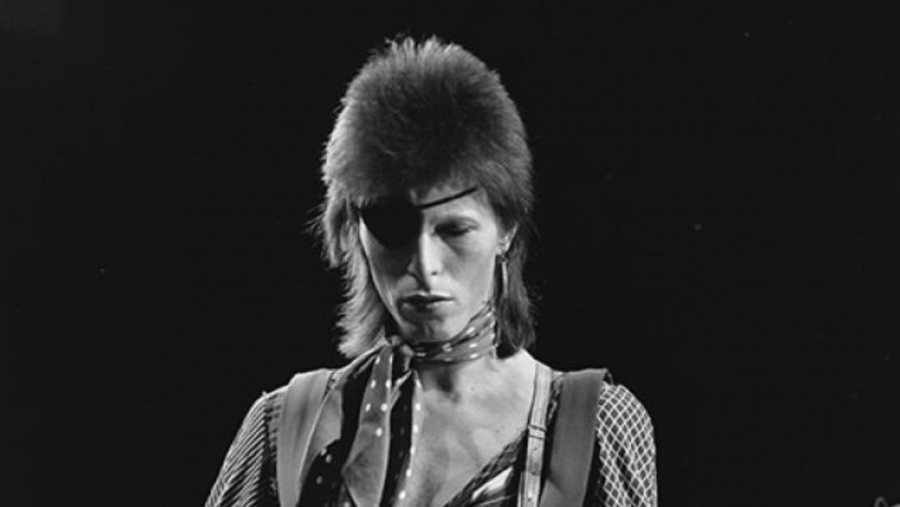
“David Bowie Is,” the extensive retrospective exhibit of the artist and his fabulous costumes, hit Toronto last Friday (see our post from earlier today), and as many people have reported, in addition to those costumes—and photos, instruments, set designs, lyric sheets, etc.—the show includes a list of Bowie’s favorite books. Described as a “voracious reader” by curator Geoffrey Marsh, Bowie’s top 100 book list spans decades, from Richard Wright’s raw 1945 memoir Black Boy to Susan Jacoby’s 2008 analysis of U.S. anti-intellectualism in The Age of American Unreason.
Bowie’s always had a complicated relationship with the U.S., but his list shows a lot of love to American writers, from the aforementioned to Truman Capote, Hubert Selby, Jr., Saul Bellow, Junot Diaz, Jack Kerouac and many more. He’s also very fond of fellow Brits George Orwell, Ian McEwan, and Julian Barnes and loves Mishima and Bulgakov. You can read the full list below or over at Open Book Toronto, who urges you to “grab one of these titles and settle in to read — and just think, somewhere, at some point, David Bowie (or, to be more accurate, the man behind David Bowie, David Jones) was doing the exact same thing.” If that sort of thing inspires you to pick up a good book, go for it. You could also peruse the list, then puzzle over the literate Bowie’s lyrics to “I Can’t Read.” You can also explore a new related book–Bowie’s Bookshelf:The Hundred Books that Changed David Bowie’s Life.
If you would like to support the mission of Open Culture, consider making a donation to our site. It’s hard to rely 100% on ads, and your contributions will help us continue providing the best free cultural and educational materials to learners everywhere. You can contribute through PayPal, Patreon, and Venmo (@openculture). Thanks!
On September 21, Pete Seeger performed the Woody Guthrie classic, “This Land is Your Land,” at Farm Aid while being joined on stage by John Mellencamp, Willie Nelson, Dave Matthews and Neil Young. “Friends,” he told the audience, “at 94, I don’t have much of a voice left. But here’s a song I think you know, and if you sing it, why, we’ll make a good sound.” And that’s just what the singer and audience did. Seeger, who still has his wits about him, even improvised a bit and added a new verse, “New York was made to be frack free!” Bless him.
For some vintage Seeger, don’t miss this film featuring the folk legend when he was only 27 years old. Released in 1946, To Hear Your Banjo Play is an engaging 16-minute introduction to American folk music, written and narrated by Alan Lomax.
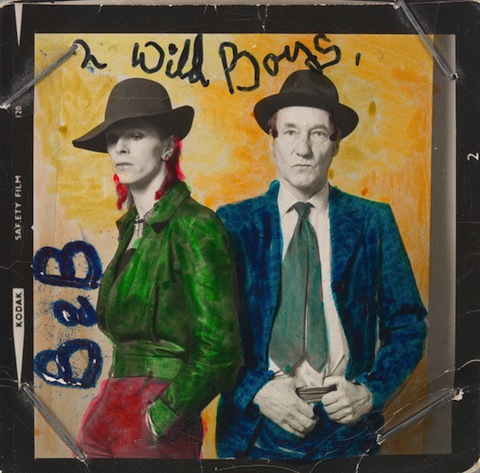
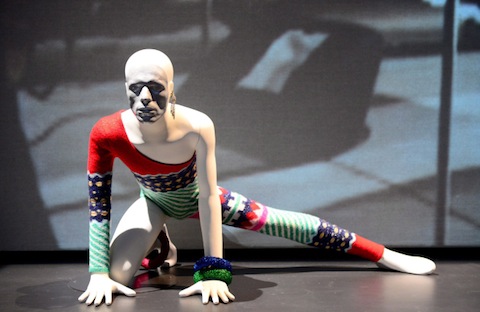
Attention David Bowie fans: If you’re going to be in Toronto between now and November 27th, you’re in for quite a treat. AGO, the Art Gallery of Ontario, just opened the exhibit “David Bowie Is,” a hugely comprehensive multimedia show “Spanning five decades and featuring more than 300 objects from Bowie’s personal archive,” including handwritten lyrics, instruments, photos like that of Bowie and William Burroughs below, and lots and lots of costumes like the bodysuit at the bottom. Originating at London’s Victoria and Albert Museum, this is the first international exhibit solely devoted to Bowie.
If you can’t make it to the show, you can see a brief preview here and at AGO’s own site. In the short video at the top, Curator Victoria Broackes describes the title of the exhibit as “both an unfinished sentence and a statement.” The exhibit, she says, illustrates “Bowie’s own belief that we all have within us so many different personalities, and we should work hard to figure out what they are and bring them out.” It’s difficult to imagine anyone but Bowie bringing out so many uniquely fascinating personalities as he has in one lifetime. As Broackes’ fellow curator Geoffrey Marsh comments, Bowie is “an astonishingly hard worker” who “performed on average once every 11 nights” for 32 years, all while recording album after album and becoming an international movie star. Bowie may inspire, but he also blows most performers away with his seemingly endless supplies of creative energy and single-minded focus.
The work of folklorists and musicologists like Alan Lomax, Stetson Kennedy, and Harry Smith has long been revered in countercultural communities and libraries; and it occasionally reaches mainstream audiences in, for example, the Coen Brother’s 2000 film Oh Brother, Where Art Thou? and its attendant soundtrack, or the playlists of purists on college radio and NPR. But their recordings are much more than historical novelties.
Archives like Lomax’s Association for Cultural Equity—which we’ve featured before—help remind us of our origins as much as bottom-up accounts like Howard Zinn’s A People’s History of the United States. Lomax and his colleagues believed that folk art and music infuse and renew “high” art and provide bulwarks against the cynical destitution of mass-market commercial media that can seem so deadening and inescapable.
That is not to say that notions of authenticity aren’t fraught with their own problems of exploitation. Approaching folk art as tourists, we can demean it and ourselves. But the problem is less, I think, one of gentrification than of neglect: it’s simply far too easy to lose touch, a much-remarked-upon irony of the age of social networking. Lomax understood this. He founded ACE “to explore and preserve the world’s expressive traditions with humanistic commitment and scientific engagement.” The organization resides at NYC’s Hunter College and, since Lomax’s retirement in 1996, has been overseen by his daughter, Anna Lomax Wood. Through an arrangement with the Library of Congress, which houses the originals, ACE has access to all of Lomax’s collection of field recordings and can disseminate them online to the public. Lomax’s association has also long been active in repatriating recorded artifacts to libraries and archives in their places of origin, giving local communities access to cultural histories that may otherwise be lost to them.
Lomax underscored the significance of his organization’s name in a 1972 essay entitled “An Appeal for Cultural Equity,” in which he lays out the importance of preserving cultural diversity against the “oppressive dullness and psychic distress” imposed upon “those areas where centralized music industries, exploiting the star system and controlling the communication system, put the local musician out of work and silence folk song.” Are we any more improved forty years later for the shocking monopolization of mass media in the hands of a few conglomerates? I’d answer unequivocally no but for one important qualification: mass media in the form of open online archives allows us unprecedented access to, for example, the awesome late-seventies film of R.L. Burnside (top), who like many Mississippi Delta bluesmen before him, would only achieve recognition much later in life. Or we can see native North Carolinian Cas Wallin (above) sing a version of folk song “Pretty Saro” in 1982, a song Bob Dylan recorded and only recently released. Then there’s one of my favorites, “Make Me A Pallet On Your Floor,” picked and sung below by Mississippian Sam Chatmon—a song played and recorded by countless black and white blues and country artists like Mississippi John Hurt and Gillian Welch.
These and thousands of other examples from the ACE archive bring musicologists, historians, folklorists, activists, educators, and everyone else closer to Lomax’s ideal—that we “learn how we can put our magnificent mass communications technology at the service of each and every branch of the human family.” The ACE catalog contains over 17,400 digital files, beginning with Lomax’s first tape recordings in 1946, to his digital work in the 90s. The archive includes songs, stories, jokes, sermons, interviews and other audio artifacts from the American South, Appalachia, the Caribbean, and many more locales. The archive features recordings from famous names like Woody Guthrie and Lead Belly but primarily consists of folk music from anonymous folk, representing a variety of languages and ethnicities. And the archive is ever-expanding as it continues to digitize rare recordings, and to upload vintage film, like the videos above, to its YouTube channel.
If you saw our post on Stanley Kubrick’s ten favorite films in 1963, you may remember that Ingmar Bergman ranked high on his list, specifically with 1957’s Wild Strawberries. Three years earlier, Kubrick had mailed the Swedish filmmaker a fan letter praising his “vision of life,” “creation of mood and atmosphere,” “avoidance of the obvious,” and “truthfulness and completeness of characterization.” Could a screening of Wild Strawberries, a film which stands as evidence of all those qualities, have moved the 31-year-old Kubrick to write to Bergman such words of appreciation about his “unearthly and brilliant” work? The dream sequence above, made haunting in a way only Bergman could do it, showcases just one of the many facets of that picture’s mood, atmosphere, and unearthliness.
Alongside Victor Sjöström as the bad-dreaming professor Isak Borg, Wild Strawberries stars Ingrid Thulin as his contemptuous daughter-in-law Marianne. Kubrick singles Thulin out as one of the Bergman regulars who “live vividly in my memory,” though she may also have attained her place in that creatively hyperactive mind on the strength of her gender boundary-crossing performance in 1958’s The Magician, viewable just above. Read all that Kubrick wrote to Bergman below, or visit the original post featuring it at Letters of Note. You’ll notice that Kubrick also name-checks Max von Sydow, as any serious Bergman enthusiast should: not only did the man appear in both Wild Strawberries and The Magician, but by 1960 he’d also starred as a vengeful father in Bergman’s The Virgin Spring and, of course, as the Crusades-weary knight Antonius Block in The Seventh Seal, which would become a signature film for both actor and director. Whether those particular performances captured Kubrick’s imagination I don’t know, but I feel sure of one thing: play chess with Death, and you rightfully earn the admiration of the next big auteur.
February 9, 1960
Dear Mr. Bergman,
You have most certainly received enough acclaim and success throughout the world to make this note quite unnecessary. But for whatever it’s worth, I should like to add my praise and gratitude as a fellow director for the unearthly and brilliant contribution you have made to the world by your films (I have never been in Sweden and have therefore never had the pleasure of seeing your theater work). Your vision of life has moved me deeply, much more deeply than I have ever been moved by any films. I believe you are the greatest film-maker at work today. Beyond that, allow me to say you are unsurpassed by anyone in the creation of mood and atmosphere, the subtlety of performance, the avoidance of the obvious, the truthfullness and completeness of characterization. To this one must also add everything else that goes into the making of a film. I believe you are blessed with wonderfull actors. Max von Sydow and Ingrid Thulin live vividly in my memory, and there are many others in your acting company whose names escape me. I wish you and all of them the very best of luck, and I shall look forward with eagerness to each of your films.
You want a gentle introduction to statistics, and maybe those Khan Academy videos aren’t quite working out for you. Well, here’s another approach: statistics explained with modern dance. That’s the novel approach explored by Lucy Irving (Middlesex University) and Andy Field (University of Sussex), who produced four short films demonstrating different statistical concepts through dance. The films touch on Correlation, Frequency Distributions, Sampling and Standard Error, and Variance. Speaking about the project, Irving explained: “We worked with the choreographer and experimented with the dancers to find ways of communicating the concepts. Our hope is that, as well as being fun and educational, the films will demystify and take some of the fear out of statistics. Students often report that ‘the stats’ are the most difficult part of their psychology degree and these the films aim to challenge this by demonstrating that thinking about them in new ways may make them easier to comprehend.” You can follow Lucy on Twitter at @statsdancer.
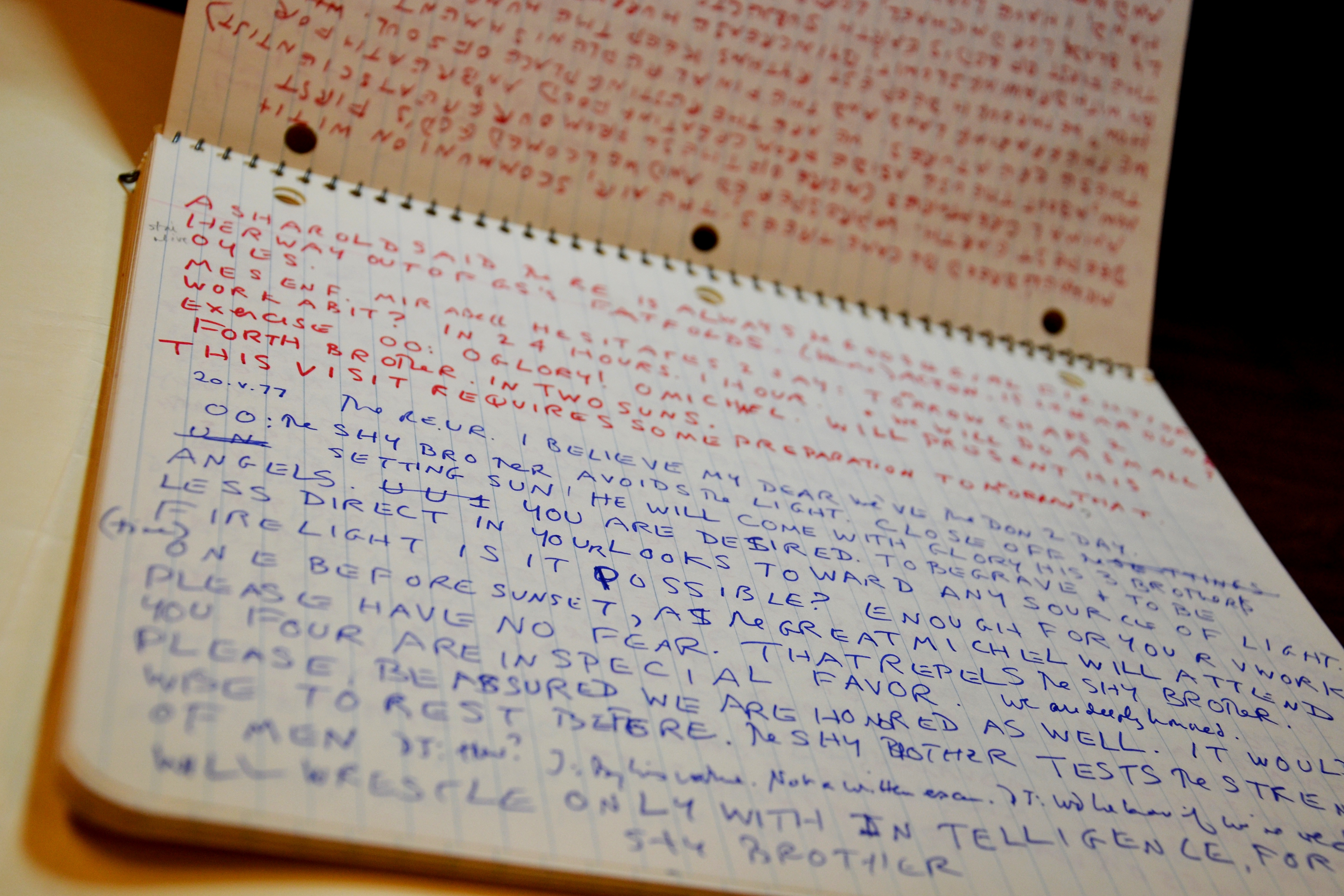
The Ouija-inspired poetry of Pulitzer Prize-winning poet James Merrill (1926–1995) comes alive in a newly launched digital archive from Washington University in St. Louis. Visitors to the site can explore notebook after notebook bearing Merrill’s handwritten notes in all caps—colorful transcripts from his “Thousand and One Evenings Spent/ With [partner] David Jackson at the Ouija Board/ In Touch with Ephraim Our Familiar Spirit.” Merrill, the son of Charles E. Merrill, cofounder of the Merrill Lynch investment firm, was considered one of the most significant American poets of his generation.
The occult was central to all of Merrill’s later work, including “The Book of Ephraim,” which is the current focus of the James Merrill Digital Archive. Merrill’s complex and highly unusual creative process is evident in the materials presented, all of them drawn from the extensive James Merrill Papers housed in the university’s Special Collections.
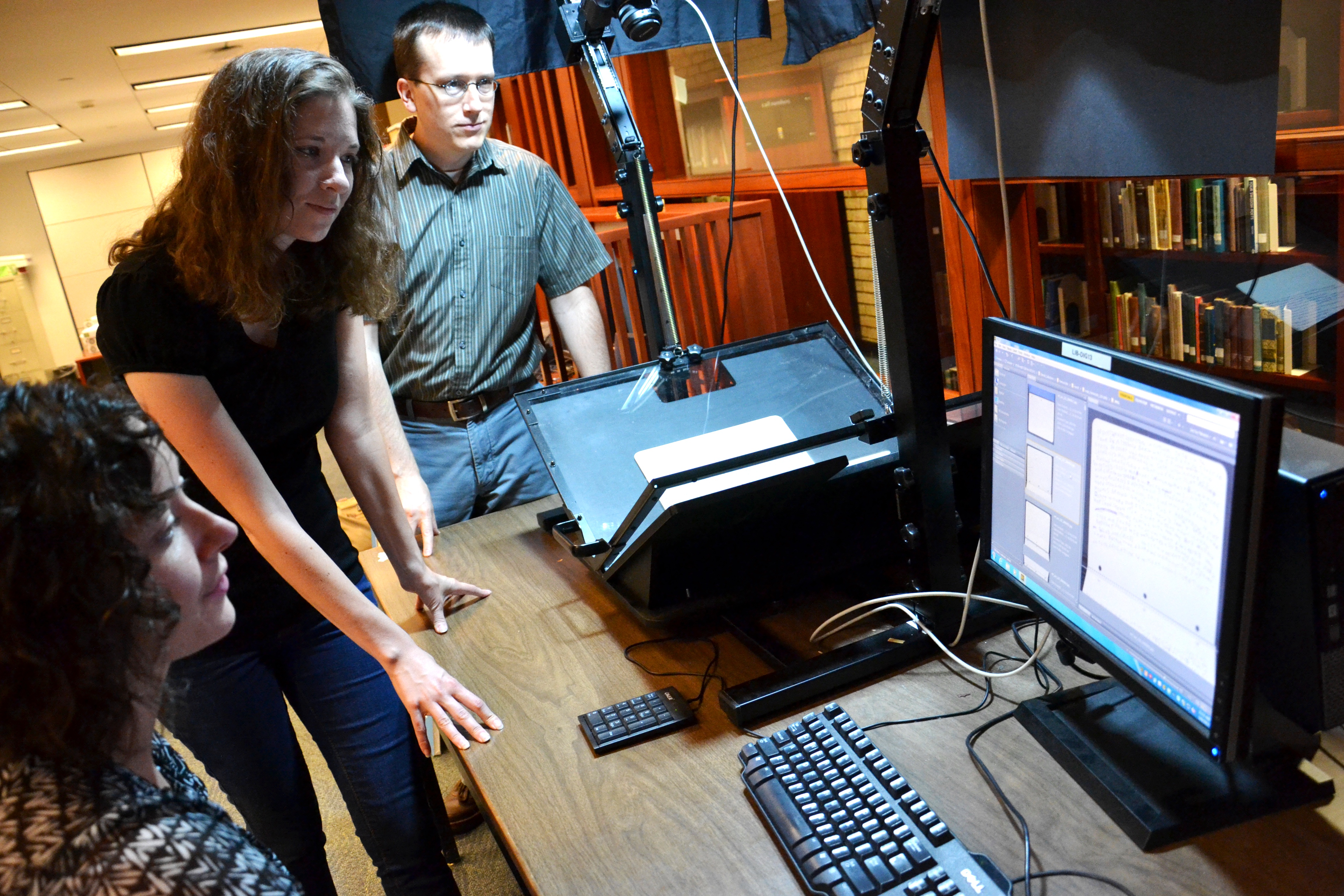
In a description on the site, project collaborator and graduate student Annelise Duerden (pictured at center below) points out that “the opening to ‘The Book of Ephraim’ clamors for a medium ‘that would reach / The widest public in the shortest time,’ and we hope that digital archiving can provide such an entrance to Merrill’s work, and to the richness of the process behind his finished poem.”
Duerden, herself an active poet, says she was impressed by Merrill’s “imaginative force” and “relentless energy for revision” while helping build the archive this past summer along with staff from Washington University Libraries and the Humanities Digital Workshop.
“Merrill originally imagined constructing his story of Ephraim in the form of a novel,” she says. “He planned to write it for some time, began work on it, then lost the pages in a taxi, and gave up on the idea of the novel of Ephraim, instead writing it in poetic form. In a Ouija session, Ephraim later claimed credit for losing the novel.”
“The Book of Ephraim” was first published in Merrill’s book Divine Comedies in 1976 and later as the first installment of his apocalyptic epic The Changing Light at Sandover, one of the longest poems in any language and featuring voices ranging from the then-recently deceased poet W. H. Auden to the Archangel Michael.
Goodreads, that social network for the bookish, recently posted on its blog the results of a survey taken among its 20 million members with the melancholy title “The Psychology of Abandonment.” Complete with infographic, the survey gives us, among other things, a list of the “Top Five Abandoned Classics.” James Joyce’s Ulysses is third on the list, and I’m not at all surprised to find it there. One must know Ulysses, it seems, to merit consideration as a culturally literate person. But Ulysses, perhaps more than any work of modern literature, can easily discourage. It presents us with a landscape so psychologically complex, so dense with literary and historical allusion and contemporary cultural reference, that I cannot say I would have known what to do with it had I not read it under the auspices of an august Irish Joyce scholar and with Don Gifford’s guidebook Ulysses Annotated ready at hand. I had nowhere near the breadth and depth of reading Joyce seems to assume of his ideal reader. Few people do.
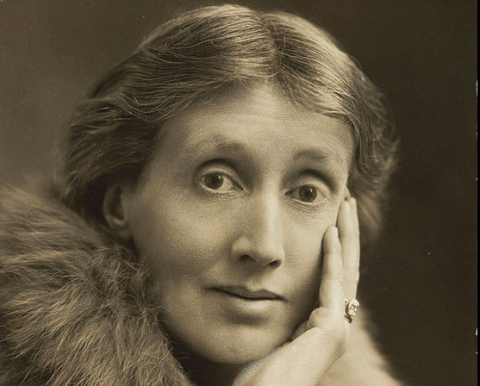
Two of Joyce’s contemporaries, however, had such a grasp of literature and language: T.S. Eliot and Virginia Woolf. And the two had quite a lot to say about the book, much of it to each other. Eliot recommended Joyce’s novel to Woolf, and very soon after its 1922 publication, she purchased her own copy. At the time, Woolf was hard at work on her story “Mrs. Dalloway on Bond Street,” which would eventually grow into her next novel, Mrs. Dalloway. She was also immersed in Proust’s epic Remembrance of Things Past, just beginning the second volume. According to Dartmouth’s James Heffernan, Woolf “chafes at the thought of Ulysses,” writing haughtily:
Oh what a bore about Joyce! Just as I was devoting myself to Proust—Now I must put aside Proust—and what I suspect is that Joyce is one of those undelivered geniuses, whom one can’t neglect, or silence their groans, but must help them out, at considerable pains to oneself.
Heffernan chronicles Woolf’s reading of Ulysses, which she documented in her diary in a “withering assessment” as the work of “a self-taught working man… egotistic, insistent, raw, striking, & ultimately nauseating.” “When one can have cooked flesh,” she writes, “why have the raw?”
This private critical opinion Woolf recorded after reading only 200 pages of the novel. Heffernan makes the case that she read no more thereafter. Though she claimed to have “finished Ulysses,” he takes her to mean she had finished with the book, putting it aside like those bewildered, bored, or exasperated Goodreads members. Nevertheless, Woolf could not shake Joyce. She continued to write about him, to Eliot and herself. “Never did any book so bore me,” she would write, and many more very disparaging remarks about her brilliant contemporary.
Over and again she savaged Joyce in her diaries; so much so that it seems to Heffernan and Woolf scholar Suzette Henke that hers is a case of protesting too much against an author whom, Henke alleges, was her “artistic ‘double,’ a male ally in the modernist battle for psychological realism.” This may indeed be so. In the midst of her characterizations of Joyce as uncouth, boring, “underbred” and worse, she admits in her diary that what she attempted in her fiction was “probably being better done by Mr. Joyce.” While hardly any reader of Ulysses—among those who finish it and those who don’t—can say they are attempting something near what he accomplished, we might all find some solace in knowing that a reader as sharp as Virginia Woolf found his modernist masterpiece either so boring or so intimidating that even she may not have been able to finish it.
Do we have a more energetic commentator on popular culture than Slavoj Žižek, the Slovenian philosophy professor who has risen to the role the Chronicle of Higher Education calls “the Elvis of cultural theory”? In the 2006 essay film The Pervert’s Guide to Cinema, Žižek offered psychoanalytic readings of such pictures as The Red Shoes, Alien, and The Matrix. (See him take on Vertigo in a clip featured here before.) Now he returns with a sequel, The Pervert’s Guide to Ideology. At the top, you can see him expound upon the role of ideology in They Live, John Carpenter’s 1988 science-fiction semi-comedy in which wrestler “Rowdy” Roddy Piper happens upon a pair of sunglasses that, when worn, reveal a host of sinister alien commandments behind advertising and the media. “These glasses function like critique-of-ideology glasses,” Žižek asserts.“We live, so we are told, in a post-ideological society. We are addressed by social authority not as subjects who should do their duty, but subjects of pleasures: ‘Realize your true potential,’ ‘Be yourself,’ ‘Lead a satisfying life.’ When you put the glasses on, you see dictatorship in democracy.”
Just above, Žižek looks into the ideology of The Dark Knight, Christopher Nolan’s second Batman movie. “Who is Joker?” he asks. “Which is the lie he is opposing? The truly disturbing thing about The Dark Knight is that it elevates a lie into a general social principle: the principle of organization of our social, political life, as if our societies can remain stable, can function, only if based on a lie, as if the truth — and this telling the truth is embodied in Joker — means destruction.” Last year at the Toronto International Film festival, Žižek participated in an on-stage conversation about the project (introduction, part one, two), “explaining” in his inimitably roundabout fashion some of the thinking behind these cinematic cultural analyses. The Pervert’s Guide to Ideology also uses other big-name movies like Taxi Driver, Titanic, West Side Story (and Jaws, some of which you can see him comment briefly upon in the trailer) as jumping off points for extended monologues on the unseen forces that he finds shape our beliefs and behavior. Unseen, of course, unless you’ve got those superpowered sunglasses — or unless, even more unconventionally, you’ve got a mind like Slavoj Žižek’s.
We're hoping to rely on loyal readers, rather than erratic ads. Please click the Donate button and support Open Culture. You can use Paypal, Venmo, Patreon, even Crypto! We thank you!
Open Culture scours the web for the best educational media. We find the free courses and audio books you need, the language lessons & educational videos you want, and plenty of enlightenment in between.