Electronic musician John Boswell has just released the 12th installment in his “Symphony of Science” series. Onward to the Edge celebrates the adventure of space exploration and features the auto-tuned voices of astrophysicist Neil deGrasse Tyson, particle physicist Brian Cox and planetary scientist Carolyn Porco. It’s a mashup of material from four sources: Tyson’s My Favorite Universe video course, Cox’s BBC series Wonders of the Solar System, a TED talk by Porco and scenes from National Geographic’s A Traveler’s Guide to the Planets.
The “Symphony of Science” grew out of Boswell’s 2009 video, A Glorious Dawn, which stitches together scenes from Carl Sagan’s Cosmos and Stephen Hawking’s Universe and has been viewed over six million times on YouTube. You can download a free digital album of all 12 songs from the series, along with a bonus track, here. H/T BoingBoing
Don’t blame the lamestream media for this one. When it comes to our protracted economic stagnation, there is ultimately one place to point the finger: It’s those pesky mainstream economists.
That’s the conclusion of Niall Ferguson, history professor at Harvard and author of The Ascent of Money: A Financial History of the World. Ferguson makes his point in the first installment of a new animated series of “Op-Vids” from The Daily Beast. “What is an Op-Vid,” writes The Daily Beaston Vimeo? “Opinion, without the pundits yelling. Handmade animation, without the caricatures. Essays without the text. Complex topics, without the boring.” Without the boring what? Complexity?
Ferguson makes some curious claims. He admits that stimulus spending has worked up to a point: It helped avoid another Great Depression. But it didn’t create a sustained recovery. Why? Because there wasn’t enough of it? No. Because it leaks. In a global economy, Ferguson argues, you would need chaos theory to understand where the stimulus actually ends up. Even more curiously, Ferguson argues that rising income inequality in America “limits the effectiveness of Keynesian policies, because they need average households to boost their spending.” (So you can forget about hiring teachers, firefighters or construction workers; that wouldn’t help “average” households spend more.)
Having thus defeated Keynesianism, Ferguson moves on to offer a solution: Simplify the tax code. Never mind the shortfall in aggregate demand for goods and services. Never mind that corporations–sitting on $2 trillion in uninvested cash reserves–have maintained near-record profits despite the shortfall by cutting production and laying off workers. Simplify the tax code, says Ferguson, and American companies will hire more American workers. Problem solved.
As a footnote, it’s worth pointing out that in early 2009 Ferguson was involved in a very public debate with Princeton economist Paul Krugman over the effectiveness of fiscal expansion. Ferguson argued that government borrowing would damage the economy by driving up interest rates. Nearly three years later, interest rates have remained very low. Looking back on the debate, Krugman said of Ferguson, “He doesn’t understand Macroeconomics 101.”
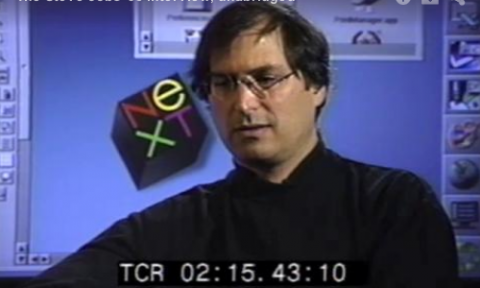
In late October, Computerworld unearthed a lengthy interview with Steve Jobs originally recorded back in 1995, when Jobs was at NeXT Computer, and still two years away from his triumphant return to Apple. Filmed as part of an oral history project, the wide-ranging interview begins with Jobs’ childhood and his early school days, and it all sets the stage for Jobs to muse on the state of public education in America. He began:
I’d like the people teaching my kids to be good enough that they could get a job at the company I work for, making a hundred thousand dollars a year. Why should they work at a school for thirty-five to forty thousand dollars if they could get a job here at a hundred thousand dollars a year? Is that an intelligence test? The problem there of course is the unions. The unions are the worst thing that ever happened to education because it’s not a meritocracy. It turns into a bureaucracy, which is exactly what has happened. The teachers can’t teach and administrators run the place and nobody can be fired. It’s terrible.
Asked what changes he would make, Jobs continued:
I’ve been a very strong believer in that what we need to do in education is to go to the full voucher system. I know this isn’t what the interview was supposed to be about but it is what I care about a great deal.… The problem that we have in this country is that [parents] went away. [They] stopped paying attention to their schools, for the most part. What happened was that mothers started working and they didn’t have time to spend at PTA meetings and watching their kids’ school. Schools became much more institutionalized and parents spent less and less and less time involved in their kids’ education. What happens when a customer goes away and a monopoly gets control … is that the service level almost always goes down.
And so the answer. Vouchers, entrepreneurship and market competition:
I’ve suggested as an example, if you go to Stanford Business School, they have a public policy track; they could start a school administrator track. You could get a bunch of people coming out of college tying up with someone out of the business school, they could be starting their own school. You could have twenty-five year old students out of college, very idealistic, full of energy instead of starting a Silicon Valley company, they’d start a school. I believe that they would do far better than any of our public schools would. The third thing you’d see is I believe, is the quality of schools again, just in a competitive marketplace, start to rise. Some of the schools would go broke. A lot of the public schools would go broke. There’s no question about it. It would be rather painful for the first several years.… The biggest complaint of course is that schools would pick off all the good kids and all the bad kids would be left to wallow together in either a private school or remnants of a public school system. To me that’s like saying “Well, all the car manufacturers are going to make BMWs and Mercedes and nobody’s going to make a ten thousand dollar car.” I think the most hotly competitive market right now is the ten thousand dollar car area. You’ve got all the Japanese playing in it. You’ve got General Motors who spent five million dollars subsidizing Saturn to compete in that market. You’ve got Ford which has just introduced two new cars in that market. You’ve got Chrysler with the Neon.…
The full transcript appears here. Or, if you want to watch the interview on video, you can jump to Computerworld, where, rather lamely, you will need to register before watching the actual talk. Bad job by Computerworld.
Kellogg’s first started marketing Rice Krispies way back in 1928, and, ever since, we’ve grown accustomed to wholesome advertising campaigns that feature the cartoon mascots Snap, Crackle and Pop. (See ad from 1939.) For a brief moment in 1964, all of this wholesomeness was put aside when the J. Walter Thompson ad agency worked with the Rolling Stones to create a hipper, more inspired jingle. The resulting commercial aired briefly only in the UK…
If you would like to support the mission of Open Culture, consider making a donation to our site. It’s hard to rely 100% on ads, and your contributions will help us continue providing the best free cultural and educational materials to learners everywhere. You can contribute through PayPal, Patreon, and Venmo (@openculture). Thanks!
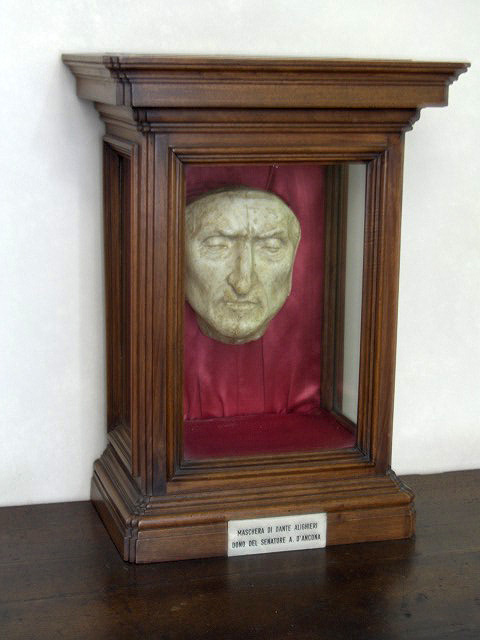
Death masks — they have been around since the days of King Tut in Ancient Egypt, and (perhaps) Agamemnon and Cassandra in Ancient Greece. A way to remember the character and expressions of the dead, this memorial practice continued right down through the Middle Ages when wax and plaster became the materials of choice.
Cellist Yo-Yo Ma is famous for his eclecticism. From Baroque chamber music to traditional Chinese melodies, Ma delights in dissolving barriers. His latest genre-hopping project is The Goat Rodeo Sessions, an inventive bluegrass collaboration with bassist Edgar Meyer, fiddler Stuart Duncan and Mandolinist Chris Thile. Vocalist Aoife O’Donovan joins the group on two songs. The expression “goat rodeo” refers to a chaotic situation where a group of people with differing viewpoints have to work together to avert disaster. When the group showed up recently at Google’s New York offices for a brief performance and discussion (see above), Ma compared The Goat Rodeo Sessions to the ecological “Edge Effect,” where contrasting eco-systems come together. “You have the least density of life forms, but you actually have the most variety of new life forms,” explained Ma. “I think we all probably, as a group, enjoy going to the edge because it’s thrilling to discover new life forms. It’s thrilling to take from what you know and try something that really hasn’t quite happened in the same way before.”
All of this provides a good excuse to post another favorite video of ours — CSN’s one-time bandmate Neil Young playing Ohio, a now canonical song from the protest movement songbook. The haunting clip was recorded live at Massey Hall in 1971, and appears on one of the finer acoustic guitar LPs.
“Music,” Gottfried Leibniz famously said, “is the pleasure the human mind experiences from counting without being aware that it is counting.” Computer artist Alexander Chen makes this pleasure visible with Baroque.Me, his geometric computer animation of the Prelude to Johann Sebastian Bach’s Cello Suite No. 1 in G major.
Chen visualized the piece by imagining a harp with strings that would automatically morph into different lengths according to the principles of Pythagorean tuning. “It’s math based on the fraction 2/3,” writes Chen on his blog. “I started with the longest string, setting it to a symbolic length of pixels. When cut to 2/3 length, it goes up a fifth. Cut its length by 1/2 and it goes up an octave. 3/4 length, one fourth. From these simple numbers I calculated the relative string lengths of all the notes in the piece.” He used eight strings because the Prelude’s phrasing is in groups of eight notes. The strings are “plucked” by two symmetrical pairs of nodes that revolve at a uniform rate, rather like a digital music box.
Chen, 30, lives in Brooklyn, NY, and works in the Google Creative Lab. One of his most popular pieces for Google was the Les Paul Doodle, which allows users to digitally strum the guitar strings. Chen grew up learning music and computer programming in parallel. He plays the classical viola, but with the Bach animation he wanted to remove the performer’s interpretive element from the music. “It’s a piece that I’ve heard a lot since I was a kid,” Chen told the BBC recently. (See the “Mathematical Music” podcast, Nov. 3.) “People always bring different levels of expression to it. People play to different tempos and they add a lot of dynamics, or less dynamics. But what I wanted to let the computer do was just kind of to play in a really neutral way, because what I really wanted to express was how much emotion and intensity is just in the data of the notes themselves. I think that’s really where the beauty of the piece at its core is.”
To hear the Prelude with the interpretive element back in, you can watch this video of Pablo Casals performing it in 1954:
As the French like to say, plus ça change, plus c’est la même chose. The more things change, the more they stay the same. Before there was Twitter, Facebook and Google+ (click to follow us), Europeans living in the seventeenth and eighteenth centuries had to deal with their own version of information overload. Emerging postal systems, the proliferation of short letters called billets, and the birth of newspapers and pamphlets all pumped unprecedented amounts of information — valuable information, gossip, chatter and the rest — through newly-emerging social networks, which eventually played a critical role in the French Revolution, much like Twitter and Facebook proved instrumental in organizing the Arab Spring.
These historical social networks are being carefully mapped out by scholars at Stanford. Above, we have Anaïs Saint-Jude painting the historical picture for us. Below Dan Edelstein gives you a closer look at Stanford’s Mapping the Republic of Letters project.
Speaking at an AFI Seminar in 1970, Alfred Hitchcock revealed the essential ingredients that went into making his films. When he stripped everything away, what Hitchcock really cared about was creating suspense films (not mystery films) and getting the suspense element right. In the famous clip above, the director explains why suspenseful scenes have to simmer for a time and then cool down properly. Things can’t be brought to a rapid boil and then be quickly taken off the stove. Hitchcock once made that mistake in his 1936 film, Sabotage. (Watch the offending scene right below or find the full film here.)
Of course, Hitchcock learned from his mistake, and thereafter shot countless scenes where the suspense builds in the right way. But we particularly wanted to find one scene that pulls off the bomb scenario, and so here it goes. From 1957 to 1959, Hitchcock produced Suspicion, a television series for NBC, and he personally directed one episode called “Four O’Clock”. It features a watchmaker who suspects his wife of having an affair, and so, filled with jealousy, he decides to murder her with a bomb made by his own hands. Things take an unexpected turn, however, when two burglars tie him up in the basement with the ticking bomb. We leave you with the final, climactic scene.
If you would like to support the mission of Open Culture, consider making a donation to our site. It’s hard to rely 100% on ads, and your contributions will help us continue providing the best free cultural and educational materials to learners everywhere. You can contribute through PayPal, Patreon, and Venmo (@openculture). Thanks!
Just a very quick fyi: Today, we launched an official Google+ page for Open Culture. It’s another way to get intelligent media delivered to your digital doorstep each day, and to share it with friends. If you don’t have a Google+ account, you can create one here, and Wired has a nice little primer on using the service here.
Beyond Google+, we also have an active presence on Facebook and particularly Twitter. So if you want a double dose of Open Culture, you now know where to find it…
We're hoping to rely on loyal readers, rather than erratic ads. Please click the Donate button and support Open Culture. You can use Paypal, Venmo, Patreon, even Crypto! We thank you!
Open Culture scours the web for the best educational media. We find the free courses and audio books you need, the language lessons & educational videos you want, and plenty of enlightenment in between.