Aleister Crowley & William Butler Yeats Get into an Occult Battle, Pitting White Magic Against Black Magic (1900)

crowley-yeats

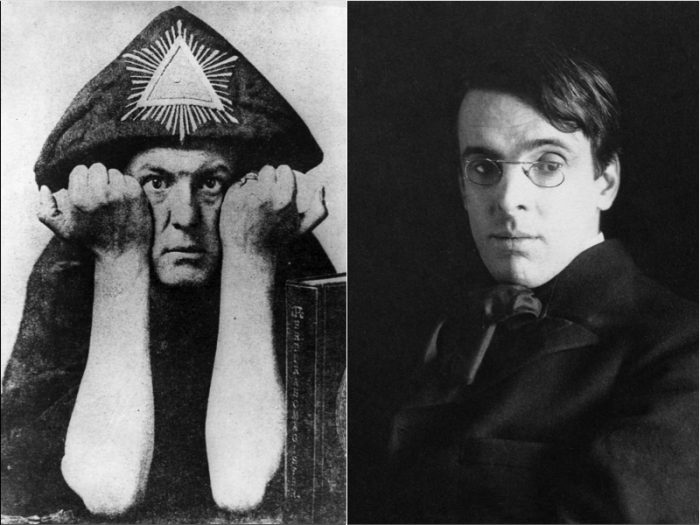
Aleis­ter Crow­ley—Eng­lish magi­cian and founder of the reli­gion of Thele­ma—has been admired as a pow­er­ful the­o­rist and prac­ti­tion­er of what he called “Mag­ick,” and reviled as a spoiled, abu­sive buf­foon. Falling some­where between those two camps, we find the opin­ion of Crowley’s bit­ter rival, the Irish poet William But­ler Yeats, who once pas­sion­ate­ly wrote that the study of mag­ic was “the most impor­tant pur­suit of my life….. The mys­ti­cal life is the cen­ter of all that I do and all that I think and all that I write.”

Crow­ley would sure­ly say the same, but his mag­ic was of a much dark­er, more obses­sive vari­ety, and his suc­cess as a poet insignif­i­cant next to Yeats. “Crow­ley was jeal­ous,” argues the blog Rune Soup, “He was nev­er able to speak the lan­guage of poet­ic sym­bol with the con­fi­dence of a native speak­er in the way Yeats def­i­nite­ly could.” In a 1948 Par­ti­san Review essay, lit­er­ary crit­ic and Yeats biog­ra­ph­er Richard Ell­mann tells the sto­ry dif­fer­ent­ly, dri­ly report­ing on the con­flict as its par­tic­i­pants saw it—as a gen­uine war between com­pet­ing forms of prac­ti­cal mag­ic.

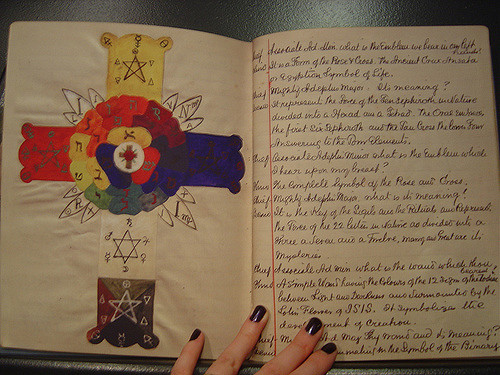
Hav­ing been eject­ed from the occult Theo­soph­i­cal soci­ety for his mag­i­cal exper­i­ments, writes Jamie James at Lapham’s Quar­ter­ly, Yeats joined the Her­met­ic Order of the Gold­en Dawn, “an even more exot­ic cult, which claimed direct descent from the her­met­ic tra­di­tion of the Renais­sance and into remote antiq­ui­ty.” At var­i­ous times, the order includ­ed writ­ers Arthur Machen and Bram Stok­er, Yeats’ beloved Irish rev­o­lu­tion­ary Maud Gonne, and famous magi­cians Arthur Edward Waite and Crow­ley. (Just below, see a page from Yeats’ Gold­en Dawn jour­nal. See sev­er­al more here.)

yeats-journal

“When Crow­ley showed a ten­den­cy to use his occult pow­ers for evil rather than for good,” Ell­mann writes, “the adepts of the order, Yeats among them, decid­ed not to allow him to be ini­ti­at­ed into the inner cir­cle; they feared that he would pro­fane the mys­ter­ies and unleash pow­er­ful mag­ic forces against human­i­ty.” Crow­ley’s ouster lead to a con­fronta­tion in 1900 that might make you think—depending on your frame of reference—of the war­ring magi­cians on South Park or of Susan­na Clark’s Jonathan Strange & Mr. Nor­rell, or both. “Crow­ley refused to accept their deci­sion,” writes Ull­mann, and after some astral attacks on Yeats,

.… in Highlander’s tar­tan, with a black Crusader’s cross on his breast… Crow­ley arrived at the Gold­en Dawn tem­ple in Lon­don. Mak­ing the sign of the pen­ta­cle invert­ed and shout­ing men­aces at the adepts, Crow­ley climbed the stairs. But Yeats and two oth­er white magi­cians came res­olute­ly for­ward to meet him, ready to pro­tect the holy place at any cost. When Crow­ley came with­in range the forces of good struck out with their feet and kicked him down­stairs.

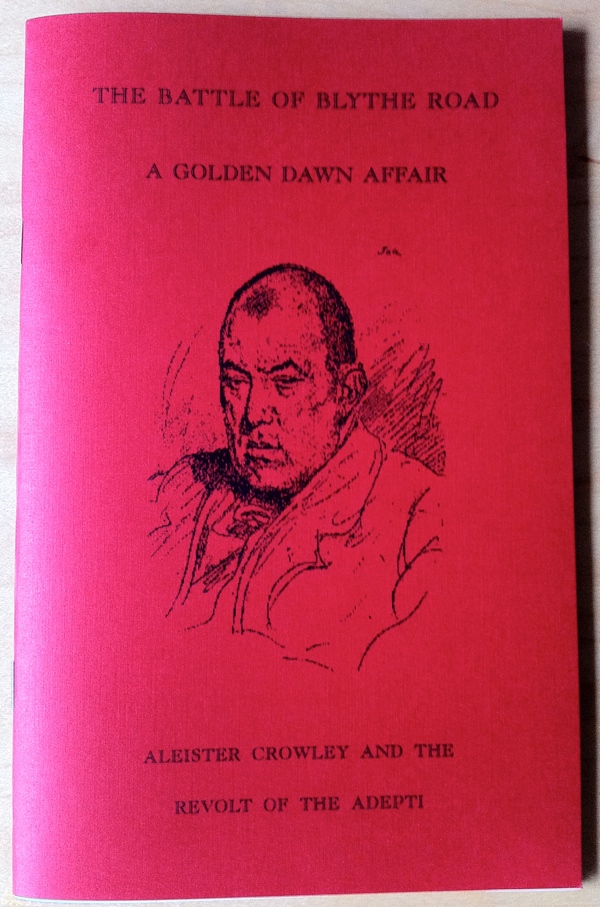
This almost slap­stick van­quish­ing became known as “the Bat­tle of Blythe Road” and has been immor­tal­ized in a pub­li­ca­tion of that very name, with accounts from Crow­ley, Yeats, and Gold­en Dawn adepts William West­cott, Flo­rence Farr and oth­ers. But the war was not won, Ell­mann notes, and Crow­ley went look­ing for converts—or victims—in Lon­don, while Yeats attempt­ed to stop him with “the req­ui­site spells and exor­cisms.” One such spell sup­pos­ed­ly sent a vam­pire that “bit and tore at his flesh” as it lay beside Crow­ley all night. Despite Yeats’ super­nat­ur­al inter­ven­tions, one of Crowley’s tar­gets, a young painter named Althea Gyles, was “final­ly forced to give way entire­ly to his bale­ful fas­ci­na­tion.”

kuntz-the-battle-of-blythe-road

Ellmann’s both humor­ous and unset­tling nar­ra­tive shows us Crow­ley-as-preda­tor, a char­ac­ter­i­za­tion the wealthy Eng­lish­man had appar­ent­ly earned, as “respon­si­ble gov­ern­ments exclud­ed him from one coun­try after anoth­er lest he bring to bear upon their inhab­i­tants his hos­tile psy­chic ray.” [Bren­da Mad­dox at The Guardian gives a slight­ly dif­fer­ent account of the Bat­tle, in which “Yeats, with a bounc­er, saw him off the premis­es, called in the police and end­ed up (vic­to­ri­ous) in court.” ] Yeats and the oth­er mem­bers’ dis­taste for Crow­ley sure­ly had some­thing to do with his preda­to­ry behav­ior. But the rival­ry was also indeed a poet­ic one, albeit extreme­ly one-sided.

As Crow­ley biog­ra­ph­er Lawrence Sutin writes, “the earnest­ness of the young Crow­ley could not com­pen­sate, in Yeats’ mind, for the tech­ni­cal dif­fi­cul­ties and rhetor­i­cal excess­es of his verse.” Yeats’ opin­ion “infu­ri­at­ed Crow­ley,” who indulged in the mag­ic of pro­jec­tion, writ­ing “What hurt him [Yeats] was the knowl­edge of his own incom­pa­ra­ble infe­ri­or­i­ty.” Crow­ley’s remarks are both “ridicu­lous,” Sutin com­ments, and apply “far more con­vinc­ing­ly to Crow­ley him­self.” Nev­er­the­less, Crowley’s “Mag­ick,” con­tin­ued to make Yeats uneasy, and he may have invoked Crow­ley in his famous line about the “rough beast” slouch­ing toward Beth­le­hem in 1919’s “The Sec­ond Com­ing.”

While the mag­i­cal bat­tle between them might pro­voke more laugh­ter than curios­i­ty about their dif­fer­ent brands of mag­ic, Sutin notes a cru­cial dif­fer­ence that dis­tin­guish­es the two men: “where­as Crow­ley placed him­self in the ser­vices of the Antichrist ‘the sav­age God’ of the new cycle, Yeats’s fideli­ty was to ‘the old king,’ to ‘that unfash­ion­able gyre.’” The gyre, so cen­tral an image in “The Sec­ond Com­ing,” stands for Yeats’ the­o­ry of time and his­to­ry, and it belongs to an old mys­ti­cism and folk­lore that for him were syn­ony­mous with poet­ry.

Crow­ley viewed the occult as a source of per­son­al power—his rev­e­la­tions filled books devot­ed to explain­ing the phi­los­o­phy of Thele­ma (“Do what thou wilt shall be the whole of the Law. Love is the law, love under will); ” Yeats was cer­tain­ly more of an “orga­ni­za­tion man… in his occult activ­i­ties,” writes Mad­dox, and sought to prac­tice mag­ic as a holis­tic activ­i­ty, ful­ly inte­grat­ed into his social, polit­i­cal, and aes­thet­ic life. His “pub­lic phi­los­o­phy,” as he called it, writes James, “pro­pounds an extra­or­di­nar­i­ly con­vo­lut­ed sys­tem that aims to inte­grate the human per­son­al­i­ty with the cos­mos.”

To under­stand Crowley’s mag­i­cal think­ing, we can prob­a­bly skip his poet­ry and attempt as best we can to the deci­pher his sev­er­al arcane, tech­ni­cal books full of invent­ed terms and sym­bols. To under­stand Yeats, as much as that’s pos­si­ble, we need to read his poet­ry, the purest expres­sion of his mys­ti­cal sys­tem and sym­bol­ic thought.

via Metafil­ter

Relat­ed Con­tent:

Aleis­ter Crow­ley: The Wickedest Man in the World Doc­u­ments the Life of the Bizarre Occultist, Poet & Moun­taineer

Rare 1930s Audio: W.B. Yeats Reads Four of His Poems

W.B. Yeats’ Poem “When You Are Old” Adapt­ed into a Japan­ese Man­ga Com­ic

Josh Jones is a writer and musi­cian based in Durham, NC. Fol­low him at @jdmagness

Hear Bill Murray’s Favorite Poems Read Aloud by Murray Himself & Their Authors

I’d be wary of any movie star who invites me to his hotel room to “read poet­ry” unless said star was doc­u­ment­ed poet­ry nut, Bill Mur­ray.

Ear­li­er this year, Leigh Haber, book edi­tor of O, The Oprah Mag­a­zine, reached out to Mur­ray to see if he’d share some of his favorite poems in cel­e­bra­tion of Nation­al Poet­ry Month. In true Mur­ray-esque fash­ion, he wait­ed until dead­line to return her call, sug­gest­ing that they meet in his room at the Car­lyle, where he would recite his choic­es in per­son.

Such celebri­ty shenani­gans are unheard of at the Chateau Mar­mont!

Murray’s favorite poems:

What the Mir­ror Said” by Lucille Clifton

At the top of the page, Mur­ray reads the poem at a ben­e­fit for New York’s Poets House, adopt­ing a light accent sug­gest­ed by the dialect of the nar­ra­tor, a mir­ror full of appre­ci­a­tion for the poet’s wom­an­ly body. Clifton said that the “germ” of the poem was vis­it­ing her hus­band at Har­vard, and feel­ing out of place among all the slim young coeds. Thus­ly does Mur­ray posi­tion him­self as a hero to every female above the age of … you decide.

Oat­meal” by Gal­way Kin­nell

Kin­nell, who sought to enliv­en a drea­ry bowl of oat­meal with such din­ing com­pan­ions as Keats, Spenser and Mil­ton, shared Murray’s play­ful sen­si­bil­i­ty. In an inter­view con­duct­ed as part of Michele Root-Bernstein’s World­play Project he remarked:

… it doesn’t seem like play at the time of doing it, but part of the whole con­struct of the work, and even though the work might be extreme­ly seri­ous and even morose, still there’s that ele­ment of play that is just an insep­a­ra­ble part of it.

I Love You Sweat­h­eart” by Thomas Lux

Mur­ray told O, which incor­rect­ly report­ed the poem’s title as “I Love You Sweet­heart” that he expe­ri­enced this one as a vibra­tion on the inside of his ribs “where the meat is most ten­der.” It would make a ter­rif­ic scene in a movie, and who bet­ter to play the lover risk­ing his life to mis­spell a term of endear­ment on a bridge than Bill Mur­ray?

Famous” by Nao­mi Shi­hab Nye

Alas, we could find no footage of Nye read­ing her love­ly poem aloud, but you can read it in full over at The Poet­ry Foun­da­tion. It’s easy to see why it speaks to Mur­ray.

via O, The Oprah Mag­a­zine

Relat­ed Con­tent:

Bill Mur­ray Reads Poet­ry at a Con­struc­tion Site: Emi­ly Dick­in­son, Bil­ly Collins & More

Bill Mur­ray Reads Great Poet­ry by Bil­ly Collins, Cole Porter, and Sarah Man­gu­so

Bill Mur­ray Gives a Delight­ful Read­ing of Twain’s Huck­le­ber­ry Finn (1996)

Bill Mur­ray Reads Poet­ry at a Con­struc­tion Site: Emi­ly Dick­in­son, Bil­ly Collins & More

Ayun Hal­l­i­day is an author, illus­tra­tor, the­ater mak­er and Chief Pri­ma­tol­o­gist of the East Vil­lage Inky zine.  Her play Zam­boni Godot is open­ing in New York City in March 2017. Fol­low her @AyunHalliday.

Henri Matisse Illustrates James Joyce’s Ulysses (1935)

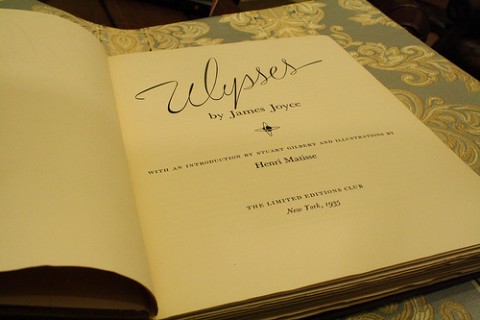
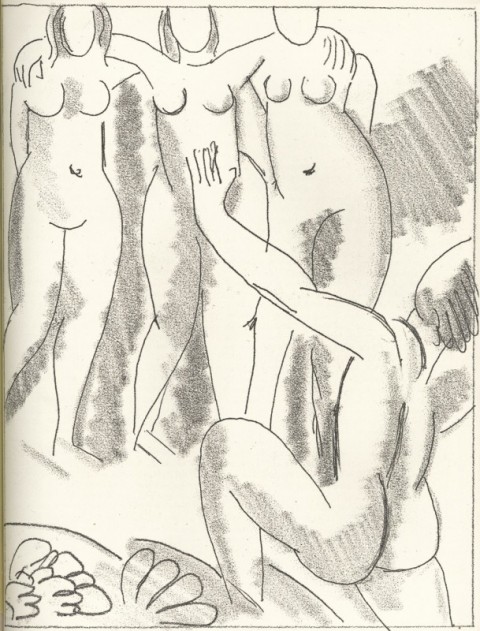
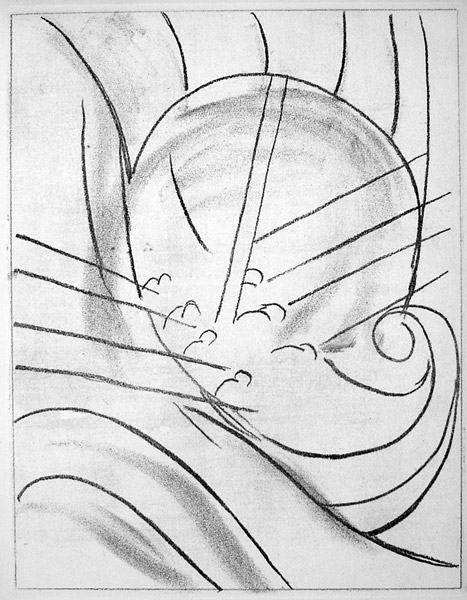
Last year, fans of mod­ernist Irish lit­er­a­ture and impres­sion­ist art saw a must-own vol­ume go under the ham­mer at Bon­hams. “In 1935 the French artist, Hen­ri Matisse, was com­mis­sioned to illus­trate an edi­tion of Ulysses for sub­scribers to the Lim­it­ed Edi­tion Club in Amer­i­ca,” announced Artlyst. “Each of the 1,000 copies was signed by Matisse and 250 were also signed by James Joyce. A copy of the book signed by both men is esti­mat­ed at £6,000 to £8,000.”

In the event it went for £6,250, not a bad deal con­sid­er­ing the hands that wrote those sig­na­tures and the rar­i­ty, signed or unsigned, of this unusu­al book itself. (It cer­tain­ly beats, say, $37,000.) Brain­pick­ings’ Maria Popo­va writes that, after first spot­ting the Matisse-illus­trat­ed Ulysses here on Open Cul­ture, “I gath­ered up my year’s worth of lunch mon­ey and was able to grab one of the last copies avail­able online — a glo­ri­ous leather-bound tome with 22-karat gold accents, gilt edges, moire fab­ric end­pa­pers, and a satin page mark­er.” Ver­sions signed by Matisse are appar­ent­ly available–at a steep price–on Ama­zon.

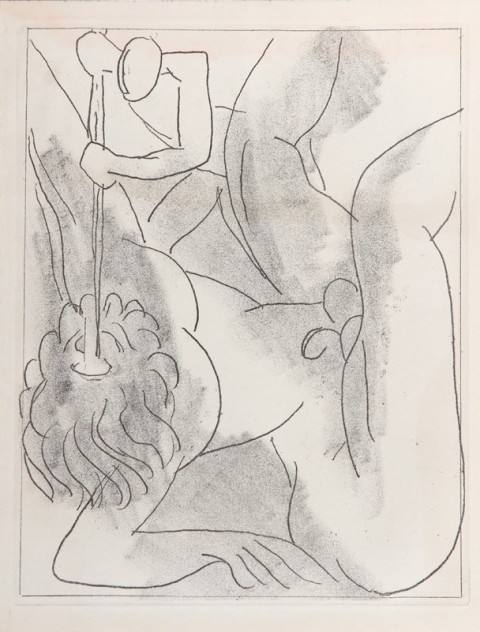
Popo­va adds that “the Matisse draw­ings inside it, of course, are the most price­less of its offer­ings — dou­bly so because, for all their beau­ty, they’re a tragi­com­e­dy of qua­si-col­lab­o­ra­tion.” From whence the tragi­com­e­dy? Pub­lish­ing lore has it that, despite the pro­vi­sion of a full French trans­la­tion of the Ulysses text, Matisse made his illus­tra­tive etch­ings — in the fash­ion of many an under­grad­u­ate with a paper due — with­out ever hav­ing got around to read­ing the book him­self.

“I’ve nev­er ‘read’ Joyce’s Ulysses, and it’s quite plau­si­ble that I nev­er will,” Matis­se’s coun­try­man Pierre Bayard would write sev­en­ty years lat­er in his best­selling How to Talk About Books You Haven’t ReadYet “I feel per­fect­ly com­fort­able when Ulysses comes up in con­ver­sa­tion, because I can sit­u­ate it with rel­a­tive pre­ci­sion in rela­tion to oth­er books. I know, for exam­ple, that it is a retelling of the Odyssey, that its nar­ra­tion takes the form of a stream of con­scious­ness, that its action unfolds in Dublin over the course of a sin­gle day, etc.” — all things that Matisse, too, prob­a­bly knew about Ulysses.

He cer­tain­ly knew that it sup­pos­ed­ly retold the sto­ry of the Odyssey, and so, in a now-inge­nious-look­ing strat­e­gy to not just talk about an unread book but to illus­trate it, he went to the source. Or rather, he went to one of the count­less cul­tur­al, lit­er­ary, his­tor­i­cal, and lin­guis­tic sources upon which Joyce drew to com­pose his mas­ter­piece, bas­ing his art direct­ly on Home­r’s epic poem, in its own way a work more talked about than read. Joyce him­self, who once described much of the tex­tu­al con­tent of Ulysses as intend­ed to “keep the pro­fes­sors busy for cen­turies argu­ing over what I meant,” may well have admired Matis­se’s clar­i­ty of vision, no mat­ter how much-non read­ing it took to refine.

Relat­ed Con­tent:

James Joyce’s Ulysses: Down­load as a Free Audio Book & Free eBook

Vladimir Nabokov Cre­ates a Hand-Drawn Map of James Joyce’s Ulysses

Read Ulysses Seen, A Graph­ic Nov­el Adap­ta­tion of James Joyce’s Clas­sic

New Art Edi­tion of James Joyce’s Ulysses Fea­tures All 265,000 Words Writ­ten by Hand on Big Wood­en Poles

Hen­ri Matisse Illus­trates Baudelaire’s Cen­sored Poet­ry Col­lec­tion, Les Fleurs du Mal

Vin­tage Film: Watch Hen­ri Matisse Sketch and Make His Famous Cut-Outs (1946)

Based in Seoul, Col­in Mar­shall writes and broad­casts on cities and cul­ture. He’s at work on a book about Los Ange­les, A Los Ange­les Primer, the video series The City in Cin­e­ma, the crowd­fund­ed jour­nal­ism project Where Is the City of the Future?, and the Los Ange­les Review of Books’ Korea Blog. Fol­low him on Twit­ter at @colinmarshall or on Face­book.

Periodic Table Battleship!: A Fun Way To Learn the Elements

periodic-table-battleship

Nitro­gen.

Phos­pho­rous.

Arsenic.

Aw, you sunk my bat­tle­ship!

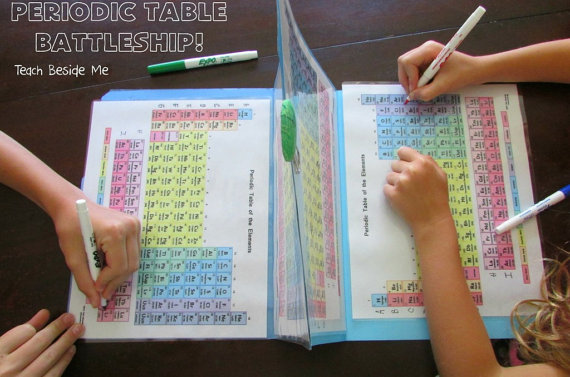
Mil­ton Bradley’s clas­sic board game, Bat­tle­ship, can now be added to the ros­ter of fun, cre­ative ways to com­mit the Peri­od­ic Table of Ele­ments to mem­o­ry.

Karyn Tripp, a home­school­ing moth­er of four, was inspired by her eldest’s love of sci­ence to cre­ate Peri­od­ic Table Bat­tle­ship. I might sug­gest that the game is of even greater val­ue to those who don’t nat­u­ral­ly grav­i­tate toward the sub­ject.

Faced with the option of learn­ing the ele­ments via show­er cur­tain or cof­fee mug osmo­sis, I think I’d pre­fer to take out an opponent’s sub­ma­rine.

Rules of engage­ment are very sim­i­lar to the orig­i­nal. Rather than call­ing out posi­tions on a grid, play­ers set their tor­pe­does for spe­cif­ic ele­ment names, abbre­vi­a­tions or coor­di­nates. Advanced play­ers might go for the atom­ic num­ber. the lin­go is the same: “hit,” “miss” and—say it with me—“you sunk my bat­tle­ship!

The win­ner is the play­er who wipes out the other’s fleet, though I might toss the los­er a cou­ple of rein­force­ment ves­sels, should he or she demon­strate pass­ing famil­iar­i­ty with var­i­ous met­als, halo­gens, and noble gas­es.

To make your own Peri­od­ic Table Bat­tle­ship set you will need:

4 copies of the Peri­od­ic Table (lam­i­nate them for reuse)

2 file fold­ers

paper clips, tape or glue

2 mark­ers (dry erase mark­ers if play­ing with lam­i­nat­ed tables

To Assem­ble and Play:

As you know, the Peri­od­ic Table is already num­bered along the top. Label each of the four tables’  ver­ti­cal rows alpha­bet­i­cal­ly (to help younger play­ers and those inclined to fruit­less search­ing for the ele­ments des­ig­nat­ed by their oppo­nent)

Fas­ten two Peri­od­ic Tables to each fold­er, fac­ing the same direc­tion.

Uses mark­ers to cir­cle the posi­tion of your ships on the low­er Table:

5 con­sec­u­tive spaces: air­craft car­ri­er

4 con­sec­u­tive spaces: bat­tle­ship

3 con­sec­u­tive spaces: destroy­er or sub­ma­rine

2 con­sec­u­tive spaces: patrol boat

Prop the fold­ers up with books or some oth­er method to pre­vent oppo­nents from sneak­ing peeks at your mar­itime strat­e­gy.

Take turns call­ing out coor­di­nates, ele­ment names, abbre­vi­a­tions or atom­ic num­bers:

When a turn results in a miss, put an X on the cor­re­spond­ing spot on the upper table.

When a turn results in a hit, cir­cle the cor­re­spond­ing spot on the upper table.

Con­tin­ue play until the bat­tle is won.

Repeat until the Table of Ele­ments is mas­tered.

Sup­ple­ment lib­er­al­ly with Tom Lehrer’s Ele­ments song.

Those not inclined toward arts and crafts can pur­chase a pre-made  Peri­od­ic Table Bat­tle­ship set from Tripp’s Etsy shop.

Relat­ed Con­tent:

Learn to Write Through a Video Game Inspired by the Roman­tic Poets: Shel­ley, Byron, Keats

Play Mark Twain’s “Mem­o­ry-Builder,” His Game for Remem­ber­ing His­tor­i­cal Facts & Dates

200 Free Kids Edu­ca­tion­al Resources: Video Lessons, Apps, Books, Web­sites & More 

Ayun Hal­l­i­day is an author, illus­tra­tor, the­ater mak­er, sec­u­lar home­school­er and Chief Pri­ma­tol­o­gist of the East Vil­lage Inky zine.  Her play Zam­boni Godot is open­ing in New York City in March 2017. Fol­low her @AyunHalliday.

Learn to Code with Harvard’s Popular Intro to Computer Science Course: The 2016 Edition

This fall, Har­vard has been rolling out videos from the 2016 edi­tion of Com­put­er Sci­ence 50 (CS50), the uni­ver­si­ty’s intro­duc­to­ry cod­ing course designed for majors and non-majors alike. Taught by David Malan, a peren­ni­al­ly pop­u­lar pro­fes­sor (you’ll imme­di­ate­ly see why), the one-semes­ter course (taught most­ly in C) com­bines cours­es typ­i­cal­ly known else­where as “CS1” and “CS2.”

Even if you’re not a Har­vard stu­dent, you’re wel­come to fol­low CS50 online by head­ing over to this site here. There you will find video lec­tures (stream them all above or access them indi­vid­u­al­ly here), prob­lem sets, quizzes, and oth­er use­ful course mate­ri­als. Once you’ve mas­tered the mate­r­i­al cov­ered in CS50, you can start branch­ing out into new areas of cod­ing by perus­ing our big col­lec­tion of Free Online Com­put­er Sci­ence Cours­es, a sub­set of our larg­er col­lec­tion, 1,700 Free Online Cours­es from Top Uni­ver­si­ties

If you would like to sup­port the mis­sion of Open Cul­ture, con­sid­er mak­ing a dona­tion to our site. It’s hard to rely 100% on ads, and your con­tri­bu­tions will help us con­tin­ue pro­vid­ing the best free cul­tur­al and edu­ca­tion­al mate­ri­als to learn­ers every­where. You can con­tribute through Pay­Pal, Patre­on, and Ven­mo (@openculture). Thanks!

Relat­ed Con­tent:

Free Text­books: Com­put­er Sci­ence

Free Online Com­put­er Sci­ence Cours­es

Codecademy’s Free Cours­es Democ­ra­tize Com­put­er Pro­gram­ming

by | Permalink | Make a Comment ( 2 ) |

Hear Christopher Walken’s Wonderful Reading of Edgar Allan Poe’s “The Raven”

Christo­pher Walken, writes Ari­fa Akbar in the Inde­pen­dent, is a “sin­is­ter-look­ing man who has made a liv­ing from look­ing — and act­ing — sin­is­ter,” but he did­n’t start out that way. His “career tra­jec­to­ry – start­ing benign­ly enough in chil­dren’s com­mer­cials, musi­cals, and dance – took a dark­er turn two years after his near-miss with Star Wars,” when he’d almost land­ed the Han Solo role that went to Har­ri­son Ford. Instead he played “the emo­tion­al­ly dec­i­mat­ed Viet­nam vet­er­an in Michael Cimi­no’s The Deer Hunter, and was immor­tal­ized in the ‘Russ­ian roulette’ scene as a gaunt, bug-eyed mad­man aim­ing a shak­ing revolver to his own head. The role won him an Oscar and led to assem­bly-line cast­ing in an array of deranged, demon­ic parts.”

Of course, when an actor becomes syn­ony­mous with a grim but art­ful inten­si­ty, he must soon­er or lat­er inter­pret the work of a writer syn­ony­mous with grim but art­ful inten­si­ty: Edgar Allan Poe. And so on this day, the 167th anniver­sary of Poe’s death under still-unex­plained cir­cum­stances, we give you Walken’s per­for­mance of “The Raven.”

The 1845 poem stands today as Poe’s best-known work by far, as he seemed to intend: he wrote it, so he lat­er claimed in a mag­a­zine essay, with “the inten­tion of com­pos­ing a poem that should suit at once the pop­u­lar and the crit­i­cal taste” and pack an emo­tion­al punch as well.

Walken, for his part, has var­i­ous­ly appealed to both pop­u­lar and crit­i­cal tastes in the rough­ly 130 roles he has played over his six­ty-year career, some­how earn­ing both respect as a seri­ous dra­mat­ic actor and almost instinc­tive audi­ence laugh­ter as a fig­ure of fun. At his best, Walken’s dark­ness con­tains a light­ness and his light­ness a dark­ness, all of which you can hear in his nine-minute recita­tion, accom­pa­nied by music and sound effects, of the words of this name­less man tor­ment­ed by a talk­ing bird while pin­ing for his lost love Lenore. If any­body can cred­i­bly stare into the abyss Poe’s work opens up, Christo­pher Walken can — after all, he knows what it means not to fear the reaper.

Relat­ed Con­tent:

The Great Stan Lee Reads Edgar Allan Poe’s “The Raven”

Christo­pher Lee Reads Edgar Allan Poe’s “The Raven,” and From “The Fall of the House of Ush­er”

James Earl Jones Reads Edgar Allan Poe’s “The Raven” and Walt Whitman’s “Song of Myself”

Lou Reed Rewrites Edgar Allan Poe’s “The Raven.” See Read­ings by Reed and Willem Dafoe

John Astin, From The Addams Fam­i­ly, Recites “The Raven” as Edgar Allan Poe

The Simp­sons Present Edgar Allan Poe’s “The Raven,” and Teach­ers Now Use It to Teach Kids the Joys of Lit­er­a­ture

Hear the 14-Hour “Essen­tial Edgar Allan Poe” Playlist: “The Raven,” “The Tell-Tale Heart” & Much More

Based in Seoul, Col­in Mar­shall writes and broad­casts on cities and cul­ture. He’s at work on a book about Los Ange­les, A Los Ange­les Primer, the video series The City in Cin­e­ma, the crowd­fund­ed jour­nal­ism project Where Is the City of the Future?, and the Los Ange­les Review of Books’ Korea Blog. Fol­low him on Twit­ter at @colinmarshall or on Face­book.

Watch the Proto-Punk Band The Monks Sow Chaos on German TV, 1966: A Great Concert Moment on YouTube


Call them pro­to-punk, call them avant-garde, but the Amer­i­can ex-pat group the Monks would have been a tiny foot­note in rock music his­to­ry if it wasn’t for a slow redis­cov­ery of the group’s work. The above video is from their sum­mer 1966 appear­ance on Beat Club, a live pop music show broad­cast in Ger­many.

Enthu­si­as­tic teens bop away to the repet­i­tive stomp of “Monk Chant,” with its trib­al drums from Roger John­ston, a mul­ti-tam­borine attack, and a solo sec­tion which fea­tures both Lar­ry Clark’s man­ic organ and three band mem­bers attack­ing the strings of a prone gui­tar. There’s a sense that any­thing can hap­pen. These guys are glee­ful­ly crazy. (On oth­er songs, band mem­ber Dave Day Havliceck would fur­ther freak out audi­ences with his elec­tric ban­jo.)

Nei­ther ur-hip­pies nor beat­niks, the guys behind the Monks were five Amer­i­can G.I.s who were sta­tioned in Ger­many and first start­ed a more tra­di­tion­al garage rock band called the Five Torquays (not to be con­fused with the surf band from Orange Coun­ty). After one sin­gle, they dropped the cov­er songs and try­ing to ape pop­u­lar trends and turned into the Monks, shav­ing their heads in a monas­tic style and dress­ing in monk’s cloth­ing.

Their bru­tal, repet­i­tive songs and anti-Viet­nam war lyrics were ahead of their time, but the lat­ter was one of the main rea­sons they found it hard to break into the Amer­i­can mar­ket after they released Black Monk Time on Poly­dor Ger­many. That and inter­nal con­flict with­in the band led to the band break­ing up in 1967. You can hear a lot of the Monks in the Vel­vet Under­ground, but it’s hard to say one was an influ­ence on the oth­er. It’s more like one great idea was in the air and only cer­tain peo­ple had their anten­nas up.

The influ­ence of the Monks popped up in the abra­sive and hyp­not­ic sounds of Krautrock sev­er­al years lat­er, and by the late 1980s post-punk band The Fall were cov­er­ing their songs “I Hate You,” “Oh, How to Do Now,” and “Shut Up.”

Jon Spencer, Mike D. of the Beast­ie Boys, Gen­e­sis P. Orridge of Psy­chic T.V., and Stephen Malk­mus of Pave­ment would all cred­it the Monks as an influ­ence.

In 1997, their sole album was rere­leased and two years lat­er the band reunit­ed for a New York con­cert to pro­mote a ret­ro­spec­tive com­pi­la­tion. In 2004, band mem­ber Roger John­ston passed from lung can­cer, and after Transat­lantic Feed­back, a 2006 doc­u­men­tary on the group, sev­er­al oth­er mem­bers had passed away.

Relat­ed Con­tent:

The Ramones, a New Punk Band, Play One of Their Very First Shows at CBGB (1974)

Kraftwerk’s First Con­cert: The Begin­ning of the End­less­ly Influ­en­tial Band (1970)

A Sym­pho­ny of Sound (1966): Vel­vet Under­ground Impro­vis­es, Warhol Films It, Until the Cops Turn Up

Ted Mills is a free­lance writer on the arts who cur­rent­ly hosts the FunkZone Pod­cast. You can also fol­low him on Twit­ter at @tedmills, read his oth­er arts writ­ing at tedmills.com and/or watch his films here.

Monty Python’s “Argument Clinic” Sketch Reenacted by Two Vintage Voice Synthesizers (One Is Stephen Hawking’s Voice)

Feel­ing irri­ta­ble, feisty, hos­tile, even? Feel like get­ting into an argu­ment? No prob­lem at all! Just hop on the social media plat­form or com­ments sec­tion of your choice, and with­in sec­onds you can be caught in a rag­ing dust­up with a total stranger—or sev­er­al total strangers at once! Isn’t the inter­net fun?!

But how did the argu­men­ta­tive ever get by before Twit­ter wars and oth­er con­tentious online inter­ac­tions? Needling peo­ple in casi­nos, road­hous­es, and cock­tail lounges? Ruin­ing hol­i­days with scream­ing match­es over the cen­ter­piece?

Many a barfight and fam­i­ly feud might have been avert­ed had Mon­ty Python’s bril­liant idea for an argu­ment clin­ic exist­ed in real life. In prin­ci­ple, it seems so civ­i­lized.

But in the sketch itself, as you can see above, vis­it­ing the argu­ment clin­ic turns out to be a lot like vis­it­ing the com­ments section—only with­out the racist and sex­ist slurs and occa­sion­al spam. Mild-man­nered Michael Palin stops in to have an argu­ment. He first stum­bles into the room reserved for “abuse,” where Gra­ham Chap­man yells nasty things at him. How famil­iar. When he reach­es the argu­ment room, 12A, he meets John Cleese, who pro­ceeds to flat­ly con­tra­dict every­thing he says.

Per­haps you’ve had the same expe­ri­ence: Palin patient­ly explains what an argu­ment is sup­posed to be, “a con­nect­ed series of state­ments intend­ed to estab­lish a propo­si­tion.” To which Cleese replies, “no it isn’t!” It’s like argu­ing with a child, an espe­cial­ly child­ish adult, or an inter­net bot with a very lim­it­ed set of respons­es. Or—as you can see at the top in the recre­ation of the sketch by two vin­tage voice synthesizers—like an argu­ment between two rudi­men­ta­ry machines.

One of these machines will sound very familiar—the small, black DECTalk Express has pro­vid­ed the voice of Stephen Hawk­ing for many years. The other—the old­er Intex Talker—is a crud­er instru­ment, and much less intel­li­gi­ble. So it’s right­ly cast in the John Cleese role. Can machines think? We’ve yet to sat­is­fac­to­ri­ly answer that ques­tion. But we know they can argue—if argu­ment means spit­ting out abu­sive phras­es and con­tra­dic­tions. How­ev­er, if we define an argu­ment as Palin/DECTalk Express does—as “an intel­lec­tu­al process”—the machines have like­ly got ways to go. As do most humans.

Sharp­en your own skills with some Intro to Crit­i­cal Think­ing videos, or with anoth­er humor­ous exam­ple of how not to argue.

via Kot­tke

Relat­ed Con­tent:

Read An Illus­trat­ed Book of Bad Argu­ments: A Fun Primer on How to Strength­en, Not Weak­en, Your Argu­ments

Daniel Den­nett Presents Sev­en Tools For Crit­i­cal Think­ing

32 Ani­mat­ed Videos by Wire­less Phi­los­o­phy Teach You the Essen­tials of Crit­i­cal Think­ing

Josh Jones is a writer and musi­cian based in Durham, NC. Fol­low him at @jdmagness

New Handbook for Educators Explains How to Produce & Distribute Free Video for the World

mooc-video-handbook

The chick­en-and-egg, forest/trees ques­tion for those who pro­duce edu­ca­tion­al and pub­lic ser­vice media is real­ly who are we pro­duc­ing our con­tent for. MIT’s Direc­tor of Dig­i­tal Learn­ing San­jay Sar­ma has said that “we” – uni­ver­si­ties in par­tic­u­lar (but also muse­ums, libraries, and oth­er edu­ca­tion­al and cul­tur­al insti­tu­tions) – “are all sort of Dis­ney, and Sony, and MGM – we pro­duce movies.” But who are we pro­duc­ing our movies for?

The answer is – per­haps obvi­ous­ly – that we are pro­duc­ing for mul­ti­ple stake­hold­ers, but that many of us are real­ly pro­duc­ing these pro­duc­tions for the world. At a time when so much crap is hap­pen­ing around the globe, it is ever more clear that our real respon­si­bil­i­ty is to improve the plan­et while we are on it, and if we can help effect that by shar­ing our knowl­edge, so much the bet­ter.

Much as U.S. and oth­er nation­al indus­tries of research and schol­ar­ly pub­lish­ing have begun to man­date some form of open or free licens­ing for the out­put of grant-fund­ed writ­ten work, so now the ques­tion aris­es should video and edu­ca­tion­al video in par­tic­u­lar find its way, too, into the com­mons. Here, too, the answer is: of course.

On the occa­sion of the third LEARNING WITH MOOCS con­fer­ence at the Uni­ver­si­ty of Penn­syl­va­nia, Intel­li­gent Tele­vi­sion is releas­ing a new guide: MOOCs and Open Edu­ca­tion­al Resources: A Hand­book for Edu­ca­tors. The guide is a step-by-step man­u­al to how to pro­duce and dis­trib­ute edu­ca­tion­al video con­tent under the freest of licens­es, with an empha­sis on Cre­ative Com­mons.

The Hand­book sit­u­ates edu­ca­tion­al video pro­duc­tion in the con­text of more than 100 years of mov­ing-image work at uni­ver­si­ties and beyond. Indeed, the book­let draws on the work of edu­ca­tion­al pro­duc­ers from the ear­ly 1900s – works such as Charles Urban, The Cin­e­mato­graph in Sci­ence, Edu­ca­tion, and Mat­ters of State and the 1920s jour­nal Visu­al Edu­ca­tion.

The impulse to share knowl­edge in a free envi­ron­ment also is not new. In many ways MOOCs and Open Course­ware and Wikipedia and Cre­ative Com­mons and Google/YouTube are all part of the same project – envi­sioned by vision­ar­ies such as Richard Stall­man, media pro­duc­ers behind the start of pub­lic broad­cast­ing here and abroad, much ear­li­er, even, by pub­lish­ers active cen­turies ago in the Enlight­en­ment, and even ear­li­er, in ancient Alexan­dria under the Ptole­ma­ic kings. The vision? A giant rich resource: a gigan­tic glob­al ency­clo­pe­dia, or Ency­clopédie, or library or muse­um, con­tribut­ing to uni­ver­sal access to human knowl­edge. With the Inter­net upon us now, we can help real­ize it.

Does the rest of the world have any right to the knowl­edge that we pro­duce at uni­ver­si­ties and oth­er cul­tur­al and edu­ca­tion­al insti­tu­tions? And do we have any oblig­a­tion to share it? We live once, but our prob­lems live on. And if the work of Richard Hof­s­tadter (an expert on “anti-intel­lec­tu­al­ism” and what he called “the para­noid style in Amer­i­can pol­i­tics”) and Edward Said (so wise on the col­lapse of colo­nial­ism and media bias), just to pick two Colum­bia Uni­ver­si­ty exam­ples, could have been record­ed and shared – and shared open­ly – we’d be the rich­er for it. Dis­sem­i­nat­ing knowl­edge now through the world’s most pow­er­ful medi­um could be our high­est call­ing.

Start read­ing MOOCs and Open Edu­ca­tion­al Resources: A Hand­book for Edu­ca­tors here.

Peter B. Kauf­man is an author, edu­ca­tor, and film pro­duc­er and the founder of Intel­li­gent Tele­vi­sion in New York. Twice serv­ing as asso­ciate direc­tor of Colum­bia University’s Cen­ter for Teach­ing and Learn­ing, he pro­duces films and edu­ca­tion­al video in close asso­ci­a­tion with uni­ver­si­ties, muse­ums, and archives, and he pub­lish­es, pro­duces, and orga­nizes numer­ous projects at the inter­sec­tion of video, edu­ca­tion, and open edu­ca­tion­al resources. He is exec­u­tive direc­tor of a foun­da­tion to pro­mote Russ­ian lit­er­a­ture and cul­ture and runs a sum­mer doc­u­men­tary film­mak­ing insti­tute for high school stu­dents every year in Con­necti­cut.

Some of Buster Keaton’s Great, Death-Defying Stunts Captured in Animated Gifs

keaton-1

In the days of silent com­e­dy, jokes by neces­si­ty con­sist­ed of phys­i­cal rou­tines. Char­lie Chaplin’s mourn­ful expres­sions, slumped shoul­ders, and fun­ny walks imme­di­ate­ly come to mind, as well as his slap­stick bits and prat­falls. Just as mem­o­rable are the dare­dev­il, death-defy­ing stunts of Harold Lloyd and Buster Keaton, who com­pet­ed with each oth­er through­out their careers. The stone­faced Keaton “suf­fered most when the talkies arrived,” notes Jana Prikryl in The New York Review of Books, and “nev­er com­mand­ed the wealth or pop­u­lar­i­ty” of Chap­lin or Lloyd in his day.

keaton-2

Nonethe­less, as Tony Zhou demon­strat­ed recent­ly in his video essay series Every Frame a Paint­ing, Keaton has since become one of those film­mak­ers who are “so influ­en­tial that no mat­ter where you look, you see traces of them every­where.” His fram­ing crops up in Wes Anderson’s care­ful set-pieces; his “acro­bat­ics and stunts” in Jack­ie Chan’s action sequences; and his dead­pan demeanor in Bill Murray’s endear­ing sad-sack per­for­mances. Keaton was, said Orson Welles, “the great­est of all the clowns in the his­to­ry of the cin­e­ma.” In the silent era, that also meant he was the great­est of all the stunt­men.

keaton-3

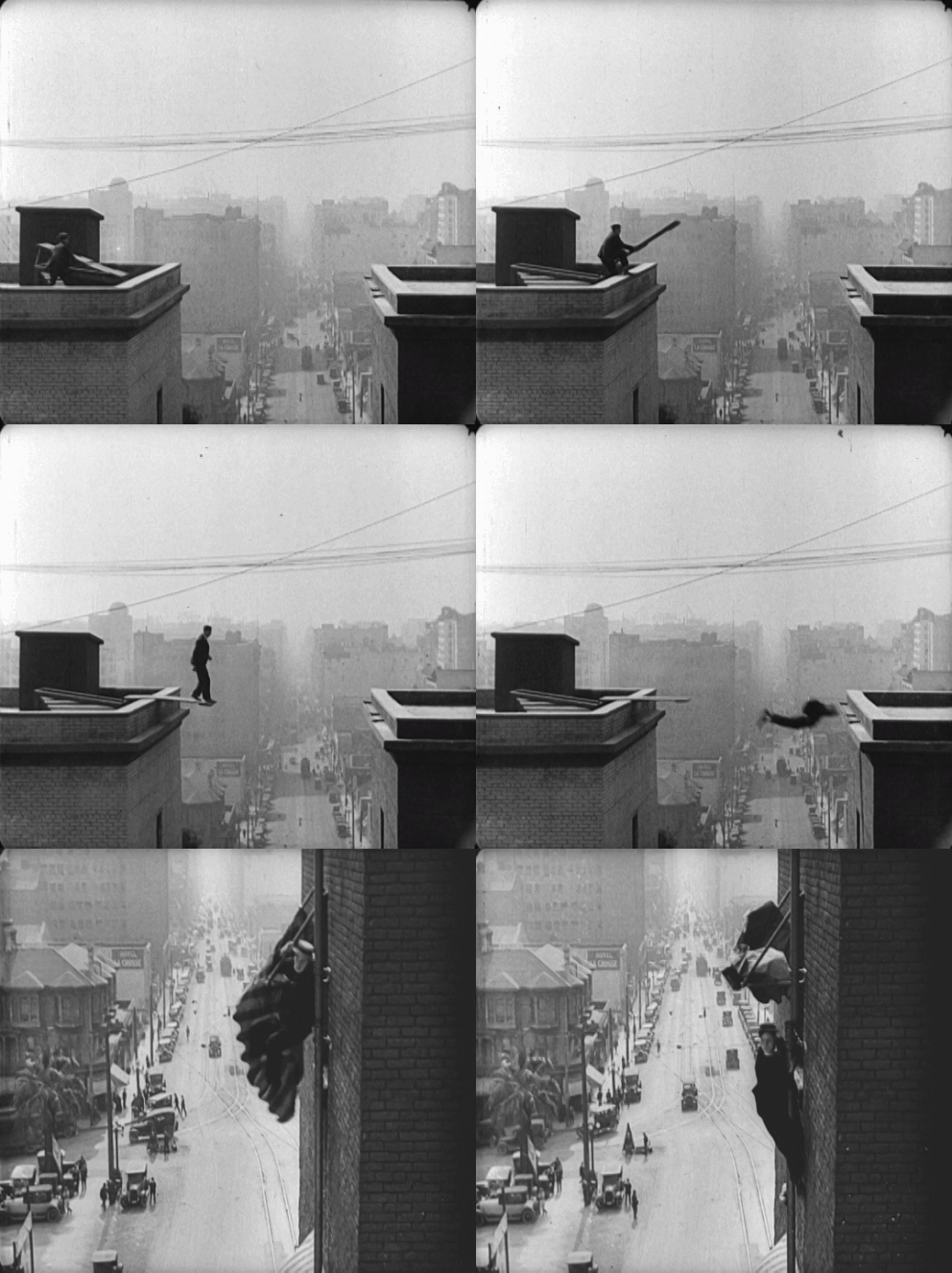
“No silent star did more dan­ger­ous stunts than Buster Keaton,” Roger Ebert wrote with deep admi­ra­tion. Even Harold Lloyd’s ver­ti­go-induc­ing clock scenes in 1923’s Safe­ty Last used trick sets to lessen the risks. Keaton not only took on the full risk him­self in his most famous stunt scenes—many of which you can see in gif form here—he also “dou­bled for some of his actors, doing their stunts as well as his own.” In Steam­boat Bill, Jr. (1928, top), Keaton stands in the exact spot of an upper win­dow of the façade of a house that comes down around him. In his 1926 clas­sic The Gen­er­al, fur­ther down, he per­forms a jaw-drop­ping feat—using one rail­road tie to push aside anoth­er while rid­ing on the cow catch­er of a mov­ing loco­mo­tive.

keaton-4

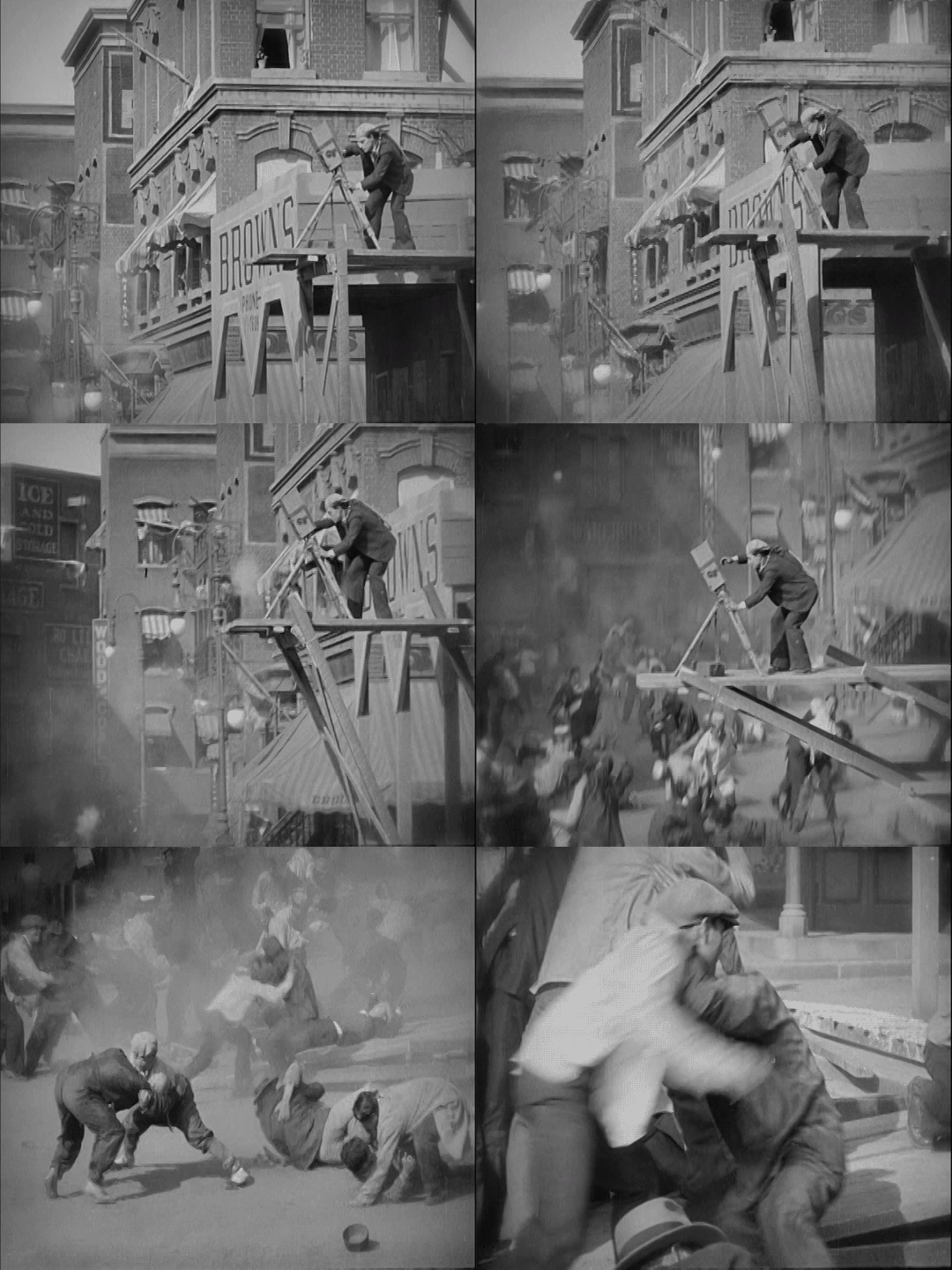
Fur­ther up, in 1923’s Three Ages—the first film Keaton wrote, direct­ed, and starred in—he per­forms an authen­ti­cal­ly ter­ri­fy­ing stunt that gives acro­pho­bic view­ers instant chills. Just above, from the fol­low­ing year’s Sher­lock Jr., we see a sim­i­lar­ly heart-rac­ing feat as Keaton clutch­es a road­block gate and falls two sto­ries into a speed­ing car. And in 1928’s The Cam­era­man, below, he goes down with a tall col­laps­ing plat­form. Keaton’s visu­al com­e­dy was superb; “he’s air­i­ly nim­ble,” Char­lie Fox writes in a Cab­i­net essay on the silent star’s fall into alco­holism after the talkies left his career strand­ed; “Nobody else’s body yield­ed so smooth­ly to the sub­lime mind­less­ness that the best phys­i­cal com­e­dy requires.”

keaton-5

In just these few key scenes, we see how Keaton’s stunts stripped away what Prikryl calls the “sap­py, bla­tant slap­stick [he] dis­dained” in oth­er actors’ work (“I didn’t like over­act­ing,” he remarked). But part of the dry­ness of Keaton’s high-wire visu­al com­e­dy came from the fact that many of these scenes were unre­hearsed first takes, which “gave the action sequences a doc­u­men­tary fla­vor… because what was cap­tured on film was a bold attempt at some­thing real­ly dan­ger­ous or dif­fi­cult, not a prac­ticed slam dunk.”

In his lat­er years, Keaton’s career saw some­thing of a resur­gence after he beat his chron­ic drink­ing. “His job,” late in life, Fox writes, “became mak­ing quick appear­ances in unex­pect­ed places”—a Smirnoff Vod­ka ad in 1957, a brief role in Sun­set Boule­vard. “Always, in these lat­er per­for­mances, he arrives from and returns to a becalmed region of the past.” Per­haps nowhere was Keaton’s phys­i­cal expres­sive­ness put to more use in this peri­od than in a role which, in many ways, he found at least as chal­leng­ing as his ear­ly silent-era stunt­work: a 1965 col­lab­o­ra­tion with Samuel Beck­ett in the mod­ernist writer’s only for­ay into film (excerpt above): a short trib­ute to the silent era that is unsur­pris­ing­ly, “far more com­plex” con­cep­tu­al­ly than its fore­bears, but no less evoca­tive of the exis­ten­tial plight embod­ied by Keaton’s lone­ly, embat­tled-yet-sto­ic char­ac­ters.

via Metafil­ter

Relat­ed Con­tent:

The Gen­er­al, “Per­haps the Great­est Film Ever Made,” and 20 Oth­er Buster Keaton Clas­sics Free Online

Buster Keaton: The Won­der­ful Gags of the Found­ing Father of Visu­al Com­e­dy

101 Free Silent Films: The Great Clas­sics 

Josh Jones is a writer and musi­cian based in Durham, NC. Fol­low him at @jdmagness

Anthony Burgess Names the 99 Best Novels in English Between 1939 & 1983: Orwell, Nabokov, Huxley & More

1984

Image via Wiki­me­dia Com­mons

In 1983, Antho­ny Burgess took up a com­mis­sion from a Niger­ian pub­lish­ing com­pa­ny and, in two weeks, deliv­ered to them the man­u­script for Nine­ty-Nine Nov­els: The Best in Eng­lish since 1939 — A Per­son­al Choice. Pub­lished the fol­low­ing year, the book deliv­ers exact­ly what its title, sub­ti­tle, and sub-sub­ti­tle promis­es: the finest nov­els Eng­lish-lan­guage writ­ers pro­duced between the years 1939 and 1983, accord­ing to the pref­er­ences of the writer of more than a few nov­els him­self, includ­ing A Clock­work OrangeEarth­ly Pow­ers, and 1985.

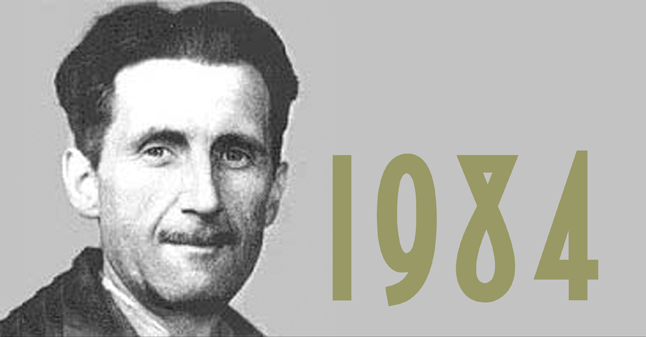
Burgess wrote that last one, so its own title may sug­gest, as a trib­ute to George Orwell’s 1984, one of those 99 nov­els. “Nine­teen eighty four has arrived, but George Orwell’s glum prophe­cy has not been ful­filled,” Burgess declared in a New York Times piece pub­lished as that year began. Yet “for 35 years a mere nov­el, an arti­fact meant pri­mar­i­ly for diver­sion, has been scar­ing the pants off us all. Evi­dent­ly the nov­el is a pow­er­ful lit­er­ary form which is capa­ble of reach­ing out into the real world and mod­i­fy­ing it. It is a form which even the non­lit­er­ary had bet­ter take seri­ous­ly.”

Pro­lif­ic in his lit­er­ary con­sump­tion as well as pro­duc­tion, Burgess got plen­ty of prac­tice tak­ing the nov­el seri­ous­ly in his capac­i­ty as a book review­er. “It was clear that cer­tain nov­els had to be reviewed whether I wished to review them or not,” he writes. “A new Gra­ham Greene or Eve­lyn Waugh — this was the known brand-name which would grant an expect­ed sat­is­fac­tion. But the unknown had to be con­sid­ered as well. After all, both Greene and Waugh pro­duced first nov­els. V. S. Naipaul’s first nov­el went total­ly unre­viewed.” Greene appears among the 99 for The Pow­er and the Glo­ry and The Heart of the Mat­ter, Waugh for Brideshead Revis­it­ed and Sword of Hon­or, and Naipaul for A Bend in the Riv­er.

What makes these nov­els, and Burgess’ oth­er 93 picks, so good? “The pri­ma­ry sub­stance I have con­sid­ered in mak­ing my selec­tion is human char­ac­ter,” mean­ing that their authors have cre­at­ed “human beings whom we accept as liv­ing crea­tures filled with com­plex­i­ties and armed with free will” — and who thus, to a great extent, shape the sto­ry inde­pen­dent­ly of autho­r­i­al inten­tion. “At best there will be a com­pro­mise between the nar­ra­tive line you have dreamed up and the course of action pre­ferred by the char­ac­ters,” writes Burgess, as if address­ing his col­leagues in the enter­prise of pre­sent­ing “the pre­oc­cu­pa­tions of real human beings through invent­ed ones.”

You can see Burgess’ full list of 99 nov­els below, which includes such oth­er favorite writ­ers here at Open Cul­ture as J.G. Bal­lard, Aldous Hux­ley (who scores three hits), James Joyce, and Vladimir Nabokov, all of whom, beyond their duty to char­ac­ter, “have man­aged lan­guage well, have clar­i­fied the moti­va­tions of action, and have some­times expand­ed the bounds of imag­i­na­tion. And they enter­tain or divert, which means to turn our faces away from the repet­i­tive pat­terns of dai­ly life and look at human­i­ty and the world with a new inter­est and even joy.” Only one ques­tion remains: why exact­ly 99? “The read­er can decide on his own 100th,” Burgess replies. “He may even choose one of my own nov­els.”

Note: you can pur­chase online used copies of Nine­ty-Nine Nov­els: The Best in Eng­lish since 1939 — A Per­son­al Choice. It runs about 160 pages. Now here’s the basic list.

Achebe, Chin­ua — A Man of the Peo­ple — (1966)

Ald­iss, Bri­an — Life in the West (1980)

Amis, Kings­ley — Lucky Jim (1954)

Amis, Kings­ley — The Anti-Death League (1966)

Bald­win, James — Anoth­er Coun­try (1962)

Bal­lard, J.G. — The Unlim­it­ed Dream Com­pa­ny (1979)

Barth, John — Giles Goat-Boy (1966)

Bel­low, Saul — The Vic­tim (1947)

Bel­low, Saul — Hum­boldt’s Gift (1975)

Bowen, Eliz­a­beth — The Heat of the Day (1949)

Brad­bury, Mal­colm — The His­to­ry Man (1975)

Braine, John — Room at the Top (1957)

Cary, Joyce — The Horse’s Mouth (1944)

Chan­dler, Ray­mond — The Long Good­bye (1953)

Comp­ton-Bur­nett, Ivy — The Mighty and Their Fall (1961)

Coop­er, William — Scenes from Provin­cial Life (1950)

Davies, Robert­son — The Rebel Angels (1982)

Deighton, Len — Bomber (1970)

Dur­rell, Lawrence — The Alexan­dria Quar­tet (1957)

Elli­son, Ralph — Invis­i­ble Man (1952)

Faulkn­er, William — The Man­sion (1959)

Flem­ing, Ian — Goldfin­ger (1959)

Fowles, John — The French Lieu­tenan­t’s Woman (1969)

Frayn, Michael — Sweet Dreams (1973)

Gold­ing, William — The Spire (1964)

Gordimer, Nadine — The Late Bour­geois World (1966)

Gray, Alas­dair — Lanark (1981)

Green, Hen­ry — Par­ty Going (1939)

Greene, Gra­ham — The Pow­er and the Glo­ry (1940)

Greene, Gra­ham — The Heart of the Mat­ter (1948)

Har­ris, Wil­son — Heart­land (1964)

Hart­ley, L.P. — Facial Jus­tice (1960)

Heller, Joseph — Catch-22 (1961)

Hem­ing­way, Ernest — For Whom the Bell Tolls (1940)

Hem­ing­way, Ernest — Old Man and the Sea (1952)

Hoban, Rus­sell — Rid­dley Walk­er (1980)

Hugh­es, Richard — The Fox in the Attic (1961)

Hux­ley, Aldous — After Many a Sum­mer (1939)

Hux­ley, Aldous — Ape and Essence (1948)

Hux­ley, Aldous — Island (1962)

Ish­er­wood, Christo­pher — A Sin­gle Man (1964)

John­son, Pamela Hans­ford — An Error of Judge­ment (1962)

Jong, Eri­ca — How to Save Your Own Life (1977)

Joyce, James — Finnegans Wake (1939)

Less­ing, Doris — The Gold­en Note­book (1962)

Lodge, David — How Far Can You Go? (1980)

Lowry, Mal­colm — Under the Vol­cano (1947)

MacInnes, Col­in — The Lon­don Nov­els (1957)

Mail­er, Nor­man — The Naked and the Dead (1948)

Mail­er, Nor­man — Ancient Evenings (1983)

Mala­mud, Bernard - The Assis­tant (1957)

Mala­mud, Bernard — Dubin’s Lives (1979)

Man­ning, Olivia — The Balka­ns Tril­o­gy (1960)

Maugh­am, Som­er­set — The Razor’s Edge (1944)

McCarthy, Mary — The Groves of Acad­eme (1952)

Moore, Bri­an — The Doc­tor’s Wife (1976)

Mur­doch, Iris — The Bell (1958)

Nabokov, Vladimir — Pale Fire (1962)

Nabokov, Vladimir — The Defence (1964)

Naipaul, V.S. — A Bend in the Riv­er (1979)

Narayan, R.K. — The Ven­dor of Sweets (1967)

Nye, Robert — Fal­staff (1976)

O’Brien, Flann — At Swim-Two-Birds (1939)

O’Con­nor, Flan­nery — Wise Blood (1952)

O’Hara, John — The Lock­wood Con­cern (1965)

Orwell, George — Nine­teen Eighty-Four (1949)

Peake, Mervyn — Titus Groan (1946)

Per­cy, Walk­er — The Last Gen­tle­man (1966)

Plun­kett, James — Farewell Com­pan­ions (1977)

Pow­ell, Antho­ny — A Dance to the Music of Time (1951)

Priest­ley, J.B. — The Image Men (1968)

Pyn­chon, Thomas — Grav­i­ty’s Rain­bow (1973)

Rich­ler, Morde­cai — Cock­sure (1968)

Roberts, Kei­th — Pavane (1968)

Roth, Phillip — Port­noy’s Com­plaint (1969)

Salinger, J.D. — The Catch­er in the Rye (1951)

San­som, William — The Body (1949)

Schul­berg, Budd — The Dis­en­chant­ed (1950)

Scott, Paul — Stay­ing On (1977)

Shute, Nevil — No High­way (1948)

Sil­li­toe, Alan — Sat­ur­day Night and Sun­day Morn­ing (1958)

Snow, C.P. - Strangers and Broth­ers (1940)

Spark, Muriel — The Girls of Slen­der Means (1963)

Spark, Muriel — The Man­del­baum Gate (1965)

Sty­ron, William — Sophie’s Choice (1979)

Ther­oux, Alexan­der — Dar­conville’s Cat (1981)

Ther­oux, Paul — The Mos­qui­to Coast (1981)

Toole, John Kennedy — A Con­fed­er­a­cy of Dunces (1980)

Updike, John — The Coup (1978)

Vidal, Gore — Cre­ation (1981)

Warn­er, Rex — The Aero­drome (1941)

Waugh, Eve­lyn — Brideshead Revis­it­ed (1945)

Waugh, Eve­lyn — Sword of Hon­or (1952)

White, T.H. — The Once and Future King (1958)

White, Patrick — Rid­ers in the Char­i­ot (1961)

Williamson, Hen­ry — A Chron­i­cle of Ancient Sun­light (1951)

Wil­son, Angus — The Old Men at the Zoo (1961)

Wil­son, Angus — Late Call (1964)

Wouk, Her­man — The Caine Mutiny (1951)

Relat­ed Con­tent:

A Clock­work Orange Author Antho­ny Burgess Lists His Five Favorite Dystopi­an Nov­els: Orwell’s 1984, Huxley’s Island & More

Antho­ny Burgess’ Lost Intro­duc­tion to Joyce’s Dublin­ers Now Online

Vladimir Nabokov Names the Great­est (and Most Over­rat­ed) Nov­els of the 20th Cen­tu­ry

The 100 Best Nov­els: A Lit­er­ary Crit­ic Cre­ates a List in 1898

Based in Seoul, Col­in Mar­shall writes and broad­casts on cities and cul­ture. He’s at work on a book about Los Ange­les, A Los Ange­les Primer, the video series The City in Cin­e­ma, the crowd­fund­ed jour­nal­ism project Where Is the City of the Future?, and the Los Ange­les Review of Books’ Korea Blog. Fol­low him on Twit­ter at @colinmarshall or on Face­book.


  • Great Lectures

  • About Us

    Open Culture scours the web for the best educational media. We find the free courses and audio books you need, the language lessons & educational videos you want, and plenty of enlightenment in between.


    Advertise With Us

  • Archives

  • Search

  • Quantcast