In the ten years between Reservoir Dogs (1992) and Kill Bill (2003), Quentin Tarantino was all some film fans could talk about, and who many up-and-coming directors idolized and copied. But it would take another ten years for his films to be intelligently discussed, and it’s a sign of these times that the best essays are not in print but in video format.
Matt Zoller Seitz and his colleagues over at Indiewire’s Press Play blog led the charge with a series of 10 ‑12 minute video essays (collectively called “On the Q.T.”) that explore individual Tarantino films and his approach to filmmaking.
The video above is part two of the series and probes what it means to be cool in Pulp Fiction, how characters create their own mythologies and what happens when reality confronts them.
If that video makes you look at Pulp Fiction in a deeper way, then you’ll enjoy the first in the series, on Reservoir Dogs. Seitz claims the film is both a collage of film quotes and references, from City on Fire to The Killing, but there’s a human heart beating beneath all of it. And that’s a lesson lost on all the imitators that came in Tarantino’s ‘90s wake, he says.
You might also want to check out this two part essay (Part 1 — Part 2) on Jackie Brown – this one crafted by Press Play’s Odie Henderson–which examines what Tarantino took from Elmore Leonard in his only adaptation to date, and what is pure QT. (Hint: It’s the casting of Pam Grier).
The final video in the series looks at the Female Archetype vs. the Goddess in Kill Bill. Created by Nelson Carvajal, who uses captions instead of narration, it’s the weakest in the series, being long on clips and short on ideas.
But with The Hateful Eight on the horizon, the entire series will get you ready for interpreting the latest in his oeuvre.
Ted Mills is a freelance writer on the arts who currently hosts the FunkZone Podcast. You can also follow him on Twitter at @tedmills, read his other arts writing at tedmills.com and/or watch his films here.
You can’t talk about the origin of the modern animated film without talking about the work of Lotte Reiniger (1899–1981), the German creator of some 40 animated films between the 1910s and the 70s. And you can hardly talk about Reiniger’s work without talking about the enchanting art of shadow puppetry, which we mostly associate with traditional cultures like that of Indonesia, but which also inspired her early 20th-century innovations in animation.
This may sound quite obscure, especially when put up against the Disney and Pixar extravaganzas in theaters today, but all these forms of entertainment draw, in a sense, from a common well: the fairy tale.
The creators of today’s mega-budget animated films know full well the enduring value of fairy tales, and so continue to adapt their basic story material, layering on both the latest visual effects and smirking gags with up-to-the-minute references in order to keep the obvious entertainment value high. But Indonesian shadow puppet theater has been doing the same thing for centuries and centuries, converting ancient folktales into an evening’s (albeit often a long evening’s) musical entertainment for audiences of era after new era. And Reiniger, in her day, revived the oldest European stories with technology once as striking and cinematically cutting-edge as today’s most advanced CGI.
You can watch Reiniger’s 1922 adaptation of Cinderella at the top of the post. “Nobody else has defined a form of animation as authoritatively as she did,” writes Dan North of Spectacular Attractions, “and the opening section, where scissors make the first cuts into the main character, conjuring her out of simple raw materials, displays the means by which the story is fabricated and marks it out as a product of her labour.” Below that, we have a later work, 1955’s Hansel and Gretel, an example of her further developed technique, and just above you’ll find that same year’s Däumelinchen, also known as Thumbelina.
To get a clearer sense of exactly what went into these shorts (or into 1926’sThe Adventures of Prince Achmed, her only feature-length film, and first fully animated feature in the history of cinema), watch the seventeen-minute documentary “The Art of Lotte Reiniger” just above. “No one else has taken a specific animation technique and made it so utterly her own,” writes the British Film Institute’s Philip Kemp, “to date she has no rivals, and for all practical purposes the history of silhouette animation begins and ends with Reiniger” — but the way she breathed life into her material lives on.
In William Faulkner’s 1936 Absalom, Absalom!, one of the novel’s most erudite characters paints a picture of a Gothic scene by comparing it to an Aubrey Beardsley drawing. References to Beardsley also appear in other Faulkner novels, and the English artist of the late nineteenth century also influenced the American novelist’s visual art. Like Faulkner, Beardsley was irresistibly drawn to “the grotesque and the erotic,” as The Paris Review writes, and his work was highly favored among French and British poets of his day. The modernist’s appreciation of Beardsley was about more than Faulkner’s own youthful romance with French Symbolist art and morbid romantic verse, however. Beardsley created a modern Gothic aesthetic that came to represent both Art Nouveau and decadent, transgressive literature for decades to come, presenting a seductive visual challenge to the repression of Victorian respectability.
Beardsley was a young aesthete with a literary imagination. In his short career—he died at the age of 25—he illustrated many of the works of Edgar Allan Poe, forefather of the American Gothic.
Beardsley also famously illustrated Oscar Wilde’s scandalous drama, Salome in 1893, to the surprise of its author, who later inscribed an illustrated copy with the words, “For the only artist who, besides myself, knows what the Dance of the Seven Veils is, and can see that invisible dance.” Beardsley’s drawings first appeared in an art magazine called The Studio, then the following year in an English publication of the text.
Beardsley and Wilde’s joint creation embraced the macabre and flaunted Victorian sexual norms. After an abrupt cancellation of Salome’s planned opening in England, the illustrated edition introduced British readers to the play’s unsettling themes. The British Library quotes critic Peter Raby, who argues, “Beardsley gave the text its first true public and modern performance, placing it firmly within the 1890s – a disturbing framework for the dark elements of cruelty and eroticism, and of the deliberate ambiguity and blurring of gender, which he released from Wilde’s play as though he were opening Pandora’s box.”
Wilde’s play was ostensibly banned for its portrayal of Biblical characters, prohibited on stage at the time. Furthermore, it “struck a nerve,” writes Yelena Primorac at Victorian Web, with its “portrayal of woman in extreme opposition to the traditional notion of virtuous, pure, clean and asexual womanhood the Victorians felt comfortable living with.” Wilde was at first concerned that the illustrations, with their suggestively posed figures and frankly sexual and violent images, would “reduce the text to the role of ‘illustrating Aubrey’s illustrations.’” (You can see some of the more suggestive images here.)
Indeed, it is hard to think of Wilde’s text and Beardsley’s images as existing independently of each other, so closely have they been identified for over a hundred years. And yet the drawings don’t always correspond to the narrative. Instead they present a kind of parallel text, itself densely woven with visual and literary allusions, many of them drawn from Symbolist preoccupations—with women’s hair, for example, as an alluring and threatening emblem of unrestrained female sexuality. Published in full in 1894, in an English translation of Wilde’s original French text, the Beardsley-illustrated Salome contained 16 plates, some of them tamed or censored by the publishers. Read the full text, with drawings, here, and see a gallery of Beardsley’s original uncensored illustrations at the British Library.
There may be no more critical interplay between two musicians in modern music than that between bassists and drummers. As jazz bassist Christian McBride put it in a recent NPR interview, “the bass and drums should work as one instrument. It determines whether it’s funk or jazz or country or rock ‘n’ roll. It all depends on what rhythms are coming from the bass and the drums that make a particular music what it is.” In funk and jazz, these rhythm players tend to get a lot more credit. Most people—even die hard fans—would be hard pressed to name one country bassist or drummer. In rock and roll, we’re used to lauding lead singers and guitarists. And certainly classic duos from Jagger and Richards, to Page and Plant, Roth and Van Halen, Morrissey and Marr and a lengthy list of others each have earned their vaunted places in music history.
Yet as a fan, I’ve always been drawn to unsung bass and drum combos—like The Smiths’ Mike Joyce and Andy Rourke, Jane’s Addiction’s Eric Avery and Stephen Perkins, and many others in bands whose flamboyant leaders tended to overshadow their rock solid supports. This is not the case in many other groups of superstars. McBride gives us the examples of Bootsy Collins and John Starks in James Brown’s band, and bassist Sam Jones and drummer Louis Hayes from Cannonball Adderley’s ensemble. Today we look specifically at some famed rock rhythm duos, and listen in on isolated tracks from some of their bands’ most well-known tunes. We begin with the absolutely classic powerhouse rhythm section of John Paul Jones (top) and John Bonham, whose grooves anchored the riff machine that was Led Zeppelin. Just above, hear their push and pull on “Ramble On.”
As it turns out, Zeppelin were big James Brown fans, and Jones has specifically mentioned the funk influence on his playing. Jones and Bonham, in turn, have influenced thousands of rhythm players, including perhaps one of the most famous of bass and drum duos, Rush’s Geddy Lee and Neil Peart. Just above, hear Lee’s fuzzed-out bass work in tandem with Peart’s expert time changes and breakdowns in isolated tracks from “Vital Signs,” a song from their early-eighties new wave-inspired album Moving Pictures. Rush is certainly not everyone’s cup of tea, but more rock and roll drummers than not probably cite them as an influence at some point in their careers. Though it wasn’t apparent to me in their heyday, even such a minimalist band as the Pixies had a Rush influence, specifically by way of drummer David Lovering. His locked grooves with bassist Kim Deal more or less defined the sound of the 90s through their influence on Nirvana, Weezer, Radiohead, Smashing Pumpkins and countless others. Hear their isolated rhythm tracks from Doolittle’s “Wave of Mutilation” below.
It’s hardly necessary to point out that perhaps the most famed rhythm section in rock history comes from its most celebrated band. But Paul McCartney and Ringo Starr often get remembered more for their songwriting and personalities than for their rhythm playing. Ringo’s taken his share of undeserved flak for his no-frills style. I’ve always found him to be an especially tasteful player who knows when to add the perfect fill or accent, when to lay back and let the song dominate, and when to get out of the way entirely. Starr’s thoughtful drumming perfectly complements McCartney’s highly melodic walking basslines—captured as well on the George Harrison-penned “Something,” below, as on anything else the band recorded.
Again, it’s hardly necessary to cite the number of bands influenced by the Beatles, though it’s harder to name rhythm sections directly inspired by McCartney and Starr’s dynamic. Nonetheless, their DNA runs through decades of pop music in all its forms. The other three duos above have directly inspired a more specific phenomenon of bands made up solely of bass and drums. One such band, the UK’s Royal Blood, has won numerous awards (and praise from Jimmy Page). See them perform a live version of “Figure It Out” below.
Other bands like Death From Above 1979 and Om have hugely devoted followings. (See a discussion of more bass-and-drum-only combos here.) With the success of these bands—along with the rise of electronic dance music as a dominant form—it’s safe to say that killer rhythm sections, so often overshadowed in rock and pop history, have pushed past traditional lead players and, in many cases, taken their place. I’d say it’s about time.
“Ever since our species first looked up at the sky, we dreamed of reaching Mars. Back in 2029, that dream became real, when the first humans stepped foot on the Red planet. And, in a few months, a new group of astronauts will make the journey.…”
It all seems like many other Neil deGrasse Tyson videos you’ve seen before. Until he says, “Back in 2029.” Wait, what?
Behold Neil deGrasse Tyson appearing in a clever promo for Ridley Scott’s upcoming film The Martian.
Based on Andy Weir’s bestselling 2011 novel The Martian, the movie will star Matt Damon as Mark Watney, an astronaut who goes on a big mission to Mars — the one so stirringly described by Tyson above. But the journey to Mars is not where the real action happens, and we’ll just leave it at that. No spoilers here.
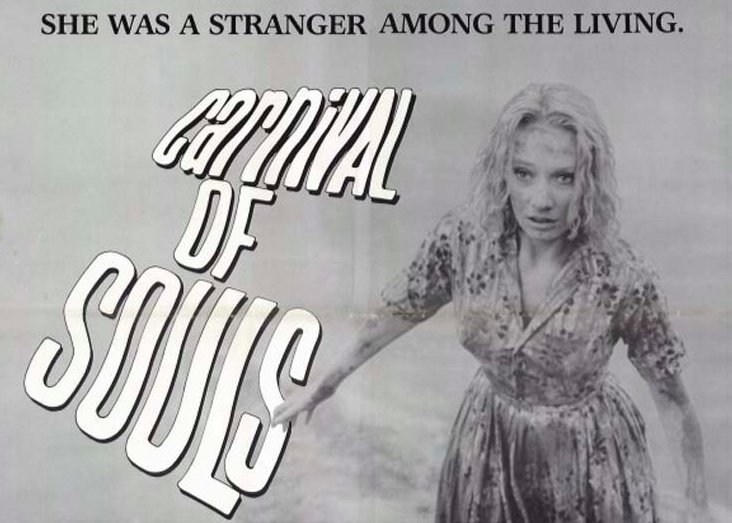
Vinton himself resisted the rating, not wanting to be lumped in with more regular kiddie fare. It performed disappointingly at the box office despite great critical response from such lofty realms as The New Republic.
Is it really so surprising that families flocking to the Care Bears Movie steered clear of one featuring a shape-shifting, free-floating mask, who terrorizes the children in the film (and presumably, the audience) by conjuring an enchanting little clay kingdom only to rain misfortune upon it. We’re talking smashed coffins, grief-stricken clay mothers wailing over the bodies of their young, helpless victims being swallowed up by cracks that appear in the earth.
“… it was just such a bizarre character, to start with. In fact, I haven’t seen a character quite like that in almost anything else – someone who has this power but no feeling one way or another and just sort-of tells it like it is regarding the future of humanity. We wanted it to be about metamorphosis, visually, and make that a big part of sequence. He transforms and grows up and down from the earth and appears out of nothingness. The design of the character came from an early drawing that Barry Bruce did, where a jester was holding his face on a stick. I thought it was a really interesting way to play it. I ended up doing the voice of the Stranger with a female performer. We wanted it to be almost androgynous, so she and I did it together and made a point of not trying to hide it, even.”
I’m not sure the person or persons responsible for the theatrical trailer, below, got the memo…
You may not be interested in politics, they say, but politics is interested in you. The same, if you believe famed mythologist Joseph Campbell, goes for myth: far from explaining only the origin of the world as believed by extinct societies, it can explain the power of stories we enjoy today — up to and including Star Wars.
The man behind PBS’ well-known series The Power of Myth left behind many words in many formats telling us precisely why, and now you can hear a fair few of them — 48 hours worth — for free on this Spotify playlist. (If you don’t have Spotify’s software already, you can download it free here.)
“From the Star Wars trilogy to the Grateful Dead,” says the Joseph Campbell Foundation, “Joseph Campbell has had a profound impact on our culture, our beliefs, and the way we view ourselves and the world.” This collection, The Lectures of Joseph Campbell, which comes from early in his career, offers “a glimpse into one of the great minds of our time, drawing together his most wide-ranging and insightful talks” in the role of both “a scholar and a master storyteller.” So not only can Campbell enrich our understanding of all the stories we love, he can spin his lifetime of mythological research into teachings that, in the telling, weave into a pretty gripping yarn in and of themselves.
If you would like to sign up for Open Culture’s free email newsletter, please find it here. It’s a great way to see our new posts, all bundled in one email, each day.
If you would like to support the mission of Open Culture, consider making a donation to our site. It’s hard to rely 100% on ads, and your contributions will help us continue providing the best free cultural and educational materials to learners everywhere. You can contribute through PayPal, Patreon, and Venmo (@openculture). Thanks!
“A beautiful way to perform one of the world’s great musical treasures.” The video above, and the accompanying 58-character sentence, make up the last tweet from Oliver Sacks, the influential neurologist who passed away earlier today. The clip (originally highlighted on our site back in 2012) features 100 musicians and singers from the Orchestra Simfonica del Valles, Amics de l’Opera de Sabadell, Coral Belles Arts, and Cor Lieder Camera performing what’s now the anthem of the European Union — Beethoven’s “Ode to Joy” from his Symphony No. 9. It’s a pretty stirring performance, and certainly a worthwhile way to punctuate a Twitter stream. (Side note: Dr. Sacks started following our Twitter stream several years ago, and we still consider it a great honor, a high point in OC history.)
If you would like to sign up for Open Culture’s free email newsletter, please find it here. It’s a great way to see our new posts, all bundled in one email, each day.
If you would like to support the mission of Open Culture, consider making a donation to our site. It’s hard to rely 100% on ads, and your contributions will help us continue providing the best free cultural and educational materials to learners everywhere. You can contribute through PayPal, Patreon, and Venmo (@openculture). Thanks!
The documentary above takes you through the creation of a cello in the Barcelona workshop of master luthier Xavier Vidal i Roca. (To watch with English subtitles, click the closed caption icon — “CC” — in the lower right corner.)
The opening shots of luthier Eduard Bosque Miñana taking measurements have the jazzy feel of a Mister Rogers’ Neighborhood segment, but once music scholar Ramón Andres gets into the act, things take a turn toward the philosophical.
His thoughts as to the ways the “king of all instruments” speaks to the human condition are commensurate with the level of craftsmanship its construction requires.
(Though seeing Miñana patiently fit a steam-shaped curve to the developing instrument’s c‑bout leads me to question Andres’ choice of anthropomorphizing pronoun. With a waistline like that, surely this cello is a deep-voiced queen.)
The master luthier himself acknowledges that there is always a bit of mystery as to how any given instrument will sound. Most modern cellos are copies of ancient instruments. With the design set, the luthier must channel his or her creative expression into the construction, working with similarly ancient tools — chisels, palette knives, and the like. If power tools come into play, director Laura Vidal keeps them offscreen.
The effect is meditative, hypnotic…I was glad to have the mystery preserved, even as I agree with cellist Lito Iglesias that musicians should make an effort to understand their instruments’ construction, and the reasons behind the selection of particular woods and shapes.
Iglesias also notes that the luthier is the unsung partner in every public performance, the one the audience never thinks to acknowledge.
You can learn a lot about an architect from looking at the buildings they designed, and you can learn even more by looking at the buildings they lived in, but you can learn the most of all from Frank Lloyd Wright’s Taliesin. For that best-known of all American architects, this house stands still today not just as his home but as one of his notable works, and as the studio in which he designed other notable works (including Fallingwater). Wright’s enthusiasts make pilgrimages out to Spring Green, Wisconsin to pay their respects to this singular house on a hill, which offers tours from May through October.
For those less inclined toward architectural pilgrimages, we have this HD 360-degree “virtual visit” of Taliesin (also known as Taliesin East since 1937, when Wright built a Taliesin West in Scottsdale, Arizona). “The center of Frank Lloyd Wright’s world was Taliesin East,” write the online tour’s developers. “It was his home, workshop, architectural laboratory and inspiration for nearly all his life.” In the comfort of your web browser, you can “experience what he saw daily, surrounded by Asian art, expansive views of Wisconsin’s rolling hills, his own courtyard gardens and a space to relax before a fire watched over by a portrait of his mother.”
You can also get a view of “the actual drafting tables where Wright designed his most famous buildings” and the drawings on them, all while “staff historian Keiran Murphy shares the history, the personal stories and points out special objects in the room” (if you choose to keep the “tour guide” option turned on). And Taliesin certainly doesn’t lack history, either personal or architectural. Wright built its first iteration in 1911, and it lasted until a paranoid servant burnt it down in 1941, axe-murdering seven people there (including Wright’s live-in ladyfriend and her children) in the process. Wright, who’d been away at the time of the tragedy, recovered from the shock of it all, then set to work on Taliesin II, though he didn’t really live in it until after he returned from his work on Tokyo’s Imperial Hotel in 1922.
Three years later, another fire (this time probably due to an electrical problem) badly damaged the house again, necessitating the design of a Taliesin III, which he could begin only after digging himself out of a financial hole in 1928. It is more or less that Taliesin that you can see today, whether you visit in person or through the internet. If you feel sufficiently inspired as a result, you could even apply to study at the Frank Lloyd Wright School of Architecture located there. While the house won’t likely turn you into an architectural genius just by osmosis, at least you can rest assured that it has probably put its most dramatic disasters behind it.
You can always learn something from your elders. 8‑year-olds can learn from 9‑year-olds, just as octogenarians can learn from nonagenarians. With age comes wisdom. That’s the premise of this touching, farewell video from the CBC’s WireTap radio show, which is about to go off the air.
If you would like to sign up for Open Culture’s free email newsletter, please find it here. It’s a great way to see our new posts, all bundled in one email, each day.
If you would like to support the mission of Open Culture, consider making a donation to our site. It’s hard to rely 100% on ads, and your contributions will help us continue providing the best free cultural and educational materials to learners everywhere. You can contribute through PayPal, Patreon, and Venmo (@openculture). Thanks!
We're hoping to rely on loyal readers, rather than erratic ads. Please click the Donate button and support Open Culture. You can use Paypal, Venmo, Patreon, even Crypto! We thank you!
Open Culture scours the web for the best educational media. We find the free courses and audio books you need, the language lessons & educational videos you want, and plenty of enlightenment in between.