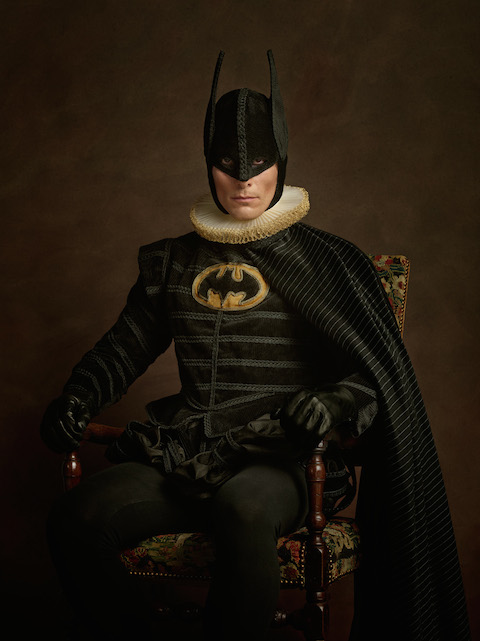
Batman & Other Super Friends Sit for 17th Century Flemish Style Portraits

SuperHerosFlamands_Batman_RGB1998_011

Por­traits tak­en by Sacha Gold­berg­er at Super Flem­ish

Super­heroes, as you may have noticed, are seri­ous mon­ey­mak­ers these days. It start­ed when Tim Bur­ton res­cued Bat­man from Adam West’s campy clutch­es, pour­ing him into a butch black rub­ber suit that is of a piece with a lean­er, mean­er Bat­mo­bile. Pre­vi­ous­ly unthink­able dig­i­tal spe­cial effects quick­ly replaced all trace of Biff! Pow!! Wham­mo!!! Fran­chise oppor­tu­ni­ties abound­ed as the entire Jus­tice League went on the block.

Hav­ing looked at it from both sides now, I can only con­clude that something’s lost…

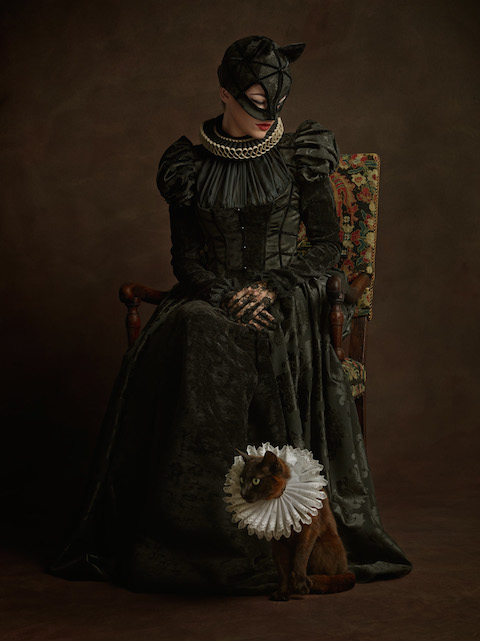
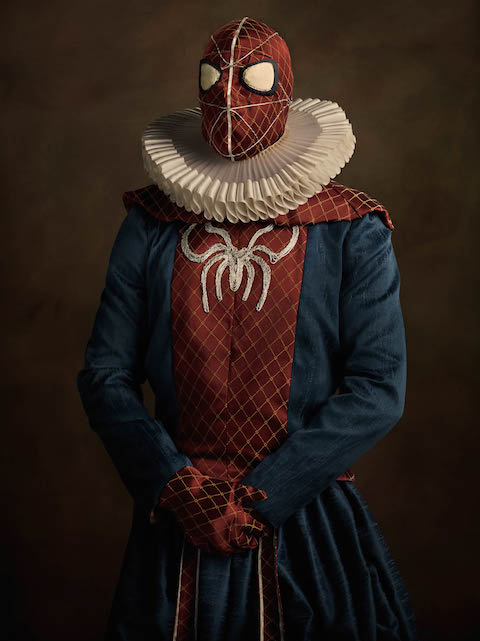
…but something’s gained in the por­traits of Sacha Gold­berg­er, a pho­tog­ra­ph­er who har­ness­es the pow­er of 17th  cen­tu­ry Flem­ish school por­trai­ture to restore, nay,  reveal these icons’ human­i­ty.

SuperHerosFlamands_Catwoman_RGB1998_014

The soft­er fab­rics and Ver­meer-wor­thy light­ing of his Super Flem­ish project give his pow­er­ful sub­jects room to breathe and reflect.

Same goes for us, the view­ers.

It’s much eas­i­er to dwell on the exis­ten­tial nature of these myth­ic beings when the White House isn’t explod­ing in the back­ground. There are times when tights need the bal­last that only a pair of pump­kin pants can pro­vide.

sasha-goldberger-spiderman

Gold­berg­er — whose pre­vi­ous for­ays into both super­heroes and Flem­ish por­trai­ture fea­ture his ever-game granny — helps things along by cast­ing mod­els who close­ly resem­ble their cin­e­mat­ic coun­ter­parts. But it’s not just the bone struc­ture. All of his sit­ters dis­play a knack for look­ing thought­ful in a ruff. In the artist’s vision, they are “tired of hav­ing to save the world with­out respite, promised to a des­tiny of end­less immor­tal­i­ty, for­ev­er trapped in their char­ac­ter.”

Find more por­traits over at Super Flem­ish.

Relat­ed Con­tent:

Artist Nina Katchadouri­an Cre­ates Flem­ish Style Self-Por­traits in Air­plane Lava­to­ry

Por­traits of Vice Pres­i­dents with Octo­pus­es on Their Heads — the Ones You’ve Always Want­ed To See

Typed Por­traits of Lit­er­ary Leg­ends: Ker­ouac, Sara­m­a­go, Bukows­ki & More

The Genius of Albrecht Dür­er Revealed in Four Self-Por­traits

Ayun Hal­l­i­day is an author, home­school­er, and Chief Pri­ma­tol­o­gist of the East Vil­lage Inky zine. Fol­low her @AyunHalliday

A Look Inside Charlie Hebdo, Their Creative Process & the Making of a Fateful Cartoon

A week ago, Char­lie Heb­do was any­thing but a house­hold name. On Wednes­day, after the appalling ter­ror­ist attacks in Paris, all of that changed.

We all now have Char­lie Heb­do on the tip of our tongues. We’ve seen sam­ples of their satir­i­cal car­toons. And we’ve read about the news out­lets too afraid to print them. But what do we still know about Char­lie Heb­do â€” about the actu­al car­toon­ists who made the news­pa­per tick, their satir­i­cal ambi­tions and their cre­ative process? Not very much.

The short doc­u­men­tary above, filmed at Char­lie Heb­do in 2006 by JerĂ´me Lam­bert and Philippe Picard, helps fill in some of these blanks. The clip shows sev­er­al of the car­toon­ists and edi­tors mur­dered ear­li­er this week —  Jean Cabut (aka Cabu), Bernard Verl­hac (aka Tig­nous) and Georges Wolin­s­ki — mak­ing a fate­ful deci­sion: Would they put a satir­i­cal image of Muham­mad on the cov­er of their news­pa­per?

The Char­lie Heb­do car­toon­ists turned “provo­ca­tion and bad taste” (to use Lam­bert and Picard’s words) into a par­tic­u­lar­ly French form of polit­i­cal satire. As the French trans­la­tor Arthur Gold­ham­mer explained it ear­li­er this week, “There is an old Parisian tra­di­tion of cheeky humour that respects noth­ing and no one,” which goes back to the French Rev­o­lu­tion. “It’s an anar­chic pop­ulist form of obscen­i­ty that aims to cut down any­thing that would erect itself as ven­er­a­ble, sacred or pow­er­ful,” and it is direct­ed against “author­i­ty in gen­er­al, against hier­ar­chy and against the pre­sump­tion that any indi­vid­ual or group has exclu­sive pos­ses­sion of the truth.” That tra­di­tion will con­tin­ue next week when Char­lie Heb­do and its sur­viv­ing staff plan to pub­lish one mil­lion copies of their next edi­tion.

The video above, put online by The New York Times, is cou­pled with a short op-ed by Lam­bert and Picard. You can read it here.

Fol­low us on Face­book, Twit­ter and Google Plus and share intel­li­gent media with your friends. Or bet­ter yet, sign up for our dai­ly email and get a dai­ly dose of Open Cul­ture in your inbox.

by | Permalink | Make a Comment ( 1 ) |

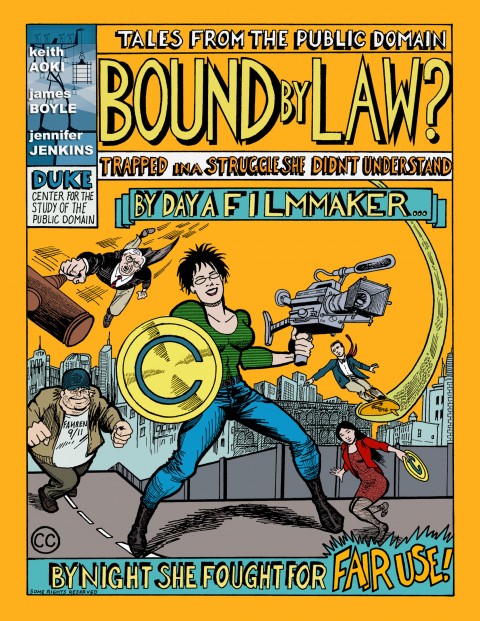
Bound by Law?: Free Comic Book Explains How Copyright Complicates Art

boundbylaw_hi-res_small

Let’s say you’re a film­mak­er shoot­ing a doc­u­men­tary in New York City. You wan­der through Times Square, through muse­ums, through oth­er des­ti­na­tions, let­ting your cam­era roll along the way. Only lat­er do you won­der: Do I need to clear the copy­right on the Andy Warhol and Jack­son Pol­lock paint­ings that came into my cam­er­a’s field of view when I was shoot­ing at the MoMA? Or do I need to get clear­ance on a Miles Davis song that a busker, caught on film, hap­pened to be play­ing?

Those are the dif­fi­cult kinds of ques­tions that film­mak­ers face, and they get sort­ed out in a pret­ty unique com­ic book writ­ten by Kei­th Aoki, James Boyle and, Jen­nifer Jenk­ins. Spon­sored by Duke’s Cen­ter for the Study of the Pub­lic Domain, the com­ic is called Bound By Law? (Tales from the Pub­lic Domain). And it’s avail­able as a free PDF file (8mb â€” 16mb), in html for­mat, and also as a flash ani­ma­tion. There are also trans­la­tions in Por­tugueseFrench, and Ital­ian. And wait, there’s more: the com­ic comes with a Fore­word by Oscar-win­ning film­mak­er Davis Guggen­heim, and an Intro­duc­tion by Boing­Bo­ing blog­ger Cory Doc­torow, who calls Bound by Law? not just “a trea­tise on copy­right,” but also “a lov­ing trib­ute to the form of comics.”

Bound By Law? — which has been released under a Cre­ative Com­mons license — will be added to our col­lec­tion, 800 Free eBooks for iPad, Kin­dle & Oth­er Devices. Har­vard also has a MOOC on Copy­right — one of 260 MOOCS get­ting start­ed in Jan­u­ary 2015.

Relat­ed Con­tent:

Kandin­sky, Mon­dri­an, Munch & Flem­ing Entered Pub­lic Domain in 2015 — But Welles, Achebe, and “Pur­ple Peo­ple Eater” Didn’t

Down­load 15,000+ Free Gold­en Age Comics from the Dig­i­tal Com­ic Muse­um

Down­load Over 22,000 Gold­en & Sil­ver Age Com­ic Books from the Com­ic Book Plus Archive

Werner Herzog Plays Himself in Cartoon That Satirizes Obama’s 2008 Election & Race in America

The Unit­ed States has two impor­tant cul­tur­al means of self-examination—the work of for­eign observers and of domes­tic satirists. In the for­mer cat­e­go­ry, we have the long­stand­ing exam­ple of polit­i­cal the­o­rist Alex­is de Toc­queville and the much bleak­er, con­tem­po­rary vision of Wern­er Her­zog. As for the lat­ter, we have ven­er­a­ble lit­er­ary heroes like Mark Twain and more pop­ulist, con­tem­po­rary voic­es like Chris Rock, Stephen Col­bert, and car­toon­ist Aaron McGrud­er, cre­ator of the com­ic strip-turned-ani­mat­ed series The Boon­docks. In 2010, the Sea­son 3 debut episode of the bit­ing Adult Swim show brought these two tra­di­tions togeth­er, as McGrud­er took on the elec­tion of America’s first black pres­i­dent by imag­in­ing a Ger­man documentarian—Herzog—who exam­ines the nation’s response through inter­views with the show’s char­ac­ters.

The clip above will give you an idea of the gen­er­al tone. Her­zog plays an exag­ger­at­ed ver­sion of him­self, com­plete with stereo­typ­i­cal­ly Ger­man expres­sions of exis­ten­tial despair. The Free­man fam­i­ly, the show’s cen­ter, rep­re­sents an also-exag­ger­at­ed range of respons­es from black Amer­i­cans to Obama’s elec­tion. Huey, the young black rad­i­cal (“retired”), express­es a deep, cyn­i­cal skep­ti­cism. His broth­er Riley has a total dis­re­gard for the social and polit­i­cal import of the elec­tion, con­fi­dent instead that a black pres­i­dent will give him a license to do what he wants. And the broth­ers’ grand­fa­ther Robert, a Civ­il Rights vet­er­an, dis­plays an unqual­i­fied opti­mism and nos­tal­gic pride for his activist days. The full episode also sat­i­rizes a cer­tain ill-informed rap­per with a char­ac­ter called Thug­nif­i­cent and cer­tain super­fi­cial white pro­gres­sives (“Oba­ma Guy” and “Oba­ma Girl”). And, of course, bel­liger­ent reac­tionary Uncle Ruckus gets his say.

If you would like to sign up for Open Culture’s free email newslet­ter, please find it here. It’s a great way to see our new posts, all bun­dled in one email, each day.

If you would like to sup­port the mis­sion of Open Cul­ture, con­sid­er mak­ing a dona­tion to our site. It’s hard to rely 100% on ads, and your con­tri­bu­tions will help us con­tin­ue pro­vid­ing the best free cul­tur­al and edu­ca­tion­al mate­ri­als to learn­ers every­where. You can con­tribute through Pay­Pal, Patre­on, and Ven­mo (@openculture). Thanks!

By the time of its air­ing, the episode was already near­ly two years late in its com­ment on the events, mak­ing it feel, wrote the A.V. Club’s Todd Van­Der­W­erff, “like an instant peri­od piece.” Per­haps now it seems down­right pale­olith­ic in the timescale of polit­i­cal com­men­tary. Mak­ing this kind of cul­tur­al cri­tique seem rel­e­vant out­side of the imme­di­ate moment is a chal­lenge writ­ers on The Dai­ly Show con­front, well, dai­ly. But here, the con­tent holds up, not only because Her­zog has a way of mak­ing every­thing time­less, but also because “the episode takes us back to… the way [Barack Oba­ma] man­aged to make almost every sin­gle one of his sup­port­ers believe that he was going to do what THEY most want­ed him to do and not what he had actu­al­ly promised to do.” In many ways, the coun­try is still recov­er­ing from a bru­tal hang­over after this post-2008 elec­tion high.

Whether the pres­i­dent is ful­ly to blame for encour­ag­ing false hopes—and fears—is high­ly debat­able. In any case, the char­ac­ters’ out­sized expec­ta­tions or expres­sions of apa­thy or vir­u­lent out­rage mir­ror many of the respons­es of both lib­er­als and con­ser­v­a­tives. But it seems that both the left and right shared at least one hope: that the elec­tion of the country’s first black pres­i­dent would put an end to its old­est, deep­est, most per­sis­tent ill. “At the end of the episode,” writes Van­Der­W­erff, “most of the char­ac­ters seem dis­ap­point­ed that Oba­ma didn’t com­plete­ly rewrite the space-time con­tin­u­um, that Amer­i­ca still strug­gles with race.” An under­state­ment per­haps even in 2010, the phrase “still strug­gles with race” is even more so today, for rea­sons both obvi­ous and less so.

That the Unit­ed States—despite the con­tin­ued efforts of a great many activists and some few legislators—is still riv­en with deep racial divides, and that these rep­re­sent the per­sis­tence of a his­tor­i­cal lega­cy, should not be mat­ters in much dis­pute. A mul­ti­tude of aca­d­e­m­ic analy­ses on “stag­ger­ing dis­par­i­ties” in polic­ing prac­tices, imbal­ances in the jus­tice sys­tem, and pro­found wealth inequal­i­ty and dis­crim­i­na­tion in hous­ing and employ­ment bear out the claim. How we talk about these issues, who is autho­rized to do so, and what can be done about it, on the oth­er hand, are mat­ters of con­sid­er­able, seem­ing­ly unend­ing debate. It has always seemed par­tic­u­lar­ly iron­ic that many comedians—from Richard Pry­or to Chris Rock and Louis CK—have achieved much of their main­stream suc­cess by telling hard truths about the state of race in Amer­i­ca, truths few peo­ple seem to want to hear. When those mes­sages come from non-enter­tain­ers, for exam­ple, the back­lash can be swift and vicious.

But this is noth­ing new. From the can­dor of Shakespeare’s jesters to Swift’s poi­son pen to, yes, The Boon­docks, humor and satire have served as vehi­cles for what we would oth­er­wise sup­press or repress. (No need to be a Freudi­an to acknowl­edge the point). In this episode, the satir­i­cal tar­get isn’t only Obama’s sup­port­ers and detrac­tors at home—though they get their due. Herzog’s edi­to­r­i­al intru­sions also sat­i­rize some woe­ful­ly naĂŻve, ahis­tor­i­cal expec­ta­tions of a glob­al, or at least Euro­pean, com­mu­ni­ty. As the Her­zog char­ac­ter puts it in his sec­ond ques­tion to Huey, “now that it looks like Oba­ma is going to win, as a black African Amer­i­can Negro, are you mere­ly excit­ed, or are you extreme­ly excit­ed that every­thing is going to change for­ev­er.” Van­Der­W­erff reads Huey’s apa­thet­ic response to such grandios­i­ty as an expres­sion of McGruder’s view that ide­al­ism is “both an unsus­tain­able tragedy and the only ratio­nal response to a world that’s hope­less­ly screwed.” But in the face of unbri­dled ide­al­ism, Huey’s hard-bit­ten real­ism is ton­ic: “Hope,” he says, “is irra­tional.” So also, per­haps, is despair.

Watch the full episode here and read a com­plete sum­ma­ry here.

Relat­ed Con­tent:

Wern­er Herzog’s Eye-Open­ing New Film Reveals the Dan­gers of Tex­ting While Dri­ving

Steven Spielberg’s Oba­ma, Star­ring Daniel Day Lewis as the Pres­i­dent

David Rem­nick on Oba­ma

Josh Jones is a writer and musi­cian based in Durham, NC. Fol­low him at @jdmagness

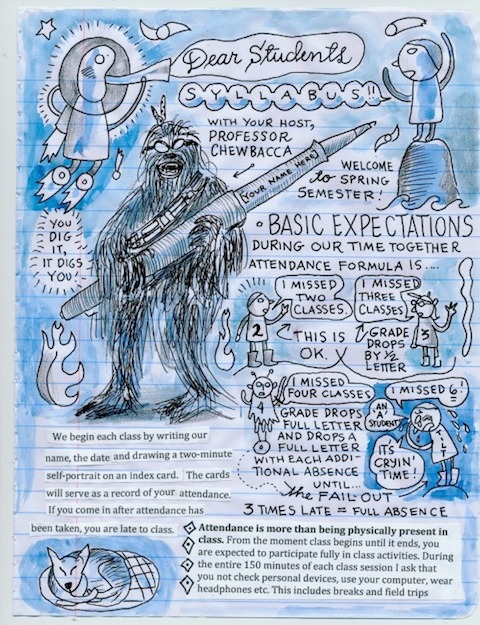
Lynda Barry’s Wonderfully Illustrated Syllabus & Homework Assignments from Her UW-Madison Class, “The Unthinkable Mind”

Lynda Barry Syllabus

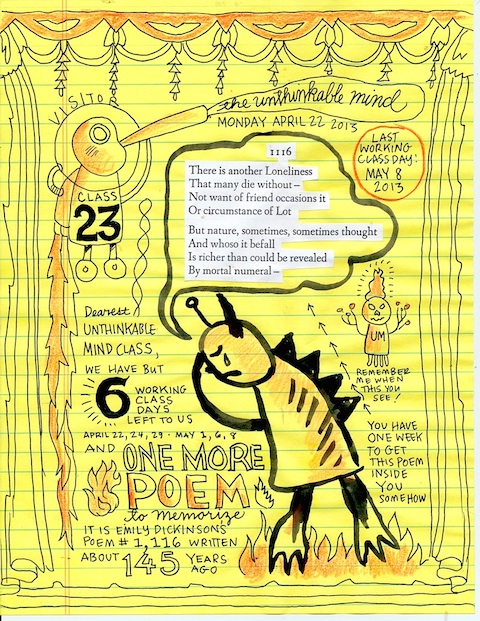
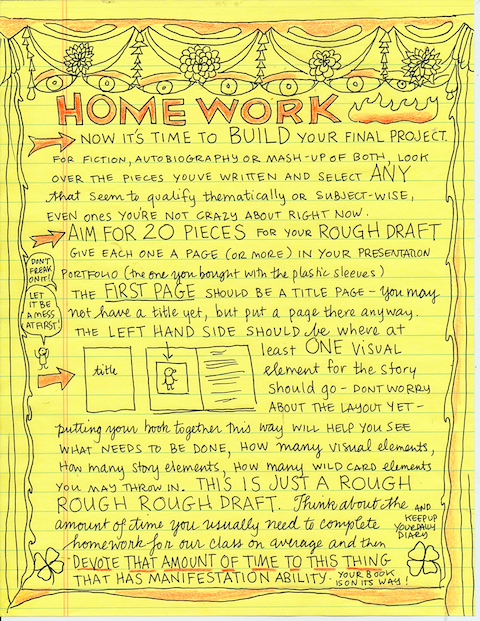
Our rev­er­ence for car­toon­ist Lyn­da Bar­ry, aka Pro­fes­sor Chew­bac­ca, aka The Near Sight­ed Mon­key is no secret. We hope some­day to expe­ri­ence the plea­sure of her live teach­ings. ’Til then, we creep on her Tum­blr page, fol­low­ing with home­work assign­ments, writ­ing exer­cis­es and les­son plans intend­ed for stu­dents who take her class, “The Unthink­able Mind,” at the Uni­ver­si­ty of Wis­con­sin.

And now, those course mate­ri­als have been col­lect­ed as Syl­labus: Notes from an Acci­den­tal Pro­fes­sor, an old fash­ioned, tan­gi­ble book. It’s like a paper MOOC!

(Yes, we know, MOOCs are free. This will be too, if you add it to your hol­i­day wish list, or insist that your local library orders a copy.)

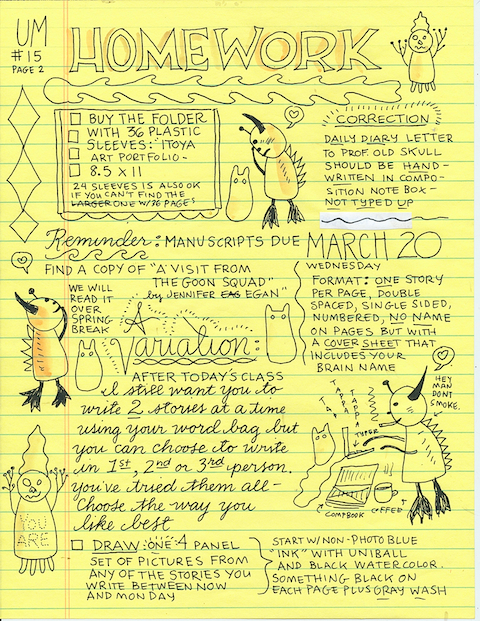
Barry 2

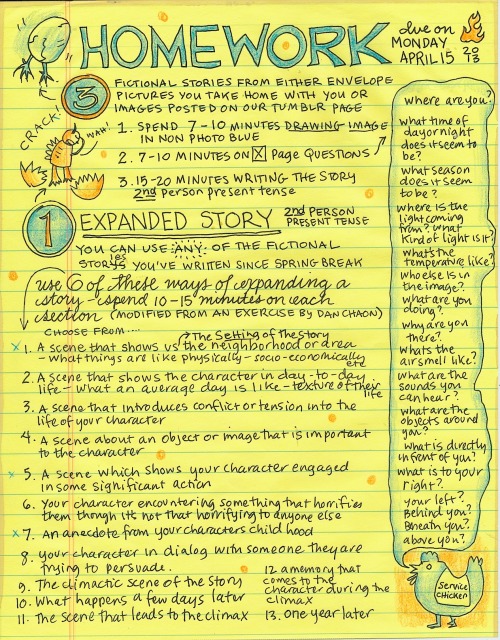
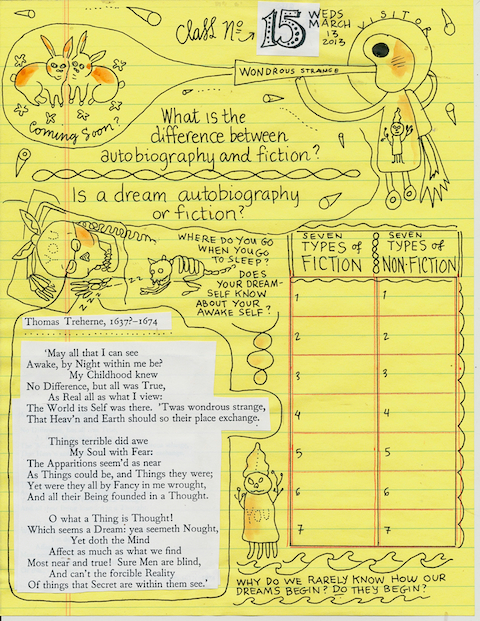
Barry’s march­ing orders are always to be exe­cut­ed on paper, even when they have been retrieved on smart­phones, tablets, and a vari­ety of oth­er screens. They are the antithe­sis of dry. A less acci­den­tal pro­fes­sor might have dis­pensed with the doo­dle encrust­ed, lined yel­low legal paper, after pri­vate­ly out­lin­ing her game plan. Barry’s choice to pre­serve and share the method behind her mad­ness is a gift to stu­dents, and to her­self.

barry homework

As Hillary L. Chute notes in Graph­ic Women: Life Nar­ra­tive and Con­tem­po­rary Comics:

 The decon­tex­tu­al­iza­tion of cheap, com­mon, or util­i­tar­i­an paper (which also harkens back to the his­tor­i­cal avant-garde) may be under­stood as a trans­val­u­a­tion of the idea of work­ing on “waste” –a know­ing, iron­ic acknowl­edg­ment on Barry’s part that her life nar­ra­tive, itself per­haps con­sid­ered insignif­i­cant, is visu­al­ized in an acces­si­ble pop­u­lar medi­um, comics, that is still large­ly viewed as “garbage.”

Work­ing on “garbage” must come as a relief for some­one like Bar­ry, who has talked about grow­ing up under a hos­tile moth­er who saw her daughter’s cre­ative impuls­es as a “waste” of paper:

I got screamed at a lot for using up paper. The only blank paper in the house was hers, and if she found out I touched it she’d go crazy. I some­times stole paper from school and even that made her mad. I think it’s why I hoard paper to this day. I have so much blank paper every­where, in every draw­er, on every shelf, and still when I need a sheet I look in the garbage first. I ago­nize over using a “good” sheet of paper for any­thing. I have good draw­ing paper I’ve been drag­ging around for twen­ty years because I’m not good enough to use it yet. Yes, I know this is insane.

Sam­ple assign­ments from â€śThe Unthink­able Mind” are above and below, and you will find many more in Syl­labus: Notes from an Acci­den­tal Pro­fes­sor. Let us know if Pro­fes­sor Chew­bac­ca’s neu­ro­log­i­cal assump­tions are cor­rect. Does draw­ing and writ­ing by hand release the mon­sters from the id and squelch the inter­nal edi­tor who is the ene­my of art?

Barry 1

Barry 3

Barry 4

Relat­ed Con­tent:

Join Car­toon­ist Lyn­da Bar­ry for a Uni­ver­si­ty-Lev­el Course on Doo­dling and Neu­ro­science

Car­toon­ist Lyn­da Bar­ry Reveals the Best Way to Mem­o­rize Poet­ry

Lyn­da Bar­ry, Car­toon­ist Turned Pro­fes­sor, Gives Her Old Fash­ioned Take on the Future of Edu­ca­tion

1,700 Free Online Cours­es from Top Uni­ver­si­ties

Ayun Hal­l­i­day is an author, home­school­er, and Chief Pri­ma­tol­o­gist of the East Vil­lage Inky zine. Fol­low her @AyunHalliday

Lynda Barry, Cartoonist Turned Professor, Gives Her Old Fashioned Take on the Future of Education

With col­lege tuitions bal­loon­ing to the point of implo­sion, and free edu­ca­tion­al con­tent pro­lif­er­at­ing online, the future of edu­ca­tion is a scorch­ing hot top­ic.

So where are we head­ing?

Cours­era and Khan Acad­e­myVideo game-based cur­ric­u­la? Expe­ri­ence-dri­ven microlearn­ing?

Or school build­ings that moon­light as can­dy?

So sug­gest­ed one of the younger par­tic­i­pants in a work­shop led by the Uni­ver­si­ty of Wisconsin’s Assis­tant Pro­fes­sor of Inter­dis­ci­pli­nary Cre­ativ­i­ty, car­toon­ist and author Lyn­da Bar­ry (aka Pro­fes­sor Long-Title).

Barry’s mes­sian­ic embrace of the arts has proved pop­u­lar with stu­dents of all ages. When the university’s Coun­ter­fac­tu­al Draw­ing Board Project invit­ed fac­ul­ty, staff, and oth­ers to con­sid­er what the “appear­ance, pur­pose, atmos­phere and com­mu­ni­ty of the cam­pus” would be like in 100 years time, Bar­ry delib­er­ate­ly widened the pool to include chil­dren.

Yes, their inno­va­tions tend­ed toward vol­cano schools that erupt at dis­missal, but pre­sum­ably some of those same chil­dren will be in the van­guard when it’s time for ini­tia­tives that seem unimag­in­able now to be imple­ment­ed. Rome wasn’t built in a day, and all that.

Or as one gim­let-eyed youth put it, in a hun­dred years “the teach­ers will all be dead.”

No won­der few adult par­tic­i­pants can see past a but­ton-dri­ven, her­met­i­cal­ly sealed, dig­i­tal future where­in every stu­dent has a chip implant­ed in his or her head.

Bar­ry, no stranger to depres­sion, man­ages to laugh such gloomy fore­casts off, despite what they por­tend for the tac­tile, hand­made ephemera she reveres. A sense of humor—and humanity—is at the core of every edu­ca­tion­al reform she prac­tices.

Rather than rip each other’s writ­ing to shreds dur­ing in-class cri­tiques, her stu­dents call each oth­er by out­landish pseu­do­nyms and draw med­i­ta­tive spi­rals as each oth­ers’ work is read aloud. Every read­er is assured of a hearty “good!” from the teacher. She wants them to keep going, you see.

Sure­ly there are insti­tu­tions where this approach might not fly, but why poo-poo it? Isn’t fuel­ing the cre­ative spir­it a prac­ti­cal invest­ment in the future?

“It’s there in every­body,” Bar­ry believes. “You have to give peo­ple an expe­ri­ence of it, a repeat­ed expe­ri­ence of it that they gen­er­ate them­selves.”

Maybe some­day, some kid who hasn’t had the love of learn­ing squelched out of him or her will apply all that cre­ativ­i­ty toward cur­ing can­cer. That’d be great, huh? At worst, that care­ful­ly tend­ed spark can give solace in the dark days ahead. As fans of Barry’s work well know, art exists to car­ry us through times of “sor­row and grief and trou­ble.”

Relat­ed Con­tent:

Car­toon­ist Lyn­da Bar­ry Reveals the Best Way to Mem­o­rize Poet­ry

Join Car­toon­ist Lyn­da Bar­ry for a Uni­ver­si­ty-Lev­el Course on Doo­dling and Neu­ro­science

7 Free Stephen King Stories: Presented in Text, Audio, Web Comic & a Graphic Novel Video


In Stephen King’s first tele­vised inter­view from way back in 1982, the hor­ror writer revealed that he sleeps with the lights on. He may have grown out of the habit by now, but it’s no won­der if he hasn’t. A macabre imag­i­na­tion like his prob­a­bly sees all sorts of creepy things lurk­ing in the dark. In any case, King has cer­tain­ly learned a thing or two since then about mak­ing his fears more mar­ketable. In the past sev­er­al years he’s been pro­mot­ing his work on the Inter­net to reach new audi­ences.

In 2000, his novel­la Rid­ing the Bul­let debuted exclu­sive­ly online, and in 2008 he part­nered with Mar­vel Comics to pro­mote his first col­lec­tion of short sto­ries in six years, releas­ing one short graph­ic video episode at a time adapt­ed from the 56-page novel­la “N.” See all 25 episodes above. It’s a sto­ry, writes Time, “about a psy­chol­o­gist whose obses­sive-com­pul­sive patient is entranced by a mys­te­ri­ous plot of land.” King calls the adap­ta­tion â€śkind of a video com­ic book,” and while the “point of the exer­cise,” says his edi­tor Susan Moldow,” is to stim­u­late book sales,” I think you’ll agree it’s a pret­ty nifty bit of sto­ry­telling on its own.

King Comic

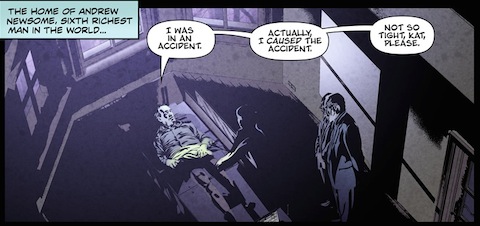
On King’s web­site, you’ll find links to all sorts of mul­ti­me­dia prod­ucts, includ­ing a Life­time orig­i­nal movie, Big Dri­ver, a film titled A Good Mar­riage, now out on video-on-demand, and the lat­est from graph­ic nov­el series Dark Tow­er. You’ll also find a com­ic adap­ta­tion of the short sto­ry “Lit­tle Green God of Agony.” See the first pan­el above, and read the full sto­ry here.

?si=KsluCU7w9DOop4Pv
Long before Youtube and online comics, there was the audio­book. King has nar­rat­ed his own work for years, and it’s also been read by such big names as Kathy Bates, Sis­sy Spacek, Willem Defoe, Anne Heche, Eli Wal­lach, and many more. Just above, hear char­ac­ter actor John Glover—a name you may not know, but a face you’d recognize—read “One for the Road,” a sto­ry from King’s first, 1978, col­lec­tion Night Shift. It’s a vam­pire sto­ry, but a par­tic­u­lar­ly deft one, writes Noah Char­ney at New Haven Review, one that “deals in arche­types that are the heart of good hor­ror fic­tion.” King’s sto­ries, Char­ney asserts, are “beau­ti­ful­ly-writ­ten, high­ly intel­li­gent. They hap­pen to fea­ture mon­sters of all sorts, from nat­ur­al to preter­nat­ur­al, but that is sec­ondary to their core as great sto­ries, well-told.”

King has long defend­ed pop­u­lar fic­tion to the literati—in his accep­tance speech for the Nation­al Book Award, for example—and lashed out at “the keep­ers of the idea of seri­ous lit­er­a­ture,” whom he says “have a short list of authors who are going to be allowed inside.” It may have tak­en a few years, but King got in, even­tu­al­ly pub­lish­ing in such august out­lets as The Atlantic and The New York­er. Read four sto­ries from those pub­li­ca­tions at the links below. And if you’re still in need of a good scare in the days lead­ing up to Hal­loween, make sure to check out “The Man in the Black Suit,” a short film adap­ta­tion of anoth­er sto­ry pub­lished in The New York­er in 1994.

“A Death” (The New York­er, March 2015)

“Her­man Wouk Is Still Alive” (The Atlantic, May 2011)

“Pre­mi­um Har­mo­ny” (The New York­er, Novem­ber, 2009)

“Harvey’s Dream” (The New York­er, June 2003)

Relat­ed Con­tent:

Stephen King Reveals in His First TV Inter­view Whether He Sleeps With the Lights On (1982)

Stephen King’s Top 20 Rules for Writ­ers

Stephen King Cre­ates a List of 96 Books for Aspir­ing Writ­ers to Read

Josh Jones is a writer and musi­cian based in Durham, NC. Fol­low him at @jdmagness.

A Free Cartoon Biography of Ayn Rand: Her Life & Thought

rand cartoon bio

Ayn Rand is one of the most divi­sive fig­ures in 20th Cen­tu­ry Amer­i­can thought. In some cir­cles, par­tic­u­lar­ly on Wall Street and in Wash­ing­ton DC think tanks, she’s seen as a patron saint of lais­sez faire cap­i­tal­ism. She preached the virtues of indi­vid­u­al­ism and decried gov­ern­ment hand­outs and tax­es before it was cool, after all. In oth­er cir­cles, her best­selling books are thought to be lit­tle more than jus­ti­fi­ca­tions of socio­path­ic behav­ior couched in stilt­ed, preachy prose. Whit­tak­er Cham­bers famous­ly dis­missed her final book, Atlas Shrugged, in a review for William F. Buck­ley’s Nation­al Review: “Out of a life­time of read­ing, I can recall no oth­er book in which a tone of over­rid­ing arro­gance was so implaca­bly sus­tained. Its shrill­ness is with­out reprieve. Its dog­ma­tism is with­out appeal.”

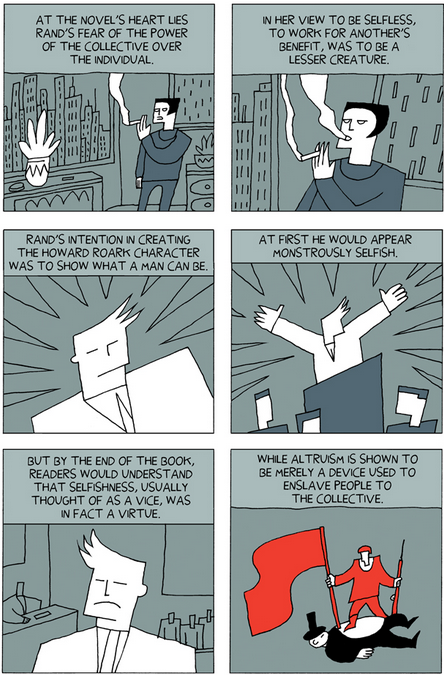
Yet Rand’s thought found a great deal of appeal among Amer­i­can con­ser­v­a­tives. Alan Greenspan, the for­mer head of the Fed­er­al Reserve, was a mem­ber of Rand’s inner cir­cle. For­mer vice pres­i­den­tial can­di­date Paul Ryan and like­ly pres­i­den­tial con­tender Rand Paul are both not­ed fol­low­ers. Whether you agree with her or not, Rand is some­one you need to under­stand if you want to get a sense of what’s going on with Amer­i­can pol­i­tics. So for those of you who might blanche at the thought of wad­ing through one of her phone­book-sized tomes, check out Dar­ryl Cunningham’s car­toon biog­ra­phy of Rand.

Cun­ning­ham traces her life — her family’s loss of wealth and prop­er­ty at the hands of the Bol­she­viks dur­ing the Russ­ian Rev­o­lu­tion, her immi­gra­tion to Amer­i­ca at age 21, and her even­tu­al rise in fame and for­tune. Ele­gant­ly and con­cise­ly, Cun­ning­ham not only lays out Rand’s phi­los­o­phy but also paints a com­plex por­trait of a deeply con­tra­dic­to­ry per­son. All with the help of car­toons.

Rand preached the virtue of indi­vid­u­al­i­ty but she ruth­less­ly excom­mu­ni­cat­ed any­one in her cult-like inner cir­cle who devi­at­ed from her ide­ol­o­gy. She praised rea­son over emo­tion but her spec­tac­u­lar­ly com­pli­cat­ed per­son­al life was rid­dled with pet­ty jeal­ousies and long sim­mer­ing feuds. She abhorred gov­ern­ment aid for the poor but she lived on Social Secu­ri­ty at the end of her life. And per­haps strangest of all, con­sid­er­ing the cur­rent Amer­i­can polit­i­cal cli­mate, Rand vocal­ly sup­port­ed both athe­ism and abor­tion rights, but she has been utter­ly embraced by the Amer­i­can right.

You can see a page of Cunningham’s work above, or you can read his entire work, 66 pages of com­ic good­ness, at ACT-I-VATE.

via io9

Relat­ed Con­tent:

The His­to­ry of Eco­nom­ics & Eco­nom­ic The­o­ry Explained with Comics, Start­ing with Adam Smith

William F. Buck­ley Flogged Him­self to Get Through Atlas Shrugged

Ayn Rand Talks Athe­ism with Phil Don­ahue

Great Shake­speare Plays Retold with Stick Fig­ures in Three Sim­ple Draw­ings

Free Online Phi­los­o­phy Cours­es

Jonathan Crow is a Los Ange­les-based writer and film­mak­er whose work has appeared in Yahoo!, The Hol­ly­wood Reporter, and oth­er pub­li­ca­tions. You can fol­low him at @jonccrow. And check out his blog Veep­to­pus, fea­tur­ing one new draw­ing of a vice pres­i­dent with an octo­pus on his head dai­ly.  The Veep­to­pus store is here.

« Go BackMore in this category... »
Quantcast