Cartoonists Draw Their Famous Cartoon Characters While Blindfolded (1947)

Vintage-Cartoonists-draw-blindfolded

At some point in your life, no doubt, you’ve thought that you have done some­thing so many times that you could do it with your eyes closed — be it change a dia­per, make cof­fee, dri­ve to work or per­form a minor sur­gi­cal pro­ce­dure. Not that this would nec­es­sar­i­ly be a good idea (espe­cial­ly that last one) but there’s some­thing about rep­e­ti­tion, rou­tine and mus­cle mem­o­ry that makes a task so famil­iar that sight seems super­flu­ous.

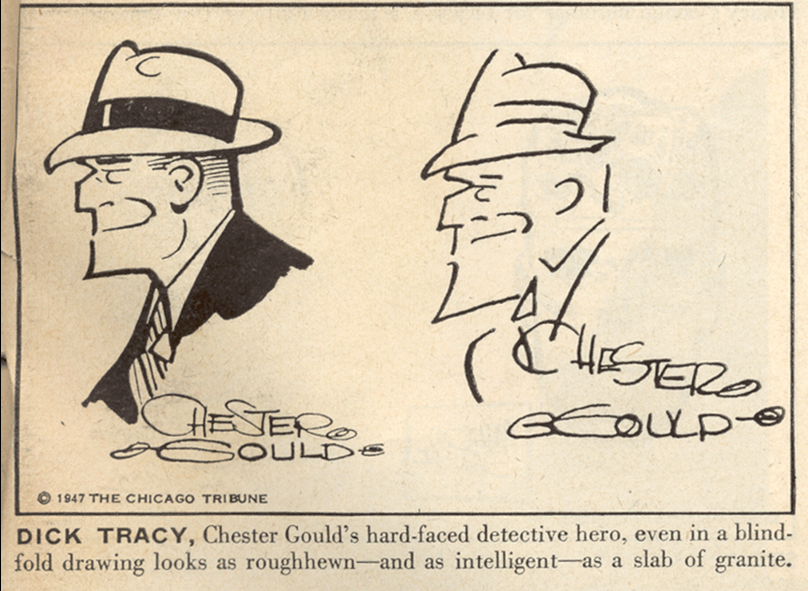
dick tracy

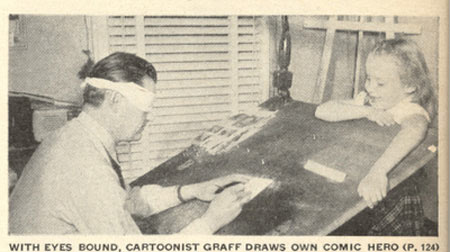
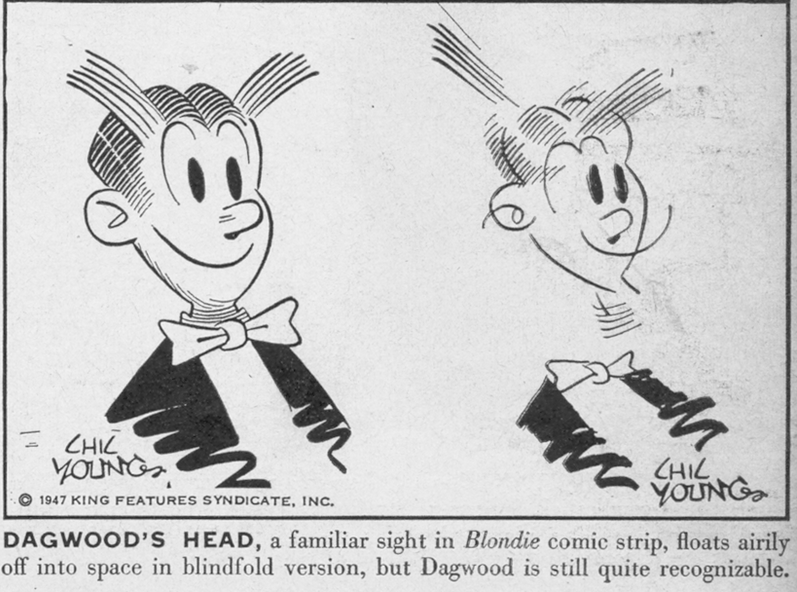
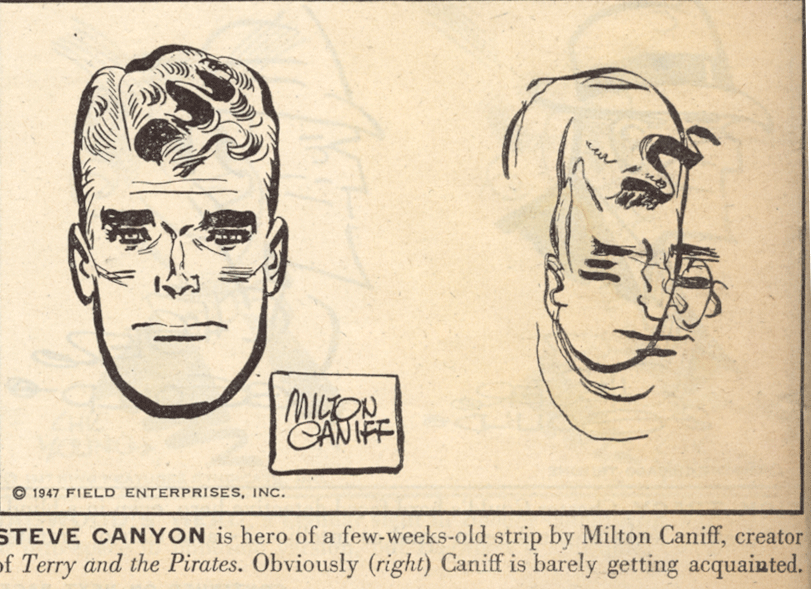
In 1947, LIFE Mag­a­zine asked some of the most famous car­toon­ists around to draw their com­ic strip char­ac­ters blind­fold­ed. The results are fas­ci­nat­ing, look­ing a bit like the out­come of a clin­i­cal test on artists before and after tak­ing illic­it sub­stances. (See our pre­vi­ous post: Artist Draws Nine Por­traits on LSD Dur­ing 1950s Research Exper­i­ment.)

dagwood

Chic Young’s blind­fold­ed ver­sion of Dag­wood Bum­stead is all dynam­ic lines and spi­rals, look­ing a bit like a doo­dle from an Ital­ian Futur­ist. Chester Gould’s blind attempt at Dick Tra­cy’s chis­eled pro­file looks not all that dif­fer­ent from the sight­ed ver­sion. And Mil­ton Can­iff’s Steve Canyon has all the ele­ments there — the flinty eyes, the wavy hair – but it’s all jum­bled togeth­er.

steve canyon

You can see more such draw­ings here.

via Boing­Bo­ing

Relat­ed Con­tent: 

Ger­tie the Dinosaur: The Moth­er of all Car­toon Char­ac­ters

Vis­it the World of Lit­tle Nemo Artist Win­sor McCay: Three Clas­sic Ani­ma­tions and a Google Doo­dle

How Walt Dis­ney Car­toons are Made

Jonathan Crow is a Los Ange­les-based writer and film­mak­er whose work has appeared in Yahoo!, The Hol­ly­wood Reporter, and oth­er pub­li­ca­tions. You can fol­low him at @jonccrowAnd check out his blog Veep­to­pus, fea­tur­ing one new draw­ing of a vice pres­i­dent with an octo­pus on his head dai­ly.  The Veep­to­pus store is here.


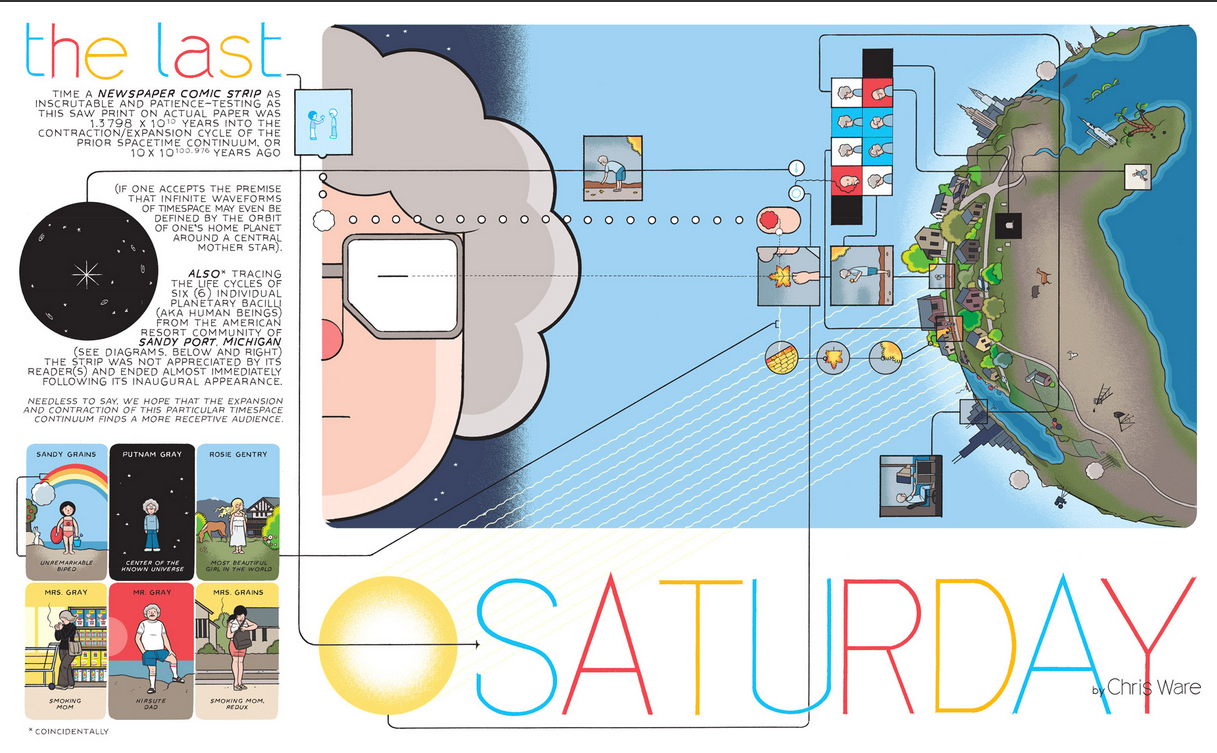
The Last Saturday: A New Graphic Novel by Chris Ware Now Being Serialized at The Guardian (Free)

ware graphic novelThought you might like a heads up that The Guardian has start­ed pub­lish­ing on its web site The Last Sat­ur­day, “a brand new graph­ic novel­la by the award-win­ning car­toon­ist Chris Ware, trac­ing the lives of six indi­vid­u­als from Sandy Port, Michi­gan.” It will be pub­lished in week­ly episodes, with a new install­ment appear­ing on this page every Sat­ur­day.  The inno­v­a­tive com­ic book artist, known for his graph­ic nov­els Jim­my Cor­ri­g­an, the Smartest Kid on Earth and Build­ing Sto­ries, will be get­ting some good sup­port from the , which should make it quite the visu­al expe­ri­ence.

via Kot­tke

Relat­ed Con­tent:

Read Ulysses Seen, A Graph­ic Nov­el Adap­ta­tion of James Joyce’s Clas­sic

Greek Myth Comix Presents Homer’s Ili­ad & Odyssey Using Stick-Man Draw­ings

The His­to­ry of Eco­nom­ics & Eco­nom­ic The­o­ry Explained with Comics, Start­ing with Adam Smith

Down­load 15,000+ Free Gold­en Age Comics from the Dig­i­tal Com­ic Muse­um

The Beatles Saturday Morning Cartoon Show (1965–1969)

We’ve become so accus­tomed to think­ing of the Bea­t­les as Seri­ous Artists™ that it’s easy to forget—at least for those of us who weren’t there—how high­ly com­mer­cial a fran­chise they were in the mid-six­ties. It’s no won­der Joe Strummer’s line about “pho­ny Beat­le­ma­nia” in the Clash’s “Lon­don Call­ing” res­onat­ed so strong­ly for those dis­af­fect­ed with the reign of the Fab Four. The real thing was over­whelm­ing enough, but the slew of offi­cial, unof­fi­cial, and boot­leg mer­chan­dis­ing that fol­lowed it, much of it aimed at chil­dren, makes the band’s dom­i­nance seem, well, kin­da juve­nile. Before they escaped pop star­dom and retreat­ed to the stu­dio to record their psy­che­del­ic mas­ter­pieces, the Bea­t­les received every pos­si­ble com­mer­cial treat­ment, from lunch­box­es and cere­al bowls to jig­saw puz­zles, lamp­shades, and a Ringo Starr bub­ble bath. Perus­ing an online auc­tion of Bea­t­les merch is a bit like tour­ing Grace­land.

There’s one arti­fact from the height of Beat­le­ma­nia that you won’t find, how­ev­er. Instead, you can watch it for free on Youtube. I refer to The Bea­t­les, a half-hour Sat­ur­day morn­ing car­toon show that ran on ABC from Sep­tem­ber, 1965 to Sep­tem­ber 1969 and pro­duced a total of 39 episodes. The band them­selves had almost noth­ing to do with the show, oth­er than appear­ing in an odd pro­mo­tion. Trad­ing entire­ly in broad slap­stick com­e­dy of the Scoo­by-Doo vari­ety, the show saw the four mates tum­ble into one goofy sit­u­a­tion after anoth­er, some super­nat­ur­al, some musi­cal, some the­atri­cal. Although all nat­ur­al per­form­ers them­selves, no Bea­t­le ever voiced his char­ac­ter on the show. Instead, Amer­i­can actor Paul Frees, as John and George, and British actor Lance Per­ci­val, as Paul and Ringo, imi­tat­ed them, very bad­ly. The Bea­t­les car­toon show aired at a time when the kids TV land­scape was just begin­ning to resem­ble the one we have today, with ABC com­peti­tor CBS run­ning super­hero shows like Space Ghost, Super­man, and Mighty Mouse, but the sur­re­al plots and musi­cal num­bers on The Bea­t­les were an attempt to reach adults as well. Watch clips from Sea­son 1 above.

Relat­ed Con­tent:

Lis­ten to the Bea­t­les’ Christ­mas Records: Sev­en Vin­tage Record­ings for Their Fans (1963 – 1969)

The Bea­t­les Per­form a Fun Spoof of Shakespeare’s A Mid­sum­mer Night’s Dream (1964)

Peter Sell­ers Per­forms The Bea­t­les “A Hard Day’s Night” in Shake­speare­an Voice

Josh Jones is a writer and musi­cian based in Durham, NC. Fol­low him at @jdmagness

Charles Schulz Draws Charlie Brown in 45 Seconds and Exorcises His Demons

Would that we had a dime for every car­toon­ist whose course was chart­ed hap­pi­ly copy­ing Charles Schulz’s sem­i­nal strip, Peanuts, while oth­er, more ath­let­ic chil­dren played togeth­er in the fresh air and sun­shine.

Such admis­sions pro­lif­er­ate in inter­views and blog posts. They’re near­ly as numer­ous as the online tuto­ri­als on draw­ing such beloved Peanuts char­ac­ters as Wood­stock, Linus Van Pelt, and Schulz’ sad sack stand-in Char­lie Brown.

The short video above melds the edu­ca­tion­al ease of a YouTube how-to with the self-direct­ed, per­haps more artis­ti­cal­ly pure aspects of the pre-dig­i­tal expe­ri­ence, as Charles Schulz him­self pen­cils Char­lie Brown seat­ed at Schroeder’s toy piano in well under a minute.

You’ll have to watch close­ly if you want to pick up Sparky’s step-by-step tech­nique. There are no geo­met­ric point­ers, only a spir­i­tu­al dis­clo­sure that “poor old Char­lie Brown” was a scape­goat whose suf­fer­ing was com­men­su­rate with that of his cre­ator.

His voiceover down­grades the psy­chic pain to the lev­el of lost golf and bridge games, but as car­toon­ist and for­mer Peanuts copy­ist Bill Wat­ter­son, cre­ator of Calvin and Hobbes, point­ed out in a 2007 review of David Michaelis’ Schulz biog­ra­phy, Schulz’s unhap­pi­ness was deep seat­ed:

Schulz always held his par­ents in high regard, but they were emo­tion­al­ly remote and strange­ly inat­ten­tive to their only child. Schulz was shy and alien­at­ed dur­ing his school years, retreat­ing from near­ly every oppor­tu­ni­ty to reveal him­self or his gifts. Teach­ers and stu­dents con­se­quent­ly ignored him, and Schulz nursed a life­long grudge that so few attempt­ed to draw him out or rec­og­nized his tal­ent…

Once he final­ly achieved his child­hood dream of draw­ing a com­ic strip, how­ev­er, he was able to expose and con­front his inner tor­ments through his cre­ative work, mak­ing inse­cu­ri­ty, fail­ure and rejec­tion the cen­tral themes of his humor. Know­ing that his mis­eries fueled his work, he resist­ed help or change, appar­ent­ly pre­fer­ring pro­fes­sion­al suc­cess over per­son­al hap­pi­ness. Des­per­ate­ly lone­ly and sad through­out his life, he saw him­self as “a noth­ing,” yet he was also con­vinced that his artis­tic abil­i­ty made him spe­cial.

Good grief. I have a hunch none of this found its way into the life­long workaholic’s own guide to draw­ing Peanuts char­ac­ters. It’s not a secret, how­ev­er, that a dark side often comes with the ter­ri­to­ry as a slew of recent auto­bi­o­graph­i­cal graph­ic nov­els from those drawn to the pro­fes­sion will attest.

Via Kot­tke

Relat­ed Con­tent:

Watch the First Ani­ma­tions of Peanuts: Com­mer­cials for the Ford Motor Com­pa­ny (1959–1961)

The Con­fes­sions of Robert Crumb: A Por­trait Script­ed by the Under­ground Comics Leg­end Him­self (1987)

New York­er Car­toon Edi­tor Bob Mankoff Reveals the Secret of a Suc­cess­ful New York­er Car­toon

23 Car­toon­ists Unite to Demand Action to Reduce Gun Vio­lence: Watch the Result

Ayun Hal­l­i­day is an author, home­school­er, and Chief Pri­ma­tol­o­gist of the East Vil­lage Inky zine. Fol­low her @AyunHalliday

Watch Mad Magazine’s Edgy, Never-Aired TV Special (1974)

1974 was a cyn­i­cal time. That was the year that Nixon resigned after the gru­el­ing Water­gate scan­dal, Viet­nam War was final­ly grind­ing to a halt and, thanks to the Oil Shock of ’73, the econ­o­my was in the toi­let. It was also a time when TV execs were scram­bling to keep up with America’s rapid­ly chang­ing cul­tur­al tastes. Audi­ences want­ed some­thing with a lit­tle edge. The TV adap­ta­tion of Robert Altman’s lac­er­at­ing war com­e­dy MASH became a huge hit. As did All in the Fam­i­ly, about everyone’s favorite arm­chair big­ot Archie Bunker. Sat­ur­day Night Live was just a year away from pre­mier­ing. So it isn’t sur­pris­ing that execs from ABC approached the “usu­al gang of idiots” at Mad Mag­a­zine — that fount of anti-author­i­tar­i­an satire — about mak­ing a series. The result­ing pilot, which was lat­er rebrand­ed as a TV spe­cial, nev­er aired because it pro­vid­ed way too much edge for the net­work. You can watch it above.

The show, culled from some of the bet­ter bits from the mag­a­zine, fea­tures art from Don Mar­tin, Mort Druck­er, Al Jaf­fee and Dave Berg – names that will be very famil­iar to you if you grew up obses­sive­ly read­ing the mag­a­zine as a child, like I did – and the ani­ma­tion was super­vised by Jim­my Muraka­mi along with Chris Ishii and Gor­don Bel­lamy.

The net­work claimed that the show was shelved because it had too much “adult” humor. In this post-South Park, post-Fam­i­ly Guy world, the adult humor in this show, by com­par­i­son, seems down­right tame. What the Mad Mag­a­zine TV Spe­cial does have in abun­dance is with­er­ing barbs. Some­thing about trans­lat­ing the cyn­i­cal, ado­les­cent humor of the mag­a­zine from the page to screen made its satire feel much, much sharp­er. Dur­ing their par­o­dy of The God­fa­ther, called the Odd­fa­ther, mafia don Vito Mine­strone (groan) tells a group of mob­sters that their gang war must stop. “We must stop destroy­ing each oth­er and start destroy­ing the plain, ordi­nary cit­i­zens again. Like nor­mal Amer­i­can busi­ness­men.”

The show’s most caus­tic zingers, how­ev­er, are reserved for America’s bloat­ed, com­pla­cent auto indus­try where a Wal­ter Cronkite-like jour­nal­ist inter­views auto exec Edsel Lemon. In five or so min­utes, the bit unspar­ing­ly lays out why GM and Ford even­tu­al­ly lost out to Toy­ota and Hon­da – crap­py cars, lousy safe­ty, and an upper man­age­ment that was as men­da­cious as it was short­sight­ed. While field test­ing a new mod­el, which involved coast­ing the car down a hill, Lemon quips, “If our pro­to­type can go 500 feet with­out falling apart we’ll put it into pro­duc­tion.” This seem­ing­ly explains how the Ford Pin­to got made.

In the end, the net­works squea­mish­ness with the show was more due to its ridicule of an indus­try with deep pock­ets than with its toi­let humor. As Dick DeBa­to­lo, the MAD’s mad­dest writer, who penned much of the show not­ed, “Nobody want­ed to spon­sor a show that made fun of prod­ucts that were adver­tised on TV, like car man­u­fac­tur­ers.”

Relat­ed Con­tent:

Shel Sil­ver­stein Nar­rates an Ani­mat­ed Ver­sion of The Giv­ing Tree (1973)

Watch 1970s Ani­ma­tions of Songs by Joni Mitchell, Jim Croce & The Kinks, Aired on The Son­ny & Cher Show

A Short His­to­ry of Amer­i­ca, Accord­ing to the Irrev­er­ent Com­ic Satirist Robert Crumb

Watch the First Ani­ma­tions of Peanuts: Com­mer­cials for the Ford Motor Com­pa­ny (1959–1961)

Jonathan Crow is a Los Ange­les-based writer and film­mak­er whose work has appeared in Yahoo!, The Hol­ly­wood Reporter, and oth­er pub­li­ca­tions. You can fol­low him at @jonccrow. And check out his blog Veep­to­pus, fea­tur­ing pic­tures of vice pres­i­dents with octo­pus­es on their heads.

Greek Myth Comix Presents Homer’s Iliad & Odyssey Using Stick-Man Drawings

OdysseyComixmain2

The next time some know-it-all moral­ist blames any num­ber of social ills on vio­lent video games or action films, ask them if they’d rather kids stick to the clas­sics. When they invari­ably reply in the affir­ma­tive, you can smug­ly direct their atten­tion to Greek Myth Comix’s aston­ish­ing info­graph­ic detail­ing the mul­ti­tude of grue­some killings in the Ili­ad. Homer’s epic unflinch­ing­ly describes, for exam­ple, in graph­ic detail, the death of Lycon, who in Book 16 has a sword thrust through his neck: “noth­ing held but a piece of skin, and from that, Lycon’s head dan­gled down.” And if you’ve held on to your lunch, you may be inter­est­ed to know the gris­ly cir­cum­stances of the oth­er two can­di­dates for “grimmest death.” Just below, see a sec­tion of the com­ic cel­e­brat­ing “stand out per­for­mances in bat­tle.” Can Zack Snyder’s King Leonidas match kills with Homer’s Achilles? Only one way to find out….

IliadStandouts

The Ili­ad graph­ic is great fun—as well as a suc­cinct way to ren­der mod­ern scolds speechless—but Greek Myth Comix doesn’t stop there… Oh no! Fans of Homer’s Odyssey will not be dis­ap­point­ed; Books 5–7, and much of 9, 10, and 12 also get the “comix” treat­ment. The art­work is admit­ted­ly crude, but the text comes from a much more author­i­ta­tive source than 300, no dis­re­spect to Frank Miller. Lau­ren Jenk­in­son is a “Clas­si­cal Civil­i­sa­tion and Lit­er­a­ture teacher, writer and, appar­ent­ly, artist,” and her online adap­ta­tions are intend­ed pri­mar­i­ly to help stu­dents pass their GCSE (OCR), the British sec­ondary exams whose near­est equiv­a­lent in the States might per­haps be the SATs.

homeric-hero-1

But Greek Myth Comix won’t only appeal to strug­gling stu­dents in the British Isles. Edu­ca­tors will find much to love here, as will lovers of mythol­o­gy in gen­er­al. Online access to the site is free, and you can pur­chase copies of the comix in PDF—either indi­vid­u­al­ly, in bulk, or in poster-size res­o­lu­tion. The site’s full archive has oth­er good­ies like the above, “What Makes a Home­r­ic Hero?” And with such recent updates, no doubt Greek Myth Comix has much more in store for those strug­gling to enjoy or under­stand Homer’s bloody-mind­ed epics, and those who sim­ply love their myths in com­ic form as well as ancient lyric.

via HolyKaw

Relat­ed Con­tent:

The His­to­ry of Eco­nom­ics & Eco­nom­ic The­o­ry Explained with Comics, Start­ing with Adam Smith

What’s Next for the Large Hadron Col­lid­er? PhD Comics Intro­duces the Search for Extra Dimen­sions

A Short His­to­ry of Amer­i­ca, Accord­ing to the Irrev­er­ent Com­ic Satirist Robert Crumb

Josh Jones is a writer and musi­cian based in Durham, NC. Fol­low him at @jdmagness

Read 15,000 Marvel Comics Online for 99 Cents (for a Limited Time)

marvelunlimited

Right now, Mar­vel is run­ning a pro­mo­tion where if you join Mar­vel Unlim­it­ed, using the pro­mo code SDCC14, you can pay 99 cents for your first month, dur­ing which time you can access “over 15,000 Dig­i­tal Comics, fea­tur­ing Earth­’s Might­i­est Heroes and the galaxy’s vilest vil­lains – all span­ning Mar­vel’s 75 year his­to­ry!” Yes, that includes the Incred­i­ble Hulk, Cap­tain Amer­i­ca, The Mighty Thor & many oth­er favorites.

Accord­ing to Wired, the “comics can be viewed on PC and Mac, as well as iOS and Android devices through a Mar­vel Unlim­it­ed app. Read­ers can down­load up to 12 comics at a time for offline read­ing.”

A Mar­vel Unlim­it­ed sub­scrip­tion usu­al­ly costs 69 dol­lars a year or $9.99 a month, but the terms and con­di­tions say that “Sub­scribers can can­cel their sub­scrip­tion at any time by access­ing My account or e‑mailing Mar­vel cus­tomer ser­vice.” In oth­er words, you can sub­scribe for one month, pay 99 cents, read a heck of a lot of comics, then decide if you want to con­tin­ue the sub­scrip­tion — or not — before the end of 30 days. (Just as an fyi, Audible.com offers a sim­i­lar arrange­ment with audio books. You can join their 30-day free tri­al, down­load a free audio book, then decide whether you want to stick with the pro­gram before the mon­th’s end. No mat­ter what you decide, you can keep the free audio book. Find more details here.)

If you pre­fer to just pay zero cents for comics, please see our two pri­or posts.

Down­load 15,000+ Free Gold­en Age Comics from the Dig­i­tal Com­ic Muse­um

Down­load Over 22,000 Gold­en & Sil­ver Age Com­ic Books from the Com­ic Book Plus Archive

Flannery O’Connor’s Satirical Cartoons: 1942–1945

Sci-fi author B.C. Kowal­s­ki recent­ly post­ed a short essay on why the advice to write every day is, for lack of a suit­able euphemism, “bull­shit.” Not that there’s any­thing wrong with it, Kowal­s­ki main­tains. Only that it’s not the only way. It’s said Thack­er­ay wrote every morn­ing at dawn. Jack Ker­ouac wrote (and drank) in binges. Every writer finds some method in-between. The point is to “do what works for you” and to “exper­i­ment.” Kowal­s­ki might have added a third term: diver­si­fy. It’s worked for so many famous writ­ers after all. James Joyce had his music, Sylvia Plath her art, Hem­ing­way his machis­mo. Faulkn­er drew car­toons, as did his fel­low South­ern writer Flan­nery O’Connor, his equal, I’d say, in the art of the Amer­i­can grotesque. Through both writ­ers ran a deep vein of pes­simistic humor, oblique, but detectable, even in scenes of high­est pathos.


O’Connor’s visu­al work, writes Kel­ly Ger­ald in The Paris Review, was a “way of see­ing she described as part of the ‘habit of art’”—a way to train her fic­tion writer’s eye. Her car­toons hew close­ly to her autho­r­i­al voice: a lone sar­don­ic observ­er, supreme­ly con­fi­dent in her assess­ments of human weak­ness. Per­haps a bet­ter com­par­i­son than Faulkn­er is with British poet and doo­dler Ste­vie Smith, whose bleak vision and razor-sharp wit sim­i­lar­ly cut through moun­tains of… shall we say, bull­shit. In both pen & ink and linoleum cuts, O’Connor set dead­pan one-lin­ers against images of pre­ten­sion, con­for­mi­ty, and the banal­i­ty of col­lege life. In the car­toon at the top, she seems to mock the pur­suit of cre­den­tials as a refuge for the social­ly dis­af­fect­ed. Above, a cam­paign­er for a low-lev­el office deploys bom­bas­tic pseu­do-Lenin­ist rhetoric, and in the car­toon below, a cranky char­ac­ter escapes a horde of iden­ti­cal WAVES.

O’Connor was an intense­ly visu­al writer with, Ger­ald writes, a “nat­ur­al pro­cliv­i­ty for cap­tur­ing the humor­ous char­ac­ter of real peo­ple and con­crete sit­u­a­tions,” ful­ly cred­i­ble even at their most extreme (as in the increas­ing­ly hor­rif­ic self-lac­er­a­tions of Wise Blood’s Hazel Motes). She began draw­ing at five and pro­duced small books and sketch­es as a child, even­tu­al­ly pub­lish­ing car­toons in almost every issue of her high-school and college’s news­pa­pers and year­books. Her alma mater Geor­gia Col­lege, then known as Geor­gia State Col­lege for Women, has pub­lished a book fea­tur­ing her car­toons from her under­grad­u­ate years, 1942–45.

More recent­ly, Ger­ald edit­ed a col­lec­tion called Flan­nery O’Connor: The Car­toons for Fan­ta­graph­ics. In his intro­duc­tion, artist Bar­ry Moser describes in detail the tech­nique of her linoleum cuts, call­ing them “coarse in tech­ni­cal terms.” And yet, “her rudi­men­ta­ry han­dling of the medi­um notwith­stand­ing, O’Connor’s prints offer glimpses into the work of the writer she would become” with their “lit­tle O’Connor petards aimed at the walls of pre­ten­tious­ness, aca­d­e­mics, stu­dent pol­i­tics, and stu­dent com­mit­tees.” Had O’Connor con­tin­ued mak­ing car­toons into her pub­lish­ing years, she might have, like B.C. Kowal­s­ki, aimed one of those petards at those who dis­pense dog­mat­ic, cook­ie-cut­ter writ­ing advice as well.

via Geor­gia Col­lege/The Paris Review

Relat­ed Con­tent:

The Art of William Faulkn­er: Draw­ings from 1916–1925

The Art of Sylvia Plath: Revis­it Her Sketch­es, Self-Por­traits, Draw­ings & Illus­trat­ed Let­ters

The Art of Franz Kaf­ka: Draw­ings from 1907–1917

Rare 1959 Audio: Flan­nery O’Connor Reads ‘A Good Man is Hard to Find’

Flan­nery O’Connor: Friends Don’t Let Friends Read Ayn Rand (1960)

Josh Jones is a writer and musi­cian based in Durham, NC. Fol­low him at @jdmagness

« Go BackMore in this category... »
Quantcast