This is What Oliver Sacks Learned on LSD and Amphetamines

In this week’s issue of the New York­er, neu­rol­o­gist and writer Oliv­er Sacks has an arti­cle titled “Altered States.” Sub­ti­tled “Self-exper­i­ments in chem­istry,” it cov­ers, to be blunter, what Sacks expe­ri­enced and learned — or failed to learn, sub­stance depend­ing — when he began doing drugs.

His desire to con­duct these self-exper­i­ments flared up in his thir­ties, when, among oth­er sud­den jolts of curios­i­ty, he felt a sus­pi­cion that he had nev­er real­ly seen the col­or indi­go. “One sun­ny Sat­ur­day in 1964, I devel­oped a phar­ma­co­log­ic launch­pad con­sist­ing of a base of amphet­a­mine (for gen­er­al arousal), LSD (for hal­lu­cino­genic inten­si­ty), and a touch of cannabis (for a lit­tle added delir­i­um). About twen­ty min­utes after tak­ing this, I faced a white wall and exclaimed, ‘I want to see indi­go now — now!’ ” The result­ing expe­ri­ence, and sure­ly many oth­ers besides, should appear in detail in Sacks’ upcom­ing book Hal­lu­ci­na­tions. While you need to sub­scribe to the mag­a­zine to read the New York­er piece, any­one can watch the video above, which spends a few min­utes with Sacks talk­ing about what drugs taught him about the brain.

Every sub­ject Sacks writes about seems to start with his inter­est in our unusu­al sen­so­ry expe­ri­ences and end in the organ­ic work­ings of our brains. His body of work com­pris­es books on migraine, encephali­tis, visu­al agnosia, deaf­ness, autism, col­or blind­ness, and var­i­ous oth­er per­cep­tu­al impair­ments. Think­ing back to his self-induced hal­lu­ci­na­tions, he remem­bers feel­ing that “the drugs might sen­si­tize me to expe­ri­ences of a sort my patients could have,” mak­ing him more empa­thet­ic to what they were going through. On the oth­er hand, he says, some drugs “gave me some very direct knowl­edge of what phys­i­ol­o­gists would call the reward sys­tems of the brain,” pro­duc­ing “intense plea­sure, some­times plea­sure of an almost orgas­mic degree, with no par­tic­u­lar con­tent,” the kind that made him fear he would become one of those famous lab rats with an elec­trode con­nect­ed to its brain’s plea­sure cen­ter, push­ing and push­ing the lever to stim­u­late that cen­ter to the very end. But he stepped back, observed, wrote, and avoid­ed that fate, or at least its equiv­a­lent in the human domain, liv­ing to tell the tale more elo­quent­ly than most any writer around.

(See also: more from Oliv­er Sacks on the New York­er’s Out Loud pod­cast.)

Relat­ed con­tent:

Oliv­er Sacks Talks Music with Jon Stew­art

Oliv­er Sacks on the iPod

Col­in Mar­shall hosts and pro­duces Note­book on Cities and Cul­ture. Fol­low him on Twit­ter at @colinmarshall.

Do Yourself a Favor and Watch Stress: Portrait of a Killer (with Stanford Biologist Robert Sapolsky)

Intel­li­gence comes at a price. The human species, despite its tal­ent for solv­ing prob­lems, has man­aged over the mil­len­nia to turn one of its most basic sur­vival mechanisms–the stress response–against itself. “Essen­tial­ly,” says Stan­ford Uni­ver­si­ty neu­ro­bi­ol­o­gist Robert Sapol­sky, “we’ve evolved to be smart enough to make our­selves sick.”

In the 2008 Nation­al Geo­graph­ic doc­u­men­tary Stress: Por­trait of a Killer (above), Sapol­sky and fel­low sci­en­tists explain the dead­ly con­se­quences of pro­longed stress. “If you’re a nor­mal mam­mal,” Sapol­sky says, “what stress is about is three min­utes of scream­ing ter­ror on the savan­nah, after which either it’s over with or you’re over with.” Dur­ing those three min­utes of ter­ror the body responds to immi­nent dan­ger by deploy­ing stress hor­mones that stim­u­late the heart rate and blood pres­sure while inhibit­ing oth­er func­tions, like diges­tion, growth and repro­duc­tion.

The prob­lem is, human beings tend to secrete these hor­mones con­stant­ly in response to the pres­sures of every­day life. “If you turn on the stress response chron­i­cal­ly for pure­ly psy­cho­log­i­cal rea­sons,” Sapol­sky told Mark Shwartz in a 2007 inter­view for the Stan­ford News Ser­vice, “you increase your risk of adult onset dia­betes and high blood pres­sure. If you’re chron­i­cal­ly shut­ting down the diges­tive sys­tem, there’s a bunch of gas­troin­testi­nal dis­or­ders you’re more at risk for as well.”

Chron­ic stress has also been shown in sci­en­tif­ic stud­ies to dimin­ish brain cells need­ed for mem­o­ry and learn­ing, and to adverse­ly affect the way fat is dis­trib­uted in the body. It has even been shown to mea­sur­ably accel­er­ate the aging process in chro­mo­somes, a result that con­firms our intu­itive sense that peo­ple who live stress­ful lives grow old faster.

By study­ing baboon pop­u­la­tions in East Africa, Sapol­sky has found that indi­vid­u­als low­er down in the social hier­ar­chy suf­fer more stress, and con­se­quent­ly more stress-relat­ed health prob­lems, than dom­i­nant indi­vid­u­als. The same trend in human pop­u­la­tions was dis­cov­ered in the British White­hall Study. Peo­ple with more con­trol in work envi­ron­ments have low­er stress, and bet­ter health, than sub­or­di­nates.

Stress: Por­trait of a Killer is a fas­ci­nat­ing and impor­tant documentary–well worth the 52 min­utes it takes to watch.

Relat­ed con­tent:

Sapol­sky Breaks Down Depres­sion

Dopamine Jack­pot! Robert Sapol­sky on the Sci­ence of Plea­sure

Biol­o­gy That Makes Us Tick: Free Stan­ford Course by Robert Sapol­sky

Henry Rollins Pitches Education as the Key to Restoring Democracy

Hen­ry Rollins had dropped out of col­lege and was work­ing at a Haa­gen-Dazs in Wash­ing­ton, DC when he joined the sem­i­nal L.A. hard­core punk band Black Flag in 1981, a career move that would shape the rest of the singer/author/actor/activist’s life. And although he left high­er edu­ca­tion for a more indi­vid­u­al­ized path, Rollins has a very high regard for the poten­tial of a good edu­ca­tion to change peo­ple’s lives.

We’ve pre­vi­ous­ly fea­tured Rollins’ moti­va­tion­al Big Think talk to young peo­ple on the dan­gers of resent­ment. In the short, but equal­ly inspir­ing, talk above–from the same set of inter­views–Rollins describes edu­ca­tion as the engine of a demo­c­ra­t­ic soci­ety, “the great equal­iz­er.” For Rollins, edu­ca­tion is the key to a “more vig­or­ous democ­ra­cy.” And although he makes some arguable claims about the pos­si­bil­i­ty of edu­ca­tion­al reform to sub­stan­tial­ly dimin­ish the effects of insti­tu­tion­al­ized racism and pover­ty, his view of what an edu­ca­tion should be cor­re­sponds to what edu­ca­tion­al reform­ers have stressed for decades—that mov­ing to a focus on crit­i­cal think­ing, rather than “teach­ing to the test,” is a shift that needs to hap­pen in order for stu­dents to become curi­ous, inten­tion­al, and inde­pen­dent learn­ers and, ulti­mate­ly, free and inde­pen­dent cit­i­zens.

Rollins spec­u­lates that cer­tain polit­i­cal actors and vest­ed inter­ests delib­er­ate­ly block edu­ca­tion­al reform to main­tain the sta­tus quo. Whether or not you accept his analy­sis, there’s no deny­ing that the state of pri­ma­ry, sec­ondary, and high­er edu­ca­tion in the U.S. is dire, and the func­tion­al effi­ca­cy of our demo­c­ra­t­ic process seems con­stant­ly in jeop­ardy. Allud­ing to the dic­tum attrib­uted to Thomas Jef­fer­son (who may not have actu­al­ly writ­ten this) that “An edu­cat­ed cit­i­zen­ry is a vital req­ui­site for our sur­vival as a free peo­ple,” Rollins believes that edu­ca­tion­al reforms offer “the way out” of our cur­rent polit­i­cal grid­lock and of the despair­ing sit­u­a­tions under­priv­i­leged peo­ple are born into. I think he makes a pret­ty com­pelling case in just under four min­utes.

Josh Jones is a doc­tor­al can­di­date in Eng­lish at Ford­ham Uni­ver­si­ty and a co-founder and for­mer man­ag­ing edi­tor of Guer­ni­ca / A Mag­a­zine of Arts and Pol­i­tics.

Hear Oscar Wilde Recite a Section of The Ballad of Reading Gaol (1897)

Even those of us who have nev­er read The Impor­tance of Being Earnest, The Pic­ture of Dori­an Gray, or any­thing else Oscar Wilde wrote can still recite a thing or two he said. “A lit­tle sin­cer­i­ty is a dan­ger­ous thing, and a great deal of it is absolute­ly fatal,” for exam­ple, or that jew­el of so many Face­book pro­files, “We are all in the gut­ter, but some of us are look­ing at the stars.” I per­son­al­ly pre­fer “I can resist every­thing except temp­ta­tion,” but none of these quite hold the pow­er of Wilde’s immor­tal (if seem­ing­ly uncon­firmed) dying line: “Either those drapes go or I do.” Now you can hear the poet, play­wright, one-time nov­el­ist, and ded­i­cat­ed racon­teur speak his own words in this record­ing of two vers­es from his 1897 poem The Bal­lad of Read­ing Gaol, embed­ded above.

Wilde got his mate­r­i­al for this work straight from the source: con­vict­ed in 1895 of “gross inde­cen­cy,” he did the fol­low­ing two years of “hard bed, hard fare, hard labour” at HM’s Prison, Read­ing. There he wit­nessed a Roy­al Horse Guard troop­er hang for cut­ting his wife’s throat. Sens­ing a theme of the human con­di­tion, Wilde would lat­er write: “Yet each man kills the thing he loves / By each let this be heard. / Some do it with a bit­ter look / Some with a flat­ter­ing word. / The cow­ard does it with a kiss / The brave man with a sword!” The ear­li­er vers­es you hear Wilde read — for what­ev­er def­i­n­i­tion of “hear” the lim­i­ta­tions of eigh­teenth-cen­tu­ry record­ing devices allowed — end in a sum­ma­tion of just what struck him so deeply about all this busi­ness: “The man had killed the thing he loved / And so he had to die.”

Find more works by Oscar Wilde in our col­lec­tions of Free Audio Books and Free eBooks.

Relat­ed con­tent:

“Jer­sey Shore” in the Style of Oscar Wilde

Oscar Wilde in His Own Words

Col­in Mar­shall hosts and pro­duces Note­book on Cities and Cul­ture. Fol­low him on Twit­ter at @colinmarshall.

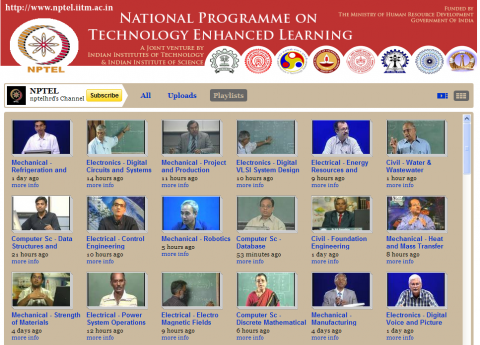
India’s Answer to M.I.T. Presents 268 Free Online Courses (in English)

Dur­ing the 1940s, when India won its inde­pen­dence from Britain, the lead­ers of the new­ly-formed nation began imag­in­ing the Indi­an Insti­tutes of Tech­nol­o­gy, oth­er­wise known as the IITs. Much like MIT in the US, these schools would cul­ti­vate some of the world’s top sci­en­tists and engi­neers. And they’d make tech­nol­o­gy key to the future of Indi­a’s eco­nom­ic devel­op­ment.

Today, the IITs stand atop the Indi­an edu­ca­tion­al sys­tem and, like their peer insti­tu­tions in the US, they’re mak­ing a point of putting free cours­es on the web. Rather qui­et­ly, they’ve amassed some 268 cours­es, giv­ing any­one with an inter­net con­nec­tion access to 10,000+ video lec­tures. As you might expect, the course line­up skews heav­i­ly toward sci­ence and tech­nol­o­gy, the stuff that con­tributes to Indi­a’s indus­tri­al base — Intro­duc­tion to Basic Elec­tron­icsHigh Per­for­mance Com­put­er Archi­tec­tureSpace Flight Mechan­ics, Steel Mak­ing, and all of the rest. But they’ve also added a few con­tem­pla­tive cours­es to the mix, cours­es like Con­tem­po­rary Lit­er­a­tureQuan­tum Physics, the His­to­ry of Eco­nom­ic The­o­ry, and Game The­o­ry and Eco­nom­ics.

You can start rum­mag­ing through the com­plete list of IIT cours­es on YouTube here, or you can access them via this IIT web­site, which gives you the abil­i­ty to down­load videos straight to your com­put­er. Nat­u­ral­ly we’ve added many essen­tial IIT cours­es to our list of Free Online Cours­es from Great Uni­ver­si­ties — Har­vard, Yale, Stan­ford, MIT, UC Berke­ley, Oxford, the list goes on.

Relat­ed Con­tent:

Yale Intro­duces Anoth­er Sev­en Free Online Cours­es, Bring­ing Total to 42

Har­vard Presents Free Cours­es with the Open Learn­ing Ini­tia­tive

MIT Intro­duces Com­plete Cours­es to Open­Course­Ware Project


by | Permalink | Make a Comment ( 13 ) |

The Final Descent of NASA’s Mars Rover Curiosity Captured in High Resolution

A few weeks back, we showed you the first grainy footage of NASA’s rover, Curios­i­ty, land­ing on the dusty sur­face of Mars. And we promised to fol­low up with high­er res footage when it became avail­able. Well, it’s now online and on dis­play above. Just to recap, the video shows the final descent of Curios­i­ty, from the point where it jet­ti­sons its heat shield to the moment when it touch­es down on the mar­t­ian sur­face. The video was stitched togeth­er with 666 images tak­en at a rate of four per sec­ond.

Relat­ed Con­tent:

Find Astron­o­my cours­es in our col­lec­tion of 500 Free Online Cours­es

Carl Sagan Presents Six Lec­tures on Earth, Mars & Our Solar Sys­tem … For Kids (1977)

Ray Brad­bury Reads Mov­ing Poem on the Eve of NASA’s 1971 Mars Mis­sion

Fol­low us on Face­bookTwit­ter and now Google Plus and share intel­li­gent media with your friends! They’ll thank you for it.

by | Permalink | Make a Comment ( 4 ) |

Parking Garage Door Does Impression of Miles Davis’ Jazz Album, Bitches Brew

Clas­sic. And if you’re not famil­iar with the ref­er­ence — Miles Davis’ 1970 exper­i­men­tal jazz album, Bitch­es Brew — you can catch it on YouTube, or snag a copy online.

H/T Kot­tke

Relat­ed Con­tent:

A Child’s Intro­duc­tion to Jazz by Can­non­ball Adder­ley (with Louis Arm­strong & Thelo­nious Monk)

‘The Sound of Miles Davis’: Clas­sic 1959 Per­for­mance with John Coltrane

1959: The Year that Changed Jazz

The Uni­ver­sal Mind of Bill Evans: Advice on Learn­ing to Play Jazz & The Cre­ative Process


by | Permalink | Make a Comment ( 3 ) |

Remembering The Clash’s Frontman Joe Strummer on His 60th Birthday

It’s hard to imag­ine him as an old man, but Joe Strum­mer would have turned 60 today. Strum­mer was the heart and soul of the leg­endary punk group The Clash, the rea­son many peo­ple called it “The only band that mat­ters.”

He was a man with a Bob Dylan-like instinct for self-inven­tion. Born John Gra­ham Mel­lor on August 21, 1952 in Ankara, Turkey (his father was in the British diplo­mat­ic ser­vice), he changed his name to Joe Strum­mer in the ear­ly 1970s while play­ing in a rhythm and blues band called the 101’ers. When the Sex Pis­tols opened for the 101’ers, Strum­mer was so impressed with the band’s take-no-pris­on­ers atti­tude that he threw him­self into the punk move­ment, accept­ing an offer from gui­tarist Mick Jones, bassist Paul Simonon and man­ag­er Bernie Rhodes to join what would even­tu­al­ly become The Clash.

With the Clash, Strum­mer helped move punk beyond the self-absorbed nihilism of its ear­ly days to embrace polit­i­cal and social aware­ness. After the band dis­in­te­grat­ed in the mid 1980s, Strum­mer spent over a decade in semi-retire­ment before return­ing in the late 1990s for what he called his “Indi­an sum­mer,” with a pop­u­lar BBC radio show and a new band, The Mescaleros. But just as he was regain­ing his old momen­tum, Strum­mer died unex­pect­ed­ly of heart fail­ure on Decem­ber 22, 2002, at the age of 50.

In the video above, Strum­mer sings the title song to the The Clash’s 1980 album Lon­don Call­ing, which Rolling Stone ranked  Num­ber 8 on its list of the 500 Great­est Albums of All Time. “Record­ed in 1979 in Lon­don,” writes the mag­a­zine, “which was then wrenched by surg­ing unem­ploy­ment and drug addic­tion, and released in Amer­i­ca in Jan­u­ary 1980, the dawn of an uncer­tain decade, Lon­don Call­ing is 19 songs of apoc­a­lypse, fueled by an unbend­ing faith in rock & roll to beat back the dark­ness.”

Relat­ed con­tent:

The Clash: West­way to the World

The Clash Star in 1980’s Gang­ster Par­o­dy: Hell W10

Mick Jones, The Clash Gui­tarist, Sings ‘Train in Vain’ at the Library

« Go BackMore in this category... »
Quantcast