Tom Waits Sings and Tells Stories in Tom Waits: A Day in Vienna, a 1979 Austrian Film

The film begins at a derelict gas sta­tion. A paper sign, peel­ing from the wall, warns in Ger­man that open flames and smok­ing are dan­ger­ous and strict­ly for­bid­den. In walks Tom Waits, smok­ing a cig­a­rette.

“This reminds me of a place I used to work in Nation­al City, Cal­i­for­nia, called Spot­co Self Ser­vice,” Waits says as he leans against a pump. “I worked for a gen­tle­man named Charles Spot­co. I was always late for work. I used to stay out at night. I’d come drag­ging to work, used to get there about ten-thir­ty in the morn­ing. He’d chew me out and scream at me for being late. He always said I’d nev­er amount to noth­ing. I nev­er thought I’d be stand­ing in a gas sta­tion in Vien­na Aus­tria. If I’d of told him that one day, Spot­co, I’ll be lean­ing on a gas pump at a gas sta­tion in Vien­na Aus­tria, he would have said you got­ta be out of your mind.”

The scene is from Tom Waits: A Day in Vien­na, a half-hour Aus­tri­an TV film shot on April 19, 1979, and shown above in its entire­ty. Film­mak­ers Rudi Dolezal and Hannes Rossach­er approached Waits when he arrived in Vien­na on a short Euro­pean tour, accord­ing to Bar­ney Hoskyns in Low­side of the Road: A Life of Tom Waits. “He came in from Ams­ter­dam say­ing he had­n’t slept all night, but he agreed on the spot to let us film him,” Rossach­er told Hoskyns. “He did­n’t want to do a prop­er inter­view but instead he want­ed to tell sto­ries.”

Dolezal and Rossach­er drove Waits to the old gas sta­tion and lat­er to a Greek cafe, where he told a com­ic sto­ry about a sax­o­phone play­er. At the Konz­erthaus that night they filmed Waits and his band per­form­ing “Sweet Lit­tle Bul­let From a Pret­ty Blue Gun,” “Shake, Rat­tle and Roll” and “Christ­mas Card from a Hook­er in Min­neapo­lis.” Back­stage before the encore, Waits is shown pac­ing back and forth, singing “When the Saints Go March­ing In.” After­ward, in a lounge, he sits down at a piano and plays a few bars of “I Can’t Wait to Get Off Work” before danc­ing with a bar girl and retir­ing for the night.

Relat­ed Con­tent:

Tom Waits Reads Charles Bukows­ki

Tom Waits and Kei­th Richards Sing Sea Song “Shenan­doah” for New Pirate-Themed CD: Lis­ten Online

Tom Waits Shows Us How Not to Get a Date on Valentine’s Day
David Foster Wallace’s Famous Commencement Speech “This is Water” Visualized in a Short Film

David Fos­ter Wal­lace was a hyper-anx­ious chron­i­cler of the minute details of a cer­tain kind of upper-mid­dle-class Amer­i­can life. In his hands, it took on some­times lumi­nous, some­times jaun­diced qual­i­ties. Wal­lace was also some­thing of a meta­physi­cian: reflec­tive teacher, wise-beyond-his-years thinker, and (trag­i­cal­ly in hind­sight) quite self-dep­re­cat­ing lit­er­ary super­star. In the lat­ter capac­i­ty, he was often called on to per­form the duties of a docent, admin­is­ter­ing com­mence­ment speech­es, for exam­ple, which he did for the grad­u­at­ing class of Keny­on in 2005.

He began with a sto­ry: two young fish meet an old­er fish, who asks them “How’s the water?” The younger fish look at each oth­er and say, “What the hell is water?” Fos­ter Wal­lace explains the sto­ry this way:

The point of the fish sto­ry is mere­ly that the most obvi­ous, impor­tant real­i­ties are often the ones that are hard­est to see and talk about. Stat­ed as an Eng­lish sen­tence, of course, this is just a banal plat­i­tude, but the fact is that in the day to day trench­es of adult exis­tence, banal plat­i­tudes can have a life or death impor­tance, or so I wish to sug­gest to you on this dry and love­ly morn­ing.

Fos­ter Wal­lace acknowl­edges that the anec­dote is a cliché of the genre of com­mence­ment speech­es. He fol­lows it up by chal­leng­ing, then re-affirm­ing, anoth­er cliché: that the pur­pose of a lib­er­al arts edu­ca­tion is to “teach you how to think.” The whole speech is well worth hear­ing.

In the video above, “This is Water,” The Glos­sary—“fine pur­vey­ors of stim­u­lat­ing videograms”—take an abridged ver­sion of the orig­i­nal audio record­ing and set it to a series of provoca­tive images. In their inter­pre­ta­tion, Fos­ter Wallace’s speech takes on the kind of mid­dle-class neu­ro­sis of David Fincher’s real­iza­tion of Chuck Palahniuk’s Fight Club.

It’s a dystopi­an vision of post-grad life that brings vivid clar­i­ty to one of my men­tors’ pieces of advice: “There are two worst things: One, you don’t get a job. Two, you get a job.” Or one could always quote Mor­ris­sey: “I was look­ing for a job, and then I found a job. And heav­en knows I’m mis­er­able now.” I still haven’t fig­ured out what’s worse. I hope some of those Keny­on grads have.

If you would like to sup­port the mis­sion of Open Cul­ture, con­sid­er mak­ing a dona­tion to our site. It’s hard to rely 100% on ads, and your con­tri­bu­tions will help us con­tin­ue pro­vid­ing the best free cul­tur­al and edu­ca­tion­al mate­ri­als to learn­ers every­where. You can con­tribute through Pay­Pal, Patre­on, and Ven­mo (@openculture). Thanks!

Relat­ed Con­tent:

David Fos­ter Wallace’s 1994 Syl­labus: How to Teach Seri­ous Lit­er­a­ture with Light­weight Books

David Fos­ter Wal­lace: The Big, Uncut Inter­view (2003)

David Fos­ter Wal­lace Breaks Down Five Com­mon Word Usage Mis­takes in Eng­lish

Josh Jones is a writer and musi­cian based in Wash­ing­ton, DC. Fol­low him @jdmagness

Celebrate Saul Bass’ 93rd Birthday with an Animated Google Doodle

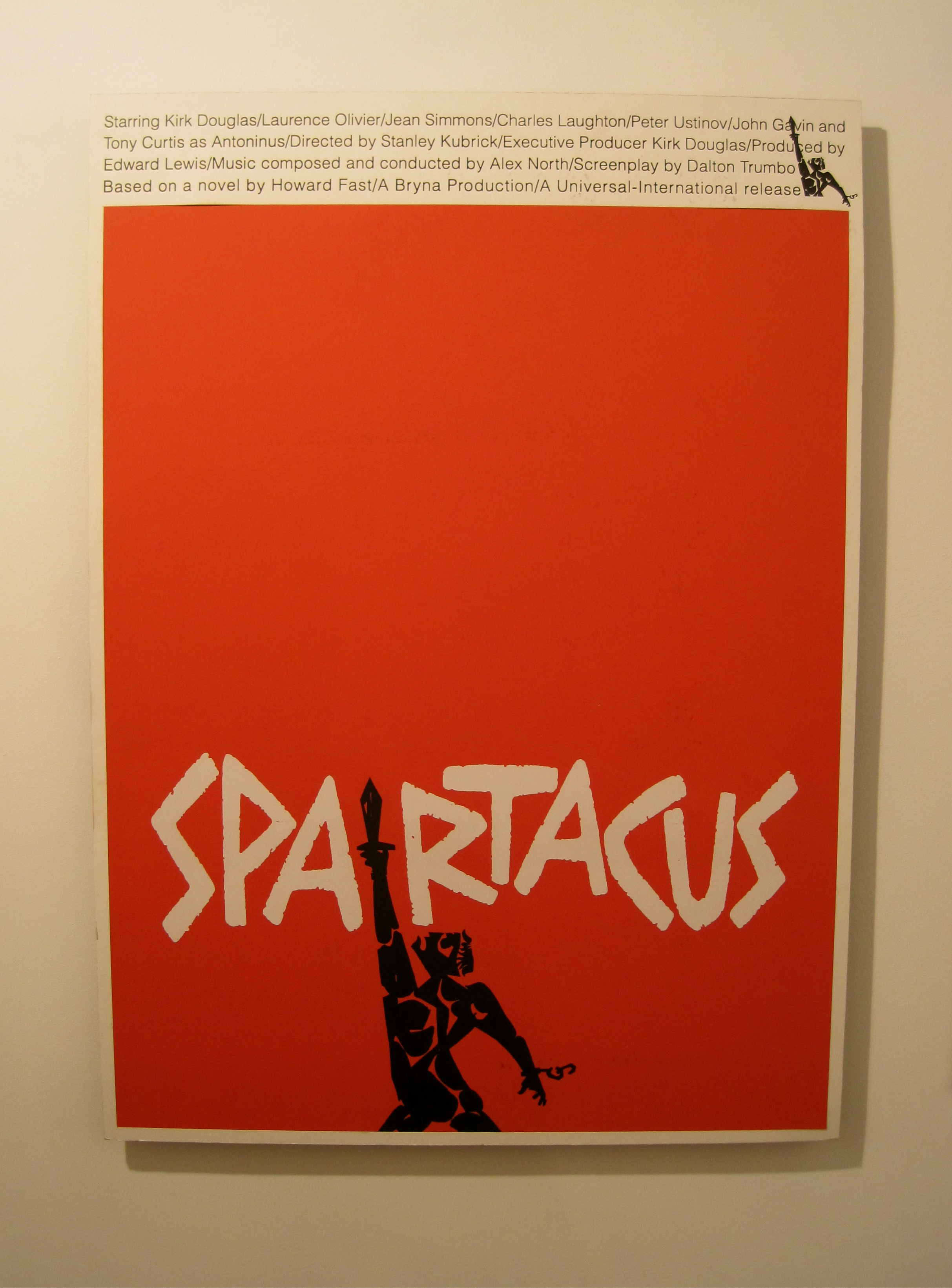
When it comes to title design, no one did it bet­ter than Saul Bass (1920–1996). Dur­ing his long career in Hol­ly­wood, Bass designed sequences for Otto Preminger’s The Man with the Gold­en Arm, Scorsese’s Good­fel­las and Cape Fear, Kubrick’s Spar­ta­cusand sev­er­al clas­sic films by Alfred Hitch­cock. And that’s just begin­ning to scratch the sur­face. (You can delve into Bass’ oth­er cre­ative work via the links below.)

Today, Google is cel­e­brat­ing what would have been Bass’ 93rd birth­day with an ani­mat­ed doo­dle (above). Accord­ing to Metafil­ter, the doo­dle “pays homage to Bass’ visu­al work on Psy­choThe Man With The Gold­en ArmSpar­ta­cusWest Side Sto­ry,Ver­ti­goNorth by North­westAnato­my of a Mur­der, and Around the World in 80 Days.” It’s also set to Dave Brubeck­’s 1961 tune, “Unsquare Dance.”

Relat­ed Con­tent:

Saul Bass’ Advice for Design­ers: Learn to Draw, and Cre­ate Beau­ty Even If Nobody Else Cares

Saul Bass’ Oscar-Win­ning Ani­mat­ed Short Pon­ders Why Man Cre­ates

Saul Bass Gives Ma Bell a Com­plete Makeover, 1969

Steven Soderbergh Writes Twitter Novella After His Retirement From Filmmaking

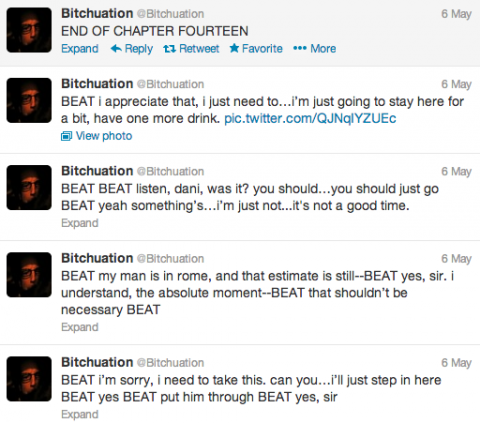
How does one read Twit­ter lit­er­a­ture? Your thoughts are as good as mine. I sup­pose I’ll have to learn or end up in the ash heap of old-timey turn­ers of pages. Because Twit Lit is upon us, man­i­fest­ed by Jen­nifer Egan and now, under the twit­ter han­dle “Bitchu­a­tion,” by mer­cu­r­ial film­mak­er Steven Soder­bergh. Hav­ing announced his retire­ment from film­mak­ing in 2011, Soder­bergh made anoth­er announce­ment at the San Fran­cis­co Film Fes­ti­val on the State of Cin­e­ma (video above, tran­script here). The fol­low­ing day, Soderbergh’s Twit­ter novel­la Glue began with the lacon­ic April 28 tweet “I will now attempt to tweet a novel­la called GLUE.”

twitlit

Some unique fea­tures of Twit Lit: Soder­bergh can twit­pic an estab­lish­ing shot—which he does, of Ams­ter­dam—along with pics of oth­er loca­tions (or just vague­ly sug­ges­tive images). The indi­vid­ual tweets often read like Horse ebooks absur­di­ties. He’s up to Chap­ter Four­teen now. The lat­er tweets repli­cate screen­play dia­logue, with copi­ous inser­tions of BEAT to sig­ni­fy dra­mat­ic paus­es. Tak­en togeth­er, I sup­pose there’s coher­ence, though as I admit­ted above, I have not mas­tered the abil­i­ty to pull tweets togeth­er into longer text in my mind, Twit­ter being where I go when my atten­tion span is spent.

I leave it to savvi­er, more patient read­ers to judge the suc­cess of Soderbergh’s attempt. It may suf­fice to say that his pes­simism about the state of film does not apply to Twit­ter Lit. Or maybe he’s just pass­ing time before he makes movies again.

Relat­ed Con­tent:

Read, Hear, and See Tweet­ed Four Sto­ries by Jen­nifer Egan, Author of A Vis­it from the Goon Squad

Josh Jones is a writer and musi­cian based in Wash­ing­ton, DC. Fol­low him @jdmagness 

Growing Up John Waters: The Oddball Filmmaker Catalogues His Many Formative Rebellions (1993)

John Waters seems, now, to have a grand old time being John Waters. But what kind of tri­als must the direc­tor of Pink Flamin­gos have endured grow­ing up in mid­cen­tu­ry sub­ur­ban Amer­i­ca with his dis­tinc­tive set of inter­ests, pro­cliv­i­ties, and aes­thet­ics? The half-hour Chan­nel 4 doc­u­men­tary Grow­ing Up John Waters asks the film­mak­er direct­ly, and he responds with sto­ries of the many acts of rebel­lion he’s had to engage in, from child­hood through adult­hood, to reach his full taste-trans­gress­ing poten­tial. Along the way, we get his always enter­tain­ing­ly askew (if ulti­mate­ly sen­si­ble) per­spec­tives on the ear­ly six­ties, reli­gion, the Cold War, sports, shoplift­ing, the Civ­il Rights move­ment, and Elvis.

Rebel­lion John Waters-style, as fans would expect, bears lit­tle resem­blance to the ways we’ve long expect­ed kids to push back against author­i­ty. “What were your child­hood fan­tasies?” the inter­view­er asks as an open­er. “I ain’t tellin’ you,” Waters responds. “If I ever write about my sex life, I’m mak­ing the mon­ey on it, not Chan­nel 4.” And indeed, you can read much in his three books of prose now avail­able, but Grow­ing Up John Waters by no means skips on the insight, even in mat­ters cop­u­la­to­ry. While dis­cussing the sur­re­al nature of his movies’ love scenes, for instance, Waters makes an admis­sion that fore­shad­ows the theme of A Dirty Shame, which he would make a decade lat­er: “I love sex. But it would be bet­ter if I had thought it up.”

(via Dan­ger­ous Minds)

Relat­ed con­tent:

An Anti, Anti-Smok­ing Announce­ment from John Waters

John Waters: The Point of Con­tem­po­rary Art

Col­in Mar­shall hosts and pro­duces Note­book on Cities and Cul­ture and writes essays on lit­er­a­ture, film, cities, Asia, and aes­thet­ics. He’s at work on a book about Los Ange­les, A Los Ange­les Primer. Fol­low him on Twit­ter at @colinmarshall.

How Marie Antoinette, Shakespeare and Other Historical Figures Might Look Today

historical figures todayWhat would a mod­ern Marie Antoinette look like? Her hair would hang down; her once crooked teeth would be straight­ened; she’d con­tin­ue to wear design­er clothes; and, yes, she’d sad­ly have some sur­gi­cal enhance­ments too. A far cry from how the more state­ly Queen Eliz­a­beth I might look today. These images come out of a Tele­graph gallery that gives his­tor­i­cal fig­ures a mod­ern makeover. Oth­er fig­ures re-imag­ined here include Shake­speare (who goes a lit­tle hip­ster doo­fus), Hen­ry VIII, and Admi­ral Lord Nel­son.

via Kot­tke

Fol­low us on Face­bookTwit­ter and Google Plus and share intel­li­gent media with your friends! They’ll thank you for it.

by | Permalink | Make a Comment ( 1 ) |

An Introduction to Great Economists — Adam Smith, the Physiocrats & More — Presented in New MOOC

Last fall, Tyler Cowen and Alex Tabar­rok, two econ pro­fes­sors from George Mason Uni­ver­si­ty, launched MRUni­ver­si­ty, a MOOC plat­form that brings eco­nom­ics cours­es to the larg­er world. (If Tyler Cowen’s name sounds famil­iar, it’s prob­a­bly because you’re already famil­iar with his blog Mar­gin­al Rev­o­lu­tion or his â€śEco­nom­ic Scene” col­umn for the New York Times.) Fast for­ward to this spring, and MRUni­ver­si­ty now offers cours­es on The Euro­zone Cri­sis, Mex­i­co’s Econ­o­my, The Amer­i­can Hous­ing Finance Sys­tem, and, as of this month, The Great Econ­o­mists. The short course descrip­tion for Great Econ­o­mists: Clas­si­cal Eco­nom­ics and its Fore­run­ners reads:

Who were the first eco­nom­ic thinkers? What are the very ori­gins of eco­nom­ic thought? What did ear­li­er econ­o­mists under­stand but has been lost to the mod­ern world? Why is Adam Smith the great­est econ­o­mist of all time? How did the eco­nom­ic issues of the 18th and 19th cen­turies shape the thoughts of the clas­si­cal econ­o­mists? This class, which cov­ers the his­to­ry of eco­nom­ic thought up until the “Mar­gin­al Rev­o­lu­tion” in the 1870s, will answer all of these ques­tions and many oth­ers.

The course starts with Galileo and the the­o­ry of val­ue; touch­es on Mon­tesquieu and Man­dev­ille; offers to an intro­duc­tion to Mer­can­til­ism and the Phys­iocrats, and then real­ly comes to focus on David Hume and most­ly Adam Smith and his clas­sic trea­tise, The Wealth of Nations (find it in our col­lec­tion of Free eBooks), before turn­ing to lat­er thinkers and peri­ods.

You can sign up for The Great Econ­o­mists here. And it will be added to our list of 300 MOOCs from Great Uni­ver­si­ties.

Relat­ed Con­tent:

Mar­gin­al Rev­o­lu­tion Uni­ver­si­ty Launch­es, Bring­ing Free Cours­es in Eco­nom­ics to the Web

60-Sec­ond Adven­tures in Eco­nom­ics: An Ani­mat­ed Intro to The Invis­i­ble Hand and Oth­er Eco­nom­ic Ideas

Read­ing Marx’s Cap­i­tal with David Har­vey (Free Course)

Glenn Gould Offers a Strikingly Unconventional Interpretation of 1806 Beethoven Composition

Here’s a strik­ing­ly uncon­ven­tion­al inter­pre­ta­tion of Lud­wig van Beethoven’s 1806 com­po­si­tion, 32 Vari­a­tions on an Orig­i­nal Theme in C minor, by the Cana­di­an vir­tu­oso pianist Glenn Gould. It was record­ed in Toron­to in March of 1966 for a spe­cial pro­gram, “Con­ver­sa­tions with Glenn Gould,” which fea­tured an in-depth dis­cus­sion between Gould and the BBC arts reporter Humphrey Bur­ton. You can find the com­plete pro­gram bro­ken up into pieces at the CBC Web site. And for an espe­cial­ly inter­est­ing 35-minute seg­ment, in which Gould explains and demon­strates his idio­syn­crat­ic approach to inter­pret­ing Beethoven, see below:

Relat­ed Con­tent:

Video: Glenn Gould Plays the Gold­berg Vari­a­tions by J.S. Bach

Glenn Gould Explains the Genius of Johann Sebas­t­ian Bach (1962)

Glenn Gould Pre­dicts Mash-up Cul­ture in 1969 Doc­u­men­tary

« Go BackMore in this category... »
Quantcast