Watch Werner Herzog Eat His Shoe, Cooked by Chef Alice Waters (1980)

Les Blank made qui­et, affec­tion­ate films about quirky sub­jects. Many of his films paid homage to the music and food he loved—The Blues Accordin’ to Light­nin Hop­kins and Yum Yum Yum! A Taste of Cajun and Cre­ole Cook­ing. Blank was a lover of many tra­di­tion­al Amer­i­can musi­cal forms. Some of his movies are the only known filmed doc­u­ments of artists who are now gone.

Blank died April 7 at his home in Berke­ley, Cal­i­for­nia. He leaves behind a cat­a­log of films that seem small but in fact take on the biggest sub­jects: human­i­ty, love, com­mit­ment, joy and indi­vid­u­al­ism.

In Gap-Toothed Women, Blank cre­ates a sin­gu­lar love let­ter to women who shun ortho­don­tics and embrace their diastema (the gap between the two front teeth). The film explores the ori­gins of the belief that women with this fea­ture are unusu­al­ly lusty (think of Chaucer’s “gap-toothed wife of Bath”) and ends up cel­e­brat­ing uncon­ven­tion­al beau­ty.

One of his most inter­est­ing works devel­oped out of an inside joke. Blank was a friend of the direc­tor Wern­er Her­zog. Her­zog, in turn, had men­tored the young film­mak­er Errol Mor­ris, who was mak­ing his first film, Gates of Heav­en. In a char­ac­ter­is­ti­cal­ly dark attempt to be encour­ag­ing, Her­zog quipped that he would eat his shoe if Mor­ris com­plet­ed the film.

A man of his word, Her­zog lat­er ate the shoe in front of an audi­ence inside Berkeley’s U.C. The­ater. Food pio­neer Alice Waters cooked the shoe for five hours in gar­lic and wine. Blank filmed the event in 1980 and, true to his style, stepped back from the sub­ject and cre­at­ed a film about mak­ing hon­est art. You can watch it above.

Kate Rix writes about dig­i­tal media and edu­ca­tion. Vis­it her web­site: .

If you would like to sup­port the mis­sion of Open Cul­ture, con­sid­er mak­ing a dona­tion to our site. It’s hard to rely 100% on ads, and your con­tri­bu­tions will help us con­tin­ue pro­vid­ing the best free cul­tur­al and edu­ca­tion­al mate­ri­als to learn­ers every­where. You can con­tribute through Pay­Pal, Patre­on, and Ven­mo (@openculture). Thanks!

Relat­ed Con­tent:

Wern­er Her­zog and Cor­mac McCarthy Talk Sci­ence and Cul­ture

Errol Mor­ris: Two Essen­tial Truths About Pho­tog­ra­phy

Por­trait Wern­er Her­zog: The Director’s Auto­bi­o­graph­i­cal Short Film from 1986

Ernest Hemingway Appears on Cuban TV in 1954; Talks About Winning The Nobel Prize

Ernest Hem­ing­way lived in Cuba much longer than he lived in Paris or Key West. From 1939 until 1960–the year before his death–he lived on a farm out­side Havana, in the vil­lage of San Fran­cis­co de Paula, called Fin­ca Vigía, or “Look­out Farm.”

It was not the most fruit­ful peri­od of Hem­ing­way’s life as a writer. His 1950 nov­el, Across the Riv­er and Into the Trees, was sav­aged by the crit­ics, and many were begin­ning to think he was fin­ished. But in 1952 Hem­ing­way came roar­ing back with The Old Man and the Sea, set in Cuba, an ele­men­tal sto­ry of a lone­ly old fish­er­man’s strug­gle to catch a big fish and bring it back to shore through shark-infest­ed waters. With The Old Man and the Sea, William Faulkn­er said, Hem­ing­way had found God. “Time may show it to be the best sin­gle piece of any of us,” said Faulkn­er,” I mean his and my con­tem­po­raries.”

In 1953 the nov­el was award­ed the Pulitzer Prize, and in 1954 Hem­ing­way received the Nobel Prize in Fic­tion. Short­ly after­ward he was vis­it­ed at the Fin­ca Vigía by reporter Juan Manuel Martínez and a cam­era­man from the Cuban tele­vi­sion net­work CMQ. In a mix­ture of Castil­ian Span­ish and Cuban ver­nac­u­lar, Hem­ing­way tells Martínez that he is over­joyed at being the first Cubano sato, or “half-breed Cuban” to receive a Nobel Prize. “The use of the adjec­tive ‘sato’ by Ernest Hem­ing­way shows he had a deep rela­tion­ship with ordi­nary Cubans,” writes Guiomar Vene­gas Del­ga­do in a 2009 arti­cle in enVi­vo, the jour­nal of Cuban radio and tele­vi­sion, “and that as an artist he knew to lis­ten and assim­i­late their idioms and slang.”

To hear Ernest Hem­ing­way read his 1954 Nobel Prize accep­tance speech from Cuba, see our July 2011 post, “Remem­ber­ing Ernest Hem­ing­way, Fifty Years After His Death.”

Relat­ed Con­tent:

Sev­en Tips From Ernest Hem­ing­way on How to Write Fic­tion

Ernest Hem­ing­way Reads “In Harry’s Bar in Venice”

James Joyce in Paris: “Deal With Him, Hem­ing­way!”

Alfred Hitchcock’s 7‑Minute Master Class on Film Editing

If you’ve made a film, you’ll remem­ber when you real­ized that edit­ing, more than any oth­er stage of pro­duc­tion, deter­mines the audi­ence’s final expe­ri­ence.  “The first films ever made were shot in one take,” wrote the late, always edit­ing-con­scious Roger Ebert, review­ing Mike Fig­gis’ Time Code. “Just about every­body agrees that the intro­duc­tion of edit­ing was an improve­ment.” Fig­gis’ film tried to do with­out edit­ing, suc­cess­ful­ly to my mind, not so suc­cess­ful­ly to Ebert’s. Lat­er, the crit­ic open­ly loathed Vin­cent Gal­lo’s tra­di­tion­al­ly edit­ed The Brown Bun­ny, but his opin­ion turned almost 180 degrees when the direc­tor re-edit­ed the movie, strate­gi­cal­ly cut­ting 26 min­utes. “It is said that edit­ing is the soul of the cin­e­ma,” Ebert wrote of the revi­sion. “In the case of The Brown Bun­ny, it is its sal­va­tion.” Yet the impulse to cre­ate a whol­ly unedit­ed film still occa­sion­al­ly grabs a major film­mak­er, and not all of them wind up remak­ing Andy Warhol’s eight-hour still shot Empire.

Some of these pic­tures, thanks to well-placed cuts and clever cam­era move­ments, only look unedit­ed. The best-known of these comes from no less a crafts­man than Alfred Hitch­cock, who built 1948’s Rope out of ten seem­ing­ly cut-free seg­ments, each inter­nal splice metic­u­lous­ly dis­guised. Twelve years lat­er, he would make his most overt and mem­o­rable use of edit­ing in Psy­cho. In the clip at the top of this post, Hitch­cock him­self explains the impor­tance of edit­ing — or, in his pre­ferred term, assem­bly. He breaks down the struc­ture of Psy­cho’s famous show­er scene. “Now, as you know, you could not take the cam­era and just show a nude woman being stabbed to death. It had to be done impres­sion­is­ti­cal­ly. It was done with lit­tle pieces of the film: the head, the hand, parts of the tor­so, shad­ow on the cur­tain, the show­er itself. In that scene there were 78 pieces of film in about 45 sec­onds.” Say what you will about the con­tent-restrict­ing Hays Code; its lim­i­ta­tions could some­times dri­ve to new heights the visu­al cre­ativ­i­ty of our best cin­e­mat­ic minds.

If you’d like to behold more of the edit­ing prowess Hitch­cock com­mand­ed, vis­it our col­lec­tion of 20 Free Alfred Hitch­cock Movies Online.

Relat­ed con­tent:

François Truffaut’s Big Inter­view with Alfred Hitch­cock (Free Audio)

Alfred Hitch­cock: The Secret Sauce for Cre­at­ing Sus­pense

Alfred Hitch­cock: A Rare Look Into the Filmmaker’s Cre­ative Mind

Alfred Hitchcock’s Rules for Watch­ing Psy­cho (1960)

Col­in Mar­shall hosts and pro­duces Note­book on Cities and Cul­ture and writes essays on lit­er­a­ture, film, cities, Asia, and aes­thet­ics. He’s at work on a book about Los Ange­lesA Los Ange­les Primer. Fol­low him on Twit­ter at @colinmarshall.

Fascinating Kodachrome Footage of “Victory over Japan Day” in Honolulu, 1945

When Field Mar­shal Wil­helm Kei­t­el signed Nazi Ger­many’s uncon­di­tion­al sur­ren­der on May 8, 1945 in Berlin (footage here), the Sec­ond World War may have been over for Europe, but the war on the Pacif­ic front waged on as Japan refused to sur­ren­der. Only after the fate­ful deci­sion to drop atom­ic bombs on Hiroshi­ma and Nagasa­ki, and after the Sovi­ets invad­ed Japan­ese-held Manchuria, did Emper­or Hiro­hi­to accept the hope­less­ness of the sit­u­a­tion and agree to sur­ren­der on August 15. When the offi­cial radio announce­ment (record­ing here) was broad­cast — due to time zone dif­fer­ences on August 14 in the U.S. — the news spread like wild­fire and the day became known as “Vic­to­ry over Japan Day”, or sim­ply as “VJ Day.” Spon­ta­neous cel­e­bra­tions erupt­ed all over the Unit­ed States, but espe­cial­ly on Hawaii, where the Japan­ese attacked Pearl Har­bor on Decem­ber 7, 1941 lead­ing the US to offi­cial­ly enter World War II.

One of these spon­ta­neous cel­e­bra­tions in Hon­olu­lu was cap­tured on Kodachrome 16mm film and has been dig­i­tal­ly restored. One com­menter on Vimeo has iden­ti­fied all of the exact loca­tions here.

By pro­fes­sion, Matthias Rasch­er teach­es Eng­lish and His­to­ry at a High School in north­ern Bavaria, Ger­many. In his free time he scours the web for good links and posts the best finds on Twit­ter.

The Rolling Stones Live in Hyde Park, 1969

As the Rolling Stones gear up for their first full tour in five years, we take you back to a more inno­cent time, when the band was young and the tick­ets were not $500 each.

The year was 1969. The hip­pie coun­ter­cul­ture was still in bloom, and the Stones were at a moment of tran­si­tion. The band was in the process of fin­ish­ing its Let it Bleed album at Olympic Stu­dios in Lon­don with­out founder and mul­ti-instru­men­tal­ist Bri­an Jones, who was asked to leave the group in ear­ly June because of his esca­lat­ing drug prob­lem and increas­ing­ly dif­fi­cult per­son­al­i­ty. The Stones replaced Jones with the tal­ent­ed gui­tarist Mick Tay­lor. Eager to get rolling again, the group asked a pro­mot­er to orga­nize a free music fes­ti­val in Hyde Park, with the Stones at the top of the bill.

On July 5, 1969, a crowd of between 250,000 and 500,000 peo­ple gath­ered for the con­cert. Only three nights ear­li­er, Bri­an Jones was found dead at the bot­tom of his swim­ming pool. In his hon­or, Mick Jag­ger start­ed the Hyde Park con­cert by read­ing a pas­sage from Per­cy Bysshe Shel­ley’s “Adon­ais: An Ele­gy on the Death of John Keats.”  The Stones then released thou­sands of white but­ter­flies and launched into a raw set that includ­ed both clas­sics and rar­i­ties:

  1. “I’m Yours & I’m Hers”
  2. “Jumpin’ Jack Flash”
  3. “Mer­cy Mer­cy”
  4. “Down Home Girl”
  5. “Stray Cat Blues”
  6. “No Expec­ta­tions”
  7. “I’m Free”
  8. “Lov­ing Cup”
  9. “Love in Vain”
  10. “(I Can’t Get No) Sat­is­fac­tion”
  11. “Honky Tonk Women”
  12. “Mid­night Ram­bler”
  13. “Street Fight­ing Man”
  14. “Sym­pa­thy for the Dev­il”

The con­cert was doc­u­ment­ed by film­mak­ers Leslie Wood­head and Jo Dur­den-Smith for Grana­da Tele­vi­sion and was lat­er released on DVD as The Stones in the Park. You can watch the com­plete film above, although the songs will not appear in the same order as in the con­cert. It is a fas­ci­nat­ing and enjoy­able record of one of the most notable con­certs the Stones ever gave.

This com­ing July 6, exact­ly 44 years and a day after the 1969 con­cert, the Stones will return to Hyde Park for anoth­er con­cert. This time around it won’t be free. And oh yes: The con­cert will be spon­sored by Bar­clay­card, from the bank with the trusty slo­gan, “Flu­ent in Finance.”

Relat­ed Con­tent: 

The Rolling Stones Sing Jin­gle for Rice Krispies Com­mer­cial (1964)

The Rolling Stones Sing the Bea­t­les’ “Eight Days a Week” in a Hotel Room (1965)

The Rolling Stones First Played 50 Years Ago; Watch Them Explode Into Fame Short­ly There­after

The Personality of Parisian Neighborhoods Expressed Through Typography

?si=cnM2vJhNobyTr0am

Havas Worl­wide Paris, a glob­al design agency, reawak­ened fond mem­o­ries of my days liv­ing in Paris. They did it by cre­at­ing this artis­tic video that cap­tures the char­ac­ter of Parisian neighborhoods/metro stops through typog­ra­phy. The Marais, Latin Quar­ter, Mont­martre, Père Lachaise, Bastille — they all get a cre­ative nod.

The video was orig­i­nal­ly cre­at­ed as a New Years Greet­ing card, and it comes to us via Pret-a-Porter.

Relat­ed Con­tent:

Le Fla­neur: Time Lapse Video of Paris With­out the Peo­ple

Names of Paris Métro Stops Act­ed Out: Pho­tos by Janol Apin

It’s 5:46 A.M. and Paris Is Under Water

David Lynch Talks About His 99 Favorite Pho­tographs at Paris Pho­to 2012

by | Permalink | Make a Comment ( 3 ) |

Italian Photographer Maurizio Galimberti Creates Cubist Polaroid Collages of Artists & Celebrities

Five years ago Polaroid announced that they would no longer make ana­log insta­mat­ic film. At that moment, if one lis­tened care­ful­ly, one could almost hear some of the 20th cen­tu­ry’s most famous artists wail in despair, even from the grave. Ansel Adams loved Polaroid and shot some of his famous Yosemite images in that for­mat first.

But a tech­nique with that kind of fol­low­ing doesn’t die off eas­i­ly. Two ardent Polaroid fans—ardent enough to actu­al­ly attend the clo­sure of a Polaroid fac­to­ry in the Netherlands—met and came up with a plan to save the fac­to­ry and Polaroid instant film. They called their plan the Impos­si­ble Project. They leased one of the Dutch fac­to­ry build­ings and even­tu­al­ly fired up the machines again, turn­ing out new instant film.

Lucky for us. Artists like David Hock­ney have long made beau­ti­ful use of Polaroid instant pho­tos to con­struct cubist col­lages. One of the best at this is the Ital­ian pho­tog­ra­ph­er Mau­r­izio Gal­im­ber­ti who cre­ates ter­rif­ic celebri­ty por­traits using a Polaroid.

close Galimberti

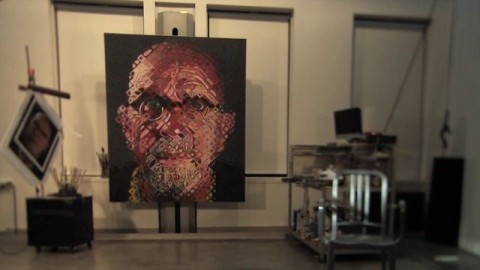
Gal­im­ber­ti con­sid­ers him­self a painter who uses a cam­era. Watch­ing the video of his pho­to shoot with painter Chuck Close, it’s inter­est­ing to observe how sim­i­lar Galimberti’s pho­to col­lage (above) is to Close’s own paint­ed self-por­traits.

Gal­im­ber­ti also has pret­ty good access to celebri­ties, hav­ing shot the por­trait of John­ny Depp and this one of George Clooney at the 2003 Venice Film Fes­ti­val.

Gal­im­ber­ti posts a num­ber of more recent celebri­ty por­traits on his web­site, where he also dis­plays his abstract city pho­to col­lages.

Kate Rix writes about dig­i­tal media and edu­ca­tion. Vis­it her web­site: .  

Room 237: New Documentary Explores Stanley Kubrick’s The Shining and Those It Obsesses

Young movie fans often dis­cov­er the exis­tence of auteurs through one auteur in par­tic­u­lar: Stan­ley Kubrick. Often, they dis­cov­er him through one film in par­tic­u­lar: The Shin­ing. Adapt­ed — loose­ly adapt­ed, to the point of rein­ven­tion — from Stephen King’s nov­el, Kubrick­’s first pic­ture of the eight­ies found itself mar­ket­ed as a straight-on hor­ror movie. Kids savor few expe­ri­ences so rich­ly as get­ting scared by a sto­ry, but when they sit down to get scared by The Shin­ing, they don’t feel quite what they expect­ed to. The movie may fill them with fear (I’ve per­son­al­ly expe­ri­enced no greater dis­tur­bance than the stare of that 1920s fel­low in the dog cos­tume toward the end), but it also fills them with the sense that it does­n’t quite align with all the hor­ror movies they’ve watched before. Some of these kids want to find out why. Soon­er or lat­er, they stum­ble upon Bill Blake­more’s well-known essay “The Fam­i­ly of Man,” which exam­ines The Shin­ing and finds it brim­ming with sym­bol­ism per­tain­ing to Native Amer­i­can dis­pos­ses­sion and slaugh­ter. These kids sure­ly all grow up to become cinephiles, but I like to think that some grew up to become the sub­jects of Room 237, Rod­ney Ascher’s new doc­u­men­tary about Shin­ing obses­sives, whose trail­er you can watch above.

“In 1980 Stan­ley Kubrick released his mas­ter­piece of mod­ern hor­ror The Shin­ing,” reads the trail­er’s crawl. “Over 30 years lat­er, we’re still strug­gling to under­stand its hid­den mean­ings.” John Pow­ers’ NPR piece on the doc­u­men­tary can tell you more. “Where you may think it’s mere­ly a hor­ror sto­ry — remem­ber that blood flood­ing out of the ele­va­tor? — these devo­tees argue that Kubrick­’s movie is real­ly about more than a writer going homi­ci­dal­ly bonkers,” Pow­ers says. “For one, it’s about the geno­cide against Native Amer­i­cans; for anoth­er, it’s about the Holo­caust; yet anoth­er says the film is Kubrick­’s admis­sion that he helped fake footage of the Apol­lo 11 moon land­ing. By way of evi­dence, these folks point to all sorts of ‘clues,’ from the pres­ence in sev­er­al shots of the Calumet Bak­ing Pow­der logo — with its dis­tinc­tive trib­al chief in a feath­ered head­dress — to appar­ent con­ti­nu­ity errors involv­ing mis­placed chairs that, this being Kubrick, can’t pos­si­bly be mere errors.” Whether you cred­it Shin­ing the­o­ries or not, you might con­sid­er pref­ac­ing your own Room 237 screen­ing with a watch of The Shin­ing Code, an hour-long video essay on Kubrick­’s film that puts this mind­set on dis­play. Just promise us you won’t get involved with any moon hoax peo­ple.

Relat­ed con­tent:

Mak­ing The Shin­ing

The Mak­ing of Stan­ley Kubrick’s The Shin­ing (As Told by Those Who Helped Him Make It)

Ter­ry Gilliam: The Dif­fer­ence Between Kubrick (Great Film­mak­er) and Spiel­berg (Less So)

Dark Side of the Moon: A Mock­u­men­tary on Stan­ley Kubrick and the Moon Land­ing Hoax

Col­in Mar­shall hosts and pro­duces Note­book on Cities and Cul­ture and writes essays on lit­er­a­ture, film, cities, Asia, and aes­thet­ics. He’s at work on a book about Los Ange­lesA Los Ange­les Primer. Fol­low him on Twit­ter at @colinmarshall.

« Go BackMore in this category... »
Quantcast