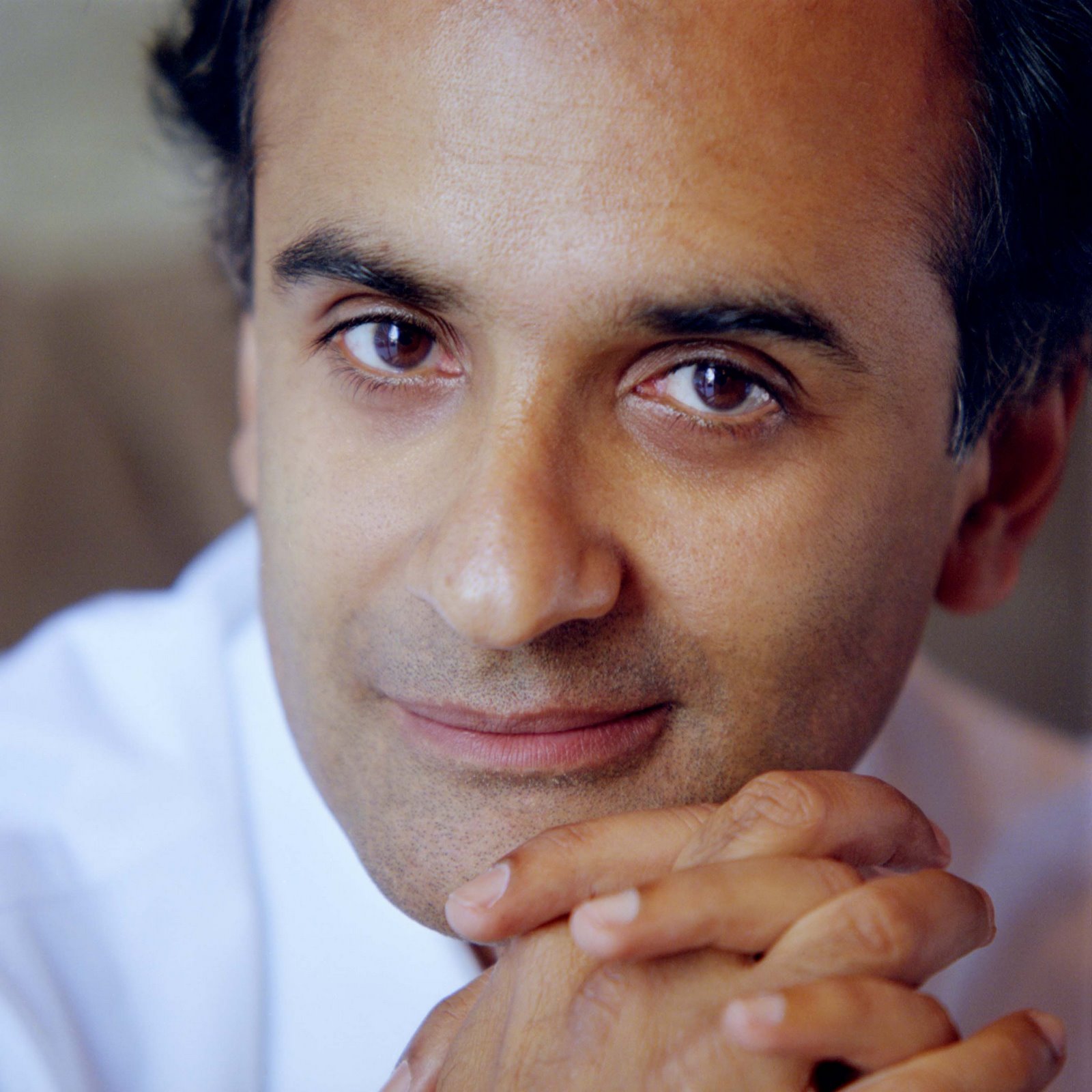
One can work with language all day, I have found—write, teach, blog and tweet incessantly—and still succumb to all the worst habits of lazy writers: indulging strings of clichés and abstractions, making it impossible for a reader to, as they say, “locate herself” in time and space. Travel writer and essayist Pico Iyer found this out on the job. Though he had written his way through graduate school and the pages of Time magazine, he still needed to hear the advice of his editor at Knopf, Charles Elliott. “The reader wants to travel beside you,” said Elliott, “looking over your shoulder.”
Such a simple notion. Essential even. But Elliott’s advice is not limited to the dogma of “show, don’t tell” (maybe a limited way to think of writing). More pointedly he stresses the connection of abstract ideas to concrete, specific descriptions that anchor events to a reality outside the author’s head, one the reader wants see, hear, touch, etc. The “best writing advice” Iyer ever received is a useful precept especially, I think, for people who write all of the time, and who need to be reminded, like Iyer, to keep it fresh. Read his full description at The American Scholar.
What with all that has, over the past 36 years, grown out of it — sequels, prequels, toys, novels, radio productions, video games, LEGO sets, LEGO set-themed video games, conventions, PhD theses, and an entire universe of content besides — we can only with difficulty remember how Star Wars began. The whole thing came preceded by the promise of nothing grander, more profound, or minutia-packed than a rollicking mythic space opera, and above, we have a reminder of that fact in the form of the first film’s original teaser trailer. “Somewhere in space, this may all be happening right now,” intones its faintly haunting narrator. “The story of a boy, a girl, and a universe. It’s a big, sprawling saga of rebellion and romance. It’s a spectacle light-years ahead of its time. It’s an epic of heroes and villains and aliens from a thousand worlds. Star Wars: a billion years in the making… and it’s coming to your galaxy this summer.”
Since nothing suits Star Wars quite like completism, we’ve also included the teasers for the rest of the original trilogy: The Empire Strikes Back, just above, and Return of the Jedi, below. “In the continuation of the Star Wars saga,” booms the more traditional voice-over about the second film over hand-drawn imagery of its scenes, “the Empire strikes back, and Luke, Han, and Leia must confront its awesome might. In the course of the odyssey, they travel with their faithful friends, droids and wookiees, to exotic worlds where they meet new alien creatures and evil machines, culminating in an awesome confrontation between Luke Skywalker and the master of the dark side of the Force, Darth Vader.” By 1983, the time of the third picture, then titled Revenge of the Jedi, the series had amassed such a following that the narrator needed only rattle off the familiar heroes, villains, and various space critters we’d encounter once again.
As we told you this summer, Superman is celebrating his 75th Anniversary this year. And to help commemorate this milestone, “Man of Steel director Zack Snyder teamed up with artist and animator extraordinaire Bruce Timm to create a two-minute short that traces the Man of Steel’s history from Superman’s debut on the cover of 1938’s Action Comics #1 all the way to Henry Cavill in Man of Steel.” After you watch the video, you’ll want to head over to DC Comics, where they’ve created a long list of annotations that explain the sometimes subtle references in the short. You’ll also want to revisit our post where we featured Superman (or The Mad Scientist), the 1941 film that marked Superman’s first appearance on the big screen. Plus you can listen to the Adventures of Superman radio drama that aired between 1938 and 1951. Enjoy the tribute.
I can pop open a copy of Slavoj Žižek’s Interrogating the Realto a random page and I am suddenly ping-ponging from critique of Kant, to a high-five for the “vulgar sentimental” literary kitsch of today, to “the tradition of amour courtois,” to “a completely unreadable” novel called Indecent Obsession, all within the space of four sentences. I may not have any earthly idea what to make of this connect-the-dots, but I want to know what it means. I can look over at the shelf and see on it a volume called The Monstrosity of Christ, a respectful yet tenacious dialogue-slash-debate on Christianity between dialectical materialist Žižek and “radical orthodox” theologian John Milbank. Just in this casual, cursory glance, I might conclude: this is no cranky village atheist (or Marxist as the case may be). This is a psychoanalytic Marxist theorist of breadth. And I haven’t even touched on his extensive engagement with Hollywood film.
It is this magnanimous, playful, and hyper-engaged side of Žižek—that and his unflagging sense of humor and highly visible public persona—that makes him seem approachable. Even if, as the interviewer in the Vice encounter with Žižek above says, “most of [his books] remain impenetrable” to many readers, he is undoubtedly “the most broadly popular anti-capitalist philosopher working today.” The occasion for the interview: a 2012 documentary film starring Žižek called The Pervert’s Guide to Ideology, which opens November 1st in the U.S.. Directed by Sophie Fiennes and a follow-up to 2006’s The Pervert’s Guide to Cinema, the film has Žižek deploy his rapid-fire referencing ability to “explain why the bulk of us remain enslaved to capitalist power structures.” His material, as with The Pervert’s Guide to Cinema, is once again classic Hollywood films like Full Metal Jacket, The Searchers, Taxi Driver, The Sound of Music, and The Last Temptation of Christ. Žižek even takes on such recent, less classic, blockbusters as I Am Legend and The Dark Knight. (Something covered in our recent post.) In the interview above, staged in Žižek’s cozy Slovenian flat, see the philosopher in typically animated style poke fun at himself as he discusses the newest film’s intentions, expands on his revolutionary analyses, and gestures maniacally about the apartment while offering his guest a “f*cking fruit juice.”
They may be a little late to the MOOC party, but two newly-launched European open course platforms might still be able to carve out a niche.
Coursera and edX, the two main players in the US at this point, have been up and running for almost 18 months. And although both ventures have a long list of international partners, the rising cost of higher education is building interest in MOOCs in Europe and the UK. The founders of new European platforms — Future Learn in the UK, and iversity in Germany — are betting they can still make headway in an increasingly crowded market.
A subsidiary of the British Open University, Future Learn is in its beta stage, but it’s already boasting partnerships with universities across Britain, Ireland, and Australia. And come this November, it will be rolling out courses across multiple disciplines. Take for example:
Meanwhile Berlin-based startup iversity recently relaunched itself as a MOOC platform. This week, iversity’s first six courses begin. Four are in German and two are in English: Contemporary Architecture and Dark Matter in Galaxies. A total of 115,000 students are currently enrolled.
Future Learn and iversity both seem to be aimed at audiences who are relatively new to the MOOC concept. Both sites take care to explain what MOOCs are in very simple terms—which may be a smart strategy for businesses setting out to convince Europe and Britain that the MOOC trend is for real.
You can find all courses by Future Learn and iversity listed in our big collection of 600+ MOOCs from Top Universities.
Though no more rife with formula and cliché than any other genre, horror movies generally don’t fare well with critics. Or as Time Out London’s Tom Huddleston puts it: “Horror cinema is a monster. Mistreated, misunderstood and subjected to vicious critical attacks.” This has never slowed the fanbase for a moment, and as Huddleston also acknowledges, the genre offers “filmmakers outside the mainstream” the chance to make “a big cultural splash.” Some of the most fascinating and famous outsider directors in recent history honed their craft in horror: David Cronenberg, John Carpenter, arguably David Lynch. Then there are the veteran cinema auteurs who made horror films now and then, every one an instant classic (Kubrick, Hitchcock) and those rare figures, the critically beloved horror-auteurs like Guillermo del Toro, who has re-invigorated the genre with his fairy tale sensibilities.
All of these directors and several dozen more turn up on Time Out London’s “The 100 best horror films,” chosen by “horror enthusiasts” and practitioners like del Toro, Roger Corman, Simon Pegg, Alice Cooper, and over 100 more. Near the end of the list at number 96 is del Toro’s first Mexican feature Cronos. Near the top at number 5 is Ridley Scott’s perpetually terrifying space horror Alien. Every possible variation on the genre, from its silent beginnings to its current grisly incarnations, from horrifying non-horror films like Pasolini’s Salo to model masterpieces like Invasion of the Body Snatchers, gets a nod. The list may surprise, infuriate, or intrigue you, but if you have any interest in horror, it will undoubtedly keep you reading for some time, and probably also tracking down some of the obscure, forgotten classics to see them for yourself. You’ll find the four below free online. They’re also listed in the “Noir, Thriller, Horror and Hitchcock” section of our list of 635 Free Movies Online:
Carnival of Souls (1962)
Number 40 in the rankings, Time Out London describes this film, “shot in three weeks for a paltry $33,000,” as made up of “the monochrome weirdness of David Lynch’s first feature, ‘Eraserhead’, or the ghoulish zombie nightmare that is George Romero’s ‘The Night of the Living Dead’” with its “eerie atmospherics, off-kilter images and disorientating dream sequences.”
Nosferatu (1922)
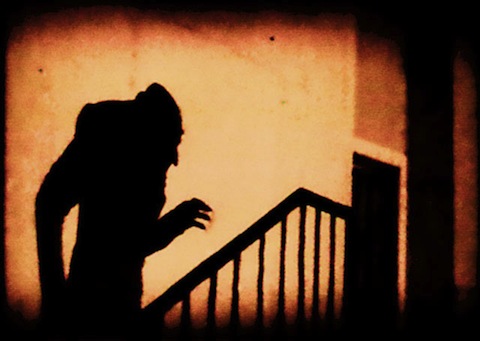
Perhaps unfairly placed at number 22, Murnau’s unofficial, expressionist take on Bram Stoker’s novel features a creature named Count Orlock, a monstrously ugly villain alien to audiences who learned to be seduced by dashing Draculas. Despite its relatively low ranking, given its pedigree, Nosferatu is still lauded as “certainly the most influential” horror movie by Time Out: “So many keynotes of the genre emerge fully formed here: the use of light and shadow, threat and tension, beauty and ugliness, a man in grotesque make-up threatening an innocent girl.” The film, remarkably, “remains a deeply unsettling piece of work.”
Freaks (1932)
Coming just before Nosferatu at number 21, Tod Browning’s Freaks is the opposite of an exploitation flick. Instead of turning its unusual subjects into objects of fear and pity, Browning created “a tender, humane tale of love and betrayal” that happened to feature a cast of “sideshow freaks,” most of them amateurs, and most “fine actors.” “What makes ‘Freaks’ a horror film,” writes Time Out, “is its disturbing macabre ending […] though of course the real horror here is the cruelty of the so-called ‘normals.’”
Night of the Living Dead (1968)
Ranked 13, George Romero’s 1968 film has earned a place high in the estimation of any horror fan. As the Time Out editors write, “modern horror cinema started here.” The low-budget zombie movie “blazed a trail for all those to follow […] with its radically subversive approach to genre conventions, uncompromisingly nihilistic social vision and Vietnam War-inspired political anger.”
Spend some time perusing the rest of Time Out London’s list. It’s sure to generate some epic online squabbles, and several hundred suggestions from fans for films that didn’t make the cut.
Flopping in 1982 but ultimately accruing more critical acclaim and cinephile esteem than perhaps any other science-fiction film, Blade Runner, starringHarrison Ford and Sean Young,has become the quintessential modern example of a work of art before its time. Director Ridley Scott, a true cinematic pragmatist, had his suspicions about the film’s box-office fate even during production: “The fact is, if you are ahead of your time, that’s as bad as being behind the times, nearly.” “You’ve still got the same problem. I’m all about trying to fix the problem.” He and his team decided they could fix one “problem” in particular: the film’s ambiguous ending, which apparently left cold those who saw it. So cast and crew went to Big Bear Lake, where they shot a new sequence of Ford and Young escaping into the mountains. “I didn’t know how long we’d have together,” says Ford’s protagonist Rick Decker, in the final words of his faux-hard boiled explanatory voice-over. “Who does?”
The tight shots inside Decker’s flying car, built to soar across a dark, dense, neon-lined post-Japanification Los Angeles but now cruising incongruously through a lush forest, came out okay. Alas, cloudy weather ruined all the wide-angle footage captured at greater distances. Scott remembered that Stanley Kubrick’s The Shining, a couple years before, had opened with just the sort of overhead mountain driving imagery he needed.
This gave him an idea: Kubrick “must’ve done a blanket shoot of every peak in Montana for The Shining using the best helicopter crew. I’ll bet you he’s got weeks of helicopter footage.” He did indeed have plentiful outtakes and a willingness to hand them over, which meant the first version of Blade Runner in wide release ended with shots from the very same photography sessions that produced the beginning of The Shining. For all the ingenuity that went into it, this relatively happy ending still, in a sense, wound up on the cutting room floor. Excised along with that widely disliked voice-over as new cuts and releases restored the picture to its original form, it gave way to the originally scripted ending, with its much more suitable (and memorable) final line delivered by Edward James Olmos as Deckard’s colleague Gaff: “It’s too bad she won’t live, but then again, who does?”
Sean Goebel, a graduate student in astronomy at the University of Hawaii, has made this beautiful and fascinating time-lapse film of the observatories on Mauna Kea shooting laser beams into the night sky over the Big Island of Hawaii.
The lasers are part of the observatories’ adaptive optics systems, which compensate for distortions in light traveling through the Earth’s atmosphere. “Just as waves of heat coming off pavement blur out the detail of faraway objects,” explains Goebel on his Web site, “winds in the atmosphere blur out fine detail in the stars/galaxies/whatever is being observed. This is the reason that stars twinkle. The laser is used to track this atmospheric turbulence, and one of the mirrors in the telescope bends hundreds of times per second in order to cancel out the blurring.”
Adaptive optics make use of a guide star in the area of the sky near the object being observed. As light arriving from the guide star shifts, electronic circuits in the system automatically compute the minute adjustments to the deformable telescope mirror that are needed to cancel out the distortion.
There are, however, places in the sky where a natural guide star doesn’t exist close enough to the object astronomers want to observe. To solve this problem, the scientists create artificial guide stars using laser beams. For example, several of the observatories on Mauna Kea shine sodium laser beams into the upper atmosphere, where they interact with a naturally occurring layer of sodium atoms. The excited atoms give off light, creating a point source for the adaptive optics system to focus on. The powerful lasers must be used very carefully, says Goebel:
A typical laser pointer that you might use to point at stuff/exercise your cat is about 5 mW. That’s five one-thousandths of a watt. Not a whole lot of power. And yet it’s enough to blind airplane pilots. The lasers on the telescopes are in the range of 15–40 watts. The FAA calls a no-fly zone over the area when a laser is in use, and two people have to stand around outside in the freezing temperatures and watch for airplanes. Each of them has a kill switch to turn off the laser in case an airplane comes near. Additionally, the telescope has to send its target list to Space Command ahead of time. Space Command then tells them not to use the laser at specific times, ostensibly to avoid blinding spy satellites. However, you could calculate the spy satellite orbits if you knew where they were at specific times, so Space Command also tells the telescope to not use the laser at random times when no satellites are overhead.
Goebel captured the images for his time-lapse montage over a period of seven nights this past spring and summer. Conditions atop Mauna Kea, which rises to an altitude of over 13,000 feet above sea level, presented a challenge. Goebel had to contend with high winds, freezing temperatures and low oxygen. “Essentially everyone suffers from altitude sickness” on Mauna Kea, he says. “It’s not uncommon for tourists to step out of their vehicles and immediately pass out. Going from sea level to 14,000 feet in the span of a couple of hours will do that to you.”
For more on Goebel and his work, including technical specifications and examples of other work, visit his Web site.
We're hoping to rely on loyal readers, rather than erratic ads. Please click the Donate button and support Open Culture. You can use Paypal, Venmo, Patreon, even Crypto! We thank you!
Open Culture scours the web for the best educational media. We find the free courses and audio books you need, the language lessons & educational videos you want, and plenty of enlightenment in between.