Ricky Gervais, the creator of The Office, rarely gets out of his comic persona. It’s usually laughs, schtick, and more laughs. But when Fast Company pinned him down and asked him about “the single biggest influence on his creative process,” he turned serious (after a few more laughs) and talked about a formative moment with a childhood English teacher. The teacher taught him this: you’re better off writing … Never mind, I’ll let Ricky tell the tale. It’s his story after all.
As maître of the mid-century French philosophical scene, Jean-Paul Sartre wielded some considerable influence in his home country and abroad. His celebrity did not prevent him from working under the editorship of his friend and fellow novelist, Albert Camus, however. Camus, the younger of the two and the more restless and unsettled, edited the French resistance newspaper Combat; Sartre wrote for the paper, and even served as its postwar correspondent in New York (where he met Herbert Hoover) in 1945. According to Simone de Beauvoir, the two became acquainted two years earlier at a production of Sartre’s The Flies. They were already mutual admirers from afar, Camus having reviewed Sartre’s work and Sartre having written glowingly of Camus’ The Stranger. Ronald Aronson, a scholar and biographer of the philosophers’ relationship, describes their first meeting below, quoting from de Beauvoir’s memoir The Prime of Life:
“[A] dark-skinned young man came up and introduced himself: it was Albert Camus.” His novel The Stranger, published a year earlier, was a literary sensation, and his philosophical essay The Myth of Sisyphus had appeared six months previously. [Camus] wanted to meet the increasingly well-known novelist and philosopher—and now playwright—whose fiction he had reviewed years earlier and who had just published a long article on Camus’s own books. It was a brief encounter. “I’m Camus,” he said. Sartre immediately “found him a most likeable personality.”
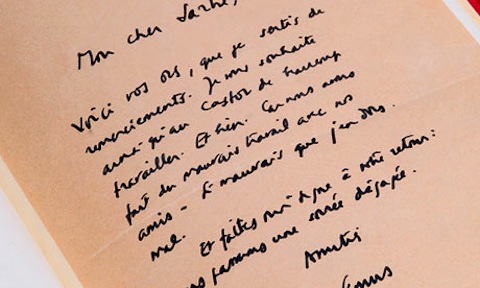
As the recently discovered letter above shows—from Camus to Sartre—the two were intimate friends as well as collaborators. Thought to have been written sometime between 1943 and 1948, the letter is familiar and candid. Camus opens with “My dear Sartre, I hope you and Castor [“the beaver,” Sartre’s nickname for de Beauvoir] are working a lot… let me know when you return and we will have a relaxed evening.” Aronson comments that the letter “shows that despite what some writers have said, Sartre and Camus had a close friendship.”
Aronson’s comment is understated. The querulous falling out of Sartre and Camus has acquired almost legendary status, with the two sometimes standing in for two divergent paths of French post-war philosophy. Where Sartre gravitated toward orthodox Marxism, and aligned his views with Stalin’s even in the face of the Soviet camps, Camus repudiated revolutionary violence and valorized the tragic struggle of the individual in 1951’s The Rebel, the work that allegedly incited their philosophical split. Andy Martin at the New York Times’ “The Stone” blog writes a concise summary of their intellectual and temperamental differences:
While Sartre after the war was more than ever a self-professed “writing machine,” Camus was increasingly graphophobic, haunted by a “disgust for all forms of public expression.” Sartre’s philosophy becomes sociological and structuralist in its binary emphasis. Camus, all alone, in the night, between continents, far away from everything, is already less the solemn “moralist” of legend (“the Saint,” Sartre called him), more a (pre-)post-structuralist in his greater concern and anxiety about language, his emphasis on difference and refusal to articulate a clear-cut theory: “I am too young to have a system,” he told one audience [in New York].
While Camus’ political disengagement and critique of Communist praxis in The Rebel may have precipitated the increasingly fractious relationship between the two men, there may have also been a personal disagreement over a mutual love interest named Wanda Kosakiewicz, whom both men pursued long before their split over ideas. Martin also tells that story—one perhaps more interesting in a dramatic sense than the abstract summary above—at The Telegraph. The short documentary clip below also dramatizes their disagreement with interviews, rare photos, newsreel footage, and readings from The Rebel. There is no mention, however, of Wanda.
As a preteen, I steered clear of “young adult” fiction, a form I resentfully suspected would try too hard to teach me lessons. Then again, if I’d had a young adult novelist like John Green — not far out of adolescence himself when I entered the YA demographic — perhaps I’d have actively hoped for a lesson or two. While Green has earned a large part of his fame writing novels like Looking for Alaska, An Abundance of Katherines, and The Fault in Our Stars, a sizable chunk of his renown comes from his prolific way with internet videos, especially of the educational variety, which also demonstrate his possession of serious teaching acumen. Last year we featured his 40-week Crash Course in World History, and today we offer you his collection of crash courses in English literature. At the top, you’ll find its first lesson, the seven-minute “How and Why We Read.” Green, in the same jokey, enthusiastic onscreen persona as before, follows up his world history course by reminding us of the importance of writing as a marker of civilization, and then reveals his personal perspective as a writer: “I don’t want to get all liberal artsy on you, but I do want to make this clear: for me, stories are about communication. We didn’t invent grammar so that your life would be miserable in grade school as you attempted to learn what the Márquez a preposition is. By the way, on this program I will be inserting names of my favorite writers when I would otherwise insert curse words.”
Those lines give you a sense of Green’s tone, as well as his objective. If you felt miserable not just studying grammar in grade school but studying actual literature in high school, these lessons may well revitalize a few of the classics with which you couldn’t engage in the classroom. Just above, we have Green’s crash course on F. Scott Fitzgerald’s The Great Gatsby (part one, part two) which, early on, gets interrupted by a familiar-looking young objector: “Mr. Green, I hate everything about this stupid collection of first-world problems passing for a novel, but my hatred of that Willa Cather-ing loser Daisy Buchanan burns with the fire of a thousand suns.” This draws a groan from our host: “Ugh, me from the past. Here’s the thing: you’re not supposed to like Daisy Buchanan, at least not in the uncomplicated way you like, say, cupcakes. I don’t know where you got the idea the quality of a novel should be judged by the likability of its characters, but let me submit to you that Daisy Buchanan doesn’t have to be likable to be interesting. Furthermore, most of what makes her unlikable — her sense of entitlement, her limited empathy, her inability to make difficult choices — are the very things that make you unlikable.” Green knows that many of us, no matter how literate, still fall back into the disadvantageous reading strategies for which we settled in high school. He does his entertaining utmost to correct them while exploring the deeper themes of not just Gatsby, but other such oft-assigned (and oft-ruined-for-kids) works as Romeo and Juliet (part one, part two), the poetry of Emily Dickinson, and, below, The Catcher in the Rye (part one, part two):
We’re in a spoiler-free zone here. When you’re done watching once, twice or thrice, click here to get the backstory … but not before giving us a follow onFacebook and Twitter and making us part of your daily social media diet. Mmm.
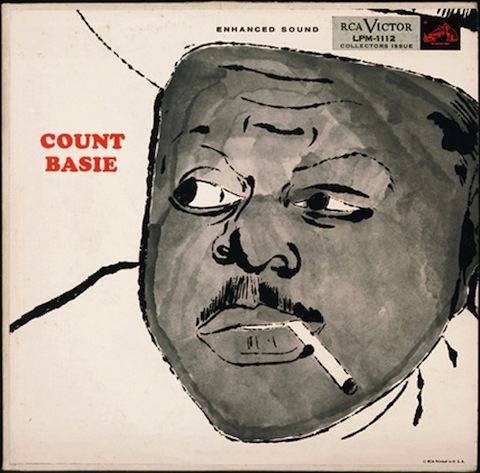
Flavorwire titles their post on album covers designed by artist Andy Warhol—auteur of that special brand of late-midcentury, impassive yet rocking-and-rolling, New York-rooted American cool—“Beyond the Banana.” They refer, of course, to the fruit emblazoned uponThe Velvet Underground & Nico, the 1967 debut album from the avant-rock band formed right there in Warhol’s own “Factory.” It would, of course, insult your cultural awareness to post an image of that particular cover and ask if you knew Andy Warhol designed it. But how about that of Count Basie’s self-titled 1955 album above? Warhol, not a figure most of us associate immediately with jazz and its traditions, designed it, too.
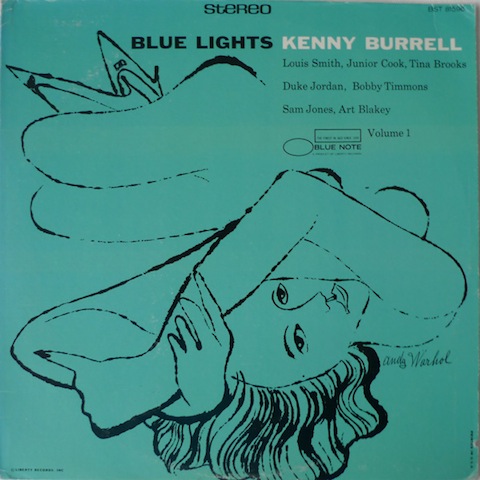
We now regard Blue Note highly for its taste in not only the aesthetics of the music itself but also the packaging that surrounds it, and thus we might assume the label had a natural inclination to work with a visionary like Warhol. But in the late fifties, Blue Lights stretched Blue Note’s graphical sensibilities as well as Warhol’s own; with it, he “finally broke away from simply drawing close-ups of musicians and their instruments and delivered a piece of art as evocative as the music inside,” writes the San Francisco Chronicle’s Aidin Vaziri.
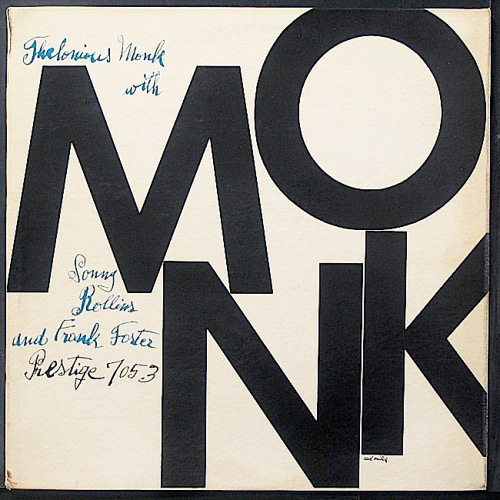
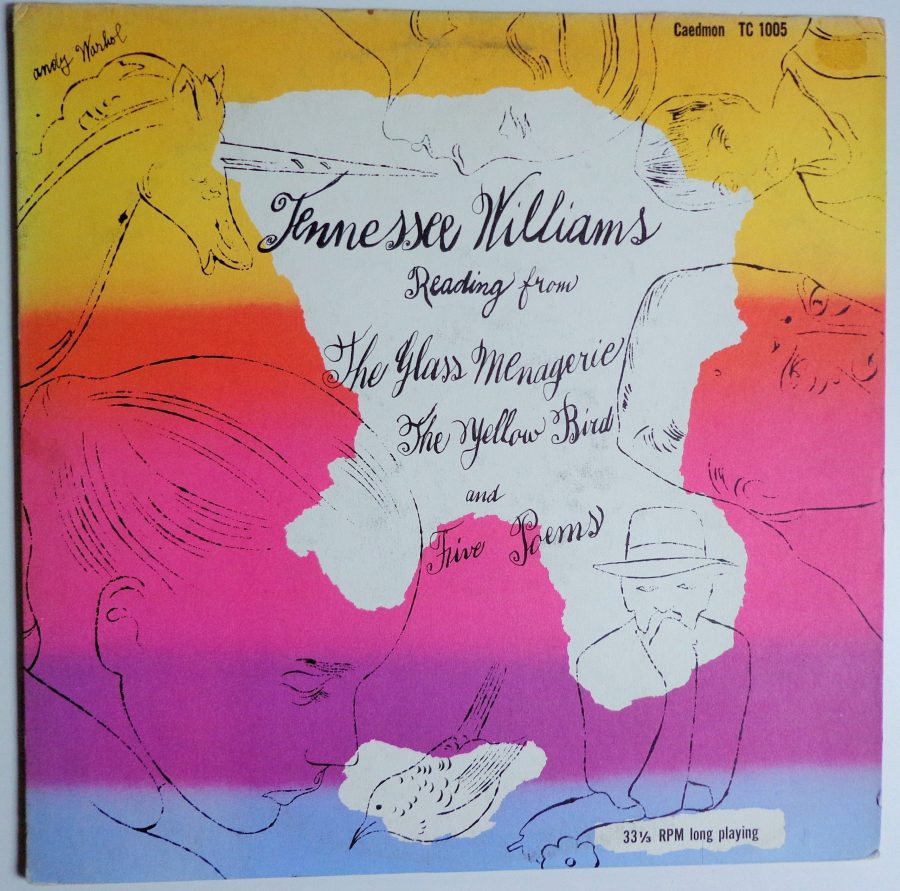
Given Warhol’s interest in the United States and its icons, it stands to reason that he would take on design jobs for Basie, Monk, and Burrell just as readily as he would for the Velvet Underground, or for those Englishmen who could out-American the Americans, the Rolling Stones. He even did an album cover for a representative of a whole other slice of American culture: playwright Tennesee Williams, author of plays like The Glass Menagerie, A Streetcar Named Desire, and Cat on a Hot Tin Roof.
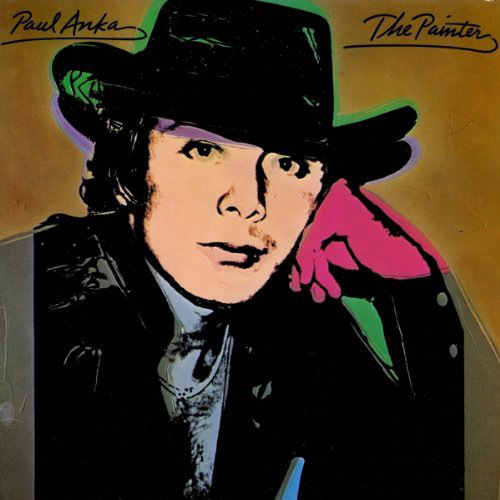
In 1952, Caedmon put out a record called Tennessee Williams Reading from The Glass Menagerie, The Yellow Bird and Five Poems, and its 1960 printing bears the Warhol artwork you see just above. Warhol in all these shows an impressive willingness to adapt to the persona of the musician and the feel of their music; a casual Warhol enthusiast may own one of these albums for years without ever realizing who did the cover art. He didn’t even cleave exclusively toward American forms, or to styles that mainstream America might once have considered artistically edgy. You could hardly get further from the position of the Velvet Underground than easy-listening vocals, let alone the easy-listening vocals of the Canadian-born Paul Anka, but when the singer’s 1976 The Painter needed a cover, Warhol delivered — and with a recognizably Warholian look, no less.
“You know,” says Ray Charles in this new animated interview from Blank on Blank, “what I got to live up to is being myself. If I do that the rest will take care of itself.”
Charles always sounded like no one else. When he played or sang just a few notes, you would immediately recognize his distinctive sound, that unique blending of gospel and blues. As he explains in the interview, his style was a direct reflection of who he was. “I can’t help what I sound like,” he says. “What I sound like is what I am, you know? I cannot be anything other than what I am.”
Blank on Blank is a project that brings lost interviews with famous cultural figures back to life. The Charles video is the 12th episode in Blank on Blank’s ongoing series with PBS Digital Studios. The audio of Charles is from the Joe Smith Collection at the Library of Congress. Smith is a former record company executive who recorded over 200 interviews with music industry icons for his book Off the Record: An Oral History of Popular Music. He talked with Charles on June 3, 1987, when the musician was 56 years old. You can hear the complete, unedited interview at the Library of Congress Web site.
In the interview, Charles says that being true to himself was a night-by-night thing. “I don’t sing ‘Georgia’ like the record. I sing it true,” he says. “I sing what I sing true. Each night I sing it the way I feel that night.” For an example of Charles being true to himself, here he is performing “Georgia On My Mind” on the Dick Cavett Show on September 18, 1972:
“It is a truth universally acknowledged, that a single man in possession of a good fortune, must be in want of a wife.”
Translation:
The heterogeneity of assumed intentions may incur a conclusory stereotype regarding gender selections in marriage-based societies, especially in those where the masculine hegemony of capital resources presupposes the feminization of property and uxorial acquisition.
I vividly recall my first opera. It was The Marriage of Figaro at the Metropolitan Opera in New York. A friend bought two family circle tickets—nosebleed seats—and insisted that I come along. She was a trained opera singer and aficionado. I was an unlearned neophyte. Most of my expectations were fulfilled: the enormously impressive space, plenty of bombast, intricately designed sets and costuming. And it was long. Very long. But not, as I had feared, boring. Not at all. I had not expected, in fact, to be so physically moved by the performances, and not only moved to basic emotions—I was moved deep in my gut. There’s no way I could adequately explain it.
But the medical scientists in the video above can. In “The Science of Opera,” actor Stephen Fry and comedian Alan Davies convene a panel of researchers from University College London to discuss what happened physiologically when the pair were hooked up to various sensors as they attended Verdi’s Simon Boccanegraat the Royal Opera House. Like the pairing at my first opera, Fry is a knowledgeable lover of the art and Davies is almost an opera virgin (the story of his actual first opera gets a good laugh). The gadgets attached to Fry and Davies measured their heart rates, breathing, sweat, and “various other emotional responses.” What do we learn from the experiment? For one thing, as neurobiologist Michael Trimble informs us, “music is different from all the other arts.” For example, ninety percent of people surveyed admit to being moved to tears by a piece of music. Only five to ten percent say the same about painting or sculpture. Fry and Davies’ autonomic nervous system responses confirm the power of music (and story) to move us beyond our conscious control and awareness.
And why is this? You’ll have to watch the discussion to learn more—I won’t summarize it here. Just know that we get insights not only into the science of opera, but the art as well—Verdi’s art in particular—and the various disciplines represented here do much to expand our appreciation of music, whether we specifically love opera or not. This is not the first talk on opera Fry has been a part of. He previously hosted another Royal Opera Company event called “Verdi vs. Wagner: the 200th birthday debate” (above). Though I favor the Germans, I’d say it’s a draw, but partisans of either one will likely come away with their opinions intact, having learned a thing or two along the way.
We're hoping to rely on loyal readers, rather than erratic ads. Please click the Donate button and support Open Culture. You can use Paypal, Venmo, Patreon, even Crypto! We thank you!
Open Culture scours the web for the best educational media. We find the free courses and audio books you need, the language lessons & educational videos you want, and plenty of enlightenment in between.