The jazz standard “Body and Soul” was first performed live in London by singer Gertrude Lawrence in 1930, and then recorded later that year by the great Louis Armstrong. But Coleman Hawkins cut the most historic version on October 11, 1939 — exactly 75 years ago today. The Missouri-born musician made the recording almost by accident, on a spur-of-the-moment-decision, and he had no inkling that he had created the first commercial hit of a pure jazz recording.
He later mused,“It’s funny how it became such a classic.” “Even the ordinary public is crazy about it. It’s the first and only record I ever heard of that all the squares dig as well as the jazz people, and I don’t understand how and why, because I was making notes all the way. I wasn’t making a melody for the squares. I thought nothing of it. I didn’t even bother to listen to it afterwards.”
For jazz historians, the song is recognized as one of the “early tremors of bebop.” That’s largely because “Hawkins hints at the song’s melody during his first six bars, but he is improvising right from the start, never actually stating the theme,” writes Kenny Berger in The Oxford Companion to Jazz.
With more than 480 fan-made segments culled from over 1,500 submissions, The Empire Strikes Back Uncut (also known as ESB Uncut) features a stunning mash-up of styles and filmmaking techniques, including live action, animation, and stop-motion. The project launched in 2013, with fans claiming 15-second scenes to reimagine as they saw fit – resulting in sequences created with everything from action figures to cardboard props to stunning visual effects. Helmed by Casey Pugh, who oversaw 2010’s Emmy-winning Star Wars Uncut, the new film has a wonderful homemade charm, stands as an affectionate tribute to The Empire Strikes Back, and is a testament to the talent, imagination, and dedication of Star Wars fans.
ESB Uncut was just released yestery, right in time for the weekend. Below we have some more creative takes on the Star Wars films to keep you entertained.
In Stephen King’s first televised interview from way back in 1982, the horror writer revealed that he sleeps with the lights on. He may have grown out of the habit by now, but it’s no wonder if he hasn’t. A macabre imagination like his probably sees all sorts of creepy things lurking in the dark. In any case, King has certainly learned a thing or two since then about making his fears more marketable. In the past several years he’s been promoting his work on the Internet to reach new audiences.
In 2000, his novella Riding the Bulletdebuted exclusively online, and in 2008 he partnered with Marvel Comics to promote his first collection of short stories in six years, releasing one short graphic video episode at a time adapted from the 56-page novella “N.” See all 25 episodes above. It’s a story, writes Time, “about a psychologist whose obsessive-compulsive patient is entranced by a mysterious plot of land.” King calls the adaptation “kind of a video comic book,” and while the “point of the exercise,” says his editor Susan Moldow,” is to stimulate book sales,” I think you’ll agree it’s a pretty nifty bit of storytelling on its own.
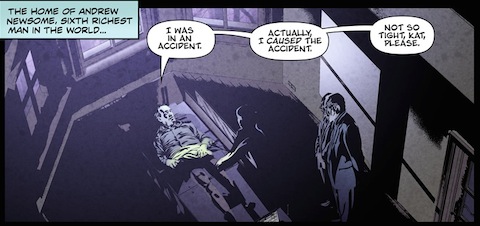
On King’s website, you’ll find links to all sorts of multimedia products, including a Lifetime original movie, Big Driver, a film titled A Good Marriage, now out on video-on-demand, and the latest from graphic novel series Dark Tower. You’ll also find a comic adaptation of the short story “Little Green God of Agony.” See the first panel above, and read the full story here.
?si=KsluCU7w9DOop4Pv
Long before Youtube and online comics, there was the audiobook. King has narrated his own work for years, and it’s also been read by such big names as Kathy Bates, Sissy Spacek, Willem Defoe, Anne Heche, Eli Wallach, and many more. Just above, hear character actor John Glover—a name you may not know, but a face you’d recognize—read “One for the Road,” a story from King’s first, 1978, collection Night Shift. It’s a vampire story, but a particularly deft one, writes Noah Charney at New Haven Review, one that “deals in archetypes that are the heart of good horror fiction.” King’s stories, Charney asserts, are “beautifully-written, highly intelligent. They happen to feature monsters of all sorts, from natural to preternatural, but that is secondary to their core as great stories, well-told.”
King has long defended popular fiction to the literati—in his acceptance speech for the National Book Award, for example—and lashed out at “the keepers of the idea of serious literature,” whom he says “have a short list of authors who are going to be allowed inside.” It may have taken a few years, but King got in, eventually publishing in such august outlets as The Atlantic and The New Yorker. Read four stories from those publications at the links below. And if you’re still in need of a good scare in the days leading up to Halloween, make sure to check out “The Man in the Black Suit,” a short film adaptation of another story published in The New Yorker in 1994.
When we featured his illumination of Edgar Allen Poe’s “The Raven,” we called Gustave Doré “one of the busiest, most in-demand artists of the 19th century,” who “made his name illustrating works by such authors as Rabelais, Balzac, Milton, and Dante.” His hand may have given a visual dimension to a number of revered texts, but what of the man himself? For the deepest insight into an artist, we should look to the works of art he inspires. In the case of the cutout animated film above, Doré not only provides the inspiration but plays, in a sense, the starring role. L’imaginaire au pouvoir offers us a portrait of the artist as a two-dimensional man, stumbling into haunting drawn-and-cut-out realms straight from his own imagination.
“The film was created by Vincent Pianina and Lorenzo Papace of Le Petit Écho Malade and features music by Ödland,” writes EDW Lynch at Laughing Squid (a site that previously featured Le Petit Écho Malade’s music video for Ödland’s “Østersøen”) “It is a promo, Lynch adds, for ‘Gustave Doré (1832–1883): Master of Imagination,’ an ongoing exhibition of Doré’s work at Musée d’Orsay in Paris through May 11, 2014.” Though Doré, by all accounts, lived a fairly eventful life, he had to have spent a great deal of it slaving painstakingly away with his wood engraving tools. The same goes for any producer of such vivid artistic visions—but I suspect that all of them have to go on this kind of harrowing journey to the center of their soul now and again. Here, Pianina and Papace have, with Doré’s very materials, created a journey into the inner realm that still gives them life today. And they’ve added a healthy dose of 21st-century humor for good measure.
A decade before tens of thousands turned on, tuned in, and dropped out at the Human Be-In in Golden Gate Park, psychiatrist Sidney Cohen was investigating the effects of LSD on human consciousness. If his voluntary subjects at LA’s Veteran’s Administration Hospital found themselves suddenly able to “see the music” a la Lizard Queen Lisa Simpson, they did so in a very respectable-seeming, mid-1950s setting.
Witness this session with the polite young wife of a hospital employee, above. She’s a bit nervous, but not because of any media-fueled preconceptions regarding the trip she’s about to take. It was 1956, and another of Dr. Cohen’s guinea pigs, publisher Henry Luce, had yet to regale the public with some of acid’s more colorful properties via multiple articlesin both Time and Life magazines.
As such, our unidentified participant is as pure as the glass of water she’s served at the one minute mark. Purer, actually, given that the drink has been dosed with 1/10th of a milligram Lysergic acid diethylamide.
Three hours further along, she’s tripping her brains out, still seated demurely in the same chair in which her intake interview was conducted. Had it been filmed 20 years later, her revelations would seem trite, but the context renders them endearing. If she’s bummed out about anything, it’s that the nice doctor questioning her about her mind blowing journey isn’t able to see the molecules too.
I’d love to know what became of her.
Cohen continued observing LSD, with subjects as celebrated as writer Aldous Huxley, philosopher Gerald Heard and Bill Wilson, co-founder of Alcoholics Anonymous. He published his findings inThe Beyond Within: the LSD Story. His ultimate takeaway was that ”beatnik microculture” destroyed LSD’s chances for achieving its potential as a psychotherapy tool.
This may be why we never hear him urging his subject to check out the drapes, which is surely what several young men of my acquaintance would have resorted to, back in the day.
David Lynch-style austerity of the setting aside, perhaps such coaching was unnecessary. Whatever this woman’s brain had her seeing, it made her want to “talk in technicolor.”
May I suggest that we’re just as delusional if we assume that someone who could be described as a 1950s “housewife” must have inhabited a world we can only perceive in black-and-white?
Criterion specializes in selling “important classic and contemporary films” to film aficionados. If you like masterpieces by David Lynch, Andrei Tarkovsky, John Cassavetes, Truffaut, Fellini and the rest, you won’t want to miss this rare sale.
Sign up for our daily email and, once a day, we’ll bundle all of our daily posts and drop them in your inbox, in an easy-to-read format. You don’t have to come to us; we’ll come to you!
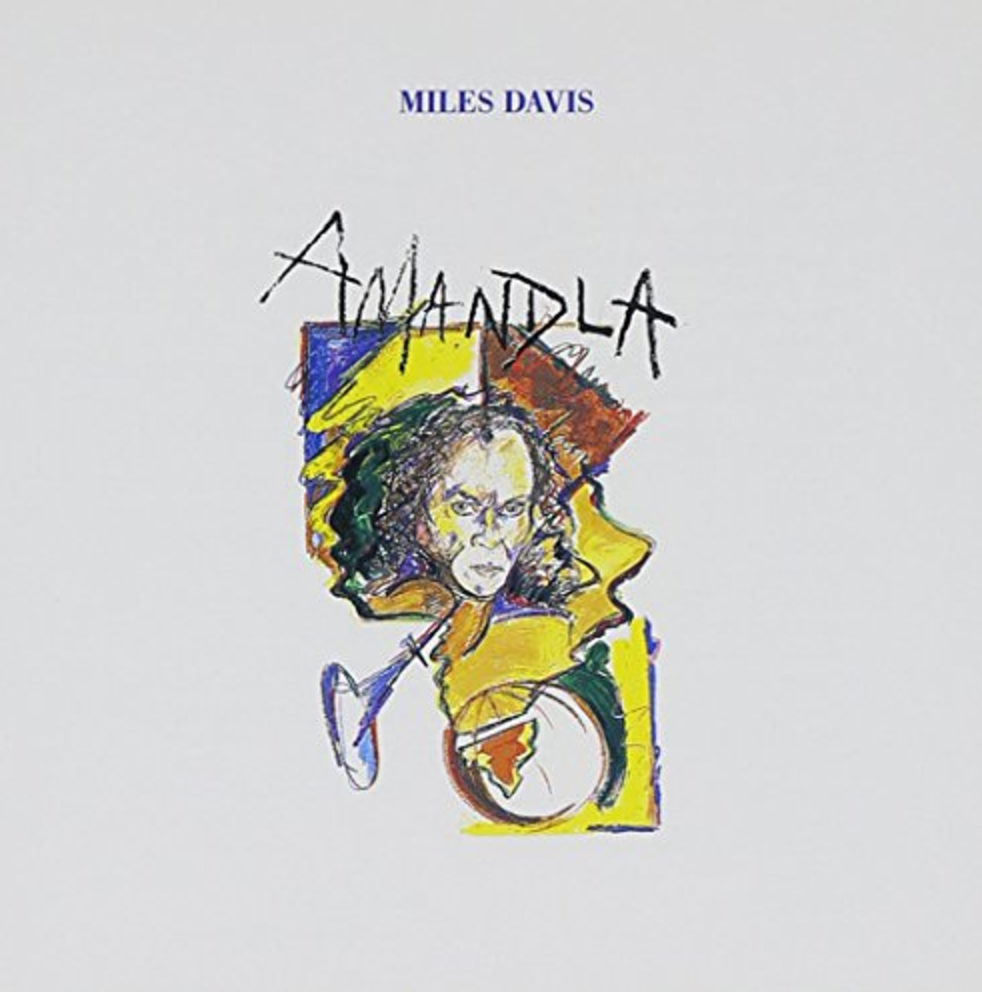
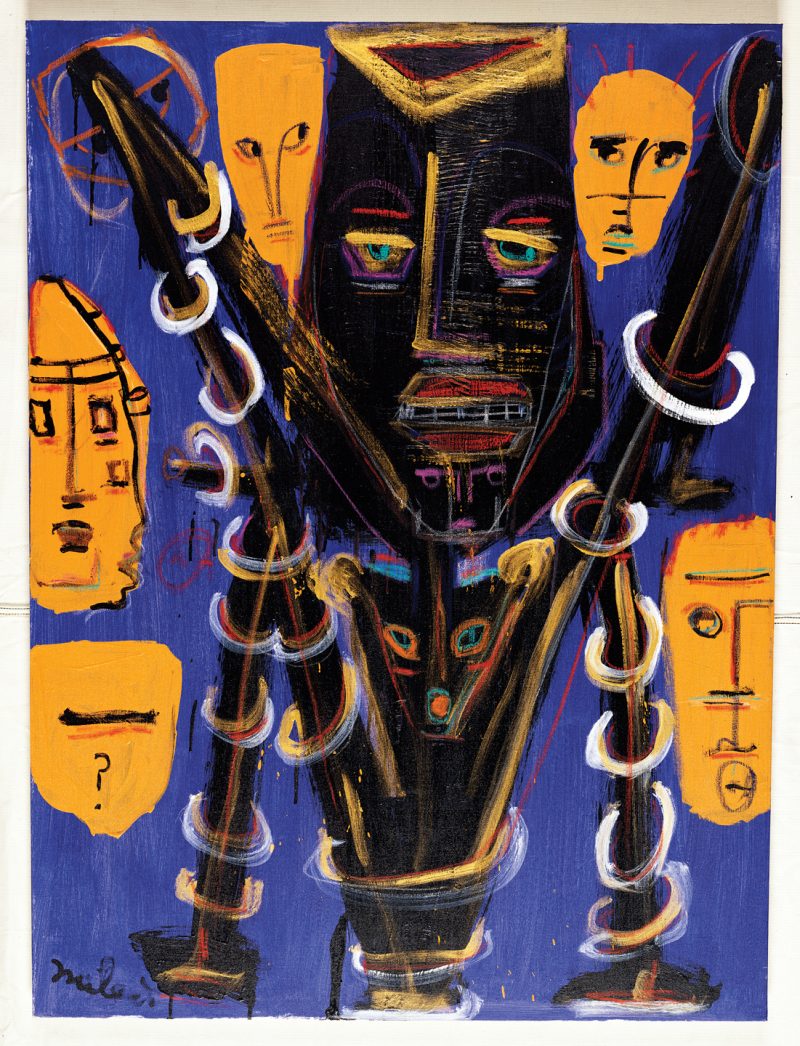
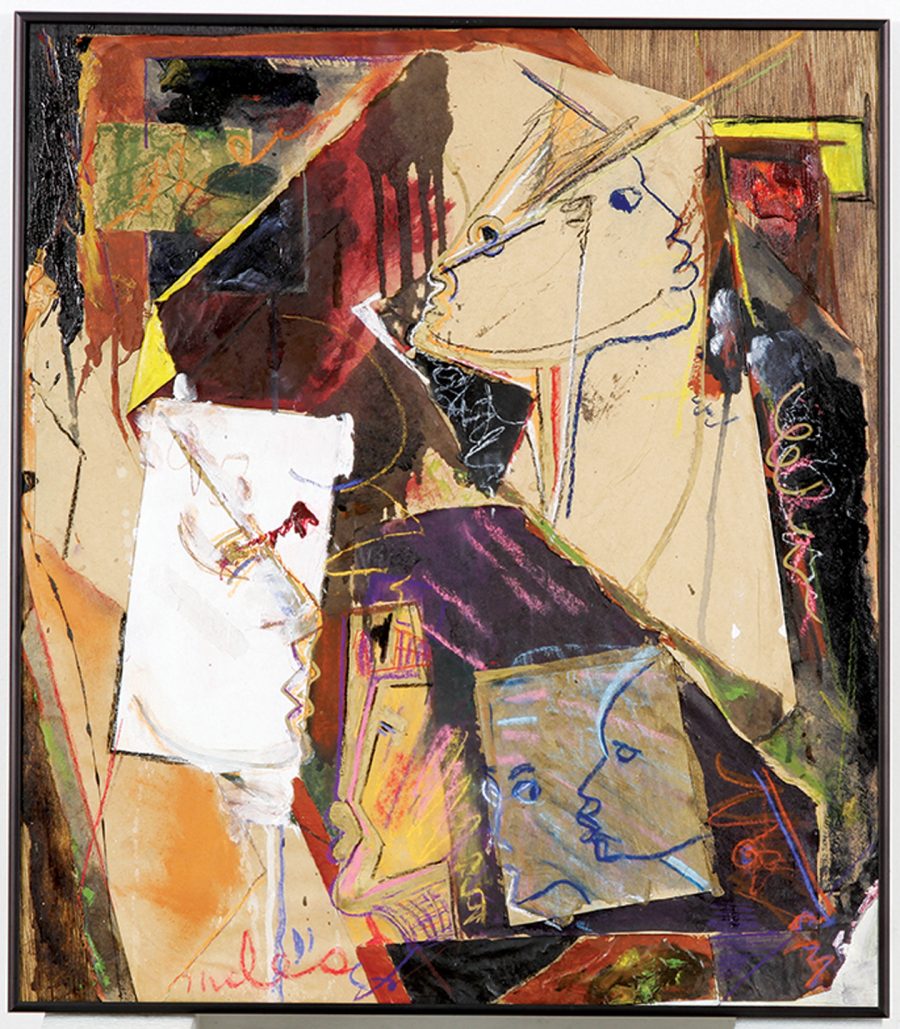
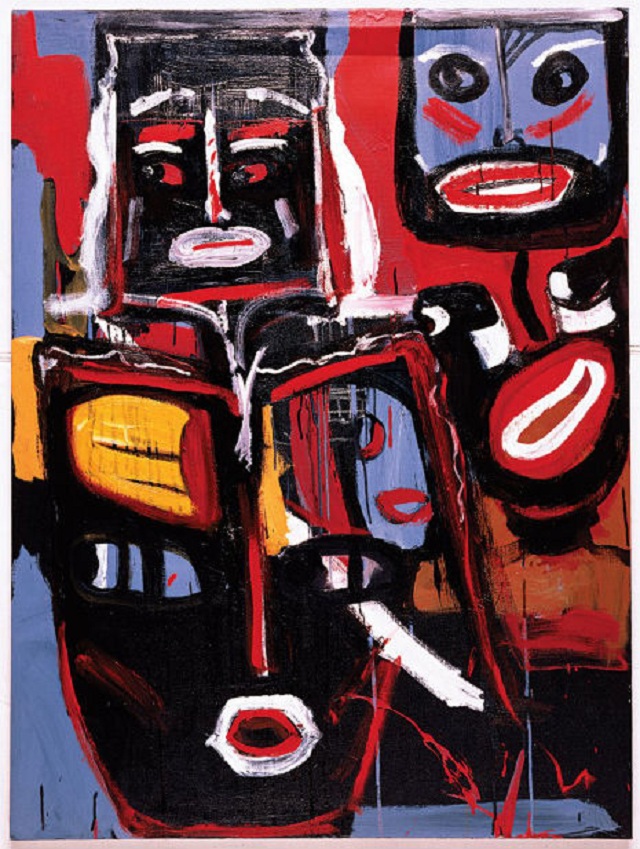
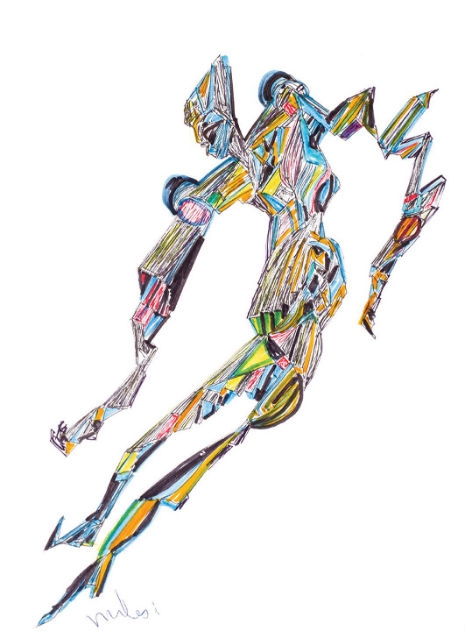
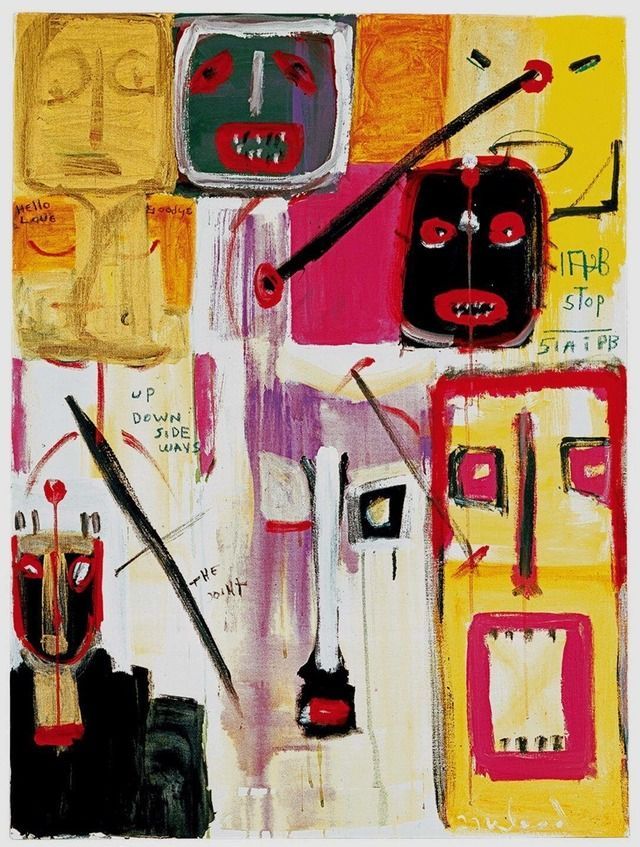
Ask enough people to name their favorite artist of any kind, and sooner rather than later, someone will name Miles Davis. The trumpeter and jazz auteur behind — or, strictly speaking, up in front of — such unchallenged masterpieces as Birth of the Cool, Kind of Blue, Sketches of Spain, and Bitches Brewhas long since ascended to the pantheon of American music, but that doesn’t mean we should overlook his other artistic achievements. Achievements as a painter, for instance: true fans know that Davis’ visual art appears on a few of his album covers, such as that of 1989’s Amandlaright below. “Painting, long a Davis avocation, is becoming a profitable sideline,” says a contemporary Los Angeles Times article. “In collaboration with his girlfriend, Jo Gelbard, he did the artwork for his new album; the cover is an impressive self-portrait using the reds and greens he seems to favor.”
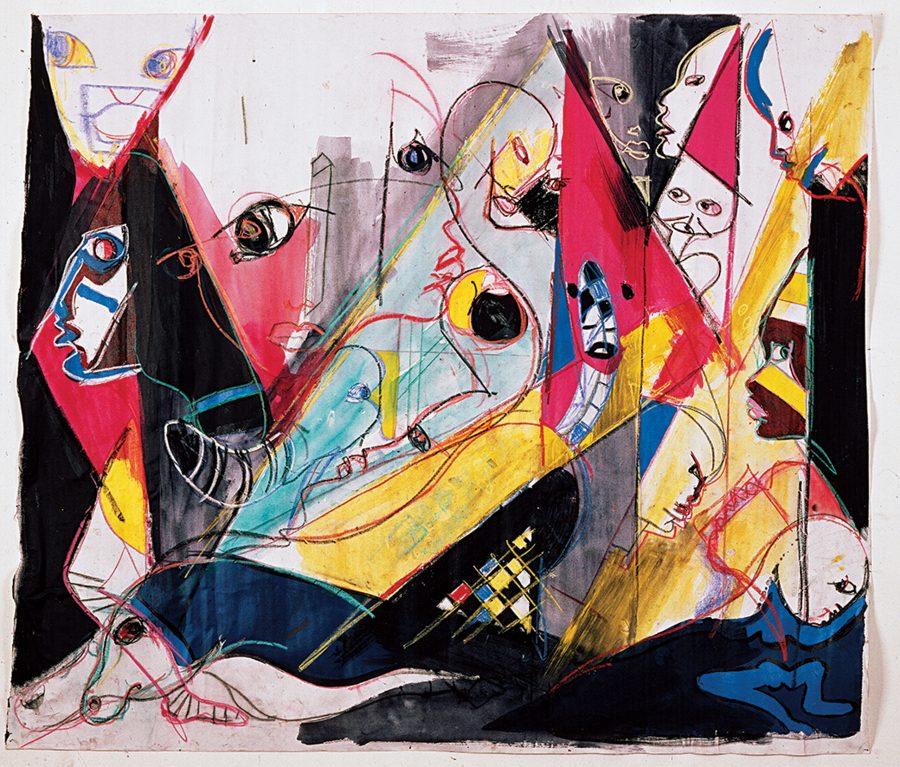
You can see more of Davis’ visual art over at Dangerous Minds and The Daily Beast. The so-called Prince of Darkness “didn’t begin to draw and paint in earnest until he was in his mid-fifties, during the early 1980s and a period of musical inactivity,” writes Tara McGinley. ”
Miles being Miles, he didn’t merely dabble, but made creating art as much a part of his life as making music in his final decade,” resulting in “a sharp, bold and masculine mixture of Kandinsky, Jean-Michel Basquiat, Picasso and African tribal art.” Just last year, Insight Editions published Miles Davis: The Collected Artwork, finally bringing together the fruits of the creativity the trumpeter could command even without his horn. Countless young jazz players claim Davis as an influence to this day, and they’ll continue to do so as long as jazz itself persists, but I do wonder how soon young painters will as well.
Rock ‘n’ roll has a sad tradition of geniuses who’ve succumbed to mental illness and addiction. Some of them have, paradoxically, produced some of the best music of their careers during periods of decline. We’d have to mention Pink Floyd’s Syd Barrett, Moby Grape’s Skip Spence, Big Star’s Chris Bell… all of whom recorded strange, intimate, and heartfelt solo albums after leaving their respective bands. Then, of course, there’s Brian Wilson, whose 1966 Pet Sounds re-invented pop, and laid the groundwork for Sgt. Pepper’s Lonely Hearts Club Band. (Wilson is said to have been inspired by Rubber Soul). We may know Pet Sounds as a Beach Boys release, but it was really Wilson’s record. In the video series here, “Behind the Sounds,” we get a unique listen in to the creation of the album by way of early takes, lots of studio chatter, and pop-up video style factoids in the Pet Sounds cover’s Cooper Black font over behind-the-scenes photos.
At the top, hear behind the sounds of “Wouldn’t It Be Nice.” Just above, hear the making of “I Know There’s An Answer,” and below, hear Parts 1 and 2 of the creation of “God Only Knows,” the lush, self-effacing ballad whose harpsichord and French horn intro clearly inspired the orchestration in songs like “Penny Lane” and “Strawberry Fields Forever.” See videos for the rest of Pet Sounds’ songs at the “Behind the Sounds” Youtube channel.
Pet Sounds has been named the greatest album of all time by NME and Mojo magazines and ranks at number two in Rolling Stone’s 500 Greatest Albums of All Time, right behind Sgt. Pepper’s. Wilson wrote the songs with lyricist Tony Asher during a time when he was pulling away from his sunny surf-pop group and expanding his repertoire of studio techniques in unprecedented ways. The songs can sound superficially like breezy Beach Boys pop, but reveal themselves as complex, baroque orchestrations that hold enough instrumental surprises and lyrical subtleties for a lifetime of listening. It’s a record both thoroughly of its time and thoroughly timeless.
Unlike many a tragic rock composer, Wilson has survived and recovered (many times over) into old age, recording and touring on and off with the Beach Boys and opening up about his darker times. And unless you’re spending this week under a rock somewhere, you’ll catch the BBC’s star-studded video re-make of “God Only Knows,” just below, circulating all over the ‘net. Both a promo for the more than two dozen musicians involved and a benefit single for charitable organization BBC Children in Need, the glamorous production features Wilson behind his piano, looking stately and healthy. For more on the making of Pet Sounds, see this 2002 BBC documentary, Art That Shook The World: The Beach Boys’ Pet Sounds. And please, amidst this flurry of Pet Sounds goodies, don’t forget to listen to the album itself, best appreciated, says Wilson, with “earphones, in the dark.”
We're hoping to rely on loyal readers, rather than erratic ads. Please click the Donate button and support Open Culture. You can use Paypal, Venmo, Patreon, even Crypto! We thank you!
Open Culture scours the web for the best educational media. We find the free courses and audio books you need, the language lessons & educational videos you want, and plenty of enlightenment in between.