Way back when, we featured an animation that documented the first acid trip of novelist Ken Kesey. In Kesey’s case, it all happened in a careful, calculated way in 1959, under the care and control of the U.S. government. Six years later and 5,000+ miles away, John Lennon’s maiden voyage went down in a very different way. A dentist–yes, a dentist of all people–slipped LSD into John and George’s coffee, unbeknownst to them. Next thing they knew buildings were bursting into fire, and rooms morphing into submarines. So began the Beatles’ experimentation with psychedelics and new musical sounds, which, together, shaped their 1965 masterpiece, Revolver(stream it free on Spotify).
If you would like to support the mission of Open Culture, consider making a donation to our site. It’s hard to rely 100% on ads, and your contributions will help us continue providing the best free cultural and educational materials to learners everywhere. You can contribute through PayPal, Patreon, and Venmo (@openculture). Thanks!
“We can say of Shakespeare,” wrote T.S. Eliot—in what may sound like the most backhanded of compliments from one writer to another—“that never has a man turned so little knowledge to such great account.” Eliot, it’s true, was not overawed by the Shakespearean canon; he pronouncedHamlet “most certainly an artistic failure,” though he did love Coriolanus. Whatever we make of his ambivalent, contrarian opinions of the most famous author in the English language, we can credit Eliot for keen observation: Shakespeare’s universe, which can seem so sprawlingly vast, is actually surprisingly spare given the kinds of things it mostly contains.
This is due in large part to the visual limitations of the stage, but perhaps it also points toward an author who made great works of art from humble materials. Look, for example, at a search cloud of the Bard’s plays.
You’ll find one the front page of the Victorian Illustrated Shakespeare Archive, the PhD project of Michael Goodman, doctoral candidate in Digital Humanities at Cardiff University. The cloud on the left features a galaxy composed mainly of elemental and archetypal beings: “Animals,” “Castles and Palaces,” “Crowns,” “Flora and Fauna,” “Swords,” “Spears,” “Trees,” “Water,” “Woods,” “Death.” One thinks of the Zodiac or Tarot.
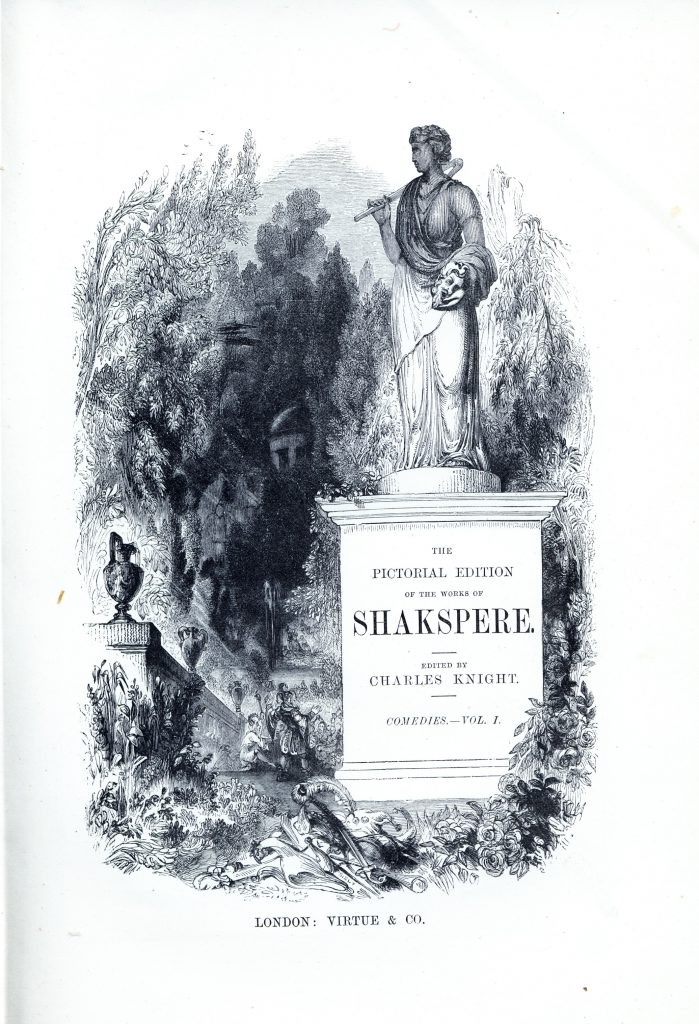
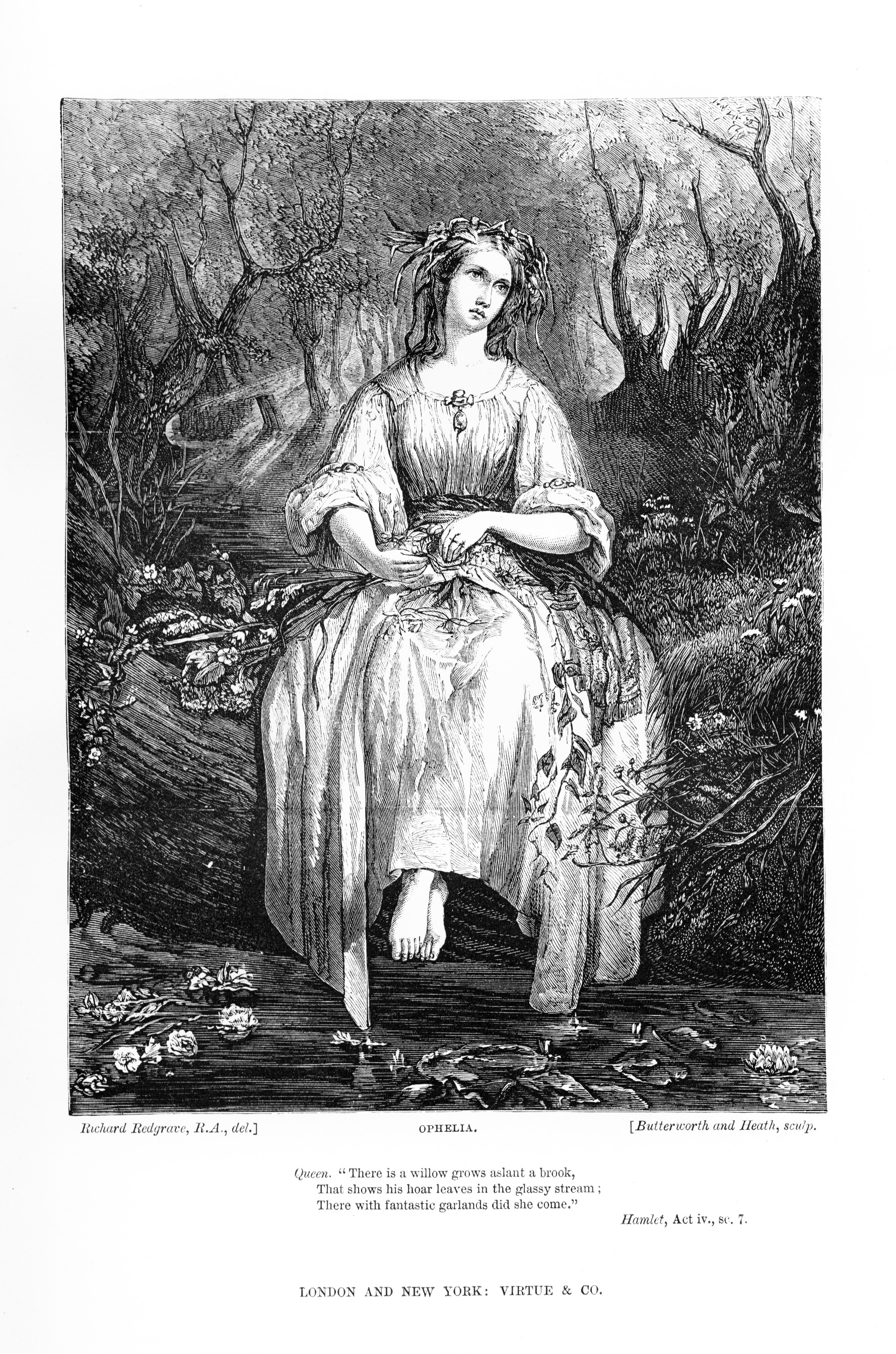
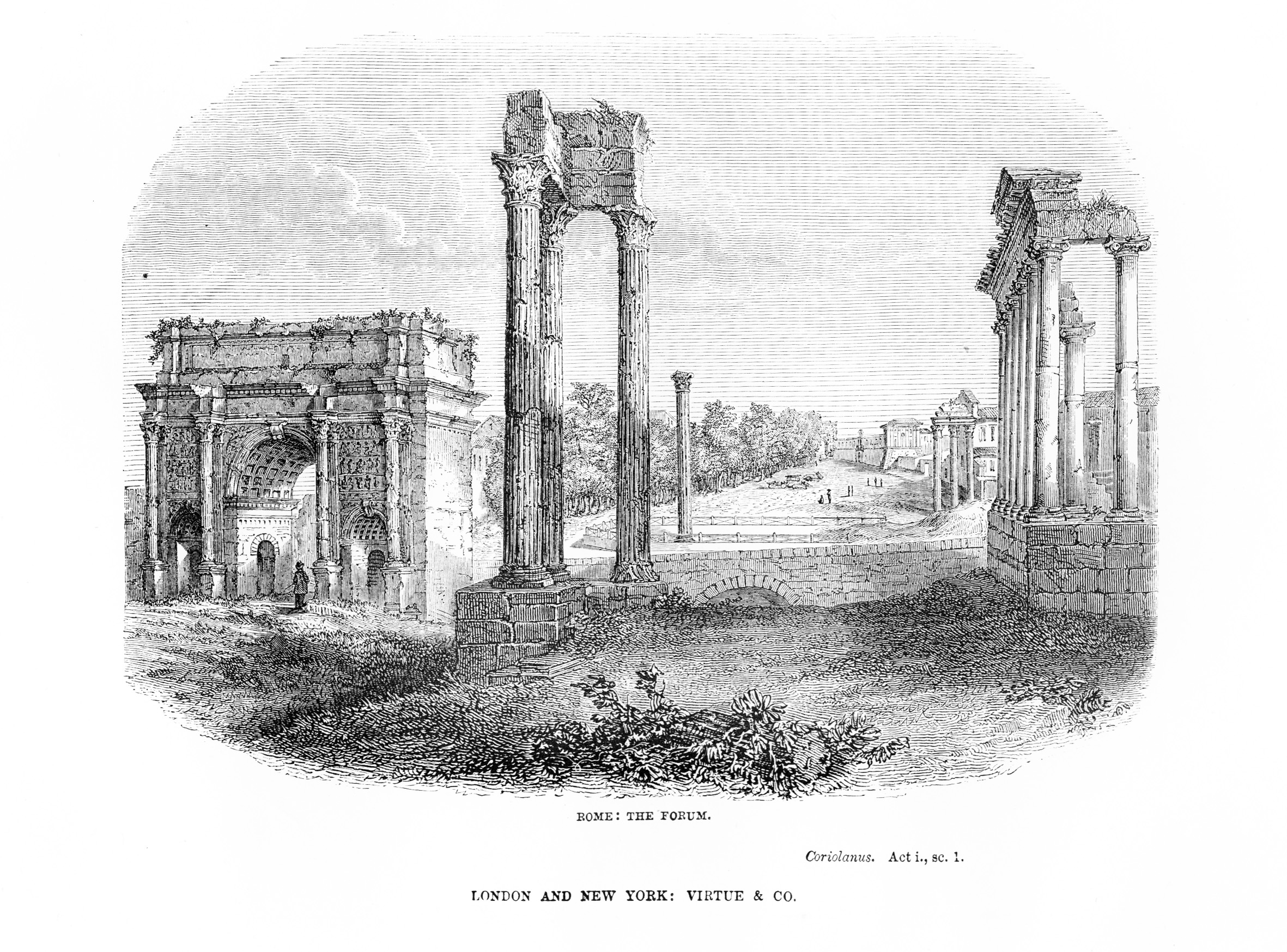
This particular search cloud, however, does not represent the most prominent terms in the text, but rather the most prominent images in four collections of illustrated Shakespeare plays from the Victorian period. Goodman’s site hosts over 3000 of these illustrations, taken from four major UK editions of Shakespeare’s Complete Works published in the mid-19th century. The first, published by editor Charles Knight, appeared in several volumes between 1838 and 1841, illustrated with conservative engravings by various artists. Knight’s edition introduced the trend of spelling Shakespeare’s name as “Shakspere,” as you can see in the title page to the “Comedies, Volume I,” at the top of the post. Further down, see two representative illustrations from the plays, the first of Hamlet’s Ophelia and second Coriolanus’ Roman Forum, above.
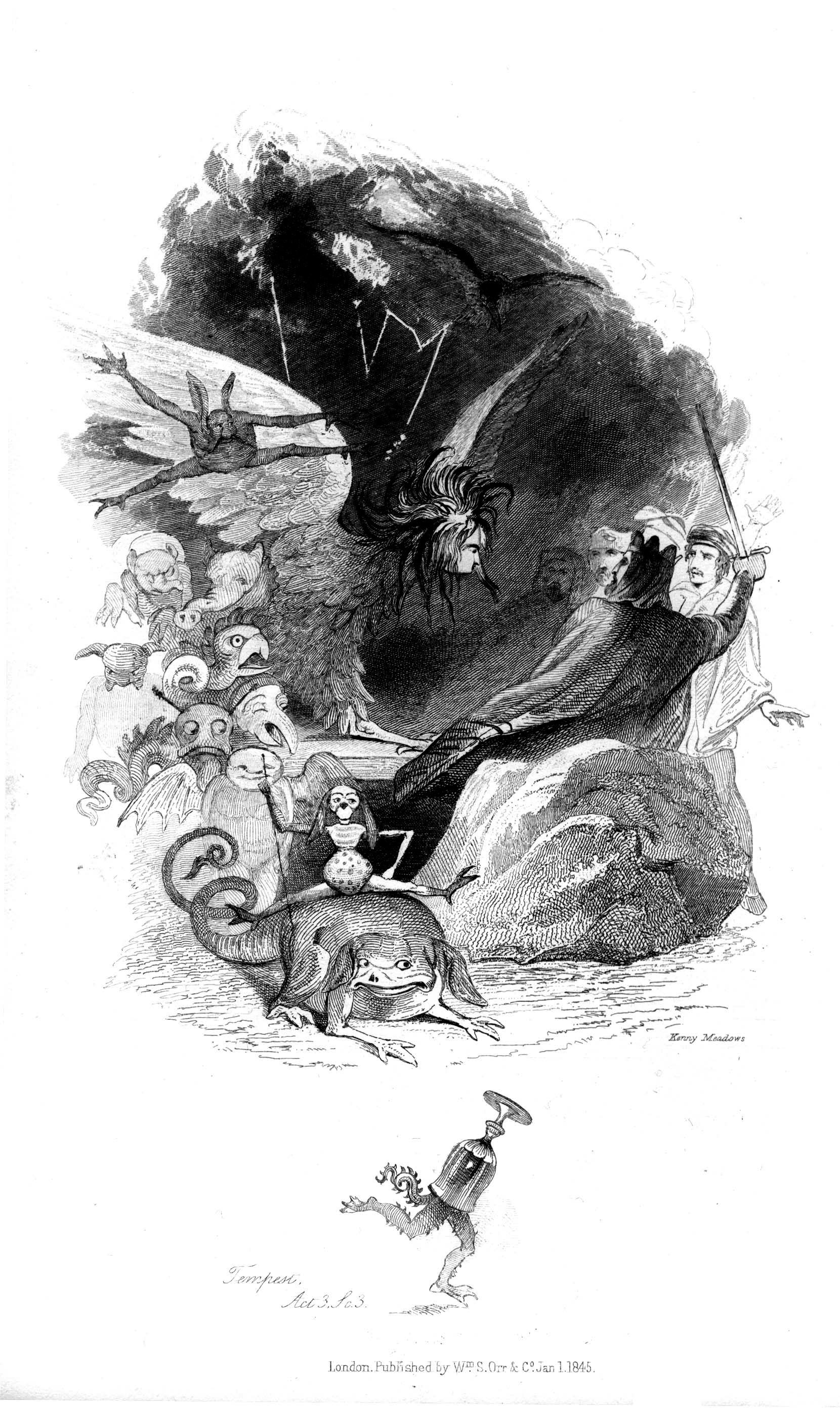
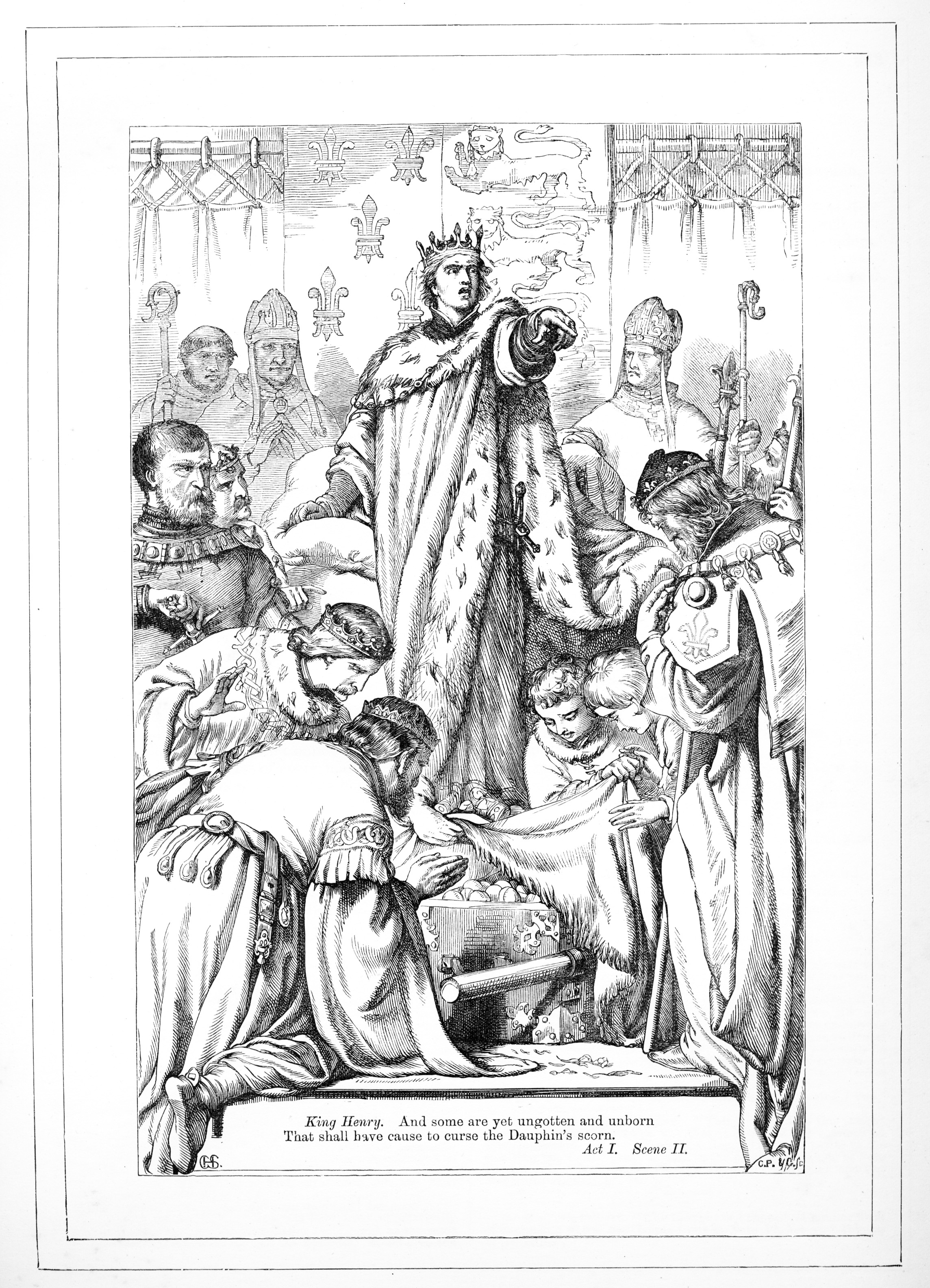
Part of a wave of “early Victorian populism” in Shakespeare publishing, Knight’s edition is joined by one from Kenny Meadows, who contributed some very different illustrations to an 1854 edition. Just above, see a Goya-like illustration from The Tempest. Later came an edition illustrated by H.C. Selous in 1864, which returned to the formal, faithful realism of the Knight edition (see a rendering of Henry V, below), and includes photograuvure plates of famed actors of the time in costume and an appendix of “Special Wood Engraved Illustrations by Various Artists.”
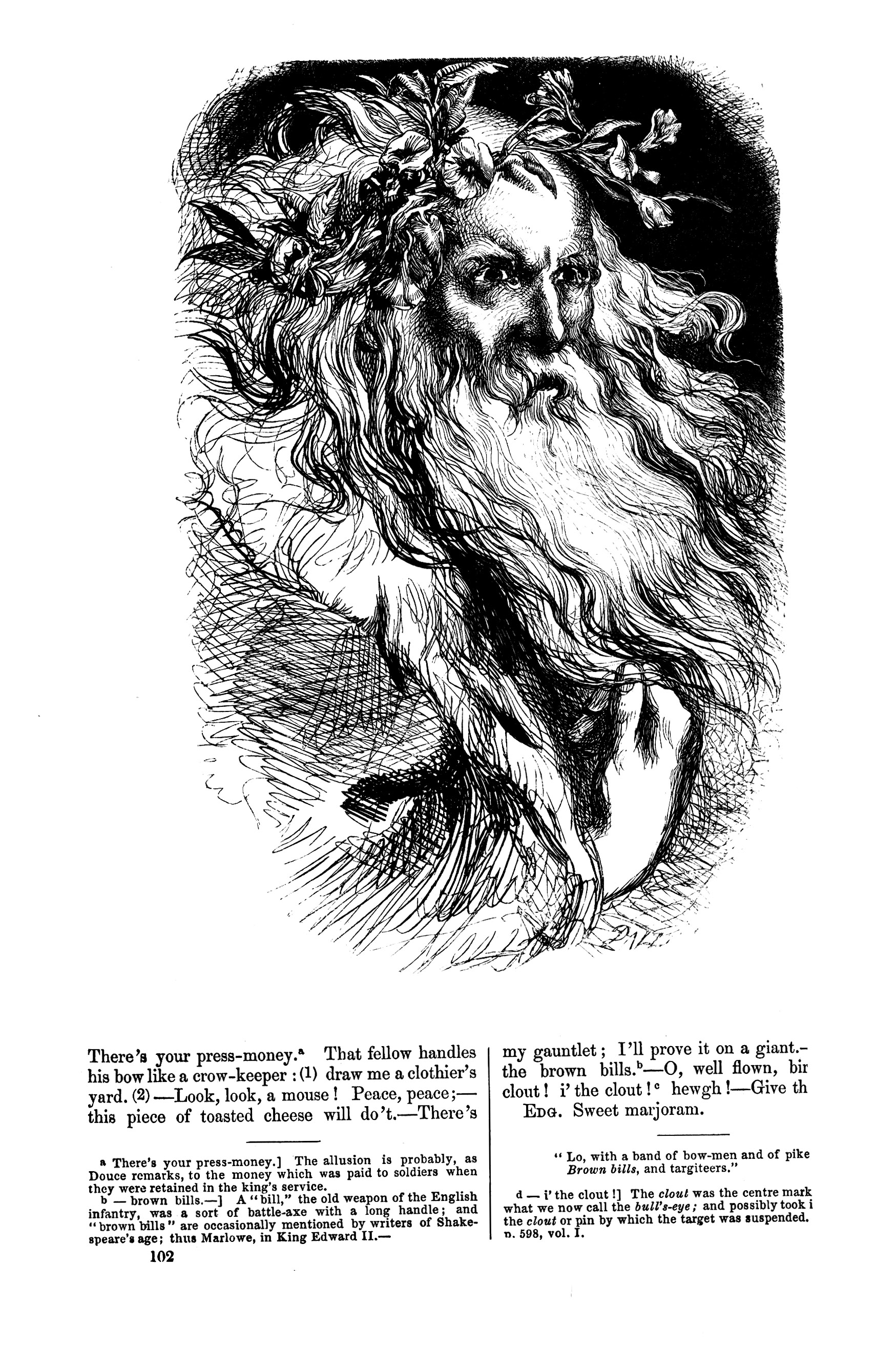
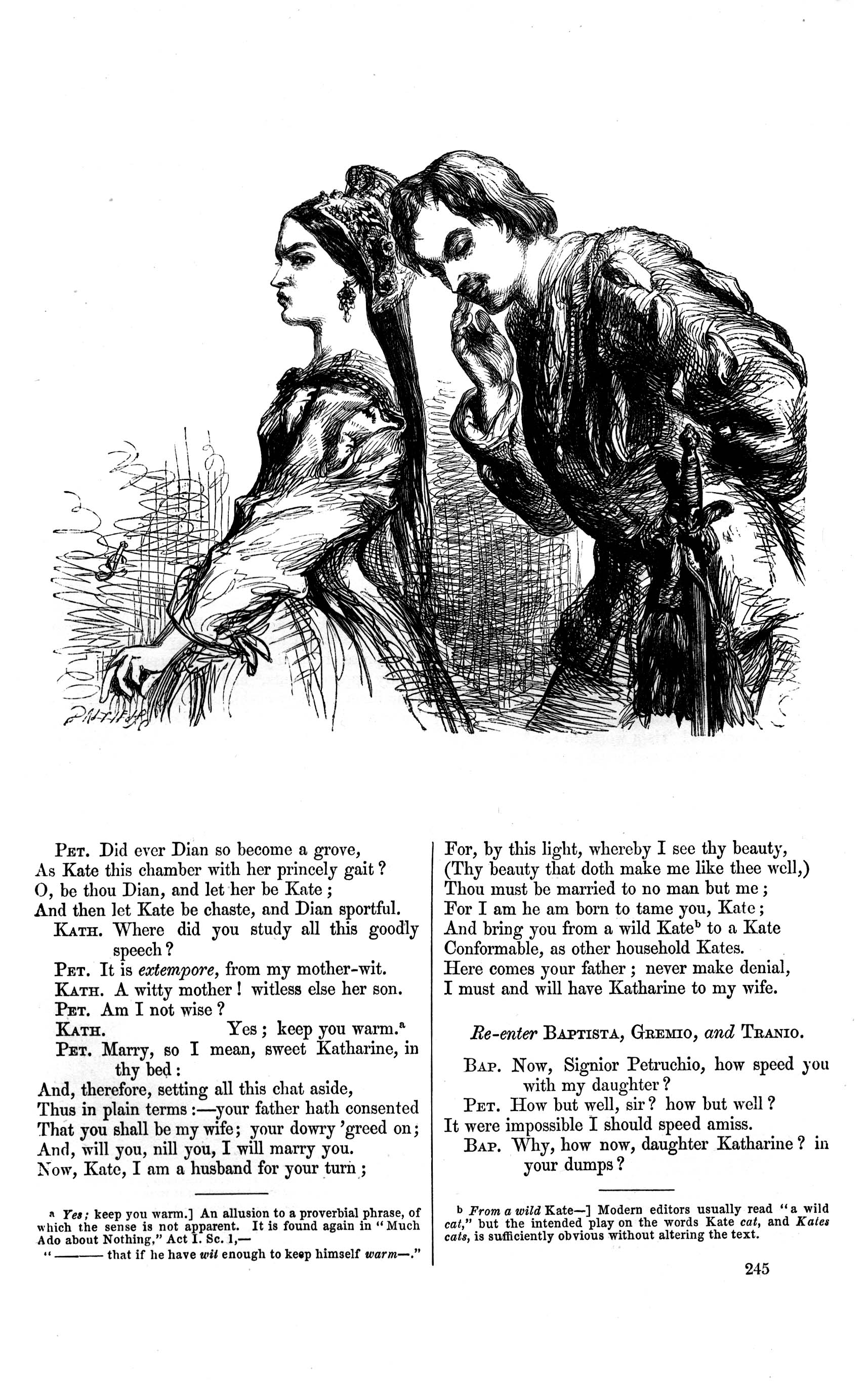
The final edition whose illustrations Goodman has digitized and catalogued on his site features engravings by artist John Gilbert. Also published in 1864, the Gilbert may be the most expressive of the four, retaining realist proportions and mise-en-scène, yet also rendering the characters with a psychological realism that is at times unsettling—as in his fierce portrait of Lear, below. Gilbert’s illustration of The Taming of the Shrew’s Katherina and Petruchio, further down, shows his skill for creating believable individuals, rather than broad archetypes. The same skill for which the playwright has so often been given credit.
But Shakespeare worked both with rich, individual character studies and broader, archetypal, material: psychological realism and mythological classicism. What I think these illustrated editions show us is that Shakespeare, whoever he (or she) may have been, did indeed have a keen sense of what Eliot called the “objective correlative,” able to communicate complex emotions through “a skillful accumulation of imagined sensory impressions” that have impressed us as much on the canvas, stage, and screen as they do on the page. The emotional expressiveness of Shakespeare’s plays comes to us not only through eloquent verse speeches, but through images of both the starkly elemental and the uniquely personal.
Spend some time with the illustrated editions on Goodman’s site, and you will develop an appreciation for how the plays communicate differently to the different artists. In addition to the search clouds, the site has a header at the top for each of the four editions. Click on the name and you will see front and back matter and title pages. In the pull-down menus, you can access each individual play’s digitized illustrations by type—“Histories,” “Comedies,” and “Tragedies.” All of the content on the site, Goodman writes, “is free through a CC license: users can share on social media, remix, research, create and just do whatever they want really!”
It’s hard to imagine a time when Nirvana’s “Smells Like Teen Spirit” didn’t belong to all of us. One day it didn’t exist. And then one day it did, and for so many of us who heard that churning opening chord, that was it. Maybe it took one listen, or five, but it was clear this song was going to mean something. And as the autumn of 1991 wore on, it would take on the weight of many things—expectations of a new generation, a new decade, the end of hair metal, the beginning of grunge, the return of rock, or just as correctly, rock’s last gasp.
The song was released to radio stations in August, issued as a single on September 10, 1991, and then officially released on September 24, 1991. But “Smells Like Teen Spirit” really broke a month later, when MTV premiered it on 120 Minutes. Then the band watched as it became a daytime MTV hit, then a hit on every rock radio playlist, from “modern rock” to “college rock” and all the marketing divisions in between.
The above video shows the band playing the song before any of this happened, just two days after the release of Nevermind. As Jason Kottke said on his site when he posted this, “There’s a freight train bearing down on those boys and they don’t even know it.”
The performance comes from a gig at The Moon in New Haven, Connecticut (see it all above), the band playing on a small stage, with such a low ceiling that bassist Krist Novoselic looks like he’s going to bang his head on the ceiling. The audience is one huge mosh pit, all male, it seems, and you can smell the sweat and stale beer through the screen. Did the crowd know they were seeing a band on the cusp? Is it too much to read into that yelp from the audience, during the second quiet passage, that they’re witnessing a finely constructed hit, the kind of loud-soft dynamic that would be copied and echoed through the nineties.
By April of the following year the song would be so popular Weird Al Yankovic would have made his parody version (one of his best). And soon Kurt Cobain would be swallowed by fame, seeing only a few ways out of his predicament. But here they are for a brief moment in time, perhaps thinking that there would be more clubs like The Moon, just a bit bigger, maybe just a bit smaller, on the horizon.
Ted Mills is a freelance writer on the arts who currently hosts the FunkZone Podcast. You can also follow him on Twitter at @tedmills, read his other arts writing at tedmills.com and/or watch his films here.
We're hoping to rely on loyal readers, rather than erratic ads. Please click the Donate button and support Open Culture. You can use Paypal, Venmo, Patreon, even Crypto! We thank you!
Open Culture scours the web for the best educational media. We find the free courses and audio books you need, the language lessons & educational videos you want, and plenty of enlightenment in between.