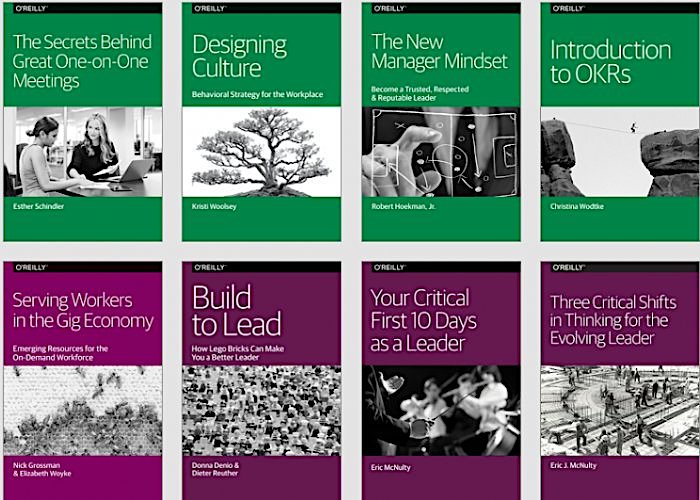
Download 240+ Free eBooks on Design, Data, Software, Web Development & Business from O’Reilly Media

Last year we high­light­ed for you 20 Free eBooks on Design from O’Reilly Media. Lit­tle did we know that we were just scratch­ing the sur­face of the free ebooks O’Reil­ly Media has to offer.

If you head over to this page, you can access 240+ free ebooks cov­er­ing a range of dif­fer­ent top­ics. Below, we’ve divid­ed the books into sec­tions (and pro­vid­ed links to them), indi­cat­ed the num­ber of books in each sec­tion, and list­ed a few attractive/representative titles.

You can down­load the books in PDF for­mat. An email address–but no cred­it card–is required. Again the com­plete list is here.

Note: An ear­li­er ver­sion of this post orig­i­nal­ly appeared on our site in Jan­u­ary 2017.

If you would like to sign up for Open Culture’s free email newslet­ter, please find it here. It’s a great way to see our new posts, all bun­dled in one email, each day.

If you would like to sup­port the mis­sion of Open Cul­ture, con­sid­er mak­ing a dona­tion to our site. It’s hard to rely 100% on ads, and your con­tri­bu­tions will help us con­tin­ue pro­vid­ing the best free cul­tur­al and edu­ca­tion­al mate­ri­als to learn­ers every­where. You can con­tribute through Pay­Pal, Patre­on, and Ven­mo (@openculture). Thanks!

Relat­ed Con­tent:

Down­load 20 Free eBooks on Design from O’Reilly Media

Read 700 Free eBooks Made Avail­able by the Uni­ver­si­ty of Cal­i­for­nia Press

A New Free eBook Every Month from the Uni­ver­si­ty of Chica­go Press

800 Free eBooks for iPad, Kin­dle & Oth­er Devices

by | Permalink | Make a Comment ( 2 ) |

Take Harvard’s Introductory Course on Buddhism, One of Five World Religions Classes Offered Free Online

A friend of mine describes her child­hood as, in part, resem­bling a real-world com­par­a­tive reli­gions course. Her broad-mind­ed moth­er encour­aged her to choose her own reli­gious iden­ti­ty, or none at all. This required her to do inde­pen­dent research, not only in libraries, but in the church­es, mosques, syn­a­gogues, and tem­ples of an unusu­al­ly reli­gious­ly diverse group of friends and acquain­tances. It’s an expe­ri­ence that dif­fers from that of most peo­ple, and one not with­out its own pressures—how does one know what to believe with­out an author­i­ty fig­ure to dic­tate, many may won­der?

She did just fine, acquir­ing con­sid­er­able under­stand­ing of world reli­gions while her­self set­tling on a Bud­dhist path, the only one of the big five, it seems, that encour­ages peo­ple to try out spir­i­tu­al meth­ods for them­selves and deter­mine what seems true or not. At least the Bud­dha sup­pos­ed­ly rec­om­mend­ed this in one “Sut­ta” (or “sutra”)—an ancient form of writ­ing prac­ticed by ear­ly Indi­an philo­soph­i­cal schools and a word whose mean­ing takes on a very mod­ern res­o­nance for 21st cen­tu­ry dig­i­tal read­ers: “thread.”

In the “Kala­ma Sut­ta,” which one trans­la­tor describes as “The Buddha’s Char­ter of Free Inquiry,” the reli­gious founder and for­mer prince attempts to set­tle reli­gious dis­putes by explain­ing to some per­plexed vil­lagers that one must use one’s own moral and intel­lec­tu­al rea­son­ing to find the truth. It’s a dis­course that cap­tures the Socrat­ic style of many Bud­dhist texts, and a famous one for West­ern­ers for obvi­ous rea­sons, but to say that it is rep­re­sen­ta­tive of all kinds of Bud­dhism would be myopic.

Bud­dhist scrip­tures “num­ber in the thou­sands,” says Pro­fes­sor Charles Hal­lisey of Har­vard Divin­i­ty School, mak­ing their study a hum­bling life­long activ­i­ty that can nev­er be exhaust­ed. “What you have is a dif­fer­ent phe­nom­e­non in which no one can ever say, ‘I know it all.’” Pro­fes­sor Hal­lisey leads a new online course from Harvard’s edX, which you can audit for free, called “Bud­dhism through its Scrip­tures.” The course looks at dis­tinc­tive prop­er­ties of this world reli­gion through sev­er­al impor­tant texts, his­tor­i­cal con­text, and com­men­tary from notable schol­ars like Thanis­saro Bhikkhu.

You can reg­is­ter now for Pro­fes­sor Hallisey’s fas­ci­nat­ing sur­vey course on Bud­dhist scrip­tures here. “Bud­dhism through its Scrip­tures” is one of five such rig­or­ous, yet high­ly acces­si­ble cours­es offered by edX, under the umbrel­la pro­gram “Reli­gious Lit­er­a­cy: Tra­di­tions and Scrip­tures” (see an intro­duc­to­ry video above), which offers stu­dents and spir­i­tu­al seek­ers a sym­pa­thet­ic yet schol­ar­ly overview of each of the largest world reli­gions: Chris­tian­i­tyIslamJudaismHin­duism  and Bud­dhism. These cours­es are designed and taught by accom­plished Har­vard pro­fes­sors, and they intro­duce stu­dents to his­tor­i­cal, the­o­log­i­cal, soci­o­log­i­cal, cul­tur­al, and tex­tu­al issues with­in each tra­di­tion.

The approach of these cours­es is summed up by Reli­gious Lit­er­a­cy Project Direc­tor Diane L. Moore in a doc­u­ment called “Our Method.” Reli­gious schol­ars, she writes, rec­og­nize “the valid­i­ty of nor­ma­tive the­o­log­i­cal asser­tions with­out equat­ing them with uni­ver­sal truths about the tra­di­tion itself.” One can study reli­gions with a crit­i­cal, yet char­i­ta­ble, eye, allow­ing them to speak for them­selves while remain­ing skep­ti­cal of their claims, and while acknowl­edg­ing their “full range of agency from the heinous to the hero­ic.” In his intro­duc­to­ry video lec­tures, Pro­fes­sor Hal­lisey admits this isn’t always easy.

It almost goes with­out say­ing, as he does say, that “con­ver­sa­tions about reli­gious mat­ters can be con­tentious, even painful—sometimes intense­ly so.” But like the best reli­gious teach­ers, Hal­lisey urges his stu­dents to think for them­selves, and to place the study of reli­gion “firm­ly in the Human­i­ties,” a dis­ci­pline in which “we not only… learn about oth­er men and women, but also… learn about our­selves…. When we look back at what has hap­pened to us, we can say that we ‘have grown.’” We can study some or all of the world reli­gions and have this expe­ri­ence, even if we end up adopt­ing none of them.

Sign up to take “Bud­dhism and its Scrip­tures” here, either as a free audit­ed course or for a Ver­i­fied Cer­tifi­cate for $50.

This course will be added to our col­lec­tion of Free Reli­gion Cours­es, a sub­set of our larg­er col­lec­tion 1,700 Free Online Cours­es from Top Uni­ver­si­ties.

Relat­ed Con­tent:

The Dalai Lama’s Intro­duc­tion to Bud­dhism

Bud­dhism 101: A Short Intro­duc­to­ry Lec­ture by Jorge Luis Borges

Free Online Reli­gion Cours­es 

Josh Jones is a writer and musi­cian based in Durham, NC. Fol­low him at @jdmagness

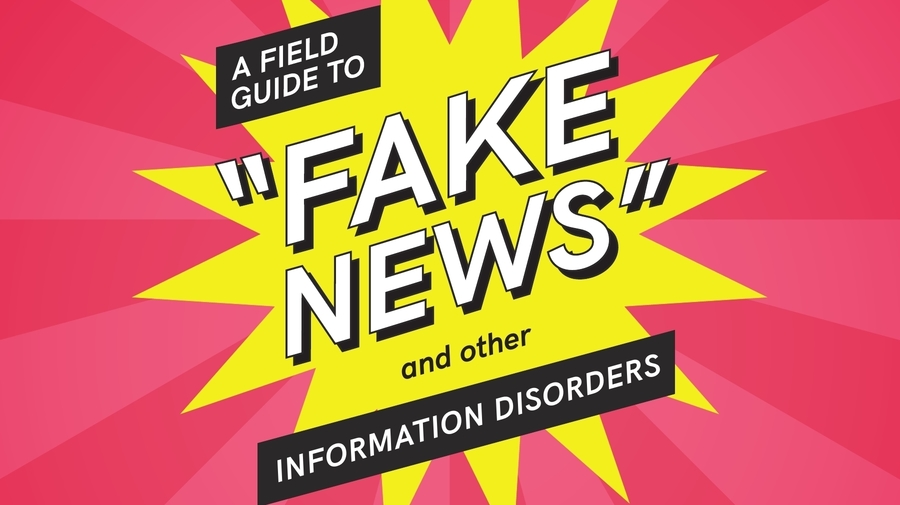
A Field Guide to Fake News and Other Information Disorders: A Free Manual to Download, Share & Re-Use

“Recent scan­dals about the role of social media in key polit­i­cal events in the US, UK and oth­er Euro­pean coun­tries over the past cou­ple of years have under­scored the need to under­stand the inter­ac­tions between dig­i­tal plat­forms, mis­lead­ing infor­ma­tion and pro­pa­gan­da, and their influ­ence on col­lec­tive life in democ­ra­cies,” writes First Draft, an online jour­nal pub­lished by Har­vard’s Shoren­stein Cen­ter on Media, Pol­i­tics and Pub­lic Pol­i­cy.

Hence comes A Field Guide to ‘Fake News’ and Oth­er Infor­ma­tion Dis­or­ders–a free man­u­al that helps “stu­dents, jour­nal­ists and researchers inves­ti­gate mis­lead­ing and viral con­tent, memes and trolling prac­tices online.” Packed with valu­able data visu­al­iza­tions, the man­u­al high­lights a “series of research pro­to­cols or ‘recipes’ that can be used to trace trolling prac­tices, the ways false viral news and memes cir­cu­late online, and the com­mer­cial under­pin­nings of prob­lem­at­ic con­tent.”

A Field Guide to ‘Fake News’ and Oth­er Infor­ma­tion Dis­or­ders was co-pro­duced by the Shoren­stein Cen­ter and the Pub­lic Data Lab. Because it’s pub­lished under a Cre­ative Com­mons License, you’re free to copy, redis­trib­ute and reuse the book. Beyond that, you can find all of the assets need­ed to trans­late and pub­lish the guide into oth­er lan­guages over on this GitHub page.

via First Draft

If you would like to sign up for Open Culture’s free email newslet­ter, please find it here. It’s a great way to see our new posts, all bun­dled in one email, each day.

If you would like to sup­port the mis­sion of Open Cul­ture, con­sid­er mak­ing a dona­tion to our site. It’s hard to rely 100% on ads, and your con­tri­bu­tions will help us con­tin­ue pro­vid­ing the best free cul­tur­al and edu­ca­tion­al mate­ri­als to learn­ers every­where. You can con­tribute through Pay­Pal, Patre­on, and Ven­mo (@openculture). Thanks!

Relat­ed Con­tent:

Han­nah Arendt Explains How Pro­pa­gan­da Uses Lies to Erode All Truth & Moral­i­ty: Insights from The Ori­gins of Total­i­tar­i­an­ism

Down­load Theft! A His­to­ry of Music, a New Free Graph­ic Nov­el Explor­ing 2,000 Years of Musi­cal Bor­row­ing

When Sovi­et Artists Turned Tex­tiles (Scarves, Table­cloths & Cur­tains) into Beau­ti­ful Pro­pa­gan­da in the 1920s & 1930s

Leni Riefenstahl’s Tri­umph of the Will Wasn’t a Cin­e­mat­ic Mas­ter­piece; It Was a Stag­ger­ing­ly Effec­tive Piece of Pro­pa­gan­da


“The Couch to 80k” Writing Boot Camp: Take a Free 8‑Week Podcast Course to Start Writing Fiction, or Even Finish a Novel

Image by Book Mama via Flickr Com­mons

We’ve all read fic­tion, but how to go about writ­ing it? Nobody has the defin­i­tive answer, and there, in the mul­ti­plic­i­ty of pos­si­ble approach­es, meth­ods, and frames of mind, lies both the chal­lenge and the fas­ci­na­tion of the craft. The Eng­lish writer Tim Clare, who before reach­ing forty years of age has pub­lished poet­ry, a mem­oir, and a nov­el as well as host­ed a tele­vi­sion series called How to Get a Book Deal, seems to know that full well. Hence the vari­ety of chal­lenges he’ll put you through in “The Couch to 80k” (80,000 words being the indus­try-stan­dard length of a nov­el), his free eight-week fic­tion-writ­ing “boot camp” avail­able for any­one to take free online.

Pro­duced as a part of Clare’s writ­ing-advice pod­cast Death of 1000 Cuts, the mini-series con­sists of 48 episodes, each of which, he says, “teach­es you new writ­ing skills through a 10 minute exer­cise – it even times you while you do the exer­cise, so once the pod­cast fin­ish­es, you’re done for the day. No home­work!”

You need only “some­thing to lis­ten to them on, and a pen and note­book or a lap­top, so you can write. The whole idea is to give you some­thing low com­mit­ment but intense, pack­ing in every­thing you’d learn on a Fic­tion MA and more, so every day you’re doing focused exer­cis­es that build upon your pre­vi­ous work and rapid­ly build your imag­i­na­tive mus­cles.”

Clare’s jokey, con­ver­sa­tion­al tone makes the course enter­tain­ing even if you don’t actu­al­ly want to write fic­tion, though Clare him­self, in the very first episode (above), cau­tions strong­ly against lis­ten­ing unless you’re ready to put pen to paper — and ready to con­sign every­thing you’ve writ­ten on that paper, through all eight weeks, straight to the recy­cle bin. Some of the chal­lenges Clare throws down may seem sil­ly, but they do get you writ­ing, and he under­girds the series with for­ays into more tech­ni­cal mat­ters like the “math­sy busi­ness of sen­tence com­po­si­tion” as well. Review­ing his nov­el Hon­ours, the Guardian’s Sarah Per­ry called Clare “a sto­ry­teller who knows what his read­er wants, and isn’t shy of giv­ing plen­ty of it.” As this boot camp reveals, he’s also a teacher who knows what his stu­dents need.

Enter the “The Couch to 80k” boot­camp here. And if you fol­low it through to com­ple­tion, “you’ll have the knowl­edge and the moti­va­tion to fin­ish a nov­el.”

via Metafil­ter

Relat­ed Con­tent:

William S. Bur­roughs Teach­es a Free Course on Cre­ative Read­ing and Writ­ing (1979)

The Dai­ly Habits of Famous Writ­ers: Franz Kaf­ka, Haru­ki Muraka­mi, Stephen King & More

Stephen King’s Top 20 Rules for Writ­ers

Sev­en Tips From Ernest Hem­ing­way on How to Write Fic­tion

John Updike’s Advice to Young Writ­ers: ‘Reserve an Hour a Day’

10 Writ­ing Tips from Leg­endary Writ­ing Teacher William Zinss­er

Judy Blume Now Teach­ing an Online Course on Writ­ing

Based in Seoul, Col­in Mar­shall writes and broad­casts on cities and cul­ture. His projects include the book The State­less City: a Walk through 21st-Cen­tu­ry Los Ange­les and the video series The City in Cin­e­ma. Fol­low him on Twit­ter at @colinmarshall or on Face­book.

Understanding Pink Floyd’s Wish You Were Here, Their Tribute to Departed Bandmate Syd Barrett

Since Dark Side of the Moon, the mem­bers of Pink Floyd dealt in var­i­ous ways with the fate of their orig­i­nal singer Syd Bar­rett. As Roger Waters said about the band in 1975, “It could­n’t have hap­pened with­out him, but on the oth­er hand, it could­n’t have gone on with him.” On Dark Side of the Moon, Bar­rett is not direct­ly addressed, but the themes of mad­ness swirl through the var­i­ous big state­ment songs and in the var­i­ous quotes from friends and road­ies pep­pered through­out the mix. Lat­er on, The Wall would bring lis­ten­ers a main char­ac­ter who goes mad and shuts him­self up in iso­la­tion exter­nal­ly and inter­nal­ly. Echoes of Syd are every­where.

And right in the mid­dle of that stretch is Wish You Were Here, both a direct trib­ute to Syd Bar­rett and a caus­tic mus­ing on the music busi­ness. The lat­ter both neg­a­tive­ly affect­ed the band at the time and, in some way, accel­er­at­ed Syd’s decline into (most prob­a­bly) schiz­o­phre­nia.

YouTube chan­nel Poly­phon­ic’s eight-minute overview of the album will intro­duce casu­al lis­ten­ers to the sto­ry behind the mak­ing of the album, and the lyrics that specif­i­cal­ly applied to Syd. “You were caught in the cross­fire of child­hood and star­dom” is one of many eulo­gies to their friend, the “crazy dia­mond” of the suite of songs that book­end the album.

The video, which includes clips from the BBC doc­u­men­tary on the mak­ing of the album cur­rent­ly stream­ing in var­i­ous venues (don’t blame us for the par­tic­u­lar poor qual­i­ty of this clip, espe­cial­ly the sub­ti­tles), also men­tions a vis­it that Bar­rett made to the Abbey Road Stu­dio. Bald, eye­brows shaved, and over­weight, the man was unrec­og­niz­able com­pared to the svelte, dark­ly hand­some lead singer they had known only a few years’ ear­li­er. It’s an emo­tion­al moment that only adds to the impact of this ghost­ly and melan­cholic album.

Relat­ed Con­tent:

When Pink Floyd Tried to Make an Album with House­hold Objects: Hear Two Sur­viv­ing Tracks Made with Wine Glass­es & Rub­ber Bands

Neil deGrasse Tyson: “Because of Pink Floyd, I’ve Spent Decades Undo­ing the Idea That There’s a Dark Side of the Moon”
Hear Lost Record­ing of Pink Floyd Play­ing with Jazz Vio­lin­ist Stéphane Grap­pel­li on “Wish You Were Here”

Ted Mills is a free­lance writer on the arts who cur­rent­ly hosts the artist inter­view-based FunkZone Pod­cast and is the pro­duc­er of KCR­W’s Curi­ous Coast. You can also fol­low him on Twit­ter at @tedmills, read his oth­er arts writ­ing at tedmills.com and/or watch his films here.

Theorist Judith Butler Explains How Behavior Creates Gender: A Short Introduction to “Gender Performativity”

“One is not born, but rather becomes, a woman,” wrote Simone de Beau­voir in one of the most famous artic­u­la­tions of the dif­fer­ence between sex and gen­der. By this, de Beau­voir does not mean us to believe that no one is born with repro­duc­tive organs, but that the social role of “woman” (or for that mat­ter “man”) comes from a col­lec­tion of behav­iors into which we are social­ized. The dis­tinc­tion is cru­cial for under­stand­ing most fem­i­nist and queer the­o­ry and the vari­ety of human iden­ti­ty more gen­er­al­ly, yet it’s one that too often gets lost in pop­u­lar usage of the words sex and gen­der. Biol­o­gy does not deter­mine gen­der dif­fer­ences, cul­ture does.

Gen­der becomes nat­u­ral­ized, woven so tight­ly into the social fab­ric that it seems like a nec­es­sary part of real­i­ty rather than a con­tin­gent pro­duc­tion of his­to­ry. Just how this hap­pens is complicated—we don’t invent these roles, they are invent­ed for us, as Judith But­ler argues in her essay “Per­for­ma­tive Acts and Gen­der Con­sti­tu­tion.”

Gen­der iden­ti­ty “is a per­for­ma­tive accom­plish­ment,” she writes, “com­pelled by social sanc­tion and taboo…. Gen­der is… an iden­ti­ty insti­tut­ed through a rep­e­ti­tion of acts.” For a some­what more straight­for­ward sum­ma­ry of her the­o­ry of “per­for­ma­tiv­i­ty,” see But­ler in the Big Think video above, in which she describes gen­der as a “phe­nom­e­non that’s being pro­duced all the time and repro­duced all the time.”

Still unclear? Well, it’s com­pli­cat­ed, but so is every oth­er facet of human iden­ti­ty many peo­ple take for grant­ed, espe­cial­ly peo­ple whose gen­der expres­sion doesn’t threat­en strict soci­etal norms. For a more thor­ough overview of these con­cepts, see the Phi­los­o­phy Tube video above, which explains Butler’s the­o­ry and a num­ber of oth­er terms cen­tral to the dis­course, such as “gen­der essen­tial­ism” and “social con­struc­tivism.” One thing to note about But­ler’s the­o­ry, as both she and our philoso­pher above explain, is that “per­for­ma­tiv­i­ty,” though it uses a the­atri­cal metaphor, is not the same as “per­for­mance.” Gen­der is not a cos­tume one puts on and takes off, like a Shake­speare­an actor play­ing male char­ac­ters one night and female char­ac­ters the next.

Rather, the tech­ni­cal term “per­for­ma­tive” means for But­ler an act that not only com­mu­ni­cates but also cre­ates an iden­ti­ty. Some exam­ples offered above of per­for­ma­tive speech include say­ing “guilty” at a tri­al, which turns one into an inmate, or say­ing “I do” at a wed­ding, which turns one into a spouse. Per­for­ma­tive acts of gen­der do a sim­i­lar kind of work, not only com­mu­ni­cat­ing to oth­ers some aspect of iden­ti­ty, but con­struct­ing that very iden­ti­ty, only they do that work through rep­e­ti­tion. As de Beau­voir argued, we are not born a self, we become, or cre­ate, a self, through social pres­sure to con­form and through “reit­er­at­ing and repeat­ing the norms through which one is con­sti­tut­ed,” But­ler writes.

As we might expect of any cul­tur­al con­struct, gen­der norms vary wide­ly both inter- and intra-cul­tur­al­ly and through­out his­tor­i­cal peri­ods. And giv­en their con­struct­ed nature, they can change in any num­ber of ways. There­fore, accord­ing to But­ler, “there’s not real­ly any grounds,” as our phi­los­o­phy explain­er puts it, “for say­ing that somebody’s ‘doing their gen­der wrong.’”

Relat­ed Con­tent:

Judy!: 1993 Judith But­ler Fanzine Gives Us An Irrev­er­ent Punk-Rock Take on the Post-Struc­tural­ist Gen­der The­o­rist

An Ani­mat­ed Intro­duc­tion to the Fem­i­nist Phi­los­o­phy of Simone de Beau­voir

11 Essen­tial Fem­i­nist Books: A New Read­ing List by The New York Pub­lic Library

Josh Jones is a writer and musi­cian based in Durham, NC. Fol­low him at @jdmagness

How the Brilliant Colors of Medieval Illuminated Manuscripts Were Made with Alchemy

Today the word “alche­my” seems used pri­mar­i­ly to label a vari­ety of crack­pot pur­suits, with their bogus premis­es and impos­si­ble promis­es. To the extent that alchemists long strove to turn lead mirac­u­lous­ly into gold, that sounds like a fair enough charge, but the field of alche­my as a whole, whose his­to­ry runs from Hel­lenis­tic Egypt to the 18th cen­tu­ry (with a revival in the 19th), chalked up a few last­ing, real­i­ty-based accom­plish­ments as well. Take, for instance, medieval illu­mi­nat­ed man­u­scripts: with­out alche­my, they would­n’t have the vivid and var­ied col­or palettes that con­tin­ue to enrich our own vision of that era.

Many of the illu­mi­na­tors’ most bril­liant pig­ments “did­n’t come straight from nature but were made through alche­my,” says the video from the Get­ty above, pro­duced to accom­pa­ny the muse­um’s exhi­bi­tion “The Alche­my of Col­or in Medieval Man­u­scripts.”

Alchemists “explored how mate­ri­als inter­act­ed and trans­formed,” and “dis­cov­er­ing paint col­ors was a prac­ti­cal out­come.” The col­ors they devel­oped includ­ed “mosa­ic gold,” a fusion of tin and sul­fur; verdi­gris, “made by expos­ing cop­per to fumes of vine­gar, wine, or even urine”; and ver­mil­lion, a mix­ture of sul­fur and mer­cury that made a bril­liant red “asso­ci­at­ed with chem­i­cal change and with alche­my itself.”

The very nature of books, specif­i­cal­ly the fact that they spend most of the time closed, has per­formed a degree of inad­ver­tent preser­va­tion of illu­mi­nat­ed man­u­scripts, keep­ing their alchem­i­cal col­ors rel­a­tive­ly bold and deep. (Although, as the Get­ty video notes, some pig­ments such as verdi­gris have a ten­den­cy to eat through the paper — one some­how wants to blame the urine.) Still, that hard­ly means that preser­va­tion­ists have noth­ing to do where illu­mi­nat­ed man­u­scripts are con­cerned: keep­ing the win­dows they pro­vide onto the his­to­ries of art, the book, and human­i­ty clear takes work, some of it based on an ever-improv­ing under­stand­ing of alche­my. Lead may nev­er turn into gold, but these cen­turies-old illu­mi­nat­ed man­u­scripts may sur­vive cen­turies into the future, a fact that seems not entire­ly un-mirac­u­lous itself.

Relat­ed Con­tent:

Behold the Beau­ti­ful Pages from a Medieval Monk’s Sketch­book: A Win­dow Into How Illu­mi­nat­ed Man­u­scripts Were Made (1494)

The Aberdeen Bes­tiary, One of the Great Medieval Illu­mi­nat­ed Man­u­scripts, Now Dig­i­tized in High Res­o­lu­tion & Made Avail­able Online

1,600-Year-Old Illu­mi­nat­ed Man­u­script of the Aeneid Dig­i­tized & Put Online by The Vat­i­can

Dante’s Divine Com­e­dy Illus­trat­ed in a Remark­able Illu­mi­nat­ed Medieval Man­u­script (c. 1450)

Won­der­ful­ly Weird & Inge­nious Medieval Books

1,000-Year-Old Illus­trat­ed Guide to the Med­i­c­i­nal Use of Plants Now Dig­i­tized & Put Online

Based in Seoul, Col­in Mar­shall writes and broad­casts on cities and cul­ture. His projects include the book The State­less City: a Walk through 21st-Cen­tu­ry Los Ange­les and the video series The City in Cin­e­ma. Fol­low him on Twit­ter at @colinmarshall or on Face­book.

Bill Gates Names His New Favorite Book of All Time: A Quick Introduction to Steven Pinker’s Enlightenment Now

How’s this for a nice book blurb?

In a recent blog post, Microsoft co-founder and phil­an­thropist Bill Gates wrote this:

For years, I’ve been say­ing Steven Pinker’s The Bet­ter Angels of Our Nature was the best book I’d read in a decade. If I could rec­om­mend just one book for any­one to pick up, that was it. Pinker uses metic­u­lous research to argue that we are liv­ing in the most peace­ful time in human his­to­ry. I’d nev­er seen such a clear expla­na­tion of progress.

I’m going to stop talk­ing up Bet­ter Angels so much, because Pinker has man­aged to top him­self. His new book, Enlight­en­ment Now, is even bet­ter.

Enlight­en­ment Now takes the approach he uses in Bet­ter Angels to track vio­lence through­out his­to­ry and applies it to 15 dif­fer­ent mea­sures of progress (like qual­i­ty of life, knowl­edge, and safe­ty). The result is a holis­tic pic­ture of how and why the world is get­ting bet­ter. It’s like Bet­ter Angels on steroids.

Although the book won’t get offi­cial­ly released until Feb­ru­ary 13th, Pinker’s Enlight­en­ment Now is already one of the 20 best­selling books on Amazon–no doubt part­ly thanks to Bill Gates. If you’re look­ing to get dis­abused of the wide­ly-shared belief that the world is mov­ing in the wrong direc­tion,  you might want to pick up your own copy. (Soon, you could also down­load it as a free audio­book through Audible.com’s free tri­al pro­gram.)

For a deep­er dive into Enlight­en­ment Now watch the video above, and par­tic­u­lar­ly read Gates’s review of what he calls “my new favorite book of all time.”

If you would like to sign up for Open Culture’s free email newslet­ter, please find it here. It’s a great way to see our new posts, all bun­dled in one email, each day.

If you would like to sup­port the mis­sion of Open Cul­ture, con­sid­er mak­ing a dona­tion to our site. It’s hard to rely 100% on ads, and your con­tri­bu­tions will help us con­tin­ue pro­vid­ing the best free cul­tur­al and edu­ca­tion­al mate­ri­als to learn­ers every­where. You can con­tribute through Pay­Pal, Patre­on, and Ven­mo (@openculture). Thanks!

Relat­ed Con­tent:

Steven Pinker Explains the Neu­ro­science of Swear­ing (NSFW)

Bill Gates Rec­om­mends Five Books for Sum­mer 2017

Steven Pinker on the His­to­ry of Vio­lence: A Hap­py Tale

by | Permalink | Make a Comment ( 1 ) |

« Go BackMore in this category... »
Quantcast