Western Music Moves in Three and Even Four (!) Dimensional Spaces: How the Pioneering Research of Princeton Theorist Dmitri Tymoczko Helps Us Visualize Music in Radical, New Ways

Every musi­cian has some basic sense of how math and music relate con­cep­tu­al­ly through geom­e­try, in the cir­cu­lar and tri­adic shapes formed by clus­ters of notes when grouped togeth­er in chords and scales. The con­nec­tions date back to the work of Pythago­ras, and com­posers who explore and exploit those con­nec­tions hap­pen upon pro­found, some­times mys­ti­cal, insights. For exam­ple, the two-dimen­sion­al geom­e­try of music finds near-reli­gious expres­sion in the com­po­si­tion­al strate­gies of John Coltrane, who left behind dia­grams of his chro­mat­ic mod­u­la­tion that the­o­rists still puz­zle over and find inspir­ing. It will be inter­est­ing to see what imag­i­na­tive com­posers do with a the­o­ry that extends the geom­e­try of music into three—and even four (!)—dimen­sions.

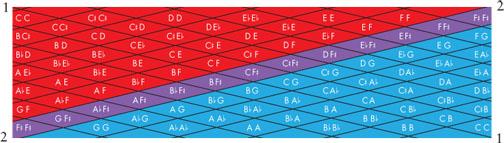
Pio­neer­ing Prince­ton Uni­ver­si­ty music the­o­rist and com­pos­er Dmitri Tymoczko has made dis­cov­er­ies that allow us to visu­al­ize music in entire­ly new ways. He began with the insight that two-note chords on the piano could form a Möbius strip, as Prince­ton Alum­ni Week­ly report­ed in 2011, a two-dimen­sion­al sur­face extend­ed into three-dimen­sion­al space. (See one such Möbius strip dia­gram above.) “Music is not just some­thing that can be heard, he real­ized. It has a shape.”

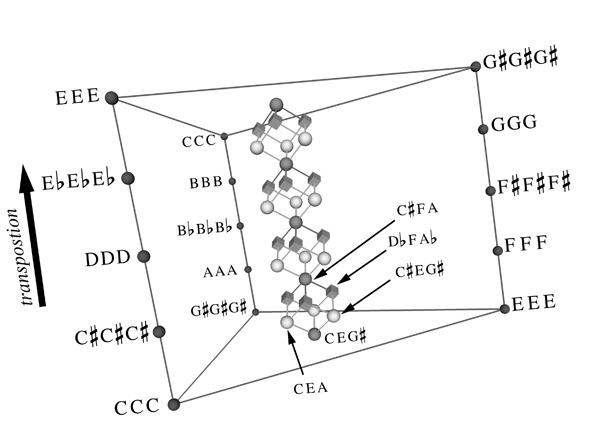
He soon saw that he could trans­form more com­plex chords the same way. Three-note chords occu­py a twist­ed three-dimen­sion­al space, and four-note chords live in a cor­re­spond­ing but impos­si­ble-to-visu­al­ize four-dimen­sion­al space. In fact, it worked for any num­ber of notes — each chord inhab­it­ed a mul­ti­di­men­sion­al space that twist­ed back on itself in unusu­al ways — a non-Euclid­ean space that does not adhere to the clas­si­cal rules of geom­e­try. 

Tymoczko dis­cov­ered that musi­cal geom­e­try (as Coltrane—and Ein­stein—had ear­li­er intu­it­ed) has a close rela­tion­ship to physics, when a physi­cist friend told him the mul­ti­di­men­sion­al spaces he was explor­ing were called “orb­ifolds,” which had found some appli­ca­tion “in arcane areas of string the­o­ry.” These dis­cov­er­ies have “phys­i­cal­ized” music, pro­vid­ing a way to “con­vert melodies and har­monies into move­ments in high­er dimen­sion­al spaces.”

This work has caused “quite a buzz in Anglo-Amer­i­can music-the­o­ry cir­cles,” says Prince­ton music his­to­ri­an Scott Burn­ham. As Tymoczko puts it in his short report “The Geom­e­try of Musi­cal Chords,” the “orb­ifold” the­o­ry seems to answer a ques­tion that occu­pied music the­o­rists for cen­turies: “how is it that West­ern music can sat­is­fy har­mon­ic and con­tra­pun­tal con­straints at once?” On his web­site, he out­lines his the­o­ry of “macro­har­mon­ic con­sis­ten­cy,” the com­po­si­tion­al con­straints that make music sound “good.” He also intro­duces a soft­ware appli­ca­tion, Chord­Ge­ome­tries 1.1, that cre­ates com­plex visu­al­iza­tions of musi­cal “orb­ifolds” like that you see above of Chopin sup­pos­ed­ly mov­ing through four-dimen­sions.

The the­o­rist first pub­lished his work in a 2006 issue of Sci­ence, then fol­lowed up two years lat­er with a paper co-writ­ten with Clifton Cal­len­dar and Ian Quinn called “Gen­er­al­ized Voice-Lead­ing Spaces” (read a three-page sum­ma­ry here). Final­ly, he turned his work into a book, A Geom­e­try of Music: Har­mo­ny and Coun­ter­point in the Extend­ed Com­mon Prac­tice, which explores the geo­met­ric con­nec­tions between clas­si­cal and mod­ernist com­po­si­tion, jazz, and rock. Those con­nec­tions have nev­er been sole­ly con­cep­tu­al for Tymoczko. A long­time fan of Coltrane, as well as Talk­ing Heads, Bri­an Eno, and Stravin­sky, he has put his the­o­ry into prac­tice in a num­ber of strange­ly mov­ing com­po­si­tions of his own, such as The Agony of Mod­ern Music (hear move­ment one above) and Straw­ber­ry Field The­o­ry (move­ment one below). His com­po­si­tion­al work is as nov­el-sound­ing as his the­o­ret­i­cal work is bril­liant: his two Sci­ence pub­li­ca­tions were the first on music the­o­ry in the magazine’s 129-year his­to­ry. It’s well worth pay­ing close atten­tion to where his work, and that of those inspired by it, goes next.

via Prince­ton Alum­ni Week­ly/@dark_shark

Relat­ed Con­tent:

John Coltrane Draws a Mys­te­ri­ous Dia­gram Illus­trat­ing the Math­e­mat­i­cal & Mys­ti­cal Qual­i­ties of Music

The Musi­cal Mind of Albert Ein­stein: Great Physi­cist, Ama­teur Vio­lin­ist and Devo­tee of Mozart

The Secret Link Between Jazz and Physics: How Ein­stein & Coltrane Shared Impro­vi­sa­tion and Intu­ition in Com­mon

Josh Jones is a writer and musi­cian based in Durham, NC. Fol­low him at @jdmagness

The Psychological & Neurological Disorders Experienced by Characters in Alice in Wonderland: A Neuroscience Reading of Lewis Carroll’s Classic Tale

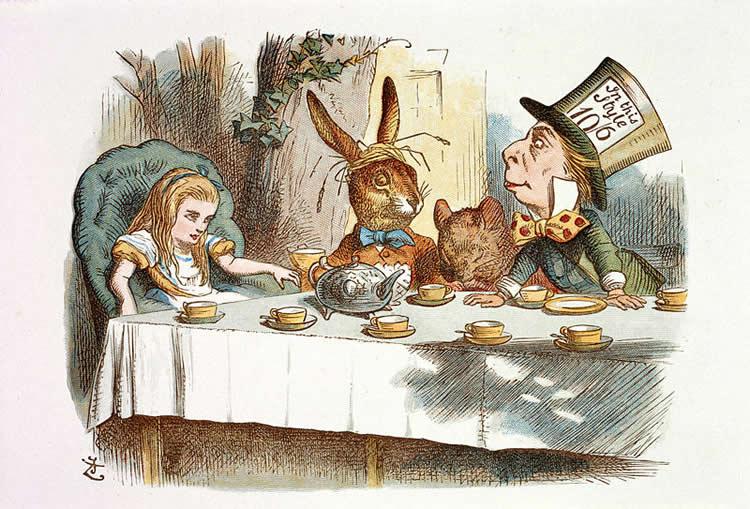
Most rep­utable doc­tors tend to refrain from diag­nos­ing peo­ple they’ve nev­er met or exam­ined. Unfor­tu­nate­ly, this cir­cum­spec­tion does­n’t obtain as often among lay folk. When we lob unin­formed diag­noses at oth­er peo­ple, we may do those with gen­uine men­tal health issues a seri­ous dis­ser­vice. But what about fic­tion­al char­ac­ters? Can we ascribe men­tal ill­ness­es to the sur­re­al menagerie, say, in Lewis Carroll’s Alice’s Adven­tures in Won­der­land? It’s almost impos­si­ble not to, giv­en the overt themes of mad­ness in the sto­ry.

Car­roll him­self, it seems, drew many of his depic­tions direct­ly from the treat­ment of men­tal dis­or­ders in 19th cen­tu­ry Eng­land, many of which were linked to “extreme­ly poor work­ing con­di­tions,” notes Franziska Kohlt at The Con­ver­sa­tion. Dur­ing the indus­tri­al rev­o­lu­tion, “pop­u­la­tions in so-called ‘pau­per lunatic asy­lums’ for the work­ing class sky­rock­et­ed.” Carroll’s uncle, Robert Wil­fred Skeff­in­g­ton Lutwidge, hap­pened to be an offi­cer of the Luna­cy Com­mis­sion, which super­vised such insti­tu­tions, and his work offers “stun­ning insights into the mad­ness in Alice.”

Yet we should be care­ful. Like the sup­posed drug ref­er­ences in Alice, some of the lay diag­noses now applied to Alice’s char­ac­ters may be a lit­tle far-fetched. Do we real­ly see diag­nos­able PTSD or Tourette’s? Anx­i­ety Dis­or­der and Nar­cis­sis­tic Per­son­al­i­ty Dis­or­der? These con­di­tions hadn’t been cat­e­go­rized in Carroll’s day, though their symp­toms are noth­ing new. And yet, experts have long looked to his non­sense fable for its depic­tions of abnor­mal psy­chol­o­gy. One British psy­chi­a­trist didn’t just diag­nose Alice, he named a con­di­tion after her.

In 1955, Dr. John Todd coined the term Alice in Won­der­land Syn­drome (AIWS) to describe a rare con­di­tion in which—write researchers in the Jour­nal of Pedi­atric Neu­ro­sciences—“the sizes of body parts or sizes of exter­nal objects are per­ceived incor­rect­ly.” Among oth­er ill­ness­es, Alice in Won­der­land Syn­drome may be linked to migraines, which Car­roll him­self report­ed­ly suf­fered.

We might jus­ti­fi­ably assume the Mad Hat­ter has mer­cury poi­son­ing, but what oth­er dis­or­ders might the text plau­si­bly present? Hol­ly Bark­er, doc­tor­al can­di­date in clin­i­cal neu­ro­science at King’s Col­lege Lon­don, has used her schol­ar­ly exper­tise to iden­ti­fy and describe in detail two oth­er con­di­tions she thinks are evi­dent in Alice.

Deper­son­al­iza­tion:

“At sev­er­al points in the sto­ry,” writes Bark­er, “Alice ques­tions her own iden­ti­ty and feels ‘dif­fer­ent’ in some way from when she first awoke.” See­ing in these descrip­tions the symp­toms of Deper­son­al­iza­tion Dis­or­der (DPD), Bark­er describes the con­di­tion and its loca­tion in the brain.

This dis­or­der encom­pass­es a wide range of symp­toms, includ­ing feel­ings of not belong­ing in one’s own body, a lack of own­er­ship of thoughts and mem­o­ries, that move­ments are ini­ti­at­ed with­out con­scious inten­tion and a numb­ing of emo­tions. Patients often com­ment that they feel as though they are not real­ly there in the present moment, liken­ing the expe­ri­ence to dream­ing or watch­ing a movie. These symp­toms occur in the absence of psy­chosis, and patients are usu­al­ly aware of the absur­di­ty of their sit­u­a­tion. DPD is often a fea­ture of migraine or epilep­tic auras and is some­times expe­ri­enced momen­tar­i­ly by healthy indi­vid­u­als, in response to stress, tired­ness or drug use.

Also high­ly asso­ci­at­ed with child­hood abuse and trau­ma, the con­di­tion “acts as a sort of defense mech­a­nism, allow­ing an indi­vid­ual to become dis­con­nect­ed from adverse life events.” Per­haps there is PTSD in Carroll’s text after all, since an esti­mat­ed 51% of DPD patients also meet those cri­te­ria.

Prosopag­nosia:

This con­di­tion is char­ac­ter­ized by “the selec­tive inabil­i­ty to rec­og­nize faces.” Though it can be hered­i­tary, prosopag­nosia can also result from stroke or head trau­ma. Fit­ting­ly, the char­ac­ter sup­pos­ed­ly affect­ed by it is none oth­er than Hump­ty-Dump­ty, who tells Alice “I shouldn’t know you again if we did meet.”

“Your face is the same as every­body else has – the two eyes, so-” (mark­ing their places in the air with his thumb) “nose in the mid­dle, mouth under. It’s always the same. Now if you had two eyes on the same side of the nose, for instance – or the mouth at the top – that would be some help.”

This “pre­cise descrip­tion” of prosopag­nosia shows how indi­vid­u­als with the con­di­tion rely on par­tic­u­lar­ly “dis­crim­i­nat­ing fea­tures to tell peo­ple apart,” since they are unable to dis­tin­guish fam­i­ly mem­bers and close friends from total strangers.

Schol­ars know that Carroll’s text con­tains with­in it sev­er­al abstract and seem­ing­ly absurd math­e­mat­i­cal con­cepts, such as imag­i­nary num­bers and pro­jec­tive geom­e­try. The work of researchers like Kohit and Bark­er shows that Alice’s Adven­tures in Won­der­land might also present a com­plex 19th cen­tu­ry under­stand­ing of men­tal ill­ness and neu­ro­log­i­cal dis­or­ders, con­veyed in a super­fi­cial­ly sil­ly way, but pos­si­bly informed by seri­ous research and obser­va­tion. Read Barker’s arti­cle in full here to learn more about the con­di­tions she diag­noses.

Relat­ed Con­tent:

Lewis Carroll’s Pho­tographs of Alice Lid­dell, the Inspi­ra­tion for Alice in Won­der­land

See The Orig­i­nal Alice In Won­der­land Man­u­script, Hand­writ­ten & Illus­trat­ed By Lewis Car­roll (1864)

See Sal­vador Dali’s Illus­tra­tions for the 1969 Edi­tion of Alice’s Adven­tures in Won­der­land

Josh Jones is a writer and musi­cian based in Durham, NC. Fol­low him at @jdmagness.

What is the Secret to Living a Long, Happy & Creatively Fulfilling Life?: Discover the Japanese Concept of Ikigai

Ikiru, one of sev­er­al Aki­ra Kuro­sawa films rou­tine­ly described as a mas­ter­piece, tells the sto­ry of Kan­ji Watan­abe, a mid­dle-aged wid­ow­er who, three decades into a dead-end bureau­crat­ic career, finds out he has just one year to live. This sends him on an urgent eleventh-hour quest to find some­thing to live for. The pic­ture’s The Death of Ivan Ilyich-inspired script orig­i­nal­ly bore the title The Life of Kan­ji Watan­abe, but Kuro­sawa chose to rename it for the Japan­ese verb mean­ing “to live” (生きる). And any­one who wants to tru­ly ikiru needs an iki­gai.

A com­bi­na­tion of char­ac­ters from the Japan­ese words for “liv­ing” and “effect” or “worth,” iki­gai (生き甲斐) as a con­cept has recent­ly come to atten­tion in the West, not least because of last year’s best­seller Iki­gai: The Japan­ese Secret to a Long and Hap­py Life by Héc­tor Gar­cía and‎ Francesc Miralles. (Note: You can get the best­seller as a free audio book if you sign up for Audi­ble’s 30-day free tri­al pro­gram. Get details on that here.)

Writer on health and longevi­ty Dan Buet­tner has also done his bit to pro­mote iki­gai, inter­pret­ing it as “the rea­son for which you wake up in the morn­ing” in a TED Talk based on his research in the places with the longest-lived pop­u­la­tions in the world, a group that includes the Japan­ese island of Oki­nawa.

“For this 102-year-old karate mas­ter, his iki­gai was car­ry­ing forth this mar­tial art,” Buet­tner says of one Oki­nawan in par­tic­u­lar. “For this hun­dred-year-old fish­er­man it was con­tin­u­ing to catch fish for his fam­i­ly three times a week.” He notes that “the two most dan­ger­ous years in your life are the year you’re born, because of infant mor­tal­i­ty, and the year you retire. These peo­ple know their sense of pur­pose, and they acti­vate it in their life, that’s worth about sev­en years of extra life expectan­cy.” This phe­nom­e­non has also come under sci­en­tif­ic study: one paper pub­lished in Psy­cho­so­mat­ic Med­i­cine found, track­ing a group of more than 40,000 Japan­ese adults over sev­en years, “sub­jects who did not find a sense of iki­gai were asso­ci­at­ed with an increased risk of all-cause mor­tal­i­ty.”

We in the West have long looked to the tra­di­tion­al con­cepts of oth­er cul­tures for guid­ance, but the Japan­ese them­selves, a pop­u­la­tion among whom dis­sat­is­fac­tion with life is not unknown, have long scru­ti­nized iki­gai to draw out use­ful lessons. “There are many books in Japan devot­ed to iki­gai, but one in par­tic­u­lar is con­sid­ered defin­i­tive: Iki­gai-ni-tsuite (About Iki­gai), pub­lished in 1966,” writes the BBC’s Yukari Mit­suhashi. “The book’s author, psy­chi­a­trist Mieko Kamiya, explains that as a word, iki­gai is sim­i­lar to ‘hap­pi­ness’ but has a sub­tle dif­fer­ence in its nuance. Iki­gai is what allows you to look for­ward to the future even if you’re mis­er­able right now.”

Aki­ra Kuro­sawa, who paint­ed his movies when he could­n’t find the mon­ey to shoot them, stands as a tow­er­ing exam­ple of some­one who found his iki­gai in film­mak­ing, which he kept on doing it into his eight­ies. In Ikiru, he guides the bewil­dered Watan­abe into an encounter with iki­gai in the form of a young lady who quits her job in his office to make toy rab­bits: more ardu­ous work than the civ­il ser­vice, she admits, but it gives her a sense of sat­is­fac­tion that feels like play­ing with every child in Japan. This inspires Watan­abe to return to find his own iki­gai, if only at the very end of his life, in cam­paign­ing for the con­struc­tion of a neigh­bor­hood play­ground. But one year with iki­gai, if you believe in the pow­er of the con­cept, beats a cen­tu­ry with­out it.

Relat­ed Con­tent:

“Inemuri,” the Japan­ese Art of Tak­ing Pow­er Naps at Work, on the Sub­way, and Oth­er Pub­lic Places

Wabi-Sabi: A Short Film on the Beau­ty of Tra­di­tion­al Japan

How a Kore­an Pot­ter Found a “Beau­ti­ful Life” Through His Art: A Short, Life-Affirm­ing Doc­u­men­tary

Change Your Life! Learn the Japan­ese Art of Declut­ter­ing, Orga­niz­ing & Tidy­ing Things Up

How the Japan­ese Prac­tice of “For­est Bathing”—Or Just Hang­ing Out in the Woods—Can Low­er Stress Lev­els and Fight Dis­ease

Based in Seoul, Col­in Mar­shall writes and broad­casts on cities and cul­ture. His projects include the book The State­less City: a Walk through 21st-Cen­tu­ry Los Ange­les and the video series The City in Cin­e­ma. Fol­low him on Twit­ter at @colinmarshall or on Face­book.

What Shakespeare’s English Sounded Like, and How We Know It

A com­mon joke has Amer­i­cans over­awed by peo­ple with British accents. It’s fun­ny because it’s part­ly true; Yanks can grant undue author­i­ty to peo­ple who sound like Sir David Atten­bor­ough or Bene­dict Cum­ber­batch. But in these cas­es, what we gener­i­cal­ly call a British accent should more accu­rate­ly be referred to as “Received Pro­nun­ci­a­tion” (or RP), the speech of BBC pre­sen­ters and edu­cat­ed Brits from cer­tain mid­dle- and upper-class areas in South­ern Eng­land. (If you like Received Pro­nun­ci­a­tion, you’re going to love “posh” Upper RP.) Received Pro­nun­ci­a­tion is only one of many British accents, as come­di­an Siob­han Thomp­son shows, most of which we’re unlike­ly to hear nar­rat­ing nature doc­u­men­taries.

RP is also some­times called “the Shake­speare accent,” for its asso­ci­a­tion with famous thes­pi­ans like John Giel­gud and Lau­rence Olivi­er, or Ian McK­ellen and Patrick Stew­art. But as we’ve pre­vi­ous­ly not­ed in a post on the work of lin­guist David Crys­tal and his son, actor Ben Crys­tal, the Eng­lish of Shakespeare’s day sound­ed noth­ing like what we typ­i­cal­ly hear on stage and screen.

What lin­guists call “Orig­i­nal Pro­nun­ci­a­tion” (OP), the actu­al Shake­speare accent, had a fla­vor all its own, like­ly com­bin­ing, to our mod­ern ears, “flecks of near­ly every region­al U.K. Eng­lish accent,” as Ben Crys­tal tells NPR, “and indeed Amer­i­can and in fact Aus­tralian, too.”

You can see the Crys­tals explain and demon­strate the accent in the video above, and make sense of many Shake­speare­an puns that only work in OP. And in the ani­mat­ed video at the top of the post, get a whirl­wind tour from Chaucer’s Mid­dle Eng­lish to Shakespeare’s Ear­ly Mod­ern vari­ety. Along the way, you’ll learn why the spelling of Eng­lish words—both Amer­i­can and British—is so con­fus­ing and irreg­u­lar. (“Knight,” for exam­ple, which makes no sense when pro­nounced as nite, was once pro­nounced much more pho­net­i­cal­ly.) The range of region­al accents pro­duced a bed­lam of vari­ant spellings, which took a few hun­dred years to stan­dard­ize dur­ing some intense spelling debates.

You’ll get an intro­duc­tion to the first Eng­lish print­er, William Cax­ton, and the “Great Vow­el Shift” which changed the language’s sound dra­mat­i­cal­ly over the course of a cou­ple hun­dred years. Once we get to Shake­speare and his “Orig­i­nal Pro­nun­ci­a­tion,” we can see how rhymes that don’t scan for us sound­ed just right to Eliz­a­bethan ears. These lost rhymes pro­vide a sig­nif­i­cant clue for lin­guists who recon­struct OP, as does meter and the sur­vival of old­er pro­nun­ci­a­tions in cer­tain dialects.

When the Crys­tals brought their recon­struc­tion of Shakespeare’s Eng­lish to the stage in huge­ly pop­u­lar pro­duc­tions at the Globe The­atre, mem­bers of the audi­ence all heard some­thing slight­ly different—their many dif­fer­ent dialects reflect­ed back at them. Lis­ten for all the var­i­ous kinds of Eng­lish above in Ben Crys­tal’s recita­tion of Hamlet’s “to be, or not to be” speech in Orig­i­nal Pro­nun­ci­a­tion.

Relat­ed Con­tent:

Hear What Shake­speare Sound­ed Like in the Orig­i­nal Pro­nun­ci­a­tion

A 68 Hour Playlist of Shakespeare’s Plays Being Per­formed by Great Actors: Giel­gud, McK­ellen & More

Hear What Ham­let, Richard III & King Lear Sound­ed Like in Shakespeare’s Orig­i­nal Pro­nun­ci­a­tion

Josh Jones is a writer and musi­cian based in Durham, NC. Fol­low him at @jdmagness

David Byrne Launches the “Reasons to Be Cheerful” Web Site: A Compendium of News Meant to Remind Us That the World Isn’t Actually Falling Apart

What­ev­er your ide­o­log­i­cal per­sua­sion, our time has no doubt giv­en you more than a few rea­sons to fear for the future of civ­i­liza­tion, not least because bad news sells. Musi­cian, artist, and for­mer Talk­ing Heads front­man David Byrne has cer­tain­ly felt the effects: “It seems like the world is going to Hell. I wake up in the morn­ing, look at the paper, and go, ‘Oh no!’,” he writes. “Often I’m depressed for half the day.” But he writes that on the front page of his new project Rea­sons to Be Cheer­ful, which began as a qua­si-ther­a­peu­tic col­lec­tion of pieces of “good news that remind­ed me, ‘Hey, there’s actu­al­ly some pos­i­tive stuff going on!’ ” and has grown into an online obser­va­to­ry of world improve­ment.

What kind of pos­i­tive stuff has Byrne found? He iden­ti­fies cer­tain com­mon qual­i­ties among the sto­ries that have caught his eye: “Almost all of these ini­tia­tives are local, they come from cities or small regions who have tak­en it upon them­selves to try some­thing that might offer a bet­ter alter­na­tive than what exists.” These adjust­ments to the human con­di­tion tend to devel­op in a “bot­tom up, com­mu­ni­ty and indi­vid­u­al­ly dri­ven” man­ner, they hap­pen all over the world but could poten­tial­ly work in any cul­ture, all “have been tried and proven to be suc­cess­ful” and “can be copied and scaled up” with­out the sin­gu­lar efforts of “one amaz­ing teacher, doc­tor, musi­cian or activist.”

The sto­ries col­lect­ed so far on Rea­sons to Be Cheer­ful fall into sev­er­al dif­fer­ent cat­e­gories. In Civic Engage­ment, for exam­ple, he’s found a vari­ety of effec­tive exam­ples of that prac­tice in his trav­els back and forth across the Unit­ed States. In Health, he writes about efforts to end the war on drugs in places like Van­cou­ver, Col­orado, and Por­tu­gal. As any­one who’s fol­lowed Byrne’s writ­ing and speak­ing about cycling and the infra­struc­ture that sup­ports it might imag­ine, this side also includes a sec­tion called Urban/Transportation, whose first post deals with the glob­al influ­ence of bike share sys­tems like Paris’ Velib and bike-only street-clo­sure days like Bogotá’s Ciclovia.

In Cul­ture, Byrne writes about the rise of a form of music called AfroReg­gae that offers an alter­na­tive to a life of crime for the youth of Brazil’s fave­las, the dis­tinc­tive libraries estab­lished at the end of Bogotá’s rapid bus lines and in poor parts of Medel­lín, and even some of his own work relat­ed to the record­ing and tour design of his own upcom­ing album Amer­i­can UtopiaAmer­i­can Utopia in the year 2018? That might sound awful­ly opti­mistic, but remem­ber that David Byrne is the man who once went on an artis­tic speak­ing tour about his love of Pow­er­point. If he can see the good in that, he can see the good in any­thing.

Vis­it Byrne’s Rea­sons to Be Cheer­ful site here.

Relat­ed Con­tent:

David Byrne’s Grad­u­a­tion Speech Offers Trou­bling and Encour­ag­ing Advice for Stu­dents in the Arts

David Byrne: From Talk­ing Heads Front­man to Lead­ing Urban Cyclist

The Phi­los­o­phy of “Opti­mistic Nihilism,” Or How to Find Pur­pose in a Mean­ing­less Uni­verse

The Pow­er of Pes­simism: Sci­ence Reveals the Hid­den Virtues in Neg­a­tive Think­ing

Based in Seoul, Col­in Mar­shall writes and broad­casts on cities and cul­ture. His projects include the book The State­less City: a Walk through 21st-Cen­tu­ry Los Ange­les and the video series The City in Cin­e­ma. Fol­low him on Twit­ter at @colinmarshall or on Face­book.

An Animated Introduction to Friedrich Nietzsche’s Philosophical Recipe for Getting Over the Sources of Regret, Disappointment and Suffering in Our Lives

The idea of accep­tance has found much, well… accep­tance in our ther­a­peu­tic cul­ture, by way of Elis­a­beth Kübler-Ross’ five stages of grief, 12-step pro­grams, the wave of sec­u­lar mind­ful­ness prac­tices, the body-accep­tance move­ment, etc. All of these inter­ven­tions into depressed, bereaved, guilt-rid­den, and/or anx­ious states of mind have their own aims and meth­ods, which some­times over­lap, some­times do not. But what they all share, per­haps, for all the strug­gle involved, is a gen­er­al sense of opti­mism about accep­tance.

One can­not say this defin­i­tive­ly about the Sto­ic idea of amor fati—the instruc­tion to “love one’s fate”—though you might be per­suad­ed to think oth­er­wise if you google the term and come up with a cou­ple dozen pop­u­lar­iza­tions. Yes, there’s love in the name, but the fate we’re asked to embrace may just as well be painful and debil­i­tat­ing as plea­sur­able and uplift­ing. We can­not change what has hap­pened to us, or much con­trol what’s going to hap­pen, so we might as well just get used to it, so to speak.

If this isn’t exact­ly opti­mism in the sense of “it gets bet­ter,” it isn’t entire­ly pes­simism either. But it can become a grim and joy­less fatal­is­tic exer­cise. Yet, as Friedrich Niet­zsche used the term—and he used it with much rel­ish—amor fati means not only accept­ing loss, suf­fer­ing, mis­takes, addic­tions, appear­ances, or men­tal and emo­tion­al tur­bu­lence; it means accept­ing all of itevery­thing and every­one that caus­es both pain and plea­sure, as Alain de Bot­ton says above, “with strength and an all-embrac­ing atti­tude that bor­ders on a kind of enthu­si­as­tic affec­tion.”

“I do not want to wage war against what is ugly,” he wrote in The Gay Sci­ence, “I do not want to accuse; I do not even want to accuse those who accuse.” Read­ers of Niet­zsche may find them­selves pick­ing up any one of his books, includ­ing The Gay Sci­ence, to see him doing all of the above, con­stant­ly, on any ran­dom page. But his is nev­er a sys­tem­at­ic phi­los­o­phy, but an expres­sion of pas­sion and atti­tude, incon­sis­tent in its parts but, as a whole, sur­pris­ing­ly holis­tic. “My for­mu­la for great­ness in a human being,” he writes in Ecce Homo, “is amor fati

That one wants noth­ing to be dif­fer­ent, not for­ward, not back­ward, not in all eter­ni­ty. Not mere­ly bear what is nec­es­sary, still less con­ceal it… but love it.

Although the con­cept may remind us of Sto­ic phi­los­o­phy, and is very often dis­cussed in those terms, Niet­zsche saw such thought—as he under­stood it—as gloomy, ascetic, and life-deny­ing. His use of amor fati goes beyond mere res­ig­na­tion to some­thing more rad­i­cal, and very dif­fi­cult for the human mind to stom­ach, to use a some­what Niet­zschean fig­ure of speech. “It encom­pass­es the whole of world his­to­ry (includ­ing the most hor­rif­ic episodes),” notes a Lei­den Uni­ver­si­ty sum­ma­ry, “and Nietzsche’s own role in this his­to­ry.” Above all, he desired, he wrote, to be a “Yes-say­er.”

Is amor fati a rem­e­dy for regret, dis­sat­is­fac­tion, the end­less­ly rest­less desire for social and self-improve­ment? Can it ban­ish our agony over history’s night­mares and our per­son­al records of fail­ure? De Bot­ton thinks so, but one nev­er real­ly knows with Nietzsche—his often satir­i­cal exag­ger­a­tions can turn them­selves inside out, becom­ing exact­ly the oppo­site of what we expect. Yet above all, what he always turns away from are absolute ideals; we should nev­er take his amor fati as some kind of divine com­mand­ment. It works in dialec­ti­cal rela­tion to his more vig­or­ous crit­i­cal spir­it, and should be applied with a sit­u­a­tion­al and prag­mat­ic eye. In this sense, amor fati can be seen as instrumental—a tool to bring us out of the paral­y­sis of despair and con­dem­na­tion and into an active realm, guid­ed by a rad­i­cal­ly lov­ing embrace of it all.

Relat­ed Con­tent:

The Phi­los­o­phy of “Opti­mistic Nihilism,” Or How to Find Pur­pose in a Mean­ing­less Uni­verse

Niet­zsche Lays Out His Phi­los­o­phy of Edu­ca­tion and a Still-Time­ly Cri­tique of the Mod­ern Uni­ver­si­ty (1872)

An Ani­mat­ed Intro­duc­tion to Sto­icism, the Ancient Greek Phi­los­o­phy That Lets You Lead a Hap­py, Ful­fill­ing Life

The Dig­i­tal Niet­zsche: Down­load Nietzsche’s Major Works as Free eBooks

Josh Jones is a writer and musi­cian based in Durham, NC. Fol­low him at @jdmagness

Hear Dolores O’Riordan’s Beautifully-Pained Vocals in the Unplugged Version of The Cranberries’ 1994 Hit “Zombie”

Yes­ter­day, amidst the many trib­utes and inevitable dis­sention over the lega­cy of Mar­tin Luther King, Jr., a sad piece of news seemed to get buried: the death of Cran­ber­ries singer Dolores O’Riordan, at the far-too-young age of 46. The Irish vocal­ist not only “defined the sound of The Cran­ber­ries,” as her NPR obit­u­ary notes, she defined the sound of the 90s. Any­one who remem­bers the decade remem­bers spend­ing a sub­stan­tial part of it with Cran­ber­ries’ hits “Linger,” “Dreams,” and “Zom­bie” loop­ing in their heads.

Just 18 when she audi­tioned for them in 1989, O’Riordan took the band from what might have been rather for­mu­la­ic mopey, jan­g­ly dream­pop and gave it “a smoky hue in full cry” as well as “a sweet, del­i­cate tone that evoked cen­turies of Gael­ic folk tra­di­tion.”

Like anoth­er recent, trag­ic loss from the Gen X heyday—Soundgarden singer Chris Cornell—she ful­ly embod­ied pas­sion­ate inten­si­ty with a voice that was an arrest­ing force. Whether you were a fan or not, you sim­ply had to pay atten­tion.

Lis­ten, for exam­ple, to the band’s 1994 protest song “Zom­bie,” which memo­ri­al­izes two boys killed the pre­vi­ous year in an IRA bomb­ing. It’s a track that “sounds wild­ly anom­alous,” writes Rob Harvil­la at The Ringer, “giv­en the oth­er songs that made her famous.” While the “plod­ding rum­ble” and “crush­ing dis­tor­tion” evoke any num­ber of angsty qui­et-loud anthems of the time, O’Riordan’s “was the last voice you expect­ed to hear howl­ing over it.” The con­trast is haunt­ing, yet the song works just as well with­out fuzzed-out gui­tars and thun­der­ous drums, as in the orches­tral MTV Unplugged ver­sion above.

The “Zom­bie” video offers a clas­sic col­lec­tion of 90s styl­is­tic quirks, from Derek Jar­man-inspired set­pieces to the use of black and white and earnest polit­i­cal mes­sag­ing. For us old folks, it’s an almost pure hit of nos­tal­gia, and for the young, a near­ly per­fect spec­i­men of the decade’s rock aes­thet­ics, which includ­ed a refresh­ing num­ber of famous female solo artists and front­women just as like­ly as the men to dom­i­nate rock radio and tele­vi­sion. Indeed, it seems like the 90s may have pro­duced more promi­nent female-front­ed bands than any oth­er decade before or since. Or maybe I just remem­ber it that way. In any case, cen­tral to that mem­o­ry is Dolores O’Riordan’s “sta­di­um-size hit about dead­ly vio­lence in North­ern Ire­land,” and its beau­ti­ful­ly pained laments and point­ed­ly unsub­tle yelps and wails—a stun­ning expres­sion of mourn­ing that rever­ber­ates still some 25 years lat­er as we mourn its singer’s untime­ly pass­ing.

Relat­ed Con­tent:

Soundgarden’s Chris Cor­nell Sings Haunt­ing Acoustic Cov­ers of Prince’s “Noth­ing Com­pares 2 U,” Michael Jackson’s “Bil­lie Jean” & Bob Marley’s “Redemp­tion Song”

Prince (RIP) Per­forms Ear­ly Hits in a 1982 Con­cert: “Con­tro­ver­sy,” “I Wan­na Be Your Lover” & More

David Bowie: The Last Five Years Is Now Airing/Streaming on HBO

Josh Jones is a writer and musi­cian based in Durham, NC. Fol­low him at @jdmagness

Bitcoin and Cryptocurrency Technologies: A Free Course from Princeton

Quick fyi: Ear­li­er this month, we tried to make sense of the Bit­coin fren­zy in the only we know how–by point­ing you toward a free course. Specif­i­cal­ly, we high­light­ed a Prince­ton course called Bit­coin and Cur­ren­cy Tech­nolo­gies that’s being offered on the online plat­form Cours­era. The course is based on a suc­cess­ful course taught on Prince­ton’s cam­pus.

Transform Business with Blockchain. 100% online courses. No Coding Required.

And it’s worth men­tion­ing that you can find the actu­al video lec­tures from that orig­i­nal cam­pus course on Youtube. (See them embed­ded above, or access them direct­ly here.) Pair the 12 lec­tures with the free Prince­ton Bit­coin text­book and you should be ready to make sense of Bit­coin … and maybe even some of the Bit­coin hype.

For more free cours­es vis­it our col­lec­tion, 1,700 Free Online Cours­es from Top Uni­ver­si­ties.

If you would like to sign up for Open Culture’s free email newslet­ter, please find it here. It’s a great way to see our new posts, all bun­dled in one email, each day.

If you would like to sup­port the mis­sion of Open Cul­ture, con­sid­er mak­ing a dona­tion to our site. It’s hard to rely 100% on ads, and your con­tri­bu­tions will help us con­tin­ue pro­vid­ing the best free cul­tur­al and edu­ca­tion­al mate­ri­als to learn­ers every­where. You can con­tribute through Pay­Pal, Patre­on, and Ven­mo (@openculture). Thanks!

Relat­ed Con­tent:

What Actu­al­ly Is Bit­coin? Princeton’s Free Course “Bit­coin and Cur­ren­cy Tech­nolo­gies” Pro­vides Much-Need­ed Answers

Bit­coin, the New Decen­tral­ized Dig­i­tal Cur­ren­cy, Demys­ti­fied in a Three Minute Video

The Prince­ton Bit­coin Text­book Is Now Free Online

Why Eco­nom­ics is for Every­one!, Explained in a New RSA Ani­mat­ed Video

Free Online Eco­nom­ics Cours­es

by | Permalink | Make a Comment ( 2 ) |

« Go BackMore in this category... »
Quantcast