Watch David Bowie Take MTV to Task for Failing to Play Music Videos by Black Artists (1983)

The old vaude­ville phrase “Will it play in Peo­ria?” has its roots in the late 19th cen­tu­ry, specif­i­cal­ly in Hor­a­tio Alger’s nov­el Five Hun­dred Dol­lars; Or Jacob Marlowe’s SecretLike all of the books Alger wrote extolling the virtues of thrift, study, groom­ing, indus­try, etc., this one artic­u­lates a mid­dle Amer­i­can boot­straps phi­los­o­phy and rags-to-rich­es mythol­o­gy, while giv­ing the enter­tain­ment indus­try a col­or­ful way to sum up the small-town audi­ences who embraced Alger’s straight-laced eth­ic, and who need­ed to be pan­dered to or they wouldn’t get all those big city jokes and ref­er­ences.

Peo­ria has been many places in the U.S.—from Tul­sa to Boise—but what­ev­er the test mar­ket, the assump­tions have always been the same: the Amer­i­can main­stream is insu­lar, mid­dle class or aspir­ing to it, cul­tur­al­ly con­ser­v­a­tive, unfail­ing­ly white, and fear­ful of every­one who isn’t. Such demo­graph­ic dog­ma has per­sist­ed for over a hun­dred years. Even when it is shown to be out­mod­ed or plain wrong, broad­cast­ers and jour­nal­ists con­tin­ue to play to Peo­ria, gen­u­flect­ing to a sta­t­ic, pop­ulist ver­sion of the U.S. that ignores large, rapid­ly chang­ing seg­ments of the pop­u­la­tion.

In the ear­ly eight­ies it took an Eng­lish­man with a very high pro­file to inter­ro­gate this state of affairs on the air. You may have seen the inter­view mak­ing the rounds in 2016, after David Bowie passed away and social media began sev­er­al months of mourn­ing and memo­ri­al­iz­ing. One thread that got a lot of atten­tion involved the tran­script of a 1983 inter­view Bowie gave the fledg­ling MTV, in which he “turns the tables on reporter Mark Good­man,” writes Takepart’s Jen­nifer Swann, “to grill him about the youth-ori­ent­ed network’s lack of eth­nic diver­si­ty.”

“It’s a sol­id enter­prise, and it’s got a lot going for it,” says Bowie. “I’m just floored by the fact there’s so few black artists fea­tured in it. Why is that?” On the spot, Good­man reach­es for a mar­ket­ing term, “nar­row­cast­ing,” to sug­gest that the net­work is delib­er­ate­ly tar­get­ing a niche. But when Bowie keeps push­ing, Good­man admits that the “nar­row” demo­graph­ic is the very same sup­posed mass mar­ket that exist­ed in Alger’s day, when the only rep­re­sen­ta­tions of black enter­tain­ers most white audi­ences in Peo­ria (or wher­ev­er) saw were in black­face.

We have to try and do what we think not only New York and Los Ange­les will appre­ci­ate, but also Pough­keep­sie or the Mid­west. Pick some town in the Mid­west that would be scared to death by Prince, which we’re play­ing, or a string of oth­er black faces, or black music. We have to play music we think an entire coun­try is going to like, and cer­tain­ly we’re a rock and roll sta­tion.

What does the Isley broth­ers, asks Good­man, mean to a sev­en­teen year old? To which Bowie replies, “I’ll tell you what the Isley Broth­ers means to a black sev­en­teen year old, and sure­ly he’s part of Amer­i­ca as well.” To the defense that it’s just way things are, espe­cial­ly in radio, he gives a reply that might be derid­ed by many in the ready­made terms that rou­tine­ly pop up in such dis­cus­sions these days. Bowie, who suc­cess­ful­ly crossed over into play­ing for black audi­ences on Soul Train in the mid-sev­en­ties, would have sneered at phras­es like “SJW.” As he says in response to one young fan who rant­ed in a let­ter about “what he did­n’t want to see” on MTV: “Well that’s his prob­lem.”

The Peo­ria effect, says Bowie, “does seem to be ram­pant through Amer­i­can media. Should it not be a chal­lenge to make the media far more inte­grat­ed, espe­cial­ly, if any­thing, in musi­cal terms?” The “lines are begin­ning to blur,” Good­man admits. At the end of that year, Michael Jackson’s John Lan­dis-direct­ed “Thriller” video debuted and “changed music videos for ever,” break­ing the prime­time bar­ri­ers for black artists on MTV, trans­form­ing the net­work “into a cul­tur­al behe­moth,” as Swann writes, and giv­ing the lie to the Peo­ria myth, one Bowie knew had lit­tle to do in actu­al­i­ty with the country’s cul­ture or its tastes but with a nar­row, archa­ic view of who the media should serve.

See Good­man’s full inter­view with Bowie just above.

Relat­ed Con­tent:

David Bowie Sings “Fame” & “Gold­en Years” on Soul Train (1975)

David Bowie and Cher Sing Duet of “Young Amer­i­cans” and Oth­er Songs on 1975 Vari­ety Show

David Bowie Becomes a DJ on BBC Radio in 1979; Intro­duces Lis­ten­ers to The Vel­vet Under­ground, Talk­ing Heads, Blondie & More

Josh Jones is a writer and musi­cian based in Durham, NC. Fol­low him at @jdmagness

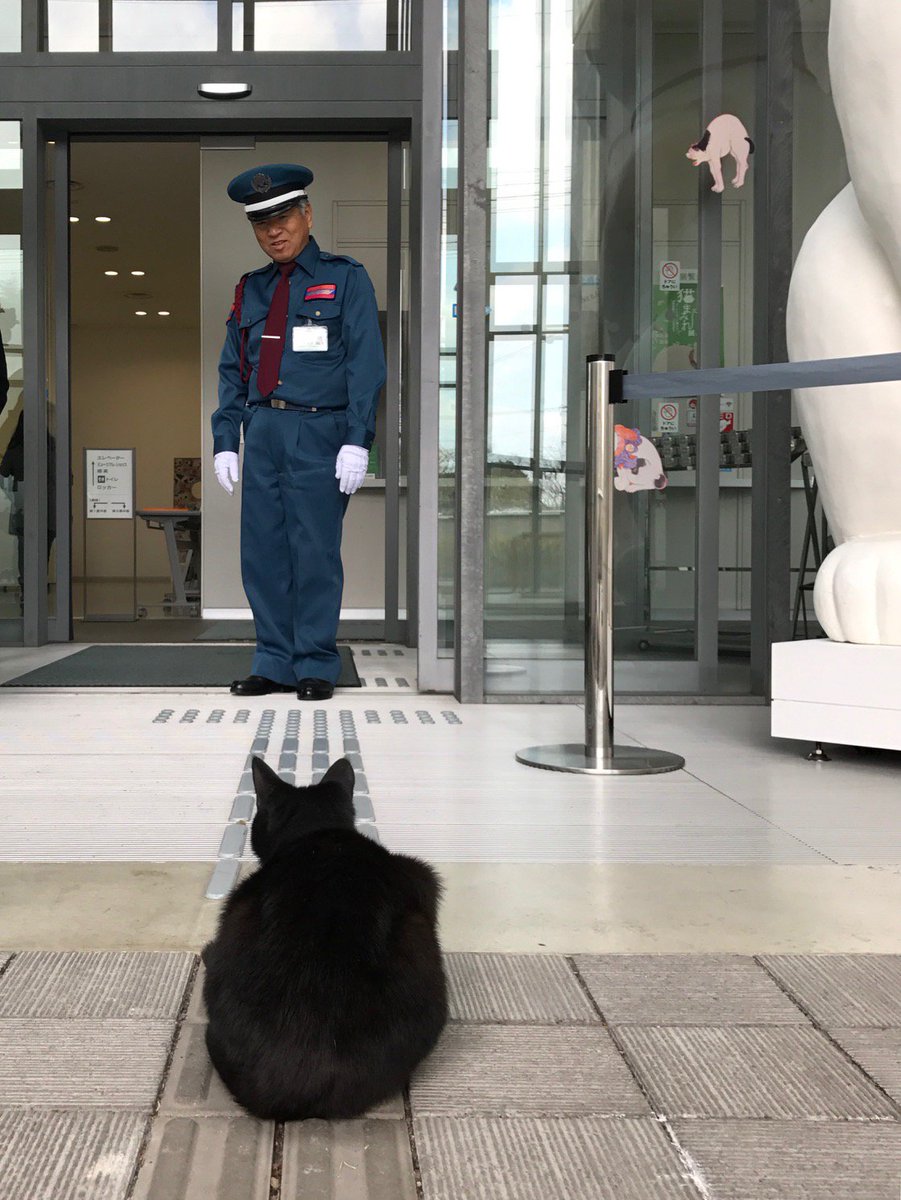
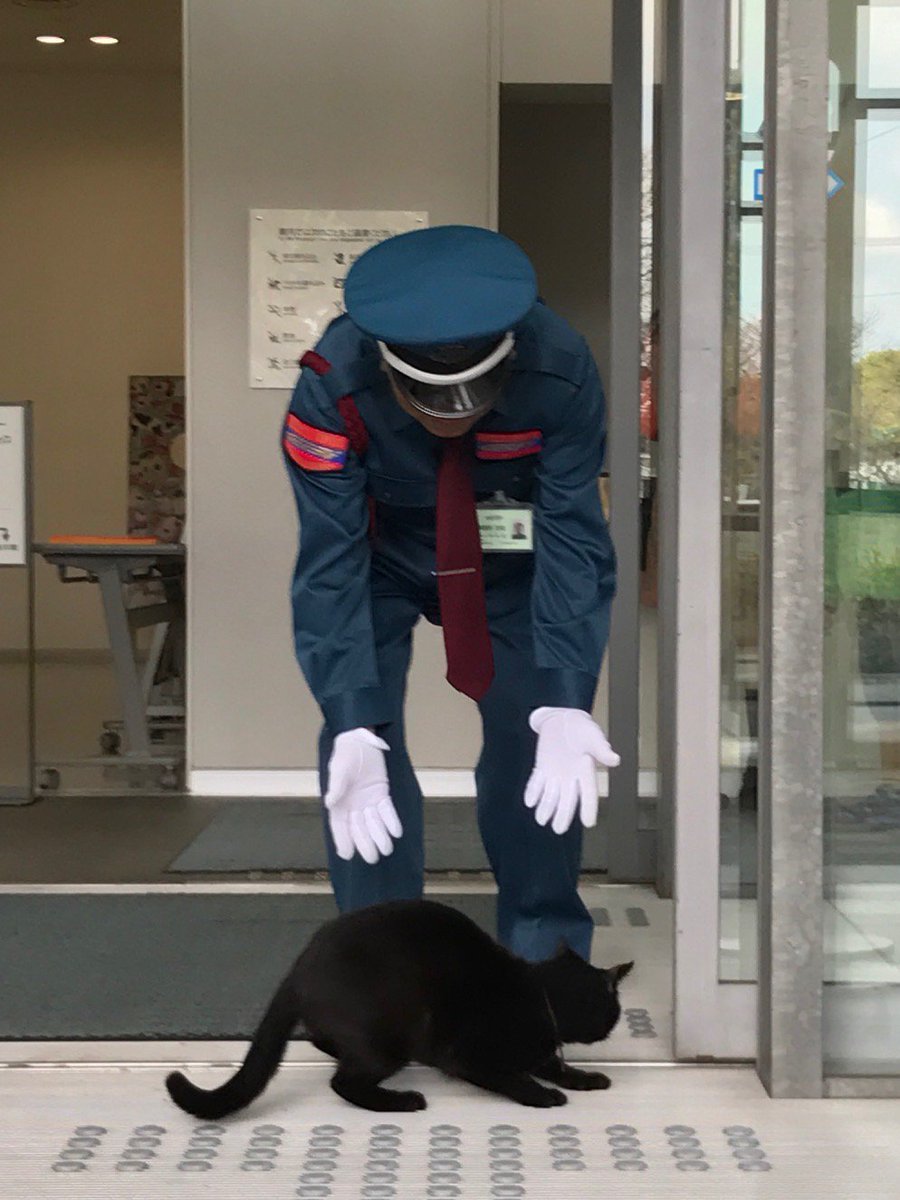
Two Cats Keep Trying to Get Into a Japanese Art Museum … and Keep Getting Turned Away: Meet the Thwarted Felines, Ken-chan and Go-chan

Pag­ing direc­tor Hayao Miyaza­ki.

A com­pelling sub­ject for a fea­ture length ani­ma­tion is hang­ing around the slid­ing glass doors of Hiroshi­ma Prefecture’s Onomichi City Muse­um of Art.

In June of 2016, a black tom­cat start­ed show­ing up at the muse­um on the reg­u­lar, for rea­sons unknown.

Those open to the sort of nar­ra­tive whim­sy at which Miyaza­ki excels might choose to believe that the beast was drawn by a cat-themed exhib­it of work by not­ed wildlife pho­tog­ra­ph­er and film­mak­er Mit­sua­ki Iwa­go, a por­tion of which would have been vis­i­ble to him through the mod­ern building’s large glass win­dows.

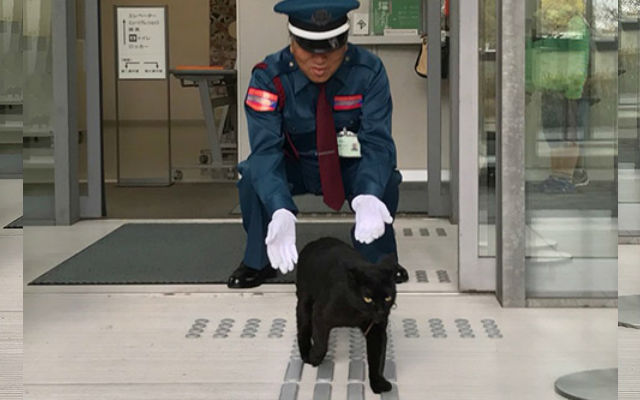
What­ev­er his rea­sons, the cat, Ken-chan, whose own­ers run a near­by restau­rant, was refused entry by a white-gloved secu­ri­ty guard and oth­er staffers, whose efforts to send him on his way start­ed blow­ing up the Inter­net short­ly after his first appear­ance.

Even­tu­al­ly, Ken-chan start­ed bring­ing back-up in the form of a well-man­nered orange tom­cat the muse­um staff dubbed Go-chan.

Their vis­its have proved to be a boon for both the small muse­um and the city they call home.

The New York Pub­lic Library has its lions.

Boston’s Pub­lic Gar­den has its ducks.

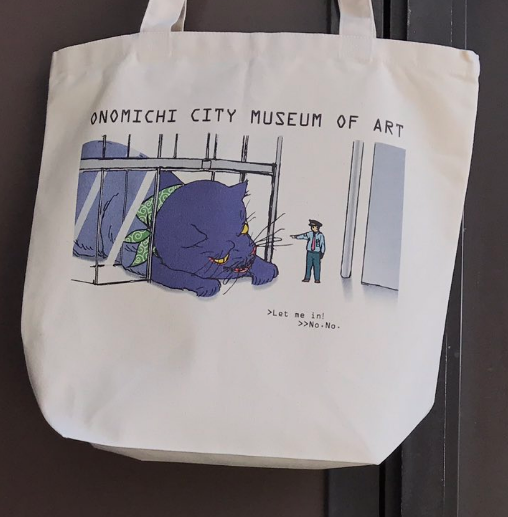
Onomichi and its small art muse­um have Ken-chan and Go-chan, whose Inter­net fame is quick­ly out­pac­ing the sup­ply of com­mem­o­ra­tive tote bags, below.

Ten­der heart­ed fans bom­bard the museum’s Twit­ter account with requests to grant the feline pair entry, but the muse­um brass is wise­ly pri­or­i­tiz­ing dra­mat­ic ten­sion over con­sum­ma­tion.

Mean­while, offi­cials in Zelenograd­sk, a Russ­ian resort town boast­ing both a cat muse­um and giant cat street mon­u­ment have invit­ed Ken-chan, Go-chan, and muse­um staff to be their guests in March, for a cat-cen­tric hol­i­day cel­e­bra­tion.

For now, Ken-chan and Go-chan are stick­ing close to home, alter­nate­ly enter­tain­ing and dis­ap­point­ing vis­i­tors who show up, cam­era in hand, hop­ing to catch them in the act.

Arm­chair trav­el­ers can enjoy a cat’s eye view tour of Onomichi, thanks to Google Street View-style 360-degree cam­era tech­nol­o­gy.

And pho­tog­ra­ph­er Iwa­go shares some pro advice for any­one seek­ing to cap­ture feline sub­jects:

…male cats are eas­i­er to pho­to­graph. Male cats seem to have more lat­i­tude and leisure in their lives. Because females do things such as raise the kit­tens, they con­cen­trate more on what goes on around them. Because males are out on patrol, it is more like­ly that you will encounter them. Because they have the free time, they’ll let you hang out and pho­to­graph them.

Depend­ing on the cat, there are a num­ber of ways to get a cat’s atten­tion. For exam­ple, when it’s start­ing to get dark out, you need to use a low­er shut­ter speed. How­ev­er, this means that the cat will be blur­ry if it moves. To avoid this, in such sit­u­a­tions, I say to the cat, ‘Stop, hold your breath!’ At that instant, when the cat is frozen, I snap the pic­ture. When you speak out to a cat, they get the mes­sage. That said, you can also get shots of good cat body lan­guage by let­ting them roam freely. They don’t need to be look­ing at the cam­era.

Even a cell­phone cam­era is enough. How­ev­er, if you don’t have a tele­pho­to lens, you’re going to have to get close to the cat you’re pho­tograph­ing. Due to this, it might be good to use a sin­gle-lens reflex (SLR) cam­era if you are pho­tograph­ing out­side. How­ev­er, if you are pho­tograph­ing the cat you live at home with, a big cam­era may prove intim­i­dat­ing. To avoid this prob­lem, it is nec­es­sary to reg­u­lar­ly put your cam­era in a place that the cat can see. It is good to start snap­ping pic­tures only after your cat has got­ten over its fear of cam­eras. If you use a flash to pho­to­graph cats indoors, their hair will look spiky and lose its soft­ness. There­fore, I rec­om­mend avoid­ing a flash. I also rec­om­mend not using a tri­pod, con­sid­er­ing the line of sight will become too high. When I am pho­tograph­ing cats, I kneel down so that I am at the same eye line as they are. It’s as if I’m crawl­ing for­ward into bat­tle.

Fol­low the Onomichi City Muse­um of Art on Twit­ter to keep up with Ken-chan and Go-chan.

via The Guardian/Hyper­al­ler­gic

Relat­ed Con­tent:

Insane­ly Cute Cat Com­mer­cials from Stu­dio Ghi­b­li, Hayao Miyazaki’s Leg­endary Ani­ma­tion Shop

Medieval Cats Behav­ing Bad­ly: Kit­ties That Left Paw Prints … and Peed … on 15th Cen­tu­ry Man­u­scripts

Free Enter­tain­ment for Cats and Dogs: Videos of Birds, Squir­rels & Oth­er Thrills

Ayun Hal­l­i­day is an author, illus­tra­tor, the­ater mak­er and Chief Pri­ma­tol­o­gist of the East Vil­lage Inky zine.  Join her in NYC this Decem­ber for the 10th anniver­sary pro­duc­tion of Greg Kotis’ apoc­a­lyp­tic hol­i­day tale, The Truth About San­ta, and the next month­ly install­ment of her book-based vari­ety show, Necro­mancers of the Pub­lic Domain. Fol­low her @AyunHalliday.

Malcolm Gladwell and Rick Rubin Launch a New Music Podcast, Broken Record: Listen Online

This past month, Mal­colm Glad­well (author), Rick Rubin (record pro­duc­er), and Bruce Head­lam (media desk edi­tor of the New York Times) teamed up to launch Bro­ken Record. It’s a music pod­cast that dou­bles as “lin­er notes for the dig­i­tal age.” Or, as Glad­well tells Rolling Stone, it’s “a kind of musi­cal vari­ety show.” Some episodes offer an in-depth nar­ra­tive. Oth­ers fea­ture mini per­for­mances and inter­views with musicians–plus an assort­ment of “digres­sions, argu­ments, back-sto­ries, and ran­dom things to dis­agree with about music.”

The episodes released so far can be streamed online here. For new episodes, sub­scribe to the pod­cast via iTunes or Spo­ti­fy. The lat­est episode with Niles Rodgers and Chic appears below:

If you would like to sign up for Open Culture’s free email newslet­ter, please find it here. It’s a great way to see our new posts, all bun­dled in one email, each day.

If you would like to sup­port the mis­sion of Open Cul­ture, con­sid­er mak­ing a dona­tion to our site. It’s hard to rely 100% on ads, and your con­tri­bu­tions will help us con­tin­ue pro­vid­ing the best free cul­tur­al and edu­ca­tion­al mate­ri­als to learn­ers every­where. You can con­tribute through Pay­Pal, Patre­on, and Ven­mo (@openculture). Thanks!

Relat­ed Con­tent:

Mal­colm Glad­well on Why Genius Takes Time: A Look at the Mak­ing of Elvis Costello’s “Depor­tee” & Leonard Cohen’s “Hal­lelu­jah”

Rick Rubin Revis­its the Ori­gins of Def Jam Records & the NYU Dorm Room Where It All Began

Mal­colm Glad­well Teach­ing His First Online Course: A Mas­ter Class on How to Turn Big Ideas into Pow­er­ful Sto­ries

In 17th-Century Japan, Creaking Floors Functioned as Security Systems That Warned Palaces & Temples of Approaching Intruders and Assassins

Offer a cut­ting-edge secu­ri­ty sys­tem, and you’ll suf­fer no short­age of cus­tomers who want it installed. But before our age of con­cealed cam­eras, motion sen­sors, reti­nal scan­ners, and all the oth­er advanced and often unset­tling tech­nolo­gies known only to indus­try insid­ers, how did own­ers of large, expen­sive, and even roy­al­ty-hous­ing prop­er­ties buy peace of mind? We find one par­tic­u­lar­ly inge­nious answer by look­ing back about 400 years ago, to the wood­en cas­tles and tem­ples of 17th-cen­tu­ry Japan.

“For cen­turies, Japan has tak­en pride in the tal­ents of its crafts­men, car­pen­ters and wood­work­ers includ­ed,” writes Sora News 24’s Casey Baseel. “Because of that, you might be sur­prised to find that some Japan­ese cas­tles have extreme­ly creaky wood­en floors that screech and groan with each step. How could such slip­shod con­struc­tion have been con­sid­ered accept­able for some of the most pow­er­ful fig­ures in Japan­ese his­to­ry? The answer is that the sounds weren’t just tol­er­at­ed, but desired, as the noise-pro­duc­ing floors func­tioned as Japan’s ear­li­est auto­mat­ed intrud­er alarm.”

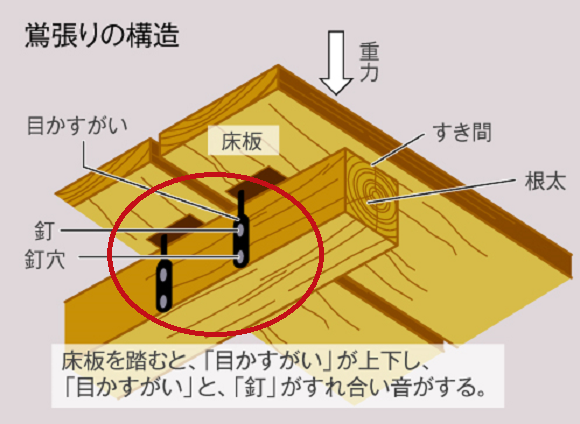
In these spe­cial­ly engi­neered floors, “planks of wood are placed atop a frame­work of sup­port­ing beams, secure­ly enough that they won’t dis­lodge, but still loose­ly enough that there’s a lit­tle bit of play when they’re stepped on.” And when they are stepped on, “their clamps rub against nails attached to the beams, cre­at­ing a shrill chirp­ing noise,” ren­der­ing stealthy move­ment near­ly impos­si­ble and thus mak­ing for an effec­tive “coun­ter­mea­sure against spies, thieves, and assas­sins.”

Accord­ing to Zen-Garden.org, you can still find — and walk on — four such uguisub­ari, or “nightin­gale floors,” in Kyoto: at Daikaku-ji tem­ple, Chio-in tem­ple, Toji-in tem­ple, and Nino­mu­ra Palace.

If you can’t make it out to Kyoto any time soon, you can have a look and a lis­ten to a cou­ple of those nightin­gale floors in the short clips above. Then you’ll under­stand just how dif­fi­cult it would have been to cross one with­out alert­ing any­one to your pres­ence. This sort of thing sends our imag­i­na­tions straight to visions of high­ly trained nin­jas skill­ful­ly out­wit­ting palace guards, but in their day these delib­er­ate­ly squeaky floors floors also car­ried more pleas­ant asso­ci­a­tions than that of immi­nent assas­si­na­tion. As this poem on Zen-Garden.org’s uguisub­ari page says says:


鳥を聞く

歓迎すべき音

鴬張りを渡る


A wel­come sound

To hear the birds sing

across the nightin­gale floor

via @12pt9/Sora News

Relat­ed Con­tent:

Hōshi: A Short Doc­u­men­tary on the 1300-Year-Old Hotel Run by the Same Japan­ese Fam­i­ly for 46 Gen­er­a­tions

Watch Japan­ese Wood­work­ing Mas­ters Cre­ate Ele­gant & Elab­o­rate Geo­met­ric Pat­terns with Wood

Mes­mer­iz­ing GIFs Illus­trate the Art of Tra­di­tion­al Japan­ese Wood Join­ery — All Done With­out Screws, Nails, or Glue

Omoshi­roi Blocks: Japan­ese Memo Pads Reveal Intri­cate Build­ings As The Pages Get Used

A Vir­tu­al Tour of Japan’s Inflat­able Con­cert Hall

Based in Seoul, Col­in Mar­shall writes and broad­casts on cities, lan­guage, and cul­ture. His projects include the book The State­less City: a Walk through 21st-Cen­tu­ry Los Ange­les and the video series The City in Cin­e­ma. Fol­low him on Twit­ter at @colinmarshall or on Face­book.

Japanese Artist Creates Bookshelf Dioramas That Magically Transport You Into Tokyo’s Back Alleys

Should you find your­self in a Japan­ese city, spend time not on the Star­bucks- and McDon­ald’s-lined boule­vards but on the back streets that wind in all direc­tions behind them. Or bet­ter yet, head into the back alleys branch­ing off those streets, those half-hid­den spaces that offer the most evoca­tive glimpses of life in urban Japan by far. Only there can you find pas­sage into the won­der­ful­ly idio­syn­crat­ic busi­ness­es tucked into the cor­ners of the city, from bars and restau­rants to cof­fee shops and of course book­stores. Those book­stores have long occu­pied Japan’s back alleys, but now an artist by the name of Monde has brought the back alleys onto book­shelves.

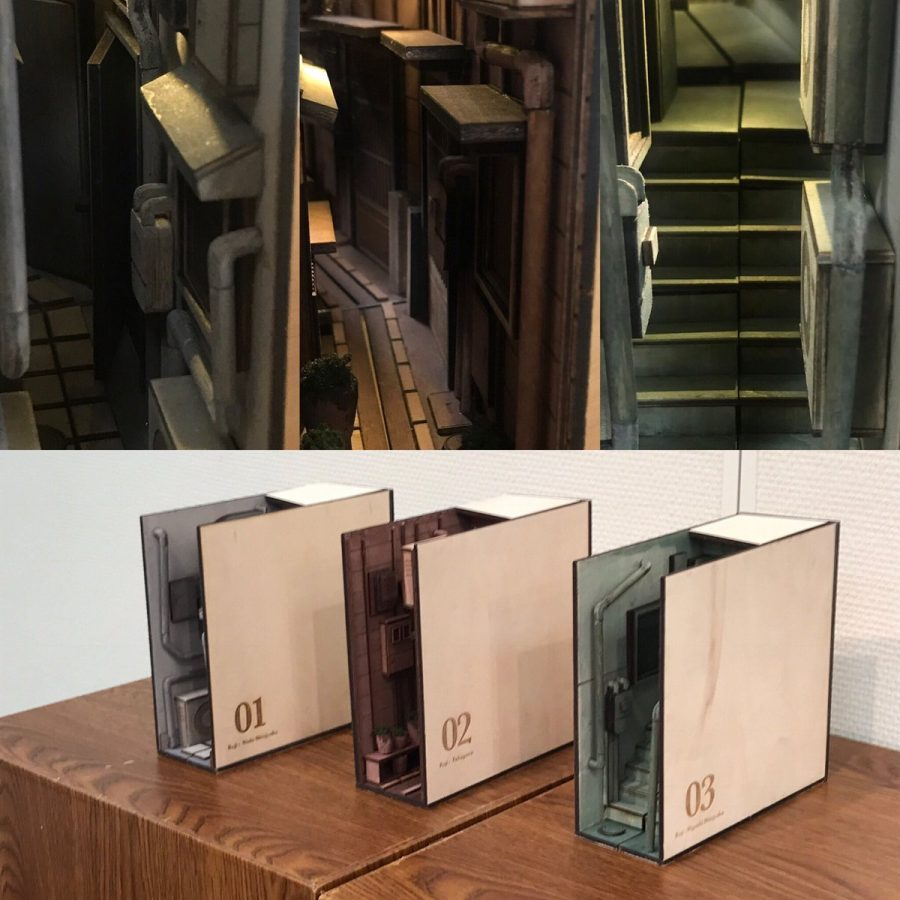
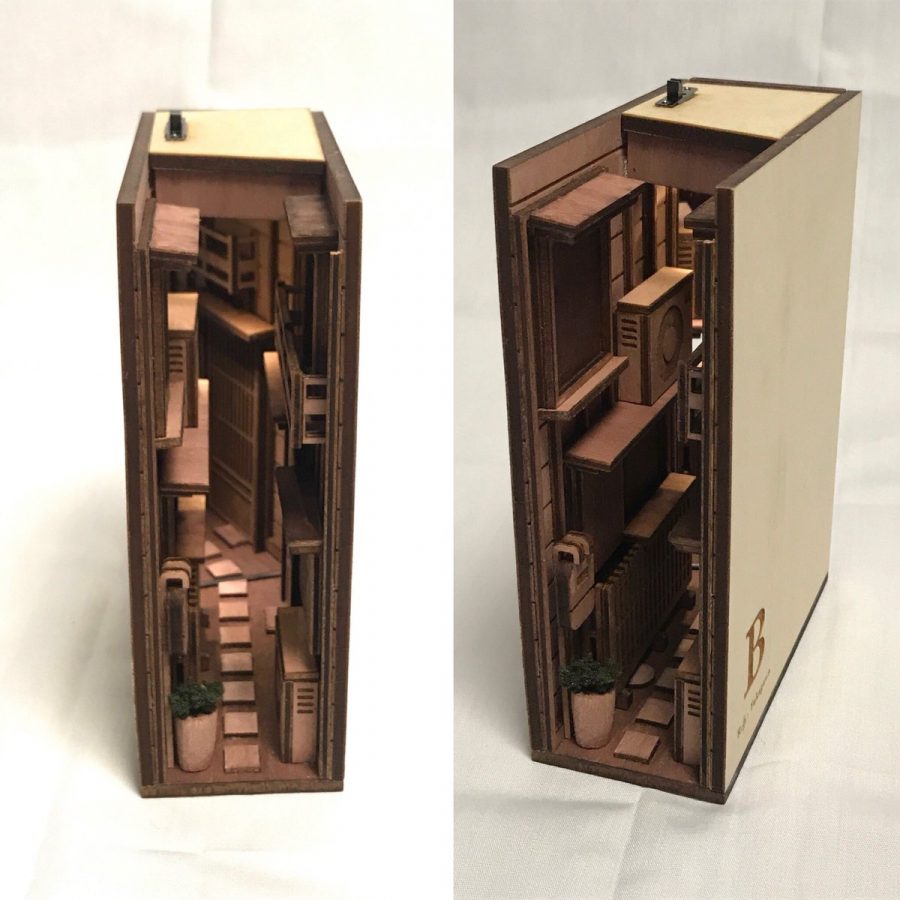
Mon­de’s hand­craft­ed wood­en book­end dio­ra­mas, which you can see on his Twit­ter feed as well as in a Buz­zfeed Japan arti­cle about them, repli­cate the back alleys of his home­town of Tokyo. They do it in minia­ture, and down to the small­est detail — even the elec­tric lights that illu­mi­nate the real thing at night.

Scaled to the height of not just a book but a small Japan­ese paper­back, the likes of which fill those back-alley book­stores from floor to ceil­ing, they’re designed to slot right into book­shelves, pro­vid­ing a wel­com­ing street scene to those brows­ing through their own or oth­ers’ vol­umes in the same way that the actu­al alleys they mod­el come as a pleas­ant sur­prise to passers­by on the main streets.

Tokyo has become a beloved city to Japan­ese and non-Japan­ese alike for count­less rea­sons, but who can doubt the appeal of the way it com­bines the feel­ing of small-town life in its many neigh­bor­hoods that togeth­er make for a megac­i­ty scale? Mon­de’s dio­ra­mas cap­ture the dis­tinc­tive mix­ture of domes­tic­i­ty and den­si­ty in the cap­i­tal’s back alleys, reflect­ing the nar­row­ness of the spaces in form and their some­how organ­i­cal­ly man­made nature — step­ping stones, pot­ted-plant gar­dens, and all the small pieces of infra­struc­ture that have accu­mu­lat­ed to sup­port life in the homes of so many — in con­tent. Though Tokyo has for decades been regard­ed, espe­cial­ly from the West, as a place of thor­ough hyper­moder­ni­ty, its alleys remind us that with­in the some­times over­whelm­ing present exists a mix­ture of eras that feel time­less — just like the con­tent of a well-curat­ed book­shelf.

via Twist­ed Sifter

Relat­ed Con­tent:

Watch Japan­ese Wood­work­ing Mas­ters Cre­ate Ele­gant & Elab­o­rate Geo­met­ric Pat­terns with Wood

Mes­mer­iz­ing GIFs Illus­trate the Art of Tra­di­tion­al Japan­ese Wood Join­ery — All Done With­out Screws, Nails, or Glue

“Tsun­doku,” the Japan­ese Word for the New Books That Pile Up on Our Shelves, Should Enter the Eng­lish Lan­guage

The Toky­oi­ter: Artists Pay Trib­ute to the Japan­ese Cap­i­tal with New York­er-Style Mag­a­zine Cov­ers

A Pho­to­graph­ic Tour of Haru­ki Murakami’s Tokyo, Where Dream, Mem­o­ry, and Real­i­ty Meet

Based in Seoul, Col­in Mar­shall writes and broad­casts on cities, lan­guage, and cul­ture. His projects include the book The State­less City: a Walk through 21st-Cen­tu­ry Los Ange­les and the video series The City in Cin­e­ma. Fol­low him on Twit­ter at @colinmarshall or on Face­book.

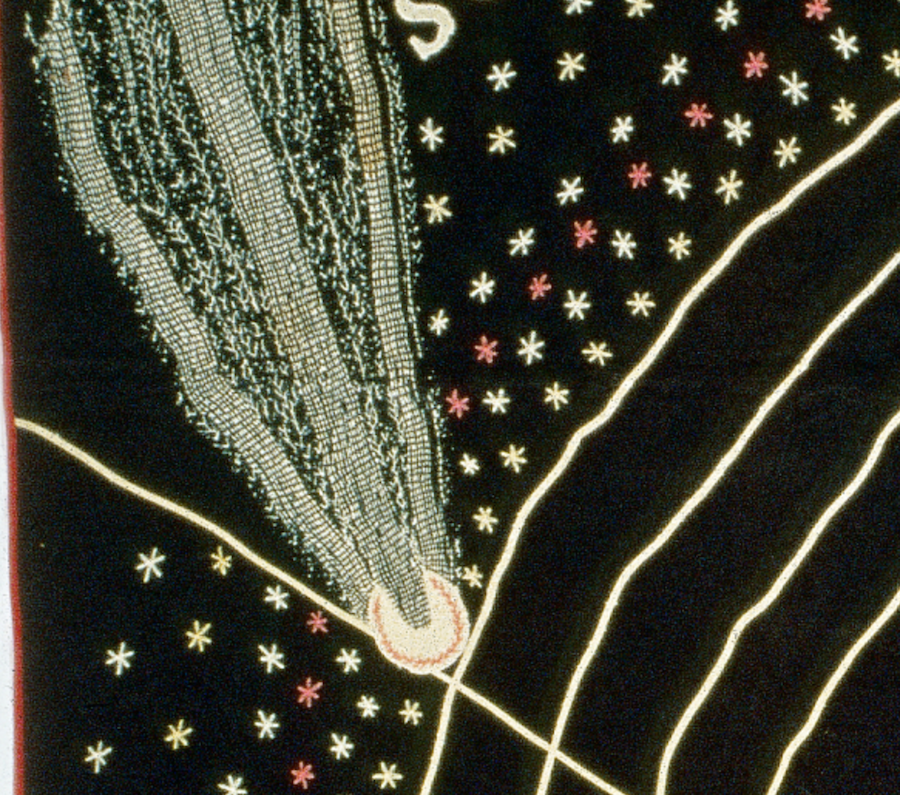
The Solar System Quilt: In 1876, a Teacher Creates a Handcrafted Quilt to Use as a Teaching Aid in Her Astronomy Class

Ded­i­cat­ed teach­ers often go well beyond the call of duty, sac­ri­fic­ing large amounts of free time for the bet­ter­ment of their class­rooms and their pupils.

Any teacher who’s ever paid for sup­plies out of their own pock­et, then spent the week­end con­struct­ing an elab­o­rate bul­letin board dis­play, will appre­ci­ate the her­culean efforts of Sarah Ellen Hard­ing Bak­er.

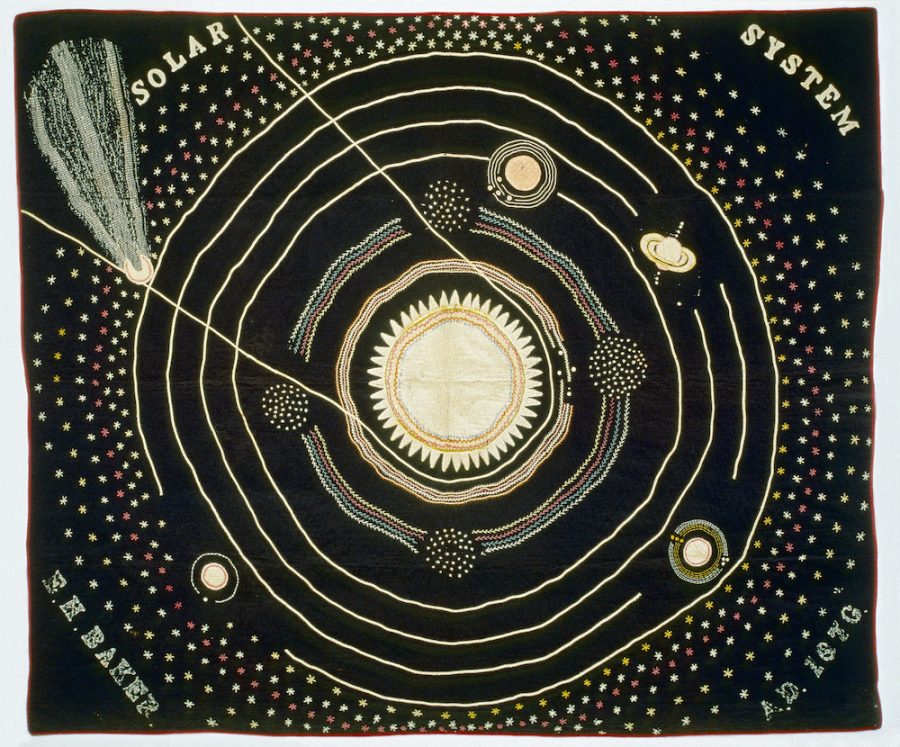
Bak­er, a teacher and astronomer in Cedar Coun­ty, Iowa, is rumored to have spent 7 years embroi­der­ing a beau­ti­ful appliquéd quilt to use as a visu­al aid in lec­tures.

Fin­ished in 1876, the quilt is large enough that even a near-sight­ed stu­dent could see its plan­ets and moons from the back row.

Orbits are indi­cat­ed with silken threads against a black back­ground.

A comet in the upper left is thought to be Hal­ley’s Comet, whose last appear­ance would have been in 1835, 12 years before Baker’s birth.

The Smith­son­ian Nation­al Muse­um of Amer­i­can His­to­ry, where Baker’s quilt is housed, notes that astron­o­my was deemed an accept­able inter­est for 19th-cen­tu­ry women, which may explain the num­ber of celes­tial-themed quilts that date to the peri­od.

Author and quilt his­to­ri­an Bar­bara Brack­man includes a few on her Mate­r­i­al Cul­ture blog, while her His­tor­i­cal­ly Mod­ern blog vis­its some more recent exam­ples, includ­ing one that makes use of a stars-and-earth hot-iron trans­fer pub­lished in Good House­keep­ing mag­a­zine, to accom­pa­ny an arti­cle cel­e­brat­ing the win­ners of its 1939 World of Tomor­row Quilt Con­test.

Bak­er got just ten years out of her quilt before suc­cumb­ing to tuber­cu­lo­sis at the age of 39, the moth­er of 7 chil­dren, 5 of whom sur­vived her.

via Messy Nessy

Relat­ed Con­tent:

A Mas­sive, Knit­ted Tapes­try of the Galaxy: Soft­ware Engi­neer Hacks a Knit­ting Machine & Cre­ates a Star Map Fea­tur­ing 88 Con­stel­la­tions

The Ancient Astron­o­my of Stone­henge Decod­ed

Too Big for Any Muse­um, AIDS Quilt Goes Dig­i­tal Thanks to Microsoft

Watch Nina Paley’s “Embroi­der­ma­tion,” a New, Stun­ning­ly Labor-Inten­sive Form of Ani­ma­tion

Ayun Hal­l­i­day is an author, illus­tra­tor, the­ater mak­er and Chief Pri­ma­tol­o­gist of the East Vil­lage Inky zine.  Join her in NYC this Decem­ber for the 10th anniver­sary pro­duc­tion of Greg Kotis’ apoc­a­lyp­tic hol­i­day tale, The Truth About San­ta, and the next month­ly install­ment of her book-based vari­ety show, Necro­mancers of the Pub­lic Domain. Fol­low her @AyunHalliday.

Masterclass Is Running a Special “Buy One, Give One Free” Deal: It Gives You & Family Member/Friend Access to Their Complete Course Catalog

A quick fyi: Mas­ter­class is run­ning a Buy One, Give One Free spe­cial until Novem­ber 26 at 11:59:59 PM PST.

Here’s the gist: If you buy an All-Access pass to their 45 cours­es, you will receive anoth­er All-Access Pass to give to some­one else at no addi­tion­al charge. An All-Access pass costs $180, and lasts one year. For that fee, you–and a fam­i­ly mem­ber or friend–can watch cours­es cre­at­ed by Annie Lei­bovitz, Wern­er Her­zog, Mar­tin Scors­ese, David Mamet, Jane Goodall, Mar­garet Atwood, Helen Mir­ren, Mar­tin Scors­ese, Her­bie Han­cock, Alice Waters and so many more. If you’re think­ing this sounds like a pret­ty good hol­i­day present, I’d have to agree.

Note: If you sign up for a Mas­ter­Class course by click­ing on the affil­i­ate links in this post, Open Cul­ture will receive a small fee that helps sup­port our oper­a­tion.

Psilocybin Could Soon Be a Legal Treatment for Depression: Johns Hopkins Professor, Roland Griffiths, Explains How Psilocybin Can Relieve Suffering

Much of the recent sci­en­tif­ic research into psy­che­delics has picked up where researchers left off in the mid-20th cen­tu­ry, before LSD, psilo­cy­bin, and oth­er psy­choac­tive drugs became coun­ter­cul­tur­al means of con­scious­ness expan­sion, and then banned, ille­gal sub­stances the gov­ern­ment sought to con­trol. Sci­en­tists from sev­er­al fields stud­ied psy­che­delics as treat­ments for addic­tion, depres­sion, and anx­i­ety, and end-of-life care. These appli­ca­tions were con­ceived and test­ed sev­er­al decades ago.

Now, thanks to some seri­ous invest­ment from high-pro­file insti­tu­tions like Johns Hop­kins Uni­ver­si­ty, and thanks to chang­ing gov­ern­ment atti­tudes toward psy­choac­tive drugs, it may be pos­si­ble for psilo­cy­bin, the active ingre­di­ent in “mag­ic mush­rooms,” to get legal approval for ther­a­py in a clin­i­cal set­ting by 2021. “For the first time in U.S. his­to­ry,” Shel­by Hart­man reports at Rolling Stone, “a psy­che­del­ic drug is on the fast track to get­ting approved for treat­ing depres­sion by the fed­er­al gov­ern­ment.”

As Michael Pol­lan has detailed in his lat­est book, How to Change Your Mind, the pos­si­bil­i­ties for psilo­cy­bin and oth­er such drugs are vast. “But before the Food and Drug Admin­is­tra­tion can be peti­tioned to reclas­si­fy it,” Brit­tany Shoot notes at For­tune, the drug “first has to clear phase III clin­i­cal tri­als. The entire process is expect­ed to take about five years.” In the TEDMED video above, you can see Roland R. Grif­fiths, Pro­fes­sor of Psy­chi­a­try and Behav­ioral Sci­ences at Johns Hop­kins, dis­cuss the ways in which psilo­cy­bin, “under sup­port­ed con­di­tions, can occa­sion mys­ti­cal-type expe­ri­ences asso­ci­at­ed with endur­ing pos­i­tive changes in atti­tudes and behav­ior.”

The impli­ca­tions of this research span the fields of ethics and med­i­cine, psy­chol­o­gy and reli­gion, and it’s fit­ting that Dr. Grif­fiths leads off with a state­ment about the com­pat­i­bil­i­ty of spir­i­tu­al­i­ty and sci­ence, sup­port­ed by a quote from Ein­stein, who said “the most beau­ti­ful and pro­found emo­tion we can expe­ri­ence is the sen­sa­tion of the mys­ti­cal. It’s the source of all true sci­ence.” But the work Grif­fiths and oth­ers have been engaged in is pri­mar­i­ly prac­ti­cal in nature—though it does not at all exclude the mystical—like find­ing effec­tive means to treat depres­sion in can­cer patients, for exam­ple.

“Six­teen mil­lion Amer­i­cans suf­fer from depres­sion and approx­i­mate­ly one-third of them are treat­ment resis­tant,” Hart­man writes. “Depres­sion is also an epi­dem­ic world­wide, affect­ing 300 mil­lion peo­ple around the world.” Psy­chotrop­ic drugs like psilo­cy­bin, LSD, and MDMA (which is not clas­si­fied as a psy­che­del­ic), have been shown for a long time to work for many peo­ple suf­fer­ing from severe men­tal ill­ness and addic­tions.

Although such drugs present some poten­tial for abuse, they are not high­ly addic­tive, espe­cial­ly rel­a­tive to the flood of opi­oids on the legal mar­ket that are cur­rent­ly dev­as­tat­ing whole com­mu­ni­ties as peo­ple use them to self-med­icate. It seems that what has most pre­vent­ed psy­che­delics from being researched and pre­scribed has as much or more to do with long-stand­ing prej­u­dice and fear as it does with a gen­uine con­cern for pub­lic health. (And that’s not even to men­tion the finan­cial inter­ests who exert tremen­dous pres­sure on drug pol­i­cy.)

But now, Hart­man writes, “it appears [researchers] have come too far to go back—and the fed­er­al gov­ern­ment is final­ly rec­og­niz­ing it, too.” Find out why this research mat­ters in Dr. Grif­fiths’ talk, Pollan’s book, the Mul­ti­dis­ci­pli­nary Asso­ci­a­tion for Psy­che­del­ic Stud­ies, and some of the posts we’ve linked to below.

Relat­ed Con­tent:

How to Use Psy­che­del­ic Drugs to Improve Men­tal Health: Michael Pollan’s New Book, How to Change Your Mind, Makes the Case

New LSD Research Pro­vides the First Images of the Brain on Acid, and Hints at Its Poten­tial to Pro­mote Cre­ativ­i­ty

Artist Draws 9 Por­traits While on LSD: Inside the 1950s Exper­i­ments to Turn LSD into a “Cre­ativ­i­ty Pill”

When Aldous Hux­ley, Dying of Can­cer, Left This World Trip­ping on LSD, Expe­ri­enc­ing “the Most Serene, the Most Beau­ti­ful Death” (1963)

Josh Jones is a writer and musi­cian based in Durham, NC. Fol­low him at @jdmagness

« Go BackMore in this category... »
Quantcast