Listen Online to Every Minute of the Original Woodstock Festival

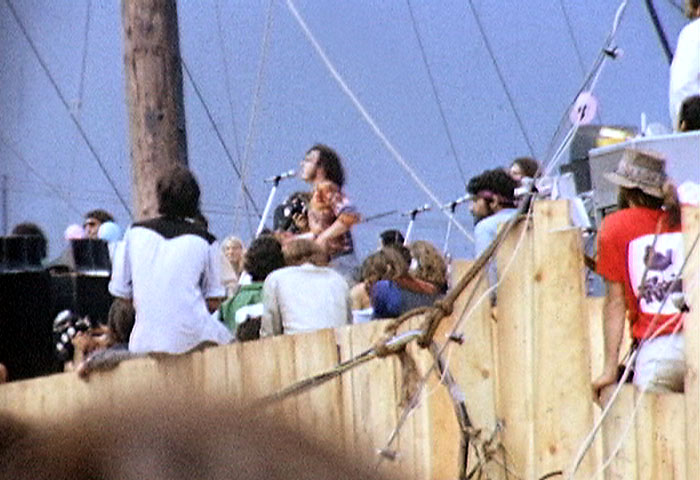
Image of Joe Cock­er by Derek Red­mond and Paul Camp­bel, via Wiki­me­dia Com­mons

Life­hack­er has this great tip. “Start­ing at 5:07 p.m. EST today, August 15, you can lis­ten to every minute of the three days of con­certs, cour­tesy of Philadel­phia radio sta­tion WXPN. It will include all of the festival’s archived audio: from the icon­ic per­for­mances to the stage announce­ments to the rain delays. The exclu­sive broad­cast will fea­ture new­ly recon­struct­ed audio archives of each of Woodstock’s 32 acts, start­ing with Richie Havens’ open­ing set, and con­tin­u­ing through to Jimi Hendrix’s clos­ing per­for­mance on Sun­day morn­ing. Accord­ing to a release from the sta­tion, it will be broad­cast in as close to real time as pos­si­ble.” To lis­ten, go to this page, scroll down, and launch the media play­er.

If you would like to sign up for Open Culture’s free email newslet­ter, please find it here. It’s a great way to see our new posts, all bun­dled in one email, each day.

If you would like to sup­port the mis­sion of Open Cul­ture, con­sid­er mak­ing a dona­tion to our site. It’s hard to rely 100% on ads, and your con­tri­bu­tions will help us con­tin­ue pro­vid­ing the best free cul­tur­al and edu­ca­tion­al mate­ri­als to learn­ers every­where. You can con­tribute through Pay­Pal, Patre­on, and Ven­mo (@openculture). Thanks!

A Short Animated Introduction to Hypatia, Ancient Alexandria’s Great Female Philosopher

Ten years ago, a film came out called Ago­ra, a biopic of philoso­pher and math­e­mati­cian Hypa­tia of Alexan­dria, daugh­ter of math­e­mati­cian Theon, the last record­ed direc­tor of the Library of Alexan­dria. The movie wasn’t well-reviewed or wide­ly seen, which is nei­ther here nor there, but it was heav­i­ly crit­i­cized for his­tor­i­cal inac­cu­ra­cies. This seemed a lit­tle sil­ly. “One does not go to the movies to learn about ancient his­to­ry but to be enter­tained,” as Joshua J. Mark writes at the Ancient His­to­ry Ency­clo­pe­dia. Ago­ra is not an accu­rate ren­der­ing of the lit­tle we know of Hypa­tia, but nei­ther is Spar­ta­cus, a far more enter­tain­ing film, an accu­rate depic­tion of the 2nd cen­tu­ry B.C.E. glad­i­a­tor and rebel.

And yet, we should know who Hypa­tia was, and we should under­stand what hap­pened to her, some­thing many of the film’s reli­gious­ly-moti­vat­ed crit­ics refused to admit, claim­ing that the depic­tion of hos­tile, anti-intel­lec­tu­al Chris­tians in the movie was noth­ing more than prej­u­di­cial ani­mus on the part of direc­tor Ale­jan­dro Amenabar. The truth is that “the anti-intel­lec­tu­al stance of the ear­ly church is attest­ed to by ear­ly Chris­t­ian writ­ers,” Mark points out. And “the his­tor­i­cal records state” that Hypa­tia “was beat­en and flayed to death by a mob of Chris­t­ian monks who then burned her in a church.”

The TED-Ed video above calls this mob a “mili­tia” who saw Hypatia’s sci­en­tif­ic pur­suits as “witch­craft.” The charge is, of course, specif­i­cal­ly gen­dered. The man­ner of her death was so bru­tal and shock­ing that “even those Chris­t­ian writ­ers who were hos­tile to her and claimed she was a witch,” Mark writes, “are gen­er­al­ly sym­pa­thet­ic in record­ing her death as a tragedy. These accounts rou­tine­ly depict Hypa­tia as a woman who was wide­ly known for her gen­eros­i­ty, love of learn­ing, and exper­tise in teach­ing in the sub­jects of Neo-Pla­ton­ism, math­e­mat­ics, sci­ence, and phi­los­o­phy.”

As is the case with many ancient fig­ures, none of her own writ­ings sur­vive, but both her con­tem­po­rary crit­ics and sym­pa­thet­ic stu­dents record sim­i­lar impres­sions of her intel­lec­tu­al curios­i­ty and sci­en­tif­ic knowl­edge. The short video les­son tells us Hypa­tia was born around 355 A.C.E., which means she would have been around six­ty years old at the time of her death. She lived in Alexan­dria, “then part of the Egypt­ian province of the East­ern Roman Empire, and an intel­lec­tu­al cen­ter.” Edu­cat­ed by her father, she sur­passed him “in both math­e­mat­ics and phi­los­o­phy, becom­ing the city’s fore­most schol­ar.”

She even­tu­al­ly suc­ceed­ed Theon as head of the Pla­ton­ic school, “sim­i­lar to a mod­ern uni­ver­si­ty,” and she served as a trust­ed advi­sor to the city’s lead­ers, includ­ing its gov­er­nor, Orestes, a “mod­er­ate Chris­t­ian” him­self. Her achieve­ments were many, but her teach­ing, draw­ing on Pla­to, Aris­to­tle, Plot­i­nus, and Pythago­ras, was her great­est lega­cy, the TED-Ed les­son (script­ed by Soraya Field Fio­rio) asserts. Hypatia’s death not only deprived the city of a beloved teacher and schol­ar. Her mur­der, at the behest of Alexan­dri­an bish­op Cyril, “was a turn­ing point.” Oth­er philoso­phers fled the city, and Alexandria’s “role as a cen­ter of learn­ing declined.”

“In a very real way,” the les­son tells us, “the spir­it of inqui­si­tion, open­ness, and fair­ness she fos­tered died with her.”

For a more com­plete treat­ment of Hypa­ti­a’s life and intel­lec­tu­al con­tri­bu­tions, read Maria Dziel­ska’s book, Hypa­tia of Alexan­dria.

Relat­ed Con­tent:

The Rise and Fall of the Great Library of Alexan­dria: An Ani­mat­ed Intro­duc­tion

Carl Sagan Explains How the Ancient Greeks, Using Rea­son and Math, Fig­ured Out the Earth Isn’t Flat, Over 2,000 Years Ago

Free Cours­es in Ancient His­to­ry, Lit­er­a­ture & Phi­los­o­phy 

Josh Jones is a writer and musi­cian based in Durham, NC. Fol­low him at @jdmagness

Watch John Entwistle’s Bass-Playing Genius on Display in Isolated Tracks for “Won’t Be Fooled Again” and “Baba O’Reilly”

I guess it’s easy to be “The Qui­et One” in The Who when sur­round­ed by a preen­ing singer with gold­en locks, a gui­tarist with a wind­mill arm who smash­es his equip­ment, and a com­plete­ly insane drum­mer (on and off stage). But John Entwistle helped root the band by stand­ing still and deliv­er­ing some of the meati­est and beat­i­est licks and melod­ic runs in ‘60s rock.

The above footage sal­vaged from the doc The Kids Are Alright shows the mas­ter at work. “Won’t Be Fooled Again” isn’t known as a bass-for­ward song, so this iso­lat­ed track from a live take show will make you hear it anew. Entwistle plays his bass like an elec­tric lead, dou­bling the drums some­times, oth­er times mim­ic­k­ing the vocals. He plays triplets and runs. He zooms up the neck, slides down, arpeg­giates, the lot. It’s thick. Just hit play.

As some YouTube wag points out, it’s some­thing of a bass play­er joke come to life at the end, where Entwistle leaves his bass onstage and walks off, while a girl rush­es out of the audi­ence to embrace the lead singer. Such is life in a band.

From the same shoot, you can also check out his iso­lat­ed bass from “Baba O’Reilly.” Entwistle has a three-note riff to work with. He stays true to it while fill­ing in spaces here and there with dis­tor­tion turned way up. At the end he has a sip of (I assume) water and looks about as excit­ed as when he start­ed.

In the mid-nineties, Entwistle was inter­viewed for a book on drum­mer Kei­th Moon. Author Tony Fletch­er caught him in an hon­est mood:

“I wast­ed my whole fuck­ing career on The Who,” he said between gulps of Remy Mar­tin brandy, his favourite tip­ple. “Com­plete fuck­ing waste of time. I should be a mul­ti-mil­lion­aire. I should be retired by now. I’ll be known as an inno­v­a­tive bass play­er. But that doesn’t help get my swim­ming pool rebuilt and let me sit on my arse watch­ing TV all day. I wouldn’t want to, but I’d like the chance to be able to.”

Not all rock bands con­sist of best friends, and some are down­right ran­corous. But that’s often what brings out the best in peo­ple. So as you gaze at Entwistle sti­fling a yawn dur­ing these two clips, con­sid­er his con­fes­sion and enjoy.

Relat­ed Con­tent:

The Neu­ro­science of Bass: New Study Explains Why Bass Instru­ments Are Fun­da­men­tal to Music

Lis­ten to Grace Slick’s Hair-Rais­ing Vocals in the Iso­lat­ed Track for “White Rab­bit” (1967)

Lis­ten to Fred­die Mer­cury and David Bowie on the Iso­lat­ed Vocal Track for the Queen Hit ‘Under Pres­sure,’ 1981

What Makes Flea Such an Amaz­ing Bass Play­er? A Video Essay Breaks Down His Style

Ted Mills is a free­lance writer on the arts who cur­rent­ly hosts the artist inter­view-based FunkZone Pod­cast and is the pro­duc­er of KCR­W’s Curi­ous Coast. You can also fol­low him on Twit­ter at @tedmills, read his oth­er arts writ­ing at tedmills.com and/or watch his films here.

People Pose in Uncanny Alignment with Iconic Album Covers: Discover The Sleeveface Project

We’ve all heard a great deal over the past twen­ty years or so about the death of the album. This talk seems to have begun with the emer­gence of the down­load­able indi­vid­ual song, a tech­nol­o­gy that would final­ly allow us con­sumers to pur­chase only the tracks we want to hear and avoid pay­ing full price for “filler.” But against these odds, the long-play­ing album has per­sist­ed: artists still record them and lis­ten­ers, at least ded­i­cat­ed lis­ten­ers, still buy them, some­times even on vinyl.

Some­how the album has remained cul­tur­al­ly rel­e­vant, and a fair bit of the cred­it must go to its cov­er. It did­n’t take long after the intro­duc­tion of the 12-inch, 33 1/3‑RPM vinyl record in 1948 for the mar­ket­ing pur­pos­es of its large out­er sleeve to become evi­dent, and the past 71 years have pro­duced many a mem­o­rable image in that form. Few plat­forms could be as rep­re­sen­ta­tive of our dig­i­tal age as Insta­gram, but it is on Insta­gram that the album cov­er has recent­ly received homage from across the globe.

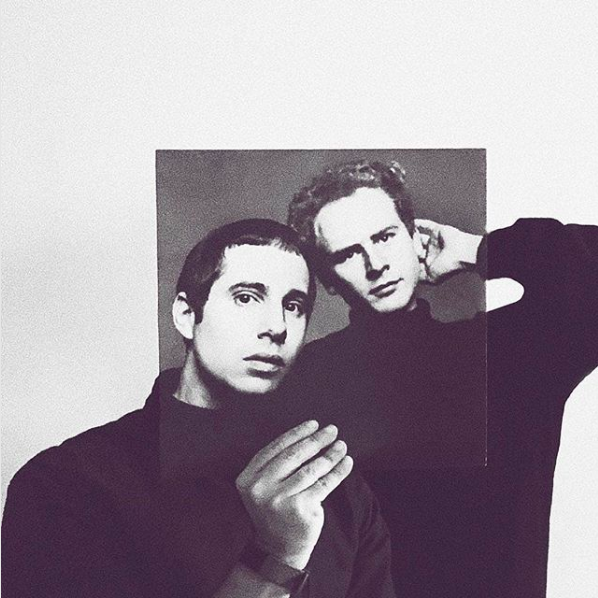
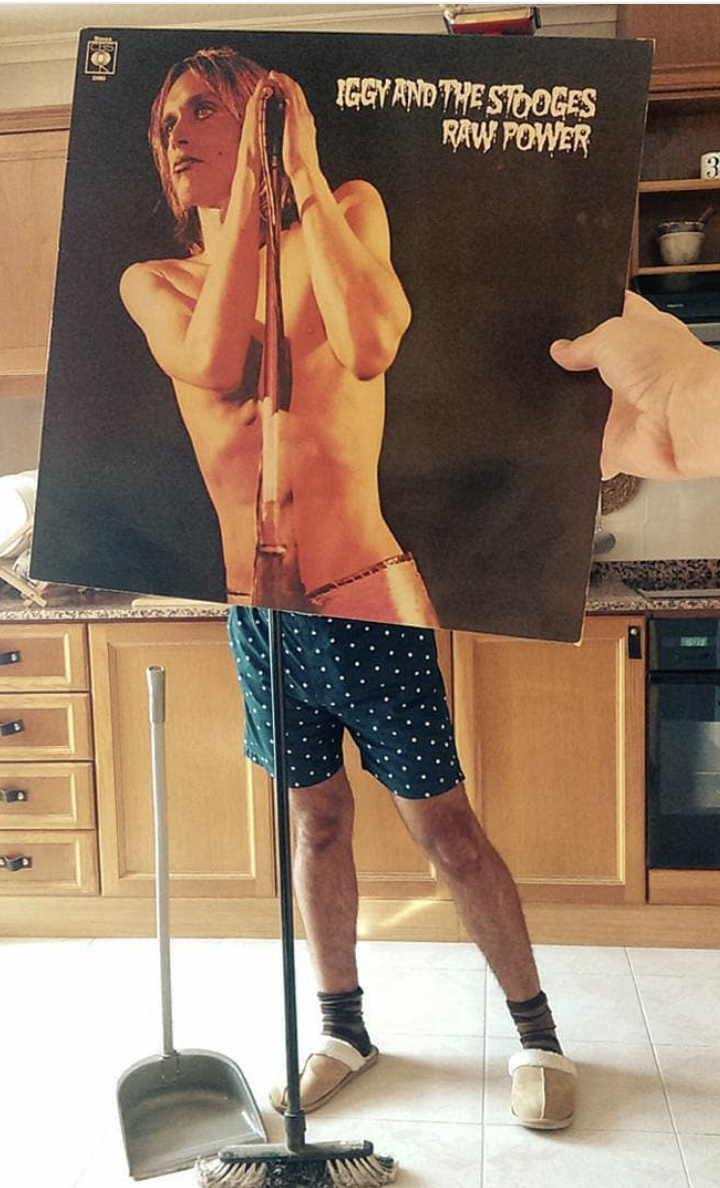
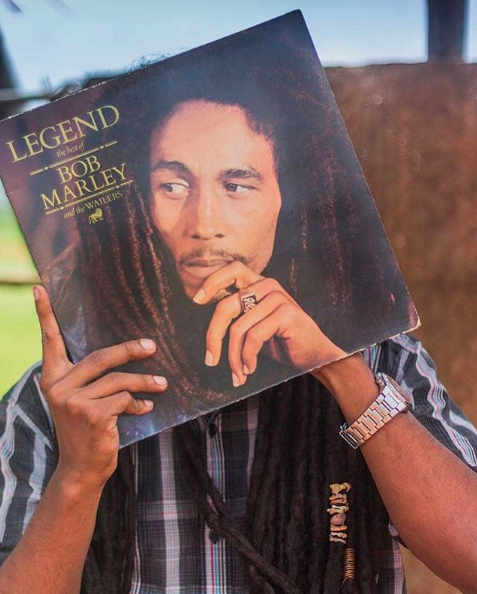
Sleeve­face is an amus­ing par­tic­i­pa­to­ry pho­to project in which peo­ple from all over the world strate­gi­cal­ly pose with match­ing album cov­ers,” writes Laugh­ing Squid’s Lori Dorn, “cre­at­ing the illu­sion that the orig­i­nal pic­ture is com­plete.”

Browse the tags #sleeve­face and #sleeve­face­sun­day (for every­thing on the inter­net even­tu­al­ly gets its day) on Insta­gram and you’ll see a vari­ety of trib­ute pos­es, some of them uncan­ni­ly well-aligned, to musi­cians whose faces we all know not least because they’ve appeared on icon­ic album cov­ers: Bruce Spring­steen to Bob Mar­ley, Simon and Gar­funkel to Iggy and the Stooges, Leonard Cohen to Fred­die Mer­cury, Janis Joplin to Adele.

All those famous names have under­gone the sleeve­face treat­ment, and quite a few of them have under­gone it more than once. Many of us have grown famil­iar indeed with these albums, and sure­ly even those of us who’ve nev­er lis­tened to them start-to-fin­ish prob­a­bly know at least a cou­ple of their songs. But even if you’ve nev­er heard so much as a mea­sure of any of them, you’ve almost cer­tain­ly seen their cov­ers — and may well, at one time or anoth­er, have been tempt­ed to hold them up in front of your own face to see how they lined up. Pop­u­lar music shows us how much we have in com­mon, but so does its pack­ag­ing.

via Laugh­ing Squid

Relat­ed Con­tent:

Enter the Cov­er Art Archive: A Mas­sive Col­lec­tion of 800,000 Album Cov­ers from the 1950s through 2018

Film­mak­er Michel Gondry Brings Clas­sic Album Cov­ers to Life in a Visu­al­ly-Packed Com­mer­cial: Pur­ple Rain, Beg­gars Ban­quet, Nev­er­mind & More

The Impos­si­bly Cool Album Cov­ers of Blue Note Records: Meet the Cre­ative Team Behind These Icon­ic Designs

Clas­sic Jazz Album Cov­ers Ani­mat­ed & Brought to Life

The Ground­break­ing Art of Alex Stein­weiss, Father of Record Cov­er Design

Based in Seoul, Col­in Mar­shall writes and broad­casts on cities, lan­guage, and cul­ture. His projects include the book The State­less City: a Walk through 21st-Cen­tu­ry Los Ange­les and the video series The City in Cin­e­ma. Fol­low him on Twit­ter at @colinmarshall or on Face­book.

Philosopher Portraits: Famous Philosophers Painted in the Style of Influential Artists

Lud­wig Wittgenstein/Piet Mon­dri­an:

Ludwig Wittgenstein & Piet Mondrian

What do the Aus­tri­an-British philoso­pher Lud­wig Wittgen­stein and the Dutch painter Piet Mon­dri­an have in com­mon? For philoso­pher and artist Renée Jor­gensen Bolinger, the two have sim­i­lar beliefs about the log­ic of space.

“Many of Mon­dri­an’s pieces explore the rela­tion­ships between adja­cent spaces,” says Bolinger “and in par­tic­u­lar the for­ma­tive role of each on the bound­aries and pos­si­bil­i­ties of the oth­er. I based this paint­ing [see above] off of Wittgen­stein’s Trac­ta­tus, in which he devel­ops a the­o­ry of mean­ing ground­ed in the idea that propo­si­tions have mean­ing only inso­far as they con­strain the ways the world could be; a mean­ing­ful propo­si­tion is thus very like one of Mon­dri­an’s col­or squares, form­ing a bound­ary and lim­it­ing the pos­si­ble con­fig­u­ra­tions of the adja­cent spaces.”

An Assis­tant Pro­fes­sor at Prince­ton, Bolinger stud­ied paint­ing a Bio­la Uni­ver­si­ty before mak­ing phi­los­o­phy her sec­ond major. “I actu­al­ly came to phi­los­o­phy quite late in my col­lege career,” Bolinger says, “only adding the major in my junior year. I was for­tu­nate to have two par­tic­u­lar­ly excel­lent and philo­soph­ic art teach­ers, Jonathan Puls and Jonathan Ander­son, who con­vinced me that my two pas­sions were not mutu­al­ly exclu­sive, and encour­aged me to pur­sue both as I began my grad­u­ate edu­ca­tion.”

Bolinger now works pri­mar­i­ly on the phi­los­o­phy of lan­guage, with side inter­ests in log­ic, epis­te­mol­o­gy, mind and polit­i­cal phi­los­o­phy. She con­tin­ues to paint. We asked her how she rec­on­ciles her two pas­sions, which seem to occu­py oppo­site sides of the mind. “I do work in ana­lyt­ic phi­los­o­phy,” she says, “but it’s only half true that phi­los­o­phy and paint­ing engage oppo­site sides of the mind. The sort of real­ist draw­ing and paint­ing that I do is all about ana­lyz­ing the rela­tion­ships between the lines, shapes and col­or tones, and so still very left-brain. Nev­er­the­less, it engages the mind in a dif­fer­ent way than do the syl­lo­gisms of ana­lyt­ic phi­los­o­phy. I find that the two types of men­tal exer­tion com­ple­ment each oth­er well, each serv­ing as a pro­duc­tive break from the oth­er.”

Bolinger has cre­at­ed a series of philoso­pher por­traits, each one pair­ing a philoso­pher with an artist, or art style, in an intrigu­ing way. In addi­tion to Wittgen­stein, she paint­ed ten philoso­phers in her first series, many of them by request. They can all be seen on her web site, where high qual­i­ty prints can be ordered.

G.E.M. Anscombe/Jackson Pol­lock:

G.E.M. Anscombe & Jackson Pollock

Bolinger says she paired the British ana­lyt­ic philoso­pher Eliz­a­beth Anscombe with the Amer­i­can abstract painter Jack­son Pol­lock for two rea­sons: “First, the loose style of Pol­lock­’s action paint­ing fits the argu­men­ta­tive (and orga­ni­za­tion­al) style of Wittgen­stein’s Philo­soph­i­cal Inves­ti­ga­tions, which Anscombe helped to edit and was instru­men­tal in pub­lish­ing. Sec­ond, her pri­ma­ry field of work, in which she wrote a sem­i­nal text, is phi­los­o­phy of action, which has obvi­ous con­nec­tions to the themes present in any of Pol­lock­’s action paint­ings.”

Got­t­lob Frege/Vincent Van Gogh:

Gottlob Frege & Van Gogh

Bolinger paired the Ger­man logi­cian, math­e­mati­cian and philoso­pher Got­t­lob Frege with the Dutch painter Vin­cent Van Gogh as a tongue-in-cheek ref­er­ence to Van Gogh’s famous paint­ing The Star­ry Night and Frege’s puz­zle con­cern­ing iden­ti­ty state­ments such as “Hes­pe­rus is Phos­pho­rus,” or “the evening star is iden­ti­cal to the morn­ing star.”

Bertrand Russell/Art Deco:

Bertrand Russell & Art Deco

Bolinger paint­ed the British logi­cian and philoso­pher Bertrand Rus­sell in the Art Deco style. “This pair­ing is a bit more about the gestalt, and a bit hard­er to artic­u­late,” says Bolinger. “The sim­pli­fi­ca­tion of form and reduc­tion to angled planes that takes place in the back­ground of this Art Deco piece are meant to cohere with Rus­sel­l’s locial atom­ism (the reduc­tion of com­plex log­i­cal propo­si­tions to their fun­da­men­tal log­i­cal ‘atoms’).”

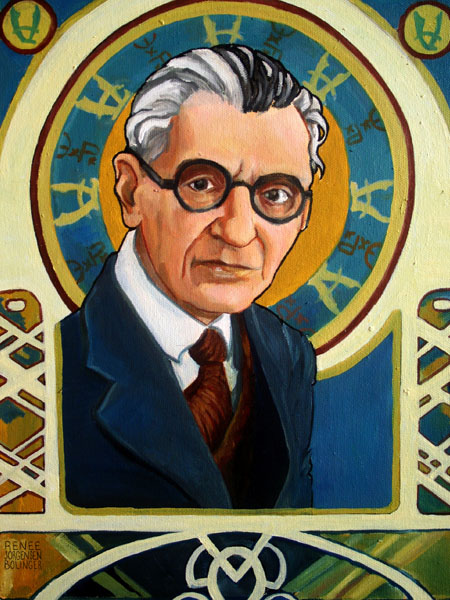
Kurt Gödel/Art Nou­veau:

Kurt Godel & Art Nouveau

Bolinger paired the Aus­tri­an logi­cian Kurt Gödel with Art Nou­veau. “The Art Nou­veau move­ment devel­oped around the theme of mech­a­niza­tion and the rep­e­ti­tion of forms,” says Bolinger, “and cen­tral­ly involves a del­i­cate bal­ance between organ­ic shapes — typ­i­cal­ly a fig­ure that dom­i­nates the por­trait — and schema­tized or abstract­ed pat­terns, often derived from organ­ic shapes, but made uni­form and repet­i­tive (often seen in the flower motifs that orna­ment most Art Nou­veau por­traits). I paired this style with Kurt Gödel because his work was ded­i­cat­ed to defin­ing com­putabil­i­ty in terms of recur­sive func­tions, and using the notion to prove the Com­plete­ness and Incom­plete­ness the­o­rems.”

To see more of Renée Jor­gensen Bolinger’s philoso­pher por­traits, click here to vis­it her site.

Note: This post orig­i­nal­ly appeared on our site back in 2013.

If you would like to sign up for Open Culture’s free email newslet­ter, please find it here. It’s a great way to see our new posts, all bun­dled in one email, each day.

If you would like to sup­port the mis­sion of Open Cul­ture, con­sid­er mak­ing a dona­tion to our site. It’s hard to rely 100% on ads, and your con­tri­bu­tions will help us con­tin­ue pro­vid­ing the best free cul­tur­al and edu­ca­tion­al mate­ri­als to learn­ers every­where. You can con­tribute through Pay­Pal, Patre­on, and Ven­mo (@openculture). Thanks!

Relat­ed Con­tent:

A His­to­ry of Phi­los­o­phy in 81 Video Lec­tures: From Ancient Greece to Mod­ern Times

Pho­tog­ra­phy of Lud­wig Wittgen­stein Released by Archives at Cam­bridge

180+ Free Phi­los­o­phy Cours­es

Philip K. Dick Tarot Cards: A Tarot Deck Modeled After the Visionary Sci-Fi Writer’s Inner World

What does Philip K. Dick have in com­mon with Jorge Luis Borges, Her­mann Hesse, and John Cage? Fans of all three twen­ti­eth-cen­tu­ry vision­ar­ies will have much to say on the mat­ter of what deep res­o­nances exist between their bod­ies of work and the world­views that pro­duced them. But they can’t over­look the fact that Dick, Borges, Hesse, and Cage all, at one time or anoth­er, enthu­si­as­ti­cal­ly con­sult­ed the ancient Chi­nese div­ina­tion text known as the I Ching. Also known as The Book of Changes, it became a must-have coun­ter­cul­tur­al vol­ume in the 1960s, and the words of guid­ance it pro­vid­ed, in all their open­ness to inter­pre­ta­tion, sure­ly influ­enced no small num­ber of deci­sions made in that era.

What the I Ching had to say cer­tain­ly influ­enced the deci­sions of Philip K. Dick, in life as well as in writ­ing. Not only did he use the book to write The Man in the High Cas­tle, his 1962 nov­el por­tray­ing a world in which the Axis pow­ers won World War II, he also includ­ed it as a plot ele­ment in the sto­ry itself.

And speak­ing of alter­nate his­to­ries, we might ask: could Dick have writ­ten The Man in the High Cas­tle with­out the I Ching? Or could he have writ­ten it using anoth­er div­ina­tion tool, per­haps one from the West rather than the East? What would the nov­el have looked like if writ­ten while har­ness­ing the per­cep­tive pow­er of tarot, the 15th-cen­tu­ry Euro­pean card game whose decks also have a long his­to­ry as win­dows onto human des­tiny?

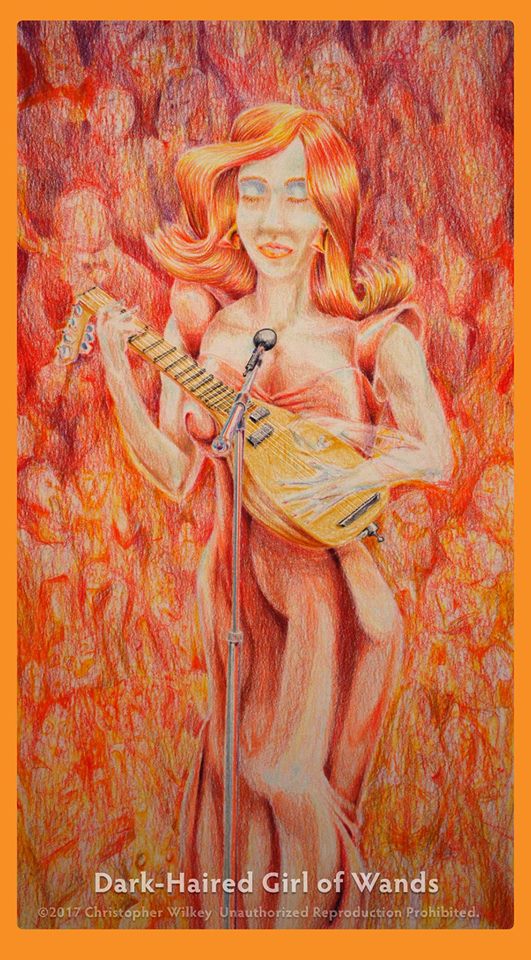
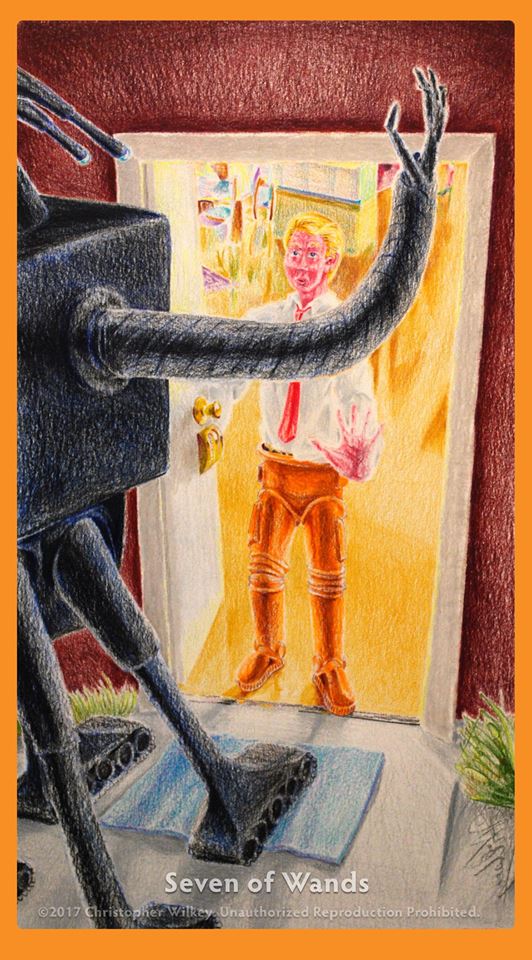
Recent­ly the world of tarot, the world of the I Ching, and the world of Philip K. Dick col­lid­ed, result­ing in The Fool’s Jour­ney of Philip K. Dick, a tarot deck pub­lished by Wide Books. “PKD schol­ar Ted Hand and tarot artist Christo­pher Wilkey have brought togeth­er a new vision of tarot and the great works of Philip K. Dick,” says Wide Books’ site. “Ide­al for advanced stu­dents of tarot as well as novices to the I Ching,” the deck “takes the seek­er through an ini­ti­a­tion into the life and writ­ings of one of the great­est writ­ers of recent times.” In addi­tion to its 80 cards, each draw­ing from some ele­ment of Dick­’s body of work, the deck includes “four rule cards for two I Ching inspired card games and an eight-sided fold­ing book­let about tarot as Gnos­tic Alle­go­ry, with begin­ning exer­cis­es con­trast­ing tarot to the I Ching.”

Two of the games pay trib­ute to par­tic­u­lar Dick nov­els: A Maze of Death and its “domi­no-type game” that “famil­iar­izes play­ers with the tri­grams of which I Ching hexa­grams are com­posed,” and Ubik, which has “play­ers either hop­ing to avoid accu­mu­lat­ing entropy or try­ing to cap­ture all the ener­gy you can from the deck and oth­er play­ers to be the last stand­ing at the end of the game.” If that sounds like a good time to you, you’ll have to reg­is­ter your inter­est in order­ing a copy of The Fool’s Jour­ney of Philip K. Dick on Wide Books’ con­tact form, since the ini­tial run has sold out. That won’t come as a sur­prise to Dick­’s fans, who know the addic­tive pow­er of one glimpse into his inner world, with its rich mix­ture of the super­nat­ur­al, the sci­en­tif­ic, the para­nor­mal, and the para­noid. But what kind of books will they use his tarot deck to write?

Relat­ed Con­tent:

Behold the Sola-Bus­ca Tarot Deck, the Ear­li­est Com­plete Set of Tarot Cards (1490)

H.R. Giger’s Tarot Cards: The Swiss Artist, Famous for His Design Work on Alien, Takes a Jour­ney into the Occult

The Tarot Card Deck Designed by Sal­vador Dalí

The Thoth Tarot Deck Designed by Famed Occultist Aleis­ter Crow­ley

Twin Peaks Tarot Cards Now Avail­able as 78-Card Deck

Robert Crumb Illus­trates Philip K. Dick’s Infa­mous, Hal­lu­ci­na­to­ry Meet­ing with God (1974)

Based in Seoul, Col­in Mar­shall writes and broad­casts on cities, lan­guage, and cul­ture. His projects include the book The State­less City: a Walk through 21st-Cen­tu­ry Los Ange­les and the video series The City in Cin­e­ma. Fol­low him on Twit­ter at @colinmarshall or on Face­book.

Legendary Protest Songs from Woodstock: Hendrix, Jefferson Airplane, Country Joe & More Perform Protest Songs During the Music Festival That Launched 50 Years Ago This Week

This year’s big event to cel­e­brate the 50-year anniver­sary of the most famous music fes­ti­val in the world has died an igno­min­ious death. As Vari­ety wrote in a scathing “obit­u­ary” last month, “Wood­stock 50 passed away today at the age of 7 months, fol­low­ing a brave and very, very long bat­tle with can­cel.”

Not a few peo­ple have said good rid­dance. What could the tribute—to take place not in Wood­stock but in Baltimore—have in com­mon with its name­sake, save a small hand­ful of the still-liv­ing orig­i­nal per­form­ers? The use of “Wood­stock” as a brand seems cyn­i­cal, but then again, we’ve also grown leery of the leg­end of Wood­stock 1. What was it about? Clas­sic rock stars on a farm? Stoned, naked hip­pies flail­ing in the mud? What jus­ti­fies the fifty years of hype?

Wood­stock was about much more than drug­gy flower chil­dren shag­ging in bedrag­gled tents, yet this stereo­type was prop­a­gat­ed from the start. The fes­ti­val “was a stri­dent­ly anti­war spec­ta­cle,” online his­to­ry project All About Wood­stock explains. “Its mes­sage was dilut­ed by the media. Rather than focus on the polit­i­cal state­ments made, main­stream cul­tur­al com­men­ta­tors talked about hip­pies, long hair, and nudi­ty.” A belat­ed wed­ding par­ty, Wood­stock sym­bol­ized “the merg­er and ambiva­lence of the coun­ter­cul­ture and protest.”

The mar­riage may be in sham­bles in the time of Wood­stock 50 but it held on for sev­er­al decades. Wood­stock “was the ‘com­ing out’ par­ty of the rock ‘n’ roll gen­er­a­tion,” writes NPR. Folk singer Richie Havens, the festival’s first per­former, remem­bers it as “the begin­ning of the world, as far as I was con­cerned.” Booked for a 20-minute set, Havens end­ed up play­ing for much longer when San­tana couldn’t be found, ad-lib­bing “Free­dom (Moth­er­less Child)” as his clos­er.

“The word ‘free­dom came out of my mouth because this was our real par­tic­u­lar free­dom,” he says in an inter­view with NPR’s Tony Cox. “We’d final­ly made it to above ground.” A few months lat­er, in Decem­ber, the decade closed on a much dark­er note, sym­bol­ized by the Rolling Stones’ bloody Alta­mont Free Con­cert. But for three days that year, August 15–17, 1969, it seemed like music fes­ti­vals might change the world.

Maybe they did. Wood­stock orga­niz­er Michael Lang thinks so. “I think Wood­stock proved the world that it was pos­si­ble for peo­ple to live peace­ful­ly,” he said in a 2015 inter­view. “It gave cre­dence to the posi­tions we as a young gen­er­a­tion took on per­son­al free­doms, end­ing a war we felt unjust, respect for the plan­et, the fight for civ­il rights, women’s rights, and human rights in gen­er­al. The impact on soci­ety con­tin­ues to this day.”

The fes­ti­val was also, of course, a mas­sive­ly star-stud­ded event filled with career high­light per­for­mances like Hendrix’s rad­i­cal, blis­ter­ing “Star-Span­gled Ban­ner.” Not every act showed up to make a state­ment. The Who were pret­ty sour about the gig, Lang remem­bers. “They were not part of the ‘hip­pie’ thing and Pete Townsend had to be talked into tak­ing the date.” But those who came to make a state­ment weren’t shy about it. Jef­fer­son Air­plane called for vol­un­teers for the rev­o­lu­tion in their anti-war anthem “Vol­un­teers.” Coun­try Joe and the Fish end­ed the sec­ond set on Sat­ur­day with their satir­i­cal “I‑Feel-Like‑I’m‑Fixin’-to-Die Rag,” an explic­it­ly anti-Viet­nam War song that asked, “what are we fight­ing for”?

Joan Baez, six months preg­nant at the time, sang tra­di­tion­al folk songs, Dylan’s “I Shall Be Released,” and Gram Parson’s “Hick­o­ry Wind.” Her clos­er, spir­i­tu­al “We Shall Over­come,” bridged the music of the Civ­il Rights move­ment with that of the anti-war move­ment, pro­claim­ing in her glo­ri­ous sopra­no, “We shall live in peace some­day.” The moment, fifty years ago this week, can nev­er be recre­at­ed, no mat­ter how much mon­ey orga­niz­ers throw at Wood­stock retreads. But we don’t need mil­lions to remem­ber what the orig­i­nal Wood­stock stood for. Sex, drugs, and mud got all the press, but the festival’s inten­tions were to protest war over­seas and hatred and mur­der at home with three days of peace and music—a vision, as Havens extem­po­ra­ne­ous­ly sang out, of anoth­er kind of free­dom.


The orig­i­nal fes­ti­val, “essen­tial­ly a mass move­ment pro­mot­ing peace,” gets yet anoth­er look in a new Amer­i­can Expe­ri­ence doc­u­men­tary, Wood­stock: Peace, Love and Music, which pre­miered last Tues­day on PBS. (Stream it free here.) With “nev­er-before-seen footage” and tes­ti­mo­ni­als from “those who expe­ri­enced it first­hand,” the film doc­u­ments the even­t’s highs and lows, includ­ing the many “near dis­as­ters” that “put the ideals of the coun­ter­cul­ture to the test.” Also see the New York Times arti­cle, “How to Relive Wood­stock From the Com­fort of Your Couch,” which fea­tures “six movies, 12 album col­lec­tions, two songs and 17 books that will take will­ing trav­el­ers back to August 1969.” This includes, of course, Michael Wadleigh’s icon­ic doc­u­men­tary, Wood­stock: 3 Days of Peace and Music.

Relat­ed Con­tent:

Jimi Hen­drix Live at Wood­stock: His­toric Con­cert Cap­tured on Film

David Cros­by & Gra­ham Nash at Occu­py Wall Street; Echoes of Wood­stock

Wattstax Doc­u­ments the “Black Wood­stock” Con­cert Held 7 Years After the Watts Riots (1973)

Josh Jones is a writer and musi­cian based in Durham, NC. Fol­low him at @jdmagness.

Pretty Much Pop: A Culture Podcast #6: Why Adults Might Play Video Games

Eri­ca Spyres, Bri­an Hirt, and Mark Lin­sen­may­er are joined by Ian Maio (who worked for mar­ket­ing for IGN and Turn­er in e‑sports) for our first dis­cus­sion about gam­ing. Do adults have any busi­ness play­ing video games? Should you feel guilty about your video game habits?

Ian gives us the lay of the land about e‑sports, com­par­ing it to phys­i­cal sports, and we dis­cuss the chang­ing social func­tions of gam­ing, alleged and actu­al gam­ing dis­or­ders, dif­fer­ent types of gamers, inclu­siv­i­ty, and more. Whether you game a lot or not at all, you should still find some­thing inter­est­ing here.

We touch on the King of Kong doc­u­men­taryGrand Theft AutoOver­watchThe Last of UsBor­der­landsSuper MarioCup­head, NY Times Elec­tron­ic Cross­word Puz­zle, and more. Be sure to watch the Black Mir­ror episode, “Strik­ing Vipers.”

Sources for this episode:

This episode includes bonus con­tent that you can only hear by sup­port­ing the pod­cast at patreon.com/prettymuchpop. This pod­cast is part of the Par­tial­ly Exam­ined Life pod­cast net­work.

Please go check out Mod­ern Day Philoso­phers at moderndayphilosophers.net and See You on the Oth­er Side at othersidepodcast.com.

Pret­ty Much Pop is the first pod­cast curat­ed by Open Cul­ture. Browse all Pret­ty Much Pop posts or start with the first episode.

« Go BackMore in this category... »
Quantcast