How Wealthy Women (Like the Mona Lisa) Got Dressed in Renaissance Florence

“The inhab­i­tants of fif­teenth-cen­tu­ry Flo­rence includ­ed Brunelleschi, Ghib­er­ti, Donatel­lo, Masac­cio, Fil­ip­po Lip­pi, Fra Angeli­co, Ver­roc­chio, Bot­ti­cel­li, Leonar­do, and Michelan­ge­lo,” writes essay­ist and ven­ture cap­i­tal­ist Paul Gra­ham. “There are rough­ly a thou­sand times as many peo­ple alive in the U.S. right now as lived in Flo­rence dur­ing the fif­teenth cen­tu­ry. A thou­sand Leonar­dos and a thou­sand Michelan­ge­los walk among us.” But “to make Leonar­do you need more than his innate abil­i­ty. You also need Flo­rence in 1450”: its com­mu­ni­ty of artists, and indeed every­one of all class­es who con­sti­tut­ed its uncom­mon­ly fruit­ful soci­ety.

Flo­rence’s cul­tur­al flour­ish­ing last­ed into the six­teenth cen­tu­ry. Above, you can see a morn­ing in the life of one Flo­ren­tine of the 1500s recre­at­ed in a video by Crow’s Eye Pro­duc­tions. Pre­vi­ous­ly fea­tured here on Open Cul­ture for their re-cre­ations of the dress­ing process­es of the four­teenth, sev­en­teenth, and eigh­teenth cen­turies, they show us this time how a woman would put her­self togeth­er — or by the help, be put togeth­er — in turn-of-the-six­teenth-cen­tu­ry Flo­rence, which, “like many oth­er Ital­ian regions, had devel­oped its own dis­tinc­tive fash­ion style.” The camur­ra gown, the sep­a­rate gold­en sleeves, the infor­mal guar­nel­lo over-gown: all evoke this par­tic­u­lar time and place.

As each gar­ment and acces­so­ry is applied to the mod­el, she may begin to look odd­ly famil­iar. “In 1503, a silk mer­chant from Flo­rence, Francesco del Gio­con­do, com­mis­sioned a por­trait of his young wife to adorn a wall in their new home, and per­haps to cel­e­brate the safe arrival of their third child,” the video’s nar­ra­tor tells us. “The artist com­mis­sioned was Leonar­do da Vin­ci.” His por­trait of Madon­na Gia­con­do is “an inti­mate por­tray­al of a young mar­ried woman,” expen­sive­ly but mod­est­ly dressed, wear­ing a smile “that seems intend­ed for Francesco’s eyes only.” Yet until Leonar­do’s death, the pic­ture nev­er left his own pos­ses­sion — per­haps because he sensed it had a des­tiny much greater than the wall of the del Gio­con­dos’ bed­cham­ber.

Relat­ed con­tent:

How Women Got Dressed in the 14th & 18th Cen­turies: Watch the Very Painstak­ing Process Get Cin­e­mat­i­cal­ly Recre­at­ed

How Fash­ion­able Dutch Women (Like the Girl with a Pearl Ear­ring) Got Dressed in 1665

How Ladies & Gen­tle­men Got Dressed in the 18th Cen­tu­ry: It Was a Pret­ty Involved Process

What Makes Leonardo’s Mona Lisa a Great Paint­ing?: An Expla­na­tion in 15 Min­utes

Orig­i­nal Por­trait of the Mona Lisa Found Beneath the Paint Lay­ers of da Vinci’s Mas­ter­piece

How Did the Mona Lisa Become the World’s Most Famous Paint­ing?: It’s Not What You Think

Based in Seoul, Col­in Mar­shall writes and broad­casts on cities, lan­guage, and cul­ture. His projects include the Sub­stack newslet­ter Books on Cities, the book The State­less City: a Walk through 21st-Cen­tu­ry Los Ange­les and the video series The City in Cin­e­ma. Fol­low him on Twit­ter at @colinmarshall, on Face­book, or on Insta­gram.

A Special New, Two-Volume Collection of Philip K. Dick Stories Comes Illustrated by 24 Different Artists

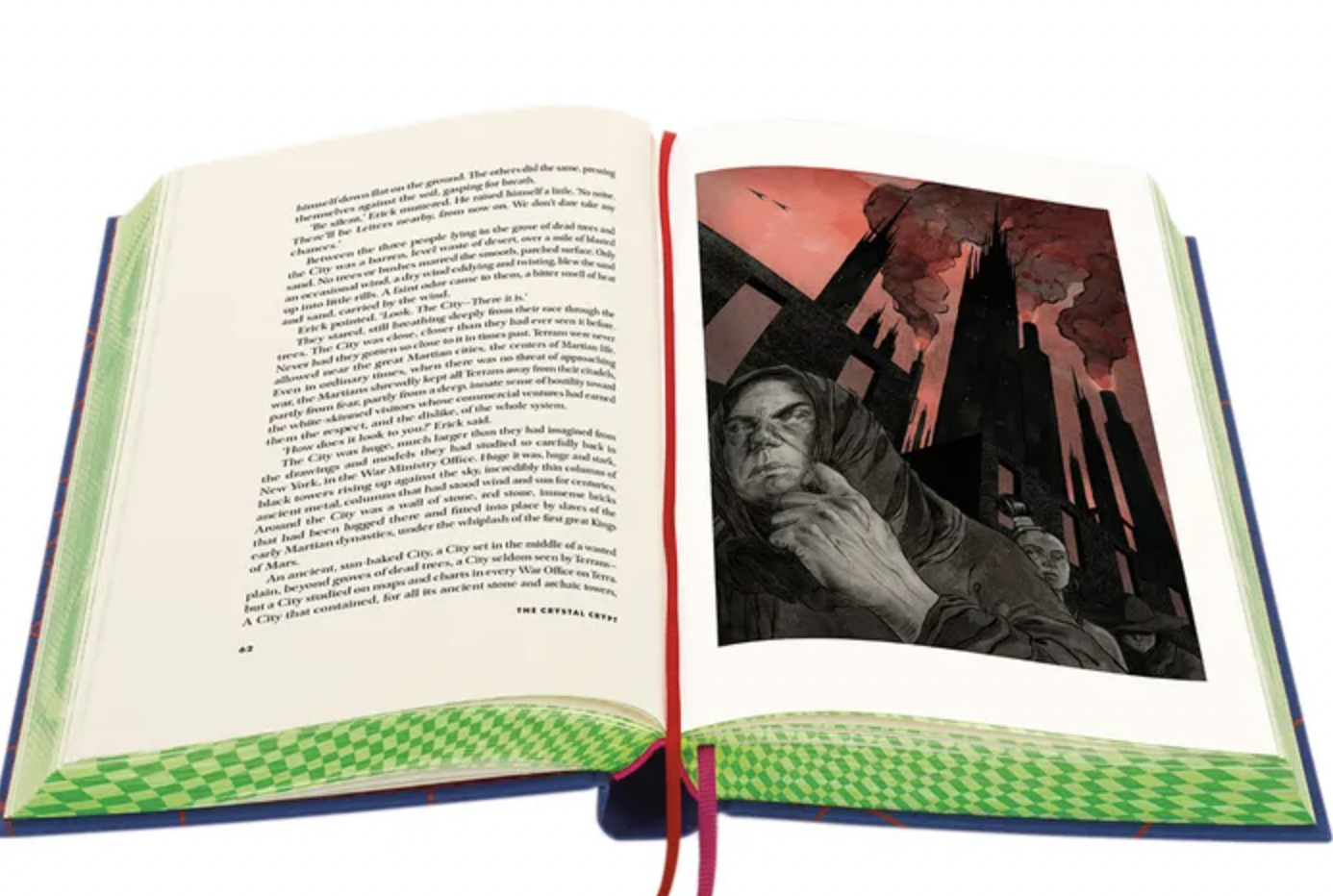
Philip K. Dick­’s mul­ti­ple worlds have appeared in increas­ing­ly bet­ter edi­tions since the author passed away in 1982. In the 21st cen­tu­ry, respectable hard­backs and qual­i­ty paper have ful­ly replaced yel­lowed, pulpy pages. Maybe no edi­tion yet is more attrac­tive than the Folio Soci­ety of Lon­don’s two-vol­ume hard­back set of Dick­’s select­ed short sto­ries, illus­trat­ed by 24 dif­fer­ent artists and includ­ing tales that have sur­vived film adap­ta­tions, for bet­ter and worse, like “Pay­check,” “The Minor­i­ty Report,” and “We Can Remem­ber It for You Whole­sale.” The books will set you back $125, but that’s a small sum com­pared to the price of an ear­li­er, four-vol­ume Com­plete Short Sto­ries, pub­lished in a lim­it­ed edi­tion of 750, day-glo, hand-num­bered copies. These sold out in less than 48 hours and now go for $2,500 in rare online sales.

In death Dick has achieved what he sought in his writ­ing life: suc­cess as lit­er­ary author. He thought he would even­tu­al­ly pub­lish his real­ist fic­tion to earn the rep­u­ta­tion, vow­ing in 1960 that he would “take twen­ty to thir­ty years to suc­ceed as a lit­er­ary writer.” Instead, he’s famous for great fic­tion that just hap­pens to use the idiom of sci-fi to ask, as he wrote in an unde­liv­ered 1978 speech: “What is real­i­ty?” and “What con­sti­tutes an authen­tic human being?”

We tend to asso­ciate these exis­ten­tial, pre-post-mod­ernist ques­tions with nov­els and novel­las from the 60s and 70s that com­mu­ni­cate Dick­’s para­noid world­view — works nom­i­nat­ed for a Neb­u­la Award, for exam­ple, like Do Androids Dream of Elec­tric Sheep?, the source for the best of the film adap­ta­tions, Blade Run­ner.

Dick first won fame in 1963 when he was giv­en the Hugo Award for The Man in the High Cas­tle, a book that exceeds the bound­aries of genre to become, unmis­tak­ably, a PKD orig­i­nal. His ear­li­er sto­ries, on the oth­er hand, writ­ten through­out the 1950s when the author was in his twen­ties, tend to fol­low the con­ven­tions of the hard sci-fi of the time, with the same themes of space trav­el, robot­ics, and oth­er futur­is­tic tech­nol­o­gy that pre­dom­i­nate in Robert Hein­lein and Isaac Asi­mov. Super­fi­cial­ly, there might seem lit­tle to dis­tin­guish Dick­’s ear­ly sto­ries from oth­er writ­ing of the time pub­lished in pulps like Sci­ence Fic­tion Quar­ter­ly, Galaxy Sci­ence Fic­tionand IF

But the ear­ly sto­ries show the unmis­tak­able touch of the lat­er nov­el­ist. There are the flash­es of humor, absur­di­ty, deep insight into the human psy­che, and the warmth and empa­thy Dick­’s nar­ra­tive voice nev­er lost even in his most bizarre fugues. In his first pub­lished sto­ry, “Roog,” sold in 1951, Dick imag­ines a dog who believes the garbage men come to steal the fam­i­ly’s food, leav­ing only the emp­ty met­al stor­age can behind. “Cer­tain­ly, I decid­ed,” he writes, “that dog sees the world quite dif­fer­ent­ly than I do, or any humans. And then I began to think, maybe each human being lives in a unique world, a pri­vate world, a world dif­fer­ent from those inhab­it­ed and expe­ri­enced by all oth­er humans.”

It’s a short leap from these thoughts to the idea that there might be no sin­gu­lar real­i­ty at all to fight over. Back then, he says, “I had no idea that such fun­da­men­tal issues could be pur­sued in the sci­ence fic­tion field. I began to pur­sue them uncon­scious­ly.” His uncon­scious led him, in 1954’s “Adjust­ment Team” — the source of a less-than-great film — to imag­ine anoth­er dog, one who talks and inter­feres in human affairs (a detail omit­ted, thank­ful­ly, from The Adjust­ment Bureau). Dick­’s ear­ly sto­ries often fea­tured com­i­cal ani­mals — such as the Okja-like Mar­t­ian pig in “Beyond Likes the Wub,” a high­ly-intel­li­gent crea­ture capa­ble of telepa­thy and deep feel­ing. While he would turn his atten­tion from ani­mals and aliens to androids, alter­nate real­i­ties, and altered states of con­scious­ness, Dick always had the abil­i­ty to turn the genre of sci­ence fic­tion into a lit­er­ary tool for the most dar­ing of philo­soph­i­cal inves­ti­ga­tions.

Learn more about the two-vol­ume Folio Soci­ety Select­ed Sto­ries of Philip K. Dick here.

Relat­ed Con­tent:

33 Sci-Fi Sto­ries by Philip K. Dick as Free Audio Books & Free eBooks

Hear Philip K. Dick’s Famous Metz Speech: “If You Find this World Bad, You Should See Some of the Oth­ers” (1977)

Hear 6 Clas­sic Philip K. Dick Sto­ries Adapt­ed as Vin­tage Radio Plays

Josh Jones is a writer and musi­cian based in Durham, NC. Fol­low him at @jdmagness

Danny Boyle’s New Sex Pistols Series Tells the Story of Punk Rock in the UK

“I am cre­at­ing a rev­o­lu­tion here! I don’t want musi­cians, I want sabo­teurs, I want assas­sins, I want shock troops!” — Mal­colm McLaren in FX’s Pis­tol

“Peo­ple are try­ing to make it out as a bit of a joke, but it’s not a joke. It’s not polit­i­cal anar­chy either; it’s musi­cal anar­chy, which is a dif­fer­ent thing.” — John Lydon (John­ny Rot­ten), Inter­view with Mary Har­ron, 1976

“What do you think of Steve [Jones]?” says Mal­colm McLaren (Thomas Brodie-Sang­ster) to his part­ner Vivi­enne West­wood (Talu­lah Riley) before telling her his plans to man­age the future Sex Pis­tols in Oscar-win­ning direc­tor Dan­ny Boyle’s FX mini-series Pis­tol. “Very dam­aged,” says West­wood, “but that’s quite good.” This sits well with bud­ding impre­sario McLaren, who sees then-lead singer Jones as exact­ly the bomb he needs to throw at the estab­lish­ment. “He’s got noth­ing else to live for,” says McLaren cold­ly.

The kids in the UK punk scene McLaren and West­wood stage-man­aged may have been out­casts, but many also came from staid sub­ur­ban back­grounds, as did many of the punks in the down­town New York scene. When McLaren calls Jones (Toby Wal­lace) “the real deal,” he means the angry, drunk­en teenage face of a work­ing class with lit­tle left to lose. Boyle’s series sets Jones up as rep­re­sen­ta­tive of what made British punk so angry and “edgy” (to use one of Jones’ favorite words). The very first scene recre­ates his famous theft of David Bowie’s instru­ments to start the band. Genius steal­ing from genius.

Jones not only steals famous musi­cians’ gear, but he joyrides in stolen cars, and tries to steal leather pants from SEX, McLaren and West­wood’s S&M‑themed bou­tique. There, future Pre­tenders front­woman Chrissie Hyn­de (Syd­ney Chan­dler) works the counter, and threat­ens to beat him with a crick­et bat. The focus on Jones almost exclu­sive­ly in the first episode sug­gests that he is the sin­gu­lar “Pis­tol” of the title.

Oth­er char­ac­ters show up even­tu­al­ly — front­man John­ny Rot­ten (Anson Boon) makes his appear­ance in the sec­ond episode (or “Track”) to bump Jones from vocals to gui­tar. The penul­ti­mate episode is titled “Nan­cy and Sid” in homage to Alex Cox’s cult biopic Sid and Nan­cy. But in the begin­ning, when the band was called “The Swankers,” it was all Steve Jones’ show, Boyle’s series sug­gests, from procur­ing the gear, to writ­ing the first songs, to land­ing McLaren as man­ag­er.

Why release a bio­graph­i­cal series on the Sex Pis­tols in 2022? The sto­ry has been told, in inter­views, mem­oirs, and films, by the band, their entourage, hang­ers-on, and fans, and their man­ag­er, styl­ists, road­ies, jour­nal­ists, and pho­tog­ra­phers. It has been told so many times, so many ways, it makes the mul­ti­ple per­spec­tives of Kuro­sawa’s Rashomon seem easy to rec­on­cile. (See com­par­isons between Boyle’s show and oth­er doc­u­ments above.) What could one more telling, stream­ing on a net­work once owned by Rupert Mur­doch and now owned by the Dis­ney Cor­po­ra­tion, add to the liv­ing mem­o­ry of 1970’s British Punk™?

We can hear some answers from series co-cre­ator Boyle in the inter­view clip just above with the BBC. He describes what the band meant to him when he was a uni­ver­si­ty stu­dent read­ing the news of the under­ground Lon­don in NME. “It’s only when you cre­ate true chaos,” he says, “that some­thing new can emerge.” Does Pis­tol bring some­thing new? The series is enter­tain­ing, recre­at­ing events famil­iar to us from any of the mul­ti­ple his­to­ries of the Sex Pis­tols and doing so in a stream­lined, hard­ly chaot­ic, nar­ra­tive style.

Keep­ing the focus square­ly on the hand­some, charis­mat­ic Jones in the first episode (and to a less­er extent dap­per orig­i­nal bassist Glen Mat­lock and boy­ish drum­mer Paul Cook) soft­ens the band’s usu­al por­trait. Maybe they seem more palat­able at first to the very estab­lish­ment McLaren tried to det­o­nate in his rev­o­lu­tion. But as Lydon, who hap­pi­ly took over as their spokesman, told Mary Har­ron in a 1976 inter­view, the idea that the Sex Pis­tols should be thought of as “social­ly sig­nif­i­cant” nev­er appealed to him. “We want to be AMATEURS,” he sneered.

They wrote scathing nihilist protest songs like “EMI” and “God Save the Queen” (which they played on the Thames on the Queen’s Sil­ver Jubilee in 1977, above). But the Pis­tols were not actu­al­ly anti-cor­po­rate anar­chists. They were anti­so­cial shock-rock the­ater. It is bewil­der­ing, nonethe­less — because of the weight of their influ­ence on polit­i­cal­ly-charged punk rock — to see them turned into fic­tion­al­ized heroes in cor­po­rate media. And it is jar­ring to hear Lydon praise Trump, Nigel Farage, and the far right, with­out a trace of irony, as the real inher­i­tors of punk. Nev­er one to with­hold an opin­ion, he’s made his views on the show clear (below): “It’s dead against every­thing we stood for.”

Iron­i­cal­ly, Mat­lock, who is cred­it­ed with writ­ing ten of the twelve tracks on Nev­er Mind the Bol­locks, Here’s the Sex Pis­tols, once said exact­ly the same thing about John­ny Rot­ten. So, what did the Sex Pis­tols stand for? Piss­ing peo­ple off, becom­ing absolute­ly hat­ed, and get­ting rich? Only the last part of McLaren’s plot failed when he lost con­trol of his mon­ster. For all his rev­o­lu­tion­ary fer­vor, even McLaren was ini­tial­ly shocked (then delight­ed, then hor­ri­fied and dis­gust­ed) by the band’s bad man­ners. Maybe writer and under­ground punk car­toon­ist John Holm­strom said it best: “It’s unbe­liev­able that a rock group that played no more than one hun­dred live per­for­mances… and exist­ed for only twen­ty-sev­en months, could become as inter­na­tion­al­ly dis­liked as the Sex Pis­tols.” It’s even more unbe­liev­able that they’ve become so inter­na­tion­al­ly beloved.

Relat­ed Con­tent:

The Sex Pis­tols Make a Scan­dalous Appear­ance on the Bill Grundy Show & Intro­duce Punk Rock to the Star­tled Mass­es (1976)

The Sex Pis­tols Riotous 1978 Tour Through the U.S. South: Watch/Hear Con­certs in Dal­las, Mem­phis, Tul­sa & More

Watch the Sex Pis­tols’ Very Last Con­cert (San Fran­cis­co, 1978)

The Sex Pis­tols’ Sid Vicious Sings Frank Sinatra’s “My Way”: Is Noth­ing Sacred?

Josh Jones is a writer and musi­cian based in Durham, NC. Fol­low him at @jdmagness

Ambient Kyoto: Brian Eno Stages His First Large-Scale Exhibition in Japan

If you live in Kyoto or are trav­el­ing to Japan in the next two months or, who knows, maybe you have a whole lot­ta miles saved up on your cred­it card, Bri­an Eno has a career-span­ning exhi­bi­tion going on at the for­mer wel­fare cen­tre of the Kyoto Chuo Shinkin Bank.

The above live stream record­ing fea­tures a selec­tion of pre­vi­ous­ly released ambi­ent work, along with a pan­el of Japan­ese “Eno Experts” chat­ting about the musician/producer/artist/thinker. They play selec­tions on vinyl, show clips from rare Eno doc­u­men­taries, even man­age to dig up a LaserDisc of Thurs­day After­noon and a CD-Rom of Head Can­dy.

Ambi­ent Kyoto is Eno’s first large-scale exhi­bi­tion in Japan, and fea­tures the instal­la­tions “77 Mil­lion Paint­ings,” “The Ship,” his con­stant­ly shift­ing “Light Box­es,” a stream of “The Light­house,” Eno’s SONOS chan­nel of his unre­leased archive, and a new work called “Face to Face,” which the exhi­bi­tion site describes thus:

This work began with a small group of pho­tographs of the faces of 21 real peo­ple, each in a sin­gle still image. Using spe­cial soft­ware, the image slow­ly changes pix­el by pix­el from one real face to anoth­er. This cre­ates a long chain of “new humans” between the real faces of each and every one, such as those who did­n’t actu­al­ly exist, inter­me­di­ate humans, and more than 36,000 new faces, 30 per sec­ond. can do.

Yes, you say, that’s all very nice, but what’s on sale at the gift shop? Here you won’t be dis­ap­point­ed. There’s vinyl and CD albums, an exhib­it cat­a­log, t‑shirts, tote bags, and box­es of Eno and Peter Schmidt’s Oblique Strate­gies. And only in Japan can you get this: a box of Japan­ese sweets designed to look like one of his light instal­la­tions.

The exhib­it is afford­able (around $20) and you can stay as long as you like. Eno con­tin­ues to fas­ci­nate and make art in spaces where he’s often the first to start exploring—-certainly in terms of ambi­ent and gen­er­a­tive art he has been a pio­neer. In an inter­view near the end of the eight-hour live stream he describes his career:

“I just don’t see any­body else doing [these instal­la­tions]. And I know it’s pow­er­ful. So I think wow, I’ve got this all to myself. So instead of shoot­ing arrows at some­body else’s tar­get, which I’ve nev­er been very good at, I make my own tar­get around wher­ev­er my arrow’s hap­pened to have land­ed.”

Learn more about the exhi­bi­tion here.

Relat­ed Con­tent:

Lis­ten to “Bri­an Eno Day,” a 12-Hour Radio Show Spent With Eno & His Music (Record­ed in 1988)

Bri­an Eno’s Advice for Those Who Want to Do Their Best Cre­ative Work: Don’t Get a Job

Bri­an Eno Lists the Ben­e­fits of Singing: A Long Life, Increased Intel­li­gence, and a Sound Civ­i­liza­tion

Ted Mills is a free­lance writer on the arts who cur­rent­ly hosts the Notes from the Shed pod­cast and is the pro­duc­er of KCR­W’s Curi­ous Coast. You can also fol­low him on Twit­ter at @tedmills, and/or watch his films here.

Revisit Vintage Issues of Astounding Stories, the 1930s Magazine that Gave Rise to Science Fiction as We Know It

Hav­ing been putting out issues for 92 years now, Ana­log Sci­ence Fic­tion and Fact stands as the longest con­tin­u­ous­ly pub­lished mag­a­zine of its genre. It also lays claim to hav­ing devel­oped or at least pop­u­lar­ized that genre in the form we know it today. When it orig­i­nal­ly launched in Decem­ber of 1929, it did so under the much more whiz-bang title of Astound­ing Sto­ries of Super-Sci­ence. But only three years lat­er, after a change of own­er­ship and the instal­la­tion as edi­tor of F. Orlin Tremaine, did the mag­a­zine begin pub­lish­ing work by writ­ers remem­bered today as the defin­ing minds of sci­ence fic­tion.

Under Tremaine’s edi­tor­ship, Astound­ing Sto­ries pulled itself above its pulp-fic­tion ori­gins with sto­ries like Jack Williamson’s “Legion of Space” and John W. Camp­bel­l’s “Twi­light.” The lat­ter inspired the strik­ing illus­tra­tion above by artist Elliott Dold. “Dold’s work was deeply influ­enced by Art Deco, which lends its geo­met­ric forms to the city of machines in ‘Twi­light,’ ” writes the New York Times’ Alec Nevala-Lee, which “inau­gu­rat­ed the mod­ern era of sci­ence fic­tion.”

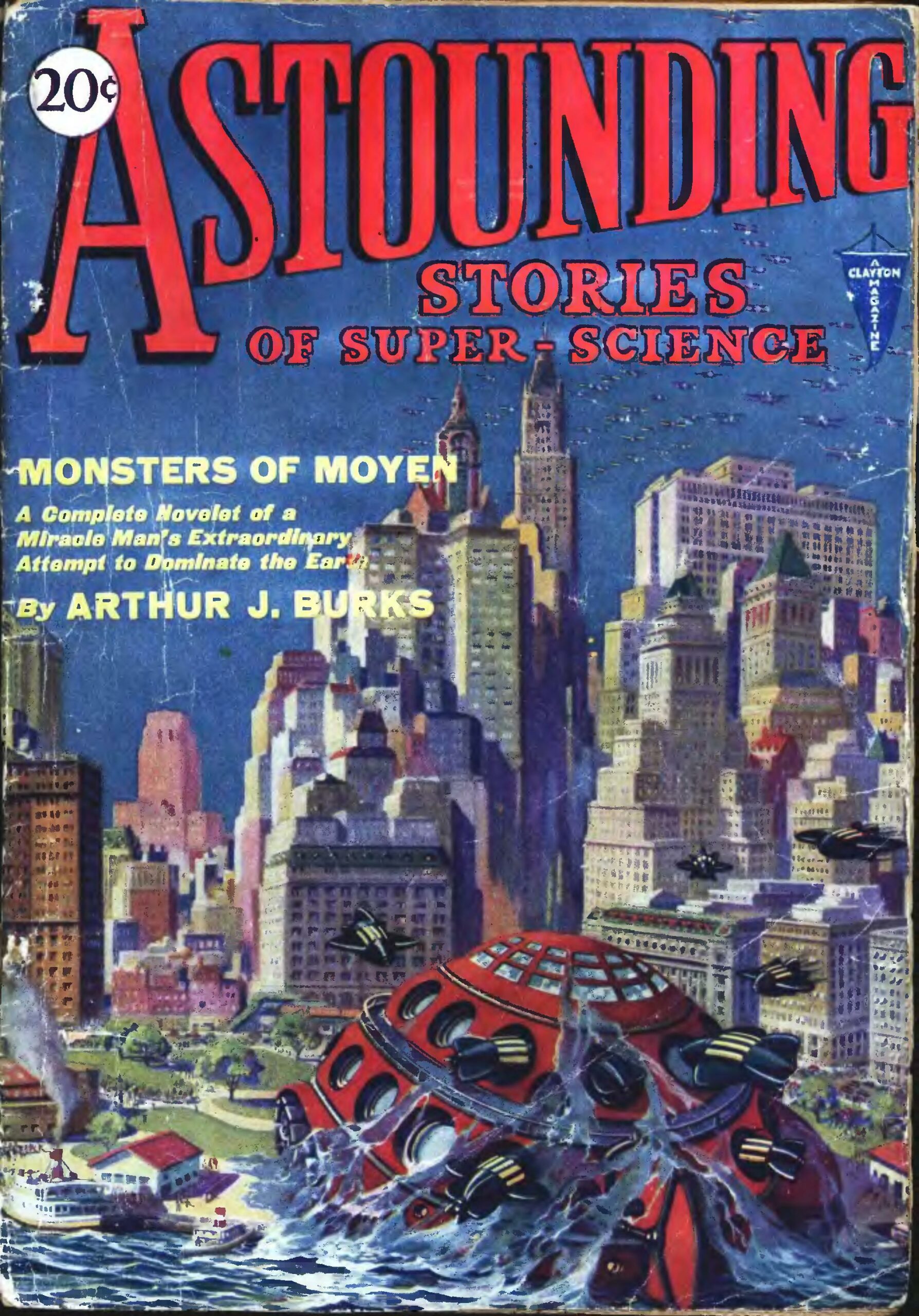
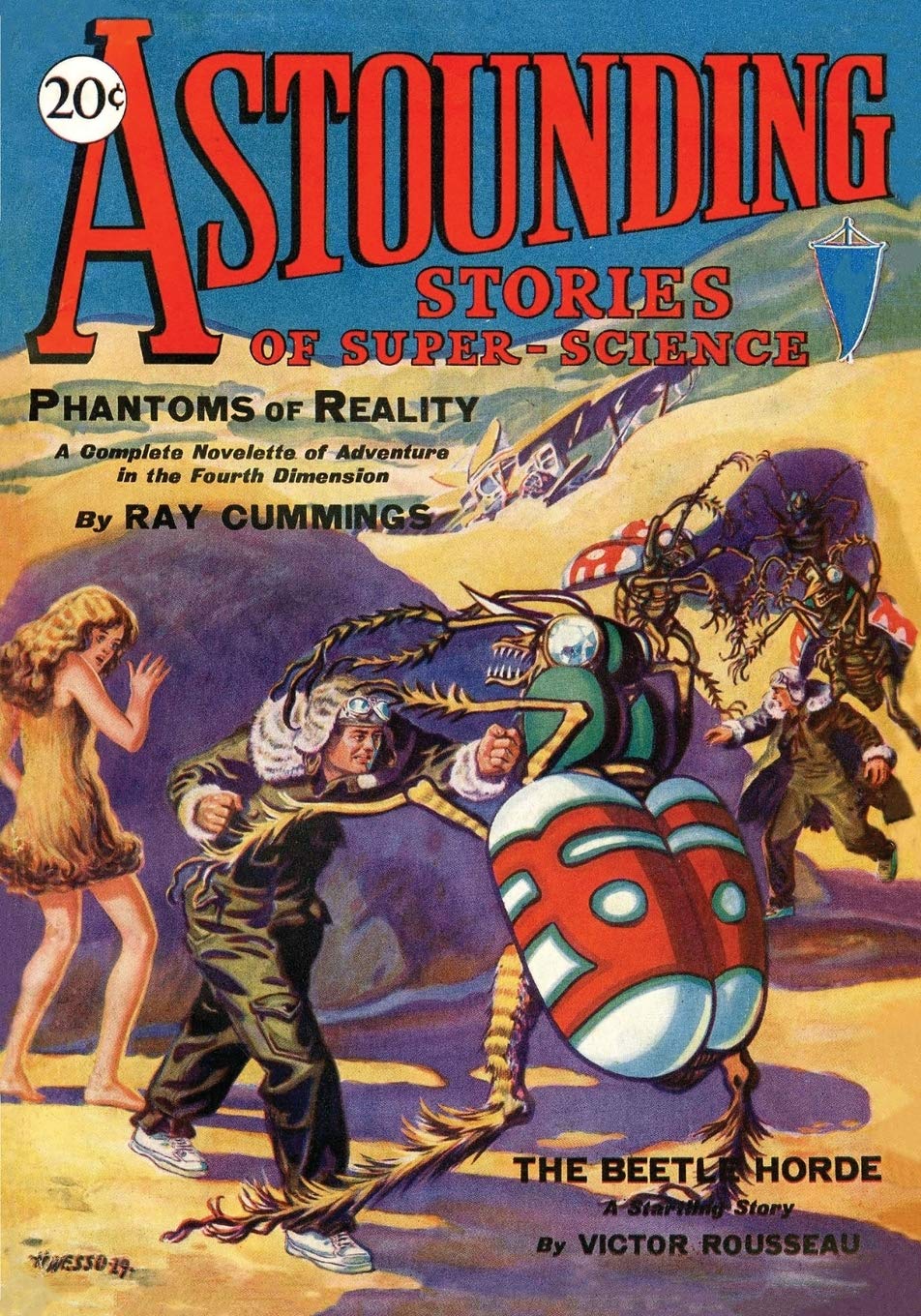
In the case of a gold­en-age sci­ence-fic­tion mag­a­zine like Astound­ing Sto­ries, Nevala-Lee argues“its most imme­di­ate impact came through its illus­tra­tions,” which “may turn out to be the genre’s most last­ing con­tri­bu­tion to our col­lec­tive vision of the future.”

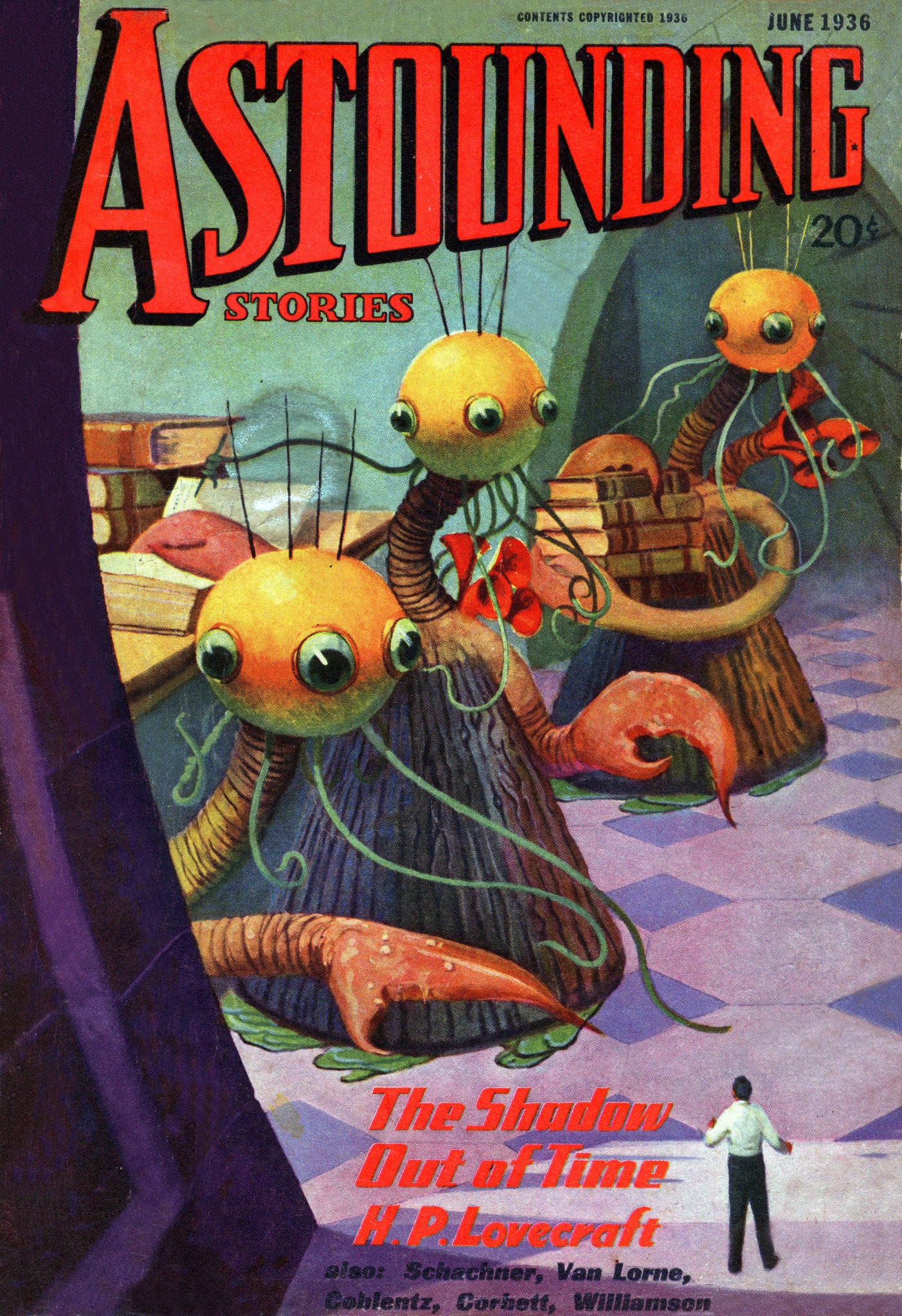
None of the imagery print­ed inside Astound­ing Sto­ries was as strik­ing as its cov­ers, full-col­or pro­duc­tions on which “artists could let their imag­i­na­tions run wild.” Some­times they adhered close­ly to the visu­al descrip­tions in a sto­ry’s text — per­haps too close­ly, in the case the June 1936’s issue with H. P. Love­craft’s “The Shad­ow Out of Time” — and some­times they depart­ed from and even com­pet­ed with the mag­a­zine’s actu­al con­tent. But after Camp­bell took over as edi­tor in 1937, that con­tent became even stronger: fea­tured writ­ers includ­ed Robert Hein­lein, A. E. van Vogt, and Isaac Asi­mov.

Now, here in the once sci­ence-fic­tion­al-sound­ing twen­ty-first cen­tu­ry, you can not only behold the cov­ers but read the pages of hun­dreds of issues of Astound­ing Sto­ries from the thir­ties, for­ties, and fifties online. The ear­li­est vol­umes are avail­able to down­load at the Uni­ver­si­ty of Penn­syl­va­ni­a’s web site, by way of Project Guten­berg, and there are even more of them free to read at the Inter­net Archive. Though it may not always have faith­ful­ly reflect­ed the mate­r­i­al with­in, Astound­ing Sto­ries’ cov­er imagery did rep­re­sent the pub­li­ca­tion as a whole. It could be thought-pro­vok­ing and haunt­ing, but it also deliv­ered no small amount of cheap thrills — and the gold­en age of sci­ence fic­tion still shows us how thin a line real­ly sep­a­rates the two.

Relat­ed con­tent:

Enter a Huge Archive of Amaz­ing Sto­ries, the World’s First Sci­ence Fic­tion Mag­a­zine, Launched in 1926

Free: 355 Issues of Galaxy, the Ground­break­ing 1950s Sci­ence Fic­tion Mag­a­zine

Down­load Issues of Weird Tales (1923–1954): The Pio­neer­ing Pulp Hor­ror Mag­a­zine Fea­tures Orig­i­nal Sto­ries by Love­craft, Brad­bury & Many More

Enter the Pulp Mag­a­zine Archive, Fea­tur­ing Over 11,000 Dig­i­tized Issues of Clas­sic Sci-Fi, Fan­ta­sy & Detec­tive Fic­tion

The Ency­clo­pe­dia of Sci­ence Fic­tion: 17,500 Entries on All Things Sci-Fi Are Now Free Online

Based in Seoul, Col­in Mar­shall writes and broad­casts on cities, lan­guage, and cul­ture. His projects include the Sub­stack newslet­ter Books on Cities, the book The State­less City: a Walk through 21st-Cen­tu­ry Los Ange­les and the video series The City in Cin­e­ma. Fol­low him on Twit­ter at @colinmarshall, on Face­book, or on Insta­gram.

Watch Two Courses by Beloved Yale Historian John Merriman (RIP): “France Since 1871” and “European Civilization, 1648 to 1945”

On May 22, his­to­ri­an John Mer­ri­man died at the age of 75. A pro­fes­sor at Yale since 1973, Mer­ri­man became an “ear­ly prac­ti­tion­er of the his­to­ry ‘from the ground up, that swept aca­d­e­m­ic study in the 1970s,” notes an obit­u­ary in Yale News. There, his­to­ri­an Alice Kaplan adds: “John Mer­ri­man became our great­est his­to­ri­an of the French left and its repres­sion, of the Com­mu­nards, the Anar­chists, and the French police, whose expe­ri­ences he brought to life in books and lec­tures informed by his work in archives in every region of France…”

The New York Times remem­bers him as “a rum­pled fig­ure who used his sto­ry­telling gifts to ani­mate his lec­tures on French and Euro­pean his­to­ry.” And they recall how author Ta-Nehisi Coates “watched some of Pro­fes­sor Merriman’s record­ed lec­tures online and described him … as a ‘kind of freestyle rap­per’ who riffed off his mate­r­i­al — anec­dotes, quotes and obser­va­tions — and ‘had this weird abil­i­ty to inhab­it the his­to­ry.’ ”

You, too, can watch his lec­tures online. A num­ber of years ago, Mer­ri­man made two of his beloved cours­es, “France Since 1871” (top) and “Euro­pean Civ­i­liza­tion, 1648 to 1945” (below) avail­able on Yale Open Cours­es. If you click on the pre­ced­ing links, you can find the syl­labus and books for each course. These cours­es are per­ma­nent­ly list­ed in our col­lec­tion of Free Online His­to­ry Cours­es, a sub­set of our col­lec­tion, 1,700 Free Online Cours­es from Top Uni­ver­si­ties.

Relat­ed Con­tent

14,000 Free Images from the French Rev­o­lu­tion Now Avail­able Online

A Free Yale Course on Medieval His­to­ry: 700 Years in 22 Lec­tures

French in Action: Cult Clas­sic French Lessons from Yale (52 Episodes) Avail­able Online

Julia Child Shows Fred Rogers How to Make a Quick & Delicious Pasta Dish (1974)

Julia Child and Fred Rogers were titans of pub­lic tele­vi­sion, cel­e­brat­ed for their nat­ur­al warmth, the ease with which they deliv­ered impor­tant lessons to home view­ers, and, for a cer­tain sec­tor of the view­ing pub­lic, how read­i­ly their per­son­al­i­ties lent them­self to par­o­dy.

Child’s cook­ing pro­gram, The French Chef, debuted in 1963, and Roger’s much beloved children’s show, Mis­ter Rogers Neigh­bor­hood, fol­lowed five years lat­er.

Rogers occa­sion­al­ly invit­ed accom­plished celebri­ties to join him for seg­ments where­in they demon­strat­ed their par­tic­u­lar tal­ents:

With our guest’s help, I have been able to show a wide diver­si­ty of self-expres­sion, the extra­or­di­nary range of human poten­tial. I want chil­dren and their fam­i­lies to know that there are many con­struc­tive ways to express who they are and how they feel. 

In 1974, Child paid a call to the neigh­bor­hood bak­ery presided over by “Chef” Don Brock­ett  (whose lat­er cred­its includ­ed a cameo as a “Friend­ly Psy­chopath” in Silence of the Lambs…)

The easy-to-pre­pare pas­ta dish she teach­es Rogers — and, by exten­sion, his “tele­vi­sion friend” — to make takes a sur­pris­ing­ly opti­mistic view of the aver­age pre-school palate.

Red sauce gets a hard pass, in favor of a more sophis­ti­cat­ed blend of fla­vors stem­ming from tuna, black olives, and pimen­tos.

Brock­ett pro­vides an assist with both the cook­ing and, more impor­tant­ly, the child safe­ty rules that aren’t always front and cen­ter with this celebri­ty guest.

Child, who had no off­spring, comes off as a high-spir­it­ed, loosey-goosey, fun aunt, encour­ag­ing child view­ers to toss the cooked spaghet­ti “fair­ly high” after adding but­ter and oil “because it’s dra­mat­ic” and talk­ing as if they’ll be hit­ting the super­mar­ket solo, a flat­ter­ing notion to any tot whose refrain is “I do it mySELF!”

She wise­ly reframes tasks assigned to big­ger, more expe­ri­enced hand — boil­ing water, knife work — as less excit­ing than “the fan­cy busi­ness at the end”, and makes it stick by sug­gest­ing that the kids “order the grown ups to do what you want done,” a verb choice the ever-respect­ful Rogers like­ly would have avoid­ed.

As with The French Chef, her off-the-cuff remarks are a major source of delight.

Watch­ing his guest wipe a wood­en cut­ting board with olive oil, Rogers observes that some of his friends “could do this very well,” to which she replies:

It’s also good for your hands ‘coz it keeps ‘em nice and soft, so rub any excess into your hands.

She shares a bit of stage set scut­tle­butt regard­ing a let­ter from “some woman” who com­plained that the off-cam­era waste­bas­ket made it appear that Child was dis­card­ing peels and stems onto the floor.

She said, “Do you think this is a nice way to show young peo­ple how to cook, to throw things on the floor!?” And I said, “Well, I have a self clean­ing floor! …The self clean­ing is me.”

(Rogers appears both amused and relieved when the ulti­mate punch­line steers things back to the realm of good man­ners and per­son­al respon­si­bil­i­ty.)

Trans­fer­ring the slip­pery pre-cooked noo­dles from pot to serv­ing bowl, Child rem­i­nisces about a won­der­ful old movie in which some­one — “Char­lie Chap­lin or was it, I guess it was, uh, it wasn’t Mick­ey Rooney, maybe it was…” — eats spaghet­ti through a fun­nel.

If only the Inter­net had exist­ed in 1974 so intrigued par­ents could have Googled their way to the Noo­dle Break at the Bull Pup Cafe sequence from 1918’s The Cook, star­ring Roscoe “Fat­ty” Arbuck­le and Buster Keaton!

The fun­nel is but one of many inspired silent spaghet­ti gags in this sure­fire don’t‑try-this-at-home kid-pleas­er.

We learn that Child named her dish Spaghet­ti Mar­co Polo in a nod to a wide­ly cir­cu­lat­ed the­o­ry that pas­ta orig­i­nat­ed in Chi­na and was intro­duced to Italy by the explor­er, a bit of lore food writer Tori Avey of The His­to­ry Kitchen finds dif­fi­cult to swal­low:

A com­mon belief about pas­ta is that it was brought to Italy from Chi­na by Mar­co Polo dur­ing the 13th cen­tu­ry. In his book, The Trav­els of Mar­co Polo, there is a pas­sage that briefly men­tions his intro­duc­tion to a plant that pro­duced flour (pos­si­bly a bread­fruit tree). The Chi­nese used this plant to cre­ate a meal sim­i­lar to bar­ley flour. The bar­ley-like meal Polo men­tioned was used to make sev­er­al pas­ta-like dish­es, includ­ing one described as lagana (lasagna). Since Polo’s orig­i­nal text no longer exists, the book relies heav­i­ly on retellings by var­i­ous authors and experts. This, com­bined with the fact that pas­ta was already gain­ing pop­u­lar­i­ty in oth­er areas of Italy dur­ing the 13th-cen­tu­ry, makes it very unlike­ly that Mar­co Polo was the first to intro­duce pas­ta to Italy.

Ah well.

We’re glad Child went with the Chi­na the­o­ry as it pro­vides an excuse to eat spaghet­ti with chop­sticks.

Noth­ing is more day-mak­ing than see­ing Julia Child pop a small bun­dle of spaghet­ti direct­ly into Fred Rogers’ mouth from the tips of her chopsticks…though after using the same imple­ments to feed some to Chef Brock­ett too, she real­izes that this wasn’t the best les­son in food hygiene.

In 2021, this sort of boo-boo would result in an auto­mat­ic reshoot.

In the wilder, wooli­er 70s, a more press­ing con­cern, at least as far as pub­lic tele­vi­sion was con­cerned, was expand­ing lit­tle Amer­i­cans’ world­view, in part by show­ing them how to get a com­mand­ing grip on their chop­sticks. It’s nev­er too late to learn.

Bon appétit!

JULIA CHILD’S SPAGHETTI MARCO POLO

There are a num­ber of vari­a­tions online, but this recipe, from Food.com, hews close­ly to Child’s orig­i­nal, while pro­vid­ing mea­sure­ments for her eye­balled amounts.

Serves 4–6

INGREDIENTS 

1 lb spaghet­ti 

2 table­spoons but­ter 

2 table­spoons olive oil 

1 tea­spoon salt black pep­per 

1 6‑ounce can tuna packed in oil, flaked, undrained 

2 table­spoons pimien­to, diced or 2 table­spoons roast­ed red pep­pers, sliced into strips 

2 table­spoons green onions with tops, sliced 

2 table­spoons black olives, sliced 

2 table­spoons wal­nuts, chopped

1 cup Swiss cheese, shred­ded 

2 table­spoons fresh pars­ley or 2 table­spoons cilantro, chopped

Cook pas­ta accord­ing to pack­age direc­tions. 

Drain pas­ta and return to pot, stir­ring in but­ter, olive oil, and salt and pep­per. 

Toss with remain­ing ingre­di­ents and serve, gar­nished with pars­ley or cilantro.

Relat­ed Con­tent 

Julia Child Shows David Let­ter­man How to Cook Meat with a Blow Torch

Watch Antho­ny Bourdain’s First Food-and-Trav­el Series A Cook’s Tour Free Online (2002–03)

Tast­ing His­to­ry: A Hit YouTube Series Shows How to Cook the Foods of Ancient Greece & Rome, Medieval Europe, and Oth­er Places & Peri­ods

Sci­ence & Cook­ing: Harvard’s Free Course on Mak­ing Cakes, Pael­la & Oth­er Deli­cious Food

MIT Teach­es You How to Speak Ital­ian & Cook Ital­ian Food All at Once (Free Online Course)


- Ayun Hal­l­i­day is the Chief Pri­ma­tol­o­gist of the East Vil­lage Inky zine and author, most recent­ly, of Cre­ative, Not Famous: The Small Pota­to Man­i­festo.  Fol­low her @AyunHalliday.

Sun Tzu’s The Art of War: An Animated Chapter-by-Chapter Breakdown of the Ancient Chinese Treatise

Though not a long book, The Art of War is nev­er­the­less an intim­i­dat­ing one. Com­posed in the Chi­na of the fifth cen­tu­ry BC, it comes down to us as per­haps the defin­i­tive analy­sis of mil­i­tary strat­e­gy, applic­a­ble equal­ly to East, West, antiq­ui­ty, and moder­ni­ty alike. Hence the minor but still-pro­duc­tive indus­try that puts forth adap­ta­tions, exten­sions, and rein­ter­pre­ta­tions of The Art of War for non-mil­i­tary set­tings, trans­pos­ing its lessons into law, busi­ness, sports, and oth­er realms besides. But if you want a han­dle on what its author, the gen­er­al and strate­gist Sun Tzu, actu­al­ly wrote, watch the illus­trat­ed video above.

A pro­duc­tion of Youtube chan­nel Eudai­mo­nia, pre­vi­ous­ly fea­tured here on Open Cul­ture for a sim­i­lar­ly ani­mat­ed exe­ge­sis of Machi­avel­li’s The Prince, it runs more than two and a half hours in full. Far though it exceeds the length of the aver­age explain­er video, it does reflect the ten­den­cy of Sun Tzu’s suc­cinct obser­va­tions to expand, when seri­ous­ly con­sid­ered, into much wider and more com­plex dis­cus­sions. To each of the orig­i­nal tex­t’s chap­ters the Eudai­mo­nia video devotes a ten-to-fif­teen-minute sec­tion, con­vey­ing not just the con­tent of its lessons but also their rel­e­vance to the his­to­ry of human con­flict in the rough­ly two and a half mil­len­nia since they were writ­ten.

In chap­ter two, on wag­ing war, Sun Tzu writes that “in order to kill the ene­my, our men must be roused to anger.” It was in this spir­it that, dur­ing the Sec­ond World War, the Unit­ed King­dom’s Min­istry of Infor­ma­tion launched a media “anger cam­paign” meant to “increase resolve against the Ger­mans, as until then, the British had lit­tle sense of real hos­til­i­ty towards the aver­age Ger­man.” In the chap­ter on weak­ness­es and strengths, Sun Tzu rec­om­mends “the divine art of sub­tle­ty and secre­cy” as a means of becom­ing invis­i­ble and inaudi­ble to the ene­my — much as Julius Cae­sar did in the Gal­lic Wars, when he sent scout­ing ships “paint­ed in Venet­ian blue, which was a sim­i­lar col­or to that of the sea.”

Oth­er exam­ples come from diverse chap­ters of his­to­ry. These include the Amer­i­can Civ­il War, Gand­hi’s nego­ti­a­tion of Indi­an inde­pen­dence, the Napoleon­ic Wars, the British defeat in Zul­u­land, Joan of Arc’s siege of Orléans, the revolt against the Turk­ish led by T. E. Lawrence (bet­ter known as Lawrence of Ara­bia), and even Steve Jobs’ turn­around of a near­ly bank­rupt Apple. Most of us will nev­er find our­selves in sit­u­a­tions of quite these stakes. But giv­en that none of us can entire­ly avoid deal­ing with con­flict, we’d could do worse than to keep the guid­ance of Sun Tzu on our side.

Relat­ed con­tent:

Machiavelli’s The Prince Explained in an Illus­trat­ed Film

10 Rea­sons Why Hannibal’s Mil­i­tary Genius Still Cap­tures Our Imag­i­na­tion Today

What Ancient Chi­nese Phi­los­o­phy Can Teach Us About Liv­ing the Good Life Today: Lessons from Harvard’s Pop­u­lar Pro­fes­sor, Michael Puett

Hear an Ancient Chi­nese His­to­ri­an Describe The Roman Empire (and Oth­er Voic­es of the Past)

How Many U.S. Marines Could Bring Down the Roman Empire?

Based in Seoul, Col­in Mar­shall writes and broad­casts on cities, lan­guage, and cul­ture. His projects include the Sub­stack newslet­ter Books on Cities, the book The State­less City: a Walk through 21st-Cen­tu­ry Los Ange­les and the video series The City in Cin­e­ma. Fol­low him on Twit­ter at @colinmarshall, on Face­book, or on Insta­gram.

« Go BackMore in this category... »
Quantcast