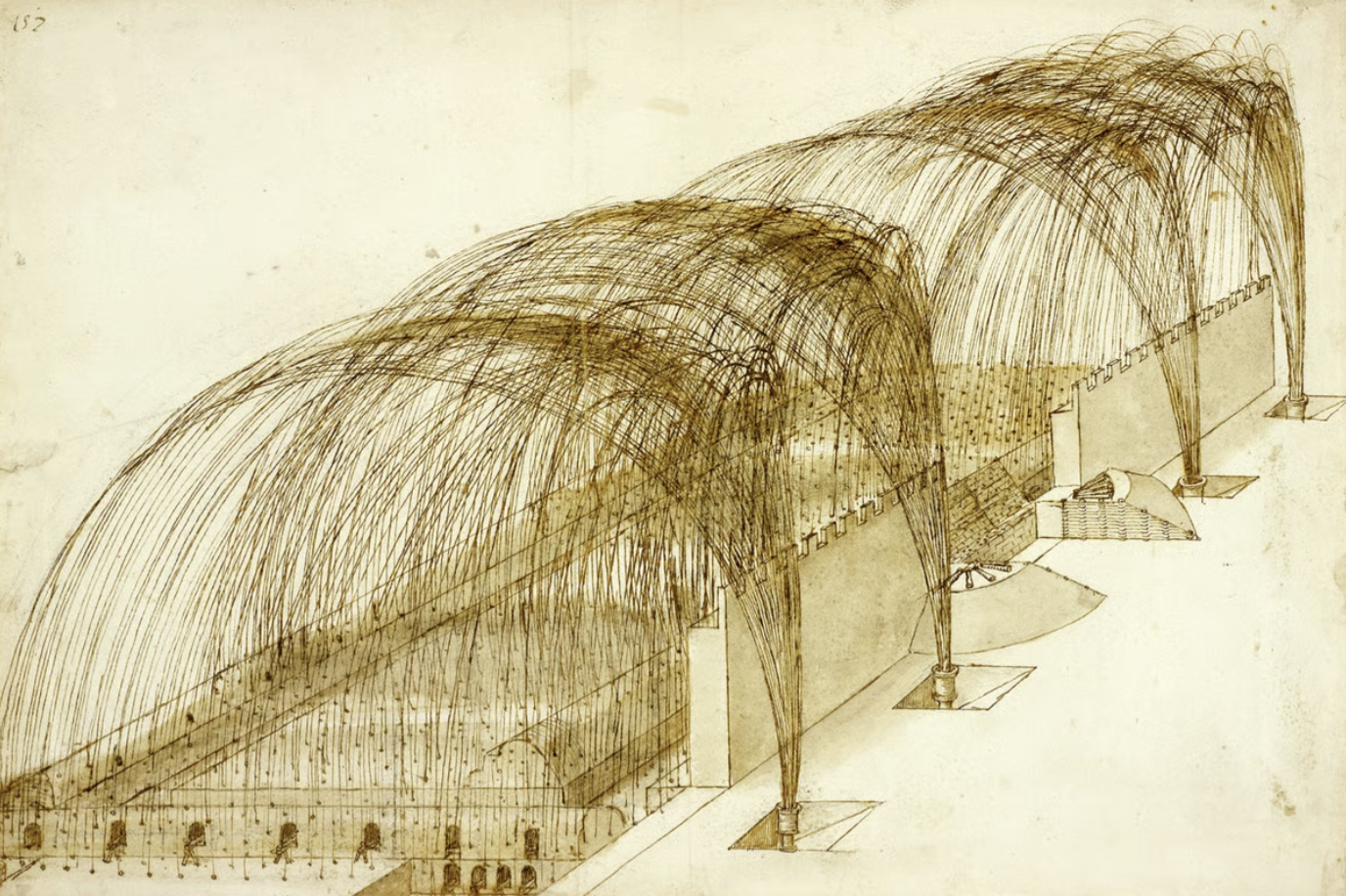
Leonardo da Vinci was a painter, draughtsman, engineer, scientist, theorist, sculptor, and architect, to provide only his most widely agreed-upon list of occupations. It is he, more than any other single figure, who comes to mind when we think of the ideal of the “Renaissance man.” Though considered rather less practical today than it was in fifteenth-century Italy, the relentless questing for both scientific knowledge and artistic perfection implied by that title has never entirely ceased to appeal. For aspiring modern Renaissance men, one of the most enduring sources of inspiration remains Leonardo’s own notebooks, full of backwards-written explorations of ideas both realized and unrealized that move unpredictably from one intellectual domain to another.
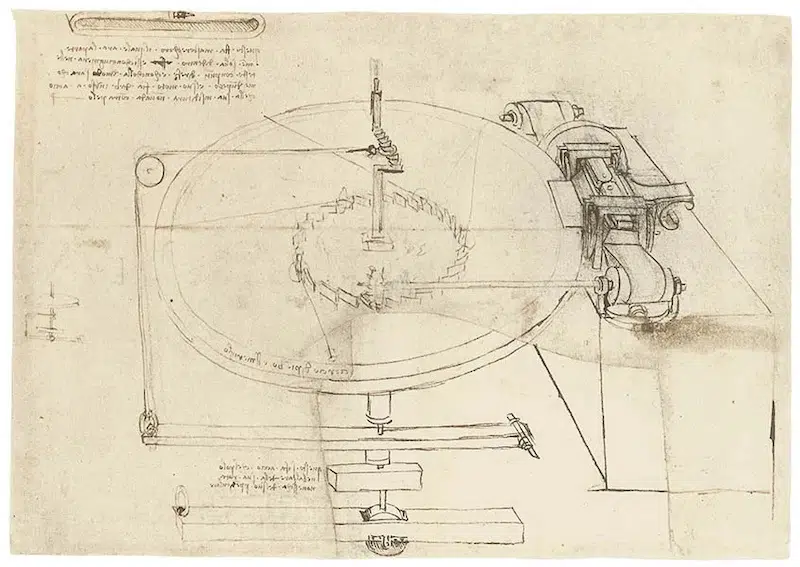
That last quality seems to have displeased the sculptor Pompeo Leoni, who eventually came into possession of Leonardo’s notebooks after they were inherited by his last student Francesco Melzi. Leoni “dismounted and cut the folios, separating the materials into two albums according
to his own judgement,” notes the Italian Embassy in London, “the larger portion for technical and scientific topics,” and the smaller for “Leonardo’s artistic and figurative workings.”
In the early seventeenth century, Leoni’s son-in-law sold the former album, now known as the Codex Atlanticus, to a count who in turn donated it to the Veneranda Biblioteca Ambrosiana; the latter ended up in England’s Royal Collection by 1670 or so. Only now have they been reunited, thanks to a project called Leonardotheka.
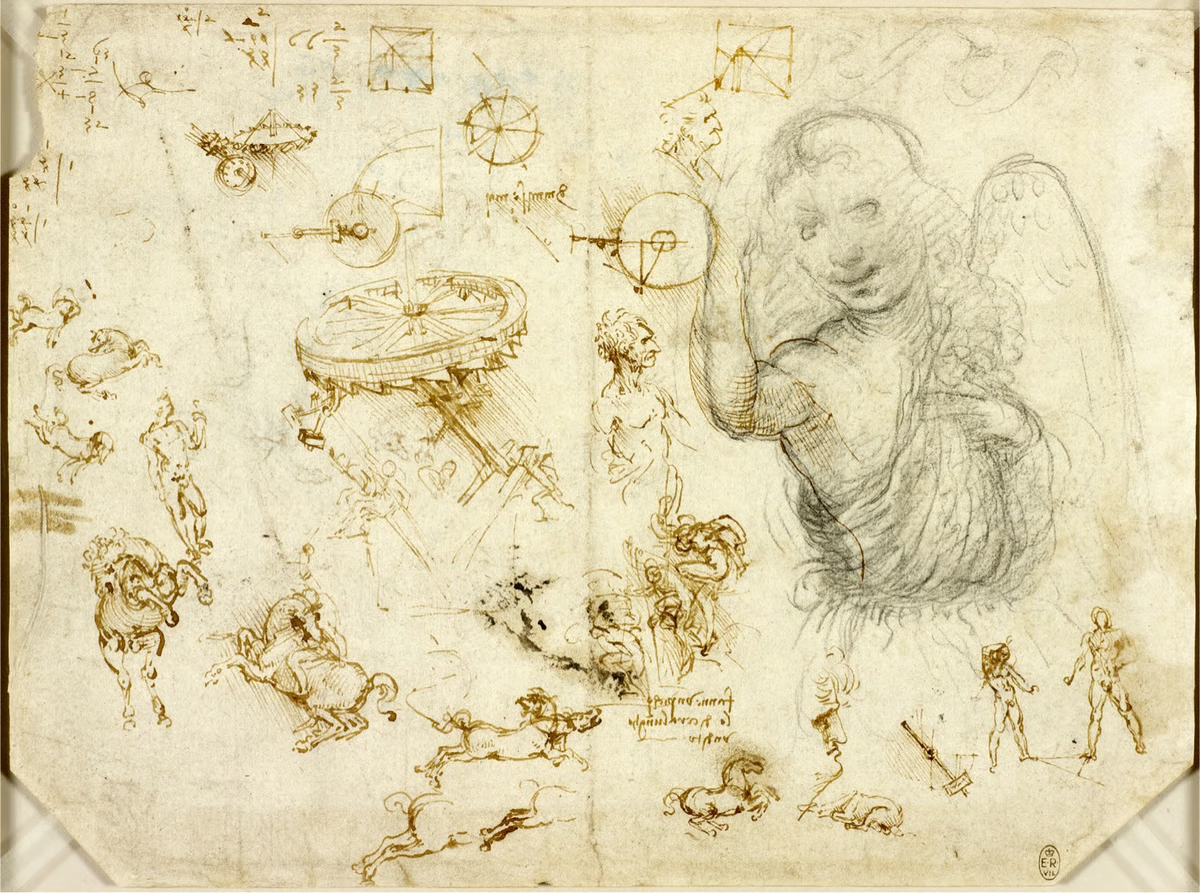
The culmination of a decade’s work involving the Veneranda Biblioteca Ambrosiana as well as the Biblioteca Leonardiana and the Royal Collection Trust, Leonardotheka digitally reunites those albums after four centuries apart. Such a task also entailed the reconstruction of 50 long-sundered individual pages and their replacement into their original context. The notebooks combined “decades of anatomical studies, flying machines, landscapes, and grocery-list-adjacent musings, all tangled together the way Leonardo’s mind may have worked,” writes Anastasia Scott at Discover. Yet he’d “likely never intended to separate art from science in the first place. A single page might hold a machine, a horse, and a poem, and Leoni severed connections the artist had made on purpose.” With those connections restored, we here in the twenty-twenties — a time plagued by its own doubts about the relationship between what we now call “humanities” and “STEM” — can see once again how a real Renaissance mind worked. Enter the Leonardotheka here.
via Kottke
Related content:
Leonardo da Vinci’s Handwritten Resume (Circa 1482)
Leonardo da Vinci’s To-Do List from 1490: The Plan of a Renaissance Man
Based in Seoul, Colin Marshall writes and broadcasts on cities, language, and culture. He’s the author of the newsletter Books on Cities as well as the books 한국 요약 금지 (No Summarizing Korea) and Korean Newtro. Follow him on the social network formerly known as Twitter at @colinmarshall.




Importante e oportuno para que sempre lembremos que a mente/inteligência humana é o motor do processo civilizatório/criativo,não tem fronteiras ou limites e aos pesquisadores a divulgação é fundamental…