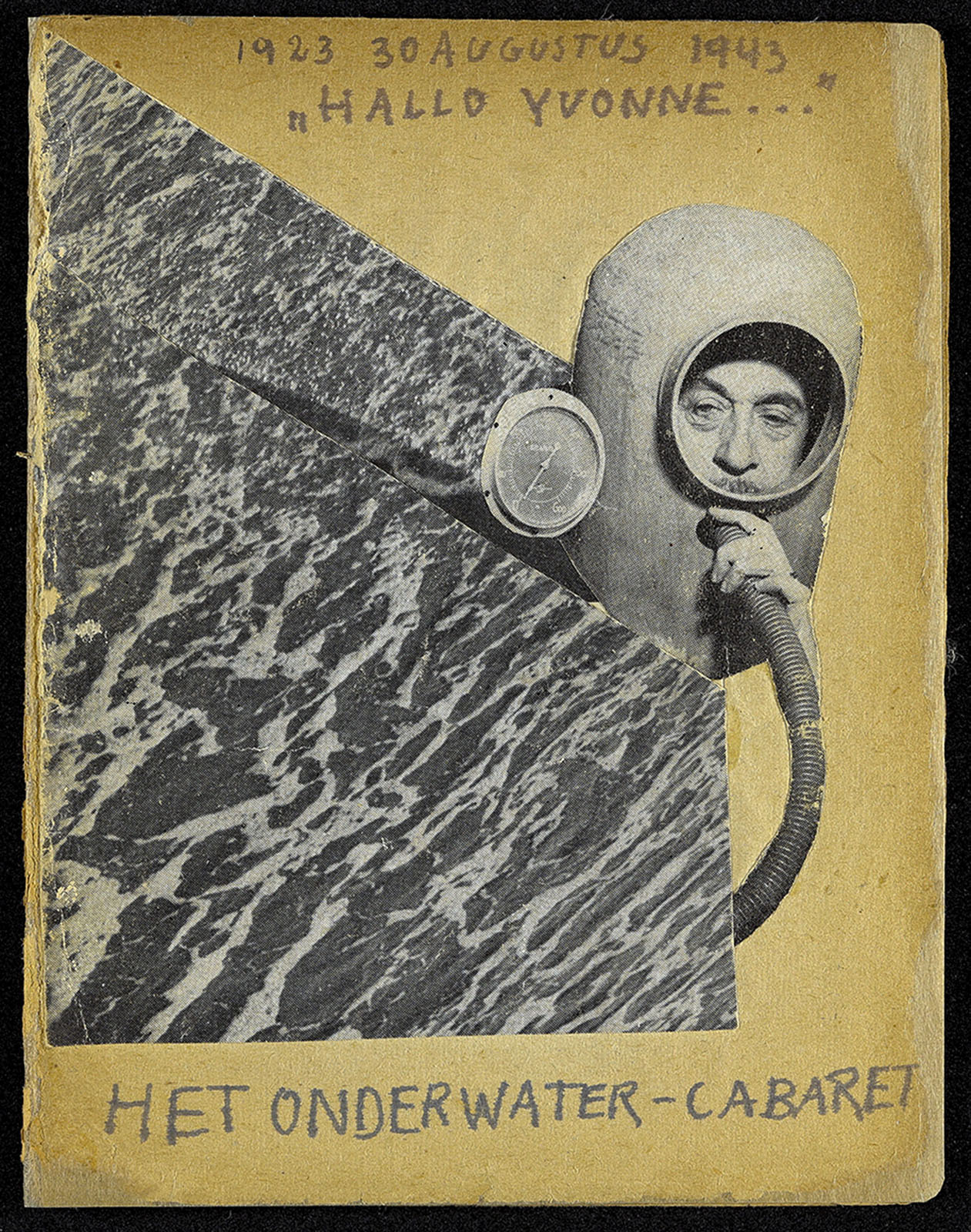
The word zine, referring to a homemade magazine not distributed through the normal commercial channels, has a longer history than you might expect. Its earliest recorded uses date from 1946 in the world of pulp magazines, most often of the science-fiction variety. But just a year earlier, as it happens, one of the most historically notable zines avant la lettre concluded publication. The end of World War II had everything to do with it, since Het Onderwater-Cabaret, or The Underwater Cabaret, existed as a rebuke against the Nazi occupation of the Netherlands. Over its two-year run, it put out 96 issues, totaling over 1,700 pages full of art and poems — all created by one man in hiding in an attic.
Born to a Jewish family in Dortmund in 1908, Curt Bloch studied law with aspirations of becoming a judge. When Hitler rose to power, his plans changed: he first left for Amsterdam, and later, when Germany invaded the Netherlands in 1940, he had to keep moving until he ended up in the border town of Enschede.
The resistance network Group Overduin eventually placed him in the private home of an undertaker and a housekeeper who had already taken in two other Jews. Despite the lack of space and resources, he managed to produce Het Onderwater-Cabaret using supplies delivered along with the refugees’ food. Only one hand-assembled, thread-stitched copy of each issue existed, to be circulated between some 20 to 30 similarly hidden readers before being returned to the attic.
By the end of the war, Bloch resurfaced to freedom with every issue of Het Onderwater-Cabaret intact and in his possession. Bound into volumes in Amsterdam, they accompanied him when he emigrated to the United States, where he went on to raise a family. As the story is told in the History’s Secret Heroes podcast from the BBC above, only long after his death in 1975 did his daughter Simone properly discover and appreciate the contents of those volumes that had always sat on her father’s shelf. The confusing, even frightening cut-and-paste imagery and the poems she could only understand after learning German turned out to contain unrelenting attacks on the Third Reich and its leaders, the kind of material that could have led to summary execution if discovered. One issue even contained a poem Bloch wrote for his mother and sister, not knowing that they’d already died in the camps.
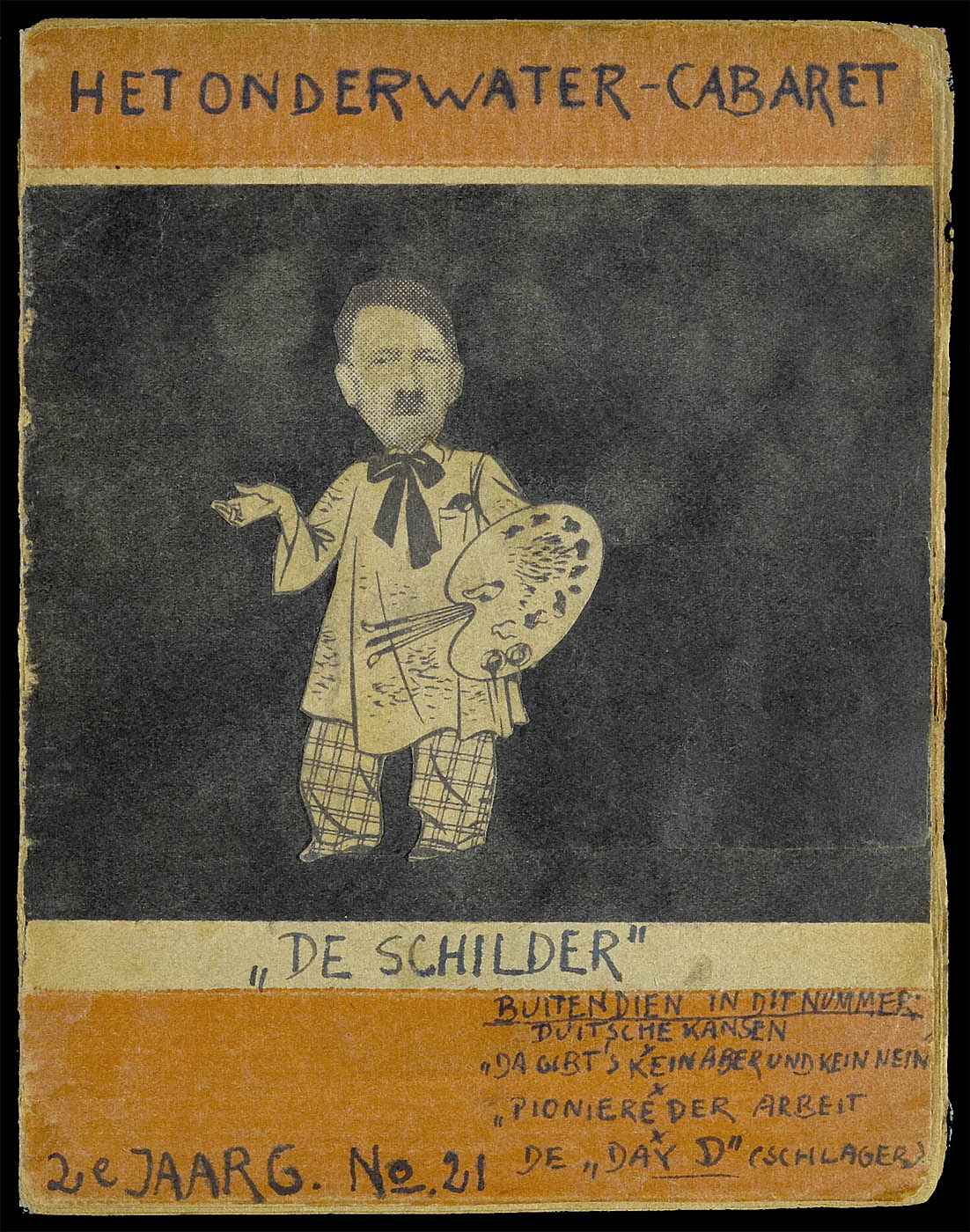
Now you can read all 96 issues of Het Onderwater-Cabaret online at Curt-Bloch.com, where they’ve been not just digitized but annotated with introductions and translations of the original German and Dutch texts. There are also recorded performances by actors, cabaret artists, and even other Holocaust survivors. It makes Bloch’s clandestine productivity all the more impressive to remember that zine culture as we know it didn’t exist at that time, let alone the instantaneous global distribution network on which you’re reading this post right now. No matter how tiny his readership, how meager his resources, or how dire the punishment for daring to write critically about the regime, he simply had to create, and he had to do it with a sense of humor. When coming up against frustrations in our own work, we’d do well to imagine Bloch running his one-man cabaret out of the attic, scissors and glue in hand, and ask ourselves what our excuse is.
Related content:
The Secret Student Group Who Took on the Nazis: An Introduction to “The White Rose”
The Nazi’s Philistine Grudge Against Abstract Art and the “Degenerate Art Exhibition” of 1937
Before Creating the Moomins, Tove Jansson Drew Satirical Art Mocking Hitler & Stalin
Watch Lambeth Walk—Nazi Style: The Early Propaganda Mash Up That Enraged Joseph Goebbels
Meet Anita Berber, the Cabaret Star Who Scandalized Weimar-Era Berlin
Based in Seoul, Colin Marshall writes and broadcasts on cities, language, and culture. He’s the author of the newsletter Books on Cities as well as the books 한국 요약 금지 (No Summarizing Korea) and Korean Newtro. Follow him on the social network formerly known as Twitter at @colinmarshall.


Leave a Reply