A Newly-Discovered Fresco in Pompeii Reveals a Precursor to Pizza

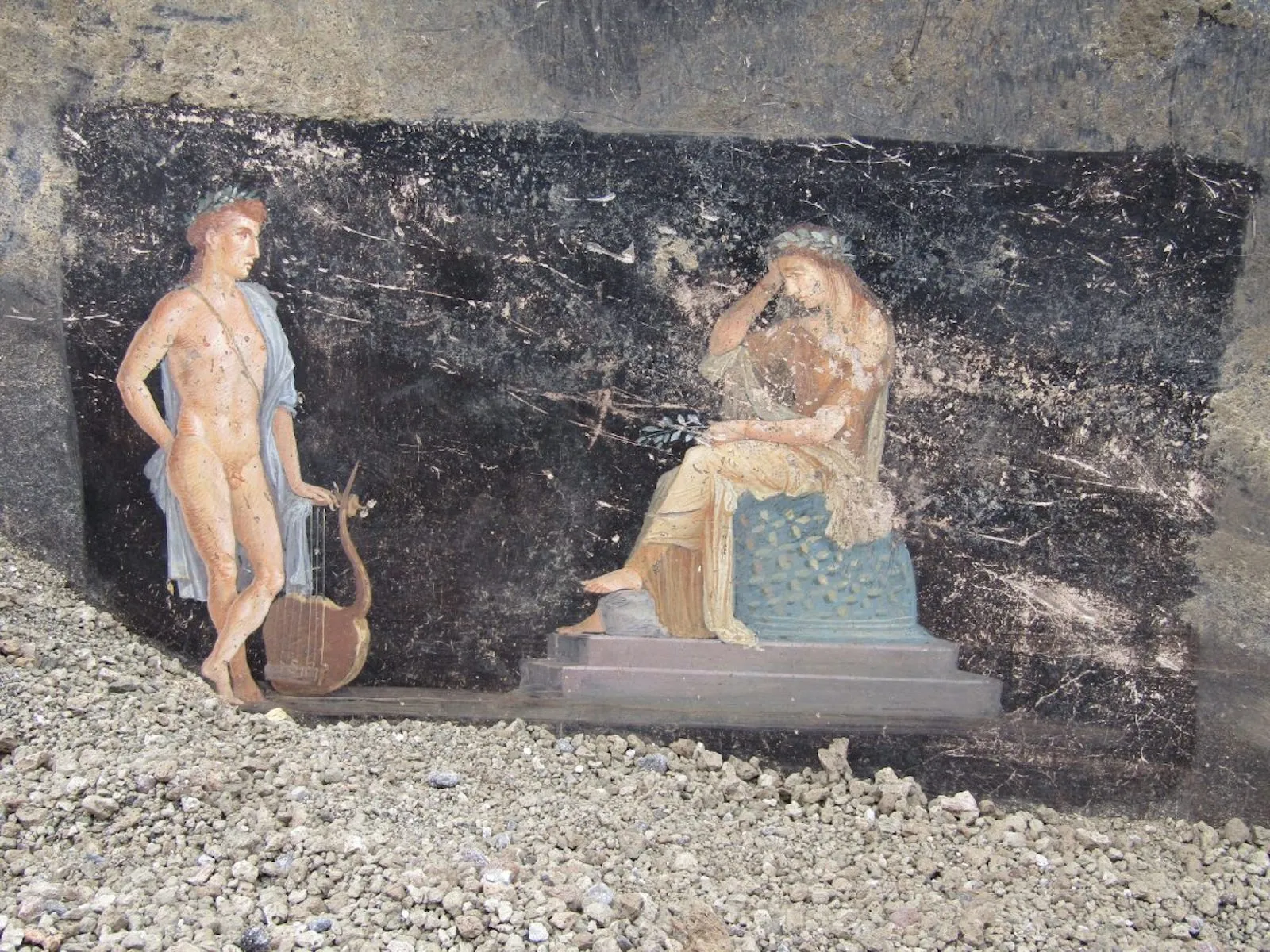
Archae­ol­o­gists dig­ging in Pom­peii have unearthed a fres­co con­tain­ing what may be a “dis­tant ances­tor” of the mod­ern piz­za. The fres­co fea­tures a plat­ter with wine, fruit, and a piece of flat focac­cia. Accord­ing to Pom­peii archae­ol­o­gists, the focac­cia does­n’t have toma­toes and moz­zarel­la on top. Rather, it seem­ing­ly sports “pome­gran­ate,” spices, per­haps a type of pesto, and “pos­si­bly condiments”–which is just a short hop, skip and a jump away to piz­za.

Found in the atri­um of a house con­nect­ed to a bak­ery, the fine­ly-detailed fres­co grew out of a Greek tra­di­tion (called xenia) where gifts of hos­pi­tal­i­ty, includ­ing food, are offered to vis­i­tors. Nat­u­ral­ly, the fres­co was entombed (and pre­served) for cen­turies by the erup­tion of Mt. Vesu­vius in 79 A.D.

If you would like to sign up for Open Culture’s free email newslet­ter, please find it here. It’s a great way to see our new posts, all bun­dled in one email, each day.

If you would like to sup­port the mis­sion of Open Cul­ture, con­sid­er mak­ing a dona­tion to our site. It’s hard to rely 100% on ads, and your con­tri­bu­tions will help us con­tin­ue pro­vid­ing the best free cul­tur­al and edu­ca­tion­al mate­ri­als to learn­ers every­where. You can con­tribute through Pay­Pal, Patre­on, and Ven­mo (@openculture). Thanks!

Relat­ed Con­tent

Explore the Roman Cook­book, De Re Coquinar­ia, the Old­est Known Cook­book in Exis­tence

How to Bake Ancient Roman Bread from 79 AD: A Video Intro­duc­tion

Watch the Destruc­tion of Pom­peii by Mount Vesu­vius, Re-Cre­at­ed with Com­put­er Ani­ma­tion (79 AD)

Behold 3D Recreations of Pompeii’s Lavish Homes–As They Existed Before the Eruption of Mount Vesuvius

“I pray that to their share of noble for­tunes [Zeus] send no Neme­sis of jeal­ous will, but in pros­per­i­ty and free from ills, exalt them and their city.” Pin­dar, Olympian Ode 8

Why are humans awestruck by nat­ur­al dis­as­ter? Or — more to the point — why are we dumb­found­ed when dis­as­ters destroy cities? We should hard­ly be sur­prised at this point when nature does what it invari­ably does: tec­ton­ic plates shift, vol­ca­noes erupt, hur­ri­canes and typhoons sweep the coasts…. These things have always hap­pened on Earth, with or with­out our help, and for many mil­lions of years before any­thing like us showed up.

Like the myth­i­cal Nar­cis­sus, we can only see our­selves and assume every­thing that hap­pens must be for us. After the Great Lis­bon Earth­quake in Por­tu­gal in 1755, “Lis­bon’s devout Catholic pop­u­la­tion saw the ruined city as divine pun­ish­ment,” writes Lau­ra Trethewey.

“The Protes­tant coun­tries of Europe also saw the destruc­tion as pun­ish­ment, but for back­ward Catholic behav­ior.” Mean­while, philoso­phers like Voltaire, who wrote Can­dide to sat­i­rize respons­es to the quake, saw the cat­a­stro­phe as more evi­dence that a cre­ator, if such a being had ever cared, cared no more.

In Greek and Roman mythol­o­gy, the gods nev­er stop med­dling, pun­ish­ing, reward­ing, etc. Nar­cis­sus is tempt­ed to gaze at him­self by Neme­sis, the god­dess who meets hubris with swift ret­ri­bu­tion. While gen­er­al­ly invoked as a lev­el­er of indi­vid­u­als who over­step, she also lev­els cities, as fifth cen­tu­ry BC Greek poet Pin­dar sug­gests when he begs Zeus to spare the island city of Aegi­na from her wrath. Per­haps, then, it was Neme­sis, winged vengeance her­self, that the cit­i­zens of Pom­peii believed bore down upon them, as molten lava, smoke, and ash.

From its ear­li­est sta­tus as a Roman-allied city (then Roman colony), Pom­peii grew into a very wealthy area, its sur­round­ing lands rich with vil­las and farms, its city cen­ter anchored by its Amphithe­ater, Odeon, Forum Baths and tem­ples, its run­ning water arriv­ing from the Seri­no Aque­duct. Maybe they had it too good? Maybe their extrav­a­gant good for­tune caused too much jeal­ous­ly in the neigh­bors? Maybe the gods demand­ed bal­ance. It’s very human to think so — to ascribe divine will, in the lack of expla­na­tion, for why some­thing so filled with teem­ing life should be destroyed for no rea­son at all.

It must have been the gods, who looked down on Pom­pei­i’s wealth and grew jeal­ous them­selves. In these 3D ani­mat­ed videos, see why ancient Pom­pei­ians would have been proud of their city, recre­at­ed here in part by Swe­den’s Lund Uni­ver­si­ty and Sto­ried Past Pro­duc­tions. “While in Pom­peii few could reach the elite,” notes the lat­ter in their descrip­tion of the video above, “many tried to recre­ate ‘the good life’ in their own ways.… From grand urban vil­las, to small pri­vate homes, to small­er apart­ments.” In these walk­throughs, you can “see all the dif­fer­ent things ‘home’ could mean in ancient Pom­peii.” You might also, if you aren’t care­ful, find your­self get­ting a lit­tle envi­ous of these doomed ancient urban­ites.

Relat­ed Con­tent:

Pom­peii Rebuilt: A Tour of the Ancient City Before It Was Entombed by Mount Vesu­vius

The Lit­tle-Known Bomb­ing of Pom­peii Dur­ing World War II

Archae­ol­o­gists Dis­cov­er an Ancient Roman Snack Bar in the Ruins of Pom­peii

A Drone’s Eye View of the Ruins of Pom­peii

Josh Jones is a writer and musi­cian based in Durham, NC. Fol­low him at @jdmagness

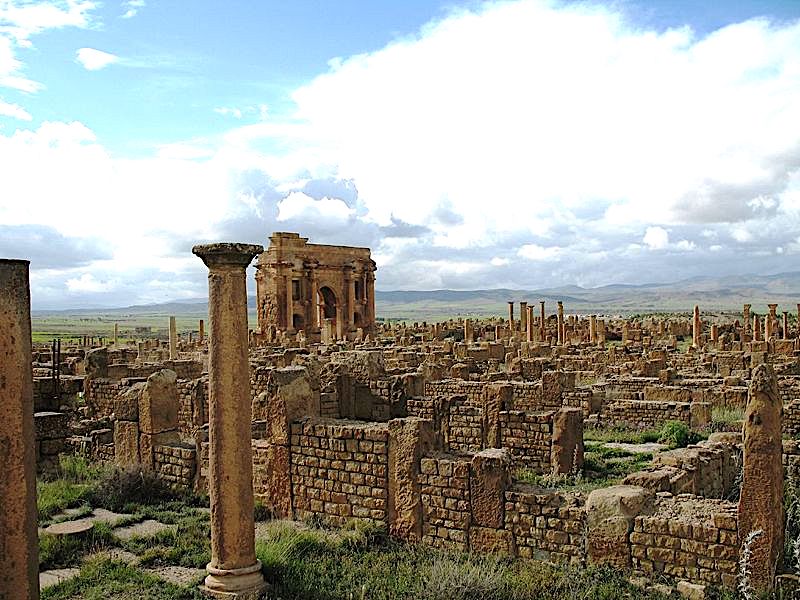
Explore the Ruins of Timgad, the “African Pompeii” Excavated from the Sands of Algeria

Image via Wiki­me­dia Com­mons

Fif­teen cen­turies after its fall, the Roman Empire lives on in unex­pect­ed places. Take, for instance, the for­mer colo­nial city of Tim­gad, locat­ed in Alge­ria 300 miles from the cap­i­tal. Found­ed by the Emper­or Tra­jan around 100 AD as Colo­nia Mar­ciana Ulpia Tra­iana Thamu­ga­di, it thrived as a piece of Rome in north Africa before turn­ing Chris­t­ian in the third cen­tu­ry and into a cen­ter of the Donatist sect in the fourth. The three cen­turies after that saw a sack­ing by Van­dals, a reoc­cu­pa­tion by Chris­tians, and anoth­er sack­ing by Berbers. Aban­doned and cov­ered by sand from the Sahara from the sev­enth cen­tu­ry on, Tim­gad was redis­cov­ered by Scot­tish explor­er James Bruce in 1765. But not until the 1880s, under French rule, did a prop­er exca­va­tion begin.

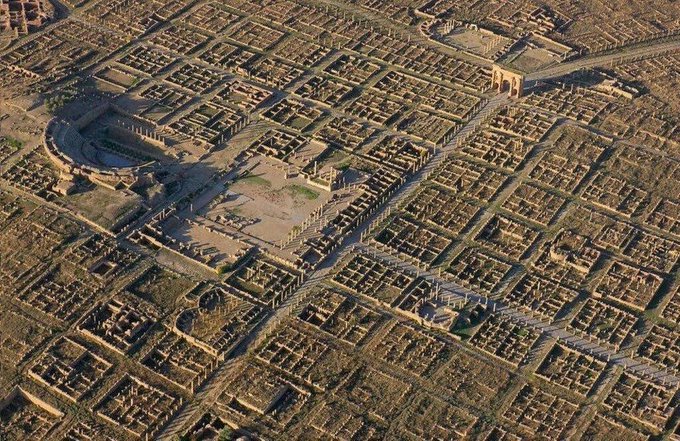
Today a vis­i­tor to the ruins of Tim­gad can see the out­lines of exact­ly where each of its build­ings once stood (espe­cial­ly if they have the aer­i­al view of the pho­to above, recent­ly tweet­ed out by Archi­tec­ture Hub). This, in part, is what qual­i­fied the place for inscrip­tion on UNESCO’s World Her­itage List.

“With its square enclo­sure and orthog­o­nal design based on the car­do and decumanus, the two per­pen­dic­u­lar routes run­ning through the city, it is an excel­lent exam­ple of Roman town plan­ning,” says UNESCO’s web site. Its “remark­able grid sys­tem” — quite nor­mal to 21st-cen­tu­ry city-dwellers, much less so in sec­ond-cen­tu­ry Africa — makes it “a typ­i­cal exam­ple of an urban mod­el” that “con­tin­ues to bear wit­ness to the build­ing inven­tive­ness of the mil­i­tary engi­neers of the Roman civ­i­liza­tion, today dis­ap­peared.”

“With­in a few gen­er­a­tions of its birth,” writes Messy Nessy,” the out­post had expand­ed to over 10,000 res­i­dents of both Roman, African, as well as Berber descent. “The exten­sion of Roman cit­i­zen­ship to non-Romans was a care­ful­ly planned strat­e­gy of the Empire,” she adds. “In return for their loy­al­ty, local elites were giv­en a stake in the great and pow­er­ful Empire, ben­e­fit­ted from its pro­tec­tion and legal sys­tem, not to men­tion, its mod­ern urban ameni­ties such as Roman bath hous­es, the­atres, and a fan­cy pub­lic library.”

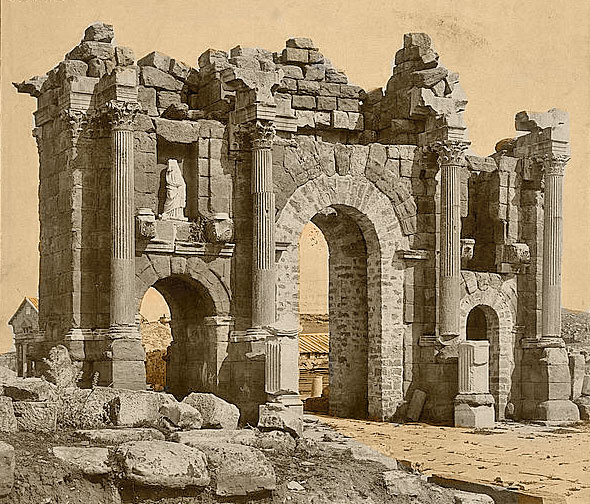
Tim­gad’s library, which “would have housed man­u­scripts relat­ing to reli­gion, mil­i­tary his­to­ry and good gov­er­nance,” seems to have been fan­cy indeed, and its ruins indi­cate the pur­chase Roman cul­ture man­aged to attain in this far-flung set­tle­ment.

Image via Wiki­me­dia Com­mons

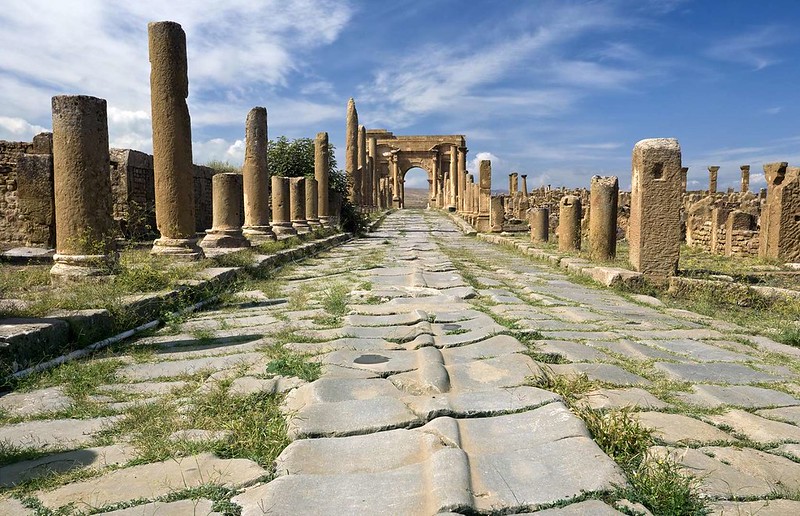
Tim­gad’s library is just one ele­ment of what UNESCO calls its “rich archi­tec­tur­al inven­to­ry com­pris­ing numer­ous and diver­si­fied typolo­gies, relat­ing to the dif­fer­ent his­tor­i­cal stages of its con­struc­tion: the defen­sive sys­tem, build­ings for the pub­lic con­ve­niences and spec­ta­cles, and a reli­gious com­plex.” Hav­ing out­grown its orig­i­nal street grid, Tim­gad “spread beyond the perime­ters of its ram­parts and sev­er­al major pub­lic build­ings are built in the new quar­ters: Capi­toli­um, tem­ples, mar­kets and baths,” most of which date from the city’s “Gold­en Age” in the Sev­er­an peri­od between 193 and 235.

Image Alan and Flo­ra Bot­ting via Flickr Com­mons

This makes for an African equiv­a­lent of Pom­peii, the Roman city famous­ly buried and thus pre­served in the explo­sion of Mount Vesu­vius in the year 79. But it is less­er-known Tim­gad, with its still clear­ly laid-out blocks, its rec­og­niz­able pub­lic facil­i­ties, and its demar­cat­ed “down­town” and “sub­urbs,” that will feel more famil­iar to us today, whichev­er city in the world we come from.

via Archi­tec­ture Hub/Messy­Nessy

Relat­ed Con­tent:

Vis­it Pom­peii (also Stone­henge & Ver­sailles) with Google Street View

Rome Reborn: Take a Vir­tu­al Tour Through Ancient Rome, 320 C.E.

Watch the Destruc­tion of Pom­peii by Mount Vesu­vius, Re-Cre­at­ed with Com­put­er Ani­ma­tion (79 AD)

See the Expan­sive Ruins of Pom­peii Like You’ve Nev­er Seen Them Before: Through the Eyes of a Drone

Pierre Bourdieu’s Pho­tographs of Wartime Alge­ria

Repli­ca of an Alger­ian City, Made of Cous­cous: Now on Dis­play at The Guggen­heim

Based in Seoul, Col­in Mar­shall writes and broad­casts on cities, lan­guage, and cul­ture. His projects include the book The State­less City: a Walk through 21st-Cen­tu­ry Los Ange­les and the video series The City in Cin­e­ma. Fol­low him on Twit­ter at @colinmarshall, on Face­book, or on Insta­gram.

Beer Archaeology: Yes, It’s a Thing

Travis Rupp is a clas­sics instruc­tor at The Uni­ver­si­ty of Col­orado. He’s also a “beer archae­ol­o­gist” who works on a spe­cial projects team at the Avery Brew­ing Com­pa­ny (in Boul­der) where they “brew beers the way that ancient Egyp­tians, Peru­vians and Vikings did.” If you can under­stand the beer an ancient peo­ple drank, you can bet­ter under­stand their over­all cul­ture.  That’s assump­tion at the heart of beer archae­ol­o­gy.

Above, watch a three minute intro­duc­tion to Rup­p’s work. Below, find infor­ma­tion on some of the world’s old­est beer recipes from Ancient Egypt and Chi­na.

If you would like to sign up for Open Culture’s free email newslet­ter, please find it here. It’s a great way to see our new posts, all bun­dled in one email, each day.

If you would like to sup­port the mis­sion of Open Cul­ture, con­sid­er mak­ing a dona­tion to our site. It’s hard to rely 100% on ads, and your con­tri­bu­tions will help us con­tin­ue pro­vid­ing the best free cul­tur­al and edu­ca­tion­al mate­ri­als to learn­ers every­where. You can con­tribute through Pay­Pal, Patre­on, and Ven­mo (@openculture). Thanks!

Relat­ed Con­tent:

5,000-Year-Old Chi­nese Beer Recipe Gets Recre­at­ed by Stan­ford Stu­dents

Dis­cov­er the Old­est Beer Recipe in His­to­ry From Ancient Sume­ria, 1800 B.C.


« Go Back
Quantcast