Enter the The Cornell Hip Hop Archive: A Vast Digital Collection of Hip Hop Photos, Posters & More

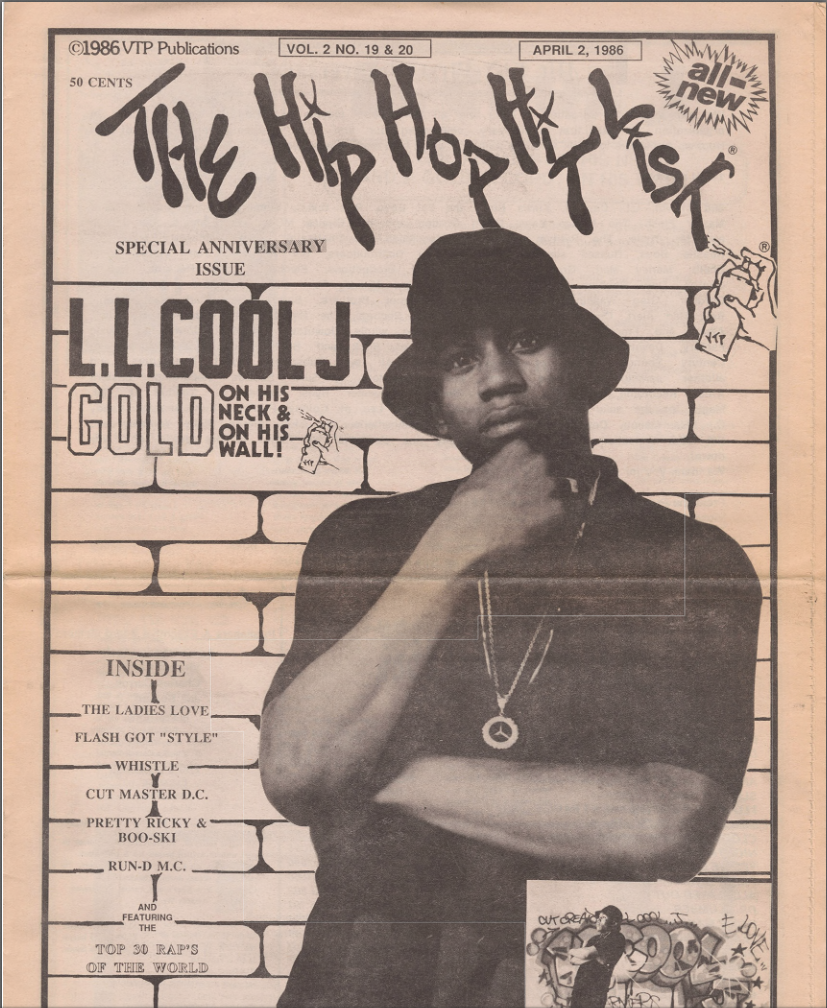
The music and the cul­ture of hip-hop are insep­a­ra­ble from the Bronx, Queens, Harlem, and Brook­lyn, NY. And now that the form is a glob­al cul­ture that exists in online spaces as much as it does where peo­ple meet and shake hands, its doc­u­men­tary his­to­ry may be more valu­able than ever. Hip-Hop began, unques­tion­ably, as a region­al phe­nom­e­non, and its for­mal qual­i­ties always bear the traces of its matrix, a con­flu­ence of African-Amer­i­can, Caribbean, and Latin Amer­i­can socio-cul­tur­al expe­ri­ences and cre­ative streams, meet­ing with new con­sumer audio tech­nol­o­gy and a dri­ve toward coun­ter­cul­tur­al exper­i­ments that took hold all over New York amidst the urban decay of the 70s.
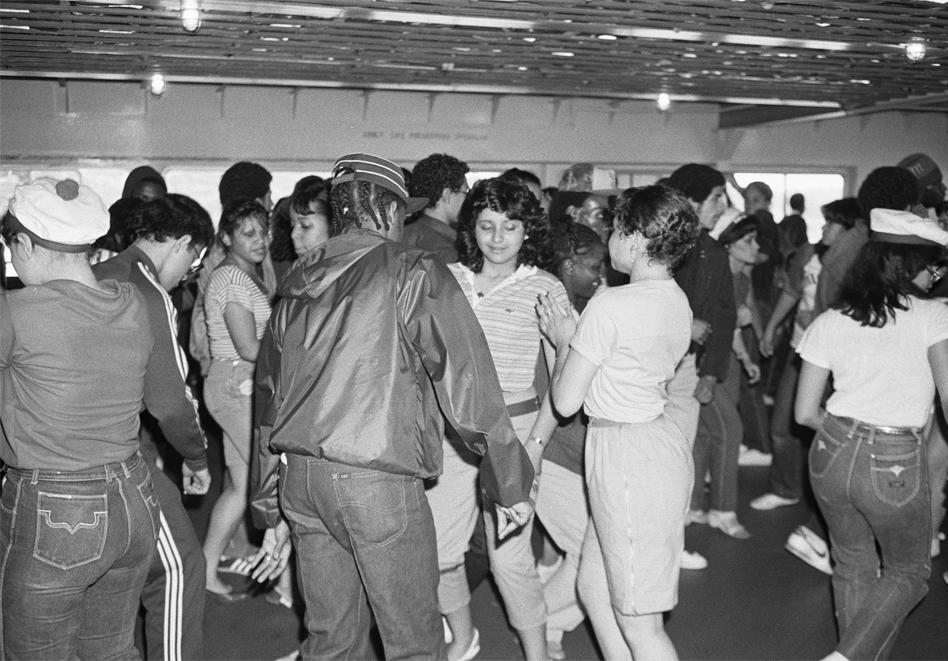
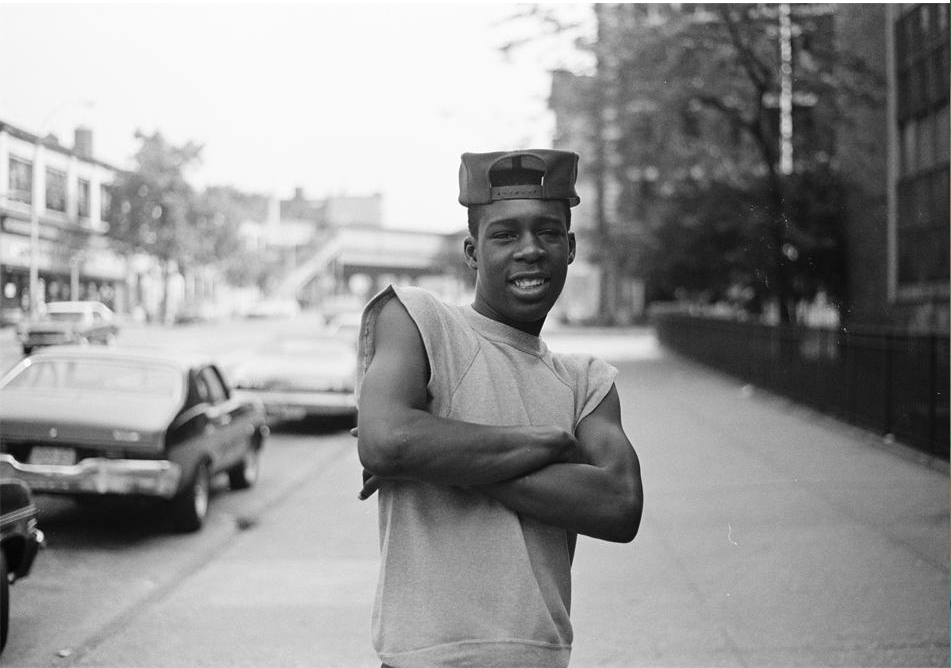
Pho­to by Joe Con­zo, Jr.

We know the sto­ry in broad strokes. Now we can immerse our­selves in the dai­ly life, so to speak, of ear­ly hip hop, thanks to a par­tial dig­i­ti­za­tion of Cor­nell University’s vast hip hop col­lec­tion. The phys­i­cal col­lec­tion, housed in Itha­ca New York, con­tains “hun­dreds of par­ty and event fly­ers ca. 1977–1985; thou­sands of ear­ly vinyl record­ings, cas­settes and CDs; film and video; record label press pack­ets and pub­lic­i­ty; black books, pho­tog­ra­phy, mag­a­zines, books, cloth­ing, and more.”

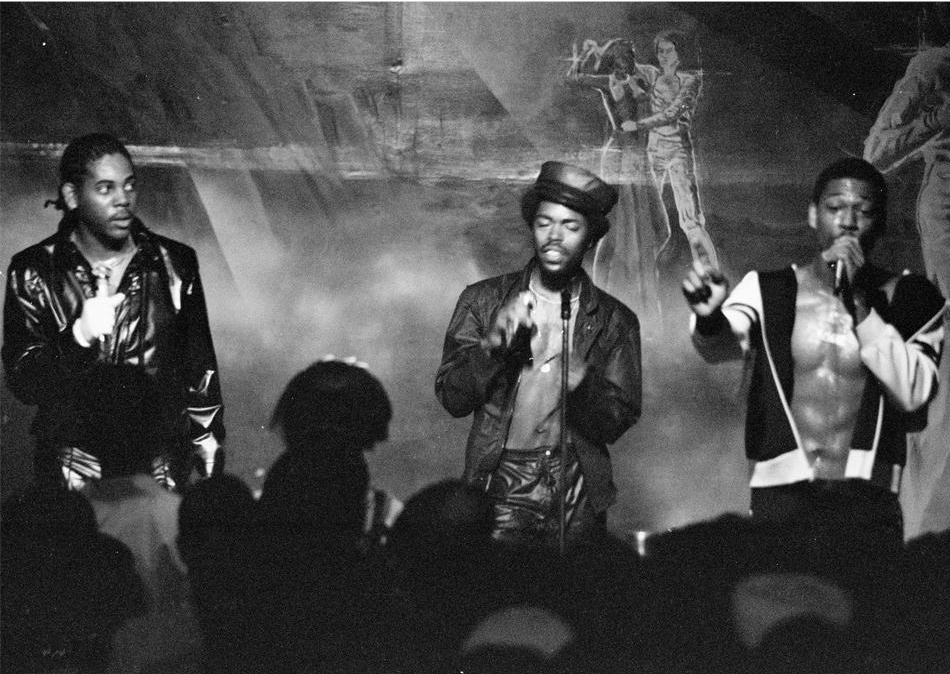
Pho­to by Joe Con­zo, Jr.

While this impres­sive trove of phys­i­cal arti­facts is open to the pub­lic, most of us won’t ever make the jour­ney. But whether we’re fans, schol­ars, or curi­ous onlook­ers, we can ben­e­fit from its cura­to­r­i­al largesse through online archives like that of Joe Con­zo, Jr., who “cap­tured images of the South Bronx between 1977 and 1984, includ­ing ear­ly hip hop jams, street scenes, and Latin music per­form­ers and events.”

Pho­to by Joe Con­zo, Jr.

While still in high school, Con­zo became the offi­cial pho­tog­ra­ph­er for the ear­ly influ­en­tial rap group the Cold Crush Broth­ers. The posi­tion gave him unique access to the “local­ized, grass­roots cul­ture about to explode into glob­al aware­ness.” Cornell’s site remarks that “with­out Joe’s images, the world would have lit­tle idea of what the ear­li­est era of hip hop looked like, when fabled DJ, MC, and b‑boy/girl bat­tles took place in parks, school gym­na­si­ums and neigh­bor­hood dis­cos.”

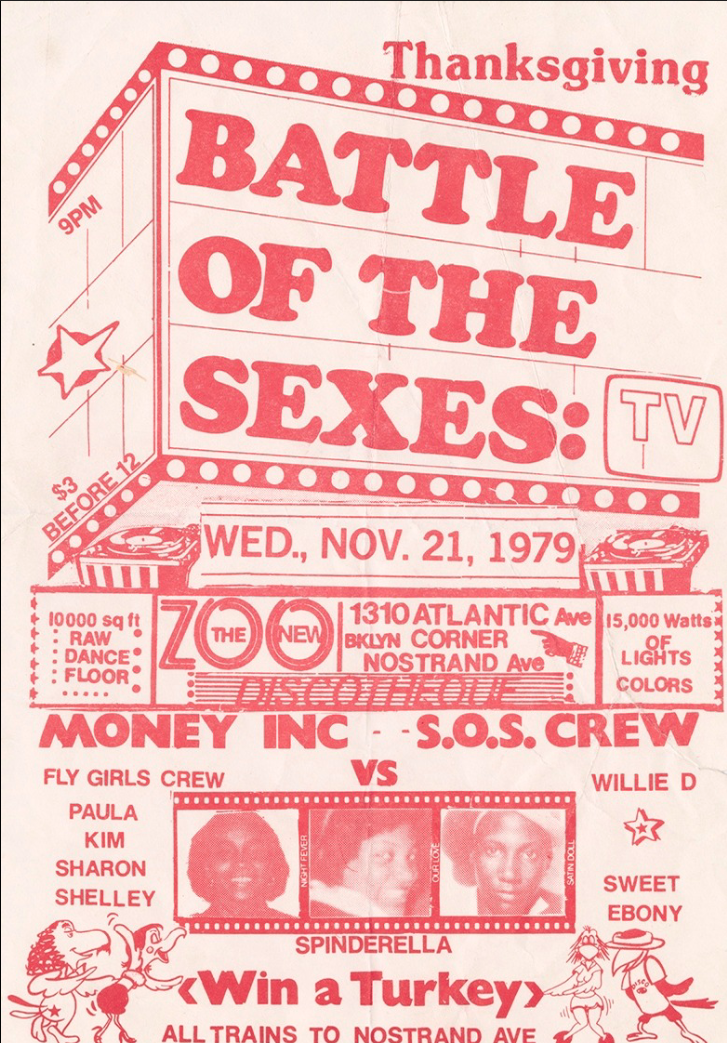
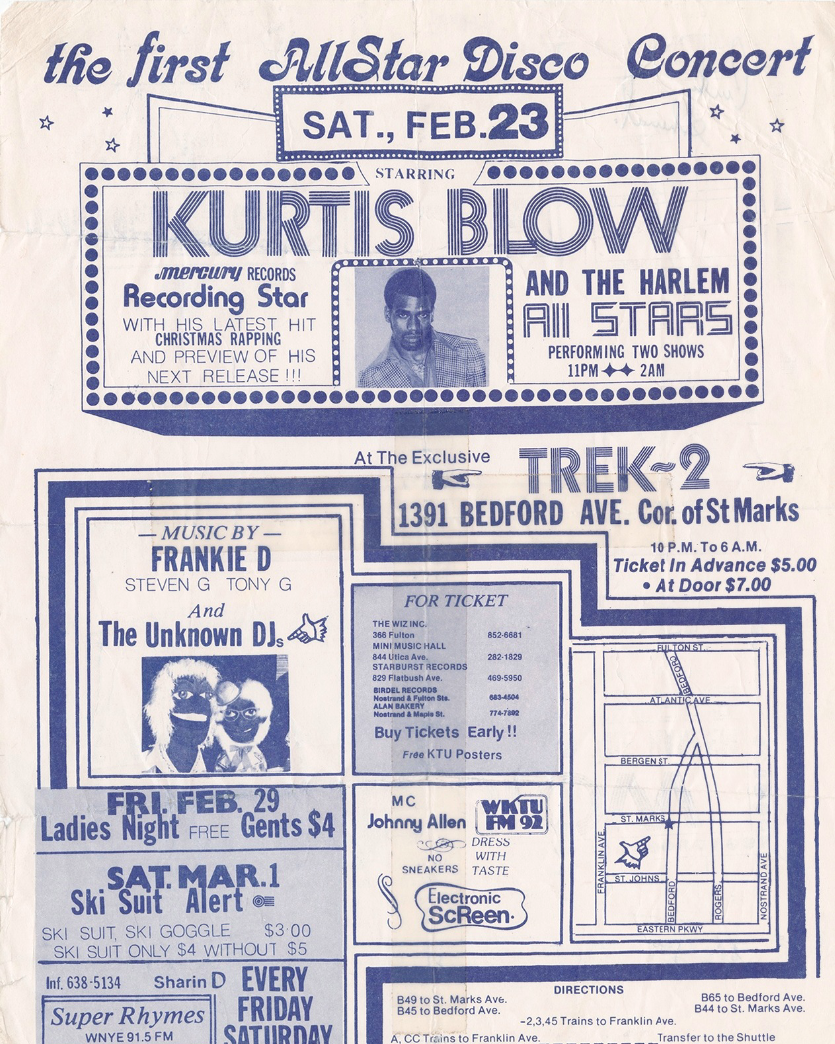
Anoth­er of Cornell’s col­lec­tions, the Bud­dy Esquire Par­ty and Event Fly­er Archive, pre­serves over 500 such arti­facts, the “largest known insti­tu­tion­al col­lec­tion of these scarce fly­ers, which have become increas­ing­ly val­ued for the details they pro­vide about ear­ly hip hop cul­ture.” Local, grass­roots scenes like this one seem increas­ing­ly rare in a glob­al­ized, always-online 21st cen­tu­ry. Archives like Cornell’s not only tell the sto­ry of such a cul­ture, but in so doing they doc­u­ment a crit­i­cal peri­od in New York City, much like punk or jazz archives tell impor­tant his­to­ries of Lon­don, New York, D.C., Paris, New Orleans, etc.
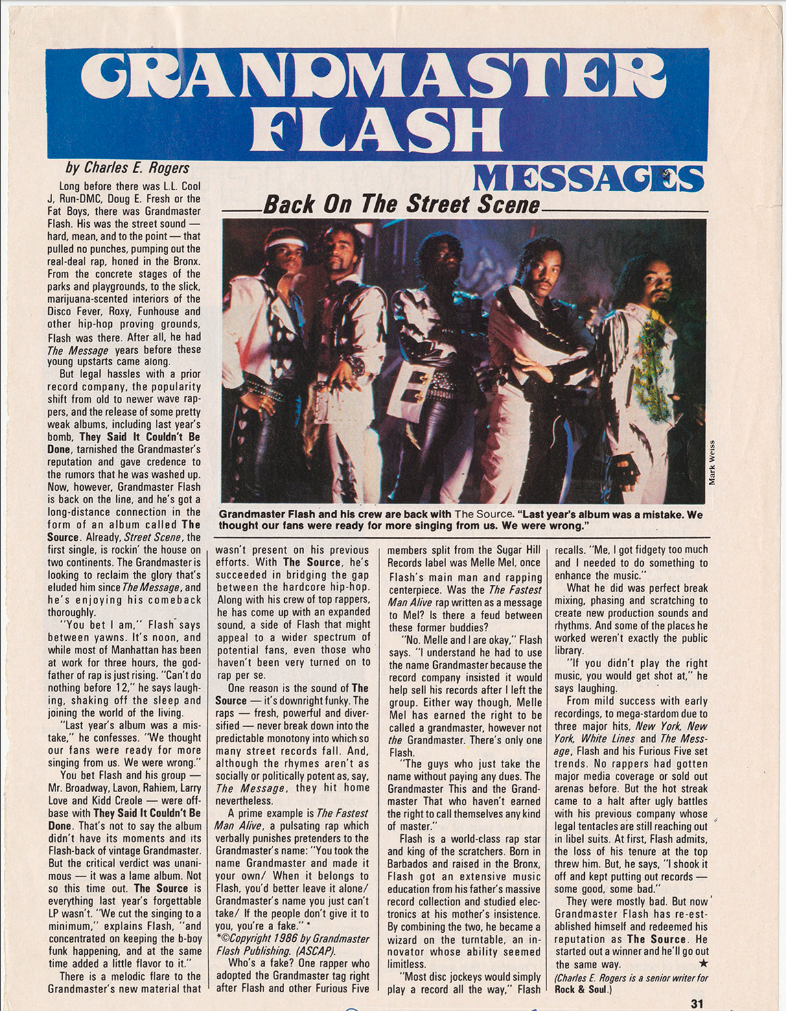
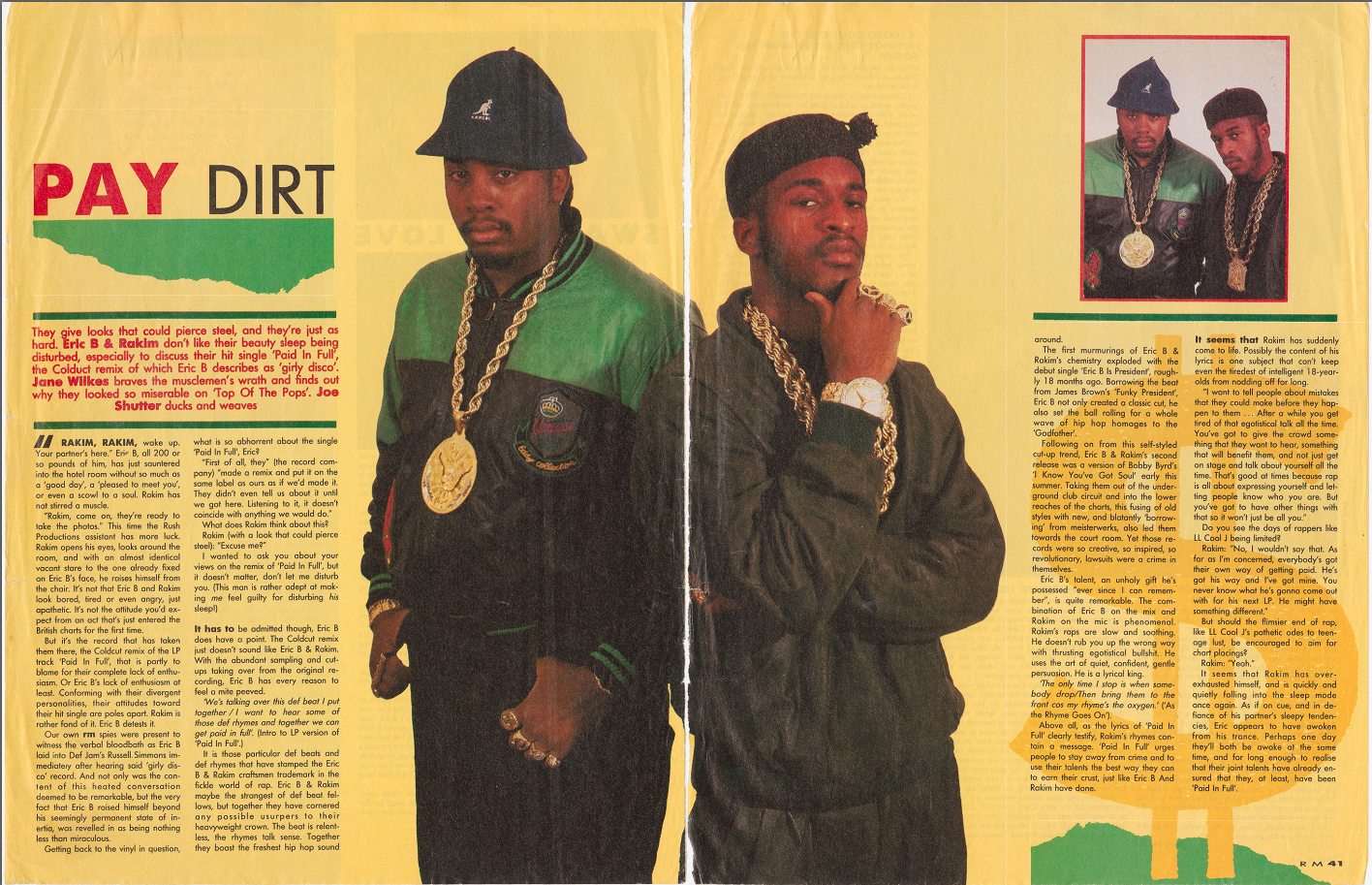
The third dig­i­tal col­lec­tion host­ed by Cor­nell, the Adler Hip Hop Archive, comes from jour­nal­ist and Def Jam Record­ings pub­li­cist Bill Adler. The mate­ri­als here nat­u­ral­ly skew toward the indus­try side of the cul­ture, doc­u­ment­ing its leap from the New York streets to “glob­al aware­ness” and a spread to cities nation­wide, through mag­a­zine pho­to spreads, ads, pro­mo­tion­al pics, press clip­pings, and much more.

Some of these col­lec­tions are eas­i­er to nav­i­gate than others—you’ll have to wade through many non-hip-hop pho­tos in the huge Joe Con­zo, Jr. archive, though most of them, like his Puer­to Rican por­traits and land­scapes for exam­ple, are of inter­est in their own right. Con­zo’s pho­to jour­nal­ism of the Bronx in the late 70s and 80s has all the inti­ma­cy and can­dor of a fam­i­ly album or col­lec­tion of year­book pictures—charmingly awk­ward, exu­ber­ant, and a stark con­trast to the high-pro­file glam­our of com­mer­cial hip-hop eras to fol­low.

The core of Cornell’s col­lec­tion came from author, cura­tor, and for­mer record exec­u­tive Johan Kugel­berg, who donat­ed his col­lec­tion in 1999 after pub­lish­ing Born in the Bronx: A Visu­al His­to­ry of the Ear­ly Days of Hip Hop with Joe Con­zo, Jr. It has since expand­ed to 13 dif­fer­ent col­lec­tions from the archives of some of the cul­ture’s ear­li­est pio­neers and doc­u­men­tar­i­ans. Hope­ful­ly many more of these will soon be dig­i­tized. But we might want to heed Jason Kottke’s warn­ing in enter­ing the three that have: “don’t click on any of those links if you’ve got press­ing things to do.” You could eas­i­ly get lost in this incred­i­bly detailed trea­sury of hip-hop—and New York City—history.
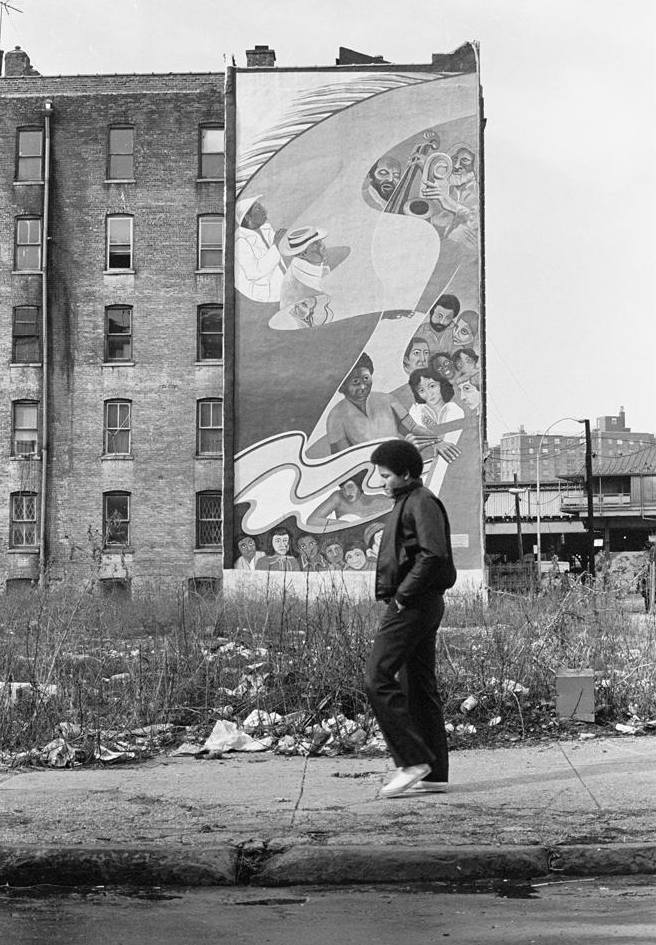
Pho­to by Joe Con­zo, Jr.

via Kot­tke

Relat­ed Con­tent:

Found­ing Fathers, A Doc­u­men­tary Nar­rat­ed By Pub­lic Enemy’s Chuck D, Presents the True His­to­ry of Hip Hop

The “Amen Break”: The Most Famous 6‑Second Drum Loop & How It Spawned a Sam­pling Rev­o­lu­tion

Hip Hop Hits Sung Won­der­ful­ly in Sign Lan­guage: Eminem’s “Lose Your­self,” Wiz Khalifa’s “Black and Yel­low” & More

Josh Jones is a writer and musi­cian based in Durham, NC. Fol­low him at @jdmagness

Google Creates a Digital Archive of World Fashion: Features 30,000 Images, Covering 3,000 Years of Fashion History

Both the fash­ion and art worlds fos­ter the cre­ation of rar­i­fied arti­facts inac­ces­si­ble to the major­i­ty of peo­ple, often one-of-a-kind pieces that exist in spe­cial­ly-designed spaces and flour­ish in cos­mopoli­tan cities. Does this mean that fash­ion is an art form like, say, paint­ing or pho­tog­ra­phy? Doesn’t fashion’s ephemer­al nature mark it as a very dif­fer­ent activ­i­ty? We might con­sid­er that we can ask many of the same ques­tions of haute cou­ture as we can of fine art. What are the social con­se­quences of tak­ing folk art forms, for exam­ple, out of their cul­tur­al con­text and plac­ing them in gallery spaces? What is the effect of tap­ping street fash­ion as inspi­ra­tion for the run­way, turn­ing it into objects of con­sump­tion for the wealthy?

Such ques­tions should remind us that fash­ion and the arts are embed­ded in human cul­tur­al and eco­nom­ic his­to­ry in some very sim­i­lar ways. But they are also very dif­fer­ent social prac­tices. Much like trends in food (both fine din­ing and cheap con­sum­ables) fash­ion has long been impli­cat­ed in the spread of mar­kets and indus­tries, labor exploita­tion, envi­ron­men­tal degra­da­tion, and even microbes. As Jason Daley points out at Smith­son­ian, “The craze for silk in ancient Rome helped spawn the Silk Road, a fash­ion for feath­ered hats con­tributed to the first Nation­al Wildlife Refuges. Fash­ion has even been wrapped up in pan­demics and infec­tious dis­eases.

So how to tell the sto­ry of a human activ­i­ty so deeply embed­ded in every facet of world his­to­ry? Expan­sive­ly. Google Arts & Cul­ture has attempt­ed to do so with its “We wear cul­ture” project. Promis­ing to tell “the sto­ries behind what we wear,” the project, as you can see in the teas­er video at the top, “trav­elled to over 40 coun­tries, col­lab­o­rat­ing with more than 180 cul­tur­al insti­tu­tions and their world-renowned his­to­ri­ans and cura­tors to bring their tex­tile and fash­ion col­lec­tions to life.” Cov­er­ing 3,000 years of his­to­ry, “We wear cul­ture” uses video, his­tor­i­cal images, short quotes and blurbs, and fash­ion pho­tog­ra­phy to cre­ate a series of online gallery exhibits of, for exam­ple, “The Icons,” pro­files of design­ers like Oscar de la Renta, Coco Chanel, and Issey Miyake.

Anoth­er exhib­it “Fash­ion as Art” includes a fea­ture on Florence’s Museo Sal­va­tore Fer­rag­amo, a gallery ded­i­cat­ed to the famous design­er and con­tain­ing 10,000 mod­els of shoes he cre­at­ed or owned. Ask­ing the ques­tion “is fash­ion art?”, the exhib­it “analy­ses the forms of dia­logue between these two worlds: rec­i­p­ro­cal inspi­ra­tions, over­laps and col­lab­o­ra­tions, from the expe­ri­ences of the Pre-Raphaelites to those of Futur­ism, and from Sur­re­al­ism to Rad­i­cal Fash­ion.” It’s a won­der they don’t men­tion the Bauhaus school, many of whose res­i­dent artists rad­i­cal­ized fash­ion design, though their geo­met­ric odd­i­ties seem to have had lit­tle effect on Fer­rag­amo.

As you might expect, the empha­sis here is on high fash­ion, pri­mar­i­ly. When it comes to telling the sto­ries of how most peo­ple in the world have expe­ri­enced fash­ion, Google adopts a very Euro­pean, sup­ply side, per­spec­tive, one in which “The impact of fash­ion,” as one exhib­it is called, spans cat­e­gories “from the econ­o­my and job cre­ation, to help­ing empow­er com­mu­ni­ties.” Non-Euro­pean cloth­ing mak­ers gen­er­al­ly appear as anony­mous folk arti­sans and crafts­peo­ple who serve the larg­er goal of pro­vid­ing mate­ri­als and inspi­ra­tion for the big names.

Cul­tur­al his­to­ri­ans may lament the lack of crit­i­cal or schol­ar­ly per­spec­tives on pop­u­lar cul­ture, the dis­tinct lack of oth­er cul­tur­al points of view, and the intense focus on trends and per­son­al­i­ties. But per­haps to do so is to miss the point of a project like this one—or of the fash­ion world as a whole. As with fine art, the sto­ries of fash­ion are often all about trends and per­son­al­i­ties, and about mate­ri­als and mar­ket forces.

To cap­i­tal­ize on that fact, “We wear cul­ture” has a num­ber of inter­ac­tive, 360 degree videos on its YouTube page, as well as short, adver­tis­ing-like videos, like that above on ripped jeans, part of a series called “Trends Decod­ed.” Kate Lauter­bach, the pro­gram man­ag­er at Google Arts & Cul­ture, high­lights the videos below on the Google blog (be aware, the inter­ac­tive fea­ture will not work in Safari).

  • Find out how Chanel’s black dress made it accept­able for women to wear black on any occa­sion (Musée des Arts Déco­rat­ifs, Paris, France — 1925)
  • Step on up—way up—to learn how Mar­i­lyn Monroe’s sparkling red high heels became an expres­sion of empow­er­ment, suc­cess and sex­i­ness for women (Museo Sal­va­tore Fer­rag­amo from Flo­rence, Italy — 1959)
  • See design­er Vivi­enne West­wood’s unique take on the corset, one of the most con­tro­ver­sial gar­ments in his­to­ry (Vic­to­ria and Albert Muse­um, Lon­don, UK — 1990)
  • Dis­cov­er the Comme des Garçons sweater and skirt with which Rei Kawakubo brought the aes­thet­ics and crafts­man­ship of Japan­ese design onto the glob­al fash­ion stage (Kyoto Cos­tume Insti­tute, Kyoto, Japan — 1983)

Does the project yet deliv­er on its promise, to “tell the sto­ries behind what we wear”? That all depends, I sup­pose, on who “we” are. It is a very valu­able resource for stu­dents of high fash­ion, as well as “a pleas­ant way to lose an after­noon,” writes Marc Bain at Quartz, one that “may give you a new under­stand­ing of what’s hang­ing in your own clos­et.”

We wear cul­ture” fea­tures 30,000 fash­ion pieces and more than 450 exhibits. Start brows­ing here.

Relat­ed Con­tent:

Kandin­sky, Klee & Oth­er Bauhaus Artists Designed Inge­nious Cos­tumes Like You’ve Nev­er Seen Before

1930s Fash­ion Design­ers Pre­dict How Peo­ple Would Dress in the Year 2000

Punk Meets High Fash­ion in Met­ro­pol­i­tan Muse­um of Art Exhi­bi­tion PUNK: Chaos to Cou­ture

Josh Jones is a writer and musi­cian based in Durham, NC. Fol­low him at @jdmagness

New, Interactive Web Site Puts Online Thousands of International Folk Songs Recorded by the Great Folklorist Alan Lomax

These days everyone’s hung up on iden­ti­ty. But I don’t mean to talk pol­i­tics, though my point is maybe inescapably polit­i­cal: the iden­ti­ties our jobs and incomes give us—the sta­tus or lack thereof—become so cen­tral to who we are in the world that they eclipse oth­er essen­tial aspects, eclipse the things we do strict­ly because it gives us plea­sure to do them.

Music, dance, art, poet­ry.… These fall under what Alan Lomax called an expe­ri­ence of “the very core” of exis­tence, “the adap­tive style” of cul­ture, “which enables its mem­bers to cohere and sur­vive.” Cul­ture, for Lomax, was nei­ther an eco­nom­ic activ­i­ty nor a racial cat­e­go­ry, nei­ther an exclu­sive rank­ing of hier­ar­chies nor a redoubt for nation­al­ist inse­cu­ri­ties. Cul­tures, plur­al, were pecu­liar­ly region­al expres­sions of shared human­i­ty across one inter­re­lat­ed world.

Lomax did have some pater­nal­is­tic atti­tudes toward what he called “weak­er peo­ples,” not­ing that “the role of the folk­lorist is that of the advo­cate of the folk.” But his advo­ca­cy was not based in the­o­ries of suprema­cy but of his­to­ry. We could mend the rup­tures of the past by adding “cul­tur­al equi­ty… to the humane con­di­tion of lib­er­ty, free­dom of speech and reli­gion, and social jus­tice,” wrote the ide­al­is­tic Lomax. “The stuff of folk­lore,” he wrote else­where, “the oral­ly trans­mit­ted wis­dom, art and music of the peo­ple, can pro­vide ten thou­sand bridges across which men of all nations may stride to say, ‘You are my broth­er.’”

Lomax’s ide­al­ism may seem to us quaint at best, but I dare you to con­demn its results, which include con­nect­ing Lead Bel­ly and Woody Guthrie to their glob­al audi­ences and pre­serv­ing a good deal of the folk music her­itage of the world through tire­less field and stu­dio record­ing, doc­u­men­ta­tion and mem­oir, and insti­tu­tions like the Asso­ci­a­tion for Cul­tur­al Equi­ty (ACE), found­ed by Lomax in 1986 to cen­tral­ize and make avail­able the vast amount of mate­r­i­al he had col­lect­ed over the decades.

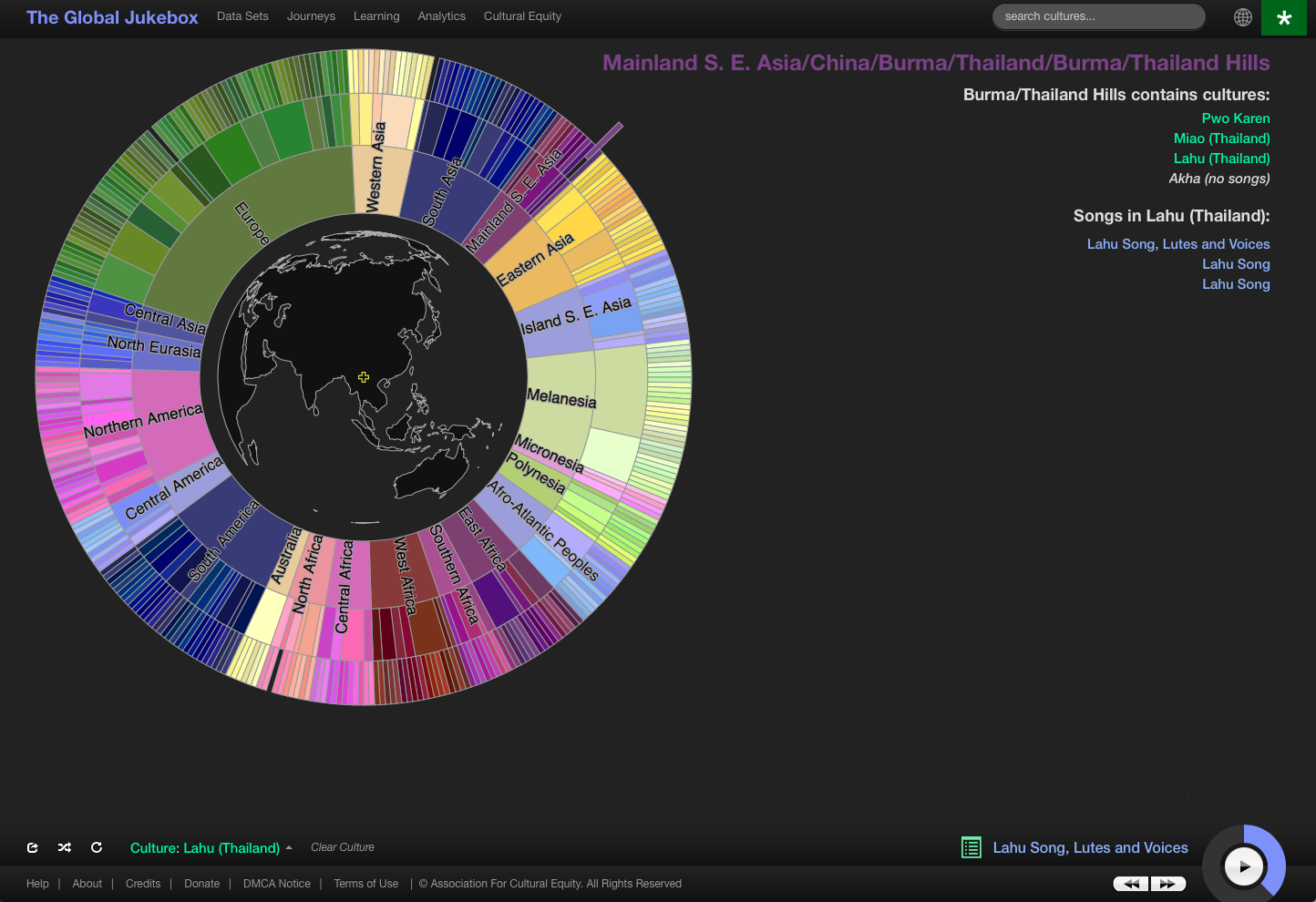
In anoth­er archival project, Lomax’s Glob­al Juke­box, we get to see rig­or­ous schol­ar­ly meth­ods applied to exam­ples from his vast library of human expres­sions. The online project cat­a­logues the work in musi­col­o­gy of Lomax and his father John, who both took on a “life long mis­sion to doc­u­ment not only America’s cul­tur­al roots, but the world’s as well,” notes an online brochure for the Glob­al Juke­box. Lomax believed that “music, dance and folk­lore of all tra­di­tions have equal val­ue” and are equal­ly wor­thy of study. The Glob­al Juke­box car­ries that belief into the 21st cen­tu­ry.

Since 1990, the Glob­al Juke­box has func­tioned as a dig­i­tal repos­i­to­ry of music from Lomax’s glob­al archive, as you can see in the very dat­ed 1998 video above, fea­tur­ing ACE direc­tor Gideon D’Arcangelo. Now, updat­ed and put online, the new­ly-launched Glob­al Juke­box web site pro­vides an inter­ac­tive inter­face, giv­ing you access to detailed analy­ses of folk music from all over the world, and high­ly tech­ni­cal “descrip­tive data” for each song. You can learn the sys­tems of “Chore­o­met­rics and Cantometrics”—specialized ana­lyt­i­cal tools for scientists—or you can casu­al­ly browse the incred­i­ble diver­si­ty of music as a layper­son, through a beau­ti­ful­ly ren­dered map view or the col­or­ful­ly attrac­tive graph­ic “tree view,” below.

Stop by the Glob­al Jukebox’s “About” page to learn much more about its tech­ni­cal speci­fici­ties and his­to­ry, which dates to 1960 when Lomax began work­ing with anthro­pol­o­gist Con­rad Arens­berg at Colum­bia and Hunter Uni­ver­si­ties to study “the expres­sive arts” with sci­en­tif­ic tools and emerg­ing tech­nolo­gies. The Glob­al Juke­box rep­re­sents a high­ly schemat­ic way of look­ing at Lomax’s body of work, and its ease of use and lev­el of detail make it easy to leap around the world, sam­pling the thrilling vari­ety of folk music he col­lect­ed.

It is not, and is not meant as, a sub­sti­tute for the liv­ing tra­di­tions Lomax helped safe­guard, and the incred­i­ble music they have inspired pro­fes­sion­al and ama­teur musi­cians to make over the years. But the Glob­al Juke­box gives us sev­er­al unique ways of orga­niz­ing and dis­cov­er­ing those traditions—ways that are still evolv­ing, such as a com­ing func­tion for build­ing your own cul­tur­al fam­i­ly tree with a playlist of songs from your musi­cal ances­try.

Relat­ed Con­tent:

Hear 17,000+ Tra­di­tion­al Folk & Blues Songs Curat­ed by the Great Musi­col­o­gist Alan Lomax

The British Library’s “Sounds” Archive Presents 80,000 Free Audio Record­ings: World & Clas­si­cal Music, Inter­views, Nature Sounds & More

Leg­endary Folk­lorist Alan Lomax: ‘The Land Where the Blues Began’

Josh Jones is a writer and musi­cian based in Durham, NC. Fol­low him at @jdmagness

Download 437 Issues of Soviet Photo Magazine, the Soviet Union’s Historic Photography Journal (1926–1991)

The ear­ly years of the Sovi­et Union roiled with inter­nal ten­sions, intrigues, and ide­o­log­i­cal war­fare, and the new empire’s art reflect­ed its uneasy het­ero­doxy. For­mal­ists, Futur­ists, Supre­ma­tists, Con­struc­tivists, and oth­er schools min­gled, pub­lished jour­nals, cri­tiqued and reviewed each other’s work, and like mod­ernists else­where in the world, exper­i­ment­ed with every pos­si­ble medi­um, includ­ing those just com­ing into their own at the begin­ning of the 20th cen­tu­ry, like film and pho­tog­ra­phy.

These two medi­ums, along with radio, also hap­pened to serve as the pri­ma­ry means of pro­pa­gan­diz­ing Sovi­et cit­i­zens and car­ry­ing the mes­sages of the Par­ty in ways every­one could under­stand. And like much of the rest of the world, pho­tog­ra­phy engen­dered its own con­sumer cul­ture.

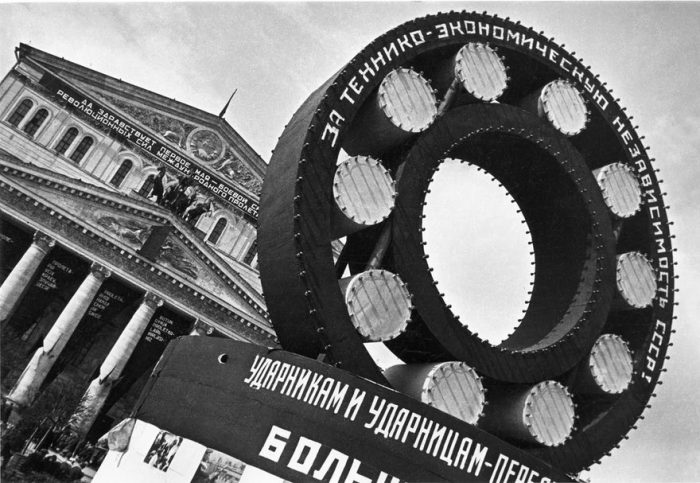
Out of these com­pet­ing impuls­es came Sovi­et Pho­to (Sovet­skoe foto), a month­ly pho­tog­ra­phy mag­a­zine fea­tur­ing, writes Kse­nia Nouril at the Muse­um of Mod­ern Art’s site, “edi­to­ri­als, let­ters, arti­cles, and pho­to­graph­ic essays along­side adver­tise­ments for pho­tog­ra­phy, pho­to­graph­ic process­es, and pho­to­graph­ic chem­i­cals and equip­ment.”

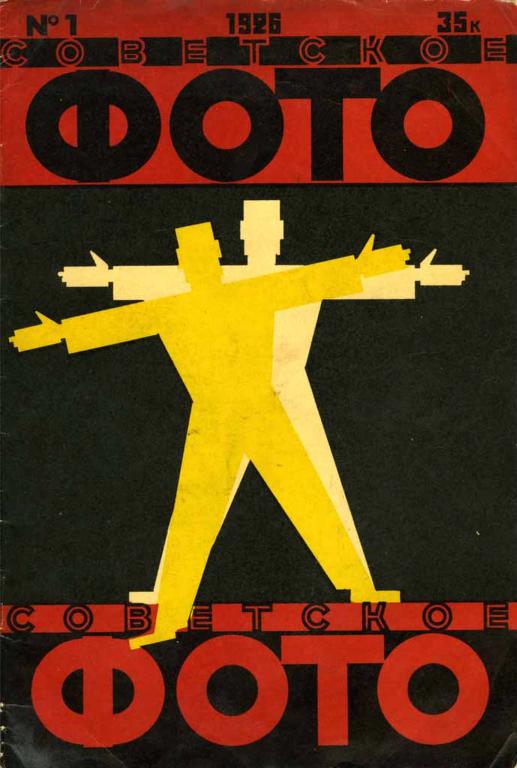
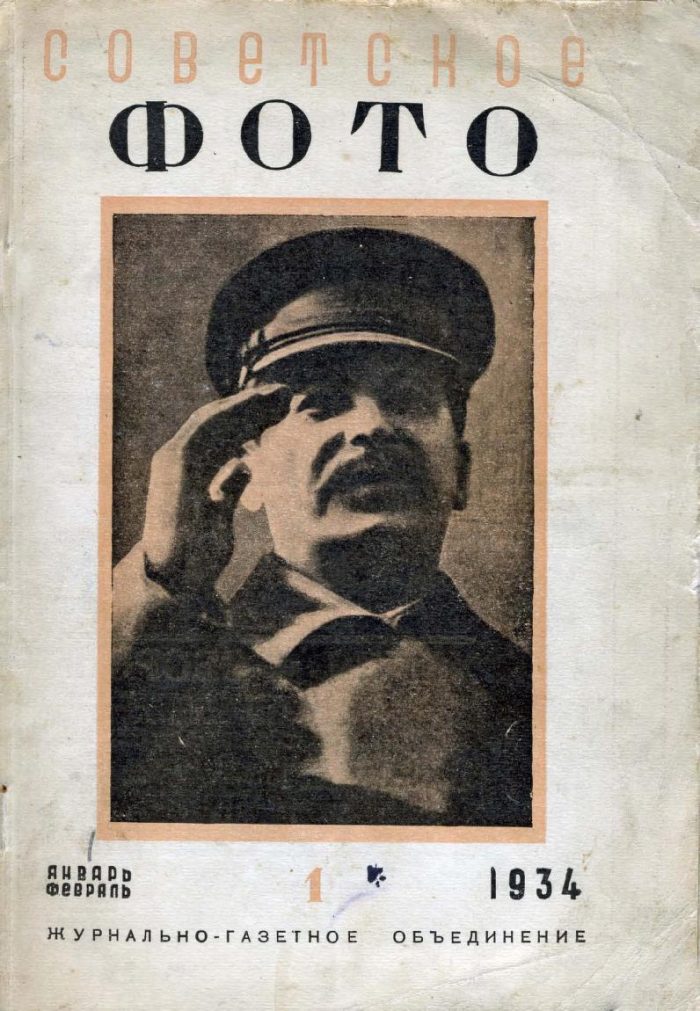
Sovi­et Pho­to was not found­ed by artists, but by a pho­to­jour­nal­ist, Arkady Shaikhet, in 1926 (see the first issue’s cov­er at the top). Though its audi­ence pri­mar­i­ly con­sist­ed of a “Sovi­et ama­teur pho­tog­ra­phers and pho­to clubs,” its ear­ly years freely mixed doc­u­men­tary, didac­ti­cism, and exper­i­men­tal art. It pub­lished the “works of inter­na­tion­al and pro­fes­sion­al pho­tog­ra­phers” and that of avant-gardists like Con­struc­tivist painter and graph­ic design­er Alek­sander Rod­chenko.

The aes­thet­ic purges under Stalin—in which artists and writ­ers one after anoth­er fell vic­tim to charges of elit­ism and obscurantism—also played out in the pages of Sovi­et Pho­to. “Even before Social­ist Real­ism was decreed to be the offi­cial style of the Sovi­et Union in 1934,” Nouril writes, “the works of avant-garde pho­tog­ra­phers,” includ­ing Rod­chenko, “were denounced as for­mal­ist (imply­ing that they reflect­ed a for­eign and elit­ist style).” Sovi­et Pho­to boy­cotted Rodchenko’s work in 1928 and “through­out the 1930s this state-sanc­tioned jour­nal became increas­ing­ly con­ser­v­a­tive,” empha­siz­ing “con­tent over form.”

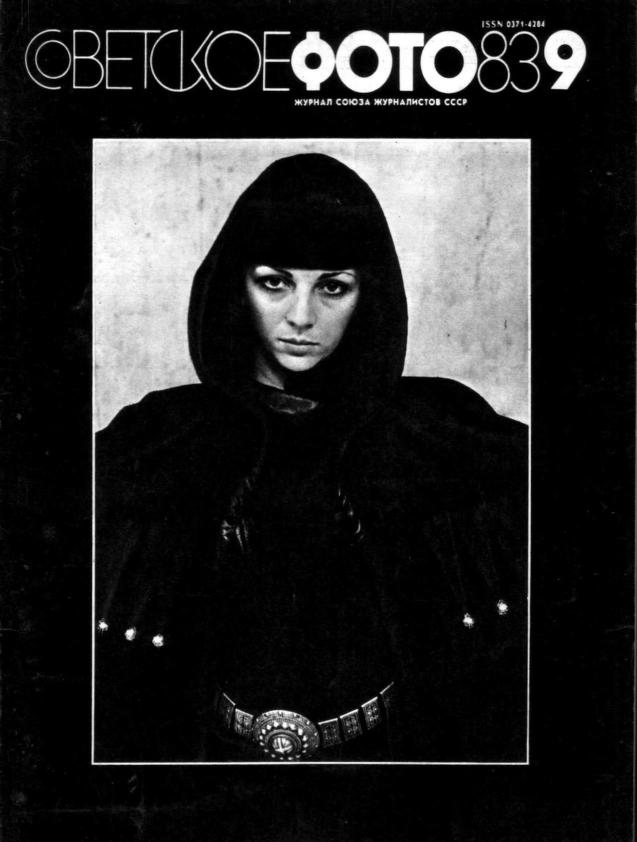
This does not mean that that the con­tents of the mag­a­zine were inel­e­gant or pedes­tri­an. Though it once briefly bore the name Pro­le­tarskoe foto (Pro­le­tari­at Pho­tog­ra­phy), and tend­ed toward mon­u­men­tal and indus­tri­al sub­jects, war pho­tog­ra­phy, and ide­al­iza­tions of Sovi­et life dur­ing the Stal­in­ist years. After the 60s thaw, exper­i­men­tal pho­tomon­tages returned, and more abstract com­po­si­tions became com­mon­place. Sovi­et Pho­to also kept pace with many glossy mag­a­zines in the West, with stun­ning full-col­or pho­to­jour­nal­ism and, after glas­nost and the fall of the Berlin wall, high fash­ion and adver­tis­ing pho­tog­ra­phy.

Fans of pho­tog­ra­phy, Sovi­et his­to­ry, or some mea­sure of both, can fol­low Sovi­et Pho­to’s evo­lu­tion in a huge archive fea­tur­ing 437 dig­i­tized issues, pub­lished between 1926 and 1991. Expect to find a gap between 1942 and 1956, when pub­li­ca­tion ceased “due to World War II and the war’s after­ef­fects.” Aside from these years and a few oth­er miss­ing months, the archive con­tains near­ly every issue of Sovi­et Pho­to, free to browse or down­load in var­i­ous for­mats. “Dig deep enough,” writes pho­to blog PetaPix­el, “and you’ll find some real­ly inter­est­ing (and sur­pris­ing­ly famil­iar) things in there.” Enter the archive here.


via PetaPix­el

Relat­ed Con­tent:

The His­to­ry of Rus­sia in 70,000 Pho­tos: New Pho­to Archive Presents Russ­ian His­to­ry from 1860 to 1999

Thou­sands of Pho­tos from the George East­man Muse­um, the World’s Old­est Pho­tog­ra­phy Col­lec­tion, Now Avail­able Online

Down­load Russ­ian Futur­ist Book Art (1910–1915): The Aes­thet­ic Rev­o­lu­tion Before the Polit­i­cal Rev­o­lu­tion

Behold a Beau­ti­ful Archive of 10,000 Vin­tage Cam­eras at Col­lec­tion Appareils

Josh Jones is a writer and musi­cian based in Durham, NC. Fol­low him at @jdmagness

Browse Every Art Exhibition Held at MoMA Since 1929 with the New “MoMA Exhibition Spelunker”

More and more, muse­ums around the world are open­ing up their vast archives for free on the inter­net. We can browse broad col­lec­tions, or dig down deep into col­lec­tions and exam­ine indi­vid­ual works, or we can down­load hi-res­o­lu­tion jpgs of famous works and slap them on our new desk­top as wall­pa­per. (Dis­cus­sion: does this triv­i­al­ize a work or help us appre­ci­ate it?)

Indeed, Open­Cul­ture has linked to many of these and I’ve fol­lowed. And I’ve often returned over­whelmed or dis­ap­point­ed, not by the art, but by bad web design. Good inten­tions are one thing, but insti­tu­tions often turn to coders first, not design­ers. And there’s a dif­fer­ence.

Recent­ly we told you how the Met­ro­pol­i­tan Muse­um of Art has put most of its near­ly 90 years of exhi­bi­tions online. Our own Col­in Mar­shall said:

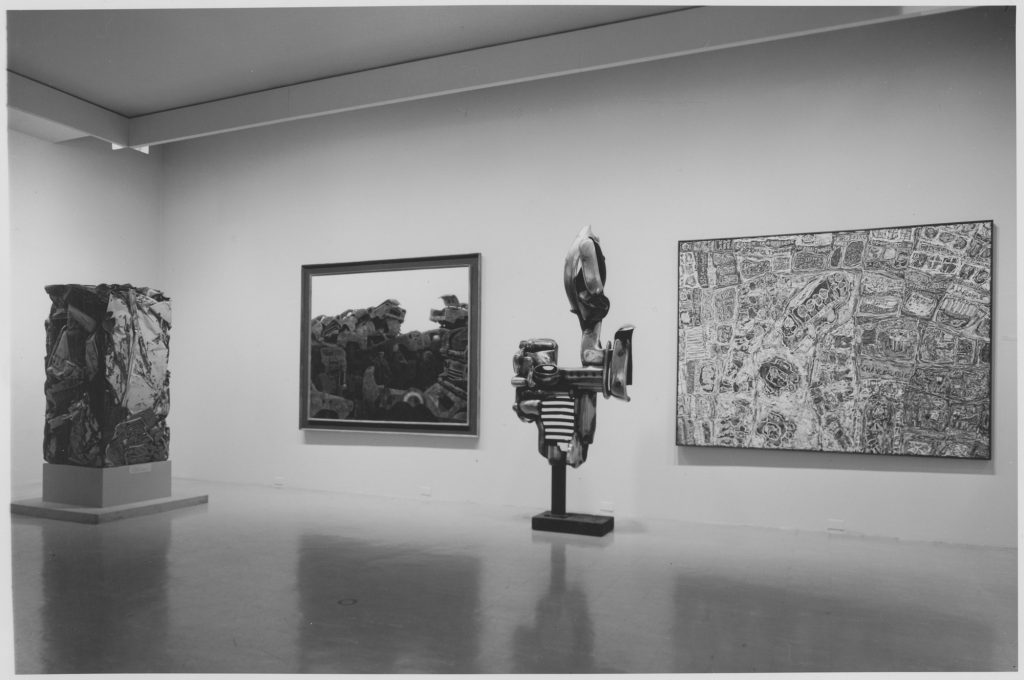
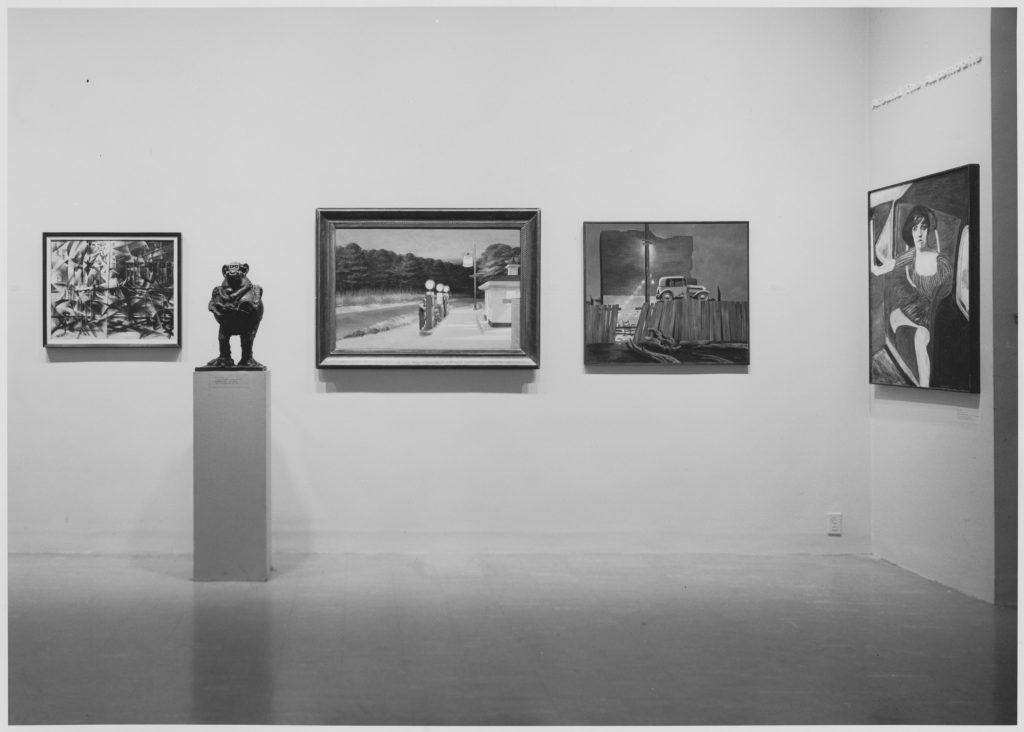
The archive offers, in the words of Chief of Archives Michelle Ellig­ott, “free and unprece­dent­ed access to The Muse­um of Mod­ern Art’s ever-evolv­ing exhi­bi­tion his­to­ry” in the form of “thou­sands of unique and vital mate­ri­als includ­ing instal­la­tion pho­tographs, out-of-print exhi­bi­tion cat­a­logues, and more, begin­ning with MoMA’s very first exhi­bi­tion in 1929.”

Yet the inter­face is quite lack­ing, show­ing a blank search bar with no clue to how much lies beneath. Where to start, if you just want to browse?

Enter the data visu­al­iza­tion firm of Good, Form & Spec­ta­cle, who excel at pre­sent­ing archives in dif­fer­ent ways. Com­mis­sioned by MoMA to make some­thing from the data, the firm’s “MoMA Exhi­bi­tion Spe­lunk­er” offers 60 years of exhi­bi­tion data that can then be searched by “cura­tors, arrangers, design­ers, artists, and oth­ers” with con­nec­tions avail­able at every lev­el.

For exam­ple, the sec­ond ever MoMA exhib­it, “Painters by 19 Liv­ing Amer­i­cans” (1929 — 1930), fea­tured Edward Hop­per. The offi­cial archive will show you the exhi­bi­tion cat­a­log and press release. But go spelunk­ing and we dis­cov­er that up until 1989 (the end of the archive for now), Hop­per was fea­tured in 61 exhi­bi­tions, includ­ing 1943 where he was fea­tured in four exhibits in one year. What were those exhibits? Well, down the rab­bit hole you go.

Coder (and, full dis­clo­sure, friend since high school) Phil Gyford spoke about his work on the page:
A spe­lunk­er, accord­ing to Cham­bers, is “a per­son who explores caves as a hob­by” and we aimed to explore MoMA’s raw data and make it more vis­i­ble and pen­e­tra­ble by every­one else. It’s hard to get a decent sense of the shape of lists of data so we set off to explore.

Good, Form & Spec­ta­cle have worked on oth­er sleek and min­i­mal sites, includ­ing a Net­flix rec­om­men­da­tion engine, a small­er spe­lunk­er for the Vic­to­ria & Albert Muse­um, and a larg­er one for the British Muse­um.

But if you’re inter­est­ed in explor­ing a cen­tu­ry of exhi­bi­tions at MoMA, then spend as much time as you like with the “MoMA Exhi­bi­tion Spe­lunk­er.”

Relat­ed Con­tent:

Every Exhi­bi­tion Held at the Muse­um of Mod­ern Art (MoMA) Pre­sent­ed in a New Web Site: 1929 to Present

1.8 Mil­lion Free Works of Art from World-Class Muse­ums: A Meta List of Great Art Avail­able Online

Down­load 464 Free Art Books from The Met­ro­pol­i­tan Muse­um of Art

Google Art Project Expands, Bring­ing 30,000 Works of Art from 151 Muse­ums to the Web

Down­load 397 Free Art Cat­a­logs from The Met­ro­pol­i­tan Muse­um of Art

The Muse­um of Mod­ern Art (MoMA) Puts Online 65,000 Works of Mod­ern Art

Ted Mills is a free­lance writer on the arts who cur­rent­ly hosts the FunkZone Pod­cast. You can also fol­low him on Twit­ter at @tedmills, read his oth­er arts writ­ing at tedmills.com and/or watch his films here.

20,000 Letters, Manuscripts & Artifacts From Sigmund Freud Get Digitized and Made Available Online

In his intro­duc­tion to the 2010 essay col­lec­tion Freud and Fun­da­men­tal­ism, Stathis Gour­gouris defines fun­da­men­tal­ism as “thought that dis­avows mul­ti­plic­i­ties of mean­ing, abhors alle­gor­i­cal ele­ments, and strives toward an exclu­sion­ary ortho­doxy.” While there may be both reli­gious and sec­u­lar ver­sions of such ide­olo­gies world­wide, we can trace the word itself to an Evan­gel­i­cal move­ment in the U.S., and to a set of beliefs that endures today among around a third of all Amer­i­cans and has “ani­mat­ed America’s cul­ture wars for over eighty years,” writes David Adams. The fun­da­men­tal­ist move­ment first took shape in 1920, just as Sig­mund Freud wrote and pub­lished his Beyond the Plea­sure Prin­ci­ple.

It was in that book that Freud intro­duced the con­cept of the “death dri­ve.” Adams argues that “the ‘fun­da­men­tal­ist’ and the ‘death dri­ve,’ are twins: they came into being simul­ta­ne­ous­ly,” and “their simul­tane­ity is not mere­ly an acci­dent. Both of these con­cepts are respond­ing to the pro­found cul­tur­al and psy­cho­log­i­cal cri­sis result­ing from the First World War.” Every calami­ty since World War I has seemed to rean­i­mate that ear­ly 20th cen­tu­ry strug­gle between modernism—with its plu­ral­ist val­ues and empha­sis on cre­ativ­i­ty and experiment—and fun­da­men­tal­ism, with its com­pul­sion for rigid hier­ar­chy and destruc­tion. And we might see, as Adams does, such cul­tur­al con­flicts as anal­o­gous to those Freud wrote of between Eros—the plea­sure principle—and the dri­ve toward death.

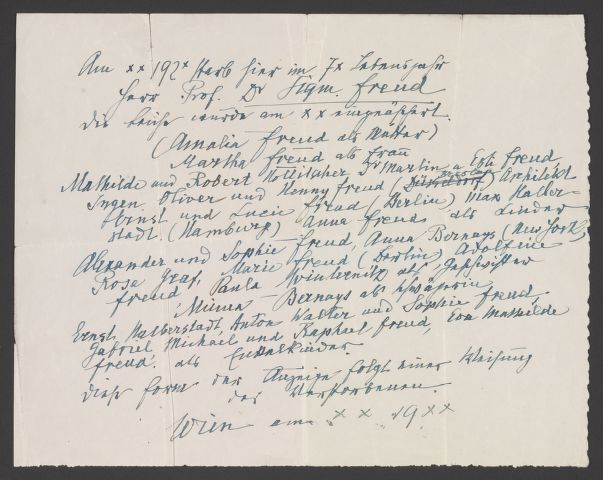
The Great War turned Freud’s thoughts in this direc­tion, as did the racism and anti-Semi­tism tak­ing hold in both Europe and the U.S. His the­o­ry of an instinc­tu­al dri­ve toward the destruc­tion of self and oth­ers seemed to antic­i­pate the hor­ror of the World War yet to come. Freud inte­grat­ed the con­cept into his social the­o­ry ten years lat­er in Civ­i­liza­tion and its Dis­con­tentsin which he wrote that “the incli­na­tion to aggres­sion” was “the great­est imped­i­ment to civ­i­liza­tion.” While med­i­tat­ing on the death instinct as a psy­cho­an­a­lyt­ic and social con­cept, Freud also pon­dered his own mor­tal­i­ty. Just above, you can see the draft of a death notice that he wrote for him­self dur­ing the 1920s. This comes to us from the Library of Congress’s new col­lec­tion of Sig­mund Freud papers, which con­tains arti­facts and man­u­scripts dat­ing from the 6th cen­tu­ry B.C.E. (a Greek stat­ue) to cor­re­spon­dence dis­cov­ered in the late 90s.

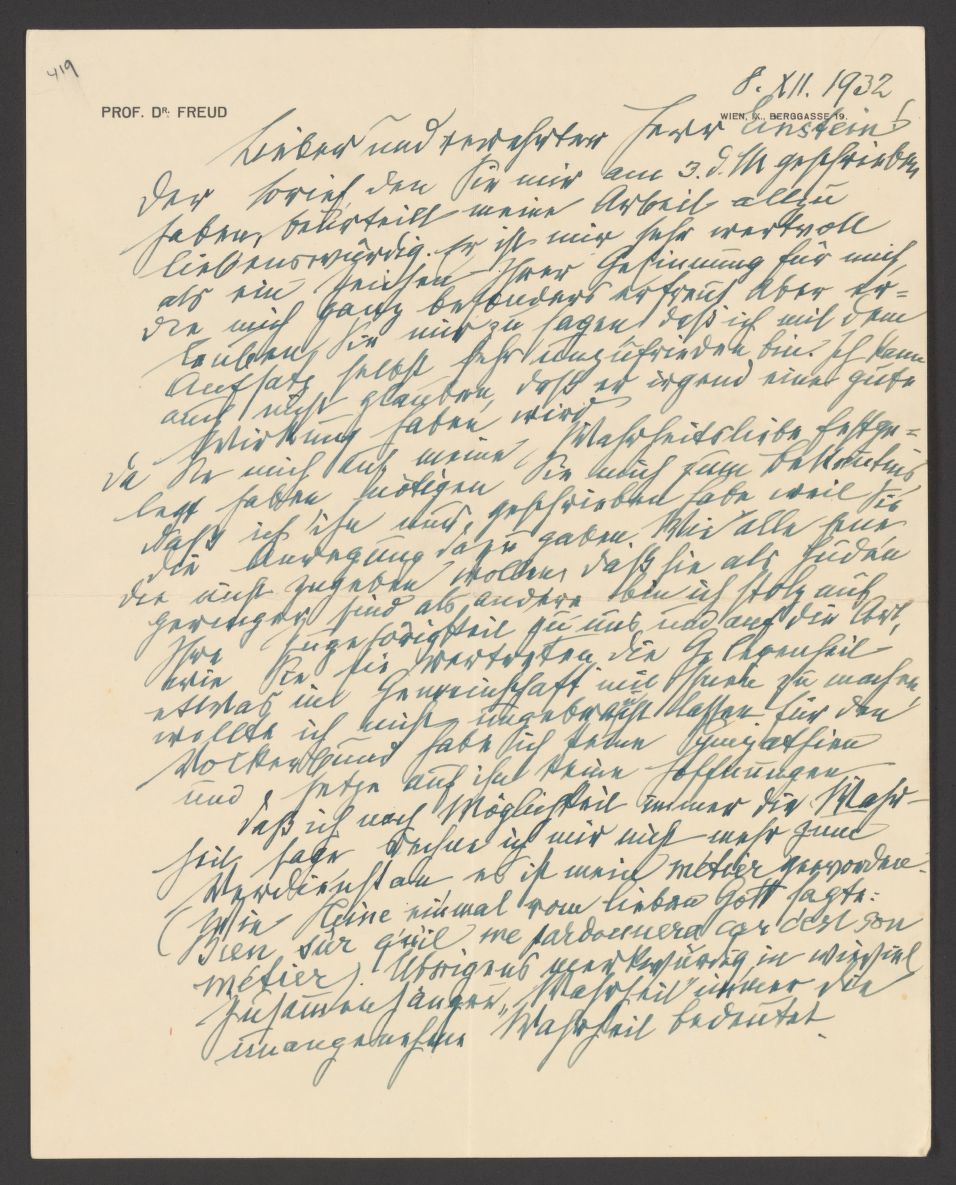
The “bulk of the mate­r­i­al,” writes the LoC, dates “from 1891 to 1939,” and the “dig­i­tized col­lec­tion doc­u­ments Freud’s found­ing of psy­cho­analy­sis, the mat­u­ra­tion of psy­cho­an­a­lyt­ic the­o­ry, the refine­ment of its clin­i­cal tech­nique, and the pro­lif­er­a­tion of its adher­ents and crit­ics.” Much of this archive may be of inter­est only to the spe­cial­ist schol­ar of Freud’s life and work, with “legal doc­u­ments, estate records… school records” of the Freud chil­dren, and oth­er mun­dane bureau­crat­ic paper­work. But there are also let­ters rep­re­sent­ing “near­ly six hun­dred cor­re­spon­dents,” such as Freud’s one­time pro­tégé Carl Jung and Albert Ein­stein, with whom Freud cor­re­spond­ed in 1932 on the sub­ject of “Why war?” (See Freud’s let­ter to Ein­stein above.)

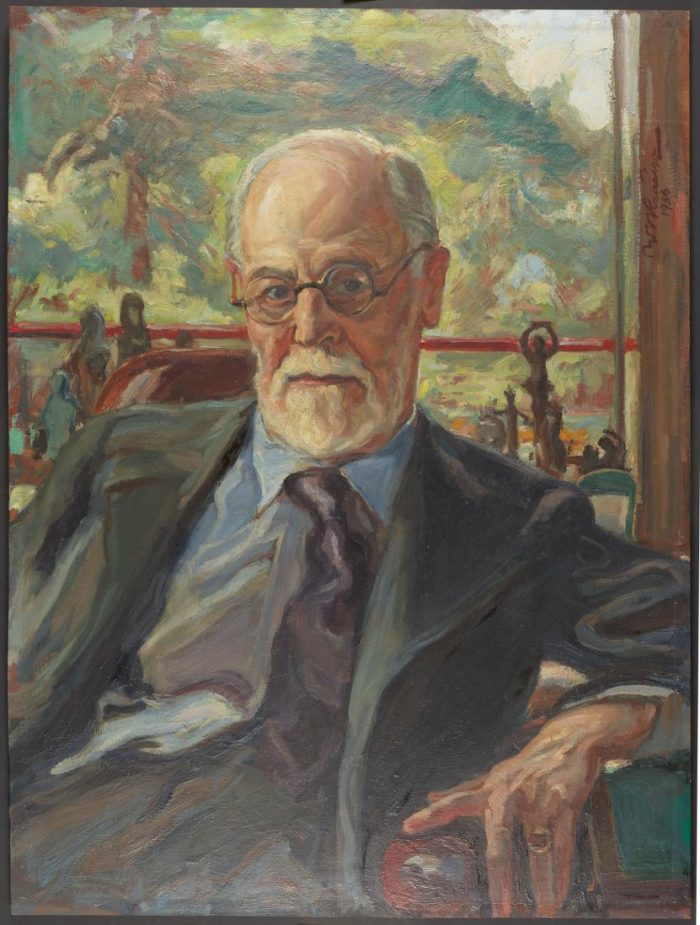
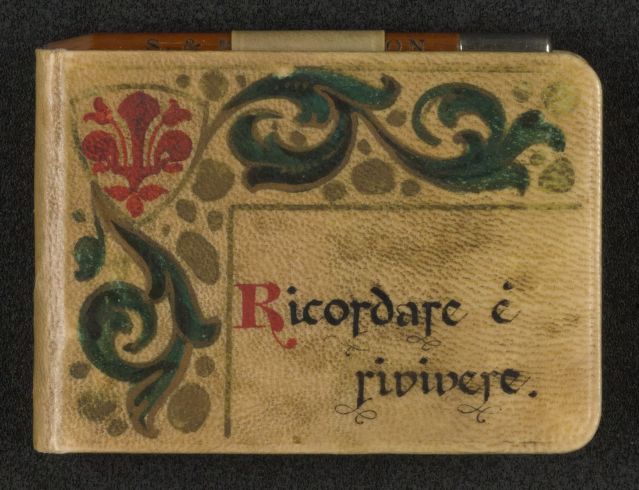
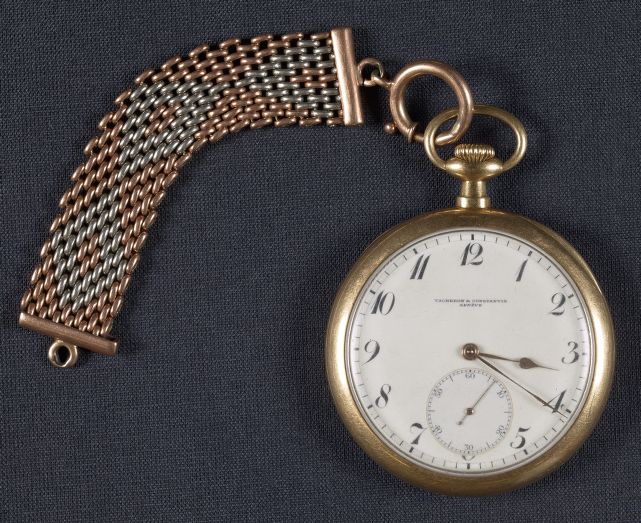
The doc­u­ments are near­ly all in Ger­man and the hand­writ­ten let­ters, notes, and drafts will be dif­fi­cult to read even for speak­ers of the lan­guage. Yet, there are also arti­facts like the 1936 por­trait of Freud at the top, by Vic­tor Krausz, the pock­et note­book Freud car­ried between 1907 and 1908, just above, and—below—a pic­ture of a pock­et watch giv­en to Freud by physi­cian Max Schur, whose fam­i­ly left Aus­tria with Freud’s in 1938. You can browse the online col­lec­tion of over 20,000 items by date, name, loca­tion, and oth­er indices, and all images are down­load­able in high res­o­lu­tion scans. 

Relat­ed Con­tent:

Sig­mund Freud Speaks: The Only Known Record­ing of His Voice, 1938

The Famous Let­ter Where Freud Breaks His Rela­tion­ship with Jung (1913)

Albert Einstein​ & Sig­mund Freud​ Exchange Let­ters and Debate How to Make the World Free from War (1932)

Josh Jones is a writer and musi­cian based in Durham, NC. Fol­low him at @jdmagness

Techie Working at Home Creates Bigger Archive of Historical Newspapers (37 Million Pages) Than the Library of Congress

“Real news, fake news, who cares, it’s all the same, am I right?”

… Not to make light of an exis­ten­tial cri­sis in jour­nal­ism and the pub­lic trust—a dis­turb­ing devel­op­ment. Cyn­i­cism threat­ens to erode the very foun­da­tions of… well, ring your own alarm bell. Per­haps it’s time we (re)drew some hard lines around what we mean by the word “news.”

How to do that? I leave it to the experts—professors of jour­nal­ism, reporters and archivists and his­to­ri­ans who do the hard work of con­struct­ing genealo­gies and tax­onomies of news, dis­cov­er­ing its muta­tions and dead ends.

Jour­nal­ism libraries around the coun­try ful­fill the needs of these schol­ars, as does the Library of Con­gress. But if you real­ly want to dig into a com­pre­hen­sive collection—one that bests even the august Fed­er­al gov­ern­ment library (sort of)—you’ll need to vis­it the web­site of one Tom Trynis­ki, pri­vate cit­i­zen, retired “com­put­er expert,” writes Jim Epstein at Rea­son, and ded­i­cat­ed ama­teur, “work­ing alone.”

This being Rea­son, the pre­serve of “free minds and free mar­kets,” you can expect a good bit of crow­ing about the entre­pre­neur­ial spir­it of Tryniski’s accom­plish­ment—an archive of 37,439,000 his­toric news­pa­per pages from the U.S. and Cana­da, “orders of mag­ni­tude big­ger and more pop­u­lar than one cre­at­ed by a fed­er­al bureau­cra­cy with mil­lions of dol­lars to spend.” The video above says it suc­cinct­ly in a tagline: “Ama­teur beats gov’t at dig­i­tiz­ing news­pa­pers.”

Should you take an inter­est in what Tryniski—the sole employ­ee of Old Ful­ton New York Post­cards—spends, Epstein pro­vides a full account­ing of the site’s impres­sive­ly mea­ger oper­at­ing bud­get. Should you won­der where the LoC’s mon­ey goes, and why it uses so many more resources than one retiree, you may wish to do your own com­par­i­son between Tryniski’s site and the Feds’ online news archive, Chron­i­cling Amer­i­ca. (And maybe pay their place a vis­it in the flesh.) There’s more to a library than num­bers of pages and views.

port-chester-journal

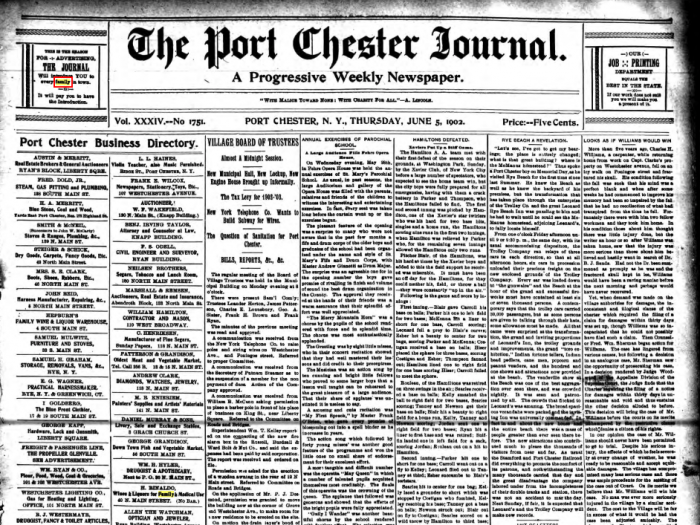
In some ways, it’s not a fair com­par­i­son. Trynis­ki may be a com­put­er expert, but he’s not a web design­er (or he’s an ornery, old-school purist). His site (last updat­ed in 2014), with its frames and heavy use of Flash and GIFs, reflects the web’s anar­chic 90s hey­day. And where the LoC’s site chron­i­cles all of Amer­i­ca, Tryniski’s most­ly sticks to New York, with local papers like The Port Chester Jour­nal (above) rep­re­sent­ed heav­i­ly.

That said, the site’s search func­tions are much cool­er than those of glossier com­peti­tors, with options for “fuzzy search­ing,” “phon­ic search­ing” (for those of us who can’t spell), “and “user-defined syn­onyms.” Trynis­ki also knows his way around micro­film and a micro­film scan­ner, despite (we’re express­ly told for some rea­son in the video and Epstein’s arti­cle) his being “a high school grad­u­ate.”

In this tri­umph of the every­man sto­ry, how­ev­er, Trynis­ki does not intro­duce his own col­lec­tion with ful­mi­na­tions of the “old man shakes fist at” vari­ety. Instead he describes his col­lec­tion as a means of time trav­el. “It’s the day-to-day life,” he says, “that you could not imag­ine today. Read­ing the actu­al news­pa­per seems to bring it back into cur­rent con­text. Peo­ple… sit there and it’s like, they move back into that time, and it’s like they’re liv­ing in the same time as their grand­par­ents and great-grand­par­ents.”

Nobody needs to fix jour­nal­ism, libraries, or fed­er­al spend­ing to have this expe­ri­ence, and it’s one every­one should have—whether by trav­el­ing through the pages of old news­pa­pers or a fam­i­ly trove of pho­tos and let­ters. His­to­ry can seem like lit­tle more than a sto­ry we tell our­selves about the past, but the pri­ma­ry doc­u­ments have tales to tell that we could nev­er imag­ine.

Learn more about Tryniski’s col­lec­tion at Rea­son, and vis­it the quirky, decep­tive­ly ful­some Old Ful­ton NY Post Cards (named as such because the site began as a scanned col­lec­tion of post­cards from Tryniski’s home­town of Ful­ton, NY). You’ll find in its charm­ing­ly clunky envi­rons a fas­ci­nat­ing repos­i­to­ry of vin­tage news and pho­tos. And remem­ber, “If you did not read about it on Old Ful­ton NY Post Cards, IT DID NOT HAPPEN!!!”

Relat­ed Con­tent:

From the Annals of Opti­mism: The News­pa­per Indus­try in 1981 Imag­ines its Dig­i­tal Future

“Titan­ic Sink­ing; No Lives Lost” and Oth­er Ter­ri­bly Innacu­rate News Reports from April 15, 1912

Archive of Hemingway’s News­pa­per Report­ing Reveals Nov­el­ist in the Mak­ing

Josh Jones is a writer and musi­cian based in Durham, NC. Fol­low him at @jdmagness

Isaac Newton’s Recipe for the Mythical ‘Philosopher’s Stone’ Is Being Digitized & Put Online (Along with His Other Alchemy Manuscripts)

17th-century-manuscript

In his 1686 Prin­cip­ia Math­e­mat­i­ca, Isaac New­ton elab­o­rat­ed not only his famous Law of Grav­i­ty, but also his Three Laws of Motion, set­ting a cen­turies-long trend for sci­en­tif­ic three-law sets. Newton’s third law has by far proven his most pop­u­lar: “every action has an equal and oppo­site reac­tion.” In Arthur C. Clarke’s 20th cen­tu­ry Three Laws, the third has also attained wide cul­tur­al sig­nif­i­cance. No doubt you’ve heard it: “Any suf­fi­cient­ly advanced tech­nol­o­gy is indis­tin­guish­able from mag­ic.”

Clarke’s third law gets invoked in dis­cus­sions of the so-called “demar­ca­tion prob­lem,” that is, of the bound­aries between sci­ence and pseu­do­science. It also comes up, of course, in sci­ence fic­tion forums, where peo­ple refer to Ted Chiang’s suc­cinct inter­pre­ta­tion: “If you can mass-pro­duce it, it’s sci­ence, and if you can’t, it’s mag­ic.” This makes sense, giv­en the cen­tral impor­tance the sci­ences place on repro­ducibil­i­ty. But in Newton’s pre-indus­tri­al age, the dis­tinc­tions between sci­ence and mag­ic were much blur­ri­er than they are now.

New­ton was an ear­ly fel­low of the British Roy­al Soci­ety, which cod­i­fied repeat­able exper­i­ment and demon­stra­tion with their mot­to, “Noth­ing in words,” and pub­lished the Prin­cip­ia. He lat­er served as the Society’s pres­i­dent for over twen­ty years. But even as the fore­most rep­re­sen­ta­tive of ear­ly mod­ern physics—what Edward Dol­nick called “the clock­work uni­verse”—New­ton held some very strange reli­gious and mag­i­cal beliefs that we would point to today as exam­ples of super­sti­tion and pseu­do­science.

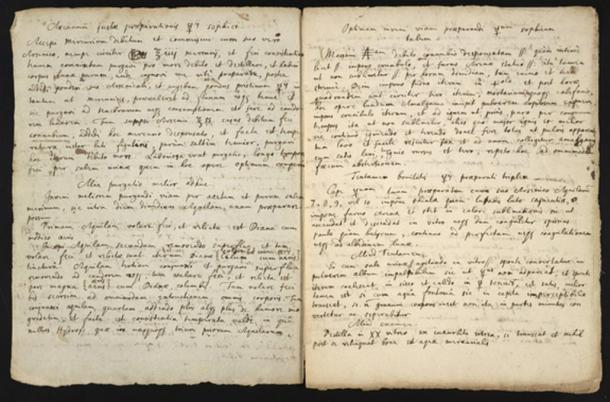
In 1704, for exam­ple, the year after he became Roy­al Soci­ety pres­i­dent, New­ton used cer­tain eso­teric for­mu­lae to cal­cu­late the end of the world, in keep­ing with his long-stand­ing study of apoc­a­lyp­tic prophe­cy. What’s more, the revered math­e­mati­cian and physi­cist prac­ticed the medieval art of alche­my, the attempt to turn base met­als into gold by means of an occult object called the “Philosopher’s stone.” By Newton’s time, many alchemists believed the stone to be a mag­i­cal sub­stance com­posed in part of “soph­ick mer­cury.” In the late 1600s, New­ton copied out a recipe for such stuff from a text by Amer­i­can-born alchemist George Starkey, writ­ing his own notes on the back of the doc­u­ment.

You can see the “soph­ick mer­cury” for­mu­la in Newton’s hand at the top. The recipe con­tains, in part, “Fiery Drag­on, some Doves of Diana, and at least sev­en Eagles of mer­cury,” notes Michael Greshko at Nation­al Geo­graph­ic. New­ton’s alchem­i­cal texts detail what has long been “dis­missed as mys­ti­cal pseu­do­science full of fan­ci­ful, dis­cred­it­ed process­es.” This is why Cam­bridge Uni­ver­si­ty refused to archive Newton’s alchem­i­cal papers in 1888, and why his 1855 biog­ra­ph­er won­dered how he could be tak­en in by “the obvi­ous pro­duc­tion of a fool and a knave.” New­ton’s alche­my doc­u­ments passed qui­et­ly through many pri­vate col­lec­tors’ hands until 1936, when “the world of Isaac New­ton schol­ar­ship received a rude shock,” writes Indi­ana University’s online project, The Chym­istry of Isaac New­ton:

In that year the ven­er­a­ble auc­tion house of Sotheby’s released a cat­a­logue describ­ing three hun­dred twen­ty-nine lots of Newton’s man­u­scripts, most­ly in his own hand­writ­ing, of which over a third were filled with con­tent that was unde­ni­ably alchem­i­cal.

Marked “not to be print­ed” upon his death in 1727, the alchem­i­cal works “raised a host of inter­est­ing ques­tions in 1936 as they do even today.” Those ques­tions include whether or not New­ton prac­ticed alche­my as an ear­ly sci­en­tif­ic pur­suit or whether he believed in a “secret the­o­log­i­cal mean­ing in alchem­i­cal texts, which often describe the trans­mu­ta­tion­al secret as a spe­cial gift revealed by God to his cho­sen sons.” The impor­tant dis­tinc­tion comes into play in Ted Chiang’s dis­cus­sion of Clarke’s Third Law:

Sup­pose some­one says she can trans­form lead into gold. If we can use her tech­nique to build fac­to­ries that turn lead into gold by the ton, then she’s made an incred­i­ble sci­en­tif­ic dis­cov­ery. If on the oth­er hand it’s some­thing that only she can do… then she’s a magi­cian.

Did New­ton think of him­self as a magi­cian? Or, more prop­er­ly giv­en his reli­gios­i­ty, as God’s cho­sen ves­sel for alchem­i­cal trans­for­ma­tion? It’s not entire­ly clear what he believed about alche­my. But he did take the prac­tice of what was then called “chym­istry” as seri­ous­ly as he did his math­e­mat­ics. James Voelkel, cura­tor of the Chem­i­cal Her­itage Foun­da­tion—who recent­ly pur­chased the Philoso­phers’ stone recipe—tells Live­science that its author, Starkey, was “prob­a­bly American’s first renowned, pub­lished sci­en­tist,” as well as an alchemist. While New­ton may not have tried to make the mer­cury, he did cor­rect Starkey’s text and write his own exper­i­ments for dis­till­ing lead ore on the back.

Indi­ana Uni­ver­si­ty sci­ence his­to­ri­an William New­man “and oth­er his­to­ri­ans,” notes Nation­al Geo­graph­ic, “now view alchemists as thought­ful tech­ni­cians who labored over their equip­ment and took copi­ous notes, often encod­ing their recipes with mytho­log­i­cal sym­bols to pro­tect their hard-won knowl­edge.” The occult weird­ness of alche­my, and the strange pseu­do­nyms its prac­ti­tion­ers adopt­ed, often con­sti­tut­ed a means to “hide their meth­ods from the unlearned and ‘unwor­thy,’” writes Dan­ny Lewis at Smith­son­ian. Like his fel­low alchemists, New­ton “dili­gent­ly doc­u­ment­ed his lab tech­niques” and kept a care­ful record of his read­ing.

“Alchemists were the first to real­ize that com­pounds could be bro­ken down into their con­stituent parts and then recom­bined,” says New­man, a prin­ci­ple that influ­enced Newton’s work on optics. It is now acknowl­edged that—while still con­sid­ered a mys­ti­cal pseudoscience—alchemy is an impor­tant “pre­cur­sor to mod­ern chem­istry” and, indeed, as Indi­ana Uni­ver­si­ty notes, it con­tributed sig­nif­i­cant­ly to ear­ly mod­ern phar­ma­col­o­gy” and “iatro­chem­istry… one of the impor­tant new fields of ear­ly mod­ern sci­ence.” The suf­fi­cient­ly advanced tech­nol­o­gy of chem­istry has its ori­gins in the mag­ic of “chym­istry,” and New­ton was “involved in all three of chymistry’s major branch­es in vary­ing degrees.”

Newton’s alchem­i­cal man­u­script papers, such as “Artephius his secret Book” and “Her­mes” sound noth­ing like what we would expect of the dis­cov­er­er of a “clock­work uni­verse.” You can read tran­scrip­tions of these man­u­scripts and sev­er­al dozen more at The Chym­istry of Isaac New­ton, where you’ll also find an Alchem­i­cal Glos­sary, Sym­bol Guide, sev­er­al edu­ca­tion­al resources, and more. The man­u­scripts not only show Newton’s alche­my pur­suits, but also his cor­re­spon­dence with oth­er ear­ly mod­ern alchem­i­cal sci­en­tists like Robert Boyle and Starkey, whose recipe—titled “Prepa­ra­tion of the [Socph­ick] Mer­cury for the [Philoso­phers’] stone by the Antin­o­mi­al Stel­late Reg­u­lus of Mars and Luna from the Man­u­scripts of the Amer­i­can Philosopher”—will be added to the Indi­ana Uni­ver­si­ty online archive soon.

Relat­ed Con­tent:

In 1704, Isaac New­ton Pre­dicts the World Will End in 2060

Sir Isaac Newton’s Papers & Anno­tat­ed Prin­cip­ia Go Dig­i­tal

Isaac New­ton Cre­ates a List of His 57 Sins (Cir­ca 1662)

Josh Jones is a writer and musi­cian based in Durham, NC. Fol­low him at @jdmagness

« Go BackMore in this category... »
Quantcast