Do you consider yourself well-educated? Cultured, even? By whose standards?
We may superficially assume these terms name immutable qualities, but they are in any analysis dependent on where and when we happen to be situated in history. The most sophisticated of Medieval doctors—a title then closer to the European “docent” than our general use of Dr.—would appear profoundly ignorant to us; and we, with our painfully inadequate grasp of church Latin, Aristotelianism, and arcane theological arguments, would appear profoundly ignorant to him.
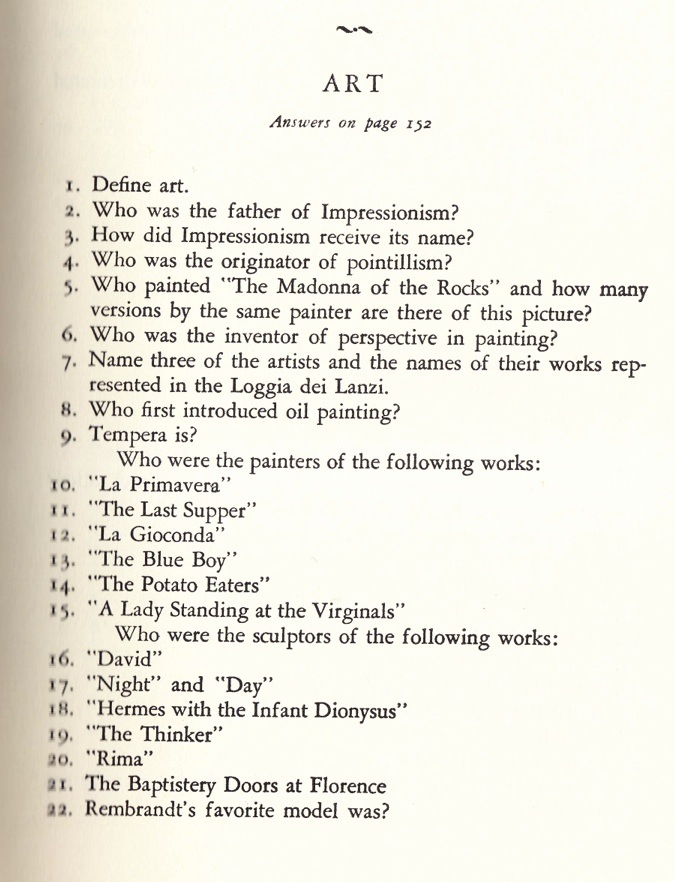
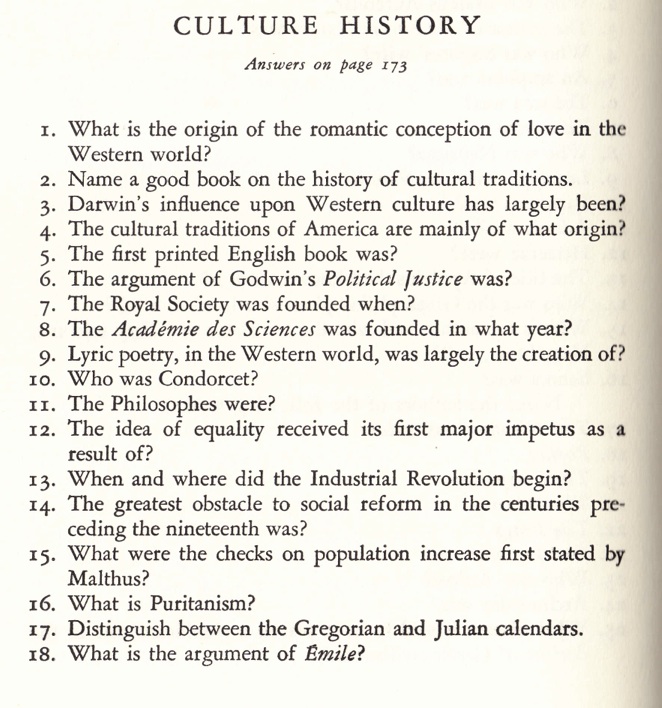
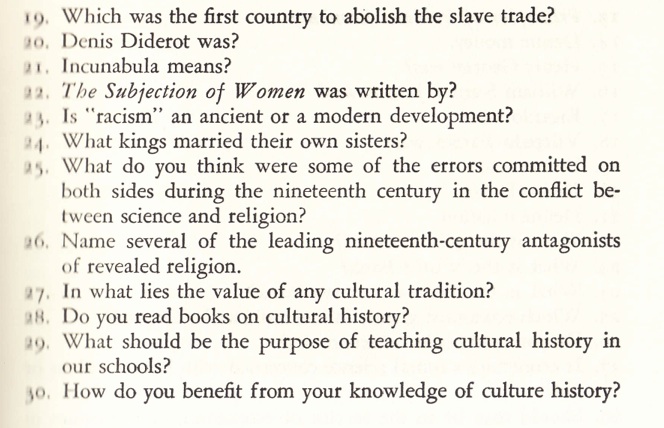
What does it mean to be cultured? Is it the acquisition of mostly useless cultural capital for its own sake, or of a set of codes that helps us navigate the world successfully? In an attempt to address these fraught questions, Ashley Montagu, a student of hugely influential German-born anthropologist Franz Boas, wrote The Cultured Man in 1958. Rebecca Onion at Slate describes the book as containing “quizzes for 50 categories of knowledge in the arts and sciences, with 30 questions each.” In the page above, we have the first 22 questions of Montagu’s “Art” quiz (with the answers here).
You’ll probably notice right away that while most of the questions have definite, unambiguous answers, others like “Define art,” seem patently unanswerable in all but the most general and unsatisfactory ways. Montagu defines art in one succinct sentence: “Art is the making or doing of things that have form and beauty”—which strikes me as anemic, though functional enough.
Montagu intended his book to test not only knowledge of cultural facts, but also of “attitudes”: a person “considered ‘cultured,’” writes Onion, “would not just be able to readily summon facts, but also to access humane feelings, which would necessarily come about after contact with culture.” Many administrators of “culture”—curators, art historians, literature professors, etc—would agree with the premise: ideally, the more cultural knowledge we acquire, the more empathy and understanding of other peoples and cultures we should manifest. Whether this routinely occurs in practice is another matter. For Montagu, Onion remarks, a “cultured man” is “curious, unprejudiced, rational, and ethical.”
Given Montagu’s enlightened philosophical bent, we can charitably ascribe language in his book that itself seems prejudiced to our viewing this artifact from a distance of almost seventy years in the future. We might also find that many of his questions push us to examine our 21st century biases more carefully. His approach may remind us of frivolous internet diversions or the standardized tests we’ve grown to think of as the precise opposite of lively, critically-engaged educational tools. Yet Montagu intended his quizzes to be “both dynamic and constructive,” to alert readers to areas of ignorance and encourage them to fill gaps in their cultural knowledge. Many of his answers offer references for further study. “No one grows who stands still,” he wrote.
To see more of Montagu’s quiz questions—such as those above from the “Culture History” category (get the answers here)—and find out how you stack up against the cultured elite of the 50s, head over to Rebecca Onion’s post at Slate.
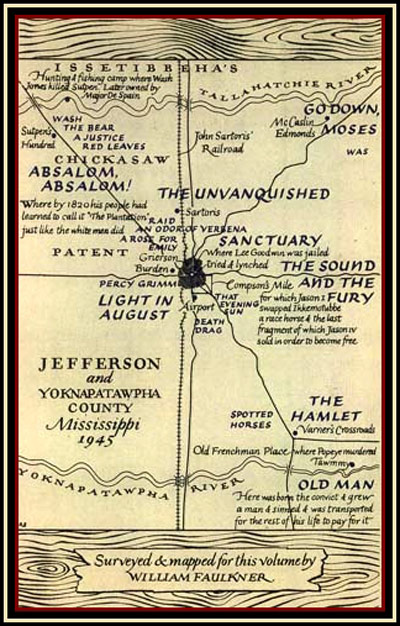
If you’ve ever had difficulty getting around in Yoknapatawpha—getting the lay of the land, as it were—Faulkner has stepped in again to help his readers. He drew several maps of varying levels of detail that show Yoknapatawpha, its county seat of Jefferson in the center, and various key characters’ plantations, crossroads, camps, stores, houses, etc. from the fifteen novels and story cycles set in the author’s native Mississippi.
Perhaps the most reproduced of Faulkner’s maps, above, comes from 1946’s The Portable Faulkner and was drawn by the author at the request of editor Malcolm Cowley. We see named on the map the locations of settings in The Unvanquished, Sanctuary, The Sound and the Fury, The Hamlet, Go Down, Moses, Light in August, and the stories “A Rose for Emily” and “Old Man,” among others. This map, dated 1945, had an important predecessor, however: the map below, the final page in Faulkner’s epic tragedy Absalom, Absalom! Most readers of that novel, myself included, have thought of Quentin Compson’s deeply conflicted, repeated assertions that he doesn’t hate the South as the novel’s conclusion. It’s a passionate speech as memorable, and as final, as Molly Bloom’s silent “Yes” at the end of Joyce’s Ulysses. Not so, writes Faulkner scholar Robert Hamblin, the novel actually ends after Quentin, and after the appendix’s chronology and genealogy; the novel truly ends with the map.
What Hamblin wants us to acknowledge is that the map creates more ambiguity than it resolves. The map, he says “is more than a graphic representation of an actual place”—or in this case, a fictional place based on an actual place—“it is simultaneously a metaphor.” While it further attempts to situate the novel in history, giving Yoknapatawpha the tangibility of Thomas Hardy’s fictional Wessex or Sherwood Anderson’s Winesburg, Ohio, the map also elevates the county to a mythic dimension, like “Bullfinch’s maps depicting the settings of the Greek and Roman myths and the wanderings of Ulysses, Sir Thomas More’s map of Utopia, Jonathan Swift’s maps of the travels of Lemuel Gulliver.”
The Portable Faulkner map at the top of the post appears “in a style unlike Faulkner’s” and was “much reduced for publication in first and subsequent printings,” A Companion to William Faulkner tells us. The Absalom map, on the other hand, appeared in a first, limited-edition of the novel in 1936, hand-drawn and lettered in red and black ink, a color-coding feature common to “Faulkner’s many hand-made books.” Click the image, then click it again to zoom in and read the details. You’ll notice a number of odd things. For one, Faulkner gives equal attention to naming locations and describing events that occurred in other Yoknapatawpha novels, mainly murders, deaths, and various crimes and hardships. For another, his neat capital lettering reproduces the letter “N” backwards several times, but just as many times he writes it normally, occasionally doing both in the same word or name—a stylistic quirk that is not reproduced in The Portable Faulkner map.
Finally, in contrast to the map at the top, which Faulkner gives his name to as one who “surveyed & mapped” the territory,” in the Absalom map, he lists himself—beneath the town and county names, square mileage, and population count by race—as “sole owner & proprietor.” Against Alfred Korzybski’s famous dictum, Tokizane Sanae insists that at least when it comes to literary maps, “Map is Territory… proof of newly conquered ownership of a land”—the territory of a deed. Suitably, Faulkner ends a novel obsessed with ownership and property with a statement of ownership and property—over his entire fictional universe. In an ironic exaggeration of the power of surveyors, cartographers, architects, and their landowning employers, the map “spatializes and visualizes the concept of a mythical soil and the power of this God.” In that sense, it forces us to view all of the Mississippi novels not as historical fiction, but as episodes in a great religious mythology, with the same depth and resonance as ancient scripture or political allegory.
If we wish to see Faulkner’s map this way—a zoom out into an aerial shot at the end of an epic picture—then we’re unlikely to find it of much use as a guide to the plain-faced logistics of his fiction. It’s unclear to me that Faulkner intended it that way, as much as it’s unclear that Ezra Pound and T.S. Eliot’s footnotes to The Waste Land serve any purpose except to distract and confuse readers. But of course readers have been using those footnotes, and Faulkner’s map, as guidelines to their respective texts for decades anyway, noting inconsistencies and finding meaningful correspondences where they can. One interesting example of such a use of Faulkner’s mapmaking comes to us from the site of a comprehensive University of Virginia Faulkner course that covers a bulk of the Yoknapatawpha books. The project, “Mapping Faulkner,” begins with a considerably sparser Yoknapatawpha map, one probably made “late in his life” and which “seems unfinished,” lacking most of the place names and descriptions, and certainly the assertive signature. With overlaid blue lettering, the site does what the Absalom map does not—gives each novel, or 9 of them anyway, its own map, with discrete boundaries between events, characters, and time periods.
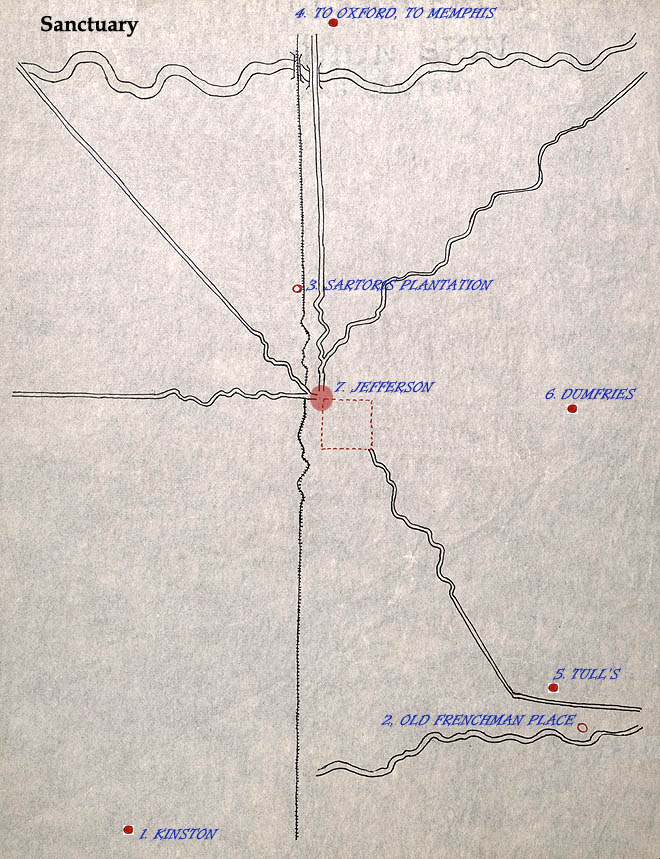
If Faulkner wanted us to see the books as manifestations of a singular consciousness, all radiating from a single source of wisdom, this project isolates each novel, and its themes. In the map of Sanctuary, above, only locations from that novel appear. On the page itself, a click on the circular markings under each locale brings up a window with annotations and page references. The apparatus might at first appear to be a useful guide through the notoriously difficult novels, provided Faulkner meant the locations to actually correspond to the text in this way. But what are we to do with this visual information? Lacking any legend, we can’t use the map to judge scale and distance. And by removing all of the other events occurring in the vicinity in the span of around a hundred years or so, the maps denude the novels of their greater context, the purpose to which their “owner & proprietor” devoted them at the end of Absalom, Absalom! Faulkner’s maps, as works of art in their own right, extend “the tragic view of life and history that the Sutpen narrative has already conveyed” in Absalom, Absalom!, writes Hamblin: “Through the handwritten entries that Faulkner made,” in that map, the most complete drawn in the author’s own hand, “the landscape of Yoknapatawpha is presented primarily as a setting for grief, villainy, and death.”
After a frustrating day spent dealing with a tenacious ghost in my two-year-old laptop, I’d much rather visit the dreary bemusement park, Dismaland, than that soulless, slick-surfaced “genius” bar. It just feels more real, somehow.
Sadly for those of us in gloomy, defeatist moods, Dismaland, the artist Banksy’s high concept, multiple acre installation, was never intended to be a permanent fixture. It went the way of Cinderella’s coach earlier this fall, but not before photographer Jamie Brightmore managed to squeeze in amongst the great throngs of British curiosity seekers, camera in hand.
The weather was dreary for his three visits, and a security guard denuded him of his tripod, but he still managed to capture the dystopian scene on behalf of armchair travelers everywhere. A catalogue of horrors awaits you above in Dismaland: The Official Unofficial Film. He also paid close attention to the sound design of the apocalyptic getaway, understanding the audio component to such grim exhibits as Relentless Paparazzi and the horrifying merry-wheel, Corporate Scandal.
Ayun Halliday is an author, illustrator, and Chief Primatologist of the East Village Inky zine. Her play, Fawnbook, opens in New York City later this fall. Follow her @AyunHalliday
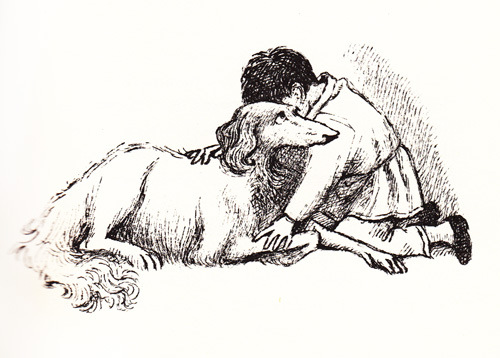
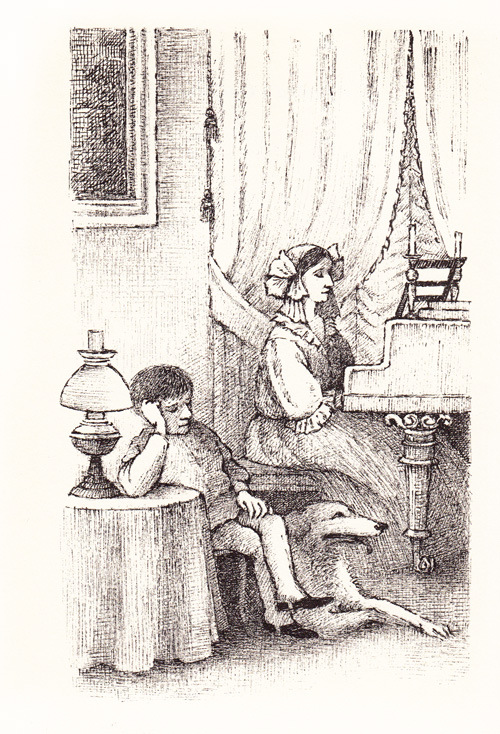
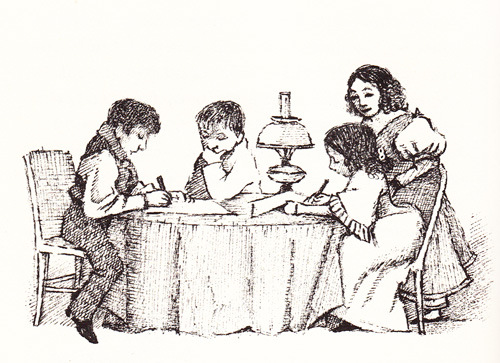
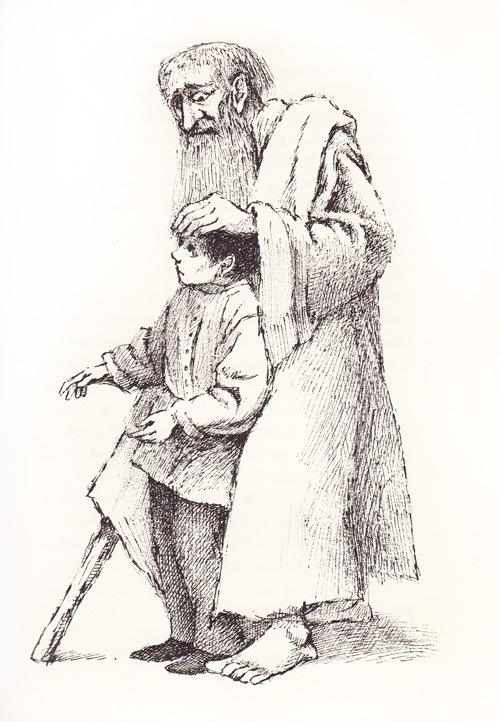
Even those of us who know nothing else of Maurice Sendak’s work know Where the Wild Things Are, almost always because we read and found ourselves captivated by it in our own childhoods — if, of course, our childhoods happened in 1963 or later. Though that year saw the publication of that best-known of Sendak’s many works as an illustrator and writer — and indeed, quite possibly the best-known children’s book of the twentieth century, illustrated or written by anyone — the world got something else intriguing from Sendak at the same time: an illustrated edition of Leo Tolstoy’s 1852 autobiographical novel Nikolenka’s Childhood.
At Brainpickings, Maria Popova writes of the struggle Sendak, then a young and insecure artist at the beginning of his career, endured to complete this lesser-known project: “His youthful insecurity, however, presents a beautiful parallel to the coming-of-age themes Tolstoy explores. The illustrations, presented here from a surviving copy of the 1963 gem, are as tender and soulful as young Sendak’s spirit.” Here we’ve selected a few of the images that Popova gathered from this out-of-print book; to see more, do have a look at her original post.
Later in life Sendak explained his anxiety about accompanying the words of the man who wrote War and Peace: “You can’t illustrate Tolstoy. You’re competing with the greatest illustrator in the world. Pictures bring him down and just limp along.” At Letters of Note, you can read the words of encouragement written to the young Sendak by his editor Ursula Nordstrom, who acknowledged that, “sure, Tolstoy and Melville have a lot of furniture in their books and they also know a lot of facts, but that isn’t the only sort of genius, you know that. Yes, Tolstoy is wonderful (his publisher asked me for a quote) but you can express as much emotion and ‘cohesion and purpose’ in some of your drawings as there is in War and Peace. I mean that.”
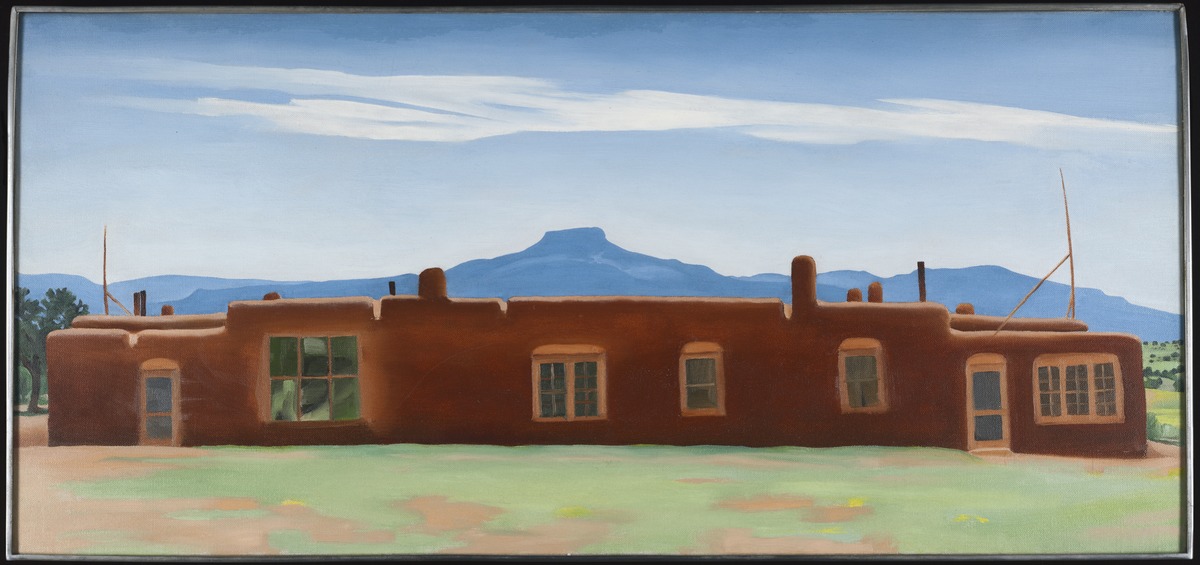
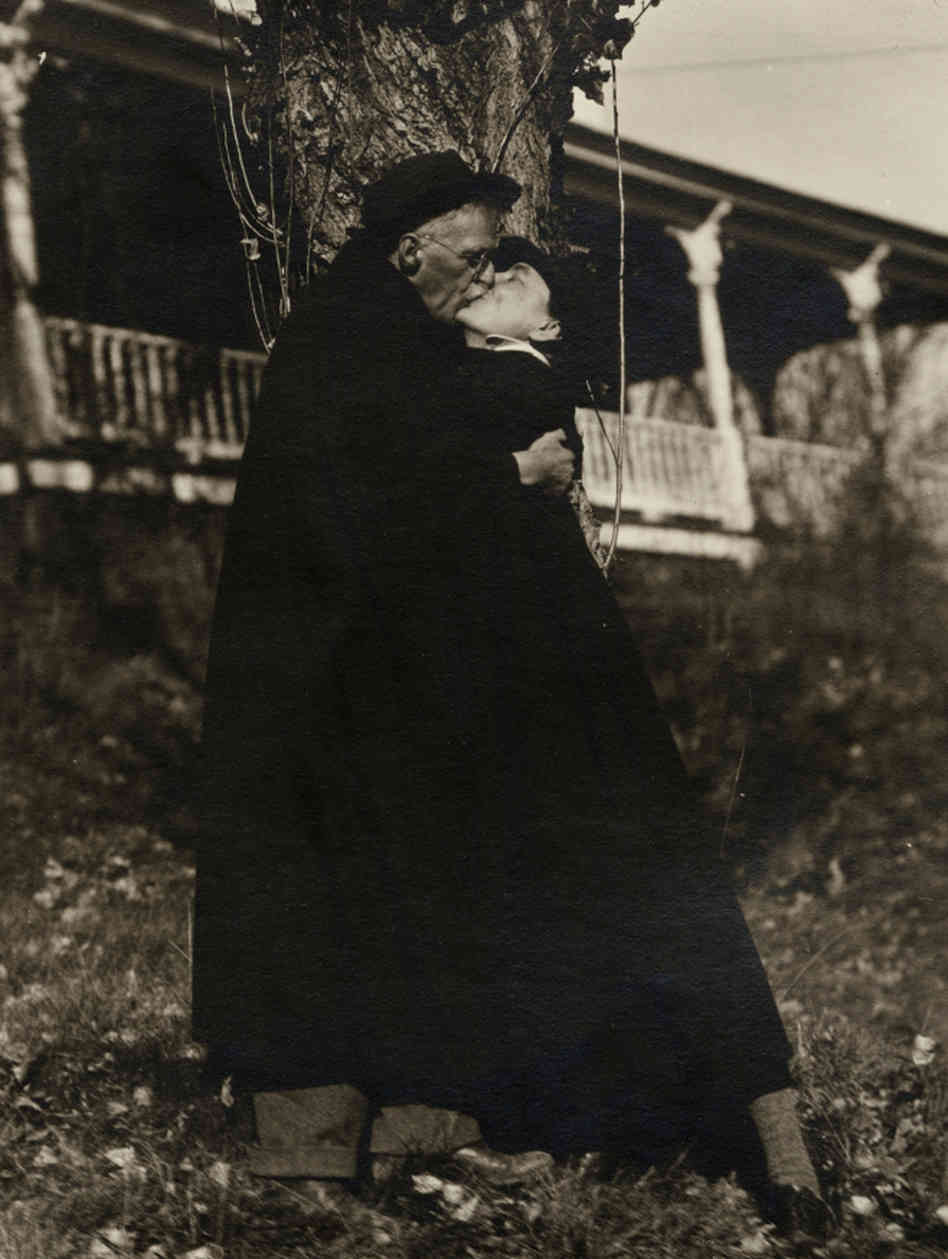
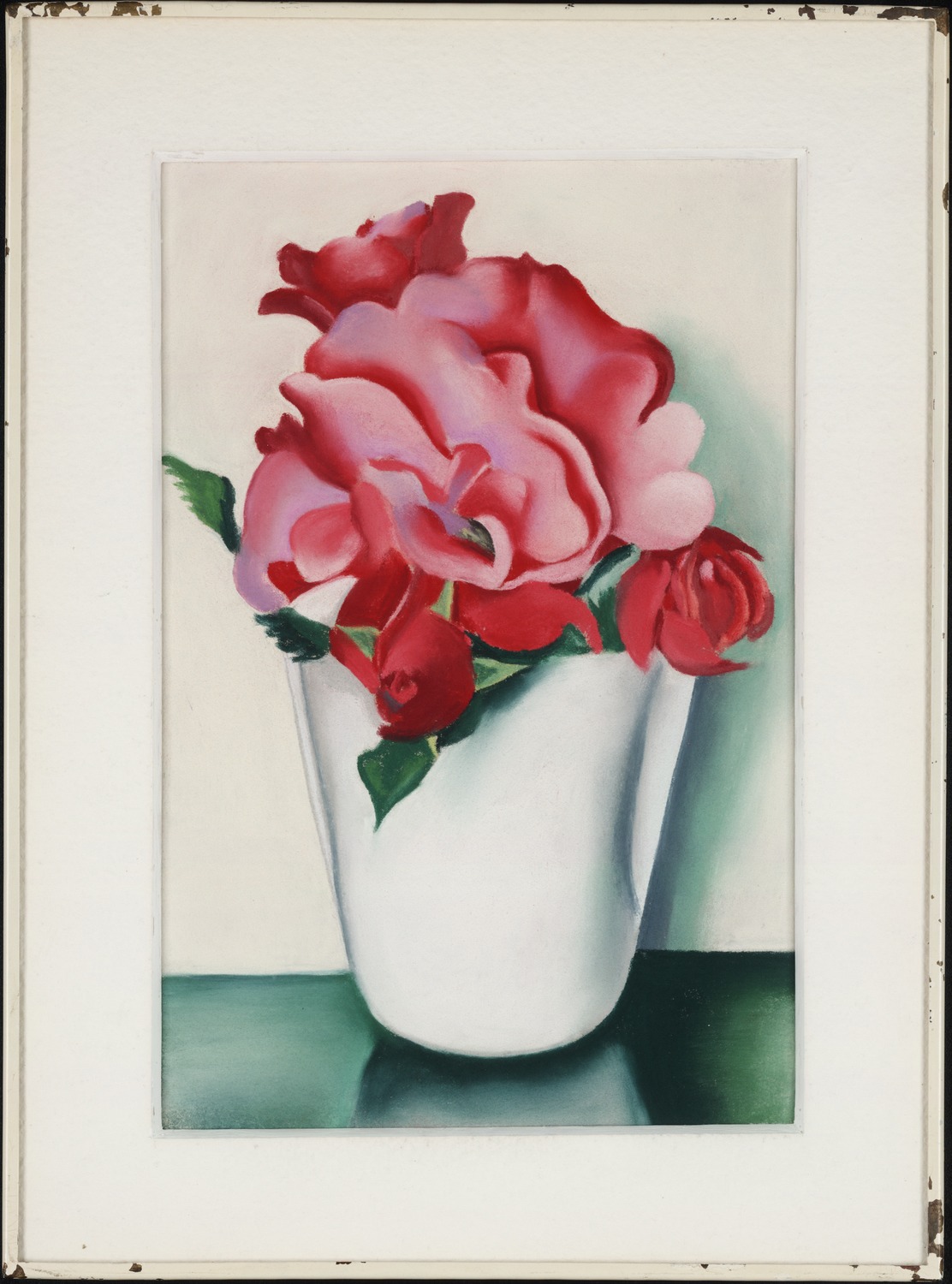
Does any couple loom larger in the world of twentieth-century American art than Alfred Stieglitz and Georgia O’Keeffe? Not if you believe the Alfred Stieglitz/Georgia O’Keeffe Archive at Yale University’s Beinecke Rare Book and Manuscript Library. If you go there, you’ll find “thousands of letters and hundreds of photographs in addition to a collection of literary manuscripts, scrapbooks, ephemera, fine art, and realia, primarily dating between 1880 and 1980, which document the lives and careers of the photographer/publisher/gallery owner Alfred Stieglitz and the painter Georgia O’Keeffe.” But you can even view some of its material here on the internet, including photos by and of “Stieglitz and his circle of artists and writers” and “a variety of paintings and drawings, letters and ephemera, and medals and awards.”
They even enjoyed a kind of artistic togetherness during the long-distance stretches of that relationship, when O’Keeffe “discovered her love for the landscape of the American Southwest and spent increasing amounts of time living and working there.”
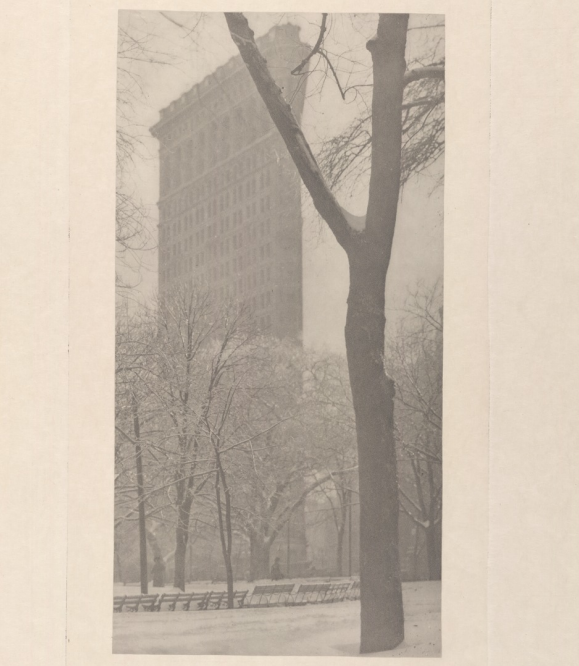
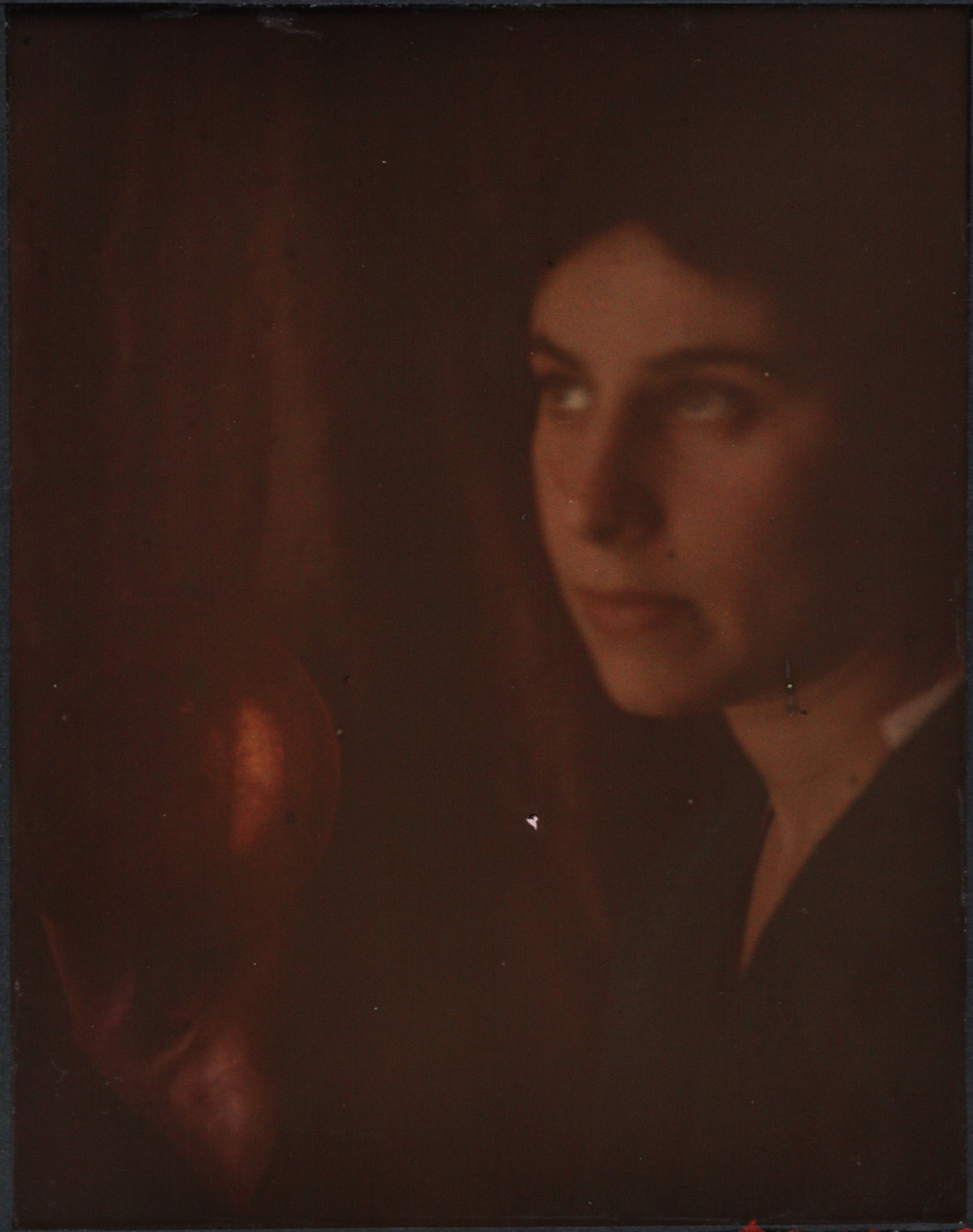
And while many of us already know about her favorite subjects and the ways in which she realized them on canvas, fewer of us know about the efforts Stieglitz took to make photography into not just a legitimate but respected art form. To get a sense of what that took, start with Stieglitz’s autochromes (below), some of the earliest ventures made by an American artist into the realm of color photography. Both Stieglitz and O’Keeffe, each in there own medium, made us see things differently. How many art-world power couples can say the same?
If you’re near Pasadena, California, stop by the Flower Pepper Gallery and see Facade, the new exhibition featuring the work of visual artist Randy Hage. For decades now, Hage has been fascinated by the beauty of aging structures in New York City. This led him, beginning in the late 1990s, to start photographing aging storefronts in the city, “with their hand painted signs, layers of architecture, wonderful patinas and intriguing history.” Later, he decided to preserve their memory in miniaturized, hyper-realistic sculptures (like the ones now on display in Pasadena through November 18th). In the video above, see just how perfectly Hage manages to recreate New York storefronts in miniature. Here’s another famous-but-now-defunct facade you might recognize:
Follow Open Culture on Facebook and Twitter and share intelligent media with your friends. Or better yet, sign up for our daily email and get a daily dose of Open Culture in your inbox. And if you want to make sure that our posts definitely appear in your Facebook newsfeed, just follow these simple steps.
If you would like to support the mission of Open Culture, consider making a donation to our site. It’s hard to rely 100% on ads, and your contributions will help us continue providing the best free cultural and educational materials to learners everywhere. You can contribute through PayPal, Patreon, and Venmo (@openculture). Thanks!
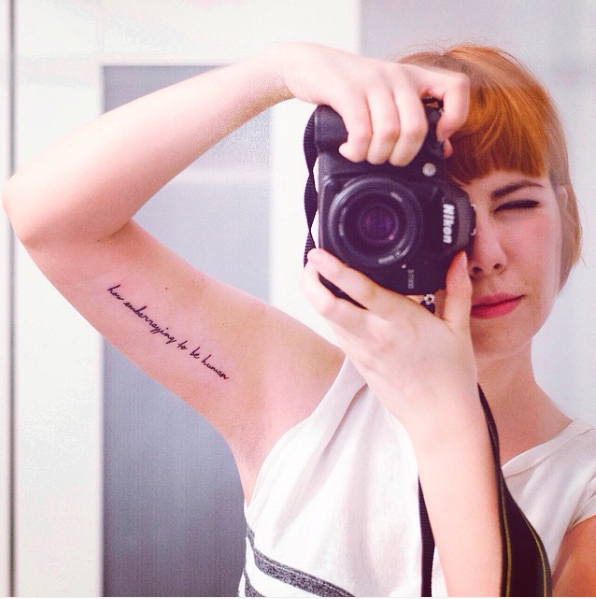
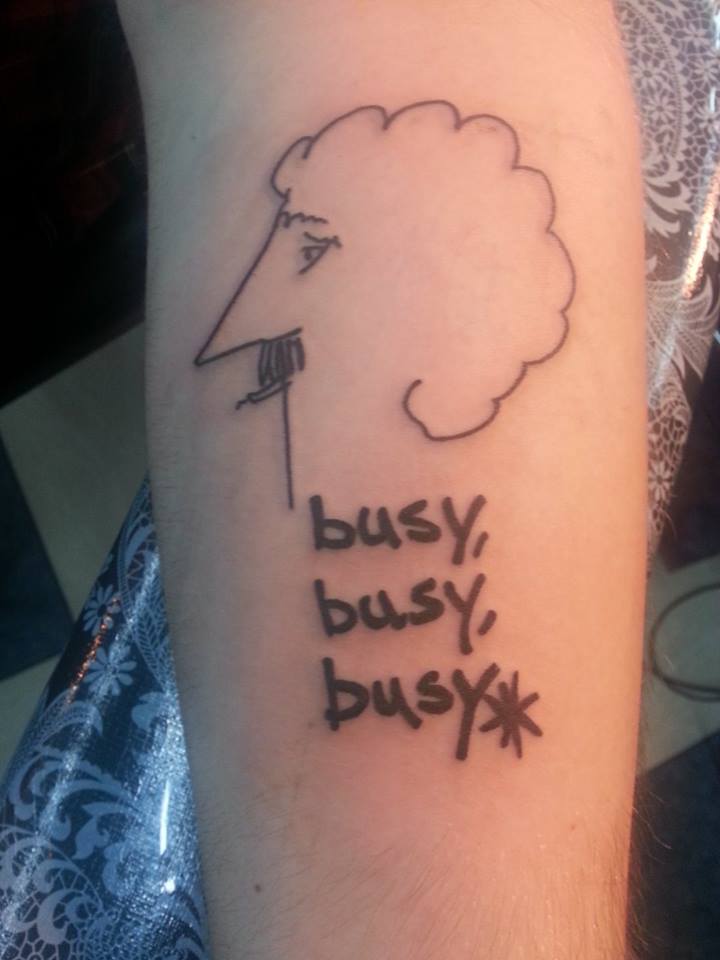
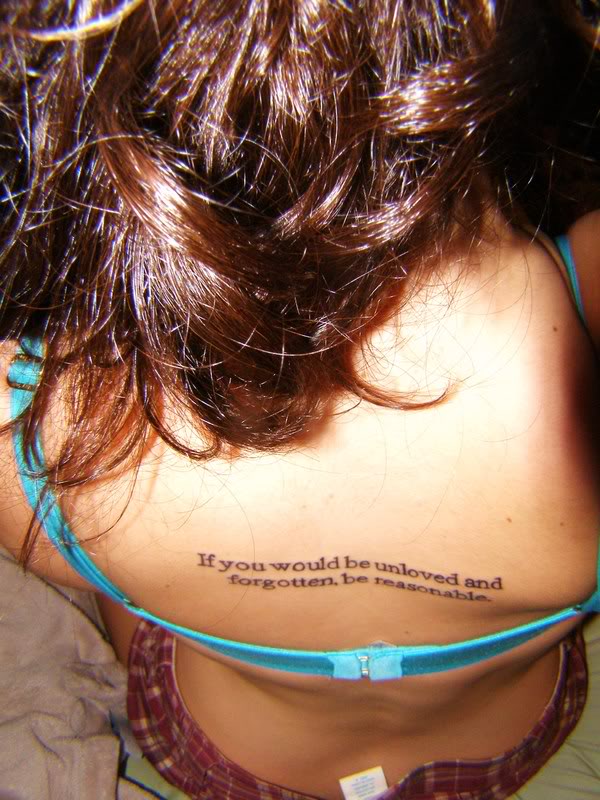
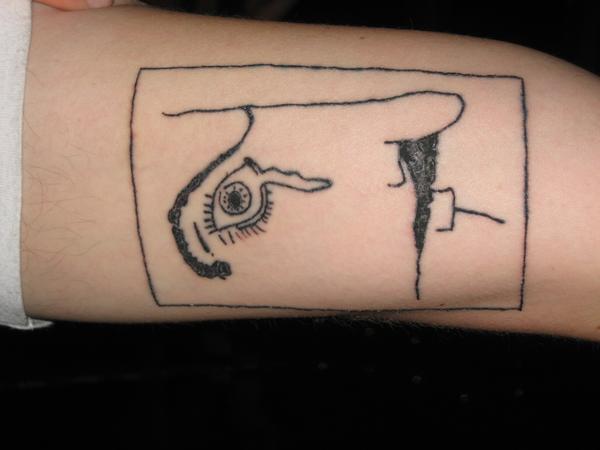
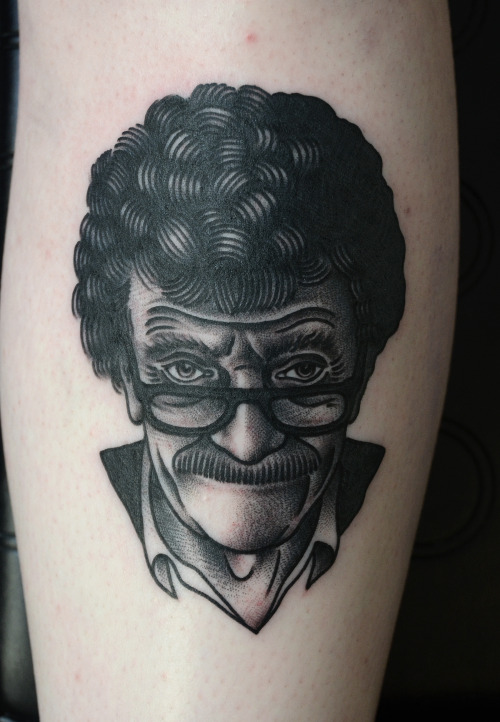
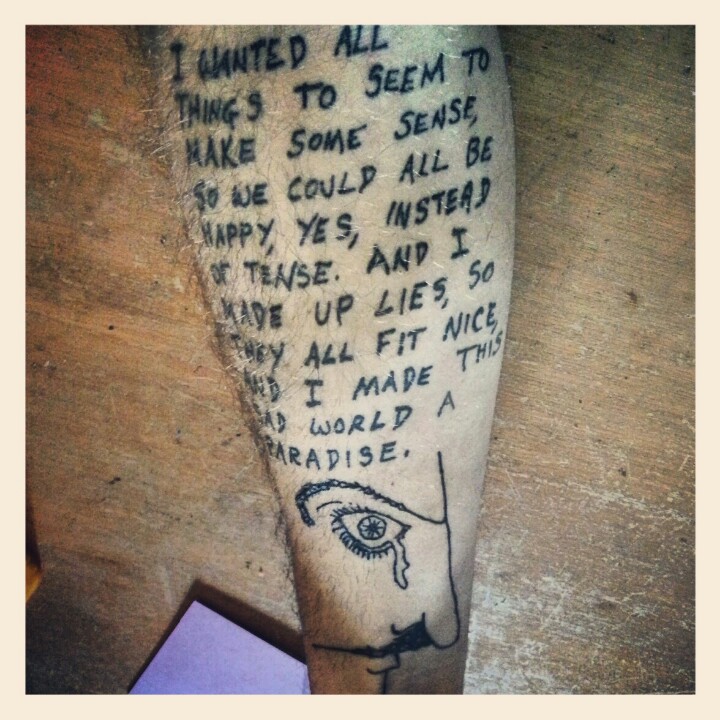
It’s not surprising. Vonnegut’s humor and concision make him one of the most quotable authors of all time, perfectly suited to the task.
Repetition is the price Vonnegut tattoo enthusiasts must pay for such enduring popularity.
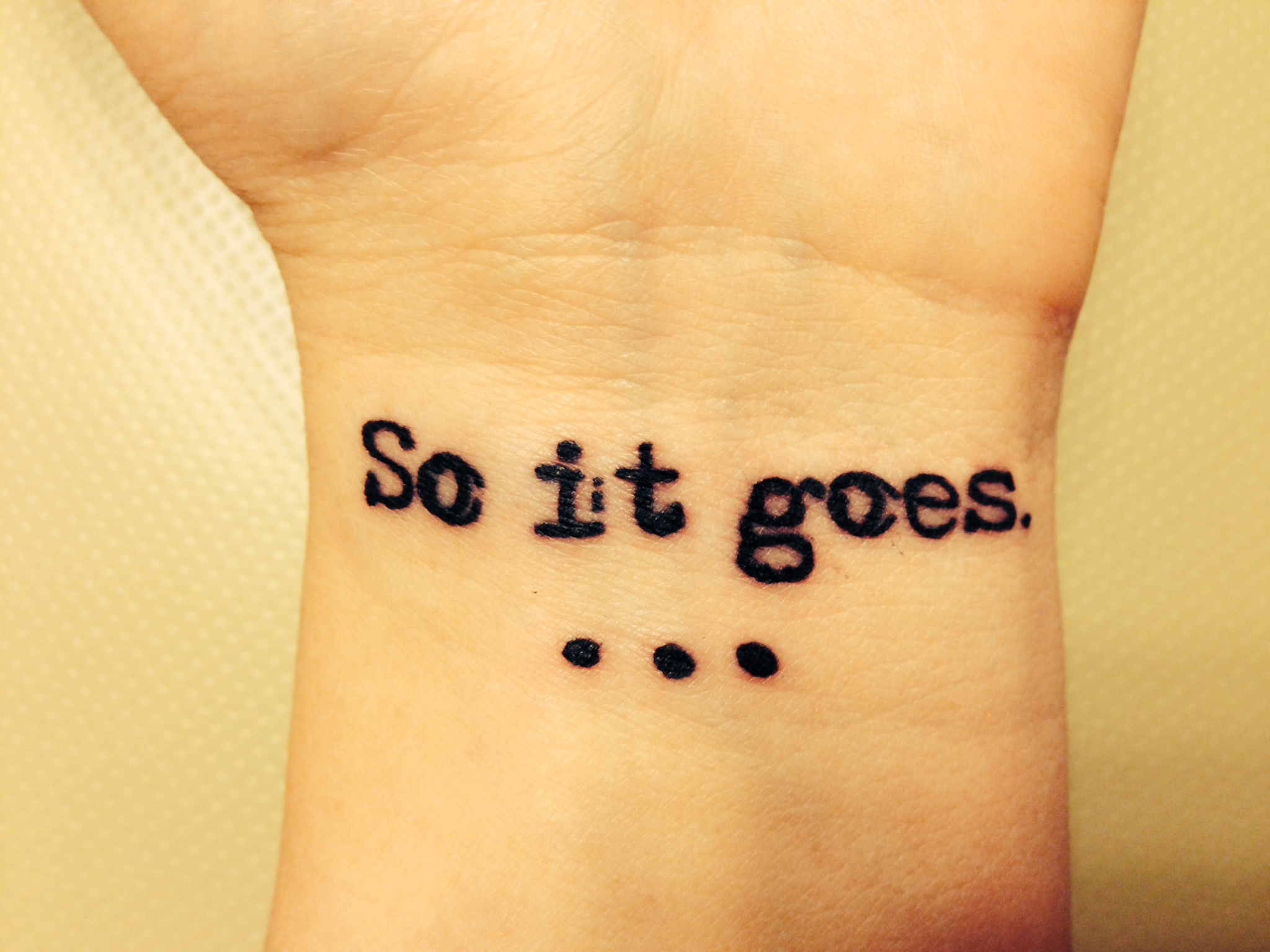
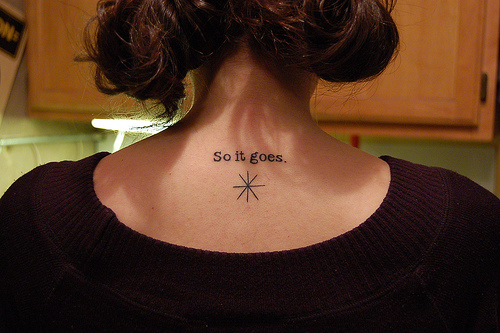
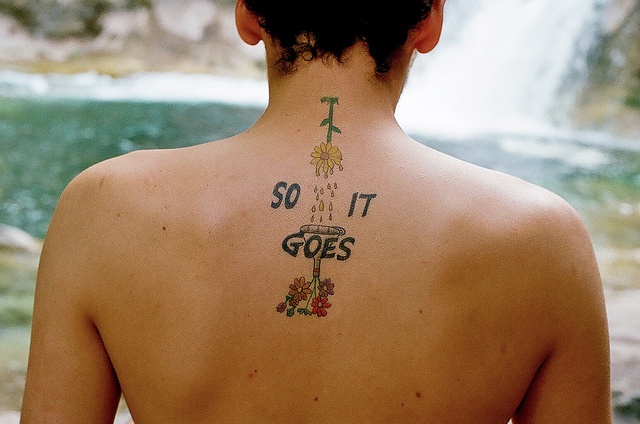
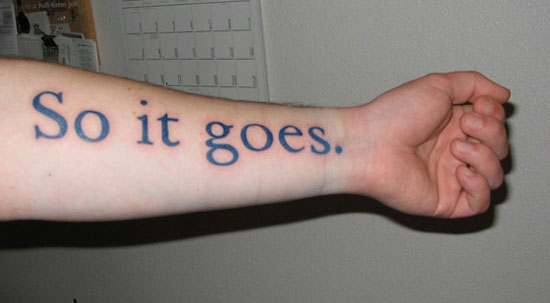
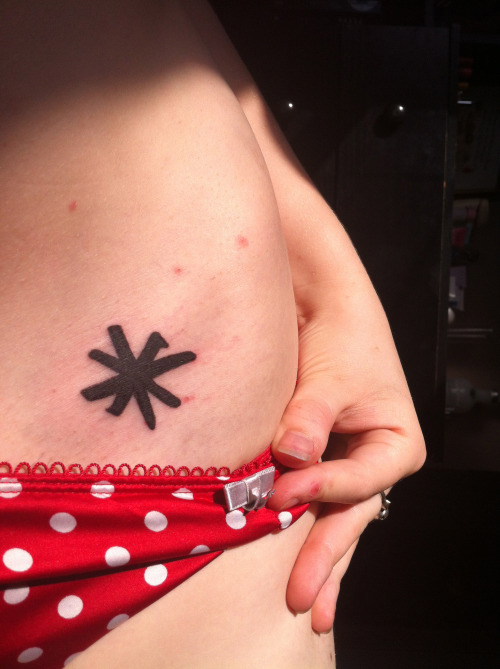
The phrase “so it goes” occurs 106 times in Slaughterhouse-Five, a figure dwarfed many times over by the number of hides upon which it is permanently inked. Recurrence is so frequent that the literary tattoo blog, Contrariwise, recently hosted a round of So It Goes Saturdays. So it goes.
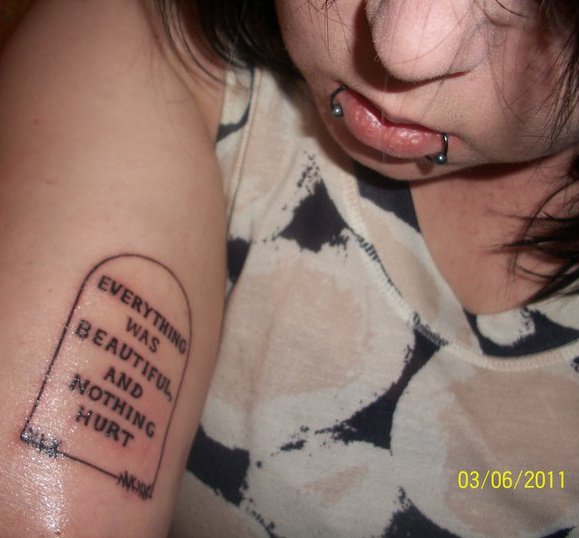
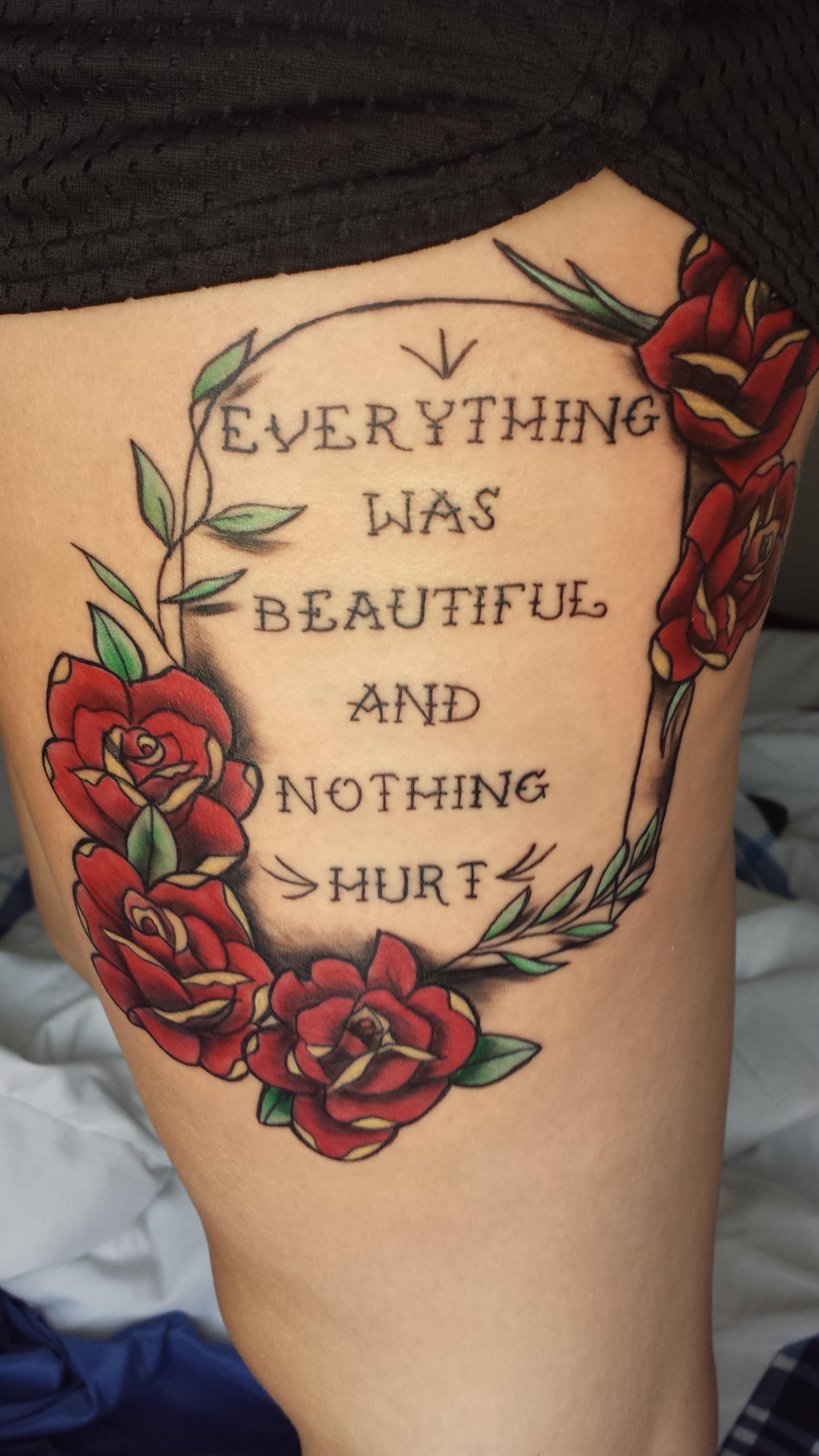
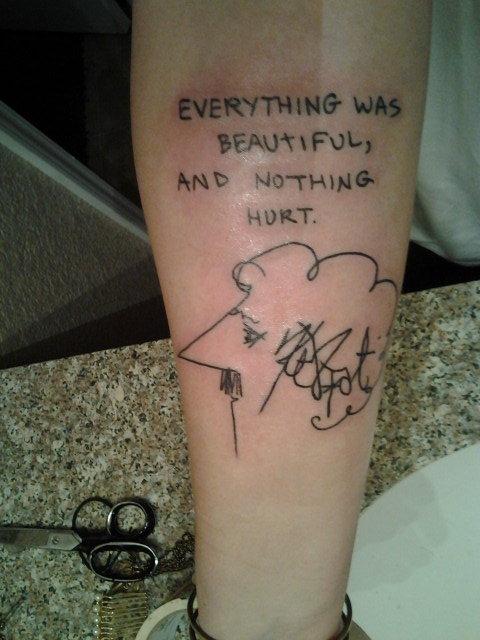
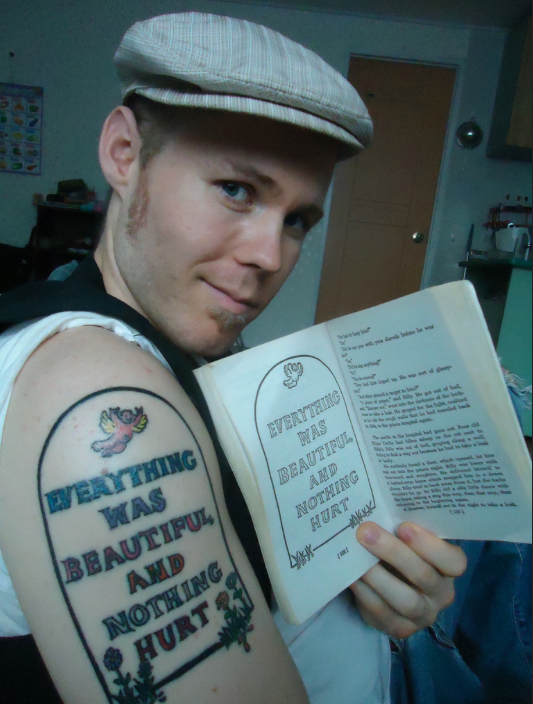
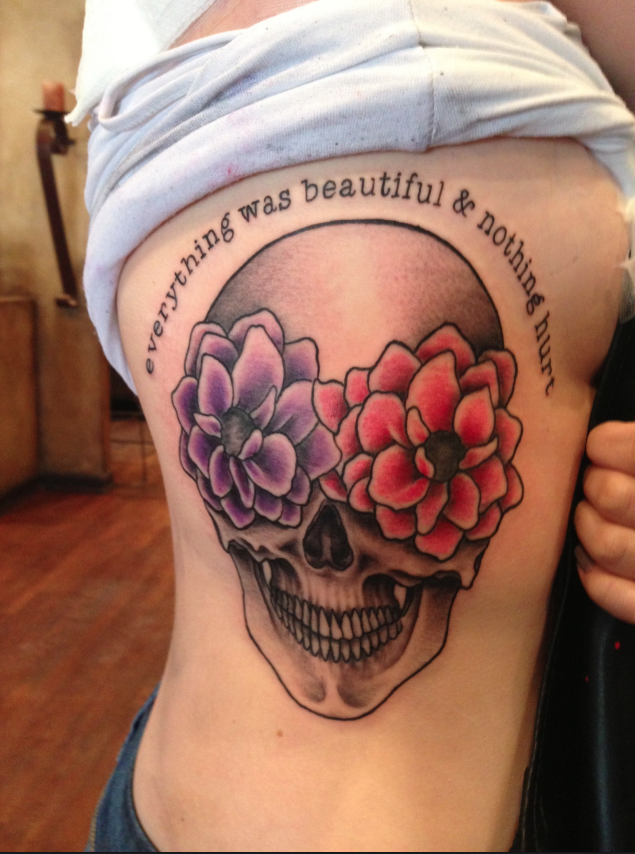
The second runner up, also from Slaughterhouse-Five, is the painfully ironic “Everything was Beautiful and Nothing Hurt.”
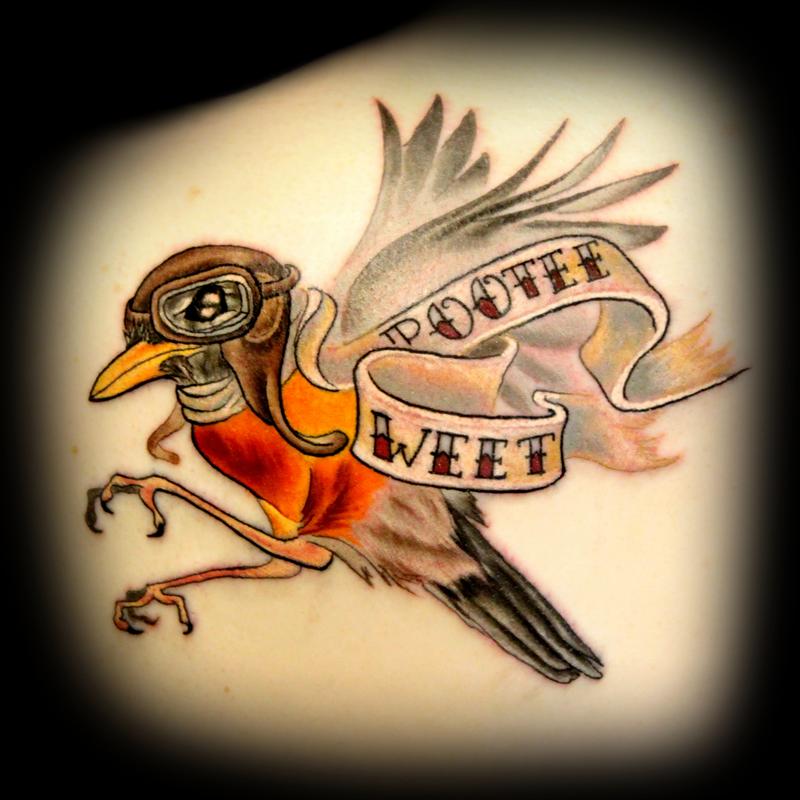
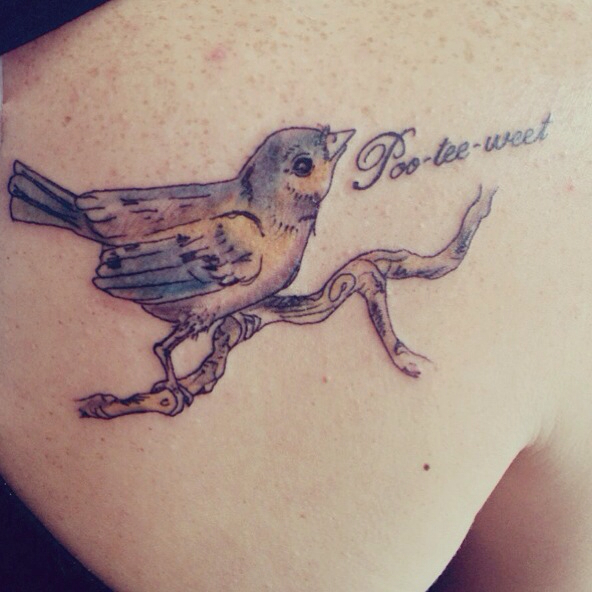
Those who’d rather put a bird on it than present an accessible sentiment to the uninitiated can opt for “poo-tee-weet,” the catchphrase of a bird who’s a witness to war. Certain to confound the folks staring at your triceps in the grocery line.
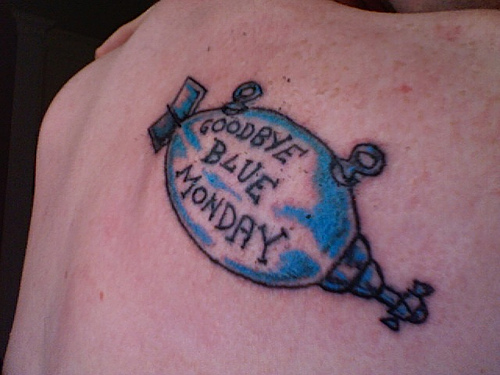
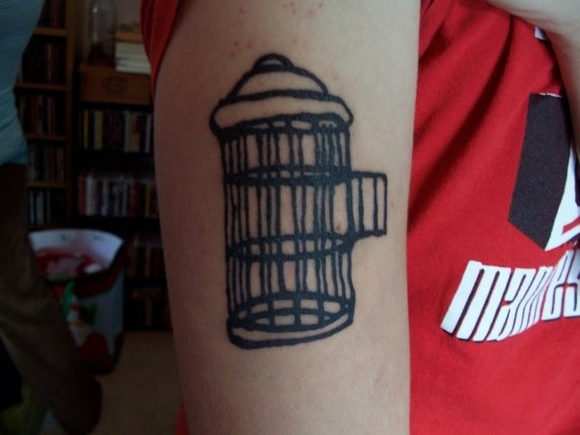
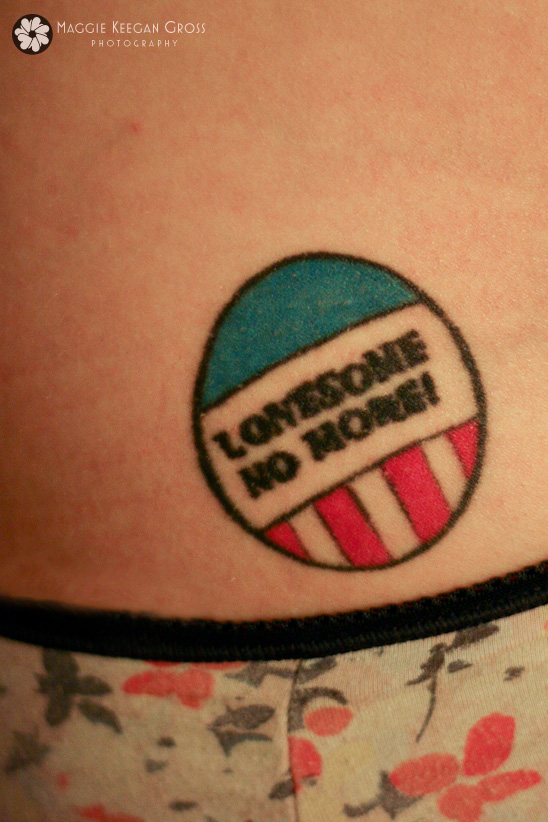
Slaughterhouse Five is not Vonnegut’s only tattoo-friendly novel, of course.
Ayun Halliday is an author, illustrator, and Chief Primatologist of the East Village Inky zine. Her play, Fawnbook, opens in New York City later this month. Follow her @AyunHalliday
We're hoping to rely on loyal readers, rather than erratic ads. Please click the Donate button and support Open Culture. You can use Paypal, Venmo, Patreon, even Crypto! We thank you!
Open Culture scours the web for the best educational media. We find the free courses and audio books you need, the language lessons & educational videos you want, and plenty of enlightenment in between.