Hear Mary Oliver (RIP) Read Five of Her Poems: “The Summer Day,” “Little Dog’s Rhapsody in the Night,” “Many Miles” and “Night and the River”

Poets get to have strong opin­ions about what poet­ry should be and do, espe­cial­ly poets as well-loved as Mary Oliv­er, who passed away yes­ter­day at the age of 83. “Poet­ry, to be under­stood, must be clear,” she told NPR in an inter­view, “It mustn’t be fan­cy…. I always feel that what­ev­er isn’t nec­es­sary should not be in the poem.” Oliver’s Zen approach to her art cut right to the heart of things and hon­ored nat­ur­al, unpre­ten­tious expres­sion. “I don’t know exact­ly what a prayer is,” she writes in “The Sum­mer Day,” “I do know how to pay atten­tion.”

For Oliv­er that meant giv­ing care­ful heed to the nat­ur­al world, shear­ing away abstrac­tion and obfus­ca­tion. She grew up in Ohio, and dur­ing a painful child­hood walked through the woods for solace, where she began writ­ing her first poems.

She became an “inde­fati­ga­ble guide to the nat­ur­al world,” as Max­ine Kumin wrote, and at the same time, to the spir­i­tu­al. She has been com­pared to Emer­son and wrote “about old-fash­ioned subjects—nature, beau­ty, and worst of all, God,” Ruth Franklin remarks with irony in a New York­er review of the poet’s last, 2017 book, Devo­tions. But, like Emer­son, Oliv­er was not a writer of any ortho­doxy or creed.

Oliver’s approach to the spir­i­tu­al is always root­ed firm­ly in the nat­ur­al. Spir­it, she writes, “needs the body’s world… to be more than pure light / that burns / where no one is.” She was beloved by mil­lions, by teach­ers, writ­ers, and celebri­ties. (She was once inter­viewed by Maria Shriv­er in an issue of mag­a­zine; Gwyneth Pal­trow is a big fan). Oliv­er was long the country’s best-sell­ing poet, as Dwight Gar­ner blithe­ly writes at The New York Times. But “she has not been tak­en seri­ous­ly by most poet­ry crit­ics,” Franklin points out. This despite the fact that she won a Pulitzer Prize in 1984 for her fifth book, Amer­i­can Prim­i­tiveand a Nation­al Book Award in 1992 for New and Select­ed Poems.

The word “earnest” comes up often as faint praise in reviews of Oliver’s poet­ry (Gar­ner tidi­ly sums up her work as “earnest poems about nature”). The impli­ca­tion is that her poems are slight, sim­ple, unre­fined. This per­haps inevitably hap­pens to acces­si­ble poets who become famous in life, but it is also a seri­ous mis­read­ing. Oliv­er’s work is full of para­dox­es, ambi­gu­i­ties, and the hard wis­dom of a mature moral vision. She is “among the few Amer­i­can poets,” crit­ic Ali­cia Ostrik­er writes, “who can describe and trans­mit ecsta­sy, while retain­ing a prac­ti­cal aware­ness of the world as one of preda­tors and prey.” In her work, she faces suf­fer­ing with “cold, sharp eyes,” con­fronting “steadi­ly,” Ostrik­er goes on, “what she can­not change.”

Her poems have includ­ed “his­tor­i­cal and per­son­al suf­fer­ing,” but more often she engages the life and death going on all around us, which we rarely take notice of at all. She peers into the dark­ness of her­mit crab shells, she feeds a grasshop­per sug­ar from the palm of her hand, watch­ing the creature’s “jaws back and forth instead of up and down.” Oliv­er often wrote about the con­stant reminders of death in life in poems like “Death at a Great Dis­tance” and “When Death Comes.” She wrote just as often about how aston­ish­ing it is to be alive when we make deep con­nec­tions with the nat­ur­al world.

“When it’s over,” Oliv­er writes in “When Death Comes,” ” I want to say all my life / I was a bride mar­ried to amaze­ment.” The cost of not pay­ing atten­tion, she sug­gests, is to be a tourist in one’s own life and to nev­er be at home. “I don’t want to end up sim­ply hav­ing vis­it­ed this world.” In the videos here, see and hear Oliv­er read “The Sum­mer Day,” “Wild Geese,” “Lit­tle Dog’s Rhap­sody in the Night,” “Night and the Riv­er” (above) and “Many Miles.”

Oliv­er was an artist, says Franklin, “inter­est­ed in fol­low­ing her own path, both spir­i­tu­al­ly and poet­i­cal­ly,” and in her work she will con­tin­ue to inspire her read­ers to do the same. These read­ings will be added to our col­lec­tion, 1,000 Free Audio Books: Down­load Great Books for Free.

Relat­ed Con­tent:

Hear Meryl Streep Read Sylvia Plath’s “Morn­ing Song,” a Poem Writ­ten After the Birth of Her Daugh­ter

An 8‑Hour Marathon Read­ing of 500 Emi­ly Dick­in­son Poems

Hear Dylan Thomas Recite His Clas­sic Poem, “Do Not Go Gen­tle Into That Good Night”

Josh Jones is a writer and musi­cian based in Durham, NC. Fol­low him at @jdmagness

The Beastie Boys Release a New Freewheeling Memoir, and a Star-Studded 13-Hour Audiobook Featuring Snoop Dogg, Elvis Costello, Bette Midler, John Stewart & Dozens More

Quick way to date your­self: name the first Beast­ie Boys album you bought (or heard). If you some­how got your hands on an orig­i­nal press­ing of their first sin­gle “Cooky Puss”—released in 1981 when the then-four­some was a New York hard­core band—congratulations, you’re a leg­end. If you first bought 1986’s Licensed to Ill—their major label debut and com­ing-out as a crude rap-rock par­o­dy three­some (minus fired drum­mer Kate Schel­len­bach), pre­ci­sion-engi­neered to freak your par­ents out—congrats, you’re old.

In what­ev­er era you dis­cov­ered them—Paul’s Bou­tiqueCheck Your Head, Ill Com­mu­ni­ca­tion… maybe even their last album, 2011’s Hot Sauce Com­mit­tee Part Two—you dis­cov­ered a dif­fer­ent Beast­ies than the pre­vi­ous gen­er­a­tion did. Over the course of their 30-year career, the trio evolved and matured, grew up and got down with new grooves to suit new audi­ences. That’s always been a very good thing.

As Mike D, Ad-Rock, and MCA—three per­son­al­i­ties as dis­tinc­tive as the three Stooges—got bet­ter at what they did, they tran­scend­ed the misog­y­nist, meat­head­ed mid-eight­ies incar­na­tion they came to look back on with embar­rass­ment and apol­o­gy. “We got so caught up with mak­ing fun of that rock-star per­sona,” writes Adam Horowitz (Ad-Rock) in the huge new Beast­ies mem­oir, “that we became that per­sona. Became what we hat­ed.”

Rob Harvil­la calls these very gen­uine moments of self-reflec­tion the best parts of the book. But with so many sto­ries over so many years, so much bril­liant writ­ing, and so many guest appear­ances from celebri­ty Beast­ie Boy fans, that’s a tough call. “Part mem­oir, part pho­to-heavy zine, part fan-appre­ci­a­tion tes­ti­mo­ni­al… and part sin­cere apol­o­gy,” the book seems both fresh and made to order and a ver­i­ta­ble buf­fet table of nos­tal­gia. Or, as Amy Poehler puts it in her intro to a sec­tion on their videos: “These days, their music makes me feel young and old at the same time.”

Behind the silli­ness and sin­cer­i­ty there is mourn­ing for third Beast­ie Adam Yauch (MCA), who died of can­cer in 2012 and whose voice is con­spic­u­ous­ly absent from the book. Yet the two remain­ing mem­bers choose not to dwell. “You brace for the heart­break­ing account of Yauch’s diag­no­sis and death,” Harvil­la writes, “but those details go undis­cussed. ‘Too fuck­ing sad to writ­ing about’ is all Horovitz has to say.’” The pre­vail­ing atmos­phere is cel­e­bra­to­ry, like any good Beast­ie Boys album—this one a par­ty full of adult peers look­ing back, laugh­ing, and winc­ing at their younger selves.

The voic­es on the page are so vivid you can squint and almost hear them (at one point Horovitz describes unwind­ing a cas­sette tape as “pulling 60 min­utes of wet fet­tuc­cine out of a dog’s mouth”). But we don’t have to imag­ine what they sound like. Along with the 571-page hard­bound cin­derblock of a book, the band has released what Rolling Stone hails as the “audio­book of the year,” a “bril­liant 13-hour radio play” in which Mike D and Ad-Rock are joined by a major­ly star-stud­ded cast of guest read­ers includ­ing Snoop Dogg, Kim Gor­don, Steve Busce­mi, Chloë Sevi­gny, Wan­da Sykes, Jon Stew­art, Ben Stiller, and Bette Midler (that’s just the very short list).

New York hip hop leg­ends LL Cool J, Chuck D, and Rev Run (of Run DMC) show up, as does Brook­lyn act­ing leg­end Rosie Perez and non-New York­ers Exene Cer­ven­ka and Elvis Costel­lo. (See the full cast list at Audi­ble.) It’s not a mem­oir, it’s a mix­tape. Hear excerpts from the audio book in the Sound­Cloud clips above and buy it online, or down­load it for free through Audible.com’s 30-day free tri­al pro­gram.  Guar­an­teed, no mat­ter what age you are, to make you feel young and old at the same time.

Relat­ed Con­tent:

Bruce Spring­steen Nar­rates Audio­book Ver­sion of His New Mem­oir (and How to Down­load It for Free)

Hear Kim Gor­don, Son­ic Youth Rock­er, Read From Her New Mem­oir, Girl in a Band

Josh Jones is a writer and musi­cian based in Durham, NC. Fol­low him at @jdmagness.

Apple Lets You Download Six Free Audio Books Read by Celebrity Narrators: Start with Kate Beckinsale Reading Pride & Prejudice

A quick heads up: Apple has just released six clas­sic books read by celebri­ty nar­ra­tors. And they’re all free. The list includes:

From start to fin­ish, that’s 36 hours of free audio. For much more of that, vis­it our col­lec­tion: 1,000 Free Audio Books: Down­load Great Books for Free

Look­ing for free, pro­fes­­sion­al­­ly-read audio books from Audible.com? Here’s a great, no-strings-attached deal. If you start a 30 day free tri­al with Audible.com, you can down­load two free audio books of your choice. Get more details on the offer here.

Relat­ed Con­tent:

Oscar-Win­ning Actress Vio­la Davis Reads the Children’s Sto­ry, Rent Par­ty Jazz, for Jazz Appre­ci­a­tion Month

Christo­pher Lee Reads Four Clas­sic Hor­ror Sto­ries by Edgar Allan Poe (1979)

Bill Mur­ray Reads the Poet­ry of Lawrence Fer­linghet­ti, Wal­lace Stevens, Emi­ly Dick­in­son, Bil­ly Collins, Lorine Niedeck­er, Lucille Clifton & More

Pat­ti Smith Reads Oscar Wilde’s 1897 Love Let­ter De Pro­fundis: See the Full Three-Hour Per­for­mance

Hear Arthur C. Clarke Read 2001: A Space Odyssey: A Vin­tage 1976 Vinyl Record­ing

The Great Leonard Nimoy Reads H.G. Wells’ Sem­i­nal Sci-Fi Nov­el The War of the Worlds

Leonard Nimoy Reads Ray Brad­bury Sto­ries From The Mar­t­ian Chron­i­cles & The Illus­trat­ed Man (1975–76)

by | Permalink | Make a Comment ( 9 ) |

Stream 47 Hours of Classic Sci-Fi Novels & Stories: Asimov, Wells, Orwell, Verne, Lovecraft & More

The pro­nounce­ments of French the­o­rist Jean Bau­drillard could sound a bit sil­ly in the ear­ly 1990s, when the inter­net was still in its infan­cy, a slow, clunky tech­nol­o­gy whose promis­es far exceed­ed what it could deliv­er. We hoped for the cyber­punk spaces of William Gib­son, and got the beep-boop tedi­um of dial-up. Even so, in his 1991 essay “Sim­u­lacra and Sci­ence Fic­tion,” Bau­drillard con­tend­ed that the real and the imag­i­nary were no longer dis­tin­guish­able, and that the col­lapse of the dis­tance between them meant that “there is no more fic­tion.” Or, con­verse­ly, he sug­gest­ed, that there is no more real­i­ty.

What seemed a far-fetched claim about the total­i­ty of “cyber­net­ics and hyper­re­al­i­ty” in the age of AOL and Netscape now sounds far more plau­si­ble. After all, it will soon be pos­si­ble, if it is not so already, to con­vinc­ing­ly sim­u­late events that nev­er occurred, and to make mil­lions of peo­ple believe they had, not only through fake tweets, “fake news,” and age-old pro­pa­gan­da, but through sophis­ti­cat­ed manip­u­la­tion of video and audio, through aug­ment­ed real­i­ty and the onset of “real­i­ty apa­thy,” a psy­cho­log­i­cal fatigue that over­whelms our abil­i­ties to dis­tin­guish true and false when every­thing appears as a car­toon­ish par­o­dy of itself.

Tech­nol­o­gist Aviv Ovadya has tried since 2016 to warn any­one who would lis­ten that such a col­lapse of real­i­ty was fast upon us—an “Info­ca­lypse,” he calls it. If this is so, accord­ing to Bau­drillard, “both tra­di­tion­al SF and the­o­ry are des­tined to the same fate: flux and impre­ci­sion are putting an end to them as spe­cif­ic gen­res.” In an apoc­a­lyp­tic pre­dic­tion, he declaimed, “fic­tion will nev­er again be a mir­ror held to the future, but rather a des­per­ate rehal­lu­ci­nat­ing of the past.” The “col­lec­tive mar­ket­place” of glob­al­iza­tion and the Bor­ge­sian con­di­tion in which “the map cov­ers all the ter­ri­to­ry” have left “no room any more for the imag­i­nary.” Com­pa­nies set up shop express­ly to sim­u­late and fal­si­fy real­i­ty. Pained irony, pas­tiche, and cheap nos­tal­gia are all that remain.

It’s a bleak sce­nario, but per­haps he was right after all, though it may not yet be time to despair—to give up on real­i­ty or the role of imag­i­na­tion. After all, sci-fi writ­ers like Gib­son, Philip K. Dick, and J.G. Bal­lard grasped long before most of us the con­di­tion Bau­drillard described. The sub­ject proved for them and many oth­er late-20th cen­tu­ry sci-fi authors a rich vein for fic­tion. And per­haps, rather than a great disruption—to use the lan­guage of a start-up cul­ture intent on break­ing things—there remains some con­ti­nu­ity with the naïve con­fi­dence of past par­a­digms, just as New­ton­ian physics still holds true, only in a far more lim­it­ed way than once believed.

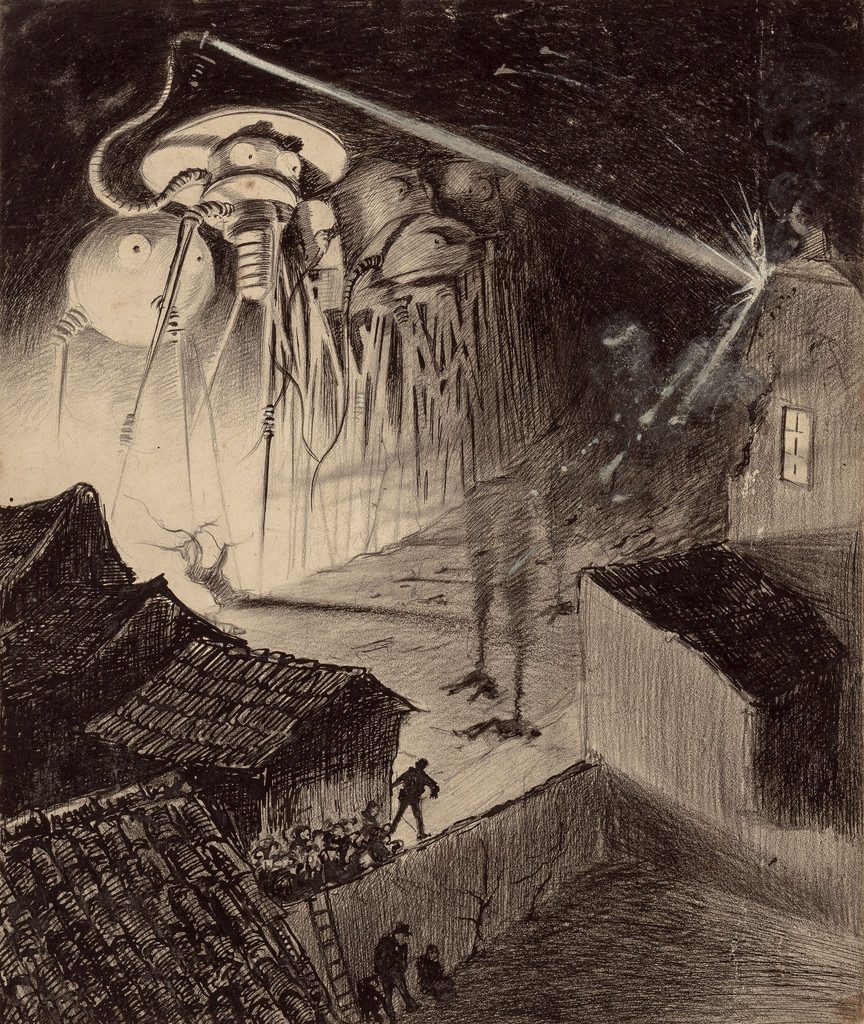
Isaac Asimov’s short essay “The Rel­a­tiv­i­ty of Wrong” is instruc­tive on this last point. Maybe the the­o­ry of “hyper­re­al­i­ty” is right, in some fash­ion, but also incom­plete: a future remains for the most vision­ary cre­ative minds to dis­cov­er, as it did for Asimov’s “psy­chohis­to­ri­an” Hari Sel­don in The Foun­da­tion Tril­o­gy. You can hear a BBC drama­ti­za­tion of that ground­break­ing fifties mas­ter­work in the 47-hour sci­ence fic­tion playlist above, along with read­ings of clas­sic stories—like Orson Welles’ infa­mous radio broad­cast of H.G. Wells’ War of the Worlds (and an audio­book of the same read by Eng­lish actor Maxwell Caulfield). From Jules Verne to H.P. Love­craft to George Orwell; from the mid-fifties time trav­el fic­tion of Andre Nor­ton to the 21st-cen­tu­ry time-trav­el fic­tion of Ruth Boswell….

We’ve even got a late entry from the­atri­cal prog rock mas­ter­mind Rick Wake­man, who fol­lowed up his musi­cal adap­ta­tion of Jour­ney to the Cen­tre of the Earth with a sequel he penned him­self, record­ed in 1974, and released in 1999, called Return to the Cen­tre of the Earth, with nar­ra­tion by Patrick Stew­art and guest appear­ances by Ozzy Osbourne, Bon­nie Tyler, and the Moody Blues’ Justin Hay­ward. Does revis­it­ing sci-fi, “weird fic­tion,” and oper­at­ic con­cept albums of the past con­sti­tute a “des­per­ate rehal­lu­ci­nat­ing” of a bygone “lost object,” as Bau­drillard believed? Or does it pro­vide the raw mate­r­i­al for today’s psy­chohis­to­ri­ans? I sup­pose it remains to be seen; the future—and the future of sci­ence fiction—may be wide open.

The 47-hour sci­ence fic­tion playlist above will be added to our col­lec­tion of 900 Free Audio Books.

Relat­ed Con­tent:

Free: Isaac Asimov’s Epic Foun­da­tion Tril­o­gy Dra­ma­tized in Clas­sic Audio

Sci-Fi Radio: Hear Radio Dra­mas of Sci-Fi Sto­ries by Ray Brad­bury, Philip K. Dick, Ursu­la K. LeGuin & More (1989)

Free: 355 Issues of Galaxy, the Ground­break­ing 1950s Sci­ence Fic­tion Mag­a­zine

Josh Jones is a writer and musi­cian based in Durham, NC. Fol­low him at @jdmagness

Bill Murray Reads the Poetry of Lawrence Ferlinghetti, Wallace Stevens, Emily Dickinson, Billy Collins, Lorine Niedecker, Lucille Clifton & More

Who among us wouldn’t want the inef­fa­bly mel­low, wit­ty, and wise Bill Mur­ray to crash their par­ty, wed­ding, or White House press brief­ing room? Maybe you’re one of the few who could resist his com­ic charms. But could you throw him out if he brought along a cel­list and read Lawrence Ferlinghetti’s poem “Dog”? Not I.

Mur­ray appeared at SXSW on Mon­day and read the poem as part of the pro­mo­tion­al cam­paign for Wes Anderson’s new stop-motion ani­ma­tion film Isle of Dogs. And it can seem when we look back at Murray’s many pub­lic appear­ances over the last few years, that the one thing he’s done more than crash oth­er peo­ple’s par­ties and star in Wes Ander­son films has been read poet­ry in pub­lic.

Mur­ray, as Ayun Hal­l­i­day point­ed out in a pre­vi­ous post, is a “doc­u­ment­ed poet­ry nut,” who once wrote poet­ry him­self as a much younger man. He’s been “wise enough,” writes Gavin Edwards at Rolling Stone “not to share it with the world.”  Per­haps we’re miss­ing out.

But we do have many, many clips of Mur­ray read­ing his favorites from oth­er poets he admires, like Fer­linghet­ti, and like Wal­lace Stevens, whose “The Plan­et on The Table” and “A Rab­bit as King of the Ghosts,” he reads above at New York’s Poets House, an insti­tu­tion he has whole­heart­ed­ly sup­port­ed.

Wal­lace Stevens is a famous­ly dif­fi­cult poet, but he is also quite fun­ny, in an oblique­ly droll way, and its no won­der Mur­ray likes his verse. Poets House direc­tor Lee Bric­oc­cetti observes that there is “an align­ment between com­e­dy and poet­ry… a pre­ci­sion in the way you han­dle lan­guage.” Some of my own favorite poets—like Frank O’Hara and the “will­ful­ly ridicu­lous” Ste­vie Smith—are also some of the fun­ni­est writ­ers I’ve ever encoun­tered in any form. Murray’s own poet­ic efforts, were we ever to hear them, may not mea­sure up to the work of his favorites, but he is undoubt­ed­ly “a mas­ter of lin­guis­tic con­trol and pac­ing.”

We also know that he can turn in fine­ly nuanced dra­mat­ic per­for­mances when he wants to, and his mas­tery of the spo­ken word con­tributes just as much to mood­i­er poets like Emi­ly Dick­in­son, whom he reads above in a sur­prise per­for­mance for con­struc­tion work­ers at work on the new Poets House home in 2009. You might agree, how­ev­er, that he real­ly shines with com­ic fare, like Bil­ly Collins “Anoth­er Rea­son I Don’t Keep a Gun in the House” and Lorine Niedecker’s major­ly con­densed “Poet’s Work.”

Any of these read­ings should grant Mur­ray admis­sion into the most uptight of lit­er­ary affairs. If any­one still doubts his skill in the craft of read­ing lit­er­a­ture well in public—which, any writer will you, is no easy thing by far—then hear him read Lucille Clifton’s uplift­ing “What the Mir­ror Said” (above), or Sarah Manguso’s “What We Miss,” Bil­ly Collins’ “For­get­ful­ness,” and Cole Porter’s song “Brush Up on Your Shake­speare.” Hear him read from Huck­le­ber­ry Finn and mum­ble his way through Bob Dylan’s “Shel­ter from the Storm,” in char­ac­ter in the film St. Vin­cent.

Oh, but does the mul­ti­tal­ent­ed Bill Mur­ray, “mas­ter of lin­guis­tic con­trol and pac­ing,” sing show tunes? Does he ever….

Find these poet­ry read­ings added to OC’s col­lec­tion, 1,000 Free Audio Books: Down­load Great Books for Free

Relat­ed Con­tent:

Hear Bill Murray’s Favorite Poems Read Aloud by Mur­ray Him­self & Their Authors

Bill Mur­ray Gives a Delight­ful Read­ing of Twain’sHuckleberry Finn (1996)

The Phi­los­o­phy of Bill Mur­ray: The Intel­lec­tu­al Foun­da­tions of His Comedic Per­sona

Josh Jones is a writer and musi­cian based in Durham, NC. Fol­low him at @jdmagness

Hear a Dramatization of Neil Gaiman’s Anansi Boys: Free for a Limited Time

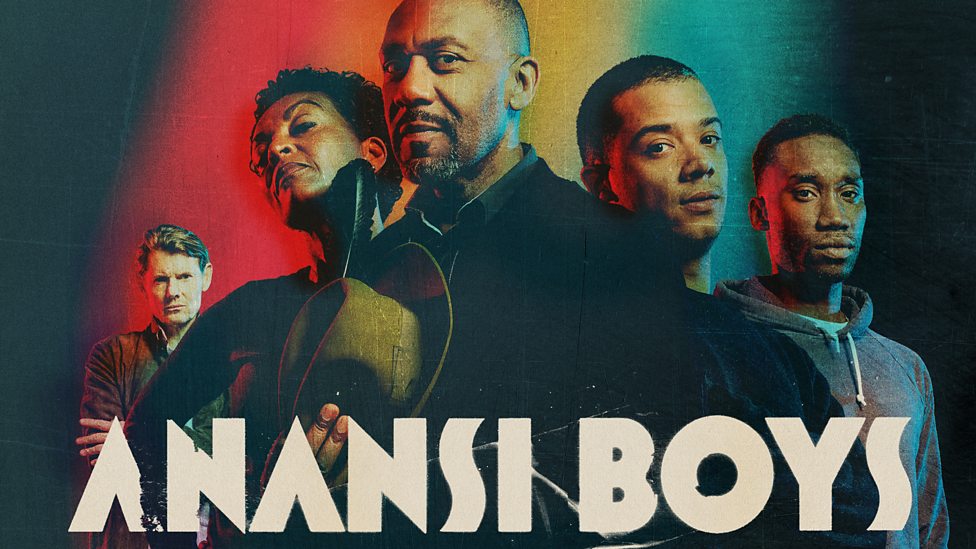
A quick heads up: The BBC is now stream­ing a new, six-part adap­ta­tion of Anan­si Boys, Neil Gaiman’s myth­i­cal fan­ta­sy nov­el from 2006. Only avail­able for the next few weeks, each episode runs about 30 min­utes. Find them here.

Fans of Neil Gaiman will also def­i­nite­ly want to check out this post in our archive: 18 Sto­ries & Nov­els by Neil Gaiman Online: Free Texts & Read­ings by Neil Him­self.

If you would like to sign up for Open Culture’s free email newslet­ter, please find it here. It’s a great way to see our new posts, all bun­dled in one email, each day.

If you would like to sup­port the mis­sion of Open Cul­ture, con­sid­er mak­ing a dona­tion to our site. It’s hard to rely 100% on ads, and your con­tri­bu­tions will help us con­tin­ue pro­vid­ing the best free cul­tur­al and edu­ca­tion­al mate­ri­als to learn­ers every­where. You can con­tribute through Pay­Pal, Patre­on, and Ven­mo (@openculture). Thanks!

via Metafil­ter

Relat­ed Con­tent:

Neil Gaiman Reads Edgar Allan Poe’s “The Raven”: One Mas­ter of Dra­mat­ic Sto­ry­telling Reads Anoth­er

1,000 Free Audio Books: Down­load Great Books for Free

Hear Radio Dra­mas of Isaac Asimov’s Foun­da­tion Tril­o­gy & 7 Clas­sic Asi­mov Sto­ries

Hear a Complete Reading of the Newly-Discovered Kurt Vonnegut Story, “The Drone King”

Twen­ty some years before a young engi­neer named Ray Tom­lin­son invent­ed email, writer Kurt Von­negut invent­ed bee-mail in “The Drone King,” a sto­ry that didn’t see the light of day until his friend and fel­low author Dan Wake­field unearthed it while going through old papers for a new Von­negut col­lec­tion.

The col­lec­tion’s co-edi­tor, Von­negut schol­ar Jerome Klinkowitz, esti­mates that it was writ­ten in the ear­ly 50s, like­ly before the pub­li­ca­tion of his first nov­el, Play­er Piano, in 1952.

This ear­ly work, recent­ly pub­lished in The Atlantic as well as Wake­field and Klinkow­itz’s col­lec­tion, shows an author whose gal­lows humor is already firm­ly in place.

Sev­er­al of his favorite themes crop up, too: the enthu­si­asm of the mis­guid­ed entre­pre­neur, the bat­tle of the sex­es, and tech­nol­o­gy tak­en to absurd extremes (i.e. bees deliv­er­ing scraps of mes­sages in soda straws tied to their tho­rax­es).

If we’re not mis­tak­en Indi­anapo­lis, Vonnegut’s boy­hood home, now host to his Memo­r­i­al Library, puts in an unbilled appear­ance, as well. The story’s Mil­len­ni­um Club bears an uncan­ny resem­blance to that city’s Ath­let­ic Club, now defunct.

The self-pity­ing male hap­less­ness Von­negut spoofs so ably feels just as skew­er-able in the post-Wein­stein era, though the dod­der­ing black waiter’s dialect is rather queasy-mak­ing, espe­cial­ly in the mouth of the white nar­ra­tor read­ing the sto­ry, above.

You can buy “The Drone King” as part of Kurt Von­negut Com­plete Sto­ries col­lec­tion or read it free online here. The Atlantic was also good enough to cre­ate an audio ver­sion. It’s excerpt­ed up top. And it appears in its entire­ty right above.

“The Drone King” will be added to our Free Audio Books and Free eBooks col­lec­tions.

Relat­ed Con­tent:

Kurt Vonnegut’s 8 Tips on How to Write a Good Short Sto­ry

Hear Kurt Vonnegut’s Nov­el, Cat’s Cra­dle, Get Turned into Avant-Garde Music (Fea­tur­ing Kurt Him­self)

Kurt Von­negut Pon­ders Why “Poor Amer­i­cans Are Taught to Hate Them­selves” in a Time­ly Pas­sage from Slaugh­ter­house-Five

Ayun Hal­l­i­day is an author, illus­tra­tor, the­ater mak­er and Chief Pri­ma­tol­o­gist of the East Vil­lage Inky zine.  Fol­low her @AyunHalliday.

Hear 14 Hours of Weird H.P. Lovecraft Stories on Halloween: “The Call of Cthulhu,” “The Dunwich Horror” & More

Image by Dominique Sig­noret, via Wiki­me­dia Com­mons

“The most mer­ci­ful thing in the world, I think, is the inabil­i­ty of the human mind to cor­re­late all its con­tents. We live on a placid island of igno­rance in the midst of black seas of infin­i­ty, and it was not meant that we should voy­age far.” So writes the nar­ra­tor of “The Call of Cthul­hu,” the best-known sto­ry by Howard Phillips Love­craft, who, before he burnt out and died young, spent his whole lit­er­ary career look­ing into that infin­i­ty and report­ing on the psy­cho­log­i­cal effects of what he sensed lurk­ing there. What bet­ter writer to read on Hal­loween night, when — amid all the par­ty­ing and the can­dy — we all per­mit our­selves a glimpse into the abyss?

Indeed, what bet­ter writer to hear on Hal­loween night? Once it gets dark, con­sid­er fir­ing up this four­teen-hour Spo­ti­fy playlist of H.P. Love­craft audio­books, fea­tur­ing read­ings of not just “The Call of Cthul­hu” but The Shad­ow over Inns­mouth, “The Dun­wich Hor­ror,” “The Thing on the Doorstep,” and oth­er sto­ries besides. (If you don’t have Spo­ti­fy’s free soft­ware, you can down­load it here.)

Though Love­craft has a much wider read­er­ship now than he ever accrued in his life­time, some of your guests might still nev­er have heard his work and thus strug­gle to pin it down: is it hor­ror? Is it sus­pense? Is it the macabre, the sort of thing per­fect­ed by Love­craft’s pre­de­ces­sor in fright­en­ing Amer­i­can let­ters Edgar Allan Poe?

The word they need is “weird,” not in the mod­ern sense of “some­what unusu­al,” but in the ear­ly 20th-cen­tu­ry sense — the sense of Weird Tales, the pulp mag­a­zine that pub­lished Love­craft — of a heady blend of the super­nat­ur­al, the myth­i­cal, the sci­en­tif­ic, and the mun­dane. Joyce Car­ol Oates once wrote that Love­craft’s sto­ries, sel­dom sen­sa­tion­al, “devel­op by way of incre­men­tal detail, begin­ning with quite plau­si­ble sit­u­a­tions — an expe­di­tion to Antarc­ti­ca, a trip to an ancient sea­side town, an inves­ti­ga­tion of an aban­doned eigh­teenth-cen­tu­ry house in Prov­i­dence, Rhode Island, that still stood in Lovecraft’s time. One is drawn into Love­craft by the very air of plau­si­bil­i­ty and char­ac­ter­is­tic under­state­ment of the prose, the ques­tion being When will weird­ness strike?” An ide­al ques­tion to ask while float­ing along the black sea of Hal­loween night.

This playlist of Love­craft sto­ries will be added to our col­lec­tion, 1,000 Free Audio Books: Down­load Great Books for Free.

Relat­ed Con­tent:

H.P. Lovecraft’s Clas­sic Hor­ror Sto­ries Free Online: Down­load Audio Books, eBooks & More

23 Hours of H.P. Love­craft Sto­ries: Hear Read­ings & Drama­ti­za­tions of “The Call of Cthul­hu,” “The Shad­ow Over Inns­mouth,” & Oth­er Weird Tales

Hear Drama­ti­za­tions of H.P. Lovecraft’s Sto­ries On His Birth­day: “The Call of Cthul­hu,” “The Dun­wich Hor­ror,” & More

H.P. Lovecraft’s Mon­ster Draw­ings: Cthul­hu & Oth­er Crea­tures from the “Bound­less and Hideous Unknown”

H.P. Love­craft Gives Five Tips for Writ­ing a Hor­ror Sto­ry, or Any Piece of “Weird Fic­tion”

Love­craft: Fear of the Unknown (Free Doc­u­men­tary)

Based in Seoul, Col­in Mar­shall writes and broad­casts on cities and cul­ture. His projects include the book The State­less City: a Walk through 21st-Cen­tu­ry Los Ange­les and the video series The City in Cin­e­ma. Fol­low him on Twit­ter at @colinmarshall or on Face­book.

« Go BackMore in this category... »
Quantcast