How Did Beethoven Compose His 9th Symphony After He Went Completely Deaf?

You don’t need to know any­thing at all about clas­si­cal music, nor have any lik­ing for it even, to be deeply moved by that most famous of sym­phonies, Lud­wig van Beethoven’s 9th—“per­haps the most icon­ic work of the West­ern musi­cal tra­di­tion,” writes The Juil­liard Jour­nal in an arti­cle about its hand­writ­ten score. Com­mis­sioned in 1817, the sub­lime work was only com­plet­ed in 1824. By that time, its com­pos­er was com­plete­ly and total­ly deaf. At the first per­for­mance, Beethoven did not notice that the mas­sive final choral move­ment had end­ed, and one of the musi­cians had to turn him around to acknowl­edge the audi­ence.

This may seem, says researcher Natalya St. Clair in the TED-Ed video above, like some “cru­el joke,” but it’s the truth. Beethoven was so deaf that some of the most inter­est­ing arti­facts he left behind are the so-called “con­ver­sa­tion books,” kept from 1818 onward to com­mu­ni­cate with vis­i­tors who had to write down their ques­tions and replies. How then might it have been pos­si­ble for the com­pos­er to cre­ate such endur­ing­ly thrilling, rap­tur­ous works of aur­al art?

Using the del­i­cate, melan­choly “Moon­light Sonata” (which the com­pos­er wrote in 1801, when he could still hear), St. Clair attempts to show us how Beethoven used math­e­mat­i­cal “pat­terns hid­den beneath the beau­ti­ful sounds.” (In the short video below from doc­u­men­tary The Genius of Beethoven, see the onset of Beethoven’s hear­ing loss in a dra­mat­ic read­ing of his let­ters.) Accord­ing to St. Clair’s the­o­ry, Beethoven com­posed by observ­ing “the math­e­mat­i­cal rela­tion­ship between the pitch fre­quen­cy of dif­fer­ent notes,” though he did not write his sym­phonies in cal­cu­lus. It’s left rather unclear how the com­poser’s sup­posed intu­ition of math­e­mat­ics and pitch cor­re­sponds with his abil­i­ty to express such a range of emo­tions through music.

We can learn more about Beethoven’s deaf­ness and its bio­log­i­cal rela­tion­ship to his com­po­si­tion­al style in the short video below with research fel­low Edoar­do Sac­cen­ti and his col­league Age Smilde from the Biosys­tems Data Analy­sis Group at Amsterdam’s Swammer­dam Insti­tute for Life Sci­ences. By count­ing the high and low fre­quen­cies in Beethoven’s com­plete string quar­tets, a task that took Sac­cen­ti many weeks, he and his team were able to show how three dis­tinct com­po­si­tion­al styles “cor­re­spond to stages in the pro­gres­sion of his deaf­ness,” as they write in their paper (which you can down­load in PDF here).

The pro­gres­sion is unusu­al. As his con­di­tion wors­ened, Beethoven includ­ed few­er and few­er high fre­quen­cy sounds in his com­po­si­tions (giv­ing cel­lists much more to do). By the time we get to 1824–26, “the years of the late string quar­tets and of com­plete deafness”—and of the com­ple­tion of the 9th—the high notes have returned, due in part, Smilde says, to “the bal­ance between an audi­to­ry feed­back and the inner ear.” Beethoven’s reliance on his “inner ear” made his music “much and much rich­er.” How? As one vio­lin­ist in the clip puts it, he was “giv­en more free­dom because he was not attached any­more to the phys­i­cal sound, [he could] just use his imag­i­na­tion.”

For all of the com­pelling evi­dence pre­sent­ed here, whether Beethoven’s genius in his painful lat­er years is attrib­ut­able to his intu­ition of com­plex math­e­mat­i­cal pat­terns or to the total free rein of his imag­i­na­tive inner ear may in fact be undis­cov­er­able. In any case, no amount of ratio­nal expla­na­tion can explain away our aston­ish­ment that the man who wrote the unfail­ing­ly pow­er­ful, awe­some­ly dynam­ic “Ode to Joy” finale (con­duct­ed above by Leonard Bern­stein), couldn’t actu­al­ly hear any of the music.

Relat­ed Con­tent:

Stream the Com­plete Works of Bach & Beethoven: 250 Free Hours of Music

Slavoj Žižek Exam­ines the Per­verse Ide­ol­o­gy of Beethoven’s Ode to Joy

Beethoven’s Ode to Joy Played With 167 Theremins Placed Inside Matryosh­ka Dolls in Japan

Leonard Bern­stein Con­ducts Beethoven’s 9th in a Clas­sic 1979 Per­for­mance

Josh Jones is a writer and musi­cian based in Durham, NC. Fol­low him at @jdmagness

Giant Dinosaurs Travel Down the Hudson River: See What Awestruck New Yorkers Witnessed in 1963

Amaz­ing things hap­pen every day in New York City—some spon­ta­neous, some whose exe­cu­tion is care­ful­ly planned over weeks and months.

Equal­ly amaz­ing is the total igno­rance with which one can go about one’s busi­ness at just a few blocks remove … be it the Coney Island Mer­maid Parade, Egg Rolls and Egg Creams, or the Three Kings Day Parade, some folks only have eyes for brunch.

But it would have been dif­fi­cult for any­one to over­look sev­en ani­ma­tron­ic dinosaurs, trav­el­ing by barge on Octo­ber 15, 1963, bound for the Sin­clair Oil Cor­po­ra­tion’s “Dinoland” exhib­it at the 1964 World’s Fair.

In a stunt wor­thy of Bar­num, the syn­thet­ic beasts trekked 150 miles from the exhibit’s design­er, Jonas Stu­dios, to the World’s Fair site in Flush­ing, Queens, hailed by fire­boats and an enthu­si­as­tic throng. The spon­sor­ing cor­po­ra­tion, whose high­ly rec­og­niz­able logo was a bron­tosaurus, had fur­nished the pub­lic with a timetable of esti­mat­ed arrivals along the route.

dinopress

For good mea­sure, every fam­i­ly to vis­it the exhib­it with­in the first year was offered a coupon for a free gal­lon of gaso­line.

Installed in what the mar­velous­ly evoca­tive Jam Handy short below termed a “prime loca­tion sur­round­ed by titans of Amer­i­can indus­try,” the dinosaurs attract­ed over 10 mil­lion “car-own­ing, trav­el­ing” fans. (That’s a lot of fos­sil fuel.)

On the way out, vis­i­tors were encour­aged to avail them­selves of the Mold-A-Rama machine, which pumped out minia­ture plas­tic dinosaur sou­venirs at 25¢ a pop.

After the fair closed, the dinosaurs went on tour, put in an appear­ance in the Macy’s Thanks­giv­ing Day Parade, and even­tu­al­ly set­tled into zoos and nat­ur­al his­to­ry muse­ums around the coun­try.

Read the Dinoland guide­book here. A sam­ple:

Sin­clair uses the Dinosaur “Bron­tosaurus” as a sym­bol to dra­ma­tize the age and qual­i­ty of the crude oils from which Sin­clair Petro­le­um Prod­ucts are made — crudes which were mel­low­ing in the earth mil­lions of years ago when Dinosaurs lived.

via @Pickover

Relat­ed Con­tent:

Ger­tie the Dinosaur: The Moth­er of all Car­toon Char­ac­ters (1914)

Watch Lost World (1925), the Grand­dad­dy of Giant Mon­ster Movies Like The Lost World: Juras­sic Park

Watch a Time­lapse Video Show­ing the Cre­ation of New York City’s Sky­line: 1500 to Present

Ayun Hal­l­i­day is an author, illus­tra­tor, the­ater mak­er and Chief Pri­ma­tol­o­gist of the East Vil­lage Inky zine.  Her play Zam­boni Godot is open­ing in New York City in March 2017. Fol­low her @AyunHalliday.

The Birth Control Handbook: The Underground Student Publication That Let Women Take Control of Their Bodies (1968)

birth-control-handbook

Cen­tral to Michel Foucault’s the­o­ry of “gov­ern­men­tal­i­ty” is what he calls “biopow­er,” an “explo­sion of numer­ous and diverse tech­niques for achiev­ing the sub­ju­ga­tions of bod­ies and the con­trol of pop­u­la­tions.” Where debates over abor­tion and con­tra­cep­tion gen­er­al­ly coa­lesce around ques­tions of reli­gion and rights, the French the­o­rist of pow­er saw these issues as part of the bio-polit­i­cal strug­gle between “gov­ern­ing the self” and “gov­ern­ing oth­ers.”

Those who resist repres­sive biopow­er seize on the for­mer def­i­n­i­tion of gov­ern­ment. Take a very point­ed exam­ple of both restric­tive gov­ern­ment biopow­er and cre­ative resis­tance to the same: the 1968 Birth Con­trol Hand­book you see here, print­ed ille­gal­ly by under­grad­u­ate stu­dents at Montreal’s McGill Uni­ver­si­ty. At the time of this text’s cre­ation, notes Atlas Obscu­ra, “under Canada’s Crim­i­nal Code, the dis­sem­i­na­tion, sale, and adver­tise­ment of birth con­trol meth­ods were all ille­gal, and abor­tion was pun­ish­able by life impris­on­ment.”

Despite fac­ing the pos­si­ble con­se­quences of up to two years in prison, the McGill Stu­dent Soci­ety “sold mil­lions of copies” of The Birth Con­trol Hand­book, writes Aman­da Edg­ley, “in Cana­da and inter­na­tion­al­ly.” Maya Koropat­nit­sky describes the tremen­dous social impact of the hand­book:

Stu­dents at McGill as well as oth­er Que­bec cam­pus­es snapped up the first run of 17,000 copies. Due to its major suc­cess, the com­mit­tee came out with a sec­ond issue of the hand­book in 1969. This hand­book is seen to be a major play­er in women’s lib­er­a­tion because it gave young women the knowl­edge and the abil­i­ty to con­trol repro­duc­tive func­tions.  

The hand­book fur­ther­more “mobi­lized women into form­ing meet­ings and groups to talk about con­scious­ness-rais­ing issues.” This infor­mal edu­ca­tion was invalu­able for mil­lions of women, who were “des­per­ate for this infor­ma­tion,” writes author Lau­ra Kaplan, “so starved for infor­ma­tion. You want­ed it, in as much detail as you could get it, as graph­ic as it could be made.”

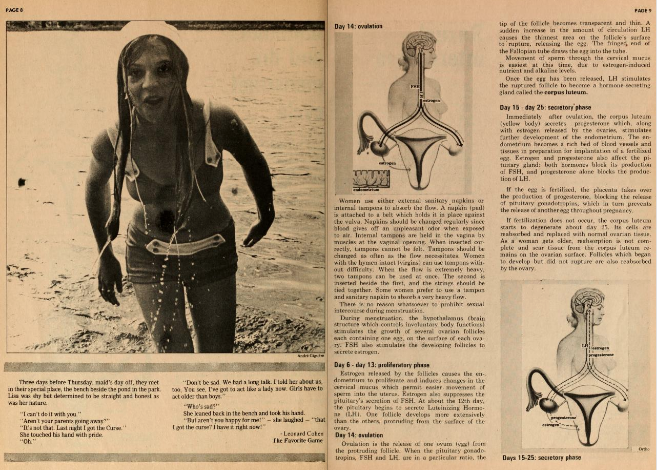
birth-control-3

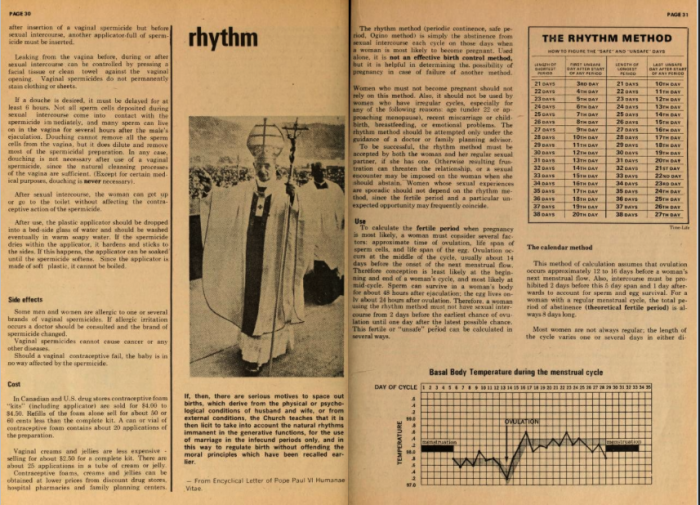
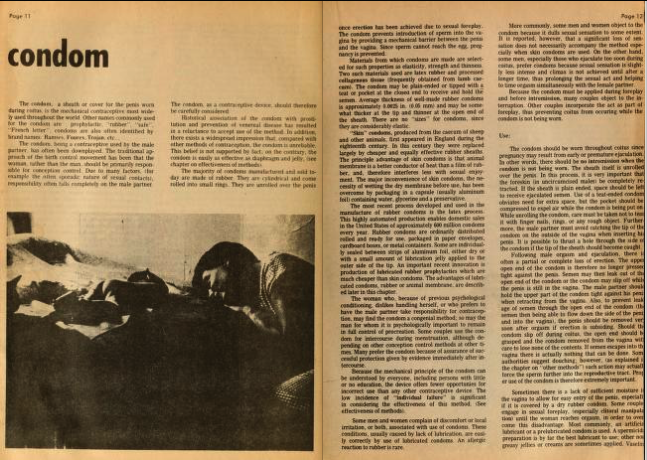
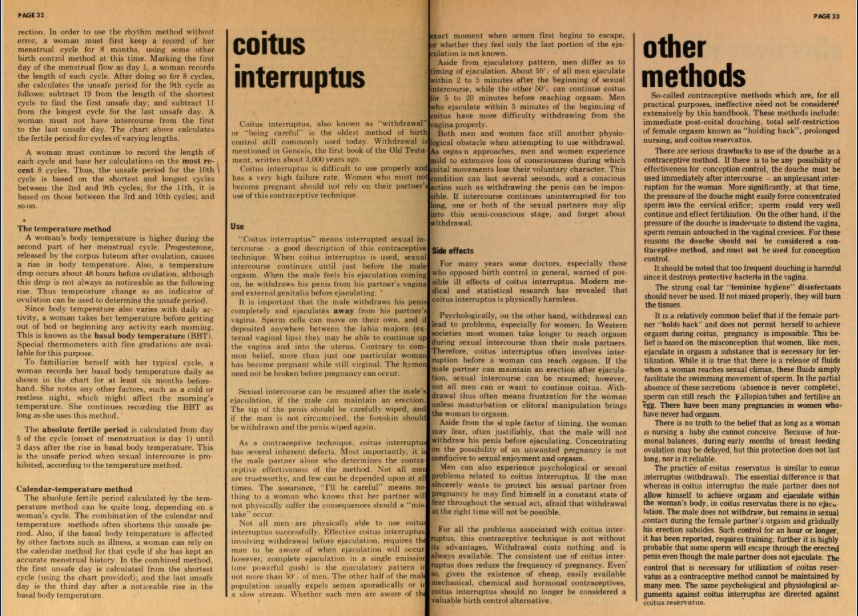
What the Cana­di­an, and U.S., gov­ern­ments saw as sex­u­al­ly explic­it will look to us like stan­dard biol­o­gy text­book illus­tra­tions, mun­dane charts and graphs, ordi­nary pic­tures of the birth expe­ri­ence, and taste­ful, rather tame nude pho­tos. Orig­i­nal authors Allan Fein­gold and Don­na Cher­ni­ak “pored through books in the med­ical library,” Atlas Obscu­ra writes, “and con­sult­ed med­ical advi­sors, com­pil­ing detailed infor­ma­tion on top­ics like sex­u­al inter­course, men­stru­al cycles, sur­gi­cal abor­tion tech­niques (accom­pa­nied by prices and sta­tis­tics), and how, exact­ly, to con­tact abor­tion providers.”

Illus­trat­ing anoth­er Fou­cauldian insight into the rela­tion­ship between knowl­edge and pow­er, not only were birth con­trol meth­ods under the strict con­trol of most­ly male doc­tors (and only avail­able with per­mis­sion from a hus­band), but even basic infor­ma­tion on repro­duc­tion and birth con­trol was dif­fi­cult for most women to access. “To have all the infor­ma­tion on the var­i­ous meth­ods of birth con­trol in one place,” says Kaplan, “with pros and cons and what you need­ed to know about them, was a rev­e­la­tion.” Cher­ni­ak lat­er remem­bered, “We joked that after the Bible, we were prob­a­bly one of the most wide­ly dis­trib­uted pub­li­ca­tions in Cana­da.”

birth-control-2

Both edi­tions of the hand­book addressed the con­tro­ver­sial top­ic of abor­tion, cit­ing the Cana­di­an crim­i­nal code along the way. “Con­cerned with the prob­lem of ille­gal abor­tion,” writes Uni­ver­si­ty of Ottowa pro­fes­sor Christa­belle Seth­na, “the coun­cil man­dat­ed the pub­li­ca­tion” of the hand­book, which also “con­tained edi­to­r­i­al com­men­tary that took West­ern pop­u­la­tion-con­trol experts to task for their racism and that sup­port­ed women’s repro­duc­tive rights as a func­tion of women’s lib­er­a­tion.” Seth­na sit­u­ates The Birth Con­trol Hand­book with­in a much larg­er Cana­di­an move­ment, just “one of the ways,” writes Edge­ley, “Cana­di­ans took con­trol over their own bod­ies.” Its cre­ators saw it as a means of chang­ing the world. “Those were the years,” Cher­ni­ak says, “in which you thought you could do any­thing.”

birth-control-5

Two years after the first print run of The Birth Con­trol Hand­book, the ur-text of fem­i­nist bio-pol­i­tics, Our Bod­ies, Our­selves, was pub­lished by the Boston Women’s Health Book Col­lec­tive. This book “became its own wide­ly cir­cu­lat­ed women’s health text,” Atlas Obscu­ra writes, “trans­lat­ed into 29 lan­guages.” But while Our Bod­ies, Our­selves remains famous for its key role in spread­ing much-need­ed infor­ma­tion about repro­duc­tive health, “its Cana­di­an coun­ter­part has been most­ly for­got­ten.” The Birth Con­trol Hand­book gave mil­lions of women the infor­ma­tion they need­ed to gov­ern their own lives. Redis­cov­er the com­plete text of the first, 1968 edi­tion and sec­ond, 1969 edi­tion at the Inter­net Archive, where you can see a scan, read tran­scribed full text, and down­load PDF, Kin­dle, and oth­er for­mats.

via Atlas Obscu­ra

Relat­ed Con­tent:

Down­load All 239 Issues of Land­mark UK Fem­i­nist Mag­a­zine Spare Rib Free Online

Simone de Beau­voir Explains “Why I’m a Fem­i­nist” in a Rare TV Inter­view (1975)

The Sto­ry Of Men­stru­a­tion: Watch Walt Disney’s Sex Ed Film from 1946

Watch Fam­i­ly Plan­ning, Walt Disney’s 1967 Sex Ed Pro­duc­tion, Star­ring Don­ald Duck

Josh Jones is a writer and musi­cian based in Durham, NC. Fol­low him at @jdmagness

The Science of Why We Laugh

Laugh­ter is uni­ver­sal. And yet strange when you think about it. One moment we’re doing noth­ing par­tic­u­lar­ly note­wor­thy. The next moment we’re con­vuls­ing and mak­ing these loud stac­ca­to guf­faws. Odd that.

So why do we laugh? It’s a ques­tion that Robert Provine, a pro­fes­sor at the Uni­ver­si­ty of Mary­land, Bal­ti­more, has been study­ing for 20+ years, try­ing to under­stand laugh­ter’s social, neu­ro­log­i­cal, and evo­lu­tion­ary roots. In the video above, he gives you a sense of the “side­walk” research he con­ducts, and some of the con­clu­sions he has drawn–e.g., laugh­ter is often not a reac­tion to some­thing fun­ny per se; it’s some­thing that helps build social rela­tion­ships with oth­ers. And it’s a reac­tion that’s hard­wired in the brain.

At the video’s end, Provine tells us that the study of laugh­ter has just begun. But, if you’re inter­est­ed in what we know so far, see his two books: Laugh­ter: A Sci­en­tif­ic Inves­ti­ga­tion and Behav­ior: Yawn­ing, Laugh­ing, Hic­cup­ping, and Beyond, an explo­ration of neglect­ed human instincts.

If you would like to sign up for Open Culture’s free email newslet­ter, please find it here. It’s a great way to see our new posts, all bun­dled in one email, each day.

If you would like to sup­port the mis­sion of Open Cul­ture, con­sid­er mak­ing a dona­tion to our site. It’s hard to rely 100% on ads, and your con­tri­bu­tions will help us con­tin­ue pro­vid­ing the best free cul­tur­al and edu­ca­tion­al mate­ri­als to learn­ers every­where. You can con­tribute through Pay­Pal, Patre­on, and Ven­mo (@openculture). Thanks!

Relat­ed Con­tent:

John Cleese Explores the Health Ben­e­fits of Laugh­ter

Char­lie Chap­lin Finds Com­e­dy Even in the Bru­tal­i­ty of WWI: A Scene from Shoul­der Arms (1918)

Chris Rock Cre­ates a List of His 13 Favorite Standup Com­e­dy Spe­cials

How to Cope with Trump. Laugh

Was There a First Human Language?: Theories from the Enlightenment Through Noam Chomsky

Dur­ing the 17th and 18th cen­turies, Euro­pean Enlight­en­ment philoso­phers dis­card­ed the ori­gin sto­ries in reli­gious texts as wild­ly implau­si­ble or sim­ply alle­gor­i­cal. But they found them­selves charged with com­ing up with their own, nat­u­ral­is­tic expla­na­tions for the ori­gins of life, law, moral­i­ty, etc. And most press­ing­ly for their inquiries into psy­chol­o­gy and cog­ni­tion, many of those thinkers sought to explain the ori­gins of lan­guage.

The Bib­li­cal sto­ry of the Tow­er of Babel had long been wide­ly accept­ed, either lit­er­al­ly or metaphor­i­cal­ly, as indica­tive that all humans once spoke the same lan­guage (The so-called “Adam­ic Lan­guage”). Many com­pet­ing the­o­ries came from philoso­phers like Locke, Rousseau, Condil­lac, Herder, and the Scot­tish jurist and philoso­pher James Bur­nett, known by his hered­i­tary title, Mon­bod­do.

Antic­i­pat­ing Dar­win­ian evo­lu­tion as well as com­par­a­tive lin­guis­tics, Mon­bod­do argued that lan­guage arose as a response to a chang­ing envi­ron­ment, and that it came into being, along with human beings, in one place, then diver­si­fied as humans spread across the globe and diverged cul­tur­al­ly. This was known as the the­o­ry of mono­gen­e­sis, or the “sin­gle-ori­gin the­o­ry” of lan­guage.

As the nar­ra­tor in the video above, from lin­guis­tics YouTube chan­nel NativLang, puts it, even after the sto­ry had been naturalized—and the lan­guages of the world mapped into pro­to-evo­lu­tion­ary fam­i­ly trees—“Babel still held one intrigu­ing idea over us; that orig­i­nal lan­guage.” And yet, rather than search for the mys­ti­cal Adam­ic Lan­guage—the rev­e­la­tion of a divinity—as many alchemists and occultists had done, nat­ur­al philoso­phers like Mon­bod­do used emerg­ing com­par­a­tive lin­guis­tics meth­ods to attempt a his­tor­i­cal recon­struc­tion of the first human lan­guage.

They were less than suc­cess­ful. Giv­ing it up as futile, in 1866, the Soci­ety of Lin­guis­tics in Paris banned all dis­cus­sion of the issue. “Enter the late Joseph Green­berg” to begin the search anew, says NativLang. A 20th-cen­tu­ry Amer­i­can lin­guist, Green­berg used mass com­par­i­son and typol­o­gy to com­pare “super­fam­i­lies.” Lat­er lin­guists took up the chal­lenge, includ­ing Mer­ritt Ruhlen, who “com­pared vocab­u­lary from across the globe and recon­struct­ed 27 pro­to-words” sup­pos­ed­ly belong­ing to the first human lan­guage, called “Pro­to-World.” Ruhlen’s the­o­ry has since been crit­i­cal­ly sav­aged, says NativLang, and “con­fi­dent­ly tossed… into the bins of fringe lin­guis­tics, pseu­do­science… and yet, Babel’s first, and biggest claim lingers.”

The intel­lec­tu­al his­to­ry in this five-minute video is obvi­ous­ly over­sim­pli­fied, but it high­lights some fas­ci­nat­ing fea­tures of the cur­rent debate. As Avi Lif­schitz, his­to­ri­an of Enlight­en­ment the­o­ry of lan­guage, writes, we tend “to assume that our own cog­ni­tive the­o­ries are the lat­est word when com­pared with those of our pre­de­ces­sors. Yet in some areas, the ques­tions we are now ask­ing are not too dif­fer­ent from those posed some two or three cen­turies ago.” In the case of the ori­gins of lan­guage, that is most cer­tain­ly so. Cen­tral to the the­o­ries of Locke and oth­ers, for exam­ple, “the pre­cise role of lan­guage in the brain and in human per­cep­tion” remains “one of the most top­i­cal ques­tions in today’s cog­ni­tive sci­ence.”

Although many schol­ars have giv­en up attempt­ing to recon­struct the orig­i­nal lan­guage, lin­guists, cog­ni­tive sci­en­tists, and evo­lu­tion­ary biol­o­gists con­tin­ue to find com­pelling evi­dence for the sin­gle-ori­gin the­o­ry. The NativLang video omits per­haps the most famous mod­ern lin­guist, Noam Chom­sky, who argued that a chance muta­tion occurred some 100,000 years ago, giv­ing rise to lan­guage. Even as lan­guages have diverged into what’s cur­rent­ly esti­mat­ed at around 6,000 dif­fer­ent tongues, Chom­sky claimed, they all retain a com­mon struc­ture, a “uni­ver­sal gram­mar.”

What­ev­er it might have sound­ed like, orig­i­nal lan­guage would like­ly have arisen in Sub-Saha­ran Africa, where mod­ern humans evolved some­where between 200,000 and 150,000 years ago. In 2011, Uni­ver­si­ty of Auck­land biol­o­gist Quentin Atkin­son used lin­guis­tic tech­niques some­what like Monboddo’s to show that African lan­guages—espe­cial­ly click lan­guages like the South African Xu—have con­sid­er­ably more indi­vid­ual sounds (phonemes) than oth­ers. And that lan­guages around the world have few­er and few­er phonemes the fur­ther they are from south­ern Africa.

Most sci­en­tists agree with the basic evo­lu­tion­ary his­to­ry of human ori­gins. But like Ruh­len’s “Pro­to-World,” Atkinson’s lin­guis­tic the­o­ry “caused some­thing of a sen­sa­tion,” writes Sci­ence Dai­ly, and has since come in for severe cri­tique. The debate over many of those Enlight­en­ment ques­tions about the ori­gins of lan­guage con­tin­ues. Bar­ring some dra­con­ian ban, “the search for the site of ori­gin of lan­guage,” and for the lan­guage itself and the evo­lu­tion­ary mech­a­nisms that pro­duced it, “remains very much alive.”

If you would like to sign up for Open Culture’s free email newslet­ter, please find it here. It’s a great way to see our new posts, all bun­dled in one email, each day.

If you would like to sup­port the mis­sion of Open Cul­ture, con­sid­er mak­ing a dona­tion to our site. It’s hard to rely 100% on ads, and your con­tri­bu­tions will help us con­tin­ue pro­vid­ing the best free cul­tur­al and edu­ca­tion­al mate­ri­als to learn­ers every­where. You can con­tribute through Pay­Pal, Patre­on, and Ven­mo (@openculture). Thanks!

Relat­ed Con­tent:

The Tree of Lan­guages Illus­trat­ed in a Big, Beau­ti­ful Info­graph­ic

How Lan­guages Evolve: Explained in a Win­ning TED-Ed Ani­ma­tion

Noam Chom­sky Talks About How Kids Acquire Lan­guage & Ideas in an Ani­mat­ed Video by Michel Gondry

Learn Latin, Old Eng­lish, San­skrit, Clas­si­cal Greek & Oth­er Ancient Lan­guages in 10 Lessons

Josh Jones is a writer and musi­cian based in Durham, NC. Fol­low him at @jdmagness

Watch the Celebrated Ballerina Anna Pavlova Perform “The Dying Swan” (1925)

Pre­pare my swan cos­tume.

— alleged last words of bal­le­ri­na Anna Pavlo­va, as report­ed by her hus­band

The Inter­net sug­gests that swans are fair­ly tough spec­i­mens, quick to hiss and flap at any YouTu­ber unwise enough to vio­late their per­son­al space with a video cam­era.

The cel­e­brat­ed bal­le­ri­na Anna Pavlo­va (1881–1931) paints a dif­fer­ent pic­ture in her sig­na­ture piece, The Dying Swan.

Chore­o­g­ra­ph­er Mikhail Fokine cre­at­ed the four minute solo in 1905 at Pavlova’s request, draw­ing on her admi­ra­tion for some res­i­dent swans in a Leningrad pub­lic park and Alfred, Lord Ten­nyson’s poem “The Dying Swan.”

It was per­haps a hap­py acci­dent that he had just learned how to play Camille Saint-SaĂ«ns’ Le Cygne from Le Car­naval des Ani­maux on his man­dolin. Per­formed on cel­lo, as orig­i­nal­ly intend­ed, it sup­plies a mood of gor­geous melan­choly with which to observe the tit­u­lar char­ac­ter’s en pointe death throes.

Fokine’s descrip­tion of the work’s cre­ation in Dance Mag­a­zine’s August 1931 issue speaks to the rig­or of these prac­ti­tion­ers and their art form:

It was almost an impro­vi­sa­tion. I danced in front of her [Pavlo­va], she direct­ly behind me. Then she danced and I walked along­side her, curv­ing her arms and cor­rect­ing details of pos­es. Pri­or to this com­po­si­tion, I was accused of bare­foot­ed ten­den­cies and of reject­ing toe danc­ing in gen­er­al. The Dying Swan was my answer to such criticism…The dance is tech­ni­cal­ly more dif­fi­cult than it may appear. The dancer moves con­stant­ly using  dif­fer­ent bour­rees. The feet must be beau­ti­ful, express­ing a trem­bling. All paus­es in sus-sous must show legs brought to one point. The arms and the back work inde­pen­dent­ly of the feet which con­tin­ue to move reg­u­lar­ly.

The archival footage from 1925, above, con­veys what Fokine’s words cannot—the deep emo­tion for which this par­tic­u­lar inter­preter was known. It’s a vis­cer­al expe­ri­ence to watch this bro­ken ani­mal fight­ing for its sur­vival, quiv­er­ing and heav­ing, before crum­pling at last. (A pity that this ver­sion cuts off so abrupt­ly… that final note should linger.)

Pavlo­va per­formed The Dying Swan around 4000 times over the course of her career, nev­er sick­en­ing of it, or of the beasts who inspired it. Swans pop­u­lat­ed a small pond at her Eng­lish coun­try home. You can wit­ness her fond­ness for them, below.

Relat­ed Con­tent:

Watch 82-Year-Old Igor Stravin­sky Con­duct The Fire­bird, the Bal­let Mas­ter­piece That First Made Him Famous (1965)

Watch an Avant-Garde Bauhaus Bal­let in Bril­liant Col­or, the Tri­adic Bal­let First Staged by Oskar Schlem­mer in 1922

Bal­let Dancers Do Their Hard­est Moves in Slow Motion

Ayun Hal­l­i­day is an author, illus­tra­tor, the­ater mak­er and Chief Pri­ma­tol­o­gist of the East Vil­lage Inky zine.  Her play Zam­boni Godot is open­ing in New York City in March 2017. Fol­low her @AyunHalliday.

Watch Bacteria Become Resistant to Antibiotics in a Matter of Days: A Quick, Stop-Motion Film

The video above should ter­ri­fy you a lit­tle. Record­ed at Har­vard Med­ical School (HMS), the time-motion film lets you see “bac­te­ria [Escherichia coli] devel­op resis­tance to increas­ing­ly high­er dos­es of antibi­otics in a mat­ter of days.” And it amounts, says Har­vard, to â€śthe first large-scale glimpse of the maneu­vers of bac­te­ria as they encounter increas­ing­ly high­er dos­es of antibi­otics and adapt to survive—and thrive—in them.” You can learn more about the exper­i­ment itself, and the video tech­niques used to make the stop motion, over at HMS. The exper­i­ment is also described in the Sep­tem­ber 9 issue of Sci­ence. 

If you would like to sign up for Open Culture’s free email newslet­ter, please find it here. It’s a great way to see our new posts, all bun­dled in one email, each day.

If you would like to sup­port the mis­sion of Open Cul­ture, con­sid­er mak­ing a dona­tion to our site. It’s hard to rely 100% on ads, and your con­tri­bu­tions will help us con­tin­ue pro­vid­ing the best free cul­tur­al and edu­ca­tion­al mate­ri­als to learn­ers every­where. You can con­tribute through Pay­Pal, Patre­on, and Ven­mo (@openculture). Thanks!

Relat­ed Con­tent

An Artis­tic Por­trait of Stephen Fry Made From His Own Bac­te­ria

Carl Sagan Explains Evo­lu­tion in an Eight-Minute Ani­ma­tion

Har­vard Thinks Big 4 Offers TED-Style Talks on Stats, Milk, and Traf­fic-Direct­ing Mimes

Free Online Biol­o­gy Cours­es

by | Permalink | Make a Comment ( 1 ) |

The Spellbinding Art of Human Anatomy: From the Renaissance to Our Modern Times

Many of us have a fraught rela­tion­ship with what med­ical illus­tra­tor Vanes­sa Ruiz, above, refers to as our anatom­i­cal selves.

You may have received the Vis­i­ble Man for your 8th birth­day, only to for­get, some thir­ty years lat­er, what your spleen looks like, where it’s locat­ed and what it does.

We know more about the inner work­ings of our appli­ances than we do our own bod­ies. Why? Large­ly because we saved the man­u­al that came with our dish­wash­er, and refer to it when our glass­ware is cov­ered in spots.

As Ruiz not­ed in her TED-Med talk last Novem­ber, there’s a wealth of eas­i­ly acces­si­ble detailed anatom­i­cal illus­tra­tions, but we tend to keep them out of sight, and thus out of mind. Once a stu­dent is fin­ished with his or her med­ical text­book or app, he or she rarely seeks those pic­tures out again. Those of us out­side the med­ical pro­fes­sion have spent very lit­tle time con­sid­er­ing the way our bod­i­ly sys­tems are put togeth­er.

This lack of engage­ment prompt­ed Ruiz to found the aggre­gate blog Street Anato­my, devot­ed to fer­ret­ing out the inter­sec­tion between anatom­i­cal illus­tra­tion and pub­lic art. Expo­sure is key. In cre­at­ing star­tling, body-based images—and what is more star­tling than a flayed human or piece thereof?—the artist reminds view­ers of what lurks beneath their own skin.

Ruiz is deeply inter­est­ed in the his­to­ry of her craft, a prac­tice which can be dat­ed to Renais­sance man Leonar­do da Vin­ci. She sees beau­ty in bizarre ear­ly exam­ples which insert­ed sev­ered limbs into still lives and posed semi-dis­sect­ed cadav­ers next to pop­u­lar attrac­tions, such as Clara, the tour­ing rhi­no.

These days, the sub­jects of those pur­pose­ful illus­tra­tions are more like­ly to be ren­dered as 3‑D com­put­er-gen­er­at­ed ani­ma­tions.

The more old school approach is vis­i­ble in the work of the artists Ruiz cham­pi­ons, such as Fer­nan­do Vicente, who couch­es 19th-cen­tu­ry male anatom­i­cal plates inside more con­tem­po­rary female pin-ups and fash­ion illus­tra­tions.

Artist Jason Free­ny gives Bar­bie, Legos, and Mario the Vis­i­ble Man treat­ment.

Noah Scalin, who spent 2007 cre­at­ing a skull a day, made a gut-filled gun and titled it “Anato­my of War.”

But let us not pre­sume all view­ers are in total igno­rance of their bod­ies’ work­ings. A woman whose ankle had been smashed in a roller skat­ing acci­dent com­mis­sioned archi­tect Fed­eri­co Car­ba­jal to doc­u­ment its recon­struc­tion with one of his anatom­i­cal­ly accu­rate wire sculp­tures. Car­ba­jal incor­po­rat­ed his bene­fac­tor’s sur­gi­cal screws.

Check out Ruiz’s rec­om­mend­ed read­ing list to delve into the sub­ject more deeply.

Relat­ed Con­tent:

Down­load the Sub­lime Anato­my Draw­ings of Leonar­do da Vin­ci: Avail­able Online, or in a Great iPad App

The Anatom­i­cal Draw­ings of Renais­sance Man, Leonar­do da Vin­ci

Micro­scop­ic Bat­tle­field: Watch as a Killer T Cell Attacks a Can­cer Cell

Ayun Hal­l­i­day is an author, illus­tra­tor, the­ater mak­er and Chief Pri­ma­tol­o­gist of the East Vil­lage Inky zine.  Her lat­est script, Fawn­book, is avail­able in a dig­i­tal edi­tion from Indie The­ater Now.  Fol­low her @AyunHalliday.

« Go BackMore in this category... »
Quantcast