Oliver Sacks’ Final Interview: A First Look

It’s been near­ly a year since the poet lau­re­ate of med­i­cine, author and neu­rol­o­gist Oliv­er Sacks, took his final bow as a sen­tient being on this beau­ti­ful plan­et, suc­cumb­ing, at 82, to metas­tases of ocu­lar melanoma which spread to his liv­er.

The New York­er marks the occa­sion by pub­lish­ing Sacks’ fel­low neu­rol­o­gist and author Dr. Orrin Devin­sky’s rec­ol­lec­tion of their long­stand­ing friend­ship. Devin­sky paints a vivid pic­ture of an excep­tion­al­ly com­pas­sion­ate man, who felt a kin­ship not only with starfish, jel­ly­fish, and octopi, but also humans in both finan­cial and emo­tion­al need.

The piece becomes even more pow­er­ful in light of Sacks’ final inter­view, above, part of film­mak­er Ric Burns’ upcom­ing doc­u­men­tary, Oliv­er Sacks: His Own Life.

Sacks pep­pers his remarks with aston­ish­ing bio­log­i­cal tid­bits, a com­pul­sion that delight­ed his friend Devin­sky on their fre­quent ear­ly morn­ing bike rides along New York City’s west side.

(Palatal myoclonus—or rhyth­mic pulsing—in the palate, eardrum and strap mus­cles are ves­ti­gial evi­dence that humans once had gills!)

(The dandelion’s name evolved from dent de lion, French for lion’s tooth, a struc­ture the spikes on its ser­rat­ed leaves could be said to resem­ble. Also, cer­tain dan­de­lion species repro­duce asex­u­al­ly, and Sacks had no fear about eat­ing an unwashed spec­i­men he plucked from the ques­tion­ably san­i­tary grounds of River­side Park!)

The mus­ings that war­rant the melan­choly piano and strings accom­pa­ny­ing Burns’ excerpt are of a more per­son­al nature. Sacks’ was total­ly immersed in his cho­sen sub­ject. His moth­er was a com­par­a­tive anatomist and sur­geon, and his boy­ish inter­est in the hard sci­ences is what led him to biol­o­gy. A life­time of sci­en­tif­ic obser­va­tion and clin­i­cal inter­ac­tion only add to the poet­ry of his thoughts on death:

My gen­er­a­tion is on the way out, and each death I have felt as an abrup­tion, a tear­ing away of part of myself. There will be nobody like us when we are gone, but then there is nobody like any­body ever. When peo­ple die they can­not be replaced. They leave holes that can­not be filled. It is the fate, the genet­ic and neur­al fate of every human being to be a unique indi­vid­ual, to find his own path, to live his own life, to die his own death. Even so, I am shocked and sad­dened at the sen­tence of death, and I can­not pre­tend I am with­out fear. But my pre­dom­i­nant feel­ing is one of grat­i­tude. I have loved and been loved. I have been giv­en much and I have giv­en some­thing in return. I have read and trav­eled and thought and writ­ten. I have had an inter­course with the world, the spe­cial inter­course of writ­ers and read­ers. Above all, I have been a sen­tient being, a think­ing ani­mal on this beau­ti­ful plan­et, and this in itself has been an enor­mous priv­i­lege and adven­ture.

Relat­ed Con­tent:

Oliv­er Sacks Explains the Biol­o­gy of Hal­lu­ci­na­tions: “We See with the Eyes, But with the Brain as Well”

A Fas­ci­nat­ing Case Study by Oliv­er Sacks Inspires a Short Ani­mat­ed Film, The Lost Mariner

Oliv­er Sacks’ Last Tweet Shows Beethoven’s “Ode to Joy” Mov­ing­ly Flash­mobbed in Spain

Ayun Hal­l­i­day is an author, illus­tra­tor, the­ater mak­er and Chief Pri­ma­tol­o­gist of the East Vil­lage Inky zine.  Her lat­est com­ic con­trasts the birth of her sec­ond child with the uncen­sored gore of Game of Thrones. Fol­low her @AyunHalliday

In Touching Video, People with Alzheimer’s Tell Us Which Memories They Never Want to Forget

Direc­tor Hirokazu Kore-eda’s 1999 film After­life tasks its recent­ly deceased char­ac­ters with choos­ing a sin­gle mem­o­ry to take with them, as they move into the great unknown.

The sub­jects of “On Mem­o­ry,” above, are all very much alive, but they too, have great cause to sift through a life­time’s worth of mem­o­ries. All have been diag­nosed with Alzheimer’s dis­ease. They range in age from 48 to 70. Two have been liv­ing with their diag­noses for six years. The baby of the group received hers just last year.

Those who have no per­son­al con­nec­tion to Alzheimer’s are like­ly to have a clear­er pic­ture of the disease’s advanced stage than its ear­ly pre­sen­ta­tion. A few min­utes with Myr­i­am Mar­quez, Lon Cole, Frances Smersh, Irene Japha, Nan­cy John­son, and Bob Welling­ton should rem­e­dy that.

All six are able to recall and describe the sig­nif­i­cant events of their youth. At the interviewer’s request, they reflect on the pain of los­ing beloved par­ents and the plea­sure of first kiss­es. Their pow­ers of sen­so­ry recall bring back their ear­li­est mem­o­ries, includ­ing what the weath­er was like that day.

The recent past? Much hazier. At present, these indi­vid­u­als’ mild cog­ni­tive impair­ment resem­ble benign age-relat­ed mem­o­ry slips quite close­ly. Their diag­noses are what lends urgency to their answers. The prospect of for­get­ting chil­dren and spouse’s names is very real to them.

Knowl­edge of the inter­vie­wees’ diag­noses can’t but help sharp­en view­ers’ eyes for dis­tinct facial expres­sions, speech pat­terns, and indi­vid­ual tem­pera­ments. They share a com­mon diag­no­sis, but for now, there’s no dif­fi­cul­ty dis­tin­guish­ing between the six unique per­son­al­i­ties, each informed by a wealth of expe­ri­ence.

The video is a step up for viral video pro­duc­er Cut, cre­ator of such inter­net sen­sa­tions as the Truth or Drink series and Grand­mas Smok­ing Weed for the First Time. This video, which directs view­ers to the Alzheimer’s Asso­ci­a­tion for more infor­ma­tion, deserves an even wider audi­ence.

Relat­ed Con­tent:

Exis­ten­tial­ist Psy­chol­o­gist Vik­tor Fran­kl Explains How to Find Mean­ing in Life, No Mat­ter What Chal­lenges You Face

Dai­ly Med­i­ta­tion Boosts & Revi­tal­izes the Brain and Reduces Stress, Har­vard Study Finds

Play­ing an Instru­ment Is a Great Work­out For Your Brain: New Ani­ma­tion Explains Why

Ayun Hal­l­i­day is an author, illus­tra­tor, and Chief Pri­ma­tol­o­gist of the East Vil­lage Inky zine. Fol­low her @AyunHalliday

Act of Love: A Strange, Wonderful Visual Dictionary of Animal Courtship

As var­i­ous nature doc­u­men­taries over the years have made explic­it, the ani­mal king­dom pos­sess­es courtship rit­u­als of such yearn­ing and grace, they can make the erot­ic fum­blings of our species seem a very clum­sy dance indeed.

The above spot for Japan’s first con­dom man­u­fac­tur­er, Saga­mi Indus­tries, offers a vision of how humans might bring a lit­tle ani­mal feel­ing to their ten­der moments.

(It’s worth not­ing that while this delight is spon­sored by a con­dom com­pa­ny, humans are the only ani­mal to take pro­phy­lac­tic mea­sures to ward off sex­u­al­ly trans­mit­ted dis­eases and unwant­ed preg­nan­cies.)

Like actress Isabel­la Rosselli­ni, cre­ator of the mar­velous Green Porno series, direc­tor Greg Brunk­alla has an eye for both the fas­ci­nat­ing and the absurd.

But with­out Rossellini’s plain­spo­ken nar­ra­tion, this Act of Love remains mys­te­ri­ous, until the end, when the iden­ti­ty of the crea­tures the human dancers are embody­ing is revealed. Those of us who aren’t zool­o­gists will like­ly find that their cloth­ing pro­vides the clear­est clues up until that point.

Bisex­u­al behav­ior is ram­pant in the ani­mal world, but out­side of a not par­tic­u­lar­ly kinky-seem­ing pink-clad group, the five cou­ples in the ad are all het­ero­sex­u­al.

Sagami’s Eng­lish web­site takes a broad­er view, with in-depth reports on the sex­u­al prac­tices of 73 dif­fer­ent beasts, birds and insects. Tax­on­o­my, habi­tat, and size range are not­ed — a sci­en­tif­ic approach to what could very well serve as non-human online dat­ing pro­files.

Australia’s Superb Fairy Wrens are into open rela­tion­ships.

Lioness­es’ unabashed pref­er­ence for vir­ile young males gets them dubbed “true cougars.”

And E.B. White fans may find them­selves shocked by the vig­or of cou­pling orb weavers, seem­ing­ly the one fact of spi­der life Char­lotte refrained from explain­ing to her piglet friend, Wilbur :

After mat­ing, the male sud­den­ly sev­ers the mat­ing thread so that both he and the female end up dan­gling at sep­a­rate ends. This may look like a very abrupt part­ing of ways, but not so fast! The male imme­di­ate­ly re-strings his mat­ing thread and resumes his strum­ming. And despite hav­ing been cast off so sud­den­ly, the female again falls under the spell of his courtship vibra­tions, trans­fer­ring to the new mat­ing thread to mate a sec­ond time. As soon as they do so, the male sev­ers the thread once more so that the two spi­ders can go through the whole rou­tine again…and again and again and again. 

Explore Sagami’s entire col­lec­tion of not-so-pri­vate ani­mal lives here.

Relat­ed Con­tent:

Watch Isabel­la Rosselli­ni Embody the Ani­mal Kingdom’s Most Shock­ing Mater­nal Instincts in Mam­mas

Watch Fam­i­ly Plan­ning, Walt Disney’s 1967 Sex Ed Pro­duc­tion, Star­ring Don­ald Duck

The Turin Erot­ic Papyrus: The Old­est Known Depic­tion of Human Sex­u­al­i­ty (Cir­ca 1150 B.C.E.)

Ayun Hal­l­i­day is an author, illus­tra­tor, and Chief Pri­ma­tol­o­gist of the East Vil­lage Inky zine. Fol­low her @AyunHalliday

You Can Find the Proof of Evolution in Our Own Spare Body Parts: From Third Molars to Vestigial Tails

Look­ing for proof of evo­lu­tion? Per­haps you don’t need to look much beyond your own body. Cre­at­ed by Vox, the video above high­lights the ves­ti­gial body parts and traits we’ve retained from ear­li­er points in our evo­lu­tion­ary his­to­ry. Writes Vox’s Joss Fong:

Ves­ti­gial struc­tures are evo­lu­tion’s left­overs — body parts that, through inher­i­tance, have out­lived the con­text in which they arose. Some of the most delight­ful reminders of the com­mon ances­try we share with oth­er ani­mals, they show that the build­ing blocks of the human body pre­date our species by hun­dreds of mil­lions of years.

For a clos­er look at the mechan­ics of evo­lu­tion, you can spend time with Yale’s open course, Prin­ci­ples of Evo­lu­tion, Ecol­o­gy and Behav­ior, which is part of our col­lec­tion of Free Online Biol­o­gy Cours­es. But if you don’t want to dig ter­ri­bly deep, then start with Carl Sagan’s eight minute ani­mat­ed primer. It’s pet­ty hard to beat.

If you would like to sign up for Open Culture’s free email newslet­ter, please find it here. It’s a great way to see our new posts, all bun­dled in one email, each day.

If you would like to sup­port the mis­sion of Open Cul­ture, con­sid­er mak­ing a dona­tion to our site. It’s hard to rely 100% on ads, and your con­tri­bu­tions will help us con­tin­ue pro­vid­ing the best free cul­tur­al and edu­ca­tion­al mate­ri­als to learn­ers every­where. You can con­tribute through Pay­Pal, Patre­on, and Ven­mo (@openculture). Thanks!

Relat­ed Con­tent:

Richard Dawkins Explains Why There Was Nev­er a First Human Being

10 Mil­lion Years of Evo­lu­tion Visu­al­ized in an Ele­gant, 5‑Foot Long Info­graph­ic from 1931

Watch 570 Mil­lion Years of Evo­lu­tion on Earth in 60 Sec­onds

Carl Sagan Explains Evo­lu­tion in an Eight-Minute Ani­ma­tion

by | Permalink | Make a Comment ( 2 ) |

The First Photo-Illustrated Book, Anna Atkins’ Austerely Beautiful Photographs of British Algae (1843)

algae cover (1)

Some of our favorite, and most pop­u­lar, posts at Open Cul­ture focus on book illus­tra­tion. From fine art to graph­ic design, from the sub­lime to the ridicu­lous to the pure­ly tech­ni­cal, the art used to visu­al­ize beloved works of lit­er­a­ture and sci­en­tif­ic texts cap­ti­vates us. Per­haps that’s in part because we encounter illus­tra­tion so rarely these days, what with the tri­umph of pho­tog­ra­phy and, now, the pro­lif­er­a­tion of dig­i­tal images, which are so easy to cre­ate and repro­duce that too few give suf­fi­cient con­sid­er­a­tion to aes­thet­ic essen­tials. Graph­ic nov­els and comics aside, the care­ful­ly hand-illus­trat­ed book or peri­od­i­cal has become some­thing of a nov­el­ty.

Atkins 2

But when we reach back to the mid-19th cen­tu­ry, it was pho­tog­ra­phy that was nov­el and graph­ic art the norm. So what was the sub­ject of the first book to use pho­to­graph­ic illus­tra­tion? Mon­u­ments? Land­scapes? Celebri­ties? No: algae.

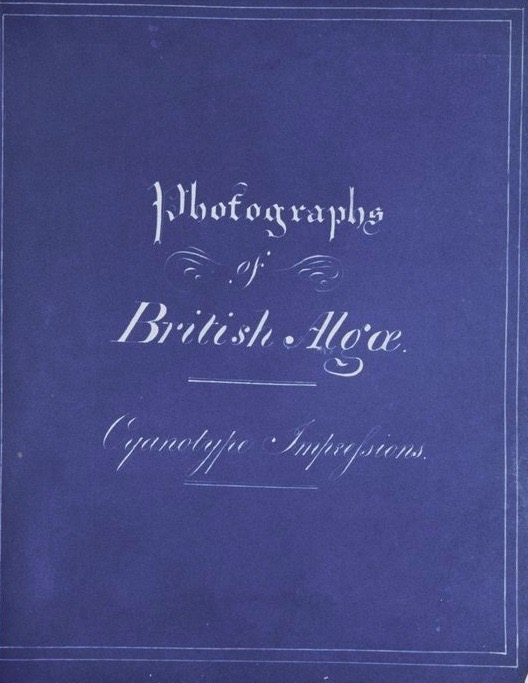
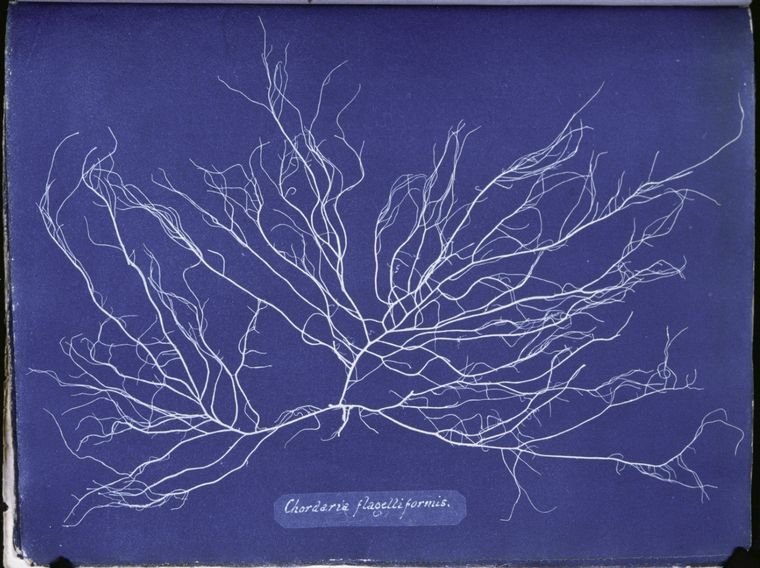
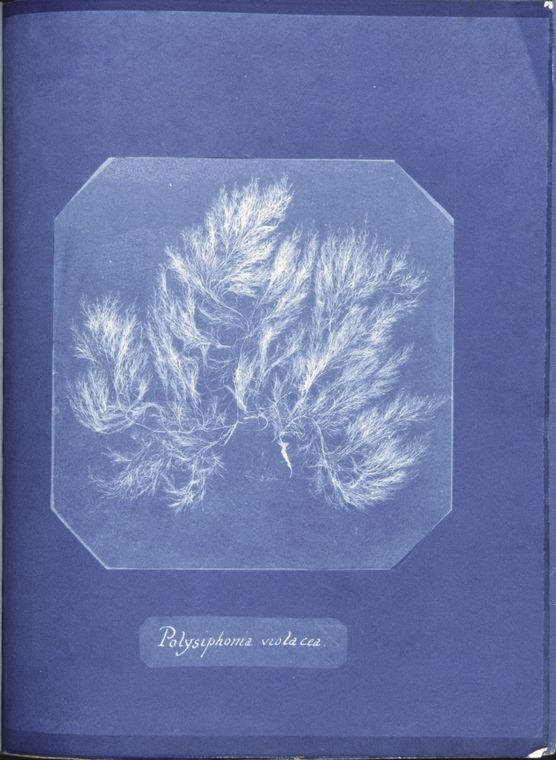
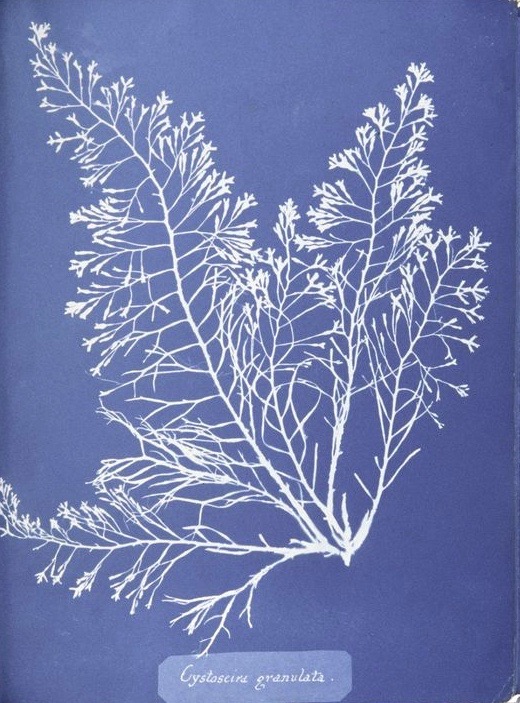
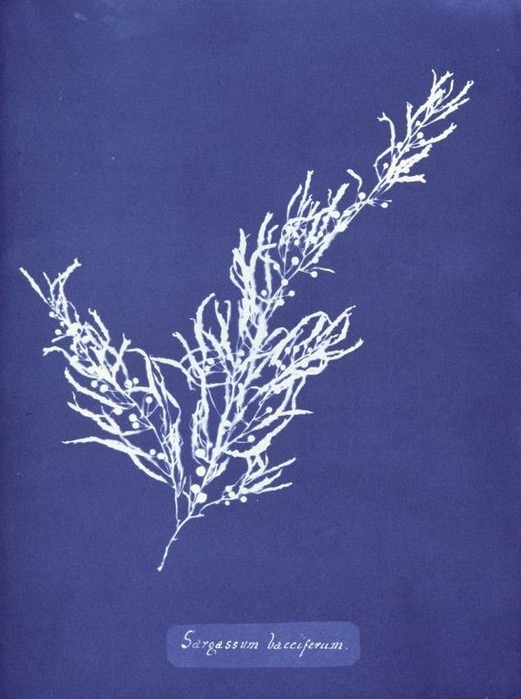
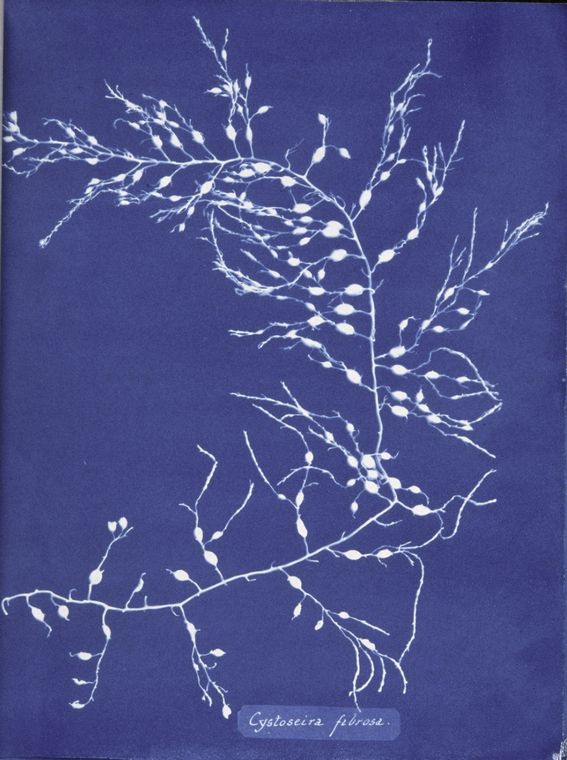
Eng­lish botanist Anna Atkins—who is not only cred­it­ed as the first per­son to make a book illus­trat­ed with pho­tographs, but as the first woman to make a photograph—created her hand­made Pho­tographs of British Algae: Cyan­otype Impres­sions in 1843. And though the sub­ject may be less than thrilling, the images them­selves are aus­tere­ly beau­ti­ful.

Atkins 3

The sub­ti­tle of the book refers to the process Atkins used to make the images, a tech­nique devel­oped by Sir John Her­schel. “Ear­ly pho­tog­ra­phers,” writes Phil Edwards at Vox, “couldn’t eas­i­ly devel­op their pic­tures.” The tech­niques avail­able proved expen­sive, dan­ger­ous, and unsta­ble. “Her­schel came up with a solu­tion,” Edwards tells us, “using an iron pig­ment called ‘Pruss­ian Blue,’ he laid objects of pho­to­graph­ic neg­a­tives onto chem­i­cal­ly treat­ed paper, exposed them to sun­light for around 15 min­utes, and then washed the paper. The remain­ing image revealed pale blue objects on a dark blue back­ground.” The process, Jonathan Gibbs informs us at The Inde­pen­dent, “had pre­vi­ous­ly been used to repro­duce archi­tec­tur­al draw­ings and designs,” and is, in fact, the ori­gin of the word “blue­print.”

Atkins-4 (1)

Though “a capa­ble artist,” Edwards writes, Atkins real­ized that Herschel’s cyan­otypes “were a bet­ter way to cap­ture the intri­ca­cies of plant life and avoid the tedium—and error—involved with draw­ing.” British Algae, the BBC tells us, was Atkins’ “most valu­able work” as a nat­u­ral­ist. As the daugh­ter of a sci­en­tist and Roy­al Soci­ety Fel­low, Atkins had fre­quent con­tact with the most well-respect­ed sci­en­tists of the day, includ­ing Her­shel and pho­to­graph­ic pio­neer William Hen­ry Fox Tal­bot. Her “first con­tri­bu­tion to sci­ence was her engrav­ings of shells, used to illus­trate her father’s trans­la­tion of Lamarck’s Gen­era of Shells” in 1823. After­ward, she became inter­est­ed in botany, and algae in par­tic­u­lar, and in the emerg­ing tech­nol­o­gy of pho­tog­ra­phy as a means of pre­serv­ing her obser­va­tions.

Atkins-5 (1)

Pho­tographs of British Algae was cir­cu­lat­ed pri­vate­ly, and Atkins “stopped pro­duc­ing it short­ly after her father died, though she con­tin­ued to make oth­er cyan­otype vol­umes, such as Cyan­otypes of British and For­eign Flow­er­ing Plants and Ferns in 1854. The first com­mer­cial­ly pub­lished book to use the cyan­otype tech­nique was Fox Tal­bot’s The Pen­cil of Nature in 1844. Yet, though Atkins may not have been well-known out­side her small cir­cle, nor her pub­li­ca­tion “regard­ed as a sem­i­nal work in botany,” she has received posthu­mous acclaim, includ­ing per­haps the ulti­mate mark of fame, a Google Doo­dle, in March of 2015 on her 216th birth­day. You can view and down­load in high res­o­lu­tion all of Atkins’ pio­neer­ing pho­to­graph­ic book at the New York Pub­lic Library’s exten­sive online archive — the same archive we fea­tured here yes­ter­day.

Atkins 6

Relat­ed Con­tent:

The New York Pub­lic Library Lets You Down­load 180,000 Images in High Res­o­lu­tion: His­toric Pho­tographs, Maps, Let­ters & More

See the First Known Pho­to­graph Ever Tak­en (1826)

Old Book Illus­tra­tions: Free Archive Lets You Down­load Beau­ti­ful Images From the Gold­en Age of Book Illus­tra­tion

Josh Jones is a writer and musi­cian based in Durham, NC. Fol­low him at @jdmagness

How a Virus Invades Your Body: An Eye-Popping, Animated Look

It’s get­ting close to that time of the year again, when the flu starts to wreak hav­oc. And so, with the help of NPR’s Robert Krul­wich and med­ical ani­ma­tor David Bolin­sky, we’re tak­ing an ani­mat­ed look at what actu­al­ly hap­pens when a virus invades your body and tricks a sin­gle cell into mak­ing a mil­lion more virus­es, and how your immune sys­tem even­tu­al­ly deals with the whole mess. It’s a nice demys­ti­fi­ca­tion of phe­nom­e­na that affects our every­day lives. If you feel inclined to get a flu shot after watch­ing this clip, I can’t say that I blame you.

Fol­low us on Face­book and Twit­ter and share intel­li­gent media with your friends. Or bet­ter yet, sign up for our dai­ly email and get a dai­ly dose of Open Cul­ture in your inbox. And if you want to make sure that our posts def­i­nite­ly appear in your Face­book news­feed, just fol­low these sim­ple steps.

Relat­ed Con­tent:

Free Online Biol­o­gy Cours­es

What Makes Us Tick? Free Stan­ford Biol­o­gy Course by Robert Sapol­sky Offers Answers

Carl Sagan Explains Evo­lu­tion in an Eight-Minute Ani­ma­tion

by | Permalink | Make a Comment ( 1 ) |

A Vintage Infographic of the Human Brain: The Wonders Within Your Head (1938)

wonders within your head

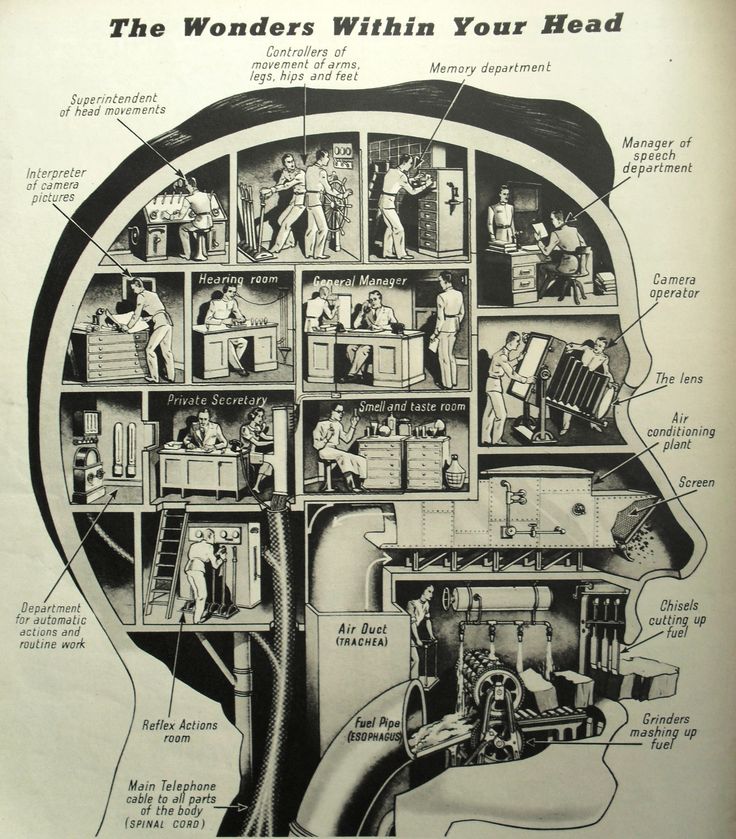
Click here to view the info­graph­ic in a larg­er for­mat.

From the Decem­ber 6, 1938 issue of LOOK mag­a­zine comes this vin­tage “info­graph­ic” show­ing “The Won­ders With­in Your Head.” It takes the human brain/head and presents it as a series of rooms, each car­ry­ing out a dif­fer­ent func­tion. Drawn a lit­tle more than a decade after Calvin Coolidge famous­ly declared “The busi­ness of Amer­i­ca is busi­ness,” it’s not sur­pris­ing that the cog­ni­tive func­tions are depict­ed in cor­po­rate or indus­tri­al terms.

Besides for this visu­al­iza­tion, the same edi­tion of LOOK fea­tured arti­cles on Jean Har­low, Joan Craw­ford, Pres­i­dent Roo­sevelt, and the Tragedy of the Euro­pean Jews. Kristall­nacht, or the “Night of Bro­ken Glass,” had tak­en place a month before in Nazi Ger­many — anoth­er sign that the world was about to become a very, very dark place.

Fol­low us on Face­book, Twit­ter, Google Plus and LinkedIn and share intel­li­gent media with your friends. And if you want to make sure that our posts def­i­nite­ly appear in your Face­book news­feed, just fol­low these sim­ple steps.

Relat­ed Con­tent:

The Tree of Lan­guages Illus­trat­ed in a Big, Beau­ti­ful Info­graph­ic

Down­load 78 Free Online His­to­ry Cours­es: From Ancient Greece to The Mod­ern World

4000 Years of His­to­ry Dis­played in a 5‑Foot-Long “His­tom­ap” (Ear­ly Info­graph­ic) From 1931

Free Online Biol­o­gy Cours­es

Sarcasm Can Boost Creativity According to Research From Harvard & Columbia Business Schools

bill murray sarcasm

Under­ly­ing image by Gage Skid­more.

Echo­ing Bill Mur­ray, the Urban Dic­tio­nary defines sar­casm as “your body’s nat­ur­al defense against stu­pid,” not­ing that it’s “the high­est form of wit” in coun­tries like the UK, but the low­est in Amer­i­ca, owing to the population’s inabil­i­ty to detect whether or not one is being sar­cas­tic.

Exam­ple:
Idiot: I beat up a ten-year-old today.

You: (with a hint of sar­casm) That’s impres­sive!

Idiot: I know, right!

A new study by Francesca GinoAdam Galin­sky, and Li Huang, of Har­vard, Colum­bia and INSEAD busi­ness schools, respec­tive­ly, sug­gests that the use of sar­casm pro­motes cre­ativ­i­ty for those on the giv­ing and receiv­ing end of sar­cas­tic exchanges.

Gino told the Har­vard Gazette, “To cre­ate or decode sar­casm, both the expressers and recip­i­ents of sar­casm need to over­come the con­tra­dic­tion (i.e., psy­cho­log­i­cal dis­tance) between the lit­er­al and actu­al mean­ings of the sar­cas­tic expres­sions. This is a process that acti­vates and is facil­i­tat­ed by abstrac­tion, which in turn pro­motes cre­ative think­ing.”

Galin­sky added, the givers and receivers in sar­cas­tic exchanges “sub­se­quent­ly per­formed bet­ter on cre­ativ­i­ty tasks than those in the sin­cere con­di­tions or the con­trol con­di­tion. This sug­gests that sar­casm has the poten­tial to cat­alyze cre­ativ­i­ty in every­one.” “That being said, although not the focus of our research, it is pos­si­ble that nat­u­ral­ly cre­ative peo­ple are also more like­ly to use sar­casm, mak­ing it an out­come instead of [a] cause in this rela­tion­ship.”

The evi­dence cer­tain­ly seems sol­id in the hands of mas­ter prac­ti­tion­ers such as Louis CK, Sarah Sil­ver­man, and the staff of The Onion, not to men­tion new­com­er Shirley Jester, an ani­mat­ed Sar­cas­tic Foul-Mouthed Teenage Come­di­an Girl from the Renais­sance.

Things get a bit murki­er when ama­teurs attempt to adopt their idols’ caus­tic pos­es. Tone and intent are eas­i­ly mis­con­strued. Feel­ings get hurt.

Is sar­casm best left to the pro­fes­sion­als?

Not nec­es­sar­i­ly. Gino and Galinksy found that the degree of trust between express­er and recip­i­ent deter­mines how sar­casm is received. In oth­er words, know your audi­ence.

Even at its mean­est, sarcasm—from the Greek and Latin for “to tear flesh”—involves abstrac­tion, a hall­mark of cre­ative think­ing.

Mean­while, you can review Clin­i­cal Psy­chol­o­gist Chris Ful­ton’s “Try that again method,” below, one of many strate­gies for han­dling “sar­cas­tic and sassy teenagers.” Cre­ativ­i­ty be squelched.

Cue a mil­lion teenage eye rolls, and check out Gino and Galinksy’s find­ings here.

via the Har­vard Gazette

Relat­ed Con­tent:

John Cleese’s Phi­los­o­phy of Cre­ativ­i­ty: Cre­at­ing Oases for Child­like Play

The Psy­chol­o­gy of Messi­ness & Cre­ativ­i­ty: Research Shows How a Messy Desk and Cre­ative Work Go Hand in Hand

The Most “Intel­lec­tu­al Jokes”: Our Favorite Open Cul­ture Read­er Sub­mis­sions

« Go BackMore in this category... »
Quantcast