Earlier this month, The New York Times Book Review launched an online Reading Room that lets readers tackle great books with the help of “an all-star cast of panelists from various backgrounds—authors, reviewers, scholars and journalists.” The first reading starts with Leo Tolstoy’s 1200+ page epic, War and Peace (1865–69), and it’s led by book review editor Sam Tanenhaus and a supporting crew consisting of Bill Keller (executive editor of The Times), Stephen Kotkin (a Russian history professor at Princeton), Francine Prose (author of Reading Like a Writer), and Liesl Schillinger (a regular reviewer for the Book Review).
At the outset, Sam Tanenhaus’ introduction leaves the impression that the “Reading Room” will offer a fairly structured reading of Tolstoy’s text. But that’s not exactly how things turn out. Often quite fragmentary, the conversation mostly operates outside the text itself and veers in many different, though often intriguing, directions. At one moment, Francine Prose tells us that Tolstoy’s account of the Napoleonic wars reminds her of today’s war in Iraq. For Bill Keller, it evokes the waning days of the Soviet Union. And, for Liesl Schillinger, it’s her youth in 1970s America. (You can get a feel for the flow and focus of the discussion here.) Ultimately, what you think of this new project depends on what you want to get out of the experience. If it’s a more structured reading (as we were hoping), then you may not be completely engaged. But if it’s a more free-flowing conversation that moves in and around great works, then you’ll want to join the conversation. And, yes, there’s a role there for the everyday reader too. Take a look at the Reading Room and let us know what you think.
It’s been an unspeakably bad week throughout much of fire-ravaged Southern California. As of Thursday, the toll looked liked this: 500,000 acres burned; 1,800 homes destroyed; 57 people injured and at least six killed. As all of this transpires, a new book has come out that gives you an inside look at firefighters who make their living battling natural wildfires. On the Fireline: Living and Dying with Wildland Firefighters is written by Matthew Desmond, who spent four years tackling these blazes. And, in this lengthy free excerpt you get graphically exposed to the risks and losses that they experience professionally and personally. It certainly makes you feel for the firefighters on the frontlines this week, and we wish them and our fellow Californians the best.
The National Book Critics Circle has a blog and they’ve asked some of the country’s best literary critics to list the “five books a critic believes reviewers should have in their libraries.” The series provides a new list every week, and so far the choices are interesting not just for the books picked (and some of the overlaps in picks), but also for the explanations that the critics offer for their choices. Here’s John Updike on Eric Auerbach’s Mimesis:
a stunningly large-minded survey from Homer and the Old Testament up to Woolf and Joyce. Quoting a lengthy paragraph or two from each classic, Auerbach gives us an essential history of, as his subtitle has it, “the Representation of Reality in Western Literature.”
After we mentioned Book Mooch last week, one of our faithful readers alerted us to another site — PaperBackSwap.com. PaperBackSwap is reportedly easier to use than Book Mooch, and the actual process of exchanging books runs more smoothly. Meanwhile, despite the site’s name, you can swap both paperback and hardback books there. In case you missed our last piece, the idea of these sites is simple. You can trade your old books for ones you haven’t read. The only cost is the postage for shipping. Not a bad deal. Thanks Maggie for the tip.
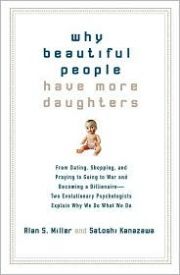
Human behavior is notoriously complex, and there’s been no shortage of psychologists and psychological theories venturing to explain what makes us tick. Why do we get irrationally jealous? Or have midlife crises? Why do we overeat to our own detriment? Why do we find ourselves often strongly attracted to certain physical traits? Numerous theories abound, but few are perhaps as novel and thought-provoking as those suggested by a new book with a long title: Why Beautiful People Have More Daughters: From Dating, Shopping, and Praying to Going to War and Becoming a Billionaire — Two Evolutionary Psychologists Explain Why We Do What We Do. Written by Satoshi Kanazawa and Alan S. Miller, the book finds answers not in ids, egos and superegos, but in the evolution of the human brain. Written in snappy prose, their argument is essentially that our behavior — our wants, desires and impulses — are overwhelmingly shaped by the way our brain evolved 10,000+ years ago, and one consequence is that our ancestral brain is often responding to a world long ago disappeared, not the modern, fast-changing world in which we live. This disconnect can lead us to be out of sync, to act in ways that seem inexplicable or counter-productive, even to ourselves. These arguments belong to new field called “evolutionary psychology,” and we were fortunate to interview Satoshi Kanazawa (London School of Economics) and delve further into evolutionary psychology and the (sometimes dispiriting) issues it raises. Have a read, check out the book, and also see the related piece that the Freakonomics folks recently did on this book. Please note that the full interview continues after the jump.
DC: In a nutshell, what is “evolutionary psychology”? (e.g. when did the field emerge? what are the basic tenets/principles of this school of thinking?)
SK: Evolutionary psychology is the application of evolutionary biology to human cognition and behavior. For more than a century, zoologists have successfully used the unifying principles of evolution to explain the body and behavior of all animal species in nature, except for humans. Scientists held a special place for humans and made an exception for them.
In 1992, a group of psychologists and anthropologists simply asked, “Why not? Why can’t we use the principles of evolution to explain human behavior as well?” And the new science of evolutionary psychology was born. It is premised on two grand generalizations. First, all the laws of evolution by natural and sexual selection hold for humans as much as they do for all species in nature. Second, the contents of the human brain have been shaped by the forces of evolution just as much as every other part of human body. In other words, humans are animals, and as such they have been shaped by evolutionary forces just as other animals have been.
DC: Evolutionary psychology portrays us as having impulses that took form long ago, in a very pre-modern context (say, 10,000 years ago), and now these impulses are sometimes rather ill-adapted to our contemporary world. For example, in a food-scarce environment, we became programmed to eat whenever we can; now, with food abounding in many parts of the world, this impulse creates the conditions for an obesity epidemic. Given that our world will likely continue changing at a rapid pace, are we doomed to have our impulses constantly playing catch up with our environment, and does that potentially doom us as a species?
SK: In fact, we’re not playing catch up; we’re stuck. For any evolutionary change to take place, the environment has to remain more or less constant for many generations, so that evolution can select the traits that are adaptive and eliminate those that are not. When the environment undergoes rapid change within the space of a generation or two, as it has been for the last couple of millennia, if not more, then evolution can’t happen because nature can’t determine which traits to select and which to eliminate. So they remain at a standstill. Our brain (and the rest of our body) are essentially frozen in time — stuck in the Stone Age.
One example of this is that when we watch a scary movie, we get scared, and when we watch porn we get turned on. We cry when someone dies in a movie. Our brain cannot tell the difference between what’s simulated and what’s real, because this distinction didn’t exist in the Stone Age.
DC: One conclusion from your book is that we’re something of a prisoner to our hard-wiring. Yes, there is some room for us to maneuver. But, in the end, our evolved nature takes over. If all of this holds true, is there room in our world for utopian (or even mildly optimistic) political movements that look to refashion how humans behave and interact with one another? Or does this science suggest that Edmund Burke was on to something?
SK: Steven Pinker, in his 2002 book The Blank Slate, makes a very convincing argument that all Utopian visions, whether they be motivated by left-wing ideology or right-wing ideology, are doomed to failure, because they all assume that human nature is malleable. Evolutionary psychologists have discovered that the human mind is not a blank slate, a tabula rasa; humans have innate biological nature as much as any other species does, and it is not malleable. Paul H. Rubin’s 2002 book Darwinian Politics: The Evolutionary Origin of Freedom gives an evolutionary psychological account of why Burke and classical liberals (who are today called libertarians) may have been right.
As a scientist, I am not interested in Utopian visions (or any other visions for society). But it seems to me that, if you want to change the world successfully, you cannot start from false premises. Any such attempt is bound to fail. If you build a house on top of a lake on the assumption that water is solid, it will inevitably collapse and sink to the bottom of the lake, but if you recognize the fluid nature of water, you can build a successful houseboat. A houseboat may not be as good as a genuine house built on ground, but it’s better than a collapsed house on the bottom of the lake. A vision for society based on an evolutionary psychological understanding of human nature at least has a fighting chance, which is a much better than any Utopian vision based on the assumption that human nature is infinitely malleable.
This is a great concept & service for our readers. BookMooch is an online book swapping web site that has 45,000 members and 750,000 books in its inventory. What goes on here is fairly straightforward. Users can give away books they’ve read in exchange for books they want to read — all for no money, other than the shipping costs. That makes it easy to support your reading habit, and it saves a few trees. The inner-workings of the book swapping are explained here and here. Have a look.
In yesterday’s New York Times, Stephen Colbert took over Maureen Dowd’s regular opinion column and made a funny case for why he could be the next US president. Read it here. Also listen to his interview last week on NPR’s Fresh Air (iTunes — Feed — Web Site). These appearances all figure into a media blitz designed to boost sales of Colbert’s newly-released book I Am America (And So Can You!), which is already #4 on Amazon’s bestseller list. Not bad.
Since the release of An Inconvenient Truth, Al Gore has had quite a run. He first won himself an Emmy, then an Oscar, and now the Nobel Peace Prize. Although the film represents Gore’s most well known work on the environment, it’s hardly where his environmental efforts began. His campaign goes back to the late 1970s, when he held congressional hearings on climate change and greenhouse gases. And it moves through the 1980s and then the 1990s, when he occupied the Vice Presidency. In 1992, while other political leaders quibbled over the pros and cons of NAFTA, Gore put the environment on the national agenda, really for the first time, when he published Earth in the Balance: Ecology and the Human Spirit. (The Bush administration then took it off the agenda, regrettably.) Gore’s book became a national bestseller, and it has since gone through several new editions, the latest having been issued just last year. You could buy the book, but the good news is that Google serves up large portions of the book online for free. It’s at a price you can’t beat, and it goes easy on the pulp. Have a good look. And also see below Gore’s comments upon learning about the Nobel Prize.
We're hoping to rely on loyal readers, rather than erratic ads. Please click the Donate button and support Open Culture. You can use Paypal, Venmo, Patreon, even Crypto! We thank you!
Open Culture scours the web for the best educational media. We find the free courses and audio books you need, the language lessons & educational videos you want, and plenty of enlightenment in between.
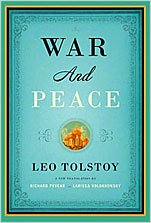 Earlier this month, The New York Times Book Review launched an online Reading Room that lets readers tackle great books with the help of “an all-star cast of panelists from various backgrounds—authors, reviewers, scholars and journalists.” The first reading starts with Leo Tolstoy’s 1200+ page epic, War and Peace (1865–69), and it’s led by book review editor Sam Tanenhaus and a supporting crew consisting of Bill Keller (executive editor of The Times), Stephen Kotkin (a Russian history professor at Princeton), Francine Prose (author of Reading Like a Writer), and Liesl Schillinger (a regular reviewer for the Book Review).