If you would like to support the mission of Open Culture, consider making a donation to our site. It’s hard to rely 100% on ads, and your contributions will help us continue providing the best free cultural and educational materials to learners everywhere. You can contribute through PayPal, Patreon, and Venmo (@openculture). Thanks!
The 16th century was a thrilling time for books, at least for those who could afford them: building a respectable personal library (even if it didn’t include novelties like the books that open six different ways and the wheels that made it possible to rotate through many open books at once) took serious resources. Hernando Colón, the illegitimate son of Christopher Columbus, seems to have commanded such resources: as The Guardian’s Alison Flood writes, he “made it his life’s work to create the biggest library the world had ever known in the early part of the 16th century. Running to around 15,000 volumes, the library was put together during Colón’s extensive travels” and ultimately contained everything from the works of Plato to posters pulled from tavern walls.
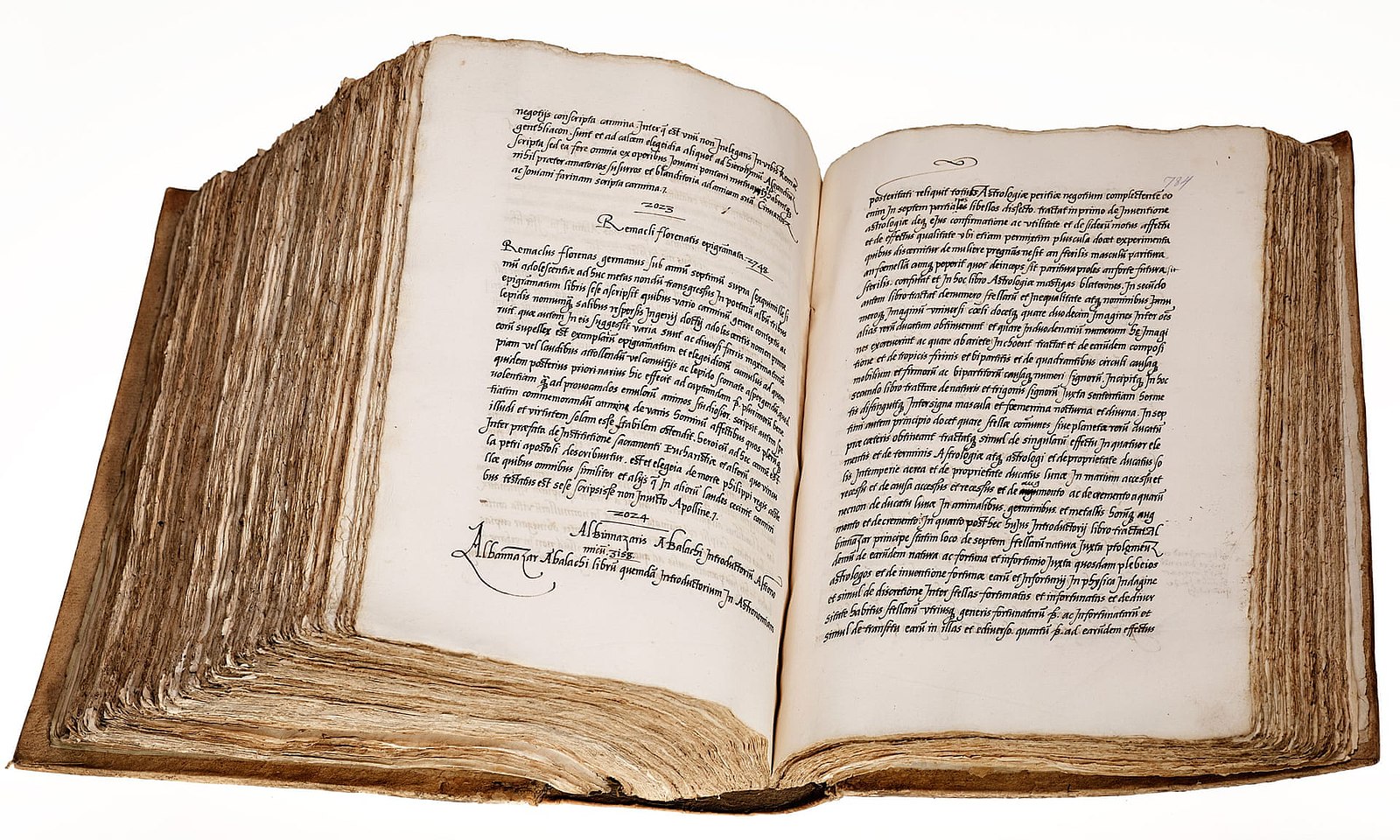
Alas, this ambitious library, meant to encompass all languages, cultures, and forms of writing, is now mostly lost. “After Colón’s death in 1539, his massive collection ultimately ended up in the Seville Cathedral, where neglect, sticky-fingered bibliophiles, and the occasional flood reduced the library to just 4,000 volumes over the centuries,” writes Smithsonian.com’s Jason Daley. But we now know what it contained, thanks to the discovery just this year of the Libro de los Epítomes, or “Book of Epitomes,” the library’s foot-thick catalog that not only lists the volumes it contained but describes them as well. “Colón employed a team of writers to read every book in the library and distill each into a little summary in Libro de los Epítomes,” Flood writes, “ranging from a couple of lines long for very short texts to about 30 pages for the complete works of Plato.”
The Libro de los Epítomes turned up earlier this year in another collection, that of an Icelandic scholar by the name of Árni Magnússon who left his books to the University of Copenhagen when he died in 1730. Fewer than 30 of the 3,000 texts in Magnússon’s mostly Icelandic and other Scandinavian-language collection (detailed images of which you can see at Typeroom) are written in Spanish, which perhaps explains why the Libro de los Epítomes went overlooked for more than 350 years. Rediscovered, it now offers a wealth of information on thousands and thousands of books from five-centuries ago, many of which have long since passed out of existence.
Colón’s uniquely exhaustive library catalog opens a window onto not just what 16th-century Europeans were reading, but how they were reading — and how the very nature of reading was evolving. “This was someone who was, in a way, changing the model of what knowledge is,” Daley quotes Colón’s biographer Edward Wilson-Lee as observing. “Instead of saying ‘knowledge is august, authoritative things by some venerable old Roman and Greek people,’ he’s doing it inductively: taking everything that everyone knows and distilling it upwards from there.” The comparisons to “big data and Wikipedia and crowdsourced information” almost make themselves, as do the references to a certain 20th-century Spanish-language writer with an interest in history, language, and knowledge as represented in books extant and otherwise. If the Libro de los Epítomes didn’t exist, Jorge Luis Borges would have had to invent it.
Based in Seoul, Colin Marshall writes and broadcasts on cities, language, and culture. His projects include the book The Stateless City: a Walk through 21st-Century Los Angeles and the video series The City in Cinema. Follow him on Twitter at @colinmarshall or on Facebook.
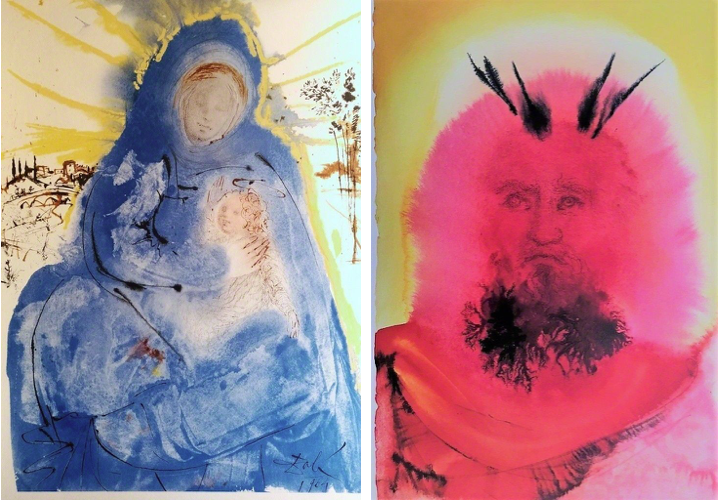
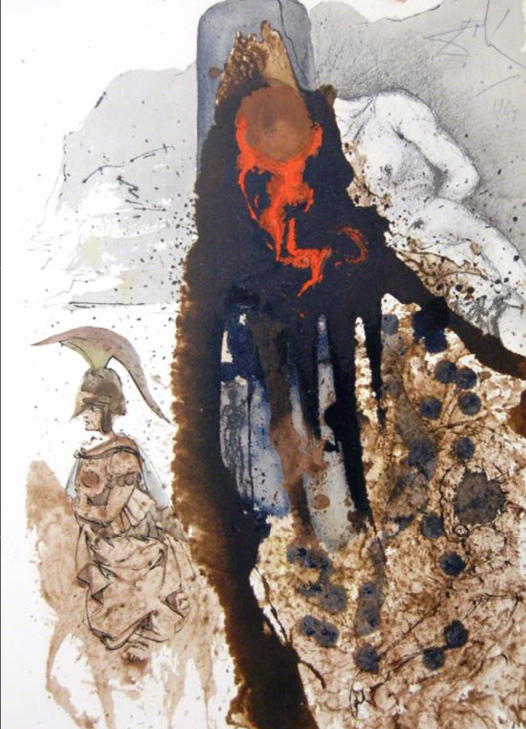
Some might have taken offense when Salvador Dalí began illustrating the Bible in 1963. The notorious Surrealist “went to jail for his artworks as a young man,” writes Jackson Arn writes at Artsy, but he “lived long enough to lend his legendary panache to Hollywood movies and Alka-Seltzer commercials.” Along the way, he gained a reputation for having a rather vicious character. George Orwell, reviewing Dalí’s autobiography, described him as “disgusting” for his fanatical harassment and abuse of other people. But, Orwell went on, “Dalí is a draughtsman of very exceptional gifts. He is also, to judge by the minuteness and the sureness of his drawings, a very hard worker…. He has fifty times more talent than most of the people who would denounce his morals and jeer at his paintings.”
Dalí hardly needed the defense of his morals or his paintings, nor might he have wanted it. That was the wrong sort of attention. But maybe he himself was surprised by a later career turn as an illustrator of respectable “Great Books”—including not only Judeo-Christian scripture, but also Don Quixote, Macbeth, The Divine Comedy, Alice in Wonderland, and much more.
The artist who seemed to have nothing but contempt for traditional canons approached these projects with the skill and professionalism Orwell couldn’t help but admire, as well as subtleties and understated tonal shifts we might not have associated with his work.
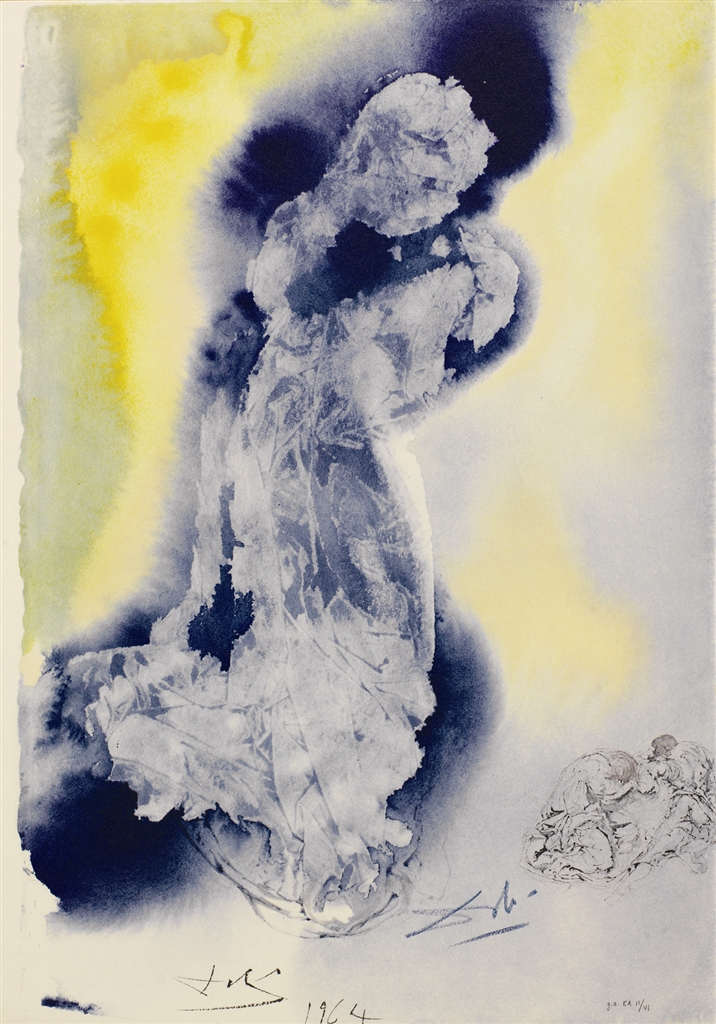
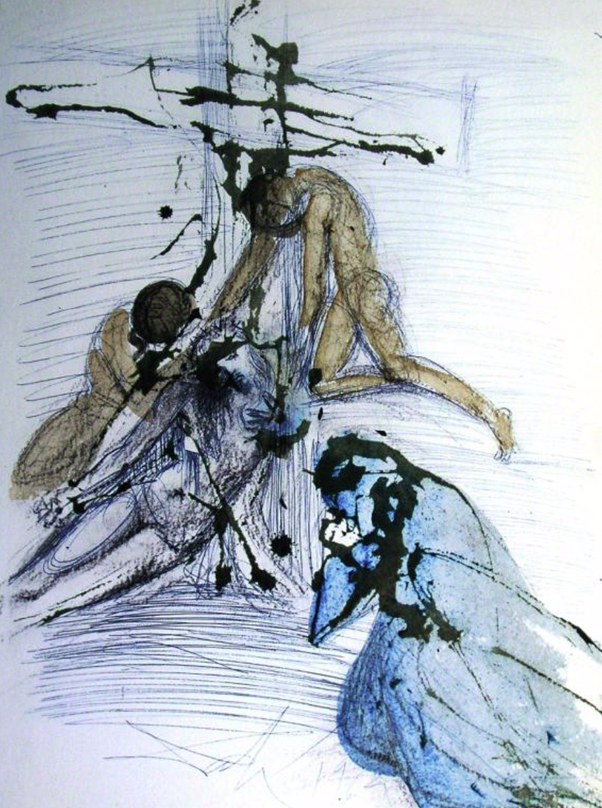
These are not his first religious subjects; he had always referenced big scenes and broad themes in Catholicism. But the illustrations represent a deeper engagement with the primary text—105 paintings in all, each based on select passages from the Latin Vulgate Bible. Published by Rizzoli in 1969, Biblia Sacra (The Sacred Bible) was commissioned by Dalí’s friend, Dr. Guiseppe Albareto, a devout Catholic whose intention “for this massive undertaking,” writes the Lockport St. Gallery, “was to bring the artist back to his religious roots.” Whatever effect that might have had, Dalí approaches the project with the same diligence evident in his other illustrations—he takes artistic risks while making a sincere effort to stay close to the spirit of the text. If he did this work for the money, he earned it.
Dalí’s illustrations “aren’t some kind of subversive prank,” writes Arn. “The luminous watercolors he produced for the Bible are, in the main, earnest renderings of their sacred subjects.” Perhaps the book illustrations have attracted so little attention from art historians because they lack the sensationalism and outrage Dalí aggressively cultivated in his public persona. Maybe these paintings, as German gallerist Holger Kempkens puts it, show “something of a spiritual side of Dalí.” Or maybe they just add to a bigger picture that shows what he could do with narratives not of his own making, but which he clearly respected and found challenging and stimulating. These qualities apply to many parts of the Bible as well as to great literary epics, including those based on the Bible, like John Milton’s Paradise Lost, which Dalí illustrated in a series of surprisingly spare, elegant etchings.
Too often those in power lump thousands of years of Middle Eastern religion and culture into monolithic entities to be feared or persecuted. But at least one government institution is doing exactly the opposite. For Nowruz, the Persian New Year, the Library of Congress has released a digital collection of its rare Persian-language manuscripts, an archive spanning 700 years. This free resource opens windows on diverse religious, national, linguistic, and cultural traditions, most, but not all, Islamic, yet all different from each other in complex and striking ways.
“We nowadays are programmed to think Persia equates with Iran, but when you look at this it is a multiregional collection,” says a Library specialist in its African and Middle Eastern Division, Hirad Dinavari. “Many contributed to it. Some were Indian, some were Turkic, Central Asian.” The “deep, cosmopolitan archive,” as Atlas Obscura’s Jonathan Carey writes, consists of a relatively small number of manuscripts—only 155. That may not seem particularly significant given the enormity of some other online collections.
But its quality and variety mark it as especially valuable, representative of much larger bodies of work in the arts, sciences, religion, and philosophy, dating back to the 13th century and spanning regions from India to Central Asia and the Caucuses, “in addition to the native Persian speaking lands of Iran, Afghanistan and Tajikistan,” the LoC notes.
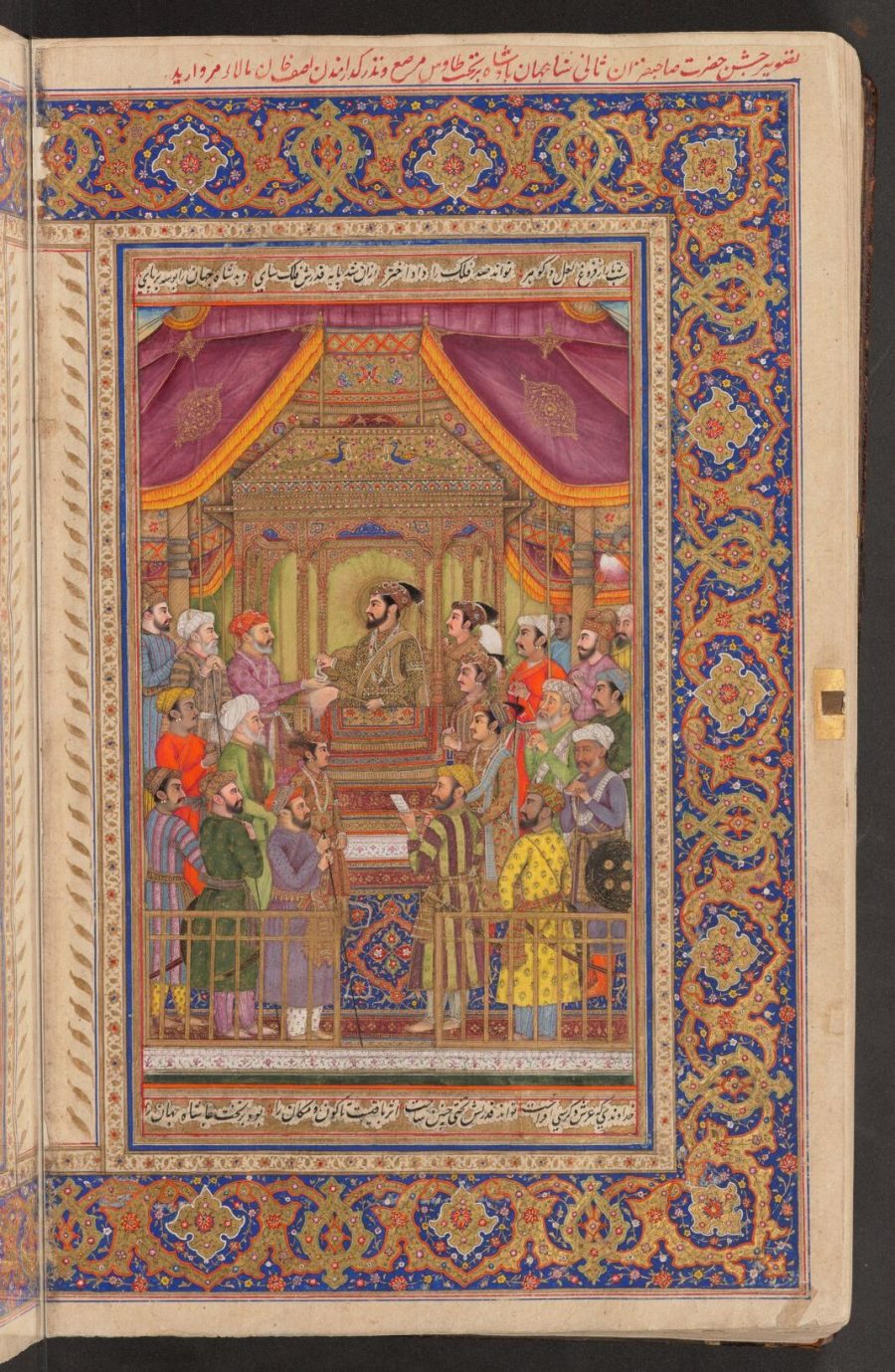
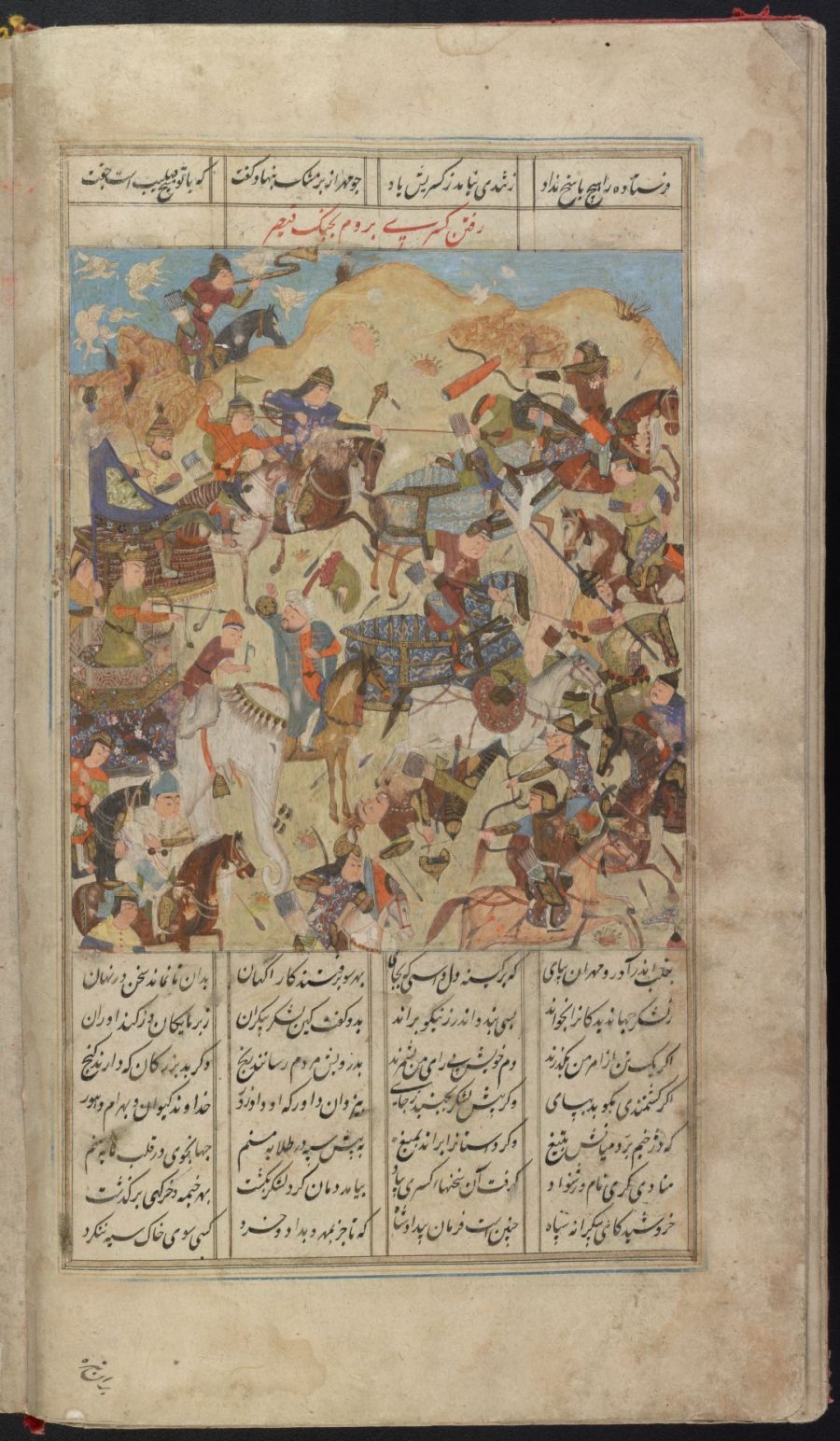
Prominently represented are works like the epic poem of pre-Islamic Persia, the Shahnamah, “likened to the Iliad or the Odyssey,” writes Carey, as well as “written accounts of the life of Shah Jahan, the 17th-century Mughal emperor who oversaw construction of the Taj Mahal.”
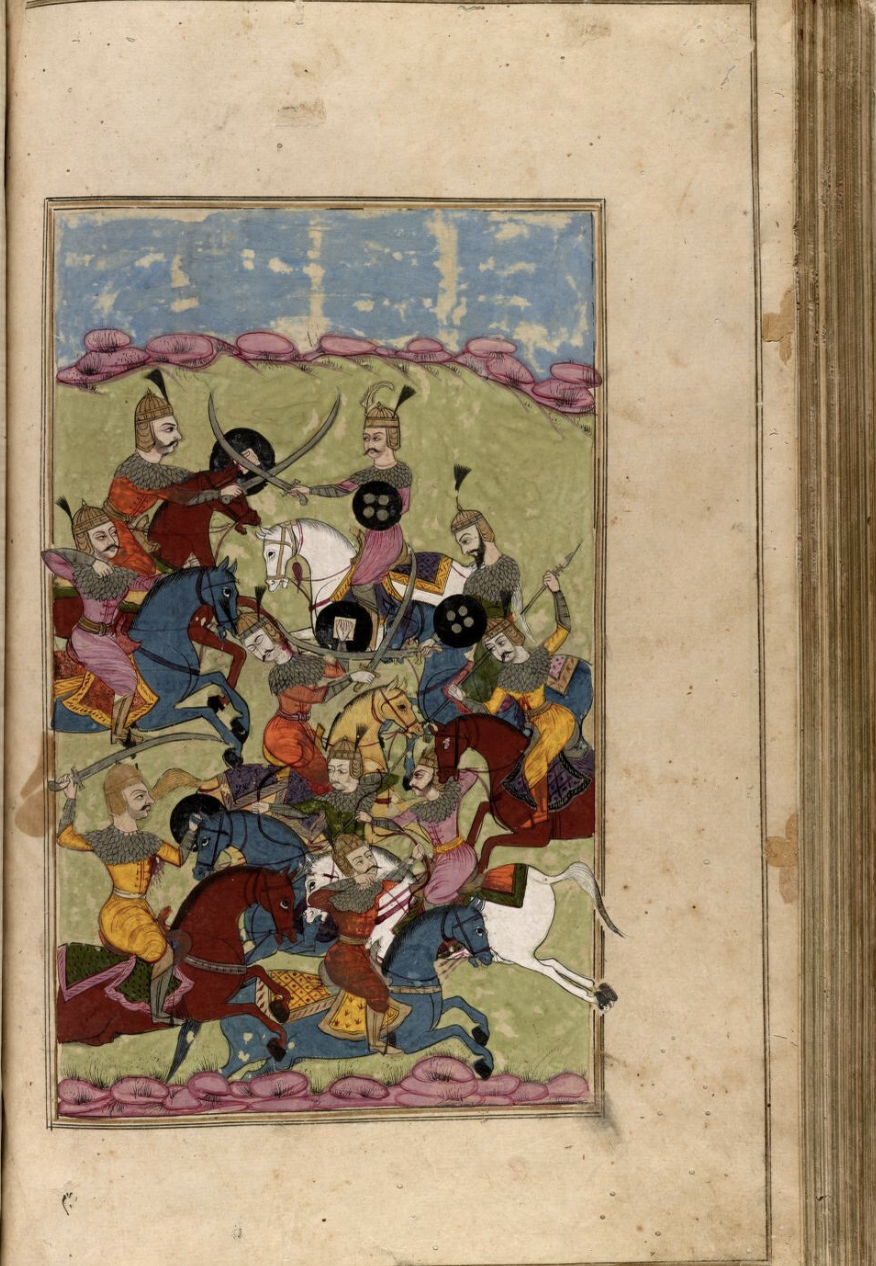
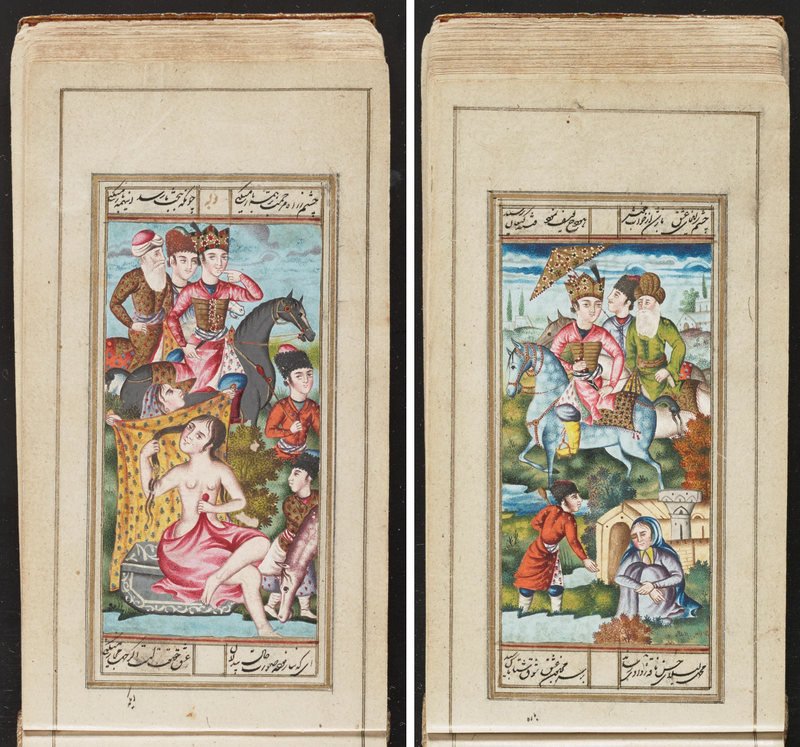
The Library points out the archive includes the “most beloved poems of the Persian poets Saadi, Hafez, Rumi and Jami, along with the works of the poet Nizami Ganjavi.” Some readers might be surprised at the pictorial opulence of so many Islamic texts, with their colorful, stylized battle scenes and groupings of human figures.
Islamic art is typically thought of as iconoclastic, but as in Christian Europe and North America, certain sects have fought others over this interpretation (including over depictions of the Prophet Mohammad). This is not to say that the iconoclasts deserve less attention. Much medieval and early modern Islamic art uses intricate patterns, designs, and calligraphy while scrupulously avoiding likenesses of humans and animals. It is deeply moving in its own way, rigorously detailed and passionately executed, full of mathematical and aesthetic ideas about shape, proportion, color, and line that have inspired artists around the world for centuries.
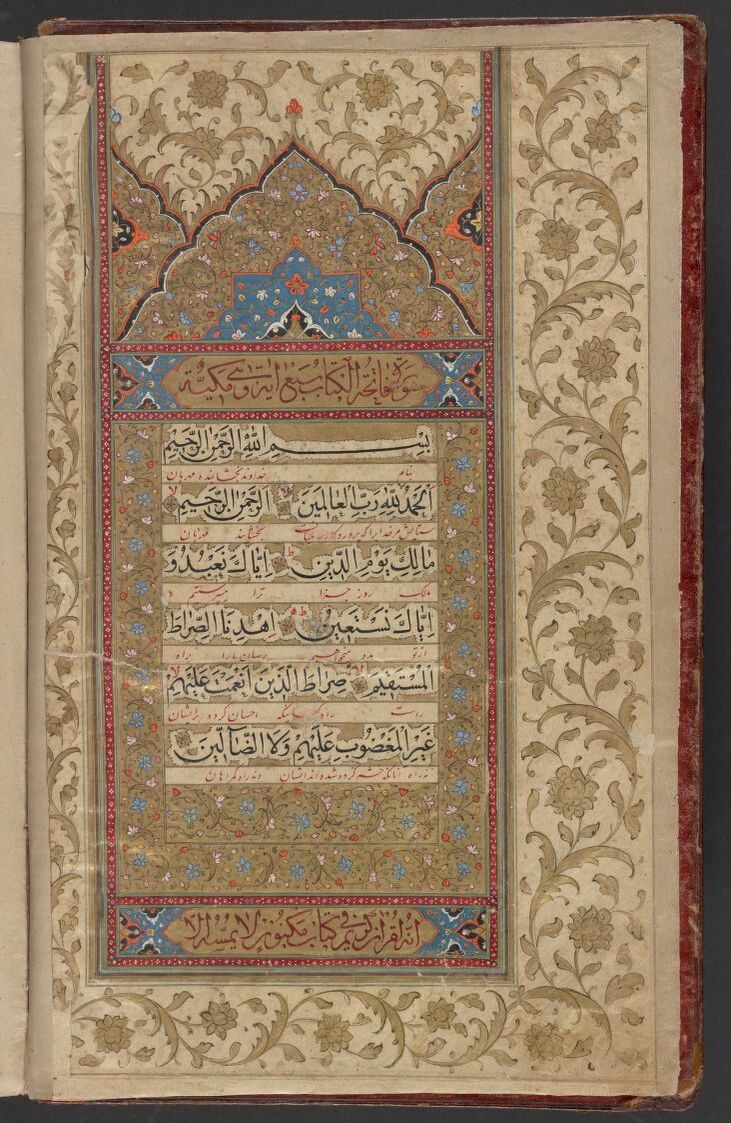
The page from a lavishly illuminated Qur’ān, above, circa 1708, offers such an example, written in Arabic with an interlinear Persian translation. There are religious texts from other faiths, like the Psalms in Hebrew with Persian translation, there are scientific texts and maps: the Rare Persian-Language Manuscript Collection covers a lot of historical ground, as has Persian language and culture “from the 10th century to the present,” the Library writes. Such a rich tradition deserves careful study and appreciation. Begin an education in Persian manuscript historyhere.
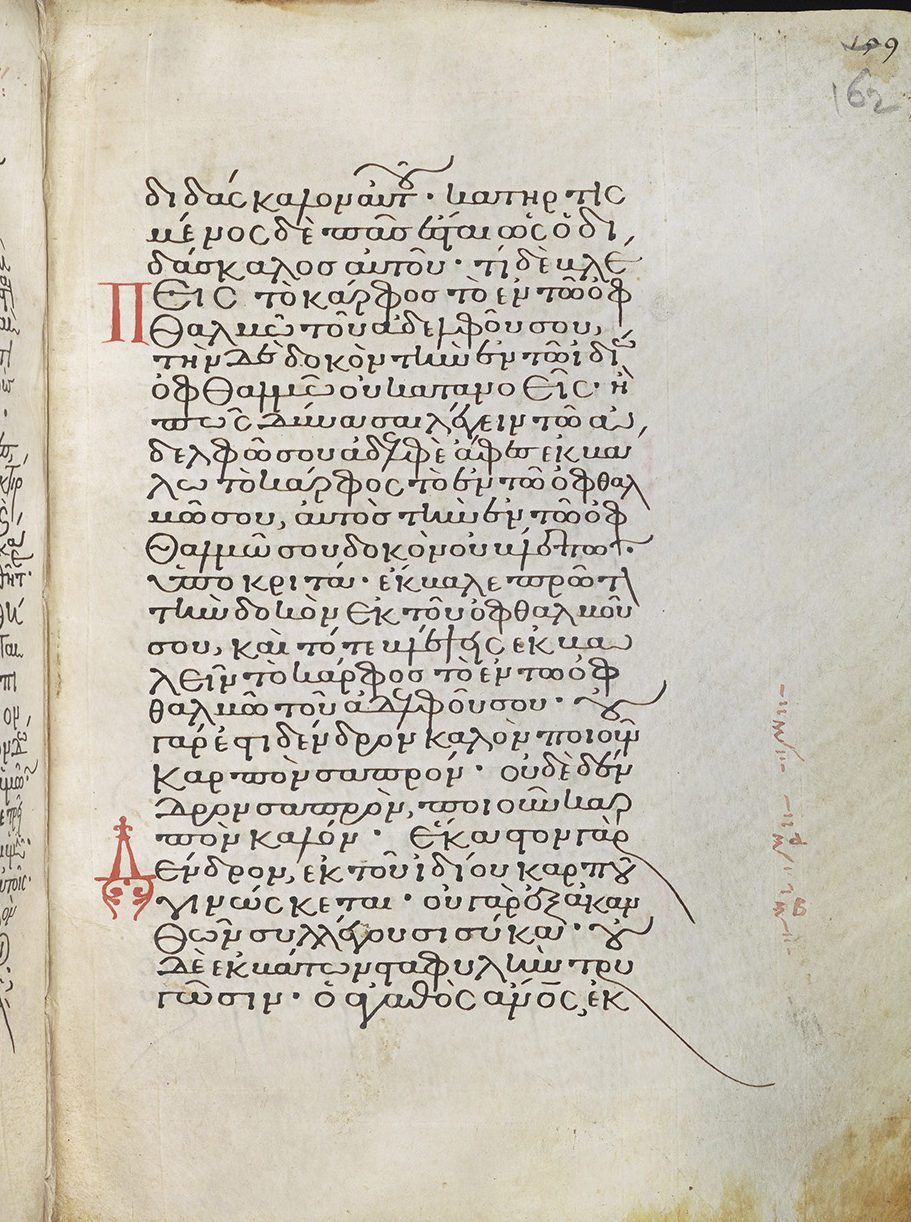
Western civilization may fast be going digital, but it still retains its roots in Ancient Greece. And so it makes a certain circle-closing sense to digitize the legacy left us by our Ancient Greek forebears and the medieval scholars who preserved it. Cambridge and Heidelberg, two of Europe’s oldest universities, this month announced their joint intention to embark upon just such a project. It will take two years and cost £1.6 million, reports the BBC, but it will digitize “more than 800 volumes featuring the works of Plato and Aristotle, among others.” As the announcement of the project puts it, the texts will then “join the works of Charles Darwin, Isaac Newton, Stephen Hawking and Alfred Lord Tennyson on the Cambridge Digital Library.”
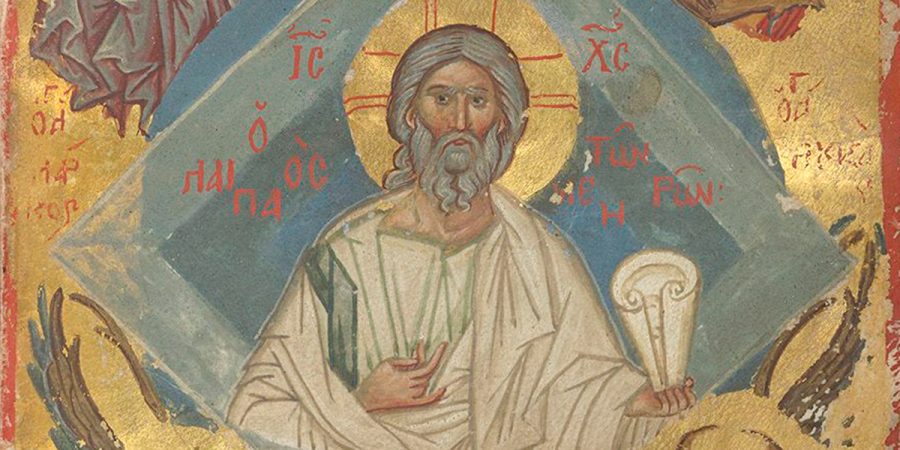
These medieval and early modern Greek manuscripts, which date more specifically “from the early Christian period to the early modern era (about 1500 — 1700 AD),” present their digitizers with certain challenges, not least the “fragile state” of their medieval binding.
But as Heidelberg University Library director Dr. Veit Probst says in the announcement, “Numerous discoveries await. We still lack detailed knowledge about the production and provenance of these books, about the identities and activities of their scribes, their artists and their owners – and have yet to uncover how they were studied and used, both during the medieval period and in the centuries beyond.” And from threads including “the annotations and marginalia in the original manuscripts” a “rich tapestry of Greek scholarship will be woven.”
This massive undertaking involves not just Cambridge and Heidelberg but the Vatican as well. Together Heidelberg University and the Vatican possess the entirety of the Bibliotheca Palatina, split between the libraries of the two institutions, and the digitization of the “mother of all medieval libraries” previously featured here on Open Culture, is a part of the project. This collected wealth of texts includes not just the work of Plato, Aristotle, and Homer as they were “copied and recopied throughout the medieval period,” in the words of Cambridge University Library Keeper of Rare Books and Early Manuscripts Dr. Suzanne Paul, but a great many other “multilingual, multicultural, multifarious works, that cross borders, disciplines and the centuries” as well. And with luck, their digital copies will stick around for centuries of Western civilization to come.
Based in Seoul, Colin Marshall writes and broadcasts on cities, language, and culture. His projects include the book The Stateless City: a Walk through 21st-Century Los Angeles and the video series The City in Cinema. Follow him on Twitter at @colinmarshall or on Facebook.
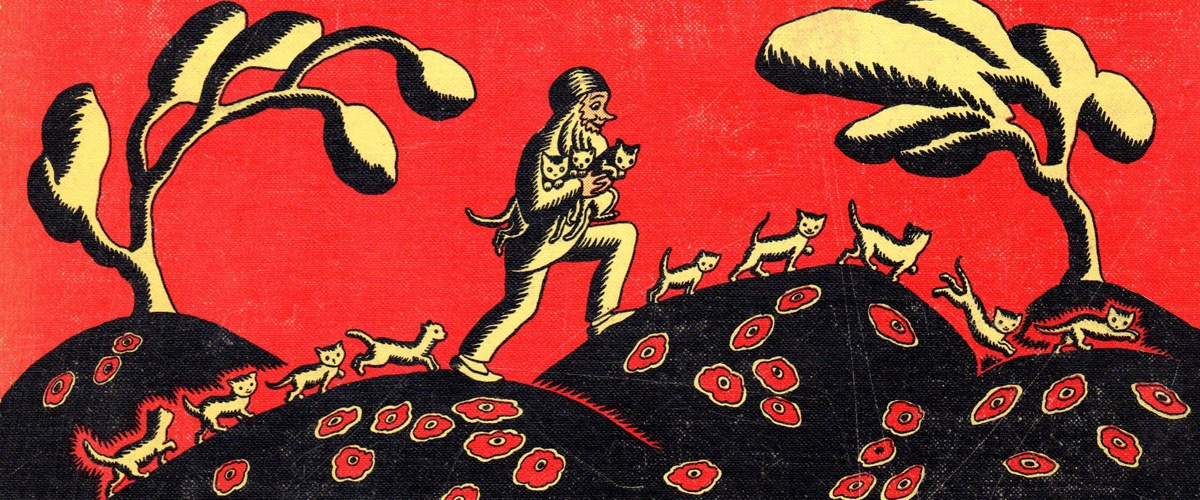
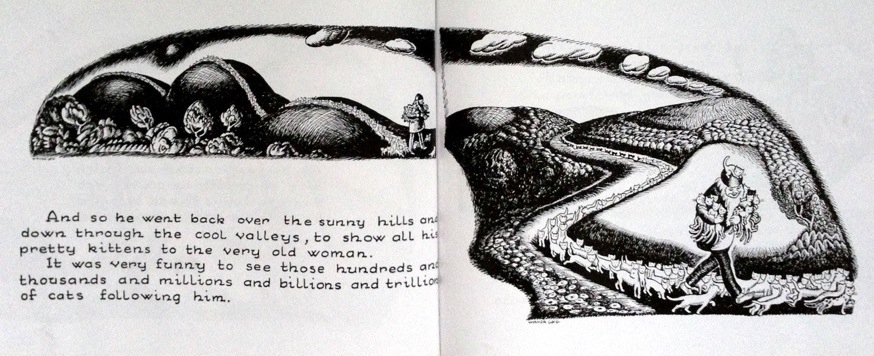
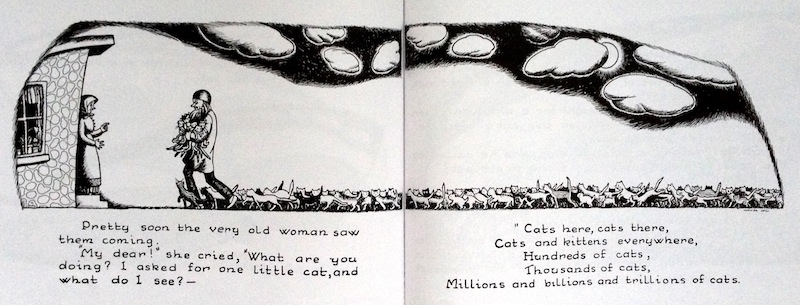
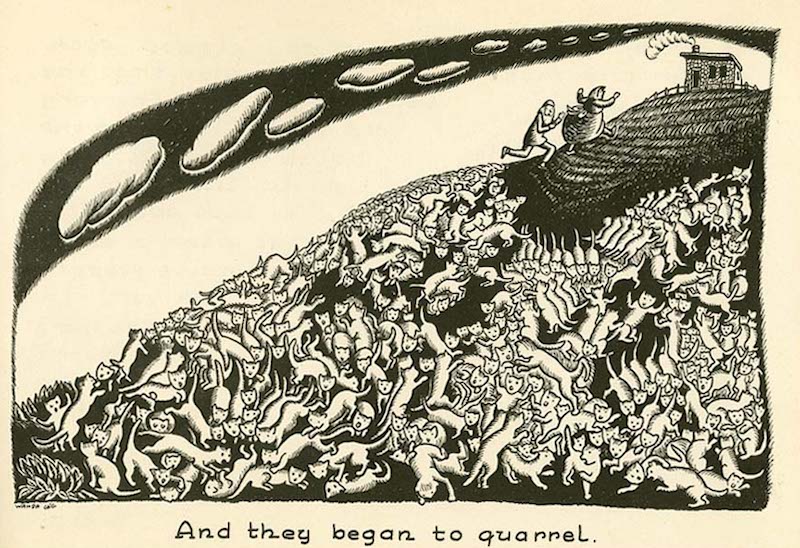
Cat antics and awe have always been a very online phenomenon, but the mysterious and ridiculous, diminutive beasts of prey have also always been inseparable from art and culture. As further evidence, we bring you Millions of Cats, likely the “first truly American picture book done by an American author/artist,” explains a site devoted to it.
“Prior to its publication in 1928, there were only English picture books for the children’s perusal.” The book “sky rocketed Wanda Gág into instant fame and set in stone her reputation as a children’s author and illustrator.”
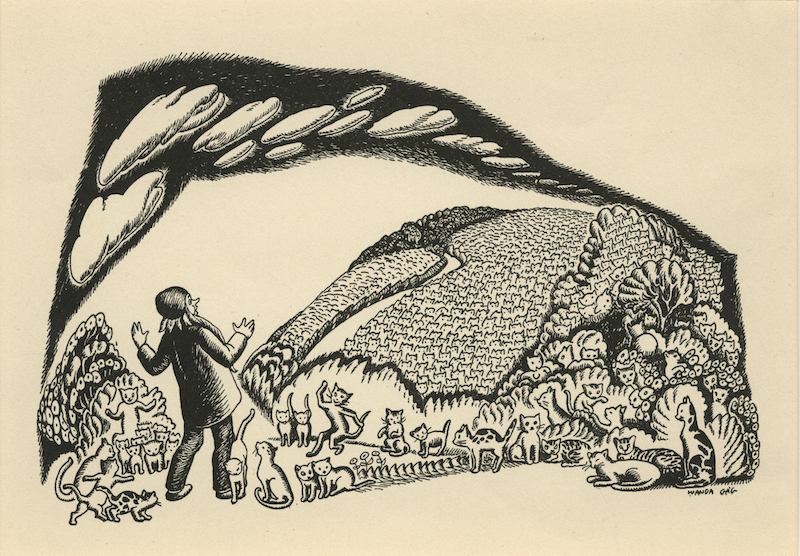
It set a standard for Caldecott-winning children’s literature for close to a hundred years since its appearance, though the award did not yet exist at the time. The book’s creator was “a fierce idealist and did not believe in altering her own aestheticism just because she was producing work for children. She liked to use stylized human figures, asymmetrical compositions, strong lines and slight spatial distortion.” She also loved cats, as befits an artist of her independent temperament, one shared by the likes of other cat-loving artists like T.S. Eliot and Charles Dickens.
Millions of Cats’ author and illustrator may not share in the fame of so many other artists who took pictures with their cats, but she and her cat Noopy were as photogenic as any other feline/human artistic duo, and she was a peer to the best of them. The book’s editor, Ernestine Evans, wrote in the Nation that Millions of Cats “is as important as the librarians say it is. Not only does it bring to book-making one of the most talented and original of American lithographers… but it is a marriage of picture and tale that is perfectly balanced.”
Gág (rhymes with “jog”) was “a celebrated artist… in the Greenwich Village-centic Modernist art scene in the 1920s,” writes Lithub, “a free-thinking, sex-positive leftist who also designed her own clothes and translated fairy tales.” She adapted the text from “a story she had made up to entertain her friends’ children,” with the millions of cats modeled on Noopy. Gág is the founding mother of children’s book dynasties like The Cat in the Hat and Pete the Cat, an artist whom millions of cat lovers can discover again or for the first time in a Newbery-winning 2006 collector’s edition.
Read a summary of the charming story of Millions of Cats at Lithub and learn more about her, the talented Gág family of artists, and her charming, very cat-friendly house here.
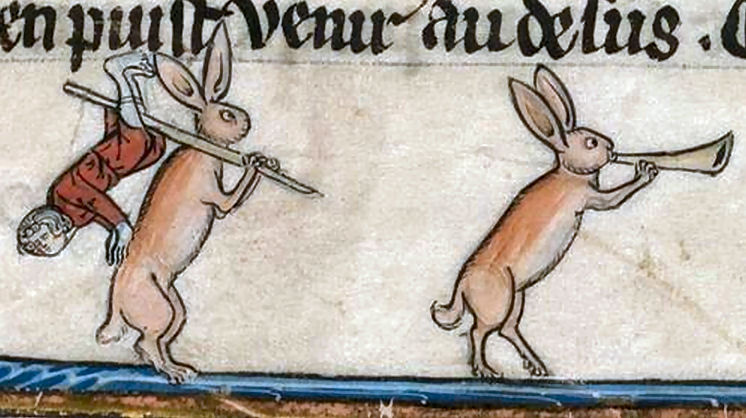
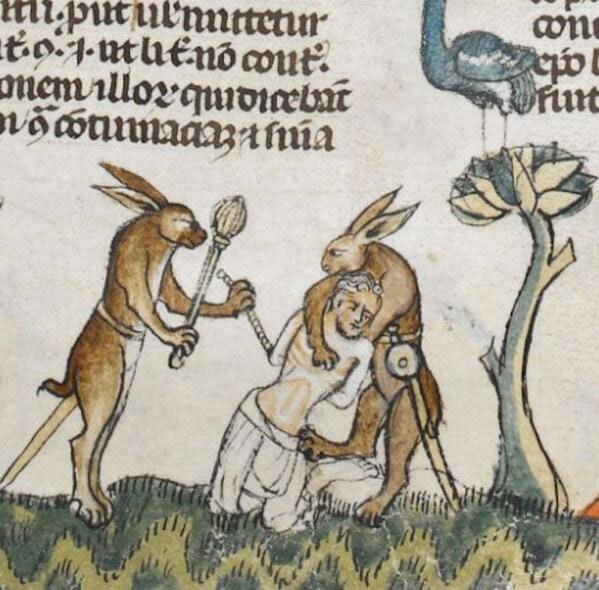
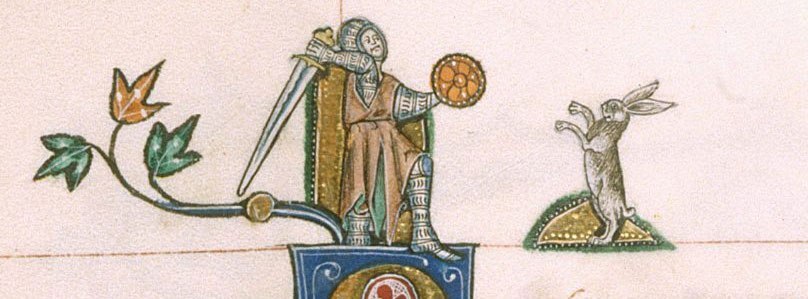
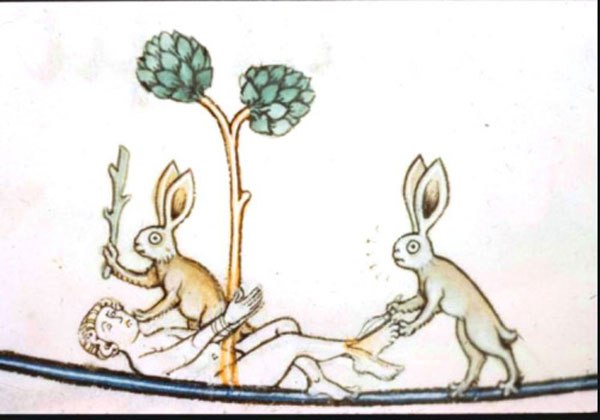
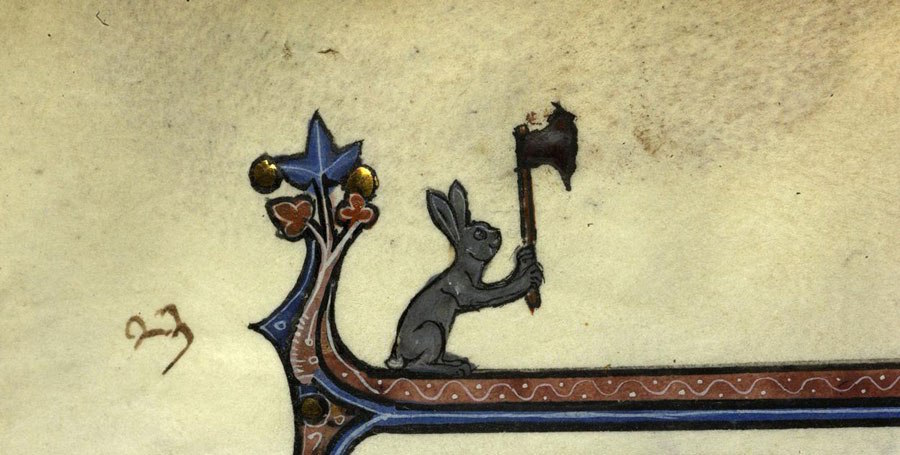
In all the kingdom of nature, does any creature threaten us less than the gentle rabbit? Though the question may sound entirely rhetorical today, our medieval ancestors took it more seriously — especially if they could read illuminated manuscripts, and even more so if they drew in the margins of those manuscripts themselves. “Often, in medieval manuscripts’ marginalia we find odd images with all sorts of monsters, half man-beasts, monkeys, and more,” writes Sexy Codicology’s Marjolein de Vos. “Even in religious books the margins sometimes have drawings that simply are making fun of monks, nuns and bishops.” And then there are the killer bunnies.
Hunting scenes, de Vos adds, also commonly appear in medieval marginalia, and “this usually means that the bunny is the hunted; however, as we discovered, often the illuminators decided to change the roles around.”
Jon Kaneko-James explains further: “The usual imagery of the rabbit in Medieval art is that of purity and helplessness – that’s why some Medieval portrayals of Christ have marginal art portraying a veritable petting zoo of innocent, nonviolent, little white and brown bunnies going about their business in a field.” But the creators of this particular type of humorous marginalia, known as drollery, saw things differently.
“Drolleries sometimes also depicted comedic scenes, like a barber with a wooden leg (which, for reasons that escape me, was the height of medieval comedy) or a man sawing a branch out from under himself,” writes Kaneko-James.
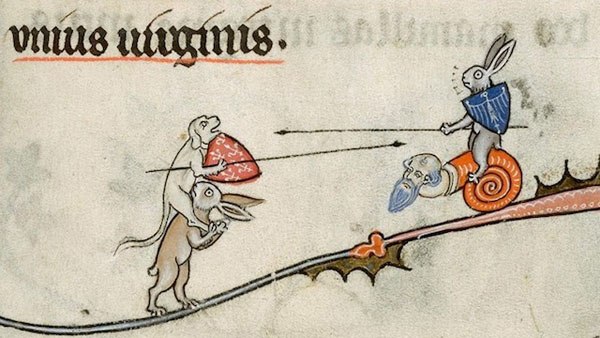
This enjoyment of the “world turned upside down” produced the drollery genre of “the rabbit’s revenge,” one “often used to show the cowardice or stupidity of the person illustrated. We see this in the Middle English nickname Stickhare, a name for cowards” — and in all the drawings of “tough hunters cowering in the face of rabbits with big sticks.”
Then, of course, we have the bunnies making their attacks while mounted on snails, snail combats being “another popular staple of Drolleries, with groups of peasants seen fighting snails with sticks, or saddling them and attempting to ride them.”
Given how often we denizens of the 21st century have trouble getting humor from less than a century ago, it feels satisfying indeed to laugh just as hard at these drolleries as our medieval forebears must have — though many more of us surely get to see them today, circulating as rapidly on social media as they didn’t when confined to the pages of illuminated manuscripts owned only by wealthy individuals and institutions.
Based in Seoul, Colin Marshall writes and broadcasts on cities, language, and culture. His projects include the book The Stateless City: a Walk through 21st-Century Los Angeles and the video series The City in Cinema. Follow him on Twitter at @colinmarshall or on Facebook.
Everyone should read the Bible, and—I’d argue—should read it with a sharply critical eye and the guidance of reputable critics and historians, though this may be too much to ask for those steeped in literal belief. Yet fewer and fewer people do read it, including those who profess faith in a sect of Christianity. Even famous atheists like Christopher Hitchens, Richard Dawkins, and Melvyn Bragg have argued for teaching the Bible in schools—not in a faith-based context, obviously, but as an essential historical document, much of whose language, in the King James, at least, has made major contributions to literary culture. (Curiously—or not—atheists and agnostics tend to score far higher than believers on surveys of religious knowledge.)
There is a practical problem of separating teaching from preaching in secular schools, but the fact remains that so-called “biblical illiteracy” is a serious problem educators have sought to remedy for decades. Prominent Shakespeare scholar G.B. Harrison lamented it in the introduction to his 1964 edited edition, The Bible for Students of Literature and Art. “Today most students of literature lack this kind of education,” he wrote, “and have only the haziest knowledge of the book or of its contents, with the result that they inevitably miss much of the meaning and significance of many works of past generations. Similarly, students of art will miss some of the meaning of the pictures and sculptures of the past.”
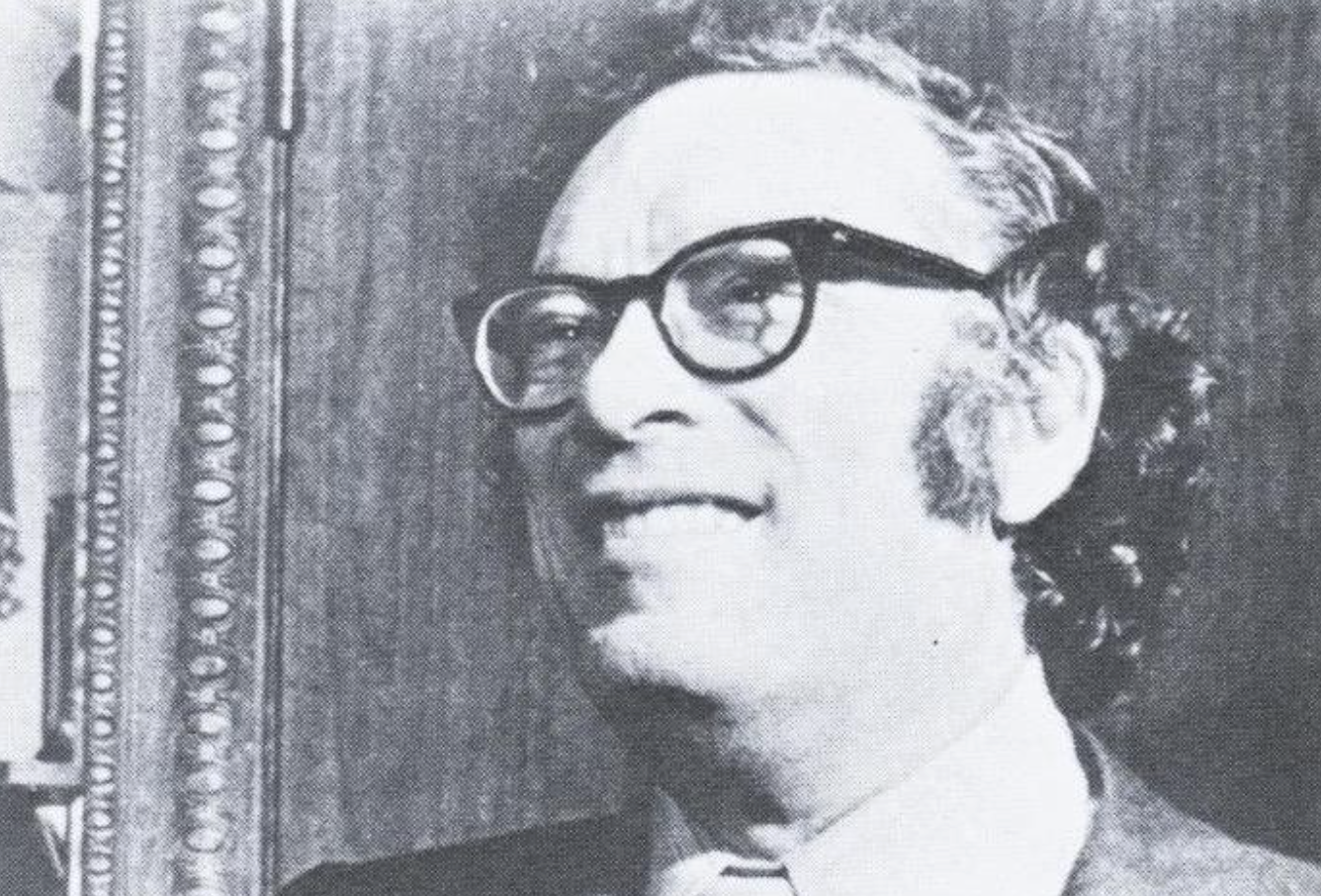
Though a devout Catholic himself, Harrison’s aim was not to proselytize but to do right by his students. His edited Bible is an excellent resource, but it’s not the only book of its kind out there. In fact, no less a luminary, and no less a critic of religion, than scientist and sci-fi giant Isaac Asimov published his own guide to the Bible, writing in his introduction:
The most influential, the most published, the most widely read book in the history of the world is the Bible. No other book has been so studied and so analyzed and it is a tribute to the complexity of the Bible and eagerness of its students that after thousands of years of study there are still endless books that can be written about it.
Of those books, the vast majority are devotional or theological in nature. “Most people who read the Bible,” Asimov writes, “do so in order to get the benefit of its ethical and spiritual teachings.” But the ancient collection of texts “has a secular side, too,” he says. It is a “history book,” though not in the sense that we think of the term, since history as an evidence-based academic discipline did not exist until relatively modern times. Ancient history included all sorts of myths, wonders, and marvels, side-by-side with legendary and apocryphal events as well as the mundane and verifiable.
Asimov’s Guide to the Bible, originally published in two volumes in 1968–69, then reprinted as one in 1981, seeks to demystify the text. It also assumes a level of familiarity that Harrison did not expect from his readers (and did not find among his students). The Bible may not be as widely-read as Asimov thought, even if sales suggest otherwise. Yet he does not expect that his readers will know “ancient history outside the Bible,” the sort of critical context necessary for understanding what its writings meant to contemporary readers, for whom the “places and people” mentioned “were well known.”
“I am trying,” Asimov writes in his introduction, “to bring in the outside world, illuminate it in terms of the Biblical story and, in return, illuminate the events of the Bible by adding to it the non-Biblical aspects of history, biography, and geography.” This describes the general methodology of critical Biblical scholars. Yet Asimov’s book has a distinct advantage over most of those written by, and for, academics. Its tone, as one reader comments, is “quick and fun, chatty, non-academic.” It’s approachable and highly readable, that is, yet still serious and erudite.
Asimov’s approach in his guide is not hostile or “anti-religious,” as another reader observes, but he was not himself friendly to religious beliefs, or superstitions, or irrational what-have-yous. In the interview above from 1988, he explains that while humans are inherently irrational creatures, he nonetheless felt a duty “to be a skeptic, to insist on evidence, to want things to make sense.” It is, he says, akin to the calling believers feel to “spread God’s word.” Part of that duty, for Asimov, included making the Bible make sense for those who appreciate how deeply embedded it is in world culture and history, but who may not be interested in just taking it on faith. Find an old copy of Asimov’s Guide to the Bible at Amazon.
We're hoping to rely on loyal readers, rather than erratic ads. Please click the Donate button and support Open Culture. You can use Paypal, Venmo, Patreon, even Crypto! We thank you!
Open Culture scours the web for the best educational media. We find the free courses and audio books you need, the language lessons & educational videos you want, and plenty of enlightenment in between.