Gene Wilder Recalls the Beginnings of His Creative Life in Two Hilarious, Poignant Stories

We’d grown accus­tomed to his face—that wry, dis­tinc­tive mug, smirk­ing at us from beneath his Willy Won­ka pur­ple top hat in mil­lions of pro­lif­er­at­ing Con­de­scend­ing Won­ka memes, the epit­o­me of arch­ness and smug con­de­scen­sion. Apolo­gies to John­ny Depp, but no one else could have so per­fect­ly inhab­it­ed Roald Dahl’s mer­cu­r­ial can­dy­man like Gene Wilder, who passed away yes­ter­day from Alzheimer’s at the age of 83. Wilder’s Won­ka may casu­al­ly tor­ture his spoiled child guests, but we remem­ber him as a sadist with a heart of gold.

Willy Won­ka and the Choco­late Fac­to­ry, like Pee Wee’s Big Adven­ture, is one of those rare films beloved both by chil­dren and adults (or at least I remem­ber them that way); many future gen­er­a­tions will dis­cov­er Wilder’s man­ic bril­liance in his col­lab­o­ra­tions with Mel Brooks—Blaz­ing Sad­dles, Young Franken­stein, The Pro­duc­ers—and with Richard Pry­or, his friend and fre­quent com­ic foil. And those who lived through the 80s will also remem­ber Wilder for one of the great romances of the decade.

Wilder and Gil­da Rad­ner were a com­e­dy pow­er cou­ple whose mar­riage end­ed trag­i­cal­ly with her death from ovar­i­an can­cer in 1989. That same year he received a diag­no­sis of non-Hodgkin’s lym­phoma. “Wilder was dev­as­tat­ed by Radner’s death,” writes Vari­ety, “and only worked inter­mit­tent­ly after that.” But he nev­er lost his sharp, mad­cap sense of humor and deep well of gen­uine vul­ner­a­bil­i­ty as his career shift­ed into low­er gears in the ensu­ing decades. (He won an Emmy in 2003 for a guest role on Will & Grace and pub­lished a nov­el in 2007).

Wilder was always hap­py to share his cre­ative insights and sto­ries with fans, giv­ing fre­quent inter­views in the last few years and appear­ing on pan­els like that above, a 1999 forum on “The Won­ders of Cre­ativ­i­ty” with Jane Alexan­der, Dan­ny Glover, and oth­ers. Wilder shares a hilar­i­ous­ly irrev­er­ent sto­ry from his child­hood about how he learned to con­scious­ly make oth­er peo­ple laugh by prac­tic­ing on his moth­er after she’d had a heart attack.

This anec­dote gives way to anoth­er, both laugh out loud fun­ny and heart­break­ing at once, of young, 1st-grade Gene (then Jer­ry Sil­ber­man) fac­ing rejec­tion from a teacher (“That stu­pid lady”) who told him his art­work wasn’t good enough to hang on the wall. The hurt stayed with him, so that in 1984, he tells us, “I began paint­ing. Now I try to paint every day of my life.” Wilder com­mu­ni­cates his cre­ative phi­los­o­phy through per­son­al vignettes like these, col­or­ful­ly illus­trat­ing how he became an actor Pauline Kael called “a superb tech­ni­cian… [and] an inspired orig­i­nal.”

In the ani­mat­ed Blank on Blank inter­view clip above—taken from his 2007 con­ver­sa­tion with Let­ty Cot­tin Pogre­bin at the 92nd Street Y after the debut of his novel—Wilder opens with anoth­er ver­sion of the sto­ry about his moth­er, the source, he says of his con­fi­dence as an actor. He began his career in the the­ater in the ear­ly six­ties, and says he “felt on stage, or in the movies, I could do what­ev­er I want­ed to. I was free.” He also talks about actors’ mys­te­ri­ous moti­va­tions:

If you ask an actor, “Why do you want to act?,” I don’t think most of them know the real rea­sons. After sev­en and a half years of analy­sis, I have a fair­ly good idea why. My ana­lyst said, “Well, it’s bet­ter than run­ning around naked in Cen­tral Park, isn’t it?”

Wilder then tells the sto­ry of how he sug­gest­ed Willy Wonka’s dra­mat­ic entrance to the film’s director—insisted on it, in fact, as a con­di­tion for tak­ing the part. “From that time on,” he said of the character’s first moments on screen, “no one will know if I’m lying or telling the truth.” That was the comedic genius of Gene Wilder, may it live for­ev­er in some of the most sweet­ly hys­ter­i­cal and wicked­ly fun­ny char­ac­ters in film his­to­ry. Learn more about Wilder’s life and long career in the ret­ro­spec­tive doc­u­men­tary below.

Relat­ed Con­tent:

Anne Ban­croft and Mel Brooks Sing “Sweet Geor­gia Brown” Live…and in Pol­ish

John Cleese’s Phi­los­o­phy of Cre­ativ­i­ty: Cre­at­ing Oases for Child­like Play

Richard Pry­or Does Ear­ly Stand-Up Com­e­dy Rou­tine in New York, 1964

Josh Jones is a writer and musi­cian based in Durham, NC. Fol­low him at @jdmagness

Mashup Weaves Together 57 Famous Classical Pieces by 33 Composers: From Bach to Wagner

Musi­cal mash up artist Grant Woolard has found a per­fect­ly eth­i­cal way to side­step copy­right issues. Sam­ple the great­est hits of long dead clas­si­cal com­posers.

The prag­mat­i­cal­ly titled “Clas­si­cal Music Mashup,” above, weaves 57 melodies by Mozart, Beethoven, Ver­di, and 30 oth­er greats into one six minute com­po­si­tion.

Woolard invites lis­ten­ers to sep­a­rate out the strands, most of which will sound famil­iar, even if you are unable to name that tune.

(One sharp-eared lis­ten­er not only accept­ed the chal­lenge, but post­ed a com­plete list­ing of all the com­posers and com­po­si­tions in chrono­log­i­cal order with time stamps. Those who don’t mind SPOILERS can view it at the end of this post.)

Those who crave an even more inter­ac­tive assign­ment can down­load the sheet music (for a small fee), then recruit two more pianists to per­form the six-hand­ed piece.

You can also buy an audio track of the com­po­si­tion here.

And now, the list of Woolard’s raw ingre­di­ents, com­pli­ments of youtube com­menter, Yifeng Huang:

1. Mozart Eine Kleine Nacht­musik K525 0:01

2. Haydn Sym­pho­ny 94 “Sur­prise” II 0:01

3. Beethoven Sym­pho­ny 9 IV (Ode to Joy) 0:06

4. Mendelssohn Wed­ding March in Mid­sum­mer Night’s Dream, sec­ond theme 0:06

5. Dvo­rak Humoresque No.7 0:13

6. Wag­n­er Lohen­gerin, Bridal Cho­rus 0:13

7. Tchaikovsky Piano Con­cer­to 1 0:19

8. Saint-Saens Car­ni­val of Ani­mals: Swan 0:19

9. Bach Well Tem­pered Clavier Book 1 Pre­lude 1 0:19

10. Tchaikovsky 1812 Over­ture 0:29

11. Bach Cel­lo Suite No. 1 0:32

12. Mendelssohn Song with­out Words “Spring” 0:33

13. Schu­bert Ave Maria 0:40

14. Schu­bert Sym­pho­ny 8 “Unfin­ished” 0:46

15. Ver­di “La Don­na è Mobile” in Rigo­let­to 0:51

16. Boc­cheri­ni String Quar­tet in E, Op.11 No.5, III. Min­uet­to 0:55

17. Beethoven für Elise 1:03

18. CPE Bach Solfeg­gi­et­to 1:04

19. Pagani­ni Capric­cio 24 1:11

20. Mozart Piano Sonata No.11 III (Turk­ish March) 1:15

21. Grieg Piano Con­cer­to 1:22

22. Mozart Requiem Lac­rimosa 1:26

23. Schu­bert Ser­e­nade 1:30

24. Chopin Pre­lude in C minor 1:35

25. Strauss II Over­ture from Die Fle­d­er­maus (Bat) 1:46

26. Brahms 5 Lieder Op.49, IV. Wiegen­lied (Lul­la­by) 1:46

27. Satie Gymno­pe­die 1:56

28. Debussy Arabesque 2:00

29. Holst Plan­ets, Jupiter 2:05

30. Schu­bert Trout 2:14

31. Liszt Hun­gar­i­an Rhap­sody No.2 2:28

32. Mozart Vari­a­tion on Twin­kle Twin­kle Lit­tle Star 2:41

33. Schu­mann Op.68, No.10 Mer­ry Peas­ant 2:47

34. Schu­bert Mil­i­tary March in D 2:54

35. Bach* (could be Pet­zold) Min­uet in G 3:00

36. Mozart Piano Sonata No.16 in C, K545 3:07

37. Offen­bach Can-can in “Orpheus in the under­world” 3:08

38. Beethoven Piano Sonata No.8 “Pathe­tique” II 3:18

39. Mozart Die Zauber­flöte Over­ture 3:24

40. Tchaikovsky Romeo and Juli­et Over­ture 3:31

18′. CPE Bach Solfeg­gi­et­to 3:44

41. Beethoven Sym­pho­ny 5 “Fate” 3:47

6′. Wag­n­er Wed­ding March 3:52

42. Rach­mani­noff Pre­lude Op.3 No.2 in C# minor 3:53

18′. CPE Bach Solfeg­gi­et­to 3:56

43. Chopin Piano Sonata No. 2 III. Funer­al March 4:11

44. Williams Impe­r­i­al March in Star War 4:19

45. Tchaikovsky Marche Slave 4:25

46. Smetana Ma Vlast II. Moldau 4:38

47. Tchaikovsky Nut­crack­er — Flower Waltz (not the main theme!) 4:45

48. Borodin Polovt­sian Dances 4:45

49. Strauss II Blue Danube 4:58

50. Vival­di Four Sea­sons I. Spring 5:03

51. Han­del Mes­si­ah, Hal­lelu­jah 5:03

52. Han­del The Entrance of the Queen of She­ba 5:08

53. Elgar Pomp and Cir­cum­stance March­es No. 1 5:15

54. Pachel­bel Canon in D 5:21

55. Mozart Sym­pho­ny No. 35 in D major (Haffn­er) K. 385, IV. Finale, Presto 5:27

56. Chopin Etude Op.25 No.9 in G flat, “But­ter­fly” 5:34

57. Bach Gavotte from French Suite No. 5 in G Major, BWV 816 5:42


Relat­ed Con­tent:

The World Con­cert Hall: Lis­ten To The Best Live Clas­si­cal Music Con­certs for Free

1200 Years of Women Com­posers: A Free 78-Hour Music Playlist That Takes You From Medieval Times to Now

Debussy’s Clair de lune: The Clas­si­cal Music Visu­al­iza­tion with 21 Mil­lion Views

Ayun Hal­l­i­day is an author, illus­tra­tor, the­ater mak­er and Chief Pri­ma­tol­o­gist of the East Vil­lage Inky zine.  Her lat­est script, Fawn­book, is avail­able in a dig­i­tal edi­tion from Indie The­ater Now.  Fol­low her @AyunHalliday.

Stephen King on the Magic Moment When a Young Writer Reads a Published Book and Says: “This Sucks. I Can Do Better.”

Go to a book­store.

Tell the clerk you’re an aspir­ing writer.

You’ll be direct­ed to a shelf—possibly an entire section—brimming with prompts, exer­cis­es, for­mu­lae, and Jedi mind tricks. Round out your pur­chase with a jour­nal, a fan­cy pen, or an inspi­ra­tional quote in book­mark form.

Few of author Stephen King’s books would be at home in this sec­tion, but his 2000 mem­oir, On Writ­ing, a com­bi­na­tion of per­son­al his­to­ry and prac­ti­cal advice, cer­tain­ly is. The writ­ing rules list­ed there­in are numer­ous enough to yield a top 20. He makes no bones about read­ing being a manda­to­ry activ­i­ty:

If you don’t have time to read, you don’t have the time (or the tools) to write. Sim­ple as that.

Not sur­pris­ing­ly, giv­en his prodi­gious out­put, he also believes that writ­ers must write dai­ly. Prac­tice helps shape a writer’s voice. Dai­ly prac­tice keeps him or her on inti­mate terms with char­ac­ters and plot.

Got that?

Nose to the grind­stone, young writer! Quit look­ing for fairy god­moth­ers and mak­ing excus­es! Though you might be able to fast track to the mag­i­cal moment King revealed in a 2003 speech at Yale, above.

Go back to the book­store.

Ask the clerk to point you toward the shelves of what­ev­er genre has tra­di­tion­al­ly made your flesh crawl. Chick litvam­pire erot­i­caman­ly air­plane reads. Select the most odi­ous seem­ing title. Buy it. Read it. And heed the words of King:

There’s a mag­ic moment, a real­ly mag­ic moment if you read enough, it will always come to you if you want to be a writer, when you put down some book and say, This real­ly sucks. I can do bet­ter than this, and this got pub­lished!

(It’s real­ly more of a spon­ta­neous­ly occur­ring rite of pas­sage than mag­ic moment, but who are we to fault Stephen King for giv­ing it a crowd-pleas­ing super­nat­ur­al spin?)

Relat­ed Con­tent:

Stephen King’s Top 20 Rules for Writ­ers

Stephen King Cre­ates a List of 96 Books for Aspir­ing Writ­ers to Read

Stephen King Cre­ates a List of 82 Books for Aspir­ing Writ­ers (to Sup­ple­ment an Ear­li­er List of 96 Rec­om­mend Books)

Ayun Hal­l­i­day is an author, illus­tra­tor, and Chief Pri­ma­tol­o­gist of the East Vil­lage Inky zine. Fol­low her @AyunHalliday.

The Creativity of Female Graffiti & Street Artists Will Be Celebrated in Street Heroines, a New Documentary

Street art is a fre­quent­ly dan­ger­ous game. The threat of arrest pales in com­par­i­son to some of the haz­ards long time prac­ti­tion­ers describe. While oth­er artists sketch in pleas­ant cafes, cre­ators of large-scale street pieces often have no choice but to wrig­gle through ragged holes in chain link fences and climb to ver­tig­i­nous heights to get to their can­vas­es.

There’s a pop­u­lar con­cep­tion of graf­fi­ti artist as lone wolf, but when it comes to the per­ils of the street, there’s safe­ty in num­bers. You need a crew. Female street artists must draw on the pow­er of sis­ter­hood.

As pho­to­jour­nal­ist Martha Coop­er notes in the trail­er for direc­tor Alexan­dra Hen­ry’s Street Hero­ines, above:

I think bring­ing women togeth­er empow­ers them and there’s been some resis­tance on the part of men…it has to do with cama­raderie too. It’s not that they’re say­ing, “You can’t do it,” but they’re just not allow­ing them in to their inner group.

Appar­ent­ly, street art is some­thing of an old boy’s club.

“What!?” gasps Lady Pink, a well known vet­er­an with over 35 years’ expe­ri­ence. “You need a penis to climb a lad­der? Does it help you hold on?”

The female cama­raderie Coop­er cites extends to the suc­cess­ful fund­ing of a Kick­starter cam­paign to com­plete this doc­u­men­tary on “the courage and cre­ativ­i­ty of female graf­fi­ti & street artists from around the world.” As the dead­line loomed, Lexi Bel­la & Danielle Mas­tri­on, two of the women fea­tured in the doc­u­men­tary, issued an open invi­ta­tion to New York City-based female artists to join them in cre­at­ing a spur-of-the-moment mur­al in Brook­lyn, sur­ren­der­ing artis­tic con­trol to embrace com­mu­ni­ty spir­it.

street heroines2

Many of the 25 artists Hen­ry has pro­filed thus far speak of using their work to bring beau­ty to the street, and to advo­cate on behalf of the oppressed. Such earnest­ness may dimin­ish them even fur­ther in the eyes of the old school He Man Woman Haters Club. Lexi Bel­la coun­ter­bal­ances the laugh­ably soft image cer­tain macho prac­ti­tion­ers may assign to them by speak­ing unapolo­get­i­cal­ly of the thrill of mak­ing one’s work as big as pos­si­ble “so mil­lions of peo­ple can see it.”

Street Hero­ines is aim­ing for release in 2017.

via The Cre­ators Project

Relat­ed Con­tent:

Google Puts Online 10,000 Works of Street Art from Across the Globe

The Bat­tle for LA’s Murals

The Odd Cou­ple: Jean-Michel Basquiat and Andy Warhol, 1986

Ayun Hal­l­i­day is an author, illus­tra­tor, and Chief Pri­ma­tol­o­gist of the East Vil­lage Inky zine. Fol­low her @AyunHalliday

Go Inside the First 30 Minutes of Kubrick’s The Shining with This 360º Virtual Reality Video

Apolo­gies to Stephen King, but when I think of The Shin­ing, I think of Stan­ley Kubrick’s 1980 film. While King has long and vig­or­ous­ly object­ed to Kubrick’s lib­er­ties in adapt­ing the sto­ry, I’d argue it’s one of those oft-lis­ti­cled cas­es where the film is bet­ter than the book. Grant­ed, the hor­ror writer has made sev­er­al jus­ti­fied crit­i­cisms of the film’s misog­y­nis­tic por­tray­al of Shelly Duvall’s char­ac­ter, but he has also con­fessed to a total indif­fer­ence to movies, telling Rolling Stone, “I see [film] as a less­er medi­um than fic­tion, than lit­er­a­ture, and a more ephemer­al medi­um.” In this instance, at least, he’s dead wrong. Movie lovers have been obsess­ing over every blessed detail of Kubrick’s The Shin­ing for 36 years and show no signs of stop­ping.

Part of the rea­son the sto­ry works bet­ter on film than on the page is that The Shin­ing is what one might call an archi­tec­tur­al horror—its mon­ster is a build­ing, the Over­look Hotel, and Kubrick wise­ly exploit­ed the idea to its max­i­mum poten­tial, adding an addi­tion­al struc­ture, the top­i­ary maze, as a fur­ther instan­ti­a­tion of the story’s themes of iso­la­tion, entrap­ment, and exis­ten­tial dead ends. Video game designers—many the same age as the film’s young pro­tag­o­nist Dan­ny when the movie came out—surely paid atten­tion. The long takes of Danny’s explo­ration of the omi­nous, emp­ty moun­tain lodge now, in hind­sight, resem­ble any num­ber of vir­tu­al con­sole and PC worlds in many a first-per­son game.

Now join­ing the archi­tec­tural­ly-obsessed reimag­in­ings of The Shin­ing is “Shin­ing 360,” a project by dig­i­tal artist Claire Hentschk­er. She describes it as:

a 30-minute audio-visu­al exper­i­ment for VR derived from the phys­i­cal space with­in Stan­ley Kubrick’s film ‘The Shin­ing.’ Using pho­togram­me­try, 3D ele­ments are extract­ed and extrud­ed from the orig­i­nal film stills, and the sub­se­quent frag­ments are stitched togeth­er and viewed along the orig­i­nal cam­era path.

In oth­er words, the project allows view­ers to move around, using 360-degree Youtube video, in a dig­i­tal­ly frag­ment­ed space built out of the first 30 min­utes of the film. Be aware that there are brows­er restric­tions, but if you open the video in Chrome, Fire­fox, Inter­net Explor­er, or Opera, you’ll be able to nav­i­gate through the space using your mouse or the WASD keys.

It’s a very weird expe­ri­ence. The Overlook’s inte­ri­or exists in con­tigu­ous 3D pho­to­graph­ic blobs sus­pend­ed in black nothingness—giving one the feel­ing of reach­ing the edge of some pre­vi­ous­ly-believ­able video game world and find­ing out there’s noth­ing beyond it. And it’s made all the creepi­er by the near-exclu­sion of the very few peo­ple the hotel does contain—with the excep­tion of a kind of residue of par­tial bodies—and by a dron­ing, one-note ambi­ent syn­the­siz­er score. This isn’t the first time Hentschk­er has used the film’s spa­tial unique­ness as com­put­er art. In the short stu­dent video above from 2015, she intro­duces a wonky tech­ni­cal pre­cur­sor to “Shin­ing 360” that also the­mat­i­cal­ly address­es the movie’s misog­y­ny: “Map­ping the Female Gaze in Hor­ror Movies.”

via Metafil­ter

Relat­ed Con­tent:

Down­load & Play The Shin­ing Board Game

Stan­ley Kubrick’s The Shin­ing Reimag­ined as Wes Ander­son and David Lynch Movies

Watch a Shot-by-Shot Remake of Kubrick’s The Shin­ing, a 48-Minute Music Video Accom­pa­ny­ing the New Album by Aesop Rock

Josh Jones is a writer and musi­cian based in Durham, NC. Fol­low him at @jdmagness

The Online Knitting Reference Library: Download 300 Knitting Books Published From 1849 to 2012

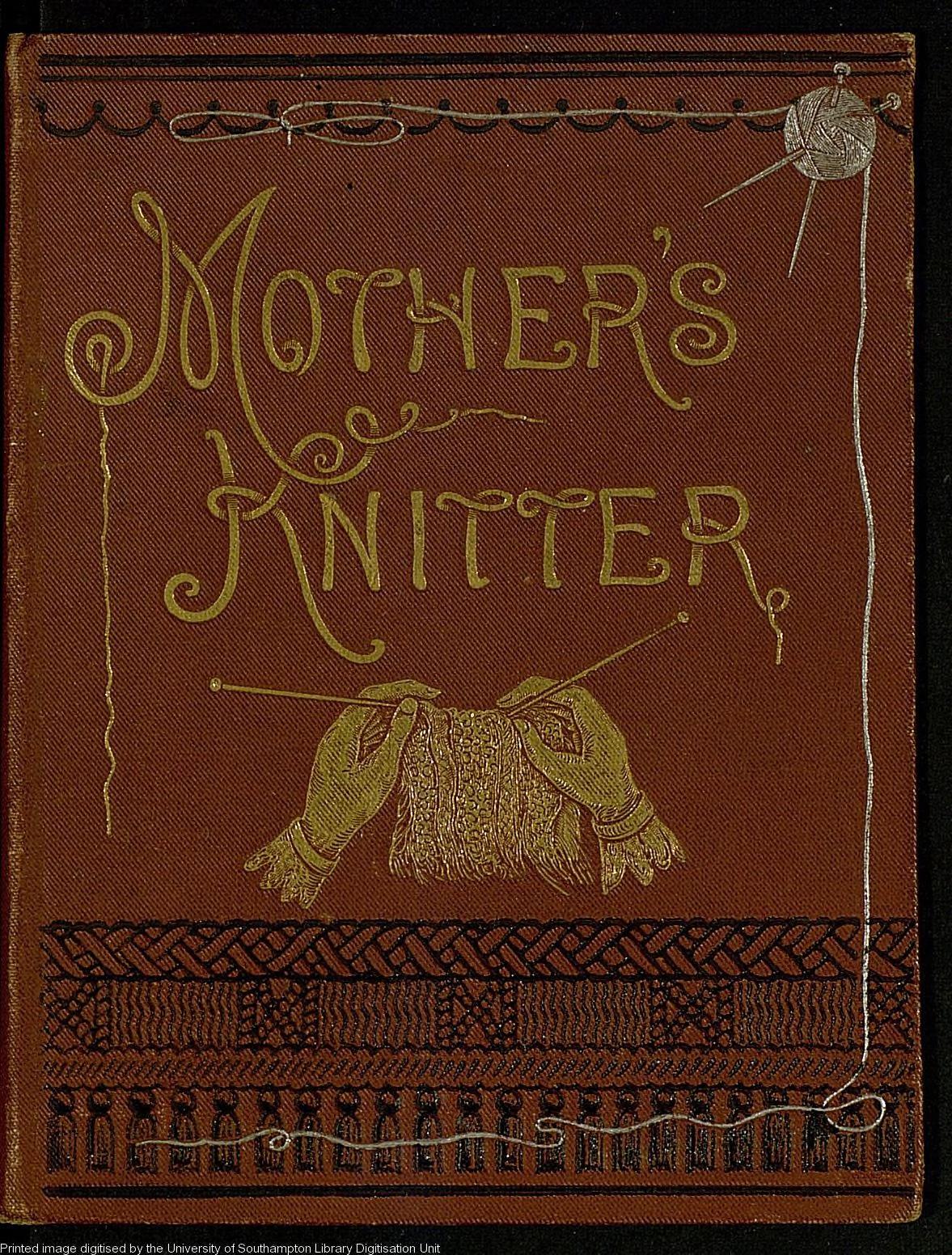
Mother's Knitter

No need to scram­ble to the fall­out shel­ter, friends.

That mas­sive boom you just heard is mere­ly the sound of thou­sands of crafters’ minds being blown en masse by the Uni­ver­si­ty of South­hamp­ton’s Knit­ting Ref­er­ence Library, an exten­sive resource of books, cat­a­logues, pat­terns, jour­nals and magazines—over sev­en­teen decades worth.

Viva la Hand­made Rev­o­lu­tion!

The basics of the form—knit­ting, purl­ing, increas­ing, decreas­ing, cast­ing on and off—have remained remark­ably con­sis­tent through­out the gen­er­a­tions. No won­der there’s an endur­ing tra­di­tion of learn­ing to knit at grandma’s knee…

What has evolved is the nature of the fin­ished prod­ucts.

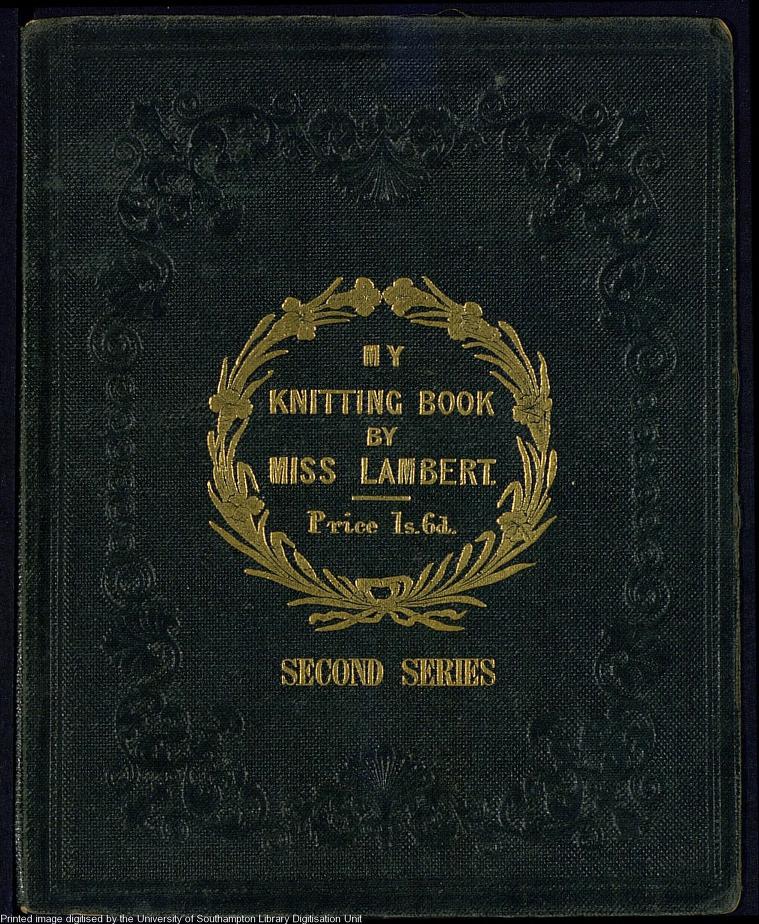
Miss Lambert

Miss Lam­bert’s “Baby Quilt in Stripes of Alter­nate Col­ors” from her 1847 Knit­ting Book could still hold its own against any oth­er hand­craft­ed show­er gift, but even the most hard­core mod­ern crafter would find it chal­leng­ing to find tak­ers for her “Car­riage Sock,” which is meant to be worn over the shoe.

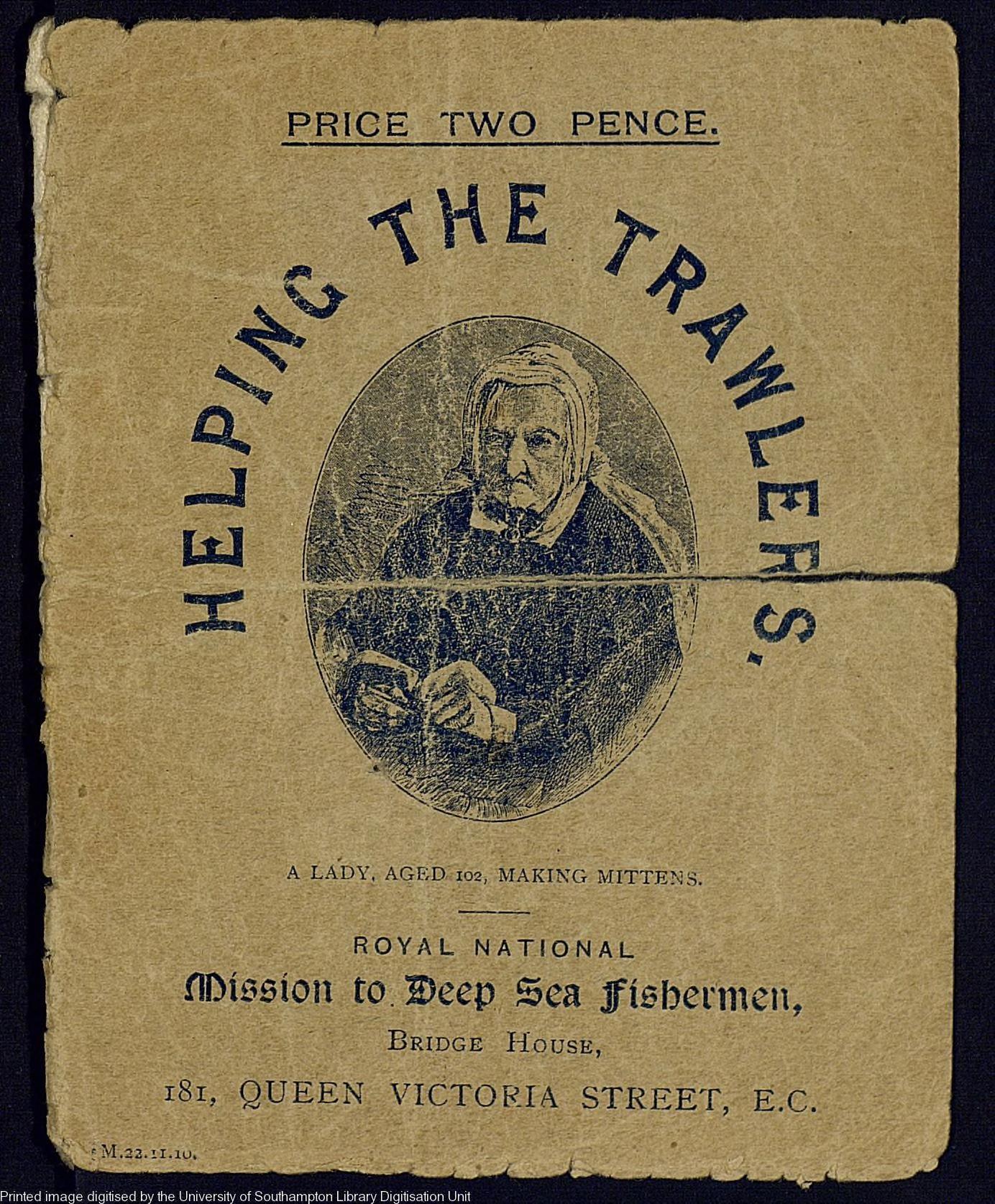
Trawlers

Dit­to the “Woolen Hel­mets” in Help­ing the Trawlers, a 32-page pam­phlet pub­lished by the Roy­al Nation­al Mis­sion to Deep Sea Fish­er­men. The hope was that civic-mind­ed knit­ters might be moved to donate hand­made socks, mit­tens, and oth­er items to com­bat the chill faced by poor work­ing men fac­ing the ele­ments on freez­ing decks.

Not sur­pris­ing­ly, the eager vol­un­teer knit­ting force grav­i­tat­ed toward the pamphlet’s most baroque item, putting the pub­lish­er in a del­i­cate posi­tion:

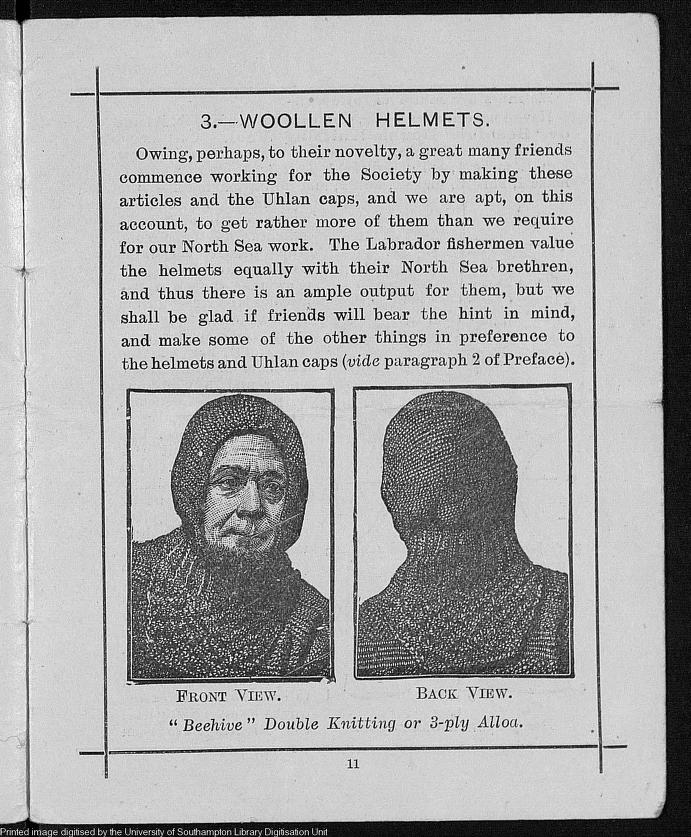
Owing, per­haps, to their nov­el­ty, a great many friends com­mence work­ing for the Soci­ety by mak­ing these arti­cles and the Uhlan caps, and we are apt, on this account, to get rather more of them than we require for our North Sea work. The Labrador fish­er­men val­ue the hel­mets equal­ly with their North Sea breathren, and thus there is an ample out­put for them, but we shall be glad if friends will bear the hint in mind, and make some of the oth­er things in pref­er­ence to the hel­mets and Uhlan caps.

Woollen Helmets

All of the books in the Knit­ting Ref­er­ence Library are open access, though many of the pat­terns and mag­a­zines are depen­dent on copy­right clear­ance. Give a prowl, and you’ll find that a few of the old­er pat­terns are avail­able as down­load­able, print­able PDFs , such as this hand­some gent’s cable knit pullover or the tricky 50’s bison cardi­gan, below.

Bison Cardigan

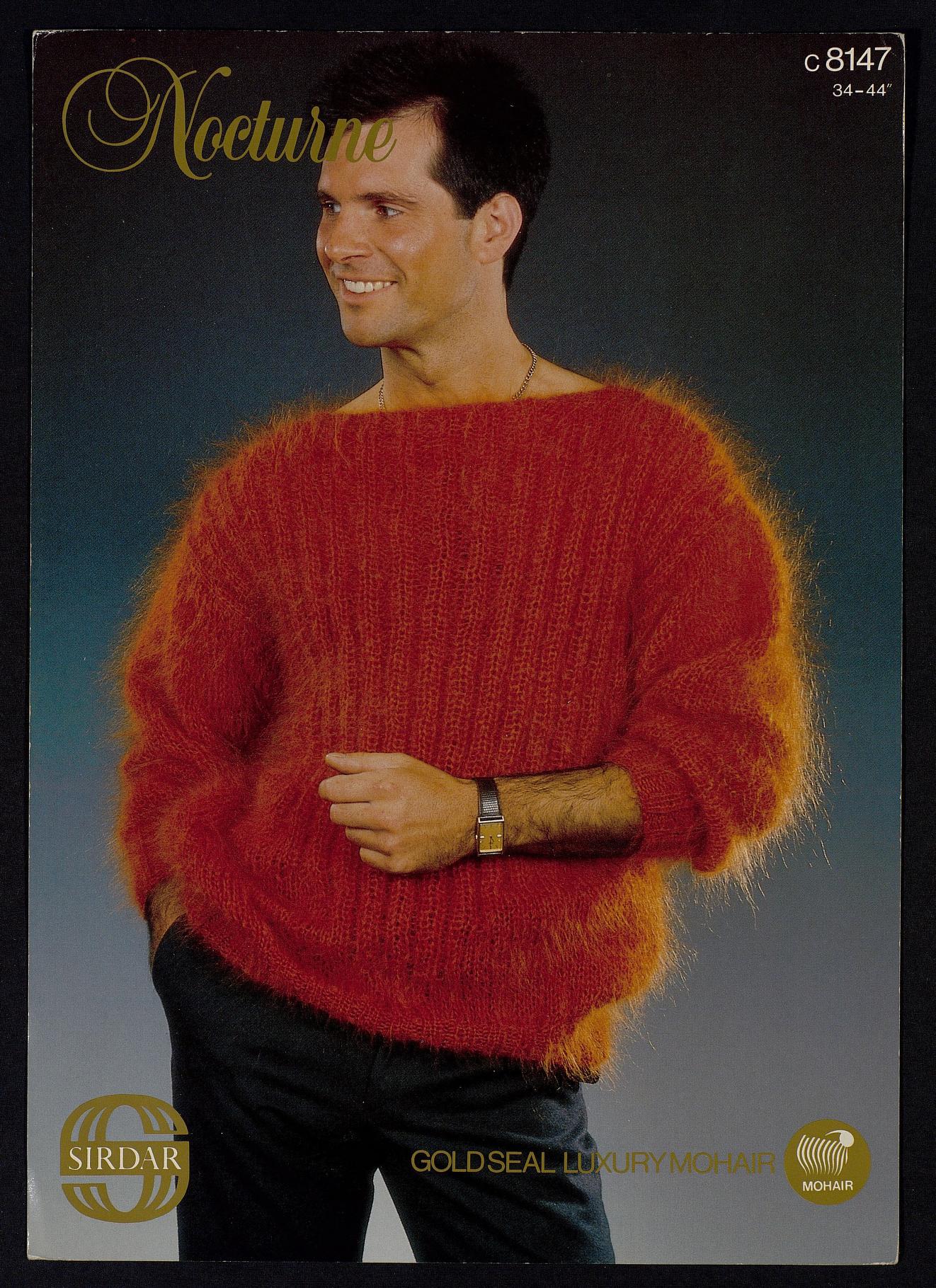
Even with­out step-by-step instruc­tions, the pat­tern envelopes’ cov­er images can still pro­vide inspiration…and no small degree of amuse­ment. Some enter­pris­ing librar­i­an should get crack­ing on a sub-col­lec­tion, Fash­ion Crimes Against Male Knitwear Mod­els, 1960–1980:

Knitting Crime 1

Knitting Crime 2

Knitting Crime 3

There’s even some­thing for the lat­ter day Labrador trawler...

Balaclava

The entire col­lec­tion can be viewed here. For view­ing and print­ing pat­terns, we rec­om­mend select­ing “PDF” from the list of down­load options.

via Metafil­ter

Relat­ed Con­tent:

The BBC Cre­ates Step-by-Step Instruc­tions for Knit­ting the Icon­ic Dr. Who Scarf: A Doc­u­ment from the Ear­ly 1980s

See Pen­guins Wear­ing Tiny “Pen­guin Books” Sweaters, Knit­ted by the Old­est Man in Aus­tralia

The Whole Earth Cat­a­log Online: Stew­art Brand’s “Bible” of the 60s Gen­er­a­tion

Ayun Hal­l­i­day is an author, illus­tra­tor, and Chief Pri­ma­tol­o­gist of the East Vil­lage Inky zine. Fol­low her @AyunHalliday

An Inside Look at How the Fantastic “Wintergatan Marble Machine” Makes Music with 2000 Marbles & 3000 Handmade Parts

Swedish musi­cian Mar­tin Molin’s Mar­ble Machine, above, looks like the kind of top heavy, enchant­ed con­trap­tion one might find in a Miyaza­ki movie, gal­lop­ing through the coun­try­side on its skin­ny legs.

Those slen­der stems are but one of the design flaws that both­er its cre­ator, who notes that he hadn’t real­ly tak­en into account the destruc­tive pow­er of 2000 flow­ing mar­bles (or more accu­rate­ly, 11mm steel ball bear­ings).

It’s nat­ur­al for some­one so close to the project to fix­ate on its imper­fec­tions, but I think it’s safe to say that the rest of us will be bedaz­zled by all the giant musi­cal Rube Gold­berg device gets right. Hannes Knutsson’s “mak­ing of” videos below detail some of Molin’s labors, from recre­at­ing the sound of a snare drum with coast­ers, a con­tact mic and a box of bas­mati rice, to cut­ting wood­en gears from a cus­tomiz­able tem­plate that any­one can down­load off the Inter­net.

If it looks like a time con­sum­ing endeav­or, it was. Molin wound up devot­ing 14 months to what he had con­ceived of as a short term project, even­tu­al­ly design­ing and fab­ri­cat­ing 3,000 inter­nal parts.

The fin­ished prod­uct is a feat of dig­i­tal, musi­cal, and phys­i­cal skill. As Molin told Wired,

I grew up mak­ing music on Midi, and every­one makes music on a grid nowa­days, on com­put­ers. Even before dig­i­tal they made fan­tas­tic, pro­gram­ma­ble music instru­ments. In bell tow­ers and church tow­ers that play a melody they always have a pro­gram­ming wheel exact­ly like the one that is on the mar­ble machine.

The “mak­ing of” videos high­light the dif­fer­ence between the record­ed audio sig­nal and the sound in the room where the machine is being oper­at­ed. There’s some­thing immense­ly sat­is­fy­ing about the insect-like click of all those mar­bles work­ing in con­cert as they acti­vate the var­i­ous instru­ments and notes.

The machine also appears to give its inven­tor a rather brisk car­dio work­out.

You can read more about the con­struc­tion of the Mar­ble Machine on Molin’s Win­ter­gatan web­site. Its tune is avail­able for down­load here.

Relat­ed Con­tent:

See the First “Drum Machine,” the Rhyth­mi­con from 1931, and the Mod­ern Drum Machines That Fol­lowed Decades Lat­er

New Order’s “Blue Mon­day” Played with Obso­lete 1930s Instru­ments

Two Gui­tar Effects That Rev­o­lu­tion­ized Rock: The Inven­tion of the Wah-Wah & Fuzz Ped­als

Free: Download 500+ Rare Music Manuscripts by Mozart, Bach, Chopin & Other Composers from the Morgan Library

mozart 1

When my son first start­ed play­ing the piano, I lost sev­er­al evenings chas­ing the holy grail of free online sheet music. Sad­ly, most of what we were inter­est­ed in down­load­ing wasn’t real­ly free… just the first page.

It’s hard to ratio­nal­ize drop­ping five bucks on one song, when the New York Pub­lic Library for the Per­form­ing Arts is a short sub­way ride away. The prob­lem is, I’m not much of a musi­cian, and while there are scores and scores of scores upon their shelves, I rarely under­stood what it was I was check­ing out. Often I’d come home with the sought after piece, only to real­ize that I’d inad­ver­tent­ly checked out a vocal selec­tion, or the chord-rich equiv­a­lent of a cock­tail pianist’s fake book.

With the Mor­gan Library’s Music Man­u­scripts Online project, there’s no guar­an­tee my son or I will be able to play it, but I do know exact­ly what I’m get­ting.

The hand­writ­ten man­u­script of Mozart’s com­ic singspiel, Der Schaus­pieldirek­tor,  above, for instance, auto­graphed by the com­pos­er him­self. 84 pages worth, not count­ing cov­ers and end­pa­pers, all free for the down­load­ing!

Put that on your iPad, Mr. Salieri!

The col­lec­tion cur­rent­ly offers dig­i­tized ver­sions of upwards of 500 musi­cal man­u­scripts, with more to come as the review­ing process con­tin­ues.

It’s search­able by com­pos­er, and big names abound.

bach 2

Per­haps you’d like to warm up the Wurl­tiz­er with Bach’s Toc­ca­ta and Fugue for Organ, BWV 538, in D minor

puccini

Or let all your opera singing, bal­let danc­ing friends know you’re avail­able to accom­pa­ny them with Puccini’s auto­graphed man­u­script for Le Vil­li

chopin

Or cir­cum­nav­i­gate the scrib­bled out boo boos, while attempt­ing Chopin’s Polon­ais­es, Piano, Op. 26. Chopin’s John Han­cock is the reward.

The hits just keep com­ing: Beethoven, Brahms, Debussy, Fau­ré, Haydn, Liszt, Mahler, Massenet, Mendelssohn, Schu­bert, Schu­mann…

Mendelssohn

Not sur­pris­ing­ly, female com­posers are gross­ly under­rep­re­sent­ed, but there are a few gems, such as Mendelssohn’s sis­ter Fan­ny Hensel’s auto­graphed man­u­script of the song Sel­mar und Sel­ma, dec­o­rat­ed with a pret­ty pen­cil and wash draw­ing by her hus­band

The Mor­gan has plans to add essays about the man­u­scripts by lead­ing schol­ars. In the mean­time, pick a piece and start prac­tic­ing.

Relat­ed Con­tent:

The World Con­cert Hall: Lis­ten To The Best Live Clas­si­cal Music Con­certs for Free

85,000 Clas­si­cal Music Scores (and Free MP3s) on the Web

All of Bach for Free! New Site Will Put Per­for­mances of 1080 Bach Com­po­si­tions Online

Ayun Hal­l­i­day is an author, illus­tra­tor, and Chief Pri­ma­tol­o­gist of the East Vil­lage Inky zine. Fol­low her @AyunHalliday

« Go BackMore in this category... »
Quantcast