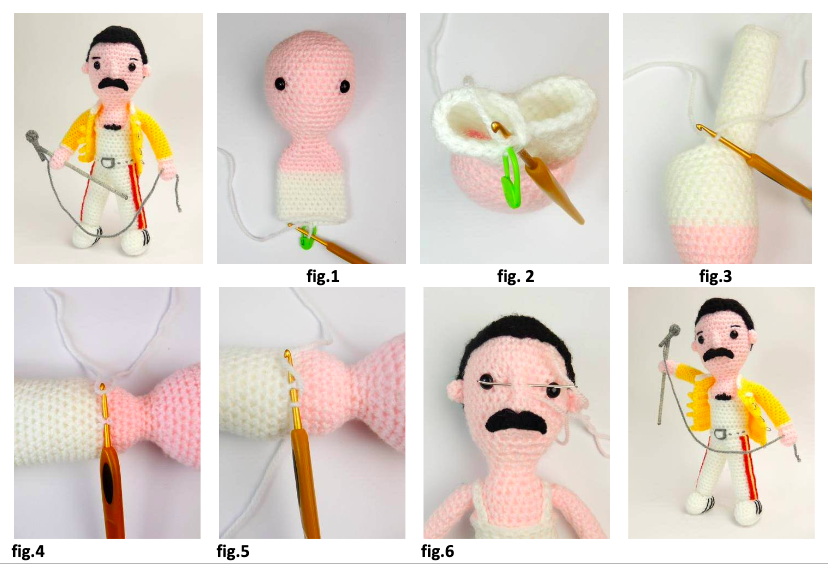
Make an Adorable Crocheted Freddie Mercury; Download a Free Crochet Pattern Online

Giv­en his pas­sion for his pussy­cats, is it real­ly such a stretch to imag­ine Queen front­man Fred­die Mer­cury pass­ing a qui­et evening at home with a cup of tea and a bas­ket of cro­chet sup­plies?

Tis but a handicrafter’s fan­ta­sy.

Oth­er than a boy­ish inter­est in stamp col­lect­ing, Mer­cury claimed to have no hob­bies, famous­ly telling an inter­view­er who inquired, “I have none. I have a lot of sex. Try and get out of that one!”

Which is not to say sex and cro­chet are mutu­al­ly exclu­sive.

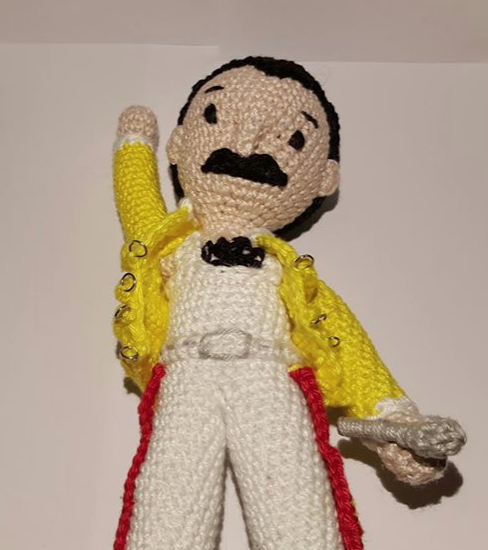
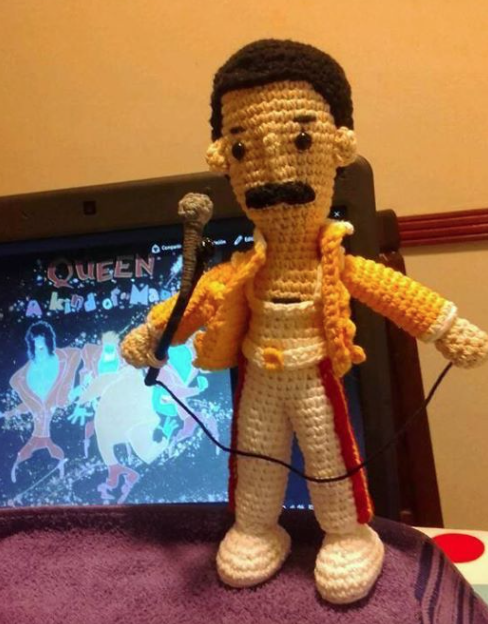
If your cro­chet notions are root­ed in frumpy afghans, lumpy baby sweaters, and 1970s beer can hats, you need to get with the times and pic­ture a church bazaar pop­u­lat­ed exclu­sive­ly by sexy woolen Mer­curys in minia­ture fac­sim­i­les of his Wem­b­ley Sta­di­um era garb.

Moji-Moji Design’s Jan­ice Holmes, a self-taught expert in amigu­ru­mithe art of tiny cro­cheted crea­tures, devised the pat­tern in order to stitch up a spe­cial request for a Queen-lov­ing friend.

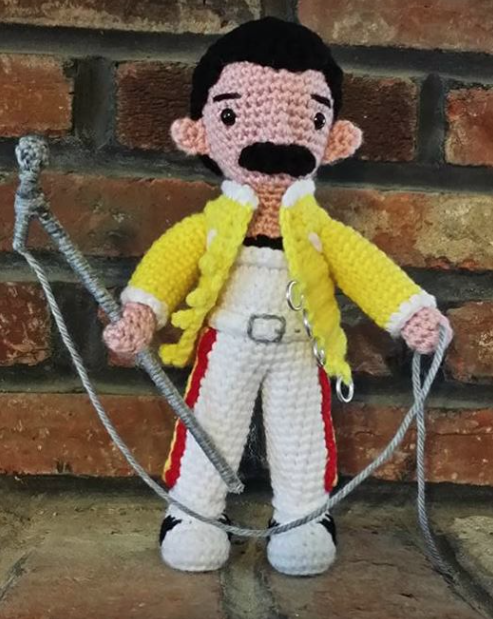
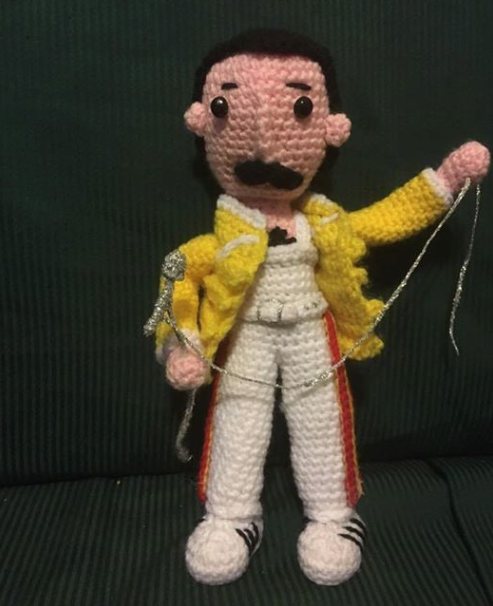
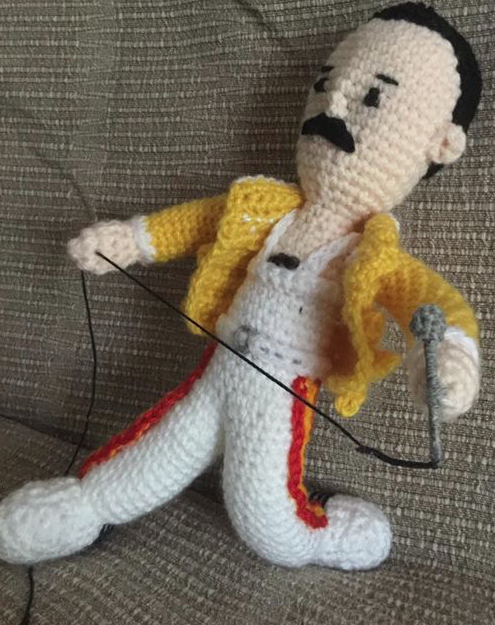
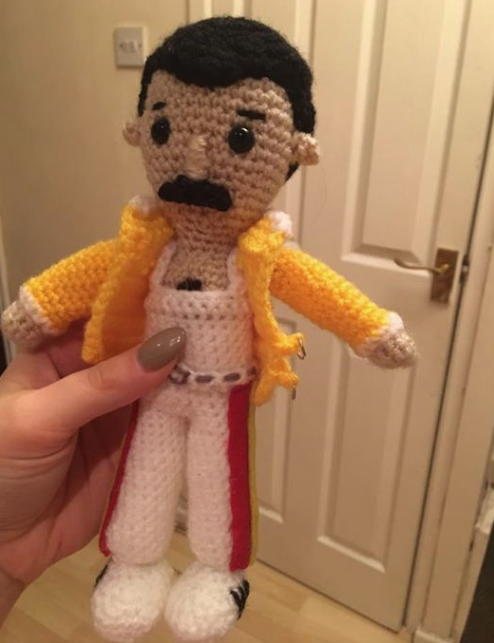
The result, com­plete with hairy chest, jack­et buck­les, and a bam­boo skew­er mic stand, was so fab­u­lous that she felt com­pelled to share the pat­tern with the world, in hope that those who took advan­tage of the free down­load would con­sid­er donat­ing to the Mer­cury Phoenix Trust, a char­i­ty that band­mates Bri­an May and Roger Tay­lor and Queen man­ag­er Jim Beach found­ed to fight HIV/AIDS world­wide.

Those who braved the tricky, many-stepped pat­tern were invit­ed to share pho­tos of their final cre­ation on Moji-Moji’s Face­book page. As of last count, there are 21, and it’s fas­ci­nat­ing to note the slight vari­a­tions in eyes, mus­tache, and chest hair.

In keep­ing with amigu­ru­mi tra­di­tion, the afford­able pat­terns in Moji-Moji’s Etsy shop run toward cute ani­mals, cud­dly mon­sters, and sea­son­al favorites like witch­es and elves.

But Fred­die clear­ly stirred some­thing up. Read the com­ments and you’ll find crafters peti­tion­ing Holmes for more music icons like David Bowie and Prince.

Ready to snug­gle up with a cro­chet hook? Down­load Moji-Moji’s free Fred­die Mer­cury ami­garu­mi pat­tern here.

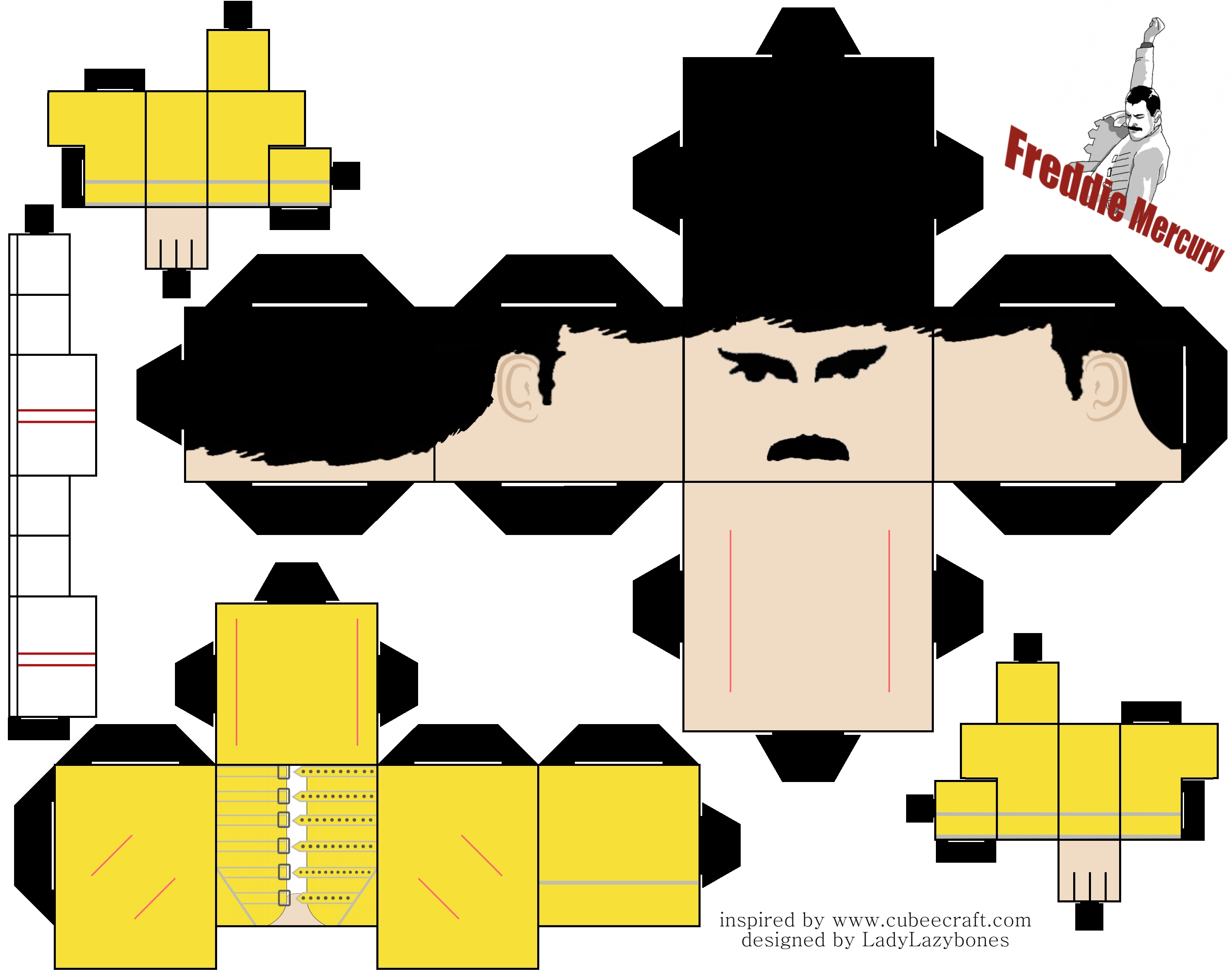
If that’s rather too daunt­ing, ease into the crafti­ness with anoth­er free down­load—Lady Lazy­bones’ far less advanced fold­able cube­craft Fred­die.

Even if you plan on stick­ing with sex as your sole hob­by, please con­sid­er mak­ing a vol­un­tary con­tri­bu­tion to the Mer­cury Phoenix Trust here.

via Boing Boing

Relat­ed Con­tent:

Meet Fred­die Mer­cury and His Faith­ful Feline Friends

Watch Behind-the-Scenes Footage From Fred­die Mercury’s Final Video Per­for­mance

Fred­die Mer­cury Reimag­ined as Com­ic Book Heroes

Ayun Hal­l­i­day is an author, illus­tra­tor, the­ater mak­er and Chief Pri­ma­tol­o­gist of the East Vil­lage Inky zine. Join her in NYC on Mon­day, Octo­ber 7 when her month­ly book-based vari­ety show, Necro­mancers of the Pub­lic Domain cel­e­brates the art of Aubrey Beard­s­ley. Fol­low her @AyunHalliday.

Harvard Students Perform Amazing Boomwhacker Covers of Queen’s “Bohemian Rhapsody,” Journey’s “Don’t Stop Believin,” Toto’s “Africa” & More

Short­ly before he died, Queen’s front­man, Fred­die Mer­cury, famous­ly remarked, “Do what­ev­er you want with my life and my music, just don’t make it bor­ing.”

Mis­sion accom­plished, thanks to the Har­vard Under­grad­u­ate Drum­mers, more com­mon­ly known as THUD.

The ensem­ble, which rehears­es week­ly, is will­ing to con­sid­er any­thing with per­cus­sive potential—plastic cups, chalk­boards, buckets—as an instru­ment, but is best known for its vir­tu­oso boomwhack­er per­for­mances.

boomwhack­er, for the unini­ti­at­ed, is a light­weight, hol­low plas­tic tube, whose length deter­mines its musi­cal pitch. When smacked against hand or thigh, it pro­duces a pleas­ing­ly res­o­nant sound. Col­or-cod­ing helps play­ers keep track of which boomwhack­er to reach for dur­ing a fast-paced, pre­cise­ly orches­trat­ed num­ber.

In the­o­ry, boomwhack­ers are sim­ple enough for a child to mas­ter, but THUD takes things to a lofti­er plateau with cus­tom craft­ed sheet music sys­tem­ized so that no one play­er gets stuck with an impos­si­bly com­plex task.

“A lot of it real­ly comes down to feel and mus­cle mem­o­ry,” THUD’s assis­tant direc­tor Ben Palmer told The Irish Exam­in­er. “After play­ing the song enough and inter­nal­is­ing it, we have a sense of where our notes come in. Also, many times our parts will play off each oth­er, so we give each oth­er cues by look­ing at each oth­er just before we play.”

(That Ker­mit the Frog-like voice chim­ing in on THUD’s “Bohemi­an Rhap­sody” cov­er, which many view­ers have mis­tak­en for an obnox­ious audi­ence mem­ber get­ting a lit­tle too into the pro­ceed­ings, is actu­al­ly an ensem­ble mem­ber help­ing the oth­ers stay the course.

As seri­ous as the group is about rehearsal and pro­vid­ing local school kids with free inter­ac­tive music lessons, their live shows lean in to the silli­ness inher­ent in their cho­sen instru­ment.

This good humored self-aware­ness defus­es the snarki­er com­ments on their YouTube chan­nel (“So this is why Har­vard’s tuition is so expen­sive…”)

Check out more THUD per­for­mances on the group’s YouTube chan­nel, or help defray their oper­at­ing costs with a pledge to their Patre­on.

Relat­ed Con­tent:

Pachelbel’s Chick­en: Your Favorite Clas­si­cal Pieces Played Mas­ter­ful­ly on a Rub­ber Chick­en

The Orig­i­nal Noise Artist: Hear the Strange Exper­i­men­tal Sounds & Instru­ments of Ital­ian Futur­ist, Lui­gi Rus­so­lo (1913)

The Health Ben­e­fits of Drum­ming: Less Stress, Low­er Blood Pres­sure, Pain Relief, and Altered States of Con­scious­ness

Ayun Hal­l­i­day is an author, illus­tra­tor, the­ater mak­er and Chief Pri­ma­tol­o­gist of the East Vil­lage Inkyzine.  Join her in NYC on Mon­day, Sep­tem­ber 9 for anoth­er sea­son of her book-based vari­ety show, Necro­mancers of the Pub­lic Domain. Fol­low her @AyunHalliday.

Nigerian Teenagers Are Making Slick Sci Fi Films With Their Smartphones

Some­one should real­ly snap up the rights for a movie about The Crit­ics, a col­lec­tive of self-taught teenage film­mak­ers from north­west­ern Nige­ria.

The boys’ ded­i­ca­tion, ambi­tion, and no-bud­get inven­tive­ness calls to mind oth­er film­mak­ing fanat­ics, from the sequestered, home­schooled broth­ers of The Wolf­pack to the fic­tion­al Swed­ing spe­cial­ists of Me and Earl and the Dying Girl and Be Kind, Rewind.

While smart­phones and free edit­ing apps have def­i­nite­ly made it eas­i­er for aspir­ing film­mak­ers to bring their fan­tasies to fruition, it’s worth not­ing that The Crit­ics saved for a month to buy the green fab­ric for their chro­ma key effects.

Their pro­duc­tions are also plagued with the inter­net and pow­er out­ages that are a fre­quent occur­rence in their home base of Kaduna, slow­ing every­thing from the ren­der­ing process to the Youtube visu­al effects tuto­ri­als that have advanced their craft.

To date they’ve filmed 20 shorts on a smart phone with a smashed screen, mount­ed to a bro­ken micro­phone stand that’s found new life as a home­made tri­pod.

Their sim­ple set up will be com­ing in for an upgrade, how­ev­er, now that Nol­ly­wood direc­tor Kemi Adeti­ba has brought their efforts to the atten­tion of a much wider audi­ence, who donat­ed $5,800 in a fundrais­ing cam­paign.

It’s easy to imag­ine the young male demo­graph­ic flock­ing to a fea­ture-length, big-bud­get expan­sion of Z: The Begin­ning. It’s pos­si­ble even the art house crowd could be lured to a sum­mer block­buster whose set­ting is Nige­ria, thir­ty years into the future, a nov­el­ty for those of us unversed in Nol­ly­wood’s prodi­gious out­put.

The post-apoc­a­lyp­tic short, above, took the crew 7 months to film and edit. The stars also inhab­it­ed a num­ber of off­screen roles: stunt coor­di­na­tor, gaffer, prop mas­ter, com­pos­er, con­ti­nu­ity…

What’s next? Ear­li­er this month, Africa News revealed that the boys are busy with a new film whose plot they aren’t at lib­er­ty to reveal. We’re guess­ing a sequel, to go by a not so sub­tle hint fol­low­ing Z’s final cred­its and a mov­ing ded­i­ca­tion to “the ones we’ve lost.”

“Hor­ror, com­e­dy, sci-fi, action, we do all,” The Crit­ics’ pro­claim on their Youtube chan­nel, care­ful­ly cat­e­go­riz­ing their work as “films not skits.” (Their films’ length has thus far been dic­tat­ed by the unpre­dictabil­i­ty of their wifi sit­u­a­tion—Chase, below, is five min­utes long and took two days to ren­der.

“One of the tar­gets we aim for in the years to come is to make the biggest film in Nige­ria and prob­a­bly beyond,” God­win Josi­ahZ’s 19-year-old writer-direc­tor told Chan­nels Tele­vi­sion, Lagos’ 24-hour news chan­nel:

We want to do some­thing crazy, we want to do some­thing great, some­thing that has not been done before, and from what has been going on now, we believe quite well that it is going to hap­pen soon enough.

Watch The Crit­ics’ films and mak­ing-ofs on their Youtube chan­nel.

Sup­port their work with a pledge to their recent­ly launched Patre­on.

via Kot­tke/Africa News

Relat­ed Con­tent:

The Strange and Won­der­ful Movie Posters from Ghana: The Matrix, Alien & More

High School Kids Stage Alien: The Play and You Can Now Watch It Online

Direc­tor Robert Rodriguez Teach­es The Basics of Film­mak­ing in Under 10 Min­utes

Hear Kevin Smith’s Three Tips For Aspir­ing Film­mak­ers (NSFW)

Ayun Hal­l­i­day is an author, illus­tra­tor, the­ater mak­er and Chief Pri­ma­tol­o­gist of the East Vil­lage Inkyzine.  Join her in NYC on Mon­day, Sep­tem­ber 9 for anoth­er sea­son of her book-based vari­ety show, Necro­mancers of the Pub­lic Domain. Fol­low her @AyunHalliday.

How to Focus: Five Talks Reveal the Secrets of Concentration

Dis­agree though we may about what’s wrong with life in the 21st cen­tu­ry, all of us — at least in the devel­oped, high tech-sat­u­rat­ed parts of the world — sure­ly come togeth­er in lament­ing our inabil­i­ty to focus. We keep hear­ing how dis­trac­tions of all kinds, but espe­cial­ly those deliv­ered by social media, frag­ment our atten­tion into thou­sands of lit­tle pieces, pre­vent­ing us from com­plet­ing or even start­ing the kind of noble long-term endeav­ors under­tak­en by our ances­tors. But even if that diag­no­sis is accu­rate, we might won­der, how does it all work? These five video talks offer not just insights into the nuts and bolts of atten­tion, con­cen­tra­tion, and focus, but sug­ges­tions about how we might tight­en our own as well.

In “How to Get Your Brain to Focus,” the TED Talk at the top of the post, Hyper­fo­cus author Chris Bai­ley relates how his own life devolved into a morn­ing-noon-night “series of screens,” and what result­ed when he did away with some of those screens and the dis­trac­tions they unceas­ing­ly pre­sent­ed him — or rather, the over­stim­u­la­tion they inflict­ed on him: “We think that our brains are dis­tract­ed,” he says, “but they’re over­stim­u­lat­ed.”

Reduc­ing his own lev­el of stim­u­la­tion fur­ther still, he delib­er­ate­ly engaged in such low-stim­u­la­tion (more com­mon­ly known as “bor­ing”) prac­tices as read­ing iTunes’ entire terms-and-con­di­tions doc­u­ment (and not in graph­ic-nov­el form), wait­ing on hold with Air Canada’s bag­gage depart­ment, count­ing the zeroes in pi, and final­ly just watch­ing a clock.

Bai­ley found that, absent the fre­quent dopamine hits pro­vid­ed by his screens, his atten­tion span grew and more ideas, plans, and thoughts about the future came to him. “We think that we need to fit more in,” he says, but in real­i­ty “we’re doing too much, so much that our mind nev­er wan­ders.” When we have noth­ing in par­tic­u­lar to focus on, our mind finds its way into new ter­ri­to­ries: hence, he says, the fact that we so often get our best ideas in the show­er. He ref­er­ences data indi­cat­ing that these men­tal wan­der­ings take us back into the past 12 per­cent of the time and remain in the present 28 per­cent of the time, but most often fast-for­ward into the future, a habit also explored by neu­ro­sci­en­tist Amishi Jha in the TED Talk just above, “How to Tame Your Wan­der­ing Mind.”

“Our mind is an exquis­ite time-trav­el­ing mas­ter,” says Jha, “and we land in this men­tal time-trav­el mode of the past or the future very fre­quent­ly. “And when this hap­pens, when we mind-wan­der with­out an aware­ness that we’re doing it, there are con­se­quences. We make errors. We miss crit­i­cal infor­ma­tion, some­times. And we have dif­fi­cul­ty mak­ing deci­sions.” In Jha’s view, a wan­der­ing mind can be dan­ger­ous: she labels its “inter­nal dis­trac­tion” as one of the three fac­tors, along­side exter­nal stress and dis­trac­tion in the envi­ron­ment, that “dimin­ish­es atten­tion’s pow­er.” Her lab­o­ra­to­ry research has brought her to endorse the solu­tion of “mind­ful­ness prac­tice,” which “has to do with pay­ing atten­tion to our present-moment expe­ri­ence with aware­ness. And with­out any kind of emo­tion­al reac­tiv­i­ty of what’s hap­pen­ing,” keep­ing our fin­ger on the “play” but­ton “to expe­ri­ence the moment-to-moment unfold­ing of our lives.”

As a mind­ful­ness prac­tice, med­i­ta­tion does the trick for many, although pre­ci­sion shoot­ing cham­pi­on Christi­na Bengts­son rec­om­mends star­ing at leaves. “I focused on a beau­ti­ful autumn leaf play­ing in the wind,” she says of her deci­sive shot in her TED Talk above. “Sud­den­ly I am com­plete­ly calm, and the world cham­pi­on title was mine.” That leaf, she says, “relieved me of dis­tract­ing thoughts and made me focus,” and the expe­ri­ence led her to come up with a broad­er the­o­ry. “We need to learn to notice dis­turb­ing thoughts and to dis­tin­guish them from not-dis­turb­ing thoughts,” she says, a not-dis­turb­ing thought being one that “knocks out all the dis­turb­ing and wor­ry­ing thoughts.” In this frame­work, the thought of a leaf can drain the dis­tract­ing pow­er from all those nag­ging what-ifs about our goals and the future ahead.

“Focus is not about becom­ing some­thing new or some­thing bet­ter, but sim­ply about func­tion­ing exact­ly as well as we already are,” says Bengts­son, “and under­stand­ing that this is enough for both gen­er­al hap­pi­ness and great achieve­ments.” Among her oth­er, non-leaf-relat­ed rec­om­men­da­tions is to cre­ate a “not-to-do list,” a form suit­ed to a world “no longer about pri­or­i­tiz­ing, but about pri­or­i­tiz­ing away.” The not-to-do list also gets a strong endorse­ment in “How to Focus Intense­ly,” the Free­dom in Thought ani­mat­ed video just above. After open­ing with an elab­o­rate anal­o­gy about robots, box­es, and fac­to­ry fires, it goes on to break down the key trade­off of atten­tion: on one side direct­ed focus, “pro­vid­ing undi­vid­ed atten­tion while ignor­ing envi­ron­men­tal stim­uli,” and on the oth­er gen­er­al­ized focus, which does the oppo­site.

We human beings often don’t make that trade­off adept­ly, and the rea­sons cit­ed here include stress, engage­ment in tasks we dis­like because they aren’t inher­ent­ly plea­sur­able (even when they promise plea­sures lat­er on, since the arrival of those plea­sures can be uncer­tain), and the habit of short-term plea­sure-seek­ing. Along with med­i­ta­tion and the not-to-do list come oth­er fea­tured strate­gies like active­ly plac­ing bound­aries on your media con­sump­tion, struc­tur­ing your day with “blocks” of work sep­a­rat­ed by short breaks, and draw­ing up a pri­or­i­ty list, all while adher­ing to the gen­er­al ratio of spend­ing 80 per­cent of your time on “activ­i­ties that pro­duce long-term plea­sure” and 20 per­cent on “activ­i­ties that pro­duce short-term plea­sure.”

The Free­dom in Thought video also rec­om­mends some­thing called “deep work,” a set of tech­niques defined by com­put­er sci­en­tist Cal New­port in his book of the same name. But to do deep work as New­port him­self does it requires that you take a step that may sound rad­i­cal at first: quit social media. That imper­a­tive pro­vides the title of New­port’s TED Talk above, which explains the whys and hows of doing just that. He also deals with the com­mon objec­tions to the notion of quit­ting social media, fram­ing social media itself as just anoth­er slot machine-like form of enter­tain­ment — with all the atten­dant psy­cho­log­i­cal harms — that, because of its sheer com­mon­ness and eas­i­ness, can hard­ly be as vital to suc­cess in the 21st-cen­tu­ry econ­o­my as it’s so often claimed to be.

New­port explains that “what the mar­ket dis­miss­es, for the most part, are activ­i­ties that are easy to repli­cate and pro­duce a small amount of val­ue,” i.e. what most of us spend our days doing on Twit­ter, Face­book, and Insta­gram. “It’s instead going to reward the deep, con­cen­trat­ed work required to build real skills and apply those skills to pro­duce things, like a crafts­man, that are rare and are valu­able.” If you treat your atten­tion with respect, he says, “when it comes time to work, you can actu­al­ly do one thing after anoth­er, and do it with inten­si­ty, and inten­si­ty can be trad­ed for time.” When you train your mind away from dis­trac­tion, in oth­er words, you actu­al­ly end up with more time to work with — an asset that even Bill Gates and War­ren Buf­fett, both of whom famous­ly cred­it their own suc­cess to focus, can’t buy for them­selves.

Relat­ed Con­tent:

How Infor­ma­tion Over­load Robs Us of Our Cre­ativ­i­ty: What the Sci­en­tif­ic Research Shows

The Case for Delet­ing Your Social Media Accounts & Doing Valu­able “Deep Work” Instead, Accord­ing to Prof. Cal New­port

The Neu­ro­science & Psy­chol­o­gy of Pro­cras­ti­na­tion, and How to Over­come It

Alan Watts Presents a 15-Minute Guid­ed Med­i­ta­tion: A Time-Test­ed Way to Stop Think­ing About Think­ing

Lis­ten to Wake Up to Your Life: Dis­cov­er­ing the Bud­dhist Path of Atten­tion by Ken McLeod

How to Take Advan­tage of Bore­dom, the Secret Ingre­di­ent of Cre­ativ­i­ty

Lyn­da Bar­ry on How the Smart­phone Is Endan­ger­ing Three Ingre­di­ents of Cre­ativ­i­ty: Lone­li­ness, Uncer­tain­ty & Bore­dom

Based in Seoul, Col­in Mar­shall writes and broad­casts on cities, lan­guage, and cul­ture. His projects include the book The State­less City: a Walk through 21st-Cen­tu­ry Los Ange­les and the video series The City in Cin­e­ma. Fol­low him on Twit­ter at @colinmarshall, on Face­book, or on Insta­gram.

An Artist Crochets a Life-Size, Anatomically-Correct Skeleton, Complete with Organs

How to make a life-sized fac­sim­i­le of a human skele­ton:

  1. Down­load files pub­lished under a Cre­ative Com­mons license, and arrange to have them 3‑D print­ed.

or

  1. Do as artist Shanell Papp did, above, and cro­chet one.

The lat­ter will take con­sid­er­ably more time and atten­tion on your part. Papp gave up all extracur­ric­u­lar activ­i­ties for four months to hook the woolen skele­ton around her work and school sched­ule. Equip­ping it with inter­nal organs ate up anoth­er four.

To ensure accu­ra­cy, Papp armed her­self with anatom­i­cal text­books and an actu­al human skele­ton on loan from the Uni­ver­si­ty of Leth­bridge, where she was an under­grad. The brain has gray and white mat­ter, there’s mar­row in the bones, the stom­ach con­tains half-digest­ed wool food, and the intestines can be unspooled to a real­is­tic length.

The gru­el­ing 2006 project did not exhaust her fas­ci­na­tion for the intri­ca­cies of human anato­my. The Uni­ver­si­ty of Saskatchewan grant­ed her open access to draw in the gross anato­my lab while she pur­sued her MFA.


As she told MICE mag­a­zine:

I want­ed this work to illus­trate all of the organs and bones every­one shares and to not high­light dif­fer­ences. Much of anatom­i­cal his­to­ry is about defin­ing dif­fer­ence, by com­par­a­tive analy­sis. This can set up strange tax­onomies and hier­ar­chies. I was­n’t inter­est­ed in par­tic­i­pat­ing in that; I want­ed to expose the frag­ile, com­mon, and unseen things in all of us.  

The fin­ished piece, which is dis­played supine on a gur­ney she nabbed for free dur­ing a mor­tu­ary ren­o­va­tion, incor­po­rates many of Papp’s oth­er abid­ing inter­ests: hor­ror, med­ical his­to­ry, Franken­stein, crime inves­ti­ga­tion, and mor­tu­ary prac­tices.

Papp, who taught her­self how to cro­chet from books as a child, using what­ev­er yarn found its way to her grandma’s junk shop, appre­ci­ates how her cho­sen medi­um adds a lay­er of homey soft­ness and famil­iar­i­ty to the macabre.

It’s also not lost on her that fiber arts, often dis­missed as too “crafty” by the estab­lish­ment, were an impor­tant com­po­nent of 70s-era fem­i­nist art, though in her view, her work is more of a state­ment on the his­to­ry of tex­tile man­u­fac­tur­ing, which is to say the his­to­ry of labor and class strug­gle.

See more of Shanell Papp’s work here.

All images in this post by Shanell Papp.

via design­boom/Mymod­ern­met

Relat­ed Con­tent:

Behold an Anatom­i­cal­ly Cor­rect Repli­ca of the Human Brain, Knit­ted by a Psy­chi­a­trist

The BBC Cre­ates Step-by-Step Instruc­tions for Knit­ting the Icon­ic Dr. Who Scarf: A Doc­u­ment from the Ear­ly 1980s

The Beau­ti­ful Math of Coral & Cro­chet

Ayun Hal­l­i­day is an author, illus­tra­tor, the­ater mak­er and Chief Pri­ma­tol­o­gist of the East Vil­lage Inkyzine.  Join her in NYC on Mon­day, Sep­tem­ber 9 for anoth­er sea­son of her book-based vari­ety show, Necro­mancers of the Pub­lic Domain. Fol­low her @AyunHalliday.

Sir Ian McKellen Reads Kurt Vonnegut’s Letter to High School Students: Make Art and “Make Your Soul Grow”

Author Kurt Von­negut was pos­sessed of a droll, unsen­ti­men­tal pub­lic speak­ing style. A son of Indi­anapo­lis, he nev­er lost his Hoosier accent, despite lengthy stints in Cape Cod and New York City.

Actor Ian McK­ellen, on the oth­er hand, exudes warmth. He’s a charmer who tells a sto­ry with a twin­kle in his eye, alter­ing his voice and facial expres­sions to height­en the effect. (Check out his Mag­gie Smith.) Vocal train­ing has only enhanced his beau­ti­ful instru­ment. (He can make a tire repair man­u­al sound like Shake­speare.)

These two lions may have come at their respec­tive crafts from dif­fer­ent angles, but Sir Ian did Von­negut proud, above, as part of Let­ters Live, an ongo­ing cel­e­bra­tion of the endur­ing pow­er of lit­er­ary cor­re­spon­dence.

The let­ter in ques­tion was penned the year before Vonnegut’s death, in reply to five stu­dents at a Jesuit high school in New York City, regret­ful­ly declin­ing their invi­ta­tion to vis­it.

Instead, he gave them two assign­ments.

One was fair­ly uni­ver­sal, the sort of thing one might encounter in a com­mence­ment address: make art and in so doing, learn about life, and your­self.

The oth­er was more con­crete:

Write a 6 line rhyming poem

Don’t show it or recite it to any­one.

Tear it up into lit­tle pieces

Dis­card the pieces in wide­ly sep­a­rat­ed trash recep­ta­cles

Why?

A chance for Xavier High School’s all male stu­dent body to air roman­tic feel­ings with­out fear of  dis­cov­ery or rejec­tion?

May­haps, but the true pur­pose of the sec­ond assign­ment is encap­su­lat­ed in the first—to “expe­ri­ence becom­ing” through a cre­ative act.

This notion clear­ly strikes a chord with Sir Ian, 17 years younger than Von­negut but by the time of the  2016 per­for­mance, clos­ing in on the igua­na-like age Von­negut had been when he wrote the let­ter.

Should we attribute the quiver on the clos­ing line to act­ing or gen­uine emo­tion on Sir Ian’s part?

Either way, it’s a love­ly ren­di­tion.

Novem­ber 5, 2006

Dear Xavier High School, and Ms. Lock­wood, and Messrs Perin, McFeely, Bat­ten, Mau­r­er and Con­gius­ta:

I thank you for your friend­ly let­ters. You sure know how to cheer up a real­ly old geezer (84) in his sun­set years. I don’t make pub­lic appear­ances any more because I now resem­ble noth­ing so much as an igua­na. 

What I had to say to you, more­over, would not take long, to wit: Prac­tice any art, music, singing, danc­ing, act­ing, draw­ing, paint­ing, sculpt­ing, poet­ry, fic­tion, essays, reportage, no mat­ter how well or bad­ly, not to get mon­ey and fame, but to expe­ri­ence becom­ing, to find out what’s inside you, to make your soul grow.

Seri­ous­ly! I mean start­ing right now, do art and do it for the rest of your lives. Draw a fun­ny or nice pic­ture of Ms. Lock­wood, and give it to her. Dance home after school, and sing in the show­er and on and on. Make a face in your mashed pota­toes. Pre­tend you’re Count Drac­u­la.

Here’s an assign­ment for tonight, and I hope Ms. Lock­wood will flunk you if you don’t do it: Write a six line poem, about any­thing, but rhymed. No fair ten­nis with­out a net. Make it as good as you pos­si­bly can. But don’t tell any­body what you’re doing. Don’t show it or recite it to any­body, not even your girl­friend or par­ents or what­ev­er, or Ms. Lock­wood. OK?

Tear it up into tee­ny-wee­ny pieces, and dis­card them into wide­ly sep­a­rat­ed trash recep­ti­cals. You will find that you have already been glo­ri­ous­ly reward­ed for your poem. You have expe­ri­enced becom­ing, learned a lot more about what’s inside you, and you have made your soul grow.

God bless you all!

Kurt Von­negut

(Ian McKellen’s oth­er Let­ters Live per­for­mance is a fic­tion­al com­ing out let­ter from Armis­tead Maupin’s Tales of the City, from a gay char­ac­ter to his Ani­ta Bryant-sup­port­ing par­ents.)

Relat­ed Con­tent:

In 1988, Kurt Von­negut Writes a Let­ter to Peo­ple Liv­ing in 2088, Giv­ing 7 Pieces of Advice

Why Should We Read Kurt Von­negut? An Ani­mat­ed Video Makes the Case

Kurt Von­negut Offers 8 Tips on How to Write Good Short Sto­ries (and Amus­ing­ly Graphs the Shapes Those Sto­ries Can Take)

Ayun Hal­l­i­day is an author, illus­tra­tor, the­ater mak­er and Chief Pri­ma­tol­o­gist of the East Vil­lage Inkyzine.  Join her in NYC on Mon­day, Sep­tem­ber 9 for anoth­er sea­son of her book-based vari­ety show, Necro­mancers of the Pub­lic Domain. Fol­low her @AyunHalliday.

The Piano Played with 16 Increasing Levels of Complexity: From Easy to Very Complex

Remem­ber the feel­ing of accom­plish­ment as a child, pick­ing out a sim­ple tune after your first piano les­son?

Then the day you begin to play with both hands? So grown up.

Even­tu­al­ly you start using more than two fin­gers.

And then comes the par­ty where a proud par­ent, pos­si­bly with a drink or two in him, com­mands you to play for the guests, who indulge your efforts with applause and the sug­ges­tion that per­haps their child, a con­tem­po­rary of yours, take a turn at the key­board.

Mozart.

Beethoven.

Max­i­mum humil­i­a­tion.

How soon can you bail on those damn piano lessons?

I flashed on that uni­ver­sal expe­ri­ence whilst lis­ten­ing to pianist and com­pos­er Nahre Sol demon­strate the “end­less pos­si­bil­i­ties” of piano com­po­si­tion and inter­pre­ta­tion by sub­ject­ing “Hap­py Birth­day” to six­teen lev­els of increas­ing com­plex­i­ty.

‘Round about lev­el five is where our respec­tive tal­ents began to part ways.

After a lot of prac­tice and false starts, I can some­times man­age a sim­ple arpeg­gio.

That’s greasy kid stuff to Nahre, whose YouTube chan­nel abounds with expert advice on how to sound like var­i­ous clas­si­cal com­posers and robust inves­ti­ga­tions of gen­res—fla­men­co, rag­time, Bossa nova, the Blues…

Now I know what made the vis­i­tors’ kid so much more advanced than me—broken octaves, glis­san­dos, great mus­cu­lar spans, a con­fi­dent com­mand of har­monies and rhythm…

Sol blows that per­for­mance out of the water, with seem­ing­ly very lit­tle effort, breezi­ly explain­ing what she’s doing each time she takes things up a notch, cul­mi­nat­ing in lev­el 16, which encom­pass­es all pre­vi­ous steps.

As home­less­ricegum observes in the com­ment sec­tion of the video, “Lev­el 17: you will now need your third hand.”

Relat­ed Con­tent:

The Con­cept of Musi­cal Har­mo­ny Explained in Five Lev­els of Dif­fi­cul­ty, Start­ing with a Child & End­ing with Her­bie Han­cock

Learn How to Read Sheet Music: A Quick, Fun, Tongue-in-Cheek Intro­duc­tion

A Vin­tage Grand Piano Gets Reengi­neered to Play 20 Dif­fer­ent Instru­ments with a Push of Its Keys

Ayun Hal­l­i­day is an author, illus­tra­tor, the­ater mak­er and Chief Pri­ma­tol­o­gist of the East Vil­lage Inkyzine.  Join her in NYC on Sep­tem­ber 9 for anoth­er month­ly install­ment of her book-based vari­ety show, Necro­mancers of the Pub­lic Domain. Fol­low her @AyunHalliday.


Cartoonist Lynda Barry Teaches You How to Draw

Friend, are you par­a­lyzed by your iron­clad con­vic­tion that you can’t draw?

Pro­fes­sor Chew­bac­ca aka Pro­fes­sor Old Skull aka car­toon­ist Lyn­da Bar­ry has had quite enough of that non­sense!

So stop dis­sem­bling, grab a pen and a hand-sized piece of paper, and fol­low her instruc­tions to Anne Strain­champs, host of NPR’s To The Best Of Our Knowl­edge, below.

It’s bet­ter to throw your­self into it with­out know­ing pre­cise­ly what the ten minute exer­cise holds (oth­er than draw­ing, of course).

We know, we know, you can’t, except that you can. Like Strain­champs, you’re prob­a­bly just rusty.

Don’t judge your­self too harsh­ly if things look “ter­ri­ble.”

In Barry’s view, that’s rel­a­tive, par­tic­u­lar­ly if you were draw­ing with your eyes closed.

A neu­rol­o­gy nerd, Bar­ry cites Gir­i­ja Kaimal, Kendra Ray, and Juan Muniz’ study Reduc­tion of Cor­ti­sol Lev­els and Par­tic­i­pants’ Respons­es Fol­low­ing Art Mak­ing. It’s the action, not the sub­jec­tive artis­tic mer­it of what winds up on the page that counts in this regard.

For more of Barry’s exer­cis­es and delight­ful­ly droll pres­ence, check out this playlist on Dr. Michael Green’s Graph­ic Med­i­cine Chan­nel.

Relat­ed Con­tent:

Lyn­da Bar­ry on How the Smart­phone Is Endan­ger­ing Three Ingre­di­ents of Cre­ativ­i­ty: Lone­li­ness, Uncer­tain­ty & Bore­dom

Fol­low Car­toon­ist Lyn­da Barry’s 2017 “Mak­ing Comics” Class Online, Pre­sent­ed at UW-Wis­con­sin

Lyn­da Barry’s Illus­trat­ed Syl­labus & Home­work Assign­ments from Her New UW-Madi­son Course, “Mak­ing Comics”

Join Car­toon­ist Lyn­da Bar­ry for a Uni­ver­si­ty-Lev­el Course on Doo­dling and Neu­ro­science

Ayun Hal­l­i­day is an author, illus­tra­tor, the­ater mak­er and Chief Pri­ma­tol­o­gist of the East Vil­lage Inky zine… Fol­low her @AyunHalliday.

« Go BackMore in this category... »
Quantcast