The 2020 sequel to Go the F–k to Sleep Narrated by Samuel L. Jackson. The reading starts at the 6:10 mark…
Disease modeling as a science has come into its own lately, for heartbreakingly obvious reasons. What may not be so obvious to those of us who aren’t scientists is just how critical data can be in changing the course of events in an outbreak. Virus outbreaks may be “acts of God” or acts of unregulated black markets and agribusinesses, but in either case, statistical models can show, concretely, how collective human activity can save lives—and show what happens when people don’t act together.
For example, epidemiologists and biostatisticians have shown in detail how social distancing led to a “decline in the proportion of influenza deaths,” one study concludes, during the 1918 flu pandemic. The same researchers also saw evidence in their models that showed “public risk perception could be lowered” when these practices worked effectively, leading people think they could resume business as usual. But “less social distancing could eventually induce another epidemic wave.”
To say that it’s a challenge to stay inside and wait out COVID-19 indefinitely may be a gross understatement, but hunkering down may save our lives. No one can say what will happen, but as for how and why it happens, well, “that is math, not prophecy,” writes Harry Stevens at The Washington Post. “The virus can be slowed,” if people continue “avoiding public spaces and generally limiting their movement.” Let’s take a look at how with the model above. We must note that the video above does not model COVID-19 specifically, but a offers a detailed look at how a hypothetical epidemic spreads.
Created by YouTuber 3Blue1Brown, the modeling in the top video draws from a variety of sources, including Stevens’ interactive models of a hypothetical disease he calls “simulitis.” Another simulator whose work contributed to the video, Kevin Simler, has also explained the spread of disease with interactive models that enable us to visualize difficult-to-grasp epidemiological concepts, since “exponential growth is really, really hard for our human brains to understand” in the abstract, says YouTube physics explainer Minute Physics in the short, animated video above.
Deaths multiply faster than the media can report, and whatever totals we come across are hopelessly outdated by the time we read them, an emotional and intellectual barrage. So how can we know if we’re “winning or losing” (to use the not-particularly-helpful war metaphor) the COVID-19 fight? Here too, the current data on its previous progress in other countries can help plot the course of the disease in the U.S. and elsewhere, and allow scientists and policy-makers to make reasonable inferences about how to stop exponential growth.
But none of these models show the kind of granularity that doctors, nurses, and public health professionals must deal with in a real pandemic. “Simulitis is not covid-19, and these simulations vastly oversimplify the complexity of real life,” Stevens admits. Super-complicating risk factors like age, race, disability, and access to insurance and resources aren’t represented here. And there may be no way to model whatever the government is doing.
But the data models show us what has worked and what hasn’t, both in the past and in the recent present, and they have become very accessible thanks to the internet (and open source journals on platforms like PLOS). For a longer, in-depth explanation of the current pandemic’s exponential spread, see the lecture by epidemiologist Nicholas Jewell above from the Mathematical Sciences Research Institute (MSRI).
It may not sway people who actively ignore math, but disease modeling can guide the merely uninformed to a much better understanding of what’s happening, and better decisions about how to respond under the circumstances.
Related Content:
Spring Break vs. COVID-19: Mapping the Real Impact of Ignoring Social Distancing
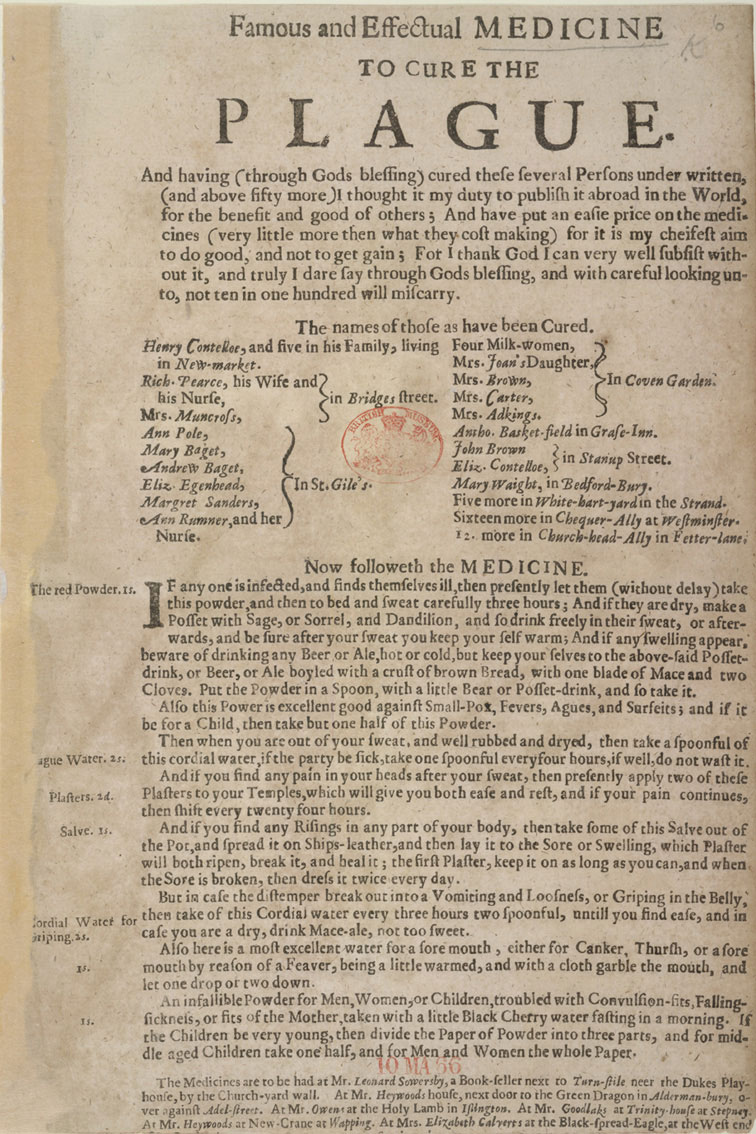
The History of the Plague: Every Major Epidemic in an Animated Map
Josh Jones is a writer and musician based in Durham, NC. Follow him at @jdmagness
Robbie Robertson’s “The Weight,” the Band’s most beloved song, has the quality of Dylan’s impressionistic narratives. Elliptical vignettes that seem to make very little sense at first listen, with a chorus that cuts right to the heart of the human predicament. “Robertson admits in his autobiography,” notes Patrick Doyle at Rolling Stone, “that he struggled to articulate to producer John Simon what the song was even about.” An artist needn’t understand a creation for it to resonate with listeners.
A read of the “The Weight”’s lyrics make its poignant themes evident—each stanza introduces characters who illustrate some sorrow or small kindness. The chorus offers what so many people seem to crave these days: a promise of rest from ceaseless toil, freedom from constant transactions, a community that shoulders everyone’s burdens…. “It’s almost like it’s good medicine,” Robertson told Doyle, “and it’s so suitable right now.” He refers specifically to the song’s revival in a dominant musical form of our isolation days—the online sing-along.
Though its lyrics aren’t nearly as easy to remember as, say, “Lean on Me,” Robertson’s classic, especially the big harmonies of its chorus (which everyone knows by heart), is ideal for big ensembles like the globe-spanning collection assembled by Playing for Change, “a group dedicated to ‘opening up how people see the world through the lens of music and art.” The group’s producers, Doyle writes, “recently spent two years filming artists around the world, from Japan to Bahrain to Los Angeles, performing the song,” with Ringo Starr on drums and Robertson on rhythm guitar. They began on the 50th anniversary of the song’s release.
The performances they captured are flawless, and mixed together seamlessly. If you want to know how this was achieved, watch the short behind the scenes video above with producer Sebastian Robertson, who happens to be Robbie’s son. He starts by praising the stellar contributions of Larkin Poe, two sisters whose rootsy country rock updates the Allman Brothers for the 21st century. But there are no slouches in the bunch (don’t be intimated out of your own group sing-alongs by the talent on display here). The song resonates in a way that connects, as “The Weight”’s chorus connects its non-sequitur stanzas, many disparate stories and voices.
Robertson was thrilled with the final product. “There’s a guy on a sitar!” he enthuses. “There’s a guy playing an oud, one of my favorite instruments.” The song suggests there’s “something spiritual, magical, unsuspecting” that can come from times of darkness, and that we’d all feel a whole lot better if we learned to take care of each other. The Playing for Change version “screams of unity,” he says, “and I hope it spreads.”
Related Content:
Stream Marc Maron’s Excellent, Long Interview with The Band’s Robbie Robertson
Watch The Band Play “The Weight,” “Up On Cripple Creek” and More in Rare 1970 Concert Footage
Josh Jones is a writer and musician based in Durham, NC. Follow him at @jdmagness
Yesterday, the United States surpassed China, becoming the world leader in COVID-19 infections. It’s not hard to understand why. Social distancing remains very uneven. Domestic travel continues unchecked. Asymptomatic carriers stay on the move. Starting on the coasts, COVID-19 is now moving inexorably across the nation, coming to a city or town near you.
If you want to get a glimpse of how COVID-19 can spread, watch this clip from Tectonix GEO. It uses data from anonymized mobile devices to trace the movement of Spring Break partiers who congregated at one single Ft. Lauderdale beach, then moved back across the United States, in each case potentially bringing the virus with them. It’s a quick case study showing how an infectious disease can spread through a country that wants to remain mobile come hell, pandemic, or high water.
Related Content:
Free Courses on the Coronavirus: What You Need to Know About the Emerging Pandemic
Watch Bacteria Become Resistant to Antibiotics in a Matter of Days: A Quick, Stop-Motion Film
The History of the Plague: Every Major Epidemic in an Animated Map
He is a “geek cultural icon”: Captain Picard and Professor X. We’ve heard him gamely voice a ridiculous animated character in American Dad. We know him as an advocate for victims of domestic violence, a tragic reality he witnessed as a child. There are many sides to Patrick Stewart, but at his core, Shakespeare nerds know, he’s a Shakespearean. Maybe you’ve seen him in 2010’s Ceaușescu-inspired Macbeth or the 2012 BBC production of Richard II, or as Claudius in 2009’s televised Royal Shakespeare Company Hamlet, with David Tennant in the title role?
Only the most enviable nerds, however, have seen him live on stage with the RSC, in any number of roles, minor and major, that he has played since joining the company in 1966. He’s as august a Shakespearean actor as Olivier or Gielgud. So, imagine Olivier or Gielgud reading a Shakespeare sonnet to you every day, right in the comfort of your own home. Maybe even better (some might say), we have the mellifluous Stewart delivering the goods, to soothe us in our days of isolation.
After receiving a very enthusiastic response when he “randomly and elegantly recited Shakespeare’s Sonnet 116 to his fans on social media,” writes Laughing Squid, Stewart “decided to read one Shakespeare sonnet aloud each day in hopes of ‘keeping the doctor away.’” Think of it as preventative medicine for the itchy, cooped-up soul. On his Instagram, Sir Patrick shows up lounging comfortably in casual clothes, furthering the illusion that he’s joined us in our living rooms—or we’ve joined him in his.
View this post on Instagram
Where the intimacy of celebrity social media can sometimes feel cloying and insincere, Stewart seems to feel so genuinely at home with his setting and his text that we do too. The actor occasionally adds some brief commentary. In his reading of Sonnet 2, above, he says before beginning, “this is one of my favorites.”
When forty winters shall besiege thy brow,
And dig deep trenches in thy beauty’s field,
Thy youth’s proud livery so gazed on now,
Will be a totter’d weed of small worth held:
Then being asked, where all thy beauty lies,
Where all the treasure of thy lusty days;
To say, within thine own deep sunken eyes,
Were an all-eating shame, and thriftless praise.
How much more praise deserv’d thy beauty’s use,
If thou couldst answer ‘This fair child of mine
Shall sum my count, and make my old excuse,’
Proving his beauty by succession thine!
This were to be new made when thou art old,
And see thy blood warm when thou feel’st it cold.
Maybe we all feel we’re growing old in the boredom and anxiety of our new siege-like conditions. The poet urges us to make the most it. Sure, plenty of people are already engaged in making children, without any help from Shakespeare or Patrick Stewart, but those who aren’t might decide to work on other legacies that will outlive them.
Stewart tells Variety that his only regret during his time with the RSC is that he “might have perhaps been a rather bolder, pushier and more extravagant actor.” But it’s his understatement and subtlety that make him so compelling. He also says that his first year with the RSC was, “at that point, the happiest year of my working life,” though he was only cast to play small roles until he was made an Associate Artist in 1967, just one year after joining.
View this post on Instagram
He worked alongside a “new nucleus of talent” that included Helen Mirren and Ben Kingsley and remained exclusively with the company until 1982. (See a young Stewart as Oberon in A Midsummer Night’s Dream production from 1977.) Stewart returned to the stage with the RSC often, and while his Instagram readings are hardly comparable in scope and intensity to his Shakespearean work on stage and screen, they have proven a true balm for lovers of Shakespeare’s poetry, as read by Patrick Stewart as a loveably bookish homebody, which turns out to be an unsurprisingly large number of people.
If you’re in dire need of such a thing—or just can’t miss the opportunity to see one of the greatest living Shakespearean actors read all of the Sonnets in his sweats—check in with Stewart’s Instagram to get caught up and for the latest installment, and follow along with poems here. For even more Shakespearean Stewart geekery, read his recollection of his 1965 Royal Shakespeare Company audition—in which company co-founder John Barton had him perform Henry V’s famous Agincourt speech four times in a row before inviting him to join.
Related Content:
Sir Patrick Stewart & Sir Ian McKellen Play The Newlywed Game
Josh Jones is a writer and musician based in Durham, NC. Follow him at @jdmagness
Austin City Limits–an PBS music program recorded live in Austin, Texas–has decided to open its archives “as a gift to music fans during the current live music moratorium.” They write: “Starting March 23, the perennial television series will make fan-favorite episodes from the recently broadcast Season 45 available for streaming, in addition to the entire slate of programs from the previous two seasons of the acclaimed concert showcase. Over 35 ACL installments will be available to stream free online at https://www.pbs.org/show/austin-city-limits/ offering a wide variety of music’s finest from every genre. here’s something for everyone: an electrifying hour with guitar hero Gary Clark Jr.; an epic stage journey with 2020’s Grammy-winning global pop phenom Billie Eilish; supergroup The Raconteurs, featuring Jack White and Brendan Benson, in an all-out hour of pure rock and roll.”
Get more information here, and stream episodes here.
Above you can watch Robert Plant on Austin City Limits during a show recorded in 2016.
If you would like to sign up for Open Culture’s free email newsletter, please find it here. It’s a great way to see our new posts, all bundled in one email, each day.
If you would like to support the mission of Open Culture, consider making a donation to our site. It’s hard to rely 100% on ads, and your contributions will help us continue providing the best free cultural and educational materials to learners everywhere. You can contribute through PayPal, Patreon, and Venmo (@openculture). Thanks!
Related Content:
The Met Opera Streaming Free Operas Online to Get You Through COVID-19
Americans have long been accused of growing socially distant, bowling alone, as Robert Putnam wrote in 2000, or worse becoming radicalized as “lone wolves” and isolated trolls. But we are seeing how much we depend on each other as social distancing becomes the painful normal. Not quite quarantine, social distancing involves a semi-voluntary restriction of our movements. For many people, this is, as they say, a big ask. But no matter what certain world leaders tell us, if at all possible, we should stay home, and stay a safe distance away from people who don’t live with us.
People in the U.S. have done this before, of course, just a little over a hundred years ago during the influenza epidemic called the “Spanish Flu,” though the buzzy term “social distancing” wasn’t used then. As the short VOA News video above explains, during the spread of the disease, city officials in St. Louis did what cities all over the country are doing now: shut down schools, playgrounds, libraries, churches, public offices, and parks and banned gatherings of over 20 people. Philadelphia, on the other hand, refused to do the same. The city “allowed a major World War I support parade to take place that attracted 20,000 people.”
The refusal to shut down large gatherings cost thousands of lives. “Three days later, every bed in Philadelphia’s 31 hospitals was filled with sick and dying Spanish flu patients.” COVID-19 may be a far milder illness in children and most healthy people, but this is exactly what makes it so insidious. One person can infect dozens before showing any symptoms, if ever. During the “Spanish” flu pandemic, “the best approaches were layered,” writes German Lopez at Vox. “It wasn’t enough to just tell people to stay home, because they might feel the need to go to school or work, or they could just ignore guidance and go to events, bars, church or other big gatherings anyway.”
The comparison between St. Louis and Philadelphia stresses the need for city officials to intervene in order for social distancing strategies to work. However we might feel in ordinary circumstances about governments banning public gatherings, the global spread of a deadly virus seems to warrant a coordinated public response that best contains the spread. “In practical terms,” Lopez points out, “this meant advising against or prohibiting just about every aspect of public life, from schools to restaurants to entertainment venues (with some exceptions for grocery stores and drugstores).”
Lopez cites several academic studies of the 1918 influenza outbreak as evidence of the effectiveness of social distancing. For even more data on our current pandemic, see Tomas Pueyo’s extensive Medium essay compiling data and statistics on COVID-19’s spread and prevention. And if you’re still having a little trouble figuring out what exactly “social distancing” involves, see this excellent guide from Asaf Bitton, physician, public health researcher, and director of the Ariadne Labs at Brigham and Women’s Hospital and the Harvard T.H. Chan School of Public Health.
As Bitton tells Isaac Chotiner in a recent New Yorker interview, “social distancing isn’t some external concept that applies only to work and school. Social distancing is really extreme. It is a concept that disconnects us physically from each other. It profoundly reorients our daily life habits. And it is very hard.” No matter how polarized we become, or how glued to our various screens, we are “social creatures” who need connection and community. When we make the transition out of life at a distance, maybe the memory of that need will help us overcome some of our pre-virus social alienation.
Related Content:
Free Courses on the Coronavirus: What You Need to Know About the Emerging Pandemic
How to Protect Yourself Against COVID-19/Coronavirus
Josh Jones is a writer and musician based in Durham, NC. Follow him at @jdmagness
Back in 2014, this image won a contest on a subreddit devoted to Blender, “the amazing open-source software program for 3D modeling, animation, rendering and more.” (You can download the free software here.) The image riffs, of course, on Edward Hopper’s classic 1942 painting, “Nighthawks,” taking its theme of loneliness to new extremes–extremes that we’re just starting to get accustomed to now.
Find lots of background information on the original “Nighthawks” painting in the Relateds below.
If you would like to sign up for Open Culture’s free email newsletter, please find it here. It’s a great way to see our new posts, all bundled in one email, each day.
If you would like to support the mission of Open Culture, consider making a donation to our site. It’s hard to rely 100% on ads, and your contributions will help us continue providing the best free cultural and educational materials to learners everywhere. You can contribute through PayPal, Patreon, and Venmo (@openculture). Thanks!
Related Content:
Edward Hopper’s Iconic Painting Nighthawks Explained in a 7‑Minute Video Introduction
How Edward Hopper “Storyboarded” His Iconic Painting Nighthawks
Discover the Artist Who Mentored Edward Hopper & Inspired “Nighthawks”
The Art Institute of Chicago Puts 44,000+ Works of Art Online: View Them in High Resolution