Lynda Barry’s Illustrated Syllabus & Homework Assignments from Her New UW-Madison Course, “Making Comics”

barrysyll1

barysyll2

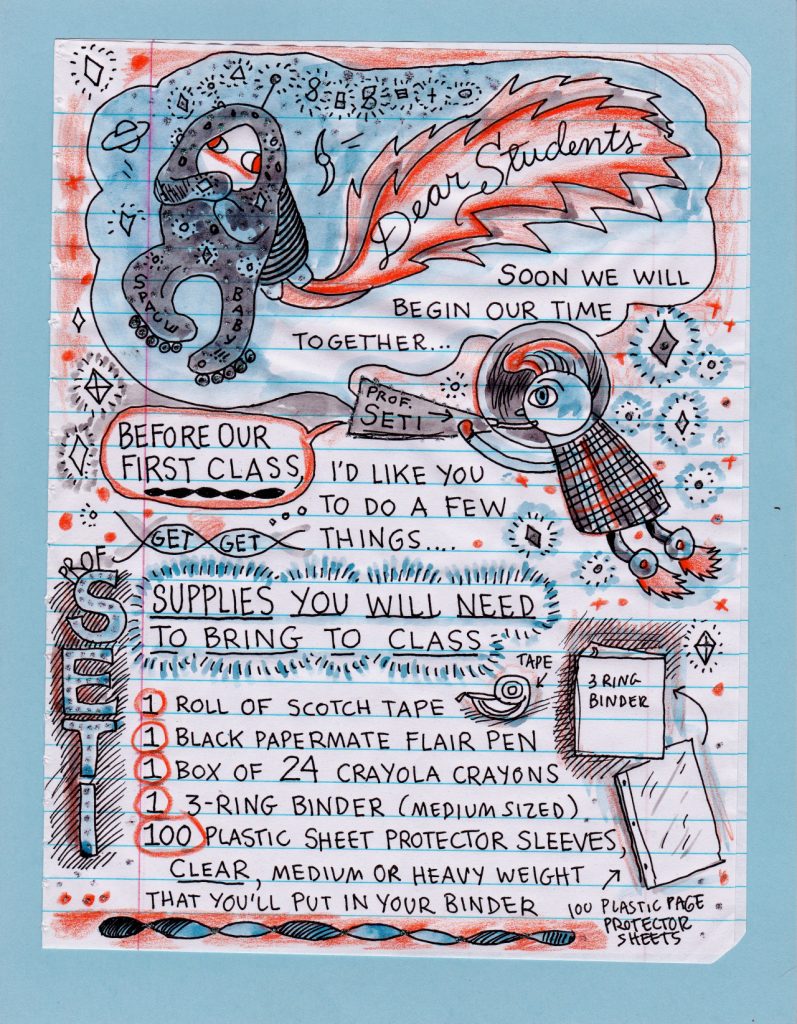
Car­toon­ist turned edu­ca­tor Lyn­da Bar­ry is again per­mit­ting the world at large to freely audit one of her fas­ci­nat­ing Uni­ver­si­ty of Wis­con­sin-Madi­son class­es via her Tum­blr. (To get to the start of the class, click here and then scroll down the page until you reach the syl­labus, then start work­ing your way back­wards.)

The top­ic this fall is “Graph­ic Vices, Graph­ic Virtues: Mak­ing Comics,” a sub­ject with which Bar­ry is inti­mate­ly acquaint­ed. In the professor’s own words, this class is “a(n aca­d­e­m­i­cal­ly rig­or­ous) blast!”

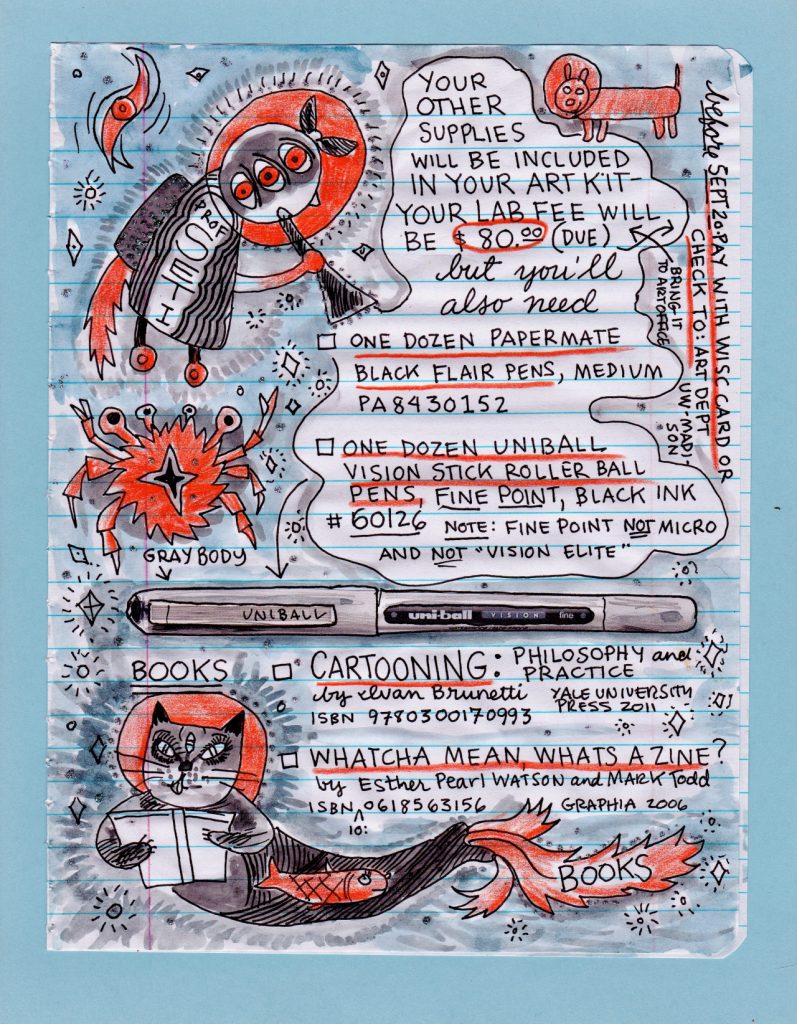
As in pre­vi­ous class­es, the syl­labus, above, spells out a high­ly spe­cial­ized set of required sup­plies, includ­ing a num­ber of items rarely called for at the col­lege lev­el.

barrysyll4


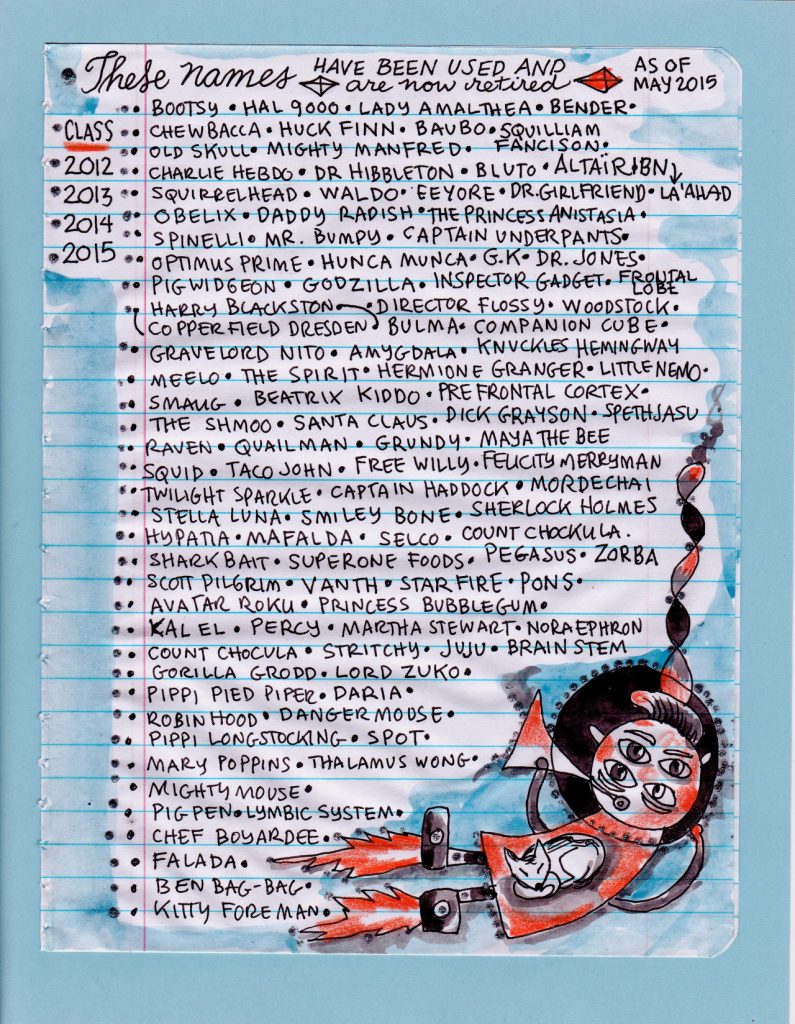
It’s become a time hon­ored tra­di­tion for Barry’s stu­dents to adopt new names by which to refer to each oth­er in-class, some­thing they’ll enjoy hear­ing spo­ken aloud. For “Mak­ing Comics,” Bar­ry is fly­ing under the han­dle Pro­fes­sor SETI (as in “search for extrater­res­tri­al intel­li­gence”), telling the class that “images are the ETI in SETI.”

The stu­dents have respond­ed with the fol­low­ing han­dles: Chef Boyardee, Gin­ger, Lois Lane, Rosie the Riv­et­er, Regi­na Pha­lange, Ara­bel­la, Snoopy, Skeeter, Tig­ger, Arya Stark, Nala, Nos­tal­gia, Aki­ra, Lapus Lazuli, The Buffalo,Mr. Novem­ber, The Short Giraffe, Nic­ki Minaj, Neko, Vin­cent Brooks, Reg­u­lar Sized Rudy, and Zef.

(Sounds like a rough and ready crew. What name would you choose, and why?)

LBarry 4

As usu­al, Bar­ry draws inspi­ra­tion from the dizzy­ing boun­ty of images avail­able on the net, bom­bard­ing her pupils with find­ings such as the lobed teeth of the crab-eater seal, above.

Sci­ence and music remain pet sub­jects–Afro­fu­tur­ist band­leader Sun Ra serves as class ora­cle this go round.

LBarry 5

LBarry 6

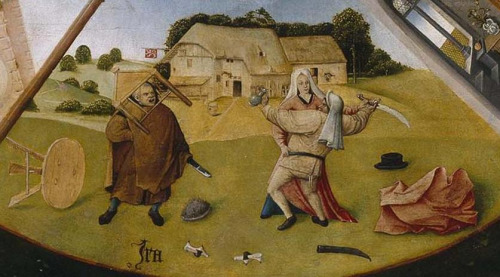
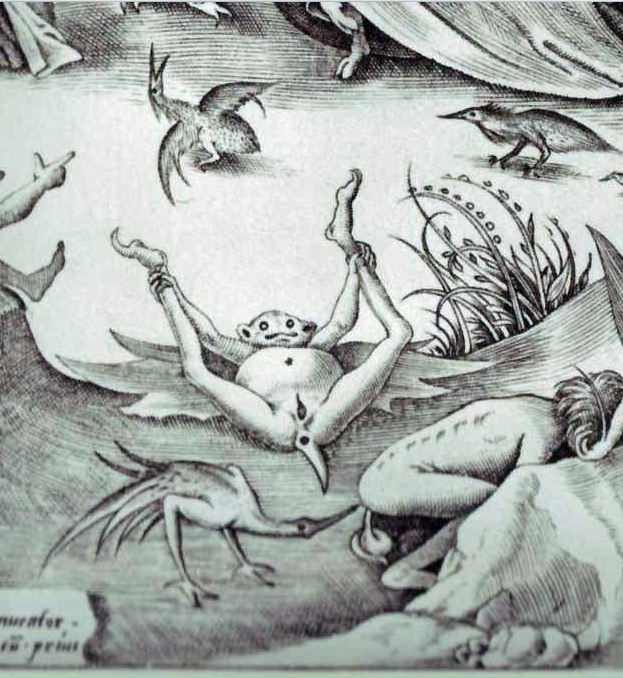
Pro­fes­sor SETI keeps the “graph­ic vice” of the class’ offi­cial title front and cen­ter with assign­ments per­tain­ing to the 7 dead­ly sins, ask­ing stu­dents to exam­ine mod­ern equiv­a­lents of the hor­rors depict­ed by Heron­imus Bosch above and 16th-cen­tu­ry engraver Pieter van der Hey­den, below.

LBarry 7

What to do with all of these images? Draw them, of course! As Bar­ry tells her stu­dents:

Draw­ing is a lan­guage. It’s hard to under­stand what that real­ly means until you’ve ‘spo­ken’ and ‘lis­tened’ to it enough in a reli­able reg­u­lar way like the reli­able reg­u­lar way we will have togeth­er this semes­ter.

That’s an impor­tant def­i­n­i­tion for those lack­ing con­fi­dence in their draw­ing abil­i­ties to keep in mind. Bar­ry may revere the inky blacks of comics leg­end Jaime Her­nan­dez, but she’s also a devo­tee of the wild, unbri­dled line that may be a beginner’s truest expres­sion. (Stick fig­ures, how­ev­er, “don’t cut it.”) To her way of think­ing, every­one is capa­ble of com­mu­ni­cat­ing flu­ent­ly in visu­al lan­guage. The cur­rent crop of stu­dent work reveals a range of train­ing and nat­ur­al tal­ent, but all are wor­thy when viewed through Barry’s lens.

The teacher’s phi­los­o­phy is the bind­ing ele­ment here, but don’t fret if you are unable to take the class in per­son:

We rarely speak direct­ly about the work we do in our class though we look at it togeth­er. We stare at it and some­times it makes us laugh or we silent­ly point out some part of it to the class­mate beside us.  To be able to speak this unspo­ken lan­guage we need to prac­tice see­ing (hear­ing) the way it talks.

LBarry 9

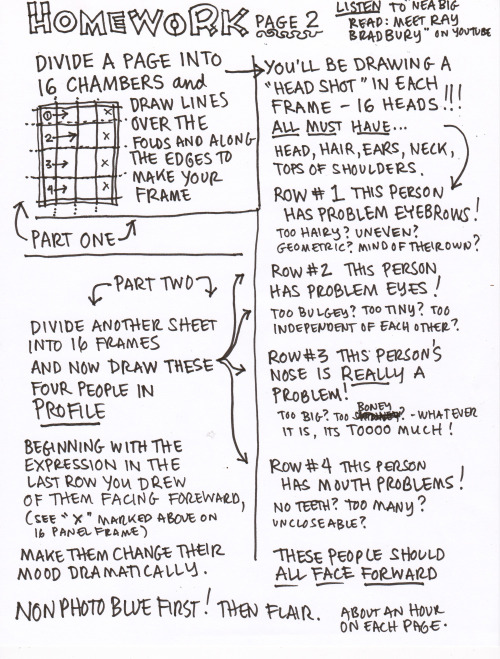
That ear­li­er-allud­ed-to rig­or is no joke. Dai­ly diary comics, 3 minute self por­traits on index cards, pages fold­ed to yield 16 frames in need of fill­ing, and found images copied while lis­ten­ing to pre­scribed music, lec­tures, and read­ings are a con­stant, non-nego­tiable expec­ta­tion of all par­tic­i­pants. Her method­ol­o­gy may sound goose‑y but it’s far from loose‑y.

In oth­er words, if you want to play along, pre­pare to set aside a large chunk of time to com­plete her week­ly assign­ments with the vig­or demand­ed of non-vir­tu­al stu­dents.

LBarry 10

Those who aren’t able to com­mit to going the dis­tance at this time can recon­struct the class lat­er.  Bar­ry leaves both the assign­ments and exam­ples of stu­dent work on her Tum­blr for per­pe­tu­ity. (You can see an exam­ple here.) For now, try com­plet­ing the 20 minute exer­cise using the assigned image above, or by choos­ing from one of her “extra cred­it” images, below:

Set timer for three min­utes and begin this draw­ing using a yel­low col­or pen­cil. Try to draw as much of the draw­ing as you can in three min­utes. You can draw fast, and in a messy way, The impor­tant thing is to get as much cov­ered as you can in three min­utes. You can col­or things in if you like. Look for the dark­est areas of the pho­to and col­or those in.

Set a timer for anoth­er three min­utes and using your non-dom­i­nant hand, draw with orange or col­or pen­cil to draw the entire draw­ing again, draw­ing right on top of the first draw­ing lay­er. The lines don’t have to match or be right on top of each oth­er, you can change your mind as you add this lay­er. You can move a bit to the right rather than try to draw direct­ly onto the first set of lines.

Set a timer for anoth­er 3 min­utes and use a red pen­cil and draw it again, using you dom­i­nant hand, adding anoth­er lay­er to the draw­ing. Again, you don’t have to fol­low your orig­i­nal lines. Just draw on top of them.

Set a timer for anoth­er 3 min­utes and use a dark green pen­cil to draw the entire draw­ing one more time on top of all the oth­ers. 

Set a timer for 8 min­utes and use a dark blue pen­cil to draw it one more time.

Spend the last 8 min­utes ink­ing the image in with your uni­ball pen. Remem­ber that sol­id black is the very last thing you’d do giv­en your time lim­it. You want to make sure to draw all the parts of the pic­ture first.

LBarry 11

LBarry 12

LBarry 14

LBarry 15

LBarry 16

LBarry 17

Relat­ed Con­tent:

Car­toon­ist Lyn­da Bar­ry Shows You How to Draw Bat­man in Her UW-Madi­son Course, “Mak­ing Comics”

Lyn­da Barry’s Won­der­ful­ly Illus­trat­ed Syl­labus & Home­work Assign­ments from Her UW-Madi­son Class, “The Unthink­able Mind”

Watch Lyn­da Barry’s Grad­u­a­tion Speech; Give a Shout Out to the Teach­ers Who Changed Your Life

1,700 Free Online Cours­es from Top Uni­ver­si­ties

Ayun Hal­l­i­day is an author, illus­tra­tor, and Chief Pri­ma­tol­o­gist of the East Vil­lage Inky zine. Fol­low her @AyunHalliday

Monty Python’s John Cleese Creates Ads for the American Philosophical Association

cleese philosophy psa

Cre­ative Com­mons image by Paul Box­ley

John Cleese, you say, a spokesman for the Amer­i­can Philo­soph­i­cal Asso­ci­a­tion? Why would such a seri­ous orga­ni­za­tion, whose stat­ed mis­sion is to fos­ter the “broad­er pres­ence of phi­los­o­phy in pub­lic life,” choose a British come­di­an famous for such char­ac­ters as the over­bear­ing Basil Fawl­ty and ridicu­lous Min­is­ter of Sil­ly Walks as one of their pub­lic faces?

They chose him, I imag­ine, because in his var­i­ous roles—as a one­time prep school teacher and stu­dent of law at Cam­bridge, as a com­e­dy writer and Mon­ty Python star, and as a post-Python come­di­an, author, pub­lic speak­er, and vis­it­ing pro­fes­sor at Cor­nell—Cleese has done more than his part to spread phi­los­o­phy in pub­lic life. Mon­ty Python, you’ll remem­ber, aired a num­ber of absurd phi­los­o­phy sketch­es, notable for being as smart as they are fun­ny.

Cleese has pre­sent­ed his per­son­al phi­los­o­phy of cre­ativ­i­ty at the World Cre­ativ­i­ty Forum; he’s explained a com­mon cog­ni­tive bias to which media per­son­al­i­ties and politi­cians seem par­tic­u­lar­ly sus­cep­ti­ble; and he had his own pod­cast in which, among oth­er things, he explained (wink) how the human brain works.

Giv­en these cre­den­tials, and his abil­i­ty to apply his intel­li­gence, wit, and com­ic tim­ing to sub­jects not often seen as par­tic­u­lar­ly excit­ing by the gen­er­al pub­lic, Cleese seems like the per­fect per­son for the job, even if he isn’t an Amer­i­can philoso­pher. The APA, found­ed in 1900, has recent­ly host­ed con­fer­ences on reli­gious tol­er­ance and “Cul­ti­vat­ing Cit­i­zen­ship.” In 2000, as part of its cen­ten­ni­al cel­e­bra­tion, the orga­ni­za­tion had Cleese record 22 very short “Pub­lic Ser­vice Announce­ments” to intro­duce novices to the impor­tant work of phi­los­o­phy. These range from the very gen­er­al “What Philoso­phers Do” at the top of the post to the influ­ence of phi­los­o­phy on social and polit­i­cal reform­ers like Mar­tin Luther King, Jr., Jane Addams, and Simone de Beau­voir (above), show­ing philosophy’s “bear­ing on the real world.”

In this PSA, Cleese makes the con­tro­ver­sial claim that “the 21st cen­tu­ry may belong far more to phi­los­o­phy than to psy­chol­o­gy or even tra­di­tion­al reli­gion.” “What a strange thought,” he goes on, then explains that phi­los­o­phy “works against confusion”—certainly a hall­mark of our age. There’s not much here to argue with—Cleese isn’t for­mu­lat­ing a posi­tion, but giv­ing his lis­ten­ers provoca­tive lit­tle nuts to crack on their own, should they find his PSAs intrigu­ing enough to draw them into fur­ther study. They might as well begin where most of us do, with Socrates, whom Cleese intro­duces below.

Hear the rest of Cleese’s phi­los­o­phy PSAs at the Amer­i­can Philo­soph­i­cal Association’s web­site. And should you wish to dig deep­er, you’ll find an abun­dance of resources in our archives, which includes big lists of Free Online Phi­los­o­phy Cours­es and Free Phi­los­o­phy eBooks.

Relat­ed Con­tent:

Mon­ty Python’s Best Phi­los­o­phy Sketch­es

John Cleese Explains the Brain — and the Plea­sures of DirecTV

Learn The His­to­ry of Phi­los­o­phy in 197 Pod­casts (With More to Come)

Down­load 100 Free Phi­los­o­phy Cours­es and Start Liv­ing the Exam­ined Life

Josh Jones is a writer and musi­cian based in Durham, NC. Fol­low him at @jdmagness

The Lord of the Rings Mythology Explained in 10 Minutes, in Two Illustrated Videos

As a lover of fan­ta­sy and sci­ence fic­tion, but by no means a know-it-all fan­boy, I know what it’s like to come to a fic­tion­al uni­verse late. It can seem like every­one else has already read the canon, seen the movies, and mem­o­rized the genealo­gies, ori­gin sto­ries, mag­i­cal arcana, num­ber of ancient blood feuds, etc. For exam­ple, I grew up steeped in Star Trek but nev­er watched Dr. Who. Now that British sci-fi show is seem­ing­ly every­where, and I find myself intrigued. But who has the time to catch up on sev­er­al decades of missed episodes? Some peo­ple may have felt sim­i­lar­ly in the last few years about The Lord of the Rings, what with the num­ber of J.R.R. Tolkien adap­ta­tions besieg­ing the­aters. If you haven’t read any of those books, Mid­dle Earth—for all its air of medieval leg­end and Norse myth—can be a very con­fus­ing place.

Thanks to Peter Jackson’s films, for bet­ter or worse, Tolkien’s books have even more cul­tur­al cur­ren­cy than they did in the 70s, when Led Zep­pelin mined them for lyri­cal inspi­ra­tion, and “Fro­do lives” graf­fi­ti appeared on over­pass­es every­where.

This brings us to the videos we fea­ture here. Pre­sent­ed in a rapid fire style like that of motor­mouth YA nov­el­ist and video edu­ca­tor John Green, “The Lord of the Rings Mythol­o­gy Explained” is exact­ly that–two very quick tours, with illus­tra­tions, through the com­plex mytho­log­i­cal world of Mid­dle Earth, the set­ting of The Lord of the Rings tril­o­gy, The Hob­bit, and oth­er books you’ve maybe nev­er heard of. These videos were made before the final install­ment of Jack­son’s inter­minable Hob­bit tril­o­gy, but they cov­er most major devel­op­ments before and after the events in short book on which he based those films.

I’ll say this for the effort—Tolkien’s world is one I thought I knew, but I didn’t know it near­ly as well as I thought. Like most peo­ple, frankly, I haven’t read the source­book of so much of that world’s gen­e­sis, The Sil­mar­il­lion, which gets a sur­vey in the first video at the top of the post. I’m much more famil­iar, and you may be as well—through books or films—with the mytholo­gies of The Lord of the Rings tril­o­gy prop­er, cov­ered in the video above. If these two thor­ough explain­ers don’t sat­is­fy your curios­i­ty, you can like­ly have fur­ther ques­tions answered at one of the videos’ sources, Ask Mid­dle Earth, a site that solic­its “any ques­tion about Mid­dle Earth.” Anoth­er source, the work of com­par­a­tive mythol­o­gist Ver­lyn Flieger, who spe­cial­izes in Tolkien, also promis­es to be high­ly illu­mi­nat­ing.

Relat­ed Con­tent:

Map of Mid­dle-Earth Anno­tat­ed by Tolkien Found in a Copy of Lord of the Rings

“The Tolkien Pro­fes­sor” Presents Three Free Cours­es on The Lord of the Rings

110 Draw­ings and Paint­ings by J.R.R. Tolkien: Of Mid­dle-Earth and Beyond

J.R.R. Tolkien Snubs a Ger­man Pub­lish­er Ask­ing for Proof of His “Aryan Descent” (1938)

Josh Jones is a writer and musi­cian based in Durham, NC. Fol­low him at @jdmagness

100 Novels All Kids Should Read Before Leaving High School

to-kill-a-mockingbird-book-cover1

Last year, a Slate essay called “Against YA” by Ruth Gra­ham irked thou­sands of read­ers who took offense at her argu­ment that although grown-ups “bran­dish their copies of teen nov­els with pride…. [a]dults should feel embar­rassed about read­ing lit­er­a­ture writ­ten for chil­dren.” Whether we label her arti­cle an instance of sham­ing, trolling, or just the expres­sion of a not-espe­cial­ly con­se­quen­tial, “fud­dy-dud­dy opin­ion,” what it also served to highlight—as so many oth­er thought­ful and not-so-thought­ful online essays have done—is the huge sales num­bers of so-called YA, a lit­er­ary boom that shows no signs of slow­ing. Young adult fic­tion, along with children’s books in gen­er­al, saw dou­ble dig­it growth in 2014, a phe­nom­e­non in part dri­ven by those sup­pos­ed­ly self-infan­tiliz­ing adults Gra­ham faults.

The grown-ups read­ing teen books do so, Gra­ham writes, because “today’s YA, we are con­stant­ly remind­ed, is world­ly and adult-wor­thy.” Maybe, maybe not, but there is anoth­er ques­tion to ask here as well, whol­ly apart from whether the age 30–44 cohort who account for 28 per­cent of YA sales “should” be buy­ing and read­ing YA books. And that ques­tion is: should young adults read Young Adult fic­tion? And what counts as Young Adult fic­tion any­way? A 2012 NPR list of the “100 Best-Ever Teen Nov­els” includes the expect­ed Har­ry Pot­ter and Hunger Games series (at num­bers one and two, respec­tive­ly), as well as more “lit­er­ary,” but still obvi­ous, choic­es like John Green’s The Fault in Our Stars and S.E. Hinton’s clas­sic The Out­siders.

It also includes Dou­glas Adams’ The Hitchhiker’s Guide to the Galaxy series, William Golding’s Lord of the Flies, Frank Herbert’s Dune, Ursu­la K. Le Guin’s Earth­sea series, and Ray Bradbury’s Fahren­heit 451. It what sense do all of these very dif­fer­ent kinds of books—some very com­plex and chal­leng­ing, some very much less so—qualify as “teen nov­els”? Per­haps some of the fuzzi­ness about qual­i­ty and appro­pri­ate­ness comes from the fact that many “Top-what­ev­er” lists like NPR’s are com­piled by read­ers, of all ages. And enjoy­ment, not edi­fi­ca­tion, usu­al­ly tops a gen­er­al read­er­ship’s list of cri­te­ri­on for “top”-ness. How­ev­er, what would such a list look like if strict­ly com­piled by edu­ca­tors?

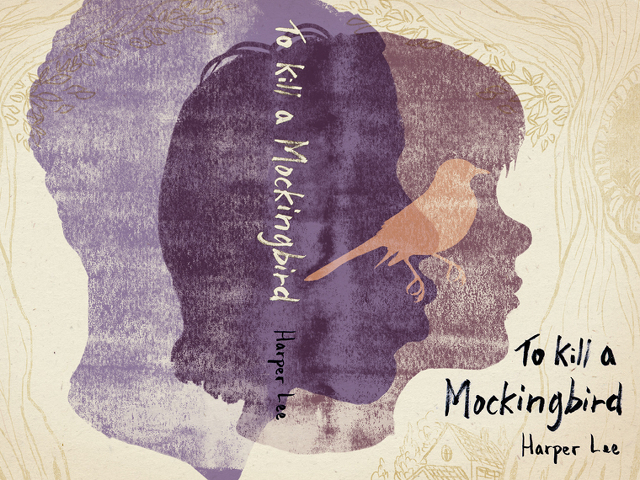
You can find out in anoth­er top 100 list: the 100 Fic­tion Books All Chil­dren Should Read Before Leav­ing Sec­ondary School – Accord­ing to 500 Eng­lish Teach­ers (cre­at­ed at the request of Britain’s Nation­al Asso­ci­a­tion for the Teach­ing of Eng­lish and TES mag­a­zine). There’s a good bit of crossover with the read­er-cho­sen NPR list; the Har­ry Pot­ter books come in at sixth place. Both lists fea­ture clas­sics like Harp­er Lee’s To Kill a Mock­ing­bird. But the teacher-cho­sen list also includes more “adult” writ­ers like Jane Austen, Thomas Hardy, and Toni Mor­ri­son. One teacher quot­ed in an Express arti­cle describes his own cri­te­ria: “It’s always a bal­anc­ing act in the books that teach­ers select. Do you go for some­thing that stu­dents will enjoy and lap up and read, or do you go for some­thing that will help them cut their teeth?”

There seems to be a good bal­ance of both here. You can see the first ten titles below, with links to free online ver­sions where avail­able. The com­plete list of 100 books for teenagers is here.

1 Nine­teen Eighty-Four, by George Orwell (Ama­zon)

2 To Kill A Mock­ing­bird, by Harp­er Lee (free eBook)

3 Ani­mal Farm, by George Orwell (free eBook)

4 Lord Of The Flies, by William Gold­ing (Ama­zon)

5 Of Mice And Men, by John Stein­beck (Ama­zon)

6 The Har­ry Pot­ter series, by J K Rowl­ing (Ama­zon)

7 A Christ­mas Car­ol, by Charles Dick­ens (free eBook)

8 The Catch­er In The Rye, by J D Salinger (Ama­zon)

9 Great Expec­ta­tions, by Charles Dick­ens (free eBook)

10 Pride And Prej­u­dice, by Jane Austen (free eBook)

Relat­ed Con­tent:

Down­load 20 Pop­u­lar High School Books Avail­able as Free eBooks & Audio Books

The Best Books of 2012: Lists by The New York Times, NPR, The Guardian and More

74 Essen­tial Books for Your Per­son­al Library: A List Curat­ed by Female Cre­atives

Josh Jones is a writer and musi­cian based in Durham, NC. Fol­low him at @jdmagness

Mr. Rogers Goes to Congress and Saves PBS: Heartwarming Video from 1969

What kind of delu­sion­al self-aggran­diz­er, called to tes­ti­fy before a Unit­ed States Sen­ate Sub­com­mit­tee, uses it as an oppor­tu­ni­ty to quote the lyrics of a song he’s writ­ten… in their entire­ty!?

Sounds like the work of a cer­tain rapper/prospective polit­i­cal can­di­date or per­haps some daffy buf­foon as brought to life by Ben Stiller or Will Fer­rell.

Only children’s tele­vi­sion host Fred Rogers could pull such a stunt and emerge unscathed, nay, even more beloved, as he does above in doc­u­men­tary footage from 1969.

Mis­ter Rogers’ impulse to recite What Do You Do With the Mad That You Feel to then-chair­man of the Sub­com­mit­tee on Com­mu­ni­ca­tions, Sen­a­tor John Pas­tore, was ulti­mate­ly an act of ser­vice to the Cor­po­ra­tion for Pub­lic Broad­cast­ing and its child view­ers.

New­ly elect­ed Pres­i­dent Richard Nixon opposed pub­lic tele­vi­sion, believ­ing that its lib­er­al bent could only under­mine his admin­is­tra­tion. Deter­mined to strike first, he pro­posed cuts equal to half its $20 mil­lion annu­al oper­at­ing bud­get, a mea­sure that would have seri­ous­ly hob­bled the fledg­ling insti­tu­tion.

Mr. Rogers appeared before the Com­mit­tee armed with a “philo­soph­i­cal state­ment” that he refrained from read­ing aloud, not wish­ing to monop­o­lize ten min­utes of the Committee’s time. Instead, he sought Pas­tore’s promise that he would give it a close read lat­er, speak­ing so slow­ly and with such lit­tle out­ward guile, that the tough nut Sen­a­tor was moved to crack, “Would it make you hap­py if you did read it?”

Rather than tak­ing the bait, Rogers touched on the ways his show’s bud­get had grown thanks to the pub­lic broad­cast­ing mod­el. He also hipped Pas­tore to the qual­i­ta­tive dif­fer­ence between fre­net­ic kid­die car­toons and the vast­ly more thought­ful and emo­tion­al­ly healthy con­tent of pro­gram­ming such as his. Mr. Roger’s Neigh­bor­hood was a place where such top­ics as hair­cuts, sib­ling rela­tion­ships, and angry feel­ings could be dis­cussed in depth.

Rogers’ emo­tion­al intel­li­gence seems to hyp­no­tize Pas­tore, whose chal­leng­ing front was soon dropped in favor of a more respect­ful line of ques­tion­ing. By the end of Rogers’ heart­felt, non-musi­cal ren­di­tion of What Do You Do… (it’s much pep­pi­er in the orig­i­nal), Pas­tore has goose­bumps, and the Cor­po­ra­tion for Pub­lic Broad­cast­ing has its 2 mil’ back in the bag.

What do you do with the mad that you feel

When you feel so mad you could bite?

When the whole wide world seems oh, so wrong…

And noth­ing you do seems very right?

What do you do? Do you punch a bag?

Do you pound some clay or some dough?

Do you round up friends for a game of tag?

Or see how fast you go?

It’s great to be able to stop

When you’ve planned a thing that’s wrong,

And be able to do some­thing else instead

And think this song:

I can stop when I want to

Can stop when I wish.

I can stop, stop, stop any time.

And what a good feel­ing to feel like this

And know that the feel­ing is real­ly mine.

Know that there’s some­thing deep inside

That helps us become what we can.

For a girl can be some­day a woman

And a boy can be some­day a man.

Relat­ed Con­tent:

Mr. Rogers Intro­duces Kids to Exper­i­men­tal Elec­tron­ic Music by Bruce Haack & Esther Nel­son (1968)

Mr. Rogers Takes Break­danc­ing Lessons from a 12-Year-Old (1985)

Pup­pet Mak­ing with Jim Hen­son: A Price­less Primer from 1969

Ayun Hal­l­i­day’s new play, Fawn­book, debuts as part of the Bad The­ater Fes­ti­val in NYC tomor­row night. Fol­low her @AyunHalliday

105 Animated Philosophy Videos from Wireless Philosophy: A Project Sponsored by Yale, MIT, Duke & More

You may remem­ber that we fea­tured Wire­less Phi­los­o­phy, an open access phi­los­o­phy project cre­at­ed by Yale and MIT, back in 2013 when it first got start­ed. Wi-Phi, for short, has kept on keep­ing in with its mis­sion of pro­duc­ing free, infor­ma­tive and enter­tain­ing ani­mat­ed videos meant to intro­duce a host of philo­soph­i­cal issues. Our own Josh Jones called it “a nec­es­sary ser­vice to those just begin­ning to wade out into the sea of The Big Ques­tions” in 2013, and now, in 2015, you can wade in from a wider expanse of the Big Ques­tion coast­line than ever before. There are cur­rent­ly 105 Wiphi videos in total.

At the top of the post, you can watch a whole playlist of Wi-Phi’s videos on cog­ni­tive bias­es, which add up to a sur­pris­ing­ly thor­ough half-hour primer on the forces that knock our think­ing askew, from the “alief” (an auto­mat­ic or habit­u­al men­tal atti­tude, as opposed to a delib­er­ate belief) to ref­er­ence depen­dence and loss aver­sion to what we might per­haps describe as a meta-bias amus­ing­ly called the GI Joe fal­la­cy (the ten­den­cy for our bias­es to stick around even when we should know bet­ter). Just above, we have Wi-Phi’s three-part guide to the good life, as exam­ined by Pla­to, Aris­to­tle, and Kant.

Both of those playlists do come with a cer­tain prac­ti­cal­i­ty, at least by philo­soph­i­cal stan­dards: who, after all does­n’t want to think more cor­rect­ly (or at least less incor­rect­ly), and who does­n’t want to live the good life (or at least a bet­ter life than they live now)? But the hard­er core of casu­al phi­los­o­phy enthu­si­asts — always a demand­ing group — should rest assured that Wiphi also offers video series on more abstract or his­tor­i­cal philo­soph­i­cal top­ics, such as the sev­en-part playlist on clas­si­cal the­ism above. Dig deep­er into their Youtube chan­nel and you’ll find more sim­ple but not sim­plis­tic lessons on the phi­los­o­phy of math­e­mat­ics, lan­guage, ancient Chi­na, and much more.

The list of uni­ver­si­ty stake­hold­ers in Wire­less Phi­los­o­phy nowa­days includes, we should note, Duke, Uni­ver­si­ty of Mass­a­chu­setts at Amherst, and U. Toron­to, in addi­tion to Yale and MIT. Plus, you’ll find that profs from oth­er uni­ver­si­ties have con­tributed to the video col­lec­tion. For exam­ple, Chris Sur­prenant (Uni­ver­si­ty of New Orleans) cre­at­ed the videos on Pla­to, Aris­to­tle, and Kant. Also find com­plete cours­es taught by Sur­prenant on our list of Free Online Phi­los­o­phy Cours­es, a sub­set of our list, 1,700 Free Online Cours­es from Top Uni­ver­si­ties.

Relat­ed Con­tent:

Intro­duc­ing Wire­less Phi­los­o­phy: An Open Access Phi­los­o­phy Project Cre­at­ed by Yale and MIT

The Par­tial­ly Exam­ined Life: A Phi­los­o­phy Pod­cast

Phi­los­o­phy Bites: Pod­cast­ing Ideas From Pla­to to Sin­gu­lar­i­ty Since 2007

Phi­los­o­phize This!: The Pop­u­lar, Enter­tain­ing Phi­los­o­phy Pod­cast from an Uncon­ven­tion­al Teacher

Down­load 90 Free Phi­los­o­phy Cours­es and Start Liv­ing the Exam­ined Life

Take First-Class Phi­los­o­phy Lec­tures Any­where with Free Oxford Pod­casts

Col­in Mar­shall writes else­where on cities, lan­guage, Asia, and men’s style. He’s at work on a book about Los Ange­les, A Los Ange­les Primer, the video series The City in Cin­e­maand the crowd­fund­ed jour­nal­ism project Where Is the City of the Future? Fol­low him on Twit­ter at @colinmarshall or on Face­book.

Apply to the New David Lynch Masters in Film Program, Where You’ll Meditate & Create

david lynch film program

Image by amoe­bafin­ger on Flickr Com­mons.

When the Amer­i­can Film Insti­tute set up its con­ser­va­to­ry for Advanced Film Stud­ies in 1969, its first round of stu­dents includ­ed Ter­rence Mal­ick, Caleb Deschanel, Paul Schrad­er, and the Mas­ter of Absurd him­self, David Lynch. (Now that’s a class reunion worth going to!) Now some 40 years on, the Mahar­ishi Uni­ver­si­ty of Man­age­ment, in Fair­field, Iowa, is accept­ing appli­ca­tions for its David Lynch MA in Film pro­gram.

Lynch has been prac­tic­ing Tran­scen­den­tal Med­i­ta­tion for as long as he’s been a film­mak­er, and in inter­views and in books like Catch­ing the Big Fish, he espous­es the won­ders of med­i­ta­tion for cre­ativ­i­ty. (See him talk more about that here.) Stu­dents enrolled in the David Lynch Film pro­gram will fol­low Lynch’s exam­ple by com­bin­ing med­i­ta­tion with film­mak­ing. You might not cre­ate the next Eraser­head (Lynch’s AFI project that turned into his career-defin­ing debut), but, accord­ing to Lynch, stu­dents are promised to dis­cov­er

the abil­i­ty to dive within—to tran­scend and expe­ri­ence that unbound­ed ocean of pure con­scious­ness which is unbound­ed intel­li­gence, cre­ativ­i­ty, hap­pi­ness, love, ener­gy, pow­er, and peace.

Before one gets too excit­ed and thinks that the direc­tor him­self will be teach­ing every class and that you’ll get to hang out with him dur­ing office hours, that’s not the way the pro­gram works.

Class­es are taught by director/cinematographer Michael W. Barnard (and once the head of the Maharishi’s film depart­ment), screen­writer Dorothy Rompalske, and David Lynch Foun­da­tion Tele­vi­sion founder Amine Kouider. Guest speak­ers have includ­ed Jim Car­rey, Peter Far­rel­ly, script doc­tor Dara Marks, Twin Peaks alum Duwayne Dun­ham, and many oth­er Hol­ly­wood insid­ers.

How­ev­er, stu­dents do get a field trip to Los Ange­les to meet Lynch and spend time with the film­mak­er. The aspir­ing film­mak­ers should con­sid­er them­selves lucky, see­ing that the direc­tor is busy work­ing on Twin Peaks’ new sea­son and appar­ent­ly writ­ing an auto­bi­og­ra­phy.

There are two schol­ar­ships up for grabs for appli­cants who have a film or script to sub­mit, but the dead­line is fast approach­ing on Nov. 1.

via Cri­te­ri­on

Relat­ed Con­tent:

David Lynch Explains Where His Ideas Come From

Pat­ti Smith and David Lynch Talk About the Source of Their Ideas & Cre­ative Inspi­ra­tion

David Lynch Explains How Med­i­ta­tion Enhances Our Cre­ativ­i­ty

David Lynch Cre­ates a Very Sur­re­al Plug for Tran­scen­den­tal Med­i­ta­tion

David Lynch Talks Med­i­ta­tion with Paul McCart­ney

Ted Mills is a free­lance writer on the arts who cur­rent­ly hosts the artist inter­view-based FunkZone Pod­cast. You can also fol­low him on Twit­ter at @tedmills, read his oth­er arts writ­ing at tedmills.com and/or watch his films here.

How Cultured Are You? Test Your Knowledge With Cultural Quizzes from 1958

1ArtQuiz.jpg.CROP.original-original

Do you con­sid­er your­self well-edu­cat­ed? Cul­tured, even? By whose stan­dards?

We may super­fi­cial­ly assume these terms name immutable qual­i­ties, but they are in any analy­sis depen­dent on where and when we hap­pen to be sit­u­at­ed in his­to­ry. The most sophis­ti­cat­ed of Medieval doctors—a title then clos­er to the Euro­pean “docent” than our gen­er­al use of Dr.—would appear pro­found­ly igno­rant to us; and we, with our painful­ly inad­e­quate grasp of church Latin, Aris­totelian­ism, and arcane the­o­log­i­cal argu­ments, would appear pro­found­ly igno­rant to him.

What does it mean to be cul­tured? Is it the acqui­si­tion of most­ly use­less cul­tur­al cap­i­tal for its own sake, or of a set of codes that helps us nav­i­gate the world suc­cess­ful­ly? In an attempt to address these fraught ques­tions, Ash­ley Mon­tagu, a stu­dent of huge­ly influ­en­tial Ger­man-born anthro­pol­o­gist Franz Boas, wrote The Cul­tured Man in 1958. Rebec­ca Onion at Slate describes the book as con­tain­ing “quizzes for 50 cat­e­gories of knowl­edge in the arts and sci­ences, with 30 ques­tions each.” In the page above, we have the first 22 ques­tions of Montagu’s “Art” quiz (with the answers here).

You’ll prob­a­bly notice right away that while most of the ques­tions have def­i­nite, unam­bigu­ous answers, oth­ers like “Define art,” seem patent­ly unan­swer­able in all but the most gen­er­al and unsat­is­fac­to­ry ways. Mon­tagu defines art in one suc­cinct sen­tence: “Art is the mak­ing or doing of things that have form and beauty”—which strikes me as ane­mic, though func­tion­al enough.

1CultureHistoryQuiz

Mon­tagu intend­ed his book to test not only knowl­edge of cul­tur­al facts, but also of “atti­tudes”: a per­son “con­sid­ered ‘cul­tured,’” writes Onion, “would not just be able to read­i­ly sum­mon facts, but also to access humane feel­ings, which would nec­es­sar­i­ly come about after con­tact with cul­ture.” Many admin­is­tra­tors of “culture”—curators, art his­to­ri­ans, lit­er­a­ture pro­fes­sors, etc—would agree with the premise: ide­al­ly, the more cul­tur­al knowl­edge we acquire, the more empa­thy and under­stand­ing of oth­er peo­ples and cul­tures we should man­i­fest. Whether this rou­tine­ly occurs in prac­tice is anoth­er mat­ter. For Mon­tagu, Onion remarks, a “cul­tured man” is “curi­ous, unprej­u­diced, ratio­nal, and eth­i­cal.”

2CultureHistoryQuiz.jpg.CROP.original-original

Giv­en Montagu’s enlight­ened philo­soph­i­cal bent, we can char­i­ta­bly ascribe lan­guage in his book that itself seems prej­u­diced to our view­ing this arti­fact from a dis­tance of almost sev­en­ty years in the future. We might also find that many of his ques­tions push us to exam­ine our 21st cen­tu­ry bias­es more care­ful­ly. His approach may remind us of friv­o­lous inter­net diver­sions or the stan­dard­ized tests we’ve grown to think of as the pre­cise oppo­site of live­ly, crit­i­cal­ly-engaged edu­ca­tion­al tools. Yet Mon­tagu intend­ed his quizzes to be “both dynam­ic and con­struc­tive,” to alert read­ers to areas of igno­rance and encour­age them to fill gaps in their cul­tur­al knowl­edge. Many of his answers offer ref­er­ences for fur­ther study. “No one grows who stands still,” he wrote.

To see more of Montagu’s quiz questions—such as those above from the “Cul­ture His­to­ry” cat­e­go­ry (get the answers here)—and find out how you stack up against the cul­tured elite of the 50s, head over to Rebec­ca Onion’s post at Slate.

Relat­ed Con­tent:  

Watch Har­vard Stu­dents Fail the Lit­er­a­cy Test Louisiana Used to Sup­press the Black Vote in 1964

Her­mann Rorschach’s Orig­i­nal Rorschach Test: What Do You See? (1921)

Take the 146-Ques­tion Knowl­edge Test Thomas Edi­son Gave to Prospec­tive Employ­ees (1921)

Josh Jones is a writer and musi­cian based in Durham, NC. Fol­low him at @jdmagness

« Go BackMore in this category... »
Quantcast