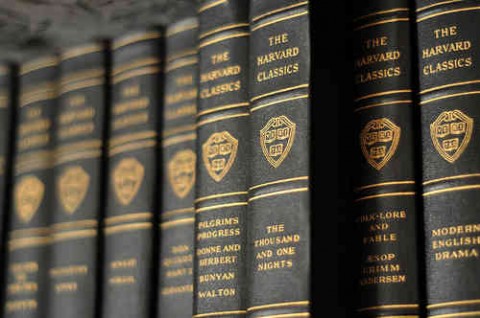
The Harvard Classics: Download All 51 Volumes as Free eBooks

harvardclassics-e1309476756550

Every rev­o­lu­tion­ary age pro­duces its own kind of nos­tal­gia. Faced with the enor­mous social and eco­nom­ic upheavals at the nine­teenth century’s end, learned Vic­to­ri­ans like Wal­ter Pater, John Ruskin, and Matthew Arnold looked to High Church mod­els and played the bish­ops of West­ern cul­ture, with a monk­ish devo­tion to pre­serv­ing and trans­mit­ting old texts and tra­di­tions and turn­ing back to sim­pler ways of life. It was in 1909, the nadir of this milieu, before the advent of mod­ernism and world war, that The Har­vard Clas­sics took shape. Com­piled by Harvard’s pres­i­dent Charles W. Eliot and called at first Dr. Eliot’s Five Foot Shelf, the com­pendi­um of lit­er­a­ture, phi­los­o­phy, and the sci­ences, writes Adam Kirsch in Har­vard Mag­a­zine, served as a “mon­u­ment from a more humane and con­fi­dent time” (or so its upper class­es believed), and a “time cap­sule…. In 50 vol­umes.”

What does the mas­sive col­lec­tion pre­serve? For one thing, writes Kirsch, it’s “a record of what Pres­i­dent Eliot’s Amer­i­ca, and his Har­vard, thought best in their own her­itage.” Eliot’s inten­tions for his work dif­fered some­what from those of his Eng­lish peers. Rather than sim­ply curat­ing for pos­ter­i­ty “the best that has been thought and said” (in the words of Matthew Arnold), Eliot meant his anthol­o­gy as a “portable university”—a prag­mat­ic set of tools, to be sure, and also, of course, a prod­uct. He sug­gest­ed that the full set of texts might be divid­ed into a set of six cours­es on such con­ser­v­a­tive themes as “The His­to­ry of Civ­i­liza­tion” and “Reli­gion and Phi­los­o­phy,” and yet, writes Kirsch, “in a more pro­found sense, the les­son taught by the Har­vard Clas­sics is ‘Progress.’” “Eliot’s [1910] intro­duc­tion express­es com­plete faith in the ‘inter­mit­tent and irreg­u­lar progress from bar­barism to civ­i­liza­tion.’”

In its expert syn­er­gy of moral uplift and mar­ket­ing, The Har­vard Clas­sics (find links to down­load them as free ebooks below) belong as much to Mark Twain’s bour­geois gild­ed age as to the pseu­do-aris­to­crat­ic age of Victoria—two sides of the same ocean, one might say.

The idea for the col­lec­tion didn’t ini­tial­ly come from Eliot, but from two edi­tors at the pub­lish­er P.F. Col­lier, who intend­ed “a com­mer­cial enter­prise from the begin­ning” after read­ing a speech Eliot gave to a group of work­ers in which he “declared that a five-foot shelf of books could pro­vide”

a good sub­sti­tute for a lib­er­al edu­ca­tion in youth to any­one who would read them with devo­tion, even if he could spare but fif­teen min­utes a day for read­ing.

Col­lier asked Eliot to “pick the titles” and they would pub­lish them as a series. The books appealed to the upward­ly mobile and those hun­gry for knowl­edge and an edu­ca­tion denied them, but the cost would still have been pro­hib­i­tive to many. Over a hun­dred years, and sev­er­al cul­tur­al-evo­lu­tion­ary steps lat­er, and any­one with an inter­net con­nec­tion can read all of the 51-vol­ume set online. In a pre­vi­ous post, we sum­ma­rized the num­ber of ways to get your hands on Charles W. Eliot’s anthol­o­gy:

You can still buy an old set off of eBay for $399 [now $299.99]. But, just as eas­i­ly, you can head to the Inter­net Archive and Project Guten­berg, which have cen­tral­ized links to every text includ­ed in The Har­vard Clas­sics (Wealth of Nations, Ori­gin of Species, Plutarch’s Lives, the list goes on below). Please note that the pre­vi­ous two links won’t give you access to the actu­al anno­tat­ed Har­vard Clas­sics texts edit­ed by Eliot him­self. But if you want just that, you can always click here and get dig­i­tal scans of the true Har­vard Clas­sics.

In addi­tion to these options, Bartle­by has dig­i­tal texts of the entire col­lec­tion of what they call “the most com­pre­hen­sive and well-researched anthol­o­gy of all time.” But wait, there’s more! Much more, in fact, since Eliot and his assis­tant William A. Neil­son com­piled an addi­tion­al twen­ty vol­umes called the “Shelf of Fic­tion.” Read those twen­ty volumes—at fif­teen min­utes a day—starting with Hen­ry Field­ing and end­ing with Nor­we­gian nov­el­ist Alexan­der Kiel­land at Bartle­by.

What may strike mod­ern read­ers of Eliot’s col­lec­tion are pre­cise­ly the “blind spots in Vic­to­ri­an notions of cul­ture and progress” that it rep­re­sents. For exam­ple, those three har­bin­gers of doom for Vic­to­ri­an certitude—Marx, Niet­zsche, and Freud—are nowhere to be seen. Omis­sions like this are quite telling, but, as Kirsch writes, we might not look at Eliot’s achieve­ment as a rel­ic of a naive­ly opti­mistic age, but rather as “an inspir­ing tes­ti­mo­ny to his faith in the pos­si­bil­i­ty of demo­c­ra­t­ic edu­ca­tion with­out the loss of high stan­dards.” This was, and still remains, a noble ide­al, if one that—like the utopi­an dreams of the Victorians—can some­times seem frus­trat­ing­ly unat­tain­able (or cul­tur­al­ly impe­ri­al­ist). But the wide­spread avail­abil­i­ty of free online human­i­ties cer­tain­ly brings us clos­er than Eliot’s time could ever come.

You can find the Har­vard Clas­sics list­ed in our col­lec­tion, 800 Free eBooks for iPad, Kin­dle & Oth­er Devices.

Relat­ed Con­tent:

Harold Bloom Cre­ates a Mas­sive List of Works in The “West­ern Canon”: Read Many of the Books Free Online

W.H. Auden’s 1941 Lit­er­a­ture Syl­labus Asks Stu­dents to Read 32 Great Works, Cov­er­ing 6000 Pages

The Har­vard Clas­sics: A Free, Dig­i­tal Col­lec­tion

975 Free Online Cours­es from Top Uni­ver­si­ties

Josh Jones is a writer and musi­cian based in Durham, NC. Fol­low him at @jdmagness

Free Course: “Darwin and Design” Examines Philosophical Questions of Intelligence and Human Behavior


Darwin’s the­o­ry of evo­lu­tion by nat­ur­al selec­tion pro­vid­ed a sci­en­tif­ic answer to a philo­soph­i­cal ques­tion: must design imply a design­er? To the dis­may and dis­be­lief of many of Darwin’s con­tem­po­raries, and a great many still, his the­o­ry can answer the ques­tion in the neg­a­tive. But there are many more ques­tions yet to ask about seem­ing­ly designed sys­tems, such as those posed by Alan Tur­ing and John Sear­le: might such orga­nized sys­tems, nat­ur­al and man­made, them­selves be intel­li­gent? The his­to­ry of these inquiries among philoso­phers, sci­en­tists, and writ­ers is the sub­ject of Prof. James Par­adis’ MIT course, “Dar­win and Design.” The class explores such a diverse range of texts as Aristotle’s Physics, the Bible, Adam’s Smith’s Wealth of Nations, William Gibson’s Neu­ro­mancer, and of course, Darwin’s Ori­gin of Species.

Along­side the sci­en­tif­ic con­clu­sions so-called “Dar­win­ism” draws are the impli­ca­tions for human self-under­stand­ing. Giv­en the thou­sands of years in which human­i­ty placed itself at the cen­ter of the uni­verse, and the few hun­dred in which it at least held fast to con­cepts of its spe­cial cre­ation, what, asks Prof. Par­adis, does Dar­win­ism mean “for ideas of nature and of mankind’s place there­in?” The class explores this ques­tion through “man­i­fes­ta­tions of such unde­signed worlds in lit­er­ary texts” both clas­si­cal and con­tem­po­rary. See the full course descrip­tion below:

Humans are social ani­mals; social demands, both coop­er­a­tive and com­pet­i­tive, struc­ture our devel­op­ment, our brain and our mind. This course cov­ers social devel­op­ment, social behav­iour, social cog­ni­tion and social neu­ro­science, in both human and non-human social ani­mals. Top­ics include altru­ism, empa­thy, com­mu­ni­ca­tion, the­o­ry of mind, aggres­sion, pow­er, groups, mat­ing, and moral­i­ty. Meth­ods include evo­lu­tion­ary biol­o­gy, neu­ro­science, cog­ni­tive sci­ence, social psy­chol­o­gy and anthro­pol­o­gy.

Prof. Par­adis taught the class in the Fall of 2010, but thanks to MIT’s Open Course­ware, all of the lec­tures (above), assign­ments, and course mate­ri­als are freely avail­able, though you’ll have to pur­chase most of the texts (you can find some in our list of 500 free ebooks). You can’t reg­is­ter or receive cred­it for the course—so you can skip writ­ing the papers and meet­ing  dead­lines of around 100 pages of read­ing per week—but if you work through some or all of the lec­tures and assigned read­ings, Prof. Par­adis promis­es an enlight­en­ing “his­tor­i­cal foun­da­tion for under­stand­ing a rich lit­er­ary tra­di­tion, as well as many assump­tions held by peo­ple in many con­tem­po­rary cul­tures.” Giv­en that this is an MIT course, Prof. Par­adis assumes some famil­iar­i­ty on the part of his stu­dents with the basic Dar­win­ian con­cepts and con­tro­ver­sies. For a broad overview of Dar­win’s impor­tance to a wide vari­ety of fields, take a look at Stan­ford’s online lec­ture series “Dar­win’s Lega­cy.”

“Dar­win and Design” is but one of over 800 free online cours­es we’ve com­piled, includ­ing many on evo­lu­tion, anthro­pol­o­gy, phi­los­o­phy, and cog­ni­tive sci­ence.

Relat­ed Con­tent:

The Genius of Charles Dar­win Revealed in Three-Part Series by Richard Dawkins

Dar­win: A 1993 Film by Peter Green­away

Charles Darwin’s Son Draws Cute Pic­tures on the Man­u­script of On the Ori­gin of Species

875 Free Online Cours­es from Top Uni­ver­si­ties

Josh Jones is a writer and musi­cian based in Durham, NC. Fol­low him at @jdmagness

Paul McCartney Offers a Short Tutorial on How to Play the Bass Guitar

It sounds like a cliché, but if I learned any­thing in grad school, it’s that I know very lit­tle. I apply the same insight to music. While I’ve played guitar—six string and bass—with some con­sis­ten­cy for over twen­ty years, I’d be the first to say that my room for improve­ment is infi­nite­ly large, and I’m always keen to sit at the feet of a mas­ter and beg, bor­row, or steal what­ev­er I can. So when I dis­cov­ered that Paul McCart­ney had an instruc­tion­al video on Youtube I leapt at the chance to see what I could pick up.

Right­ly renowned for his mas­tery of every rock instru­ment, McCart­ney plays near­ly all the parts on most of his solo albums (and on many Bea­t­les tracks as well). He does so on “Ever Present Past” from 2007’s Mem­o­ry Almost Full, and he released tuto­r­i­al videos for each part of the song as part of the pro­mo for the album. In the video above, Sir Paul teach­es the bass part, casu­al in jeans and t‑shirt and wield­ing his clas­sic Hofn­er vio­lin bass (“me lit­tle baby”). The over­ar­ch­ing les­son? Keep it sim­ple.

As McCart­ney says, the bass part is “real­ly sim­ple,” and glo­ri­ous­ly so. While McCart­ney has writ­ten some very com­plex music, his play­ing style is on the whole very straight­for­ward and melod­ic. On “Ever Present Past,” he plays most­ly root notes on the bass, eschew­ing flour­ish­es and “fid­dly bits,” though he encour­ages you to add them if you wish. First, he shows us the notes on bass alone, and an inset in the video shows their posi­tion on the fret­board. Then, a full track comes in, and he plays along (hear the stu­dio ver­sion in the offi­cial video above).

The tuto­r­i­al was pro­duced by “Now Play It,” a “new and excit­ing way to learn and play your favorite songs” by artists like KT Tun­stall, Blondie, Cold­play, Radio­head, and many more, often with the orig­i­nal musi­cians as teach­ers. You’ll have to pay for most of the con­tent on the site, though there are some nifty free pre­views. Unfor­tu­nate­ly, it appears that the full “Ever Present Past” les­son—with McCart­ney teach­ing his drum and rhythm and lead gui­tar parts—is no longer avail­able on the “Now Play It” site (you can see a teas­er trail­er here). But you can watch a snip­pet of the acoustic gui­tar les­son above. And if you’re eager to see more of McCartney’s range of instru­men­tal skill, check out the clip below from a 1997 episode of Oprah in which he plays the song “Young Boy” from that year’s Flam­ing Pie, while pro­ject­ed on screens behind him are three more McCart­neys on bass, drums, and lead gui­tar.

Relat­ed Con­tent:

James Tay­lor Gives Free Acoustic Gui­tar Lessons Online

Learn to Play Instru­ments (and Also Some Music The­o­ry) Online

“Hum­ming­bird,” A New Form of Music Nota­tion That’s Eas­i­er to Learn and Faster to Read

Josh Jones is a writer and musi­cian based in Durham, NC. Fol­low him at @jdmagness

Comedian Reggie Watts Teaches Students Bad Science in 70s Sitcom-Style Show, Teach

Not since Gabe Kaplan’s Mr. Kot­ter has there been such a hip, big-haired, TV teacher to “help make you smart and lis­ten to your feel­ings, too.”

Does it real­ly mat­ter if come­di­an, musi­cian, and now web series star Reg­gie WattsTeach is deeply unclear on the sci­ence he’s impart­ing, if the kids in his class­room are learn­ing impor­tant life lessons? Why it’s uncool to bul­ly sin­gle-celled organ­isms, for instance. (“You might be mul­ti­cel­lu­lar but there’s no need to be cel­lulist.”)

As we all know, the best teach­ers awak­en their stu­dents’ curios­i­ty, send them bound­ing off in pur­suit of knowl­edge, rather than spoon-feed­ing them cor­rect answers.

That’s exact­ly what Mr. Watts did for—or pos­si­bly to—me when he talked about ‘tons: pro­tons, con­tons, decep­ti­cons, and tauntauns.  Had he said, “That last one refers to a species of imag­i­nary omniv­o­rous rep­tomam­mals from the 3rd high­est gross­ing fran­chise in film his­to­ry,” I would’ve spelled it “ton­tons” with­out a sec­ond thought. But because he delib­er­ate­ly left things a lit­tle vague, ask­ing, “How many of you have seen The Empire Strikes Back?” I was moti­vat­ed to do a lit­tle research. Star Wars was nev­er my bag…

It bog­gles the mind how much more I would’ve learned had the Inter­net exist­ed back when I was in high school. (Teach’s class­room is most def­i­nite­ly a blast from the past—not an iPad in sight and the over­head pro­jec­tor restored to its place of hon­or. The quick­ly uptilt­ed flask is, of course, time­less.)

The open­ing cred­its sug­gest that we should look for­ward to an edu­ca­tion in Lit­er­a­ture, Music, and His­to­ry in upcom­ing episodes.

via Boing­Bo­ing

Relat­ed Con­tent:

Musi­cal Come­di­an Reg­gie Watts Rein­vents Van Halen’s Clas­sic, “Pana­ma”

Free Com­ic Books Turns Kids Onto Physics: Start With the Adven­tures of Niko­la Tes­la

Ayun Hal­l­i­day’s graph­ic nov­el, Peanut, is a Young Adult Library Ser­vices Asso­ci­a­tion 2014 Quick for Reluc­tant Young Read­ers. Fol­low her @AyunHalliday

Learn To Pick Locks, With The MIT Guide To Lock Picking (1991)

MIT_lockpicking2

When I was young, I decid­ed that I would learn how to pick locks. If count­less intre­pid TV heroes could dis­man­tle a pair of hand­cuffs with noth­ing but a hasti­ly swiped paper­clip, why could­n’t I? The process, it turns out, was quite easy: I prac­ticed on an old, lock­able diskette cab­i­net, and quick­ly fig­ured out how to crack the lock’s mech­a­nism using two paper­clip halves. This allowed me to pro­claim that I was an expert lock pick­er to my friends, and that, real­ly, the whole thing was an ele­men­tary pro­ce­dure.

Although, as the astute read­er would sur­mise, I knew next to noth­ing about lock pick­ing, I was right on one count: it’s easy. Or, at least, so notes the MIT Guide to Lock Pick­ing, writ­ten by the mys­te­ri­ous Ted The Tool. This primer was first pub­lished in 1987 and has been float­ing around var­i­ous web­sites for the past two decades. And it’s still con­sid­ered an essen­tial intro­duc­tion to the art of pick­ing locks. It begins by out­lin­ing lock ter­mi­nol­o­gy:

The key is insert­ed into the key­way of the plug. The pro­tru­sions on the side of the key­way are called wards. Wards restrict the set of keys that can be insert­ed into the plug. The plug is a cylin­der which can rotate when the prop­er key is ful­ly insert­ed. The non-rotat­ing part of the lock is called the hull. The first pin touched by the key is called pin one. The remain­ing pins are num­bered increas­ing­ly toward the rear of the lock. 

The prop­er key lifts each pin pair until the gap between the key pin and the dri­ver pin reach­es the sheer line. When all the pins are in this posi­tion, the plug can rotate and the lock can be opened. An incor­rect key will leave some of the pins pro­trud­ing between the hull and the plug, and these pins will pre­vent the plug from rotat­ing.

Over its 50 pages, the guide explains the flat­land and pin col­umn lock mod­els, and lays out the the­o­ry behind open­ing them. It also includes guide­lines on mak­ing lock pick­ing tools, legal infor­ma­tion, and numer­ous pieces of prac­ti­cal advice. Most use­ful? It con­tains numer­ous exer­cis­es, and stress­es the impor­tance of doing your lock pick­ing home­work:

“Any­one can learn how to open desk and fil­ing cab­i­net locks, but the abil­i­ty to open most locks in under thir­ty sec­onds is a skill that requires prac­tice.”

lia Blin­d­er­man is a Mon­tre­al-based cul­ture and sci­ence writer. Fol­low him at @iliablinderman.

Relat­ed Con­tent:

Learn How Richard Feyn­man Cracked the Safes with Atom­ic Secrets at Los Alam­os

MIT Teach­es You How to Speak Ital­ian & Cook Ital­ian Cui­sine All at Once (Free Online Course)

The Enig­ma Machine: How Alan Tur­ing Helped Break the Unbreak­able Nazi Code

Harold Bloom Creates a Massive List of Works in The “Western Canon”: Read Many of the Books Free Online

02.-WESTERN-CANON-copy

I have lit­tle desire to rehash the pol­i­tics, but the facts are plain: by the time I arrived in col­lege as an under­grad­u­ate Eng­lish major in the mid-90s, the idea of the “West­ern Canon” as a con­tain­er of—in the words of a famous hymn—“all that’s good, and great, and true” was seri­ous­ly on the wane, to put it mild­ly. And in many quar­ters of acad­e­mia, men­tion of the name of Yale lit­er­ary crit­ic Harold Bloom pro­voked, at the very least, a raised eye­brow and point­ed silence. Bloom’s rep­u­ta­tion per­haps unfair­ly fell vic­tim to the so-called “Canon Wars,” like­ly at times because of a misiden­ti­fi­ca­tion with polit­i­cal philoso­pher Allan Bloom. That Bloom was him­self no ide­o­logue, writes Jim Sleep­er; he was a close friend of Saul Bel­low and “an eccen­tric inter­preter of Enlight­en­ment thought who led an Epi­cure­an, qui­et­ly gay life.” Nonethe­less, his fiery attack on chang­ing aca­d­e­m­ic val­ues, The Clos­ing of the Amer­i­can Mind, became a text­book of the neo­con­ser­v­a­tive right.

Though Harold Bloom wished to dis­tance him­self from cul­ture war polemics, he has unapolo­get­i­cal­ly prac­ticed what Allan Bloom preached, teach­ing the Canon­i­cal “great books” of lit­er­a­ture and reli­gion and oppos­ing all man­ner of crit­ics on the left, whom he lumps togeth­er in the phrase “the School of Resent­ment.” Bloom’s 1973 The Anx­i­ety of Influ­ence has itself exert­ed a major influ­ence on lit­er­ary stud­ies, and best-sell­ing pop­u­lar works, like 1998’s Shake­speare: The Inven­tion of the Human, have kept Harold Bloom’s name in cir­cu­la­tion even when schol­ar­ly cita­tions of his work declined. In 1994, Bloom re-affirmed his com­mit­ment to the Canon with The West­ern Canon: The Books and School of the Agesa fierce sor­tie against his so-called “School of Resent­ment” adver­saries and a work Uni­ver­si­ty of Min­neso­ta pro­fes­sor Nor­man Fru­man called a “hero­ical­ly brave, for­mi­da­bly learned and often unbear­ably sad response to the present state of the human­i­ties.” (Hear Bloom dis­cuss the book with  Eleanor Wach­tel in a 1995 CBC inter­view.)

The West­ern Canon is tight­ly focused on only 26 authors, but in a series of four appen­dices, Bloom lists the hun­dreds of oth­er names he con­sid­ers canon­i­cal. For all of Bloom’s ornery defen­sive­ness, his list is sur­pris­ing­ly inclu­sive, as well as—for Fruman—surprisingly idio­syn­crat­ic. (Bloom lat­er dis­avowed the list, claim­ing that his edi­tor insist­ed on it.) Like a clas­si­cal philol­o­gist, Bloom divides his Canon into four “ages” or peri­ods: The Theo­crat­ic Age (2000 BCE-1321 CE); The Aris­to­crat­ic Age (1321–1832); The Demo­c­ra­t­ic Age: 1832–1900); and The Chaot­ic Age (20th Cen­tu­ry). You can view the com­plete list here. Below, we’ve com­piled a very par­tial, but still siz­able, excerpt of texts from Bloom’s list that are avail­able online through the Uni­ver­si­ty of Ade­laide’s ebook library. For all of the unpop­u­lar posi­tions he has tak­en over the past few decades, Bloom’s immense eru­di­tion, expan­sive intel­lect, and sin­cere com­mit­ment to the human­i­ties have nev­er been in ques­tion. As a dis­tin­guished exem­plar of a fad­ing tra­di­tion, he is an invalu­able resource for stu­dents and lovers of lit­er­a­ture.

A: “The Theocratic Age”

The Ancient Greeks

Homer (ca.800BC)
Ili­ad; Odyssey.
Hes­iod (ca.700BC)
Works and Days; Theogony.
Sap­pho (ca.600BC)
Aeschy­lus (525 BC — 456 BC)
Oresteia; Sev­en Against Thebes; Prometheus Bound; Per­sians; Sup­pli­ant Women.
Sopho­cles (c. 496‑c. 405 BC)
Oedi­pus the King; Oedi­pus at Colonus; Antigone; Elec­tra; Ajax; Women of Tra­chis; Philoctetes.
Euripi­des (480 or 484–406 BC)
Cyclops; Her­a­cles; Alces­tis; Hecu­ba; Bac­chae; Orestes; Andro­mache; Medea; Ion; Hip­poly­tus; Helen; Iphi­ge­nia at Aulis.
Aristo­phanes (ca. 446 BC — 385 BC)
The Birds; The Clouds; The Frogs; Lysis­tra­ta; The Knights; The Wasps; The Assem­bly­women.
Herodotus, 485–420BCE
The His­to­ries.
Thucy­dides, ca.460 BCE
The Pelo­pon­nesian Wars.
Pla­to, c.427‑c.347 BCE
Dia­logues.
Aris­to­tle, 384–322 BCE
Poet­ics; Ethics.

Hellenistic Greeks

Menan­der, ca. 342–291 BC
The Girl from Samos.
Plutarch, 46–120
Lives; Moralia.
Aesop (620 — 560 BC)
Fables.
Petro­n­ius, c.27–66

The Romans

Ter­ence, 195/185–159 BC
The Girl from Andros; The Eunuch; The Moth­er-in-Law.
Lucretius, 98?–55 BCE
The Way Things Are.
Mar­cus Tul­lius Cicero, 106–43 BCE
On the Gods.
Horace, 65–8 BCE
Odes; Epis­tles; Satires.
Cat­ul­lus (c.84 B.C. — c.54 B.C.)
Attis and Oth­er Poems.
Vir­gil (70–19 BC)
Aeneid; Eclogues; Geor­gics.
Ovid (43 BC — 17 AD)
Meta­mor­phoses; The Art of Love; Hero­ides.
Seneca, Lucius Annaeus, ca.4 BCE–65 CE
Tragedies, par­tic­u­lar­ly Medea and Her­cules Furens.
Petro­n­ius, c.27–66
Satyri­con.
Apuleius, c. 123/125‑c. 180
The Gold­en Ass.

The Middle Ages: Latin, Arabic, and the Vernacular Before Dante

Augus­tine of Hip­po, 354–430
City of God; Con­fes­sions.
Wol­fram von Eschen­bach, 1170–1220
Parzi­val.
Chré­tien de Troyes, 12th cent
Yvain: The Knight of the Lion.
Beowulf (ca.800)

B: “The Aristocratic Age”

Italy

Dante (1265 — 1321)
The Divine Com­e­dy; The New Life.
Petrar­ch, 1304–1374
Lyric Poems; Selec­tions.
Gio­van­ni Boc­cac­cio, 1313–1375
The Decameron.
Mat­teo Maria Boiar­do, 1440 or 41–1494.
Orlan­do Innamora­to.
Lodovi­co Arios­to, 1474–1533
Orlan­do Furioso.
Machi­avel­li, Nic­colò, 1469–1527
The Prince; The Man­drake, a Com­e­dy.
Ben­venu­to Celli­ni, 1500–1571
Auto­bi­og­ra­phy.
Tom­ma­so Cam­panel­la, 1568–1639
Poems; The City of the Sun.

Spain

Miguel de Cer­vantes, 1547–1616
Don Quixote; Exem­plary Sto­ries.
Pedro Calderon de la Bar­ca, 1600–1681
Life is a Dream; The May­or of Zalamea; The Mighty Magi­cian; The Doc­tor of His Own Hon­or.

England and Scotland

Chaucer, Geof­frey (ca.1343–1400)
The Can­ter­bury Tales; Troilus and Criseyde.
Thomas Mal­o­ry, 1430–1471
Le Morte D’Arthur.
Thomas More, 1478–1535
Utopia.
Philip Sid­ney, 1554–1586.
The Count­ess of Pem­broke’s Arca­dia; Astro­phel and Stel­la; An Apol­o­gy for Poet­ry.
Edmund Spenser, 1552–1599
The Faerie Queene; The Minor Poems.
Christo­pher Mar­lowe, 1564–1593
Poems and Plays.
Thomas Nashe, 1567–1601
The Unfor­tu­nate Trav­eller.
William Shake­speare, 1564–1616
Plays and Poems.
John Donne, 1572–1631
Poems; Ser­mons.
Ben Jon­son, 1573–1637
Poems, Plays, and Masques.
Fran­cis Bacon, 1561–1626
Essays.
Robert Bur­ton, 1577–1640
The Anato­my of Melan­choly.
Thomas Browne, 1605–1682
Reli­gio Medici; Hydri­o­taphia, or Urne-Buri­all; The Gar­den of Cyrus.
Thomas Hobbes, 1588–1679
Leviathan.
Her­rick, Robert, 1591–1674
Poems.
Andrew Mar­vell, 1621–1678
Poems.
John Ford, 1586-ca.1640
‘Tis Pity She’s a Whore.
John Web­ster, c.1580‑c.1634
The White Dev­il; The Duchess of Mal­fi.
Iza­ak Wal­ton, 1593–1683
The Com­pleat Angler.
John Mil­ton, 1608–1674
Par­adise Lost; Par­adise Regained; Lyci­das, Comus, and the Minor Poems; Sam­son Ago­nistes; Are­opagit­i­ca.
John Aubrey, 1626–1697
Brief Lives.
Samuel But­ler, 1612–1680
Hudi­bras.
John Dry­den, 1631–1700
Poet­ry and Plays; Crit­i­cal Essays.
Jonathan Swift, 1667–1745
A Tale of a Tub; Gul­liv­er’s Trav­els; Short­er Prose Works; Poems.
Alexan­der Pope, 1688–1744
Poems.
John Gay, 1685–1732
The Beg­gar’s Opera.
James Boswell, 1740–1795
Life of John­son; Jour­nals.
Samuel John­son, 1709–1784
Works.
Edward Gib­bon, 1737–1794
The His­to­ry of the Decline and Fall of the Roman Empire.
Edmund Burke, 1729–1797
A Philo­soph­i­cal Enquiry into the Sub­lime and Beau­ti­ful; Reflec­tions on the Rev­o­lu­tion in France
Oliv­er Gold­smith, 1728–1774
The Vic­ar of Wake­field; She Stoops to Con­quer; The Trav­eller; The Desert­ed Vil­lage.
Richard Brins­ley Sheri­dan, 1751–1816
The School of Scan­dal; The Rivals.
William Cow­per, 1731–1800
Poet­i­cal Works.
Defoe, Daniel (1661?-1731)
Moll Flan­ders; Robin­son Cru­soe; A Jour­nal of the Plague Year.
Samuel Richard­son, 1689–1761.
Claris­sa; Pamela; Sir Charles Gran­di­son.
Hen­ry Field­ing, 1707–1754
Joseph Andrews; The His­to­ry of Tom Jones, a Foundling.
Tobias Smol­lett, 1721–1771
The Expe­di­tion of Humphry Clink­er; The Adven­tures of Rod­er­ick Ran­dom.
Lau­rence Sterne, 1713–1768
The Life and Opin­ions of Tris­tram Shandy, Gen­tle­man; A Sen­ti­men­tal Jour­ney Through France and Italy.
Fan­ny Bur­ney, 1752–1840
Eveli­na.

France

Michel de Mon­taigne, 1533–1592
Essays.
Fran­cois Rabelais, 1494?-1553?
Gar­gan­tua and Pan­ta­gru­el.
Mar­guerite de Navarre, 1492–1549
The Hep­tameron.
Jean de La Fontaine, 1621–1695
Fables.
Molière, 1622–1673
The Mis­an­thrope; Tartuffe; The School for Wives; The Learned Ladies; Don Juan; School for Hus­bands; Ridicu­lous Pre­cieuses; The Would-Be Gen­tle­man; The Miser; The Imag­i­nary Invalid.
Blaise Pas­cal, 1623–1662
Pen­sées.
Rousseau, Jean–Jacques, 1712–1778
The Con­fes­sions; Émile; La Nou­velle Héloïse.
Voltaire, 1694–1778
Zadig; Can­dide; Let­ters on Eng­land; The Lis­bon Earth­quake.

Germany

Eras­mus of Rot­ter­dam, 1466–1536
In Praise of Fol­ly.
Johann Wolf­gang von Goethe, 1749–1832
Faust, Parts One and Two; Dich­tung und Wahrheit; Egmont; Elec­tive Affini­ties; The Sor­rows of Young Werther; Poems; Wil­helm Meis­ter’s Appren­tice­ship; Wil­helm Meis­ter’s Years of Wan­der­ing; Ital­ian Jour­ney; Verse Plays; Her­mann and Dorothea; Roman Ele­gies; Venet­ian Epi­grams; West-East­ern Divan.
Friedrich Schiller, 1759–1805
The Rob­bers; Mary Stu­art; Wal­len­stein; Don Car­los; On the Naïve and Sen­ti­men­tal in Lit­er­a­ture.

C: “The Democratic Age”

Italy

Gio­van­ni Ver­ga, 1840–1922
Lit­tle Nov­els of Sici­ly; Mas­tro-Don Gesu­al­do; The House by the Med­lar Tree; The She-Wolf and Oth­er Sto­ries.

France

Vic­tor Hugo, 1802–1885
The Dis­tance, the Shad­ows: Select­ed Poems; Les Mis­érables; Notre-Dame of Paris; William Shake­speare; The Toil­ers of the Sea; The End of Satan; God.
Gau­ti­er, Théophile, 1811–1872
Made­moi­selle de Maupin; Enam­els and Cameos.
Balzac, Hon­oré de, 1799–1850
The Girl with the Gold­en Eyes; Louis Lam­bert; The Wild Ass’s Skin; Old Gori­ot; Cousin Bette; A Har­lot High and Low; Eugénie Grandet; Ursule Mirou­et.
Stend­hal, 1783–1842
On Love; The Red and the Black; The Char­ter­house of Par­ma.
Gus­tave Flaubert, 1821–1880
Madame Bovary; Sen­ti­men­tal Edu­ca­tion; Salamm­bô; A Sim­ple Soul.
George Sand, 1804–1876
The Haunt­ed Pool.
Charles Baude­laire, 1821–1867
Flow­ers of Evil; Paris Spleen.
Guy de Mau­pas­sant, 1850–1893
Select­ed Short Sto­ries.
Emile Zola, 1840–1902
Ger­mi­nal; L’As­som­moir; Nana.

Scandinavia

Hen­rik Ibsen, 1828–1906
Brand; Peer Gynt; Emper­or and Galilean; Hed­da Gabler; The Mas­ter Builder; The Lady from the Sea; When We Dead Awak­en.

Great Britain

William Blake, 1757–1827
Com­plete Poet­ry and Prose.
William Wordsworth, 1770–1850
Poems; The Pre­lude.
Wal­ter Scott, 1771–1832
Waver­ley; The Heart of Mid­loth­i­an; Redgaunt­let; Old Mor­tal­i­ty.
Jane Austen, 1775–1817
Pride and Prej­u­dice; Emma; Mans­field Park; Per­sua­sion.
Samuel Tay­lor Coleridge, 1772–1834
Poems and Prose.
Hazlitt, William, 1778–1830
Essays and Crit­i­cism.
George Byron, 1788–1824
Don Juan; P oems.
Thomas de Quincey, 1785–1859
Con­fes­sions of an Eng­lish Opi­um Eater; Select­ed Prose.
Maria Edge­worth, 1767–1849
Cas­tle Rack­rent.
Eliz­a­beth Gaskell, 1810–1865
Cran­ford; Mary Bar­ton; North and South.
Charles Robert Maturin, 1782–1824
Mel­moth the Wan­der­er.
Per­cy Bysshe Shel­ley, 1792–1822
Poems; A Defence of Poet­ry.
Mary Shel­ley, 1797–1851
Franken­stein.
John Keats, 1795–1821
Poems and Let­ters.
Robert Brown­ing, 1812–1889
Poems; The Ring and the Book.
Charles Dick­ens, 1812–1870
The Posthu­mous Papers of the Pick­wick Club; David Cop­per­field; The Adven­tures of Oliv­er Twist; A Tale of Two Cities; Bleak House; Hard Times; Nicholas Nick­le­by; Dombey and Son; Great Expec­ta­tions; Mar­tin Chuz­zle­wit; Christ­mas Sto­ries; Lit­tle Dor­rit; Our Mutu­al Friend; The Mys­tery of Edwin Drood.
Alfred Ten­nyson, 1809–1892
Poems.
Dante Gabriel Ros­set­ti, 1828–1882
Poems and Trans­la­tions.
Matthew Arnold, 1822–1888
Poems; Essays.
Christi­na Georgina Ros­set­ti, 1830–1894.
Poems.
Thomas Love Pea­cock, 1785–1866
Night­mare Abbey; Gryll Grange.
Thomas Car­lyle, 1795–1881
Select­ed Prose; Sar­tor Resar­tus.
John Ruskin, 1819–1900
Mod­ern Painters; The Stones of Venice; Unto This Last; The Queen of the Air.
John Stu­art Mill, 1806–1873
On Lib­er­ty; Auto­bi­og­ra­phy.
Antho­ny Trol­lope, 1815–1882
The Barset­shire Nov­els; The Pal­lis­er Nov­els; Orley Farm; The Way We Live Now.
Lewis Car­roll, 1832–1898
Com­plete Works.
George Giss­ing, 1857–1903
New Grub Street.
Char­lotte Bronte, 1816–1855
Jane Eyre; Vil­lette.
Emi­ly Bronte, 1818–1848
Poems; Wuther­ing Heights.
Anne Bronte, 1820–1849
William Make­peace Thack­er­ay, 1811–1863
Van­i­ty Fair; The His­to­ry of Hen­ry Esmond.
George Mered­ith, 1828–1909
Poems; The Ego­ist.
Chester­ton, G. K. (Gilbert Kei­th), 1874–1936
Col­lect­ed Poems; The Man Who Was Thurs­day.
Samuel But­ler, 1835–1902
Erewhon; The Way of All Flesh.
Wilkie Collins, 1824–1889
The Moon­stone; The Woman in White; No Name.
Thom­son, James, 1834–1882
The City of the Dread­ful Night.
Oscar Wilde, 1854–1900
Plays; The Pic­ture of Dori­an Gray; The Artist as Crit­ic; Let­ters.
George Eliot, 1819–1880
Adam Bede; Silas Marn­er; The Mill on the Floss; Mid­dle­march; Daniel Deron­da.
Robert Louis Steven­son, 1850–1894
Essays; Kid­napped; Dr. Jekyll and Mr. Hyde; Trea­sure Island; The New Ara­bi­an Nights; The Mas­ter of Bal­lantrae; Weir of Her­mis­ton.
William Mor­ris, 1834–1896
Ear­ly Romances; Poems; The Earth­ly Par­adise; The Well at the World’s End; News from Nowhere.
Bram Stok­er, 1847–1912
Drac­u­la.
George Mac­Don­ald, 1824–1905
Lilith; At the Back of the North Wind.

Germany

Jakob Grimm, 1785–1863 and Grimm, Wil­helm, 1786–1859
Fairy Tales.
Hoff­mann, E. T. A. (Ernst Theodor Amadeus), 1776–1822
The Dev­il’s Elixir; Tales.
Friedrich Niet­zsche, 1844–1900
The Birth of Tragedy; Beyond Good and Evil; On the Geneal­o­gy of Morals; The Will to Pow­er.

Russia

Alek­san­dr Pushkin, 1799–1837
Com­plete Prose Tales; Com­plete Poet­ry; Eugene One­gin; Nar­ra­tive Poems; Boris Godunov.
Niko­lai Gogol, 1809–1852
The Com­plete Tales; Dead Souls; The Gov­ern­ment Inspec­tor.
Mikhail Ler­mon­tov, 1814–1841
Nar­ra­tive Poems; A Hero of Our Time.
Ivan Tur­genev, 1818–1883
A Sports­man­’s Note­book; A Month in the Coun­try; Fathers and Sons; On the Eve; First Love.
Fyo­dor Dos­toyevsky, 1821–1881
Notes from the Under­ground; Crime and Pun­ish­ment; The Idiot; The Pos­sessed (The Dev­ils); The Broth­ers Kara­ma­zov; Short Nov­els.
Leo Tol­stoy, 1828–1910
The Cos­sacks; War and Peace; Anna Karen­i­na; A Con­fes­sion; The Pow­er of Dark­ness; Short Nov­els.
Anton Chekhov, 1860–1904
The Tales; The Major Plays.

The United States

Wash­ing­ton Irv­ing, 1783–1859
The Sketch Book.
James Fen­i­more Coop­er, 1789–1851.
The Deer­slay­ers.
Ralph Wal­do Emer­son, 1803–1882
Nature; Essays; Rep­re­sen­ta­tive Men; The Con­duct of Life; Jour­nals; Poems.
Emi­ly Dick­in­son, 1830–1886
Com­plete Poems.
Nathaniel Hawthorne, 1804–1864
The Scar­let Let­ter; Tales and Sketch­es; The Mar­ble Faun; Note­books.
Her­man Melville, 1819–1891
Moby-Dick; The Piaz­za Tales; Bil­ly Budd; Col­lect­ed Poems; Clarel.
Edgar Allan Poe, 1809–1849
Poet­ry and Tales; Essays and Reviews; The Nar­ra­tive of Arthur Gor­don Pym; Eure­ka.
Hen­ry David Thore­au, 1817–1862
Walden; Poems; Essays.
Hen­ry Wadsworth Longfel­low, 1807–1882
Select­ed Poems.
Ambrose Bierce, 1842–1913
Col­lect­ed Writ­ings.
Louisa May Alcott, 1832–1888
Lit­tle Women.
Kate Chopin, 1850–1904
The Awak­en­ing.
William Dean How­ells, 1837–1920
The Rise of Silas Lapham; A Mod­ern Instance.
Hen­ry James, 1843–1916
The Por­trait of a Lady; The Bosto­ni­ans; The Princess Casamas­si­ma; The Awk­ward Age; Short Nov­els and Tales; The Ambas­sadors; The Wings of the Dove; The Gold­en Bowl
Mark Twain, 1835–1910
Com­plete Short Sto­ries; The Adven­tures of Huck­le­ber­ry Finn; The Dev­il’s Race­track; Num­ber Forty-Four: The Mys­te­ri­ous Stranger; Pud­d’n­head Wil­son; A Con­necti­cut Yan­kee in King Arthur’s Court.
William James, 1842–1910
The Vari­eties of Reli­gious Expe­ri­ence; Prag­ma­tism.

D: “The Chaotic Age”

France

Ana­tole France, 1844–1924
Pen­guin Island; Thaïs.
Mar­cel Proust, 1871–1922
Remem­brance of Things Past (In Search of Lost Time).
Albert Camus, 1913–1960
The Stranger; The Plague; The Fall; The Rebel.

Great Britain and Ireland.

Yeats, W. B. (William But­ler), 1865–1939
The Col­lect­ed Poems; Col­lect­ed Plays; A Vision; Mytholo­gies.
George Bernard Shaw, 1856–1950
Major Crit­i­cal Essays; Heart­break House; Pyg­malion; Saint Joan; Major Bar­bara; Back to Methuse­lah.
John Milling­ton Syn­ge, 1871–1909
Col­lect­ed Plays.
George Dou­glas Brown, 1869–1902
The House with the Green Shut­ters.
Thomas Hardy, 1840–1928
The Well-Beloved; The Wood­lan­ders; The Return of the Native; The May­or of Cast­er­bridge; Far From the Madding Crowd; Tess of the D’Urbervilles; Jude the Obscure; Col­lect­ed Poems.
Rud­yard Kipling, 1865–1936
Kim; Col­lect­ed Sto­ries; Puck of Pook’s Hill; Com­plete Verse.
Hous­man, A. E., 1859–1936
Col­lect­ed Poems.
Joseph Con­rad, 1857–1924
Lord Jim; The Secret Agent; Nos­tro­mo; Under West­ern Eyes; Vic­to­ry.
Ronald Fir­bank, 1886–1926
Five Nov­els.
Ford Madox Ford, 1873–1939
Parade’s End; The Good Sol­dier.
Saki, 1870–1916
The Short Sto­ries.
Wells, H. G., 1866–1946
The Sci­ence Fic­tion Nov­els.
David Lind­say, 1876–1945
A Voy­age to Arc­turus.
Arnold Ben­nett, 1867–1931.
The Old Wives’ Tale.
John Galswor­thy, 1867–1933
The Forsyth Saga.
Lawrence, D. H., 1885–1930
Com­plete Poems; Stud­ies in Clas­sic Amer­i­can Lit­er­a­ture; Com­plete Short Sto­ries; Sons and Lovers; The Rain­bow; Women in Love.
Vir­ginia Woolf, 1882–1941
Mrs. Dal­loway; To the Light­house; Orlan­do: A Biog­ra­phy; The Waves; Between the Acts.
James Joyce, 1882–1941
Dublin­ers; Por­trait of the Artist as a Young Man; Ulysses; Finnegans Wake.
George Orwell, 1903–1950
Col­lect­ed Essays; 1984.

Germany.

Franz Kaf­ka, 1883–1924
Ameri­ka; The Com­plete Sto­ries; The Blue Octa­vo Note­book; The Tri­al; Diaries; The Cas­tle; Para­bles, Frag­ments, Apho­risms.

Russia.

Mak­sim Gorky, 1868–1936
Rem­i­nis­cences of Tol­stoy, Chekhov, and Andreev; Auto­bi­og­ra­phy.

Scandinavia.

Knut Ham­sun, 1859–1952
Hunger; Pan.

Czech.

Karel Čapek, 1890–1938
War with the Newts; R.U.R.

Australia and New Zealand.

Miles Franklin, 1879–1954
My Bril­liant Career.
Kather­ine Mans­field, 1888–1923
The Short Sto­ries.

The United States.

Edith Whar­ton, 1862–1937
Col­lect­ed Short Sto­ries; The Age of Inno­cence; Ethan Frome; The House of Mirth; The Cus­tom of the Coun­try.
Willa Cather, 1873–1947
My Anto­nia; The Pro­fes­sor’s House; A Lost Lady.
Gertrude Stein, 1874–1946
Three Lives; The Geo­graph­i­cal His­to­ry of Amer­i­ca; The Mak­ing of Amer­i­cans; Ten­der But­tons.
Theodore Dreis­er, 1871–1945
Sis­ter Car­rie; An Amer­i­can Tragedy.
Sin­clair Lewis, 1885–1951
Bab­bitt; It Can’t Hap­pen Here.
Eugene O’Neill, 1888–1953
Lazarus Laughed; The Ice­man Cometh; Long Day’s Jour­ney into Night.
Fitzger­ald, F. Scott, 1896–1940
Baby­lon Revis­it­ed and Oth­er Sto­ries; The Great Gats­by; Ten­der is the Night.
Nathanael West, 1903–1940
Miss Lone­ly­hearts; A Cool Mil­lion; The Day of the Locust.

Of this last Appendix–which ends with Tony Kush­n­er’s Angels in Amer­i­ca and includes a great degree of diversity–Bloom writes: “I am not as con­fi­dent about this list as the first three. Cul­tur­al prophe­cy is always a mug’s game. Not all of the works here can prove to be canon­i­cal . . . lit­er­ary over­pop­u­la­tion is a haz­ard to many among them. But I have nei­ther exclud­ed nor includ­ed on the basis of cul­tur­al pol­i­tics of any kind.” Again, the selec­tions above are very lim­it­ed. Before you ask, “what about x, y, or z!” see Bloom’s full list here. And if you still do not find authors you believe deserve inclu­sion in any ver­sion of the West­ern Canon, pick up a copy of Bloom’s book to learn more about his crit­i­cal cri­te­ria.

Relat­ed Con­tent:

Harold Bloom Recites ‘Tea at the Palaz of Hoon’ by Wal­lace Stevens

Harold Bloom on the Ghast­ly Decline of the Human­i­ties (and on Obama’s Poet­ry)

Josh Jones is a writer and musi­cian based in Durham, NC. Fol­low him at @jdmagness

Read Martin Luther King and The Montgomery Story: The Influential 1957 Civil Rights Comic Book

MLKComic

From the para­noid fun­da­men­tal­ist tracts of Jack Chick, to Ronald McDon­ald pro­mot­ing scout­ing, to an upcom­ing graph­ic nov­el explain­ing the sci­ence of cli­mate change, comics and graph­ic nov­els have long been a means of both pros­e­ly­tiz­ing and inform­ing, con­dens­ing com­plex nar­ra­tives into a digestible for­mat with broad appeal. The medi­um is so elas­tic, it can seem­ing­ly adapt itself to any kind of sto­ry, even the most sober­ly seri­ous and his­tor­i­cal­ly sig­nif­i­cant. For exam­ple, Geor­gia Con­gress­man John Lewis, vet­er­an of the Civ­il Rights move­ment, chose to tell his story—in col­lab­o­ra­tion with co-writer Andrew Aydin and artist Nate Powell—as a graph­ic nov­el called March (mak­ing him the first law­mak­er to appear at a Com­ic-Con). Part one of three was pub­lished late last year and rose to the top of the New York Times and Wash­ing­ton Post best­seller lists. March has also become an impor­tant resource for teach­ers and librar­i­ans (down­load a free 11-page teach­ers guide from pub­lish­er Top Shelf here).

MontgomeryMethod

Lewis’ choice of medi­um may seem moti­vat­ed by the cur­rent esteem in which the form is held in schol­ar­ly and pop­u­lar cir­cles alike, but he was pri­mar­i­ly influ­enced by a much ear­li­er civ­il rights com­ic book, Mar­tin Luther King and the Mont­gomery Sto­ry. (See cov­er up top. Read it online here.) Begun just five months after Rosa Parks’ his­toric refusal, the com­ic aimed to dis­sem­i­nate the epic tale of the Mont­gomery, AL bus boy­cott through­out the South. A sec­tion called “The Mont­gomery Method” (first page above) instructs read­ers on the non­vi­o­lent resis­tance tech­niques employed by civ­il rights work­ers in Alaba­ma, with a primer on Gand­hi and his influ­ence on King. In the short video below, see NYU pro­fes­sor and King schol­ar Sylvia Rhor explain the gen­e­sis of the com­ic in the work of Alfred Has­sler, then leader of Civ­il Rights orga­ni­za­tion Fel­low­ship of Rec­on­cil­i­a­tion. Has­sler, a lit­tle-known fig­ure who died in 1991, is now receiv­ing more recog­ni­tion through sim­i­lar means. He him­self recent­ly became the sub­ject of a graph­ic nov­el project (and now doc­u­men­tary) called The Secret of the 5 Pow­ers about his work with Bud­dhist peace activists Thich Nhat Hanh and Sis­ter Chan Khong dur­ing the Viet­nam War.

As Rhor notes above, the King com­ic has had tremen­dous influ­ence, not only in the past, and not only on Rep. Lewis in the present. In 2003–2004, The Mont­gomery Sto­ry was trans­lat­ed into Ara­bic, and Egypt­ian rev­o­lu­tion­ar­ies dur­ing the Arab Spring found inspi­ra­tion in the com­ic book that “turned Mar­tin Luther King into a super­hero”

Relat­ed Con­tent:

200,000 Mar­tin Luther King Papers Go Online

MLK’s Last Days and Final Speech

Nichelle Nichols Tells Neil deGrasse Tyson How Mar­tin Luther King Con­vinced Her to Stay on Star Trek

Josh Jones is a writer and musi­cian based in Durham, NC. Fol­low him at @jdmagness

“Lol My Thesis” Showcases Painfully Hilarious Attempts to Sum up Years of Academic Work in One Sentence

ThesisOrigin

Image from Ph.D. Comics

A true fact about the the­sis stage of an advanced degree: What­ev­er the aca­d­e­m­ic field, whether writ­ing a fifty page bachelor’s or master’s the­sis or 250 plus page doc­tor­al dis­ser­ta­tion, at some point, you will need to win­now your argu­ment down to an abstract sum­ma­ry of a cou­ple suc­cinct para­graphs. Then, one inevitably finds—when rid­ing ele­va­tors with col­leagues and men­tors, talk­ing to rel­a­tives over hol­i­day din­ners, jus­ti­fy­ing one’s exis­tence to friends and acquaintances—that the whole damned thing needs to some­how reduce to one intel­li­gi­ble sen­tence or two. It’s all any­one has the patience for, hon­est­ly, and it saves you the trou­ble of try­ing to recon­struct com­plex argu­ments for peo­ple who won’t under­stand or care about them and who gen­er­al­ly only asked out of polite­ness any­way.

But how, how, to cram years of research, agony, tur­moil, crush­ing fail­ure and soar­ing epiphany into bite-sized con­ver­sa­tion­al nuggets with­out gross over­sim­pli­fi­ca­tion to the point of tau­to­log­i­cal absur­di­ty? Can it even be done?! The blog “lol my the­sis,” start­ed last year by a Har­vard senior study­ing Human Devel­op­men­tal and Regen­er­a­tive Biol­o­gy, sug­gests that it can, but not with­out hilar­i­ous results. Part of an explod­ing genre of aca­d­e­m­ic par­o­dy (and pro­cras­ti­na­tion) sites, lol my the­sis proud­ly ven­tures forth in its mis­sion of “sum­ming up years of work in one sen­tence” with open sub­mis­sions from cur­rent stu­dents. Many of the sub­mis­sions are from the sci­ences, and many from under­grad­u­ate the­ses, but a fair num­ber also come from human­i­ties and post-grad­u­ate stud­ies. Take, for exam­ple, the fol­low­ing sub­mis­sion from an MFA Cre­ative Non­fic­tion stu­dent at Emer­son Col­lege, which direct­ly address­es the intend­ed audi­ence:

“A col­lec­tion of non­fic­tion essays, which means they’re writ­ten about real peo­ple and events, mom. Remem­ber all those times you accused me of not lis­ten­ing to the things you said?”

A pas­sive aggres­sive exam­ple that most of us who’ve been through the process can relate to at some lev­el. Anoth­er one that hits home is this, from a Vas­sar Polit­i­cal Sci­ence major, who dis­cov­ers too late that the argu­ment doesn’t work: “Oops: Turns out self-pub­lished poet­ry didn’t actu­al­ly affect Indi­an pol­i­tics but I’m 60 pages in, so.”

The sub­mis­sions from the sci­ences do not dis­ap­point. For exam­ple, from a Uni­ver­si­ty of Mary­land stu­dent of Bio­log­i­cal Sci­ences: “We spent thou­sands of gov­ern­ment dol­lars to cre­ate a mouse mod­el for a dis­ease only 32 peo­ple in the world have.” And a Sci­ence Writ­ing stu­dent at M.I.T. gives us this par­tic­u­lar­ly impres­sive exam­ple of brevi­ty: “Wolves + humans, the ulti­mate fren­e­mies.” Not to be out­done, a Stem Cell Biol­o­gy stu­dent at Har­vard offers a grim­ly terse con­fes­sion­al: “I have killed so many fish.”

The sub­mis­sions are anony­mous, but some good sports have cho­sen to include links to their the­ses, endear­ing­ly hop­ing that some­one besides their advi­sor will actu­al­ly want to read them. Most of the sub­mis­sions, how­ev­er, sim­ply com­bine two qual­i­ties every advanced stu­dent knows all too well: a well-earned feel­ing of futil­i­ty and the mor­dant wit required to keep going any­way.

More wit­ty sum­maries can be found at lol my the­sis.

Relat­ed Con­tents:

The Illus­trat­ed Guide to a Ph.D.

Grad­u­ate School Bar­bie: A New Gift Idea for The Demor­al­ized Grad Stu­dent in Your Life

The Ph.D. Grind: Philip J. Guo’s Free Mem­oir Offers An Insider’s Look at Doc­tor­al Study

Josh Jones is a writer and musi­cian based in Durham, NC. Fol­low him at @jdmagness

« Go BackMore in this category... »
Quantcast