Quentin Tarantino’s Original Wish List for the Cast of Pulp Fiction

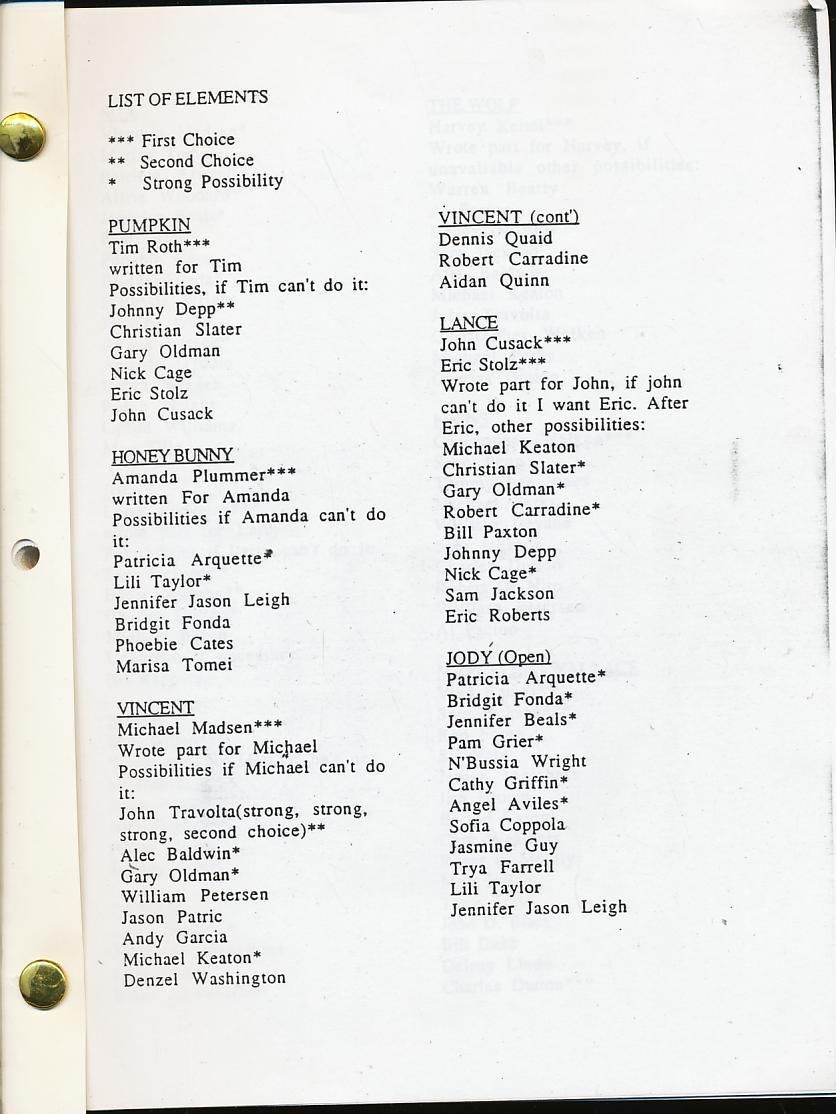
In an alter­nate uni­verse ver­sion of Quentin Taran­ti­no’s Pulp Fic­tion, Eddie Mur­phy, not Samuel L. Jack­son, might have played Jules, the bible-spout­ing hit man. His part­ner-in-crime, Vin­cent Vega, might have been played by Gary Old­man, not John Tra­vol­ta. And the role of Mia, played mem­o­rably by Uma Thur­man in black bangs, could have been played by Debra Winger or per­haps Phoebe Cates.

Doc­u­ments about the movie recent­ly sur­faced on Red­dit, offer­ing a fas­ci­nat­ing glimpse into the ear­ly cre­ative dis­cus­sions for the huge­ly influ­en­tial movie. In Tarantino’s wish list, which you can see above, he states that he wrote the roles of Pump­kin and Hon­ey Bun­ny, the would-be Bon­nie and Clyde of the fam­i­ly din­ing restau­rant cir­cuit, with Tim Roth and Aman­da Plum­mer in mind. They, of course, were ulti­mate­ly cast but Taran­ti­no was will­ing to enter­tain John­ny Depp and Patri­cia Arquette. One won­ders how Depp’s oth­er­world­ly weird­ness would have trans­lat­ed as a low lev­el street tough. On the oth­er hand, Tarantino’s first choice for Lance, Vin­cent Vega’s bathrobe-sport­ing drug deal­er, was none oth­er than John Cusack. That would have been amaz­ing.

Many of the studio’s approved cast­ing choic­es for the movie, seen here in a fax also appear­ing in the same Red­dit post, are much stranger. Eddie Mur­phy was tapped as a pos­si­ble Jules. Mira­max liked Nico­las Cage or John­ny Depp (real­ly?) for Butch, the samu­rai-sword wield­ing box­er. Bruce Willis, who played the role, wasn’t even on the orig­i­nal list. And mob clean-up man The Wolf, played with an off-kil­ter deco­rous­ness by Har­vey Kei­t­el, could have gone to War­ren Beat­ty or Dan­ny DeVi­to. Strange­ly, the stu­dio didn’t think John­ny Depp would have been right for the role.

Relat­ed Con­tent:

Quentin Tarantino’s Top 20 Grindhouse/Exploitation Flicks: Night of the Liv­ing Dead, Hal­loween & More

Quentin Taran­ti­no Lists the 12 Great­est Films of All Time: From Taxi Dri­ver to The Bad News Bears

Quentin Tarantino’s Hand­writ­ten List of the 11 “Great­est Movies”

Jonathan Crow is a Los Ange­les-based writer and film­mak­er whose work has appeared in Yahoo!, The Hol­ly­wood Reporter, and oth­er pub­li­ca­tions. You can fol­low him at @jonccrow. And check out his blog Veep­to­pus, fea­tur­ing lots of pic­tures of vice pres­i­dents with octo­pus­es on their heads.  The Veep­to­pus store is here.

The Worlds of Hitchcock & Kubrick Collide in a Surreal Mashup, The Red Drum Getaway

If you read Open Cul­ture even casu­al­ly, you know we love Alfred Hitch­cock, Stan­ley Kubrick, and videos that make us see film in a new way. It only makes sense, then, that we’d jump right on Adrien Deza­lay, Emmanuel Delabaere, and Simon Philippe’s The Red Drum Get­away, which mash­es Hitch­cock and Kubrick up into a four-minute shot of dis­tilled cin­e­mat­ic col­li­sion. “Jim­my was hav­ing a rather beau­ti­ful day,” reads the video’s prepara­to­ry descrip­tion, “until he bumped into Jack and things got weird.”

“Jim­my” refers, of course, to Jim­my Stew­art as seen in the work of Alfred Hitch­cock. “Jack” refers to Jack Nichol­son seen in the work of Stan­ley Kubrick — which, of course, means Jack Nichol­son of The Shin­ing. Strange enough, you might think, that those two would ever encounter each oth­er, but what might hap­pen if the gang of droogs from A Clock­work Orange also turned up? Or if poor mild-man­nered Jim­my found him­self at the aris­to­crat­ic, NSFW fetish par­ty from Eyes Wide Shut?

When an auteur suc­cess­ful­ly taps into our sub­con­scious minds, as Hitch­cock and Kubrick so often did, we describe their work, in a com­pli­men­ta­ry sense, as “dream­like.” But art that feels like a dream can also feed mate­r­i­al to our night­mares, and as The Red Drum Get­away more close­ly inter­twines these two dis­parate cin­e­mat­ic worlds as it goes, it begins to resem­ble the most har­row­ing filmic freak­outs any of us have ever endured. It makes a per­fect set­ting for Jack, who, as we know, has already gone insane due to his own alco­holism and the goad­ing of the spir­its who haunt the Over­look Hotel. And as for Jim­my, sure­ly Ver­ti­go put him through enough of the sur­re­al to pre­pare him for the psy­che­del­ic end of 2001.

Relat­ed Con­tent:

The Two Gen­tle­men of Lebows­ki: What If The Bard Wrote The Big Lebows­ki?

Dark Side of the Rain­bow: Pink Floyd Meets The Wiz­ard of Oz in One of the Ear­li­est Mash-Ups

Watch Steven Soderbergh’s Cre­ative Mashup of Hitch­cock and Gus Van Sant’s Psy­cho Films

Dis­cov­er the Life & Work of Stan­ley Kubrick in a Sweep­ing Three-Hour Video Essay

Alfred Hitchcock’s Sev­en-Minute Edit­ing Mas­ter Class

Sal­vador Dalí Cre­ates a Dream Sequence for Spell­bound, Hitchcock’s Psy­cho­an­a­lyt­ic Thriller

Col­in Mar­shall writes else­where on cities, lan­guage, Asia, and men’s style. He’s at work on a book about Los Ange­les, A Los Ange­les Primer, the video series The City in Cin­e­ma, and the crowd­fund­ed jour­nal­ism project Where Is the City of the Future? Fol­low him on Twit­ter at @colinmarshall or on Face­book.

Terry Gilliam’s Lost Animations from Monty Python and the Holy Grail Are Now Online

This year marks the 40th anniver­sary of Mon­ty Python and the Holy Grail and as the group has always been upfront about shame­less­ly milk­ing their fans for cash, there’s a new ver­sion of the Blu-Ray out, and a new print tour­ing the world. John Cleese and Eric Idle are cur­rent­ly also on an Amer­i­can tour, shar­ing the stage as a duo for the first time. Michael Palin has a book tour for the third vol­ume of his diaries. Ter­ry Jones is still work­ing on movies and plug­ging char­i­ties on his Twit­ter stream. Ter­ry Gilliam has an auto­bi­og­ra­phy com­ing out this month. And Gra­ham Chap­man, despite his beau­ti­ful plumage, is still dead.

How­ev­er, the Pythons are giv­ing a few things away and one of them is the above com­pi­la­tion of unused ani­ma­tions by Gilliam from the Holy Grail. They can be found on the new Blu-Ray, but the group’s offi­cial Youtube chan­nel is shar­ing them-—first with Gilliam’s com­men­tary, then with sound effects—for free.

These ani­ma­tions are links between the skits that make up Holy Grail, and include drag­ons, giants, and a very large snail. Gilliam took a lot of the illus­tra­tions that he didn’t do him­self from a book on illu­mi­nat­ed man­u­scripts, and, see­ing them all togeth­er in one go, one can imag­ine an alter­na­tive uni­verse where the ani­ma­tor makes an entire movie this way. (On the com­men­tary track, he half-jok­ing­ly describes him­self as “the man who could have gone on to become a great ani­ma­tor but was forced into live action film.”)

As per Python, a lot of the com­men­tary track berates the view­er for throw­ing mon­ey away on a redun­dant ver­sion of what the con­sumer prob­a­bly owns, and how Gilliam isn’t get­ting paid enough to do this. (Cue some coinage sound effects and Gilliam gets back on mic.)

If this kind of archiv­ing is going on, it would be inter­est­ing to know the sta­tus of Gilliam’s oth­er ani­ma­tions for both Python and the var­i­ous shows he did in the years run­ning up to it. There are indeed some inter­est­ing ear­ly works out there that need a facelift.

As for Gilliam and the Holy Grail, he says he doesn’t watch it:

I’m glad it makes a lot of mon­ey and keeps me in the style I’ve grown accus­tomed to. But watch it again? Why? We’ve got lives to lead.

via Digg

Relat­ed con­tent:

Ter­ry Gilliam Reveals the Secrets of Mon­ty Python Ani­ma­tions: A 1974 How-To Guide

Mon­ty Python and the Holy Grail Re-Imag­ined as an Epic, Main­stream Hol­ly­wood Film

Watch Ter­ry Gilliam’s Ani­mat­ed Short, The Christ­mas Card (1968)

John Cleese’s Eulo­gy for Gra­ham Chap­man: ‘Good Rid­dance, the Free-Load­ing Bas­tard, I Hope He Fries’

Ted Mills is a free­lance writer on the arts who cur­rent­ly hosts the FunkZone Pod­cast. You can also fol­low him on Twit­ter at @tedmills, read his oth­er arts writ­ing at tedmills.com and/or watch his films here.

100 Overlooked Films Directed by Women: See Selections from Sight & Sound Magazine’s New List

UK film month­ly mag­a­zine Sight & Sound’s most recent issue is ded­i­cat­ed to “The Female Gaze: 100 Over­looked Films Direct­ed by Women.” The list of 100 films runs some 20 pages, and the edi­tion also col­lects mini essays from actors like Gre­ta Ger­wig, Isabelle Hup­pert, and Til­da Swin­ton; direc­tors like Jane Cam­pi­on and Claire Denis, and crit­ics like Amy Taubin and Camille Paglia, all focus­ing on female-direct­ed films that deserve a sec­ond look.

Many of the film­mak­ers are fair­ly obscure, but even bet­ter known direc­tors are rep­re­sent­ed here with less­er-known selec­tions, like Ida Lupino’s Out­rage (and not her noir clas­sic The Hitch­hik­er) and Kathryn Bigelow’s The Love­less, her first fea­ture co-direct­ed with Mon­ty Mont­gomery and fea­tur­ing a young Willem Dafoe. (Fact: Until Bigelow won for The Hurt Lock­er in 2010, no woman had earned a Best Direc­tor Oscar).

Pre­sent­ed in chrono­log­i­cal order, the list of 100 Over­looked Films Direct­ed by Women fea­tures many land­marks in film his­to­ry, like Lotte Reiniger’s 1926 The Adven­tures of Prince Achmed, the first fea­ture-length ani­mat­ed film, which we recent­ly high­light­ed here. Open Cul­ture has also pre­vi­ous­ly dis­cussed Ger­maine Dulac’s 1928 sur­re­al­ist film The Seashell and the Cler­gy­man.

Lois Weber’s 1913 Sus­pense, her short film co-direct­ed with Philippe Smal­l­ey (view it at the top of the post), is one of the first exam­ples of cross-cut­ting to cre­ate ten­sion, and it even fea­tures a three-way split frame. Cross-cut­ting is a tech­nique all thrillers have used since. (And Weber stars in the film as well.)

Sight & Sound also pro­files Stephanie Roth­man, the first female direc­tor to work for Roger Cor­man, and her 1971 film The Vel­vet Vam­pire, a West Coast take on a goth­ic genre. Jessie Maple, who made Will in 1981, was the first African-Amer­i­can woman to become a part of New York’s cam­era operator’s union.

Then there’s the careers of film­mak­ers whose lives were cut short: Sovi­et direc­tor Lar­isa Shep­itko died in a car crash at 40, leav­ing behind two mas­ter­pieces, while Elia Kazan’s wife Bar­bara Loden made her debut with Wan­da in 1970 and passed away soon after, too young.

Many of these films are dif­fi­cult or impos­si­ble to find, and Sight & Sound includes an online arti­cle of eight more films that might be lost for good, like the afore­men­tioned Lois Weber’s only col­or film White Heat, or the only film actor Lil­lian Gish direct­ed, Remod­el­ing Her Hus­band.

The Sight & Sound issue is avail­able on news­stands and as a dig­i­tal edi­tion to sub­scribers. As not­ed at the end of the article’s intro­duc­tion, “a sea­son relat­ed to this project will take place next year at BFI South­bank, Lon­don.”

Read­ers inter­est­ed in the con­tri­bu­tions of women film­mak­ers will want to explore the Women Film Pio­neers web­site host­ed by Colum­bia Uni­ver­si­ty.

Relat­ed Con­tent:

The Ground­break­ing Sil­hou­ette Ani­ma­tions of Lotte Reiniger: Cin­derel­la, Hansel and Gre­tel, and More

An Ambi­tious List of 1400 Films Made by Female Film­mak­ers

Alice Guy-Blaché: The First Female Direc­tor & the Cin­e­mat­ic Trail­blaz­er You Like­ly Nev­er Heard Of

Ted Mills is a free­lance writer on the arts who cur­rent­ly hosts the FunkZone Pod­cast. You can also fol­low him on Twit­ter at @tedmills, read his oth­er arts writ­ing at tedmills.com and/or watch his films here.

Discover the Cinematic & Comedic Genius of Charlie Chaplin with 60+ Free Movies Online

“One of the many remark­able things about Char­lie Chap­lin,” wrote Roger Ebert, “is that his films con­tin­ue to hold up, to attract and delight audi­ences.” Richard Brody described Chap­lin as not just “alone among his peers of silent-com­e­dy genius,” but also as a mak­er of “great talk­ing pic­tures.” Jonathan Rosen­baum asked, “Has there ever been anoth­er artist — not just in the his­to­ry of cin­e­ma, but maybe in the his­to­ry of art — who has had more to say, and in such vivid detail, about what it means to be poor?” Andrew Sar­ris called Chap­lin “arguably the sin­gle most impor­tant artist pro­duced by the cin­e­ma, cer­tain­ly its most extra­or­di­nary per­former and prob­a­bly still its most uni­ver­sal icon.” “For me,” wrote Leonard Maltin, “com­e­dy begins with Char­lie Chap­lin.”

And so we see that Chap­lin, near­ly forty decades after his death, main­tains his high crit­i­cal rep­u­ta­tion — while also hav­ing enjoyed the absolute height of movie-star­dom back in the silent era.

Van­ish­ing­ly few artists of any kind man­age to com­bine such block­bust­ing com­mer­cial suc­cess with such fly­ing-col­ors crit­i­cal suc­cess. That alone might give you good enough rea­son to plunge into Chap­lin’s fil­mog­ra­phy, but know that you can begin that cin­e­mat­ic adven­ture for free right here on Open Cul­ture in our archive of more than 60 Char­lie Chap­lin films on the web.

There you’ll find short come­dies like 1914’s Kids Auto Race at Venice, which intro­duced his famous pen­ni­less pro­tag­o­nist “The Tramp”; the fol­low­ing year’s The Tramp, which made it into a phe­nom­e­non; 1919’s Sun­ny­side, in which we find out what hap­pens when Chap­lin’s grace­ful­ly hap­less comedic per­sona winds up on the farm; and 1925’s The Gold Rush, the film Chap­lin most want­ed to be remem­bered for.

But though Chap­lin’s oeu­vre could­n’t be eas­i­er to start watch­ing and laugh­ing at, com­ing to appre­ci­ate the full scope of his craft — in the way that the crit­ics quot­ed above have spent careers doing — may take time. After all, the man made 80 movies over his 75-year enter­tain­ment career, a kind of pro­duc­tiv­i­ty that, even leav­ing the con­sid­er­able artistry aside, cin­e­ma may nev­er see again. You can dive into our col­lec­tion of Chap­lin films here.

Relat­ed Con­tent:

101 Free Silent Films: The Great Clas­sics

Col­orized Pho­tos Bring Walt Whit­man, Char­lie Chap­lin, Helen Keller & Mark Twain Back to Life

Char­lie Chap­lin Does Cocaine and Saves the Day in Mod­ern Times (1936)

Watch Char­lie Chap­lin Demand 342 Takes of One Scene from City Lights; And Then Watch 65 Free Chap­lin Films Online

4,000+ Free Movies Online: Great Clas­sics, Indies, Noir, West­erns, Doc­u­men­taries & More

Col­in Mar­shall writes else­where on cities, lan­guage, Asia, and men’s style. He’s at work on a book about Los Ange­les, A Los Ange­les Primer, the video series The City in Cin­e­ma, and the crowd­fund­ed jour­nal­ism project Where Is the City of the Future? Fol­low him on Twit­ter at @colinmarshall or on Face­book.

Stream 100+ Free Movies from Paramount Pictures on YouTube: Hamlet, Ironweed & More

We got a nice tip from one of our read­ers, and want­ed to pass it along. Para­mount Pic­tures has launched an offi­cial, ver­i­fied YouTube chan­nel — called The Para­mount Vault — where you can watch full length films for free [update: if you’re based in the US]. You won’t find Para­moun­t’s best-known films in The Vault, but nonethe­less there are some qual­i­ty, if not enter­tain­ing, picks among the 150 films.

The movies are grouped into the fol­low­ing playlists: Clas­sics, Com­e­dy, Action/Adventure, Dra­ma, Hor­ror, West­erns, Sci­ence Fic­tion, and Thrillers. And they include motion pic­tures like 1987’s Iron­weed with Jack Nichol­son and Meryl Streep, Ham­let (1990) with Glenn Close and Mel Gib­son, Paris When It Siz­zles (1964) with William Hold­en and Audrey Hep­burn, Elvis in King Cre­ole (1958), Charl­ton Hes­ton in the 1950 noir film Dark City, Gene Wilder in Fun­ny About Love (1990), and Mar­got at the Wed­ding (2007) with Nicole Kid­man, Jack Black and Jen­nifer Jason Leigh.

The Para­mount Vault has been ver­i­fied by YouTube, so it looks like it’s the real deal. There is also an accom­pa­ny­ing ver­i­fied Face­book page.

If you stream the playlist embed­ded at the top, you can watch 43 dra­mas in a row, start­ing with Iron­weed and Ham­let.

The selec­tions above will be added to our list, 4,000+ Free Movies Online: Great Clas­sics, Indies, Noir, West­erns, Doc­u­men­taries & More. Enjoy!

Update: it looks like you need to be based in the US to view these films — some­thing that was­n’t appar­ent to me before­hand since I’m based here. My apolo­gies to any­one who’s geoblocked.

h/t David

Relat­ed Con­tent:

101 Free Silent Films: The Great Clas­sics

Colum­bia U. Launch­es a Free Mul­ti­me­dia Glos­sary for Study­ing Cin­e­ma & Film­mak­ing

by | Permalink | Make a Comment ( 13 ) |

Watch Gandhi Talk in His First Filmed Interview (1947)

The Gand­hi of his­to­ry doesn’t line up with the Gand­hi of leg­end, just as the beat­i­fied Moth­er Tere­sa presents a very dif­fer­ent pic­ture in cer­tain astute crit­ics’ esti­ma­tion. But as with most saints, ancient and mod­ern, peo­ple tend to ignore Gandhi’s many con­tra­dic­tions and trou­bling­ly racist and casteist views. He comes to us more as myth and mar­tyr than deeply flawed human indi­vid­ual. An indis­pens­able part of the myth­mak­ing, Richard Attenborough’s 1982 biopic, Gand­hi, may be “over-san­i­tized,” as The Guardian writes, but Ben Kingsley’s per­for­mance as the anti-colo­nial leader is gen­uine­ly “sub­lime” in his evo­ca­tion of Gandhi’s “inten­si­ty… wit and even the dis­tinc­tive, deter­mined walk.” It’s these per­son­al qualities—and of course Gandhi’s defeat of the largest empire on the plan­et with non­vi­o­lent action and a spir­i­tu­al phi­los­o­phy—that con­tin­ue to inspire move­ments for jus­tice and civ­il rights.

We see a lit­tle of that deter­mined walk in the short news­reel inter­view above, the very first “talk­ing pic­ture” made of Gand­hi, and we also hear his inten­si­ty and wit, though much sub­dued by his phys­i­cal frailty after years of fast­ing. Tak­en in 1947 by Fox Movi­etone News, the film marks a piv­otal peri­od in the Indi­an leader’s life. Very short­ly after this Par­lia­ment passed the Indi­an Inde­pen­dence Act. That year also marked the start of a bloody new strug­gle, insti­gat­ed by anoth­er colo­nial inter­ven­tion, as the British par­ti­tioned India into two war­ring coun­tries, an act so poignant­ly dra­ma­tized in Salmon Rushdie’s Midnight’s Chil­dren.

This year of tur­moil was also Gandhi’s last; he was assas­si­nat­ed in 1948 by a Hin­du nation­al­ist who accused him of sid­ing with Pak­istan. In the inter­view, we hear what we might think of as some of Gandhi’s final pub­lic pro­nounce­ments on such sub­jects as child mar­riage, pro­hi­bi­tion, his deeply held con­vic­tions about an authen­tic Indi­an cul­tur­al iden­ti­ty, and the lengths that he would go for his country’s inde­pen­dence. At the end of the short inter­view, the Amer­i­can reporter asks Gand­hi, pre­scient­ly, “would you be pre­pared to die in the cause of India’s Inde­pen­dence?” to which Gand­hi replies, “this is a bad ques­tion.”

Relat­ed Con­tent:

Tol­stoy and Gand­hi Exchange Let­ters: Two Thinkers’ Quest for Gen­tle­ness, Humil­i­ty & Love (1909)

Albert Ein­stein Express­es His Admi­ra­tion for Mahat­ma Gand­hi, in Let­ter and Audio

Hear Gandhi’s Famous Speech on the Exis­tence of God (1931)

Josh Jones is a writer and musi­cian based in Durham, NC. Fol­low him at @jdmagness

Akira Kurosawa Painted the Storyboards For Scenes in His Epic Films: Compare Canvas to Celluloid

Kurasawa 1

500full

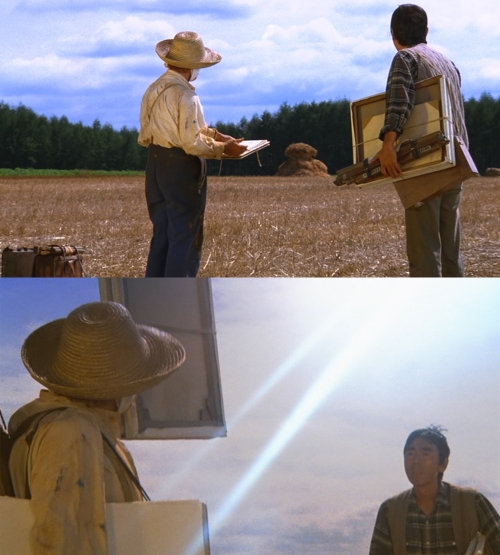
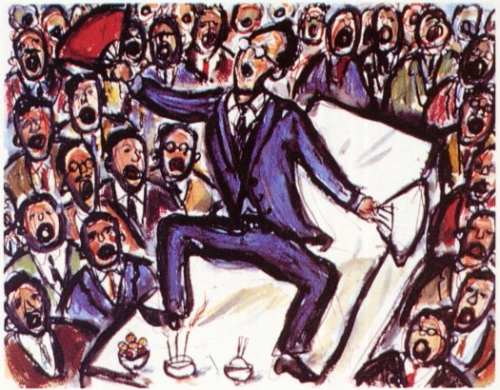
Appre­ci­a­tors of the finest works in cin­e­ma his­to­ry often liken their images to paint­ings. In the case of Aki­ra Kuro­sawa, mak­er of quite a few entries on that grand list of the finest works in cin­e­ma his­to­ry, that makes pro­fes­sion­al sense: he began as a painter, only lat­er turn­ing film­mak­er. “When I changed careers,” he writes, “I burnt all the pic­tures that I had paint­ed up until then. I intend­ed to for­get paint­ing once and for all. As a well-known Japan­ese proverb says, ‘If you chase two rab­bits, you may not catch even one.’ I did no art work at all once I began to work in cin­e­ma. But since becom­ing a film direc­tor, I have found that draw­ing rough sketch­es was often a use­ful means of explain­ing ideas to my staff.”

Kurasawa 2

Kurasawa 3

That comes quot­ed on “Aki­ra Kuro­sawa: From Art to Film,” a roundup of such paint­ings by the Emper­or (a nick­name Kuro­sawa earned through his on-set man­ner), set beside the result­ing frames from his movies. “As a painter and film­mak­er, Kuro­sawa stuck to his own style,” writes Pop­mat­ters’ Ian Chant in an exam­i­na­tion of this facet of his career, “informed heav­i­ly by tra­di­tion­al Japan­ese paint­ing as well as Euro­pean impres­sion­ists and expres­sion­ists, anoth­er are­na of art where he answered to both east­ern and west­ern influ­ences. These painstak­ing­ly craft­ed paint­ings formed the visu­al back­bone of some of Kurosawa’s most last­ing achieve­ments.”

Kurasawa 4

Kurasawa 5

The most vivid exam­ples of can­vas-turned-cel­lu­loid come from Kuro­sawa’s lat­er works, such as 1980’s Kage­musha, 1985’s Ran, 1990’s Dreams, and 1993’s Mada­dayo, selec­tions from each of which you see in this post. “I can­not help but be fas­ci­nat­ed by the fact that when I tried to paint well, I could only pro­duce mediocre pic­tures,” con­tin­ues the Emper­or him­self. “But when I con­cen­trat­ed on delin­eat­ing the ideas for my films, I uncon­scious­ly pro­duced works that peo­ple find inter­est­ing.” Hold­ing the paint­ed work up against his film work, only the strictest cin­e­ma purist could deny that, ulti­mate­ly, Kuro­sawa caught both rab­bits.

Kurasawa 6

Kurasawa 7

Jux­ta­pose more paint­ed sto­ry­boards and frames from films here.

Relat­ed Con­tent:

The Paint­ings of Aki­ra Kuro­sawa

Aki­ra Kurosawa’s 80-Minute Mas­ter Class on Mak­ing “Beau­ti­ful Movies” (2000)

Aki­ra Kurosawa’s List of His 100 Favorite Movies

Aki­ra Kuro­sawa & Gabriel Gar­cía Márquez Talk About Film­mak­ing (and Nuclear Bombs) in Six Hour Inter­view

Col­in Mar­shall writes else­where on cities, lan­guage, Asia, and men’s style. He’s at work on a book about Los Ange­les, A Los Ange­les Primer, the video series The City in Cin­e­ma, and the crowd­fund­ed jour­nal­ism project Where Is the City of the Future? Fol­low him on Twit­ter at @colinmarshall or on Face­book.

« Go Back — More in this category... »
Quantcast