Walt Whitman’s Unearthed Health Manual, “Manly Health & Training,” Urges Readers to Stand (Don’t Sit!) and Eat Plenty of Meat (1858)

walt-whitman

The idea of “the author,” wrote Roland Barthes, “rules in man­u­als of lit­er­ary his­to­ry, in biogra­phies of writ­ers, in mag­a­zine inter­views, and even in the aware­ness of lit­er­ary men, anx­ious to unite, by their pri­vate jour­nals, their per­son and their work.” We see this anx­i­ety of author­ship in much of Walt Whit­man’s per­son­al cor­re­spon­dence. The poet, “could be sur­pris­ing­ly anx­ious about his own dis­ap­pear­ance,” writes Zachary Turpin in the intro­duc­tion to a recent­ly re-dis­cov­ered series of Whit­man essays called “Man­ly Health and Train­ing.”

Whit­man, how­ev­er, was just as often anx­ious to dis­as­so­ci­ate his per­son from his work, whether juve­nile short sto­ries or his copi­ous amount of jour­nal­ism and occa­sion­al pieces. Orig­i­nal­ly pub­lished in the New York Atlas between 1858 and 1860, “Man­ly Health and Train­ing”—“part guest edi­to­r­i­al, part self-help column”—may indeed rep­re­sent some of the work Whit­man wished would dis­ap­pear in his late-in-life attempts at “careerist revi­sion­ism.” As it hap­pens, reports The New York Times, these arti­cles did just that until Turpin, a grad­u­ate stu­dent in Eng­lish at the Uni­ver­si­ty of Hous­ton, found the essays last sum­mer while brows­ing arti­cles writ­ten under var­i­ous jour­nal­is­tic pseu­do­nyms Whit­man used.

The work in ques­tion appeared under the name “Mose Vel­sor,” and it’s worth ask­ing, as Barthes might, whether we should con­sid­er it by the poet­ic fig­ure we call “Whit­man” at all. Though we encounter in these occa­sion­al­ly “eye­brow-rais­ing” essays the “more-than-typ­i­cal­ly self-con­tra­dic­to­ry Whit­man,” Turpin com­ments, “these con­tra­dic­tions dis­play lit­tle of the poet­ic dialec­ti­cism of Leaves of Grass”—first pub­lished, with­out the author’s name, in 1855.

The essays are piece­meal dis­til­la­tions of “a huge range of top­ics” of gen­er­al inter­est to male read­ers of the time—in some respects, a 19th cen­tu­ry equiv­a­lent of Men’s Health mag­a­zine. And yet, argues Ed Fol­som, edi­tor of The Walt Whit­man Quar­ter­lywhich has pub­lished the near­ly 47,000 word series of essays online—“One of Whitman’s core beliefs was that the body was the basis of democ­ra­cy. The series is a hymn to the male body, as well as a guide to tak­ing care of what he saw as the most vital unit of demo­c­ra­t­ic liv­ing.” These themes are man­i­fest along with the robust homo­eroti­cism of Whitman’s poet­ry:

We shall speak by and by of health as being the foun­da­tion of all real man­ly beau­ty. Per­haps, too, it has more to do than is gen­er­al­ly sup­posed, with the capac­i­ty of being agree­able as a com­pan­ion, a social vis­i­tor, always welcome—and with the divine joys of friend­ship. In these par­tic­u­lars (and they sure­ly include a good part of the best bless­ings of exis­tence), there is that sub­tle virtue in a sound body, with all its func­tions per­fect, which noth­ing else can make up for, and which will itself make up for many oth­er defi­cien­cies, as of edu­ca­tion, refine­ment, and the like.

David Reynolds, pro­fes­sor of Eng­lish at the Grad­u­ate Cen­ter of the City Uni­ver­si­ty of New York, con­curs: “there’s a kind of health-nut thing about ‘Leaves of Grass’ already. This series sort of cod­i­fies it and expands on it, giv­ing us a real reg­i­men.” To that end, two of “Mose Velsor”’s promi­nent top­ics are diet and exer­cise, and whether we con­sid­er “Man­ly Health and Train­ing” a prose adden­dum to Whitman’s first book or most­ly work-for-hire on a range of top­ics in his gen­er­al purview, some of the advice, like the poet­ry, can often sound par­tic­u­lar­ly mod­ern, while at the same time pre­serv­ing the quaint­ness of its age.

Antic­i­pat­ing the Paleo craze, for exam­ple, Whit­man writes, “let the main part of the diet be meat, to the exclu­sion of all else.” His diet advice is far from sys­tem­at­ic from essay to essay, yet he con­tin­u­al­ly insists upon lean meat as the foun­da­tion of every meal and refers to beef and lamb as “strength­en­ing mate­ri­als.” The “sim­plest and most nat­ur­al diet,” con­sists of eat­ing main­ly meat, Whit­man asserts as he casts asper­sions on “a veg­e­tar­i­an or water-gru­el diet.” Whit­man issues many of his dietary rec­om­men­da­tions in the ser­vice of vocal train­ing, rec­om­mend­ing that his read­ers “gain ser­vice­able hints from the ancients” in order to “give strength and clear­ness to their vocal­iza­tions.”

Aspi­rants to man­li­ness should also attend to the ancients’ habit of fre­quent­ing “gym­na­si­ums, in order to acquire mus­cu­lar ener­gy and pli­an­cy of limbs.” Many of Whitman’s train­ing reg­i­mens con­jure images from The Road to Wellville or of stereo­typ­i­cal 19th-cen­tu­ry strong men with han­dle­bar mus­tach­es and fun­ny-look­ing leo­tards. But he does intu­it the mod­ern iden­ti­fi­ca­tion of a seden­tary lifestyle with ill health and pre­ma­ture death, address­ing espe­cial­ly “stu­dents, clerks, and those in seden­tary or men­tal employ­ments.” He exhorts pro­to-cubi­cal jock­eys and couch pota­toes alike: “to you, clerk, lit­er­ary man, seden­tary per­son, man of for­tune, idler, the same advice. Up!”

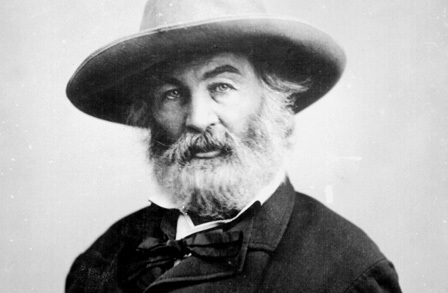
Whitman’s “warn­ings about the dan­gers of inac­tiv­i­ty,” writes The New York Times, “could have been issued from a 19th-cen­tu­ry stand­ing desk,” a not unlike­ly sce­nario, giv­en the many authors from the past who wrote on their feet.  But should we pic­ture Whit­man him­self issu­ing these procla­ma­tions on “Health and Train­ing”? No image of the man him­self, with cocked elbow and cocked hat, is affixed to the essays. The pseu­do­ny­mous byline may be no more than a con­ven­tion, or it may be a desire to inhab­it anoth­er per­sona, and to dis­tance the words far from those of “Walt Whit­man.”

Did Whit­man con­sid­er the essays hackwork—populist pab­u­lum of the kind strug­gling writ­ers today often crank out anony­mous­ly as “spon­sored con­tent”? The series, Turpin writes “is un-Whit­man­ian, even unpo­et­ic,” its func­tion “fun­da­men­tal­ly util­i­tar­i­an, a phys­i­o­log­i­cal and polit­i­cal doc­u­ment root­ed in the (pseudo)sciences of the era.” Not the sort of thing one imag­ines the high­ly self-con­scious poet would have want­ed to claim. “Dur­ing his life­time,” Whit­man “wast­ed no time remind­ing any­one of this series,” like­ly hop­ing it would be for­got­ten.

And yet, it’s inter­est­ing nonethe­less to com­pare the exag­ger­at­ed mas­culin­i­ty of “Man­ly Health and Train­ing” with much of the belit­tling per­son­al crit­i­cism Whit­man received in his life­time, rep­re­sent­ed per­fect­ly by one Thomas Went­worth Hig­gin­son. This crit­ic and harsh review­er includ­ed Whitman’s “pri­apism,” his serv­ing as a nurse dur­ing the Civ­il War rather than “going into the army,” and his “not look­ing… in real­ly good con­di­tion for ath­let­ic work” as rea­sons why the poet “nev­er seemed to me a thor­ough­ly whole­some or man­ly man.”

In addi­tion to thin­ly veiled homo­pho­bia, many of Higginson’s com­ments sug­gest­ed, write Robert Nel­son and Ken­neth Price, that “as a social group, work­ing-class men did not and could not pos­sess the qual­i­ties of true man­li­ness.” Per­haps we can read these ear­ly Whit­man edi­to­ri­als, pseu­do­ny­mous or not, as demo­c­ra­t­ic instruc­tions for using mas­cu­line health as a great social lev­el­er and means to “make up for many oth­er defi­cien­cies, as of edu­ca­tion, refine­ment, and the like.” Or per­haps “Man­ly Health and Train­ing” was just anoth­er assignment—a way to pay the bills by ped­dling pop­u­lar male wish-ful­fill­ment while the poet wait­ed for the rest of the world to catch up with his lit­er­ary genius.

via The New York Times

Relat­ed Con­tent:

Free Online Lit­er­a­ture Cours­es

Iggy Pop Reads Walt Whit­man in Col­lab­o­ra­tions With Elec­tron­ic Artists Alva Noto and Tar­wa­ter

Orson Welles Reads From America’s Great­est Poem, Walt Whitman’s “Song of Myself” (1953)

Mark Twain Writes a Rap­tur­ous Let­ter to Walt Whit­man on the Poet’s 70th Birth­day (1889)

Josh Jones is a writer and musi­cian based in Durham, NC. Fol­low him at @jdmagness

Florence Nightingale Saved Lives by Creating Revolutionary Visualizations of Statistics (1855)

I’ve long count­ed myself as a fan of Edward Tufte, the pre­em­i­nent liv­ing expert on the visu­al dis­play of quan­ti­ta­tive infor­ma­tion. I like to think this puts me in the com­pa­ny of Flo­rence Nightin­gale, founder of mod­ern nurs­ing as well as a pro­lif­ic writer and still today a house­hold name. Hav­ing lived in the Vic­to­ri­an era, she of course nev­er got to enjoy the work of Tufte him­self, though her own zeal for data and sta­tis­tics, in a time that val­ued such things less than ours, made her, in some sense, a Tufte of her day: the first female mem­ber of the Roy­al Sta­tis­ti­cal Soci­ety and an hon­orary mem­ber of the Amer­i­can Sta­tis­ti­cal Asso­ci­a­tion. The video above, an out­take from Hans Rosling’s The Joy of Stats, offers a brief intro­duc­tion to the sta­tis­ti­cal side of Nightin­gale’s career, and the impor­tant role data visu­al­iza­tion played in her mis­sion to save lives.

“When Flo­rence Nightin­gale arrived at a British hos­pi­tal in Turkey dur­ing the Crimean War, she found a night­mare of mis­ery and chaos,” writes Sci­ence News’ Julie Rehmey­er. “By the time Nightin­gale left Turkey after the war end­ed in July 1856, the hos­pi­tals were well-run and effi­cient, with mor­tal­i­ty rates no greater than civil­ian hos­pi­tals in Eng­land.”

But feel­ing great regret over all the lives lost there to pre­ventable dis­ease, she went on to save even more of them by bring­ing num­bers into play. She specif­i­cal­ly com­piled “vast tables of sta­tis­tics about how many peo­ple had died, where and why. Many of her find­ings shocked her. For exam­ple, she dis­cov­ered that in peace­time, sol­diers in Eng­land died at twice the rate of civil­ians — even though they were young men in their primes.”

1024px-Nightingale-mortality

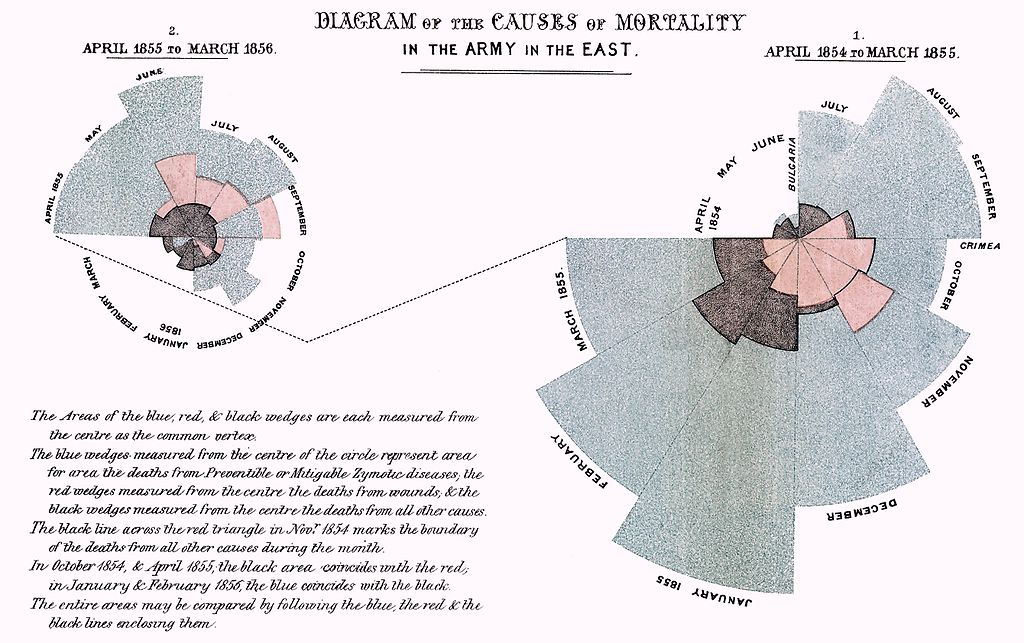
Nightin­gale’s most influ­en­tial pre­sen­ta­tion of her data, which she called a “cox­comb,” appears just above. This Is Sta­tis­tics describes “Dia­gram of the Caus­es of Mor­tal­i­ty in the Army in the East” as “sim­i­lar to a pie chart, but more intri­cate. In a pie chart the size of the ‘slices’ rep­re­sent a pro­por­tion of data, while in a cox­comb the length, which the slice extends radi­al­ly from the cen­ter-point, rep­re­sents the first lay­er of data.” Her famous chart “was divid­ed even­ly into 12 slices rep­re­sent­ing months of the year, with the shad­ed area of each month’s slice pro­por­tion­al to the death rate that month. Her col­or-cod­ed shad­ing indi­cat­ed the cause of death in each area of the dia­gram.” She stat­ed the goal of her visu­al­iza­tion clear­ly: “to affect thro’ the Eyes what we fail to con­vey to the pub­lic through their word-proof ears.”

We all try to do the very same thing when we present infor­ma­tion today, though few of us—even armed with a degree of num­ber-crunch­ing and graph­ic design pow­ers that would have seemed mag­i­cal to Nightin­gale and her contemporaries—achieve the kind of results she did. She gal­va­nized sys­temic change in hos­pi­tal design and oper­a­tion as well as prompt­ed a rev­o­lu­tion in san­i­ta­tion which increased Britain’s aver­age nation­al life expectan­cy by 20 years—something to bear in mind when we start to get big ideas about how our Pow­er­point slide shows will change the world.

If you would like to sup­port the mis­sion of Open Cul­ture, con­sid­er mak­ing a dona­tion to our site. It’s hard to rely 100% on ads, and your con­tri­bu­tions will help us con­tin­ue pro­vid­ing the best free cul­tur­al and edu­ca­tion­al mate­ri­als to learn­ers every­where. You can con­tribute through Pay­Pal, Patre­on, and Ven­mo (@openculture). Thanks!

via @pourmecoffee

Relat­ed Con­tent:

The Art of Data Visu­al­iza­tion: How to Tell Com­plex Sto­ries Through Smart Design

Slick Data Visu­al­iza­tion Reveals Sci­en­tif­ic Col­lab­o­ra­tions Tak­ing Place Around the Globe

In Under Three Min­utes, Hans Rosling Visu­al­izes the Incred­i­ble Progress of the “Devel­op­ing World”

Watch a Cool and Creepy Visu­al­iza­tion of U.S. Births & Deaths in Real-Time

Sta­tis­tics Explained Through Mod­ern Dance: A New Way of Teach­ing a Tough Sub­ject

Based in Seoul, Col­in Mar­shall writes and broad­casts on cities, lan­guage, and style. He’s at work on a book about Los Ange­les, A Los Ange­les Primer, the video series The City in Cin­e­ma, the crowd­fund­ed jour­nal­ism project Where Is the City of the Future?, and the Los Ange­les Review of Books’ Korea Blog. Fol­low him on Twit­ter at @colinmarshall or on Face­book.

How a Good Night’s Sleep — and a Bad Night’s Sleep — Can Enhance Your Creativity

Sleep

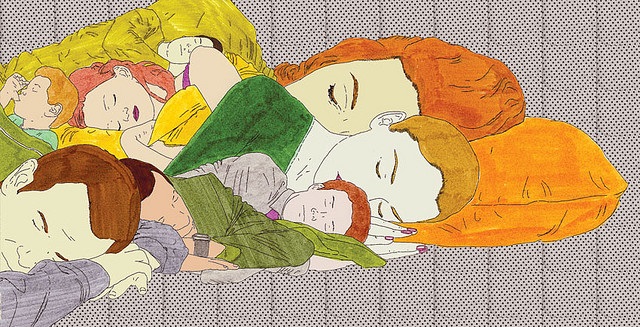
Cre­ative Com­mons image, “Sleep,” by Masha Kras­no­va-Shabae­va

You decide you need some med­ical advice, so you take to the inter­net. Whoops! There’s your first mis­take. Now you are bom­bard­ed with con­tra­dic­to­ry opin­ions from ques­tion­able sources and you begin to devel­op symp­toms you nev­er knew exist­ed. It’s all down­hill from there. So I’ll say this upfront: I have no med­ical qual­i­fi­ca­tions autho­riz­ing me to dis­pense infor­ma­tion about sleep dis­or­ders. The only advice I’d ven­ture, should you have such a prob­lem, is to go see a doc­tor. It might help, or not. I can cer­tain­ly sym­pa­thize. I am a chron­ic insom­ni­ac.

The down­side to this con­di­tion is obvi­ous. I nev­er get enough sleep. When­ev­er I con­sult the inter­net about this, I learn that it’s prob­a­bly very dire and that I may lose my mind or die young(ish). The upside—which I learned to mas­ter after years of try­ing and fail­ing to sleep like nor­mal people—is that the nights are qui­et and peace­ful, and thus a fer­tile time cre­ative­ly.

Med­ical issues aside, what do we know about sleep, insom­nia, and cre­ativ­i­ty? Let us wade into the fray, with the pro­vi­so that we will like­ly reach few con­clu­sions and may have to fall back on our own expe­ri­ence to guide us. In sur­vey­ing this sub­ject, I was pleased to have my expe­ri­ence val­i­dat­ed by an arti­cle in Fast Com­pa­ny. Well, not pleased, exact­ly, as the author, Jane Porter, cites a study in Sci­ence that links a lack of sleep to Alzheimer’s and the accu­mu­la­tion of “poten­tial­ly neu­ro­tox­ic waste prod­ucts.”

And yet, in praise of sleep­less­ness, Porter also rec­om­mends turn­ing insom­nia into a “pro­duc­tiv­i­ty tool,” nam­ing famous insom­ni­acs like Mar­garet Thatch­er, Bill Clin­ton, Charles Dick­ens, Mar­cel Proust, and Madon­na (not all of whom I’d like to emu­late). She then quotes psy­chol­o­gist Tomas Chamor­ro-Pre­muz­ic of Uni­ver­si­ty Col­lege Lon­don, who made the dubi­ous-sound­ing claim in Psy­chol­o­gy Today that “insom­nia is to excep­tion­al achieve­ment what men­tal ill­ness is to cre­ativ­i­ty.” Every­thing about this anal­o­gy sounds sus­pect to me.

But there are more sub­stan­tive views on the mat­ter. Anoth­er study, pub­lished in Cre­ativ­i­ty Research Jour­nal, sug­gests insom­nia may be a symp­tom of “notable cre­ative poten­tial,” though the authors only go as far as say­ing the two phe­nom­e­non are “asso­ci­at­ed.” The arrow of causal­i­ty may point in either direc­tion. Per­haps the most prag­mat­ic view on the sub­ject comes from Michael Perlis, psy­chol­o­gy pro­fes­sor at the Uni­ver­si­ty of Penn­syl­va­nia, who says, “What is insom­nia, but the gift of more time?”

Den­nis Dra­belle at The Wash­ing­ton Post, also an insom­ni­ac, refers to a recent study (as of 2007) from the Uni­ver­si­ty of Can­ter­bury that sug­gests “insom­nia and orig­i­nal­i­ty may go hand in hand.” He also points out that the notion of sleep­less­ness as pro­duc­tive, though “coun­ter­in­tu­itive,” has plen­ty of prece­dent. Dra­belle men­tions many more famous cas­es, from W.C. Fields to Theodore Roo­sevelt to Franz Kaf­ka. The list could go on and on.

Actor and musi­cian Matt Berry tells The Guardian how, after years of toss­ing and turn­ing, he final­ly har­nessed his sleep­less hours to write and record an album, Music for Insom­ni­acs. “I knew that this was dead time,” says Berry, “and I could be doing some­thing instead of sit­ting wor­ry­ing about not being asleep.” Anoth­er musi­cian, Dave Bay­ley of band Glass Ani­mals, “owes his career in music to insom­nia,” The Guardian writes, then notes a phe­nom­e­non sleep researchers call—with some skep­ti­cism—“cre­ative insom­nia.” Oth­er musi­cians like Chris Mar­tin, Moby, Tricky, and King Krule have all suf­fered the con­di­tion and turned it to good account.

The Guardian also notes that each of these poor souls has found “sleep­less nights inspir­ing as well as tor­ment­ing.” Insom­nia is not, in fact a gift or tal­ent, but a painful con­di­tion that Porter and Dra­belle both acknowl­edge can be asso­ci­at­ed with depres­sion, addic­tion, and oth­er seri­ous med­ical con­di­tions. One might make good use of the time—but per­haps only for a time. A site called Sleep­dex—-which offers “resources for bet­ter sleep”—puts it this way:

Occa­sion­al insom­nia appears to help some peo­ple pro­duce new art and work, but is a detri­ment to oth­ers. It is per­haps true that more peo­ple find it a detri­ment than find it use­ful. Long-term insom­nia and the accom­pa­ny­ing sleep debt are almost sure­ly neg­a­tive for cre­ativ­i­ty.

This brings us to the sub­ject of sleep—good, rest­ful sleep—and its rela­tion­ship to cre­ativ­i­ty. Sleep­dex cites sev­er­al research stud­ies from Swiss and Ital­ian uni­ver­si­ties, UC San Diego, and UC Davis. The gen­er­al con­clu­sion is that REM sleep—that peri­od dur­ing which dreams “are the most nar­ra­tive­ly coher­ent of any dur­ing the night”—is also an impor­tant stim­u­lus for cre­ativ­i­ty. There are the numer­ous anec­dotes from artists like Sal­vador Dali, Paul McCart­ney, and count­less oth­ers about famous works of art tak­ing shape in dream states (Kei­th Richards says he heard the riff from “Sat­is­fac­tion” in a dream).

And there are the exper­i­men­tal data, pur­port­ed­ly con­firm­ing that REM sleep enhances “cre­ative prob­lem solv­ing.” Euro­pean sci­en­tists have found that peo­ple were more like­ly to have cre­ative insights after a long peri­od of rest­ful sleep, when the right brain gets a boost. Like­wise, Tom Stafford at the BBC describes the “post-sleep, dream­like men­tal state—known as sleep iner­tia or the hypnopom­pic state” that infus­es our “wak­ing, direct­ed thoughts with a dust­ing of dream­world mag­ic.” It isn’t that insom­ni­acs don’t expe­ri­ence this, of course, but we have less of it, as peri­ods of REM sleep can be short­er and often inter­rupt­ed by the need to scram­ble out of bed and get to work or get the kids to school not long after hit­ting the pil­low.

Stafford points us toward a UC Berke­ley study (appar­ent­ly the Uni­ver­si­ty of Cal­i­for­nia has some sort of monop­oly on sleep research) “that helps illus­trate the pow­er of sleep to fos­ter unusu­al con­nec­tions, or ‘remote asso­ciates’ as psy­chol­o­gists call them.” Like near­ly all of the sci­en­tif­ic lit­er­a­ture on sleep, this study express­es lit­tle doubt about the impor­tance of sleep to mem­o­ry func­tion and prob­lem solv­ing. Big Think col­lects sev­er­al more stud­ies that con­firm the find­ings.

On the whole, when it comes to the links between sleep—or sleeplessness—and cre­ativ­i­ty, the data and the sto­ries point in dif­fer­ent direc­tions. This is hard­ly sur­pris­ing giv­en the slip­per­i­ness of that thing we call “cre­ativ­i­ty.” Like “love” it’s an abstract qual­i­ty every­one wants and no one knows how to make in a lab­o­ra­to­ry. If it’s extra time you’re after—and very qui­et time at that—I can’t rec­om­mend insom­nia enough, though I wouldn’t rec­om­mend it at all as a vol­un­tary exer­cise. If it’s the spe­cial cre­ative insights only avail­able in dream states, well, you’d best get lots of sleep. If you can, that is. Cre­ative insomniacs—like those wan­der­ing in the con­fines of a dream world—know all too well they don’t have much choice in the mat­ter.

Relat­ed Con­tent:

Why You Do Your Best Think­ing In The Show­er: Cre­ativ­i­ty & the “Incu­ba­tion Peri­od”

The Psy­chol­o­gy of Messi­ness & Cre­ativ­i­ty: Research Shows How a Messy Desk and Cre­ative Work Go Hand in Hand

David Lynch Explains How Med­i­ta­tion Enhances Our Cre­ativ­i­ty

Josh Jones is a writer and musi­cian based in Durham, NC. Fol­low him at @jdmagness

The Power of Pessimism: Science Reveals the Hidden Virtues in Negative Thinking

These days, you don’t real­ly hear many peo­ple mak­ing the case for pes­simism. Quite the con­trary, pos­i­tive psy­chol­o­gy is now en vogue. And its founder, Uni­ver­si­ty of Penn­syl­va­nia psy­chol­o­gy pro­fes­sor Mar­tin Selig­man, has writ­ten best­sellers with titles like Learned Opti­mism: How to Change Your Mind and Your Life. But maybe, as Alain de Bot­ton sug­gests above, there’s an argu­ment to be made for pes­simism – for hav­ing a sober, if not neg­a­tive, out­look on life. And maybe there’s sci­ence that val­i­dates that point of view.

This sec­ond video, cre­at­ed by New York Mag­a­zine, sum­ma­rizes the research of NYU pro­fes­sor Gabriele Oet­tin­gen, attribut­ing to her the belief that “pes­simism can be a bet­ter moti­va­tor for achiev­ing goals than opti­mism,” see­ing that opti­mism tends to lull us into com­pla­cen­cy and slack­en our desire to achieve impor­tant per­son­al goals, like los­ing weight.

Cou­ple that with this: a 2013 study released in Psy­chol­o­gy and Aging, a jour­nal pub­lished by the Amer­i­can Psy­cho­log­i­cal Asso­ci­a­tion (APA), con­clud­ed that “Old­er peo­ple who have low expec­ta­tions for a sat­is­fy­ing future may be more like­ly to live longer, health­i­er lives than those who see brighter days ahead.” The lead author of the study Frieder R. Lang, PhD, added: “Our find­ings revealed that being over­ly opti­mistic in pre­dict­ing a bet­ter future was asso­ci­at­ed with a greater risk of dis­abil­i­ty and death with­in the fol­low­ing decade.” “Pes­simism about the future,” it seems, “may encour­age peo­ple to live more care­ful­ly, tak­ing health and safe­ty pre­cau­tions” that sun­ny opti­mists might not oth­er­wise take.

I should add this caveat: sci­en­tists don’t nec­es­sar­i­ly find virtue in pure, unadul­ter­at­ed pes­simism. Rather, they find ben­e­fits in what they call “defen­sive pes­simism.” This is a strat­e­gy, as sum­ma­rized by The Wall Street Jour­nal, where peo­ple “low­er their expec­ta­tions and think through all the pos­si­ble neg­a­tives that could hap­pen in order to avoid them.” Frieder R. Lang, author of the Psy­chol­o­gy & Aging study men­tioned above, told WSJ, “Those who are defen­sive­ly pes­simistic about their future may be more like­ly to invest in prepara­to­ry or pre­cau­tion­ary mea­sures, where­as we expect that opti­mists will not be think­ing about those things.” Sim­i­lar virtues might be attrib­uted to “defen­sive opti­mism,” but we’ll have to wait and see what the inevitable sci­en­tif­ic stud­ies have to say about that.

Fol­low Open Cul­ture on Face­book and Twit­ter and share intel­li­gent media with your friends. Or bet­ter yet, sign up for our dai­ly email and get a dai­ly dose of Open Cul­ture in your inbox. And if you want to make sure that our posts def­i­nite­ly appear in your Face­book news­feed, just fol­low these sim­ple steps.

Relat­ed Con­tent:

Free Online Psy­chol­o­gy & Neu­ro­science Cours­es

The Psy­chol­o­gy of Messi­ness & Cre­ativ­i­ty: Research Shows How a Messy Desk and Cre­ative Work Go Hand in Hand

John Cleese Explores the Health Ben­e­fits of Laugh­ter

by | Permalink | Make a Comment ( 1 ) |

This Is Your Brain on Exercise: Why Physical Exercise (Not Mental Games) Might Be the Best Way to Keep Your Mind Sharp

brain exercise

In the Unit­ed States and the UK, we’ve seen the emer­gence of a multi­bil­lion-dol­lar brain train­ing indus­try, premised on the idea that you can improve your mem­o­ry, atten­tion and pow­ers of rea­son­ing through the right men­tal exer­cis­es. You’ve like­ly seen soft­ware com­pa­nies and web sites that mar­ket games designed to increase your cog­ni­tive abil­i­ties. And if you’re part of an old­er demo­graph­ic, wor­ried about your aging brain, you’ve per­haps been inclined to give those brain train­ing pro­grams a try. Whether these pro­grams can deliv­er on their promis­es remains an open question–especially see­ing that a 2010 sci­en­tif­ic study from Cam­bridge Uni­ver­si­ty and the BBC con­clud­ed that there’s “no evi­dence to sup­port the wide­ly held belief that the reg­u­lar use of com­put­erised brain train­ers improves gen­er­al cog­ni­tive func­tion­ing in healthy par­tic­i­pants…”

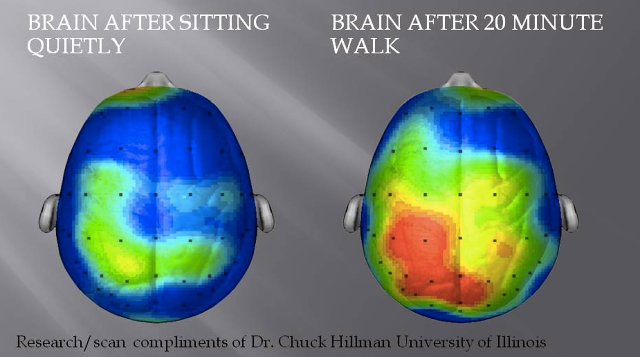
And yet we should­n’t lose hope. A num­ber of oth­er sci­en­tif­ic stud­ies sug­gest that phys­i­cal exercise–as opposed to men­tal exercise–can mean­ing­ful­ly improve our cog­ni­tive abil­i­ties, from child­hood through old age. One study led by Charles Hill­man, a pro­fes­sor of kine­si­ol­o­gy and com­mu­ni­ty health at the Uni­ver­si­ty of Illi­nois, found that chil­dren who reg­u­lar­ly exer­cise, writes The New York Times:

dis­played sub­stan­tial improve­ments in … exec­u­tive func­tion. They were bet­ter at “atten­tion­al inhi­bi­tion,” which is the abil­i­ty to block out irrel­e­vant infor­ma­tion and con­cen­trate on the task at hand … and had height­ened abil­i­ties to tog­gle between cog­ni­tive tasks. Telling­ly, the chil­dren who had attend­ed the most exer­cise ses­sions showed the great­est improve­ments in their cog­ni­tive scores.

And, heart­en­ing­ly, exer­cise seems to con­fer ben­e­fits on adults too. A study focus­ing on old­er adults already expe­ri­enc­ing a mild degree of cog­ni­tive impair­ment found that resis­tance and aer­o­bic train­ing improved their spa­tial mem­o­ry and ver­bal mem­o­ry. Anoth­er study found that weight train­ing can decrease brain shrink­age, a process that occurs nat­u­ral­ly with age.

If you’re look­ing to get the gist of how exer­cise pro­motes brain health, it comes down to this:

Exer­cise trig­gers the pro­duc­tion of a pro­tein called brain-derived neu­rotroph­ic fac­tor, or BDNF, which helps sup­port the growth of exist­ing brain cells and the devel­op­ment of new ones.

With age, BDNF lev­els fall; this decline is one rea­son brain func­tion dete­ri­o­rates in the elder­ly. Cer­tain types of exer­cise, name­ly aer­o­bic, are thought to coun­ter­act these age-relat­ed drops in BDNF and can restore young lev­els of BDNF in the age brain.

That’s how The Chica­go Tri­bune sum­ma­rized the find­ings of a 1995 study con­duct­ed by researchers at the Uni­ver­si­ty of Cal­i­for­nia-Irvine. You can get more of the nuts and bolts by read­ing The Tri­bune’s recent arti­cle, The Best Brain Exer­cise May be Phys­i­cal. (Also see Can You Get Smarter?)

You’re per­haps left won­der­ing what’s the right dose of exer­cise for the brain? And guess what, Gretchen Reynolds, the phys ed colum­nist for The Times’ Well blog, wrote a col­umn on just that this sum­mer. Although the sci­ence is still far from con­clu­sive, a new study con­duct­ed by The Uni­ver­si­ty of Kansas Alzheimer’s Dis­ease Cen­ter found that small dos­es of exer­cise could lead to cog­ni­tive improve­ments. Writes Reynolds, “the encour­ag­ing take­away from the new study … is that briskly walk­ing for 20 or 25 min­utes sev­er­al times a week — a dose of exer­cise achiev­able by almost all of us — may help to keep our brains sharp as the years pass.”

If you would like to sup­port the mis­sion of Open Cul­ture, con­sid­er mak­ing a dona­tion to our site. It’s hard to rely 100% on ads, and your con­tri­bu­tions will help us con­tin­ue pro­vid­ing the best free cul­tur­al and edu­ca­tion­al mate­ri­als to learn­ers every­where. You can con­tribute through Pay­Pal, Patre­on, and Ven­mo (@openculture). Thanks!

via New York Times

Relat­ed Con­tent:

This Is Your Brain on Jane Austen: The Neu­ro­science of Read­ing Great Lit­er­a­ture

New Research Shows How Music Lessons Dur­ing Child­hood Ben­e­fit the Brain for a Life­time

Free Online Psy­chol­o­gy & Neu­ro­science Cours­es

by | Permalink | Make a Comment ( 5 ) |

The Neuroscience of Drumming: Researchers Discover the Secrets of Drumming & The Human Brain

An old musician’s joke goes “there are three kinds of drum­mers in the world—those who can count and those who can’t.” But per­haps there is an even more glob­al divide. Per­haps there are three kinds of peo­ple in the world—those who can drum and those who can’t. Per­haps, as the pro­mo­tion­al video above from GE sug­gests, drum­mers have fun­da­men­tal­ly dif­fer­ent brains than the rest of us. Today we high­light the sci­en­tif­ic research into drum­mers’ brains, an expand­ing area of neu­ro­science and psy­chol­o­gy that dis­proves a host of dumb drum­mer jokes.

“Drum­mers,” writes Jor­dan Tay­lor Sloan at Mic, “can actu­al­ly be smarter than their less rhyth­mi­cal­ly-focused band­mates.” This accord­ing to the find­ings of a Swedish study (Karolin­s­ka Insti­tutet in Stock­holm) which shows “a link between intel­li­gence, good tim­ing and the part of the brain used for prob­lem-solv­ing.” As Gary Cle­land puts it in The Tele­graph, drum­mers “might actu­al­ly be nat­ur­al intel­lec­tu­als.”

Neu­ro­sci­en­tist David Eagle­man, a renais­sance researcher The New York­er calls “a man obsessed with time,” found this out in an exper­i­ment he con­duct­ed with var­i­ous pro­fes­sion­al drum­mers at Bri­an Eno’s stu­dio. It was Eno who the­o­rized that drum­mers have a unique men­tal make­up, and it turns out “Eno was right: drum­mers do have dif­fer­ent brains from the rest.” Eagle­man’s test showed “a huge sta­tis­ti­cal dif­fer­ence between the drum­mers’ tim­ing and that of test sub­jects.” Says Eagle­man, “Now we know that there is some­thing anatom­i­cal­ly dif­fer­ent about them.” Their abil­i­ty to keep time gives them an intu­itive under­stand­ing of the rhyth­mic pat­terns they per­ceive all around them.

That dif­fer­ence can be annoying—like the pain of hav­ing per­fect pitch in a per­pet­u­al­ly off-key world. But drum­ming ulti­mate­ly has ther­a­peu­tic val­ue, pro­vid­ing the emo­tion­al and phys­i­cal ben­e­fits col­lec­tive­ly known as “drum­mer’s high,” an endor­phin rush that can only be stim­u­lat­ed by play­ing music, not sim­ply lis­ten­ing to it. In addi­tion to increas­ing peo­ple’s pain thresh­olds, Oxford psy­chol­o­gists found, the endor­phin-filled act of drum­ming increas­es pos­i­tive emo­tions and leads peo­ple to work togeth­er in a more coop­er­a­tive fash­ion.

Clash drum­mer Top­per Head­on dis­cuss­es the ther­a­peu­tic aspect of drum­ming in a short BBC inter­view above. He also calls drum­ming a “primeval” and dis­tinct­ly, uni­ver­sal­ly human activ­i­ty. For­mer Grate­ful Dead drum­mer Mick­ey Hart and neu­ro­sci­en­tist Adam Gaz­za­ley have high hopes for the sci­ence of rhythm. Hart, who has pow­ered a light show with his brain­waves in con­certs with his own band, dis­cuss­es the “pow­er” of rhythm to move crowds and bring Alzheimer’s patients back into the present moment.

Whether we can train our­selves to think and feel like drum­mers may be debat­able. But as for whether drum­mers real­ly do think in ways non-drum­mers can’t, con­sid­er the neu­ro­science of Stew­art Copeland’s polyrhyth­mic beats, and the work of Ter­ry Bozzio (below) play­ing the largest drumk­it you’ve ever seen.

Relat­ed Con­tent:

Play­ing an Instru­ment Is a Great Work­out For Your Brain: New Ani­ma­tion Explains Why

Iso­lat­ed Drum Tracks From Six of Rock’s Great­est: Bon­ham, Moon, Peart, Copeland, Grohl & Starr

Josh Jones is a writer and musi­cian based in Durham, NC. Fol­low him at @jdmagness.

New Study: Immersing Yourself in Art, Music & Nature Might Reduce Inflammation & Increase Life Expectancy

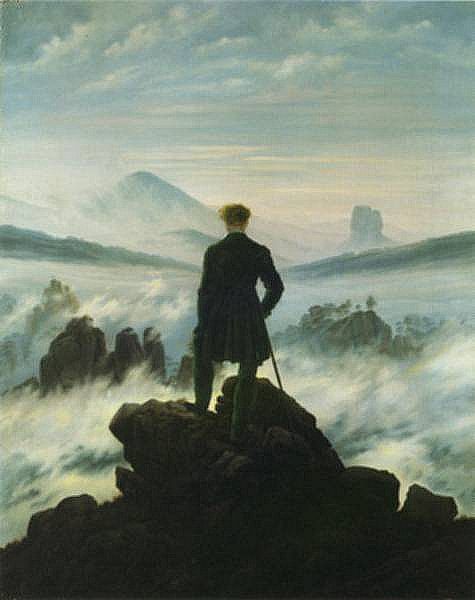
caspar-david-friedrich-wanderer

Of all the philo­soph­i­cal con­cepts Immanuel Kant is known for, the one I’ve had to strug­gle the least to grasp is his descrip­tion of the sub­lime, a state in which we are over­awed by the scale of some great work of man or nature. It’s an expe­ri­ence, in typ­i­cal Kant­ian fash­ion, that he explains as being not about the thing itself, but rather the idea of the thing. Yet the con­cept of the sub­lime isn’t his. Philoso­phers from the Greek teacher Long­i­nus in the 1st cen­tu­ry to Edmund Burke and oth­er Eng­lish Enlight­en­ment thinkers in Kan­t’s own 18th cen­tu­ry have had their take on it. For the clas­si­cal writ­ers, the sub­lime was rhetor­i­cal, for the Brits, it was empir­i­cal. But above all, the sub­lime is peak aesthetics—a supra-ratio­nal expe­ri­ence of art or nature one can­not get one’s head around. To be so ful­ly absorbed, so strick­en with awe, won­der, and, yes, even fear—all of these philoso­phers believed in some fashion—is to have an expe­ri­ence crit­i­cal to tran­scend­ing our lim­i­ta­tions.

We may not, in either com­mon speech or aca­d­e­m­ic phi­los­o­phy, talk much about the sub­lime these days, but what­ev­er we call the feel­ing of being absorbed in art, music, or nature, it turns out to have phys­i­cal ben­e­fits as well as men­tal and emo­tion­al. “There seems to be some­thing about awe,” says pro­fes­sor of psy­chol­o­gy Dacher Kelt­ner. “It seems to have pro­nounced impact on mark­ers relat­ed to inflam­ma­tion.”

In oth­er words, immers­ing your­self in art or nature is good for the joints, and it could pos­si­bly pre­empt var­i­ous dis­eases trig­gered by inflam­ma­tion. Kelt­ner and his fel­low researchers at UC Berke­ley con­duct­ed a study which found that “awe, won­der and beau­ty pro­mote [low­er and over­all] health­i­er lev­els of cytokines”—pro­teins that “sig­nal the immune sys­tem to work hard­er.” He goes on to say that “the things we do to expe­ri­ence these emotions—a walk in nature, los­ing one­self in music, behold­ing art—has [sic] a direct influ­ence upon health and life expectan­cy.”

Nev­er mind that Kant and Burke thought of the sub­lime and the beau­ti­ful as two very dif­fer­ent things. Whether we become total­ly over­whelmed by, or just find deep appre­ci­a­tion in an aes­thet­ic expe­ri­ence, the emo­tions pro­duced “might be just as salu­bri­ous as hit­ting the gym,” writes Hyper­al­ler­gic. That may seem a crude way of think­ing about the spir­i­tu­al and emo­tion­al grandeur of the sub­lime, but it brings our phys­i­cal being into the dis­cus­sion in ways many philoso­phers have neglect­ed. Grant­ed, the researchers them­selves admit the causal link is uncer­tain: it might be bet­ter health that leads to more expe­ri­ences of awe, and not the oth­er way around. But cer­tain­ly no harm—and a great deal of good—can come from con­duct­ing the exper­i­ment on your­self. Read an abstract (or pur­chase a copy) of the Berke­ley team’s arti­cle here, and learn more about their work with the Uni­ver­si­ty’s Greater Good Sci­ence Cen­ter, which aims to “spon­sor ground­break­ing sci­en­tif­ic research into social and emo­tion­al well-being.”

via Hyper­al­ler­gic

Relat­ed Con­tent:

This Is Your Brain on Jane Austen: The Neu­ro­science of Read­ing Great Lit­er­a­ture

How Walk­ing Fos­ters Cre­ativ­i­ty: Stan­ford Researchers Con­firm What Philoso­phers and Writ­ers Have Always Known

Free Guid­ed Med­i­ta­tions From UCLA: Boost Your Aware­ness & Ease Your Stress

Josh Jones is a writer and musi­cian based in Durham, NC. Fol­low him at @jdmagness

Why Sitting Is The New Smoking: An Animated Explanation

Dur­ing the past year, sit­ting has become the new smok­ing. “Past stud­ies have found,” declares a 2014 arti­cle in The New York Times, “the more hours that peo­ple spend sit­ting, the more like­ly they are to devel­op dia­betes, heart dis­ease and oth­er con­di­tions, and poten­tial­ly to die pre­ma­ture­ly — even if they exer­cise reg­u­lar­ly.” What’s the sci­ence behind this alarm­ing claim? The ani­mat­ed TED-ED video (above) begins to paint the pic­ture. But it does­n’t get into the lat­est and per­haps most impor­tant research. Accord­ing to sci­ence writer Gretchen Reynolds, a recent Swedish study pub­lished in the British Jour­nal of Sports Med­i­cine sug­gests that when you sit all day, your telom­eres (the tiny caps on the ends of DNA strands) get short­er. Which is not a good thing. As telom­eres get short­er, the rate at which the body ages and decays speeds up. Con­verse­ly, the study found “that the telom­eres in [those] who were sit­ting the least had length­ened. Their cells seemed to be grow­ing phys­i­o­log­i­cal­ly younger.”

Sev­er­al months ago, KQED radio in San Fran­cis­co aired a pro­gram ded­i­cat­ed to this ques­tion, fea­tur­ing med­ical and ergonom­ics experts. To delve deep­er into it, lis­ten below. Or click here.

Mean­while, if you have advice on how to incor­po­rate move­ment into your day, please share it with your fel­low read­ers in the com­ments sec­tion below.

And if your mind imme­di­ate­ly drifts to buy­ing a stand­ing desk, then check out our relat­ed post: Who Wrote at Stand­ing Desks? Kierkegaard, Dick­ens and Ernest Hem­ing­way Too

Fol­low us on Face­book, Twit­ter, Google Plus and LinkedIn and share intel­li­gent media with your friends. And if you want to make sure that our posts def­i­nite­ly appear in your Face­book news­feed, just fol­low these sim­ple steps.

by | Permalink | Make a Comment ( 10 ) |

« Go BackMore in this category... »
Quantcast