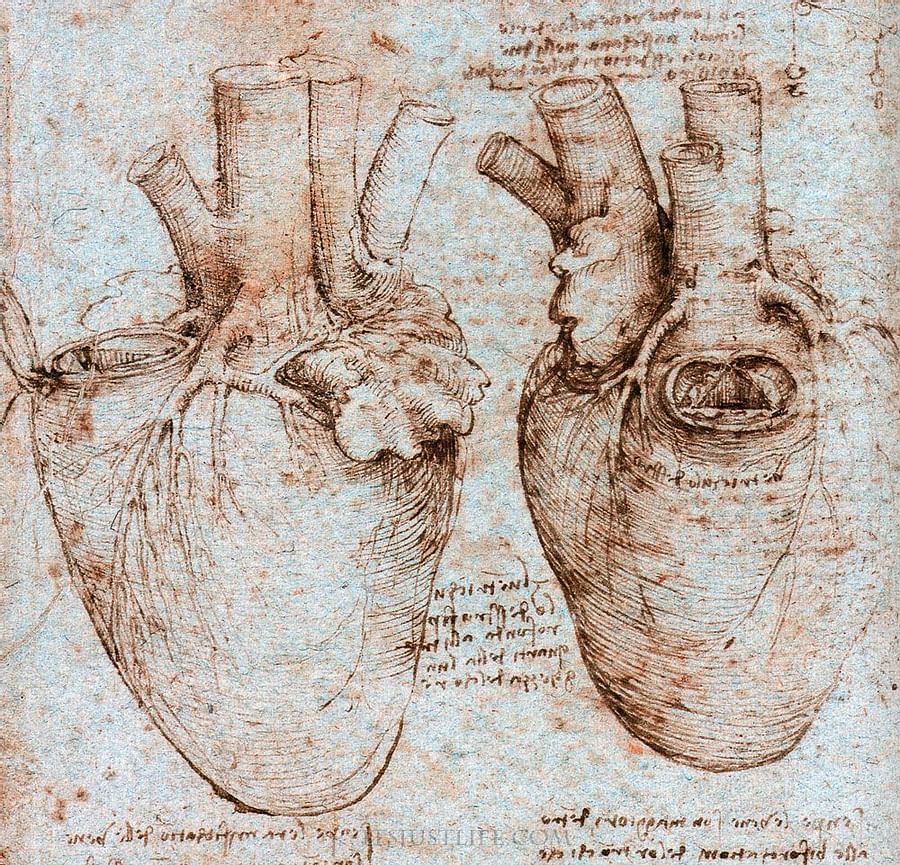
Leonardo da Vinci didn’t really have hobbies; he had passionate, unpaid obsessions that filled whole notebooks with puzzles scientists are still trying to solve. Many of the problems to which he applied himself were those none of his contemporaries understood, because he was the only person to have noticed them at all. The amateur anatomist was the first, for example, “to sketch trabeculae,” notes Medievalists.net, “and their snowflake-like fractal patterns in the 16th century.”
These geometric patterns of muscle fibers on the inner surface of the heart have remained a mystery for over 500 years since Leonardo’s anatomical investigations, carried out first on pig and oxen hearts, then later, in hasty dissections in the winter cold, on human specimens. He speculated they might have warmed the blood, but scientists have recently found they enhance blood flow “just like the dimples on a golf ball reduce air resistance.”
Leonardo may have been wide of the mark in his trabeculae theory, not having access to genetic testing, AI, or MRI. But he was the first to describe coronary artery disease, which would become one of the leading causes of death 500 years later. Many of his medical conclusions have turned out to be startingly correct, in fact. He detailed and elegantly sketched the heart’s anatomy from 1507 until his death in 1519, working out the flow of the blood through the body.
As the Medlife Crisis video above explains, Leonardo’s studies on the heart elegantly brought together his interests in art, anatomy, and engineering. Because of this multi-dimensional approach, he was able to explain a fact about the heart’s operation that even many cardiologists today get wrong, the movement of the aortic valve. In order to visualize the “flow dynamics” of the heart’s machinery, without imaging machinery of his own, he built a glass model, and drew several sketches of what he saw. “Incredibly, it took 450 years to prove him right.”
The mind of this extraordinary figure continues to divulge its secrets, and scholars and doctors across multiple fields continue to engage with his work, in the pages, for example, of the Netherlands Heart Journal. His studies on the heart particularly show how his astonishing breadth of knowledge and skill paradoxically made him such a focused, determined, and creative thinker.
Most of us use the terms “coronavirus” and “COVID-19” to refer to the pandemic that has gone around the world this year. We do know, or can figure out, that the former term refers to a virus and the latter to the disease caused by that virus. But do we know the full name “severe acute respiratory syndrome coronavirus 2,” or “SARS-CoV‑2” for short? We will if we take the online course “COVID-19, SARS-CoV‑2 and the Pandemic,” which MIT is making available to the general public free online. We’ll also learn what makes both the virus and the disease different from other viruses and diseases, what we can do to avoid infection, and how close we are to an effective treatment.
All this is laid out in the course’s first lecture by Bruce Walker, director of the Ragon Institute of Massachusetts General Hospital, MIT and Harvard. Walker introduces himself by telling us how he graduated from medical school when HIV was at its height in America, timing that placed him well for a career focused on deadly viral diseases.
The course’s complete lineup of guest lecturers, all of them listed on its syllabus, includes many other high-profile figures in the field of epidemiology, immunology, vaccine development, and related fields: Harvard’s Michael Mina, Yale’s Akiko Iwasaki, the Broad Institute’s Eric Lander, and — perhaps you’ve heard of him — the National Institute of Allergy and Infectious Diseases’ Anthony Fauci (find his session below).
“COVID-19, SARS-CoV‑2 and the Pandemic” began last Tuesday, and its lectures, which you’ll find uploaded to this Youtube playlist, will continue weekly until December 8th. Even if you have no background in medicine, biology, or science of any kind, don’t be intimidated: as leading professors Richard Young and Facundo Batista emphasize, this course is meant as an introductory overview.
And as Bruce Walker’s first lecture demonstrates, it’s not just open to the general public but geared toward the understanding and concerns of the general public as well. Taking it may not reassure you that an end to the pandemic lies just around the corner, but it will give you clearer and more coherent ways to think about what’s going on. The virus and disease involved are still incompletely understood, after all — but thanks to these and other researchers around the world, getting better understood every day.
Based in Seoul, Colin Marshall writes and broadcasts on cities, language, and culture. His projects include the book The Stateless City: a Walk through 21st-Century Los Angeles and the video series The City in Cinema. Follow him on Twitter at @colinmarshall, on Facebook, or on Instagram.
As I write this, the smoke from the numerous forest fires across California are making the air quality terrible, so we are being told to stay inside. However, the heatwave is making it insufferable to *be* inside. And we also have to be wary of COVID-19 and wear a mask. You could say this is a slightly stressful situation. And a lot of us are dealing with even more than that–job stability, rent, and on and on. Just typing this made me anxious!
During this time we should try not to neglect our mental health. Fortunately Coursera offers free online courses about Mental Health and Well-Being.
The Coursera video above comes from a Facebook live event that features Yale University’s Laurie Santos, who teaches Coursera’s Science of Well-Being course. This 30 minute Q&A dives right in to our current situation, with Santos outlining a protocol for mental health that should be as much a part of your regimen as wearing a mask and washing your hands with soap (while singing Happy Birthday to yourself, don’t forget.)
Here’s a top ten of Coursera’s most popular health & well-being courses to check out:
Santos answers questions from viewers, covering topics like avoiding tension and arguments with our loved ones, staying informed on the world without creating more anxiety, how can frontline/healthcare workers combat anxiety, how to keep yourself positive when living alone without family or friends, how to keep productive and healthy at work with the threat of layoffs, how to look for a new job after being laid off because of COVID, how to help your child who is missing their school friends, how do we create good experiences to create good memories, what we can do about sleep problems, how to care for family members with COVID while also working a job, and how to show random acts of kindness during this time (which is what Santos covers often in her Happiness Lab podcast).
Overall, focus on self-compassion, Santos says, which has to be the starting point for all of this. When you enroll in these courses, Coursera gives you two options. You can enroll as a paid student and get a certificate at the end. Or choose to “audit” the course (as shown here) and the course is free. Just like in college! All the learning, none of the blue book essays!
Ted Mills is a freelance writer on the arts who currently hosts the Notes from the Shed podcast and is the producer of KCRW’s Curious Coast. You can also follow him on Twitter at @tedmills, and/or watch his films here.
Medical professionals have had a particularly difficult time getting people in the United States to act in unison for the public good during the pandemic. This has been the case with every step that experts urge to curb the spread of COVID-19, from closing schools, churches, and other meeting places, to enforcing social distancing and wearing masks over the nose and mouth in public spaces.
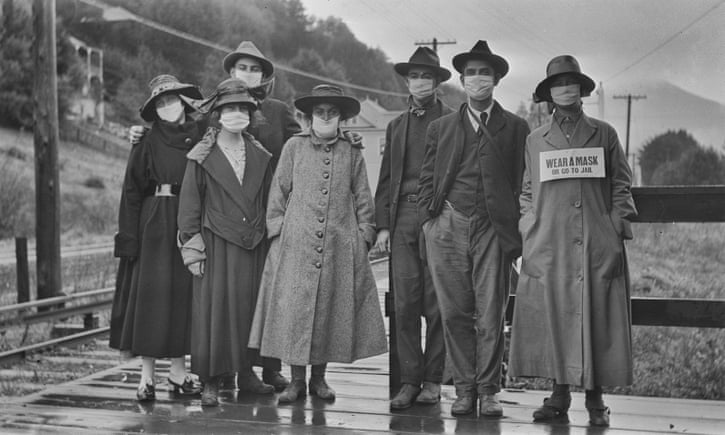
The resistance may seem symptomatic of the contemporary political climate, but there is ample precedent for it during the spread of so-called Spanish Flu, which took the lives of 675,000 Americans a little over a hundred years ago. Even when forced to wear masks by law or face jail time, many Americans absolutely refused to do so.
Nationwide, posters presented mask-wearing as a civic duty – social responsibility had been embedded into the social fabric by a massive wartime federal propaganda campaign launched in early 1917 when the U.S. entered the Great War. San Francisco Mayor James Rolph announced that “conscience, patriotism and self-protection demand immediate and rigid compliance” with mask wearing. In nearby Oakland, Mayor John Davie stated that “it is sensible and patriotic, no matter what our personal beliefs may be, to safeguard our fellow citizens by joining in this practice” of wearing a mask.
Despite the civic spirit and generalized public support for mask wearing, passing local mask ordinances was “frequently a contentious affair.” Debates that sound familiar raged in city councils in Los Angeles and Portland, both of which rejected mask orders. (One official declaring them “autocratic and unconstitutional.”) San Francisco, on the other hand, brought the police down on anyone who refused to wear a mask, imposing fines and jail time.
These measures were adopted by other cities, as well as abroad in Paris and Manchester. “Fines ranged,” Navarro writes, “from US$5 to $200,” a huge amount of money in 1918, and a good amount for many people out of work today. Even in cities that did not impose harsh penalties, “noncompliance and outright defiance quickly became a problem.” Much of the resistance to wearing masks, however, came later, after a first wave of flu infections subsided. When precautions were relaxed, cases rose once again, and new mask mandates went into effect in 1919.
San Francisco’s Anti-Mask League formed in protest, attracting somewhere between 4,000 and 5,000 unmasked attendees to a January meeting. Some of their objections rested on an early study that found scant evidence for the efficacy of compulsory mask-wearing. However, a later comprehensive 1921 study by Warren T. Vaughn, notes Ewing, found that the data was too sketchy to draw conclusions: “The problem was human behavior: Masks were used until they were filthy, worn in ways that offered little or no protection, and compulsory laws did not overcome the ‘failure of cooperation on the part of the public.’”
Vaughn concluded, “It is safe to say that the face mask as used was a failure.” Many behaviors contributed to this outcome. As we see in the photograph at the top of anonymous Californians wearing masks and holding a sign that reads, “Wear a mask or go to jail,” many did not wear masks properly, leaving their nose exposed, for example, like the woman in the center of the group. Notably, instead of social distancing, the group stands shoulder to shoulder, rendering their masks mostly ineffective.
The kind of masks most people wore were made of thin gauze. (“Obey the laws and wear the gauze. Protect your jaws from septic paws,” went a jingle at the time.) The material wasn’t at all effective at closer distances, where today’s quilted cotton masks, on the other hand, have been shown to stop the virus a few inches from the wearer’s face. Still, masks, when combined with other measures, were shown to be effective when compliance was high, though much of the evidence is anecdotal.
What can we learn from this history? Does it undermine the case for masks today? “We need to learn the right lessons from the failure of flu masks in 1918,” Ewing argues. The overwhelming scientific consensus is that masks are some of the most effective tools for slowing the spread of the coronavirus, and that, unlike in 1918, “Masks can work if we wear them correctly, modify behavior appropriately, and apply all available tools to control the spread of infectious disease.”
Like many Americans of my generation, I grew up having things explained to me by Bill Nye. Flight, magnets, simple machines, volcanoes: there seemed to be nothing he and his team of young lieutenants couldn’t break down in a clear, humorous, and wholly non-boring manner. He didn’t ask us to come to him, but met us where we already were: watching television. The zenith of the popularity of his PBS series Bill Nye the Science Guy passed a quarter-century ago, and the world has changed a bit since then. But even in the 2020s, when the spreading of scientific knowledge is no less important than it was in the 90s, Nye knows where to air his message if he wants the kids to hear it: TikTok.
Hugely popular among people not yet born during Bill Nye the Science Guy’s original run, TikTok is a video-based social media platform that accommodates videos of up to 60 seconds — roughly half the length of the “Consider the Following” segments embedded within the episodes of Nye’s original show.
This week Nye has revived the format on Tiktok in order to lay out the scientific principles behind something that had recently become a part of all of our lives: face masks. True to form, he explains not just with words but with objects, in this case a series of respiratory system-protecting anti-particle devices from a humble scarf to a homemade cloth face mask (employing that stalwart science-project component, a pipe cleaner) to the medical industry-standard N95.
“The reason we want you to wear a mask is to protect you,” says Nye. “But the main reason we want you to wear a mask is to protect me from you, and the particles from your respiratory system from getting into my respiratory system!” As simple a point as this may sound, it has tended to get lost amid the fear and confusion of the ongoing coronavirus pandemic: the conflicting information initially published about the advisability of face masks for the general public, but also the ensuing controversy over the implementation and enforcement of mask-related rules. But as Nye reminds us, this is “a matter literally of life and death — and when I use the word literally, I mean literally.” As we shore up our knowledge of masks, we Millennials, who throughout our lives have learned so much from Nye, would do well to internalize that point of usage while we’re at it.
Based in Seoul, Colin Marshall writes and broadcasts on cities, language, and culture. His projects include the book The Stateless City: a Walk through 21st-Century Los Angeles and the video series The City in Cinema. Follow him on Twitter at @colinmarshall, on Facebook, or on Instagram.
The story of the Coronavirus, at least in the US, has swung between a number of rhetorical tics now common to all of our discourse. Called a “hoax,” then given several racist nicknames and dismissed as a “nothing burger,” the pandemic—currently at around 3 million cases in the country, with a U.S. death toll over 130,000—has now become the “new normal,” a phrase that pops up everywhere you look.
“This framing is inviting,” writes Chime Asonye at the World Economic Forum. It conveys “the idea that our present is okay because normal is regular,” and we’re all supposed to be getting back to regular life, according to the powers that be, who don’t seem particularly troubled by the dead, sick, and dying or the continued threat to public health.
But pretending things are normal is simply a form of a denial, a maladaptive and unhealthy response to trauma as much as to disease. “Allowing ourselves to cope means not normalizing our situation,” writes Asonye, “but giving ourselves the time to truly process it.” We are all living in the midst of profound loss—of loved ones, livelihoods, future plans and present joys. Asonye adds:
Psychologists advise that it’s important to identify the losses we are feeling and to honour the grief surrounding us through methods like meditation, communicating our struggle, and expressing ourselves through art or by keeping a journal. In uncertain times, the ‘new normal’ frame reinforces an understanding that the world and our emotions should by now have settled. Surrounded by uncertainty, it’s okay to admit that things are not normal. It’s okay to allow ourselves to grieve or to be scared. It’s okay not to be comfortable with what is going on.
How do we process if we cannot admit that there is a problem—a massive problem that requires our lives to change, even if we’re feeling fatigued and worn out? Though we may have grown cynically accustomed to the callous, corrupt response of certain governments to human suffering, the “overwhelming scale” of the pandemic, as James Beckwith writes on YouTube, marks the coronavirus as decidedly not normal. It may be the kind of catastrophe the world has not witnessed in over a century.
Inspired by artist Isao Hashimoto’s “Time-Lapse Map of Every Nuclear Explosion Since 1945,” which we’ve previously featured here, Beckwith used the same visual presentation to map the over 500,000 lives lost to the virus since the first January outbreak in China. “The virus grows, continuing to work its way throughout the world until the end of June—where this piece ends but the real virus has not,” he writes. “It is likely a sequel will need to be made.” Though he admits the animation “may be upsetting to some people,” Beckwith, like Asonye, recognizes the importance of admitting the full scope.
Watching the virus spread, and kill, over the past six months hits much harder than reading the dry facts. The video is dedicated to “every person that tragically lost their lives to COVID-19.” Beckwith would like it “to be understood and seen by as many people around the world as possible,” so that we can all have a shared understanding of what we’re facing together (and maybe come to an agreement that this cannot be the “new normal”). “Sometimes there are no words for terrible events like this,” Beckwith writes, but he would like help translating the video description into other languages. You can contact him via his YouTube or Instagram channels to volunteer.
If you don’t floss or brush your teeth, they will rot and fall out. If you don’t eat fruits and vegetables, you will get scurvy or some other horrible disease. If you don’t use protection… well, you know the rest. These are facts of life we mostly accept if we care about ourselves and others because they are beyond disputing. But the idea of wearing a cloth mask when in public during a viral pandemic spread through droplets from the nose and mouth—a practice endorsed by the CDC, the World Health Organization, scientists at Stanford, Johns Hopkins, and pretty much every other research university—has become some kind of bizarre culture war.
Maybe some walk around mask-less because they’ve internalized the idea that the coronavirus is “over,” despite the fact it’s spreading at around 50,000 new cases per day in the US, and potentially heading toward double that number. Maybe some feel it won’t affect them because they aren’t elderly or immunocompromised, never mind that viruses mutate, and that the novel (meaning “new”) coronavirus has already demonstrated that it is far less discriminating (in purely biological terms) than previously thought. (In Florida, the median age for COVID-19 has dropped from 65 to 37 years old.) Never mind that spreading the virus, even if one is not personally at high risk, compromises everybody else.
Are masks uncomfortable, especially in hot, humid weather? Do they muffle speech and make it hard to have satisfying face-to-face interactions? Well, yes. But consider your hourlong masked trip to the grocery store against the 12 or 24 or 48 or whatever hour-long shifts medical personnel are pulling in emergency departments across the country.
It really is the least we can do. And we can do it in style—masks went from scarce, with armies of homebound neighbors sewing homely stacks of them, to truly overabundant and fashionable, on the rack of every grocery, pharmacy, and convenience store. It couldn’t be easier.
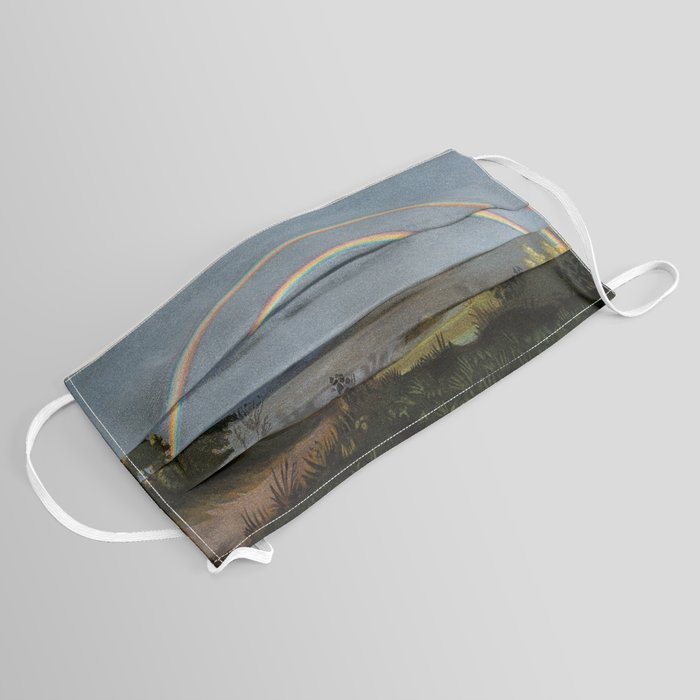
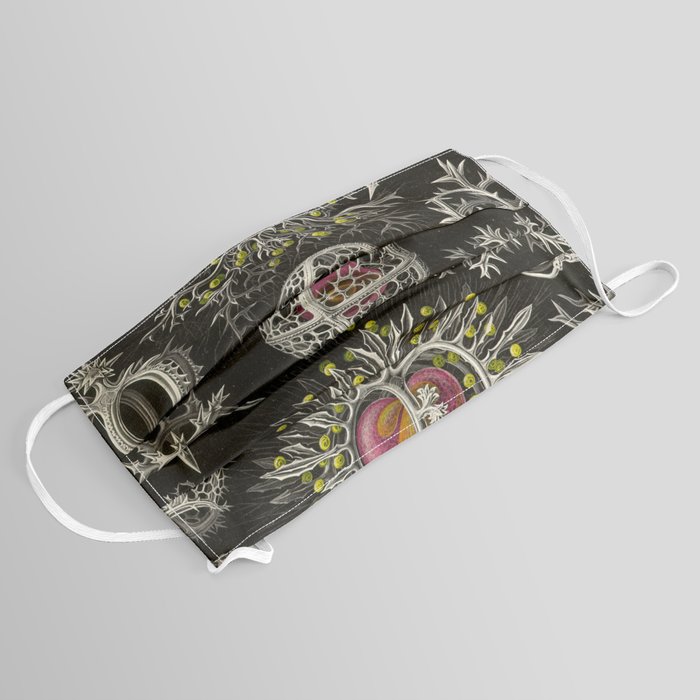
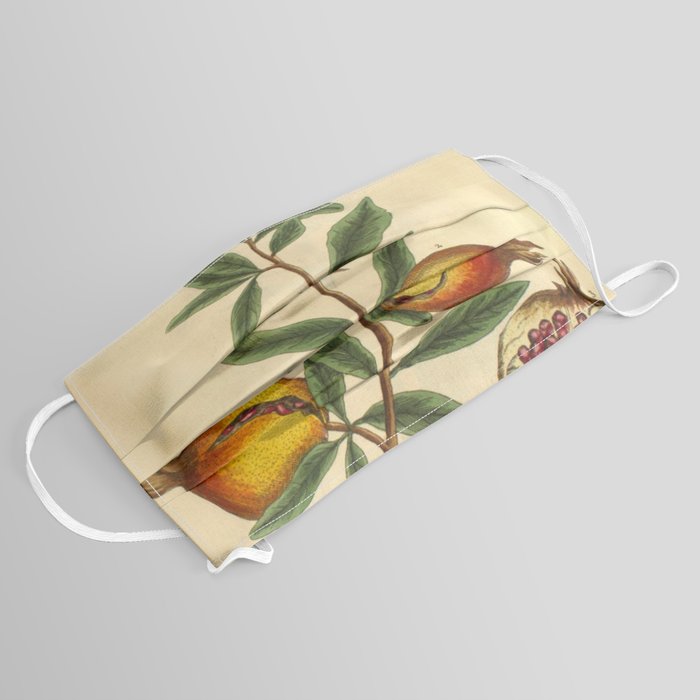
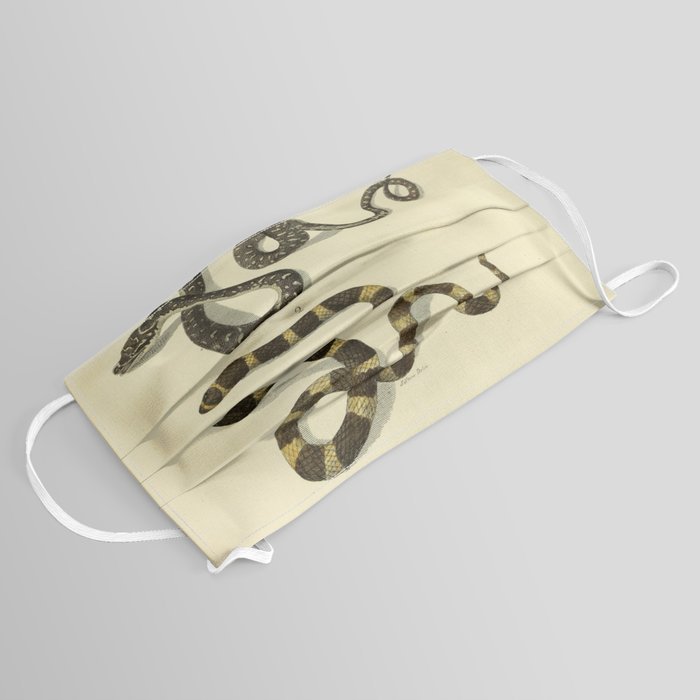
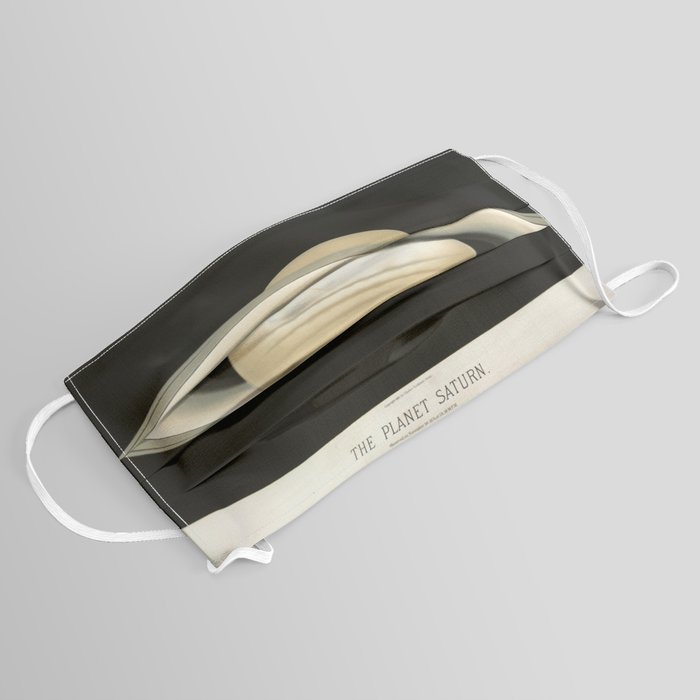
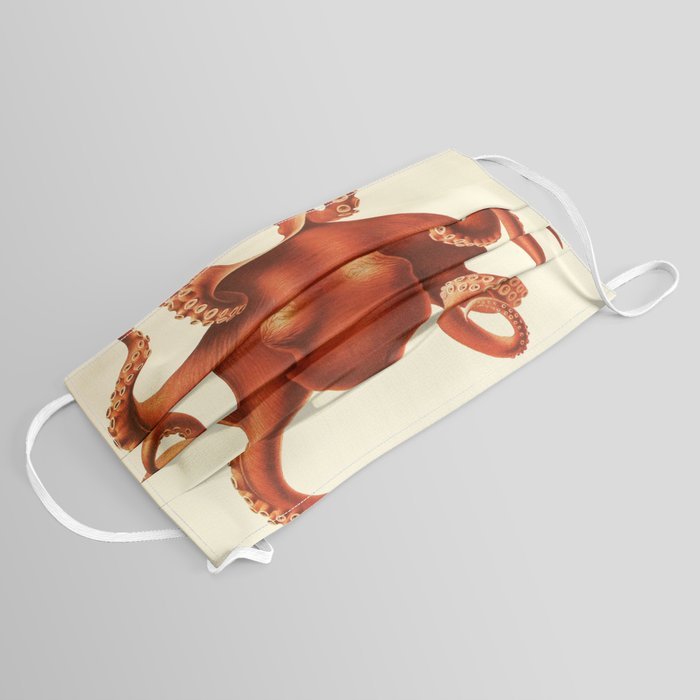
If you’re concerned about looking like every other masked weirdo out there, consider these masks created by Maria Popova of Brain Pickings, which she introduces with references to Rebecca Elson’s poem, “Antidotes to Fear of Death.” The science of public health may demand that we are grimly practical at the moment, but Popova wants to remind us that scientific thinking is equally invested in the experience of awe and the love of life. By wearing these masks, we can communicate to others, those who may be feeling despondent over the sea of masked faces in public places, that there is beauty in the world and we can fully experience if we get through this. Popova’s masks, printed and sold by Society6, illustrate the wonders of scientific curiosity with “wondrous centuries-old astronomical art and natural history illustrations.”
Society6 is donating a portion of its proceeds to World Center Kitchen, and Popova is donating to The Nature Conservancy. You can purchase your own vintage science illustration mask here and see some of these illustrations in their original context at the links further down.
Antidotes to Fear of Death
Sometimes as an antidote To fear of death, I eat the stars.
Those nights, lying on my back, I suck them from the quenching dark Til they are all, all inside me, Pepper hot and sharp.
Sometimes, instead, I stir myself Into a universe still young, Still warm as blood:
No outer space, just space, The light of all the not yet stars Drifting like a bright mist, And all of us, and everything Already there But unconstrained by form.
And sometime it’s enough To lie down here on earth Beside our long ancestral bones:
To walk across the cobble fields Of our discarded skulls, Each like a treasure, like a chrysalis, Thinking: whatever left these husks Flew off on bright wings.
From Ted-Ed comes a video that answers a timely question: How fast can a vaccine be made?
They write: “When a new pathogen emerges, our bodies and healthcare systems are left vulnerable. And when this pathogen causes the outbreak of a pandemic, there’s an urgent need for a vaccine to create widespread immunity with minimal loss of life. So how quickly can we develop vaccines when we need them most? Dan Kwartler describes the three phases of vaccine development.” Exploratory research, clinical testing, and manufacturing.
When you’re done, you can watch their related video: When is a pandemic over?
If you would like to support the mission of Open Culture, consider making a donation to our site. It’s hard to rely 100% on ads, and your contributions will help us continue providing the best free cultural and educational materials to learners everywhere. You can contribute through PayPal, Patreon, and Venmo (@openculture). Thanks!
We're hoping to rely on loyal readers, rather than erratic ads. Please click the Donate button and support Open Culture. You can use Paypal, Venmo, Patreon, even Crypto! We thank you!
Open Culture scours the web for the best educational media. We find the free courses and audio books you need, the language lessons & educational videos you want, and plenty of enlightenment in between.