Watch the “Youngest String Quartet Ever” Perform Vivaldi, Michael Jackson & Katy Perry

They’re billed as “the youngest string quar­tet ever.” The kids began play­ing in The Joy­ous String Quar­tet when they were four years old. Now, fast for­ward four more years, and they find them­selves per­form­ing 20 con­certs a year around the globe — in places like South Korea and Chi­na, and on the Ellen DeGeneres Show. Above you can watch them per­form Sum­mer “Presto” by Vival­di. Below, they give you a clas­si­cal ver­sion of Katy Per­ry’s “Fire­work:

And final­ly Michael Jack­son’s “Smooth Crim­i­nal.” In case you’re won­der­ing, the stu­dents come out of The Joy­ous Music School in Hicksville, NY.

via The Kids Should See This

Relat­ed Con­tent:

Four­teen-Year-Old Girl’s Blis­ter­ing Heavy Met­al Per­for­mance of Vival­di

Ele­men­tary School Kids Sing David Bowie’s “Space Odd­i­ty” & Oth­er Rock Hits: A Cult Clas­sic Record­ed in 1976

Ele­men­tary School Stu­dents Per­form in a Play Inspired by David Lynch’s Twin Peaks

Fol­low us on Face­book, Twit­ter, Google Plus and LinkedIn and  share intel­li­gent media with your friends. Or bet­ter yet, sign up for our dai­ly email and get a dai­ly dose of Open Cul­ture in your inbox.

Kids Orchestra Plays Ozzy Osbourne’s “Crazy Train” and Zeppelin’s “Kashmir”

The Louisville Leop­ard Per­cus­sion­ists — they’re a per­form­ing ensem­ble made up of 60 stu­dents, all between the ages of 7 and 14, from schools around the Louisville, Ken­tucky area. Each musi­cian plays sev­er­al instru­ments, such as the marim­bas, xylo­phone, vibra­phone, drum set, tim­bales, con­gas, bon­gos and piano. And they can rock with the best of them. Per­haps you’ve seen a viral video of the young per­cus­sion­ists play­ing Led Zep­pelin’s “Kash­mir,” which Jim­my Page called “too good not to share” on his Face­book page.

If your inner 16-year-old is ask­ing “what about Ozzy?,” well then, we’ve got you cov­ered. Above you can watch The Fab­u­lous Leop­ard Per­cus­sion­ists rehears­ing a ver­sion of Ozzy Osbourne’s “Crazy Train,” the heavy met­al clas­sic from 1980. Found­ed in 1993 by the ele­men­tary school teacher Diane Downs, the ensem­ble has cer­tain­ly explored oth­er musi­cal forms too. Here, you can see them per­form Chick Core­a’s “Spain” and Ben­ny Good­man’s “Sing Sing Sing” at the Inter­na­tion­al Asso­ci­a­tion of Jazz Edu­ca­tors’ con­cert in New York City. And Latin-inspired ver­sions of Low Rider/Oye Como Va. Not a bad way to start your day, I must say.

Fol­low us on Face­book, Twit­ter and Google Plus and share intel­li­gent media with your friends. Or bet­ter yet, sign up for our dai­ly email and get a dai­ly dose of Open Cul­ture in your inbox.

Relat­ed Con­tent:

Ele­men­tary School Kids Sing David Bowie’s “Space Odd­i­ty” & Oth­er Rock Hits: A Cult Clas­sic Record­ed in 1976

Mr. Rogers Intro­duces Kids to Exper­i­men­tal Elec­tron­ic Music by Bruce Haack & Esther Nel­son (1968)

Thomas Dol­by Explains How a Syn­the­siz­er Works on a Jim Hen­son Kids Show (1989)

by | Permalink | Make a Comment ( 4 ) |

Rolling Stones Drummer Charlie Watts Writes a Children’s Book Celebrating Charlie Parker (1964)

Ode to a Highflying Bird

Char­lie Watts’s first love has always been jazz. While his Rolling Stones band mates spent their youth lis­ten­ing to the Blues, Watts lis­tened to Miles Davis and John Coltrane. And some­thing about that seems to have stuck. Mick Jag­ger and Kei­th Richards defined what a rock star should look like in the late 60s – disheveled and flam­boy­ant. Watts always seemed to car­ry him­self with a jazzman’s sense of cool.

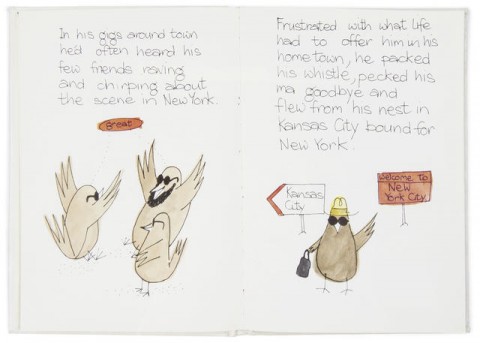
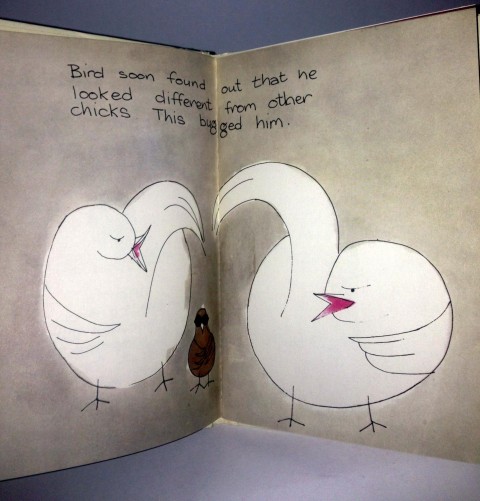
Back in 1960, when he was work­ing as a graph­ic design­er and doing drum­ming gigs on the side, Watts found anoth­er way to show off his love for jazz. He wrote a children’s book. Ode to a High­fly­ing Bird is about alt sax leg­end Char­lie Park­er, ren­dered in doo­dle-like fash­ion as a bird in shades. The hand-drawn text details Parker’s life sto­ry: “Frus­trat­ed with what life had to offer him in his home­town, he packed his whis­tle, pecked his ma good­bye and flew from his nest in Kansas City bound for New York.”

watts children book

The book was orig­i­nal­ly done as a port­fo­lio piece but, in 1964, after Watts became a mem­ber of the Stones, the book was pub­lished. As Watts recalled, “This guy who pub­lished ‘Rolling Stones Month­ly’ saw my book and said ‘Ah, there’s a few bob in this!’”

This wasn’t the only ode to Bird that Watts made over his long career. In 1992, his jazz band, The Char­lie Watts Quin­tet, released an album called From One Char­lie… which, as the title sug­gests, pays homage to Park­er and his oth­er bee-bop gods. “I don’t real­ly love rock & roll,” as he told Rolling Stone mag­a­zine. “I love jazz. But I love play­ing rock & roll with the Stones.”

A few old copies of Ode to a High­fly­ing Bird can be found on Ama­zon and on Abe Books.

via UDis­cov­er­Mu­sic

Relat­ed Con­tent:

Char­lie Park­er Plays with Jazz Greats Cole­man Hawkins, Bud­dy Rich, Lester Young & Ella Fitzger­ald (1950)

Char­lie Park­er Plays with Dizzy Gille­spie in Only Footage Cap­tur­ing the “Bird” in True Live Per­for­mance

Watch Ani­mat­ed Sheet Music for Miles Davis’ “So What,” Char­lie Parker’s “Con­fir­ma­tion” & Coltrane’s “Giant Steps”

Jonathan Crow is a Los Ange­les-based writer and film­mak­er whose work has appeared in Yahoo!, The Hol­ly­wood Reporter, and oth­er pub­li­ca­tions. You can fol­low him at @jonccrow. And check out his blog Veep­to­pus, fea­tur­ing lots of pic­tures of bad­gers and even more pic­tures of vice pres­i­dents with octo­pus­es on their heads.  The Veep­to­pus store is here.

Susan Sarandon Reads an Animated Version of Good Night Moon … Without Crying

One’s nev­er too old to be read a sto­ry. There’s no shame in steal­ing a cou­ple of min­utes from your busy, stress-filled day to let actress Susan Saran­don read you one, above.

Good­night Moon was nev­er a part of my child­hood, but it came into heavy rota­tion when my own kids were lit­tle. It wasn’t a title they clam­ored for—in my expe­ri­ence, the intend­ed demo­graph­ic favors the junky and cringe-induc­ing over clas­sics of children’s lit­er­a­ture, but no mat­ter.

All day, I indulged their han­ker­ing for tales of preschool-aged dinosaurs who had to be taught how to share, giant sil­ly cook­ies, and a cer­tain tele­vi­sion char­ac­ter who react­ed poor­ly to being passed over as flower girl. In return, I ruled the night.

I trea­sured Good­night Moon not so much because it made them fall asleep—there are shelves upon shelves of depend­able choic­es in that department—but rather for its sim­plic­i­ty. There were no moral lessons. Noth­ing spark­ly or mag­ic or forced. Noth­ing that catered to their sup­posed whims. Author Mar­garet Wise Brown’s stat­ed aim with regard to the child read­er was “to jog him with the unex­pect­ed and com­fort him with the famil­iar.”

I approve. But there’s not a lot of jog­ging in Good­night Moon. Just that comb and that brush and that bowl­ful of mush. What a blessed relief.

As one approach­es the end, Good­night Moon begins to rival Charlotte’s Web as children’s literature’s great med­i­ta­tion on death. The cat­a­logue of all those things we’re say­ing good­night to harkens to the final scene in Our Town, when the new­ly dead Emi­ly, revis­it­ing her child­hood home, cries, “All that was going on in life and we nev­er noticed.”

Every time my small crew made it to “good­night stars, good­night air, good­night nois­es every­where,” I was croak­ing. (Not fig­u­ra­tive­ly, though a lit­tle research reveals I am not the only one to think this love­ly phrase would make a great epi­taph.)

This emo­tion­al col­lapse was equal parts cathar­tic and embar­rass­ing. What can I say? My cup ran­neth over. I was glad to learn that E. B. White’s voice betrayed him, too, record­ing Charlotte’s Web’s most poignant scene.

“Oh, earth, you’re too won­der­ful for any­body to real­ize you.”

Nar­rat­ing the light­ly ani­mat­ed sto­ry for 1999’s Good­night Moon & Oth­er Sleep­y­time Tales, Saran­don exhibits aston­ish­ing self con­trol. It’s prob­a­bly a good thing for chil­dren every­where to see that there’s at least one adult out there with the steel to sol­dier through. Her youngest child was still lit­tle when she went into the record­ing booth. If she’d want­ed, she could’ve milked it for every last drop of pathos, but I’m glad she played it straight, because most of us can’t.

(And few of us can write a book so ele­gant on a top­ic so pro­found. Sarandon’s would-be pub­lish­ers reject­ed her children’s book about a “very fun­ny rac­coon” who dies.”)

Find oth­er great sto­ries in our col­lec­tion, 1,000 Free Audio Books: Down­load Great Books for Free.

Relat­ed Con­tent: 

Christo­pher Walken Reads Where The Wild Things Are

Free Audio: Go the F–k to Sleep Nar­rat­ed by Samuel L. Jack­son

Down­load Bryan Cranston’s Read­ing of You Have to F–king Eat as a Free Audio Book (NSFW)

Ayun Hal­l­i­day is an author whose sole con­tri­bu­tion to the pic­ture book canon is Always Lots of Heinies at the Zoo. Fol­low her @AyunHalliday

O Frabjous Day! Neil Gaiman Recites Lewis Carroll’s “Jabberwocky” from Memory

When the young Neil Gaiman was learn­ing Lewis Carroll’s “Jab­ber­wocky” by heart, he sure­ly had no inkling that years lat­er he’d be called upon to recite it for legions of ador­ing fans…particularly on the Inter­net, a phe­nom­e­non the bud­ding author may well have imag­ined, if not tech­ni­cal­ly imple­ment­ed.

World­builders, a fundrais­ing por­tal that rewards donors not with tote bags or umbrel­las, but rather with celebri­ty chal­lenges of a non-ice buck­et vari­ety, scored big when Gaiman agreed to par­tic­i­pate.

Ear­li­er this year, a rum­pled look­ing Gaiman read Dr. Seuss’s “rather won­der­ful” Green Eggs and Ham into his web­cam.

This month, with dona­tions to Heifer Inter­na­tion­al exceed­ing $600,000, he found him­self on the hook to read anoth­er piece of the donors’ choos­ing. Carroll’s non­sen­si­cal poem won out over Good­night Moon, Fox in Socks, and Where the Wild Things Are

Like fel­low author, Lyn­da Bar­ry, Gaiman is not one to under­es­ti­mate the val­ue of mem­o­riza­tion.

The videog­ra­phy may be casu­al, but his off-book per­for­mance in an undis­closed tul­gey wood is the stuff of high dra­ma.

Cal­looh!

Callay!

Is that a mem­o­ry lapse at the one minute mark? Anoth­er inter­preter might have called for a retake, but Gaiman rides out a four sec­ond pause cooly, his eyes the only indi­ca­tor that some­thing may be amiss. Per­haps he’s just tak­ing pre­cau­tions, lis­ten­ing for tell­tale whif­fling and bur­bling.

If you’re on the prowl to make some year end char­i­ta­ble dona­tions, recre­ation­al math­e­mu­si­cian Vi Hart and author John Green are among those World­builders has in the pipeline to per­form stunts for suc­cess­ful­ly fund­ed cam­paigns.

Jab­ber­wocky is a poem that appears in Car­rol­l’s Through the Look­ing-Glass, the 1871 sequel to Alice’s Adven­tures in Won­der­land (1865). You can find both in our col­lec­tion, 800 Free eBooks for iPad, Kin­dle & Oth­er Devices.

Relat­ed Con­tent:

Neil Gaiman Reads The Grave­yard Book, His Award-Win­ning Kids Fan­ta­sy Nov­el, Chap­ter by Chap­ter

Neil Gaiman Gives Grad­u­ates 10 Essen­tial Tips for Work­ing in the Arts

Where Do Great Ideas Come From? Neil Gaiman Explains

Ayun Hal­l­i­day is an author, home­school­er, and Chief Pri­ma­tol­o­gist of the East Vil­lage Inky zine. Fol­low her @AyunHalliday

New Animated Web Series Makes the Theory of Evolution Easy to Understand

When it comes to mat­ters of broad sci­en­tif­ic con­sen­sus, I’m gen­er­al­ly inclined to offer pro­vi­sion­al assent. Like every­one else, I have to rely on the exper­tise of oth­ers in mat­ters out­side my ken, and in many cas­es, this ratio­nal appeal to author­i­ty is the best one can do with­out acquir­ing the rel­e­vant qual­i­fi­ca­tions and years of expe­ri­ence in high­ly spe­cial­ized sci­en­tif­ic fields. In the case of evo­lu­tion, I hap­pen to find the evi­dence and expla­na­tions near­ly all biol­o­gists prof­fer much more per­sua­sive than the claims—and accusations—of their most­ly unsci­en­tif­ic crit­ics. But as we know from recent sur­vey data, a very large per­cent­age of Amer­i­cans reject the the­o­ry of evo­lu­tion, at least when it comes to humans, though it’s like­ly a great many of them—like myself—do not know very much about it.

But as a layper­son with an admit­ted­ly rudi­men­ta­ry sci­ence edu­ca­tion, I’m always grate­ful for clear, sim­ple expla­na­tions of com­plex ideas. This is pre­cise­ly what we get in the video series Stat­ed Clear­ly, which har­ness­es the pow­er of web ani­ma­tion as an instruc­tion­al tool to define what the the­o­ry of evo­lu­tion is, and why it explains the observ­able facts bet­ter than any­thing else. Stat­ed Clear­ly’s tagline is “sci­ence is for every­one,” and indeed, their mis­sion “is sim­ple”: “to pro­mote the art of crit­i­cal think­ing by expos­ing peo­ple from all walks of life, to the sim­ple beau­ty of sci­ence.” The video at the top gives us a broad overview of the the­o­ry of evo­lu­tion. The ani­ma­tion just above presents the evi­dence for evo­lu­tion, or some of it any­way, in clear, com­pelling terms, draw­ing from at least two of the many inde­pen­dent lines of evi­dence. And below, we have a Stat­ed Clear­ly take on nat­ur­al selec­tion, an absolute­ly key con­cept of evo­lu­tion­ary biol­o­gy, and one reg­u­lar­ly mis­un­der­stood.

After watch­ing these three shorts, you might agree that what is “often con­sid­ered a com­plex and con­tro­ver­sial top­ic” is “actu­al­ly a very sim­ple con­cept to under­stand.” In layman’s terms, at least. In fact, artist, nar­ra­tor, and cre­ator of the series, Jon Per­ry, admits that he him­self has no for­mal sci­en­tif­ic train­ing. “He believed,” his bio states, “that if he could cre­ate just one good ani­ma­tion on his own, sci­en­tists and edu­ca­tors would real­ize the poten­tial of this project and help him cre­ate more.” And indeed they have. Stat­ed Clear­ly has a dis­tin­guished pan­el of sci­ence advis­ers and part­ners that include the Cen­ter for Chem­i­cal Evo­lu­tion, Emory Uni­ver­si­ty, Geor­gia Tech, NASA, and the Nation­al Sci­ence Foun­da­tion. Learn much more about Stat­ed Clearly’s goals and affil­i­a­tions, or lack there­of, at their web­site. And below, see the fourth video of the series, “Does the The­o­ry of Evo­lu­tion Real­ly Mat­ter?,” which address­es the prac­ti­cal, real world impli­ca­tions of evo­lu­tion­ary the­o­ry, and sci­en­tif­ic lit­er­a­cy.

Relat­ed Con­tent:

Carl Sagan Explains Evo­lu­tion in an Eight-Minute Ani­ma­tion

Watch Episode #2 of Neil deGrasse Tyson’s Cos­mos: Explains the Real­i­ty of Evo­lu­tion (US View­ers)

Richard Dawkins Makes the Case for Evo­lu­tion in the 1987 Doc­u­men­tary, The Blind Watch­mak­er

Josh Jones is a writer and musi­cian based in Durham, NC. Fol­low him at @jdmagness

Read a Never Published, “Subversive” Chapter from Roald Dahl’s Charlie and the Chocolate Factory

chocolate factory unpublished chapter

50 years after the pub­li­ca­tion of Roald Dahl’s beloved chil­dren’s book, Char­lie and the Choco­late Fac­to­ry, The Guardian has post­ed online a nev­er-before-pub­lished draft of the book’s fifth chap­ter. It was cut from the first print­ed edi­tions of Dahl’s clas­sic, writes The Guardian, because it was con­sid­ered “too wild, sub­ver­sive and insuf­fi­cient­ly moral for the ten­der minds of British chil­dren.” You, the read­er liv­ing in 2014, will like­ly have a hard time fig­ur­ing out what the fuss was about.

The lost chap­ter, appro­pri­ate­ly illus­trat­ed by Sir Quentin Blake, begins:

The remain­ing eight chil­dren, togeth­er with their moth­ers and fathers, were ush­ered out into the long white cor­ri­dor once again.

“I won­der how Augus­tus Pot­tle and Miran­da Grope are feel­ing now?” Char­lie Buck­et asked his moth­er.

“Not too cocky, I should­n’t think” Mrs Buck­et answered. “Here – hold on to my hand, will you, dar­ling. That’s right. Hold on tight and try not to let go. And don’t you go doing any­thing sil­ly in here, either, you under­stand, or you might get sucked up into one of those dread­ful pipes your­self, or some­thing even worse maybe. Who knows?”

Lit­tle Char­lie took a tighter hold of Mrs Buck­et’s hand as they walked down the long cor­ri­dor. Soon they came to a door on which it said:

THE VANILLA FUDGE ROOM

“Hey, this is where Augus­tus Pot­tle went to, isn’t it?” Char­lie Buck­et said.

“No”, Mr Won­ka told him. “Augus­tus Pot­tle is in Choco­late Fudge. This is Vanil­la. Come inside, every­body, and take a peek.”

The chap­ter con­tin­ues at The Guardian.

Relat­ed Free­bies: If you head over to Quentin Blake’s web site, you can find some items that are “fun & free” — like free e‑cards designed by Blake; free wall­pa­per for your iPhone, iPad and desk­top; and free draw­ings that you can col­or in. Mean­while Audible.com offers The Roald Dahl Audio Col­lec­tion, which fea­tures Dahl him­self read­ing sec­tions from Char­lie and the Choco­late Fac­to­ry. You can get the col­lec­tion for free by join­ing Audi­ble’s 30-day Free Tri­al pro­gram. Please read the details about the Free Tri­al pro­gram here, and know that we have a part­ner­ship with Audible.com. So, if you make a pur­chase, it will help sup­port Open Cul­ture.

via Men­tal Floss

by | Permalink | Make a Comment ( 2 ) |

Learn How Crayons Are Made, Courtesy of 1980s Videos by Sesame Street and Mr. Rogers

Some things are dif­fi­cult to improve upon. Take crayons. The new gen­er­a­tion may be clam­or­ing for shades like “man­go tan­go” and “jazzber­ry jam” but the actu­al tech­nol­o­gy appears unchanged since Sesame Street detailed the process in the ear­ly 80s, in the love­ly, non ver­bal doc­u­men­tary above. Not a prod­uct place­ment in sight, I might add, though few can mis­take that famil­iar green and gold box.

Those who pre­fer a bit more expla­na­tion might pre­fer Fred Rogers’ hyp­not­ic step-by-step guide, play­ing in per­pe­tu­ity on Pic­ture Pic­ture.

By the time the indus­try’s giant goril­la got around to weigh­ing in, the wood­en col­lec­tion box­es and ana­log coun­ters had been replaced, but oth­er­wise, it’s still busi­ness as usu­al on the ol’ cray­on-man­u­fac­tur­ing floor. Don’t expect to find the recipe for the “secret pro­pri­etary blend of pig­ments and oth­er ingre­di­ents” any time soon. Just know they’re capa­ble of crank­ing out 8500 crayons per minute. For those play­ing along at home, that’s enough to encir­cle the globe 6 times per cal­en­dar year, with a full third owing their exis­tence to solar ener­gy.

There’s a Home­land Secu­ri­ty-ish vibe to some of the dia­logue, but the Life of an Amer­i­can Cray­on, above, does our native assem­bly lines proud. Proud­er than the Amer­i­can slaugh­ter­house, any­way, or some oth­er fac­to­ry floors, I could name. The work­ers seem con­tent enough to stay in their posi­tions for decades, hap­pi­ly declar­ing alle­giance to this or that hue.

Relat­ed Con­tent:

Philip Glass Com­pos­es for Sesame Street (1979)

Mr. Rogers Intro­duces Kids to Exper­i­men­tal Elec­tron­ic Music by Bruce Haack & Esther Nel­son (1968)

How Ani­mat­ed Car­toons Are Made: Watch a Short, Charm­ing Primer from 1919

Ayun Hal­l­i­day is an author, home­school­er, and Chief Pri­ma­tol­o­gist of the East Vil­lage Inky zine. Fol­low her @AyunHalliday


« Go BackMore in this category... »
Quantcast